
Pain au Chocolat vs Croissant: Understanding the Delicious Difference

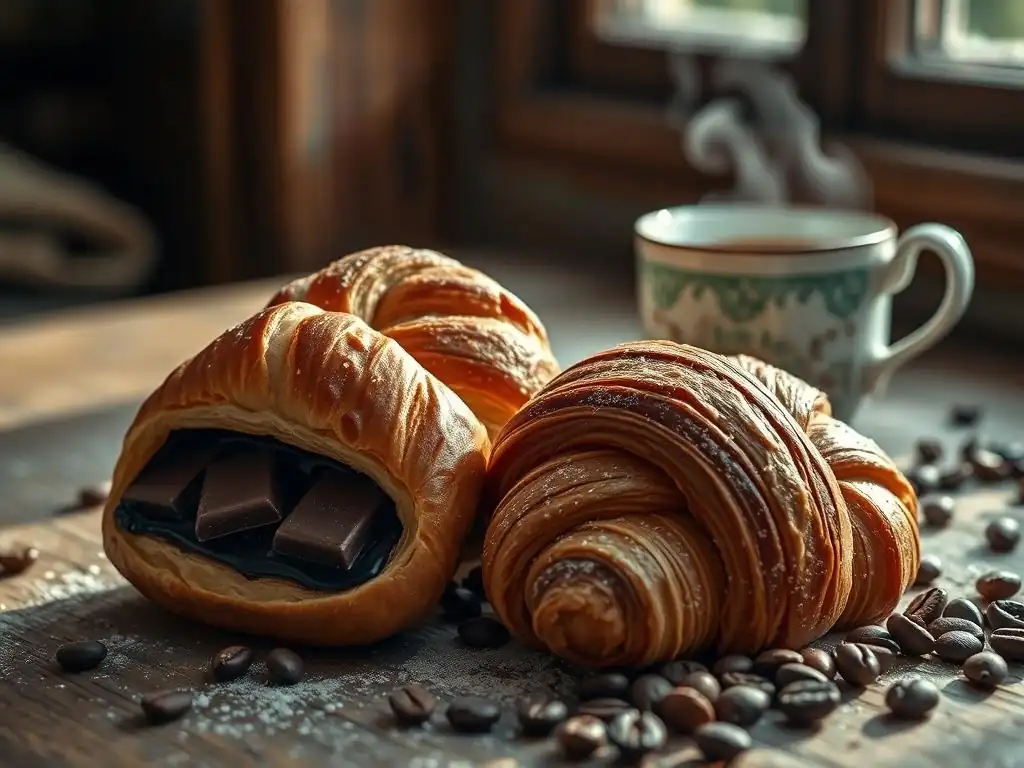
Welcome to BakeWithEase, where baking dreams become reality! Ever wondered about the subtle yet significant differences between a flaky pain au chocolat and a classic croissant? This guide dives deep into the delicious world of French pastry, unveiling the secrets behind our Pain au Chocolat croissant recipe. Get ready to elevate your baking skills and impress your friends and family – the journey to perfect pastry starts now!
- Introduction: Decoding the Delights of French Viennoiseries
- Pain au Chocolat: A Deep Dive into Chocolate-Filled Perfection
- Croissant: The Flaky, Buttery Icon
- Pain au Chocolat vs Croissant: A Detailed Comparison
- Mastering the "Pain au chocolat croissant recipe": Combining Techniques
- Conclusion: Celebrating the Art of Viennoiserie Baking
-
Frequently Asked Questions
- What's the main difference between a Pain au Chocolat and a Croissant?
- Is the dough used for Pain au Chocolat and Croissants exactly the same?
- How difficult is it to make a Pain au Chocolat croissant recipe at home?
- What are the key ingredients needed for a Pain au Chocolat croissant recipe?
- Can I customize the Pain au Chocolat croissant recipe with different fillings?
- Final Reflection: A Deeper Bite into Pastry Perfection
- Unleash Your Inner Boulanger: Take the Next Step!
Introduction: Decoding the Delights of French Viennoiseries
Exploring the World of Pain au Chocolat and Croissants
French bakeries, or boulangeries, are treasure troves of delightful pastries, none perhaps as globally recognized and adored as the croissant and its chocolate-filled cousin, the pain au chocolat. These flaky, buttery creations belong to a category called viennoiseries, which are baked goods made from a leavened dough similar to bread dough but enriched with eggs, butter, milk, and sugar, often laminated like puff pastry. While they share a common lineage and many techniques, they possess distinct characteristics that make each a unique culinary experience. Mastering either requires patience and an understanding of the delicate interplay between ingredients and technique.
Stepping into the realm of making Viennoiseries at home is a rewarding journey. It involves learning the art of lamination, the careful management of dough temperature, and the precise timing of fermentation and proofing. A successful bake yields layers upon layers of tender, buttery dough that shatter with a satisfying crispness upon biting. Whether you prefer the pure, unadulterated buttery flavor of a classic croissant or the delightful surprise of melted chocolate within a pain au chocolat, understanding their individual profiles is the first step towards baking excellence.
Why Understanding the Difference Matters for Baking Enthusiasts
For anyone looking to bake these iconic pastries at home, grasping the fundamental differences between pain au chocolat and croissants is crucial. While the base dough and lamination process are remarkably similar, the inclusion of chocolate significantly impacts ingredient ratios, shaping techniques, and even baking nuances. Knowing these distinctions ensures you select the correct recipe, prepare the dough appropriately, and execute the shaping and baking steps tailored to the specific pastry you intend to create.
Furthermore, understanding the core differences helps in troubleshooting. If your pain au chocolat isn't as flaky as you'd hoped, or your croissants lack that signature open crumb, recognizing how the presence or absence of chocolate affects factors like dough hydration or proofing time can guide your adjustments. This knowledge empowers you to move beyond simply following a pain au chocolat croissant recipe and truly understand the why behind each step, leading to more consistent and delicious results in your home baking adventures.
Pain au Chocolat: A Deep Dive into Chocolate-Filled Perfection
What is Pain au Chocolat? The Classic Description
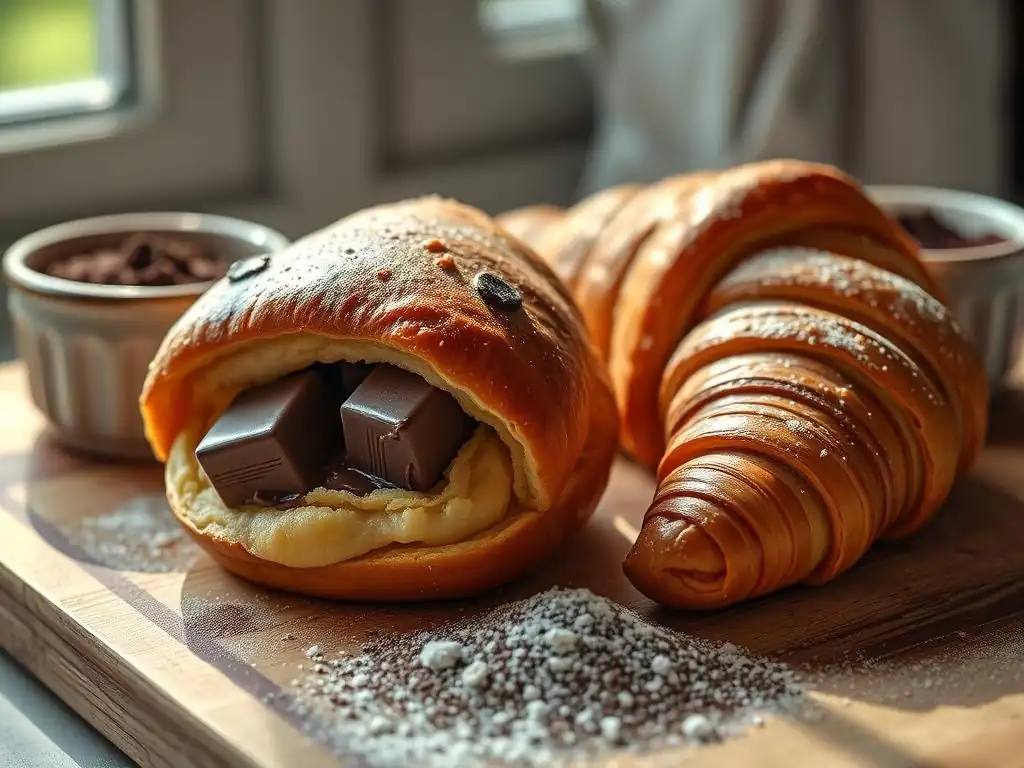
Pain au chocolat, literally translating to "chocolate bread," is a classic French viennoiserie made from the same laminated dough used for croissants, but filled with one or two pieces of dark chocolate. It is typically rectangular in shape, encasing the chocolate batons lengthwise. The appeal lies in the contrast between the crisp, flaky exterior and the soft, slightly gooey melted chocolate centre. It's a breakfast staple and a popular snack throughout France and beyond.
While the name suggests "bread," the texture and richness place it firmly in the pastry category. The dough is rich with butter, folded multiple times to create hundreds of thin layers, which expand in the oven to form the characteristic flaky structure. The quality of the chocolate and the precision of the lamination are paramount to achieving a perfect pain au chocolat that balances buttery flakiness with intense chocolate flavor.
Key Ingredients for Authentic Pain au Chocolat
Creating authentic pain au chocolat relies on a few key ingredients, each playing a vital role in the final texture and taste. The base dough requires strong bread flour, yeast, sugar, milk, and salt. However, the star ingredients that define its richness and structure are butter and chocolate.
High-Quality Chocolate Batons: The Heart of Pain au Chocolat
The choice of chocolate is perhaps the most defining element of pain au chocolat. Traditionally, specific chocolate batons ( bâtons de chocolat) are used. These are rectangular sticks of dark chocolate designed to melt slowly and hold their shape somewhat during baking, providing a distinct pocket of melted chocolate within the pastry. Using the wrong type of chocolate, like chocolate chips or a regular chocolate bar, can result in burnt chocolate or uneven melting.
Ideal chocolate batons typically contain around 50-60% cocoa solids. This percentage provides a good balance of bitterness and sweetness, and the chocolate melts beautifully without becoming overly runny or seizing up. A pain au chocolat often uses two batons per pastry, placed parallel to each other before rolling. The quantity and quality of the chocolate are non-negotiable for an authentic experience.
The Importance of Butter in Pain au Chocolat Dough
Just like croissants, the flakiness of pain au chocolat is entirely dependent on the butter used for lamination. High-quality, high-fat butter is essential. European-style butters, often containing around 82% butterfat compared to the typical 80% in American butters, are preferred because they contain less water. Less water means the butter is more pliable and creates better distinct layers when rolled into the dough.
The butter needs to be cold and firm but not brittle, allowing it to be rolled thinly between the dough layers without breaking through. This solid fat melts during baking, creating steam that pushes the dough layers apart, resulting in that coveted flaky texture. The sheer quantity of butter (often representing 25-30% of the total dough weight) also contributes significantly to the richness and flavor.
Pain au Chocolat Recipe: A Step-by-Step Overview
While a full pain au chocolat croissant recipe is complex, here's a simplified look at the process for home bakers.
Preparing the Pain au Chocolat Dough: A Beginner's Guide
The process begins by making an enriched dough with flour, yeast, milk, sugar, and salt. After the initial mixing and a short rest, a large block of cold butter is enclosed within the dough. This is the start of lamination. The dough is then rolled out and folded multiple times, with rest periods in between, usually involving 3 single folds or 2 single and 1 double fold. This creates hundreds of thin layers of dough separated by even thinner layers of butter.
For example, a typical schedule might involve:
- Mix dough, rest (30 mins).
- Enclose butter, first fold (single). Rest (fridge, 1 hour).
- Second fold (single). Rest (fridge, 1 hour).
- Third fold (single). Rest (fridge, 2-12 hours for cold fermentation).
This cold fermentation is crucial for developing flavor and making the dough easier to handle.
Shaping and Filling the Pain au Chocolat for Optimal Results
After the final rest, the dough is rolled out into a large rectangle, typically about 3-4 mm thick. This rectangle is then cut into smaller rectangles, sized according to how many chocolate batons will be used (usually around 8-10 cm wide). One or two chocolate batons are placed at one end of the dough rectangle, and the dough is rolled up to enclose the chocolate.
It's vital to roll the dough tightly enough to secure the chocolate but not so tightly that it tears the layers. The seam should be placed on the bottom. The resulting shape is a neat rectangle with the chocolate safely tucked inside, ready for proofing.
Baking Pain au Chocolat to Golden Perfection
Pain au chocolat requires a warm, humid environment for proofing before baking. This allows the yeast to produce gas, causing the pastries to increase in size and the layers to separate slightly. Proofing can take 1.5 to 2.5 hours at around 75-80°F (24-27°C) with good humidity. They should look visibly puffy and jiggly.
Before baking, they are often brushed with egg wash for a golden-brown finish. Baking is typically done in a hot oven, often starting around 400°F (200°C) for the first few minutes to encourage a rapid rise, then reducing the temperature to around 375°F (190°C) to ensure the layers crisp up and the interior cooks through without burning the exterior. Total baking time is usually 15-20 minutes, until they are deeply golden brown.
Croissant: The Flaky, Buttery Icon
Defining the Croissant: More Than Just Breakfast
The croissant is perhaps the quintessential French pastry, celebrated for its ethereal flakiness and rich, buttery flavor. Like pain au chocolat, it is made from a laminated dough, but its signature shape is the crescent. Traditionally, authentic croissants are made from détrempe (the base dough) and beurrage (the butter block), combined and folded multiple times to create layers.
A perfect croissant boasts a crisp exterior that shatters upon biting, revealing an interior with an open, airy crumb structure, often described as "honeycomb." The flavor is intensely buttery, slightly sweet, and has a subtle tang from the fermentation. While often enjoyed for breakfast, a well-made croissant is a pastry suitable for any time of day.
The Art of Lamination: Achieving the Perfect Flaky Croissant
Lamination is the heart and soul of both croissants and pain au chocolat. It's the process of repeatedly folding a block of butter into the dough, creating alternating layers. When baked, the water in the butter turns to steam, forcing the dough layers apart and creating the characteristic flaky structure.
Butter Lamination Technique for Croissant Excellence
The lamination process for croissants is identical to that for pain au chocolat. It involves enclosing a cold butter block within the dough and performing a series of folds. A common method is the "turn" or "pliage," where the dough is rolled out and folded like a letter.
A standard lamination schedule for croissants typically involves:
- Incorporating the butter block into the dough.
- Performing 3 single folds (each fold quadrupling the layers) or a combination like 2 single and 1 double fold.
- Each fold is followed by a rest period in the refrigerator (at least 60 minutes) to keep the butter cold and firm and allow the gluten in the dough to relax.
After 3 single folds, the dough can have theoretically 2^3 * initial layers of butter and dough (starting with 2 layers - dough/butter), resulting in hundreds of layers. This meticulous process is what delivers the incredible flakiness.
Folding and Shaping Techniques for Classic Croissants
Once lamination is complete and the dough has rested, it is rolled out into a large, thin sheet, typically 3-4 mm thick, just like for pain au chocolat. However, instead of cutting rectangles, the dough is cut into long triangles (often isosceles or slightly elongated triangles).
The shaping involves stretching the base of the triangle slightly, placing your hands at the base, and rolling the triangle up towards the point, creating a tight spiral. The ends are then gently curved inwards to form the classic crescent shape. Proper rolling technique is key to achieving an even bake and a beautiful shape.
Croissant Recipe: Mastering the Basics
Baking croissants at home follows a similar path to pain au chocolat, focusing on dough handling and thermal control.
Creating the Croissant Dough: A Detailed Walkthrough
The initial dough (détrempe) is made from flour, water or milk, yeast, sugar, and salt. It's often less enriched than brioche but still contains some sugar and fat. After mixing and an initial bulk fermentation (sometimes overnight in the fridge for flavor development), the dough is chilled before lamination begins. The butter block (beurrage) is prepared by shaping cold butter into a flat rectangle.
The chilled dough is rolled out, the butter block placed on top, and the dough is folded around the butter. This packet is then rolled and folded repeatedly, with chilling periods in between, as described in the lamination section. Maintaining the correct temperature throughout this process is critical – the butter must remain cold and solid.
Proofing and Baking Croissants for Maximum Flakiness
After shaping, croissants require a warm, humid environment for proofing, just like pain au chocolat. This allows the yeast to activate and the layers to separate. Proofing typically takes 1.5 to 2.5 hours at 75-80°F (24-27°C) and 70-80% humidity. Properly proofed croissants will be visibly puffy and delicate; under-proofed croissants won't rise fully, while over-proofed ones may collapse.
Before baking, they are usually brushed with egg wash for a shiny, golden crust. Croissants are baked in a hot oven, often starting at a high temperature (e.g., 400°F or 200°C) for the first few minutes to create steam and encourage oven spring, then reducing the temperature (e.g., to 375°F or 190°C) to ensure even cooking and browning. Baking time is typically 15-20 minutes, until they are deep golden brown and sound hollow when tapped lightly on the bottom.
Pain au Chocolat vs Croissant: A Detailed Comparison
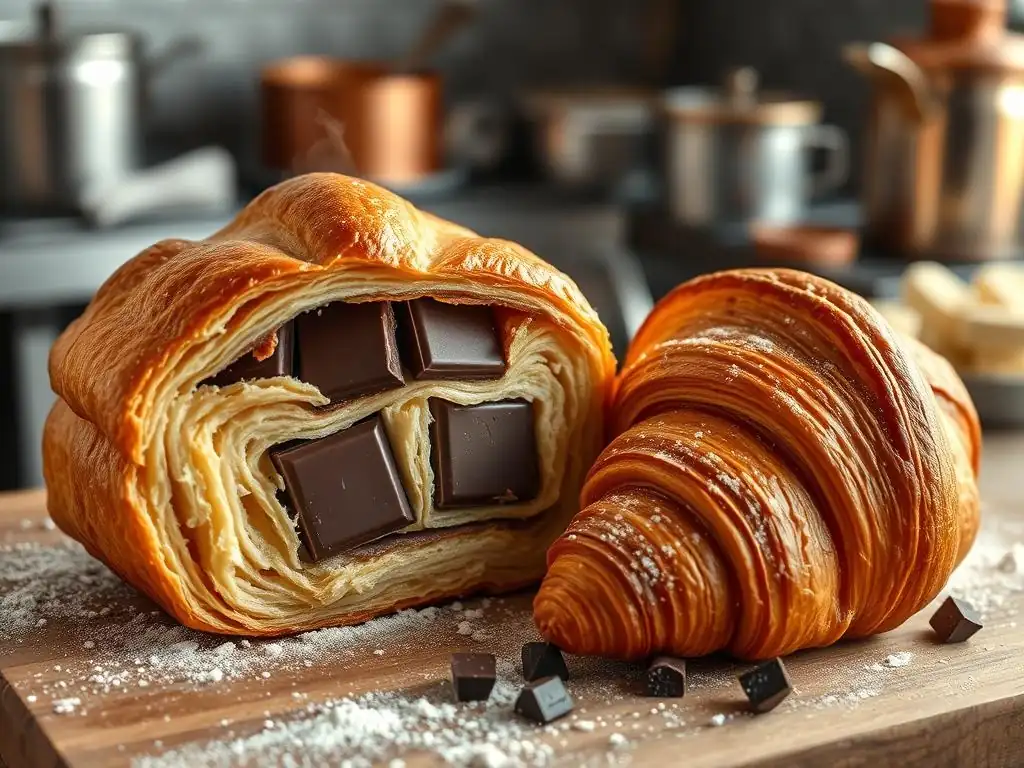
While sharing the same laminated dough foundation, pain au chocolat and croissants differ significantly in their ingredients, taste, texture, shaping, and appearance. Understanding these points is key whether you're simply enjoying them or attempting a pain au chocolat croissant recipe at home.
Key Differences in Dough and Ingredients
The base dough for both pastries is largely the same – an enriched yeast dough. However, the most obvious ingredient difference lies in the filling.
Comparing the Dough Composition: Pain au Chocolat vs. Croissant
The fundamental détrempe (base dough) recipe for pain au chocolat and croissants is often identical, consisting of flour, water/milk, yeast, sugar, and salt. The butter content for lamination is also typically the same, often a high percentage relative to the flour weight (e.g., a 1:2 ratio of butter to flour). Some traditional pain au chocolat recipes might have slightly more sugar or egg in the base dough compared to a classic croissant, but the primary dough difference is negligible compared to the filling.
The key here is that the process of lamination is identical for both. You prepare the dough, prepare the butter block, and perform the same series of folds to create the layers. The required skill in handling the dough and butter at the correct temperature is shared between the two.
Chocolate's Role: The Defining Difference
The presence of chocolate batons is the single defining ingredient difference between pain au chocolat and a plain croissant. This addition isn't merely a filling; it impacts the pastry's internal structure and weight. The chocolate melts into a warm pocket during baking, which slightly alters how the layers behave in the center compared to the open, airy structure of a pure croissant.
While a croissant celebrates the unadulterated flavor of butter and fermented dough, pain au chocolat introduces the rich, slightly bitter, and sweet notes of dark chocolate, creating a more complex flavor profile. This difference in filling is the primary reason for their distinct identities.
Comparing the Taste and Texture
Despite the shared dough base, the taste and texture experiences of eating a pain au chocolat versus a croissant are quite different.
The Chocolate Impact on Flavor Profile
A classic croissant offers a pure, intense buttery flavor layered with the subtle tang of fermentation. The taste is clean, rich, and deeply satisfying, highlighting the quality of the butter and the skill of the baker.
Pain au chocolat, on the other hand, provides a delightful blend. You get the same buttery, flaky pastry, but it's beautifully complemented by the rich, slightly bitter, and sweet notes of the melted dark chocolate within. The chocolate adds a layer of indulgence and complexity that isn't present in a plain croissant. It's a more dessert-like experience, though still commonly enjoyed for breakfast.
Flakiness and Butteriness: A Texture Showdown
Both pastries should be incredibly flaky and buttery. The exterior should be crisp and shatter easily, while the interior should reveal distinct layers. However, the type of interior texture differs. A perfect croissant has a very open, airy crumb with visible air pockets resembling a honeycomb structure. This openness is a direct result of the steam lifting the pure dough layers.
In pain au chocolat, while the outer layers are equally flaky, the presence of the melted chocolate in the center slightly compresses the layers directly surrounding it. The very center is filled with warm, melted chocolate rather than air pockets. So, while both are flaky, the croissant's flakiness extends throughout its entire cross-section in the form of air pockets, whereas pain au chocolat has a distinct chocolate core surrounded by buttery layers.
Shaping and Appearance: Visual Distinctions
Beyond the taste and texture, the most immediate way to distinguish the two is by their shape.
Pain au Chocolat's Rectangular Form
Pain au chocolat is characteristically a rectangular pastry. It is formed by rolling the laminated dough into a rectangle, cutting it into smaller rectangles, placing the chocolate batons at one end, and rolling the dough up. This simple, straight shape efficiently encases the chocolate and makes it instantly recognizable.
Visually, a well-baked pain au chocolat should be plump and golden brown, with visible layers on the exterior. The seams should be neat, and the chocolate should be fully enclosed.
Croissant's Crescent Shape
The croissant's iconic crescent shape is achieved by cutting the laminated dough into triangles and rolling them from the base to the point. The ends are then curved inwards to form the distinctive curve. This shape is not just aesthetic; it influences how the pastry bakes and the distribution of layers.
A perfectly shaped croissant should have a defined curve, a pointy tip, and a plump middle. Like pain au chocolat, it should bake to a deep golden brown with clearly defined, separated layers.
Mastering the "Pain au chocolat croissant recipe": Combining Techniques
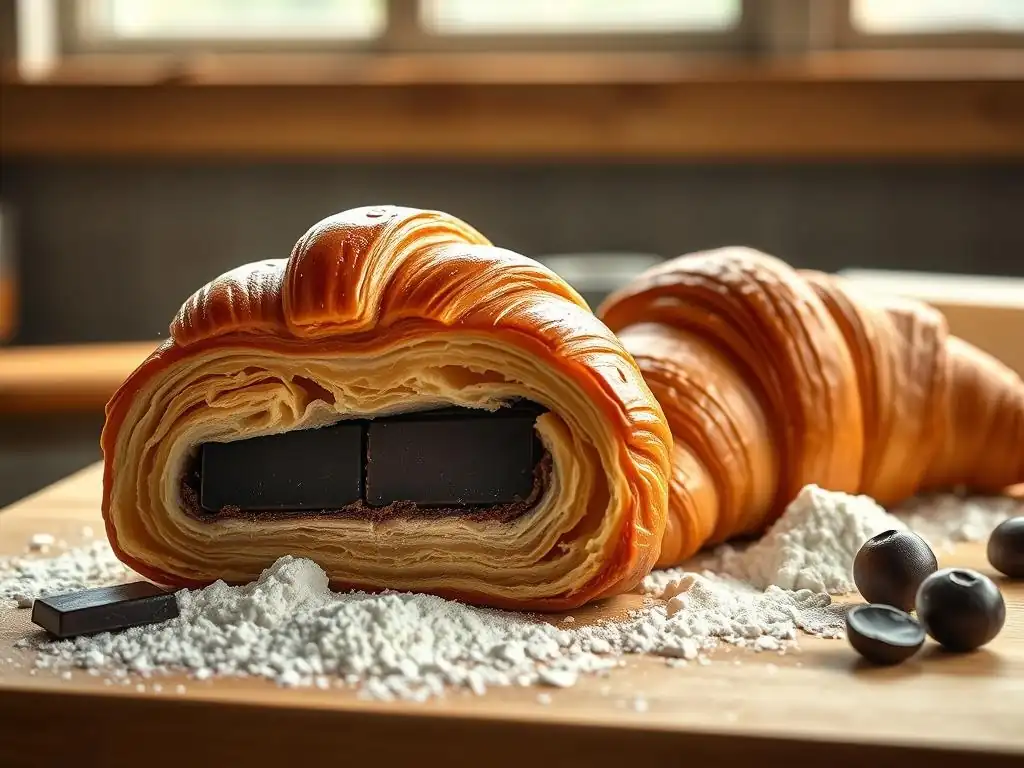
When someone searches for a "pain au chocolat croissant recipe," they are likely looking for instructions to make either pain au chocolat or perhaps wondering if the base recipe is the same (which it largely is!). Mastering either pastry involves similar foundational skills in lamination, dough handling, and baking.
Adapting the "Pain au chocolat croissant recipe" for Home Bakers
The good news is that if you can make a croissant, you can make pain au chocolat, and vice versa. The pain au chocolat croissant recipe essentially begins with the same laminated dough process. The primary adaptation for pain au chocolat is simply the cutting and shaping step – cutting rectangles instead of triangles and rolling them around chocolate batons instead of into a crescent.
For home bakers, focusing on mastering the core lamination technique is the most valuable step. This involves consistently creating cold, even layers of butter and dough. Once you are comfortable with the rolling and folding, adapting the final shape for either pastry is relatively straightforward.
- Task: Prepare the basic dough (détrempe).
- Task: Incorporate the butter block (beurrage).
- Task: Perform the required number of folds (e.g., 3 single turns), ensuring adequate chilling time between each turn.
- Task: Chill the dough thoroughly before final shaping.
Troubleshooting Common Baking Issues
Attempting a pain au chocolat croissant recipe at home can present challenges. Here are some common issues and how to address them:
Addressing Dough Problems: Too Sticky, Too Dry
If your dough is too sticky after mixing, it might have too much hydration (liquid). Try reducing the liquid slightly in your next batch, or dust your work surface and hands lightly with flour during handling. Avoid adding too much flour, as this can make the dough tough.
If the dough is too dry and tears easily during rolling, it could be under-hydrated or you might not have developed enough gluten during mixing. Ensure you're measuring ingredients accurately and knead the dough sufficiently before the first rest. Sometimes, allowing the dough to rest longer can help gluten relax and make it more pliable.
Achieving the Perfect Flakiness and Rise
Lack of flakiness is often due to issues with lamination or butter temperature.
- If the butter melts into the dough during folding (e.g., dough is too warm), you won't get distinct layers. Ensure dough and butter are cold (around 40-50°F or 4-10°C) during rolling and folding, and chill adequately between turns.
- If the butter breaks through the dough, the layers won't be continuous. This can happen if the butter is too cold and hard, or the dough is rolled too thin too quickly. Ensure butter is pliable but cold.
Poor rise during proofing or baking can be due to inactive yeast, insufficient proofing time/temperature, or insufficient steam in the oven.
- Check your yeast is active before starting.
- Ensure your proofing environment is warm (75-80°F or 24-27°C) and humid. Proof until pastries are puffy and jiggly.
- Bake in a hot oven (around 400°F or 200°C) initially to create steam from the butter and encourage oven spring.
Tips for Enhancing Your Pain au Chocolat and Croissant Creations
Taking your pain au chocolat croissant recipe to the next level involves attention to detail and willingness to experiment.
Experimenting with Different Chocolate Types
While traditional pain au chocolat uses dark chocolate batons, you can experiment.
- Try using batons with a slightly higher cocoa percentage (e.g., 70%) for a more intense, less sweet chocolate flavor.
- Milk chocolate batons can be used for a sweeter pastry, though they may melt more readily. Ensure they are baking-stable.
- Avoid chips or chopped chocolate from a bar, as they tend to burn or spread unevenly.
Exploring Variations: Almond Croissants and Beyond
Once you've mastered the basic croissant and pain au chocolat, a world of variations opens up.
- Almond croissants ( croissants aux amandes) are classic, often made from day-old croissants split, soaked in syrup, filled with almond cream ( frangipane), topped with more cream and sliced almonds, and re-baked.
- Other fillings can include fruit preserves, pastry cream, or savory options.
- Pain aux raisins uses the same dough rolled with pastry cream and raisins, then sliced before baking.
Understanding the core pain au chocolat croissant recipe allows you to adapt the base dough and lamination for these many delightful variations.
Conclusion: Celebrating the Art of Viennoiserie Baking
The journey into baking pain au chocolat and croissants is a rewarding one, a true celebration of the art of Viennoiserie. While the process requires patience and precision, the result – flaky, buttery layers giving way to either airy honeycomb or a pocket of melted chocolate – is undeniably worth the effort. We've explored the distinct characteristics that set these two beloved pastries apart, from the defining inclusion of chocolate in pain au chocolat to the iconic crescent shape of the croissant.
Remember, the underlying pain au chocolat croissant recipe techniques, particularly lamination, are shared between the two. Mastering the delicate balance of dough temperature, butter pliability, and proper folding will serve you well whether you choose to bake a batch of classic croissants or delightful pain au chocolat. Don't be discouraged by initial challenges; each bake is a learning opportunity. Embrace the process, pay attention to the details, and soon you'll be enjoying warm, homemade French pastries straight from your own oven. Happy baking!
Frequently Asked Questions
What's the main difference between a Pain au Chocolat and a Croissant?
The fundamental difference lies in the chocolate filling; Pain au Chocolat includes chocolate batons, while a classic croissant doesn't. Both are made with similar, flaky laminated dough.
Is the dough used for Pain au Chocolat and Croissants exactly the same?
While very similar, some recipes may slightly adjust the dough for Pain au Chocolat to better accommodate the added chocolate. The base is a viennoiserie dough.
How difficult is it to make a Pain au Chocolat croissant recipe at home?
It can be challenging, requiring patience and precision with the lamination process. However, BakeWithEase provides step-by-step guides to simplify the process.
What are the key ingredients needed for a Pain au Chocolat croissant recipe?
You'll need flour, butter, sugar, yeast, milk, and, of course, high-quality chocolate batons. BakeWithEase recipes emphasize easy-to-find ingredients.
Can I customize the Pain au Chocolat croissant recipe with different fillings?
Absolutely! While traditional Pain au Chocolat features chocolate, you can experiment with nuts, creams, or even different types of high-quality chocolate. BakeWithEase encourages creative baking.
Final Reflection: A Deeper Bite into Pastry Perfection
The seemingly simple choice between a pain au chocolat and a croissant reveals a fascinating world of culinary technique and cultural significance. Beyond the delightful crunch and buttery layers, understanding the subtle differences between these pastries offers a deeper appreciation for the artistry of baking. This isn't just about choosing a breakfast treat; it's about understanding the nuances of flavor profiles and the history embedded within each flaky layer.
The enduring popularity of both the pain au chocolat and the croissant speaks volumes about our collective desire for simple pleasures and comforting traditions. These pastries transcend mere food; they represent moments of indulgence, shared experiences, and a connection to a rich culinary heritage. The best things in life are simple,
a sentiment perfectly embodied by these beloved treats. Their continued presence in bakeries worldwide, their adaptation to various cultures, and their enduring appeal across generations underscore their cultural importance. The ongoing debate – and the passionate opinions surrounding it – only serves to solidify their place in our collective consciousness.
Now, armed with a deeper understanding of the differences between these two iconic pastries, I invite you to embark on your own culinary journey. Don't just passively consume; actively engage. Experiment with recipes, explore the techniques, and discover the joy of creating these masterpieces in your own kitchen. Let the aroma of baking bread fill your home, and share the delicious results with those you love. The true reward lies not just in the taste, but in the experience of creating and sharing something truly special.
Unleash Your Inner Boulanger: Take the Next Step!
Thanks for joining us on this delicious journey into the world of pastries! We hope you now feel more confident in distinguishing between these two beloved treats. Ready to put your newfound knowledge to the test?
- Bake your own masterpiece! Try our easy Pain au Chocolat recipe (available on the site – not linked here as per your instructions). This is the perfect way to solidify your understanding and enjoy the fruits (or should we say, pastries?) of your labor.
- Share your creations! Show us your baking prowess! Tag us on social media (we aren't linked here either, as per your instructions) and share photos of your pain au chocolat or croissants. Let’s inspire each other!
- Deepen your pastry knowledge: Explore more of our baking guides to expand your skills and discover even more delightful recipes.
So, which pastry will you conquer first – the delicate croissant or the rich pain au chocolat?