
Round & Ready: Crafting Classic Profiteroles StepbyStep

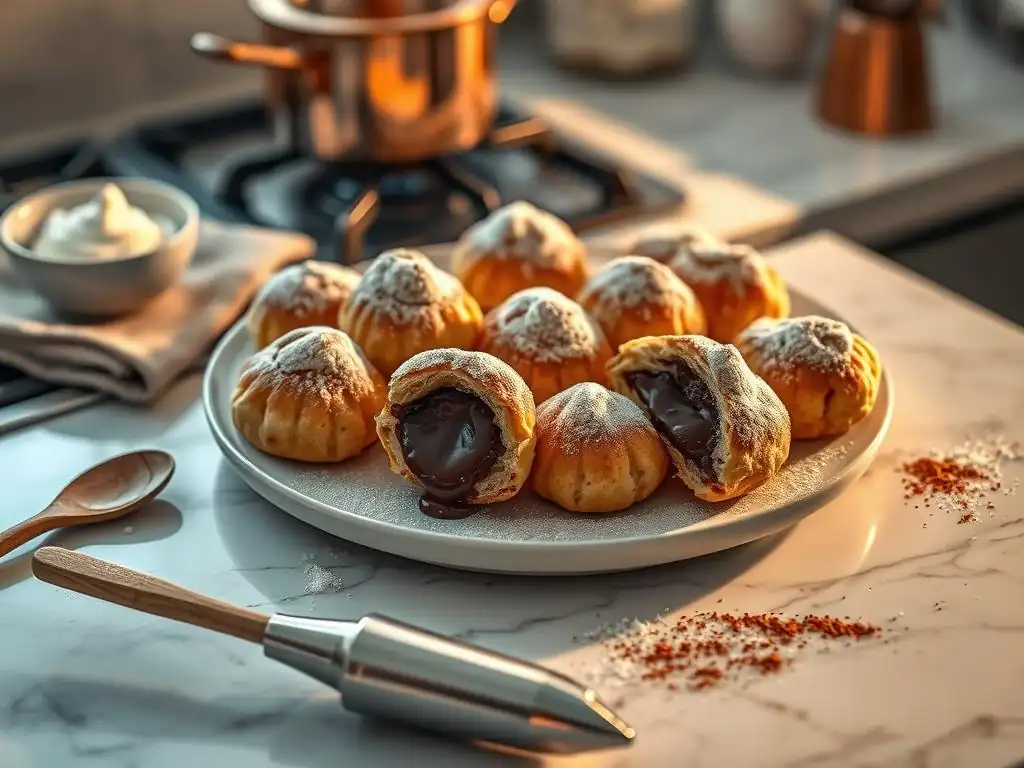
Welcome to BakeWithEase, your companion in the delightful world of baking! Ever dreamed of creating light, airy, and utterly irresistible profiteroles? Get ready to transform that dream into reality. Dive into our easy chocolate profiterole recipe guide and discover the secrets to mastering this classic pastry. But that's just the beginning... what other delicious creations await your touch? Let's bake!
- Introduction to Profiteroles: A Choux Pastry Delight
- Mastering Choux Pastry: The Foundation of Perfect Profiteroles
- The Easy Chocolate Profiterole Recipe Guide: Step-by-Step Instructions
- Crafting the Perfect Chocolate Filling for Your Profiteroles
- Assembling Your Easy Chocolate Profiteroles: A Visual Guide
- Tips and Tricks for Baking the Best Profiteroles
- Variations and Adaptations: Beyond the Classic Chocolate Profiterole
- Troubleshooting Your Profiterole Baking Journey
- Conclusion: Enjoy Your Homemade Chocolate Profiteroles!
-
Frequently Asked Questions
- What makes this profiterole recipe "easy," compared to other recipes?
- What are the key ingredients I need to make perfect profiteroles?
- Can I make profiteroles ahead of time?
- What's the best way to prevent my profiteroles from collapsing after baking?
- What are some variations I can make to the classic chocolate profiterole?
- Final Reflection: The Enduring Allure of the Profiterole
- Unleash Your Inner Pâtissier: Master the Profiterole!
Introduction to Profiteroles: A Choux Pastry Delight
What are Profiteroles and Why Bake Them?
Profiteroles, also known as cream puffs, are delightful hollow pastries made from choux dough, typically filled with whipped cream, pastry cream, or ice cream and often topped with chocolate sauce or a dusting of powdered sugar. They are a classic dessert known for their light, airy texture and versatile nature, allowing for various fillings and toppings. Baking profiteroles offers a satisfying challenge and results in an impressive treat that's perfect for parties, special occasions, or simply enjoying a sweet moment.
Embarking on an easy chocolate profiterole recipe guide is a fantastic way to explore the world of choux pastry. While the name might sound fancy, the process is quite manageable with a clear, step-by-step approach. Mastering this basic choux dough unlocks the door to other pastries like éclairs, gougères, and churros, making it a fundamental skill for any aspiring baker looking to expand their repertoire beyond simple cakes and cookies. The satisfaction of biting into a perfectly risen, light profiterole filled with luscious chocolate cream is truly rewarding.
Exploring the History of Profiteroles
The origins of choux pastry, the foundation of profiteroles, are often traced back to 16th-century Italy. Chef Pantarelli (or Penterelli) is credited with inventing a hot paste dough for Catherine de' Medici, who brought it to France upon her marriage to Henry II in 1533. This early dough, called pâte à chaud (hot paste), evolved over time.
By the 18th century, the dough had been refined by pastry chefs like Antoine Carême, who perfected the pâte à choux (cabbage paste, named for the shape of the baked puffs). Profiteroles became popular in France and spread throughout Europe. Initially, they were sometimes served in savory preparations, such as in soups or with meat dishes, before becoming primarily associated with sweet fillings and desserts, solidifying their place as a beloved classic in patisseries worldwide.
Mastering Choux Pastry: The Foundation of Perfect Profiteroles
Understanding the Key Ingredients for Choux Pastry
Choux pastry relies on a few basic ingredients working together in a specific way. Water (or milk), butter, flour, and eggs are the core components. The liquid and butter are heated together, flour is added to create a thick paste, and then eggs are beaten in one by one. It's crucial to use the correct type of flour; all-purpose flour is standard and provides the necessary structure without being too heavy.
The magic of choux pastry happens during baking. The high water content in the dough turns to steam in the hot oven, causing the puffs to expand rapidly and create a hollow interior. The eggs provide structure and richness, allowing the dough to hold its shape as it rises. Using fresh, room-temperature eggs is important for emulsification and achieving the right dough consistency, which is key to a successful bake.
Step-by-Step Guide to Making Choux Pastry for Profiteroles
Making choux pastry involves cooking the dough twice – first on the stovetop, then in the oven. Begin by combining water (or milk) and butter in a saucepan with a pinch of salt and sugar (if making a sweet pastry). Heat over medium heat until the butter is completely melted and the liquid is just starting to boil.
Remove the pan from the heat and quickly add all the flour at once. Stir vigorously with a wooden spoon or spatula until the mixture comes together and forms a cohesive ball that pulls away from the sides of the pan. Return the pan to low heat and cook the dough for 1-2 minutes, stirring constantly, to dry it out slightly. This step, called dessécher, is vital for a light texture. Transfer the dough to a mixing bowl and let it cool for a few minutes before gradually beating in the eggs.
Achieving the Right Consistency
The consistency of the choux dough after adding the eggs is paramount. The dough should be smooth, glossy, and fall from the spoon in a slow, thick ribbon, forming a 'V' shape. This is often referred to as the "bird's beak" or "ribbon" stage. If the dough is too stiff, the profiteroles won't rise properly; if it's too wet, they will spread and collapse.
Adding the eggs one by one, or even half at a time, is crucial. Incorporate each egg fully before adding the next. You might not need every single drop of the last egg, depending on the flour and humidity. Stop adding egg when the dough reaches the correct consistency. A simple test is to scoop some dough onto your finger; it should hold its shape but feel soft and pliable.
Troubleshooting Common Choux Pastry Problems
One common issue is dough that is too wet or too dry. If too wet, the profiteroles may spread excessively and fail to rise. If too dry, they will be dense and heavy. Ensure you measure ingredients accurately, especially the flour, and add eggs gradually, checking the consistency as you go. A simple kitchen scale can improve accuracy significantly.
Another frequent problem is profiteroles collapsing after baking. This often happens if they are not baked long enough or at a high enough temperature initially. The high heat is needed to create steam and puff the dough, while a subsequent lower temperature helps dry out the interior and firm up the structure. Always bake until they are deeply golden brown and feel light when lifted. Avoid opening the oven door too early during the initial high-heat phase.
The Easy Chocolate Profiterole Recipe Guide: Step-by-Step Instructions
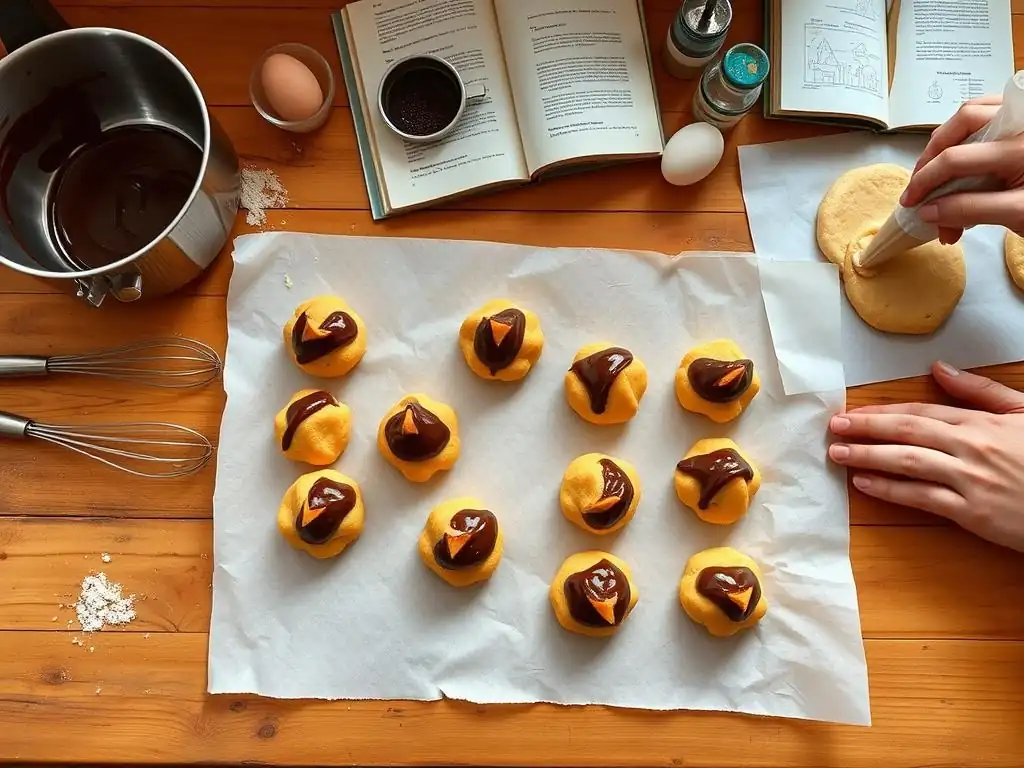
Here is your easy chocolate profiterole recipe guide designed for home bakers. This method simplifies the process while ensuring delicious results. We'll focus on clear steps to make crafting these delightful pastries achievable for intermediate bakers.
Gathering Your Ingredients for Chocolate Profiteroles
For the choux pastry, you will need:
- 1 cup water (approximately 240ml)
- 1/2 cup unsalted butter (approximately 115g), cut into pieces
- 1/4 teaspoon salt
- 1 teaspoon sugar (optional, for sweet pastry)
- 1 cup all-purpose flour (approximately 125g), sifted
- 4 large eggs (approximately 200-240g), at room temperature
For the chocolate cream filling:
- 2 cups heavy cream (approximately 480ml)
- 1/4 cup powdered sugar (approximately 30g)
- 1/2 cup unsweetened cocoa powder (approximately 45g), sifted
- 1 teaspoon vanilla extract
For the chocolate ganache glaze:
- 4 ounces bittersweet or semi-sweet chocolate (approximately 115g), finely chopped
- 1/2 cup heavy cream (approximately 120ml)
Preparing the Baking Sheet and Piping Bag
Preparation is key to smooth baking. Start by preheating your oven to a high temperature, such as 425°F (220°C). Line a baking sheet with parchment paper. Parchment paper prevents the dough from sticking and allows the puffs to expand evenly. Avoid using silicone mats for choux pastry as they can sometimes inhibit the rise and browning.
Prepare a piping bag fitted with a plain round tip, about 1/2 inch (1-1.5 cm) in diameter. If you don't have a piping bag and tip, you can use a sturdy resealable plastic bag and snip off one corner. Alternatively, you can use two spoons to drop mounds of dough onto the baking sheet, though piping helps create more uniform shapes.
Piping the Profiterole Dough: Tips for Uniform Shapes
Transfer the prepared choux dough into the piping bag. Hold the bag perpendicular to the baking sheet and pipe mounds of dough about 1 to 1.5 inches (2.5-4 cm) in diameter, leaving about 2 inches (5 cm) of space between them. The puffs will expand significantly during baking, so adequate spacing is essential to prevent them from merging.
Once you've piped all the dough, you might notice small peaks on top of the puffs. To smooth these down and ensure even rising, dip your finger lightly in water and gently tap down the peaks. This simple step helps create a rounder, more appealing shape and prevents thin spots that could burn. Aim for consistent size so they bake evenly.
Baking the Profiteroles: Achieving a Golden Brown
Bake the profiteroles in the preheated oven at 425°F (220°C) for about 15 minutes. This initial high heat creates steam and causes the dough to puff up rapidly. Do not open the oven door during this phase!
After 15 minutes, reduce the oven temperature to 375°F (190°C) and continue baking for another 20-25 minutes, or until the profiteroles are deeply golden brown all over and feel light and hollow when picked up. The dark color indicates they are fully baked and dried out internally, which is crucial for preventing collapse.
Cooling the Profiteroles: Preventing Soggy Pastries
Once baked to a deep golden brown, turn off the oven and prop the oven door open slightly (you can use a wooden spoon handle). Leave the profiteroles inside the cooling oven for another 10-15 minutes. This gradual cooling process helps them set and prevents them from deflating due to a sudden temperature change.
Remove the profiteroles from the oven and transfer them to a wire rack to cool completely. For extra insurance against sogginess, you can make a small slit in the bottom or side of each puff while they are still warm to allow steam to escape. Ensure they are completely cool before filling them, which typically takes at least 30-60 minutes.
Crafting the Perfect Chocolate Filling for Your Profiteroles
A key component of an easy chocolate profiterole recipe guide is a simple yet delicious filling. A whipped chocolate cream is quick to make and pairs beautifully with the light choux pastry.
Ingredients for the Chocolate Cream Filling
For a rich and airy chocolate cream filling, you'll need:
- 2 cups cold heavy cream
- 1/4 cup powdered sugar
- 1/2 cup unsweetened cocoa powder, sifted
- 1 teaspoon vanilla extract
Ensure your cream is very cold, as this helps it whip up properly. Sifting the cocoa powder is important to prevent lumps in the finished cream.
Making the Chocolate Cream Filling: A Simple Method
In a large bowl, combine the cold heavy cream, powdered sugar, sifted cocoa powder, and vanilla extract. Using an electric mixer (either a hand mixer or stand mixer with a whisk attachment), start mixing on low speed to incorporate the ingredients without splashing the dry components everywhere.
Once the ingredients are combined, increase the speed to medium-high and whip until stiff peaks form. Be careful not to overmix, or the cream can become grainy. The cream should be thick enough to hold its shape when scooped or piped. This process usually takes 3-5 minutes depending on your mixer.
Alternative Filling Options: Vanilla Cream, Pastry Cream, or Ice Cream
While chocolate cream is featured in this easy chocolate profiterole recipe guide, profiteroles are incredibly versatile. A classic alternative is simple whipped cream, often flavored with vanilla. This provides a lighter contrast to the rich pastry and glaze.
For a more traditional and richer filling, you can use pastry cream (crème pâtissière). This cooked custard is thickened with egg yolks and flour or cornstarch and can be flavored with vanilla or chocolate. Another popular option, especially for a refreshing dessert, is to fill profiteroles with scoops of ice cream, which creates a delightful textural contrast.
Assembling Your Easy Chocolate Profiteroles: A Visual Guide
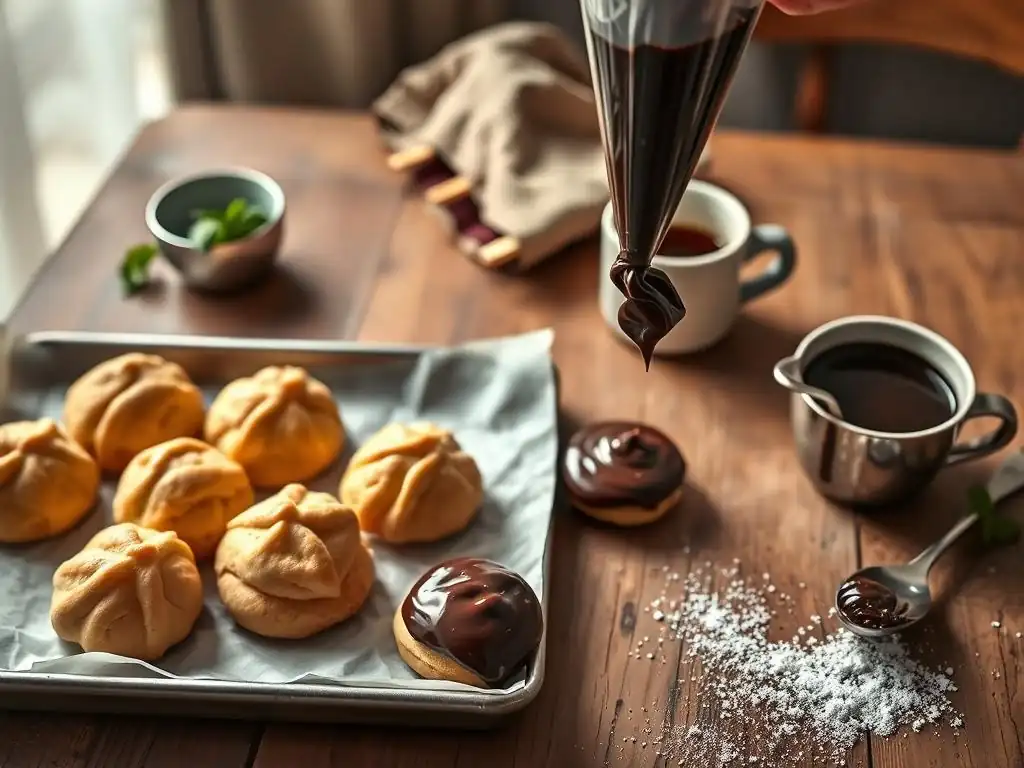
Bringing all the components together is the final step in this easy chocolate profiterole recipe guide. Assembly is straightforward and allows for creative presentation.
Preparing the Chocolate Ganache Glaze
The chocolate ganache glaze adds a touch of elegance and intense chocolate flavor. Finely chop the bittersweet or semi-sweet chocolate and place it in a heatproof bowl. Heat the heavy cream in a small saucepan over medium heat until it just begins to simmer around the edges – do not boil.
Pour the hot cream over the chopped chocolate. Let it sit undisturbed for 2-3 minutes to allow the heat from the cream to melt the chocolate. Then, gently whisk the mixture starting from the center and working outwards until it is smooth, glossy, and completely emulsified. Let the ganache cool slightly until it reaches a thick but pourable consistency.
Filling the Profiteroles: Techniques and Tips
There are a couple of ways to fill your cooled profiteroles. The simplest method is to slice each profiterole horizontally through the middle using a serrated knife. Open it up slightly and spoon or pipe the chocolate cream filling into the bottom half. Then, replace the top half like a lid.
Alternatively, for a cleaner look, you can make a small hole in the bottom of each profiterole using a sharp knife or a piping tip. Then, using a piping bag fitted with a small round tip, insert the tip into the hole and pipe the filling until the puff feels adequately weighted. This method keeps the exterior of the profiterole intact.
Glazing the Profiteroles: Achieving a Professional Finish
With the profiteroles filled, it's time for the glaze. You can dip the top half of each filled profiterole directly into the slightly cooled chocolate ganache. Allow any excess ganache to drip off before placing the profiterole back on the wire rack or serving platter.
For a more controlled application, you can drizzle the ganache over the tops of the filled profiteroles using a spoon or a piping bag with a fine tip. This creates an appealing visual effect. Allow the ganache to set slightly before serving, though warm ganache over cool filling is also delightful.
Arranging and Serving Your Profiteroles: Presentation Matters
Arrangement can elevate the presentation of your easy chocolate profiterole recipe guide creation. Stack them artfully on a serving platter or arrange them in a pyramid shape, mimicking the classic croquembouche style on a smaller scale. A simple single layer on a plate also looks elegant.
Consider dusting the finished profiteroles with a little powdered sugar or cocoa powder, or garnishing with fresh berries like raspberries or strawberries, which provide a lovely color contrast and a touch of freshness. Serve them relatively soon after assembly for the best texture, especially if using whipped cream or ice cream fillings.
Tips and Tricks for Baking the Best Profiteroles
Beyond the basic steps, a few insider tips can help you achieve truly outstanding profiteroles. Attention to detail at each stage makes a significant difference in the final result.
Achieving a Light and Airy Texture
The key to a light and airy texture lies in the proper cooking of the dough on the stovetop and the correct amount of egg. Cooking the dough (dessécher) dries it out, allowing it to absorb more egg, which in turn creates more steam during baking. Don't rush this step; cook the dough for the full 1-2 minutes until a thin film forms on the bottom of the pan.
Ensuring the dough isn't too hot when you add the eggs is also vital. If the dough is too hot, it will cook the eggs, resulting in a heavy, dense pastry. Let the dough cool for a few minutes after cooking on the stovetop before incorporating the eggs. This allows the gluten to relax slightly and prevents the eggs from scrambling.
Preventing Profiteroles from Deflating
Deflation is a common frustration. The most frequent cause is underbaking. The profiteroles must be baked long enough for the interior to dry out and the structure to become firm. They should be a deep golden brown, not just pale yellow. If they are removed too early, the steam inside will condense, and the structure will collapse.
Another factor is opening the oven door too soon or too often during the initial high-heat baking phase. This causes a sudden drop in temperature, interrupting the steaming process that gives the puffs their lift. Patience is required! Finally, cooling them gradually in the turned-off oven helps temper the temperature change.
Storing Profiteroles for Optimal Freshness
Unfilled choux pastry shells store remarkably well. Once completely cool, they can be kept in an airtight container at room temperature for 1-2 days. For longer storage, they can be frozen for up to 1-2 months. Thaw them at room temperature and crisp them up in a 300°F (150°C) oven for 5-10 minutes before filling.
Filled profiteroles, especially those with cream or custard fillings, are best enjoyed within a few hours of assembly. If they need to be stored, keep them in a single layer in an airtight container in the refrigerator for no more than 1 day. The pastry shells can become soggy over time from the moisture in the filling. Freezing filled profiteroles is generally not recommended as the texture suffers.
Variations and Adaptations: Beyond the Classic Chocolate Profiterole
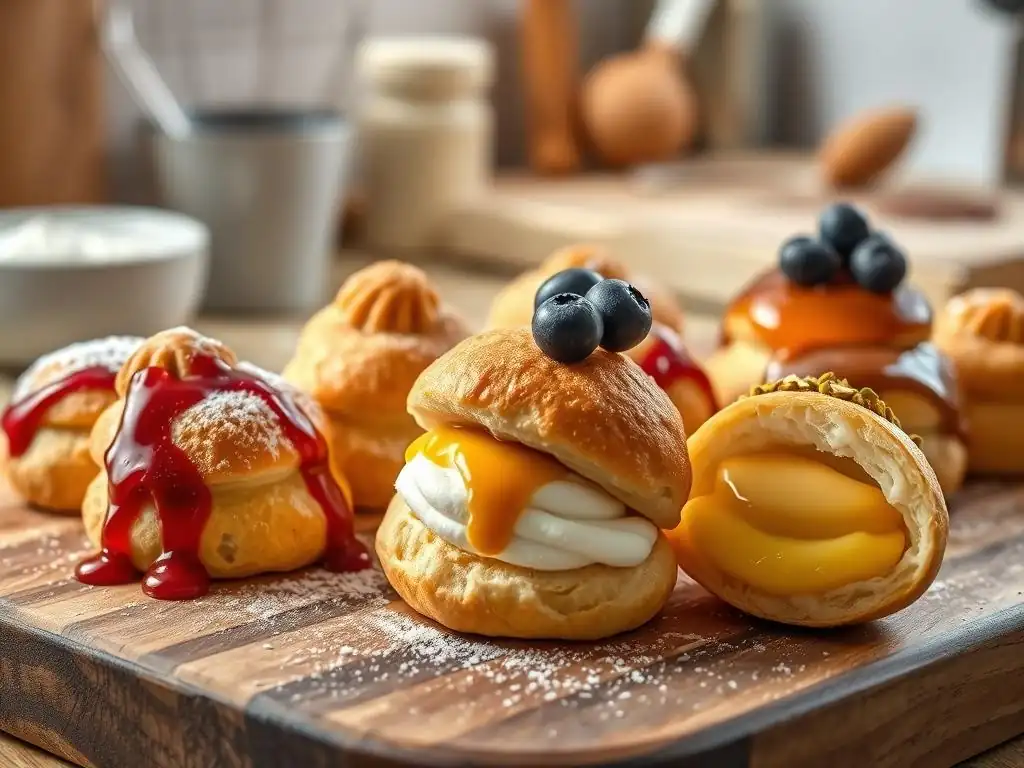
While this easy chocolate profiterole recipe guide focuses on a beloved classic, the world of choux pastry is vast and encourages creativity.
Experimenting with Different Flavors and Fillings
The choux pastry itself is a neutral base, making it perfect for pairing with various flavors. Instead of chocolate cream, consider fillings like coffee-flavored pastry cream, lemon curd, or even fruit compotes mixed with whipped cream. You can also flavor the choux dough itself with ingredients like cheese (for savory versions) or cocoa powder (for chocolate choux).
Toppings can also be varied. Beyond chocolate ganache, try a simple dusting of powdered sugar, a caramel drizzle, or a light glaze made from icing sugar and a liquid like milk or citrus juice. Adding chopped nuts or toasted coconut flakes to the glaze provides extra texture and flavor.
Creating Savory Profiteroles: A Unique Twist
Choux pastry isn't just for desserts! Savory profiteroles, often called gougères, are made by incorporating grated cheese (like Gruyère or Parmesan) into the dough before baking. These are typically served as appetizers or alongside soups and salads.
Savory choux puffs can be filled with a variety of savory creams, mousses, or even spreads. Think smoked salmon mousse, chicken salad, or a simple herbed cream cheese filling. Baked cheese gougères are often served unfilled, enjoyed warm straight from the oven.
Gluten-Free Profiteroles: Adapting the Recipe
Adapting choux pastry for gluten-free diets can be tricky but is certainly possible. The key is finding the right blend of gluten-free flours that can mimic the structure provided by wheat flour. A common approach involves using a blend of starches (like tapioca or cornstarch) and gluten-free flours (like rice flour or sorghum flour).
The process remains largely the same, but the hydration and texture of the dough might differ slightly. It may take a couple of attempts to perfect the ratio of gluten-free flours and liquid. Look for specific gluten-free choux pastry recipes rather than simply substituting gluten-free flour 1:1 in a standard recipe. Xanthan gum is often included in gluten-free blends to help provide structure.
Troubleshooting Your Profiterole Baking Journey
Even with an easy chocolate profiterole recipe guide, baking can sometimes present challenges. Knowing how to identify and fix common issues will boost your confidence and success rate.
Common Issues and Solutions for Perfect Profiteroles
The most frequent problems encountered when making choux pastry are related to the dough consistency and the baking process. Issues like flat puffs, dense interiors, or uneven browning can usually be traced back to one of these stages. Patience and careful observation are your best tools.
Keeping a baking journal can help. Note down the oven temperature, baking times, the appearance and feel of the dough at the ribbon stage, and the results. This allows you to identify patterns and make adjustments in future attempts. Don't be discouraged by imperfections; each batch is a learning opportunity.
Addressing Flat or Dense Profiteroles
Flat or dense profiteroles are often a sign that the dough did not have enough steam to lift properly, or that the structure collapsed. This can happen if the dough was too wet (spreads instead of rising), too dry (too stiff to expand), or not cooked sufficiently on the stovetop (not enough starch gelatinization to hold steam).
Ensure your oven is properly preheated to the high temperature required. Check your oven's accuracy with an oven thermometer if possible. Make sure you cook the dough on the stovetop for the recommended time to dry it out. Most importantly, add the eggs gradually until the dough reaches the correct ribbon consistency – this is the most critical step for a good rise.
Dealing with Burnt or Underbaked Profiteroles
Burnt profiteroles, especially on the bottom, might indicate your oven temperature is too high or that you are baking them for too long after reducing the temperature. Ensure your oven temperature is accurate and consider using a slightly lower temperature for the second phase of baking if the bottoms are consistently burning.
Underbaked profiteroles will look pale or only lightly golden and will feel heavy. They are also prone to collapsing after cooling. They need more time in the oven to dry out the interior. If they are browning too quickly on the outside but still feel heavy, you can reduce the oven temperature slightly and bake for longer, or cover them loosely with foil if the tops are getting too dark. Always bake until they are deeply golden and light.
Conclusion: Enjoy Your Homemade Chocolate Profiteroles!
You've successfully navigated this easy chocolate profiterole recipe guide and created a batch of delicious, homemade pastries. The process, from cooking the choux dough to filling and glazing, is a rewarding one that yields impressive results. Take a moment to appreciate your accomplishment!
Profiteroles are meant to be shared! Arrange them beautifully on a platter and present them to friends, family, or colleagues. Watching others enjoy your freshly baked, chocolate-filled creations is one of the greatest pleasures of baking. Don't forget to mention they were homemade with love!
Consider taking photos of your finished profiteroles to share on social media or with online baking communities. Describing your process and any tips you learned can inspire others to try this classic pastry. Celebrate your success and the joy that baking brings.
Further Exploration of Choux Pastry Recipes
Mastering this easy chocolate profiterole recipe guide is just the beginning of your choux pastry adventure. The fundamental techniques you've learned can be applied to a variety of other delightful treats.
Explore recipes for éclairs, which use the same dough piped into elongated shapes and typically filled with pastry cream and topped with fondant or ganache. Try making gougères for a savory option, or delve into more complex choux-based pastries like the Paris-Brest, a ring of choux filled with praline cream. Each new choux creation builds upon the skills you've developed, expanding your baking horizons one puff at a time.
Frequently Asked Questions
What makes this profiterole recipe "easy," compared to other recipes?
This recipe focuses on simplified steps and readily available ingredients, making it less intimidating for beginners. We provide clear instructions and visual aids.
What are the key ingredients I need to make perfect profiteroles?
You'll need butter, water, flour, eggs, and a pinch of salt for the basic dough. For the chocolate sauce, you'll need good quality chocolate, cream, and optionally, a bit of butter.
Can I make profiteroles ahead of time?
Yes, you can bake the profiterole shells ahead and store them in an airtight container. Avoid filling them until just before serving to prevent them from becoming soggy. It's best to store unfilled shells.
What's the best way to prevent my profiteroles from collapsing after baking?
Ensure your oven is at the correct temperature, and avoid opening the oven door during baking. The profiteroles need to be completely baked through to hold their shape.
What are some variations I can make to the classic chocolate profiterole?
You can fill them with pastry cream, ice cream, or flavored whipped cream instead of the classic filling. Experiment with different chocolate sauces, or even add a dusting of powdered sugar for presentation.
Final Reflection: The Enduring Allure of the Profiterole
The seemingly simple profiterole, a delicate dance of choux pastry and creamy filling, holds a surprising power to connect us to culinary traditions and spark joy. From elegant dessert displays to casual afternoon treats, its versatility and delightful taste continue to captivate palates worldwide. This enduring appeal speaks to something deeper than just a delicious recipe; it's a testament to the power of simple ingredients transformed into something truly special.
The journey of crafting the perfect profiterole, as detailed in this guide, is more than just a recipe; it's a process of discovery. It's about understanding the nuances of the choux pastry, the subtle art of piping, and the satisfying reward of a perfectly golden-brown puff. The best things in life are simple,
a phrase often repeated, rings especially true when considering the humble yet magnificent profiterole. Its simplicity belies the depth of flavor and the satisfaction derived from creating something beautiful and delicious with your own hands.
Now, I invite you to embrace the challenge. Don't be intimidated by the seemingly complex steps; instead, see them as an opportunity to learn, to experiment, and to create your own version of this classic treat. Whether you're a seasoned baker or a kitchen novice, the journey of making profiteroles is a rewarding one. So, gather your ingredients, put on your apron, and embark on this delicious adventure. The perfectly crisp choux pastry and the rich, decadent filling await – and the joy of sharing your creation with loved ones is the sweetest reward of all.
Unleash Your Inner Pâtissier: Master the Profiterole!
Thanks for joining us on this delicious journey into the world of profiteroles! We hope you've gained the confidence to tackle this classic pastry. Now it's time to put your newfound skills to the test!
- Bake your perfect batch: Use our recipe as a springboard, experimenting with different fillings and glazes. Let your creativity shine!
- Share your creations: Show off your profiterole prowess on social media – tag us @BakeWithEase so we can admire your work!
- Try a variation: Challenge yourself by adapting the recipe to make savory profiteroles – the possibilities are endless!
What exciting flavour combinations will you create with your newfound profiterole expertise? Let us know in the comments below!