
Troubleshooting UnderFermented Sourdough: Recognizing the Signs


Welcome to BakeWithEase, your trusted companion in the world of baking! Are you struggling to achieve that perfect rise with your sourdough? Then you've come to the right place. This article tackles a common pitfall: sourdough underfermentation problems, providing you with the knowledge to recognize the signs and unlock the secrets to a beautifully fermented loaf. Curious to learn how to rescue your dough and achieve that artisan-level bake? Let's dive in!
- Understanding Sourdough Fermentation: The Foundation for Success
- Identifying Under-Fermented Sourdough: Key Indicators
- Common Causes of Sourdough Under-Fermentation Problems Solved
- Solving Under-Fermentation Issues: Practical Solutions
- Preventing Under-Fermentation: Best Practices for Sourdough Baking
- What to Do with Under-Fermented Sourdough
-
Frequently Asked Questions
- How can I recognize the signs of sourdough underfermentation?
- What are the primary causes of sourdough underfermentation?
- How do I improve my sourdough starter activity to prevent underfermentation?
- What role does dough temperature play in sourdough fermentation?
- How much longer should I ferment my sourdough if I suspect underfermentation?
- Final Reflection: The Persistent Pursuit of Sourdough Perfection
- Unleash Your Sourdough Potential: Mastering the Ferment!
Understanding Sourdough Fermentation: The Foundation for Success
What is Sourdough Fermentation and Why is it Crucial?
Sourdough fermentation is the magical process where wild yeast and beneficial bacteria in your starter consume sugars in the flour, producing carbon dioxide gas, organic acids, and complex flavor compounds. This isn't just about making the dough rise; it's about developing structure, texture, and that signature tangy sourdough taste. Without adequate fermentation, often referred to as under-fermentation, your loaf will be dense, lack flavor, and have a poor crust.
Proper fermentation is the backbone of successful sourdough baking. It transforms a simple mixture of flour, water, salt, and starter into a living, breathing dough. The acids produced during fermentation strengthen the gluten network, allowing the dough to trap the gas bubbles created by the yeast. This interplay between gas production and gluten development is what gives sourdough its characteristic open crumb structure and airy texture. Mastering this process is key to solving sourdough underfermentation problems.
The Role of Yeast and Bacteria in Sourdough Dough
Your sourdough starter is a complex ecosystem primarily composed of Lactobacillus bacteria and wild yeasts, often species like Saccharomyces cerevisiae (though different from commercial baker's yeast) and others. The yeast are primarily responsible for leavening by converting sugars into ethanol and carbon dioxide gas, which makes the dough rise. A healthy, active starter should show significant bubbling and volume increase after feeding, sometimes doubling or tripling in size within 4-8 hours depending on temperature and feeding ratio.
The bacteria, mainly Lactic Acid Bacteria (LAB), contribute significantly to the flavor and structure. They produce lactic and acetic acids, which give sourdough its characteristic tang and also help condition the gluten, making it more extensible yet strong enough to hold the gas. The balance between yeast activity and bacterial acid production is crucial. If bacterial activity is too slow relative to yeast (often due to low temperature or weak starter), you might face sourdough underfermentation problems because the gluten isn't properly conditioned, even if some rise occurs.
Identifying Under-Fermented Sourdough: Key Indicators

Visual Cues of Insufficient Fermentation
Recognizing the visual signs of under-fermentation is often the first step in diagnosing sourdough underfermentation problems. These signs are typically evident during bulk fermentation (the first rise) or proofing (the final rise before baking). Paying close attention to how your dough looks and behaves is critical.
Lack of Volume in the Dough
One of the most obvious signs is insufficient volume increase during bulk fermentation. While doubling isn't always the goal (some recipes aim for a 30-50% increase depending on hydration and flour type), if your dough shows minimal growth after the expected time, it's likely under-fermented. For example, if a recipe suggests bulk fermentation for 4 hours at 78°F (25.5°C) and your dough has barely expanded by 10-15%, it hasn't fermented enough. The dough might still look dense and heavy rather than light and airy.
Tight Dough Structure: Difficulty Stretching and Folding
Under-fermented dough often feels tight and resistant when you try to perform stretches and folds during bulk fermentation. It springs back almost immediately and is difficult to extend without tearing. This indicates that the gluten network hasn't been sufficiently relaxed and strengthened by the acids produced during fermentation. Properly fermented dough should feel more extensible and pliable, stretching easily without tearing after a rest period.
Dough that Tears Easily
Despite feeling tight and resistant, paradoxically, under-fermented dough can also tear easily when stretched aggressively, especially during shaping. This happens because the gluten hasn't been properly conditioned and developed by the acids and enzyme activity. Instead of stretching like a strong elastic band, it snaps. A well-fermented dough, while having tension, should stretch smoothly and thinly, allowing you to create a strong surface tension during shaping without frequent tearing.
Textural Signs of Under-Fermentation
Beyond how the dough looks and feels during fermentation, the texture of the final baked loaf provides clear indicators of whether sourdough underfermentation problems occurred.
Dense and Gummy Crumb
A hallmark of under-fermented sourdough is a dense, heavy, and often gummy crumb. The loaf might feel heavier than expected for its size. This density results from insufficient gas production and trapping; the dough didn't develop enough internal structure and air pockets. When sliced, the crumb appears uniform, lacking the characteristic irregular holes of a well-fermented loaf. The texture can be unpleasantly chewy and stick to your teeth.
Lack of Air Pockets in the Crumb
Following from the dense texture, an under-fermented loaf will exhibit a tight crumb structure with very few, if any, large air pockets. The bubbles created by yeast were either insufficient or couldn't be adequately trapped by the underdeveloped gluten network. Compare this to a properly fermented loaf, which typically shows a range of bubble sizes, contributing to a light and airy texture. The absence of varying hole sizes is a strong sign that the dough needed more time or activity during fermentation.
Flavor Clues: Tasting for Under-Fermentation
The taste of your baked sourdough is a final, crucial indicator of fermentation success. Sourdough underfermentation problems solved often means achieving the desired balance of flavors.
A Doughy, Unpleasant Taste
An under-fermented loaf will often taste distinctly 'doughy' or 'raw,' even if it's fully baked through. This is because the complex sugars and starches in the flour haven't been sufficiently broken down by the enzymatic activity that occurs during fermentation. The flavor is flat and lacks depth. It can also taste yeasty, but not in a pleasant, complex way.
Absence of Tangy Sourdough Flavor
The signature tang of sourdough comes from the organic acids produced by the bacteria in the starter. If the dough is under-fermented, the bacteria haven't had enough time to produce these acids in sufficient quantities. The resulting loaf will lack that pleasant sour note, tasting bland and one-dimensional. While the desired level of tang varies by preference and starter activity, a complete absence of tang is a strong signal of under-fermentation.
Common Causes of Sourdough Under-Fermentation Problems Solved
Identifying the root cause is essential to fixing sourdough underfermentation problems. Several factors commonly contribute to insufficient fermentation.
Inactive or Weak Sourdough Starter
A sluggish or inactive starter is perhaps the most frequent culprit behind under-fermented dough. If your starter isn't vigorous enough to produce sufficient gas and acid, it can't effectively leaven and condition the dough, regardless of how long you let it ferment. A starter that hasn't been fed regularly, is stored improperly, or is battling contamination might lose its potency.
How to Assess Starter Activity
A healthy, active starter should consistently double or triple in volume within a predictable timeframe after feeding at a consistent temperature, usually within 4-8 hours when fed at a 1:2:2 or 1:3:3 ratio (starter:water:flour) at typical room temperatures (around 70-75°F or 21-24°C). A simple "float test" can also indicate readiness, though it's not foolproof: drop a small spoonful of starter into a glass of water; if it floats, it's generally considered active enough to leaven. If your starter consistently struggles to double or shows minimal bubbling, it's likely weak.
Reviving a Sluggish Starter
To revive a sluggish starter, try feeding it more frequently (e.g., every 12 hours) and at a higher ratio (e.g., 1:3:3 or 1:4:4) for a few days. Ensure you are using good quality flour (rye or whole wheat can give it a boost initially) and filtered water. Maintaining a consistent, warm environment (75-80°F or 24-27°C) can also significantly increase activity. Discard most of the starter before each feeding to ensure the microbes have plenty of new food. After a few days of attentive care, you should see a noticeable improvement in its rise and bubble production.
Insufficient Fermentation Time: Patience is Key
Even with a healthy starter, simply not allowing the dough enough time to ferment is a common issue. Fermentation is a biological process that takes time, and rushing it will inevitably lead to under-fermentation. Many beginners underestimate the duration required, especially when following recipes that provide time estimates without considering environmental variables.
Factors Affecting Fermentation Time (Temperature, Hydration)
The primary factors influencing fermentation time are temperature and hydration. Warmer temperatures significantly speed up fermentation because microbial activity increases with heat. A dough that might take 4 hours to bulk ferment at 78°F (25.5°C) could take 8-12 hours or longer at 68°F (20°C). Higher hydration levels also tend to ferment faster because the water makes nutrients more accessible to the microbes and allows for easier gas expansion within the dough structure. Flour type matters too; whole grain flours ferment faster than white flours due to higher nutrient content.
Adjusting Fermentation Time Based on Environmental Conditions
Since kitchen temperatures fluctuate, relying solely on recipe time estimates can lead to sourdough underfermentation problems solved by simply adjusting time. Instead, learn to monitor the dough's development (visual cues like volume increase, texture, and feel) and adjust the time accordingly. If your kitchen is cooler, expect bulk fermentation to take longer. If it's warmer, it will be faster. High-hydration doughs or those with a significant percentage of whole grains will also reach their fermentation peak sooner than stiff, white flour doughs at the same temperature.
Incorrect Dough Temperature: Optimizing for Fermentation
Dough temperature is perhaps the most critical, yet often overlooked, factor affecting fermentation speed. Microbial activity thrives within specific temperature ranges. Dough that is too cold will ferment sluggishly, leading to under-fermentation even over extended periods.
Ideal Dough Temperature Ranges for Sourdough
For bulk fermentation, an ideal dough temperature typically falls between 75°F and 80°F (24°C to 27°C). Within this range, both yeast and bacteria are quite active, allowing for efficient gas production and acid development within a reasonable timeframe (e.g., 4-6 hours for many standard recipes). Temperatures below 70°F (21°C) significantly slow down fermentation, while temperatures above 80°F (27°C) can accelerate yeast activity disproportionately to bacterial activity, potentially leading to a rapid rise but insufficient acid development for flavor and structure.
Techniques for Controlling Dough Temperature
Achieving and maintaining the ideal dough temperature involves several techniques. Use warm water (e.g., 80-90°F or 27-32°C) when mixing the dough, accounting for the temperature of your flour and starter. After mixing, place the dough in a warm spot, such as an oven with the light on (often around 75-85°F or 24-29°C), a proofing box, or an insulated cooler with a bowl of hot water. Using a digital thermometer to check the dough's internal temperature is highly recommended to ensure it's within the target range throughout bulk fermentation.
Inadequate Hydration: The Impact on Fermentation
Hydration, the ratio of water to flour, affects the dough's consistency and directly impacts fermentation speed and how well the gluten develops to hold gas. Too little water can hinder microbial activity and gluten development, contributing to under-fermentation.
The Role of Water in Sourdough Fermentation
Water is essential for activating the enzymes in flour, dissolving sugars for the microbes to consume, and facilitating the movement of yeast and bacteria throughout the dough. It also allows the gluten proteins (gliadin and glutenin) to hydrate and form the gluten network. In a low-hydration dough (e.g., below 65% hydration), the environment is less favorable for rapid microbial activity, and the dough can feel stiffer and less extensible, making it harder to judge fermentation progress by feel.
Adjusting Hydration Levels for Optimal Results
While you can make excellent sourdough at various hydration levels, if you are consistently facing sourdough underfermentation problems with a stiff dough, consider slightly increasing your hydration in future bakes (e.g., from 65% to 70%). This can help speed up fermentation and improve dough handling, making it easier to perform stretches and folds which further aid gluten development. However, increasing hydration also makes the dough stickier and harder to handle, so it's a balance. Ensure your starter's hydration matches the dough's or is consistent with what your recipe expects.
Solving Under-Fermentation Issues: Practical Solutions
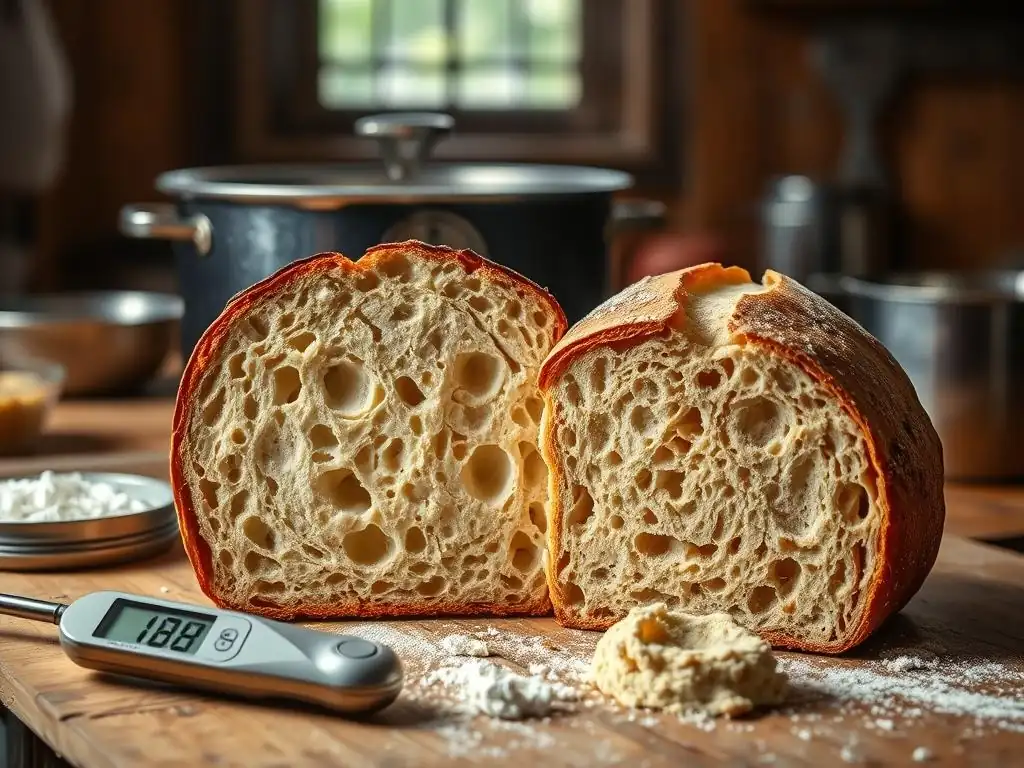
Once you can recognize the signs and understand the causes, solving sourdough underfermentation problems becomes much more manageable. Here are practical steps you can take.
Strengthening Your Sourdough Starter
A strong starter is fundamental. If your starter is weak, no amount of warm temperatures or long fermentation times will compensate.
Feeding Schedules for a Healthy Starter
- Consider feeding your starter 1-2 times daily if stored at room temperature.
- If stored in the refrigerator, revive it with 2-3 daily feedings at room temperature for a few days before using it for baking.
- Use a feeding ratio that provides plenty of food, such as 1:3:3 or even 1:4:4 (starter:water:flour), especially during revival. For example, feeding 10g starter with 40g water and 40g flour.
Maintaining Consistent Starter Hydration
- Unless your recipe specifically calls for a different hydration, maintain your starter at 100% hydration (equal weights of water and flour). This is a common standard and makes it easier to predict its behavior.
- Measure ingredients accurately using a digital scale. For a 100% hydration starter, feeding 20g starter requires 20g water and 20g flour.
Optimizing Fermentation Time and Temperature
Controlling the fermentation environment is key to ensuring sufficient microbial activity.
Bulk Fermentation Tips for Even Fermentation
- Aim for a consistent dough temperature between 75°F and 80°F (24-27°C) throughout bulk fermentation.
- Use a proofing box, warm oven (light on), or an insulated container to maintain temperature.
- Monitor the dough's volume increase and texture (extensibility, bubble formation) rather than strictly adhering to time estimates. If it's cool, give it more time. If it's warm, check it sooner. Target a 30-50% volume increase for many doughs, depending on hydration and flour.
Proofing Techniques for a Light and Airy Loaf
- Cold proofing in the refrigerator (38-40°F or 3-4°C) for 8-16 hours slows fermentation significantly, developing flavor and making the dough easier to handle and score. This is often done after a successful bulk fermentation.
- If proofing at room temperature, it will be much faster (1-3 hours typically). Monitor the dough; it should increase in volume by about 30-50% and feel light and airy. An under-proofed dough (a form of under-fermentation) will lack oven spring and have a dense crumb.
Adjusting Your Sourdough Recipe for Better Fermentation
Sometimes, the recipe itself might need tweaking to facilitate better fermentation, especially if you're consistently experiencing sourdough underfermentation problems solved by these adjustments.
Fine-Tuning Hydration Levels
- If your current recipe is below 65% hydration and you find your dough tough to work with and slow to ferment, consider slowly increasing the water in future batches by just 2-3% (e.g., adding 10-15g more water per 500g flour).
- Ensure your starter's hydration is consistent with the recipe's assumptions (usually 100%).
Experimenting with Different Flours
- Adding a percentage of whole wheat or rye flour (e.g., 10-20% of total flour weight) can boost fermentation speed and flavor due to higher nutrient content.
- Ensure the flour you use is fresh and has adequate protein content (around 11-13% is good for bread) for gluten development.
- [ ] Assess starter activity before starting a bake.
- [ ] Use warm water when mixing dough to hit target temperature.
- [ ] Place dough in a warm environment for bulk fermentation.
- [ ] Monitor dough volume and texture, not just time.
- [ ] Consider cold proofing to manage final fermentation.
Preventing Under-Fermentation: Best Practices for Sourdough Baking

Prevention is always better than cure when it comes to sourdough underfermentation problems. By adopting consistent best practices, you can minimize the chances of encountering these issues.
Accurate Measurements: The Importance of Precision
Baking, especially sourdough, is a science, and precision matters. Using a digital scale to measure all ingredients – starter, water, flour, and salt – ensures consistency batch to batch. Volumes (cups, spoons) are notoriously inaccurate, especially for flour, which can be packed differently. Using weights guarantees the correct hydration and ingredient ratios, which directly impact fermentation speed and outcome. For example, 500g of flour requires exactly 350g of water for 70% hydration, regardless of how the flour is scooped. This level of accuracy is foundational to predictable fermentation.
Proper Mixing Techniques: Developing Gluten Effectively
Effective gluten development during mixing is crucial because the gluten network is what traps the gases produced during fermentation, giving the loaf its structure and rise. Whether you use a stand mixer or mix by hand, ensure the dough is mixed until it comes together and feels somewhat cohesive.
Following up with autolyse (mixing flour and water first and letting it rest) and subsequent stretch and folds or coil folds during bulk fermentation further strengthens the gluten. A well-developed gluten structure is essential for a successful rise during fermentation and baking, preventing the dough from collapsing even if gas production is adequate.
Monitoring Dough Development: Visual and Tactile Cues
Becoming attuned to the visual and tactile cues of fermenting dough is perhaps the most important skill for preventing sourdough underfermentation problems. Don't rely solely on clocks or recipe photos. Feel the dough: does it feel lighter? Is it airy?
Look at it: has it increased in volume? Are there bubbles visible on the surface or sides of the container? Does it pass the 'windowpane test' (stretching a small piece thinly without tearing)? These indicators tell you what the microbes are doing right now in your kitchen environment, allowing you to make informed decisions about extending or shortening fermentation time.
What to Do with Under-Fermented Sourdough
Even with the best practices, sometimes under-fermentation happens. All is not lost! There are ways to salvage dough that hasn't fermented enough.
Salvaging Under-Proofed Dough: Options for Rescue
If you realize your dough is under-proofed just before baking (it hasn't increased much in volume during the final proof), you have a couple of options. You can try giving it more time at room temperature in a warm spot, monitoring it closely until it shows signs of readiness (lightness, some increase in volume, passes the poke test – a gentle poke leaves a slow indentation rebound).
Alternatively, if you planned to bake immediately, you can reshape it gently and place it back in a warm spot for a shorter, focused room-temperature proof (e.g., 30-60 minutes), then bake. Be aware that oven spring might still be limited compared to a perfectly proofed loaf.
Another option for significantly under-fermented dough is to repurpose it. It might not make a beautiful loaf, but it can be used for other applications where fermentation is less critical or takes a different form. Consider turning it into flatbreads, pizza dough (though it might require added commercial yeast for a good rise), crackers, or even incorporating a small amount into a future dough as 'old dough' (pâte fermentée) to boost flavor (though this won't fix the under-fermentation of the original batch).
Learning from Mistakes: Improving Your Sourdough Skills
Every under-fermented loaf is a learning opportunity. Take notes about what you did: the temperature of your kitchen, how your starter behaved, the dough temperature, how long you fermented and proofed, and what the dough looked and felt like at each stage. Compare this to the expected outcomes. Did your starter double?
Was your kitchen cooler than usual? Did you cut bulk fermentation short? By analyzing what went wrong, you can adjust your process for the next bake. This iterative process of baking, observing, and adjusting is how you truly master sourdough and consistently achieve the desired results, successfully tackling sourdough underfermentation problems solved through experience.
Frequently Asked Questions
How can I recognize the signs of sourdough underfermentation?
Underfermented sourdough often appears dense and gummy with a lack of rise. The taste is usually sour and unpleasant due to insufficient fermentation.
What are the primary causes of sourdough underfermentation?
The most common causes include insufficient starter activity, low dough temperature, and not enough time allowed for fermentation.
How do I improve my sourdough starter activity to prevent underfermentation?
Ensure your starter is fed regularly and doubling in size after each feeding. A warm environment will also help boost its activity.
What role does dough temperature play in sourdough fermentation?
Dough temperature significantly impacts the rate of fermentation. A cooler dough will ferment slower, potentially leading to underfermentation if not compensated for with more time.
How much longer should I ferment my sourdough if I suspect underfermentation?
It depends on the severity, but typically, allowing the dough to ferment for an extra 1-2 hours in a warmer environment can help. Monitor the dough's volume and texture.
Final Reflection: The Persistent Pursuit of Sourdough Perfection
The quest for the perfect sourdough loaf is a journey, not a destination, and understanding underfermentation is crucial to mastering this ancient craft. Many bakers, even experienced ones, grapple with this common issue, leading to dense, flavorless loaves that fall short of expectations. This article aimed to equip you with the knowledge to diagnose and solve this frustrating problem, turning those disappointing bakes into triumphs.
The impact of sourdough baking extends far beyond the kitchen; it's a connection to history, a celebration of simple ingredients, and a testament to the power of patience. The process itself, with its unpredictable nature and reliance on a living organism, mirrors life's own challenges. It teaches us resilience, observation, and the importance of adapting to changing circumstances. The sourdough starter is a living thing, a reflection of the environment and the baker's care.
This quote, though not directly from a source, encapsulates the essence of the sourdough journey and its inherent lessons.
Now, consider your own baking journey. What have you learned from your successes and failures? What adjustments will you make to your process based on the information presented here? Don't be discouraged by setbacks; embrace them as opportunities for growth. The next time your sourdough shows signs of underfermentation, remember the tools and techniques discussed in this article. With careful observation, patience, and a willingness to learn, you'll be well on your way to baking consistently delicious, perfectly fermented sourdough loaves. The journey is rewarding, and the taste of success is truly unforgettable.
Unleash Your Sourdough Potential: Mastering the Ferment!
Thanks for taking the time to explore the world of sourdough fermentation with us! We hope you gained valuable insights into identifying underfermented loaves. Now, it’s time to put that knowledge into practice!
- Dive deeper into sourdough mastery: Review the troubleshooting tips and experiment with different hydration levels and fermentation times to find what works best for your starter and environment. This is your chance to become a sourdough expert!
- Share your sourdough journey: Post a picture of your next bake on social media and tag #BakeWithEaseSourdough – let’s inspire each other!
- Challenge yourself: Try baking a different sourdough recipe this week, and pay close attention to the fermentation stages. Observe the changes and adapt your process accordingly.
Ready to unlock the secrets of perfect sourdough fermentation? What specific aspect of your sourdough process are you most excited to refine now?