
Easy Baked Doughnuts (Yes, Baked!)

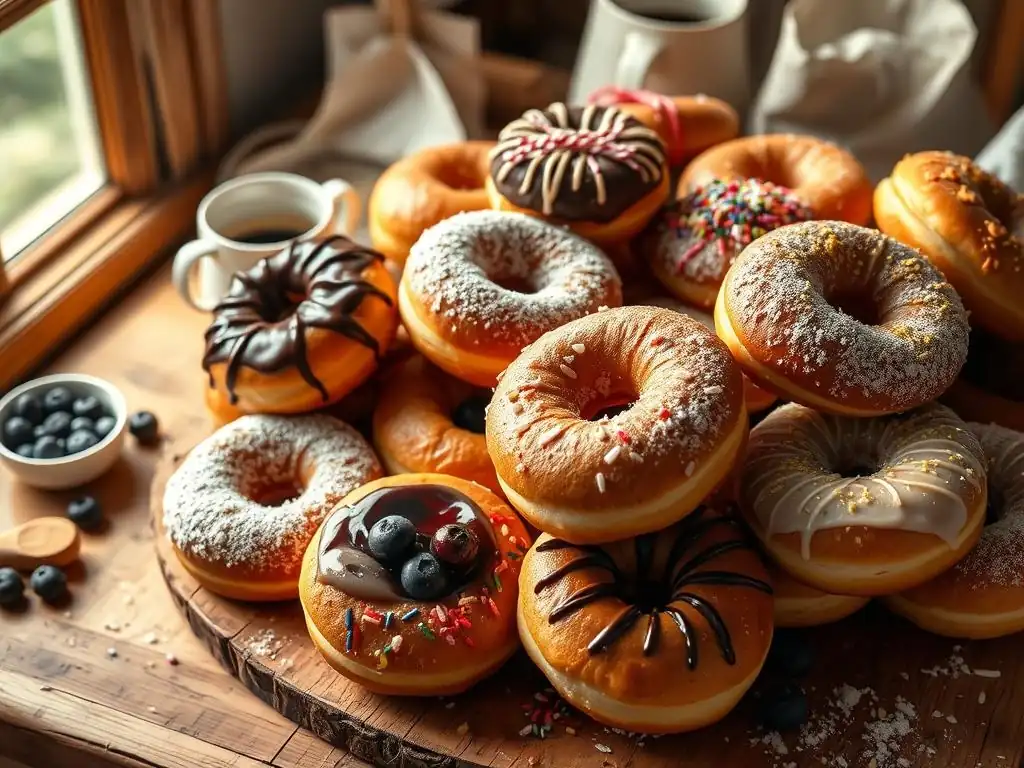
Welcome to BakeWithEase, your kitchen companion for all things baking! Are you ready to ditch the fryer and dive into the world of irresistibly delicious baked doughnuts? This isn't just another recipe; it's your passport to perfectly fluffy, homemade doughnuts without the fuss. Curious how we achieve that signature doughnut taste and texture without deep-frying? Keep reading – our simple baked doughnuts recipe will revolutionize your pastry game!
- Baked Chocolate Doughnuts
- Introduction to Baked Doughnuts
- The Best Baked Doughnuts Recipe: A Step-by-Step Guide
- Preparing the Dough for Your Baked Doughnuts
- Baking Your Doughnuts to Golden Perfection
- Easy Glaze Recipes for Baked Doughnuts
- Adding Sprinkles and Toppings for Extra Fun
- Tips and Tricks for Perfect Baked Doughnuts Every Time
- Troubleshooting Common Baked Doughnut Problems
- Variations and Adaptations of the Baked Doughnuts Recipe
- Enjoy Your Homemade Baked Doughnuts!
-
Frequently Asked Questions
- How much easier are baked doughnuts compared to fried doughnuts?
- Can I substitute ingredients in the Easy Baked Doughnuts recipe?
- How do I prevent my baked doughnuts from being dry?
- What kind of glaze works best on baked doughnuts?
- Where can I find other baking recipes suitable for beginners on BakeWithEase.com?
- Final Reflection: The Sweet Simplicity of Baked Doughnuts
- Unleash Your Inner Baker: Bake Doughnuts Today!
Baked Chocolate Doughnuts
Introduction to Baked Doughnuts
Making doughnuts at home often conjures images of hot oil splattering and a lingering greasy smell in the kitchen. But what if there was an easier way to enjoy these sweet treats? Enter the baked doughnut! Unlike their fried counterparts, baked doughnuts are made in a special pan, resulting in a cake-like texture that's less messy and often perceived as a lighter alternative. This simple method opens up a world of possibilities for enjoying fresh, warm doughnuts right from your oven.
Baked doughnuts offer a fantastic entry point into homemade pastries, especially for beginners. They require less specialized equipment than deep frying and are considerably faster from start to finish. A typical batch of baked doughnuts can be mixed, baked, and glazed in under 30 minutes, a stark contrast to the longer proofing and frying times associated with traditional yeast or cake doughnuts. This makes them perfect for a spontaneous weekend treat or a quick weeknight dessert.
Why Choose Baked Doughnuts Over Fried?
Choosing baked doughnuts over fried ones comes with several practical advantages, making them an excellent choice for home bakers. Firstly, safety is a major factor; working with large quantities of hot oil can be hazardous, especially with children around. Baking eliminates this risk entirely. Secondly, the cleanup is significantly easier. There's no large pot of oil to dispose of or greasy surfaces to scrub down afterwards. You simply wash a mixing bowl, a whisk, and the doughnut pan.
Furthermore, the texture and flavor profile of baked doughnuts are distinct. They tend to have a soft, cake-like crumb, similar to a muffin or cupcake, which many people find appealing. While they lack the crispy exterior of a fried doughnut, their ability to absorb glazes and toppings makes them incredibly versatile.
For instance, a simple vanilla glaze clings beautifully to the surface, providing a sweet contrast to the tender interior. Many find that baking also allows the subtle flavors of ingredients like cocoa powder or vanilla extract to shine through more clearly compared to the richness imparted by frying oil.
BakeWithEase: Your Guide to Easy Baking
Welcome to BakeWithEase, your friendly corner of the internet dedicated to making baking accessible and enjoyable for everyone. We believe that creating delicious treats doesn't have to be complicated or intimidating. Our goal is to provide simple, step-by-step guides, helpful tips, and reliable recipes that empower you to bake with confidence, regardless of your experience level. Whether you're attempting your first batch of cookies or perfecting a classic cake, we're here to help you every step of the way.
At BakeWithEase, we focus on demystifying baking techniques and offering recipes that use readily available ingredients. Our tested recipes, like this simple baked doughnut recipe, are designed to yield consistent, delicious results without requiring fancy equipment or advanced skills. We understand that life is busy, so we prioritize efficiency and ease, ensuring you can whip up impressive desserts and pastries without spending hours in the kitchen. Think of us as your baking buddy, ready to guide you to sweet success!
The Best Baked Doughnuts Recipe: A Step-by-Step Guide
Creating delicious baked doughnuts at home is surprisingly straightforward. This simple baked doughnut recipe focuses on ease and reliable results, perfect for anyone looking to enjoy homemade treats without the fuss of frying. The process involves combining common pantry staples and using a specific pan to achieve that classic doughnut shape. Follow these steps closely, and you'll be enjoying warm, fresh doughnuts in no time.
The foundation of any great baked good lies in its ingredients and the tools used to bring them together. For a simple baked doughnut recipe, we'll stick to basic baking principles and standard kitchen equipment. The key is using the correct proportions and ensuring your leavening agents are fresh to get that lovely rise and tender crumb. Let's dive into what you'll need to get started on your easy baked doughnuts journey.
Key Ingredients for Delicious Baked Doughnuts
Building the perfect baked doughnut starts with understanding the role each ingredient plays. For a classic cake-style baked doughnut, we rely on a balance of dry and wet ingredients, leavening, and sweetness. This particular simple baked doughnut recipe calls for standard baking staples, ensuring you likely have most items on hand already. Using quality ingredients, even basic ones, can make a noticeable difference in the final taste and texture.
Our simple baked doughnut recipe primarily uses all-purpose flour for structure, sugar for sweetness and tenderness, baking powder for lift, and wet ingredients like milk, eggs, and melted butter for moisture and richness. Adding a touch of vanilla extract enhances the flavor profile. The combination of these elements creates a batter that's easy to work with and bakes into a soft, delightful doughnut.
Flour: All-Purpose Flour
All-purpose flour is the workhorse of many baking recipes, including this simple baked doughnut recipe. It provides the necessary structure to hold the shape of the doughnut as it bakes. Using standard all-purpose flour (like King Arthur Baking Company's or Gold Medal) with a protein content typically around 10-12% works perfectly for achieving a tender, cake-like texture. For best results, measure your flour correctly, ideally by weight (about 120-130 grams per cup), to avoid adding too much, which can lead to dense doughnuts.
Avoid substituting with flours like bread flour (higher protein, better for chewy breads) or cake flour (lower protein, better for very delicate cakes) unless you are experienced and know how to adjust the recipe. While gluten-free all-purpose blends can sometimes be used, they may require slight adjustments to liquid or leavening and can produce a different texture than the standard recipe intends. For a truly simple baked doughnut recipe, stick with conventional all-purpose flour.
Sweetness: Granulated Sugar and Brown Sugar
This simple baked doughnut recipe often benefits from a combination of granulated sugar and brown sugar. Granulated sugar provides sweetness and helps with the browning of the crust. Brown sugar, on the other hand, adds moisture due to its molasses content, contributing to a softer, more tender crumb. It also imparts a subtle caramel-like flavor that complements the other ingredients, especially in chocolate versions.
Using a blend, perhaps around 1/2 cup of granulated sugar and 1/4 cup of light brown sugar for a typical batch yielding 6-8 doughnuts, strikes a nice balance. Ensure your brown sugar is fresh and soft; if it's hard, gently warm it or use a brown sugar saver to soften it before measuring. Packing the brown sugar firmly into the measuring cup is crucial for accurate measurement.
Leavening: Baking Powder
Baking powder is the primary leavening agent in this simple baked doughnut recipe. It's a double-acting leavener, meaning it creates carbon dioxide gas when it comes into contact with liquid and again when heated in the oven. This gas expands, causing the batter to rise and develop a light, airy texture. Without sufficient leavening, your baked doughnuts would be flat and dense.
Most recipes call for about 1 to 1.5 teaspoons of baking powder per cup of flour. It's essential to ensure your baking powder is fresh. To test its freshness, drop a teaspoon into a bowl of hot water; it should bubble vigorously. If it doesn't, it's expired and won't provide the necessary lift for your easy baked doughnuts. Using fresh baking powder is key to avoiding flat or heavy results.
Essential Baking Equipment for Baked Doughnuts
Having the right tools makes the process of creating a simple baked doughnut recipe much easier and more enjoyable. While you don't need a professional kitchen setup, a few specific items are highly recommended. These tools help ensure your batter is mixed correctly, your doughnuts bake evenly, and they come out of the pan in perfect shape.
The most critical piece of equipment is a doughnut pan. Beyond that, standard baking tools like mixing bowls, measuring cups, and spoons are necessary. Having a whisk or an electric mixer can also speed up the process of combining ingredients smoothly. Investing in these few items will make your baked doughnut adventures much more successful.
Doughnut Pans: Non-Stick Doughnut Pan
A non-stick doughnut pan is absolutely essential for making baked doughnuts. These pans have cavities specifically shaped like doughnuts. Standard pans typically hold 6 or 12 doughnuts. The non-stick coating is crucial for easy release of the baked doughnuts after they've cooled slightly. Even with a non-stick pan, it's wise to lightly grease the cavities with baking spray or butter to ensure the doughnuts don't stick.
Silicone doughnut pans are also available and offer excellent non-stick properties, often allowing for even easier release. However, they can be flimsier than metal pans and might require placing them on a baking sheet for stability in the oven. For a reliable and widely available option for your simple baked doughnut recipe, a standard metal non-stick pan is a great choice. Ensure you have enough pans for the number of doughnuts you plan to make, as the batter should be baked immediately after mixing.
Mixing Bowls and Measuring Tools: Standard Set
For this simple baked doughnut recipe, you'll need a few standard mixing bowls. Having at least two medium-sized bowls is helpful – one for dry ingredients and one for wet ingredients, before combining them. Glass, ceramic, or metal bowls all work fine. Ensure they are clean and dry before use.
Accurate measuring is fundamental in baking. You'll need a set of dry measuring cups (the ones you level off) for flour, sugar, and baking powder, and liquid measuring cups (with a spout and markings on the side) for milk and oil/melted butter. A set of measuring spoons is also necessary for smaller quantities like baking powder, salt, and vanilla extract. Using standard, accurate measuring tools is a non-negotiable step for a reliable simple baked doughnut recipe.
Preparing the Dough for Your Baked Doughnuts
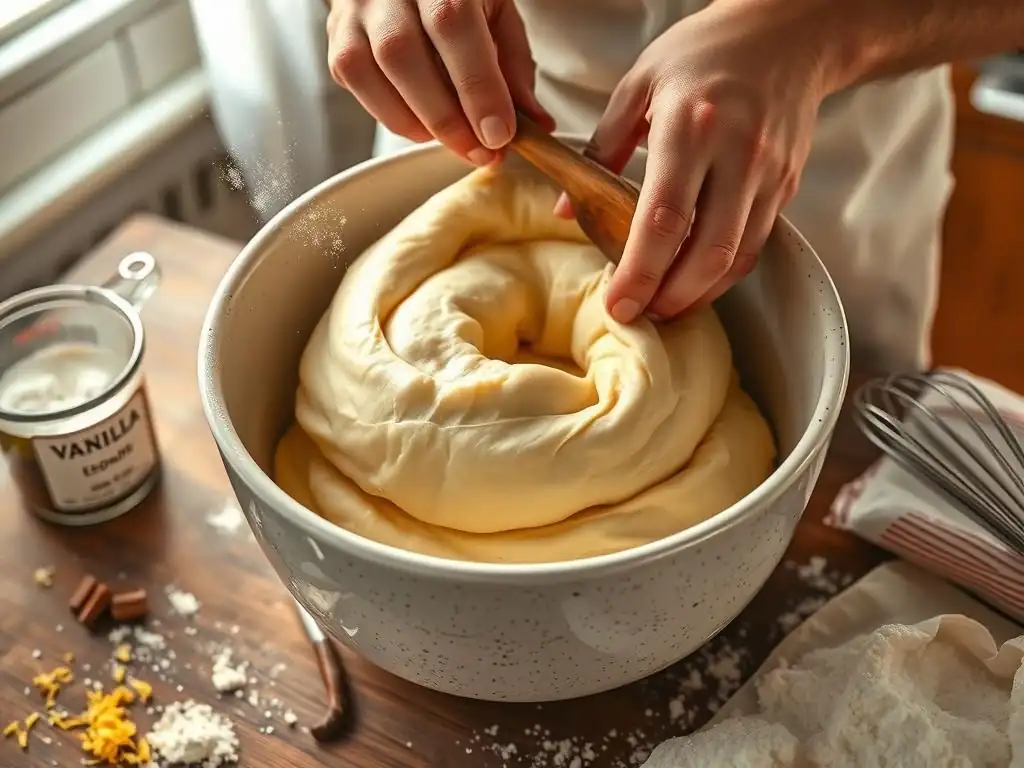
The batter for baked doughnuts is quite simple to prepare, much like a quick bread or muffin batter. The key is to mix the ingredients just enough to combine them without overworking the gluten in the flour. Overmixing can lead to tough, dense doughnuts, which is the opposite of the tender crumb we're aiming for with this easy baked doughnuts recipe.
The process typically involves whisking together the dry ingredients first, then combining the wet ingredients separately, and finally gently combining the two mixtures. This method ensures that the leavening is evenly distributed and that the wet ingredients are fully incorporated without excessive stirring.
Mixing the Dry Ingredients: Ensuring Even Distribution
The first step in preparing the batter for your simple baked doughnut recipe is to combine all the dry ingredients in a medium mixing bowl. This usually includes the all-purpose flour, both granulated and brown sugars, baking powder, salt, and any dry flavorings like cocoa powder if making chocolate doughnuts.
Use a whisk to thoroughly combine these ingredients. Whisking serves a couple of purposes: it breaks up any lumps, especially in the brown sugar or baking powder, and it helps to evenly distribute the leavening and salt throughout the flour. This ensures that every part of your doughnut gets the necessary lift and seasoning, leading to a uniform texture and flavor in your easy baked doughnuts. A quick 30-second whisk is usually sufficient.
Incorporating the Wet Ingredients: Achieving a Smooth Batter
In a separate bowl, you will combine the wet ingredients for the simple baked doughnut recipe. This typically includes milk (dairy or non-dairy), eggs, melted butter or oil, and vanilla extract. Ensure your melted butter isn't too hot, as it could scramble the eggs when combined. Whisk these wet ingredients together until they are well combined and smooth.
Once the wet ingredients are mixed, pour them into the bowl with the dry ingredients. Use a whisk or a rubber spatula to gently fold or stir the mixture until just combined. There might be a few small lumps, and that's perfectly fine. The goal is to avoid overmixing. Stop mixing as soon as you no longer see streaks of dry flour. Overmixing develops gluten unnecessarily, resulting in a tougher texture in your baked doughnuts.
Resting the Dough: Minimal Resting Required
Unlike yeast-risen doughnuts that require hours of proofing, this simple baked doughnut recipe requires minimal to no resting time for the batter. The leavening action from the baking powder begins as soon as the wet and dry ingredients are combined. For optimal lift, it's best to get the batter into the pan and into the oven relatively quickly after mixing.
Some recipes might suggest a brief 5-10 minute rest, which can sometimes help hydrate the flour slightly, but it's not strictly necessary for good results with a basic cake-style batter. The most important thing is to have your oven preheated and your doughnut pan ready to go as soon as the batter is mixed. This immediacy helps capture the maximum leavening power, contributing to light and fluffy easy baked doughnuts.
Baking Your Doughnuts to Golden Perfection
Baking baked doughnuts is a quick process, much faster than traditional frying. The goal is to bake them just until they are set and lightly golden, ensuring a tender crumb without drying them out. Precise temperature and timing are key to achieving perfect results with your simple baked doughnut recipe.
Once the batter is ready and the pan is filled, they go straight into a preheated oven. Keeping an eye on the clock and knowing how to check for doneness will ensure your easy baked doughnuts turn out perfectly every time.
Preheating Your Oven: 350°F (175°C)
Proper oven temperature is crucial for successful baking. For most simple baked doughnut recipes, a standard temperature of 350°F (175°C) is recommended. This moderate heat allows the doughnuts to bake through evenly without burning the exterior before the interior is cooked.
Always preheat your oven fully before placing the doughnut pan inside. Ovens can take 10-15 minutes or even longer to reach the set temperature, and baking in an oven that hasn't reached temperature can result in uneven baking or doughnuts that don't rise properly. Using an oven thermometer is a great way to verify that your oven is accurately heated to 350°F (175°C).
Filling the Doughnut Pan: Two-Thirds Full
Filling the doughnut pan cavities correctly is important for achieving well-shaped baked doughnuts. The batter will rise as it bakes, so you don't want to overfill the cavities. A good rule of thumb is to fill each cavity about two-thirds of the way full. This allows room for the batter to expand without spilling over or losing its shape.
A simple way to fill the pan neatly is to use a piping bag (with or without a tip) or a zip-top bag with a corner snipped off. This method gives you more control and results in cleaner edges compared to spooning the batter. For a simple baked doughnut recipe, even just using two spoons (one to scoop, one to push the batter) works, just be mindful of the fill level.
Baking Time and Temperature: 10-12 Minutes
Baked doughnuts cook relatively quickly. At 350°F (175°C), they typically require only 10 to 12 minutes of baking time. The exact time can vary slightly depending on your specific oven and the size of the doughnut cavities. Start checking for doneness around the 10-minute mark.
Baking for too long is one of the most common mistakes, leading to dry baked doughnuts. It's better to slightly underbake them and allow them to finish cooking with residual heat than to overbake. The edges should be set and lightly golden, and the center should spring back when gently touched.
Checking for Doneness: Spring Back Test
The best way to check if your easy baked doughnuts are done is the 'spring back' test. Gently touch the top of a doughnut in the center. If it springs back readily, it's likely done. If your finger leaves an indentation, it needs a minute or two longer.
Another indicator is the appearance of the edges; they should look set and perhaps just starting to pull away slightly from the sides of the pan. The tops should also look baked through, not wet or shiny. Avoid relying solely on visual cues like browning, as different batters brown at different rates. The spring back test is the most reliable method for this simple baked doughnut recipe.
Easy Glaze Recipes for Baked Doughnuts
Once your baked doughnuts are out of the oven and have cooled slightly, it's time for the fun part: glazing! Glazes add sweetness, flavor, and moisture to the finished product. Since baked doughnuts have a cake-like texture, they absorb glazes beautifully. Here are a few simple glaze recipes to get you started with your easy baked doughnuts.
These glazes are quick to whip up while the doughnuts are cooling and require minimal ingredients. Dipping the warm (but not hot) doughnuts allows the glaze to set nicely without melting completely off.
Chocolate Glaze: Rich and Decadent
A classic chocolate glaze is a perfect pairing for baked doughnuts, especially chocolate ones. It adds a layer of rich, slightly bitter sweetness that enhances the overall flavor. This glaze is typically made with cocoa powder, powdered sugar, a liquid (like milk or water), and sometimes a touch of vanilla extract or melted butter for richness.
The consistency is key; you want it thick enough to coat the doughnut but thin enough to drip slightly. Adjust the liquid amount gradually to achieve the desired consistency. For a simple baked doughnut recipe, a quick whisking of these ingredients is all it takes to create a glossy, decadent topping.
Vanilla Glaze: Sweet and Simple
A basic vanilla glaze is incredibly versatile and allows the flavor of the baked doughnut itself to shine through. It's made primarily from powdered sugar and a liquid, usually milk or water, flavored with vanilla extract. This glaze sets into a slightly firm, sweet coating.
The simplicity of a vanilla glaze makes it perfect for any flavor of baked doughnut, from plain to chocolate to spiced. You can control the thickness by adding more or less liquid. A thicker glaze will give a more opaque coating, while a thinner one will be more translucent. This easy glaze is a staple for any simple baked doughnut recipe.
Peanut Butter Glaze: Nutty and Delicious
For peanut butter lovers, a peanut butter glaze is a must-try. It combines creamy peanut butter with powdered sugar and a liquid to create a smooth, nutty topping. This glaze pairs particularly well with chocolate baked doughnuts but is also delicious on vanilla or even banana-flavored ones.
Using smooth peanut butter works best for a consistently smooth glaze. Adjust the liquid (milk or water) until the glaze reaches a pourable but not watery consistency. A little melted butter or a touch of salt can enhance the flavor. This adds a fun twist to your easy baked doughnuts.
Chocolate Glaze Recipe
- 1 cup powdered sugar
- 1/4 cup unsweetened cocoa powder
- 2-3 tablespoons milk or water
- 1/2 teaspoon vanilla extract (optional)
- 1 tablespoon melted butter (optional)
Whisk together the powdered sugar and cocoa powder in a small bowl. Gradually whisk in the milk or water, one tablespoon at a time, until the glaze is smooth and reaches your desired consistency. Stir in vanilla extract and melted butter, if using. Dip the tops of the slightly cooled baked doughnuts into the glaze.
Vanilla Glaze Recipe
- 1.5 cups powdered sugar
- 2-3 tablespoons milk or water
- 1 teaspoon vanilla extract
In a small bowl, whisk together the powdered sugar and vanilla extract. Gradually add the milk or water, one tablespoon at a time, whisking until the glaze is smooth and lump-free. Adjust liquid for desired thickness. Dip the tops of the slightly cooled baked doughnuts into the glaze.
Peanut Butter Glaze Recipe
- 1/2 cup creamy peanut butter
- 1 cup powdered sugar
- 3-4 tablespoons milk
- 1/2 teaspoon vanilla extract (optional)
In a small bowl, whisk the peanut butter until smooth. Add the powdered sugar and whisk to combine. Gradually whisk in the milk, one tablespoon at a time, until the glaze is smooth and pourable. Stir in vanilla extract if desired. Dip the tops of the slightly cooled baked doughnuts into the glaze.
Adding Sprinkles and Toppings for Extra Fun
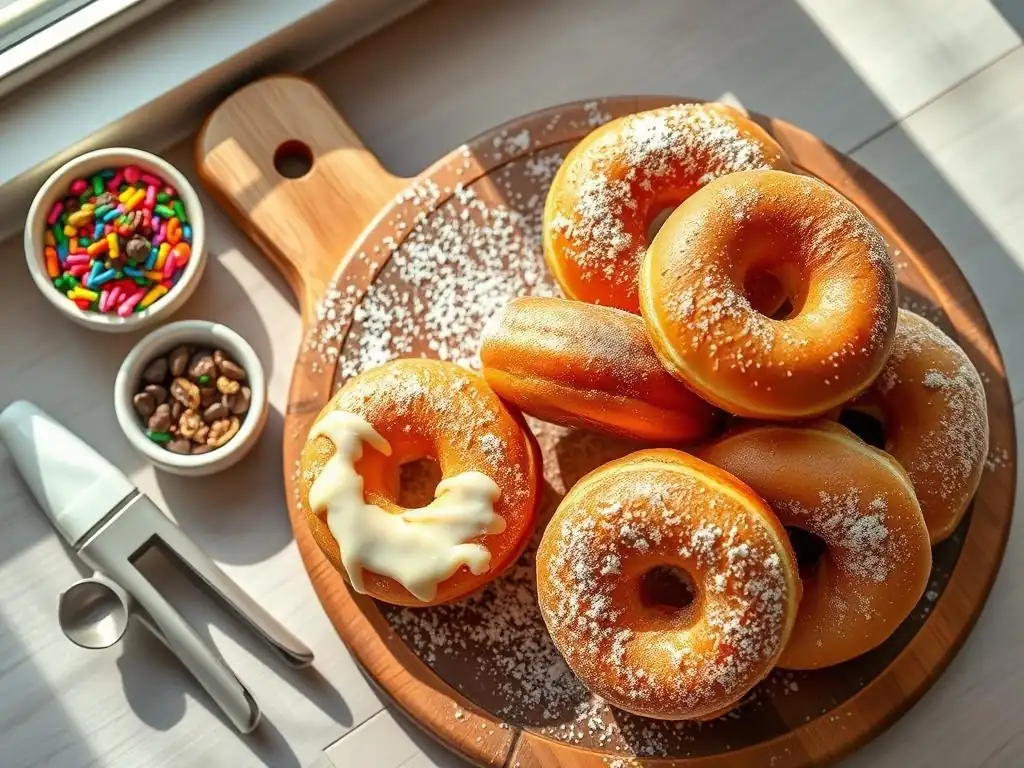
Once your baked doughnuts are glazed, adding sprinkles, chopped nuts, or other toppings is a fantastic way to add extra flavor, texture, and visual appeal. This is especially fun when making easy baked doughnuts with kids, but adults can get creative too! Apply toppings immediately after dipping the doughnut in the glaze, while the glaze is still wet, so they stick properly.
From classic rainbow sprinkles to sophisticated toasted coconut, the possibilities for topping your simple baked doughnut recipe creations are endless. Think about complementary flavors and textures that will make each bite exciting.
Kid-Friendly Topping Ideas
Kids love colorful and fun toppings! Classic rainbow sprinkles are always a hit and instantly make baked doughnuts festive. Chocolate sprinkles or jimmies are another popular choice. Crushed cookies, like Oreos or graham crackers, add a nice crunch.
Mini chocolate chips, colorful candies (like M&M's), or even edible glitter can turn simple baked doughnuts into magical treats. Consider setting up a "doughnut decorating station" with various options for a fun activity.
Adult-Friendly Topping Ideas
For a more sophisticated touch on your easy baked doughnuts, consider toppings like toasted chopped nuts (pecans, walnuts, almonds), shredded coconut (toasted or untoasted), or flaky sea salt sprinkled over a chocolate glaze.
Chopped dried fruit, like cranberries or apricots, can add a chewy texture and tartness. A drizzle of melted white chocolate or caramel sauce over the glaze adds another layer of flavor and visual appeal. Finely grated citrus zest (orange or lemon) can add a bright, fresh note.
Tips and Tricks for Perfect Baked Doughnuts Every Time
Even with a simple baked doughnut recipe, a few key techniques can help ensure consistently perfect results. Paying attention to details like not overmixing the batter or greasing the pan properly can make a significant difference in the outcome of your easy baked doughnuts.
These tips are based on common baking best practices and address issues that can sometimes arise when making baked goods. Incorporating them into your routine will help you achieve tender, well-shaped baked doughnuts every time.
Preventing Dry Doughnuts: Don't Overbake
The most common reason for dry baked doughnuts is overbaking. Because they cook quickly (often in 10-12 minutes), it's easy to leave them in the oven for just a couple of minutes too long, which can dry out the cakey interior.
Always check for doneness at the lower end of the suggested baking time (around 10 minutes for this simple baked doughnut recipe). Use the spring back test as the primary indicator rather than relying solely on visual cues. Remember that they will continue to cook slightly from residual heat after being removed from the oven.
Achieving a Uniform Doughnut Shape: Even Filling
To get consistently shaped baked doughnuts, it's important to fill the cavities evenly. Overfilling some cavities and underfilling others will result in doughnuts of different sizes and shapes, and they may not bake evenly.
Using a piping bag or a zip-top bag with a corner snipped off is the easiest way to achieve uniform filling. Fill each cavity about two-thirds full, aiming for roughly the same amount of batter in each one. This helps ensure all the doughnuts in the pan bake at the same rate and have a neat, classic shape.
Storing Your Baked Doughnuts for Freshness: Airtight Container
Baked doughnuts are best enjoyed fresh, ideally within a day or two of baking. To keep them as fresh as possible, store them in an airtight container at room temperature. If they are glazed, ensure the glaze has set completely before stacking them, or place parchment paper between layers to prevent sticking.
Avoid refrigerating baked doughnuts unless they have a filling or glaze that requires refrigeration (like a cream cheese glaze), as refrigeration can dry them out more quickly. Stored properly, your easy baked doughnuts should remain soft and delicious for a couple of days.
Troubleshooting Common Baked Doughnut Problems
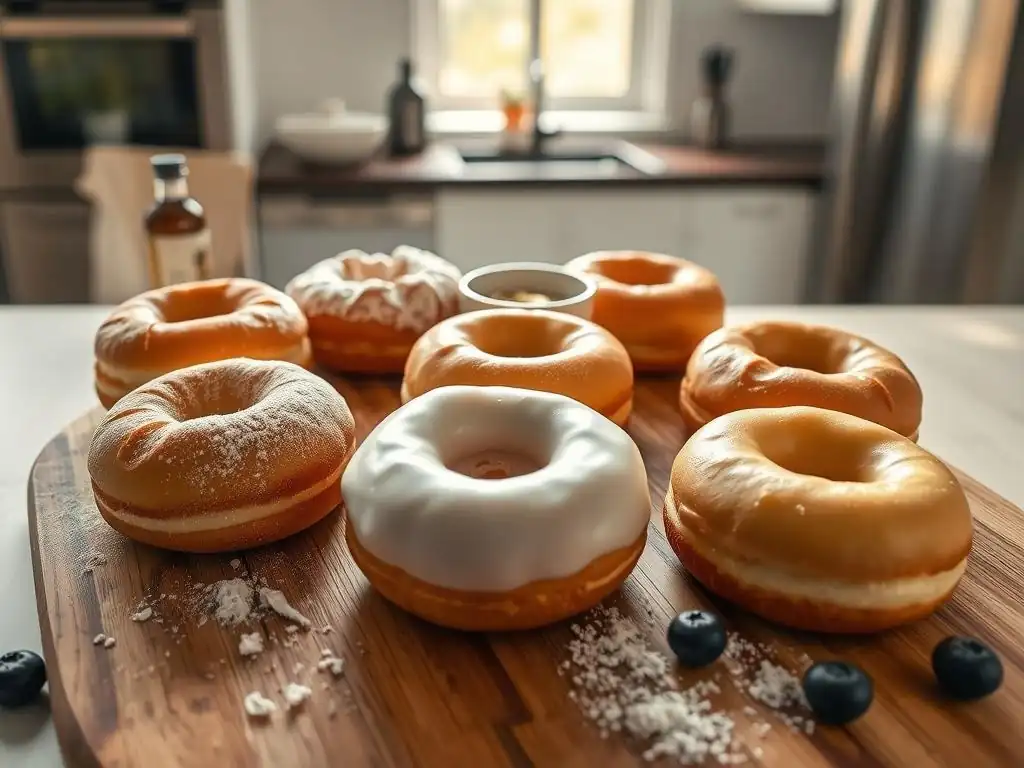
Even with a simple baked doughnut recipe, you might occasionally encounter issues. Understanding the potential causes of common problems can help you troubleshoot and improve your results the next time you bake. Don't get discouraged; baking is a science, and sometimes it takes a little trial and error!
Here are a few frequent issues home bakers face with baked doughnuts and how to address them.
Doughnuts Sticking to the Pan: Grease Pan Well
If your baked doughnuts are sticking to the pan, the most likely culprit is insufficient greasing. Even non-stick pans benefit from a little help. Ensure you generously grease each cavity of the doughnut pan before adding the batter.
Use baking spray (which contains flour) or melted butter applied with a pastry brush, making sure to get into all the nooks and crannies, including the center post. If you're using a silicone pan, while often non-stick, a light spray can still be beneficial for very easy release. Allowing the doughnuts to cool in the pan for just 5-10 minutes before attempting to remove them also helps them firm up slightly and release more cleanly.
Doughnuts Not Rising Properly: Fresh Baking Powder
Flat or dense baked doughnuts are often a sign that your leavening agent isn't working effectively. The most common reason for this in a simple baked doughnut recipe using baking powder is using expired or inactive baking powder.
As mentioned earlier, test your baking powder's freshness by adding a teaspoon to hot water; it should fizz vigorously. If it doesn't, replace it with a new container. Ensure you are using the correct amount of baking powder specified in the recipe and that you are mixing the batter just until combined, as overmixing can also negatively impact the rise.
Doughnuts Being Too Dense: Don't Overmix
A dense, heavy texture in your baked doughnuts is usually a result of overmixing the batter. When you mix flour with liquid, gluten develops. While gluten is essential for structure in bread, too much gluten development in cakes or quick breads like baked doughnuts leads to toughness and density.
When combining the wet and dry ingredients for your simple baked doughnut recipe, mix only until the dry ingredients are just incorporated. A few small lumps are okay. Stop mixing as soon as you no longer see streaks of dry flour. Using a whisk or rubber spatula for this final step can help prevent overmixing compared to an electric mixer.
Variations and Adaptations of the Baked Doughnuts Recipe
The beauty of a simple baked doughnut recipe is how easily it can be adapted to create a wide variety of flavors. Once you've mastered the basic technique, you can experiment with adding different ingredients to the batter or using different glazes and toppings.
Here are a few popular variations that build upon the core simple baked doughnut recipe, allowing you to explore new flavor combinations and keep your baking exciting.
Cinnamon Sugar Doughnuts
A classic variation is the cinnamon sugar baked doughnut. This is often achieved by dipping the warm (not glazed) baked doughnuts in melted butter and then tossing them in a mixture of granulated sugar and cinnamon. The butter helps the cinnamon sugar stick and adds richness.
For a batch of 6-8 doughnuts, about 1/4 cup of melted butter and a mixture of 1/2 cup granulated sugar with 1-2 teaspoons of ground cinnamon is usually sufficient. Dip the entire doughnut in butter, let excess drip off, then gently toss or roll in the cinnamon sugar mixture while they are still warm. This gives them that iconic crinkly coating.
Coffee Glazed Doughnuts
Adding coffee flavor is a delicious twist, especially for breakfast or brunch. You can incorporate instant espresso powder into the batter (about 1-2 teaspoons per batch) or, more commonly, into the glaze.
For a coffee glaze, simply substitute some or all of the milk or water in the vanilla glaze recipe with strong brewed coffee or a mixture of milk/water with dissolved instant espresso powder. Adjust the amount of liquid to get the desired consistency. A coffee glaze pairs wonderfully with both vanilla and chocolate baked doughnuts.
Red Velvet Doughnuts
Transforming the simple baked doughnut recipe into a vibrant red velvet version is easier than you might think. This typically involves adding a small amount of unsweetened cocoa powder (about 1-2 tablespoons per batch), red food coloring, and often buttermilk to the basic batter.
The buttermilk reacts with the baking powder and cocoa to create the signature red velvet flavor and texture. Use gel food coloring for the most intense color without adding too much liquid. Pair red velvet baked doughnuts with a simple vanilla or cream cheese glaze for the classic combination. (Note: a traditional cream cheese glaze requires refrigeration for storage).
Enjoy Your Homemade Baked Doughnuts!
You've done it! You've successfully made delicious, easy baked doughnuts right in your own kitchen using a simple baked doughnut recipe. There's nothing quite like the taste and smell of warm, freshly baked goods, and these doughnuts are a perfect example. Gather your family or friends and share your creations.
Baking at home, especially something as delightful as doughnuts, is a rewarding experience. It's a chance to slow down, get creative, and enjoy the process from start to finish.
Serving Suggestions for Baked Doughnuts
Baked doughnuts are wonderful on their own, but they can also be part of a larger spread. Serve them for breakfast alongside coffee or tea, or as a dessert after a meal. They are fantastic for brunches, parties, or as a special treat for a bake sale.
Consider serving a variety of flavors and glazes to offer options. A platter with classic glazed, chocolate, and cinnamon sugar baked doughnuts is always a crowd-pleaser. Pair them with fresh fruit, yogurt, or a glass of cold milk.
Making Baked Doughnuts a Weekend Tradition
Because this simple baked doughnut recipe is so quick and easy, it's perfect for establishing a fun weekend tradition. Wake up a little early on a Saturday or Sunday morning and whip up a batch. The whole process, from mixing to glazing, can be done in under an hour.
Involving family members, especially kids, in the process of mixing the batter or decorating the glazed doughnuts can make it a cherished activity. Making easy baked doughnuts can become a sweet ritual that everyone looks forward to, filling your home with warmth and delicious aromas.
Frequently Asked Questions
How much easier are baked doughnuts compared to fried doughnuts?
Baked doughnuts are often considered easier because they eliminate the need for deep frying, reducing the risk of burns and the mess associated with hot oil. They also tend to be less calorie-dense than their fried counterparts.
Can I substitute ingredients in the Easy Baked Doughnuts recipe?
While substitutions are possible, they can affect the final texture and taste. We recommend following the recipe as closely as possible for the best results, especially when you are first learning the recipe.
How do I prevent my baked doughnuts from being dry?
To avoid dry baked doughnuts, be careful not to overbake them. Also, ensure you're using the correct measuring techniques for dry ingredients.
What kind of glaze works best on baked doughnuts?
A simple glaze made with powdered sugar and milk or juice works wonderfully. You can also experiment with chocolate glazes, flavored extracts, or even a sprinkle topping for added flair.
Where can I find other baking recipes suitable for beginners on BakeWithEase.com?
BakeWithEase.com offers a wide range of recipes for all skill levels! Look for the "Beginner Friendly" tag on recipes for easy-to-follow instructions and simple ingredients.
Final Reflection: The Sweet Simplicity of Baked Doughnuts
The ease and deliciousness of baked doughnuts are not just a fleeting trend; they represent a powerful shift towards accessible, healthier baking that doesn't compromise on flavor. These simple recipes, readily available online and easily adaptable to personal preferences, are democratizing the joy of homemade treats. No longer is the perfect doughnut relegated to specialized bakeries or complicated frying techniques.
The impact of this simple recipe extends beyond the kitchen table. It speaks to a broader cultural shift towards mindful consumption and a renewed appreciation for homemade goodness. We're seeing a resurgence in home cooking, a desire to connect with food on a more personal level, and a rejection of overly processed ingredients. The best things in life are simple,
a sentiment perfectly embodied by the humble, baked doughnut. This simple act of baking, sharing, and enjoying these treats fosters connection and creates lasting memories.
Now, I invite you to consider the possibilities. Try your hand at this recipe, adapt it to your tastes, and share the joy with friends and family. Don't be afraid to experiment – add a sprinkle of cinnamon, a swirl of chocolate, or a glaze of your favorite flavor. The beauty of this recipe lies in its adaptability, allowing you to create a truly personalized treat. Let the simple act of baking bring a little sweetness and joy into your life.
Unleash Your Inner Baker: Bake Doughnuts Today!
Thanks for joining us on this delicious journey into the world of baked doughnuts! We hope you now feel confident and inspired to create light, fluffy, and guilt-free treats. Ready to get baking?
- Dive straight into the kitchen and bake a batch of these easy doughnuts today! Use the recipe from the article as your guide – you'll be surprised how simple it is.
- Share your baking creations with us! Post a picture on social media using #BakeWithEaseBakedDoughnuts and tag @BakeWithEase (fictional account). We’d love to see your delicious results.
- Explore other delightful recipes on BakeWithEase.com – we have tons of easy baking ideas just waiting to be discovered.
What unique twist will you add to your first batch of baked doughnuts? Let us know in the comments below!