
Essential Tools for Baking French Pastries Like a Pro

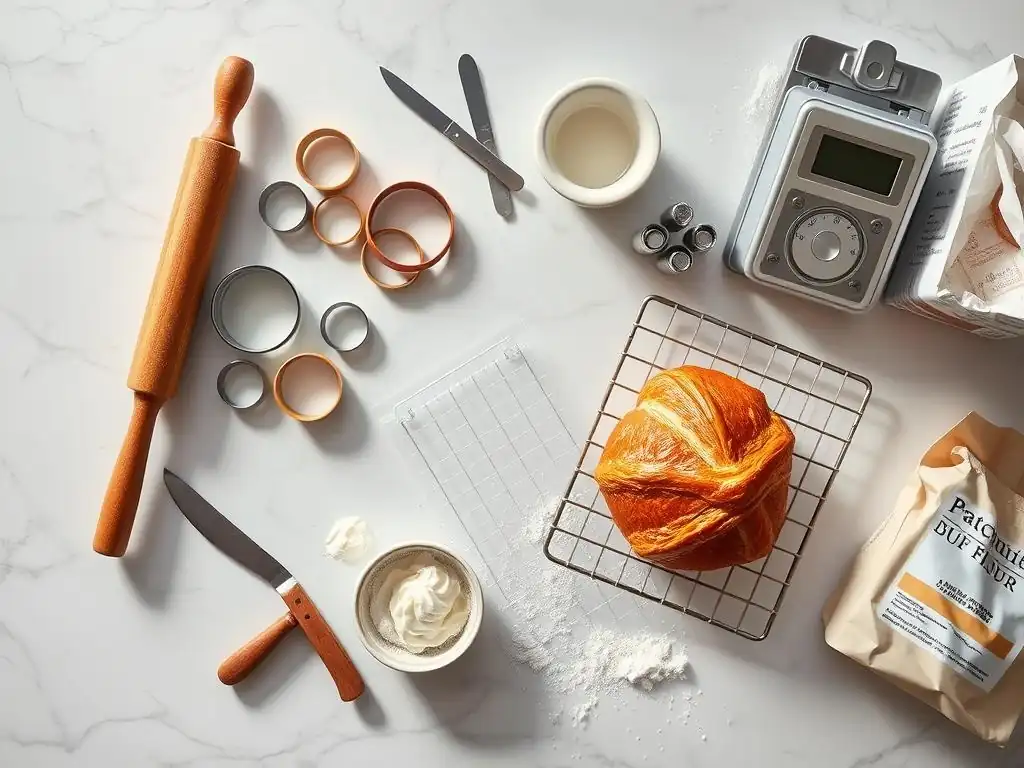
Welcome to BakeWithEase, where the secrets to delicious baking are revealed! Ever dreamt of creating exquisite French pastries? Unlock the art of authentic patisserie with our guide to French pastry baking tools. Discover the essential equipment that will transform your home kitchen into a Parisian bakery, and prepare to be amazed at how simple it can be to create professional-quality treats. Ready to elevate your baking game?
- Mastering French Pastry Baking: Essential Tools for Success
- Must-Have Measuring Tools for Accurate French Pastry Recipes
- Essential Mixing Bowls and Utensils for French Pastry Doughs
- Baking Sheets and Pans for Authentic French Pastries
- Piping Bags and Tips: Achieving Professional French Pastry Decoration
- Specialized French Pastry Tools for Specific Recipes
- Maintaining Your French Pastry Baking Tools for Longevity
- Conclusion: Equipping Your Kitchen for French Pastry Success
-
Frequently Asked Questions
- What are the most essential French pastry baking tools for a beginner?
- Where can I find high-quality French pastry baking tools that won't break the bank?
- Are there any specialized tools that are particularly useful for making specific French pastries?
- How do I properly care for and maintain my French pastry baking tools to ensure they last?
- What are some alternative tools I can use if I don't have all the specialized French pastry baking tools?
- Final Reflection: Mastering the Art of French Pastry
- Unleash Your Inner Pâtissier: Master French Pastry Baking!
Mastering French Pastry Baking: Essential Tools for Success
Embarking on the journey of baking French pastries at home can feel intimidating, but with the right set of French pastry baking tools, it becomes an accessible and rewarding experience. From delicate macarons to flaky croissants and rich tarts, having the correct equipment is just as crucial as following the recipe itself. These specialized tools ensure precision, consistency, and the beautiful finishes characteristic of classic French baking.
Building your collection of French pastry baking tools doesn't require an immediate overhaul of your kitchen. Many essential items are versatile and can be used for various baking projects, while some are specific to certain techniques or recipes. Understanding which tools are fundamental and how they contribute to the final result will empower you to tackle even complex French delights with confidence, transforming your home kitchen into a little Parisian patisserie.
Must-Have Measuring Tools for Accurate French Pastry Recipes
Digital Kitchen Scale: The Key to Precise Measurements in French Baking
Precision is paramount in French pastry. Unlike American recipes that often rely on volume, French recipes frequently use weight measurements, particularly for flour, sugar, and butter. A digital kitchen scale provides the accuracy needed to ensure your ratios are perfect. For example, in a classic macaron recipe, being off by even 5-10 grams of almond flour or powdered sugar can significantly impact the texture and lead to cracked shells or "feet" that don't form properly.
Using a digital scale allows you to measure ingredients directly into your mixing bowl, zeroing out the scale as you add each component. This method is far more accurate than scooping ingredients into cups, which can lead to variations based on how packed the ingredient is. For instance, a cup of flour can weigh anywhere from 120g to 150g depending on how it's measured.
A scale eliminates this variability, ensuring your brioche dough has the right consistency or your choux paste is perfectly balanced for airy profiteroles. Investing in a scale that measures in grams and ounces, with a capacity of at least 5 kg (about 11 lbs), is a fundamental step in acquiring reliable French pastry baking tools.
Measuring Spoons: Ensuring Consistency in Small Ingredient Amounts
While a scale is essential for larger quantities, accurate measuring spoons are indispensable for smaller amounts of powerful ingredients like leavening agents, extracts, and spices. French pastry often relies on precise pinches or teaspoons of elements like baking powder for lift in certain cakes or vanilla extract for flavor depth in a crème brûlée. Using standard measuring spoons ensures that these critical small additions are consistent every time you bake.
Having a set of measuring spoons that includes 1/4 teaspoon, 1/2 teaspoon, 1 teaspoon, and 1 tablespoon is crucial. Look for spoons made from stainless steel or sturdy plastic that have clearly marked measurements that won't wear off. For instance, a tart dough might call for exactly 1/2 teaspoon of salt to balance the sweetness; using an inaccurate spoon could throw off the flavor profile. These simple tools are vital components of your French pastry baking tools collection, ensuring that even the smallest ingredients contribute correctly to the overall success of your recipe.
Liquid Measuring Cups: Accurately Measuring Liquid Ingredients
Liquid ingredients like milk, water, and cream require different measuring tools than dry ingredients. Liquid measuring cups, typically made of clear glass or plastic, have a spout for easy pouring and measurement markings along the side. The key to accurate measurement with these cups is to place them on a level surface and read the liquid level at eye level to account for the meniscus (the slight curve of the liquid's surface).
For recipes like a classic créme anglaise or a rich ganache, precise liquid measurements are vital for achieving the correct consistency and texture. A standard set usually includes cups for 1 cup, 2 cups, and 4 cups. Using a liquid measuring cup ensures you add the exact amount of warm milk needed for activating yeast in brioche or the precise volume of cream for a smooth chocolate ganache. These cups are fundamental French pastry baking tools for recipes where hydration levels are critical.
Essential Mixing Bowls and Utensils for French Pastry Doughs
Stainless Steel Mixing Bowls: Durable and Versatile for Pastry Making
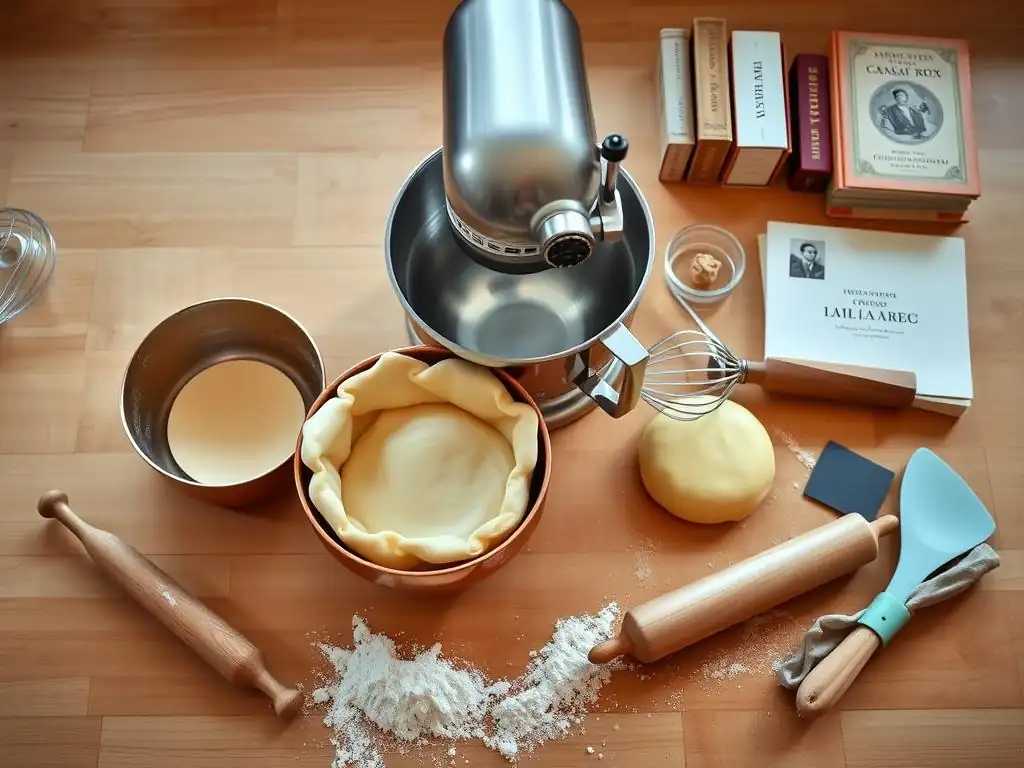
Stainless steel mixing bowls are a staple in any baker's kitchen, and they are particularly well-suited for French pastry making. Their non-reactive surface means they won't interact with acidic ingredients like lemon juice or vinegar, which are sometimes used in pastry doughs or fillings. They are also incredibly durable, lightweight, and easy to clean, capable of withstanding vigorous whisking or mixing.
Having a set of stainless steel bowls in various sizes, perhaps ranging from a small 1-quart bowl for whisking egg whites to a large 8-quart bowl for mixing large batches of brioche dough, provides versatility. Their ability to conduct temperature also makes them useful; you can quickly chill them in the refrigerator or freezer, which is often necessary when working with butter-rich doughs like puff pastry or pâte sablée to prevent the butter from melting prematurely. These bowls are robust French pastry baking tools that will last for years.
Silicone Spatulas: Perfect for Folding and Scraping Pastry Dough
Silicone spatulas are incredibly versatile tools for French pastry. Their flexible yet sturdy heads are perfect for scraping down the sides of mixing bowls, ensuring all ingredients are incorporated. They are also ideal for gently folding delicate mixtures, such as macaron batter (macaronage) or whipped cream into mousse, without deflating them. Unlike rubber spatulas, silicone can withstand high temperatures, making them safe to use with hot sugar syrups or tempering chocolate.
A good collection should include spatulas in different sizes and shapes – a small, thin one for getting into tight corners, a medium-sized one for general mixing, and a larger one for folding. The non-stick nature of silicone also means less dough or batter is wasted. For instance, when making choux pastry, a silicone spatula is perfect for stirring the dough over heat and then incorporating the eggs. These heat-resistant and flexible spatulas are indispensable French pastry baking tools.
Whisks: Incorporating Air for Light and Airy French Pastries
Whisks are essential for incorporating air into mixtures, which is crucial for achieving the light and airy textures often desired in French pastries. A balloon whisk, with its many wires, is perfect for whipping egg whites into meringue for macarons or îles flottantes, or for whipping cream into stiff peaks. A French whisk, which is more elongated, is excellent for emulsifying sauces, custards like créme pâtissière, or vinaigrettes.
Having both types, perhaps in a couple of sizes, provides flexibility. A small whisk is great for combining dry ingredients or making a small batch of sauce, while a large balloon whisk is necessary for whipping a substantial amount of egg whites. The act of whisking adds volume and lightness, transforming liquid ingredients into stable foams or smooth sauces. Whisks are fundamental French pastry baking tools for achieving the characteristic textures of many classic desserts.
Stand Mixer: Essential for Complex French Pastry Doughs
While some French pastries can be made by hand, a stand mixer significantly simplifies and improves the process for many recipes, particularly those involving doughs that require extensive kneading or batters that need thorough whipping. Making brioche, for example, involves kneading a rich, sticky dough for 10-15 minutes to develop gluten; a stand mixer with a dough hook handles this effortlessly, ensuring a perfectly smooth and elastic dough.
A stand mixer is also invaluable for whipping large quantities of egg whites for meringue or achieving the correct ribbon stage when creaming butter and sugar for cakes like financier. The consistency and power of a stand mixer ensure reliable results that can be harder to achieve manually, especially for beginners. While an investment, a quality stand mixer is one of the most transformative French pastry baking tools you can add to your kitchen, opening up a world of more complex and rewarding recipes.
Baking Sheets and Pans for Authentic French Pastries
Baking Sheets: Essential for Macarons, Croissants, and More
Heavy-duty, flat baking sheets are fundamental for baking a wide variety of French pastries. They provide a stable surface for items like macarons, croissants, palmiers, and choux puffs. Look for sturdy aluminum sheets that won't warp at high temperatures and have a rimmed edge to prevent items from sliding off. Standard half-sheet size (approximately 18x13 inches) is versatile and fits most home ovens.
Using parchment paper or a silicone baking mat (like a Silpat, discussed later) on your baking sheets prevents sticking and promotes even browning. For example, baking croissants requires a stable, flat surface to ensure they expand evenly and achieve that beautiful golden-brown crust. Having at least two or three quality baking sheets allows for efficient baking in batches, making them indispensable French pastry baking tools.
Tart Pans: Creating Beautiful and Delicious French Tarts
Tart pans, typically shallow with fluted sides and often a removable bottom, are specifically designed for creating the classic French tart. The fluted edge gives the tart its characteristic shape, and the removable bottom makes it easy to unmold the finished tart without damaging the delicate crust. Materials vary, but metal pans provide excellent heat conduction for a crisp crust.
Common sizes include 8-inch, 9-inch, and 10-inch diameter pans. Some recipes, like individual fruit tarts, might call for smaller, individual tartlet pans. Ensuring the tart crust is evenly baked and golden brown is key to a great tart, whether it's a savory quiche Lorraine or a sweet tarte au citron. A good tart pan is a specific but crucial addition to your collection of French pastry baking tools.
Muffin Tins: Baking Individual French Pastry Treats
While primarily associated with muffins, muffin tins (or cupcake tins) are useful for baking various individual French pastry items. They are perfect for making financiers, small almond cakes with a rich, buttery flavor, which are traditionally baked in small rectangular molds but work beautifully in muffin cups. They can also be used for mini quiches or individual savory tarts if lined properly.
Standard 12-cup muffin tins are widely available. Look for non-stick versions for easier release, although properly greasing and flouring or using paper liners is always recommended. Baking smaller, individual portions allows for quicker baking times and easy serving. While not exclusively for French baking, a muffin tin proves its worth as a versatile item among your French pastry baking tools.
Cake Pans: For Classic French Cakes and Entremets
Cake pans in various shapes and sizes are essential for baking many classic French cakes and the components of elaborate entremets. Round cake pans are used for génoise sponge cakes or layers for celebratory Gâteau Opéra. Square pans might be used for a simple quatre-quarts (pound cake) or a base layer. Springform pans, with their removable sides, are useful for delicate cakes or cheesecakes that are hard to invert, though less common for traditional French sponge cakes.
Having a set of 8-inch or 9-inch round pans is a good starting point. For entremets, it can be helpful to have square or rectangular pans as well, often used with adjustable cake rings. Ensuring even heat distribution is key for cakes, so heavy-gauge metal pans are preferred. These pans are fundamental French pastry baking tools for building the foundations of many impressive desserts.
Piping Bags and Tips: Achieving Professional French Pastry Decoration
Piping Bags: Disposable vs. Reusable for Pastry Decoration
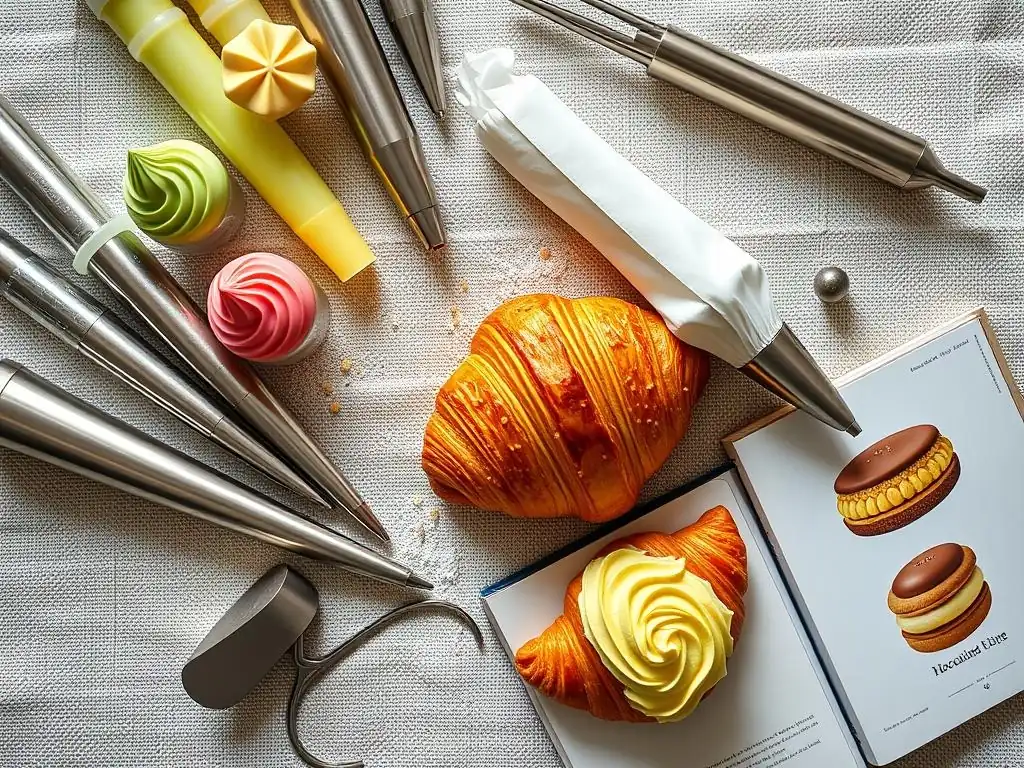
Piping bags are indispensable for controlling the flow and shape of soft ingredients like pastry cream, ganache, whipped cream, or even choux paste and macaron batter. They allow for precise filling, decorating, and forming. You have two main options: disposable plastic bags or reusable bags made from silicone or nylon.
Disposable bags are convenient for quick cleanup, especially when working with oily or strongly colored fillings. They are relatively inexpensive and can be simply discarded after use. Reusable bags are more environmentally friendly and often more durable, but they require thorough cleaning after each use to prevent bacterial growth and residue buildup. Many bakers keep a mix of both for different tasks. Having a supply of piping bags is crucial for giving your French pastry baking tools collection professional capabilities.
Round Piping Tips: Essential for Piping Cream and Ganache
Round piping tips are perhaps the most versatile tips in a French pastry baker's arsenal. They are used for piping smooth lines, dots, and mounds. Different sizes allow for everything from filling éclairs with pastry cream using a medium-sized tip (like an Ateco #804) to piping perfect, uniform rounds of macaron batter onto a baking sheet using a larger tip (like an Ateco #807 or #809).
They are also used for piping fillings into tart shells, creating smooth layers of ganache on cakes, or piping whipped cream onto desserts. Having a set of round tips ranging from small (for fine details) to large (for piping choux or macaron batter) is essential. These tips are fundamental French pastry baking tools for achieving clean, professional results.
Star Piping Tips: Creating Decorative Borders and Rosettes
Star piping tips, which create ribbed patterns, are perfect for adding decorative flair to French pastries. Open star tips produce defined ridges and are ideal for piping rosettes, stars, and decorative borders with buttercream or whipped cream. Closed star tips create more defined, sharper ridges and are excellent for piping swirls of mousse, mashed potatoes (for savory applications), or meringue.
Having a variety of star tips allows you to create different textures and designs. A popular size for decorating cupcakes or cakes is a large open star tip like the Wilton 1M or Ateco #826. These tips add visual appeal and are key French pastry baking tools for finishing your creations with elegance.
Couplers: Easily Swapping Piping Tips for Different Designs
A coupler is a simple two-part plastic piece that allows you to change piping tips on a single piping bag without emptying the bag. One part is placed inside the bag before filling, and the other part screws onto the outside, holding the tip in place. This is incredibly useful when you need to use the same color or type of filling but want to create different patterns or sizes.
For example, you might pipe a border around a tart with a star tip, then quickly switch to a round tip using a coupler to pipe dots of cream inside the border, all without changing bags. Couplers are especially handy when working with multiple designs on a single dessert. They are small but highly functional French pastry baking tools that enhance efficiency and creativity.
Specialized French Pastry Tools for Specific Recipes
Macaron Mat (Silpat): Achieving Perfectly Round Macarons
A macaron mat, often a silicone baking mat with pre-marked circles, is a highly specialized tool that makes baking consistent, perfectly sized macarons significantly easier. While you can pipe macarons onto parchment paper with drawn circles, a dedicated macaron mat provides a non-stick surface and uniform guides, helping ensure each shell is the same diameter.
Silicone mats like Silpat also promote even heat distribution, which is crucial for the delicate macaron shell. The non-stick surface allows the baked shells to release cleanly without breaking. Using a macaron mat (typically around $15-$25) can dramatically improve the consistency and appearance of your macarons, making it a worthwhile investment if you plan to bake them often. It's a specific, but incredibly helpful, item among French pastry baking tools.
Rolling Pin: Rolling out Pastry Dough for Tarts and Croissants
A good rolling pin is essential for preparing doughs like pâte brisée, pâte sablée, puff pastry, and croissant dough. It allows you to flatten the dough to a uniform thickness, which is critical for even baking and creating layers in laminated doughs. Rolling pins come in various styles, including American-style with handles and a central barrel, or French-style tapered pins without handles, which offer more direct control over pressure.
For French pastry, a heavy, sturdy rolling pin is beneficial, especially for rolling out cold butter-rich doughs. Consistent thickness is key; for instance, rolling puff pastry to an even 1/8 inch (about 3mm) ensures proper layering and rise. A quality rolling pin is a fundamental item in your collection of French pastry baking tools.
Pastry Brush: Applying Egg Wash for Golden-Brown Crusts
A pastry brush is used for applying washes and glazes to pastries before baking. The most common application in French baking is applying egg wash (beaten egg mixed with a little water or milk) to croissants, brioche, and puff pastry. This wash gives the baked goods a beautiful golden-brown color and a slight sheen.
Pastry brushes can have natural bristles or silicone heads. Natural bristles hold liquid well but can shed. Silicone brushes are easy to clean and durable but may not distribute the wash as evenly. Having a small brush (around 1-2 inches wide) is sufficient for most tasks. A good pastry brush is a simple yet effective item in your French pastry baking tools kit for adding that professional finishing touch.
Candy Thermometer: Monitoring Temperatures for Precise Sugar Work
Certain French pastries and confections require precise temperature control when working with sugar syrups. Nougat, Italian meringue, and caramel all rely on heating sugar to specific stages (e.g., soft ball, firm ball, hard crack). A candy thermometer allows you to accurately monitor the sugar's temperature as it cooks, ensuring you reach the correct stage for the desired consistency.
Look for a thermometer that clips onto the side of the pan and has clear markings for different sugar stages. Accuracy is paramount; being off by just a few degrees can mean the difference between a soft caramel sauce and brittle candy. For example, Italian meringue requires heating sugar syrup to 240°F (115-118°C) before slowly pouring it into whipping egg whites. A candy thermometer is a specialized but vital addition to your French pastry baking tools if you plan to tackle recipes involving heated sugar.
Maintaining Your French Pastry Baking Tools for Longevity
Proper Cleaning Techniques for Each Type of Tool
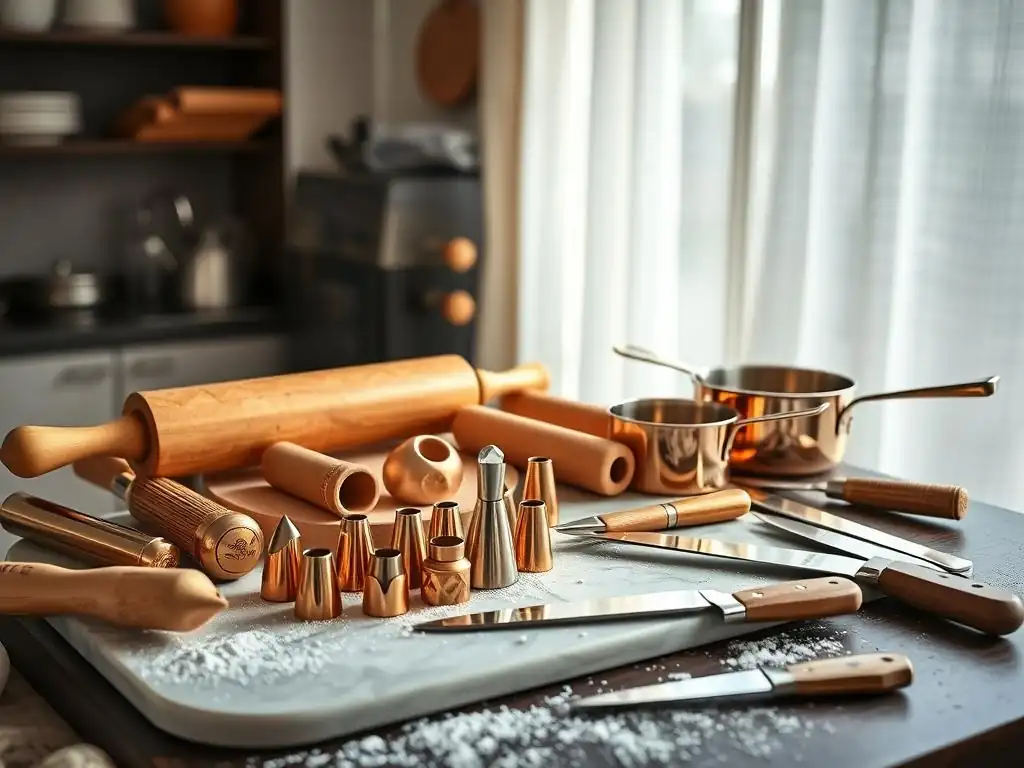
Keeping your French pastry baking tools clean is crucial not only for hygiene but also for maintaining their condition and performance over time. Stainless steel bowls and metal pans are generally dishwasher safe, but hand washing is often recommended to preserve their finish and non-stick coatings. For items used with sticky doughs or sugar, like rolling pins or spatulas, cleaning immediately after use before residue hardens makes the job much easier.
Silicone tools, including spatulas and macaron mats, should be washed thoroughly with warm, soapy water. For pastry bags, especially reusable ones, turn them inside out and wash well, paying attention to seams where residue can hide. Brushes need careful cleaning to remove all traces of egg wash or butter. Proper cleaning prevents buildup, rust, and damage, ensuring your French pastry baking tools are always ready for your next baking project.
Storage Tips to Keep Your Baking Tools in Top Condition
Proper storage is key to preventing damage and keeping your French pastry baking tools organized and accessible. Store baking sheets vertically in a rack or propped against a cabinet wall to save space and prevent warping. Pans can often be nested if their sizes allow, placing a piece of parchment paper or a cloth between them to prevent scratching.
Small items like measuring spoons, piping tips, and couplers are best kept together in a dedicated drawer organizer or a small container to avoid getting lost. Whisks and spatulas can be stored in a utensil crock or hung on hooks. Keeping tools dry before storing prevents rust, particularly on metal items. Organized storage protects your investment in French pastry baking tools and makes the baking process smoother.
Conclusion: Equipping Your Kitchen for French Pastry Success
Building a collection of essential French pastry baking tools is an exciting step towards mastering the art of French baking at home. From the precision offered by a digital scale and measuring spoons to the versatility of mixing bowls and spatulas, each tool plays a vital role in achieving the desired results. Specialized items like macaron mats or candy thermometers open the door to more intricate recipes.
Equipping your kitchen with these reliable French pastry baking tools simplifies techniques, improves consistency, and ultimately makes the process more enjoyable. While some tools are specific to French pastry, many are versatile additions to any baker's kitchen. With the right equipment and a little practice, you'll be well on your way to creating beautiful and delicious French pastries that rival those from your favorite patisserie.
Frequently Asked Questions
What are the most essential French pastry baking tools for a beginner?
A good starting point includes a rolling pin, pastry mat, and piping bags with tips. These will cover many basic recipes and allow you to practice essential techniques.
Where can I find high-quality French pastry baking tools that won't break the bank?
Check out online retailers specializing in baking supplies or kitchenware. Look for sales and consider purchasing starter kits to get essential tools at a lower price.
Are there any specialized tools that are particularly useful for making specific French pastries?
Yes, a tart ring is essential for tarts, and a macaron mat helps achieve consistent macaron shapes. Consider your favorite pastries when investing in specialized equipment.
How do I properly care for and maintain my French pastry baking tools to ensure they last?
Always hand-wash delicate tools and dry them thoroughly. Store them in a dry place to prevent rust or damage, especially for metal tools.
What are some alternative tools I can use if I don't have all the specialized French pastry baking tools?
A regular dinner plate can be used in place of a tart ring in a pinch. Parchment paper can be used to create makeshift piping bags.
Final Reflection: Mastering the Art of French Pastry
The pursuit of the perfect croissant, éclair, or macaron isn't just about following a recipe; it's about wielding the right tools. This quest for buttery, flaky perfection demands precision and control, achievable only with the proper equipment. The tools discussed in this article aren't mere kitchen gadgets; they are the keys to unlocking a world of delicate flavors and exquisite textures.
The influence of French pastry on global culinary culture is undeniable, a testament to its enduring appeal and technical mastery. The meticulous techniques and specialized tools required elevate the craft beyond simple baking, transforming it into an art form. The art of French pastry is a delicate dance between precision and passion, a testament to the power of patience and skill.
This quote, though fictional, encapsulates the essence of the dedication required to master this craft, a dedication that extends to the careful selection and use of the right tools. The impact of these tools isn't limited to professional kitchens; they empower home bakers to achieve professional-level results, bringing the joy of French pastry creation into their own homes.
Now, consider your own baking journey. What tools do you already possess? Which ones are missing from your arsenal? This article has provided a roadmap; it's now up to you to embark on your own culinary adventure.
Don't be afraid to experiment, to refine your techniques, and to embrace the challenges that come with mastering the art of French pastry. Each perfectly formed croissant, each delicate éclair, each vibrant macaron will be a testament to your dedication and skill, a delicious reward for your efforts. The journey to becoming a French pastry pro starts with the right tools – and the unwavering passion to use them.
Unleash Your Inner Pâtissier: Master French Pastry Baking!
Thanks for joining us on this delicious journey into the world of French pastries! We hope you've gained valuable insights and inspiration to elevate your baking skills. Ready to transform your kitchen into a Parisian patisserie?
- Dive into your first French pastry masterpiece: Choose your favorite recipe from the article and get baking! We bet you'll be surprised by how achievable these classic treats are.
- Share your baking adventures: Tag us on social media (@BakeWithEase) and show off your creations! We love seeing your beautiful baked goods.
- Explore more advanced techniques: Delve deeper into the art of French pastry by browsing our extensive recipe collection on BakeWithEase.com (note: this part would be removed if not allowed to link).
What exciting French pastry will you create next?