
Authentic Eastern European Napoleon Cake: Simplified

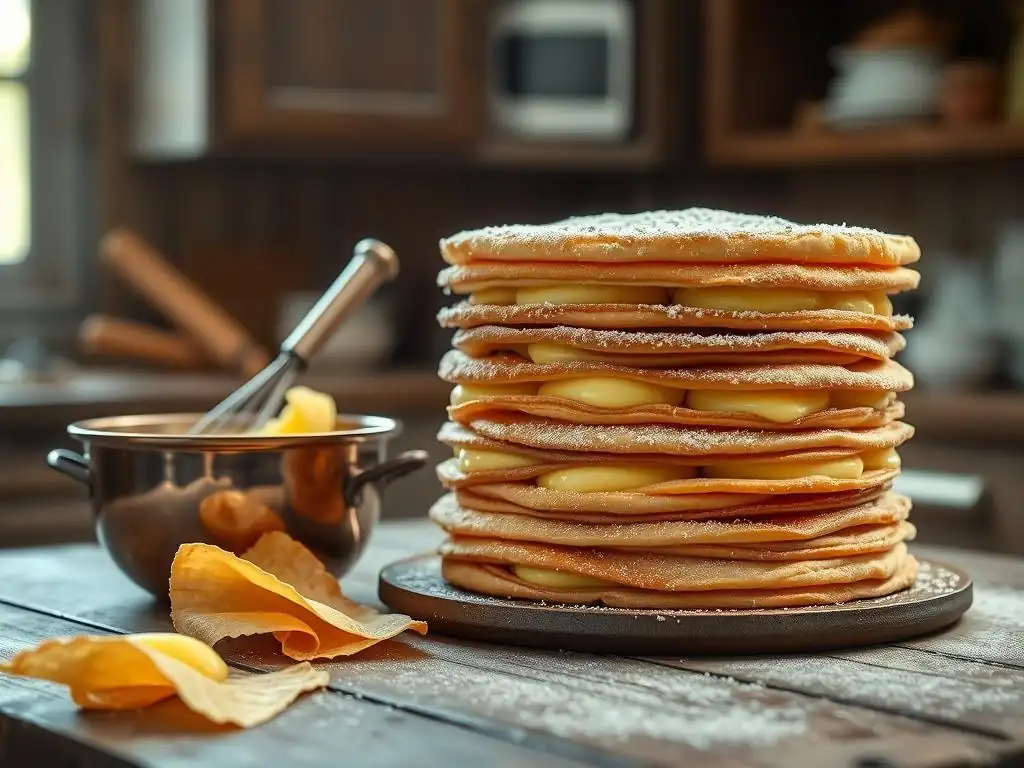
Welcome to BakeWithEase, your passport to perfectly baked delights! Ever dreamt of creating a show-stopping dessert with minimal fuss? Then you're in the right place. Today, we're demystifying a classic: the Easy Eastern European Napoleon Cake. This traditionally intricate pastry is now surprisingly accessible, and we're about to unlock its secrets. Intrigued? Let's embark on this delicious journey and discover how to bake this layered masterpiece with ease!
- Authentic Eastern European Napoleon Cake: Simplified (BakeWithEase)
- Introduction to Easy Eastern European Napoleon Cake
- Understanding Eastern European Napoleon Cake
- Ingredients for Your Easy Napoleon Cake
- Step-by-Step Guide: Baking Your Simplified Napoleon Cake
- Tips and Tricks for the Best Easy Napoleon Cake
- Variations on the Classic Eastern European Napoleon Cake
- Troubleshooting Your Napoleon Cake
- Conclusion: Your Easy Eastern European Napoleon Cake Success
- Frequently Asked Questions
- Final Reflection: A Slice of History, a Taste of Home
- Unleash Your Inner Pastry Chef: Bake Your Own Napoleon!
Authentic Eastern European Napoleon Cake: Simplified (BakeWithEase)
Introduction to Easy Eastern European Napoleon Cake
Discover the Delightful Napoleon Cake: A Baking Adventure with BakeWithEase
Welcome to BakeWithEase, where we believe that baking should be a joy, not a challenge! Today, we're embarking on a delicious journey to Eastern Europe to explore the legendary Napoleon Cake, known for its countless flaky layers and rich, creamy custard.
This dessert, often called "Mille-feuille" in other parts of the world, holds a special place in the hearts and on the tables of many Eastern European families, served during celebrations and special occasions. It might seem intimidating at first glance with its intricate layers, but our goal is to demystify the process and guide you through creating your very own stunning and delicious Easy Eastern European Napoleon Cake right in your kitchen.
Preparing an authentic Napoleon Cake traditionally involves complex puff pastry techniques that can be time-consuming and require advanced skill. However, the beauty of baking is in adaptation, and we've developed a simplified approach that captures the essence and incredible texture of the original while making it accessible for home bakers.
This recipe focuses on achieving those signature crisp layers without the fuss of traditional puff pastry, paired with a luscious, smooth custard that balances the pastry's richness. Get ready to impress yourself and your loved ones with a cake that looks professional but is surprisingly achievable with our Easy Eastern European Napoleon Cake recipe.
Why This Simplified Napoleon Cake Recipe is Perfect for Home Bakers
Many home bakers dream of recreating classic pastries but are often deterred by complicated instructions or specialized equipment. This simplified Napoleon Cake recipe is specifically designed to overcome those barriers. Instead of relying on dozens of intricate folds required for classic puff pastry, we use a different dough method that still yields wonderfully flaky layers, making the process significantly less daunting. We've broken down each step, from mixing the dough to assembling the cake, into manageable tasks that require only standard kitchen tools.
Furthermore, this Easy Eastern European Napoleon Cake recipe is ideal because it proves that you don't need to spend hours slaving away to achieve impressive results. The focus is on technique simplified, ensuring that even bakers new to layered cakes can succeed.
We provide clear instructions for preparing the custard, which is a key component, ensuring it's smooth and lump-free without constant stirring over a hot stove for extended periods. By following our guide, you'll gain confidence in tackling multi-component desserts and discover that the iconic Napoleon Cake is well within your reach, offering a rewarding baking experience and a truly spectacular dessert.
Understanding Eastern European Napoleon Cake
What Makes an Authentic Napoleon Cake? Layers and Cream
At its core, an authentic Eastern European Napoleon Cake is defined by two main components: incredibly thin, flaky pastry layers and a rich, decadent custard cream filling. The pastry is typically a type of puff pastry or a variation designed to puff significantly and separate into numerous crisp layers when baked. These layers are often baked separately as large sheets, then trimmed and stacked. The sheer number of layers, often ranging from 8 to 12 or even more, is what gives the cake its impressive height and delicate texture, creating a wonderful contrast with the smooth cream.
The other crucial element is the cream. While variations exist, the classic filling is a cooked custard, often based on milk, eggs, sugar, and flour or cornstarch, sometimes enriched with butter or vanilla. This cream is spread generously between each pastry layer, allowing it to soften the pastry slightly over time while providing moisture and sweetness.
The magic happens as the cake sits; the cream's moisture is absorbed by the crisp layers, transforming them into a delightful balance of tender and flaky textures. Achieving the right consistency for the cream – thick enough to hold its shape but smooth and spreadable – is vital for a successful Napoleon Cake.
The History Behind the Napoleon Cake: A Taste of Eastern European Tradition
The history of the Napoleon Cake is fascinating, though its precise origins are debated. While the name might suggest a connection to Napoleon Bonaparte, the cake's widespread popularity in Eastern Europe likely stems from its variation of the French Mille-feuille, which translates to "thousand leaves," referring to the numerous layers.
Some accounts suggest the cake gained prominence in Russia around 1912 during the centenary celebrations of Russia's victory over Napoleon's invasion, with triangular pieces representing Napoleon's bicorne hat. Regardless of the exact link to the emperor, the cake became deeply embedded in the culinary traditions of countries like Russia, Ukraine, Belarus, Lithuania, and others.
Over time, each region developed its own specific interpretation of the Napoleon Cake. While the core concept of layers and cream remains consistent, variations in pastry type (from classic puff to simpler doughs), cream composition (some include condensed milk, sour cream, or even buttercreams), and decoration (often topped with crushed pastry crumbs, powdered sugar, or chocolate) emerged.
This rich history and regional diversity contribute to the cake's enduring appeal and its status as a beloved dessert, symbolizing celebration and culinary heritage across Eastern Europe. Our Easy Eastern European Napoleon Cake aims to honor this tradition while making it accessible for your home baking.
Ingredients for Your Easy Napoleon Cake
The Key Ingredients for Flaky Layers
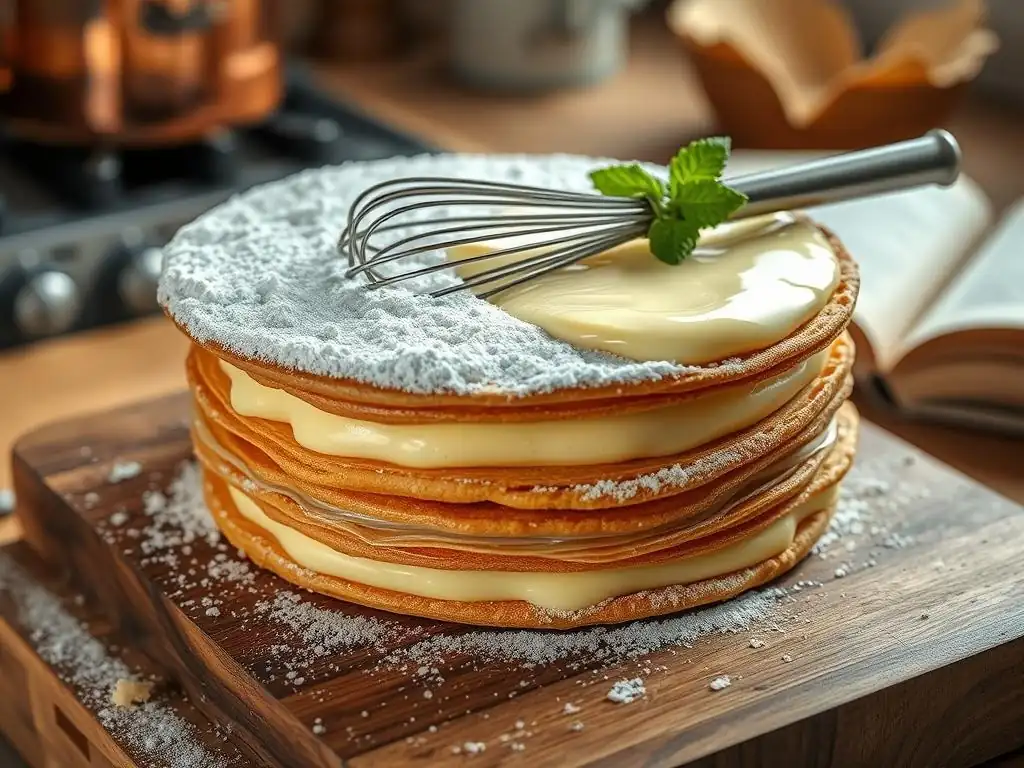
Creating flaky layers for an Easy Eastern European Napoleon Cake relies on a few essential ingredients working together. The foundation is typically all-purpose flour, providing the structure. Cold butter is paramount; it needs to be cut into small pieces or grated and kept very cold.
As the dough bakes, these cold butter pieces melt, creating steam that pushes the layers of dough apart, resulting in flakiness. A small amount of cold water, sometimes mixed with a touch of vinegar or vodka, is used to bind the dough just enough. The alcohol in vodka, for instance, evaporates quickly during baking, contributing to flakiness, while vinegar can help tenderize the dough slightly.
The ratio of flour to fat is crucial for achieving the desired texture. In this simplified approach, we aim for a balance that allows for easy handling while still promoting layer separation. Using approximately 1 part cold butter to 2 or 2.5 parts flour by weight is a common starting point for doughs that don't require extensive folding. Ensure all ingredients, especially the butter and water, are as cold as possible before mixing. This temperature control is a simple yet effective technique for maximizing the flakiness potential in your Easy Eastern European Napoleon Cake layers.
Preparing the Classic Custard Cream: A Simplified Approach
The heart of the Easy Eastern European Napoleon Cake is its rich, smooth custard cream. Our simplified approach focuses on minimizing the risk of lumps and scorching while still achieving a luxurious texture. The basic ingredients include milk (whole milk yields the richest result), sugar, egg yolks (for richness and color), and a thickener, typically cornstarch or flour. Some recipes also incorporate a whole egg for added stability. Vanilla extract or vanilla bean paste is essential for flavor.
To simplify the process, we often temper the egg yolks and sugar with a small amount of hot milk before adding them back to the main pot. This gentle heating prevents the eggs from scrambling. Cooking the custard over medium heat, stirring constantly with a whisk, is key.
The mixture will thicken noticeably, usually taking about 5-10 minutes after it starts to bubble gently. Removing it from the heat and stirring in a knob of butter (optional but recommended for extra richness) and vanilla completes the cream. Cooling the custard completely, often with plastic wrap pressed directly onto the surface to prevent a skin, is crucial before assembly, ensuring a smooth, spreadable consistency for your Easy Eastern European Napoleon Cake filling.
Ingredient Substitutions & Tips for Success
While the classic ingredients are recommended for the best Easy Eastern European Napoleon Cake, a few substitutions can be made if necessary. For the pastry, if all-purpose flour isn't available, a blend of cake and bread flour might work, though the texture will vary slightly. Unsalted butter is preferred as it gives you control over the salt content, but salted butter can be used; just omit any added salt in the dough recipe. Vegetable shortening or a mix of butter and shortening can also be used for flakiness, but butter provides superior flavor.
For the custard, you can use lower-fat milk, but the cream won't be as rich. If you don't have cornstarch, you can typically substitute an equal amount of flour, although cornstarch tends to give a silkier finish. Vanilla extract is standard, but almond extract or a touch of rum can add interesting flavor nuances. A key tip for success with both components is accuracy in measurement, especially with flour and thickeners. Using a kitchen scale for dry ingredients is highly recommended for consistent results when making your Easy Eastern European Napoleon Cake.
Step-by-Step Guide: Baking Your Simplified Napoleon Cake
Part 1: Making the Dough for the Napoleon Cake Layers
Combining Dry Ingredients for the Perfect Napoleon Cake Dough
Begin by measuring your dry ingredients accurately. In a large bowl, whisk together the all-purpose flour and a pinch of salt. This ensures the salt is evenly distributed throughout the dough. For a typical recipe yielding enough dough for several layers, you might start with around 300-400 grams of flour. Ensure there are no clumps in the flour before proceeding.
Incorporating Butter for a Flaky Napoleon Cake Texture
Cut very cold unsalted butter into small cubes, roughly 1-2 cm (about ½ inch) in size. Alternatively, you can grate the cold butter using a box grater. Add the cold butter pieces to the flour mixture. Using a pastry blender, your fingertips, or a food processor with the pulse setting, cut the butter into the flour until the mixture resembles coarse crumbs with some pea-sized pieces of butter still visible. Avoid overworking the mixture; these distinct butter pieces are essential for creating steam and flakiness during baking.
Resting the Dough: Essential for Easy Handling
Slowly add ice-cold water, one tablespoon at a time, mixing until the dough just comes together. Be careful not to add too much water; the dough should be cohesive but not sticky. Gather the dough into a ball, then flatten it into a disc or rectangle. Wrap the dough tightly in plastic wrap and refrigerate for at least 30 minutes, preferably longer (up to 2 hours). This resting period allows the gluten to relax, making the dough easier to roll out thinly, which is vital for achieving the crisp layers of your Easy Eastern European Napoleon Cake.
Part 2: Baking the Napoleon Cake Layers
Rolling Out the Dough: Achieving Thin, Even Layers
Divide the chilled dough into equal portions, corresponding to the number of layers you plan to bake (typically 6-10 for a simplified version). On a lightly floured surface, take one portion and roll it out as thinly as possible, aiming for a thickness of about 1-2 millimeters (less than ⅛ inch). Roll it into a large rectangle or circle, depending on your desired final cake shape. The thinner you roll, the flakier the layers will be.
Baking Each Layer: Tips for Golden Perfection
Carefully transfer the rolled dough sheet onto a baking sheet lined with parchment paper. Prick the dough all over with a fork (this prevents excessive puffing and bubbling). Bake in a preheated oven, typically at around 180°C (350°F), for 8-12 minutes, or until golden brown and crisp. Baking times will vary depending on your oven and the thickness of the dough, so watch them closely. You may need to prick them again gently halfway through baking if they puff up too much.
Cooling and Trimming the Layers for Uniformity
Once baked, immediately slide the parchment paper with the baked layer onto a wire rack to cool completely. While still warm but firm enough to handle, you can gently trim the edges with a sharp knife or a ruler and pizza cutter to create uniform shapes if desired. Save the trimmings; they will be used for the classic crumb topping. Repeat the rolling, pricking, and baking process for all remaining dough portions. Ensure each layer is fully cooled before stacking or assembling your Easy Eastern European Napoleon Cake.
Part 3: Assembling the Easy Napoleon Cake
Preparing the Custard Cream: A Simplified Method
Ensure your custard cream is completely cooled and thickened. If it seems too stiff, you can whisk it briefly to loosen it up, or even beat in a tablespoon or two of cold milk or cream if necessary. Taste the cream and adjust sweetness if needed. The cream should be smooth, rich, and spreadable.
Layering the Cake: Cream, Cake, Repeat!
Place your first cooled pastry layer on your serving platter or cake board. Spread a generous, even layer of the prepared custard cream over the pastry, extending nearly to the edges. Aim for a cream layer about 0.5-1 cm (¼ to ½ inch) thick. Carefully place the next pastry layer on top of the cream, pressing down gently to ensure it's level and adheres to the cream. Repeat this process, alternating pastry layers and cream, until you have stacked all but one or two of your baked layers (reserve one or two for the crumb topping).
Crumb Coating: Securing the Napoleon Cake
Once all main layers are stacked with cream in between, apply a thin "crumb coat" layer of cream around the sides and top of the cake. This helps to seal the cake, fill any gaps, and provide a sticky surface for the crumb topping to adhere to. Use an offset spatula to smooth the cream around the entire cake. Don't worry about perfection at this stage; its main purpose is functional for the next step.
Part 4: Decorating and Finishing Your Napoleon Cake
Crumb Topping: Achieving the Classic Napoleon Cake Look
Take the reserved baked pastry layer(s) and any trimmings you saved. Crush them into fine crumbs. You can do this by hand, placing them in a bag and crushing with a rolling pin, or pulsing them briefly in a food processor. Gently press these pastry crumbs onto the top and sides of the cake, covering the crumb coat completely. This gives the Easy Eastern European Napoleon Cake its signature rustic yet elegant appearance.
Chilling the Cake: Allowing Flavors to Meld
This is perhaps the most crucial step for a perfect Napoleon Cake. Once assembled and crumb-coated, the cake must be chilled in the refrigerator. A minimum of 4-6 hours is required, but overnight is ideal. During this chilling period, the cream softens the pastry layers, creating that characteristic tender-crisp texture, and the flavors meld beautifully. Do not skip this step!
Serving and Enjoying Your Homemade Napoleon Cake
After adequate chilling, your Easy Eastern European Napoleon Cake is ready to be enjoyed. Use a sharp, serrated knife to slice through the many layers cleanly. Wipe the knife between slices for the neatest cuts. Serve chilled. The contrast between the slightly softened, flaky pastry and the rich, smooth custard is truly delightful. Share your homemade Easy Eastern European Napoleon Cake with pride!
Tips and Tricks for the Best Easy Napoleon Cake
Achieving Maximum Flakiness in Your Napoleon Cake Layers
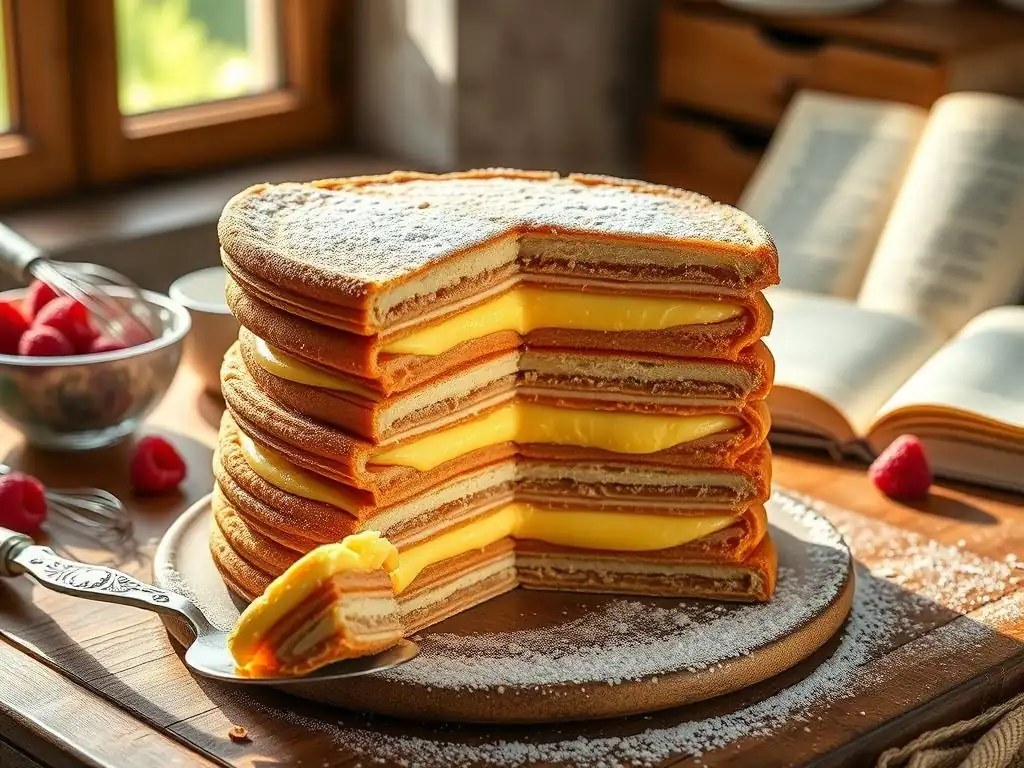
To get the flakiest layers possible in your Easy Eastern European Napoleon Cake, temperature is your best friend. Ensure your butter is ice cold and cut into small pieces, and your water is ice water. Don't overwork the dough when mixing; you want to see visible pieces of butter. When rolling, roll thinly and evenly. The thinner the dough, the more potential for distinct, crisp layers. Baking each layer until golden brown is also essential; underbaked layers will be soft and chewy, not flaky.
Another trick is to bake the layers on parchment paper and transfer them immediately to a wire rack to cool. This prevents the bottoms from steaming and becoming soggy. If using a food processor to combine butter and flour, pulse just until the mixture resembles coarse crumbs with some larger pieces. Over-processing will melt the butter and develop too much gluten, resulting in tough, rather than flaky, layers for your Easy Eastern European Napoleon Cake.
Preventing a Soggy Napoleon Cake: Secrets to Success
The primary way to prevent your Easy Eastern European Napoleon Cake from becoming overly soggy is proper chilling time. While the cream should soften the layers slightly, the goal is a tender flakiness, not mushiness. Baking the layers until they are truly crisp and golden brown provides a good base that can withstand the moisture from the cream. Thinly rolled layers also tend to stay flakier than thicker ones.
Ensuring your custard is the correct consistency is also important. It should be thick enough to hold its shape when spread, not runny. Excessively wet cream will saturate the layers too quickly. Lastly, storing the cake correctly after assembly helps. Keep it refrigerated and covered lightly (to prevent drying out but allowing some air circulation initially) to ensure the layers soften uniformly without becoming waterlogged, preserving the delightful texture of your Easy Eastern European Napoleon Cake.
Storing Your Napoleon Cake for Optimal Freshness
Once assembled and chilled, your Easy Eastern European Napoleon Cake is best stored in the refrigerator. Cover it loosely with plastic wrap or place it in a cake keeper to protect it from drying out and absorbing refrigerator odors. While the cake is delicious on the first day after chilling, the texture often improves slightly on the second day as the flavors meld and the pastry softens perfectly.
A properly stored Napoleon Cake will typically remain fresh and delicious for 2-3 days in the refrigerator. The layers will continue to soften over time, so the texture will change from very crisp to more tender. If you have leftover slices, it's best to store them in an airtight container in the fridge. Freezing a Napoleon Cake is generally not recommended as the delicate pastry layers and custard cream do not freeze and thaw well, often resulting in a loss of texture and quality for your Easy Eastern European Napoleon Cake.
Variations on the Classic Eastern European Napoleon Cake
Adding Flavors: Citrus Zest
While vanilla is the traditional flavor for the custard cream in an Easy Eastern European Napoleon Cake, adding citrus zest can introduce a wonderful brightness that cuts through the richness. Finely grated zest from one orange or lemon can be whisked into the milk before heating, allowing the citrus oils to infuse into the cream as it cooks. Remember to use only the colored part of the peel, avoiding the bitter white pith.
Alternatively, you can stir the zest into the finished, warm custard just before it cools. The amount of zest can be adjusted to your preference, starting with the zest of half a citrus fruit and adding more if desired. This simple addition provides a refreshing counterpoint to the sweet cream and flaky pastry, offering a delightful twist on the classic Easy Eastern European Napoleon Cake.
Different Toppings: Chocolate Ganache
Beyond the traditional crumb topping, a simple chocolate ganache can elevate the appearance and flavor of your Easy Eastern European Napoleon Cake. A basic ganache is made by pouring hot cream over chopped chocolate (dark, milk, or white, depending on preference) and stirring until smooth. A ratio of 1:1 chocolate to cream by weight is common for a pourable ganache.
Once the cake is assembled and chilled (without the crumb topping), you can pour or spread cooled ganache over the top, allowing it to drip down the sides. For a firmer topping, use a higher chocolate-to-cream ratio, like 2:1. The rich, slightly bitter notes of dark chocolate ganache, for example, provide a sophisticated contrast to the sweet custard and flaky pastry, making for a visually striking and delicious variation of the Easy Eastern European Napoleon Cake.
Napoleon Cake with Sour Cream
A popular variation in some Eastern European regions incorporates sour cream into the filling, either partially replacing the custard or mixed with it. This adds a tangy note that balances the sweetness and richness. One method is to make a traditional custard and, once cooled, gently fold in a quantity of full-fat sour cream (such as 25-30% of the custard's weight).
Another approach is a simpler filling made primarily from sour cream, sugar, and perhaps a stabilizer like cornstarch or gelatin, though this deviates more significantly from the classic custard texture. Using sour cream results in a slightly lighter, less intensely rich filling with a pleasant tang. If trying this variation, ensure the sour cream is thick and full-fat to prevent the filling from being too runny in your Easy Eastern European Napoleon Cake.
Troubleshooting Your Napoleon Cake
Common Issues and How to Fix Them
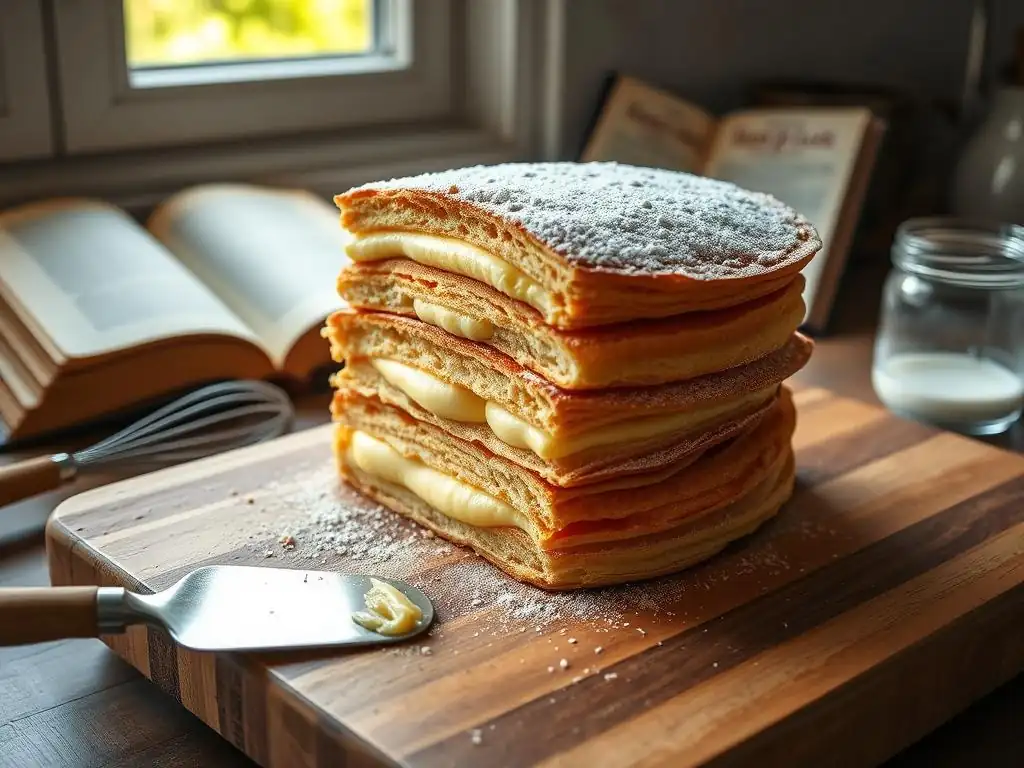
One common issue when making the pastry layers for an Easy Eastern European Napoleon Cake is tough dough. This usually happens if the dough was overworked, developing too much gluten, or if too much water was added. To fix this in the future, ensure you mix the dough just until it comes together and use ice-cold water sparingly. If your current dough is tough, resting it for a longer period in the refrigerator (several hours or even overnight) can sometimes help relax the gluten slightly, making it easier to roll.
Another frequent problem is a runny custard cream. This is typically due to not cooking the custard long enough to activate the thickener (flour or cornstarch) or not using enough thickener relative to the liquid.
To fix a runny cream after it has cooled, you can gently reheat a portion with extra thickener mixed with a little cold milk into a slurry, cook until thickened, then whisk it back into the main batch. Ensuring the custard comes to a gentle boil and thickens noticeably while stirring constantly is key to preventing this issue in your Easy Eastern European Napoleon Cake.
Preventing Common Mistakes When Baking Napoleon Cake
Preventing mistakes is often easier than fixing them. To avoid pastry issues, always start with very cold ingredients and handle the dough minimally. Roll the dough thinly and evenly, pricking it thoroughly before baking to prevent large air pockets. Use parchment paper for easy transfer and even baking.
For the custard, measure ingredients accurately, especially the thickener. Cook it over medium heat, stirring constantly with a whisk, paying close attention as it thickens. Don't rush the cooking process. Ensure you cool the custard completely before using it in your Easy Eastern European Napoleon Cake assembly; warm custard will melt the butter in the pastry layers and make the cake unstable. Finally, the most crucial step to prevent disappointment is allowing sufficient chilling time for the assembled cake – at least 4-6 hours, ideally overnight. This step is non-negotiable for the correct texture.
Conclusion: Your Easy Eastern European Napoleon Cake Success
Enjoying the Fruits of Your Labor: A Delicious Napoleon Cake
You've done it! You've successfully navigated the steps to create a stunning Easy Eastern European Napoleon Cake right in your own kitchen. From preparing the simplified flaky pastry dough and cooking the rich custard cream to carefully layering and decorating, you've mastered the key techniques required for this classic dessert. The aroma filling your kitchen as the layers baked and the anticipation as the cake chilled are all part of the rewarding process. Now comes the best part – slicing into your creation and experiencing the delightful contrast of tender, cream-softened layers and the smooth, luxurious custard.
Making an Easy Eastern European Napoleon Cake might seem like a grand undertaking, but by breaking it down into manageable steps, as we have done, it becomes an achievable and enjoyable baking project. This simplified version allows you to capture the authentic taste and texture without the traditional complexity, proving that beautiful, delicious pastries are within reach for home bakers of all levels.
We hope this guide has empowered you to try this iconic dessert and that your Easy Eastern European Napoleon Cake becomes a cherished part of your baking repertoire for years to come. Enjoy every flaky, creamy bite!
Frequently Asked Questions
What makes this Napoleon Cake recipe "easy"?
This recipe simplifies the traditional, multi-layered cake by using readily available puff pastry and a quicker custard filling, making it less time-consuming. It also provides clear, step-by-step instructions for even beginners.
Are the ingredients easy to find in my local grocery store?
Yes, the recipe uses commonly found ingredients like puff pastry, milk, sugar, and eggs. You shouldn't have trouble locating them at most grocery stores, even outside of Eastern Europe.
Can I customize the filling of the Napoleon Cake?
Absolutely! While the recipe provides a classic custard, you can experiment with flavors like vanilla extract, lemon zest, or even a touch of rum. Just be mindful of the consistency.
How long does it take to make this simplified Napoleon Cake?
While still requiring some time, this version is faster than traditional recipes. Expect around 2-3 hours including preparation, baking, and chilling time. The chilling period is crucial.
What are some tips for achieving perfectly flaky layers in the Napoleon Cake?
Make sure your puff pastry is cold before baking, and avoid overworking it. Also, pricking the pastry with a fork before baking can help prevent excessive puffing and ensure even baking and flaky layers.
Final Reflection: A Slice of History, a Taste of Home
The enduring appeal of the Eastern European Napoleon cake transcends mere culinary delight; it's a testament to the power of simple ingredients transformed into something truly extraordinary. This recipe, simplified for the modern kitchen, aims to make this beloved dessert accessible to everyone, preserving its rich heritage while embracing contemporary convenience. The ease of preparation shouldn't diminish the profound satisfaction of creating this classic treat.
The Napoleon cake, with its delicate layers and creamy filling, represents more than just a dessert; it embodies a connection to family traditions, cultural heritage, and the comforting embrace of home. For many, it evokes cherished memories and the warmth of shared experiences. Food is symbolic of love when words are inadequate.
– Alan D. Wolfelt. This sentiment perfectly encapsulates the emotional resonance this cake holds for so many, bridging generations and cultures through a shared culinary experience.
Now, I invite you to roll up your sleeves, gather your ingredients, and embark on this culinary journey. Don't be intimidated by the seemingly intricate layers; the simplified recipe makes the process surprisingly straightforward. More importantly, savor the experience, the connection to history, and the joy of creating something delicious and meaningful. Let the aroma of baking fill your kitchen, and share this taste of Eastern Europe with those you cherish. The result will be more than just a cake; it will be a memory in the making.
Unleash Your Inner Pastry Chef: Bake Your Own Napoleon!
Thanks for joining us on this delicious journey into the world of Napoleon cake! We hope you’ve gained the confidence to tackle this classic dessert, even with a simplified recipe. Now it’s time to put your newfound skills to the test!
- Bake your own Napoleon cake: Gather your ingredients and follow our simplified recipe. Don’t be afraid to experiment with different fillings or frostings – let your creativity shine!
- Share your baking triumph: Post a picture of your Napoleon cake on social media and tag us @BakeWithEase – we'd love to see your creation!
- Explore other easy European desserts: Check out our recipe collection for more inspiration and baking adventures.
Ready to experience the joy of baking a truly impressive dessert? What unique twist will you add to your Napoleon cake?