
Discover the Ultimate List of British Baking Favorites

Welcome to BakeWithEase!
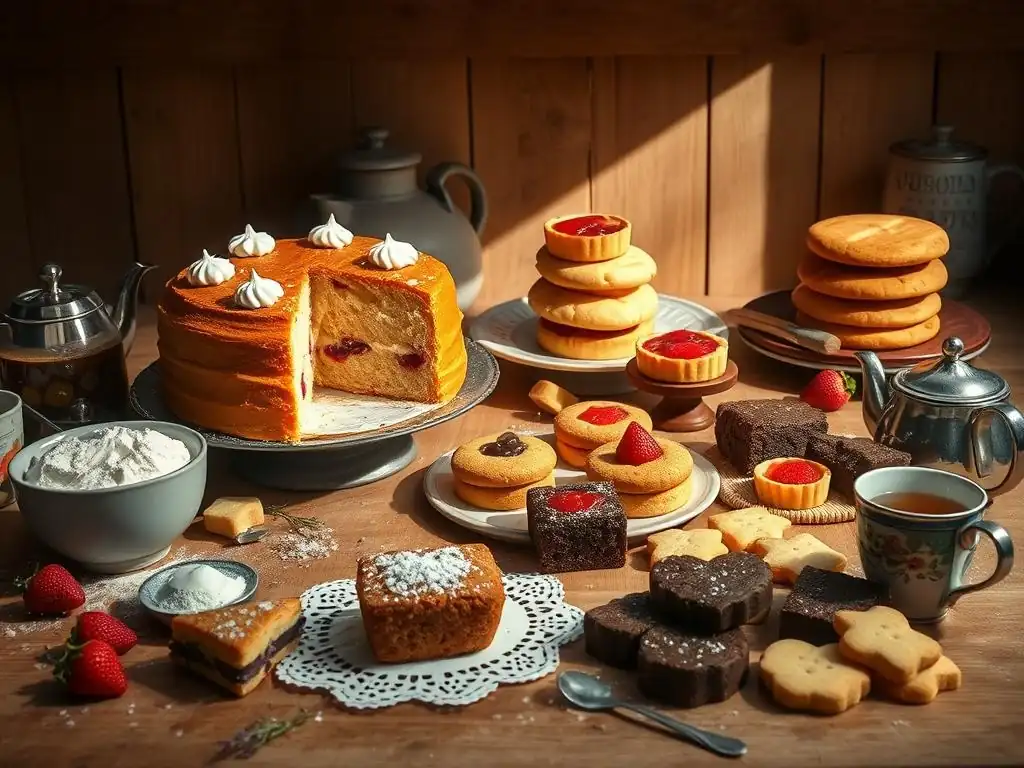
Are you ready to unleash your inner baker and embark on a delicious journey through the heart of British baking? Discover the secrets behind British baking favorites recipes easy with our curated collection of classic treats. From comforting crumbles to delicate scones, prepare to be inspired! Intrigued? Keep reading to unlock the recipes and techniques that will bring a touch of British charm to your kitchen.
- Exploring Classic British Bakes: Easy Recipes for Home Bakers
- Your Guide to Simple and Delicious British Baking
-
Top 10 British Baking Recipes for Home Bakers
- 1. Scones: A Classic Cream Tea Staple
- 2. Victoria Sponge Cake: A Timeless Afternoon Treat
- 3. Shortbread: A Buttery Scottish Biscuit
- 4. Bakewell Tart: A Sweet Almond and Jam Tart
- 5. Sticky Toffee Pudding: A Decadent Dessert
- 6. Chelsea Buns: A Sweet and Spiced Bread
- 7. Eccles Cakes: A Flaky Pastry with Currants
- 8. Welsh Cakes: A Griddle-Baked Treat
- 9. Parkin: A Gingerbread-Like Cake
- 10. Battenberg Cake: A Colorful Almond Cake
- Essential Tips and Techniques for British Baking
- Regional Variations of British Baking
- Enjoy Your Home-Baked British Treats!
-
Frequently Asked Questions
- What are some examples of British baking favorites recipes I can find on BakeWithEase.com?
- Are the British baking recipes on BakeWithEase.com suitable for beginners?
- Where can I find the ingredients for these British baking favorites?
- Does BakeWithEase.com offer tips and techniques alongside the British baking favorites recipes?
- How can I search for specific British baking recipes on BakeWithEase.com?
- Final Reflection: A Slice of British Baking History and Your Future Kitchen
- Unlock Your Inner Baker: Let's Get Baking!
Exploring Classic British Bakes: Easy Recipes for Home Bakers
Your Guide to Simple and Delicious British Baking
Welcome to the wonderful world of British baking! Forget complicated techniques and hard-to-find ingredients; many of the most cherished British baking favorites are surprisingly easy to make right in your own kitchen. From crumbly shortbread to light and airy scones, these recipes offer a delicious taste of the UK's rich culinary heritage. Whether you're a complete novice or looking to expand your baking repertoire, you'll find that mastering these simple British baking recipes is a rewarding and enjoyable experience.
This guide is designed to take the guesswork out of recreating these iconic treats. We'll walk you through the basics of some of the most beloved British bakes, highlighting what makes them special and providing tips to ensure your success. Get ready to preheat your oven, gather your ingredients, and discover just how easy it is to bake authentic British baking favorites that will impress your friends and family. Let's dive into the list of must-try recipes!
Top 10 British Baking Recipes for Home Bakers
1. Scones: A Classic Cream Tea Staple
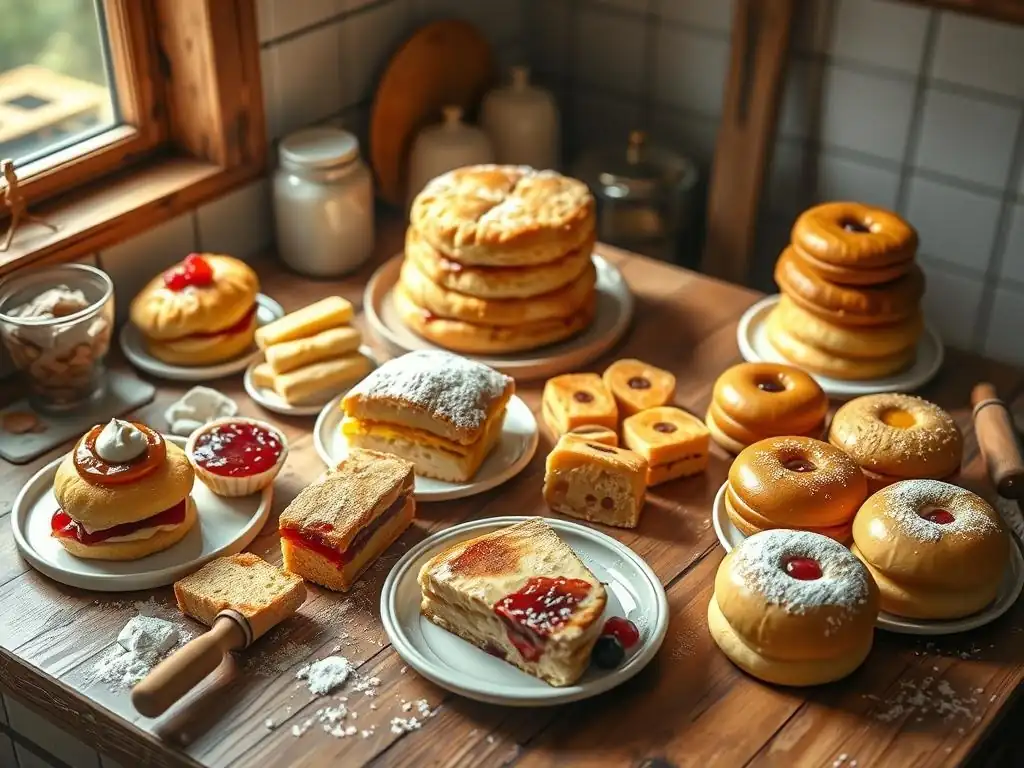
Scones are perhaps one of the most iconic British baking favorites, instantly conjuring images of afternoon tea with clotted cream and jam. Their beauty lies in their simplicity: a basic scone dough requires just a few pantry staples like flour, butter, milk, and a leavening agent, usually baking powder. The key to a good scone is a light touch and ensuring the ingredients are cold, which helps create that desired fluffy texture.
Traditionally served warm, split in half, and piled high with jam (often strawberry or raspberry) and a generous dollop of clotted cream, the 'cream tea' is a quintessential British experience. While debates rage about whether the jam or cream goes first (Cornwall says jam, Devon says cream! ), there's no arguing that a freshly baked scone is a truly delightful treat. Making them at home is part of the joy, and these easy British baking favorites recipes are perfect for a weekend project.
Easy Scone Recipe: Step-by-Step Instructions
Making classic plain scones is straightforward. You'll typically combine around 225g self-raising flour with a pinch of salt, then rub in about 50g cold butter until the mixture resembles breadcrumbs. Stir in 25g caster sugar. Gradually add around 150ml milk, bringing it together with a knife to form a soft dough. Be careful not to overwork the dough.
- Preheat oven to a high temperature, often 220°C (200°C fan/Gas 7).
- Lightly flour a surface and gently pat the dough to about 2cm thickness.
- Use a sharp cutter (avoid twisting) to cut out scones.
- Place on a baking tray, brush tops with milk or egg wash.
- Bake for 10-12 minutes until risen and golden brown.
Variations: Fruit Scones and Cheese Scones
Once you've mastered the basic plain scone, you can easily explore variations. Fruit scones, usually made with sultanas or currants, are a popular choice. Simply add about 50g of dried fruit to the dry ingredients before adding the milk.
Cheese scones offer a savory alternative, perfect with butter or alongside soup. Omit the sugar and add about 75g grated mature cheddar cheese to the dry ingredients. A pinch of cayenne pepper can add a nice kick. Bake as directed for plain scones.
2. Victoria Sponge Cake: A Timeless Afternoon Treat
The Victoria Sponge Cake is arguably the queen of British baking favorites. Named after Queen Victoria, who was said to enjoy a slice with her afternoon tea, this cake is a symbol of simple elegance. It consists of two identical sponge layers, typically sandwiched together with raspberry jam and fresh cream. Its beauty lies in its light, airy texture, achieved through careful mixing and baking.
Making a perfect Victoria Sponge doesn't require advanced skills, making it one of the most accessible easy British baking favorites recipes. The 'all-in-one' method, where all ingredients are mixed together at once, is a common and reliable approach for home bakers. The result is a tender crumb and a delightful contrast between the sweet jam and rich cream.
Making a Perfect Victoria Sponge Cake: A Simple Guide
A standard recipe uses equal weights of butter, sugar, eggs, and self-raising flour – often around 200g of each for an 8-inch cake. Ensure your butter is soft and your eggs are at room temperature for best results.
- Preheat your oven to around 180°C (160°C fan/Gas 4). Grease and line two 8-inch cake tins.
- Cream the soft butter and sugar together until light and fluffy.
- Gradually beat in the eggs, one at a time, adding a little flour if the mixture starts to curdle.
- Gently fold in the remaining self-raising flour using a metal spoon to keep the air in. Add a splash of milk if needed for a dropping consistency.
- Divide the batter evenly between the two prepared tins.
- Bake for 20-25 minutes, or until golden brown and a skewer inserted into the center comes out clean. Let cool slightly in the tins before turning out onto a wire rack to cool completely.
Filling Ideas: Raspberry Jam and Fresh Cream
The classic filling for a Victoria Sponge is a layer of good quality raspberry jam topped with whipped fresh cream. Aim for a jam with a good balance of sweetness and tartness.
For the cream, whip double cream until it holds soft peaks – be careful not to over-whip it into butter! Spread the jam over the bottom sponge layer, then top with the whipped cream before placing the second sponge on top. A dusting of icing sugar finishes it off beautifully.
3. Shortbread: A Buttery Scottish Biscuit
Hailing from Scotland, shortbread is a wonderfully simple biscuit made from just three main ingredients: flour, butter, and sugar. Its name comes from the high butter content, which gives it a 'short' or crumbly texture. Traditionally, it's pressed into a round and scored into 'petticoat tails' or baked in fingers or individual rounds.
The beauty of shortbread lies in its pure, buttery flavor. There are no leavening agents involved; the texture comes purely from the ratio of ingredients and careful baking. It's one of the easiest British baking favorites recipes to master, requiring minimal effort for maximum reward – a delicious, melt-in-your-mouth biscuit perfect with a cup of tea.
Traditional Shortbread Recipe: Simple and Delicious
A classic shortbread recipe typically uses a ratio of 3 parts flour to 2 parts butter to 1 part sugar by weight. For example, 300g plain flour, 200g cold butter (cubed), and 100g caster sugar. Some recipes include a little cornflour for extra tenderness.
- Preheat oven to a low temperature, around 150°C (130°C fan/Gas 2).
- Cream the butter and sugar together until light.
- Gradually beat in the flour until it forms a crumbly dough.
- Bring the dough together with your hands and press into a greased and lined tin (e.g., 8-inch square or round) or shape into fingers. Prick all over with a fork.
- Bake for 45-60 minutes until pale golden and firm to the touch.
- Score into portions while still warm, then let cool completely in the tin.
Variations: Millionaire's Shortbread and Chocolate Shortbread
Millionaire's Shortbread is a decadent twist, adding layers of caramel and chocolate. The base is a classic shortbread, topped with a thick layer of condensed milk caramel (dulce de leche or homemade) and then coated in melted chocolate.
For Chocolate Shortbread, you can replace a small amount of the flour (e.g., 25g) with good quality cocoa powder, or add chocolate chips (around 50g-100g) to the dough before baking. Both variations build on the simple, buttery foundation of the original shortbread.
4. Bakewell Tart: A Sweet Almond and Jam Tart
The Bakewell Tart is a beloved British baking favorite originating from the town of Bakewell in Derbyshire. It features a shortcrust pastry base layered with jam (traditionally raspberry), frangipane (an almond-based filling), and often topped with flaked almonds. It's a comforting and flavourful dessert that's surprisingly achievable for home bakers.
While making pastry might seem daunting, a simple sweet shortcrust is relatively easy to prepare. The frangipane filling comes together quickly by creaming butter and sugar with ground almonds and egg. The combination of flaky pastry, sweet jam, and moist almond filling creates a delightful texture and taste experience.
Easy Bakewell Tart Recipe: A Beginner's Guide
Start with a sweet shortcrust pastry. Typically, you'll rub 100g cold butter into 200g plain flour and 25g caster sugar, then add just enough cold water (around 2-3 tbsp) to bring it together. Chill for 30 minutes. Roll out the pastry and line a 20cm tart tin. Blind bake the pastry case for about 15 minutes at 180°C (160°C fan/Gas 4).
While the pastry bakes, make the frangipane by creaming 100g soft butter with 100g caster sugar, beating in 2 eggs, then folding in 100g ground almonds and 25g plain flour. Spread a layer of raspberry jam (around 100g) over the base of the blind-baked pastry case. Spoon the frangipane over the jam and spread evenly. Sprinkle with flaked almonds (around 50g). Bake for 30-35 minutes until the frangipane is set and golden brown.
Variations: Cherry Bakewell and Almond Slice
The most famous variation is the Cherry Bakewell, which is often an individual cake rather than a tart. It features a small sponge or fondant icing top and a glacé cherry, sometimes with a layer of jam and frangipane underneath, or simply a cherry-flavoured sponge.
An Almond Slice is similar to a Bakewell Tart but often simpler, sometimes omitting the jam layer or baked as a traybake and cut into squares or bars rather than a round tart. These variations demonstrate the versatility of the almond and jam flavour combination, making it a staple in easy British baking favorites recipes.
5. Sticky Toffee Pudding: A Decadent Dessert
Sticky Toffee Pudding is a relatively modern British baking favorite, gaining popularity in the late 20th century, but it has firmly established itself as a classic comforting dessert. It's a moist sponge cake made with chopped dates, served warm with a rich, sticky toffee sauce, and often accompanied by vanilla ice cream or custard.
Despite its indulgent nature, the cake itself is quite straightforward to make. The key to its signature moisture comes from the soaked dates. The toffee sauce, typically made from butter, sugar, and cream, is also simple to prepare on the hob. This combination of textures and flavours makes it a truly satisfying end to a meal.
Simple Sticky Toffee Pudding Recipe: A Comforting Dessert
The cake batter usually involves soaking about 175g chopped dates in hot water with a little bicarbonate of soda, which helps them break down and keeps the cake moist. Cream together 85g soft butter and 175g sugar, beat in 2 eggs, then fold in 175g self-raising flour and the cooled date mixture.
- Preheat oven to 180°C (160°C fan/Gas 4). Grease and line a 20cm square tin or individual pudding moulds.
- Pour the batter into the prepared tin(s).
- Bake for 30-40 minutes for a large pudding, or 20-25 minutes for individual ones, until a skewer comes out clean.
Tips for the Best Toffee Sauce: Rich and Gooey
The toffee sauce is crucial! A classic recipe involves melting 100g butter in a saucepan, stirring in 200g soft brown sugar, and heating gently until the sugar dissolves.
- Stir in 200ml double cream and bring to a gentle simmer.
- Cook for a few minutes, stirring continuously, until the sauce thickens slightly.
- Pour generously over the warm pudding just before serving. For an extra touch, you can poke holes in the top of the pudding with a skewer to allow the sauce to soak in.
6. Chelsea Buns: A Sweet and Spiced Bread
Chelsea Buns are a delicious British baking favorite originating from the Chelsea area of London in the 18th century. They are a type of currant bun made from enriched yeast dough, flavoured with spices (often cinnamon), filled with currants and sugar, rolled up, and baked close together in a tray.
What sets them apart is their sticky glaze, applied while still warm from the oven, which makes them wonderfully sweet and slightly chewy. While they require working with yeast dough, which can be a step up from simple cakes and biscuits, the process for Chelsea buns is quite forgiving, making them an achievable easy British baking favorites recipes for those new to bread making.
Homemade Chelsea Buns Recipe: A Step-by-Step Guide
Start with a sweet yeast dough. You'll typically need around 300g strong white bread flour, a sachet of fast-action yeast (around 7g), a little sugar (around 50g), and salt. Mix with warm milk (around 150ml) and an egg, plus some melted butter (around 50g). Knead until smooth and elastic, then leave to rise until doubled in size (about 1 hour).
Roll the dough into a rectangle (approx. 30x40cm). Spread with softened butter, sprinkle generously with a mix of caster sugar (around 75g), currants (around 100g), and cinnamon (1-2 tsp). Roll up tightly from the long side and cut into 12 slices. Place cut-side up in a greased baking tray (approx. 20x30cm), leaving a small gap between them. Leave to prove for another 30-45 minutes until they've expanded and fill the tray. Bake at 190°C (170°C fan/Gas 5) for 20-25 minutes until golden brown.
Icing and Glazing Techniques: Perfecting the Finish
The signature sticky glaze is essential for Chelsea buns. While they are still warm from the oven, brush them generously with a simple sugar syrup (equal parts sugar and water heated until dissolved) or a thin icing made from icing sugar and water.
Alternatively, some bakers prefer a classic fondant icing drizzled over cooled buns. The warm sugar syrup glaze is traditional and gives them that characteristic shine and sticky texture, making them irresistible easy British baking favorites recipes to enjoy.
7. Eccles Cakes: A Flaky Pastry with Currants
Eccles cakes are small, round pastries filled with currants and often a pinch of spice, originating from the town of Eccles in Lancashire. They are made from flaky or puff pastry, which gives them their characteristic crisp texture, and are typically sprinkled with caster sugar before baking.
Despite their humble appearance, a good Eccles cake is a delight – the buttery, flaky layers encasing a sweet, chewy filling. While making puff pastry from scratch can be time-consuming, using good quality shop-bought puff pastry makes these easy British baking favorites recipes much more accessible for home bakers.
Authentic Eccles Cakes Recipe: A Taste of Tradition
Assuming you're using ready-made puff pastry (about 500g for 8-10 cakes), the filling is key. Combine about 150g currants with 50g soft brown sugar, 25g melted butter, a pinch of mixed spice, and the zest of half a lemon.
- Roll out the puff pastry thinly. Cut into rounds using a cutter (approx. 10-12cm diameter).
- Place a spoonful of the filling in the centre of each round.
- Gather the edges of the pastry around the filling and pinch to seal securely at the top.
- Gently flatten the sealed cakes and place seam-side down on a baking tray.
- Make 3-4 slashes on the top of each cake with a sharp knife. Brush with milk or egg wash and sprinkle generously with caster sugar.
- Bake at 200°C (180°C fan/Gas 6) for 15-20 minutes until puffed up, golden brown, and the sugar is caramelized.
Tips for Achieving Flaky Pastry: Lamination Techniques
If you're making your own puff pastry, the flakiness comes from the lamination process – folding butter into the dough multiple times, creating dozens or hundreds of thin layers. Keeping everything cold is crucial during this process.
For home bakers using shop-bought pastry, ensure it is properly thawed in the fridge. Avoid overworking the pastry when cutting and shaping the cakes, as this can compress the layers and result in a less flaky texture. Baking at a relatively high temperature helps the layers separate and puff up quickly.
8. Welsh Cakes: A Griddle-Baked Treat
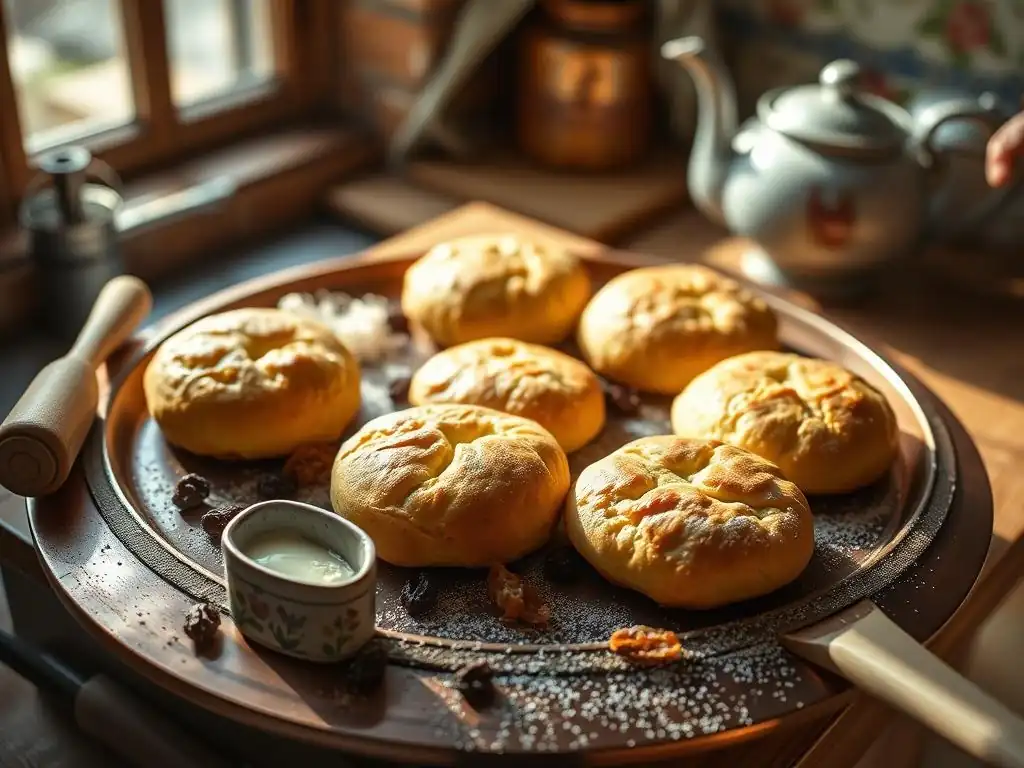
Welsh cakes, or Picau ar y maen in Welsh, are small, round flat cakes cooked on a griddle (a maen). They are a beloved British baking favorite from Wales, similar to scones but flatter and cooked differently. Made from flour, butter, sugar, eggs, and currants, they are quick to make and utterly delicious served warm.
Unlike scones or cakes baked in an oven, Welsh cakes cook relatively quickly on a hot griddle or heavy-based frying pan. This cooking method gives them a unique texture – slightly crisp on the outside and soft and crumbly within. They are incredibly easy British baking favorites recipes to whip up for an impromptu treat.
Easy Welsh Cakes Recipe: Ready in Minutes
A typical recipe uses around 225g self-raising flour, 100g cold butter rubbed in, 75g caster sugar, and 50g currants. Bind with 1 beaten egg and a splash of milk if needed to make a firm dough.
- Lightly flour a surface and roll the dough to about 1cm thickness.
- Cut out rounds using a cutter (approx. 5-6cm diameter).
- Heat a lightly greased griddle or heavy non-stick frying pan over medium heat.
- Cook the Welsh cakes for 3-4 minutes on each side until golden brown and cooked through.
- Transfer to a plate and sprinkle with extra caster sugar while still warm.
Serving Suggestions: Warm with Butter or Jam
Welsh cakes are best enjoyed warm, straight from the griddle. The most traditional way to serve them is simply with a dusting of caster sugar.
However, they are also delicious split open and spread with butter, or butter and jam. Some people enjoy them with a dollop of clotted cream, similar to scones. Their simplicity makes them versatile, perfect for a quick snack or part of a larger afternoon tea spread.
9. Parkin: A Gingerbread-Like Cake
Parkin is a traditional gingerbread cake from Northern England, particularly associated with Yorkshire and Lancashire. It's made with oatmeal, treacle, and ginger, giving it a dense, moist texture and a distinctive spiced flavour. Often baked for Bonfire Night (5th November), Parkin is a comforting British baking favorite for the colder months.
What makes Parkin unique is that it actually improves with age. It's best left for a few days, wrapped tightly, to allow the flavours to deepen and the texture to become even stickier and more moist. While it requires a longer baking time at a lower temperature, the preparation is straightforward, making it an easy British baking favorites recipes for a different kind of cake.
Traditional Parkin Recipe: A Spiced Delight
A standard Parkin recipe includes around 225g plain flour, 100g medium oatmeal, 1 tsp bicarbonate of soda, 1 tbsp ground ginger, and a pinch of mixed spice. Wet ingredients typically include 100g butter, 100g soft brown sugar, 200g black treacle (or a mix of treacle and golden syrup), and 150ml milk.
- Preheat oven to a low temperature, around 140°C (120°C fan/Gas 1). Grease and line a 20cm square tin.
- Gently melt the butter, sugar, treacle, and milk together in a saucepan – do not boil.
- In a large bowl, mix the flour, oatmeal, bicarbonate of soda, ginger, and mixed spice.
- Pour the wet ingredients into the dry and mix well to form a smooth batter.
- Pour the batter into the prepared tin.
- Bake for 1 - 1.5 hours, or until firm to the touch and a skewer comes out clean. The longer, slower bake helps develop the texture.
Storing and Serving Parkin: Maturing for Flavor
Once baked, let the Parkin cool in the tin before turning it out. The key step is then to wrap it tightly in baking parchment and then foil, storing it in an airtight container for at least 2-3 days, ideally a week, before cutting and serving.
This 'maturing' process allows the treacle and spices to permeate the cake fully, creating a richer flavour and stickier texture. Serve slices on their own, or traditionally, with a dollop of butter or a serving of custard.
10. Battenberg Cake: A Colorful Almond Cake
The Battenberg Cake is a distinctive British baking favorite with its checkboard pattern of pink and yellow sponge cake, held together by apricot jam and wrapped in marzipan. It was created in 1884 to celebrate the marriage of Princess Victoria (granddaughter of Queen Victoria) to Prince Louis of Battenberg.
While it looks intricate, the process of making the cake itself is similar to a simple sponge. The main steps involve dividing the batter and colouring half pink, baking two rectangular sponges, cutting and assembling them with jam, and finally covering the whole cake smoothly with marzipan. It's one of the more visually impressive easy British baking favorites recipes.
Making Battenberg Cake: A Step-by-Step Guide
Start with a basic sponge batter (using around 175g each of butter, sugar, eggs, and self-raising flour, plus vanilla extract). Divide the batter into two bowls. Add pink food colouring to one half and yellow food colouring to the other.
- Preheat oven to 180°C (160°C fan/Gas 4). Prepare a square tin (approx. 20cm) with a central divider or use two small loaf tins to bake the pink and yellow sponges separately.
- Bake for 20-25 minutes until a skewer comes out clean. Let cool completely.
- Trim the edges of the cooled sponges and cut each into two long, equal-sized rectangles (approx. 4cm x 20cm).
- Warm some apricot jam (around 100g) and sieve it to remove lumps. Brush jam over one long side of a yellow piece and stick it to a pink piece. Brush jam over one long side of the other yellow piece and stick it to the remaining pink piece. Then brush jam on the two remaining sides and stick the pairs together to form the 2x2 check pattern (yellow-pink, pink-yellow).
- Roll out marzipan (around 400g) into a rectangle large enough to cover the cake (approx. 25cm x 20cm). Brush the top and sides of the cake with more warm jam. Place the cake along one edge of the marzipan and carefully roll it up to enclose the cake completely. Trim the ends.
Tips for Perfect Marzipan Coverage: Smooth and Even
Working with marzipan can be tricky, but a few tips help achieve a smooth finish. Ensure your work surface and rolling pin are lightly dusted with icing sugar (not flour).
Roll the marzipan evenly to a consistent thickness. Before covering the cake, ensure the cake itself is neatly trimmed and square. Use a palette knife or ruler to gently press the marzipan against the cake sides and flatten the top seam for a professional look. The visual appeal makes this one of the most rewarding easy British baking favorites recipes.
Essential Tips and Techniques for British Baking
Achieving success with easy British baking favorites recipes relies on a few fundamental principles. Paying attention to ingredient quality, having the right tools, and understanding common pitfalls can make a significant difference in your results. Don't be discouraged by initial attempts; baking is a skill that improves with practice!
Many traditional British bakes use simple methods that have been passed down through generations. Understanding techniques like rubbing in butter or gentle folding is more important than complex steps. These simple British baking recipes are designed to be accessible, so focus on following the instructions carefully and enjoying the process.
Essential Ingredients for British Baking
While ingredients vary between recipes, several are staples in the British pantry. Good quality butter is paramount for flavour and texture, especially in shortbread and pastry. Using the correct type of flour is also important – self-raising flour is common for sponges and scones, while plain flour is used for pastry and enriched doughs like Chelsea buns.
Other key ingredients include caster sugar (finer than granulated, dissolving easily), soft brown sugar (for moisture and flavour in things like Parkin and Sticky Toffee Pudding), fresh eggs, milk, and classic flavourings like vanilla extract, mixed spice, cinnamon, and dried fruits like currants and sultanas. Having these basics on hand means you're always ready to tackle easy British baking favorites recipes.
Baking Equipment for Beginners
You don't need a professional kitchen to bake British favorites. A few essential pieces of equipment will get you started.
- Mixing bowls: Various sizes for combining ingredients.
- Scales: Accurate weighing of ingredients is crucial in baking.
- Measuring jugs and spoons: For liquids and smaller quantities.
- Sieve: For sifting flour and icing sugar.
- Wooden spoon and whisk: For mixing and beating.
- Rubber spatula or metal spoon: For folding ingredients gently.
- Baking tins and trays: Assorted sizes (e.g., loaf tin, round cake tins, baking sheet, square tin).
- Pastry cutter or knife: For rubbing in butter.
- Rolling pin: For pastry and dough.
- Cutters: Round cutters for scones and Welsh cakes.
- Wire cooling rack: Essential for letting bakes cool properly.
Having these tools makes following easy British baking favorites recipes much smoother.
Common Mistakes and How to Avoid Them
Even easy British baking favorites recipes can go wrong sometimes. Here are a few common issues and how to prevent them:
- Overworking dough/batter: This develops gluten, leading to tough scones or heavy cakes. Mix just until combined.
- Ingredients too warm: Particularly for pastry and scones, cold butter is essential for creating steam and flakiness.
- Incorrect oven temperature: Ovens can vary. Using an oven thermometer helps ensure accuracy. Too hot can burn the outside before the inside cooks; too cool can result in flat or dense bakes.
- Opening the oven door too early: For cakes and sponges, wait until they are mostly set before checking, or they may sink.
- Not measuring accurately: Baking is a science; precise measurements are key. Weigh ingredients rather than relying solely on volume.
- Not cooling properly: Trying to handle warm cakes or pastries before they are set can cause them to break. Always cool on a wire rack.
Avoiding these pitfalls will improve your success rate with easy British baking favorites recipes.
Regional Variations of British Baking
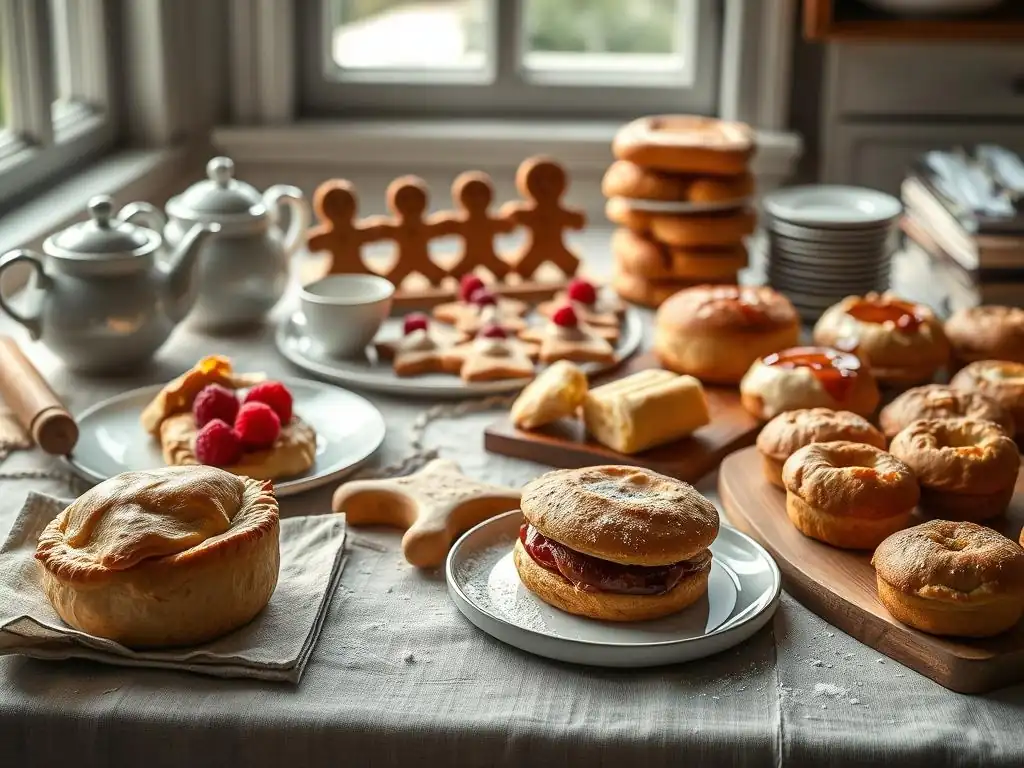
While many British baking favorites are enjoyed nationwide, certain regions boast their own specialities, adding even more depth to the UK's baking landscape. Exploring these regional treats offers a glimpse into local history and ingredients, providing more easy British baking favorites recipes to discover.
These regional bakes showcase how local produce and traditions have shaped culinary identity. From the hearty bakes of Scotland to the fruit-filled treats of Wales and the comforting breads of Northern Ireland, there's a rich tapestry of flavours waiting to be explored by the home baker.
Scottish Baking: Dundee Cake and Tablet
Scotland offers some truly distinctive British baking favorites. Dundee Cake is a traditional fruit cake, often recognised by the concentric circles of blanched almonds decorating its top. Unlike many fruit cakes, it typically doesn't contain glacé cherries, relying instead on currants, sultanas, and raisins, often with citrus peel. It's a moist, flavourful cake that keeps well.
Tablet is a very different Scottish treat – a medium-hard, sugary confection similar to fudge but with a more brittle texture. Made from sugar, condensed milk, and butter, boiled and then beaten as it cools, it's incredibly sweet and crumbly. While technically confectionery, its popularity makes it a staple in Scottish sweet treats.
Welsh Baking: Bara Brith and Welsh Cakes
Wales contributes several wonderful British baking favorites recipes easy for home cooks. Bara Brith, meaning "speckled bread", is a classic Welsh fruit loaf made with dried fruits (often soaked in tea overnight for moisture and flavour) and spices. It's traditionally served sliced and buttered.
As discussed earlier, Welsh Cakes ( Picau ar y maen) are another key Welsh contribution. These quick griddle cakes are a simple yet delicious example of Welsh home baking, often made in minutes and enjoyed warm.
Northern Irish Baking: Soda Bread and Potato Farls
Northern Ireland boasts its own set of British baking favorites, many of which are simple, quick breads. Soda bread is a cornerstone – a rustic loaf that uses bicarbonate of soda as the leavening agent instead of yeast, mixed with buttermilk. It's incredibly fast to make as it requires no proving.
Potato Farls are another essential part of a traditional Ulster Fry breakfast. These are flat potato cakes made from mashed potato, butter, flour, and sometimes soda bicarbonate, cooked on a griddle or frying pan. Both Soda Bread and Potato Farls are excellent examples of easy British baking favorites recipes that are savoury and satisfying.
Enjoy Your Home-Baked British Treats!
You now have a fantastic list of easy British baking favorites recipes to try! From the simplicity of shortbread and Welsh cakes to the classic elegance of Victoria Sponge and the comforting warmth of Sticky Toffee Pudding, there's a bake here for every mood and occasion. Don't be afraid to start with the ones that appeal most to you.
Baking these British baking favorites at home is a rewarding way to connect with culinary traditions and create delicious moments to share. Remember to follow the tips, measure carefully, and most importantly, have fun in the kitchen! Happy baking!
Frequently Asked Questions
What are some examples of British baking favorites recipes I can find on BakeWithEase.com?
You can find recipes for classics like Victoria Sponge, Scones, and Shortbread. We also offer variations and easy-to-follow instructions.
Are the British baking recipes on BakeWithEase.com suitable for beginners?
Yes! We focus on easy recipes with clear, step-by-step guides designed for all skill levels. Many include helpful photos and videos.
Where can I find the ingredients for these British baking favorites?
Most of our British baking favorites recipes use easy-to-find ingredients that are readily available in most supermarkets.
Does BakeWithEase.com offer tips and techniques alongside the British baking favorites recipes?
Absolutely! We provide baking tips and techniques to help you achieve perfect results with every recipe. This includes advice on ingredients, equipment, and common mistakes to avoid.
How can I search for specific British baking recipes on BakeWithEase.com?
You can use our search bar or browse by category to find the British baking favorites recipes you're looking for. We also have a dedicated section for easy baking recipes.
Final Reflection: A Slice of British Baking History and Your Future Kitchen
The enduring appeal of classic British bakes is undeniable, a comforting tradition woven into the fabric of our culture and readily accessible through simple, delicious recipes. From the humble Victoria sponge to the sophisticated Bakewell tart, these recipes are more than just ingredients and instructions; they are portals to shared experiences, family gatherings, and cherished memories. Their continued popularity in a world of fast food and global cuisines speaks volumes about their timeless charm.
The influence of British baking extends far beyond the kitchen table; it's a cultural touchstone, shaping our identity and connecting us to our heritage. These recipes, passed down through generations, represent a continuity of tradition and a sense of belonging. Baking is at once child's play and adult joy. And love, of course.
This quote perfectly encapsulates the emotional resonance of these simple yet satisfying treats, a sentiment I believe deeply resonates with many. The ease of preparation only enhances their accessibility, making them perfect for both seasoned bakers and enthusiastic beginners.
Now, I invite you to consider your own culinary journey. Which of these British baking favorites resonates most with you? Perhaps it's a recipe you've enjoyed since childhood, or one you're eager to try for the first time. Take the time to explore these recipes, not just as instructions, but as opportunities to connect with tradition, creativity, and the simple pleasure of sharing delicious food with loved ones. Let the aroma of freshly baked goods fill your kitchen and warm your heart. The ultimate reward isn't just a delicious cake, but the joy of creating something beautiful and meaningful.
Unlock Your Inner Baker: Let's Get Baking!
Thanks for joining us on this delicious journey through the world of British baking! We hope you discovered some new favorites and felt inspired by the classic treats. Ready to put your newfound knowledge to the test?
- Bake your favorite recipe from the list: Don't just dream about those scones or Victoria sponge – get baking! We're confident you'll create something amazing.
- Share your baking triumphs (or even your bloopers!) on social media using #BakeWithEaseBritishBaking. Let's build a community of passionate bakers!
- Explore our recipe archive for even more delicious inspiration. You might just find your next baking obsession!
So, what delectable British bake will you conquer first?