
Italian Easter Breads: Bake Colomba & More with Ease

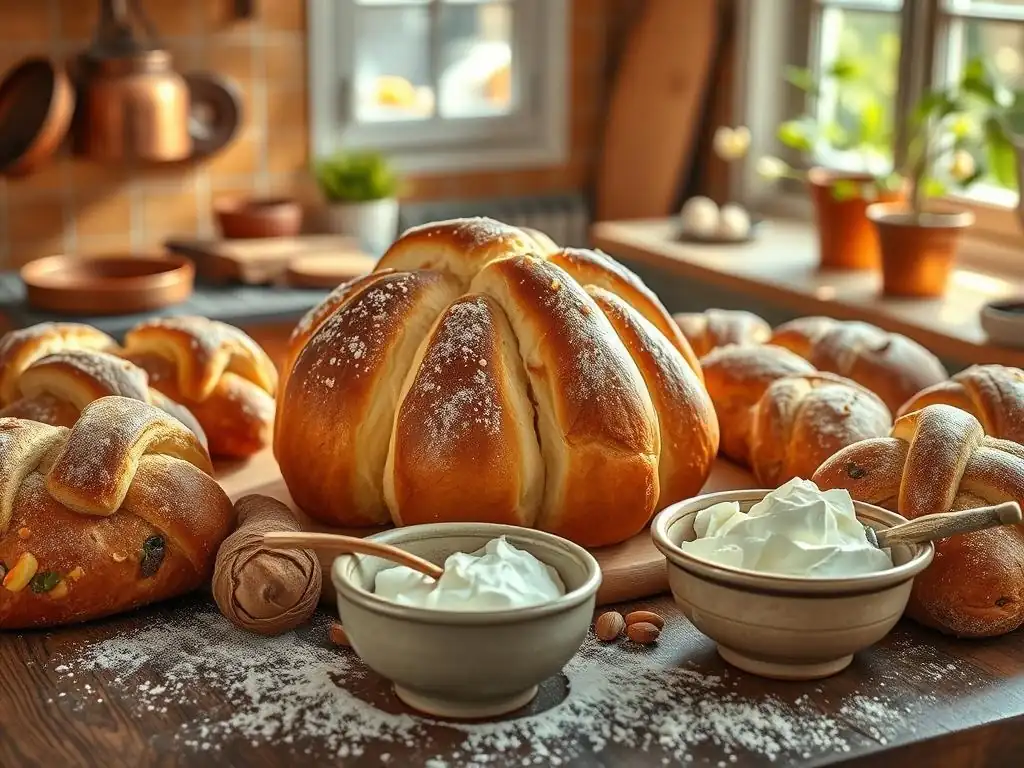
Welcome to BakeWithEase, your haven for effortless baking adventures! Ever dreamt of recreating the vibrant flavors of Italy in your own kitchen? This week, we're diving into the delicious world of Regional & Cultural Baking with a focus on Easy Italian Easter Bread. But this isn't just about following a recipe; we'll unravel the secrets behind perfect dough and authentic techniques. Intrigued? Let's unlock the secrets to baking a delightful Colomba (and more!) that will impress your friends and family this Easter.
- Discover the Joy of Easy Italian Easter Bread Baking
- Understanding Italian Easter Bread Traditions
- Easy Colomba Pasquale Recipe: A Step-by-Step Guide
- Beyond Colomba: Exploring Other Italian Easter Bread Recipes
- Essential Tools and Ingredients for Baking Italian Easter Breads
- Troubleshooting Your Italian Easter Bread: Common Issues and Solutions
- Serving and Enjoying Your Homemade Italian Easter Bread
- Make This Easter Special with Easy Italian Easter Bread Recipes
-
Frequently Asked Questions
- What makes Italian Easter bread different from other Easter breads?
- What is Colomba, and how does it relate to Italian Easter bread?
- Where can I find the ingredients needed for Easy Italian Easter bread?
- Can I make Italian Easter bread ahead of time?
- What are some common variations of Italian Easter bread recipes?
- Final Reflection: The Sweet Legacy of Italian Easter Breads
- Unleash Your Inner Pastry Chef: Bake an Italian Easter!
Discover the Joy of Easy Italian Easter Bread Baking
Baking Italian Easter bread is a cherished tradition, bringing warmth and delicious aromas into homes as Easter approaches. While some recipes might seem intimidating at first glance, the truth is that making delightful Italian Easter bread, like the famous Colomba Pasquale, is absolutely achievable for home bakers of all levels. This article will guide you through the process, focusing on simple techniques and accessible ingredients to make your journey into baking easy Italian Easter bread a truly joyful experience.
Imagine the satisfaction of pulling a golden, fragrant loaf from your oven, knowing you've created a piece of culinary heritage. Whether you're a complete novice or looking to refine your skills, mastering easy Italian Easter bread is a rewarding endeavor. We'll explore the history, the significance, and provide clear, step-by-step instructions, proving that these festive breads are well within your reach. Get ready to fill your kitchen with the sweet scent of tradition!
BakeWithEase Presents: Mastering Traditional Italian Easter Breads
At BakeWithEase, our mission is to demystify baking, making it accessible and enjoyable for everyone. Italian Easter breads, with their rich history and symbolic shapes, are perfect examples of how simple ingredients and patient technique can yield extraordinary results. We believe that with the right guidance, anyone can successfully bake these traditional treats, adding a special touch to their Easter celebrations. Our approach focuses on breaking down complex processes into manageable steps.
We'll delve into the nuances of working with enriched doughs, understanding proofing times, and achieving that signature light and airy texture. Expect practical tips on everything from activating yeast to shaping dough and ensuring a beautiful, golden crust. Our goal is to empower you to confidently bake authentic Italian Easter bread, turning what might seem like a challenge into a delightful and rewarding baking experience.
Understanding Italian Easter Bread Traditions
Italian Easter bread is far more than just a baked good; it's steeped in history, symbolism, and regional identity. These festive loaves play a central role in Easter celebrations across Italy, often shared among family and friends as a symbol of peace, rebirth, and the end of the Lenten fast. Understanding the traditions behind these breads adds another layer of appreciation to the baking and sharing process.
The act of baking and sharing bread during religious holidays is a practice found in many cultures, but Italian Easter breads hold a special place. Their unique shapes and ingredients often carry specific meanings related to the Easter story and the springtime renewal. Exploring these traditions connects us to generations of bakers who have kept these customs alive.
The Significance of Bread in Italian Easter Celebrations
Bread, in its simplest form, has always been a staple of life, but during Italian Easter celebrations, it takes on profound symbolic meaning. The most famous example, Colomba Pasquale, is shaped like a dove, representing peace and the Holy Spirit. This shape is instantly recognizable and is a central part of the Easter table in many Italian households.
Beyond the dove shape, the enriched nature of these breads – often containing eggs, butter, and sometimes sugar or candied fruit – signifies the abundance and joy associated with the end of Lent and the celebration of Easter. The inclusion of eggs, both in the dough and sometimes whole and dyed within the bread (as in Pane di Pasqua), further symbolizes rebirth and new life. These elements transform simple flour and water into a meaningful centerpiece for the holiday.
Regional Variations of Italian Easter Breads
Italy's culinary landscape is incredibly diverse, and its Easter bread traditions are no exception. While Colomba Pasquale is widely popular, especially in the North, numerous regional variations exist, each with its unique flavors, shapes, and traditions. This rich tapestry of breads reflects the distinct cultural identities of different Italian regions.
In Naples, for instance, you'll find Casatiello Napoletano, a savory Easter bread filled with cheese and cured meats, often baked with whole eggs embedded in the crust. Further south, in regions like Sicily or Calabria, Pane di Pasqua often takes the form of braids, rings, or other symbolic shapes, frequently adorned with brightly colored hard-boiled eggs. These variations highlight the creativity and local ingredients used to celebrate Easter across the country, offering a wide array of easy Italian Easter bread styles to explore.
Easy Colomba Pasquale Recipe: A Step-by-Step Guide
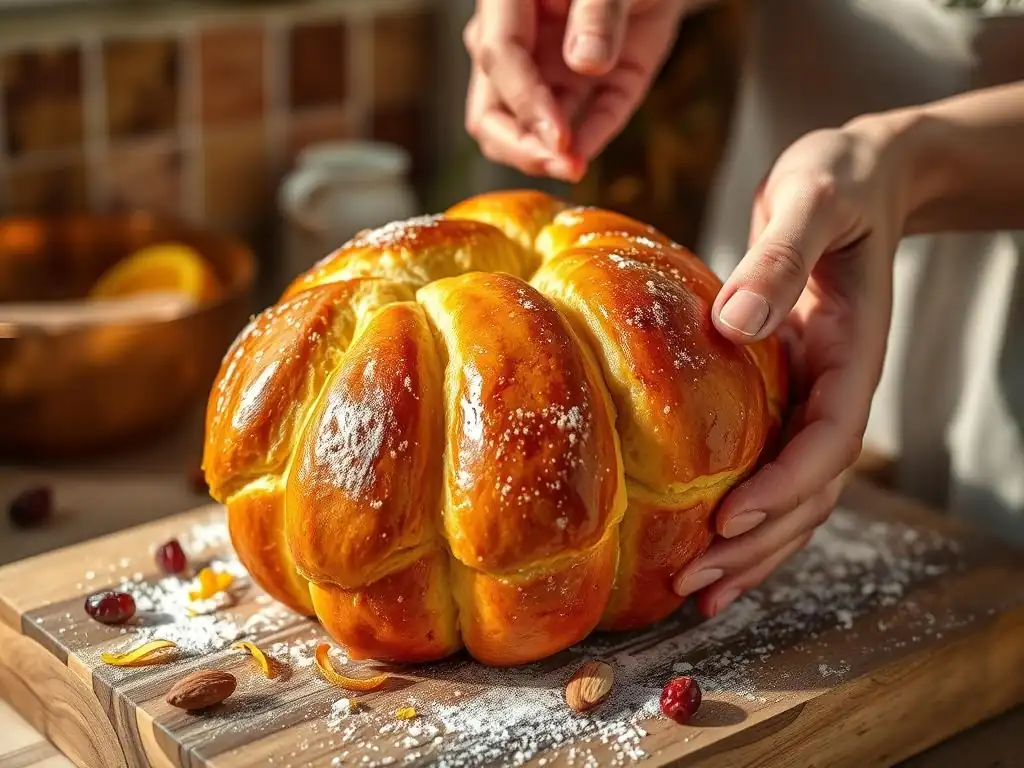
Baking Colomba Pasquale, the classic dove-shaped Italian Easter bread, might seem daunting due to its enriched dough and distinctive form. However, with a simplified recipe and clear instructions, making this beautiful bread at home becomes a much more approachable task. This guide focuses on making an easy Italian Easter bread that delivers on flavor and texture without requiring professional-level skills or equipment.
Our step-by-step approach breaks down the process into manageable stages, from activating the yeast to the final bake. We'll provide approximate timings and visual cues to help you navigate the dough development and proofing stages successfully. By following these steps, you can achieve a wonderfully soft, fragrant Colomba that rivals those from Italian bakeries.
What is Colomba Pasquale? The Dove-Shaped Easter Bread
Colomba Pasquale, literally "Easter Dove," is a traditional Italian sweet bread baked and enjoyed during the Easter season. Its defining characteristic is its shape, which is meant to resemble a dove, symbolizing peace. Originating in Lombardy, perhaps as early as the 6th century or popularized commercially in the 20th century, it shares similarities with Christmas panettone and pandoro, being an enriched dough made with flour, eggs, butter, and sugar.
Unlike panettone, Colomba typically contains candied orange peel but no raisins and is topped with a crunchy almond glaze and pearl sugar before baking. This topping adds a delightful sweetness and texture contrast to the soft interior. Its widespread popularity has made it an iconic symbol of easy Italian Easter bread across Italy and beyond.
Ingredients for a Delicious Homemade Colomba
Creating a delicious, easy Italian Easter bread like Colomba starts with quality ingredients. You'll need standard baking staples plus a few specific items. For a typical loaf around 750g, you'll likely require about 300-350 grams of strong bread flour, around 100-120 grams of sugar, approximately 3-4 large eggs plus an extra yolk for richness, and a generous amount of unsalted butter, perhaps 100-150 grams, softened.
You'll also need active dry yeast (around 7-10 grams or equivalent fresh yeast), warm milk or water (about 100-150 ml) to activate the yeast, a pinch of salt, and the signature additions: finely chopped candied orange peel (approx. 50-70 grams) and vanilla extract or orange zest for flavor. For the glaze, you'll need ground almonds (approx. 30-40 grams), sugar (approx. 50-60 grams), egg white from one egg, and pearl sugar and whole almonds for topping. Having these ready makes the baking process much smoother for your easy Italian Easter bread.
Colomba Pasquale: Baking Instructions for Beginners
Baking your own Colomba Pasquale, an easy Italian Easter bread, is a process that requires patience, mainly for proofing, but the active steps are straightforward.
1. Activate the yeast: In a small bowl, combine warm milk/water (around 40-45°C or 105-115°F) with a pinch of sugar and the yeast. Let stand 5-10 minutes until frothy.
2. Prepare the dough: In a large mixing bowl (or stand mixer), combine flour, sugar, and salt. Add the activated yeast mixture, eggs, and extra yolk. Mix until a shaggy dough forms.
3. Knead the dough: Turn the dough onto a lightly floured surface or use a dough hook. Knead for about 10-15 minutes until the dough is smooth and elastic. Gradually incorporate the softened butter, small piece by small piece, until fully absorbed and the dough is very smooth and pulls away from the sides of the bowl.
4. Add mix-ins: Knead in the candied orange peel and flavoring (vanilla/zest).
5. First proof: Place the dough in a greased bowl, cover, and let rise in a warm place until doubled in size (this can take 2-4 hours, depending on temperature).
6. Shape the dough: Gently deflate the dough. Divide it into two pieces: one slightly larger for the body and one smaller for the wings. Shape the larger piece into an oval and place it in a greased Colomba mold. Divide the smaller piece in half and shape each into a 'wing' placing them across the 'body' in the mold to form a dove shape.
7. Second proof: Cover the mold loosely and let rise again until the dough fills the mold (another 1.5-3 hours).
8. Prepare the glaze: While the dough proofs for the second time, mix ground almonds, sugar, and egg white until smooth.
9. Glaze and bake: Gently spread the glaze over the top of the risen dough. Sprinkle generously with pearl sugar and dot with whole almonds.
10. Bake: Preheat your oven to approximately 170-180°C (340-350°F). Bake for 40-60 minutes, depending on the size of the loaf, until golden brown and a skewer inserted into the center comes out clean. Cover loosely with foil if the top browns too quickly.
11. Cool: Let the Colomba cool in the mold for a short time before transferring to a wire rack to cool completely.
Following these steps carefully will result in a beautiful and delicious easy Italian Easter bread. Pay attention to the dough consistency and proofing times, as these are key to a light texture.
The total time from mixing to baked bread, including proofing, can be anywhere from 6 to 10 hours, sometimes longer depending on ambient temperature and yeast activity. While the active work is minimal, the patience during the rising phases is crucial. Don't rush these steps; they are essential for developing the flavor and achieving the characteristic light and airy crumb of a great easy Italian Easter bread.
Tips for a Perfectly Shaped and Flavored Colomba
Achieving the perfect shape and flavor for your easy Italian Easter bread, the Colomba, involves a few key considerations. First, using a specific Colomba mold is highly recommended. These paper molds provide the structure needed for the dough to rise upwards and outward into the distinct dove shape. Greasing the mold lightly can also help ensure the bread releases easily after baking.
For flavor, don't skimp on good quality candied orange peel; it's a signature component. Adding a little extra orange zest to the dough can also boost that bright citrus note. When applying the glaze, spread it gently to avoid deflating the risen dough. Ensure the glaze covers the top evenly for that beautiful, crackly finish. Baking at the correct temperature and checking for doneness with a skewer prevents an underbaked center or an overcooked crust, guaranteeing a moist and flavorful easy Italian Easter bread.
Beyond Colomba: Exploring Other Italian Easter Bread Recipes
While Colomba Pasquale reigns supreme in many parts of Italy, the country offers a delightful variety of other Easter breads, each with its own character and history. Exploring these regional specialties allows you to broaden your baking repertoire and discover new favorites. Many of these can also be adapted into easy Italian Easter bread recipes for the home kitchen, offering different flavor profiles and textures.
From savory options packed with cheese and meat to sweet, simple loaves adorned with colorful eggs, there's an Italian Easter bread for every taste. These recipes often use similar enriched dough bases but diverge significantly in fillings, shapes, and toppings. Venturing beyond the familiar Colomba opens up a world of delicious possibilities for your Easter table.
Casatiello Napoletano: Savory Easter Bread with Cheese and Meat
Casatiello Napoletano is a robust and flavorful Easter bread from Naples, a stark contrast to the sweet Colomba. This savory ring-shaped bread is traditionally made with a rich dough incorporating lard and black pepper, then generously filled with various cured meats and cheeses common in the Campania region. It's often baked with whole, raw or hard-boiled eggs embedded on top, held in place by strips of dough, symbolizing rebirth.
This bread is typically prepared on Good Friday and enjoyed throughout the Easter weekend, often as part of picnics or shared meals. The combination of salty meats, tangy cheeses, and the peppery, enriched dough makes it incredibly satisfying. While the traditional recipe can be quite involved, adapting it to an easy Italian Easter bread version for home bakers is certainly possible by simplifying the dough process or filling preparation.
Casatiello: A Regional Favorite from Naples
Casatiello is deeply ingrained in Neapolitan Easter traditions. Its name is thought to derive from the word cascio, a dialect term for cheese, highlighting the importance of cheese in its composition. Historically, families would make large loaves to feed many people over the holiday weekend, a testament to its role as a celebratory and communal food.
The specific meats and cheeses used can vary, but typically include ingredients like cicoli (pork cracklings), various salamis (like salame Napoli), prosciutto, and cheeses such as Pecorino Romano and provolone. The inclusion of lard in the dough contributes to its unique texture and richness. Baking an easy Italian Easter bread like Casatiello brings a taste of Southern Italy's vibrant Easter celebrations into your home.
Recipe: Easy Casatiello for a Flavorful Easter
Making an easy Italian Easter bread version of Casatiello involves simplifying the dough and filling.
**Ingredients (Approximated for a medium loaf):**
*   500g strong bread flour
*   10g active dry yeast
*   ~300ml warm water
*   10g salt
*   Generous pinch of black pepper
*   50-70g lard or softened butter
*   100g diced cured meat (e.g., salami, ham)
*   100g diced firm cheese (e.g., provolone, Pecorino, or a mix)
*   3-4 raw eggs (in shells), washed

**Easy Steps:**
1.  Activate yeast in warm water (similar to Colomba).
2.  Combine flour, salt, pepper in a bowl. Add yeast mixture and lard/butter. Mix and knead until a smooth, elastic dough forms (about 10 minutes).
3.  Knead in the diced meat and cheese until evenly distributed.
4.  Place dough in a greased bowl, cover, and let rise until doubled (1.5-2 hours).
5.  Gently deflate dough. Shape into a ring and place in a greased ring mold or on a baking sheet. Press the whole, washed eggs into the top of the dough. Roll thin strips of dough and cross them over the eggs to secure them.
6.  Cover and let rise again until puffy (about 1 hour).
7.  Preheat oven to 180°C (350°F). Bake for 50-70 minutes, or until deep golden brown and cooked through.
8.  Cool on a wire rack.
This simplified approach still captures the essence of Casatiello, providing a delicious, savory easy Italian Easter bread option. The amount of filling can be adjusted based on preference, but be careful not to overload the dough.
The key to a great Casatiello, even an easy Italian Easter bread version, is the flavor combination of the rich dough with the salty, savory fillings. Don't be shy with the black pepper in the dough; it's traditional and adds a nice bite. Ensuring the dough is well-kneaded before adding the heavy fillings helps maintain its structure during proofing and baking.
Pane di Pasqua: Sweet Easter Bread Variations
Pane di Pasqua, or "Easter Bread," is a broader category encompassing various sweet loaves made for the holiday, especially prevalent in Southern Italy and on islands like Sicily. These breads often feature a slightly sweet, enriched dough, similar to brioche, and are frequently shaped into braids, rings, or other symbolic forms. A defining characteristic is the inclusion of brightly dyed hard-boiled eggs pressed into the dough before baking, which cook along with the bread.
These sweet variations offer a simpler and often faster alternative to the more complex Colomba or Casatiello, making them excellent candidates for easy Italian Easter bread recipes. Their charm lies in their rustic appearance and the fun of decorating them with colorful eggs, making them a favorite for families to bake together.
Sweet Italian Easter Bread: Recipes and Ideas
Many recipes for sweet Italian Easter bread start with a basic enriched dough.
**Basic Sweet Dough (Approximated):**
*   400g all-purpose flour
*   7g active dry yeast
*   50g sugar
*   Pinch of salt
*   2 large eggs
*   ~150ml warm milk
*   50g unsalted butter, softened
*   Zest of 1 lemon or orange
*   Vanilla extract
Mix and knead the dough similarly to the Colomba steps, incorporating the butter and flavorings. After the first rise (about 1.5-2 hours), divide the dough and shape it. Popular shapes include:
- Braids: Divide dough into 2 or 3 strands and braid.
- Rings: Form braids or ropes into a circle.
- Nests: Create a small coiled shape to hold an egg.
Press dyed hard-boiled eggs into the dough shapes, securing them if needed with small dough strips. Let the shaped loaves rise again for about 45-60 minutes. Bake at 180°C (350°F) for 25-40 minutes, depending on size, until golden brown.
Adding Citrus and Other Flavors to Your Pane di Pasqua
Enhancing the flavor of your easy Italian Easter bread like Pane di Pasqua is simple and rewarding. Citrus zest, particularly lemon or orange, is a classic addition that brightens the sweet dough beautifully. You can incorporate the zest directly into the dough along with the wet ingredients. About 1-2 teaspoons of finely grated zest per loaf is usually sufficient to impart a lovely aroma and subtle flavor.
Other popular additions include vanilla extract, almond extract, or even a splash of liqueur like Strega or Limoncello for a more adult flavor profile. Some variations include raisins, sultanas, or candied fruits mixed into the dough. For the topping, a simple egg wash gives a glossy finish, and you can sprinkle with pearl sugar, sesame seeds, or colored sprinkles after applying the egg wash but before baking for extra festivity and flavor, making your easy Italian Easter bread truly special.
Essential Tools and Ingredients for Baking Italian Easter Breads
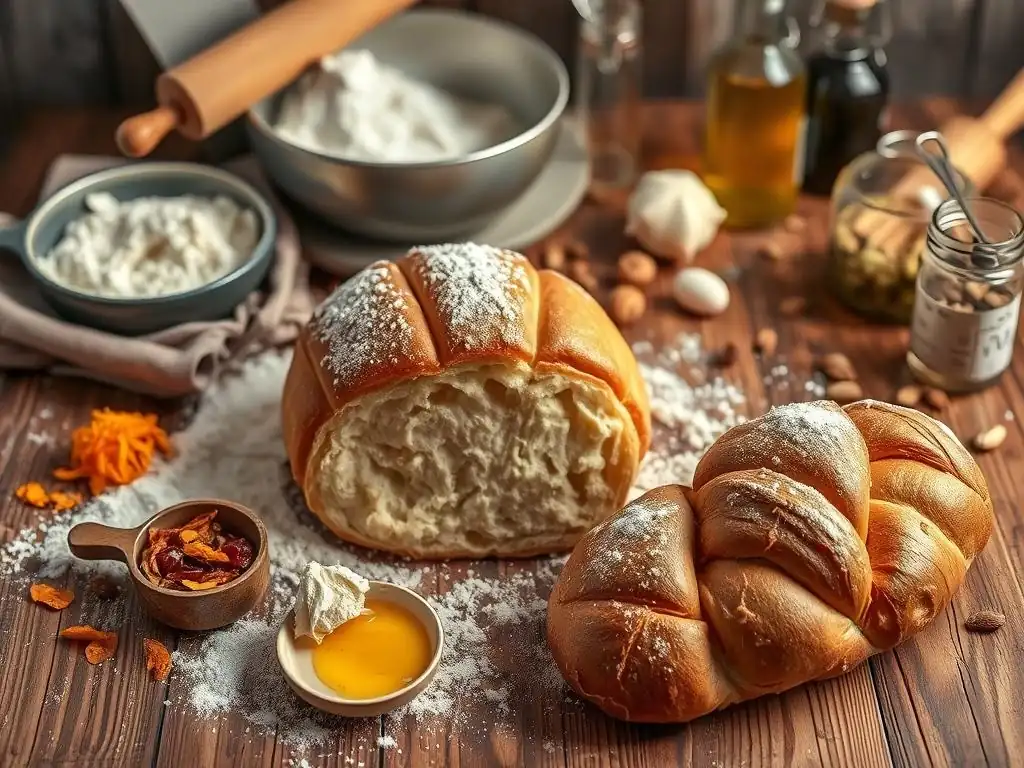
Successfully baking easy Italian Easter bread at home relies on having the right tools and quality ingredients. You don't need a professional kitchen setup, but having a few key items readily available will make the process smoother and more enjoyable. Ensuring your pantry is stocked with the necessary staples is the first step towards a successful baking day.
From measuring cups to mixing bowls and proofing environments, each tool plays a role in creating that perfect loaf. Choosing good quality flour, fresh yeast, and flavorful additions like real butter and good candied fruit will significantly impact the final taste and texture of your easy Italian Easter bread.
Stocking Your Pantry for Easy Easter Baking
To bake most easy Italian Easter bread recipes, you'll need a few common and some specific pantry items. High-quality bread flour is often preferred for its protein content, which helps develop gluten for a good rise and texture, though all-purpose flour can work for simpler recipes. Ensure you have fresh active dry or instant yeast; check the expiration date! Sugar, salt, and fresh eggs are standard.
For enriched doughs like Colomba, unsalted butter is essential for richness and tenderness. Candied orange peel is crucial for Colomba; look for good quality, moist peel. For other sweet breads, raisins or other dried fruits might be needed. If making savory Casatiello, ensure you have lard or butter, black pepper, and your choice of cured meats and cheeses. Having these items on hand prevents last-minute trips to the store and sets you up for baking success with your easy Italian Easter bread.
Must-Have Baking Tools for Italian Easter Bread Success
While you can bake some easy Italian Easter bread with minimal equipment, a few tools are particularly helpful. A sturdy stand mixer with a dough hook attachment can significantly simplify the kneading process for enriched doughs, which can be quite sticky. If kneading by hand, a large, clean surface and a good bench scraper are invaluable.
Large mixing bowls are necessary for combining ingredients and, importantly, for the first rise where the dough can double or triple in size. Measuring cups and spoons, a kitchen scale for accuracy (especially with flour), and a rubber spatula are standard. For Colomba, a paper Colomba mold is essential for achieving the classic shape. For ring or braid shapes, baking sheets lined with parchment paper work well. A wire cooling rack is crucial for letting the bread cool properly, preventing a soggy bottom. These tools make baking easy Italian Easter bread much more manageable.
Troubleshooting Your Italian Easter Bread: Common Issues and Solutions
Even when following an easy Italian Easter bread recipe, sometimes things don't go exactly as planned. Dough might not rise, or the final loaf could be dense or dry. Understanding common issues and their solutions is part of the baking journey and helps build confidence for next time. Don't be discouraged by imperfections; they are learning opportunities!
Most problems with enriched breads relate to yeast activity, dough development, or baking temperature/time. Identifying the likely cause can help you adjust your technique or ingredients for future attempts at baking easy Italian Easter bread.
Achieving the Perfect Rise: Tips and Tricks
A good rise is crucial for light and airy Italian Easter bread. If your dough isn't rising, the most common culprits are inactive yeast or a too-cold environment. Ensure your yeast is fresh and activated correctly with warm water or milk (around 40-45°C/105-115°F). Water that is too hot will kill the yeast, while cold water won't activate it effectively.
Provide a warm, draft-free place for proofing. An oven with just the light on, a microwave (turned off) with a cup of hot water inside, or simply covering the bowl well and placing it in a warm room corner can create a good environment. Patience is key; rising times are estimates and can vary greatly depending on room temperature and yeast activity.
If after a reasonable time (e.g., 2 hours for a first rise) there's minimal activity, your yeast might be dead, and you might need to start the dough over. Proper proofing is fundamental to any easy Italian Easter bread.
Preventing a Dry or Dense Easter Bread
A dry or dense texture in your easy Italian Easter bread can result from several factors, often related to flour, kneading, or baking. Using too much flour during mixing or kneading is a common issue; it's better to work with a slightly sticky dough than add excessive flour. Over-kneading can also lead to a tough texture by over-developing the gluten, while under-kneading won't build enough structure to support a light crumb.
Baking for too long or at too high a temperature is another frequent cause of dry bread. Ensure your oven temperature is accurate (an oven thermometer can help) and check for doneness using a skewer inserted into the center – it should come out clean. If the crust is browning too quickly, loosely tent the bread with foil. Finally, make sure you're using the correct ratio of wet to dry ingredients as specified in your easy Italian Easter bread recipe, paying attention to the amount of butter and eggs, which contribute moisture and richness.
Serving and Enjoying Your Homemade Italian Easter Bread
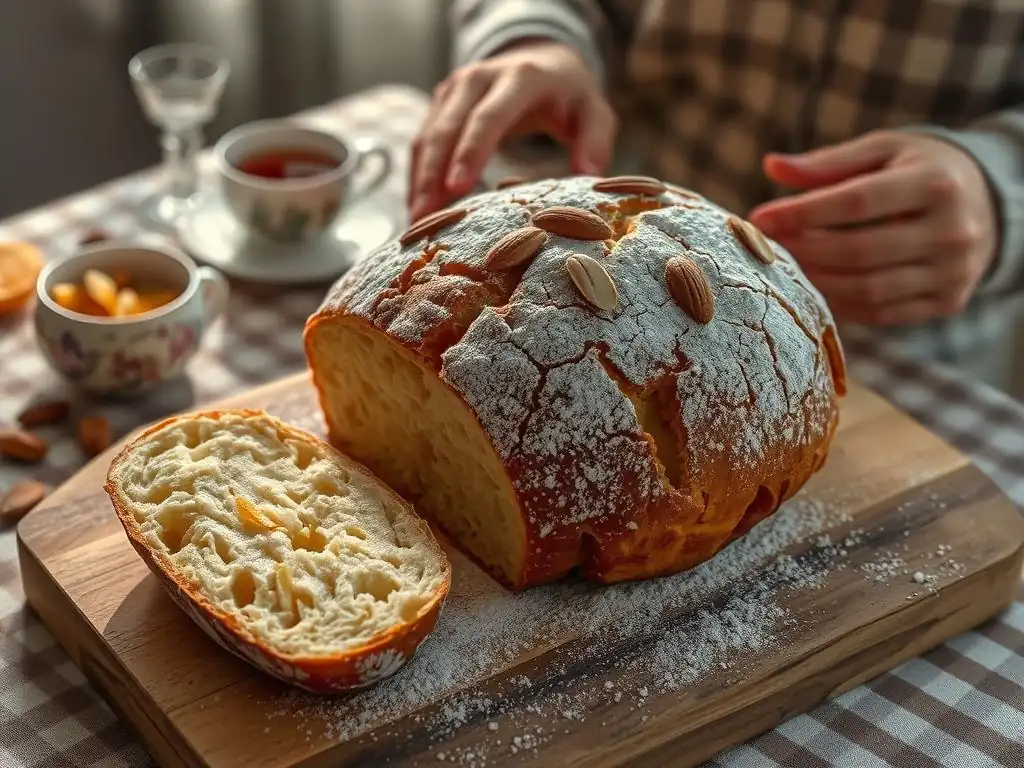
Baking easy Italian Easter bread is a rewarding experience, but the real joy comes from sharing and enjoying it. These festive loaves are meant to be savored, often as part of a special Easter meal or simply enjoyed with coffee or tea. There are traditional ways to serve them, and also many delicious pairing possibilities.
Whether it's the sweet, almond-glazed Colomba, the savory, hearty Casatiello, or a simple, egg-adorned Pane di Pasqua, your homemade creation is sure to be a highlight of the Easter celebration. Presenting your bread beautifully and knowing how it's traditionally enjoyed adds to the overall experience.
Traditional Ways to Serve Colomba and Other Easter Breads
Colomba Pasquale is traditionally served sliced horizontally, showcasing its airy texture and the distribution of candied orange peel. It's often enjoyed simply on its own, perhaps with a dusting of powdered sugar, or served alongside coffee or a sweet wine like Vin Santo. It can be a part of the Easter breakfast, lunch, or as a dessert. Leftover Colomba makes excellent French toast!
Savory Casatiello is typically served at room temperature, often sliced and included in antipasto platters or enjoyed as a snack. It's a staple for Easter picnics or the Pasquetta (Easter Monday) outdoor excursions. Pane di Pasqua, especially the versions with embedded eggs, is perfect for breakfast or brunch. The eggs are often eaten along with the bread. Serving your easy Italian Easter bread warm can enhance its aroma and texture, but most are also excellent at room temperature.
Pairing Suggestions: Complementing Your Easter Bread with Drinks and Dishes
The best pairings for your easy Italian Easter bread depend on whether it's sweet or savory. Sweet breads like Colomba or Pane di Pasqua pair wonderfully with beverages like coffee, cappuccino, or tea. For a more festive pairing, consider a sweet sparkling wine like Asti Spumante or Prosecco. On the plate, they are delightful with fresh berries, a dollop of mascarpone cheese, or even a drizzle of honey.
Savory Casatiello, with its rich filling, is fantastic alongside other antipasti like cured meats, cheeses, olives, and roasted vegetables. It's a perfect accompaniment to a hearty Easter lunch or dinner. Beverages that complement savory flavors, such as red wine (like an Aglianico or Sangiovese) or even beer, work well. The robust nature of Casatiello stands up nicely to bolder flavors.
Make This Easter Special with Easy Italian Easter Bread Recipes
Bringing the tradition of Italian Easter bread into your home is a wonderful way to celebrate the holiday. With the guidance provided, you can confidently bake easy Italian Easter bread that is both delicious and beautiful. Whether you choose the iconic Colomba, the rustic Casatiello, or a charming Pane di Pasqua, the process of baking itself becomes a meaningful part of the Easter experience.
Don't feel pressured to achieve perfection on your first try. Baking is a skill that develops with practice. Embrace the process, enjoy the incredible aromas that will fill your kitchen, and take pride in sharing a piece of Italian culture with your loved ones. Making easy Italian Easter bread is an accessible and rewarding way to add a deeply personal touch to your holiday celebrations.
Bringing Italian Baking Traditions Home
Baking easy Italian Easter bread allows you to connect with centuries of culinary tradition. These recipes, passed down through generations, represent more than just food; they embody family, celebration, and renewal. By recreating these breads in your own kitchen, you're not just baking; you're participating in a cultural heritage, keeping these beautiful customs alive.
Sharing your homemade easy Italian Easter bread with family and friends creates lasting memories. The act of breaking bread together is universally significant, and doing so with a loaf you've made yourself adds an extra layer of warmth and connection. We hope this guide inspires you to start your own tradition of baking easy Italian Easter bread this year and for many Easters to come.
Frequently Asked Questions
What makes Italian Easter bread different from other Easter breads?
Italian Easter bread often features distinctive flavors like anise or citrus and is frequently adorned with colorful sprinkles and dyed eggs. The dough is typically richer than standard bread recipes.
What is Colomba, and how does it relate to Italian Easter bread?
Colomba Pasquale is a specific type of Italian Easter bread. It's shaped like a dove (colomba), symbolizing peace, and is made with candied citrus and almonds.
Where can I find the ingredients needed for Easy Italian Easter bread?
Most ingredients are readily available at major grocery stores, though you might need to visit a specialty store for specific flavorings like anise extract or candied citrus.
Can I make Italian Easter bread ahead of time?
Yes, many recipes can be partially prepared in advance. The dough can be refrigerated overnight, allowing for a more convenient baking schedule.
What are some common variations of Italian Easter bread recipes?
Variations include adding different flavor extracts, using various types of sprinkles, or incorporating chocolate chips or dried fruit into the dough.
Final Reflection: The Sweet Legacy of Italian Easter Breads
The enduring appeal of Italian Easter breads lies not just in their deliciousness, but in their ability to connect us to tradition, family, and the promise of spring. These aren't merely recipes; they are vessels carrying generations of stories, passed down through kitchens and across continents. The ease with which we can now bake these iconic treats, as explored in this article, makes that connection even more accessible.
The simple act of kneading dough, shaping the bread, and watching it rise evokes a powerful sense of continuity, a tangible link to our heritage. It's a meditative process, a quiet moment of creation that transcends the culinary. Food is symbolic of love when words are inadequate.
– Alan D. Wolfelt. This quote perfectly encapsulates the emotional weight these breads carry, representing more than just sustenance; they represent love, shared experiences, and the enduring spirit of family.
Consider the impact of these recipes beyond your kitchen. Imagine sharing a freshly baked colomba with loved ones, the aroma filling your home with warmth and joy. This is more than just baking; it's an act of sharing, of connection, of celebrating life's renewal. This Easter, I invite you to try your hand at one of these recipes. Embrace the process, savor the results, and let the sweet legacy of Italian Easter breads enrich your own traditions and create lasting memories.
Unleash Your Inner Pastry Chef: Bake an Italian Easter!
Thanks for joining us on this delicious journey through the world of Italian Easter breads! We hope you’ve gained the confidence to tackle these classic recipes. Ready to take your baking skills to the next level?
- Bake your own Colomba Pascale: This is your chance to experience the incredible aroma and taste of a homemade Italian Easter Dove bread. Follow our detailed recipe – you might be surprised how easy it is!
- Share your baking journey: Post a picture of your creation on social media and tag us! Let's inspire each other with our Easter baking successes. Use #BakeWithEaseEaster.
- Explore other Italian Easter treats: Dive into our recipe archive and discover more traditional sweets perfect for celebrating the holiday.
What surprising ingredient will you add to your next Colomba Pascale to make it truly unique?