
Simple Ways to Decorate Italian Cookies

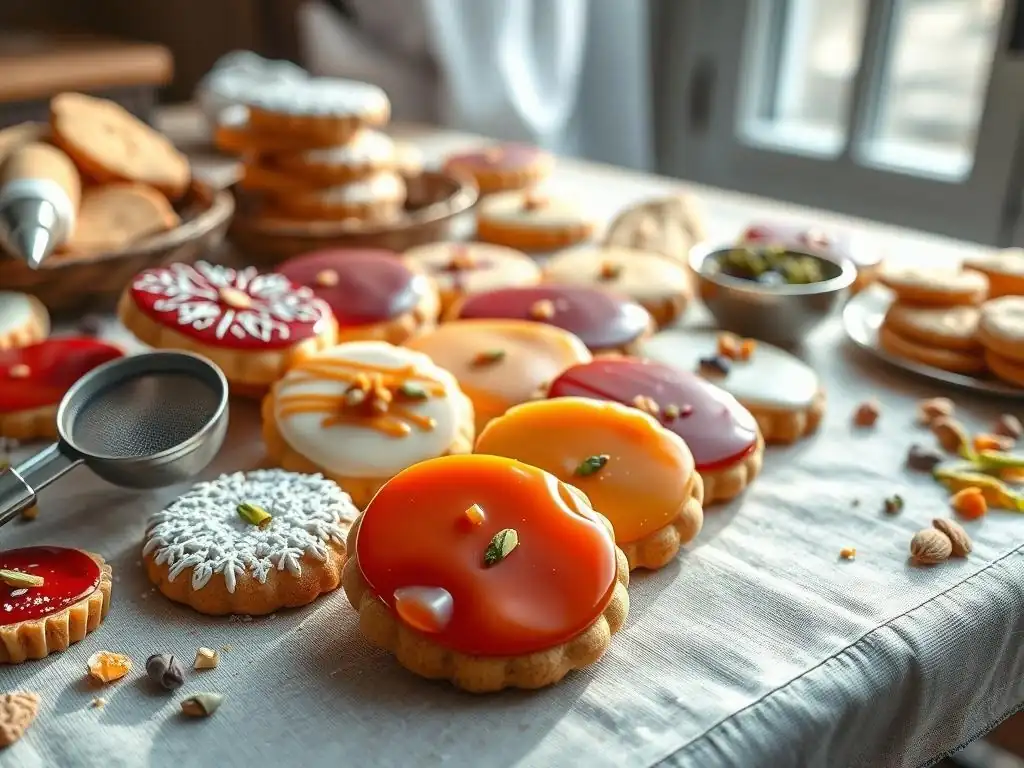
Welcome to BakeWithEase, your haven for all things baking! Ever wondered how to transform simple Italian cookies into edible masterpieces? Unlock the secrets to easy Italian cookie decorating with our step-by-step guide. Discover techniques that will impress your family and friends, and let us show you how to create stunning treats with minimal effort. Intrigued? Let's get started and explore the delicious world of regional baking!
- Simple Ways to Decorate Italian Cookies: A BakeWithEase Guide
- Introduction to Easy Italian Cookie Decorating
- Essential Tools for Easy Italian Cookie Decorating
- Simple Italian Cookie Icing Techniques for Beginners
- Easy Italian Cookie Decorating Ideas Using Sprinkles
- Decorating Italian Cookies with Simple Sugar
- Adding Flavor and Flair with Edible Decorations
- Simple Italian Cookie Decorating with Chocolate
- Tips for Achieving Professional-Looking Decorated Italian Cookies
- Conclusion: Unleash Your Creativity with Easy Italian Cookie Decorating
-
Frequently Asked Questions
- How can I make my Italian cookie decorating easier if I'm a beginner?
- What kind of icing is best for decorating Italian cookies?
- Are there any tools I absolutely need for easy Italian cookie decorating?
- What are some easy design ideas for Italian cookies that don't require a lot of skill?
- How can I prevent my Italian cookie icing from running or smearing?
- Final Reflection: The Sweet Art of Simple Italian Cookie Decorating
- Unleash Your Inner Biscotto Artist!
Decorating your Italian cookies is a wonderful way to add a personal touch, transforming simple baked goods into edible works of art. Whether you're preparing for a holiday celebration, a special family gathering, or simply want to make your everyday baking a little more festive, easy Italian cookie decorating techniques offer endless possibilities.
It's not just about making them look pretty; it's about expressing creativity and putting a little extra love into the treats you share. Think about classic Italian cookies like Biscotti, Amaretti, Pizzelle, or Anisette Cookies – while delicious on their own, a simple decoration can elevate their appeal significantly.
Adding decoration also makes your cookies perfect for gifting. A beautifully arranged box of decorated Italian cookies is a thoughtful present for friends and family. It shows effort and care, and allows you to tailor the designs to the recipient or occasion. For instance, using red and green for Christmas Ricciarelli, or pastel colors for Easter Anginetti. Even the most basic BakeWithEase Italian cookie recipe can become a showstopper with just a few simple decorating steps, making the process enjoyable and rewarding for bakers of all skill levels.
The world of Italian cookie decoration is vast, ranging from rustic simplicity to intricate designs, but many traditional and modern methods are surprisingly easy. Historically, many Italian cookies relied on the ingredients themselves for decoration – the crackle of almonds on Biscotti, the powdered sugar on Amaretti, or the simple glaze on Taralli Dolci. Today, we build upon these traditions with accessible techniques like simple glazes, basic royal icing, sprinkles, sugar coatings, and the use of ingredients like chocolate, nuts, and candied fruit.
This guide focuses on easy Italian cookie decorating methods that require minimal specialized equipment and skill, perfect for beginners or those looking for quick and charming results. We'll explore how to use common kitchen items to create beautiful finishes, transforming humble dough into festive delights. From simple drizzles and dips to elegant sugar dustings and strategically placed sprinkles, you'll discover just how easy it is to add flair to your BakeWithEase Italian cookie creations.
To start your journey into easy Italian cookie decorating, you don't need a vast collection of professional tools. A few basic items will cover most simple techniques. Essential tools include a wire cooling rack for cookies to dry evenly after baking and decorating, and small offset spatulas or butter knives for spreading icing or glaze smoothly. Measuring spoons and cups are crucial for accurately preparing icings and glazes, ensuring the correct consistency.
For applying icing or glaze more precisely, piping bags are incredibly useful. You can use disposable piping bags or reusable ones. Even without specialized tips, a simple snip off the end of the bag can create a fine line for drizzling or outlining. Having parchment paper or silicone baking mats on your workspace is also helpful for catching drips and making cleanup easier when working with icings or chocolate.
Decorating delicious Italian cookies doesn't require breaking the bank on specialty tools. Many everyday kitchen items can serve as excellent budget-friendly alternatives. Instead of piping bags, you can use a sturdy zip-top plastic bag; simply fill it with icing, push the icing into one corner, and snip off a tiny bit of the corner to create a makeshift piping bag. This works well for simple drizzles or outlines.
If you don't have an offset spatula, a regular table knife or the back of a spoon can be used to spread icing or glaze. For detailed work, a toothpick or a bamboo skewer can substitute for a scribe tool to gently spread or swirl icing. Even for applying sprinkles, you can simply dip the cookie directly into a bowl of sprinkles or use your fingers to pinch and scatter them precisely. Creativity and resourcefulness are key in easy Italian cookie decorating.
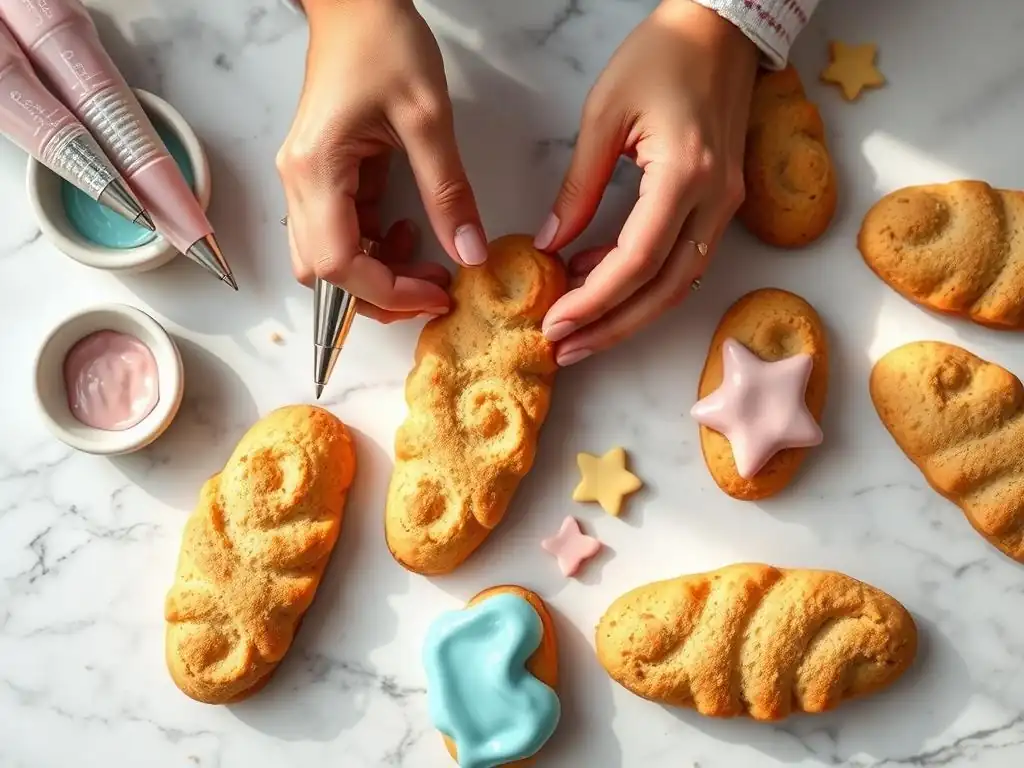
Royal icing is a classic choice for decorating cookies because it dries hard and smooth, creating a clean finish perfect for stacking or packaging. A basic recipe typically involves powdered sugar, meringue powder (or sometimes egg whites), and a liquid like water or lemon juice. The consistency is key: a thicker consistency is used for outlining, while a thinner consistency (often called 'flood' icing) is used to fill in areas within the outline. A common ratio might start with 1 cup of powdered sugar to 1-2 tablespoons of liquid, adjusted until the desired flow is achieved.
To make basic royal icing, simply whisk together the powdered sugar and meringue powder in a bowl. Gradually add the liquid, mixing until smooth. For color, use gel food coloring, which provides vibrant hues without adding too much liquid. Practice achieving different consistencies by adding a few drops more liquid for flooding or a bit more powdered sugar for outlining. This mastery of consistency is fundamental for successful easy Italian cookie decorating with royal icing.
For a more traditional or rustic appearance on your Italian cookies, a simple glaze is an excellent choice. Unlike royal icing, glazes are typically made from powdered sugar mixed with a liquid like milk, water, or even fruit juice or liqueur (like Anisette or Limoncello) for added flavor. These glazes often dry with a slightly softer texture and can be somewhat translucent or opaque depending on the ratio of sugar to liquid. A typical starting point is mixing 1 cup of powdered sugar with 2-3 tablespoons of liquid, stirring until smooth.
Applying a simple glaze is very straightforward, making it ideal for easy Italian cookie decorating. You can dip the entire surface of the cookie into the glaze, use a spoon to drizzle it over the top, or spread it with a knife or spatula. Glazes work beautifully on cookies like Anginetti or simple butter cookies. The simplicity of the glaze highlights the cookie's shape and texture while adding a touch of sweetness and sometimes a hint of flavor from the liquid used.
Achieving a smooth, professional-looking finish with icing on your Italian cookies is easier than you might think with a few simple tips. First, always sift your powdered sugar before mixing the icing or glaze. This removes any lumps, ensuring a smoother consistency. When applying flood icing within an outline, don't overfill the area; the icing will naturally spread to the edges.
Once the area is filled with flood icing, gently tap the cookie on your work surface. This helps the icing settle evenly and encourages any air bubbles to rise to the surface. You can then pop these bubbles with a toothpick or a scribe tool. For spreading thicker icing or glaze, use a small offset spatula and apply even pressure. Allowing ample drying time is also crucial; royal icing can take several hours or even overnight to harden completely, preventing smudges and ensuring a smooth finish.
Sprinkles are one of the simplest yet most effective ways to add color, texture, and fun to easy Italian cookie decorating. Available in a dazzling array of colors, shapes, and sizes, sprinkles can instantly transform plain cookies into festive treats. They are particularly effective when applied to wet icing or glaze, as they adhere easily. For example, adding red and green nonpareils to iced Christmas cookies or rainbow jimmies to birthday treats.
You can cover the entire surface of a cookie with sprinkles by dipping the wet-iced side into a bowl of sprinkles, or apply them more strategically. Sprinkles add a delightful crunch and visual appeal that complements many types of Italian cookies, from crisp shortbread varieties to softer glazed ones. They are an accessible and enjoyable way to get children involved in the decorating process as well.
Beyond simply covering cookies, sprinkles can be used to create interesting and festive patterns. For a striped effect, ice the cookie and then quickly lay strips of paper or tape across it before sprinkling, lifting the strips to reveal clean lines. Borders can be created by carefully applying sprinkles just along the edge of an iced cookie. Using stencils allows you to apply sprinkles in specific shapes or designs onto a wet icing base.
Another simple technique for easy Italian cookie decorating is to use different types of sprinkles on the same cookie. Combine nonpareils with jimmies for varying textures, or use sanding sugar for sparkle alongside larger shapes. For holiday cookies, try themed sprinkle mixes – little stars, trees, or hearts. The possibilities for creative sprinkle patterns are limited only by your imagination!
Selecting the right type of sprinkle can enhance both the look and texture of your Italian cookies. Nonpareils are tiny, round balls that give a dense, colorful coverage. Jimmies (or sprinkles in the UK) are longer and rod-shaped, offering a different texture and appearance. Sanding sugar is a larger crystal sugar that adds sparkle and a pleasant crunch. Pearl sugar (or nib sugar) consists of opaque, coarse crystals that don't melt during baking, perfect for adding texture before the cookie goes into the oven, as seen on some traditional European pastries.
Consider the size and texture of your cookie when choosing sprinkles. Delicate cookies might pair well with fine nonpareils or sanding sugar, while heartier cookies can handle larger jimmies or shapes. Also, think about the overall color scheme you want to achieve and choose sprinkle colors that complement your icing and the occasion. For easy Italian cookie decorating, having a small collection of different sprinkle types on hand offers great versatility.

Decorating Italian cookies with sugar is a timeless and elegant method that highlights the cookie's shape and texture. It's a wonderfully easy Italian cookie decorating technique that often results in a beautiful, sometimes sparkling, finish with minimal effort. Sugar coatings can range from a fine dusting of powdered sugar, which gives a soft, cloud-like appearance, to a coarse, glittering finish achieved with sanding or pearl sugar.
Many traditional Italian cookies, such as Amaretti or Biscotti di Prato, rely solely on sugar for their decorative appeal, either rolled in sugar before baking or dusted generously after. This simple approach allows the flavor and texture of the cookie itself to shine through while providing just enough visual interest. It's proof that sometimes, the simplest decorations are the most beautiful.
Different Types of Sugar for Decorating
Having a variety of sugars available expands your easy Italian cookie decorating options significantly. Granulated sugar is your standard table sugar; rolling warm cookies in it provides a simple sparkly coating. Confectioners' sugar (or powdered sugar) is finely ground sugar often mixed with a bit of cornstarch; dusting cookies with it creates a soft, matte finish, perfect for cookies with intricate textures or cracks like Amaretti.
Sanding sugar has larger crystals than granulated sugar and is specifically designed for decorating as it reflects light and creates a brilliant sparkle. It comes in many colors. Pearl sugar (or nib sugar) consists of very large, hard, opaque sugar crystals that maintain their shape and texture even when baked, offering a rustic, crunchy topping. Each type of sugar offers a distinct look and texture for easy Italian cookie decorating.
The method for applying a sugar coating depends on the type of sugar and the desired effect. For a simple granulated sugar coating, roll warm, just-baked cookies in a bowl of sugar. The residual heat helps the sugar adhere. For powdered sugar, wait until cookies are completely cool, then place several in a sieve over a plate or bowl and gently tap the sieve to create a fine, even dusting.
To get sanding or pearl sugar to stick, you often need a binding agent. This can be a simple egg wash (egg white mixed with a little water) brushed onto the unbaked cookie dough before sprinkling the sugar, or pressing the sugar into a wet glaze or icing on a baked cookie. For easy Italian cookie decorating with sugar, experimenting with these methods will help you find the perfect technique for each cookie type.
Adding Flavor and Flair with Edible Decorations
Edible flowers offer a delicate and sophisticated way to decorate Italian cookies, adding natural beauty and a hint of flavor. Pansies, violets, rose petals, and lavender are popular choices. You can use fresh, food-grade flowers pressed gently into wet icing or dough before baking (ensure they are organic and free from pesticides). Alternatively, crystallized or sugared flowers, available commercially or made at home, provide a longer-lasting and sparkling option.
To apply fresh edible flowers, brush a tiny amount of glaze or corn syrup onto the back of the flower and press it onto the cooled cookie, or press it into wet royal icing. For crystallized flowers, they can be placed directly onto icing or attached with a small dot of glaze. Using edible flowers is a simple yet stunning easy Italian cookie decorating technique that brings a touch of nature to your baked goods.
Decorating with Candied Fruit: A Traditional Italian Touch
Candied fruit is a traditional ingredient in many Italian baked goods and makes a wonderful, flavorful decoration for cookies. Chopped candied orange peel, citron, or cherries can be pressed into cookie dough before baking, providing bursts of color and chewy texture within the cookie itself. This is a classic element in cookies like Panforte or some types of Biscotti.
For decorating baked cookies, finely diced candied fruit can be sprinkled over wet glaze or icing, or arranged in simple patterns. For example, placing a small piece of candied cherry in the center of a glazed cookie. Using candied fruit is an easy Italian cookie decorating method that connects your baking to rich culinary history while adding delightful flavor and visual appeal.
Nuts and seeds are not only core ingredients in many Italian cookies but also provide simple, elegant decorative elements. Whole almonds, pine nuts, chopped pistachios, or sesame seeds can be pressed into the top of cookie dough before baking, creating a rustic and appealing finish. Think of the characteristic pine nuts on Pignoli cookies or the sesame seeds on Regina cookies.
After baking, nuts or seeds can also be sprinkled onto cookies coated with wet icing or glaze. Chopped nuts can create a textured border, or whole nuts can be placed strategically. This method adds crunch and a sophisticated look. Using nuts and seeds is a straightforward and easy Italian cookie decorating technique that leverages common baking ingredients for beautiful and flavorful results.
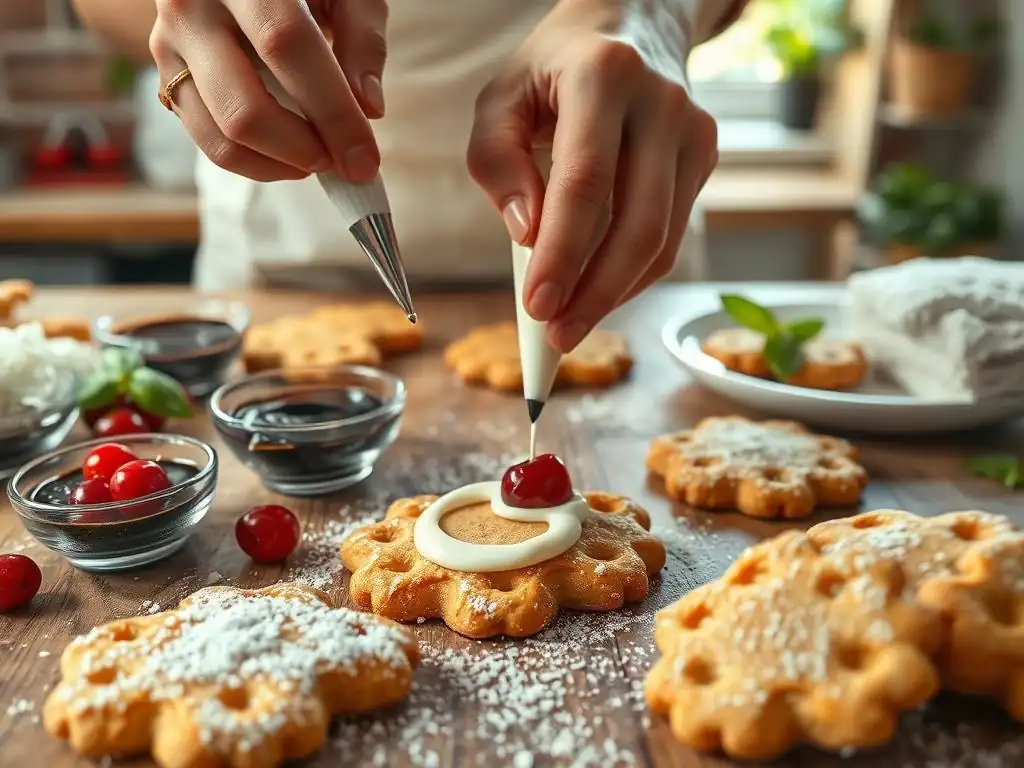
Drizzling Chocolate for a Decadent Touch
Drizzling melted chocolate over cookies is perhaps one of the easiest and most popular ways to add a touch of decadence. It requires minimal skill and creates an attractive, artistic effect. Use good quality chocolate – dark, milk, or white – melted gently over a double boiler or in the microwave. Place the melted chocolate in a piping bag with a tiny snip off the end, or simply use a spoon or fork.
Hold the cookie over parchment paper and move the piping bag or spoon back and forth to create random lines of chocolate. Allow the chocolate to set at room temperature or in the refrigerator. This easy Italian cookie decorating technique works well on a wide variety of cookies, from crisp Biscotti to softer butter cookies, adding both visual appeal and rich flavor.
Dipping cookies in chocolate is another simple yet effective decorating method. You can dip just one end of the cookie, half of it, or even the entire cookie for a truly indulgent treat. Melt your chosen chocolate, ensuring it's smooth and lump-free. Hold the cookie and dip it into the melted chocolate, using a fork or dipping tool if needed to submerge and lift it.
Let excess chocolate drip off before placing the cookie on parchment paper to set. For an extra touch, you can sprinkle nuts, sprinkles, or even a contrasting color of chocolate drizzle over the wet chocolate dip. Chocolate-dipped cookies are always a crowd-pleaser and are surprisingly easy to make, making them a fantastic option for easy Italian cookie decorating.
Chocolate shavings add a touch of elegance and texture to decorated cookies. This method works particularly well on cookies that are already iced or glazed, as the shavings adhere easily. Use a vegetable peeler or a sharp knife to shave curls directly from a block of chocolate. For larger curls, use the side of a chocolate bar.
Gently sprinkle the chocolate shavings over the wet icing or glaze. You can cover the entire surface or just parts of it. This technique adds a sophisticated finish without requiring intricate piping skills. Using chocolate shavings is an easy Italian cookie decorating method that elevates the appearance with minimal effort, perfect for adding a refined touch to your BakeWithEase creations.
Practice Makes Perfect: Improving Your Decorating Skills
Like any skill, easy Italian cookie decorating improves with practice. Don't be discouraged if your first attempts aren't perfect. Start with simple techniques like glazing or using sprinkles before moving onto more detailed icing work. Bake small batches of cookies specifically for practice if you wish. The more you work with icing consistency, piping, and applying decorations, the more confident and skilled you will become.
Consider watching online tutorials or videos that demonstrate specific techniques. Pay attention to how decorators hold their tools and apply pressure. Remember that the goal is to have fun and create something delicious and appealing. Every cookie you decorate is a step towards mastering the art of easy Italian cookie decorating.
Proper storage is essential to keep your beautifully decorated Italian cookies fresh and the decorations intact. Once decorated, especially with icing that hardens, allow the decorations to dry completely before storing. This is crucial to prevent smudging or sticking. Store cookies in an airtight container at room temperature, away from direct sunlight or heat.
If your cookies have delicate decorations, it's best to store them in a single layer or separate layers with parchment paper to prevent them from sticking to each other. Most decorated cookies will stay fresh for 3 to 7 days when stored properly, depending on the cookie type and decoration. Avoid refrigerating cookies decorated with royal icing, as condensation can damage the decoration.
Even with easy Italian cookie decorating methods, you might encounter a few common issues. If your royal icing is too thick, add a few drops of water or liquid until it reaches the desired consistency. If it's too thin, gradually whisk in more sifted powdered sugar. If colors bleed, ensure your icing is not too wet and consider using gel food coloring, which is less likely to cause bleeding than liquid colors.
- Problem: Icing won't dry.
- Solution: Ensure you used meringue powder or egg white in royal icing. Humidity can also affect drying time; use a fan on a low setting to help speed up drying.
- Problem: Sprinkles won't stick.
- Solution: Make sure the icing or glaze is still wet when you apply the sprinkles.
- Problem: Chocolate seizes when melting.
- Solution: Ensure no water gets into the chocolate. If it happens, try stirring in a teaspoon of vegetable oil or melted shortening, though the texture might change slightly.
Addressing these issues will make your easy Italian cookie decorating experience smoother and more successful.
You now have a toolkit of simple yet effective techniques for easy Italian cookie decorating. From classic glazes and elegant sugar dustings to playful sprinkles and rich chocolate finishes, there are countless ways to add a personal touch to your BakeWithEase Italian cookie recipes. Remember that decorating is a creative process – have fun experimenting with different colors, textures, and combinations.
Whether you're decorating for a special occasion or just for the joy of baking, these easy Italian cookie decorating methods will help you create beautiful, delicious treats that are sure to impress. So grab your cookies, gather your simple supplies, and start adding that extra bit of flair. Happy decorating!
Frequently Asked Questions
Focus on simple designs like sprinkles, a dusting of powdered sugar, or a basic glaze. Don't try to be too ambitious at first; mastering the basics is key. Start with pre-made icing if you are short on time.
Royal icing is a popular choice for its ability to create crisp, defined lines. However, a simple glaze made from powdered sugar and milk or lemon juice is also easy to prepare and works well.
While fancy tools are nice, you really only need a few essentials: a piping bag (or even a zip-top bag with a corner cut off), parchment paper, and some sprinkles or edible decorations.
Consider dipping the cookies in melted chocolate and then sprinkling with chopped nuts or colored sugars. Another easy option is to drizzle icing in a zig-zag pattern. These techniques are visually appealing and straightforward.
Make sure your cookies are completely cool before decorating. Also, ensure your icing is the right consistency – not too thin. Let the icing dry completely before stacking or storing the decorated cookies.
The enduring appeal of Italian cookies lies not just in their delicious taste, but in the joy of creating beautiful, personalized treats. These aren't just baked goods; they're edible works of art, capable of bringing smiles to faces and adding a touch of elegance to any occasion. This simple act of decorating transforms a standard cookie into a cherished memory, a testament to the power of handmade gifts.
The tradition of decorating Italian cookies speaks volumes about the importance of family, celebration, and the simple pleasures in life. It's a practice passed down through generations, a tangible link to heritage and culture. The act of decorating, whether with intricate icing or simple sprinkles, becomes a meditative process, a moment of quiet creativity. The best things in life are simple,
a saying often heard in Italian households, perfectly encapsulates the spirit of this delightful craft. It's about the process, the connection, and the joy of sharing.
Now, consider your own kitchen. Imagine the possibilities: the subtle swirl of icing, the vibrant pop of color from a sprinkle, the delicate precision of a piped design. You don't need to be a professional pastry chef to create stunning Italian cookies. Take what you've learned here, experiment with different techniques, and let your creativity flow. Embrace the imperfections, for they are part of the charm. Most importantly, share your creations with loved ones – the sweetest reward is the joy you bring to others.
Unleash Your Inner Biscotto Artist!
Thanks for joining us on this delicious journey into the world of Italian cookie decorating! We hope you've picked up some fun and easy techniques to elevate your baking game. Ready to transform those plain biscotti into edible masterpieces?
- Dive into your own creative decorating session: Grab your favorite icing, sprinkles, and edible glitter, and let your imagination run wild! Experiment with different designs and colors – the possibilities are endless.
- Share your creations: Post a picture of your decorated cookies on social media and tag us – we’d love to see your unique masterpieces! Use #BakeWithEaseBiscotti.
- Challenge a friend to a decorating duel: Turn your newfound skills into a fun competition with a friend or family member. Who can create the most stunning biscotti?
Ready to sprinkle some creativity into your baking routine? What's your favorite Italian cookie decorating tip?