
Choosing the Right Chocolate Viscosity for Dipping and Coating

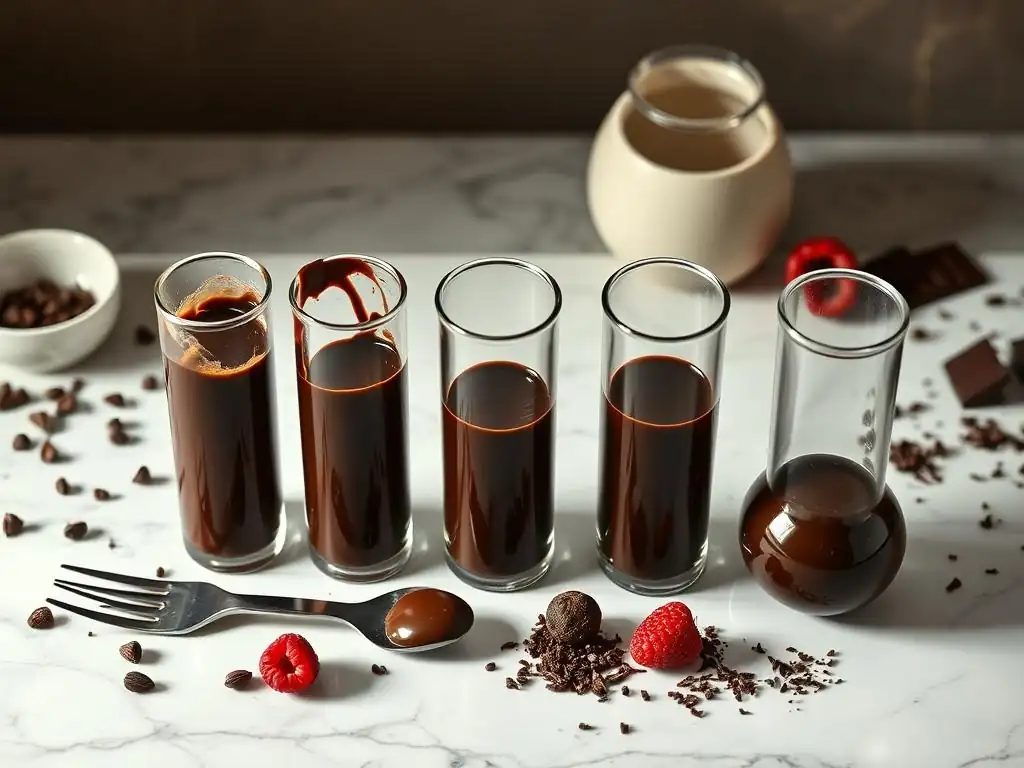
Welcome to BakeWithEase.com, where baking becomes a joy, not a chore! Ever wondered why your chocolate dipped treats don't quite look like the ones in magazines? Dive into our world of premium baking ingredients and unlock the secret to perfect coatings. This week, we're tackling a crucial element: chocolate dipping viscosity. What is it, and how do you control it for flawless results? Curious to learn more? Let's explore!
- Choosing the Right Chocolate Viscosity for Dipping and Coating: A BakeWithEase Guide
- Understanding Chocolate Viscosity for Perfect Dipping and Coating
- The Ultimate Chocolate Dipping Viscosity Guide: Achieving the Perfect Consistency
- Choosing the Right Chocolate for Your Project: Viscosity and Flavor Profiles
- Adjusting Chocolate Viscosity: Techniques for Dipping and Coating Success
- Tools and Equipment for Controlling Chocolate Viscosity
- Recipes and Projects Showcasing Different Chocolate Viscosities
- Adjusting Chocolate Viscosity: Techniques for Dipping and Coating Success
- Tools and Equipment for Controlling Chocolate Viscosity
- Recipes and Projects Showcasing Different Chocolate Viscosities
- Maximizing Flavor and Viscosity: Tips and Tricks from BakeWithEase
- Where to Buy High-Quality Chocolate and Equipment
-
Frequently Asked Questions
- What is chocolate viscosity and why is it important for dipping and coating?
- How does temperature affect the viscosity of chocolate?
- What are the key factors to consider when choosing the right chocolate viscosity?
- How can I adjust the viscosity of my chocolate for dipping?
- What are some common problems that arise from incorrect chocolate viscosity?
- Final Reflection: The Perfect Pour: Mastering Chocolate Viscosity
- Unlock Your Chocolate Dipping Mastery!
Choosing the Right Chocolate Viscosity for Dipping and Coating: A BakeWithEase Guide
Understanding Chocolate Viscosity for Perfect Dipping and Coating
What is Chocolate Viscosity and Why Does it Matter for Baking?
Chocolate viscosity refers to its flow rate or how easily it pours. Think of it as how thick or thin the melted chocolate is. In baking, particularly for dipping and coating, viscosity is absolutely crucial.
If the chocolate is too thick, it will create a heavy, uneven coating that can crack when it sets. If it's too thin, it might not adhere properly to the item being dipped, resulting in a patchy finish, or it could drip excessively, leading to waste and messy results. Achieving the ideal chocolate dipping viscosity is key to a professional-looking and satisfying final product, whether you're working on delicate truffles or sturdy cake pops.
Understanding chocolate viscosity is a fundamental step in mastering confectionery techniques. It's not just about aesthetics; the right viscosity also impacts the texture and mouthfeel of the finished item. A perfectly coated strawberry should have a delicate chocolate shell that offers a satisfying snap without being overwhelmingly thick. This detailed guide aims to be your ultimate chocolate dipping viscosity guide, helping you navigate the nuances of melted chocolate for consistently excellent results in all your baking projects.
Exploring Different Chocolate Viscosity Levels: From Fluid to Thick
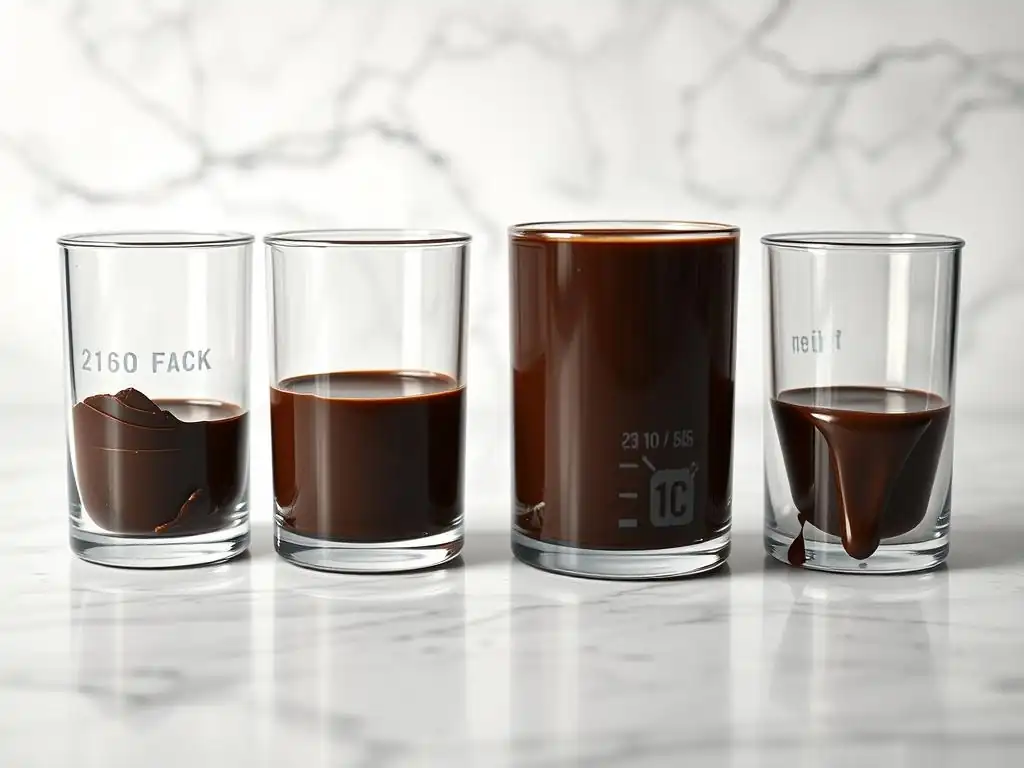
Chocolate viscosity is often described using a system of drops, typically ranging from one drop (very fluid) to five drops (very thick). A one-drop chocolate is extremely thin and flows almost like water, suitable for very thin coatings or perhaps drizzling intricate patterns. A two-drop chocolate is slightly thicker but still very fluid, often used for delicate items or when a minimal coating is desired. Three-drop chocolate is a common all-purpose viscosity, balancing flow with coverage, making it suitable for many dipping applications like cookies or nuts.
Moving up the scale, a four-drop chocolate is quite thick and provides a substantial coating. This might be preferred for items that require a more robust chocolate shell, although it can be challenging to work with without proper temperature control. A five-drop chocolate is very thick and less commonly used for dipping, perhaps more for molding or applications where the chocolate needs to hold its shape immediately. Understanding these levels is a core part of this chocolate dipping viscosity guide, allowing you to select or adjust your chocolate to the perfect consistency for your specific baking needs.
The Ultimate Chocolate Dipping Viscosity Guide: Achieving the Perfect Consistency
Mastering the "Snap" and "Melt" Test for Viscosity Assessment
While numerical drop systems provide a general idea, a practical way to assess chocolate viscosity, especially after melting and tempering, is through simple tests. The "snap" test, performed after the chocolate has cooled and set, indicates whether the chocolate was tempered correctly and suggests if the viscosity was appropriate for the application. A good snap means the chocolate set firmly and wasn't too thin or fatty (which would result in a soft, crumbly texture). However, assessing viscosity before setting requires different methods.
A common technique is the simple "drip" or "melt" test. Dip a spoon or spatula into the melted chocolate and lift it, allowing the excess to drip back into the bowl. Observe how the chocolate flows off the utensil. Does it stream off very quickly (too thin)?
Does it drip slowly in thick ribbons (potentially too thick)? Or does it flow smoothly, leaving a thin, even coating on the utensil (just right)? Practicing this simple test helps develop an intuitive understanding of the correct chocolate dipping viscosity for different tasks, becoming an invaluable part of your personal chocolate dipping viscosity guide.
How Temperature Affects Chocolate Viscosity: A Baker's Essential Knowledge
Temperature is perhaps the single most critical factor influencing chocolate viscosity. As chocolate heats up, its viscosity decreases – it becomes thinner and more fluid. Conversely, as it cools, viscosity increases, becoming thicker. However, there's a sweet spot. If chocolate is overheated, even slightly, it can seize or burn, becoming irreversibly thick and unusable for dipping. Maintaining the correct temperature range, especially during the melting and tempering process, is paramount for achieving and maintaining the desired chocolate dipping viscosity.
For example, dark chocolate is typically melted around 115-120°F (46-49°C), milk chocolate around 105-113°F (40-45°C), and white chocolate around 100-110°F (38-43°C). Once melted, the temperature is adjusted for tempering, usually dropping significantly before being raised slightly to the working temperature (e.g., 88-91°F or 31-32°C for dark chocolate). Working within these precise temperature ranges is essential not only for proper crystallization (tempering) but also for ensuring the chocolate maintains the optimal fluidity for dipping and coating. Ignoring temperature control makes achieving the right chocolate viscosity a matter of luck rather than skill.
Choosing the Right Chocolate for Your Project: Viscosity and Flavor Profiles
Best Chocolate Types for Dipping Strawberries: Cacao Barry Zephyr White Chocolate
When dipping delicate items like strawberries, you often want a chocolate that provides a relatively thin, even coating that doesn't overpower the fruit's flavor. A chocolate with a moderate to slightly lower viscosity is ideal. Cacao Barry Zephyr White Chocolate, known for its balanced sweetness and creamy texture, is a popular choice. It typically melts down to a good dipping consistency when properly tempered, offering a beautiful, smooth finish without being excessively thick. Its viscosity allows it to coat the strawberry surface evenly with minimal pooling or dripping.
Beyond just viscosity, the flavor profile of Cacao Barry Zephyr complements the natural sweetness and slight acidity of strawberries beautifully. Its typical fat content also contributes to a desirable melting point and flow characteristics when handled correctly. Using a high-quality white chocolate like this ensures that your dipped strawberries not only look stunning but also offer a delightful sensory experience, making it a standout option in any chocolate dipping viscosity guide focused on fruit.
Top Chocolate Options for Coating Truffles: Valrhona Guanaja 70% Dark Chocolate
Coating truffles requires a chocolate that provides a good balance of coverage and a clean finish. A medium-viscosity chocolate is often preferred – fluid enough to coat the irregular surface of a truffle evenly, but thick enough to create a satisfying shell. Valrhona Guanaja 70% Dark Chocolate is a renowned choice among chocolatiers. Its high cacao percentage (70%) means it has a lower sugar content and a rich, intense flavor that pairs wonderfully with various truffle fillings.
In terms of viscosity, Valrhona Guanaja typically melts to a consistency that is perfect for enrobing truffles when correctly tempered. It flows well, allowing for a smooth coating, and sets with a firm snap. The richness of the 70% dark chocolate also means a thinner coating provides ample chocolate flavor, preventing the truffle from becoming too heavy or the chocolate shell from being disproportionately thick compared to the ganache center. This makes it a premier option in any comprehensive chocolate dipping viscosity guide for professional-level results.
Selecting Chocolate for Cake Pops: Achieving a Smooth, Even Coating
Cake pops require a chocolate coating that is easy to work with, sets relatively quickly, and provides a smooth, visually appealing finish. While real chocolate can be used, many bakers opt for compound coatings (often labeled as "candy melts" or "coating wafers") for cake pops due to their specific viscosity properties and ease of use. These coatings contain vegetable fats instead of cocoa butter, which means they don't require tempering and typically melt to a very fluid consistency ideal for dipping.
The inherently lower viscosity of compound coatings, compared to untempered real chocolate, allows them to flow easily over the spherical surface of a cake pop, creating a thin, even shell. They also set quickly at room temperature, reducing the risk of drips and allowing for faster production. While the flavor profile is different from couverture chocolate, their performance for cake pops is often superior in terms of achieving a smooth, consistent coating, making them a practical consideration in a chocolate dipping viscosity guide focused on ease and appearance.
Adjusting Chocolate Viscosity: Techniques for Dipping and Coating Success
Thinning Chocolate: Using Cocoa Butter for Optimal Flow
Sometimes, even high-quality couverture chocolate might be slightly too thick for a specific application, or you might want to achieve a more fluid consistency for a very thin coating or intricate drizzling. The best way to thin real chocolate without negatively impacting its structure or requiring re-tempering is by adding a small amount of cocoa butter. Cocoa butter is the natural fat found in cocoa beans and is fully compatible with chocolate.
Adding 1-2% of the chocolate's weight in melted cocoa butter can significantly decrease viscosity, making the chocolate more fluid and easier to work with for dipping or enrobing delicate items. For example, if you have 500g of chocolate, adding 5-10g of melted cocoa butter can make a noticeable difference. It's crucial to add the cocoa butter gradually and ensure it is fully melted and incorporated into the chocolate while maintaining the chocolate's correct working temperature. This technique is a valuable tip in any chocolate dipping viscosity guide for fine-tuning your results.
Recommended Cocoa Butter Brands for Thinning: Valrhona Cocoa Butter
When thinning chocolate with cocoa butter, using a high-quality product is essential to avoid introducing off-flavors or impurities. Valrhona Cocoa Butter is a premium option favored by professionals. It is typically sold in feves (small oval pieces) or blocks, making it easy to weigh and melt. Its purity ensures that it seamlessly integrates with high-quality couverture chocolates, preserving their flavor profile while effectively reducing viscosity.
Valrhona Cocoa Butter melts at a relatively low temperature, similar to white chocolate, which makes it convenient to add to melted chocolate without drastically changing the overall temperature. Using a reputable brand like Valrhona ensures you are adding pure cocoa butter, which is crucial for maintaining the integrity of your tempered chocolate and achieving the desired fluidity for dipping and coating, reinforcing its place in this chocolate dipping viscosity guide.
Thickening Chocolate: Adding Finely Ground Chocolate or Cocoa Powder (Use sparingly!)
Thickening chocolate is generally less common and more challenging than thinning it, and it should be approached with caution. If chocolate is too thin, it's often due to overheating or incorrect tempering, which are best addressed by starting over or adjusting temperature. However, in some specific circumstances, you might need to slightly increase viscosity. One method is to add a very small amount of finely ground, untempered chocolate of the same type (callets or finely chopped chocolate). This adds more solids to the mixture, which can increase viscosity as they melt and integrate, provided the temperature is maintained correctly.
Another method, though less ideal for pure chocolate and more for compound coatings, is adding a tiny amount of cocoa powder. However, cocoa powder is very dry and can cause the chocolate to seize or become grainy if not incorporated perfectly or if too much is added. It's generally not recommended for tempering couverture chocolate as it interferes with crystal structure formation. These thickening methods are best used sparingly and with great care, as they can easily ruin the batch if not executed precisely, highlighting the difficulty compared to simply thinning chocolate, as this chocolate dipping viscosity guide emphasizes.
Troubleshooting Common Viscosity Problems: Too Thick, Too Thin, Seizing
Encountering viscosity problems is a common challenge in chocolate work. If your chocolate is too thick, it might be too cool – gently raising the temperature to the correct working temperature (e.g., 88-91°F for dark) can often solve this. If it's still too thick at the correct temperature, you might need to add a tiny amount of melted cocoa butter as described above.
If the chocolate is too thin, it's likely too hot – let it cool down to the correct working temperature, stirring constantly. If it's still too thin at the correct temperature, it might be over-tempered or contain too much fat; sometimes, adding a few unmelted callets and stirring can help bring it back into temper and increase viscosity slightly.
Seizing is a particularly frustrating issue where chocolate suddenly transforms from a smooth liquid to a thick, clumpy paste. This is almost always caused by the introduction of even a tiny amount of water or steam, or by overheating. Seized chocolate cannot be used for dipping or coating as its viscosity is completely ruined. While there are methods to "save" seized chocolate for other uses (like ganache or baking), it's irreparable for dipping. Understanding these common issues is vital for any aspiring chocolatier using this chocolate dipping viscosity guide.
Tools and Equipment for Controlling Chocolate Viscosity
Chocolate Tempering Machines: Maintaining Ideal Temperature and Viscosity
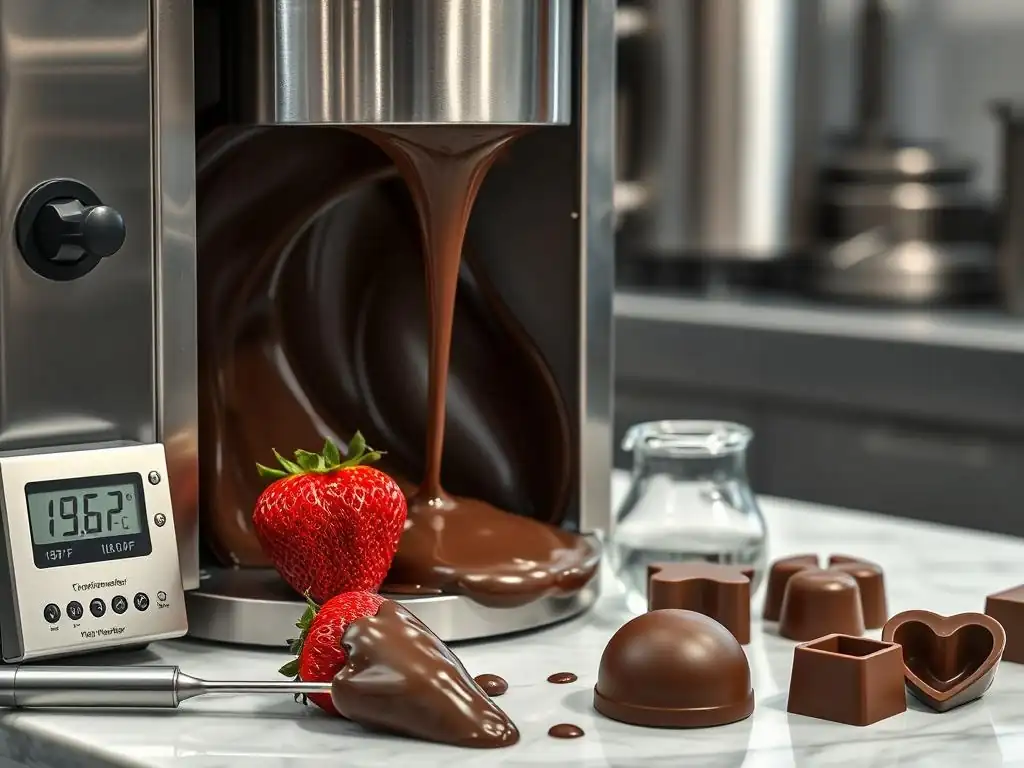
For bakers who frequently work with chocolate for dipping and coating, a chocolate tempering machine is an invaluable investment. These machines are designed to precisely control the temperature of the chocolate throughout the entire tempering process – melting, cooling, and holding at the working temperature. This consistent temperature control is paramount for maintaining the correct chocolate dipping viscosity.
Tempering machines use gentle heat and often agitation to keep the chocolate in perfect temper, ensuring it remains fluid enough for dipping while also developing stable beta crystals for a proper set and shine. They eliminate the guesswork involved in manual tempering, leading to more consistent results and making large-batch dipping much more manageable. While an investment, a tempering machine significantly simplifies achieving the perfect chocolate viscosity every time.
Recommended Chocolate Tempering Machines for Home Bakers: LCI Melting Tank T5
For serious home bakers or small-batch production, the LCI Melting Tank T5 (or similar small capacity tempering units) represents a good option. These units are designed for smaller volumes of chocolate (often around 5kg or less) and provide accurate temperature control necessary for tempering. They typically feature digital thermostats that allow you to set precise temperatures for melting and holding.
While not as sophisticated as professional-grade continuous tempering machines, units like the LCI T5 provide the essential function of maintaining chocolate at its ideal working temperature, which is crucial for keeping the chocolate at the correct viscosity for extended dipping sessions. This ensures that the last strawberry or truffle you dip has the same perfect coating as the first, making it a worthy consideration in a chocolate dipping viscosity guide for dedicated home enthusiasts.
Chocolate Melters: Gentle Heating for Consistent Viscosity
Chocolate melters, sometimes called warming pots or bains-marie, are simpler devices than tempering machines. They provide gentle, consistent heat, usually using a water bath or dry heat system, to melt chocolate and keep it in a liquid state. While they don't actively temper the chocolate (you would need to pre-temper the chocolate before adding it to the melter), they are excellent for maintaining the chocolate at its working temperature once tempered.
Keeping tempered chocolate at the precise working temperature is critical for maintaining its ideal viscosity for dipping and coating. If the temperature drops too low, the chocolate will thicken; if it rises too high, it will lose its temper and become too thin initially before potentially seizing. A good chocolate melter helps prevent these temperature fluctuations, ensuring the chocolate remains at the perfect fluidity throughout your dipping project.
Top Chocolate Melters for Small Batch Dipping: Sephra Home Chocolate Melter
For home bakers focusing on smaller batches of dipped treats, a compact chocolate melter like the Sephra Home Chocolate Melter is highly recommended. These small units typically hold 1-2 pounds of chocolate and use a gentle heating system to keep the chocolate melted and at a consistent temperature. They are ideal for keeping tempered chocolate at its working temperature during a dipping session.
The consistent low heat provided by a melter like the Sephra Home unit prevents the chocolate from cooling and thickening prematurely, allowing for smooth, continuous dipping. While it doesn't replace the tempering process itself, it's an invaluable tool for maintaining the correct chocolate dipping viscosity once the chocolate is properly tempered, making the dipping process much easier and more efficient for small projects.
Thermometers: Ensuring Accurate Temperature Control for Perfect Viscosity
Regardless of whether you're using a tempering machine, a melter, or manual methods, an accurate thermometer is absolutely non-negotiable for chocolate work. As discussed earlier, temperature is the primary driver of chocolate viscosity and is critical for successful tempering. Without a reliable thermometer, you are essentially guessing at the temperature, which will inevitably lead to inconsistent results regarding both temper and viscosity.
A good thermometer allows you to monitor the chocolate's temperature precisely throughout the melting, cooling, and working phases of tempering. It helps you hit the specific temperature targets required for proper crystal formation and ensures you maintain the chocolate at the narrow temperature range where it has the optimal viscosity for dipping and coating while remaining in temper. Investing in a quality thermometer is one of the most important steps in mastering chocolate viscosity control.
Essential Thermometers for Chocolate Work: CDN ProAccurate Quick-Read Thermometer
A digital instant-read thermometer is ideal for chocolate work due to its speed and accuracy. The CDN ProAccurate Quick-Read Thermometer (or similar high-quality digital probe thermometers) is a great example. These thermometers provide temperature readings within a few seconds, allowing you to quickly check the chocolate's temperature as you stir or move it between heating and cooling phases.
Look for a thermometer with a temperature range suitable for chocolate (typically up to at least 130°F or 55°C) and a probe that can be easily immersed in the chocolate without touching the bottom of the bowl. Accuracy is key, ideally within +/- 1°F or 0.5°C. Using a reliable thermometer like the CDN ProAccurate ensures you have the precise temperature data needed to control chocolate viscosity and temper effectively, making it an indispensable tool highlighted in this chocolate dipping viscosity guide.
Recipes and Projects Showcasing Different Chocolate Viscosities
Recipe: Perfectly Dipped Strawberries with a Fluid Chocolate Coating
Achieving perfectly dipped strawberries requires a chocolate with relatively high fluidity (lower viscosity) when tempered. This allows for a thin, even coating that doesn't build up excessively on the fruit.
- Ingredients: Fresh strawberries, high-quality fluid coating chocolate (e.g., Guittard A'peels Dark Chocolate Coating Wafers).
- Process: Wash and thoroughly dry strawberries. Melt chocolate according to package instructions or tempering guidelines for couverture. For Guittard A'peels, which are a compound coating, simply melt gently (microwave in 30-second intervals, stirring) until smooth and fluid, around 110-115°F. The goal is a consistency that drips smoothly and thinly off a spoon. Hold the strawberry by the stem or a skewer inserted into the hull, dip into the chocolate, allowing excess to drip back into the bowl. Place on parchment paper to set. The inherent low chocolate dipping viscosity of coatings like A'peels ensures a smooth, thin shell.
Featuring Guittard A'peels Dark Chocolate Coating Wafers
Guittard A'peels Dark Chocolate Coating Wafers are a popular choice for dipping strawberries and other fruits, as well as pretzels and cookies. As a compound coating, they contain vegetable oil instead of cocoa butter, which gives them a naturally lower viscosity when melted compared to real chocolate.
This lower viscosity means A'peels melt to a very fluid state that is ideal for creating thin, even coatings without the need for tempering. They set quickly at room temperature, providing a convenient and reliable option for dipped items where ease of use and a smooth finish are primary concerns, making them a relevant example in this chocolate dipping viscosity guide for simple projects.
Project: Elegant Chocolate-Covered Truffles with a Medium-Viscosity Coating
Coating truffles requires a tempered chocolate with a medium viscosity – fluid enough to enrobe the ganache center smoothly but thick enough to create a substantial shell that provides a good snap.
- Ingredients: Prepared ganache centers, high-quality dark couverture chocolate (e.g., Michel Cluizel Los Anconès 67% Dark Chocolate).
- Process: Temper the Michel Cluizel Los Anconès 67% Dark Chocolate carefully using the seeding or tabling method, aiming for a working temperature around 88-90°F. The tempered chocolate should flow smoothly off a spoon, not too fast or too slow. Drop a truffle center into the chocolate, ensuring it's fully submerged. Use a dipping fork or spider tool to lift the truffle, tapping the tool gently against the side of the bowl to remove excess chocolate. Place the coated truffle on parchment paper to set. The medium chocolate dipping viscosity of this tempered chocolate allows for a perfect balance of coverage and a clean drip-free finish.
Using Michel Cluizel Los Anconès 67% Dark Chocolate
Michel Cluizel Los Anconès 67% Dark Chocolate is a premium couverture chocolate known for its complex flavor profile with notes of fruit and spice. With a 67% cacao content, it contains a good proportion of cocoa butter, which contributes to its excellent melting and flow characteristics when properly tempered.
When tempered, this chocolate typically achieves a desirable medium viscosity, making it an excellent choice for coating truffles, bonbons, and other confectionery. Its balanced fluidity allows for a smooth, even coating that sets with a beautiful sheen and a satisfying snap, showcasing how high-quality chocolate and proper tempering combine to achieve the ideal chocolate dipping viscosity for elegant treats.
Recipe: Smooth and Shiny Cake Pops with a Controlled Chocolate Viscosity
Cake pops benefit from a coating that is easy to apply, sets quickly, and results in a smooth, crack-free surface. While real chocolate can be used with careful tempering, compound coatings are often preferred for their user-friendly viscosity.
- Ingredients: Prepared cake pops (cake balls on sticks), compound coating melts (e.g., Chocomaker Candy Melts).
- Process: Gently melt the Chocomaker Candy Melts in a deep, narrow container (a glass measuring cup or specialized melting pot works well) following package instructions, typically in a microwave or double boiler. Stir frequently until completely smooth and fluid, usually around 100-105°F. The melted coating should be quite thin, allowing it to easily coat the cake pop without requiring excessive swirling or shaking. Dip each cake pop into the melted coating, rotating to ensure full coverage. Lift and gently tap the stick against the edge to remove excess coating. Hold upright or place in a stand to set. The controlled chocolate dipping viscosity of these melts ensures a smooth, even coat.
Recommending Chocomaker Candy Melts
Chocomaker Candy Melts, similar to Wilton Candy Melts or other brands, are specifically designed for dipping and coating applications like cake pops, cookies, and pretzels. They are a type of compound coating made with vegetable oils, offering a consistent melting point and a naturally low viscosity when melted.
Their key advantage is that they do not require tempering. They melt to a very fluid consistency that is easy to work with and set quickly at room temperature, providing a smooth, glossy finish. While they lack the complex flavor of couverture chocolate, their reliable performance and ideal chocolate dipping viscosity make them a go-to product for many bakers creating visually appealing dipped treats.
Adjusting Chocolate Viscosity: Techniques for Dipping and Coating Success
Thinning Chocolate: Using Cocoa Butter for Optimal Flow
Sometimes, even high-quality couverture chocolate might be slightly too thick for a specific application, or you might want to achieve a more fluid consistency for a very thin coating or intricate drizzling. The best way to thin real chocolate without negatively impacting its structure or requiring re-tempering is by adding a small amount of cocoa butter. Cocoa butter is the natural fat found in cocoa beans and is fully compatible with chocolate.
Adding 1-2% of the chocolate's weight in melted cocoa butter can significantly decrease viscosity, making the chocolate more fluid and easier to work with for dipping or enrobing delicate items. For example, if you have 500g of chocolate, adding 5-10g of melted cocoa butter can make a noticeable difference. It's crucial to add the cocoa butter gradually and ensure it is fully melted and incorporated into the chocolate while maintaining the chocolate's correct working temperature. This technique is a valuable tip in any chocolate dipping viscosity guide for fine-tuning your results.
Recommended Cocoa Butter Brands for Thinning: Valrhona Cocoa Butter
When thinning chocolate with cocoa butter, using a high-quality product is essential to avoid introducing off-flavors or impurities. Valrhona Cocoa Butter is a premium option favored by professionals. It is typically sold in feves (small oval pieces) or blocks, making it easy to weigh and melt. Its purity ensures that it seamlessly integrates with high-quality couverture chocolates, preserving their flavor profile while effectively reducing viscosity.
Valrhona Cocoa Butter melts at a relatively low temperature, similar to white chocolate, which makes it convenient to add to melted chocolate without drastically changing the overall temperature. Using a reputable brand like Valrhona ensures you are adding pure cocoa butter, which is crucial for maintaining the integrity of your tempered chocolate and achieving the desired fluidity for dipping and coating, reinforcing its place in this chocolate dipping viscosity guide.
Thickening Chocolate: Adding Finely Ground Chocolate or Cocoa Powder (Use sparingly!)
Thickening chocolate is generally less common and more challenging than thinning it, and it should be approached with caution. If chocolate is too thin, it's often due to overheating or incorrect tempering, which are best addressed by starting over or adjusting temperature. However, in some specific circumstances, you might need to slightly increase viscosity. One method is to add a very small amount of finely ground, untempered chocolate of the same type (callets or finely chopped chocolate). This adds more solids to the mixture, which can increase viscosity as they melt and integrate, provided the temperature is maintained correctly.
Another method, though less ideal for pure chocolate and more for compound coatings, is adding a tiny amount of cocoa powder. However, cocoa powder is very dry and can cause the chocolate to seize or become grainy if not incorporated perfectly or if too much is added. It's generally not recommended for tempering couverture chocolate as it interferes with crystal structure formation. These thickening methods are best used sparingly and with great care, as they can easily ruin the batch if not executed precisely, highlighting the difficulty compared to simply thinning chocolate, as this chocolate dipping viscosity guide emphasizes.
Troubleshooting Common Viscosity Problems: Too Thick, Too Thin, Seizing
Encountering viscosity problems is a common challenge in chocolate work. If your chocolate is too thick, it might be too cool – gently raising the temperature to the correct working temperature (e.g., 88-91°F for dark) can often solve this. If it's still too thick at the correct temperature, you might need to add a tiny amount of melted cocoa butter as described above.
If the chocolate is too thin, it's likely too hot – let it cool down to the correct working temperature, stirring constantly. If it's still too thin at the correct temperature, it might be over-tempered or contain too much fat; sometimes, adding a few unmelted callets and stirring can help bring it back into temper and increase viscosity slightly.
Seizing is a particularly frustrating issue where chocolate suddenly transforms from a smooth liquid to a thick, clumpy paste. This is almost always caused by the introduction of even a tiny amount of water or steam, or by overheating. Seized chocolate cannot be used for dipping or coating as its viscosity is completely ruined. While there are methods to "save" seized chocolate for other uses (like ganache or baking), it's irreparable for dipping. Understanding these common issues is vital for any aspiring chocolatier using this chocolate dipping viscosity guide.
Tools and Equipment for Controlling Chocolate Viscosity
Chocolate Tempering Machines: Maintaining Ideal Temperature and Viscosity
For bakers who frequently work with chocolate for dipping and coating, a chocolate tempering machine is an invaluable investment. These machines are designed to precisely control the temperature of the chocolate throughout the entire tempering process – melting, cooling, and holding at the working temperature. This consistent temperature control is paramount for maintaining the correct chocolate dipping viscosity.
Tempering machines use gentle heat and often agitation to keep the chocolate in perfect temper, ensuring it remains fluid enough for dipping while also developing stable beta crystals for a proper set and shine. They eliminate the guesswork involved in manual tempering, leading to more consistent results and making large-batch dipping much more manageable. While an investment, a tempering machine significantly simplifies achieving the perfect chocolate viscosity every time.
Recommended Chocolate Tempering Machines for Home Bakers: LCI Melting Tank T5
For serious home bakers or small-batch production, the LCI Melting Tank T5 (or similar small capacity tempering units) represents a good option. These units are designed for smaller volumes of chocolate (often around 5kg or less) and provide accurate temperature control necessary for tempering. They typically feature digital thermostats that allow you to set precise temperatures for melting and holding.
While not as sophisticated as professional-grade continuous tempering machines, units like the LCI T5 provide the essential function of maintaining chocolate at its ideal working temperature, which is crucial for keeping the chocolate at the correct viscosity for extended dipping sessions. This ensures that the last strawberry or truffle you dip has the same perfect coating as the first, making it a worthy consideration in a chocolate dipping viscosity guide for dedicated home enthusiasts.
Chocolate Melters: Gentle Heating for Consistent Viscosity
Chocolate melters, sometimes called warming pots or bains-marie, are simpler devices than tempering machines. They provide gentle, consistent heat, usually using a water bath or dry heat system, to melt chocolate and keep it in a liquid state. While they don't actively temper the chocolate (you would need to pre-temper the chocolate before adding it to the melter), they are excellent for maintaining the chocolate at its working temperature once tempered.
Keeping tempered chocolate at the precise working temperature is critical for maintaining its ideal viscosity for dipping and coating. If the temperature drops too low, the chocolate will thicken; if it rises too high, it will lose its temper and become too thin initially before potentially seizing. A good chocolate melter helps prevent these temperature fluctuations, ensuring the chocolate remains at the perfect fluidity throughout your dipping project.
Top Chocolate Melters for Small Batch Dipping: Sephra Home Chocolate Melter
For home bakers focusing on smaller batches of dipped treats, a compact chocolate melter like the Sephra Home Chocolate Melter is highly recommended. These small units typically hold 1-2 pounds of chocolate and use a gentle heating system to keep the chocolate melted and at a consistent temperature. They are ideal for keeping tempered chocolate at its working temperature during a dipping session.
The consistent low heat provided by a melter like the Sephra Home unit prevents the chocolate from cooling and thickening prematurely, allowing for smooth, continuous dipping. While it doesn't replace the tempering process itself, it's an invaluable tool for maintaining the correct chocolate dipping viscosity once the chocolate is properly tempered, making the dipping process much easier and more efficient for small projects.
Thermometers: Ensuring Accurate Temperature Control for Perfect Viscosity
Regardless of whether you're using a tempering machine, a melter, or manual methods, an accurate thermometer is absolutely non-negotiable for chocolate work. As discussed earlier, temperature is the primary driver of chocolate viscosity and is critical for successful tempering. Without a reliable thermometer, you are essentially guessing at the temperature, which will inevitably lead to inconsistent results regarding both temper and viscosity.
A good thermometer allows you to monitor the chocolate's temperature precisely throughout the melting, cooling, and working phases of tempering. It helps you hit the specific temperature targets required for proper crystal formation and ensures you maintain the chocolate at the narrow temperature range where it has the optimal viscosity for dipping and coating while remaining in temper. Investing in a quality thermometer is one of the most important steps in mastering chocolate viscosity control.
Essential Thermometers for Chocolate Work: CDN ProAccurate Quick-Read Thermometer
A digital instant-read thermometer is ideal for chocolate work due to its speed and accuracy. The CDN ProAccurate Quick-Read Thermometer (or similar high-quality digital probe thermometers) is a great example. These thermometers provide temperature readings within a few seconds, allowing you to quickly check the chocolate's temperature as you stir or move it between heating and cooling phases.
Look for a thermometer with a temperature range suitable for chocolate (typically up to at least 130°F or 55°C) and a probe that can be easily immersed in the chocolate without touching the bottom of the bowl. Accuracy is key, ideally within +/- 1°F or 0.5°C. Using a reliable thermometer like the CDN ProAccurate ensures you have the precise temperature data needed to control chocolate viscosity and temper effectively, making it an indispensable tool highlighted in this chocolate dipping viscosity guide.
Recipes and Projects Showcasing Different Chocolate Viscosities
Recipe: Perfectly Dipped Strawberries with a Fluid Chocolate Coating
Achieving perfectly dipped strawberries requires a chocolate with relatively high fluidity (lower viscosity) when tempered. This allows for a thin, even coating that doesn't build up excessively on the fruit.
- Ingredients: Fresh strawberries, high-quality fluid coating chocolate (e.g., Guittard A'peels Dark Chocolate Coating Wafers).
- Process: Wash and thoroughly dry strawberries. Melt chocolate according to package instructions or tempering guidelines for couverture. For Guittard A'peels, which are a compound coating, simply melt gently (microwave in 30-second intervals, stirring) until smooth and fluid, around 110-115°F. The goal is a consistency that drips smoothly and thinly off a spoon. Hold the strawberry by the stem or a skewer inserted into the hull, dip into the chocolate, allowing excess to drip back into the bowl. Place on parchment paper to set. The inherent low chocolate dipping viscosity of coatings like A'peels ensures a smooth, thin shell.
Featuring Guittard A'peels Dark Chocolate Coating Wafers
Guittard A'peels Dark Chocolate Coating Wafers are a popular choice for dipping strawberries and other fruits, as well as pretzels and cookies. As a compound coating, they contain vegetable oil instead of cocoa butter, which gives them a naturally lower viscosity when melted compared to real chocolate.
This lower viscosity means A'peels melt to a very fluid state that is ideal for creating thin, even coatings without the need for tempering. They set quickly at room temperature, providing a convenient and reliable option for dipped items where ease of use and a smooth finish are primary concerns, making them a relevant example in this chocolate dipping viscosity guide for simple projects.
Project: Elegant Chocolate-Covered Truffles with a Medium-Viscosity Coating
Coating truffles requires a tempered chocolate with a medium viscosity – fluid enough to enrobe the ganache center smoothly but thick enough to create a substantial shell that provides a good snap.
- Ingredients: Prepared ganache centers, high-quality dark couverture chocolate (e.g., Michel Cluizel Los Anconès 67% Dark Chocolate).
- Process: Temper the Michel Cluizel Los Anconès 67% Dark Chocolate carefully using the seeding or tabling method, aiming for a working temperature around 88-90°F. The tempered chocolate should flow smoothly off a spoon, not too fast or too slow. Drop a truffle center into the chocolate, ensuring it's fully submerged. Use a dipping fork or spider tool to lift the truffle, tapping the tool gently against the side of the bowl to remove excess chocolate. Place the coated truffle on parchment paper to set. The medium chocolate dipping viscosity of this tempered chocolate allows for a perfect balance of coverage and a clean drip-free finish.
Using Michel Cluizel Los Anconès 67% Dark Chocolate
Michel Cluizel Los Anconès 67% Dark Chocolate is a premium couverture chocolate known for its complex flavor profile with notes of fruit and spice. With a 67% cacao content, it contains a good proportion of cocoa butter, which contributes to its excellent melting and flow characteristics when properly tempered.
When tempered, this chocolate typically achieves a desirable medium viscosity, making it an excellent choice for coating truffles, bonbons, and other confectionery. Its balanced fluidity allows for a smooth, even coating that sets with a beautiful sheen and a satisfying snap, showcasing how high-quality chocolate and proper tempering combine to achieve the ideal chocolate dipping viscosity for elegant treats.
Recipe: Smooth and Shiny Cake Pops with a Controlled Chocolate Viscosity
Cake pops benefit from a coating that is easy to apply, sets quickly, and results in a smooth, crack-free surface. While real chocolate can be used with careful tempering, compound coatings are often preferred for their user-friendly viscosity.
- Ingredients: Prepared cake pops (cake balls on sticks), compound coating melts (e.g., Chocomaker Candy Melts).
- Process: Gently melt the Chocomaker Candy Melts in a deep, narrow container (a glass measuring cup or specialized melting pot works well) following package instructions, typically in a microwave or double boiler. Stir frequently until completely smooth and fluid, usually around 100-105°F. The melted coating should be quite thin, allowing it to easily coat the cake pop without requiring excessive swirling or shaking. Dip each cake pop into the melted coating, rotating to ensure full coverage. Lift and gently tap the stick against the edge to remove excess coating. Hold upright or place in a stand to set. The controlled chocolate dipping viscosity of these melts ensures a smooth, even coat.
Recommending Chocomaker Candy Melts
Chocomaker Candy Melts, similar to Wilton Candy Melts or other brands, are specifically designed for dipping and coating applications like cake pops, cookies, and pretzels. They are a type of compound coating made with vegetable oils, offering a consistent melting point and a naturally low viscosity when melted.
Their key advantage is that they do not require tempering. They melt to a very fluid consistency that is easy to work with and set quickly at room temperature, providing a smooth, glossy finish. While they lack the complex flavor of couverture chocolate, their reliable performance and ideal chocolate dipping viscosity make them a go-to product for many bakers creating visually appealing dipped treats.
Maximizing Flavor and Viscosity: Tips and Tricks from BakeWithEase
The Importance of Chocolate Tempering for Viscosity and Shine
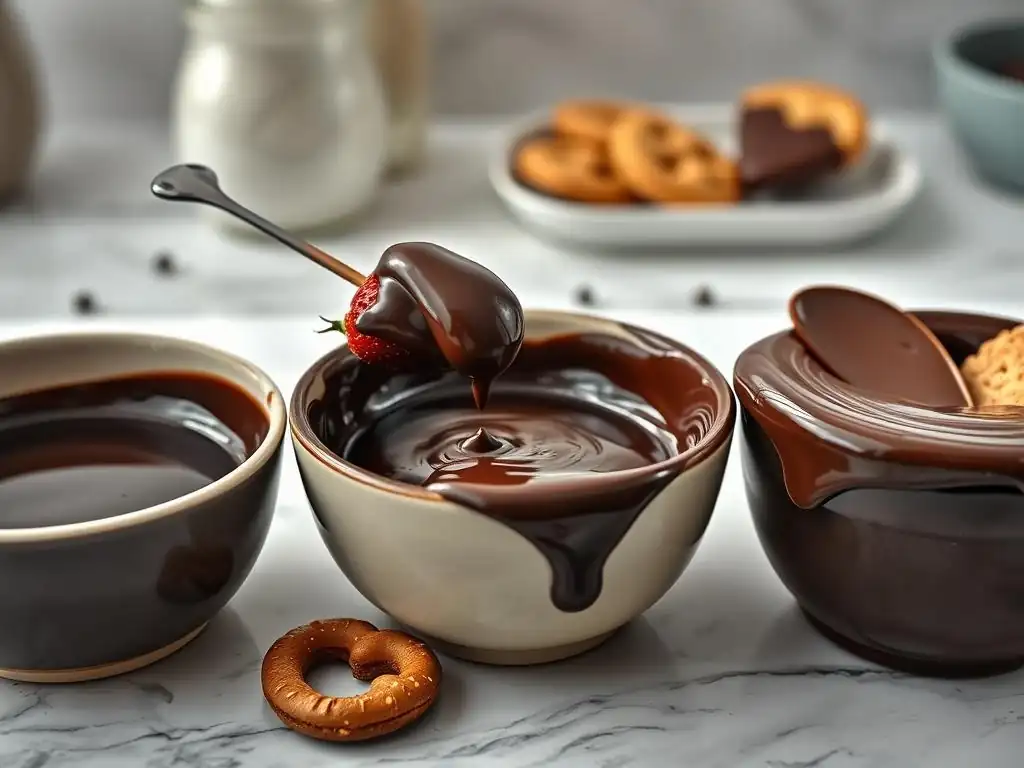
Tempering chocolate is not just about achieving a shiny finish and a firm snap; it's also intrinsically linked to its viscosity. Properly tempered chocolate flows smoothly and evenly at its working temperature, which is typically lower than the melting temperature. This controlled fluidity allows for a thin, even coating on dipped items, preventing excess buildup and ensuring a delicate chocolate shell.
Untempered chocolate, even when melted, often remains too thick for dipping or becomes thick very quickly as it cools, leading to uneven coatings and difficulty working with it. More importantly, untempered chocolate will set with streaks or bloom (white, powdery patches) and lack the desirable snap. Mastering tempering is fundamental to achieving the correct chocolate dipping viscosity and the professional results you desire, making it a central pillar of this chocolate dipping viscosity guide.
Adding Flavor Extracts to Chocolate: Impact on Viscosity and Texture
Adding flavor extracts to chocolate can enhance its taste, but it's important to be mindful of their composition and how they affect viscosity. Water-based extracts can cause chocolate to seize immediately, rendering it unusable for dipping. Even oil-based extracts, while less likely to cause seizing, can alter the chocolate's viscosity, often making it slightly thinner if added in significant amounts due to the introduction of additional fat or carrier oil.
It's best to use extracts specifically designed for chocolate or confectionery, which are typically oil-based and highly concentrated, requiring only a few drops. Add them after the chocolate is melted and tempered, and stir gently to incorporate fully. Test the viscosity after adding any extract, as you might need to slightly adjust the working temperature to compensate for the change in fluidity, a nuance worth noting in any comprehensive chocolate dipping viscosity guide.
Storing Chocolate Properly to Maintain Optimal Viscosity
Proper storage is essential for maintaining the quality and working properties of chocolate, including its potential to achieve optimal viscosity when melted and tempered. Chocolate should be stored in a cool, dry, dark place with a consistent temperature, ideally between 60-70°F (15-21°C) and low humidity (below 50%).
Exposure to heat fluctuations can cause fat bloom (where cocoa butter separates and crystallizes on the surface), while exposure to moisture can cause sugar bloom or even seizing when melted. While bloom doesn't necessarily ruin the chocolate for flavor (it can often be re-tempered), it indicates changes in the fat structure that can make achieving the desired smooth texture and ideal chocolate dipping viscosity more challenging. Proper storage helps preserve the chocolate's stable form, ensuring it melts and tempers correctly.
Where to Buy High-Quality Chocolate and Equipment
Recommended Online Retailers for Baking Chocolate: Amazon
Accessing high-quality couverture chocolate and compound coatings is easier than ever thanks to online retailers. Amazon is a widely accessible platform where you can find a broad selection of chocolate brands, including many mentioned in this guide like Valrhona, Cacao Barry, Guittard, and Chocomaker.
Shopping online allows you to compare prices, read reviews, and often find specific types or formats (like feves or blocks) that might not be available in local grocery stores. When purchasing chocolate online, especially in warmer months, look for sellers who use insulated packaging and expedited shipping to prevent the chocolate from melting or experiencing significant temperature fluctuations during transit, which could impact its ability to temper and achieve the correct chocolate dipping viscosity.
Local Chocolate Suppliers: Supporting Small Businesses and Artisan Chocolatiers
While online retailers offer convenience, exploring local options can be a rewarding experience. Many cities have specialty baking supply stores or artisan chocolatiers who sell high-quality couverture chocolate in bulk or smaller quantities.
Purchasing from local suppliers allows you to see and feel the chocolate before buying and provides an opportunity to ask questions and get expert advice. Supporting local businesses also strengthens your community. While the selection might be smaller than large online stores, the quality is often exceptional, and you might discover unique or regional brands that work beautifully for achieving specific chocolate dipping viscosity goals in your baking projects.
Affiliate Links and Discount Codes: Exclusive Offers for BakeWithEase Readers
As part of our commitment to helping you bake with ease, we sometimes partner with suppliers and retailers to offer exclusive deals. Keep an eye out for potential affiliate links or discount codes shared on our website or in newsletters.
These offers can provide savings on the high-quality chocolate, tempering machines, melters, and thermometers discussed in this chocolate dipping viscosity guide. Using these links or codes, where available, is a great way to access the best ingredients and tools while also supporting BakeWithEase in continuing to provide valuable baking resources.
Frequently Asked Questions
What is chocolate viscosity and why is it important for dipping and coating?
Chocolate viscosity refers to its thickness and flow. The right viscosity is crucial for achieving a smooth, even coating that adheres properly and looks appealing. Too thick, and it's clumpy; too thin, and it's see-through.
How does temperature affect the viscosity of chocolate?
Temperature has a significant impact. Increasing the temperature generally decreases the viscosity, making the chocolate thinner. Conversely, cooling the chocolate increases the viscosity, making it thicker.
What are the key factors to consider when choosing the right chocolate viscosity?
Consider the item being dipped, the desired thickness of the coating, and the room temperature. Some chocolates are naturally thicker and might need cocoa butter to thin them.
How can I adjust the viscosity of my chocolate for dipping?
You can thin chocolate by adding cocoa butter or a neutral vegetable oil in small amounts. To thicken it, you can let it cool slightly, being careful not to let it seize.
What are some common problems that arise from incorrect chocolate viscosity?
Problems include uneven coating, chocolate cracking, blooming (white streaks), and difficulty in achieving a smooth, professional finish. Adjusting the temperature and adding cocoa butter can often resolve these issues.
Final Reflection: The Perfect Pour: Mastering Chocolate Viscosity
The quest for the ideal chocolate viscosity isn't just about aesthetics; it's about achieving consistent, professional-quality results every time. A perfectly viscous chocolate coating ensures even coverage, prevents drips and runs, and ultimately elevates the final product from homemade treat to delectable masterpiece. This understanding is crucial, not just for chocolatiers, but for anyone who enjoys the art of chocolate dipping and coating, from home bakers to small-scale entrepreneurs.
The impact of understanding chocolate viscosity extends far beyond the kitchen; it speaks to the broader principles of precision and control in any creative endeavor. The subtle nuances of temperature and ingredient ratios, as discussed throughout this guide, mirror the delicate balance required in many aspects of life. As the renowned chef Julia Child once said, Find something you're passionate about and keep tremendously interested in it.
This passion for precision, for understanding the intricacies of your craft, is what truly elevates the ordinary to the extraordinary, whether it's creating the perfect chocolate coating or pursuing any other passion.
Now, consider your own chocolate-dipping experiences. Have you ever struggled with a coating that was too thick or too thin? Remember the frustration, the uneven results? This guide provides you with the knowledge to avoid those pitfalls. Take the lessons learned here, experiment with different techniques, and most importantly, enjoy the process of mastering the art of chocolate viscosity. The journey to the perfect pour is a rewarding one, filled with delicious discoveries and the satisfaction of creating something truly beautiful.
Unlock Your Chocolate Dipping Mastery!
Thanks for diving deep into the world of chocolate viscosity! You've now got the knowledge to create perfectly coated treats every time. Ready to put your new skills to the test?
- Experiment with different chocolate types and ratios: Try adjusting your recipes based on what you’ve learned to achieve your ideal consistency. Note your findings for future reference!
- Share your chocolate-dipping creations: Show off your perfectly coated masterpieces on social media using #BakeWithEaseChocolate.
- Dive deeper into chocolate tempering techniques: Explore our other articles on BakeWithEase.com for even more advanced tips and tricks!
What innovative chocolate creation will you whip up first?