
Bake Classic French Almond Croissants (Croissants aux Amandes)

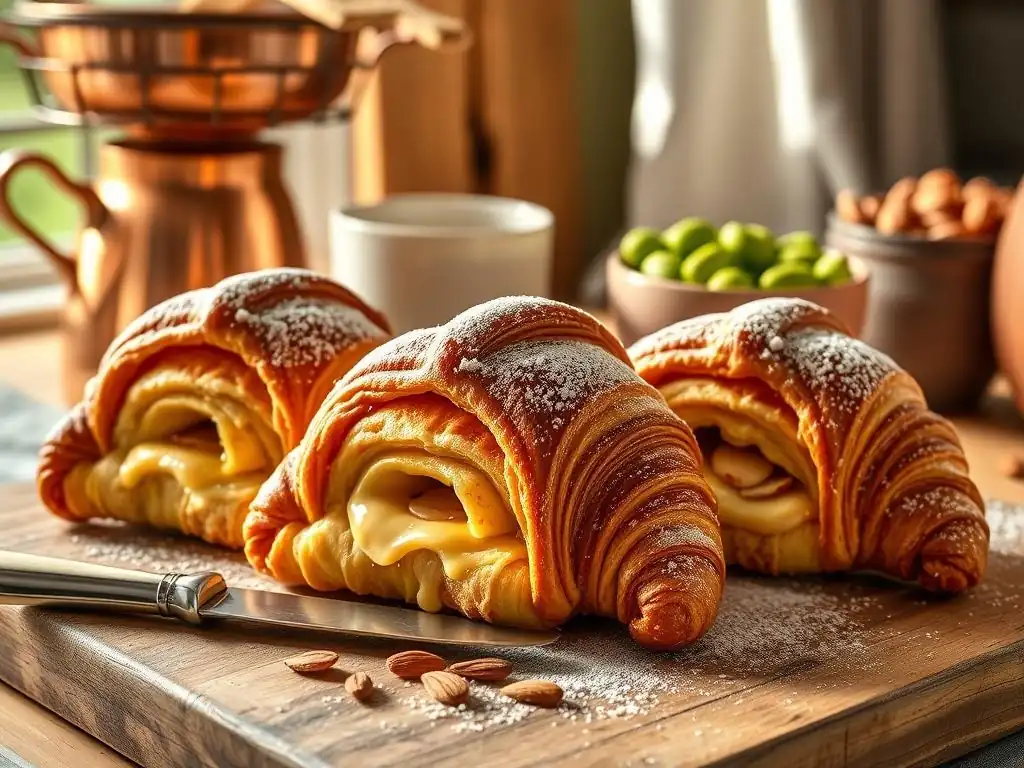
Welcome to BakeWithEase, your trusted guide to conquering the delicious world of baking! Ever dreamt of creating those flaky, golden-brown pastries that grace Parisian patisseries? This week, we're unlocking the secrets to a truly iconic treat. Dive into our easy French almond croissant recipe and discover how to recreate this classic croissant aux amandes in your very own kitchen. But beyond this delectable recipe, we'll explore the nuances of regional baking and share tips that will elevate all your pastry creations. So, are you ready to embark on a baking adventure? Let's get started!
- Introduction to French Almond Croissants
- Ingredients and Equipment
- Step-by-Step Baking Instructions
- Tips and Tricks for Perfect Croissants aux Amandes
- Troubleshooting Common Croissant Issues
- Variations and Enhancements
- Conclusion: Savoring Your Homemade Croissants aux Amandes
-
Frequently Asked Questions
- How easy is this French almond croissant recipe for beginners?
- What are the key ingredients needed for this easy French almond croissant recipe?
- Can I customize the almond cream filling in this French almond croissant recipe?
- How long does it take to bake these almond croissants using this easy recipe?
- What makes this recipe different from other French almond croissant recipes?
- Final Reflection: The Enduring Allure of the Almond Croissant
- Unleash Your Inner Pâtissier: Master the Art of Almond Croissants!
Introduction to French Almond Croissants
The Allure of Croissants aux Amandes
Croissants aux Amandes, or almond croissants, represent a delightful evolution of the classic French croissant. They are typically made from day-old or leftover plain croissants, ingeniously transformed into a new pastry experience. The magic lies in slicing the croissant horizontally, filling it generously with a rich frangipane (almond cream), dipping or brushing it with a sweet syrup, and then baking it again, often topped with slivered almonds and a dusting of powdered sugar. This process not only revitalizes the original pastry but elevates it, adding layers of texture and intense almond flavor.
Historically, this practice emerged as a way to minimize waste in French bakeries. Instead of discarding unsold croissants, bakers found a delicious second life for them. While many bakeries still use day-old pastries, making them from scratch allows for ultimate control over freshness and quality. The contrast between the crispy, twice-baked exterior, the tender, buttery interior, and the moist, flavorful frangipane filling is what makes the almond croissant a beloved staple in patisseries worldwide.
Why This Easy Recipe is Perfect for You
Creating French bakery-quality pastries at home can seem daunting, especially complex laminated doughs like croissants. However, this easy French almond croissant recipe breaks down the process into manageable steps, making it accessible even if you're new to French baking. While traditional croissant making involves precise temperatures and multiple turns, this guide simplifies certain aspects while still yielding authentic results. We focus on clear instructions and key techniques that minimize common pitfalls.
This approach is designed for the home kitchen, acknowledging limitations you might face compared to a professional bakery environment. We'll guide you through preparing a simple yet effective croissant dough base (or adapting if you have plain croissants on hand), crafting a luscious frangipane, and assembling and baking these treats to golden perfection. You'll learn the 'why' behind each step, empowering you to achieve delicious, flaky, and moist almond croissants right in your own oven, proving that an easy French almond croissant recipe is indeed achievable.
Ingredients and Equipment
Essential Ingredients
Flour: The Foundation of Flaky Layers
For classic croissants, a strong bread flour is often recommended due to its higher protein content (typically 12-14%), which helps develop the gluten structure needed for those signature flaky layers. However, for an easier approach or if you're just starting out, a good quality all-purpose flour (around 10-12% protein) can also work, yielding a slightly less structured but still delicious result. The key is consistency; using the same type of flour consistently helps predict outcomes.
The amount of flour needed will vary slightly based on humidity and how you handle the dough, but expect to use around 500-600 grams for a batch yielding 8-12 croissants. Ensuring your flour is fresh is important, as stale flour can affect the dough's rise and texture. Sifting is generally not necessary unless your recipe specifically calls for it or you suspect lumps.
Butter: The Key to Richness and Flakiness
Butter is arguably the most critical ingredient for flaky croissants. High-quality unsalted butter with a high fat content (ideally around 82% or more, often labeled as European-style) is preferred because it contains less water than standard butter (around 80% fat). Less water means better separation of dough layers during baking, resulting in a flakier texture. The butter needs to be pliable but cold for lamination.
You'll need a significant amount of butter, often around 250-300 grams just for the lamination block, plus more for the frangipane. The temperature of the butter is paramount throughout the process; it must be cold enough not to melt into the dough during rolling and folding, but warm enough to be flexible without breaking. This delicate balance is crucial for creating distinct butter layers that puff up in the oven.
Sugar: Sweetness and Browning
Sugar plays multiple roles in this easy French almond croissant recipe. In the dough, a small amount of granulated sugar feeds the yeast, aiding in fermentation and contributing to a tender crumb. It also helps with browning during baking. For the syrup used to moisten the baked croissants before adding the frangipane, a simple syrup made from equal parts sugar and water is standard.
The frangipane filling itself uses granulated sugar and sometimes powdered sugar, providing sweetness and contributing to the filling's smooth texture. The total amount of sugar used across all components might seem high, but it's distributed throughout the dough, syrup, and filling, balancing the richness of the butter and almonds. The sugar in the syrup also helps keep the twice-baked croissant moist.
Almond Filling (Frangipane): Creating the Heart
The heart of a Croissant aux Amandes is the frangipane. This classic French cream is a mixture of pastry cream and almond cream (crème d'amandes). Crème d'amandes is typically made from butter, sugar, eggs, and almond flour (finely ground blanched almonds). Using fine almond flour rather than coarser almond meal results in a smoother filling.
For a standard batch, you might use around 100-150 grams of almond flour. Some recipes might include a splash of rum or almond extract to enhance the flavor. The frangipane should be rich, flavorful, and have a spreadable consistency – not too stiff, not too runny. It's the key element that transforms a simple croissant into its almond counterpart, providing moisture, flavor, and a pleasant contrast to the crispy pastry.
Recommended Equipment
Making croissants aux amandes doesn't require highly specialized equipment, but a few tools make the process significantly easier and contribute to better results. A sturdy rolling pin is essential, preferably one with some weight that distributes pressure evenly across the dough. A large, clean workspace is also crucial, ideally a cool surface like marble or granite, though a large cutting board or even your counter works if kept cool.
Other helpful tools include a sharp knife or pastry wheel for cutting the dough accurately, parchment paper for lining baking sheets and handling the dough, and a pastry brush for applying the egg wash and syrup. A stand mixer fitted with a dough hook can simplify the initial dough mixing, but it's certainly possible to mix the dough by hand. Finally, a baking sheet and a cooling rack are necessary for baking and cooling your delicious homemade French almond croissants.
Step-by-Step Baking Instructions

Step 1: Preparing the Croissant Dough (Starting Point)
Begin by preparing your basic croissant dough. This typically involves mixing flour, yeast, a little sugar, salt, water, and sometimes a small amount of butter to form a rough dough. Once mixed, knead the dough until it is relatively smooth and elastic. Avoid over-kneading, as this can make the dough tough. The goal is a cohesive mass ready for the crucial next step: incorporating the butter.
After the initial mix and a brief rest (perhaps 30 minutes at room temperature), the dough needs to be chilled thoroughly. Wrap it tightly in plastic wrap and place it in the refrigerator for at least 2-4 hours, or ideally overnight. This chilling period is vital. It allows the gluten to relax, making the dough easier to roll, and ensures the dough is cold enough to handle the butter block in the subsequent lamination steps without the butter melting. A well-chilled dough is the foundation for successful lamination in this easy French almond croissant recipe.
Resting and Chilling the Dough
Proper chilling isn't just about temperature; it's also about time. Allowing the dough to rest in the refrigerator for an extended period, even up to 24 hours, improves its flavor development through slow fermentation. This process also firms up the dough significantly, making it the same approximate consistency as your cold butter block. Matching the consistency of the dough and butter is key to achieving even layers when rolling.
Ensure the dough is wrapped tightly to prevent a skin from forming on its surface, which can make the dough difficult to roll smoothly later. The ideal temperature for chilling is typically between 2°C and 4°C (35°F and 40°F). This step might seem simple, but it's a non-negotiable part of preparing the dough for lamination and a critical factor in the flakiness of your final French almond croissants.
Step 2: The Laminating Process (Turning)
Lamination is the technique of repeatedly folding a block of butter into the dough, creating alternating layers of dough and butter. This process, often called "turning," is what gives croissants their characteristic flaky texture. Start by enclosing a cold, flattened block of butter within the chilled dough. Then, roll the dough out into a rectangle and perform the first fold, typically a 'letter fold' (folding one-third in, then the other third over, like folding a letter).
After the first fold, the dough must be chilled again for 30-60 minutes to allow the butter to firm up and the gluten to relax. This chilling prevents the butter from breaking through the dough layers and ensures even distribution. You will repeat this process of rolling, folding (performing 3 or 4 'turns' in total), and chilling. Each turn doubles or triples the number of layers, building up the structure that will puff dramatically in the oven. While it requires patience and multiple chilling steps, mastering this technique is central to any classic or easy French almond croissant recipe.
Folding and Chilling Cycles
The number of turns and chilling time between turns can vary slightly depending on the recipe, but a common approach is 3 or 4 turns with 30-60 minutes of chilling after each turn. For example, a typical sequence might involve:
- Enclose butter, 1st fold (letter fold). Chill 45 mins.
- Roll and 2nd fold (letter fold). Chill 45 mins.
- Roll and 3rd fold (letter fold). Chill 45 mins.
- Optional 4th fold or final chill before shaping.
The chilling time is crucial; if the dough or butter becomes too warm, the butter will melt into the dough, resulting in a dense, bready croissant instead of a flaky one. Work quickly and efficiently during the rolling and folding steps, and don't skip the chilling periods. Patience here is rewarded with beautifully layered pastry.
Step 3: Shaping the Croissants
Once the final turn is complete and the dough has had its last significant chill (at least 1-2 hours), it's ready for shaping. Roll the dough out into a large, thin rectangle, aiming for a thickness of about 3-4mm (approximately 1/8 inch). The dimensions of the rectangle will depend on how many croissants you plan to make and their desired size, but a typical rectangle might be around 40-50 cm wide.
Using a sharp knife or pastry wheel, trim the edges to create clean lines – this helps with even rising. Then, cut the rectangle into long triangles. The base of each triangle will form the widest part of the croissant, and the tip will be the point you roll towards. A common width for the base of each triangle is around 8-10 cm (about 3-4 inches).
Cutting and Rolling the Dough
To cut the triangles, you can mark the top edge of the rectangle at intervals (e.g., every 10 cm) and the bottom edge at staggered intervals (e.g., starting 5 cm in, then every 10 cm). Connect the marks diagonally to form the triangles. Once cut, gently stretch the base of each triangle slightly. Some recipes suggest making a small notch or slit in the center of the base.
Starting from the base, roll the triangle up towards the tip, gently but firmly, trying to maintain an even tension. As you roll, the layers will start to become visible. Curve the ends inwards to form the classic crescent shape. Place the shaped croissants on a baking sheet lined with parchment paper, leaving plenty of space between them, as they will expand significantly during proofing and baking.
Step 4: Adding the Almond Filling
This step is where the classic croissant transforms into a Croissant aux Amandes. While some methods involve slicing and filling after the first bake, this easy French almond croissant recipe often incorporates the filling before the second bake. Prepare your frangipane by creaming together softened butter and sugar, then beating in eggs one at a time, and finally mixing in the almond flour and any flavorings like vanilla or almond extract.
Once the frangipane is ready, you'll need your already baked, cooled plain croissants. These could be ones you baked earlier or even good quality store-bought ones. Using a serrated knife, carefully slice each croissant horizontally, almost all the way through, creating a 'mouth'.
Filling and Sealing
Generously pipe or spread a portion of the frangipane into the opening of each sliced croissant. Don't be shy with the filling; this is the core of the almond croissant experience. Use a piping bag for a neater application, or simply use a spoon or offset spatula. Ensure the frangipane is spread evenly inside.
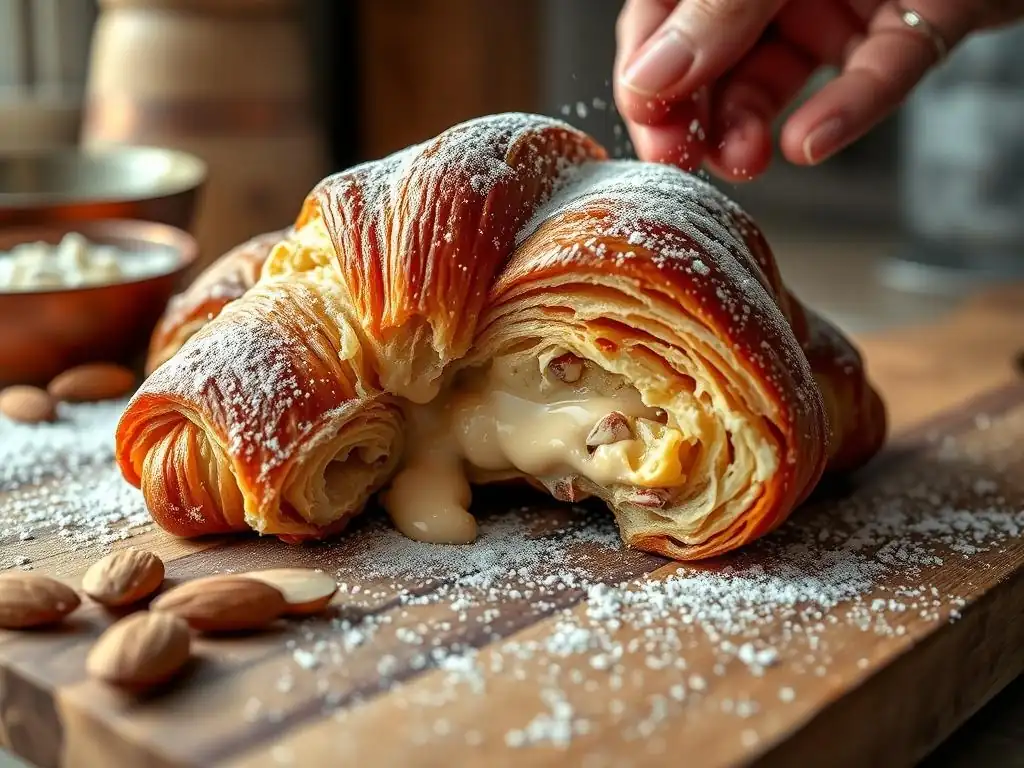
You will also spread a thin layer of frangipane on top of the croissant. Some recipes instruct dipping the entire croissant in a simple syrup before filling and topping with frangipane; this step adds moisture and sweetness, crucial for the second bake. After filling and topping with frangipane, sprinkle generously with slivered almonds. Press the almonds gently into the frangipane to help them adhere.
Step 5: Proofing the Croissants
Proofing is the final rise before baking, where the yeast in the dough (if you made it from scratch) produces gas, causing the shaped croissants to expand and become light and airy. This step is critical for developing the final texture and volume. Place the shaped croissants on a baking sheet lined with parchment paper, ensuring they have ample space, as they will double in size.
The ideal proofing environment is warm and slightly humid, typically around 24°C to 26°C (75°F to 79°F). Avoid temperatures much higher than this, as the butter layers could melt, ruining the structure. A common method for home bakers is to place the baking sheet in a turned-off oven with a pan of hot water on the rack below to create a warm, steamy environment.
Achieving the Right Proof
Proofing time varies depending on the room temperature and humidity, but it typically takes anywhere from 1.5 to 2.5 hours. You'll know the croissants are properly proofed when they look visibly puffier, feel light, and jiggle slightly when the pan is gently shaken. A good test is to gently press the side of a croissant; if the indentation springs back very slowly, it's ready. If it springs back quickly, they need more time. If the indentation remains, they are over-proofed.
Before baking, gently brush the proofed croissants with an egg wash (a beaten egg mixed with a little milk or water). This gives them a beautiful golden color and a slight sheen. Be careful not to deflate them during this step. This final proof is essential for achieving that perfect flaky, airy interior in your French almond croissants.
Step 6: Baking Croissants aux Amandes
Baking is a two-part process for Croissants aux Amandes, especially if starting with plain croissants. The first bake is for the plain croissant itself. The second bake is after adding the almond filling and syrup. Preheat your oven to the specified temperature, usually around 180°C to 200°C (350°F to 390°F), depending on your oven and recipe.
If using plain croissants you've just made and proofed, bake them first according to your base croissant recipe until golden brown and flaky (approximately 15-20 minutes). Let them cool completely. If using day-old or store-bought plain croissants, you skip this initial bake and go straight to the second bake after filling.
Baking to Golden Perfection
For the second bake of the almond croissants (after filling, syrupping, and adding almonds), the temperature might be slightly lower, around 170°C to 180°C (340°F to 350°F). This is because the frangipane needs to cook through without burning the exterior or the almonds. Place the prepared almond croissants on a baking sheet lined with parchment paper.
Bake for approximately 15-25 minutes, or until the frangipane is set, the almonds are toasted, and the entire pastry is a deep golden brown. Keep a close eye on them during the last few minutes to prevent burning. The frangipane should look slightly puffed and dry on the surface. The aroma filling your kitchen will tell you they are nearing perfection. This final bake solidifies the filling and creates that delightful crisp exterior.
Tips and Tricks for Perfect Croissants aux Amandes
Ensuring Flaky Layers
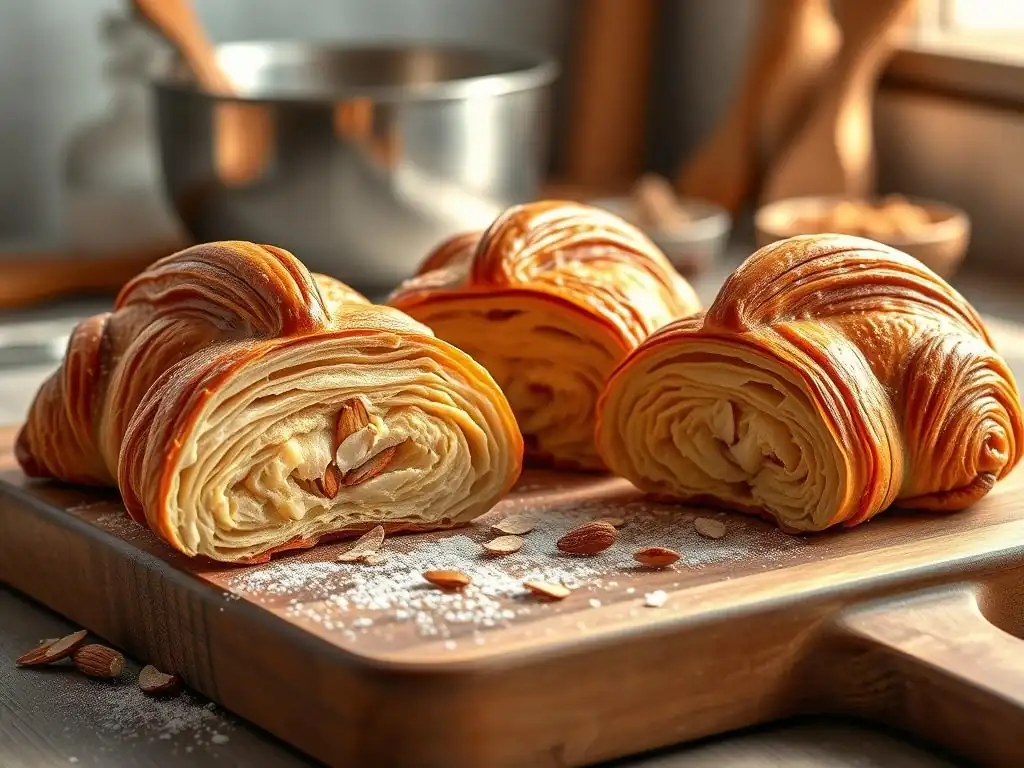
The secret to those coveted flaky layers in your homemade French almond croissants lies primarily in the lamination process. Keep your dough and butter cold at all times during rolling and folding. If the butter starts to soften too much, stop and chill the dough immediately. Work quickly and confidently when rolling.
Another tip is to use a very sharp knife or pastry wheel when cutting the dough triangles. A dull blade can drag the layers together, preventing them from separating properly during baking. Also, avoid twisting or stretching the dough excessively when shaping; gentle handling helps preserve the delicate layers you've worked hard to create. Proper proofing is also key; under-proofed croissants won't puff fully, while over-proofed ones can collapse.
Achieving a Golden Crust
A beautiful golden-brown crust is characteristic of classic French pastries. Applying an egg wash before the first bake (if making the plain croissant base) and sometimes before the second bake (for the almond version) is crucial. A simple egg wash is usually one egg whisked with a tablespoon of milk or water. For a shinier finish, some bakers use just the egg yolk mixed with cream.
Ensure the egg wash is applied evenly, but avoid letting it pool between the layers, as this can glue them together. Baking at the correct temperature is also vital. Starting with a slightly higher temperature can encourage a rapid initial puff, then potentially lowering it slightly to ensure even cooking without burning. Monitoring your oven temperature with an oven thermometer is highly recommended, as oven thermostats can be inaccurate, by as much as 20°C in some cases.
Perfecting the Almond Filling
The frangipane should be rich, moist, and flavorful. Using high-quality almond flour is essential – look for finely ground blanched almond flour for the smoothest texture. Ensure your butter and sugar are properly creamed before adding the eggs, as this incorporates air and creates a lighter texture. Don't overmix once the almond flour is added; mix just until combined.
For added depth of flavor, consider adding a teaspoon of good quality vanilla extract or a splash of rum or almond liqueur to the frangipane. If your frangipane seems too stiff, you can loosen it with a tiny bit of milk or a beaten egg, but be careful not to make it too runny. It should be easily spreadable or pipeable.
Storing Your Croissants
Homemade French almond croissants are best enjoyed fresh from the oven, ideally within a few hours of baking when the exterior is at its crispiest. However, they can be stored. Once completely cooled, store them in an airtight container at room temperature for 1-2 days. The exterior will soften slightly over time.
For longer storage, they can be frozen. Wrap cooled croissants individually in plastic wrap, then place them in a freezer-safe bag or container. They can be frozen for up to 1-2 months. To reheat, thaw frozen croissants overnight in the refrigerator or for a few hours at room temperature. Then, warm them in a preheated oven at 160°C (320°F) for 5-10 minutes to help crisp up the exterior again.
Troubleshooting Common Croissant Issues
Croissants Not Flaky?
This is one of the most common challenges when making laminated doughs. The primary culprit is usually the butter melting into the dough during the rolling and folding process or during proofing. This can happen if the butter is too soft, the dough isn't cold enough, or you're working in a warm environment.
- Solution: Ensure your butter is pliable but cold (around 12°C/54°F is often ideal for rolling). Keep the dough well-chilled between turns – don't skip those refrigeration steps! Work quickly when rolling and folding. If your kitchen is warm, consider chilling your rolling pin and workspace. If using day-old plain croissants, ensure they were flaky to begin with.
Filling Oozing Out?
Sometimes, the frangipane filling can bubble up and spill out of the croissants during baking, creating a messy sheet pan and potentially dry filling. This can happen if the croissants weren't sealed properly after filling or if the frangipane is too liquid.
- Solution: When filling the sliced croissant, don't overstuff it. Ensure the frangipane is the correct consistency – it should hold its shape somewhat. When placing the filled croissants on the baking sheet for the second bake, leave ample space between them. You can also try slightly pinching the edges of the sliced croissant together after filling, though be gentle to avoid crushing the pastry.
Uneven Baking?
One croissant is golden, another is pale, or one side is darker than the other. Uneven baking is frustrating! This is often due to hot spots in your oven or overcrowding the baking sheet.
- Solution: Use an oven thermometer to verify your oven's temperature and identify any significant discrepancies. Rotate the baking sheet halfway through the baking time to ensure even exposure to heat. Avoid placing too many croissants on a single sheet; leave plenty of space for air circulation around each one. If using multiple sheets, you might need to swap their positions between racks as well.
Variations and Enhancements
Chocolate Almond Croissants
Elevate your easy French almond croissant recipe by incorporating chocolate. Before adding the frangipane, place a few chocolate batons or chips inside the sliced croissant alongside the filling. You can also add cocoa powder (around 10-15 grams per 100 grams of almond flour) to the frangipane itself to create a chocolate frangipane.
Another approach is to drizzle melted chocolate over the baked and cooled almond croissants. The combination of rich almond, flaky pastry, and decadent chocolate is truly irresistible. This variation is a popular twist found in many modern patisseries.
Berry Almond Croissants
Add a burst of fruity freshness to your almond croissants. Before adding the frangipane, spread a thin layer of berry jam (like raspberry or apricot) inside the sliced croissant. Alternatively, you can gently fold some fresh berries (like raspberries or blueberries) into the frangipane mixture just before filling the croissants.
Be mindful that fresh berries release moisture when heated, which could affect the frangipane's texture. Using jam or adding just a small amount of berries can mitigate this. Top with slivered almonds as usual before baking. The tartness of the berries provides a lovely contrast to the sweet, rich almond filling.
Savory Almond Croissant Ideas
While traditionally sweet, the concept of an almond croissant can inspire savory variations. Imagine using a savory filling based on ground nuts (like walnuts or hazelnuts) mixed with herbs, cheese (such as Gruyère or Parmesan), and perhaps a touch of garlic or onion powder instead of frangipane.
You could fill plain croissants with a mixture of ricotta, spinach, and toasted almonds, or even a pesto and almond filling. Top with toasted almonds and maybe a sprinkle of flaky sea salt or more cheese before baking. These savory versions offer a unique twist on the classic, perfect for brunch or a light lunch.
Conclusion: Savoring Your Homemade Croissants aux Amandes
Congratulations! You've navigated the steps to create delicious homemade French almond croissants. From preparing the dough (or starting with plain croissants) and crafting the rich frangipane to the crucial steps of lamination, shaping, proofing, and the final double bake, you've mastered the key techniques of this classic French pastry. It's a process that requires patience and attention to detail, but the reward is immense: flaky, buttery croissants filled with sweet, moist almond goodness.
Whether you followed this easy French almond croissant recipe using homemade dough or transformed store-bought plain croissants, you've brought a taste of the Parisian patisserie into your own kitchen. Share them with friends and family, or simply enjoy them yourself with a cup of coffee or tea. Each bite of a warm, homemade Croissant aux Amandes is a testament to the joy and satisfaction of baking. Enjoy the fruits of your labor!
Frequently Asked Questions
How easy is this French almond croissant recipe for beginners?
This recipe is designed to be relatively easy, focusing on clear instructions. While making croissants from scratch can be difficult, this recipe uses pre-made croissants to simplify the process.
What are the key ingredients needed for this easy French almond croissant recipe?
The main ingredients are pre-made croissants, almond cream (frangipane), and almond syrup. You'll also need sliced almonds for garnish and powdered sugar for dusting.
Can I customize the almond cream filling in this French almond croissant recipe?
Yes, you can customize the frangipane. Consider adding a touch of amaretto for extra flavor. You could also incorporate chocolate chips or other nuts.
How long does it take to bake these almond croissants using this easy recipe?
Baking time is typically 15-20 minutes at a moderate oven temperature. Watch them carefully to ensure they achieve a golden brown color without burning.
What makes this recipe different from other French almond croissant recipes?
This recipe emphasizes ease and accessibility, using pre-made croissants. It offers a simplified approach to enjoying a classic French pastry at home without the complexities of making croissants from scratch.
Final Reflection: The Enduring Allure of the Almond Croissant
The seemingly simple act of baking a croissant, especially one infused with the delicate fragrance of almonds, transcends mere culinary creation; it becomes a journey of connection, tradition, and surprising ease. This article aimed to demystify the process of making these delectable pastries, proving that even the most seemingly complex French recipes can be approachable for home bakers. The accessibility of this recipe, coupled with the undeniable deliciousness of the final product, makes it a powerful tool for connecting with both culinary heritage and personal satisfaction.
The enduring appeal of the almond croissant lies not just in its taste, but in its ability to evoke a sense of place and time. It's a taste of Parisian cafes, of leisurely mornings, and of the simple pleasure of sharing something beautiful and delicious with loved ones. The process itself, from the careful layering of dough to the golden-brown finish, is a meditative experience. As the renowned chef Julia Child once said, Find something you're passionate about and keep tremendously interested in it.
Baking these croissants, for me, has become just that – a passionate pursuit that continually rewards with both delicious results and a sense of accomplishment.
Now, I invite you to embark on your own croissant adventure. Don't be intimidated by the seemingly intricate steps; embrace the process, savor the aromas, and revel in the satisfaction of creating something truly special. The journey of baking these almond croissants is as rewarding as the final bite, offering a chance to connect with a rich culinary tradition while simultaneously nurturing your own creativity and skill in the kitchen. So, gather your ingredients, preheat your oven, and let the magic begin.
Unleash Your Inner Pâtissier: Master the Art of Almond Croissants!
Thanks for joining us on this delicious journey into the world of French baking! We hope you've gained the confidence to tackle these elegant almond croissants. Ready to take your baking skills to the next level?
- Bake your own batch of Croissants aux Amandes: Use the recipe and techniques you just learned to create these delightful treats. Don't be afraid to experiment with different fillings!
- Share your baking triumph: Post a picture of your beautiful creations on social media and tag us @BakeWithEase – we'd love to see them!
- Challenge a friend to a croissant bake-off: Spread the joy (and the deliciousness) by inviting a friend to bake alongside you.
What unique twist will you add to your almond croissant recipe? Let's hear about it in the comments!