
Vanilla Extract: Why It Matters in Beginner Cookies

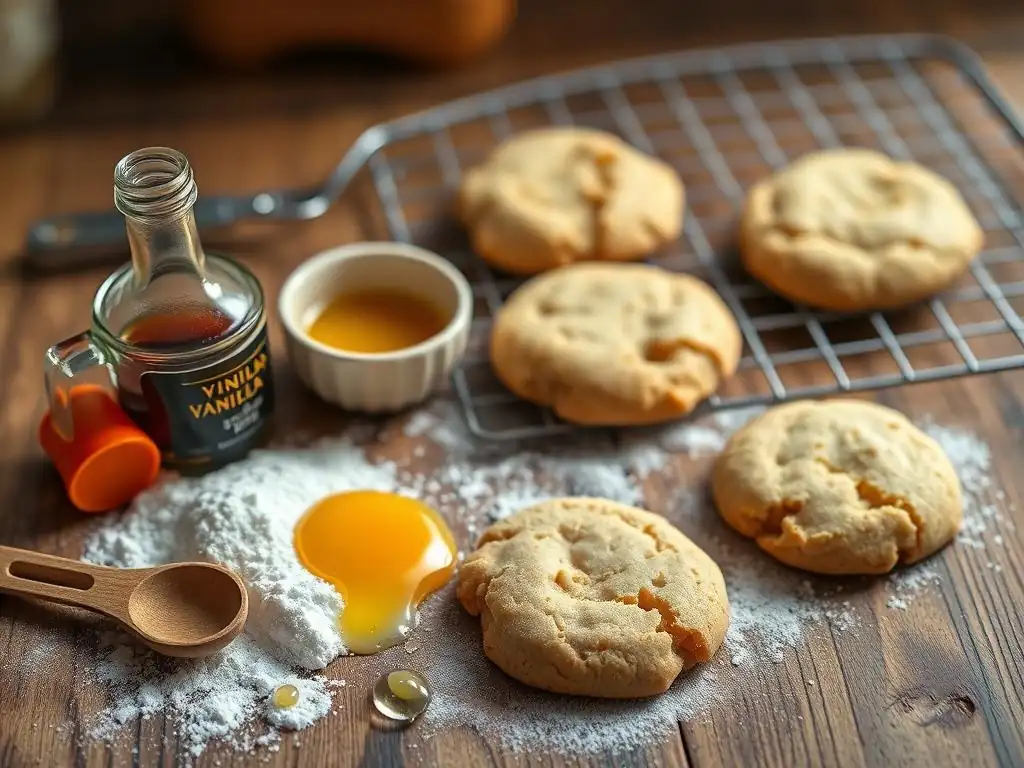
Welcome to BakeWithEase, your baking sanctuary! Ever wondered how a single ingredient can transform a simple cookie? Dive in and discover the secret power of vanilla extract in our beginner-friendly cookie recipe. You'll be amazed at how this humble flavoring elevates your baking from basic to brilliant. Ready to unlock the magic? Let's bake!
- Understanding Vanilla Extract in Cookie Baking for Beginners
- Choosing the Right Vanilla Extract for Your First Cookie Recipe
- Vanilla Extract and Common Cookie Baking Mistakes for Beginners
- Enhancing Your Beginner Cookie Recipe with Vanilla Extract
- Step-by-Step: Adding Vanilla Extract to Your Beginner Cookie Dough
- Vanilla Extract Storage and Shelf Life for Beginner Bakers
- The Best Beginner Cookie Recipes Featuring Vanilla Extract
-
Frequently Asked Questions
- Why is vanilla extract important in a beginner cookie recipe?
- Can I substitute vanilla extract in a beginner cookie recipe?
- How much vanilla extract should I use in a beginner cookie recipe?
- What's the difference between imitation and pure vanilla extract for beginner cookies?
- How should I store vanilla extract to keep it fresh for my beginner cookie recipes?
- Final Reflection: The Unsung Hero of Beginner Baking
- Unlock Your Cookie Potential: Master the Art of Vanilla
Vanilla extract plays a surprisingly significant role, even in the most straightforward cookie recipes designed for beginners. While sugar, flour, and butter form the structural foundation, vanilla is often the key ingredient that transforms a merely sweet baked good into something truly delicious and comforting. It doesn't just add its own flavor; it acts as a background note that enhances and rounds out the other ingredients, particularly the sweetness and the richness of the butter. Think of a classic chocolate chip or sugar cookie – without vanilla, the flavor profile would be notably flatter and less appealing.
For those just starting out, mastering a basic vanilla extract beginner cookie recipe is a great way to appreciate the power of this simple liquid. Even in recipes with only four or five ingredients, the inclusion of a teaspoon or two of vanilla can elevate the final taste dramatically. It adds warmth and depth, preventing the cookies from tasting just like sugar and fat. This foundational understanding of vanilla's role sets beginner bakers up for success in more complex recipes down the line, highlighting that every ingredient, no matter how small the quantity, contributes to the overall flavor symphony.
Vanilla is essential in beginner cookies because it provides a complex aromatic profile that pure sugar alone cannot achieve. The hundreds of flavor compounds found in real vanilla beans, which are extracted to make vanilla extract, contribute notes that can be described as creamy, woody, floral, or even spicy, depending on the type. When these compounds are introduced to a simple dough base, they interact with the caramelized sugars and browned butter during baking, creating a much richer and more nuanced flavor than you'd get otherwise.
Consider a simple sugar cookie recipe. Without vanilla, it might taste primarily of sweet, baked flour and butter. Adding vanilla introduces layers of flavor that make the cookie more interesting and craveable. It helps to mellow out any potential harshness from the sugar or flour and provides that familiar, comforting "bakery" taste. For a beginner navigating their first cookie recipe, ensuring they include vanilla extract is crucial for achieving a result that tastes genuinely good and encourages them to keep baking.
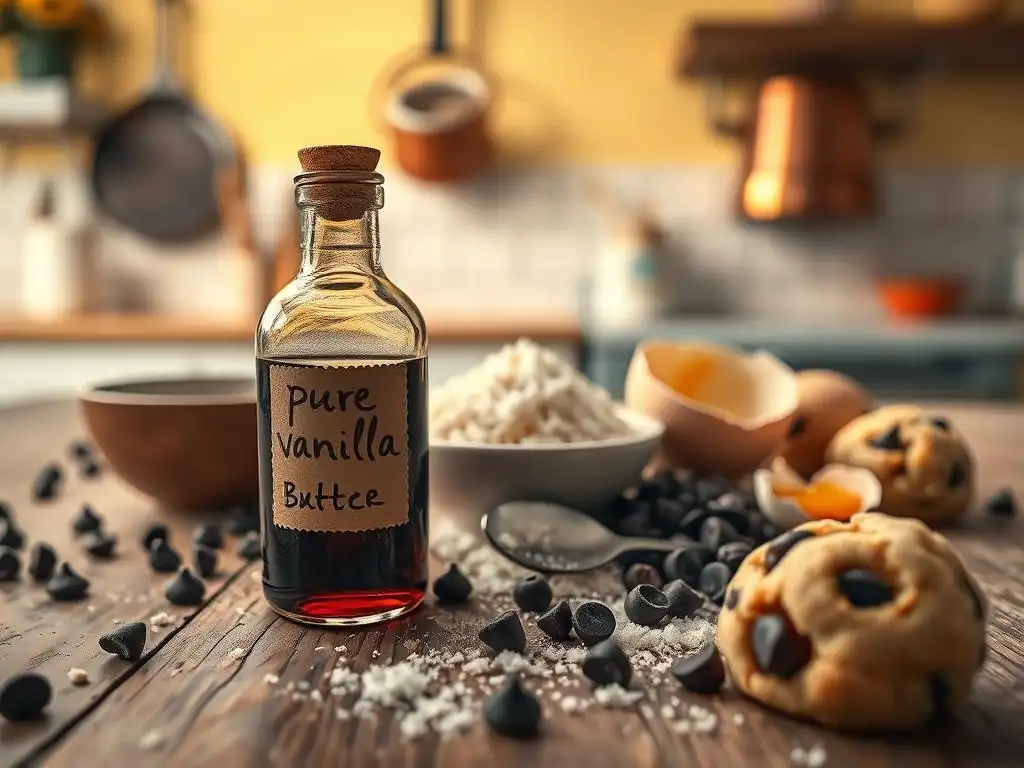
Pure Vanilla Extract vs. Imitation Vanilla: A Beginner's Guide
When you're tackling your first vanilla extract beginner cookie recipe, you'll likely encounter two main types of vanilla: pure vanilla extract and imitation vanilla extract. Pure vanilla extract is made by steeping vanilla beans in alcohol and water, allowing the complex natural flavor compounds to be extracted. Its flavor is rich, nuanced, and comes directly from the vanilla bean itself. It's generally more expensive but offers a superior, authentic vanilla taste.
Imitation vanilla extract, on the other hand, is typically made from vanillin, a compound that is the primary flavor component of vanilla but is synthesized in a lab, often as a byproduct of other industries. While it provides a recognizable vanilla-like flavor, it lacks the depth and complexity of pure extract because it contains only one or a few flavor compounds compared to the hundreds in pure vanilla.
For beginner bakers, starting with pure vanilla extract, if your budget allows, can make a noticeable difference in the final taste of your cookies, giving you a better understanding of what true vanilla flavor is like.
The quality of your vanilla extract has a direct impact on the flavor of your beginner cookies. Pure vanilla extracts vary based on the type of vanilla bean used (like Madagascar, Mexican, Tahitian) and the extraction process. Madagascar vanilla, for instance, is often described as creamy and sweet, making it a popular choice for baking, including a classic vanilla extract beginner cookie recipe. A high-quality pure extract will impart a clean, strong, and complex vanilla flavor that enhances the entire cookie.
Lower-quality pure extracts might have a weaker flavor or less desirable undertones. Imitation vanilla, while budget-friendly, provides a simpler, often slightly artificial or alcohol-forward vanilla note that doesn't develop as well during baking as pure extract does. For a beginner aiming for delicious results right away, investing in a decent quality pure vanilla extract is recommended. It will significantly contribute to the overall success and flavor satisfaction of their first baking attempts.
Budget-Friendly Vanilla Options for New Bakers
While pure vanilla extract is often preferred, it can be an investment, with prices potentially ranging from $5 to $10 or more for a small bottle, depending on the brand and bean origin. For new bakers on a tight budget exploring their first vanilla extract beginner cookie recipe, imitation vanilla is a readily available and much cheaper alternative, often costing just a couple of dollars. It will still provide a recognizable vanilla flavor, although it won't have the same depth as pure extract.
Another budget-conscious approach is to look for sales or consider buying slightly larger bottles of pure extract if you plan to bake regularly, as the per-ounce cost is often lower. Some brands offer pure vanilla blends that combine different bean types, which can sometimes be more affordable than single-origin extracts. Ultimately, even using imitation vanilla correctly in an easy cookie recipe using vanilla extract will yield a better result than omitting vanilla entirely, so choose the best option that fits your budget and baking goals.
Sometimes, beginners might notice a slightly bitter or overly alcoholic taste in their cookies, and this can sometimes be attributed to the vanilla extract. One common reason for a bitter note, especially with imitation vanilla, is adding too much. While it might seem like more vanilla equals more flavor, exceeding the amount specified in a vanilla extract beginner cookie recipe can lead to an unpleasant result. Imitation vanilla, in particular, has a more pronounced alcohol base and fewer mellowing flavor compounds, making overuse more noticeable.
Another factor could be the quality or age of the extract. While pure vanilla extract doesn't technically "go bad" in a way that makes you sick, its flavor can degrade over time, becoming weaker or developing off-notes. Storing vanilla extract improperly (like in direct sunlight) can also affect its quality. To avoid bitterness, always measure accurately (typically with measuring spoons), use a reputable brand, and store your extract correctly. If using imitation vanilla, stick strictly to the recipe quantity.
Measuring Vanilla Extract Correctly: Tips for Beginners
Accurate measurement is key in baking, and this holds true for vanilla extract in your beginner cookie recipe. Unlike flour or sugar, which are often measured by volume using cups, liquids like vanilla extract are typically measured using measuring spoons. For most cookie recipes, the amount of vanilla is relatively small, often 1 teaspoon or 2 teaspoons. Using kitchen measuring spoons specifically designed for liquids is important for accuracy.
When measuring vanilla extract, place the measuring spoon over the mixing bowl or a small cup before pouring. This way, if you overpour, the excess goes into your mixture or a catch cup, not back into the bottle, preventing potential contamination or waste. Fill the spoon to the rim, but don't let it overflow excessively. For a 1 teaspoon measure, aim for a full spoon. Consistency in measuring ensures your vanilla extract beginner cookie recipe turns out correctly every time, balancing the flavors as intended.
Even with careful measurement, beginners might sometimes encounter issues related to vanilla extract. If you forget to add the vanilla entirely, you'll likely end up with cookies that taste bland or overly sweet. In this case, there's not much you can do once the cookies are baked, but you'll know for next time how much flavor difference vanilla makes! If you realize you forgot it before baking, you can gently stir it into the dough, although overmixing should be avoided.
If your dough seems a little too liquidy right after adding the vanilla (though this is rare with standard amounts), double-check your other liquid measurements. Vanilla extract itself is mostly alcohol and water, but a standard amount like 1-2 teaspoons in a typical batch of cookie dough (yielding perhaps 2-3 dozen cookies) won't significantly alter consistency. If the vanilla flavor seems weak after baking, it might indicate a low-quality or old extract, prompting you to try a different brand or bottle for your next easy cookie recipe using vanilla extract.
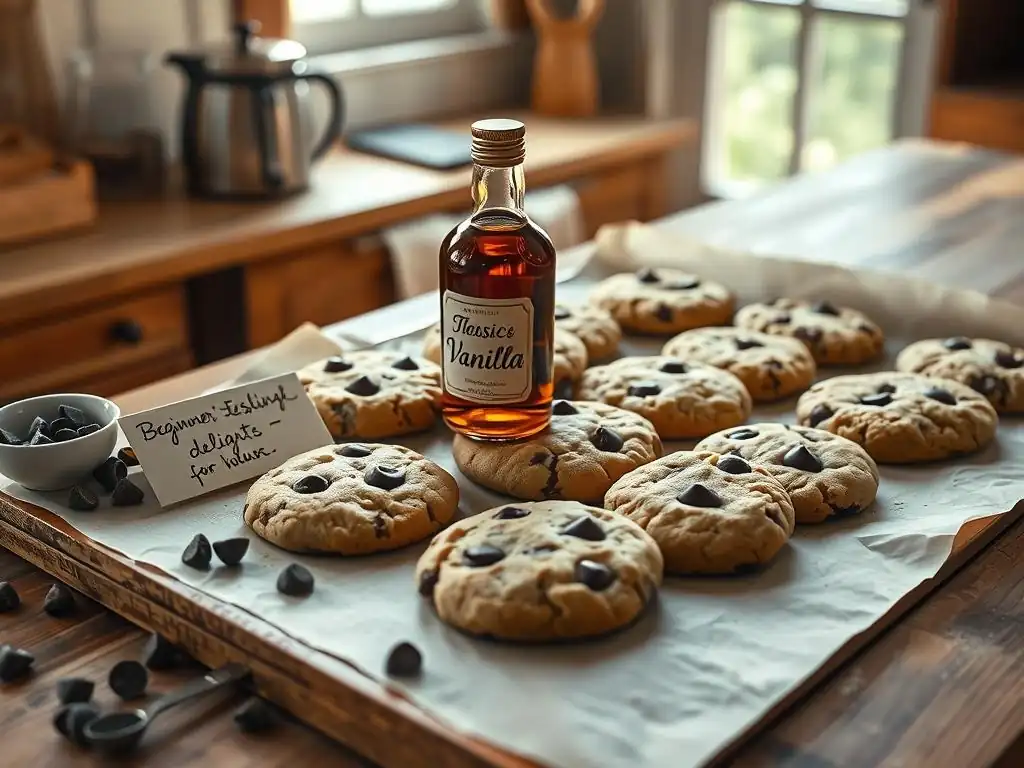
Vanilla extract is incredibly versatile and pairs beautifully with many other flavors commonly found in beginner cookie recipes. Its warm, sweet aroma complements chocolate perfectly, which is why it's a staple in chocolate chip cookies. About 1 teaspoon of vanilla extract in a standard batch of chocolate chip cookie dough enhances the chocolate flavor and adds depth.
Other flavors that sing alongside vanilla include:
- Brown sugar (adds a caramel-like richness)
- Cinnamon (creates a warm, spicy note)
- Oatmeal (vanilla helps balance the earthiness)
- Nuts (like pecans or walnuts, vanilla enhances their toasty flavor)
- Citrus zest (a little orange or lemon zest can brighten the vanilla flavor)
Experimenting with small additions of these complementary flavors in your basic vanilla extract beginner cookie recipe can be a fun way to start customizing your baking. For example, adding a pinch of cinnamon to a simple sugar cookie dough with vanilla extract creates a whole new dimension of flavor.
Using Vanilla Bean Paste as a Vanilla Extract Substitute for Beginners
For beginners looking to upgrade their vanilla flavor without committing to whole beans, vanilla bean paste is an excellent substitute for vanilla extract. Vanilla bean paste is a thick, syrupy mixture made from vanilla extract and ground vanilla bean seeds. It offers a more intense, complex vanilla flavor than pure extract and adds those beautiful little black specks of vanilla bean to your cookies, which many people associate with high quality.
You can typically substitute vanilla bean paste for vanilla extract in a 1:1 ratio in most vanilla extract beginner cookie recipes. So, if a recipe calls for 1 teaspoon of vanilla extract, you would use 1 teaspoon of vanilla bean paste. While usually more expensive than extract, a jar lasts a long time, and the visual appeal and enhanced flavor it brings to easy cookie recipes using vanilla extract are often worth the cost for those wanting to take their baking up a notch.
Not all vanilla extracts are created equal, and exploring different types can introduce beginner bakers to a world of subtle flavor variations in their cookies.
- Madagascar Bourbon Vanilla Extract: This is the most common type, known for its classic, sweet, and creamy flavor profile. It's a great standard for any vanilla extract beginner cookie recipe.
- Mexican Vanilla Extract: Often described as smoky, spicy, and woody, with hints of clove and chocolate. It can add an interesting twist to chocolate or spice cookies.
- Tahitian Vanilla Extract: Has a more floral, fruity, and cherry-like aroma. It works wonderfully in lighter, delicate cookies or those featuring fruit.
While starting with a good quality Madagascar extract is perfectly fine for beginners, as you gain confidence with your easy cookie recipe using vanilla extract, you might try a small bottle of Mexican or Tahitian vanilla to see how it changes the character of your favorite cookie. It's a simple way to add complexity without altering the core recipe structure.
When to Add Vanilla Extract for Optimal Flavor in Beginner Recipes
For most vanilla extract beginner cookie recipes, the optimal time to add the vanilla extract is during the "wet ingredients" stage. This typically happens after you have creamed together the butter and sugar. Once the butter and sugar are light and fluffy, you'll usually beat in the egg(s), followed by the liquid extracts, like vanilla.
Adding the vanilla at this stage allows it to disperse evenly throughout the fatty mixture before the dry ingredients (flour, baking soda/powder) are incorporated. This ensures that the vanilla flavor is distributed consistently throughout the dough, leading to uniformly flavored cookies. Adding it too early (e.g., with the dry ingredients) might hinder its dispersal, and adding it too late (e.g., after the flour is fully mixed in) risks overmixing the dough, which can lead to tough cookies. So, remember: after the egg(s), before the flour!
Once you've added the measured vanilla extract to your creamed butter, sugar, and egg mixture, the key is to mix it just enough to ensure it's fully incorporated. If you're using a stand mixer or hand mixer, a few seconds on medium speed after adding the vanilla is usually sufficient. You'll see the liquid blend into the creamy base quickly.
If you are mixing by hand, use a whisk or spatula to stir vigorously for about 15-20 seconds until no streaks of liquid are visible and the mixture is uniform in color and texture. The goal is to distribute the vanilla flavor throughout the wet ingredients before adding the bulk of the flour. Overmixing at this stage is less critical than when the flour is added, but getting the vanilla evenly mixed now sets you up for success when you later combine wet and dry ingredients for your vanilla extract beginner cookie recipe.
Adding the correct amount of vanilla extract (typically 1-2 teaspoons for a standard batch) should not significantly alter the consistency of your beginner cookie dough. Vanilla extract is a liquid, but the quantity used is small relative to the total volume of the dough ingredients.
If your dough seems unexpectedly wet after adding the vanilla, re-check your measurements for the butter, sugar, and egg. Did you use the right size egg? Was the butter measured correctly? Was there any extra liquid added by mistake? Conversely, if the dough seems too dry, it's likely due to incorrect flour measurement rather than the vanilla. The vanilla's role is purely flavor; it provides negligible hydration to the dough's overall structure. Focus on accurate measurement of the main ingredients in your vanilla extract beginner cookie recipe, and the vanilla will blend in seamlessly without affecting consistency.
Vanilla Extract Storage and Shelf Life for Beginner Bakers
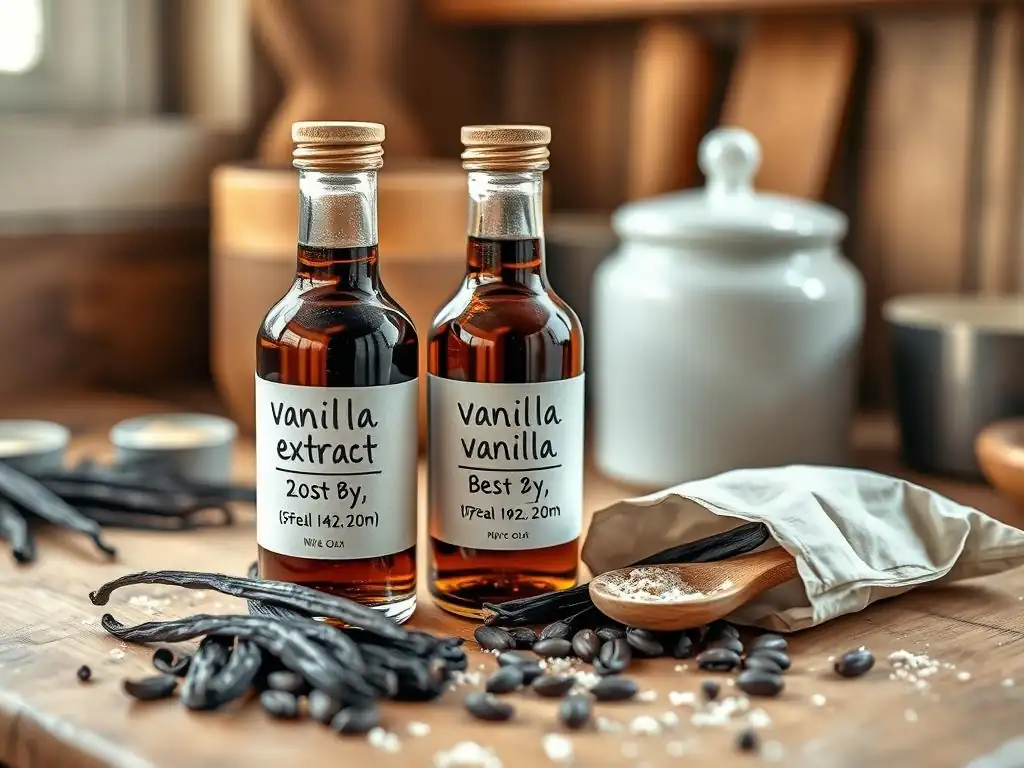
How to Store Vanilla Extract to Maintain Flavor Quality
Proper storage is essential to preserve the quality and potency of your vanilla extract, ensuring it delivers maximum flavor to your beginner cookie recipe every time. Vanilla extract should be stored in a cool, dark place, away from direct sunlight and heat sources like ovens or stovetops. A pantry or cupboard is an ideal location.
The bottle should be tightly sealed when not in use. Exposure to air can cause the alcohol to evaporate over time, potentially weakening the flavor. While vanilla extract contains alcohol, which helps preserve it, it's not like fine wine – it doesn't necessarily improve with age once bottled. Consistent, cool, dark storage will help maintain its flavor profile for as long as possible.
Pure vanilla extract has a remarkably long shelf life due to its alcohol content, often retaining good quality for several years, sometimes even indefinitely in terms of safety, though flavor can diminish. Imitation vanilla also lasts a long time, typically 2-3 years. How do you know if it's still good for your vanilla extract beginner cookie recipe?
The best way to tell is by smell and taste. Open the bottle and take a sniff. Does it have a strong, characteristic vanilla aroma? If it smells weak, like just alcohol, or has an off-putting odor, its flavor has likely degraded. You can also put a tiny drop on a spoon and taste it. It should taste strongly of vanilla, perhaps with an alcoholic bite. If it tastes weak or unpleasant, it's probably time to replace it for optimal results in your easy cookie recipe using vanilla extract.
Buying Vanilla Extract in Bulk vs. Small Quantities for Beginners
For beginner bakers, deciding whether to buy vanilla extract in bulk or small quantities depends on how often they plan to bake. If you anticipate baking cookies and other treats frequently (say, weekly or bi-weekly), buying a larger bottle (4oz or 8oz) can be more cost-effective in the long run compared to repeatedly purchasing small 1oz or 2oz bottles. The price per ounce is typically lower for larger sizes.
However, if you only bake occasionally or are just trying out a few vanilla extract beginner cookie recipes, a smaller bottle might be a better choice. While vanilla extract lasts a long time, buying a huge bottle that sits in your pantry for five years might mean the flavor isn't as vibrant by the time you reach the end. For most beginners, a 2oz or 4oz bottle of a good quality pure vanilla extract is a sensible starting point – enough for many batches of cookies without being an overwhelming investment.
A classic vanilla sugar cookie recipe is often the first introduction for beginners to the importance of vanilla extract. These cookies have a simple ingredient list: butter, sugar, egg, flour, baking powder (or soda), salt, and crucially, vanilla extract. The dough is typically mixed, chilled, rolled out, and cut into shapes. The vanilla extract shines in this recipe because there are no competing strong flavors like chocolate or spices.
A typical recipe might call for 1 teaspoon of vanilla extract for about 2 dozen cookies. This amount provides a clean, sweet vanilla flavor that makes the cookies delicious on their own or ready for decoration. Mastering this vanilla extract beginner cookie recipe teaches fundamental techniques like creaming butter and sugar, chilling dough, and rolling/cutting, all while highlighting how vanilla elevates a simple base.
The chocolate chip cookie is arguably America's favorite cookie, and vanilla extract is a non-negotiable ingredient in a good recipe. A simple vanilla chocolate chip cookie recipe for beginners usually involves creaming softened butter with white and brown sugars, beating in an egg and 1-2 teaspoons of vanilla extract, then mixing in flour, baking soda, salt, and finally, chocolate chips.
The vanilla in this context works synergistically with the chocolate and the caramelized sugars. It enhances the richness of the chocolate and adds a warm, comforting background note that makes the cookies taste complete. Without the vanilla, the flavors would be less harmonious. This easy cookie recipe using vanilla extract is a perfect way for beginners to see how vanilla plays a supporting but vital role in a more complex flavor profile.
Oatmeal cookies, whether plain or with additions like raisins or chocolate chips, also benefit greatly from vanilla extract. An easy vanilla oatmeal cookie recipe for new bakers typically combines softened butter, sugars (often including brown sugar), egg, vanilla extract, flour, baking soda, salt, and rolled oats. Sometimes cinnamon is added as well.
In oatmeal cookies, vanilla extract helps to bridge the gap between the earthy, hearty flavor of the oats and the sweetness of the sugar and any mix-ins. Around 1.5 teaspoons of vanilla extract per batch can add a layer of warmth and depth that makes the cookie more inviting and less one-dimensional. It rounds out the flavor profile, making the oatmeal cookie taste more like a treat and less like a breakfast bar, proving vanilla's importance even alongside robust ingredients.
Frequently Asked Questions
Vanilla extract enhances the overall flavor profile of the cookie, adding depth and complexity. It complements other ingredients and masks any undesirable flavors from the flour or eggs. Without it, the cookies may taste bland.
While not ideal, you can substitute vanilla extract. Consider using an equal amount of vanilla bean paste for a stronger vanilla flavor, or a similar flavored extract like almond. The flavor will be different, but it's better than nothing.
Most beginner cookie recipes call for around 1-2 teaspoons of vanilla extract per batch. Using too much can result in a slightly bitter taste, so stick to the recommended amount in the recipe.
Pure vanilla extract is made from vanilla beans and has a richer, more complex flavor. Imitation vanilla extract is made from synthetic vanillin and is less expensive but often lacks the depth of flavor found in pure vanilla.
Store vanilla extract in a cool, dark place away from direct sunlight and heat. Ensure the bottle is tightly sealed to prevent evaporation and maintain its flavor. Under proper conditions, it has a very long shelf life.
Final Reflection: The Unsung Hero of Beginner Baking
The seemingly simple act of adding vanilla extract to cookies is far more significant than many realize; it's the keystone to unlocking a world of flavor and baking confidence for beginners. A perfectly executed cookie, even a simple one, hinges on the subtle nuances that elevate it from good to exceptional, and vanilla extract plays a crucial role in that transformation. It's not just about sweetness; it's about depth, complexity, and the overall baking experience.
The impact of vanilla extract extends beyond the immediate satisfaction of a delicious cookie. It represents a gateway to exploring the world of baking, encouraging experimentation and a deeper understanding of flavor profiles. It's a reminder that even the smallest ingredient can have a profound effect on the final product. The simplest things are often the most profound.
This quote perfectly encapsulates the understated power of vanilla extract in beginner baking, reminding us that mastering the basics is the foundation for future culinary adventures.
Now, consider your own baking journey. What seemingly small ingredient or technique has had a disproportionately large impact on your success? I encourage you to reflect on this, to appreciate the subtle details, and to embrace the learning process. Don't be afraid to experiment, to add a dash more vanilla, or to try a different type of extract. The world of baking awaits, and with a little vanilla extract and a lot of passion, your culinary creations will flourish.
Thanks for taking the time to explore the magic of vanilla extract in your baking! We hope you now understand its crucial role in elevating your cookies from good to unforgettable. Ready to put your new knowledge into practice?
- Bake a batch of your favorite cookies, but this time, really focus on the quality and quantity of your vanilla extract. Notice the difference!
- Share your delicious results (and your vanilla secrets!) on social media using #BakeWithEaseVanilla. Let's inspire others!
- Try experimenting with different types of vanilla extract – Madagascar Bourbon, Mexican, Tahitian – and see how they change the flavor profile.
What unique vanilla-infused cookie creation will you bake next?