
The Definitive Guide: Choosing the Right Equipment: Baking Stone or Dutch Oven?

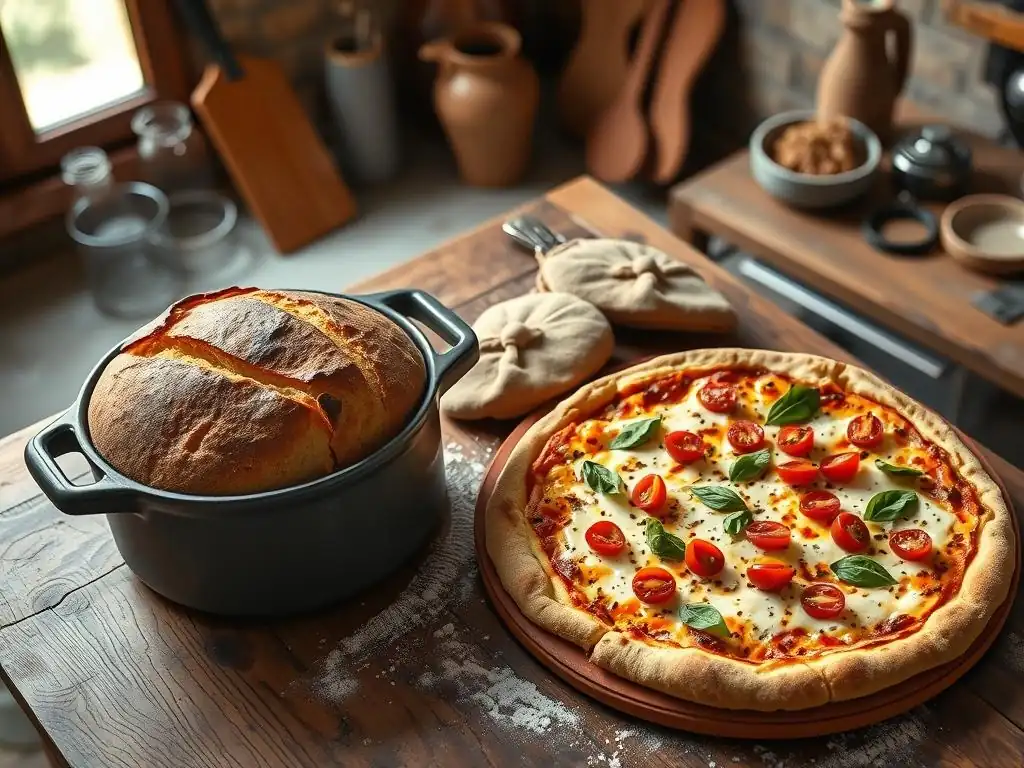
Welcome to BakeWithEase, where effortless baking becomes a reality! Ever wondered whether a baking stone vs. dutch oven is the secret to that perfectly crusty loaf or that evenly baked pizza? Dive into our definitive guide and uncover the nuances of each, discovering which essential piece of equipment unlocks your baking potential and transforms your kitchen creations. The answer might surprise you!
- BakeWithEase: Mastering Baking with the Right Tools
- Baking Stone vs. Dutch Oven: An In-Depth Comparison for Bakers
- Key Differences: Baking Stone Versus Dutch Oven for Baking
- Advantages and Disadvantages: Baking Stone vs Dutch Oven
- Choosing the Right Tool for Your Baking Needs
- Cleaning and Maintenance: Baking Stone and Dutch Oven
- Specific Baking Projects: Which Tool to Use?
- Beyond the Basics: Advanced Techniques with Baking Stones and Dutch Ovens
- Conclusion: Baking Stone or Dutch Oven - The Ultimate Baking Companion for BakeWithEase Readers
-
Frequently Asked Questions
- What are the main differences between using a baking stone and a Dutch oven for baking?
- Which type of bread benefits most from being baked on a baking stone?
- What are the advantages of using a Dutch oven for baking sourdough bread?
- Is it possible to bake cakes or cookies effectively using a baking stone or a Dutch oven?
- Can I use a baking stone and a Dutch oven together to achieve the "perfect" loaf of bread?
- Final Reflection: The Heart of the Hearth – Choosing Your Baking Companion
- Unleash Your Inner Baker: Level Up Your Baking Game!
BakeWithEase: Mastering Baking with the Right Tools
Welcome to BakeWithEase, where we explore the wonderful world of baking! Whether you're just starting out or looking to refine your techniques, having the right tools can make a significant difference in your results. Two pieces of equipment often discussed for their baking prowess are the baking stone and the Dutch oven. Both are celebrated for their ability to handle high temperatures and improve crust development, but they do so in fundamentally different ways. Understanding these differences is key to selecting the best tool for your specific baking projects.
Navigating the vast array of baking equipment can feel overwhelming, but our goal at BakeWithEase is to simplify the process. This guide will take a deep dive into the capabilities, advantages, and disadvantages of both the baking stone and the Dutch oven, helping you understand which tool might be the better fit for your baking needs. We'll compare their performance for various baked goods, from rustic loaves of bread to perfect pizzas and even delicate cakes, providing you with the knowledge to make an informed decision and elevate your baking game.
Baking Stone vs. Dutch Oven: An In-Depth Comparison for Bakers
When comparing a baking stone vs dutch oven, bakers are often looking for ways to replicate professional bakery results at home. Both tools utilize thermal mass – the ability to absorb, store, and radiate heat – to improve baking performance, particularly in standard home ovens. However, their designs lead to distinct outcomes, especially regarding crust formation and overall bake consistency. A baking stone provides a direct, extremely hot surface, while a Dutch oven creates a sealed, steamy environment.
This comprehensive comparison will break down the core functions and benefits of each tool. We will examine how they handle heat, their versatility across different baking applications, and their specific strengths and weaknesses. By the end of this guide, you'll have a clear understanding of when a baking stone shines and when a Dutch oven is the superior choice, helping you invest in the equipment that aligns best with your baking aspirations. The debate of baking stone versus Dutch oven ultimately comes down to what you bake most often and the results you aim to achieve.
Understanding the Basics: Baking Stone and Dutch Oven Defined
To truly understand the nuances of using a baking stone vs dutch oven, it's essential to grasp what each piece of equipment is and how its design influences the baking process. While both are heavy and designed to hold heat, their form factors dictate how that heat is transferred to your dough or batter and how moisture is managed during baking. This foundational understanding will illuminate why one might be preferred over the other for certain tasks, like achieving a crispy pizza crust versus a crackly bread crust.
Let's start by defining each tool and exploring its primary mechanism of action in the high-temperature environment of a home oven. Knowing the fundamental principles behind their operation is the first step in deciding which tool, or perhaps even both, deserves a place in your kitchen. The choice between a baking stone or a Dutch oven often boils down to understanding these basic principles of heat transfer and moisture control in baking.
What is a Baking Stone and How Does it Work?
A baking stone, typically made from ceramic, cordierite, or even steel, is a flat slab placed in an oven during preheating. Its primary function is to absorb and retain a significant amount of heat from the oven. When dough, like pizza or bread, is placed directly onto the preheated stone, the intense, direct heat transfer from the stone's surface causes immediate and rapid oven spring (the initial rise of the dough when it hits the heat). This thermal shock also helps to set the crust quickly, leading to a crispier base, particularly desirable for items like pizza.
Beyond the initial heat transfer, the baking stone continues to radiate heat upwards, contributing to even cooking and browning. Unlike a standard metal baking sheet, a stone doesn't cool down significantly when room-temperature dough is placed on it, maintaining a consistent high temperature throughout the bake. This consistent, high-temperature environment is crucial for achieving the desired texture in many baked goods, especially those requiring a strong bottom crust.
What is a Dutch Oven and Its Baking Capabilities?
A Dutch oven, usually a heavy cast-iron pot with a tight-fitting lid, is a versatile piece of cookware excellent for baking, especially bread. When used for baking, the lidded pot is preheated inside the oven. The dough is then carefully placed inside, the lid is replaced, and the pot goes back into the hot oven. The key benefit here is the creation of a self-contained, steamy environment within the pot during the initial stages of baking.
This trapped steam, released from the dough itself as it heats up, keeps the surface of the bread moist. This moisture allows the dough to expand fully before the crust sets, maximizing oven spring. After a period, often halfway through the bake, the lid is removed. This allows the remaining moisture to escape and the crust to brown and crisp up beautifully. The heavy cast iron also provides excellent thermal mass, radiating heat evenly from all sides and the bottom, ensuring a consistent bake.
Key Differences: Baking Stone Versus Dutch Oven for Baking
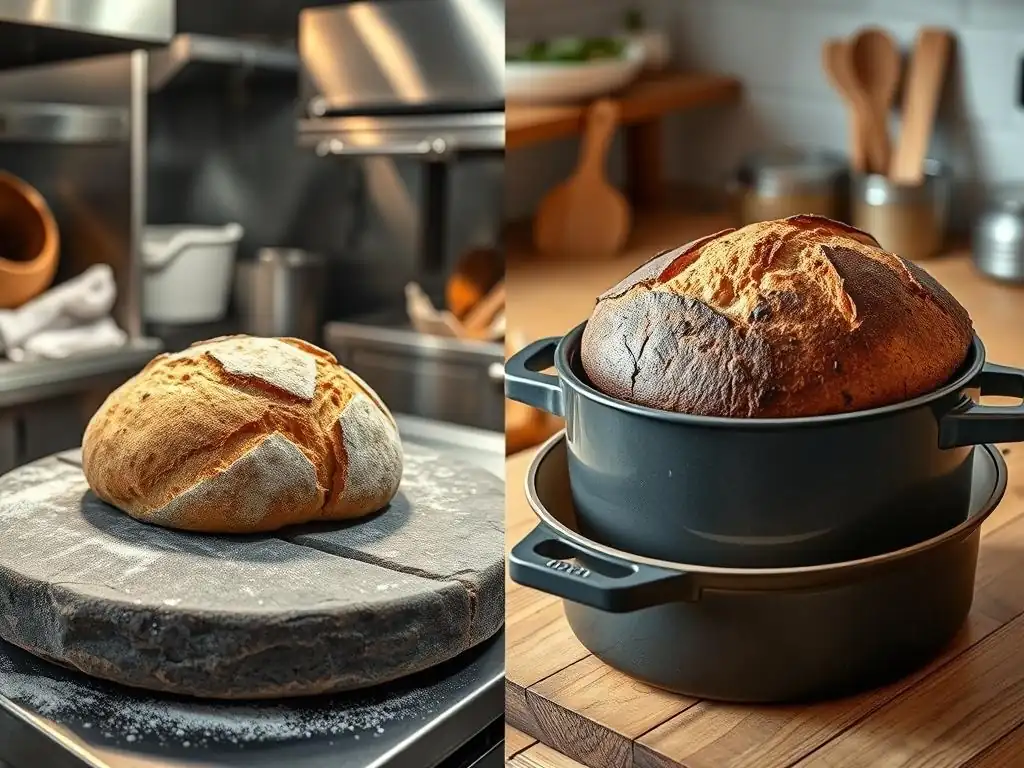
The fundamental difference between a baking stone versus Dutch oven lies in their shape and whether they are used open or closed during the critical initial phase of baking. A stone provides an open, flat, super-hot surface, ideal for direct heat transfer and crisping. A Dutch oven, conversely, acts as a sealed micro-environment, trapping steam to promote maximum rise and a tender crumb before allowing the crust to develop. This leads to distinct outcomes for different types of baked goods.
Understanding these core differences is crucial when deciding which tool is best for a particular recipe. While both can produce excellent results, they excel in different areas. This section will delve into the specifics of how their heat distribution varies, their versatility across the baking spectrum, and their performance in key applications like bread and pizza.
Heat Distribution: Baking Stone vs Dutch Oven
The way a baking stone vs dutch oven distributes heat is a primary factor in their baking performance. A baking stone, once preheated, provides an intense, direct heat source from below. Imagine placing a pizza on a stone preheated to 500°F (around 260°C); the base receives immediate, powerful heat, initiating rapid cooking and crisping. The stone also radiates heat upwards, but its main impact is on the bottom of the item being baked. This is why stones are excellent for achieving a well-browned, crispy bottom crust.
In contrast, a Dutch oven distributes heat more evenly from all sides due to its enclosed nature and the thermal mass of the pot and lid. When preheated, the heavy walls radiate heat towards the dough from every direction. Furthermore, the trapped steam inside the Dutch oven facilitates heat transfer to the surface of the dough, ensuring it cooks through evenly while staying pliable for maximum expansion. This combination of radiant heat and steam creates a moist, consistent baking environment, particularly beneficial for achieving a uniform rise and tender interior in bread.
Versatility: Exploring Baking Options with Each Tool
When considering the versatility of a baking stone vs dutch oven, both offer various uses, but they shine in different areas. A baking stone is primarily used for items that benefit from direct heat on a flat surface. This includes pizzas, flatbreads like focaccia or naan, rustic loaves baked directly on the stone, and sometimes even cookies or biscuits for a crispier bottom. Its utility is somewhat limited to items that can be easily transferred onto and off the flat surface using a peel or similar tool.
A Dutch oven, while famous for bread, is arguably more versatile in the broader sense of cooking. Beyond baking bread, it's excellent for stews, roasts, frying, and simmering on the stovetop or in the oven. For baking specifically, while its shape is perfect for round or oval loaves, it can also be used for baking cakes, cobblers, or even roasting vegetables to accompany a meal. Its enclosed nature makes it less suitable for items requiring a large, flat surface like a full-sized sheet of cookies or a large rectangular pizza.
Bread Baking: Which Tool Reigns Supreme for Crusty Loaves?
The question of baking stone vs dutch oven is perhaps most debated in the realm of bread baking, particularly for artisan-style loaves with substantial crusts. Both tools are vastly superior to simply baking on a standard metal baking sheet, but they achieve excellent results through different mechanisms. The choice often depends on the desired outcome for the crust and the specific type of bread being baked.
While both can produce delicious bread, the Dutch oven is often cited as the easier and more reliable method for home bakers aiming for that professional-quality, crackly crust and impressive oven spring, especially for high-hydration doughs like sourdough. The baking stone requires a bit more effort to replicate the steamy environment needed for optimal crust development.
Achieving Artisan Crust with a Baking Stone
Baking bread on a preheated baking stone requires mimicking the steamy conditions of a professional deck oven. Without sufficient steam, the crust forms too quickly, restricting the dough's expansion and resulting in a denser loaf with a less impressive crust. Home bakers using a stone typically achieve this steam by placing a tray of water or ice cubes on a rack below the stone, or by spraying the oven walls with water at the beginning of the bake. The stone's high heat then provides the necessary thermal shock for oven spring and a crispy bottom crust.
For example, baking a baguette on a stone often involves placing the shaped dough onto the hot stone and immediately introducing steam into the oven. The high temperature of the stone ensures a rapid set on the bottom, while the steam keeps the top surface pliable, allowing the characteristic slashes (scores) to open up beautifully. Achieving a consistent, robust crust across the entire loaf this way can be slightly trickier than in a Dutch oven, requiring careful steam management.
Utilizing a Dutch Oven for Perfect Bread Baking
The Dutch oven simplifies the process of creating a steamy environment for bread baking significantly. By preheating the lidded pot, placing the dough inside, and replacing the lid, the moisture naturally evaporating from the dough is trapped within the confined space. This creates a high-humidity atmosphere around the loaf, allowing the crust to remain soft and stretch as the bread expands during the initial bake. This leads to maximum oven spring and a light, open crumb structure.
After baking with the lid on for typically 20-30 minutes at a high temperature (e.g., 450-475°F or 230-245°C), the lid is removed. This allows the trapped moisture to escape and the dry, hot air of the oven to brown and crisp the crust to perfection. This method is particularly effective for sourdough and other high-hydration doughs that require significant support and steam to achieve their full potential. The consistent heat from the heavy cast iron also contributes to an even bake.
Pizza Perfection: Baking Stone or Dutch Oven for the Best Pizza Crust?
When it comes to making pizza at home, the choice between a baking stone or a Dutch oven significantly impacts the final crust texture. Authentic Neapolitan-style pizza is cooked rapidly at very high temperatures (often exceeding 800°F or 425°C) on a hot surface, resulting in a crispy bottom and airy, slightly chewy edge (cornicione). Replicating this in a home oven, which typically maxes out around 500-550°F (260-290°C), requires maximizing heat transfer to the dough.
While you can technically make pizza in a Dutch oven (especially deep-dish), the baking stone is generally considered the superior tool for achieving a classic, crispy, and quickly cooked pizza crust in a standard home oven. The direct contact with the super-hot stone surface is the key to that desirable texture.
The Baking Stone Advantage for Crispy Pizza Crusts
A preheated baking stone is ideal for achieving a crispy pizza crust because it mimics the floor of a traditional pizza oven. After preheating the stone in a hot oven (ideally 500°F or higher) for at least 30-60 minutes, sliding a prepared pizza directly onto its surface provides an intense burst of heat to the base. This causes the dough to set up almost instantly, preventing a soggy bottom and encouraging rapid bubble formation in the crust.
The high thermal mass of the stone ensures that the temperature doesn't drop drastically when the room-temperature pizza is added. This consistent high heat from below, combined with the oven's ambient heat from above, cooks the pizza quickly, often in 8-15 minutes depending on the temperature and toppings. For lovers of thin-crust or New York-style pizza with a satisfying crunch, the baking stone is the clear winner in the baking stone vs dutch oven pizza debate.
Dutch Oven Pizza: A Deep-Dish Delight
While less common for traditional thin-crust pizza, a Dutch oven can be used effectively for certain types of pizza, particularly deep-dish or pan-style pizzas. In this application, the dough is typically pressed into the bottom and up the sides of the preheated (or sometimes unheated, depending on the recipe) Dutch oven. The heavy walls conduct heat into the sides and bottom of the crust, while the enclosed space can help cook toppings evenly.
This method doesn't produce the same rapid, intense bottom heat as a baking stone, and it doesn't allow for the same open air circulation needed for a classic crispy, airy crust. However, for recipes designed for a pan, like a Chicago-style deep-dish where the crust is thicker and often more bread-like, a Dutch oven can function similarly to a heavy cast-iron pan, providing excellent heat retention for a substantial bake. So, while not the go-to for a Neapolitan or New York slice, a Dutch oven has its place in the world of pizza baking.
Cake and Dessert Baking: Which Tool is Best?
Moving beyond bread and pizza, how do a baking stone vs dutch oven fare when baking cakes and other desserts? Here, the requirements are often different – consistent, even heat and often a less aggressive browning are desired, rather than intense bottom heat or trapped steam for maximum oven spring. While both tools can potentially be used, one is significantly more suited to typical cake and dessert baking than the other.
For most standard cake recipes baked in conventional cake pans, neither a baking stone nor a Dutch oven is strictly necessary, but one offers more potential utility or benefits if already in use for other baking tasks.
Baking Cakes on a Baking Stone: Is it Possible?
Baking a cake directly on a baking stone is generally not recommended for standard cake recipes. Cakes are typically baked in pans, and placing a cake pan directly onto a preheated baking stone would subject the bottom of the cake to very intense, direct heat. This would likely cause the bottom crust to set and brown too quickly, potentially burning before the rest of the cake is cooked through. Cakes require more gentle, even heat distribution.
However, a baking stone can be used as a heat diffuser when baking cakes. Placing the baking stone on a lower rack during preheating and then placing your cake pan on a rack above the stone can help stabilize the oven temperature and provide more even heat from below, preventing common issues like doming or uneven rise. So, while you don't bake on the stone, it can indirectly improve cake baking results by regulating oven temperature fluctuations.
Dutch Oven Cakes: Moist and Evenly Baked
A Dutch oven can be surprisingly effective for baking certain types of cakes, especially those meant to be baked in a single pot or skillet, like upside-down cakes, cobblers, or even some rustic loaf cakes. The heavy cast iron provides excellent, even heat distribution from all sides, similar to a heavy cake pan. When the lid is used, it can also help retain moisture, leading to a very moist crumb, which is desirable for many cake recipes.
For example, baking a cobbler or a fruit crumble in a Dutch oven allows the filling to bubble and thicken while the topping bakes to a golden brown. Baking a simple cake batter in a lined or greased Dutch oven can yield a moist, evenly baked cake, especially if baked at a moderate temperature (e.g., 325-350°F or 160-175°C). While not a replacement for your standard set of cake pans, a Dutch oven offers a robust option for certain dessert applications, particularly those benefiting from its heat retention and potential for moisture retention.
Advantages and Disadvantages: Baking Stone vs Dutch Oven
Like any baking tool, both the baking stone and the Dutch oven come with their own set of pros and cons. Evaluating these points is essential when deciding which piece of equipment aligns best with your baking habits, goals, and kitchen setup. The comparison of a baking stone vs dutch oven isn't about declaring a single winner, but rather understanding which tool offers the most benefits for the types of baked goods you love to make.
Let's break down the specific advantages and disadvantages of each, considering factors like performance, ease of use, maintenance, and cost. This balanced view will help you weigh the decision based on your personal priorities and typical baking projects.
Baking Stone: Pros and Cons
Baking stones are popular for a reason, offering distinct benefits, particularly for flatbreads and pizzas. However, they also have limitations that might make them less suitable for other baking tasks or kitchen environments.
Pros of Using a Baking Stone
- Exceptional Crisping: Provides intense, direct heat from below, creating incredibly crispy bottom crusts on pizza, flatbreads, and rustic loaves baked directly on the stone.
- Improved Oven Spring (for direct bake): The thermal shock from the hot stone gives dough a significant initial lift.
- Even Baking: Once heated, it radiates heat consistently, helping to stabilize oven temperature and prevent hot spots on the baking surface.
- Relatively Affordable: Compared to high-quality Dutch ovens, many baking stones are quite budget-friendly.
- Good for Multiple Flat Items: Can bake multiple smaller items side-by-side, like several individual pizzas or a batch of rolls placed directly on the stone.
Cons of Using a Baking Stone
- Requires Steam Management for Bread: To achieve the best bread crust, you often need to manually create steam in the oven, which can be cumbersome and less effective than a Dutch oven's method.
- Fragile: Ceramic or cordierite stones can crack if subjected to sudden temperature changes (thermal shock), like placing a frozen item on a hot stone, or if dropped.
- Heavy and Bulky: Can be heavy to move and store, and take up significant space in the oven during preheating.
- Difficult to Clean: Porous materials absorb spills (like cheese or grease), which can be difficult to remove and may cause smoking during future bakes. Soaking is often not recommended.
- Limited Shape: Primarily useful for flat items or loaves shaped to fit directly onto the stone; not suitable for baking in pans placed directly on the hot surface unless used as a diffuser.
Dutch Oven: Pros and Cons
The Dutch oven is a powerhouse for many cooking tasks, and its use in baking, especially bread, has revolutionized home baking for many. However, it also has downsides to consider.
Pros of Using a Dutch Oven for Baking
- Excellent Steam Creation: Naturally traps steam released by the dough, creating the ideal environment for maximum oven spring and a tender crumb in bread.
- Superior Bread Crust: Facilitates the development of a beautiful, crackly, and evenly browned crust on artisan loaves without external steam methods.
- Even Heat Distribution: Heavy cast iron provides consistent, radiant heat from all sides, ensuring uniform cooking.
- Versatile Cookware: Can be used for a wide range of stovetop and oven cooking tasks beyond baking.
- Durable: Cast iron is incredibly robust and can last a lifetime with proper care.
Cons of Using a Dutch Oven for Baking
- Heavy: Cast iron is very heavy, making it difficult to maneuver, especially when hot and filled with dough.
- Requires Careful Handling (when hot): The entire pot and lid become extremely hot, requiring thick oven mitts and careful placement of dough inside.
- Shape Limitation for Baking: Best suited for round or oval loaves that fit comfortably inside. Less practical for baking multiple flat items simultaneously like a stone.
- Can Be Expensive: High-quality enameled cast iron Dutch ovens, while durable, can be a significant investment.
- Cleaning Can Be Involved: Requires specific cleaning and seasoning for bare cast iron; enameled versions are easier but still heavy.
Choosing the Right Tool for Your Baking Needs
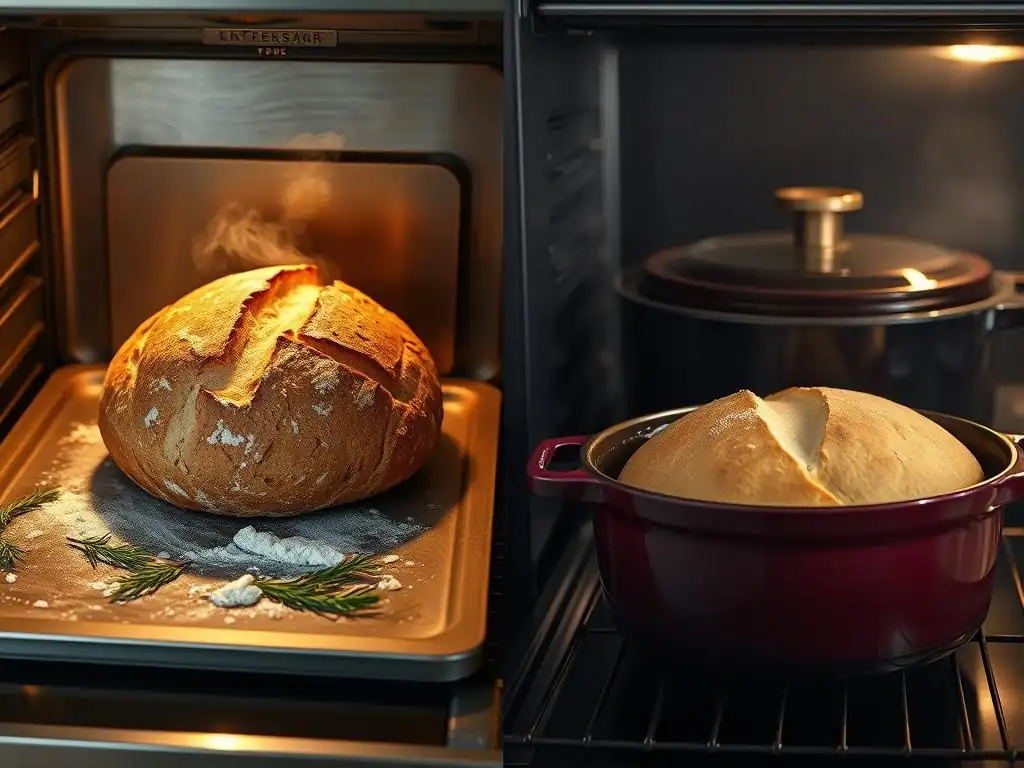
Deciding between a baking stone vs dutch oven depends heavily on what you intend to bake most often and what results you prioritize. There's no single "better" tool; it's about finding the right fit for your baking journey and kitchen. Consider your typical recipes, your oven's performance, your available space, and your budget.
Sometimes, having both tools is the ideal scenario, as they excel in different areas. However, if you need to choose just one to start with, evaluating your specific needs against the strengths of each tool is key.
Consider Your Baking Style and Preferences
Think about the types of baked goods you are most passionate about making. Are you dreaming of mastering artisan sourdough loaves with deep, crackly crusts and airy interiors? If so, a Dutch oven is likely to give you the most consistent and impressive results with less fuss regarding steam. Do you envision pulling perfect, crispy-bottomed pizzas out of your oven, or baking rustic flatbreads directly on a hot surface? In that case, a baking stone is probably the better investment.
Perhaps you bake a wide variety of items. While a Dutch oven is more broadly versatile for cooking, a baking stone's ability to stabilize oven temperature can indirectly benefit other bakes like cakes or cookies placed on racks above it. Your personal preference for handling hot, heavy equipment and managing steam (or not) also plays a role in the baking stone versus Dutch oven decision.
Evaluate Your Oven and Kitchen Space
The size and type of your oven can influence which tool is more practical. Both a baking stone and a Dutch oven require significant preheating time inside the oven (often 30-60 minutes or more) and take up considerable space. If you have a small oven, a large baking stone might limit what else you can bake simultaneously, and a large Dutch oven might barely fit.
Consider your kitchen layout and storage space as well. Both are heavy and require dedicated storage. A baking stone is a flat slab, while a Dutch oven is a bulky pot with a lid. If space is extremely limited, you might lean towards the tool that better serves your primary baking interest. Also, consider the maximum temperature your oven can reach; higher temperatures (e.g., 500°F+) are particularly beneficial when using a baking stone for pizza.
Budget Considerations: Baking Stone vs Dutch Oven Cost
Cost is often a factor when adding new equipment to your kitchen. Generally speaking, a good quality baking stone made from cordierite or ceramic is less expensive than a high-quality enameled cast iron Dutch oven. You can find decent baking stones for $30-$60, while a well-regarded Dutch oven can range from $100 to $300 or more, depending on the brand, material (enameled cast iron being pricier than bare cast iron), and size.
Bare cast iron Dutch ovens are often more affordable than enameled versions but require more maintenance (seasoning). Steel baking stones are also available and tend to be more expensive than ceramic ones but are virtually indestructible and transfer heat even more efficiently. When comparing a baking stone vs dutch oven on cost, consider the long-term value and durability; a well-maintained Dutch oven or steel stone can last for decades, making the initial investment worthwhile if you use it frequently.
Cleaning and Maintenance: Baking Stone and Dutch Oven
Proper cleaning and maintenance are crucial for preserving the lifespan and performance of both your baking stone and your Dutch oven. Because of their materials and how they are used, their cleaning requirements are quite different. Understanding these needs beforehand is part of choosing the right tool for your kitchen.
Neglecting cleaning can lead to issues like smoking in the oven (from burnt-on residue on a stone) or rusting (on bare cast iron). Let's look at the best practices for caring for each piece of equipment.
Proper Cleaning Techniques for Baking Stones
Cleaning a baking stone requires a gentle approach due to its porous nature. The general rule is never to soak a ceramic or cordierite baking stone in water, as it can absorb moisture and crack when heated later. For most routine cleaning, simply scrape off any significant burnt-on bits using a stiff brush or a bench scraper once the stone has completely cooled.
For more stubborn stains, you can use a plastic scraper or a specialized stone brush. Some bakers use a paste of baking soda and water to scrub stains, rinsing quickly without soaking, and then letting the stone air dry completely for 24-48 hours before its next use. Expect your baking stone to develop a dark patina over time from use; this is normal and actually improves its non-stick properties – it doesn't need to look brand new to perform well. Avoid soap, as it can absorb into the stone and impart flavors.
Caring for Your Dutch Oven: Tips and Tricks
Caring for a Dutch oven depends on whether it's bare cast iron or enameled. Enameled cast iron, like that often used for baking, is relatively easy to clean. After use, let it cool slightly (avoid plunging a hot pot into cold water to prevent thermal shock to the enamel). Wash with hot, soapy water and a non-abrasive sponge or brush. For stuck-on food, you can fill it with water and simmer on the stovetop, then scrape gently once cooled. Avoid using metal utensils that can scratch the enamel.
Bare cast iron Dutch ovens require seasoning – a layer of polymerized oil that prevents rust and creates a non-stick surface. Clean with hot water and a stiff brush (avoid soap on seasoned surfaces if possible, or re-season lightly after using soap). Dry thoroughly immediately after washing to prevent rust, and apply a thin layer of cooking oil before storing. For both types, avoid harsh chemicals or steel wool. Proper care ensures your Dutch oven remains a reliable baking companion for years.
Specific Baking Projects: Which Tool to Use?
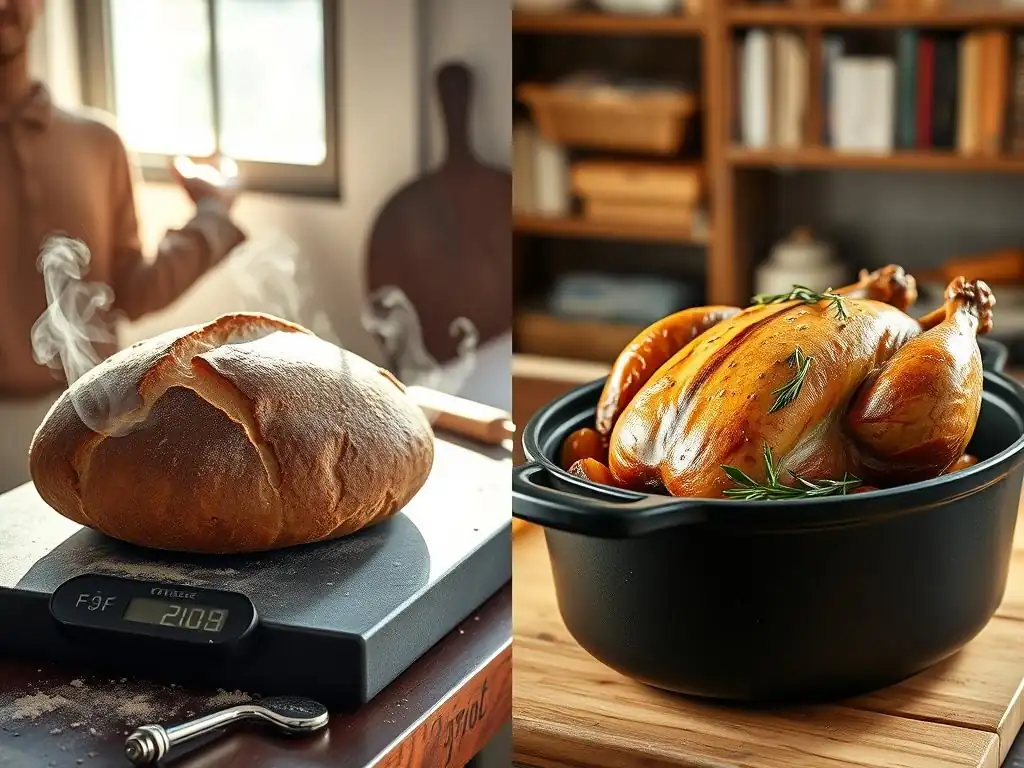
Let's apply our understanding of baking stone vs dutch oven to some common specific baking projects. Knowing the strengths of each tool helps make the decision clearer when you're planning your next bake. For certain items, one tool is the undisputed champion, while for others, either might work depending on the desired outcome.
Here, we'll look at popular items like sourdough bread, baguettes, and cookies, and determine which tool is typically recommended for achieving the best results based on the properties we've discussed.
Baking Sourdough Bread: Dutch Oven or Baking Stone?
For baking sourdough bread, the Dutch oven is overwhelmingly the preferred tool for home bakers seeking that signature open crumb and blistered, crackly crust. Sourdough dough is typically high in hydration, meaning it contains a relatively large amount of water compared to flour. This high hydration is key to the open, airy structure, but it also requires significant steam during the initial bake to allow the dough to expand fully before the crust sets.
As discussed, the Dutch oven naturally creates this steamy environment. Placing the high-hydration sourdough dough into a preheated Dutch oven traps the moisture released, keeping the surface supple and allowing for maximum oven spring. While you can bake sourdough on a baking stone, successfully replicating the necessary steam in a home oven to match Dutch oven results is significantly more challenging and often requires elaborate setups with steam trays or lava rocks. For consistent, high-quality sourdough loaves, the Dutch oven is the clear winner in the baking stone vs dutch oven comparison for this specific bread type.
Baking Baguettes: Achieving the Perfect Shape and Crust
Baguettes are long, thin loaves that require a crispy crust and an open crumb. Achieving this in a home oven is challenging, but both a baking stone and a Dutch oven (specifically, a long, oval-shaped one) can be used. However, the baking stone, often used in conjunction with steam, is the more traditional and often preferred method for baking multiple baguettes at once.
Baking baguettes requires placing the shaped dough onto a hot surface and introducing steam. A baking stone allows you to bake two or three baguettes side-by-side on a single surface. You would then use a steam method (like a water tray) in the oven. While an oval Dutch oven can bake one baguette at a time and provides excellent steam, the stone allows for higher volume and the traditional direct-heat bottom crisping across the length of the loaf. Specialized baguette pans can also be used on a stone to help maintain shape while still benefiting from the stone's heat.
When baking standard drop cookies on a flat surface, neither a baking stone nor a Dutch oven is the most common tool – metal baking sheets are standard. However, if choosing between the two, the baking stone can offer some benefits, albeit with caveats. Baking cookies directly on a preheated baking stone can result in a very crispy bottom, which some people prefer. You would place parchment paper on the stone and then arrange the cookies.
A Dutch oven is generally not suitable for baking multiple cookies side-by-side in the traditional sense. Its shape is wrong, and the trapped steam environment is not desirable for most cookie types, which benefit from dry heat to spread and crisp.
While you could potentially bake a giant cookie in a Dutch oven like a skillet cookie, for standard batches of cookies, neither tool is ideal compared to a good quality baking sheet. If forced to choose for cookie baking, the baking stone used with parchment paper offers more potential utility for achieving a crispier base, but it's far from essential equipment for cookie enthusiasts.
Beyond the Basics: Advanced Techniques with Baking Stones and Dutch Ovens
Once you've mastered the basic uses of your baking stone or Dutch oven, there are advanced techniques and considerations that can further enhance your baking results. Understanding the properties of different materials, experimenting with temperatures, and optimizing your process can elevate your baking from good to truly exceptional.
Exploring these advanced aspects allows you to fine-tune your approach and get the absolute best performance out of your chosen tool, whether it's a baking stone vs dutch oven.
Experimenting with Different Baking Stone Materials
The material of a baking stone significantly impacts its performance. Ceramic stones are common and affordable but can be more prone to cracking. Cordierite stones are more durable and resistant to thermal shock, making them a popular choice for frequent, high-temperature use. Steel baking surfaces (often called baking steels or pizza steels) offer the most efficient heat transfer and are virtually indestructible. Steel heats up faster and transfers heat more intensely than ceramic or cordierite, leading to even crispier crusts and faster bake times, particularly beneficial for pizza.
For bread baking on a stone, a thicker stone (1/2 inch or more) offers greater thermal mass, retaining heat better and providing a more consistent bake. Experimenting with these different materials can help you find the one that best suits your needs and budget, especially if you prioritize maximum crispness and durability.
Optimizing Dutch Oven Baking for Specific Recipes
Optimizing Dutch oven baking involves tweaking variables like preheating time, temperature, and the duration of the lidded versus unlidded bake. For high-hydration sourdough, preheating the oven and Dutch oven to a high temperature (e.g., 475°F or 245°C) for a full hour ensures maximum heat transfer and oven spring. Baking with the lid on for the first 20-25 minutes traps steam, then removing the lid for the final 20-30 minutes allows the crust to brown.
For lower-hydration doughs or enriched breads baked in a Dutch oven, you might use a slightly lower temperature or a shorter lidded period. Some recipes even call for placing the dough in a cold Dutch oven and then putting it into a preheated oven; this provides a gentler rise, though typically with less dramatic oven spring than the preheated method. Experimenting with bake times and temperatures based on your specific recipe and oven will help you achieve perfect results consistently.
Conclusion: Baking Stone or Dutch Oven - The Ultimate Baking Companion for BakeWithEase Readers
Choosing between a baking stone vs dutch oven is a significant decision for home bakers looking to improve their results, particularly with bread and pizza. Both tools offer substantial advantages over standard baking sheets by providing superior thermal mass and heat management. The baking stone excels at creating crispy bottom crusts through intense, direct heat, making it a favorite for pizza and flatbreads. The Dutch oven, on the other hand, is a master of steam management, producing incredible oven spring and perfectly crusted artisan bread with relative ease.
Ultimately, the "ultimate baking companion" depends entirely on your personal baking interests. If artisan bread, especially sourdough, is your passion, a Dutch oven will likely be the more transformative tool. If you dream of restaurant-quality crispy pizzas and flatbreads, a baking stone is the way to go. Many dedicated home bakers find value in owning both, leveraging the specific strengths of each for different projects.
Making the Right Choice for Your Baking Journey
Reflect on the types of baked goods you make most often and the results you aspire to achieve. Consider your budget, kitchen space, and comfort level with handling hot, heavy equipment and managing steam. There's no wrong answer in the baking stone versus Dutch oven debate, only the choice that best aligns with your individual baking goals. Whichever tool you choose, proper preheating is key to unlocking its potential.
Investing in a baking stone or a Dutch oven is an investment in elevating your home baking. With the right tool and a little practice, you'll be well on your way to creating bakery-quality bread, pizza, and more, right in your own kitchen. Happy baking!
Frequently Asked Questions
What are the main differences between using a baking stone and a Dutch oven for baking?
A baking stone is primarily used for achieving a crispy crust by providing a hot, even surface, while a Dutch oven excels at creating a moist interior due to its ability to trap steam. Choosing between them depends on your desired outcome.
Which type of bread benefits most from being baked on a baking stone?
Bread types that require a crisp bottom crust, such as pizza dough, baguettes, and certain artisan breads, benefit most from the even heat distribution of a baking stone. This helps create that desired golden-brown and crunchy texture.
What are the advantages of using a Dutch oven for baking sourdough bread?
Dutch ovens create a steamy environment that promotes oven spring and a chewy crust in sourdough. The enclosed space helps retain moisture, resulting in a tall and flavorful loaf with a characteristic ear.
While possible, baking stones are generally better suited for cookies to achieve a crisp bottom. Dutch ovens are less common for cakes and cookies, as they can lead to uneven baking or excessive browning due to the retained heat.
Can I use a baking stone and a Dutch oven together to achieve the "perfect" loaf of bread?
While not typically done simultaneously, some bakers use a baking stone inside a Dutch oven for enhanced heat retention and crust development. This is an advanced technique that requires careful monitoring and can improve the overall baking results.
Final Reflection: The Heart of the Hearth – Choosing Your Baking Companion
The quest for the perfect bake often hinges on the seemingly simple choice of equipment. A seemingly small decision between a baking stone and a Dutch oven can dramatically impact the final product, influencing everything from crust texture to overall flavor. This choice, far from being trivial, speaks to the heart of culinary creativity and the pursuit of perfection.
The enduring appeal of both the baking stone and the Dutch oven lies in their ability to connect us to a more traditional, hands-on approach to baking. They represent a shift away from the convenience of modern appliances, inviting a deeper engagement with the process itself. This connection resonates deeply with the growing interest in artisanal baking and the appreciation for time-honored techniques. The best things in life are worth waiting for,
and this sentiment rings true when considering the rewards of patiently crafting bread or a perfect pizza in either a baking stone or Dutch oven. The subtle nuances in texture and flavor are a testament to the power of mindful cooking.
So, which will you choose? This guide has hopefully equipped you with the knowledge to make an informed decision, but ultimately, the "right" choice is the one that best suits your baking style and aspirations. Consider your baking goals, the types of recipes you enjoy, and the space you have available. Embrace the journey of experimentation, and don't be afraid to try both! The true reward lies not just in the perfect loaf or pizza, but in the process of discovery and the joy of creating something delicious with your own hands.
Unleash Your Inner Baker: Level Up Your Baking Game!
Thanks for taking the time to explore the world of baking stones and Dutch ovens with us! We hope you now feel confident in choosing the perfect tool to elevate your baking. Ready to put your newfound knowledge into practice?
- Bake something amazing! Put your chosen equipment to the test and create a delicious loaf, pizza, or your favorite baked treat. Share your results with us – we'd love to see!
- Dive deeper into baking techniques: Explore our other articles for more tips and tricks on perfecting your baking skills.
- Join our baking community: Connect with fellow baking enthusiasts on our social media channels and share your experiences.
What delicious masterpiece will you create with your new baking equipment?