
Light vs. Dark Sourdough Rye: What's the Difference?

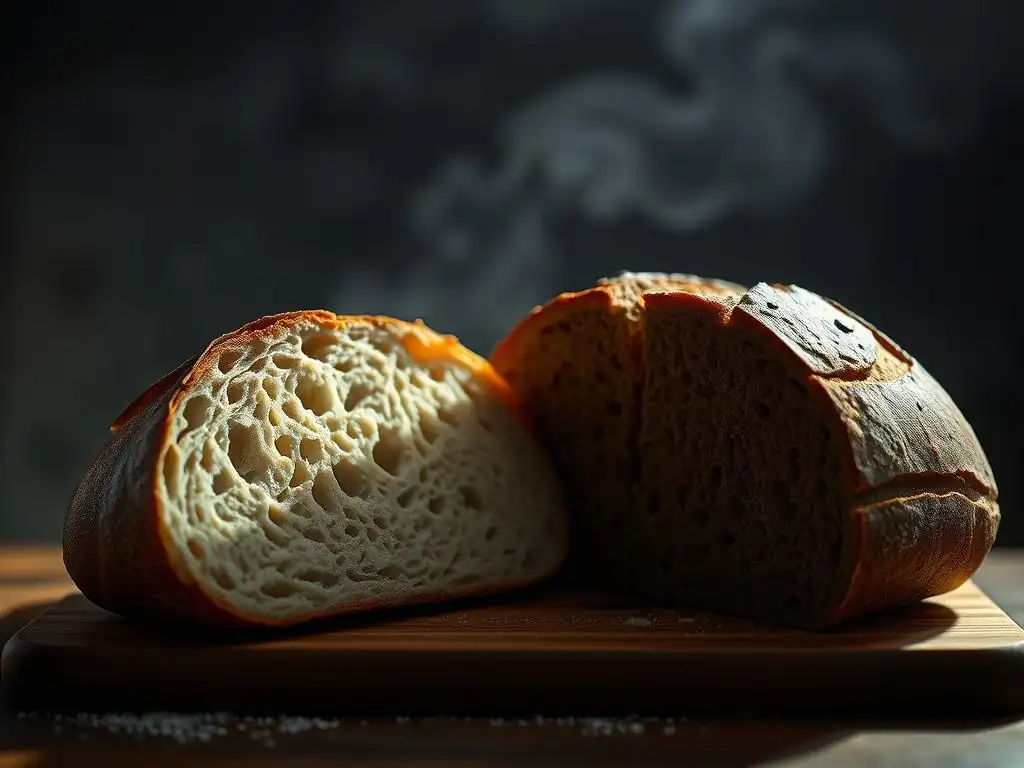
Welcome to BakeWithEase, where we believe everyone can bake like a pro!
Ever wondered what gives dark sourdough rye its distinctive character and how it differs from its lighter counterpart? This week, we're diving deep into the secrets behind this beloved bread, exploring the ingredients, techniques, and subtle nuances that separate the two. Unlock the mysteries of light and dark sourdough rye, and discover which recipe best suits your taste and baking style. Intrigued? Let's get baking!
- Pumpernickel vs. Light Rye: A Baker’s Comparison
- Understanding Rye Bread: Pumpernickel and Light Rye
- Pumpernickel Recipe: Deep Dive into Flavor
- Light Rye Bread: A Milder Alternative
- Pumpernickel vs. Light Rye: A Detailed Comparison
- Achieving Your Perfect Rye: Tips and Tricks
- Baking the Best Rye: Choosing the Right Recipe for You
-
Frequently Asked Questions
- What exactly is the difference between light and dark sourdough rye bread?
- Does the type of rye flour impact the flavor of the sourdough?
- Is one type of sourdough rye recipe healthier than the other?
- Can I substitute light rye flour for dark rye flour in a recipe?
- Where can I find a reliable dark sourdough rye recipe suitable for beginners?
- Final Reflection: The Enduring Allure of Rye, Light and Dark
- Unleash Your Inner Rye Baker!
Pumpernickel vs. Light Rye: A Baker’s Comparison
Understanding Rye Bread: Pumpernickel and Light Rye
Exploring the Range of Rye Bread Tastes
Rye bread spans a broad taste spectrum, from the deeply savory, slightly sweet notes of German pumpernickel to the bright, tangy clarity of a light rye. Pumpernickel often features a robust, molasses-like flavor thanks to long, slow baking at lower temperatures, whereas light rye delivers a milder, almost creamed-butter sensation on the palate. This range allows bakers to choose a loaf that best pairs with smoked meats, cheeses, or simply a smear of whipped butter.
Beyond taste, rye breads differ in acidity, crumb structure, and crust formation. A classic pumpernickel can have an acidity level around pH 4.5, lending a gentle sour kick that balances its natural sweetness. Light rye often sits closer to pH 5.2, producing a subtler tang and a more open crumb. Understanding these nuances helps you decide which loaf suits your menu, whether you’re aiming for a hearty sandwich or a delicate tea-time treat.
The Baker’s Bench: Your Guide to Excellent Rye
Every successful rye loaf starts at “the bench”—your countertop workstation optimized for dough development. Maintaining a consistent temperature (ideally 24 °C/75 °F) and humidity (around 60 %) in your kitchen ensures predictable fermentation. Use a digital scale for precision: small rye loaves often call for 300 g total flour, and even a 5 g error can alter texture noticeably.
“Consistent feeding schedules and attention to dough temperature are the secrets to reliable rye loaves.”
— BakeWithEase Head Baker
Organize your tools:
- A stiff bench scraper
- A proofing basket (banneton) dusted with rice flour
- An oven thermometer calibrated to ±2 °C
These simple staples keep your rye shaping, rising, and baking processes in harmony.
Pumpernickel Recipe: Deep Dive into Flavor
What Makes Pumpernickel Unique?
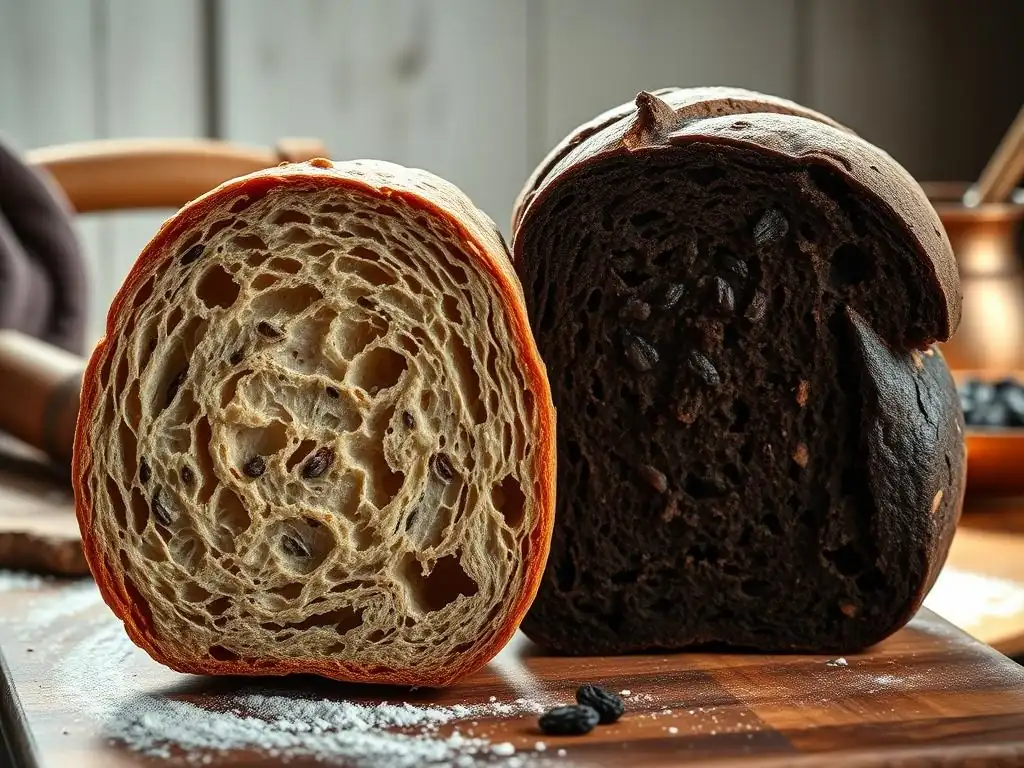
Pumpernickel distinguishes itself by its inky-black crumb and almost cake-like, moist texture. Traditional German recipes bake the dough at 120 °C (248 °F) for 16–24 hours, allowing complex Maillard reactions and caramelization to develop that signature sweet-smoky aroma. This low-and-slow method results in a loaf that retains moisture far longer than most breads—up to 10 days when stored airtight.
Moreover, pumpernickel’s flavor hinges on dark adjuncts like cocoa powder and brewed coffee, which mimic the depth of whole rye kernels milled fresh. This “dark sourdough rye recipe” approach not only deepens the crust color but also layers bitterness and acidity that contrast beautifully with a smear of goat cheese or a hearty beef stew.
Key Ingredients for a Rich, Dark Pumpernickel
At the heart of every pumpernickel loaf lies a careful balance of rye flour, flavor-enhancing darkeners, and a robust sourdough starter. Each component contributes to the loaf’s aroma, crumb, and shelf life:
- Rye flour provides pentosans that trap moisture and create that signature tight crumb.
- Cocoa powder deepens color without adding sweetness.
- Coffee amplifies dark notes and masks any vegetal bitterness.
Accurate measurements are crucial. Aim for a 60:40 ratio of rye to wheat flour if you prefer a slightly lighter crumb, or go full rye (100 % rye flour) for maximum authenticity. Total dough hydration typically rests between 75 %–85 % to achieve a dense yet sliceable loaf.
Whole Rye Flour: The Base of Flavor
Using 100 % whole rye flour unleashes the grain’s earthiest undertones. Rye’s unique enzyme activity demands shorter kneading times—usually under 4 minutes—to avoid a gummy crumb. Whole rye brings:
- High pentosan content: traps water, yields a moist loaf
- Natural enzymes: accelerate starch breakdown, increasing sweetness over time
For a moderately dark loaf, combine 200 g whole rye with 100 g bread flour. This mix provides structure from gluten while retaining rye’s distinct aroma.
Cocoa Powder: Adding Depth and Color
Natural unsweetened cocoa powder is a baker’s secret weapon. Adding 10 g to the dough:
- Deepens the crumb almost to black.
- Introduces subtle bitterness that balances rye’s sweetness.
Choose a Dutch-processed cocoa for a smoother finish. Incorporate it with your dry ingredients to ensure even distribution and prevent clumps.
Coffee: Enhancing the Dark Notes
Strong, cold-brewed coffee (about 50 ml) intensifies the loaf’s roasted character. Replace part of your water with coffee for:
- A richer, more aromatic crust
- Enhanced Maillard reaction during baking
Use medium-dark roast beans for best results, and let the coffee cool to room temperature before mixing to avoid killing the starter’s yeast.
Pumpernickel Recipe: Step-by-Step Instructions
This dark sourdough rye recipe follows traditional German methods condensed into 2 days. Precision, patience, and consistent temperature yield the best results.
Creating the Pumpernickel Sourdough Starter
- Feed your mature starter at 1:1:1 ratio (starter:water:rye flour by weight).
- Maintain at 25 °C for 6 hours until bubbly and doubled.
- Back it down with a small refresh (1:2:2) overnight in the fridge for stability.
A mature rye starter typically has a pH of 4.4–4.6 and shows vigorous activity within 4–6 hours at room temperature.
Mixing and Kneading the Pumpernickel Dough
# Ingredients
- 200g whole rye flour
- 100g bread flour
- 10g cocoa powder
- 50ml cold-brewed coffee
- 200ml water
- 10g salt
- 100g active rye sourdough starter
- Combine dry ingredients.
- Add starter, water, and coffee.
- Mix with a spatula until uniform.
- Knead 3–4 minutes—rye needs far less gluten development than wheat.
Fermenting the Pumpernickel Bread
- Bulk ferment at 24 °C for 3 hours, folding every 45 minutes.
- Shape into a tight boule.
- Proof in a well-floured banneton for 2–3 hours until slightly springy.
Use a proofing box or an oven with just the light on to maintain consistent heat.
Baking the Perfect Pumpernickel Loaf
- Preheat oven to 230 °C (450 °F) with a Dutch oven inside.
- Score the loaf with a single 2 cm slash.
- Bake covered at 230 °C for 20 minutes, then uncovered at 120 °C for 6–8 hours.
- Cool completely (6–8 hours) before slicing.
This extended baking schedule allows the flavors to deepen and the crumb to set fully.
Light Rye Bread: A Milder Alternative
Characteristics of Light Rye
Light rye presents a gentler flavor profile, often tinted pale gold to honey brown. With 40–60 % rye flour, these loaves exhibit:
- A slightly open crumb with visible air pockets.
- A soft crust that toasts to a golden hue.
Acidity levels hover around pH 5.0–5.3, making the tang unobtrusive—a great canvas for sweet or savory toppings.
The aroma is often herbal or spiced, depending on added seeds or grains. Because gluten content is higher here (due to wheat flour), the dough handles more aggressive kneading and can achieve greater volume.
Key Ingredients for a Light and Airy Rye
Light rye relies on flours and spices that complement rye’s gentle tang:
- Light rye flour (sifted rye bran removed) for a fine crumb.
- Bread flour for structure and volume.
- Optional seeds like fennel or caraway for aromatic highlights.
Hydration is typically 65 %–70 %, balancing manageability with crumb openness. Salt sits around 2 % of total flour weight, and starter refreshes are leaner (1:1:2) for a milder acidity.
Light Rye Flour: Achieving a Delicate Texture
Opt for sifted rye flour or “light rye” that retains minimal bran. This flour:
- Enhances gluten networking when combined with bread flour.
- Produces a soft, crumbly texture reminiscent of brown sandwich bread.
Use a blend of 100 g light rye and 200 g bread flour for a 33 % rye loaf that still tastes distinctly of rye but slices cleanly.
Fennel Seeds: For Aromatic Flavor
Fennel seeds (5–8 g per loaf) lend a subtle anise aroma that elevates light rye without overpowering. Toast seeds for 2 minutes in a dry skillet to awaken their oils, then grind coarsely:
- Release essential oils for a sweeter, more complex flavor.
- Disperse uniformly in the dough for even flavor.
Light Rye Recipe: Simplified Approach
This streamlined light rye recipe yields a tender loaf in just 24 hours—perfect for bakers short on time.
Preparing the Light Rye Sourdough Starter
- Feed starter at 1:2:2 (starter:water:rye:bread flour).
- Allow 5 hours at 22 °C until it peaks and recedes slightly.
- Use 100 g starter for a 300 g flour dough.
A lean feed ensures moderate acidity and keeps fermentation predictable.
Mixing and Shaping the Light Rye Dough
- Combine 100 g light rye flour, 200 g bread flour, 8 g salt, and 5 g ground fennel seeds.
- Add 180 ml water and 100 g starter.
- Autolyse (rest) for 30 minutes.
- Knead 8–10 minutes until smooth and slightly tacky.
- Shape into an oval and place in a lightly floured banneton.
Baking a Light and Flavorful Rye Loaf
- Preheat oven to 220 °C with steam pan.
- Score diagonally three times.
- Bake at 220 °C for 15 minutes with steam, then 200 °C for 25 minutes dry.
- Internal temperature should reach 96 °C.
This schedule delivers a crisp crust and an airy, fragrant crumb.
Pumpernickel vs. Light Rye: A Detailed Comparison
Flavor Profile: Intensity and Complexity
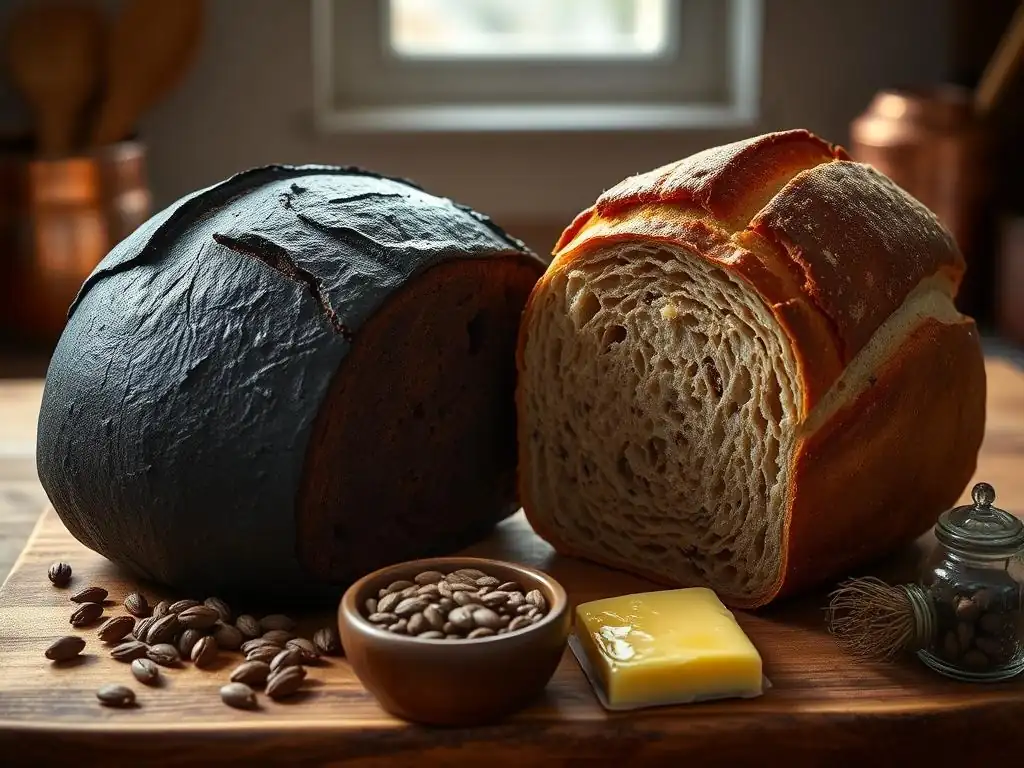
Pumpernickel impresses with layers of sweet, smoky, and tangy notes, resulting from its long bake and dark adjuncts. A typical crust may register 40 % sweetness on the flavor wheel, balanced by a citrus-like acidity of 8–10 % intensity. Light rye, by contrast, hovers around 20 % sweetness and 5 % acidity, offering a simpler, more approachable taste.
Texture: Dense vs. Airy
A traditional pumpernickel loaf features a tight, moist crumb with less than 4 mm average air cell diameter. Light rye displays an open crumb with cells spanning 8–12 mm, lending a soft, spongy mouthfeel. Dense or airy textures influence slice thickness, toasting behavior, and mouthfeel.
Color: From Dark to Pale
Dark rye ranges from deep chocolate brown (#4B3621) to near-black, driven by cocoa and coffee. Light rye shows a spectrum from honey (#E0AD4E) to light walnut (#C69C6D). Visual cues guide consumers: dark indicates boldness and sweetness, pale suggests mildness and versatility.
Baking Process: Key Differences
- Pumpernickel: 120 °C for 6–8 hours (after initial high-heat blast).
- Light rye: 220 °C for 40 minutes total.
- Pumpernickel fermentation favors longer bulk times and cooler temps; light rye thrives with shorter bulk and warmer fermentation.
Achieving Your Perfect Rye: Tips and Tricks
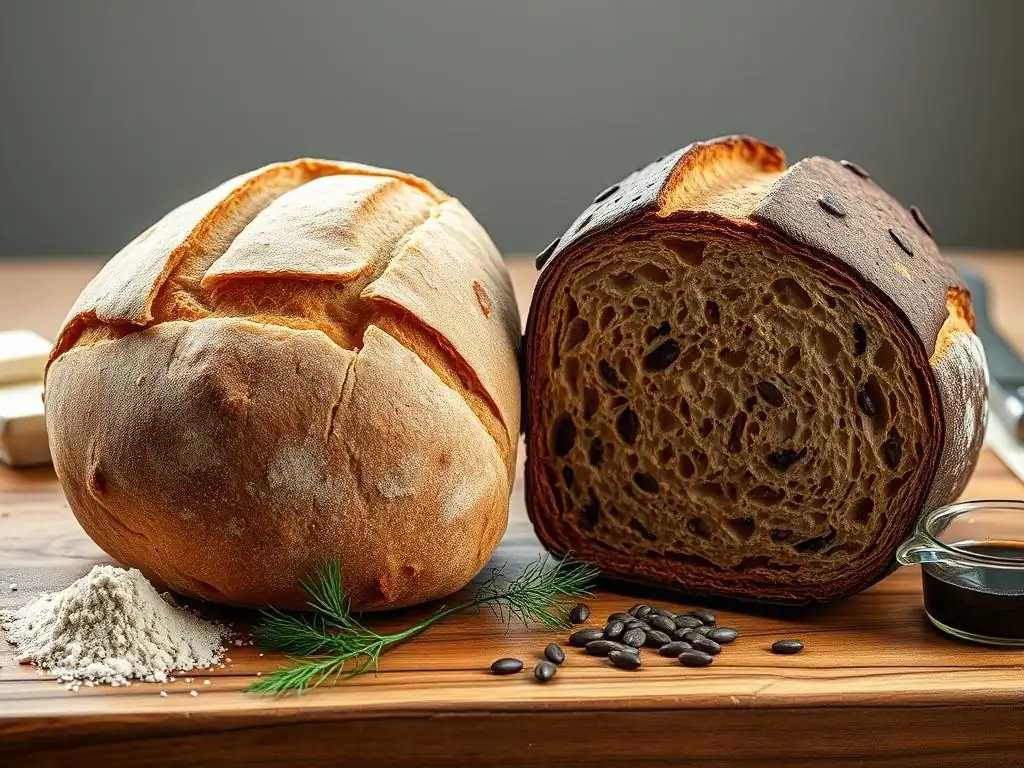
Mastering Sourdough Fermentation for Rye Bread
Rye’s high enzyme activity demands precise timing:
- Bulk ferment at 24 °C for 3–4 hours for pumpernickel, 2–3 hours for light rye.
- Fold every 45 minutes to redistribute yeast and strengthen the gluten matrix.
Keep starter refreshment consistent: a rye starter fed at 1:1:1 twice daily yields optimal activity.
Troubleshooting Common Rye Baking Issues
Even experienced bakers face challenges. Identifying causes quickly ensures better loaves next time.
Dense or Gummy Texture
Often caused by overproofing or overhydration above 85 %.
- Reduce hydration by 3–5 %.
- Shorten final proof by 30 minutes.
Lack of Rise
Insufficient starter activity or low dough temperature can flatten loaves.
- Verify starter by performing a float test (1 g starter in water).
- Raise proofing temp to 26 °C if dough remains sluggish.
Serving Suggestions for Pumpernickel and Light Rye
Two loaves, two worlds of pairing possibilities. Enhance tasting experiences by matching textures and flavors thoughtfully.
Pairing Suggestions for Pumpernickel
- Soft-ripened cheeses (e.g., Brie) with fruit compote
- Smoked salmon, crème fraîche, and dill
- Hearty stews and chili con carne
Pairing Suggestions for Light Rye
- Honey-butter and seasonal fruit slices
- Sliced turkey breast with arugula and mustard
- Avocado toast with cherry tomatoes and sea salt
Baking the Best Rye: Choosing the Right Recipe for You
Considering Your Flavor Preferences
If you crave deep, complex sweetness and a dense crumb, the dark sourdough rye (pumpernickel) aligns perfectly. Those preferring delicate aromas and gentle tangs will find light rye far more appealing. Reflect on what you’ll serve alongside your loaf: robust accompaniments match dark rye, while lighter fare pairs well with pale.
Matching the Recipe to Your Baking Experience
Beginners often benefit from the straightforward light rye approach—shorter bake times and a more forgiving crumb. Intermediate and advanced bakers will relish the precise temperature ramp-downs and extended fermentation required for authentic pumpernickel.
Experimenting with Variations and Add-ins
Once you’ve mastered base recipes, explore:
- Seed blends: sunflower, pumpkin, caraway
- Fruit additions: raisins in light rye, dried cherries in pumpernickel
- Flavor enhancers: molasses, malt syrup, barley malt powder
- [ ] Choose your base recipe
- [ ] Measure ingredients precisely
- [ ] Maintain consistent fermentation temps
- [ ] Tweak one variable at a time
Enjoy the journey of discovering your perfect rye loaf—whether dark or light!
Frequently Asked Questions
What exactly is the difference between light and dark sourdough rye bread?
The primary difference lies in the type of rye flour used. Light rye uses a lighter extraction of rye flour, while dark rye uses a whole rye flour with more of the bran.
Does the type of rye flour impact the flavor of the sourdough?
Yes, absolutely! Dark rye flour results in a more robust, earthy, and tangy flavor. Light rye produces a milder, slightly sweeter taste.
Is one type of sourdough rye recipe healthier than the other?
Dark sourdough rye, made with whole rye flour, generally has more fiber and nutrients. However, both types can be part of a healthy diet, depending on your individual needs.
Can I substitute light rye flour for dark rye flour in a recipe?
While you can, it's not recommended without adjustments. The hydration and texture will be different, so you'll likely need to modify the liquid content and baking time.
Where can I find a reliable dark sourdough rye recipe suitable for beginners?
BakeWithEase.com offers a beginner-friendly dark sourdough rye recipe with step-by-step instructions and easy-to-find ingredients, designed to help you master the art of baking.
Final Reflection: The Enduring Allure of Rye, Light and Dark
The quest for the perfect sourdough rye, whether light or dark, is more than just a baking pursuit; it's a journey into the heart of flavor and tradition. The subtle nuances between light and dark ryes, explored throughout this article, highlight the incredible versatility of this ancient grain and the power of fermentation to unlock its full potential. From the delicate tang of a light rye to the robust, earthy notes of its darker counterpart, each offers a unique and rewarding experience.
The enduring appeal of sourdough rye lies not only in its taste but also in its connection to history and craftsmanship. The process itself, from nurturing the starter to the careful shaping of the loaf, is a meditative practice that connects us to generations of bakers past. As we navigate a world increasingly dominated by mass-produced foods, the act of creating something so deeply personal and flavorful becomes profoundly meaningful. Bread is the staff of life,
a simple phrase, yet it encapsulates the profound role bread, and specifically sourdough rye, has played in sustaining and enriching human culture.
Consider the journey you've taken with us today. You've learned about the differences in flavor profiles, the impact of flour type, and the techniques involved in creating both light and dark sourdough rye loaves. Now, I invite you to embrace the challenge. Experiment with different recipes, adjust techniques to your own preferences, and most importantly, savor the experience. The perfect sourdough rye awaits – not in a recipe book, but in your own hands, your own kitchen, and your own unique interpretation of this timeless bread.
Unleash Your Inner Rye Baker!
Thanks for exploring the fascinating world of light and dark sourdough rye with us! We hope you gained a deeper appreciation for the nuances of each type. Now it's time to put your newfound knowledge into practice.
- Bake your own rye masterpiece! Try experimenting with a recipe that uses either light or dark rye flour—the choice is yours! Consider the flavor profiles you prefer and go for it. This is the best way to truly understand the differences.
- Share your rye baking journey! Post a picture of your creation on social media and tag #BakeWithEaseRye. Let's inspire other bakers!
- Explore different rye flours. Seek out local mills or specialty stores to discover the range of rye flours available. You might be surprised by the variety!
What unique flavor combination will you create with your next rye loaf?