
Hand Mixer Attachments Demystified: What Each Whisk & Hook Does

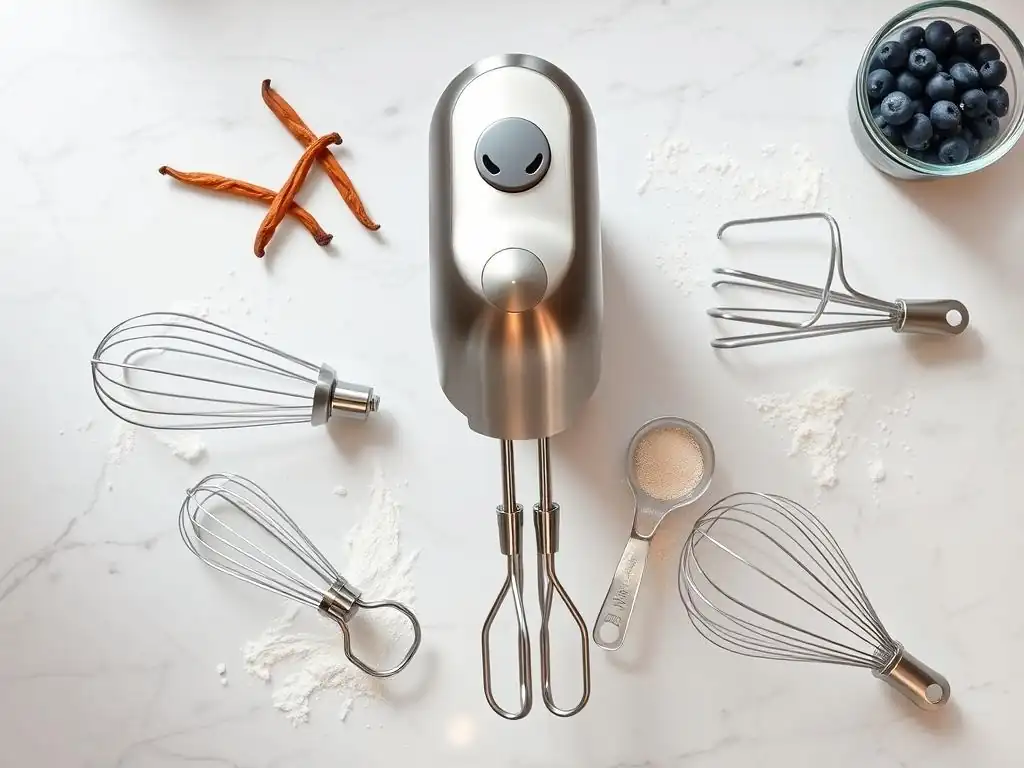
Welcome to BakeWithEase, your guide to baking bliss! Ever wondered if you're really using your hand mixer to its full potential? This week, we're diving deep into the world of hand mixer whisk functions, demystifying each attachment so you can conquer any recipe with confidence. Let's unlock the secrets to perfectly whipped cream, flawlessly blended batters, and so much more. Ready to elevate your baking game?
- Understanding Hand Mixer Attachments: A Baker's Guide
- The Standard Attachments: Mastering Common Tools
- Specialized Attachments: Expanding Baking Capabilities
- Troubleshooting Attachment Issues
- Maximizing Your Hand Mixer: Tips and Tricks
- Advanced Techniques: Achieving Expert Baking
- Choosing the Right Hand Mixer and Attachments
- Conclusion: Mastering Baking with Hand Mixer Attachments
-
Frequently Asked Questions
- What is the primary function of a whisk attachment on a hand mixer?
- Which hand mixer attachment is best suited for mixing thick doughs like bread or pizza dough?
- Can I use a whisk attachment to mix cookie dough?
- What are beater attachments generally used for?
- How do I clean my hand mixer attachments after use?
- Final Reflection: Mastering the Art of the Hand Mixer
- Unleash Your Inner Baker: Master Your Mixer Attachments!
Understanding Hand Mixer Attachments: A Baker's Guide
Introduction to Hand Mixer Tools
Hand mixers are indispensable tools in many kitchens, offering convenience and versatility for a wide range of baking tasks. Unlike their stand mixer counterparts, hand mixers are lightweight, portable, and often more affordable, making them perfect for smaller batches or quick jobs. While the mixer itself is the power source, its true capability lies in the variety of attachments that come with it.
These attachments, particularly the various types of whisks and hooks, are designed to perform specific functions, from whipping air into egg whites to kneading dough. Understanding the purpose of each attachment is the first step to unlocking the full potential of your hand mixer and improving your baking results.
Getting to grips with the different hand mixer whisk functions and other attachments is key for any baker. A standard hand mixer typically includes a set of wire whisks (sometimes called beaters) and often dough hooks. More advanced models or accessory packs might include balloon whisks or other specialized beaters.
Each piece is crafted with a unique shape and structure optimized for a particular type of mixing action. For example, the open structure of a whisk is ideal for incorporating air, while the solid paddles of beaters are better for creaming and mixing denser batters. Knowing which attachment to grab for your recipe can significantly impact the texture and consistency of your final product.
Why Understanding Hand Mixer Attachments is Crucial
Using the correct attachment for your recipe isn't just about following instructions; it's fundamentally about achieving the desired outcome. Imagine trying to whip cream using dough hooks – you'd end up with a messy, unsuccessful attempt at aeration. Similarly, trying to knead a stiff bread dough with delicate wire whisks would likely damage the attachments and result in poorly developed gluten.
Each attachment is engineered for a specific task, leveraging different principles of mixing, beating, or kneading. Mastering the nuances of various hand mixer whisk functions and other tools ensures efficiency, prevents damage to your equipment, and, most importantly, helps you consistently produce baked goods with the perfect texture and volume.
Beyond just getting the job done, understanding the capabilities of each attachment allows for greater precision and control in your baking. For instance, knowing that a balloon whisk is designed for maximum air incorporation can help you achieve fluffier meringues or lighter sponges compared to using standard wire whisks.
Identifying the right tool for tasks like creaming butter and sugar versus gently folding in dry ingredients is essential for preventing overmixing and developing tough textures. By becoming familiar with the specific hand mixer whisk functions and other attachments, you gain the knowledge to make informed decisions throughout the baking process, leading to more reliable and delicious results every time.
The Standard Attachments: Mastering Common Tools
Wire Whisks: Achieving Light and Airy Mixtures
Wire whisks, often referred to as beaters, are the most commonly included attachment with hand mixers. They typically come in a pair, designed to work in tandem. These attachments consist of several interconnected wire loops or paddles. Their design, with space between the wires, is specifically optimized for incorporating air into mixtures. As the beaters rotate, they cut through the ingredients, folding air in and creating volume. This makes them essential for tasks where aeration is key, such as whipping egg whites or cream.
The action of wire whisks is highly effective for creating emulsions and suspensions, as well as building structure through aeration. When whipping egg whites, the wires break down the protein structures, allowing them to trap air and expand dramatically, increasing volume by up to 8 times. For whipping cream, the wire design helps to distribute fat molecules evenly while incorporating air, transforming liquid cream into stable, fluffy peaks. Understanding these hand mixer whisk functions is fundamental for achieving light textures in many desserts and baked goods.
Best Uses for Wire Whisks: Whipped Cream, Meringue, Egg Whites
Wire whisks are the go-to attachment for any task requiring significant air incorporation. Whipping egg whites to stiff peaks for meringues or soufflés is a prime example; the whisks quickly build volume and stability. Creating homemade whipped cream, which typically takes just 2-3 minutes with a hand mixer and wire whisks, is another perfect application, resulting in a light, airy topping far superior to aerosol versions. They are also excellent for making light batters like those for waffles or pancakes, where a slightly aerated consistency is desired, though care must be taken not to overmix.
Flat Beaters: The All-Purpose Attachment
While often visually similar to wire whisks in some older designs, modern flat beaters are typically more solid paddles with fewer gaps, or sometimes have a more rounded, solid paddle shape. These attachments are designed for general mixing tasks where the goal is to combine ingredients thoroughly without necessarily incorporating large amounts of air or developing significant gluten. They excel at creaming butter and sugar, mixing batters, and combining ingredients for frostings.
Flat beaters are the workhorse of the hand mixer world, capable of handling a wide variety of consistencies, from thick cookie doughs to smoother cake batters. Their more robust structure allows them to power through denser mixtures than wire whisks might struggle with. They are particularly good at breaking up lumps of sugar or flour and ensuring all ingredients are evenly distributed throughout the mix. Understanding the role of these beaters alongside the specific hand mixer whisk functions helps you choose the right tool for different stages of a recipe.
When to Use Flat Beaters: Cake Batter, Cookie Dough, Frosting
Flat beaters are ideal for creaming butter and sugar, a crucial step in many cookie and cake recipes. This process, which takes about 3-5 minutes, creates a light, fluffy base by incorporating small air pockets into the fat. They are also perfect for mixing together ingredients for standard cake batters after the creaming step, ensuring everything is just combined without overdeveloping gluten.
For cookie dough, which is often thicker and requires thorough mixing of dry and wet ingredients, flat beaters handle the density effectively. Making frostings, like buttercream or cream cheese frosting, also benefits from flat beaters for combining ingredients smoothly and achieving a consistent texture.
Specialized Attachments: Expanding Baking Capabilities
Dough Hooks: Kneading Made Easy
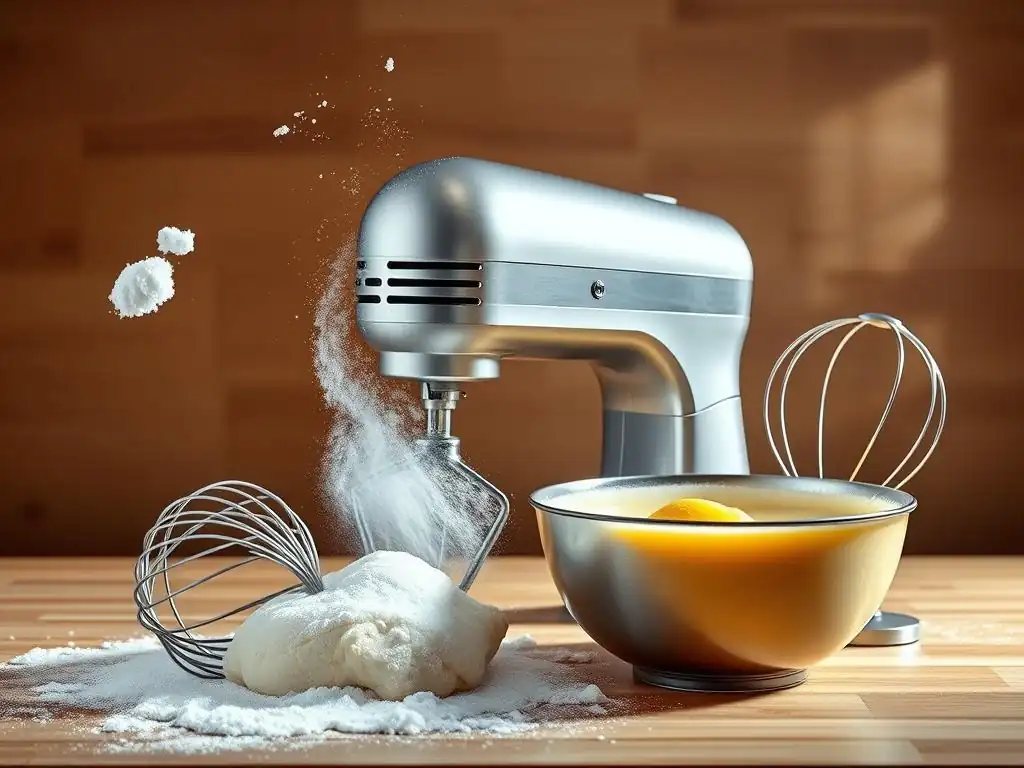
Dough hooks are distinct from whisk attachments and are designed specifically for kneading yeast doughs. They typically come in a pair, each shaped like a spiral or corkscrew. Their action mimics the folding and stretching motion of hand kneading, developing the gluten structure in bread or pizza dough. While a hand mixer with dough hooks is not as powerful as a stand mixer for large or very stiff doughs, it's a great option for smaller batches or for bakers who prefer not to knead by hand.
Using dough hooks saves significant effort compared to kneading manually. For a typical bread dough recipe using 3-4 cups of flour, a hand mixer with dough hooks can perform the primary kneading in about 5-8 minutes, achieving a smooth, elastic consistency necessary for a good rise. They are particularly useful for softer doughs like brioche or challah, which can be sticky and difficult to handle. While not related to hand mixer whisk functions, understanding when to switch from beaters (for initial mixing) to dough hooks (for kneading) is vital for yeast baking.
Using Dough Hooks for Bread and Pizza Dough
Dough hooks are indispensable for making homemade bread and pizza dough with a hand mixer. After initially mixing the ingredients with flat beaters until a shaggy dough forms, switch to the dough hooks. Knead on a low to medium speed until the dough is smooth and elastic, pulling away from the sides of the bowl.
For a standard white bread dough, this might take 5-7 minutes. For pizza dough, which is often slightly wetter, it might take a similar amount of time to develop enough gluten for that perfect chewy crust. Always start on a low speed to prevent the dough from climbing the hooks excessively.
Balloon Whisks: Maximizing Air Incorporation
Balloon whisks, when available for a hand mixer, are typically larger and have more wires than standard wire whisks, and often a more rounded shape resembling a balloon. This design allows them to incorporate even more air into mixtures than standard whisks, making them superior for tasks where maximum volume and lightness are paramount. They are the attachment of choice for achieving the fluffiest results in specific applications.
The increased number and flexibility of the wires in a balloon whisk create a more efficient whipping action. This results in finer, more stable air bubbles being incorporated into liquids like egg whites or cream. While standard wire whisks are good, a balloon whisk can often cut down on whipping time slightly and produce a marginally lighter texture, making them favored by those seeking professional-level aeration in their home baking. They truly elevate the hand mixer whisk functions for specific tasks.
Balloon Whisk vs. Wire Whisk: Choosing for Optimal Results
Choosing between a balloon whisk and a standard wire whisk depends on the desired outcome. For everyday tasks like whipping a small amount of cream for a single dessert or beating a couple of eggs for scrambled eggs, standard wire whisks are perfectly adequate and often more convenient to clean. However, for recipes where achieving the absolute maximum volume and lightest texture is critical, such as making a large batch of meringue for a pavlova or whipping heavy cream to very stiff peaks for piping, a balloon whisk offers a distinct advantage.
It provides superior aeration, leading to a potentially lighter and more stable result. Consider the specific hand mixer whisk functions needed for your recipe.
Alternative Whisking Attachments
Beyond the standard wire and balloon whisks, some hand mixer models may come with or offer alternative whisking or beating attachments. These can include specialized beaters designed for specific textures, such as those with silicone edges to scrape the bowl as they mix, or beaters with slightly different wire configurations aimed at faster or more efficient mixing. While less common than the main types, these variations offer subtle improvements or different mixing actions.
For instance, some beaters are designed with a central post or a slightly different paddle shape intended to create a unique flow pattern within the bowl, potentially reducing mixing time or improving consistency. Others might feature thicker wires or a reinforced structure for handling slightly heavier batters than standard whisks. Exploring these alternative hand mixer whisk functions can sometimes offer unexpected benefits for specific recipes or mixing preferences.
Troubleshooting Attachment Issues
Identifying the Right Attachment
Identifying the correct attachment for your hand mixer involves consulting your mixer's manual and familiarizing yourself with the typical shapes and uses described above. Most mixers come with a guide illustrating which attachment is which. Wire whisks/beaters are generally for aeration and general mixing, flat beaters (if different from wire beaters) are for creaming and denser batters, and dough hooks are for kneading yeast dough. Pay attention to the visual cues – the open loops of a whisk versus the spiral of a dough hook.
If you're unsure, consider the consistency of what you're mixing and the desired outcome. Is it something that needs air incorporated (like egg whites)? Use a whisk (wire or balloon). Is it a thick batter or dough that needs thorough mixing without significant aeration (like cookie dough)? Use flat beaters. Is it a yeast dough that needs kneading? Use dough hooks. Understanding the core hand mixer whisk functions and other attachments' purposes is key to correct identification.
Common Problems and Solutions
Sometimes, attachments don't perform as expected or encounter issues. One common problem is ingredients getting stuck within the wires of whisks, especially with thicker batters. Another is dough climbing up dough hooks instead of staying in the bowl. Overheating of the mixer motor can also occur if the wrong attachment is used for a task that is too heavy-duty, such as trying to knead a very stiff dough with beaters.
Solutions often involve selecting the correct speed and attachment. For sticky batters in whisks, stopping and scraping down the attachments and bowl frequently helps. If dough is climbing the hooks, the dough might be too wet, or the speed is too high; try lowering the speed or adding a touch more flour. If the mixer feels hot, turn it off and let it cool down; ensure you are using the appropriate attachment for the task's difficulty. Always refer to your manual for specific troubleshooting related to your model's hand mixer whisk functions and attachments.
Attachment Not Fitting Correctly
A common issue is an attachment not fitting securely into the hand mixer's ports. This can happen if you're trying to insert the wrong type of attachment into a port, or if there's debris in the port. Hand mixers usually have slightly different shaped ports for each attachment (e.g., one port might have a square drive, the other a round one) to ensure you insert the correct whisk or hook into the correct side. Always check the base of the attachment and the shape of the port.
If the shapes match but it still won't fit, check for any dried batter or dough residue inside the ports or on the attachment shafts. Clean them thoroughly. Ensure you are pushing the attachment firmly until it clicks into place. If an attachment seems bent or damaged, it might not fit correctly and should be replaced. Proper care and cleaning of your hand mixer whisk functions and other attachments prevent many fitting issues.
Attachment Bending or Breaking
Attachments, especially wire whisks, can bend or even break if used for tasks that are too demanding for their design. Trying to mix extremely stiff doughs, thick fudge, or cold, hard butter with standard wire whisks or even flat beaters can put excessive strain on them. This is a clear sign that a different attachment (like dough hooks for dough) or even a different tool (like a stand mixer for very heavy tasks) is needed.
If an attachment bends slightly, you might be able to gently reshape it if it's just a wire whisk. However, if it's significantly bent, cracked, or broken, it's best to replace it to avoid potential injury or damage to the mixer motor. Always use the appropriate attachment for the consistency of your ingredients. Respecting the limits of your hand mixer whisk functions and other attachments ensures their longevity and prevents damage.
Maximizing Your Hand Mixer: Tips and Tricks
Proper Cleaning and Maintenance
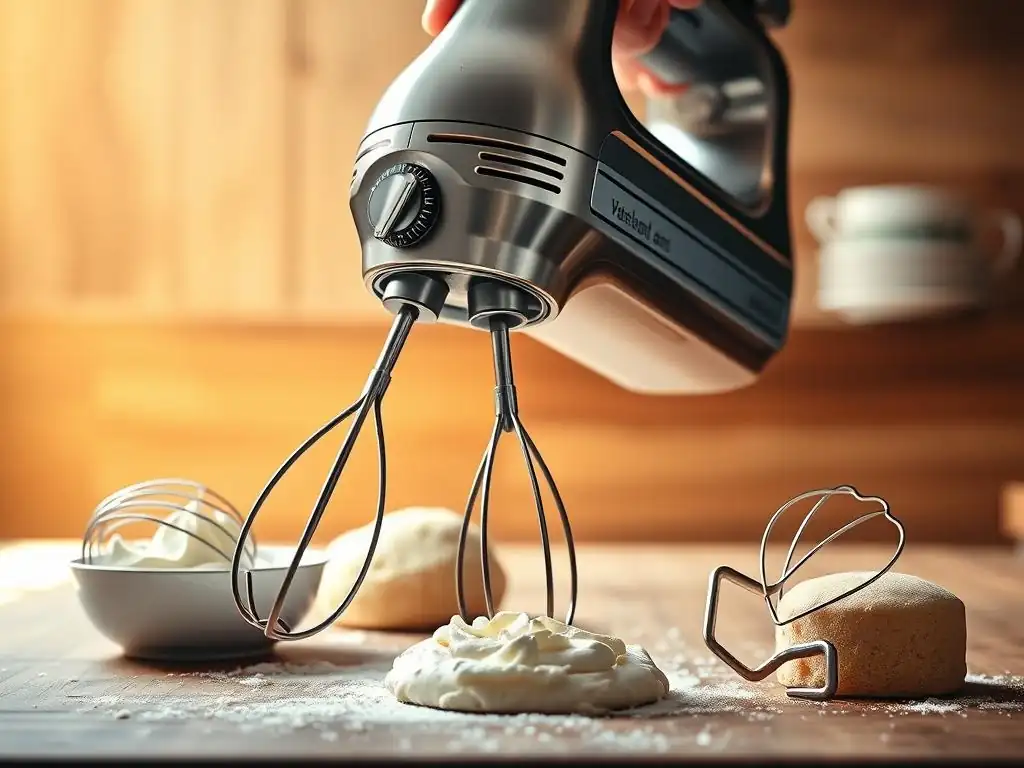
Proper cleaning and maintenance are crucial for extending the life of your hand mixer and its attachments. After each use, detach the whisk, beaters, or dough hooks immediately. Wash them thoroughly with warm, soapy water. For stubborn residue, a small brush can be helpful, especially getting into the wires of whisks or the spirals of dough hooks. Most modern attachments are dishwasher safe, but checking your manual is always wise. Ensure attachments are completely dry before storing to prevent rust.
Cleaning the hand mixer unit itself usually just requires wiping it down with a damp cloth – never submerge the electrical unit in water. Check the attachment ports for any trapped food particles and clean them gently with a small brush or toothpick if necessary. Regularly inspecting your hand mixer whisk functions and other attachments for signs of wear or damage ensures they are always ready for your next baking project and helps maintain optimal performance.
Storage Solutions
Storing your hand mixer and its attachments neatly keeps them accessible and protects them from damage. Many hand mixers come with a storage case or a clip-on attachment holder. Utilizing these is the easiest way to keep everything together. If your mixer doesn't have built-in storage, a small container, zipper bag, or a dedicated drawer can work well.
Keeping attachments organized not only makes them easy to find but also prevents them from getting bent or tangled with other kitchen gadgets. Store the hand mixer unit itself in a dry place. Some bakers like to store the attachments clipped onto the mixer (if designed for that) or in a small cup next to it on the counter if space allows for frequent use. Proper storage ensures your hand mixer whisk functions and other tools are protected and ready for action.
Advanced Techniques: Achieving Expert Baking
Achieving Specific Textures
Mastering the use of hand mixer attachments allows you to precisely control the texture of your baked goods. For instance, achieving a light, fluffy cake requires properly creaming butter and sugar with flat beaters to incorporate air, followed by gentle mixing with beaters on low speed to combine ingredients without overdeveloping gluten. For a chewy cookie, you might cream less intensely and mix just until combined.
When making meringues or soufflés, the goal is maximum air incorporation using wire or balloon whisks to create a stable foam that provides lift. For delicate sponges, beating egg whites separately with a whisk attachment and then gently folding them into the batter is key. Understanding how the specific hand mixer whisk functions and other attachments interact with ingredients at different speeds allows you to manipulate texture effectively, moving beyond simply following a recipe to truly crafting your results.
Experimenting with Different Speeds
Hand mixers come with multiple speed settings, and knowing when to use each speed with different attachments is crucial for optimal results. Low speeds are ideal for initially combining dry and wet ingredients, preventing flour from flying everywhere, and for gently folding ingredients. Medium speeds are typically used for creaming butter and sugar with flat beaters or for mixing most batters.
High speeds are where the hand mixer whisk functions truly shine, particularly for whipping tasks like egg whites or cream with wire or balloon whisks. The high rotation speed maximizes air incorporation, leading to faster whipping and greater volume. However, using high speed with dough hooks or thick batters can strain the motor. Experimenting with different speeds for specific tasks, while staying within the guidelines for each attachment, helps you understand how speed impacts texture and efficiency.
Choosing the Right Hand Mixer and Attachments
Factors to Consider When Purchasing
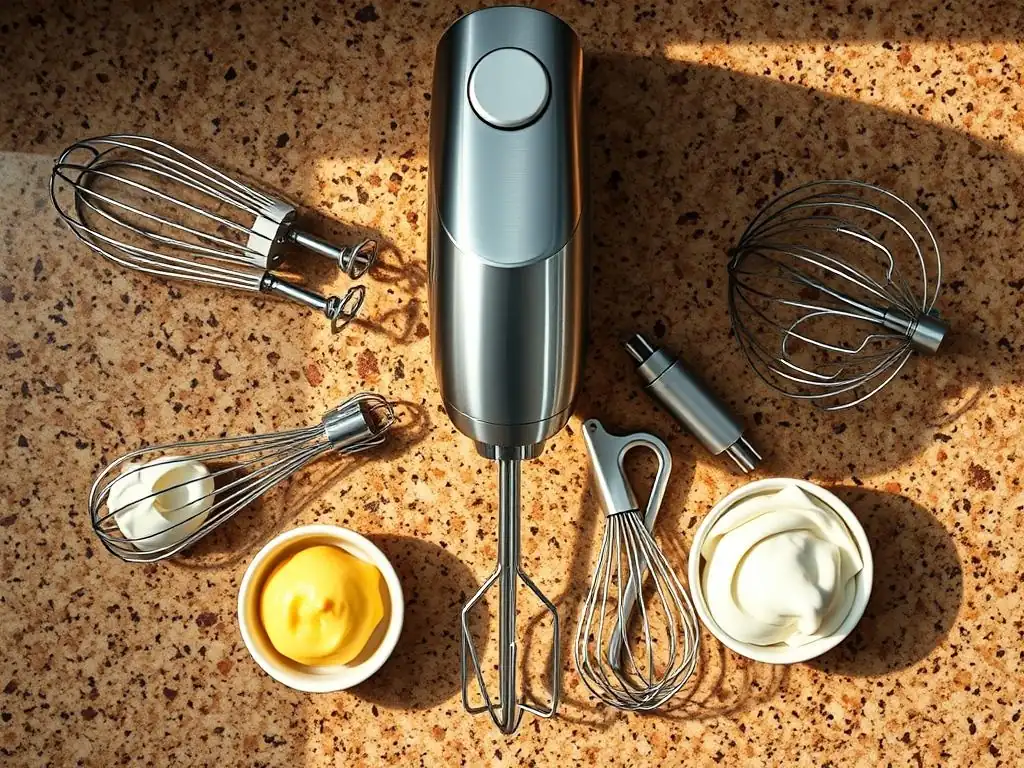
When choosing a hand mixer, consider its power (wattage), weight, ergonomics, number of speeds, and included attachments. A higher wattage generally indicates a more powerful motor capable of handling thicker batters and doughs more easily. The weight and feel in your hand are important for comfort during longer mixing tasks. Look for a good range of speeds to provide versatility.
Crucially, examine the attachments that come with the mixer and consider if they meet your typical baking needs. Does it include dough hooks if you bake bread? Does it have wire beaters suitable for whipping? Are alternative hand mixer whisk functions or beaters available for purchase later? Thinking about the types of baking you do most often will guide your choice of a mixer with the most useful set of attachments.
Attachment Compatibility
Not all hand mixer attachments are universal. Attachments are designed to fit specific models or brands of hand mixers. If you need to replace a lost or damaged attachment, or if you want to purchase a specialized whisk or beater that didn't come with your initial purchase, you'll need to find attachments specifically compatible with your hand mixer's make and model.
Check your hand mixer's manual or the manufacturer's website for information on compatible accessories. Attempting to force incompatible attachments into your mixer can damage both the attachment and the mixer's drive ports. Ensuring compatibility guarantees that your hand mixer whisk functions and other tools will fit securely and operate correctly, keeping your mixer performing safely and efficiently.
Conclusion: Mastering Baking with Hand Mixer Attachments
Elevating Baking with the Right Tools
Mastering the art of baking is a journey, and understanding your tools is a significant step. Hand mixers, with their array of attachments, offer incredible versatility for home bakers. By knowing the specific hand mixer whisk functions, the power of flat beaters, and the utility of dough hooks, you gain the ability to choose the right tool for every mixing task, from delicate meringues to robust bread doughs.
This knowledge empowers you to achieve consistent, high-quality results, troubleshoot common issues, and even experiment with more advanced techniques. Using the correct attachment not only makes the job easier but also ensures you're treating your ingredients and equipment properly, leading to better outcomes and longer-lasting tools.
Hand Mixer Attachments: Your Key to Baking Success
In essence, the different hand mixer whisk functions and other specialized attachments are not just accessories; they are essential components that define your mixer's capabilities. Each whisk, beater, and hook is designed with a purpose, optimized for specific mixing actions that are fundamental to various baking processes.
By taking the time to learn about and correctly utilize each attachment, you unlock the full potential of your hand mixer. This understanding is your key to achieving those perfectly whipped creams, light and airy cakes, and well-kneaded doughs, transforming your baking from good to truly great. Embrace the power of your attachments and watch your baking success soar.
Frequently Asked Questions
What is the primary function of a whisk attachment on a hand mixer?
The primary function of a whisk attachment is to incorporate air into ingredients, creating light and fluffy mixtures. It's essential for things like whipped cream and meringue.
Which hand mixer attachment is best suited for mixing thick doughs like bread or pizza dough?
A dough hook attachment is the best choice for mixing thick doughs. Its design helps to knead the dough efficiently, developing gluten for the proper texture.
While possible, it's not ideal. Whisk attachments are better for lighter mixtures. For cookie dough, use the beater attachments as they are designed for creaming butter and sugar and incorporating heavier ingredients.
What are beater attachments generally used for?
Beater attachments are versatile and primarily used for general mixing. They excel at creaming butter and sugar, incorporating wet and dry ingredients in batters and doughs, and achieving a smooth consistency.
How do I clean my hand mixer attachments after use?
Most hand mixer attachments are dishwasher safe, but always check the manufacturer's instructions. For stubborn residue, soak them in warm soapy water before washing.
Final Reflection: Mastering the Art of the Hand Mixer
The humble hand mixer, often overlooked in the culinary landscape, reveals itself as a surprisingly versatile tool when its attachments are understood. Its seemingly simple design belies a capacity for creating everything from delicate meringues to robust bread doughs, depending entirely on the whisk or hook selected. This understanding is not just about baking efficiency; it's about unlocking culinary creativity.
The impact of mastering hand mixer techniques extends beyond the kitchen itself. It's about appreciating the nuances of texture and consistency, understanding the science behind baking, and ultimately, finding joy in the process of creating something delicious. The best things in life are homemade,
a sentiment that resonates deeply when you understand the power of a simple hand mixer and its attachments. This knowledge empowers home cooks to confidently tackle a wider range of recipes, fostering a sense of accomplishment and culinary self-sufficiency.
Now, consider your own kitchen. What recipes have you avoided because you felt unsure about the tools involved? I encourage you to revisit those recipes, armed with the knowledge gained from this article. Experiment with different attachments, explore the subtle differences in texture, and most importantly, enjoy the journey of culinary discovery. The world of baking, and indeed cooking, awaits your exploration, one perfectly whipped cream or kneaded dough at a time.
Unleash Your Inner Baker: Master Your Mixer Attachments!
Thanks for diving into the world of hand mixer attachments with us! You've now unlocked the secrets to perfectly whipped cream, fluffy cakes, and more. Ready to put your newfound knowledge into action?
- Whip up a masterpiece: Choose your favorite recipe (think meringue cookies, buttercream frosting, or even a classic sponge cake) and try using the attachment you just learned about. Share your baking triumph on social media using #BakeWithEase!
- Explore the possibilities: Dive deeper into the world of baking! Check out our other articles on advanced baking techniques for even more tips and tricks.
- Join the BakeWithEase Community: Share your favorite baking tips and ask questions in the comments section below! Let's build a vibrant community of passionate bakers together.
What delicious creation will you tackle first?