
Simple Cakes: Adjusting Recipes for Different Pan Sizes

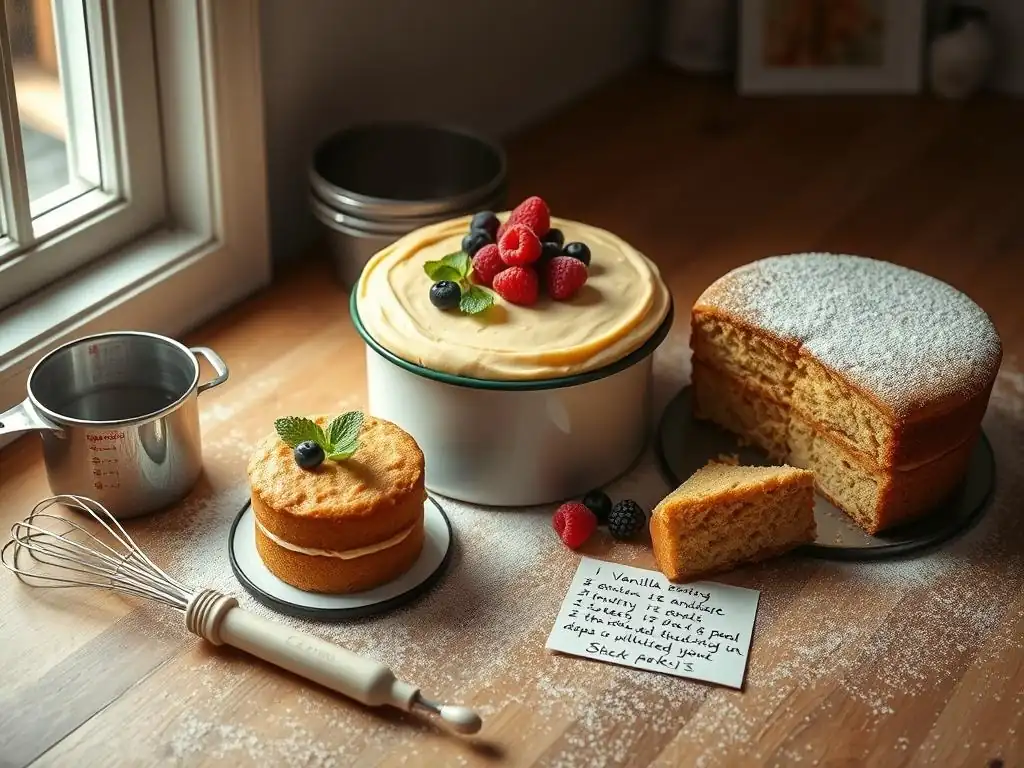
Welcome to BakeWithEase, your guide to confident and delicious baking! Ever wondered how to adapt your favorite cake recipe when you only have a smaller pan available? This guide unveils the secrets to creating perfect small pan cake recipes every time. Discover how to easily adjust ingredients and baking times for a delightful treat, no matter the size of your pan. Let's unlock the secrets to small-batch baking success!
- Simple Cakes: Adjusting Recipes for Different Pan Sizes - Bake With Ease
- Introduction to Cake Pan Sizes and Recipe Scaling
- Small Pan Cake Recipes: A Baker's Guide
- Scaling Down Cake Recipes: The Mathematics Behind It
- Adjusting Baking Time for Smaller Cake Pans
- Ingredient Considerations When Scaling Recipes
- Troubleshooting Common Issues with Small Pan Cakes
- Small Pan Cake Recipes: Practical Examples
- Beyond Scaling: Creative Adaptations for Small Cakes
- Essential Tools for Baking Small Cakes
- Conclusion: Mastering Small Pan Cake Baking
-
Frequently Asked Questions
- How do I adjust a cake recipe designed for a 9-inch pan to fit a smaller 6-inch pan?
- What are some common mistakes people make when adapting cake recipes for smaller pans?
- Can I use the same baking temperature when baking a cake in a smaller pan?
- What are some reliable methods for calculating the volume of different cake pans?
- Are there specific types of cake recipes that are easier to adapt for smaller pans than others?
- Final Reflection: Baking Beyond the Standard
- Unlock Your Baking Potential: Scale Your Cakes with Confidence!
Simple Cakes: Adjusting Recipes for Different Pan Sizes - Bake With Ease
Introduction to Cake Pan Sizes and Recipe Scaling
Baking a delicious cake doesn't always require a large crowd to share it with. Sometimes, you just want a little treat, perhaps a small pan cake recipe perfect for one or two. However, simply halving a standard 9-inch cake recipe and pouring it into a smaller pan isn't always the best approach. Cake recipes are carefully balanced formulas, and changing the pan size significantly impacts how the batter bakes. Understanding this relationship is key to achieving perfect results, whether you're aiming for a modest 6-inch round or a tiny 4-inch delight.
The size and shape of your baking pan are fundamental factors that influence the outcome of your simple cake. A wider, shallower pan distributes heat differently than a deeper, narrower one. This affects everything from the rate at which the cake rises to how quickly the edges set compared to the center. When you switch to a smaller pan, the batter depth often increases, changing the heat dynamics and requiring adjustments beyond just the ingredient quantities. Mastering these adjustments is essential for successful small pan cake recipes.
Why Pan Size Matters in Baking Simple Cakes
The dimensions of your cake pan directly affect the surface area exposed to heat and the depth of the batter. In a larger pan, the batter is typically shallower, allowing heat to penetrate more quickly and evenly from the sides and bottom. This results in a relatively consistent rise and even baking. When you use a smaller pan for the same amount of batter, the depth increases. This means the heat takes longer to reach the center, and the edges may overbake before the middle is done, leading to an uneven texture or a sunken center.
Moreover, the material and color of the pan also play a role, but the primary impact comes from the size and resulting batter volume distribution. A simple cake recipe designed for a 9-inch round pan, which has a surface area of roughly 63.6 square inches, will behave very differently if the full batter is poured into a 6-inch round pan, with a surface area of only about 28.3 square inches. This significant difference in surface area and the resulting batter depth fundamentally alters the baking process, necessitating recipe adjustments for successful small pan cake recipes.
Understanding Cake Volume and its Impact on Baking Time
The total volume of cake batter is directly linked to the required baking time. A larger volume of batter takes longer to heat through and set than a smaller volume. When scaling a recipe down for a small pan cake, you are reducing the total volume of batter. This means the cake will bake faster. Ignoring this can lead to a cake that is overbaked and dry. It's not just about reducing the quantity of ingredients; it's also about anticipating how that reduced volume will react in the oven within a different pan dimension.
Think of it like heating water on a stove. A small pot of water boils much faster than a large pot, even if the heat source is the same. Similarly, a small pan cake recipe with less batter will reach its target internal temperature much quicker than a standard-sized cake.
The increased batter depth in a smaller pan does slightly counteract the reduced volume's tendency to bake faster by increasing the distance heat must travel to the center, but overall, the reduced volume is the dominant factor leading to shorter baking times. Accurate adjustments to time and temperature are crucial.
Small Pan Cake Recipes: A Baker's Guide
Creating delicious small pan cake recipes involves more than just guessing at ingredient quantities. It requires a thoughtful approach to scaling and understanding how the reduced volume and different pan dimensions will affect the final product. Many standard cake recipes are designed for 8-inch or 9-inch round pans or 9x13-inch rectangular pans. Adapting these for smaller pans like 6-inch rounds, 4-inch rounds, or even mini loaf pans presents unique challenges that home bakers need to navigate.
The appeal of small pan cake recipes is undeniable – they are perfect for smaller households, portion control, or simply when you crave a little slice of cake without committing to a large bake. They minimize waste and offer the satisfaction of a freshly baked treat on a smaller scale. However, getting them right consistently requires understanding the principles of scaling and being prepared to make adjustments to baking time and potentially even ingredient ratios slightly to account for the smaller volume and pan size.
The Challenge of Scaling Cake Recipes for Smaller Pans
Scaling down a cake recipe for a smaller pan can be tricky, especially for ingredients like eggs and leavening agents. While flour, sugar, and liquids can be measured in fractions relatively easily, how do you use "half an egg" or "a third of a teaspoon" of baking powder precisely? Getting these small quantities wrong can significantly impact the cake's structure, rise, and texture. Too much leavening in a small cake can cause it to rise too quickly and then collapse, while too little will result in a dense, heavy cake.
Another challenge lies in the fact that not all recipe components scale linearly. For instance, the amount of flavoring (like vanilla extract or zest) might not need to be reduced by the exact same percentage as the main ingredients to achieve the desired intensity. Similarly, fats might need careful consideration to ensure the cake remains moist without becoming greasy in a smaller format. Successfully adapting recipes for small pan cake recipes requires careful calculation and sometimes a little trial and error.
Common Baking Pan Sizes and Their Volumes
Understanding the relative volumes or capacities of common baking pans is the first step in scaling recipes. A standard 9-inch round cake pan typically holds about 8 cups of batter. An 8-inch round pan holds approximately 6 cups. When we look at smaller pans suitable for small pan cake recipes, a 6-inch round pan usually holds about 4 cups of batter, and a 4-inch round pan holds roughly 1.5 to 2 cups. A standard loaf pan (9x5 inches) holds about 8 cups, while a smaller 8x4-inch loaf pan holds about 6 cups.
Comparing these capacities gives you a rough idea of how much you need to scale a recipe. If a recipe calls for a 9-inch pan (8 cups) and you want to use a 6-inch pan (4 cups), you're aiming for roughly half the volume. However, simply dividing all ingredients by two might not be precise enough, as the area calculation provides a more accurate scaling factor based on how the batter spreads and rises. Knowing these typical capacities is a helpful starting point for estimating the required amount for your small pan cake recipes.
Scaling Down Cake Recipes: The Mathematics Behind It
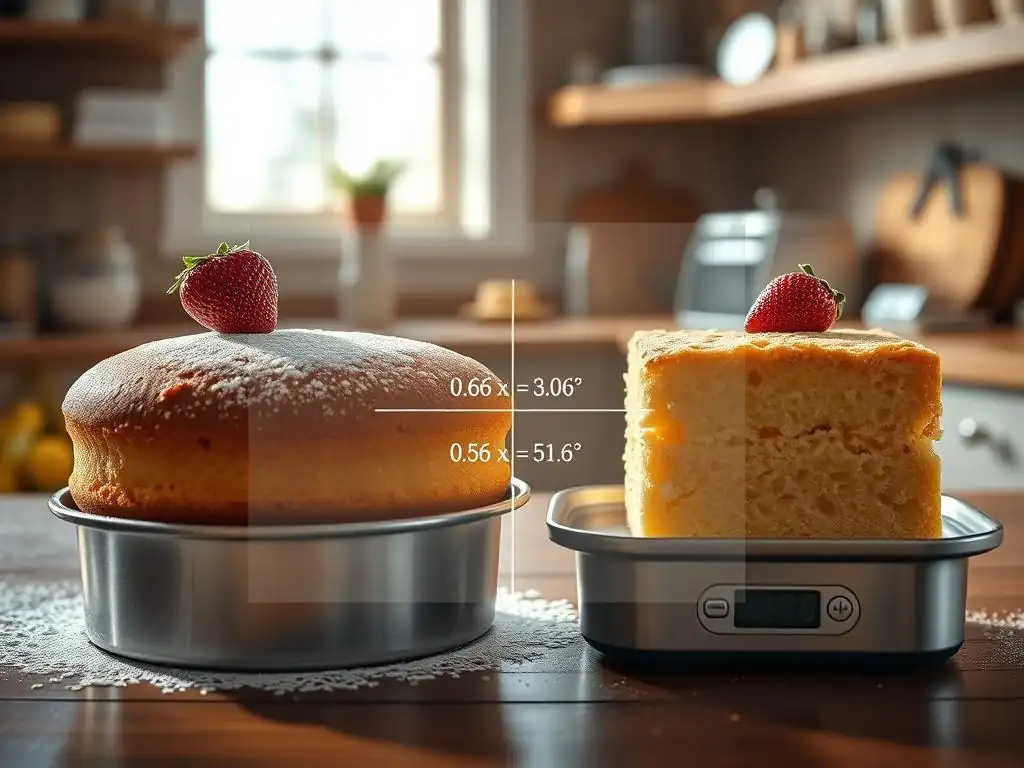
Scaling cake recipes for smaller pans is best done using a mathematical approach based on the area of the pan bottom. The assumption is that the batter will fill the pan to roughly the same depth as in the original recipe, and thus the amount of batter needed is proportional to the pan's bottom surface area. While volume is also a factor, area calculation is a more standard method for scaling cake pan sizes.
To calculate the area of a round pan, you use the formula: Area = π * radius², where π (pi) is approximately 3.14 and the radius is half the diameter of the pan. For rectangular pans, the area is simply length multiplied by width. By comparing the area of your target small pan to the area of the original pan specified in the recipe, you can determine a scaling factor to apply to your ingredients for your small pan cake recipe.
Calculating Ratios for Smaller Pan Cake Recipes
Let's say your original recipe is for a 9-inch round pan. The radius is 4.5 inches. The area is π * (4.5)² ≈ 3.14 * 20.25 ≈ 63.6 square inches. Now, you want to make a small pan cake recipe using a 6-inch round pan.
The radius is 3 inches. The area is π * (3)² ≈ 3.14 * 9 ≈ 28.3 square inches. To find the scaling factor, you divide the area of the new pan by the area of the original pan: 28.3 / 63.6 ≈ 0.445. This means you need approximately 44.5% of the original recipe's ingredients.
This scaling factor (0.445 in our example) is the multiplier you'll apply to each ingredient quantity in the original recipe. For instance, if the original recipe calls for 2 cups of flour, you would calculate 2 cups * 0.445 = 0.89 cups. While 0.89 cups might be hard to measure precisely, this ratio gives you the most accurate starting point for adapting recipes for small pan cake recipes based on pan dimensions. You will then need to convert these scaled amounts into practical measurements.
Converting Ingredients for Small Baking Pans
Once you have the scaled quantities based on the area ratio, the next step is converting them into usable measurements for your small pan cake recipes. For dry ingredients like flour and sugar, it's highly recommended to use a kitchen scale for accuracy. If the original recipe uses volume measurements (cups), it's best to find the weight equivalent before scaling. For example, 1 cup of all-purpose flour weighs about 120 grams. If your scaling factor is 0.445, you need 120g * 0.445 ≈ 53.4 grams of flour. Weighing is far more accurate than trying to measure 0.89 cups.
Liquids are generally easier to scale using volume measurements, but precision is still key. A good set of measuring spoons and liquid measuring cups is essential. The trickiest ingredient is often eggs. If a recipe calls for 2 eggs and your scaling factor is 0.445, you need 2 * 0.445 = 0.89 eggs.
Using most of one egg and a tiny bit of another isn't practical. A common approach is to whisk an egg and measure out the required fraction by weight (one large egg is about 50-55 grams out of the shell) or volume (about 3-4 tablespoons). For example, 0.89 eggs would be roughly 45-49 grams of whisked egg. Alternatively, some bakers might round to 1 egg for a small cake if the original recipe used only 1 or 2 eggs, slightly adjusting other liquids, but this requires experience.
Example: Adapting a 9-inch Cake Recipe for a 6-inch Pan
Let's walk through a hypothetical example. Suppose a simple vanilla cake recipe for a 9-inch round pan calls for:
- 1.5 cups (180g) All-Purpose Flour
- 1 cup (200g) Granulated Sugar
- 0.5 cup (113g) Unsalted Butter, softened
- 2 Large Eggs (approx. 100g)
- 1 tsp Vanilla Extract
- 1.5 tsp Baking Powder
- 0.5 tsp Salt
- 0.75 cup (180ml) Milk
We calculated the scaling factor for a 6-inch pan to be approximately 0.445. Now, we apply this factor to each ingredient to create our small pan cake recipe:
- Flour: 180g * 0.445 ≈ 80g
- Sugar: 200g * 0.445 ≈ 89g
- Butter: 113g * 0.445 ≈ 50g
- Eggs: 100g * 0.445 ≈ 44.5g (This is roughly one large egg minus a tablespoon or two, or about 2.5-3 tablespoons of whisked egg).
- Vanilla Extract: 1 tsp * 0.445 ≈ 0.45 tsp (You might round this to 0.5 tsp for ease).
- Baking Powder: 1.5 tsp * 0.445 ≈ 0.67 tsp (Measure as accurately as possible, perhaps slightly less than 3/4 tsp).
- Salt: 0.5 tsp * 0.445 ≈ 0.22 tsp (Measure as accurately as possible, slightly less than 1/4 tsp).
- Milk: 180ml * 0.445 ≈ 80ml (This is about 1/3 cup).
So, the adapted small pan cake recipe for a 6-inch pan would use approximately 80g flour, 89g sugar, 50g butter, 44.5g whisked egg, 0.5 tsp vanilla, 0.67 tsp baking powder, 0.22 tsp salt, and 80ml milk. Notice how weighing ingredients makes the scaling much more precise, especially for the flour, sugar, and butter. Handling the egg is the trickiest part, requiring whisking and measuring by weight or volume.
Adjusting Baking Time for Smaller Cake Pans
Once you've accurately scaled your ingredients for a small pan cake recipe, the next critical step is adjusting the baking time. Since you have less batter in a smaller pan, the cake will bake significantly faster than the original recipe intended. Following the original baking time would almost certainly result in a dry, overbaked cake.
While there's no single formula to perfectly calculate the new baking time, a good rule of thumb is to start checking for doneness much earlier than the original recipe suggests. For a cake scaled down for a 6-inch pan from a 9-inch pan, the baking time might be reduced by as much as 25-40%. If the original recipe called for 30-35 minutes, you might start checking around the 20-minute mark for your small pan cake.
How Pan Size Affects Cake Baking Time
The primary reason smaller cakes bake faster is the reduced volume of batter. Less mass requires less time to heat through. While the batter depth might be slightly increased if you're using the area method for scaling, the dominant factor influencing baking speed is the overall quantity of batter. A smaller quantity of batter in a smaller pan simply reaches the internal temperature needed for the cake to set much quicker.
Furthermore, smaller pans often have a higher ratio of pan surface area (sides and bottom) to batter volume compared to larger pans. This means a greater proportion of the batter is in direct contact with the hot pan surface, facilitating faster heat transfer. This effect is particularly noticeable in very small pans like 4-inch rounds. Therefore, even with precise scaling, you must remain vigilant and start checking for doneness well before the original recipe's suggested time when baking small pan cake recipes.
Tips for Testing Cake Doneness in Small Pans
Testing for doneness in small pan cake recipes is crucial because they can go from perfectly baked to overbaked very quickly. The most common method is the toothpick test: insert a toothpick or a thin wooden skewer into the center of the cake. If it comes out clean or with a few moist crumbs attached, the cake is likely done. If it comes out wet with batter, it needs more time.
Another helpful sign is that the edges of the cake will start to pull away slightly from the sides of the pan. Additionally, gently pressing the top of the cake should result in it springing back slightly. If your finger leaves a dent, it's not ready. Use these visual and tactile cues in conjunction with the toothpick test, starting your checks at least 10-15 minutes before the original recipe's minimum baking time for your small pan cake.
Preventing Overbaking in Small Cake Recipes
The best way to prevent overbaking your small pan cake is to start checking for doneness early and frequently. Don't rely solely on the timer; use your senses and the doneness tests mentioned above. Ovens can vary, and small cakes are less forgiving of extra time.
If you notice the edges are browning too quickly while the center is still soft, you can loosely tent the top of the cake with aluminum foil. This shields the surface from direct heat, allowing the center to catch up. Also, make sure your oven temperature is accurate – an oven thermometer is a worthwhile investment for any baker, especially when working with sensitive small pan cake recipes.
Ingredient Considerations When Scaling Recipes
Beyond simply multiplying by a scaling factor, there are nuanced considerations for certain ingredients when adapting recipes for small pan cake recipes. Maintaining the correct balance of core ingredients is vital for structure and texture, but the behavior of leavening and moisture can be particularly sensitive in smaller quantities.
While the mathematical scaling provides a solid foundation, sometimes slight tweaks are necessary based on observation and experience. The goal is to replicate the texture and rise of the original cake in a smaller format. Paying attention to how key ingredients interact is essential for successful small pan cake recipes.
Flour, Sugar, and Fat Ratios in Simple Cakes
The ratio of flour, sugar, and fat is fundamental to the structure and texture of a simple cake. Flour provides structure, sugar adds sweetness, tenderness, and moisture retention, and fat contributes to richness, moisture, and tenderness. When scaling down for small pan cake recipes, aiming to maintain these core ratios is generally the best approach.
Deviating significantly from these ratios, even accidentally due to imprecise measurement of small quantities, can cause problems. Too much flour relative to liquid can make the cake dry; too much sugar can make it gummy or cause it to collapse; too much fat can make it greasy. Using a scale for these key ingredients, as suggested earlier, helps ensure you maintain the intended balance from the original recipe in your scaled-down version.
The Role of Leavening Agents in Smaller Cakes
Leavening agents like baking powder and baking soda are crucial for giving cakes their rise and airy texture. In small pan cake recipes, the correct amount of leavening is particularly critical. Since there's less batter volume, the leavening action is concentrated within a smaller space.
Adding too much leavening, even slightly over-measuring a fraction of a teaspoon, can cause the cake to rise too rapidly and then fall, resulting in a dense layer at the bottom or a completely sunken cake. It can also leave a metallic or bitter aftertaste. Using too little will result in a cake that doesn't rise properly and is dense and heavy. Precision is paramount when measuring leavening for small pan cake recipes; use the smallest measuring spoons available and level carefully.
Balancing Moisture in Small Cake Recipes
Moisture balance is key to a tender, delicious cake. When scaling down, the relative surface area of the batter exposed during baking can be slightly different, potentially affecting moisture loss. While the scaling factor usually handles liquids appropriately, sometimes small adjustments might be needed.
Ingredients like yogurt, sour cream, or buttermilk, if present in the original recipe, contribute significant moisture and richness. Ensure these are scaled accurately. If your scaled small pan cake recipe consistently turns out slightly dry, you might consider adding a tiny splash more liquid (like milk or a touch more oil/butter) in future attempts, but only after confirming you haven't overbaked it, which is the more common culprit for dryness.
Troubleshooting Common Issues with Small Pan Cakes
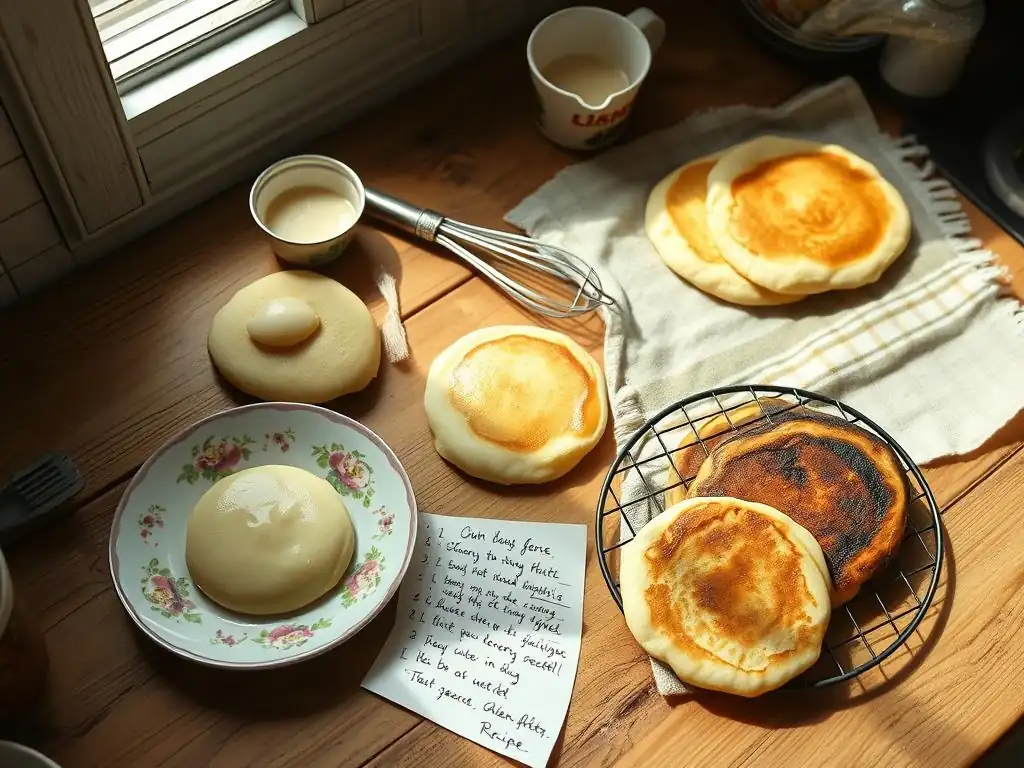
Even with careful scaling and timing adjustments, you might encounter issues when baking small pan cake recipes. Understanding the common problems and their causes can help you diagnose what went wrong and improve your results next time. Don't get discouraged; baking is a science, and scaling recipes adds a layer of complexity.
Common issues include cakes overflowing, baking unevenly, or ending up with a dry or crumbly texture. Each problem usually points to a specific cause, often related to pan preparation, batter quantity, oven hot spots, or baking time. Learning to troubleshoot these will make you a more confident baker of small pan cake recipes.
Cake Overflowing: Causes and Solutions
A common issue when adapting recipes is accidentally filling the small pan too full. As the cake bakes and the leavening agents activate, the batter expands significantly. If the pan is overfilled, the batter will spill over the sides, creating a mess and potentially resulting in a poorly formed cake.
Generally, you should only fill a cake pan about two-thirds to three-quarters full. If your scaled recipe produces more batter than this for your chosen small pan, you have two options: use a slightly larger pan that accommodates the volume while staying within the two-thirds to three-quarters rule, or bake the excess batter as a cupcake or in a separate small container. Always place small pans on a baking sheet before putting them in the oven to catch any potential spills, making cleanup much easier.
Uneven Baking in Small Cakes
Uneven baking can manifest as a cake that is darker on one side, has a domed or cracked top while the edges are set, or is still raw in the center while the edges are overcooked. This is often caused by uneven heat distribution in the oven or placing the pan too close to an oven element.
To combat uneven baking in small pan cake recipes, ensure your oven is properly preheated and calibrated (using an oven thermometer). Avoid placing the pan directly against the oven walls. If you suspect hot spots, try rotating the pan halfway through the baking time. This ensures all sides of the cake are exposed to the same amount of heat, promoting a more even bake.
Dry or Crumbly Texture in Small Pan Cakes
A dry or crumbly texture is one of the most disappointing outcomes in baking. For small pan cake recipes, the most frequent cause is overbaking. Because they bake faster, it's easy to leave them in the oven for just a few minutes too long, which can wick away essential moisture.
Ensure you are using the doneness tests (toothpick, gentle touch) and starting to check early. Remove the cake from the oven as soon as it meets the criteria for doneness. Other less common causes could be inaccurate measurement of dry ingredients (too much flour) or insufficient fat/liquid, but overbaking is typically the primary culprit for dryness in small cakes when the recipe has been scaled correctly.
Small Pan Cake Recipes: Practical Examples
Seeing scaled recipes in action can be incredibly helpful. While exact measurements will vary based on the original recipe and desired pan size, providing examples illustrates the process and gives you a tangible starting point for your own small pan cake recipes.
These examples demonstrate how a standard recipe can be transformed into a perfectly sized small cake, ideal for a personal treat or a mini celebration. They highlight the ingredient quantities you might expect when scaling down common cake types like chocolate and vanilla.
Single-Layer Cake Recipes for Small Pans
Single-layer cakes baked in small pans are wonderfully convenient. They are quick to bake, easy to decorate, and provide just enough cake without excess. A simple vanilla or chocolate single-layer small pan cake baked in a 6-inch round pan is perfect for a small birthday, anniversary, or just a weekend indulgence.
Scaling a standard layer cake recipe to produce just one layer in a small pan simplifies the process. You adapt the full recipe to fit the volume of one small pan, rather than trying to scale for multiple small layers right away. This is a great way to start experimenting with small pan cake recipes before tackling multi-layer miniature creations.
Chocolate Cake Recipe Adjusted for a 6-inch Pan
Let's take a hypothetical standard chocolate cake recipe for two 8-inch layers and adapt it for a single 6-inch small pan cake. An 8-inch round pan has an area of approximately 50.25 sq inches. Two layers would use batter for ~100.5 sq inches total. Our 6-inch pan is ~28.3 sq inches. The scaling factor is roughly 28.3 / 100.5 ≈ 0.28. So, you'd use about 28% of the original recipe ingredients.
If the original recipe called for, say, 2 cups (240g) flour, 2 cups (400g) sugar, 0.75 cup (170g) butter, 3 eggs (150g), 1 cup (240ml) milk, 0.5 cup (120ml) cocoa powder, 1.75 tsp baking soda, and 0.5 tsp salt:
- Flour: 240g * 0.28 ≈ 67g
- Sugar: 400g * 0.28 ≈ 112g
- Butter: 170g * 0.28 ≈ 48g
- Eggs: 150g * 0.28 ≈ 42g (This is less than one egg, about 2-3 tbsp whisked egg)
- Milk: 240ml * 0.28 ≈ 67ml
- Cocoa Powder: 120ml * 0.28 ≈ 34ml (or scale by weight if recipe provides it)
- Baking Soda: 1.75 tsp * 0.28 ≈ 0.49 tsp (almost 0.5 tsp)
- Salt: 0.5 tsp * 0.28 ≈ 0.14 tsp (a pinch)
This scaled recipe yields enough batter for one luscious small pan chocolate cake in a 6-inch pan. Remember to start checking for doneness around 20-25 minutes.
Vanilla Cake Recipe Adjusted for a 4-inch Pan
Scaling down even further for a tiny 4-inch small pan cake requires even more precision with small quantities. A 4-inch round pan has an area of roughly 12.56 sq inches. Using our previous 9-inch recipe example (63.6 sq inches area), the scaling factor is 12.56 / 63.6 ≈ 0.197. So, you'd use about 20% of the original ingredients.
Using the vanilla cake recipe from before (180g flour, 200g sugar, 113g butter, 100g eggs, 1 tsp vanilla, 1.5 tsp baking powder, 0.5 tsp salt, 180ml milk):
- Flour: 180g * 0.2 ≈ 36g
- Sugar: 200g * 0.2 ≈ 40g
- Butter: 113g * 0.2 ≈ 23g
- Eggs: 100g * 0.2 ≈ 20g (This is less than half an egg, about 1-2 tbsp whisked egg)
- Vanilla Extract: 1 tsp * 0.2 ≈ 0.2 tsp (a tiny amount)
- Baking Powder: 1.5 tsp * 0.2 ≈ 0.3 tsp
- Salt: 0.5 tsp * 0.2 ≈ 0.1 tsp (a tiny pinch)
- Milk: 180ml * 0.2 ≈ 36ml
This yields a truly small pan cake, perfect for one serving. Notice how the ingredient quantities become very small, emphasizing the need for accurate measuring tools, especially a scale, for successful small pan cake recipes at this size. Baking time will be significantly shorter, perhaps only 15-20 minutes.
Beyond Scaling: Creative Adaptations for Small Cakes
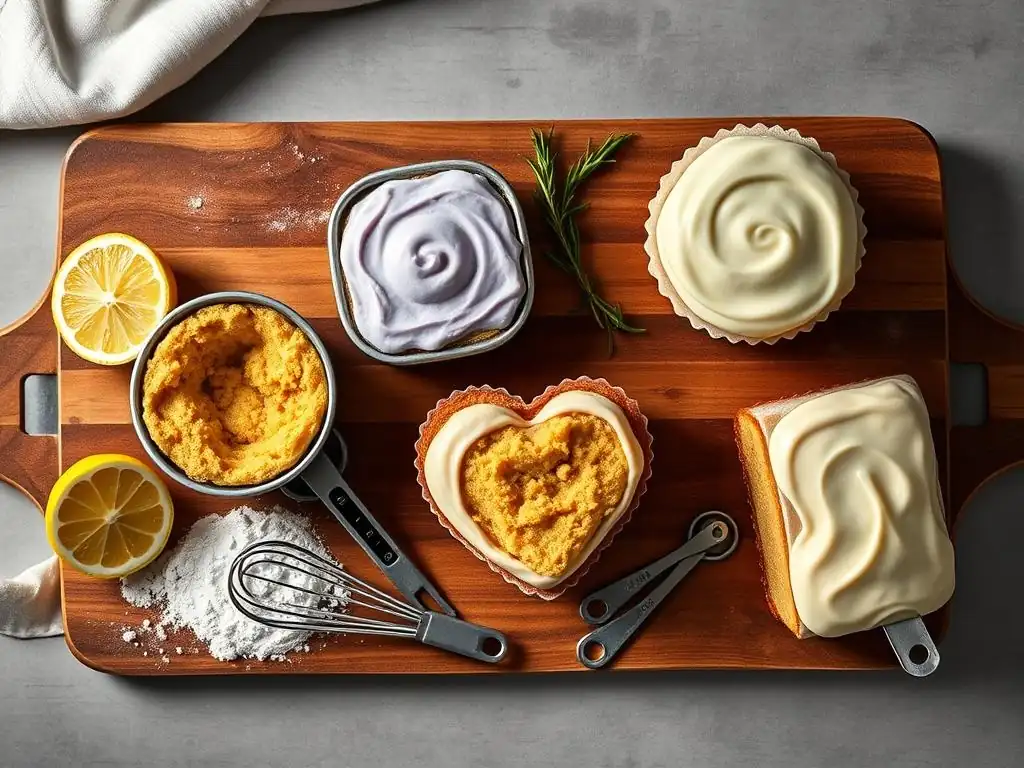
Baking small pan cake recipes opens up a world of creative possibilities beyond just simple scaling. These miniature cakes are perfect canvases for trying new decorating techniques, creating individual desserts, or assembling charming small tiered cakes for special occasions.
Their size makes them less intimidating to experiment with, allowing you to refine your skills without committing to a large batch of batter. From simple glazes to intricate piping, small cakes are a joy to finish and present.
Layering Techniques for Small Cake Tiers
Who says tiered cakes have to be large? Small pan cake recipes are ideal for creating adorable mini tiered cakes. You can bake two or three small cakes in different sized pans (e.g., a 6-inch and a 4-inch) or bake multiple small layers of the same size and stack them.
Once baked and cooled, these small layers can be filled and stacked just like a traditional cake, using frosting or ganache. Their smaller size makes them easier to handle and stack, perfect for practicing your layering skills. A small two-tier cake makes a stunning centerpiece for an intimate celebration.
Decorating Ideas for Small Cakes
Decorating small pan cake recipes can be simple yet elegant. A minimalist approach often works best. A simple pourable glaze, a dusting of powdered sugar, or a swirl of buttercream applied with an offset spatula can be beautiful.
For more detail, small cakes are perfect for trying out piping techniques on a smaller scale. Use a piping bag with a star tip to create simple swirls or rosettes. Fresh berries, chocolate shavings, or edible flowers make lovely garnishes that don't overwhelm the small size of the cake.
Turning a Small Cake into a Special Occasion Treat
A small pan cake is inherently special due to its size and often, its purpose – baking a cake just for one or two feels like a treat. Elevate this further by decorating it for a specific occasion. A small chocolate cake with a single candle is perfect for a personal birthday celebration. A small vanilla cake topped with berries and a dollop of whipped cream can be a romantic anniversary dessert.
The effort of baking and decorating a small pan cake tailored to a specific person or event makes it feel incredibly thoughtful and luxurious, proving that you don't need a grand gesture to make someone feel celebrated.
Essential Tools for Baking Small Cakes
To successfully bake small pan cake recipes, having the right tools is just as important as having a good recipe. While many standard baking tools are sufficient, some are particularly helpful when working with smaller quantities and pans.
Investing in a few key items can make the process of scaling, measuring, baking, and decorating your small cakes much smoother and more accurate, leading to better results every time.
Must-Have Baking Pans for Small Cake Recipes
The most obvious essential is a collection of small baking pans. Consider starting with a few different sizes of round cake pans, such as 6-inch and 4-inch diameters. These are versatile for single-layer cakes or building small tiered creations.
Small loaf pans (like 8x4 inches or smaller) are also great for dense cakes like pound cake or quick breads scaled down. Look for quality pans, ideally made of aluminum for even heat distribution, or non-stick for easy release. Having a selection allows you to choose the perfect size for your desired small pan cake recipe volume.
Measuring Tools for Accurate Scaling
As highlighted earlier, accurate measurement is critical when scaling recipes for small pan cake recipes. A reliable kitchen scale is arguably the most important tool for weighing dry ingredients like flour, sugar, and even scaled-down amounts of butter or eggs.
In addition to a scale, a comprehensive set of measuring spoons, including increments like 1/8 tsp and 1/4 tsp, is essential for precisely measuring small quantities of leavening agents, salt, and flavorings. A set of liquid measuring cups with clear markings will also help ensure accuracy with milk, oil, or other liquids.
Helpful Accessories for Baking and Decorating
Beyond the pans and measuring tools, a few accessories can simplify baking and finishing small pan cake recipes. Parchment paper rounds cut to the size of your small pans are invaluable for ensuring cakes don't stick and come out cleanly.
A small offset spatula is perfect for spreading batter evenly in the pan and for applying frosting or glaze smoothly to the top and sides of your small cakes. Cooling racks are necessary for allowing the cakes to cool completely before handling or decorating, preventing them from becoming dense or steaming in the pan.
Conclusion: Mastering Small Pan Cake Baking
Baking simple cakes in small pans is a rewarding skill that allows you to enjoy freshly baked treats without the commitment of a large cake. By understanding the principles of scaling recipes based on pan area, accurately measuring ingredients, and adjusting baking times, you can successfully adapt many standard recipes into delightful small pan cake recipes.
While it might take a little practice to get the scaling and timing just right for your specific oven and pans, the process is an excellent way to deepen your understanding of baking fundamentals. The satisfaction of pulling a perfectly baked, miniature cake from the oven is immense.
The Joy of Baking Perfectly Sized Cakes
There's a unique joy in baking a cake that is perfectly sized for the occasion, whether it's a personal craving, a small family dessert, or a thoughtful gift. Small pan cake recipes minimize waste, offer portion control, and provide the opportunity to bake more frequently and experiment with different flavors and decorations.
Mastering the art of scaling down recipes opens up a world of possibilities, allowing you to transform your favorite cake recipes into charming, small-scale versions. Embrace the challenge, learn from each bake, and soon you'll be confidently creating delicious small pan cake recipes that are just right.
Further Resources for Beginner Baking Recipes at BakeWithEase.com
Developing confidence with small pan cake recipes is a great step in your baking journey. At BakeWithEase.com, we offer a wealth of resources for beginner bakers looking to expand their skills.
Explore our collection of simple cake recipes, guides on basic techniques, and tips for mastering foundational baking concepts. Whether you're interested in cookies, breads, or pastries, you'll find step-by-step instructions and helpful advice to make baking accessible and enjoyable. Keep practicing your small pan cake recipes, and explore the many other easy and delicious baking adventures waiting for you on our site!
Frequently Asked Questions
How do I adjust a cake recipe designed for a 9-inch pan to fit a smaller 6-inch pan?
You'll need to reduce the recipe's ingredients. A good starting point is to calculate the volume difference between the pans and adjust the ingredients proportionally. Remember that baking times may also need adjusting; check for doneness frequently.
What are some common mistakes people make when adapting cake recipes for smaller pans?
Overfilling the pan is a frequent error, leading to overflow. Also, neglecting to adjust baking time can result in underbaked or overbaked cakes. Finally, not properly preparing the pan (greasing and flouring) is a common culprit.
Can I use the same baking temperature when baking a cake in a smaller pan?
Generally, yes, you can use the same temperature. However, keep a close eye on the cake, as the smaller size will likely bake faster. Start checking for doneness a few minutes earlier than the original recipe suggests.
What are some reliable methods for calculating the volume of different cake pans?
For round pans, use the formula πr²h (pi times radius squared times height). You can also find online cake pan volume calculators that simplify the process. Remember to use consistent units (e.g., inches) for all measurements.
Are there specific types of cake recipes that are easier to adapt for smaller pans than others?
Simpler cake recipes, like vanilla or chocolate cakes, are usually easier to adapt. Recipes with complex layering or delicate ingredients might be more challenging to adjust without significantly altering the cake's texture or flavor.
Final Reflection: Baking Beyond the Standard
The quest for the perfect small-pan cake is more than just a recipe adjustment; it's a testament to the adaptable nature of baking itself. This article explored the simple yet crucial art of scaling down cake recipes, highlighting the importance of understanding ratios and adapting baking times. In a world increasingly focused on portion control and mindful consumption, the ability to bake delicious cakes in smaller pans holds significant relevance.
The impact of this seemingly minor skill extends far beyond individual kitchens. It empowers home bakers to experiment with flavors and techniques without committing to large batches, reducing food waste and encouraging creativity. The joy of a perfectly baked miniature cake, tailored to a specific occasion or appetite, is a powerful reminder of the personal connection we forge with food. Baking is at once child's play and adult joy. And love.
– Alma Flor Ada. This quote perfectly captures the essence of what we've explored – the simple pleasure and profound satisfaction derived from adapting a recipe to suit our needs.
Now, I invite you to consider your own baking journey. Have you ever been intimidated by a recipe because of its size? Try scaling it down! Embrace the challenge of adjusting baking times and temperatures, and discover the rewarding experience of creating perfectly sized cakes for any occasion. The ability to adapt recipes is a skill that extends far beyond baking; it's a metaphor for embracing flexibility and resourcefulness in all aspects of life. So, grab your favorite small pan, choose a recipe, and embark on your own baking adventure. The perfect, perfectly-sized cake awaits.
Unlock Your Baking Potential: Scale Your Cakes with Confidence!
Thanks for taking the time to explore the world of adaptable cake recipes! You now have the power to create delicious cakes in any pan size. Ready to put your new skills to the test?
- Bake a masterpiece today! Try scaling your favorite recipe to fit a different pan – maybe that adorable mini bundt pan you've been eyeing.
- Share your baking triumph! Show off your perfectly scaled cake on social media using #BakeWithEase and inspire other bakers.
- Explore our recipe collection for more baking adventures. Find even more inspiration to unlock your baking potential!
What delicious cake creation will you bake next, using your newfound scaling skills?