
Smart Ingredient Swaps for Healthier Baked Goods

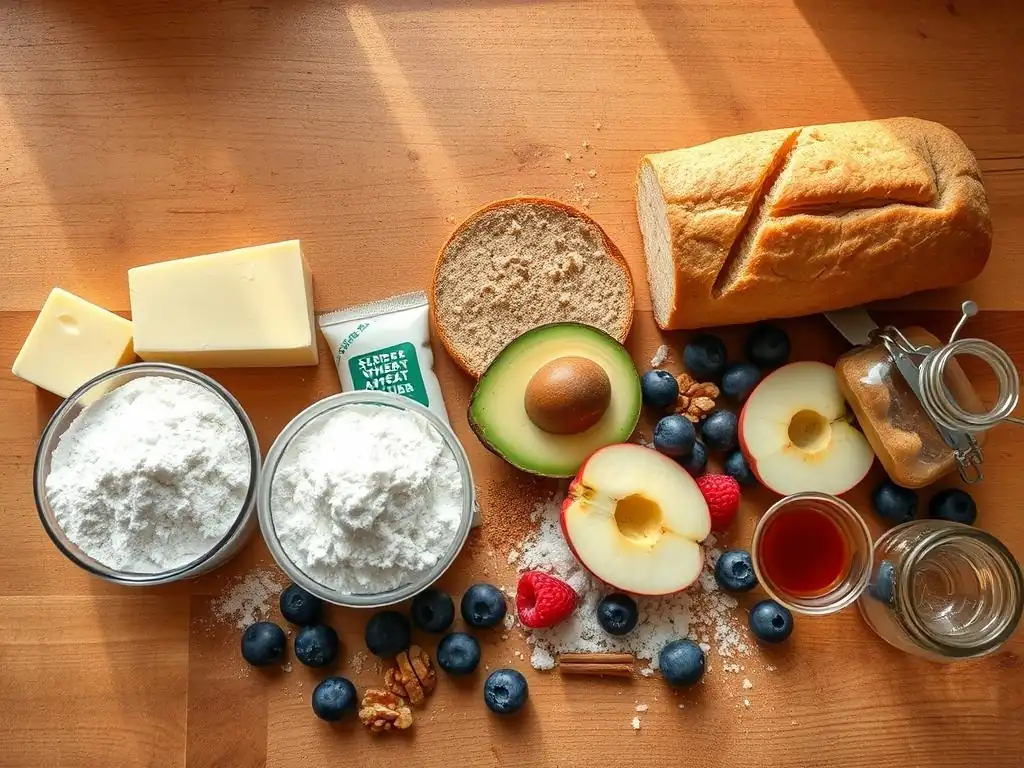
Welcome to BakeWithEase, where transforming ordinary ingredients into extraordinary treats is our passion! Curious about how to indulge without the guilt? Discover the secrets to healthy baking ingredient substitutions and unlock a world of flavorful, guilt-free pastries and desserts. Let's dive in and explore how simple swaps can revolutionize your baking!
- Smart Ingredient Swaps for Healthier Baked Goods: Bake with Ease
- Introduction to Healthy Baking with Ingredient Substitutions
- Mastering Healthy Baking Ingredient Substitutions: A Comprehensive Guide
- Smart Swaps for Healthier Baked Goods: Your Go-To Guide
- Recipe Adaptations: Putting Healthy Baking Ingredient Substitutions into Practice
- Tips and Tricks for Successful Healthy Baking Swaps
- Conclusion: Enjoy Delicious and Healthier Baked Goods with Smart Substitutions
-
Frequently Asked Questions
- What are some common reasons to make ingredient substitutions in baking?
- What are some healthy substitutions for butter in baking recipes?
- Can I substitute all-purpose flour for a healthier alternative, and what are my options?
- What are some ways to reduce the amount of sugar in my baked goods without sacrificing taste?
- How can I substitute eggs in a baking recipe if I am vegan or have an egg allergy?
- Final Reflection: Baking a Healthier Future, One Swap at a Time
- Unlock Your Baking Potential: Healthier Treats Await!
Smart Ingredient Swaps for Healthier Baked Goods: Bake with Ease
Introduction to Healthy Baking with Ingredient Substitutions
Why Consider Healthy Baking Ingredient Substitutions?
In today's world, many of us are becoming more conscious of what we eat, seeking ways to nourish our bodies while still enjoying life's pleasures. Baked goods, often associated with indulgence, can seem at odds with a healthy lifestyle. Traditional recipes frequently rely heavily on refined sugar, saturated fats, and white flour, ingredients that, consumed in excess, contribute to health concerns like high blood sugar, weight gain, and reduced fiber intake.
For example, a single slice of a typical store-bought chocolate cake can contain upwards of 30-40 grams of sugar and 15-20 grams of fat, much of it saturated. This growing awareness drives the interest in finding ways to make our favorite treats a little bit better for us, without sacrificing taste or texture. This is where the art of healthy baking ingredient substitutions comes into play.
Making smart healthy baking ingredient substitutions allows you to modify classic recipes to reduce their less desirable components while boosting their nutritional profile. By swapping out ingredients like white sugar for natural sweeteners, butter for healthier oils or fruit purees, and white flour for whole grains or nut flours, you can create baked goods with more fiber, less sugar, fewer unhealthy fats, and sometimes even added vitamins or antioxidants. This doesn't mean turning a cookie into a kale smoothie, but rather making incremental improvements that add up over time.
It empowers you to enjoy a homemade muffin or a slice of cake with less guilt, knowing you've made choices that support your well-being. It's about finding a balance between deliciousness and health.
The BakeWithEase Philosophy: Enjoying Treats Responsibly
At BakeWithEase, our core belief is that baking should be accessible, enjoyable, and a source of comfort and creativity for everyone. We understand that the joy of baking and sharing homemade treats is a wonderful part of life. Our philosophy isn't about restricting yourself from ever enjoying a cookie or a slice of cake; instead, it's about empowering you with the knowledge and techniques to make informed choices.
Enjoying treats responsibly means being mindful of the ingredients you use and understanding how small adjustments can significantly impact the nutritional value of your baked goods. This is precisely why we champion the exploration and practice of healthy baking ingredient substitutions.
We believe that with the right knowledge and a little experimentation, you can adapt almost any recipe to better suit your health goals without compromising on flavor or texture. BakeWithEase provides you with the step-by-step guides, tips, and recipes that make these healthy baking ingredient substitutions easy and approachable, whether you're a complete beginner or an experienced baker looking to lighten up your repertoire.
It's not about deprivation; it's about delicious evolution. By learning how to swap ingredients intelligently, you open up a world of possibilities for creating baked goods that you can feel good about eating and sharing, seamlessly integrating your love for baking with a balanced and health-conscious lifestyle.
Mastering Healthy Baking Ingredient Substitutions: A Comprehensive Guide

Understanding the Role of Ingredients in Baking
Before diving into swaps, it's crucial to understand the fundamental roles each ingredient plays in a baked good. Flour provides structure, forming the framework through gluten development (in wheat flour) or other starches and proteins. Sugar does more than sweeten; it contributes moisture by attracting water, aids in browning (Maillard reaction and caramelization), tenderizes by interfering with gluten development, and helps leavening by providing food for yeast or aiding creaming with fat. Fat adds tenderness, moisture, richness, and flavor, and helps create flaky layers or a crumbly texture.
Eggs bind ingredients together, provide leavening (especially when whipped), add richness, and contribute to structure. Liquids (milk, water, yogurt) hydrate dry ingredients, activate leaveners, and allow gluten to develop. Leaveners (baking powder, baking soda, yeast) create gases that make baked goods rise, resulting in a light and airy texture.
Understanding these roles is key because when you make healthy baking ingredient substitutions, you're not just swapping one item for another; you're replacing a specific function. Replacing sugar with a liquid sweetener, for instance, means you're adding more moisture, which will affect the texture and potentially require reducing other liquids. Substituting fat with applesauce drastically reduces tenderness and richness, changing the crumb structure.
Swapping white flour for a gluten-free nut flour removes gluten structure entirely, necessitating binders like eggs or gums. Successful healthy baking ingredient substitutions require predicting these changes and often making compensatory adjustments to other ingredients or the baking process itself.
The Impact of Ingredient Swaps on Texture and Flavor
Every ingredient swap, particularly in healthy baking ingredient substitutions, will inevitably influence the final texture and flavor of your baked goods. For example, substituting butter with applesauce dramatically reduces fat, leading to a much denser, often gummier, and less tender crumb. The rich, creamy mouthfeel provided by butter is replaced by a lighter, more cake-like texture. Similarly, replacing granulated white sugar with a liquid sweetener like maple syrup introduces a distinct flavor profile (the taste of maple!) and adds significant moisture, which can result in a chewier texture and faster browning on the exterior.
Using alternative flours also has a profound impact. Whole wheat flour, with its higher protein and fiber content (roughly 12g fiber per cup vs. 3g for white flour), creates a denser, heartier texture compared to the light crumb of white flour. Nut flours like almond flour (high in fat, no gluten) produce moist, tender, and slightly crumbly results, entirely different from wheat-based goods.
Coconut flour, being extremely absorbent, yields a dry, dense product if not balanced with ample liquid and eggs. Mastering healthy baking ingredient substitutions involves anticipating these textural and flavor changes and learning how to balance them, often through trial and error, to achieve a desirable outcome.
Smart Swaps for Healthier Baked Goods: Your Go-To Guide
Replacing Refined Sugar: Healthier Sweetener Alternatives
The primary goal when considering healthy baking ingredient substitutions for sugar is to reduce the amount of refined sucrose consumed and potentially introduce sweeteners with a slightly lower glycemic impact or additional nutrients. Refined white sugar provides sweetness and performs crucial structural roles (moisture, browning, tenderness). Alternatives include natural liquid sweeteners like honey and maple syrup, and fruit-based options like date paste or applesauce. While these are often perceived as "healthier," it's important to remember they are still sugars and should be used in moderation.
Natural sweeteners often bring their own flavors and properties. Maple syrup offers a distinct earthy taste and adds moisture. Honey is sweeter than sugar and also adds moisture and a unique floral or robust flavor depending on the type. Dates, when pureed, provide sweetness along with fiber and nutrients, resulting in a denser, fudgier texture.
While some of these might have a slightly lower glycemic index compared to white sugar (e.g., white sugar GI ~65, maple syrup GI ~54, date paste GI ~42), they still raise blood sugar levels. The benefit often lies in consuming less total sugar or gaining a little extra fiber and micronutrients through the substitute. Exploring these healthy baking ingredient substitutions for sugar opens up new flavor dimensions.
Swapping White Sugar for Natural Sweeteners: A Comparison
When swapping white sugar for natural sweeteners, it's rarely a one-to-one volume substitution due to differences in sweetness, moisture content, and physical form. Granulated white sugar provides bulk and aids in creaming with fat, which incorporates air for leavening.
Liquid sweeteners like honey and maple syrup add moisture and don't contribute to the creaming process in the same way. A common starting point for replacing white sugar with honey or maple syrup is to use about 3/4 cup of the liquid sweetener for every cup of sugar, and often reducing the total liquid in the recipe by a few tablespoons to compensate for the added moisture.
Coconut sugar is a granular alternative that behaves more similarly to white sugar in recipes, offering a slight caramel flavor and retaining some minerals. Its glycemic index is often cited as slightly lower than white sugar (around 50-54), though this can vary. You can often substitute coconut sugar cup-for-cup with white sugar, although the texture might be slightly less fine. Understanding these differences is key to making successful healthy baking ingredient substitutions for sweetness.
Using Honey, Maple Syrup, and Dates in Baking
Honey and maple syrup are excellent healthy baking ingredient substitutions for adding natural sweetness and moisture. They work particularly well in muffins, quick breads, cakes, and certain cookies. Because they are liquids, they contribute to the wet ingredients column, and you'll typically need to reduce other liquids in the recipe. They also cause baked goods to brown faster, so you might need to lower your oven temperature slightly (e.g., by 25°F) and monitor baking time closely. Honey is generally sweeter than maple syrup, so you might use slightly less honey than maple syrup when substituting for sugar.
Date paste, made by blending soaked dates, is another fantastic option, especially for darker, denser baked goods like brownies, spice cakes, or energy bars. It provides sweetness, fiber, and a lovely chewy texture. As mentioned, it can often replace sugar cup-for-cup in volume, but its high moisture content means you'll likely need to reduce other liquids significantly, and the resulting texture will be denser and fudgier than if using granulated sugar. Using dates as a healthy baking ingredient substitution adds a whole new dimension of flavor and texture.
Incorporating Fruit Purees for Natural Sweetness and Moisture
Fruit purees like unsweetened applesauce, mashed ripe banana, and pumpkin puree serve a dual purpose: they add natural sweetness and act as fat or egg replacers due to their moisture content. While they don't provide the intense sweetness of sugar, they allow you to reduce the added sugar in a recipe. For example, using 1/2 cup of applesauce can replace up to 1/2 cup of sugar in some recipes, in addition to potentially replacing some fat.
Mashed banana is particularly effective in quick breads and muffins, adding sweetness and a distinct flavor while providing moisture and binding. Pumpkin puree works wonders in spiced baked goods, contributing moisture and a subtle sweetness. When using fruit purees as healthy baking ingredient substitutions, be aware that they add their own flavor and color, and can make baked goods denser and less prone to browning. Start by replacing only a portion of the sugar (and/or fat) and see how it affects your specific recipe.
Healthier Fat Options: Reducing Saturated and Trans Fats
Fats are essential in baking for creating tenderness, moisture, and flavor. However, traditional recipes often call for butter or shortening, which are high in saturated and trans fats respectively – types of fats linked to increased cholesterol levels. The goal of healthy baking ingredient substitutions for fat is often to reduce the amount of fat used, or to swap saturated/trans fats for options higher in monounsaturated or polyunsaturated fats, while still achieving a desirable texture.
Healthier fat options include liquid vegetable oils like olive oil, avocado oil, and canola oil, as well as using moisture-rich ingredients like fruit purees or yogurt to mimic some of fat's functions. It's worth noting that while coconut oil is a plant-based option, it is predominantly saturated fat (over 80%), behaving like a solid fat at room temperature, unlike most other oils. Understanding the fat content of different options is the first step towards making informed healthy baking ingredient substitutions.
Substituting Butter with Healthier Oils: Coconut Oil, Olive Oil, and Avocado Oil
Swapping solid fats like butter or shortening for liquid oils can significantly change the texture of baked goods. Oils distribute more evenly and coat flour particles more thoroughly, which inhibits gluten development and leads to a very tender crumb, especially in cakes and muffins. However, they don't trap air when creamed like butter does, so recipes relying on the creaming method (like many cookies and some cakes) might require adjustments to leavening. A common substitution ratio is to use about 3/4 cup of oil for every cup of butter.
- Coconut Oil: Can be used melted as a 1:1 swap for butter by volume in some recipes, though its high saturated fat content means it's not necessarily 'healthier' in terms of saturated fat, but it is trans-fat free. It imparts a subtle coconut flavor unless refined.
- Olive Oil: Extra virgin olive oil has a strong flavor, best suited for savory baked goods or those with strong flavors like lemon or chocolate. Lighter olive oil has a milder taste. It's high in monounsaturated fats.
- Avocado Oil: Has a very neutral flavor and a high smoke point, making it versatile for baking. It's also rich in monounsaturated fats.
These oil swaps are effective healthy baking ingredient substitutions for reducing saturated fat compared to butter.
Using Applesauce or Mashed Banana as Fat Replacements
Fruit purees like applesauce and mashed banana are excellent healthy baking ingredient substitutions for drastically reducing fat content while maintaining moisture. They work by adding bulk and moisture that helps keep baked goods from drying out, partially mimicking fat's tenderizing effect. This is particularly effective in quick breads, muffins, and some types of cookies or brownies.
A common starting point is to replace half of the fat called for in a recipe with an equal volume of unsweetened applesauce or mashed banana. For example, if a recipe calls for 1 cup of butter or oil, try using 1/2 cup of butter/oil and 1/2 cup of applesauce. Replacing all the fat with puree is possible in some forgiving recipes, but often results in a denser, less tender, and sometimes rubbery texture, and the baked goods won't brown as much. Experimentation is key when using these as healthy baking ingredient substitutions.
Understanding the Fat Content of Different Dairy Products
Dairy products like yogurt and sour cream can also be used as healthy baking ingredient substitutions to add moisture and richness while potentially reducing overall fat or saturated fat compared to butter or oil. Greek yogurt, in particular, is a popular swap as it adds protein and can replace some fat in cakes, muffins, or quick breads, contributing to a moist crumb.
Comparing fat content: full-fat Greek yogurt contains around 10% fat, while non-fat Greek yogurt has virtually none. Sour cream is typically around 20% fat. Substituting some butter or oil (e.g., replacing 1/4 cup butter with 1/4 cup full-fat Greek yogurt) can reduce saturated fat while adding a tangy flavor note and moisture. Using non-fat yogurt will reduce fat even further but might require slight adjustments to other liquids or fat sources to maintain texture. These dairy swaps are versatile healthy baking ingredient substitutions to consider.
Boosting Fiber and Nutrients: Flour and Grain Substitutions
Refined white flour is stripped of the bran and germ during processing, removing most of the fiber, vitamins, and minerals. Swapping white flour for whole grain flours or alternative flours is a fundamental strategy for making healthy baking ingredient substitutions to increase fiber, protein, and micronutrient content. However, different flours behave very differently due to variations in protein type (gluten vs. non-gluten), fat content, and absorption rates.
Whole wheat flour, oat flour, almond flour, and coconut flour are popular alternatives, each bringing unique properties to baked goods. Whole grains add a hearty texture and significant fiber (e.g., whole wheat flour has about 12g fiber per cup compared to 3g for white flour). Nut flours add protein, healthy fats, and a tender crumb but lack gluten. Understanding these differences is crucial for successful healthy baking ingredient substitutions involving flour.
Replacing White Flour with Whole Wheat Flour or Oat Flour
Whole wheat flour is the most straightforward healthy baking ingredient substitution for white flour, as it still contains gluten. However, the bran and germ interfere with gluten development, resulting in denser baked goods. To ease into using whole wheat, start by replacing only a portion of the white flour, such as 50% (e.g., if a recipe calls for 2 cups white flour, use 1 cup white flour and 1 cup whole wheat flour). This increases fiber and nutrients while minimizing density.
Oat flour, made by grinding rolled oats, is another excellent option that adds a chewy texture and fiber. It's naturally gluten-free (if certified) but absorbs more liquid than wheat flour. When substituting oat flour for white flour, you generally use slightly less oat flour by volume (e.g., about 3/4 cup oat flour per cup of white flour) or add a bit more liquid to the recipe. These are effective healthy baking ingredient substitutions for boosting whole grains.
Incorporating Almond Flour, Coconut Flour, or Other Nut Flours
Almond flour is a popular gluten-free healthy baking ingredient substitution made from ground almonds. It's high in protein, fiber, and healthy fats, resulting in moist and tender baked goods. Because it lacks gluten, it can't be swapped cup-for-cup with wheat flour in most recipes that rely on gluten for structure. It works best in recipes specifically designed for it or when replacing only a portion of wheat flour (e.g., 25-50%) in recipes like muffins or quick breads to add moisture and richness.
Coconut flour is highly absorbent and high in fiber (around 40g fiber per cup!). It requires significantly more liquid and eggs than other flours to prevent dryness and provide structure. A typical substitution might involve replacing 1/4 cup of coconut flour for 1 cup of white flour, while also adding 1-2 extra eggs and increasing liquid. This is a powerful healthy baking ingredient substitution for fiber but requires careful recipe adjustment. Other nut flours like pecan or hazelnut flour behave similarly to almond flour.
Adding Seeds and Nuts for Extra Fiber and Texture
Beyond swapping the main flour, incorporating seeds and nuts is a simple way to boost the nutritional profile and add texture as part of healthy baking ingredient substitutions. Ingredients like flax seeds, chia seeds, chopped walnuts, almonds, or pumpkin seeds add fiber, healthy fats, protein, and micronutrients without drastically altering the recipe's structure.
You can easily stir ground flax seeds (1-2 tablespoons) into muffin or bread batters, sprinkle chopped nuts on top of cakes or quick breads before baking, or fold rolled oats or seeds into cookie dough. For example, adding 1/4 cup of chia seeds or ground flax seeds to a muffin recipe can significantly increase its fiber content. These additions enhance the nutritional value and provide pleasant textural contrasts, complementing other healthy baking ingredient substitutions you might be making.
Egg Substitutions for Healthier Baking or Dietary Needs

Eggs play several critical roles in baking: binding ingredients, providing structure, contributing to leavening (especially when whipped), and adding richness and moisture. For those with egg allergies, following a vegan diet, or looking to reduce cholesterol, finding effective healthy baking ingredient substitutions for eggs is essential. The best substitute often depends on the egg's primary role in the specific recipe.
Common plant-based egg alternatives include "flax eggs" and "chia eggs," which act primarily as binders, and fruit purees like applesauce or mashed banana, which add moisture and some binding. Commercial egg replacers are also available. It's important to note that egg substitutes work best in recipes where eggs are used mainly for binding and moisture, such as muffins, quick breads, brownies, and some cookies. They are generally less effective in recipes that rely heavily on eggs for leavening, like light and airy cakes, meringues, or soufflés.
Using Flax Eggs or Chia Seed Eggs as Vegan Alternatives
"Flax eggs" and "chia eggs" are popular vegan healthy baking ingredient substitutions that mimic the binding properties of eggs. To make one "flax egg," whisk together 1 tablespoon of ground flaxseed meal with 3 tablespoons of water and let it sit for about 5-10 minutes until it forms a gelatinous consistency. For a "chia egg," use 1 tablespoon of chia seeds (whole or ground) with 3 tablespoons of water and let it sit for 10-15 minutes.
Both flax eggs and chia eggs add fiber and omega-3 fatty acids to your baked goods. They work well as binders in cookies, muffins, pancakes, and quick breads, replacing one egg per flax/chia egg. They can sometimes make baked goods a bit denser or chewier. Using more than two or three flax/chia eggs in a recipe might require further adjustments to prevent a gummy texture. These are reliable plant-based healthy baking ingredient substitutions for binding.
Applesauce or Mashed Banana as Egg Replacers
As mentioned earlier, fruit purees like applesauce and mashed banana can also function as healthy baking ingredient substitutions for eggs, particularly for binding and adding moisture. Approximately 1/4 cup of unsweetened applesauce or mashed ripe banana can replace one egg in many recipes, especially muffins, quick breads, and some cakes.
While they provide binding and moisture, they do not contribute to leavening like whipped eggs do. If the recipe relies heavily on eggs for rise, you might need to add a little extra baking powder (e.g., 1/2 to 1 teaspoon) when using purees as the sole egg replacer. These purees will also impart their own flavor and color to the baked goods and can result in a slightly denser, moister texture. They are versatile healthy baking ingredient substitutions that also help reduce fat and sugar.
Reducing Sodium in Baked Goods: Smart Strategies
Sodium is present in many baked goods, not just from added salt which enhances flavor and balances sweetness, but also from chemical leaveners like baking powder and baking soda. Reducing sodium intake is a common health goal. While completely eliminating salt can make baked goods taste bland, smart healthy baking ingredient substitutions and strategies can significantly lower the sodium content without ruining the flavor.
Standard baking powder is a significant source of sodium, often containing sodium aluminum sulfate or sodium acid pyrophosphate. Baking soda is pure sodium bicarbonate. Salt itself, typically sodium chloride, directly contributes sodium and plays a role in controlling yeast activity, strengthening gluten structure, and enhancing flavor. The goal is to reduce the sodium from these sources while ensuring the baked goods still taste good and rise properly.
Using Low-Sodium Baking Powder
Swapping regular baking powder for a low-sodium version is one of the easiest healthy baking ingredient substitutions for reducing sodium in baked goods. Low-sodium baking powders typically use potassium bitartrate (cream of tartar) or other potassium or calcium-based acids instead of sodium-based ones to react with the alkaline component (often still baking soda, which contains sodium, but in a controlled ratio).
While regular double-acting baking powder can contain around 400-500 mg of sodium per teaspoon, low-sodium versions can reduce this to less than 10 mg per teaspoon. You can often substitute low-sodium baking powder cup-for-cup with regular baking powder, following the package instructions, as the leavening action is similar. This simple swap is a very effective healthy baking ingredient substitution for lowering sodium without dramatically changing the recipe.
Enhancing Flavor with Spices and Extracts instead of Salt
When reducing added salt in baked goods, you might find the flavors fall a bit flat. To compensate and ensure your treats are still delicious, focus on enhancing flavor using other ingredients. This is a flavor-focused aspect of healthy baking ingredient substitutions. Spices, extracts, and zests can provide the necessary punch to make up for the reduced salt.
Ingredients like cinnamon, nutmeg, cloves, cardamom, ginger, vanilla extract, almond extract, lemon zest, orange zest, cocoa powder, or even a touch of instant coffee can add depth and complexity that make the absence of salt less noticeable. For instance, adding an extra teaspoon of vanilla extract or a pinch of cinnamon to your cookie recipe when reducing salt can significantly boost its overall appeal. Using these flavor enhancers allows you to make healthy baking ingredient substitutions for sodium while keeping your baked goods flavorful and enjoyable.
Recipe Adaptations: Putting Healthy Baking Ingredient Substitutions into Practice
Making healthy baking ingredient substitutions becomes clearer when applied to specific recipes. Let's look at how you might adapt a couple of common favorites.
A classic chocolate chip cookie recipe often calls for white sugar, brown sugar, butter, white flour, and eggs. To make this healthier using healthy baking ingredient substitutions, you could adapt it as follows:
- Replace granulated white sugar with maple syrup (e.g., 1 cup sugar becomes ~3/4 cup maple syrup, reducing other liquid slightly).
- Replace some or all of the brown sugar with coconut sugar (1:1 swap) or date paste (adds chewiness, requires liquid adjustment).
- Replace some butter with a healthier oil (e.g., replace 1/2 cup butter with 1/4 cup butter + 1/4 cup avocado oil).
- Replace some white flour with almond flour or whole wheat flour (e.g., replace 2 cups white flour with 1 cup white flour + 1 cup whole wheat flour, or 1.5 cups white flour + 0.5 cups almond flour).
The result? Cookies with less refined sugar, potentially more fiber, and healthier fats. They will likely be softer or chewier depending on the flour and sweetener choices, might brown faster with maple syrup, and will have a distinct flavor profile. This illustrates how multiple healthy baking ingredient substitutions can be combined in one recipe.
Lower-Fat Banana Bread with Applesauce and Whole Wheat Flour
Traditional banana bread often uses a fair amount of oil or butter and white flour. Applying healthy baking ingredient substitutions:
- Replace some or all of the oil/butter with unsweetened applesauce or Greek yogurt (e.g., replace 1/2 cup oil with 1/4 cup oil + 1/4 cup applesauce).
- Replace white flour with whole wheat flour or a blend (e.g., replace 1.5 cups white flour with 1.5 cups whole wheat flour or a 50/50 white/whole wheat blend).
- Increase the amount of mashed banana for natural sweetness, allowing you to slightly reduce added sugar.
This adaptation yields a banana bread that is lower in fat, higher in fiber, and still wonderfully moist thanks to the bananas and applesauce. The texture will be heartier due to the whole wheat flour. This is a practical example of using healthy baking ingredient substitutions to lighten up a dense quick bread.
Tips and Tricks for Successful Healthy Baking Swaps
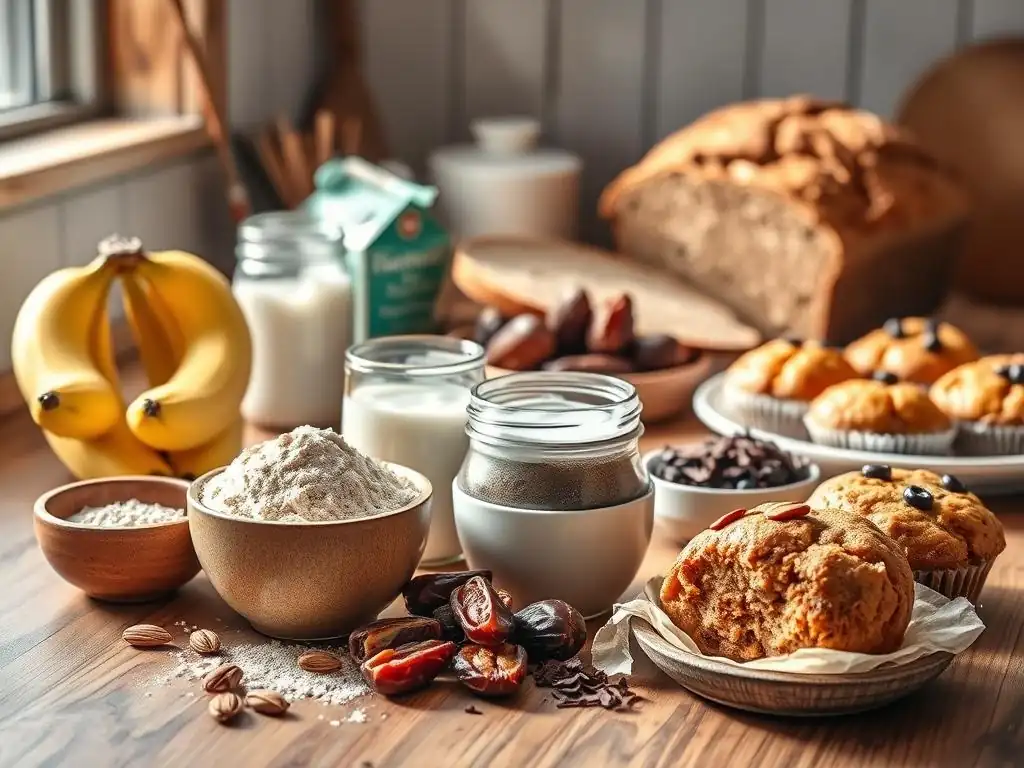
Making healthy baking ingredient substitutions effectively often requires more than just a simple swap. Here are some tips to help you succeed:
Measuring and Adjusting Recipes for Optimal Results
Precision is important in baking, and even more so when making healthy baking ingredient substitutions. Using a kitchen scale to weigh ingredients, especially flours and alternative sweeteners, can provide more consistent results than volume measurements, as densities vary. For instance, a cup of white flour weighs about 120 grams, while a cup of almond flour weighs around 112 grams, and a cup of coconut flour only about 112 grams, but they absorb liquid vastly differently.
- [ ] Use a kitchen scale for accuracy.
- [ ] Note how the substitute ingredient behaves (e.g., more moisture, less structure).
- [ ] Be prepared to make small adjustments to other ingredients (e.g., add a tablespoon more liquid if the batter is too dry, or a tablespoon more flour if it's too wet).
- [ ] Start with replacing only a portion of the original ingredient (e.g., 25-50%) before attempting a full swap.
Successful healthy baking ingredient substitutions often involve a bit of tweaking to find the right balance.
Understanding the Impact of Substitutions on Baking Time
Healthy baking ingredient substitutions can significantly affect how long your baked goods need to bake and at what temperature. Swapping sugar for liquid sweeteners like maple syrup can cause faster browning due to higher moisture content and different sugar types. Using fruit purees as fat replacers also adds moisture, which can mean the inside takes longer to cook through, even if the outside looks done.
Conversely, using flours that absorb less liquid (like almond flour) might result in slightly shorter baking times, while highly absorbent flours (like coconut flour) require longer baking to cook through and set properly. Always start checking for doneness a few minutes earlier than the original recipe suggests when you've made healthy baking ingredient substitutions. Look for visual cues like golden edges, a toothpick coming out clean, and the center springing back when lightly pressed.
Experimenting with Different Combinations of Healthy Ingredients
The world of healthy baking ingredient substitutions is vast and offers endless possibilities for experimentation. Don't feel limited to just one swap per recipe. You can combine different strategies, such as using applesauce to reduce fat and maple syrup to replace some sugar and whole wheat flour for added fiber.
Start with simpler, more forgiving recipes like muffins, quick breads, or drop cookies before tackling more delicate items like layer cakes or pastries. Keep a baking journal to note which swaps you made, how they affected the outcome (texture, flavor, baking time), and what adjustments you made. This iterative process of experimenting and learning is key to mastering healthy baking ingredient substitutions and creating delicious, healthier versions of your favorite treats.
Conclusion: Enjoy Delicious and Healthier Baked Goods with Smart Substitutions
Embracing Healthy Baking for a Balanced Lifestyle
Embracing the principles of healthy baking ingredient substitutions is a powerful way to integrate your love for baking with a commitment to a balanced and health-conscious lifestyle. It's about making conscious choices that reduce the less desirable aspects of traditional baked goods – excess refined sugar, unhealthy fats, and refined grains – while boosting their nutritional value with fiber, healthy fats, and micronutrients. You don't have to give up enjoying your favorite treats; you just need to learn how to make them a little bit better for you.
By making smart healthy baking ingredient substitutions, you gain control over the ingredients in your food, allowing you to tailor recipes to specific dietary needs or health goals, whether that's managing blood sugar, increasing fiber intake, reducing saturated fat, or avoiding allergens. It's a journey of exploration and adaptation that leads to delicious results you can feel good about.
Further Resources for Healthy Baking Recipes and Tips on BakeWithEase.com
Ready to put these healthy baking ingredient substitutions into practice? BakeWithEase.com is your comprehensive resource for recipes and guides that make healthier baking easy and enjoyable. Explore our collection of recipes that already incorporate smart swaps, designed to help you create delicious baked goods with improved nutritional profiles.
Browse our categories like Cheesecakes & Baked Desserts or Pastry and Desserts to find recipes that put these healthy baking ingredient substitutions to work. We offer detailed guides on specific ingredients and techniques to help you confidently adapt your own favorite recipes. With BakeWithEase, enjoying delicious and healthier baked goods is well within your reach.
Frequently Asked Questions
What are some common reasons to make ingredient substitutions in baking?
Ingredient substitutions are often made to reduce sugar content, increase nutritional value, or accommodate dietary restrictions such as gluten intolerance or veganism.
What are some healthy substitutions for butter in baking recipes?
You can often substitute butter with unsweetened applesauce, mashed avocado, or Greek yogurt to reduce fat content. Be sure to adjust moisture levels as needed.
Can I substitute all-purpose flour for a healthier alternative, and what are my options?
Yes, you can! Good options include whole wheat flour, almond flour, or oat flour. Keep in mind that these may alter the texture and require adjustments to other ingredients.
What are some ways to reduce the amount of sugar in my baked goods without sacrificing taste?
Try substituting some of the sugar with natural sweeteners like honey or maple syrup in smaller quantities, or use fruit purees for natural sweetness and moisture.
How can I substitute eggs in a baking recipe if I am vegan or have an egg allergy?
Common egg substitutes include flaxseed meal mixed with water, applesauce, or commercially available vegan egg replacers. Experiment to find what works best for your recipe.
Final Reflection: Baking a Healthier Future, One Swap at a Time
The pursuit of healthier eating doesn't have to mean sacrificing the joy of baking; in fact, smart ingredient swaps can revolutionize your approach to delicious, nutritious treats. This article explored a range of simple substitutions, proving that indulging in baked goods can be both satisfying and beneficial for your well-being. The possibilities are endless, and the impact on your health and the environment can be significant.
The shift towards mindful baking is more than just a trend; it's a reflection of a growing awareness of the connection between food and overall health. We've seen a surge in interest in natural sweeteners, whole grains, and plant-based alternatives, demonstrating a collective desire for healthier options. This movement resonates deeply with me, as I've personally experienced the positive effects of incorporating these changes into my own baking. The food you eat can be either the safest and most powerful form of medicine or the slowest form of poison.
This quote highlights the profound impact our dietary choices have on our lives, and baking offers a delicious avenue for positive change.
Now, it's your turn. Consider the swaps discussed in this article and experiment with them in your own kitchen. Don't be afraid to get creative, to adapt recipes, and to discover your own unique combinations. Each conscious choice you make, each healthy ingredient you incorporate, is a step towards a healthier, happier you. Embrace the journey of mindful baking – it's a delicious adventure that benefits both your body and your soul.
Unlock Your Baking Potential: Healthier Treats Await!
Thanks for joining us on this journey to healthier baking! We hope you've discovered some delicious and surprisingly simple ingredient swaps to elevate your baking game. Ready to put your newfound knowledge into action?
- Prioritize your favorite swap: Choose one ingredient swap from the article that excites you most and bake something amazing with it this week! Think of the delicious possibilities!
- Share your creations: Show us your healthier baking masterpieces! Tag us on social media with #BakeWithEaseHealthier and inspire others.
- Experiment and innovate: Try combining several of these swaps in one recipe. What surprising flavor combinations can you create?
What's your first healthier baking adventure going to be? Let's hear about it in the comments!