
Troubleshooting Dense Viennoiserie Dough: Causes and Fixes

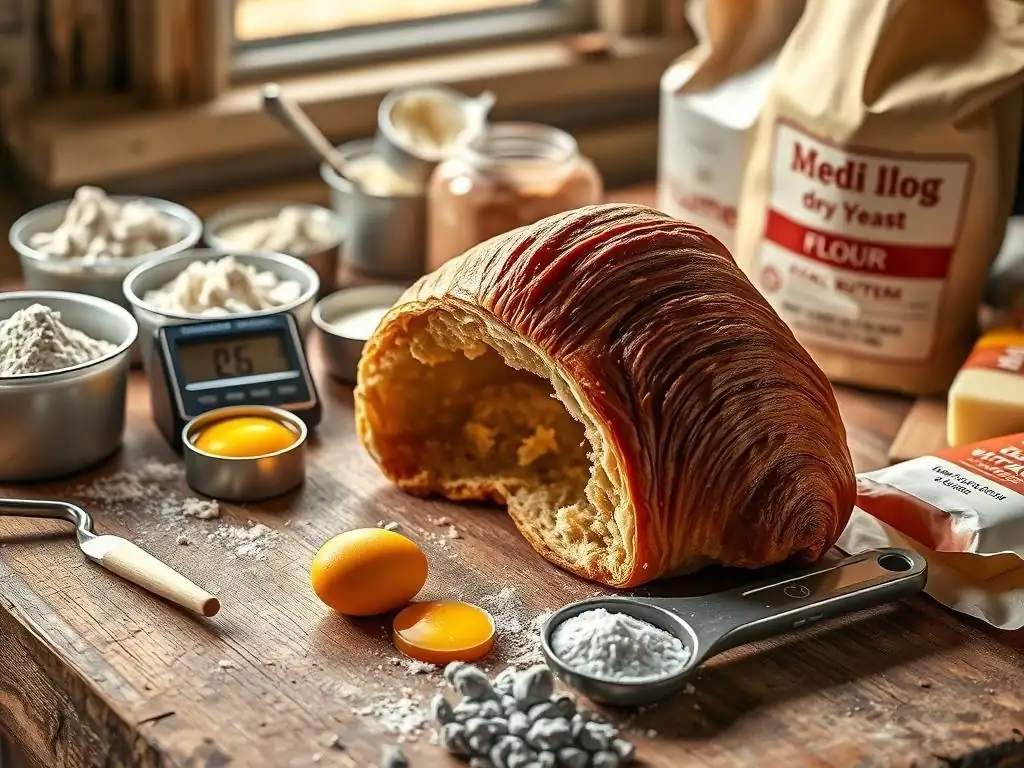
Welcome to BakeWithEase, where we unlock the secrets to baking success! Are you grappling with dense viennoiserie dough problems? Don't despair! Discover the common culprits behind this baking frustration and, more importantly, learn how to achieve that perfect, airy, and flaky texture you've always dreamed of. Let's dive into the solutions and transform your baking game, one delicious croissant at a time. Ready to troubleshoot?
- Troubleshooting Dense Viennoiserie: Causes & Solutions
- Understanding Dense Viennoiserie
- Common Problems & Solutions
- Specific Viennoiserie Troubleshooting
- Prevention: Best Practices
- Advanced Techniques
- Recipes & Resources
-
Frequently Asked Questions
- What are the most common causes of dense viennoiserie dough?
- How can I ensure my viennoiserie dough develops enough gluten?
- What's the best way to avoid lamination problems that lead to dense dough?
- What temperature should my ingredients be when making viennoiserie dough?
- If my viennoiserie dough is already dense, can I save it?
- Final Reflection: The Pursuit of Flaky Perfection in Viennoiserie
- Unleash Your Inner Viennoiserie Master!
Troubleshooting Dense Viennoiserie: Causes & Solutions
Understanding Dense Viennoiserie
Factors Contributing to Dense Viennoiserie
Achieving that signature light, airy, and flaky texture in viennoiserie like croissants and pain au chocolat can feel like a delicate dance. When the dough turns out heavy and dense, it's often a sign that one or more critical steps in the process haven't gone quite right. Several factors contribute to this common issue, ranging from ingredient handling to fermentation and lamination techniques.
Understanding these underlying causes is the first step in preventing and fixing dense viennoiserie dough problems. Issues might stem from the quality or temperature of ingredients used, the intensity and duration of mixing, or even environmental conditions like room temperature and humidity during the baking process.
A major culprit behind dense viennoiserie dough problems is often related to yeast activity and gluten development. If the yeast is inactive or stressed, it won't produce enough carbon dioxide to create the airy structure needed. Similarly, improper gluten development – either too little or too much – can lead to a tough, dense crumb.
For instance, if the dough is undermixed, the gluten network won't be strong enough to hold the gas produced by the yeast, resulting in poor volume. Conversely, overmixing can create an overly tight gluten structure, which also inhibits expansion and leads to a heavy texture. Temperature control throughout the process, especially during proofing and lamination, also plays a significant role in avoiding density issues.
Impact on Texture & Quality
The primary impact of dense viennoiserie dough is a significantly compromised texture and overall quality. Instead of the desired crisp, shatteringly flaky exterior and an open, honeycomb-like interior crumb, you end up with a product that is heavy, bread-like, and often chewy. This lack of flakiness means the delicate layers, created so painstakingly during lamination, have either merged together or haven't separated properly during baking. The visual appeal is also diminished; dense pastries typically don't achieve the same golden-brown color or puffed-up volume as their successful counterparts.
Beyond texture, the flavor and mouthfeel are also negatively affected by dense viennoiserie dough problems. The rich, buttery taste characteristic of well-made viennoiserie is often muted in a dense product. The pleasant contrast between the crisp shell and the soft interior is lost, replaced by a uniform, sometimes gummy, consistency. For bakers striving for that perfect pastry, a dense result is not just a minor flaw but a fundamental failure to achieve the defining characteristics of viennoiserie, making troubleshooting these issues essential for success.
Common Problems & Solutions
Problem 1: Insufficient Rise
Cause: Inactive Yeast
Yeast is the engine that drives the rise in your dough, converting sugars into carbon dioxide gas which creates air pockets. If your yeast is expired, killed by hot liquid, or simply dormant due to cold temperatures, it won't produce enough gas to leaven the dough properly. This is a very common cause of dense viennoiserie dough problems. Using yeast that has been stored improperly, such as at warm temperatures or with the package open for too long, can also significantly reduce its activity.
Solution: Verify Yeast Activity
Always check the expiration date on your yeast package. If you're unsure about its viability, you can "proof" it before adding it to the dough. Mix the yeast with a small amount of warm water (around 40-45°C or 105-115°F) and a pinch of sugar from your recipe. Wait 5-10 minutes; if it becomes foamy and bubbly, it's active and ready to use. If nothing happens, discard it and get fresh yeast. Ensure the liquid used in your dough recipe is warm, but not too hot – typically between 24-30°C (75-85°F) is ideal for activating yeast without killing it.
Cause: Improper Dough Temperature
Dough temperature plays a crucial role in yeast activity. If the dough is too cold during proofing, the yeast will work very slowly, resulting in a sluggish or absent rise. Conversely, if the dough gets too warm, the yeast can become overactive initially but then exhaust itself prematurely, or the dough can overproof, leading to a collapse later on. Both scenarios contribute to dense viennoiserie dough problems. Factors like cold ingredients, a chilly kitchen, or insufficient time in a warm environment can all lead to sub-optimal dough temperature.
Solution: Temperature Control During Proofing
Maintain a consistent, warm environment for your dough during proofing. An ideal temperature range is typically between 24-27°C (75-80°F). You can achieve this by proofing in a slightly warm oven (turned off with just the light on), a proofing box, or simply in a warm spot in your kitchen away from drafts. Cover the dough to prevent drying. Monitor the dough's temperature and volume increase rather than strictly adhering to time, as proofing times can vary significantly based on ambient conditions and yeast activity. The dough should typically at least double in size for the initial bulk fermentation.
Problem 2: Tough Texture
Cause: Overmixing
Overmixing the dough can develop the gluten network too much, making it overly strong and elastic. While some gluten development is necessary to give the dough structure, excessive mixing creates a tight, rubbery texture that resists expansion during proofing and baking. This leads to a tough, dense crumb in the final product. This is particularly easy to do with a stand mixer if the dough is mixed for too long or at too high a speed.
Solution: Gentle Mixing Techniques
Mix the dough just until the ingredients are combined and a smooth, elastic dough forms. For rich doughs like viennoiserie, you might aim for a moderate gluten development where the dough passes the "windowpane test" but isn't overly tight. If using a stand mixer, start on low speed and gradually increase to medium, mixing only until the dough pulls away from the sides of the bowl and feels pliable. Hand mixing requires more effort but makes it easier to feel when the dough has reached the desired consistency. Avoid kneading for excessively long periods once the dough is smooth.
Cause: Insufficient Lamination
Lamination is the process of folding butter into the dough to create multiple layers. If the butter isn't properly distributed or there aren't enough distinct layers formed, the dough will lack the necessary separation points to puff up into flaky layers during baking. This results in a solid, dense structure rather than the characteristic airy crumb. Poor lamination is a direct path to dense viennoiserie dough problems.
Solution: Proper Butter Distribution
Ensure the butter block is cold but pliable, similar in consistency to the dough. It should be evenly incorporated and distributed during the initial lock-in fold. During subsequent folds (typically 3 or 4 single or double folds), roll the dough evenly to maintain consistent thickness and ensure the butter layers remain intact and separate. Keep the dough and butter cold between folds by chilling in the refrigerator for the recommended time (usually 30-60 minutes per turn). This prevents the butter from melting into the dough, which would prevent layer formation.
Problem 3: Lack of Flakiness
Cause: Melted Butter During Lamination
One of the most common causes of a lack of flakiness is the butter melting and integrating into the dough layers rather than remaining as distinct sheets. This often happens if the dough or butter gets too warm during rolling and folding, or if the rest periods between folds are too short. When butter melts into the dough, it essentially creates a single, rich dough rather than a layered structure, making flaky separation impossible during baking. This is a classic contributor to dense viennoiserie dough problems.
Solution: Maintain Cold Butter Temperature
Keep both the dough and the butter cold throughout the lamination process. The ideal temperature for the butter block is usually around 10-13°C (50-55°F) – cold enough to be firm but still flexible enough to roll without breaking. Chill the dough thoroughly before starting lamination and ensure adequate rest periods in the refrigerator (typically 30-60 minutes per turn) to allow the gluten to relax and the butter to firm up. If your kitchen is warm, work quickly and consider placing the dough in the fridge for a few minutes if it starts to soften excessively during rolling.
Cause: Incorrect Folding
The technique of folding the dough is crucial for creating the numerous layers needed for flakiness. Incorrect folding, such as uneven rolling, not squaring off the dough before folding, or performing the wrong number or type of folds, can lead to uneven layers or insufficient layer formation. This results in some sections being dense while others might be slightly more open, but overall the desired flaky structure is absent.
Solution: Precise Folding Techniques
Follow your recipe's instructions precisely regarding the number and type of folds (single or double). Roll the dough into an even rectangle before each fold. Ensure the edges are squared off and the dough thickness is consistent across the sheet. When folding, make clean, precise folds, aligning edges neatly.
For a single fold, fold one third of the dough over the middle third, then the remaining third over that, like a letter. For a double fold, fold both ends to the middle line, then fold the dough in half. Rotate the dough 90 degrees before the next roll to ensure even development of layers in all directions.
Problem 4: Heavy Crumb
Cause: Inappropriate Flour
Using the wrong type of flour can significantly impact the final crumb structure, leading to dense viennoiserie dough problems. All-purpose flour, for instance, typically has a lower protein content (around 10-12%) compared to bread flour. While it can be used in some recipes, it may not provide enough gluten strength to support the rich ingredients and extensive layering of viennoiserie, resulting in a weaker structure that collapses slightly, leading to a heavy crumb.
Solution: Use Strong Bread Flour
For optimal results in viennoiserie, it is generally recommended to use a strong bread flour with a higher protein content (typically 12-14%). This higher protein level provides the necessary gluten structure to withstand the lamination process, hold the butter layers separate, and support the expansion during proofing and baking. The stronger gluten network creates a more open, airy crumb structure, preventing the dough from becoming heavy. Look for flours specifically labeled as "bread flour" or "strong flour."
Cause: Excessive Flour
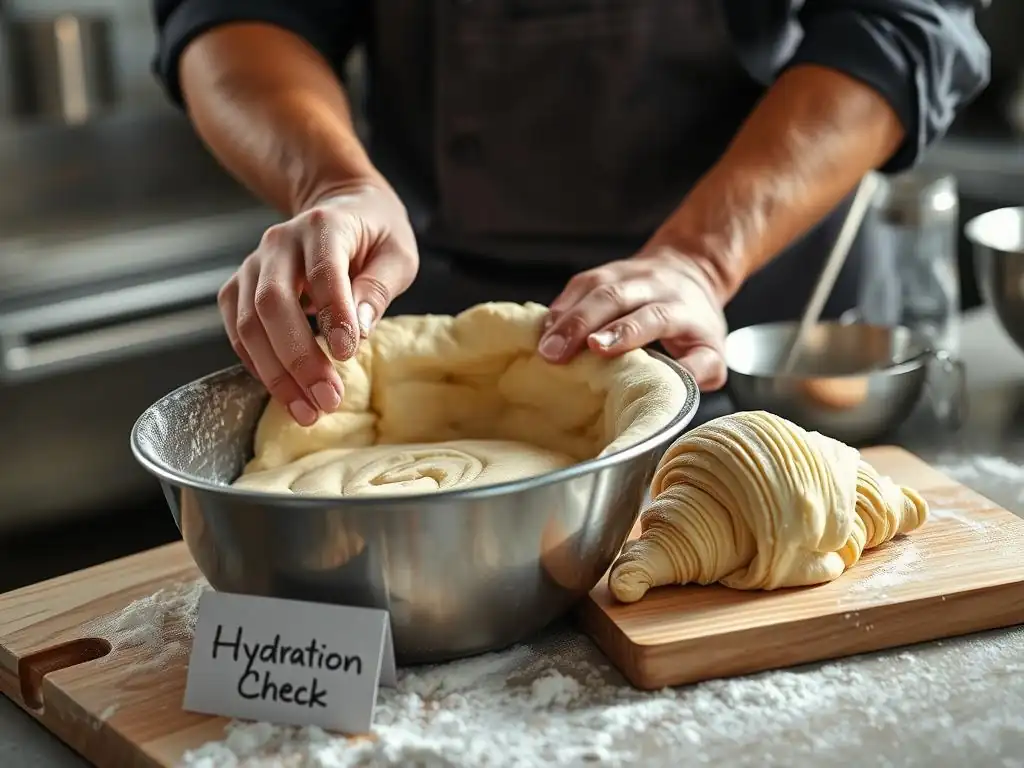
Adding too much flour during mixing or, more commonly, during rolling out the dough for lamination can make the dough dry and stiff. This excess flour gets incorporated into the layers, preventing them from separating cleanly during baking. A dry dough also resists expansion, contributing to a heavy, dense texture. This is an easy mistake to make, especially if the dough feels sticky.
Solution: Accurate Measurement & Hydration
Measure your flour accurately, preferably by weight using a digital scale, rather than by volume, as scooping flour can lead to significant variations. Aim for the hydration level specified in the recipe. When rolling, use as little flour as possible on your work surface and rolling pin. Scrape up any excess flour before folding. If the dough is sticking, chilling it briefly or using a non-stick surface can help reduce the need for extra flour. The dough should be pliable but not overly sticky throughout the process.
Specific Viennoiserie Troubleshooting
Troubleshooting Pain au Chocolat
Pain au chocolat, being a type of viennoiserie, shares many of the same potential pitfalls as croissants, but its specific shape and filling can introduce unique challenges leading to dense viennoiserie dough problems. One common issue is the chocolate bars themselves. If the chocolate is too cold, it can tear the delicate dough layers during shaping. If it's too warm, it can melt prematurely, seeping into the dough and inhibiting layer separation, resulting in a dense, doughy interior around the chocolate rather than a light, flaky one.
Another challenge is ensuring even rolling and consistent thickness before placing the chocolate. If the dough is thicker in some areas than others, these thicker parts will bake differently and are more prone to being dense. Also, the tightness of the roll matters; rolling too loosely can lead to gaps, while rolling too tightly can restrict expansion. Ensuring the chocolate is properly encased and the seam is sealed helps prevent butter leakage during baking, which can also contribute to a heavier final product.
Troubleshooting Croissant Dough
Croissant dough is perhaps the quintessential example of viennoiserie and is highly susceptible to density issues if not handled correctly. The sheer number of layers (often resulting from 3-4 folds, creating hundreds of potential layers) means that any error in lamination, temperature control, or proofing is magnified.
A primary challenge is maintaining the distinction between the butter layers and the dough layers throughout the extensive rolling and folding process. If the butter softens or melts even slightly during a turn, it begins to integrate with the dough, reducing the potential for flaky separation and leading to dense viennoiserie dough problems.
Proofing croissants also requires a delicate balance. They need to proof long enough to achieve significant volume and develop the open crumb structure, but not so long that the butter starts to melt or the structure collapses. Over-proofed croissants can spread excessively in the oven, resulting in flat, dense pastries. Under-proofing leads to a tight, heavy crumb with poor volume. The final bake is also critical; insufficient oven heat or time can prevent the layers from fully separating and setting, leaving the interior doughy and dense.
Prevention: Best Practices
Accurate Measurements
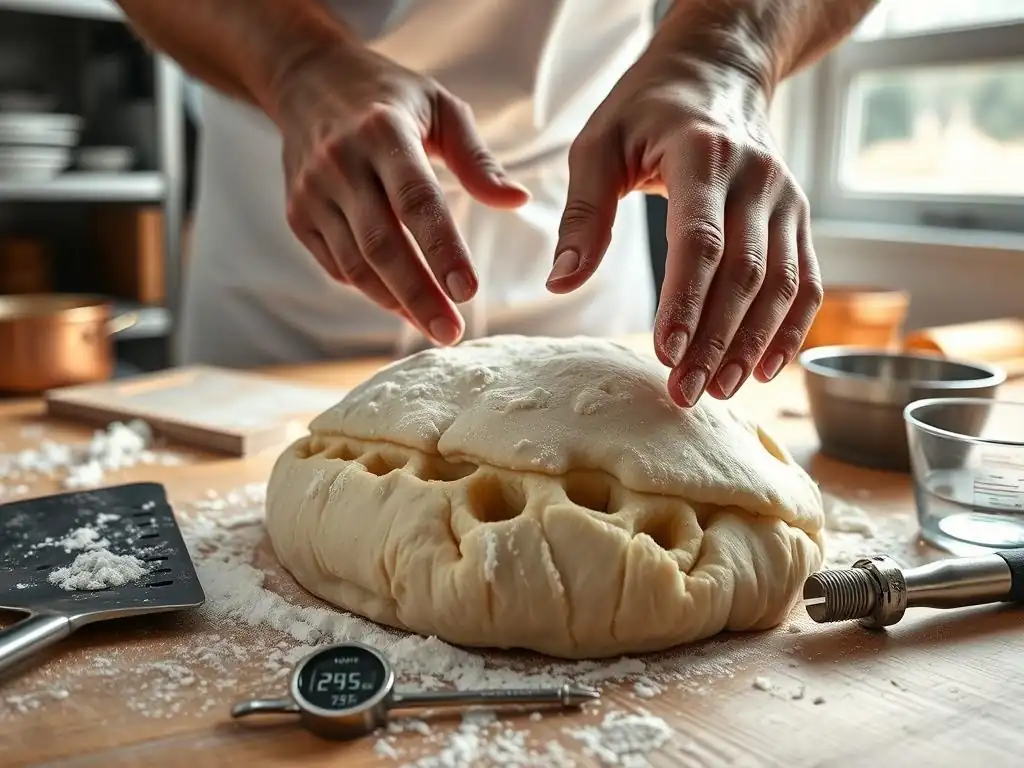
Precision is paramount in baking, and nowhere is it more critical than in the delicate balance required for viennoiserie. Using accurate measurements for all ingredients, especially flour, liquid, and yeast, is the foundational step in preventing dense viennoiserie dough problems. Slight variations in the flour-to-liquid ratio (hydration) can significantly impact dough consistency and gluten development. Too much flour leads to a dry, stiff dough resistant to expansion, while too little results in a sticky, weak dough that's difficult to laminate and hold structure.
Using a digital scale is highly recommended for measuring ingredients by weight, as it is far more accurate than volume measurements, particularly for flour. For example, a cup of flour can vary in weight by as much as 20% depending on how it's scooped and settled. Consistent weight ensures you are using the exact ratios intended by the recipe, setting you up for success from the very beginning and minimizing variables that could lead to a dense result.
Mastering Lamination
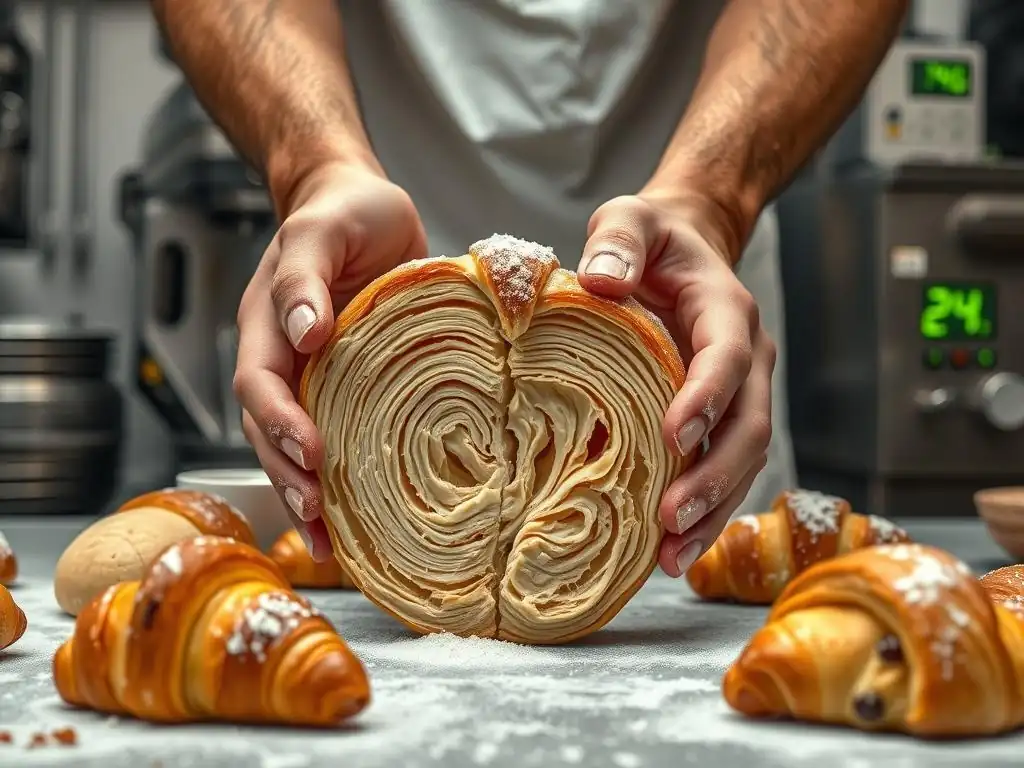
Mastering the lamination process is arguably the most critical skill for achieving light, flaky viennoiserie and avoiding dense viennoiserie dough problems. This involves consistently creating thin, even layers of butter and dough through precise rolling and folding. Key elements include preparing a butter block that is pliable but cold (around 10-13°C or 50-55°F), rolling the dough and butter to uniform thickness, and executing clean, straight folds. The goal is to maintain distinct layers that will puff up in the oven.
Proper chilling between folds is essential. Each rest period (typically 30-60 minutes in the refrigerator) allows the gluten to relax, making the dough easier to roll, and more importantly, allows the butter to firm up. This prevents the butter from squeezing out or melting into the dough during the next rolling step. Working in a cool environment and handling the dough gently and quickly also helps maintain the integrity of the layers. Practice and patience are key to perfecting this technique.
Optimizing Proofing
Proofing is the final rise before baking, and it's a crucial stage for developing the airy structure that prevents dense viennoiserie dough problems. The dough needs sufficient time in a warm, humid environment to allow the yeast to produce ample gas, expanding the layers created during lamination. Under-proofing results in a tight, heavy crumb because the dough hasn't expanded enough. Over-proofing can cause the delicate gluten structure to weaken and collapse, leading to a dense, sometimes flat, result.
An optimal proofing environment is typically around 24-27°C (75-80°F) with moderate humidity. You can achieve this in a proofing box, a warm oven with a pan of hot water, or simply a warm spot in your kitchen, covering the pastries to prevent drying. Proofing is judged by feel and appearance, not just time. Gently poke a pastry; if the indentation springs back slowly, it's likely ready. If it springs back immediately, it needs more time. If it stays indented and doesn't spring back at all, it may be over-proofed.
Advanced Techniques
Using a Poolish or Biga
Incorporating a pre-ferment like a poolish (a wet, liquid starter) or a biga (a drier, stiffer starter) can significantly enhance the flavor, texture, and keeping quality of viennoiserie, helping to combat dense viennoiserie dough problems. These starters are typically made a number of hours or even a day in advance by mixing a portion of the flour, water, and a tiny amount of yeast from the main recipe. This allows for a longer, slower fermentation process.
The benefits of using a pre-ferment include improved gluten development, which contributes to a stronger dough structure capable of holding those delicate layers. The longer fermentation also develops more complex flavors and organic acids, which can help tenderize the crumb and contribute to a lighter texture. While adding an extra step to the process, the enhanced rise and improved structure provided by a poolish or biga can be a valuable tool for achieving lighter, more open viennoiserie.
Adjusting Hydration
Hydration, the ratio of water to flour in a dough, is a fundamental aspect of bread and pastry making. For viennoiserie, which is a rich dough containing butter and sometimes eggs or milk, the hydration level needs careful consideration to avoid dense viennoiserie dough problems. While high hydration doughs (more water) can sometimes lead to a more open crumb in lean breads, viennoiserie doughs are typically lower in hydration compared to rustic loaves, often in the 50-60% range relative to the flour weight, plus the liquid contribution from eggs or milk.
Adjusting hydration can be a fine-tuning technique. If a recipe consistently yields a slightly dense result despite good technique, a minor adjustment to the liquid amount might be beneficial. Adding a tiny bit more liquid (maybe 1-2% more) can sometimes make the dough more extensible and easier to roll, potentially leading to better layer separation.
However, adding too much liquid will make the dough too sticky and difficult to handle during lamination, potentially making dense viennoiserie dough problems worse. Conversely, if the dough feels too slack or weak, a slight reduction in liquid might be necessary. Any adjustments should be small and tested incrementally.
Recipes & Resources
Viennoiserie Recipes
Having access to reliable, well-tested recipes is crucial when embarking on the journey of making viennoiserie and learning how to avoid dense viennoiserie dough problems. A good recipe will provide precise ingredient measurements, detailed instructions for mixing, lamination, and proofing, and often include visual cues or timing guidelines to help you assess each stage. Look for recipes that specify temperatures for ingredients, dough, and proofing environments, as temperature control is paramount for success.
Exploring various recipes can also be beneficial. Start with a classic croissant recipe to understand the fundamental techniques. Then, branch out to pain au chocolat, danishes, or other laminated pastries. Pay attention to differences in ingredient ratios (like butter percentage or the inclusion of eggs/milk) and folding methods, as these variations can influence the final texture and baking process. Comparing approaches can deepen your understanding of how different factors contribute to the outcome.
Recommended Baking Tools
Using the right tools can significantly ease the process of making viennoiserie and help mitigate the risk of dense viennoiserie dough problems. A digital scale is essential for accurate measurement. A sturdy rolling pin, preferably a French-style pin without handles or a heavy marble pin, provides better control and leverage for rolling out the dough evenly and thinly without tearing. A bench scraper is invaluable for handling the dough, dividing it, and cleaning the work surface.
Other helpful tools include a ruler or measuring tape to ensure accurate dimensions when rolling and folding, a sharp knife or pizza cutter for clean cuts during shaping, and parchment paper or silicone mats to prevent sticking. A thermometer (either an instant-read or a dedicated dough thermometer) is crucial for monitoring dough and ingredient temperatures, which is vital for yeast activity and butter consistency. While not strictly necessary, a proofing box or a method for creating a consistent warm, humid proofing environment can dramatically improve proofing results.
Frequently Asked Questions
What are the most common causes of dense viennoiserie dough?
Dense dough is often caused by insufficient gluten development, incorrect lamination, or using ingredients at the wrong temperature. These factors prevent proper layering and rise.
How can I ensure my viennoiserie dough develops enough gluten?
Proper gluten development requires adequate kneading or mixing, using high-protein flour, and allowing sufficient time for the dough to rest and hydrate (autolyse).
What's the best way to avoid lamination problems that lead to dense dough?
Lamination issues can be prevented by ensuring the butter is properly chilled and pliable, creating even layers, and handling the dough gently during folds.
What temperature should my ingredients be when making viennoiserie dough?
Ideally, the ingredients should be cold but not frozen. The goal is to keep the butter solid during the initial mixing and lamination stages to prevent it from melting and being absorbed by the dough.
If my viennoiserie dough is already dense, can I save it?
Unfortunately, rescuing already dense dough is difficult. You could try gently warming it to encourage a slight rise or use it for a different, less demanding recipe. However, the results will likely be compromised, and it's often best to start fresh.
Final Reflection: The Pursuit of Flaky Perfection in Viennoiserie
The quest for flawlessly light and airy viennoiserie is a journey fraught with challenges, but understanding the root causes of dense dough is the first step towards mastering this delicate art. A seemingly small oversight in technique or ingredient can dramatically impact the final product, leaving even experienced bakers frustrated. This article has explored the common pitfalls, from improper mixing and fermentation to temperature fluctuations and ingredient quality, offering practical solutions to each. The pursuit of perfection, however, is ongoing.
The impact of achieving that perfect, delicate layer structure in viennoiserie extends beyond the simple pleasure of eating a delicious pastry. It represents a dedication to precision, a deep understanding of ingredients, and a respect for the process. It's a testament to the power of patience and attention to detail. The details are not the details. They make the design.
- Charles Eames. This quote perfectly encapsulates the importance of meticulousness in baking, particularly when working with such a sensitive dough. The subtle nuances in technique, often overlooked, can make or break the final result, highlighting the artistry involved in viennoiserie baking.
Now, consider your own baking journey. Have you experienced the frustration of a dense croissant or a stubbornly compact pain au chocolat? Take the knowledge gained from this article and apply it to your next baking endeavor. Don't be discouraged by setbacks; instead, view them as opportunities for learning and refinement. Experiment with different techniques, meticulously track your process, and savor the journey towards mastering the art of light and airy viennoiserie. The reward – that first bite of perfectly flaky pastry – is well worth the effort.
Unleash Your Inner Viennoiserie Master!
Thanks for joining us on this journey into the world of dense viennoiserie! We hope you gained valuable insights into troubleshooting those tricky doughs. Now it's time to put your newfound knowledge into practice.
- Bake your perfect croissant: Try the techniques we discussed today – the difference will be incredible! Don't be afraid to experiment with slight adjustments to your recipe.
- Share your success (or challenges!): Join our BakeWithEase community on social media and share your baking journey. We'd love to see your results and help you overcome any hurdles!
- Explore our other viennoiserie recipes: Dive deeper into the world of flaky pastries! We have plenty more recipes and guides to elevate your baking game.
Ready to create the light, airy viennoiserie of your dreams? What's the first recipe you'll be tackling?