
Bake a Traditional Easter Lamb Cake (Simplified Steps)

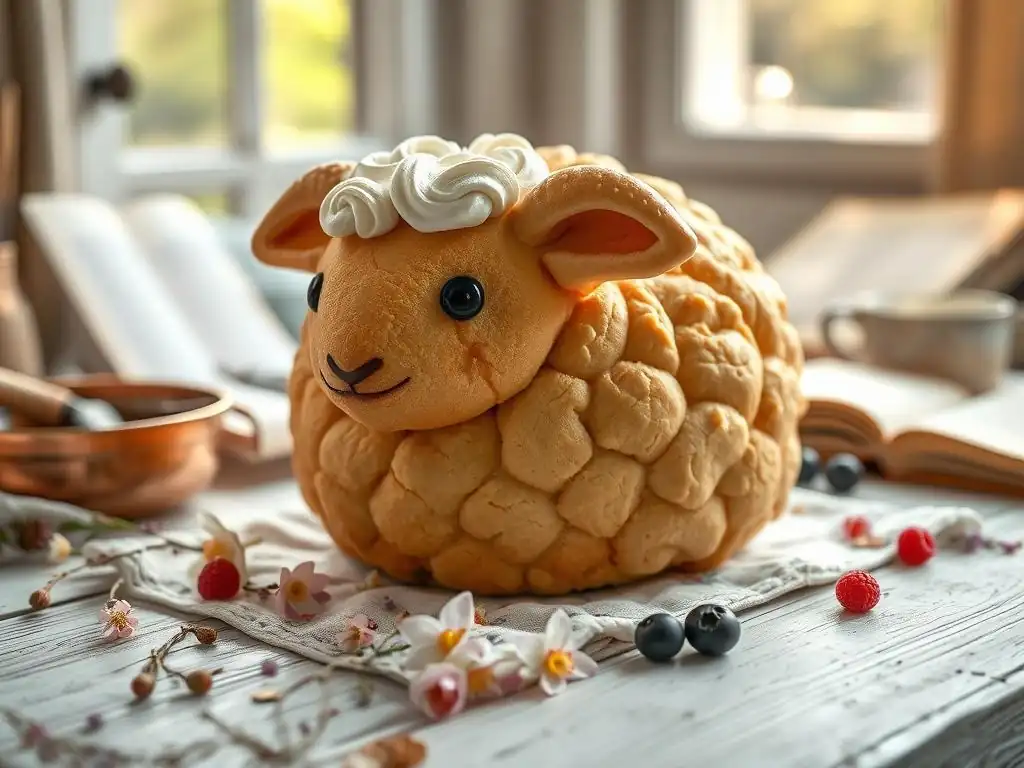
Welcome to BakeWithEase, your haven for all things baking! Ever dreamt of creating show-stopping desserts without the fuss? You're in the right place. This Easter, ditch the stress and embrace the joy of baking with our simplified guide to an Easy Traditional Easter Lamb Cake. Intrigued? Discover how to create this delightful centerpiece using easy-to-follow steps and readily available ingredients. Let's get baking!
- Introduction to Easy Traditional Easter Lamb Cake Baking
- Gathering Your Ingredients for the Perfect Easter Lamb Cake
- Equipment Needed for Baking Your Easter Lamb Cake
- Step-by-Step Guide to Baking an Easy Easter Lamb Cake
- Decorating Your Traditional Easter Lamb Cake: Simple and Effective Techniques
- Tips and Tricks for a Flawless Easter Lamb Cake
- Storing Your Easter Lamb Cake for Maximum Freshness
- Troubleshooting Common Easter Lamb Cake Issues
- Enjoy Your Homemade Easy Traditional Easter Lamb Cake!
-
Frequently Asked Questions
- What makes this Easter Lamb Cake recipe "easy" compared to other traditional recipes?
- What kind of cake pan is required for baking an Easter Lamb Cake?
- Can I substitute any of the ingredients in the recipe, and if so, what are some recommendations?
- How do I prevent my Easter Lamb Cake from sticking to the pan?
- What are some decorating ideas for the finished Easter Lamb Cake?
- Final Reflection: The Enduring Sweetness of Tradition
- Unleash Your Inner Baker: Craft a Stunning Easter Lamb Cake!
Introduction to Easy Traditional Easter Lamb Cake Baking
Why Bake an Easter Lamb Cake? A Symbol of Spring
Baking a traditional Easter lamb cake is more than just making a dessert; it's a cherished springtime tradition steeped in symbolism. The lamb represents purity, new beginnings, and the sacrificial lamb of religious narratives, making it a perfect centerpiece for Easter celebrations. For many families, the annual ritual of baking and decorating this cake is a treasured memory, connecting generations through the shared experience in the kitchen. It evokes feelings of nostalgia, warmth, and the joy of the spring season's renewal.
Beyond its symbolic significance, baking an Easter lamb cake is a wonderful way to create a memorable and personal touch for your holiday gathering. Unlike store-bought options, a homemade lamb cake carries the love and effort you put into it. It becomes a conversation starter and a delightful visual treat before it's even sliced. This easy traditional Easter lamb cake guide from BakeWithEase aims to make this beautiful tradition accessible to everyone, regardless of their baking experience.
BakeWithEase's Guide to a Simple Easter Lamb Cake
Welcome to BakeWithEase, where we believe that everyone can master the art of baking, even complex-looking creations like a traditional Easter lamb cake. We've broken down the process into simple, manageable steps designed for home bakers. Our approach focuses on clear instructions, easy-to-find ingredients, and practical tips to ensure your success. We understand that tackling a shaped cake can seem daunting, especially if you're new to using specialized molds, but our simplified guide will walk you through every stage, from mixing the batter to the final decorative touches.
This guide is crafted to demystify the process of creating an easy traditional Easter lamb cake. We'll share insights into choosing the right ingredients, using the lamb cake mold effectively, and simple decorating techniques that yield impressive results. Whether you're baking for the first time or looking for a foolproof method, our goal is to empower you to create a beautiful and delicious centerpiece that will delight your family and friends this Easter. Let's get started on this sweet journey together!
Gathering Your Ingredients for the Perfect Easter Lamb Cake
Essential Ingredients for a Delicious Lamb Cake
Creating a moist and flavorful easy traditional Easter lamb cake starts with gathering high-quality ingredients. You'll typically need standard baking staples like all-purpose flour (around 2 cups or 240 grams), granulated sugar (about 1.5 cups or 300 grams), unsalted butter (around 1 cup or 227 grams, softened), large eggs (usually 3 to 4), milk (about 1 cup or 240 ml), vanilla extract (1-2 teaspoons), baking powder (1-2 teaspoons), and a pinch of salt.
The precise quantities will depend on the specific recipe and the size of your lamb mold, but these represent common amounts for a standard cake mix or scratch recipe sized for a typical 3D lamb mold holding roughly 6-8 cups of batter. Using room temperature eggs and softened butter is crucial for achieving a smooth, well-emulsified batter.
For the frosting, a simple buttercream or powdered sugar glaze is traditional for an Easter lamb cake. A basic buttercream might require about 1 cup (227 grams) of unsalted butter, 3-4 cups (360-480 grams) of powdered sugar, 1/4 cup (60 ml) of milk or cream, and 1 teaspoon of vanilla extract. For the classic fluffy look, some bakers opt for a coconut frosting using shredded coconut. Having these key ingredients measured out and ready before you begin mixing will ensure a smooth and stress-free baking process for your easy traditional Easter lamb cake.
Substitutions and Variations for Your Easter Lamb Cake Recipe
While the classic recipe provides a wonderful foundation, you can easily make substitutions and variations to tailor your easy traditional Easter lamb cake to dietary needs or flavor preferences. For a dairy-free version, substitute unsalted butter with a plant-based butter alternative and milk with a non-dairy milk like almond, soy, or oat milk. Ensure your plant-based butter is suitable for baking. Gluten-free flour blends can often be used as a 1:1 substitute for all-purpose flour, though you might need to adjust the liquid slightly depending on the blend. Always check the specific gluten-free flour manufacturer's recommendations for cake baking.
Flavor variations are also simple to incorporate. Consider adding lemon zest or a touch of almond extract to the batter for a different twist. For the frosting, you could use a cream cheese frosting instead of buttercream for a tangier flavor, or incorporate cocoa powder for a chocolate lamb cake. If you prefer a lighter frosting, a simple powdered sugar glaze thinned with milk or lemon juice works well and is very easy. These simple adjustments allow you to personalize your easy traditional Easter lamb cake while keeping the baking process straightforward.
Equipment Needed for Baking Your Easter Lamb Cake
The Importance of a Good Lamb Cake Mold
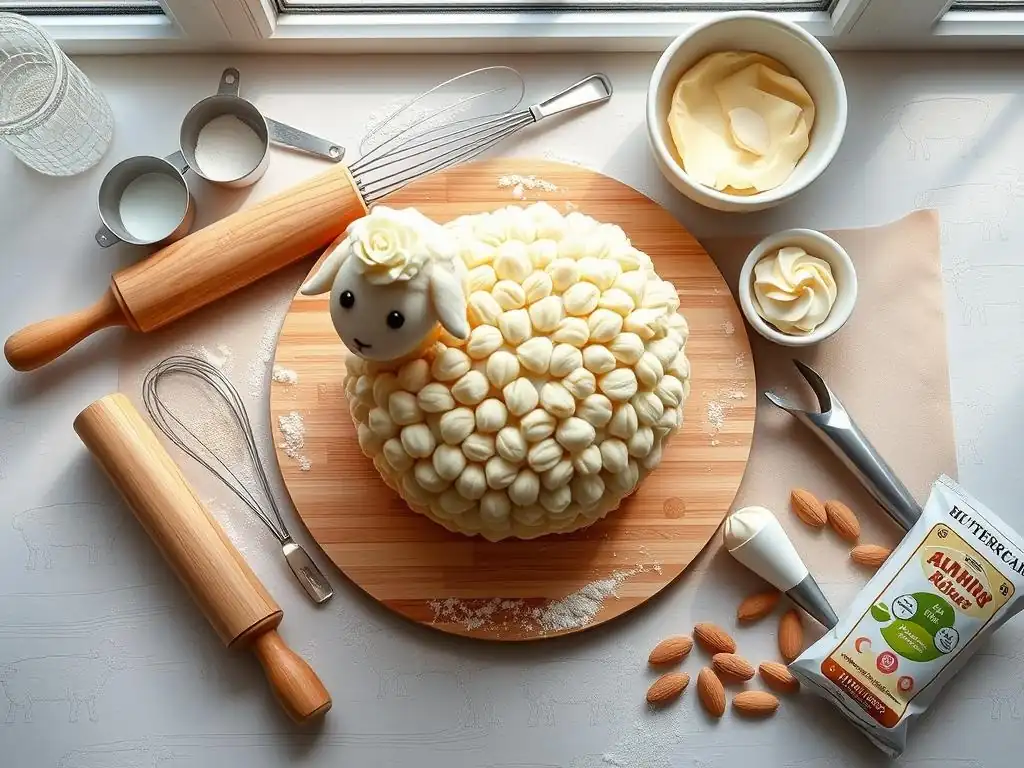
The most crucial piece of equipment for baking an easy traditional Easter lamb cake is, undoubtedly, the lamb cake mold itself. These molds are typically made of cast aluminum or non-stick metal and come in two halves that clamp together. A good quality mold ensures even heat distribution, which is vital for the cake to bake properly without parts burning while others remain undercooked.
Look for a mold with clear details in the lamb shape, as this will help the baked cake retain its form and make decoration easier. Molds vary in size, but a common capacity is around 6-8 cups of batter, yielding a cake roughly 10-12 inches long.
Properly preparing the lamb cake mold is just as important as having one. Thoroughly greasing and flouring the mold halves is essential to prevent the cake from sticking and breaking when you try to unmold it. Some bakers prefer using a baking spray containing flour or a paste made from equal parts softened butter, flour, and shortening. Apply a generous, even layer to all interior surfaces, paying close attention to the intricate details of the lamb's features. This careful preparation significantly increases your chances of successfully baking a whole, intact easy traditional Easter lamb cake.
Other Essential Baking Tools for Success
Beyond the lamb mold, several other standard baking tools will be necessary to successfully create your easy traditional Easter lamb cake. You'll need mixing bowls (at least one large one for the batter), measuring cups and spoons for accurate ingredient quantities, and an electric mixer (either a stand mixer or hand mixer) to cream the butter and sugar and combine the batter ingredients smoothly. A rubber spatula is indispensable for scraping down the sides of the bowl and folding ingredients.
Other helpful tools include a wire rack for cooling the cake completely before decorating, a sifter or whisk for aerating the flour, and potentially a pastry brush for applying the grease and flour to the mold. For decorating your easy traditional Easter lamb cake, you'll likely need a small offset spatula or butter knife for spreading frosting, and perhaps a piping bag and star tip if you plan to create a fluffy wool texture with buttercream. Having these tools ready will streamline your baking process and contribute to a successful outcome.
Step-by-Step Guide to Baking an Easy Easter Lamb Cake
Step 1: Preparing the Cake Batter for Your Lamb
The first step in baking your easy traditional Easter lamb cake is to prepare the cake batter. Start by preheating your oven to the temperature specified in your recipe, typically around 325°F to 350°F (160°C to 175°C). While the oven heats, thoroughly grease and flour your lamb cake mold halves as described earlier. Ensure every nook and cranny is coated to prevent sticking.
Next, prepare your batter according to your chosen recipe. A standard butter cake recipe works well. Begin by creaming together the softened butter and sugar in a large mixing bowl until the mixture is light and fluffy, which usually takes 3-5 minutes with an electric mixer. This step incorporates air, contributing to a tender cake texture.
Once the butter and sugar are creamed, add the eggs one at a time, beating well after each addition to ensure they are fully incorporated. Stir in the vanilla extract. In a separate bowl, whisk together the dry ingredients: flour, baking powder, and salt. Gradually add the dry ingredients to the wet ingredients, alternating with the milk, beginning and ending with the dry ingredients.
Mix on low speed just until combined, being careful not to overmix, which can result in a tough cake. The batter should be smooth and pourable, but not overly thin. Some recipes might call for filling the mold right after preparing the batter, while others suggest letting it rest briefly.
Step 2: Baking the Easter Lamb Cake to Golden Perfection
With your batter ready and mold prepared, it's time to bake your easy traditional Easter lamb cake. Carefully spoon the batter into one half of the greased and floured lamb mold, filling it slightly above the rim. The batter will expand as it bakes, and overfilling slightly helps ensure the two halves meet and form a solid cake.
Place the second mold half on top and clamp the two halves together securely according to your mold's instructions. Place the assembled mold on a baking sheet – this is crucial as it will catch any batter that might overflow during baking and makes handling the hot mold easier.
Bake the lamb cake in your preheated oven. Baking time will vary depending on the size of your mold and oven calibration, but it typically ranges from 45 to 60 minutes. You'll know the cake is done when a wooden skewer or toothpick inserted through the vent holes (usually near the base of the mold) comes out clean. The cake should also appear golden brown around the edges visible through the vents. Avoid opening the oven door too frequently, as this can cause the cake to sink. Once baked, carefully remove the mold from the oven using oven mitts.
Step 3: Cooling and Preparing the Lamb Cake for Decoration
Cooling your easy traditional Easter lamb cake properly is a critical step to prevent it from breaking when unmolding. Allow the mold to cool on the baking sheet for about 10-15 minutes before attempting to open it. This initial cooling period allows the cake to firm up slightly within the mold. After the initial cooling, carefully unclamp and remove the top half of the mold. If you greased and floured properly, the cake should release cleanly from the top half.
Now, gently invert the mold half containing the cake onto a wire cooling rack. Carefully lift the remaining mold half off the cake. If any small pieces stick, you can often gently ease them out with a toothpick and reattach them later using a little frosting.
Allow the cake to cool completely on the wire rack, which can take several hours, possibly 2-3 hours or more, depending on its size and your kitchen temperature. Attempting to decorate a warm cake will result in melting frosting and a potential mess. Once fully cooled, you may need to carefully trim any excess cake that overflowed the mold seam using a serrated knife to create a flat base if needed and a smooth surface for decorating your easy traditional Easter lamb cake.
Decorating Your Traditional Easter Lamb Cake: Simple and Effective Techniques
Simple Icing Techniques for a Classic Easter Lamb Cake
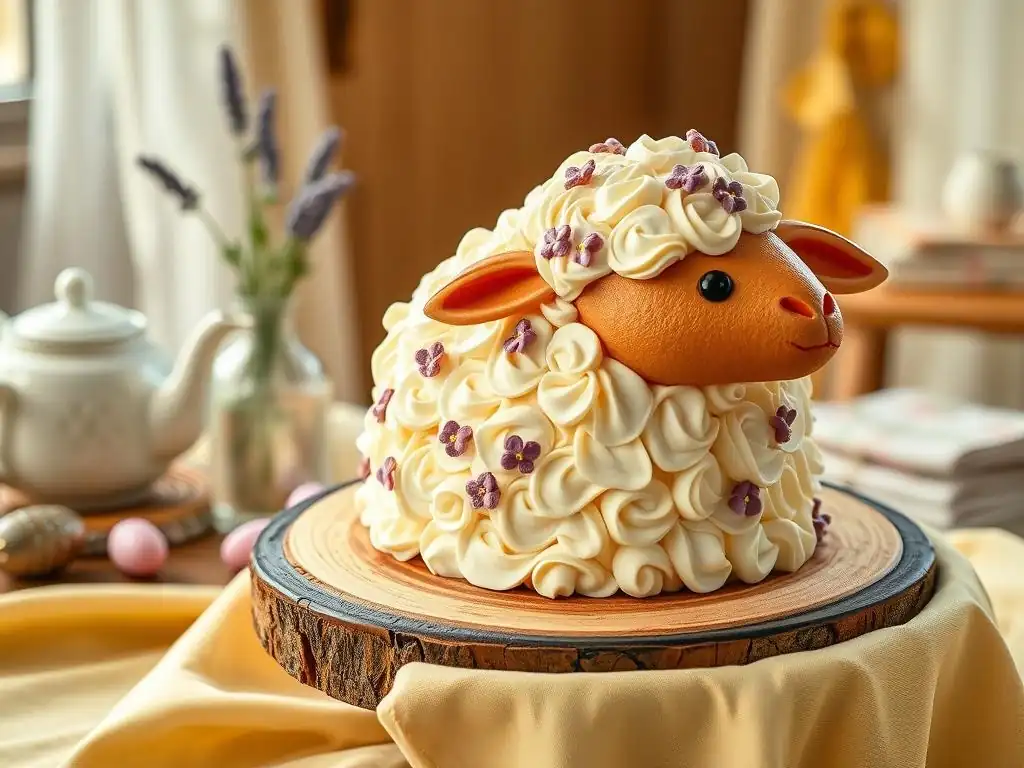
Decorating your easy traditional Easter lamb cake is where you bring its personality to life! For a classic look, a simple white frosting is ideal, often representing the lamb's wool. A basic buttercream or a fluffy boiled frosting works beautifully. To apply the frosting easily, especially if you want a smooth finish, use an offset spatula. Start by applying a thin "crumb coat" layer of frosting all over the cooled cake. This seals in any loose crumbs. Chill the cake in the refrigerator for about 15-20 minutes until the crumb coat is firm.
Once the crumb coat is set, apply the final layer of frosting. For a smooth finish, apply a generous amount and smooth it with the spatula, dipping the spatula in hot water and drying it between strokes for a super smooth surface. For a more textured look resembling wool, you can use a star piping tip (like an Ateco 18 or Wilton 21) and pipe small stars or rosettes all over the cake's body.
Another simple technique is to use a fork to create textured lines in the frosting after applying it smoothly. Either method is relatively easy and gives your easy traditional Easter lamb cake that iconic look.
Adding Finishing Touches: Eyes, Ribbons, and More
Once the main frosting is applied, it's time to add the charming finishing touches to your easy traditional Easter lamb cake. The eyes are key to giving the lamb its character. You can use small candies like chocolate chips (point side in for a pupil), jelly beans, or even small dots of black or brown frosting piped from a small round tip. Place them carefully where the eyes would naturally be on the mold's form. A tiny piece of red candy or frosting can be used for a mouth if desired.
To complete the traditional look, tie a ribbon around the lamb's neck. A pastel satin or grosgrain ribbon in spring colors like pink, blue, yellow, or green adds a lovely festive touch. Secure the ribbon with a simple knot or bow. Some people also like to place the lamb cake on a bed of green-tinted coconut (tint shredded coconut with a few drops of green food coloring) to resemble grass. These small details elevate your beautifully baked easy traditional Easter lamb cake from a simple cake to a delightful holiday centerpiece.
Creative Decoration Ideas for Your Easter Lamb Cake
While the classic white lamb with a ribbon is timeless, feel free to get creative with your easy traditional Easter lamb cake decoration! Instead of just white, you could tint the frosting a very pale yellow or pink for a whimsical look. Use different piping tips to create varied textures for the wool – a round tip for loops, or even just spreading the frosting thickly and swirling it with a spatula.
Consider adding edible flowers or small sugar flowers around the base of the cake for a spring garden theme. You could also use edible glitter or sprinkles for a touch of sparkle. For a more detailed look, use food coloring pens to draw fine details on the face after the frosting has set, or use small candies like mini marshmallows pulled apart to create fluffier wool texture. Don't be afraid to experiment and have fun; the goal is to create a cake that brings you joy and celebrates the spirit of Easter with your easy traditional Easter lamb cake.
Tips and Tricks for a Flawless Easter Lamb Cake
Avoiding Common Mistakes When Baking a Lamb Cake
Baking a shaped cake like an easy traditional Easter lamb cake can present unique challenges, but being aware of common pitfalls helps you avoid them. One frequent issue is the cake sticking to the mold. This is almost always due to insufficient greasing and flouring. Ensure you coat every part of the mold generously. Another common problem is the cake breaking when unmolding. This often happens if the cake hasn't cooled enough in the mold before attempting to release it. Patience is key; let it cool for the recommended time.
Overfilling or underfilling the mold can also cause issues. Overfilling leads to excessive overflow that's hard to trim neatly, while underfilling results in a cake that doesn't fully form the shape. Follow recipe guidelines closely regarding batter quantity for your specific mold size.
Finally, baking at too high a temperature can cause the outside to brown too quickly while the inside remains raw. Use an oven thermometer to verify your oven's temperature accuracy and bake at the recommended lower temperature (often 325-350°F) for a longer time for more even baking. Avoiding these mistakes will significantly improve your success rate with your easy traditional Easter lamb cake.
Ensuring a Moist and Flavorful Easter Lamb Cake
No one wants a dry cake, especially after putting in the effort to bake an easy traditional Easter lamb cake. To ensure your lamb cake is moist and delicious, start with a good recipe that includes ingredients known for adding moisture, such as butter, eggs, and milk or buttermilk. Using room temperature ingredients helps create a smooth batter emulsion, which contributes to a tender crumb. Avoid overmixing the batter once the flour is added; developing too much gluten leads to a tough, dry cake. Mix just until the ingredients are combined.
Proper baking time and temperature are also crucial. Overbaking is a primary cause of dryness. Bake only until a skewer comes out clean, and no longer. Baking at a slightly lower temperature for a longer time (e.g., 325°F instead of 350°F) can help the cake bake more evenly and retain moisture. Once the cake is out of the oven, don't let it sit uncovered for too long after it's completely cooled if you're not decorating it immediately. Wrap it tightly in plastic wrap to seal in moisture until you're ready to frost your easy traditional Easter lamb cake.
Perfecting Your Lamb Cake Decorating Skills
Decorating your easy traditional Easter lamb cake might seem intimidating, but practice makes perfect! Start with simple techniques. For a smooth frosting finish, apply a crumb coat first, chill, and then apply a thicker final layer. Use a warm, dry offset spatula to smooth the final layer for a professional look. If you're aiming for the fluffy wool texture with piped stars, practice piping on a piece of parchment paper first to get a feel for the pressure needed and the motion. Consistency in piping makes a big difference in the final appearance.
Don't strive for absolute perfection on your first try. A slightly imperfect homemade easy traditional Easter lamb cake often has more charm! If a piece breaks off, don't despair; you can often "glue" it back on with a little frosting before you start the main decoration. You can also use extra frosting or decorations to strategically cover any imperfections. Watch online videos or tutorials for visual guides on piping techniques. Remember that decorating should be a fun, creative process, adding that special touch to your easy traditional Easter lamb cake.
Storing Your Easter Lamb Cake for Maximum Freshness
How to Keep Your Lamb Cake Moist and Delicious
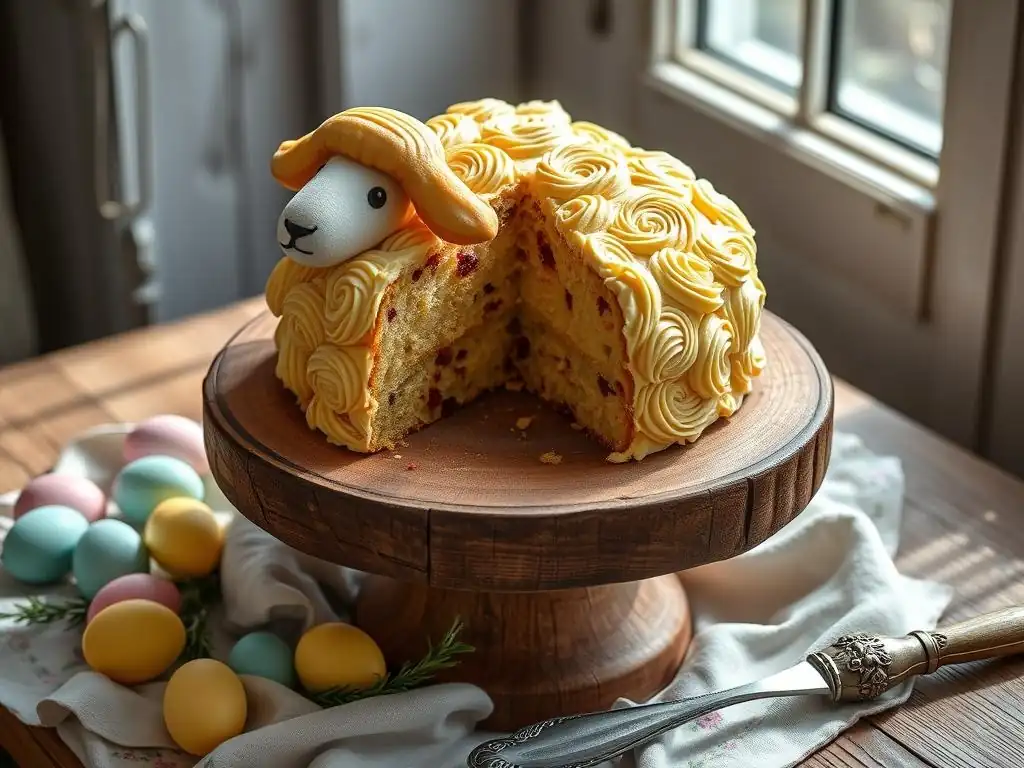
Proper storage is key to keeping your easy traditional Easter lamb cake fresh and moist after all your hard work. Once the cake is completely cooled and decorated, the best way to store it depends on the type of frosting used. Cakes with buttercream or glaze can be stored at room temperature for 2-3 days if kept in an airtight container or loosely covered cake dome. This protects the cake from drying out and prevents it from absorbing odors.
If your frosting contains perishable ingredients like cream cheese or fresh cream, the cake should be stored in the refrigerator. Again, use an airtight container or cover it well with plastic wrap and then aluminum foil to prevent it from drying out and absorbing fridge smells. Refrigerated cake can last for 5-7 days.
Before serving a refrigerated easy traditional Easter lamb cake, allow it to sit at room temperature for 20-30 minutes to soften the frosting and improve the cake's texture and flavor. For longer storage, unfrosted or frosted cake can be frozen, wrapped tightly in plastic wrap and then foil, for up to 2-3 months. Thaw in the refrigerator before serving.
Troubleshooting Common Easter Lamb Cake Issues
My Lamb Cake is Dry: What Went Wrong?
A dry easy traditional Easter lamb cake is disappointing, but understanding the causes can help you avoid it next time. The most common reasons for dryness are overbaking and overmixing the batter. Overbaking evaporates too much moisture from the cake. Ensure you test for doneness using a skewer and remove the cake as soon as it comes out clean. Ovens can vary, so trust the skewer test over the clock sometimes.
Overmixing the batter, especially after adding the flour, develops gluten, resulting in a tough, dry texture. Mix only until the ingredients are just combined. Using ingredients that are too cold can also affect the batter's emulsification and lead to a less tender cake.
Ensure butter and eggs are at room temperature. Finally, using a recipe with too little fat or liquid for the amount of dry ingredients can result in a dry cake. Ensure you're following a reliable easy traditional Easter lamb cake recipe and measuring ingredients accurately, preferably by weight for flour and sugar if possible (e.g., 240g flour vs. 2 cups which can vary).
My Lamb Cake Broke: How to Fix It?
It's common for parts of an easy traditional Easter lamb cake to break, especially around the ears, nose, or legs, due to the intricate mold shape. Don't panic! Most breaks can be fixed, and frosting is a baker's best friend for camouflage. If a piece breaks off while unmolding, carefully retrieve it. You can "glue" it back onto the main cake body using a small amount of frosting as adhesive. Press the piece gently into place.
Once the piece is reattached, you can proceed with frosting the cake as usual. The frosting will help hold the piece securely and hide the seam. For more significant breaks, you might need to use a skewer inserted through the cake to provide internal support before frosting.
If the break is irreparable or you've lost a piece, consider adjusting your decoration plan to make the "break" look intentional or cover it creatively with extra frosting, piped wool, or other decorations like flowers or candies. Remember, a homemade cake with a little character is perfectly acceptable and often charming! Your easy traditional Easter lamb cake is a labor of love, and minor flaws can be easily managed.
Enjoy Your Homemade Easy Traditional Easter Lamb Cake!
Serving Suggestions for Your Easter Lamb Cake
Congratulations on baking your beautiful easy traditional Easter lamb cake! Now comes the fun part – enjoying it. This cake makes a stunning centerpiece for your Easter brunch or dinner table. To serve, use a sharp serrated knife to slice through the cake. Start by slicing across the cake's body.
The cake can be served simply on its own, allowing the flavor and decoration to be the stars. However, it pairs wonderfully with fresh berries, such as strawberries, raspberries, or blueberries, which add a touch of color and freshness. A dollop of whipped cream or a scoop of vanilla ice cream is also a delightful accompaniment. For an extra festive touch, serve slices on plates garnished with a few pastel-colored jelly beans or chocolate eggs. Enjoy the proud moment as you share your delicious homemade easy traditional Easter lamb cake with loved ones.
We love seeing what you bake! Your easy traditional Easter lamb cake is a testament to your skills and creativity. We encourage you to share photos of your finished lamb cake creation with the BakeWithEase community. Tag us on social media or share your pictures in our community forums (if applicable). Seeing your successes inspires other bakers!
Sharing your experience, including any challenges you overcame or clever decoration ideas you used, can also be incredibly helpful to others attempting this classic cake for the first time. Baking is a journey, and we're all learning together. We can't wait to see the wonderful easy traditional Easter lamb cakes you bring to life this Easter! Happy baking and happy Easter from BakeWithEase!
Frequently Asked Questions
What makes this Easter Lamb Cake recipe "easy" compared to other traditional recipes?
This recipe focuses on simplified steps and easy-to-find ingredients, making it less intimidating for beginner bakers. It avoids complex techniques often found in traditional methods.
What kind of cake pan is required for baking an Easter Lamb Cake?
You'll need a lamb-shaped cake pan. BakeWithEase provides recommendations for specific types and sizes that work best with this recipe.
Can I substitute any of the ingredients in the recipe, and if so, what are some recommendations?
While following the recipe closely is recommended, some substitutions are possible. BakeWithEase suggests dairy-free alternatives or different flours depending on dietary needs and preferences.
How do I prevent my Easter Lamb Cake from sticking to the pan?
Proper preparation is key! BakeWithEase recommends greasing and flouring the pan thoroughly, or using a baking spray with flour, to ensure easy release.
What are some decorating ideas for the finished Easter Lamb Cake?
The recipe offers several decorating suggestions, from a simple powdered sugar dusting to more elaborate frosting and candy decorations, allowing for creative personalization.
Final Reflection: The Enduring Sweetness of Tradition
The simple act of baking an Easter lamb cake connects us to generations past, a testament to the enduring power of culinary traditions in a rapidly changing world. This seemingly small act, simplified for modern kitchens, carries within it a weight of history and shared experience, a comforting presence in our increasingly hectic lives. The ease of the recipe presented here shouldn't diminish the significance of the tradition; rather, it should make it more accessible, allowing more people to participate in this beautiful custom.
The Easter lamb cake, a symbol of springtime renewal and hope, has woven itself into the fabric of countless childhood memories and family gatherings. It's more than just a dessert; it's a tangible link to our heritage, a sweet reminder of loved ones and cherished moments. As I researched and wrote this article, I was struck by the universality of this symbol across cultures, each with its own unique twist on the recipe. Food is symbolic of love when words are inadequate.
– Alan D. Wolfelt. This quote perfectly encapsulates the emotional resonance of baking and sharing this cake.
Now, I invite you to consider the legacy you'll create. Will you carry on this tradition, perhaps adapting the recipe to your own tastes and preferences? Will you share this simple joy with family and friends, creating new memories around this timeless treat? The Easter lamb cake is more than just a recipe; it's an opportunity to connect with something larger than ourselves, to celebrate the season, and to build lasting connections through the shared experience of baking and sharing. Embrace the simplicity, embrace the tradition, and embrace the sweetness of the moment.
Unleash Your Inner Baker: Craft a Stunning Easter Lamb Cake!
Thanks for joining us on this delicious journey into Easter baking! We hope you found our simplified steps for making a traditional lamb cake both informative and inspiring. Ready to bring your culinary creativity to life?
- Bake your masterpiece! Use our recipe as a guide, and don't hesitate to experiment with frosting colors and decorations – make it uniquely yours!
- Share your creation: Post a picture of your finished lamb cake on social media using #BakeWithEaseEasterLamb – we'd love to see your baking artistry!
- Challenge a friend: Tag a friend who you think could master this recipe, and encourage them to try it!
What unique twist will you add to your Easter Lamb Cake this year? Let us know in the comments!