
Your First Baking Recipe: How to Read and Understand It

Welcome to BakeWithEase, your kitchen companion for unlocking the joys of baking! Feeling overwhelmed by your first recipe? Don't worry, we're here to help. This guide, " Your First Baking Recipe: How to Read and Understand It," will demystify those instructions and equip you with the skills to bake with confidence. Curious about deciphering those baking terms and measurements? Let's get started and transform you from a baking novice to a kitchen whiz!
- Your First Baking Recipe: How to Read and Understand It - BakeWithEase
- Introduction to Reading Baking Recipes for Beginners
- Decoding Baking Recipe Ingredients: A Beginner's Guide
- Interpreting Baking Recipe Instructions: Step-by-Step Breakdown
- Essential Baking Tools and Equipment: Getting Started
- Common Mistakes When Reading Baking Recipes (and How to Avoid Them)
- Practice Makes Perfect: Applying Your Recipe Reading Skills
- Conclusion: Confidence in Reading and Using Baking Recipes
-
Frequently Asked Questions
- How do I identify the ingredients I need for a baking recipe?
- What do common baking terms like "fold," "cream," or "knead" mean?
- Where can I find the oven temperature and baking time in a recipe?
- How important is it to follow the measurements exactly in a baking recipe?
- What should I do if I don't understand a specific step in a baking recipe?
- Final Reflection: Unlocking the Secrets of the Perfect Bake
- Unlock Your Inner Baker: Start Baking Today!
Your First Baking Recipe: How to Read and Understand It - BakeWithEase
Introduction to Reading Baking Recipes for Beginners
Why Understanding Baking Recipes is Crucial for Success
Mastering the art of baking begins not just with knowing which ingredients to use, but with truly understanding the instructions laid out in a recipe. Many beginners assume baking is simply following steps, but a deep appreciation for why certain steps are taken, how ingredients interact, and what the recipe writer intends can dramatically improve your results.
Think of a recipe as a precise blueprint; deviating without understanding the implications can lead to flat cakes, tough cookies, or bread that doesn't rise. Learning how to read baking recipes effectively is the single most important skill you can develop as a new baker, setting you up for consistent success and delicious outcomes.
Beyond just following steps, understanding a recipe allows you to troubleshoot when things don't go exactly as planned. Perhaps your oven runs a little hot, or your flour is slightly different from what the recipe assumed. When you understand the function of each ingredient and the purpose of each step – for instance, why butter needs to be cold for pie crust or why yeast dough needs time to rest – you can make informed adjustments.
This foundational knowledge makes baking less intimidating and far more rewarding, transforming you from someone just following directions into a baker who understands the craft. This is key to truly learning how to read baking recipes and make them work for you.
BakeWithEase: Your Guide to Mastering Baking Basics
Welcome to BakeWithEase, your friendly partner in the kitchen as you embark on your baking adventure! We understand that stepping into the world of baking can feel a bit overwhelming, especially when faced with terms like "creaming butter and sugar" or "proofing yeast." Our mission is to demystify the process, breaking down recipes and techniques into simple, manageable steps that anyone can follow, regardless of prior experience.
We believe that baking should be fun, accessible, and, most importantly, delicious! Our guides and recipes are designed with the beginner in mind, focusing on clarity and building confidence with every successful bake.
At BakeWithEase, we provide more than just recipes; we offer the foundational knowledge you need to truly succeed. We'll walk you through everything from understanding how to read baking recipes properly to mastering basic techniques like measuring ingredients accurately and understanding oven temperatures. We aim to equip you with the skills not just to follow a single recipe, but to build a repertoire of baking skills that will serve you for years to come. Let us help you navigate the initial learning curve, turning potential frustrations into rewarding achievements and helping you bake with ease!
Decoding Baking Recipe Ingredients: A Beginner's Guide
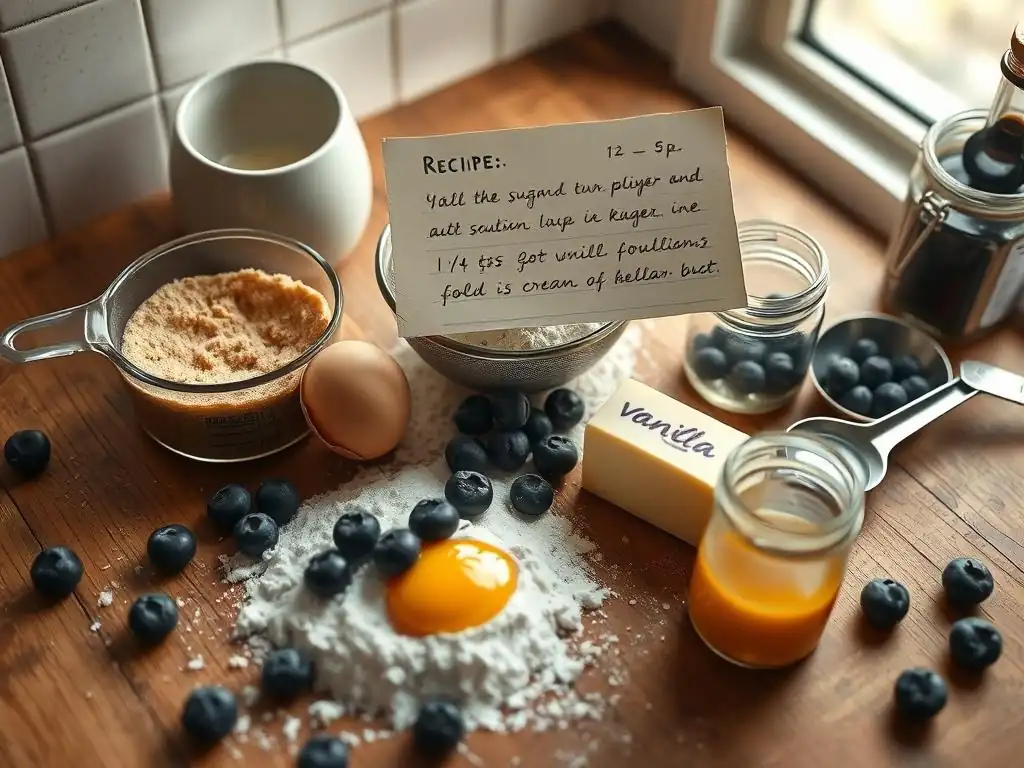
Understanding Ingredient Measurements in Baking
Precise measurement is arguably the most critical aspect of successful baking. Unlike cooking, where a pinch more of this or a dash less of that might be acceptable, baking relies on specific chemical reactions and ratios. A recipe calls for 1 cup of flour for a reason; adding too much can make your baked goods dry and dense, while too little can result in a soggy or flat texture. Learning the correct techniques for measuring both dry and wet ingredients is paramount to achieving the desired outcome and is a fundamental part of understanding how to read baking recipes.
Consider flour, a common culprit for measurement errors. Many beginners scoop flour directly from the bag with their measuring cup, which can pack it down and result in significantly more flour than intended – sometimes up to 25% more! The standard method for dry ingredients like flour is the "spoon and level" method: gently spoon the flour into the measuring cup until it overflows, then use a straight edge (like the back of a knife) to level off the excess without packing it down.
Granulated sugar, however, can typically be scooped directly as it doesn't compact easily. Understanding these nuances for different ingredients is vital when you read baking recipes.
Dry vs. Wet Measurements: Accuracy is Key
Dry ingredients like flour, sugar, cocoa powder, and leavening agents (baking soda, baking powder) are typically measured using dry measuring cups or spoons. These cups are designed to be filled to the rim and leveled off. It's important to note that a 1-cup dry measure is not the same as a 1-cup liquid measure; they are designed differently. For dry ingredients, accuracy is key, and the "spoon and level" method (for flour) or simply scooping and leveling (for sugar) are standard practices to ensure you don't add too much or too little.
Liquid ingredients such as water, milk, oil, vanilla extract, and syrups are measured using liquid measuring cups. These cups are usually clear and have a spout for easy pouring, with markings on the side. To get an accurate reading, place the liquid measuring cup on a flat surface and bend down so your eye is level with the desired measurement line.
Pour the liquid until it reaches the line at the bottom of the meniscus (the slight curve in the liquid surface). Measuring liquids this way ensures you get the precise volume required by the recipe, which is essential when you are learning how to read baking recipes accurately.
Common Baking Ingredients Explained: Flour, Sugar, Fats, and Leavening Agents
Flour is the structural backbone of most baked goods. Different types exist, like all-purpose (versatile), cake flour (lower protein, for tender cakes), and bread flour (higher protein, for chewy bread). A recipe will usually specify the type needed. Using the wrong type can significantly alter the texture. For example, using all-purpose instead of cake flour in a delicate cake might result in a tougher crumb. Understanding the role of flour is crucial when you learn how to read baking recipes.
Sugar does more than just sweeten; it contributes to tenderness, moisture retention, and browning (caramelization). Granulated sugar is common, but recipes might call for brown sugar (adds moisture and chewiness) or powdered sugar (for frostings and dusting). Fats, like butter, oil, or shortening, add richness, moisture, and tenderness, and help with leavening in methods like creaming.
Leavening agents like baking soda and baking powder create lift, making cakes and cookies light and airy. Baking soda requires an acid to activate (like buttermilk or vinegar), while baking powder is double-acting, reacting once with liquid and again with heat. Recognizing these ingredients and their functions is fundamental to understanding how to read baking recipes effectively.
Ingredient Substitutions and Adjustments in Baking Recipes
While precision is key in baking, sometimes you might need to make a substitution due to availability or dietary needs. However, substituting in baking is often more complex than in cooking because ingredients play specific roles in the chemical structure and texture.
For instance, substituting oil for butter in a cookie recipe might result in a flatter, greasier cookie because butter contributes to spread and structure in a different way than oil does. Always look for reliable substitution charts or notes within the recipe itself if considering changes, especially when you are just starting to learn how to read baking recipes.
Common substitutions might include using different types of flour, varying fats, or using alternative sweeteners. For example, replacing all-purpose flour with a gluten-free blend often requires adding binders like xanthan gum to replicate the structure gluten provides. Substituting a liquid sweetener like maple syrup for granulated sugar might require reducing other liquids in the recipe to maintain the correct moisture balance.
It's generally best for beginners to stick to the recipe as written to build confidence and understand the intended outcome before attempting substitutions. As you gain experience and better understand how to read baking recipes, you can experiment more confidently.
Interpreting Baking Recipe Instructions: Step-by-Step Breakdown
Understanding Baking Terminology: A Glossary for Beginners
Baking recipes use specific language that can be confusing if you're new to the kitchen. Terms like "creaming," "folding," "kneading," and "proofing" describe essential techniques that impact the final product. For example, "creaming" butter and sugar together isn typically means beating them until light and fluffy, incorporating air which helps the baked good rise. Simply melting the butter and mixing would yield a completely different, denser result. Becoming familiar with this vocabulary is a significant step in learning how to read baking recipes effectively.
Think of these terms as instructions for specific actions that manipulate the ingredients in a particular way. "Folding" is a gentle technique used to combine delicate mixtures, like whipped cream or egg whites, into a heavier batter without deflating the air bubbles. "Kneading" is specific to bread making, developing gluten by working dough through stretching and folding. Understanding what each term means allows you to perform the step correctly, which is crucial for achieving the desired texture and structure in your baked goods.
Common Baking Terms Decoded: Creaming, Folding, Kneading, Proofing
- Creaming: Beating softened butter (or other fat) with sugar until the mixture is light in color and fluffy in texture. This incorporates air, which acts as a leavening agent and contributes to a tender crumb. Often done with an electric mixer.
- Folding: A gentle technique used to combine a light, airy mixture (like whipped egg whites or cream) into a heavier one (like batter) without deflating the air. It involves cutting down through the mixture with a spatula, scraping the bottom, and lifting it over the top, rotating the bowl.
- Kneading: Working dough with your hands or a stand mixer to develop gluten, the protein structure in flour that gives bread its elasticity and chewiness. It involves stretching, folding, and pressing the dough.
- Proofing: The final rise of yeast dough before baking. This allows the yeast to produce more carbon dioxide, increasing the volume and improving the texture of the bread. It's often done in a warm, draft-free place.
Understanding these terms is fundamental to correctly interpreting the instructions when you read baking recipes. Each technique serves a specific purpose and contributes significantly to the final outcome of your baked goods.
Recognizing Important Recipe Notes and Tips
Beyond the ingredient list and numbered steps, many recipes include "Notes" or "Tips" sections. These sections are invaluable and should never be skipped when you read baking recipes. They often contain crucial information that clarifies steps, suggests variations, or provides troubleshooting advice. For example, a note might specify that eggs should be at room temperature (they emulsify better and create more volume), or that chocolate chips should be stirred in by hand to avoid overmixing.
These notes often highlight potential pitfalls or nuances specific to that particular recipe. They might tell you what the batter or dough should look, feel, or smell like at a certain stage, offering visual or tactile cues that are more reliable than strict timing alone. Paying close attention to these details can make the difference between a good result and a perfect one, and demonstrates a thorough approach to understanding how to read baking recipes.
Deciphering Baking Times and Temperatures
Baking times and temperatures are guidelines, not absolute laws, and understanding this is key to success. A recipe might say "bake for 20-25 minutes," indicating a range. This range accounts for variations in ovens (which can fluctuate by 25°F or more! ), bakeware, and even humidity. Always preheat your oven for at least 15-20 minutes after it signals it's reached temperature to ensure it's truly hot and evenly heated. Using an oven thermometer is a great way to verify your oven's accuracy.
The specified temperature and time work together to achieve the desired result. A higher temperature often leads to quicker browning and setting, while a lower temperature allows for more even cooking throughout. For instance, cookies might bake at 350°F (175°C) for 10-12 minutes, while a large cake might bake at 325°F (160°C) for 45-55 minutes. Learning to trust visual cues for doneness within the suggested time range is a critical skill when you learn how to read baking recipes and execute them successfully.
Understanding Oven Temperatures and Their Impact on Baking
Oven temperature significantly impacts how your baked goods rise, spread, and brown. Too high a temperature can cause the outside to set too quickly before the inside is cooked, resulting in a dense center or burnt edges. Too low a temperature can cause baked goods to spread too much before setting, leading to thin cookies or flat cakes, and can also dry them out. Recipes specify temperatures like 325°F (160°C), 350°F (175°C), or 375°F (190°C) based on the specific chemical reactions and structural needs of the item being baked.
For example, delicate cakes often bake at lower temperatures (325°F - 350°F) to allow for a slower, more even rise and prevent a tough crust. Cookies often bake at slightly higher temperatures (350°F - 375°F) to encourage spread and develop a crispy edge and chewy center. Breads typically bake at higher temperatures (375°F - 450°F) to create a good oven spring and a crisp crust. Always preheat your oven thoroughly and consider using an oven thermometer to ensure accuracy, as this is fundamental to correctly following instructions when you read baking recipes.
Recognizing Visual Cues for Doneness
Relying solely on the timer can be misleading because actual baking time can vary. Learning to recognize visual cues is essential for determining when your baked goods are truly done. For cakes and muffins, a common test is inserting a toothpick into the center; if it comes out clean or with a few moist crumbs (not wet batter), it's usually done. For cookies, look for the edges to be set and lightly golden, even if the center still looks slightly soft; they will continue to cook slightly as they cool on the hot baking sheet.
Breads are often done when they have a deep golden-brown crust and sound hollow when tapped on the bottom. Pies are ready when the crust is golden brown and the filling is bubbling (for fruit pies). These visual and tactile cues provide more reliable indicators of doneness than the clock alone and are skills you develop as you gain experience and learn how to read baking recipes and observe the process.
Essential Baking Tools and Equipment: Getting Started
Identifying the Tools Needed for Your First Baking Recipe
Just as a carpenter needs specific tools, a baker requires certain equipment to execute a recipe successfully. The good news is that you don't need a professional kitchen full of gadgets to start. Many basic recipes require only a few essential items you might already have, or can acquire relatively inexpensively. Identifying the tools listed in your recipe before you begin is crucial; trying to substitute equipment can be just as problematic as substituting ingredients.
A typical simple baking recipe might call for mixing bowls, measuring cups and spoons, a whisk, a spatula, and a baking pan of a specific size. Having the correct size pan is particularly important, as using one too large or too small will affect the baking time and thickness of your item. For instance, baking a cake batter in a pan that's too large will result in a thin, potentially dry cake that bakes much faster than expected. Always check the recipe's required equipment list carefully when you read baking recipes.
Essential Baking Tools for Beginners
Here is a list of essential tools that are useful for most beginner baking recipes:
- Dry Measuring Cups: A set typically including 1/4, 1/3, 1/2, and 1 cup sizes.
- Liquid Measuring Cup: Usually a 2-cup capacity cup with a spout and side markings.
- Measuring Spoons: A set typically including 1/4, 1/2, 1 teaspoon, and 1 tablespoon sizes.
- Mixing Bowls: A set of various sizes (small, medium, large).
- Whisk: For incorporating air into mixtures and combining dry ingredients.
- Rubber or Silicone Spatula: For scraping bowls and folding ingredients gently.
- Wooden Spoon: A sturdy option for mixing batters.
- Baking Pans: The specific type and size will depend on the recipe (e.g., 9x13 inch cake pan, cookie sheets, muffin tin).
- Cooling Rack: Allows air circulation for even cooling after baking.
- Oven Mitts: Essential for safety!
Having these basic tools on hand will prepare you for most beginner recipes and make the process of following instructions much smoother as you practice how to read baking recipes.
Common Mistakes When Reading Baking Recipes (and How to Avoid Them)
Misunderstanding Ingredient Ratios
A frequent error for new bakers is not fully appreciating the precise ratios of ingredients, particularly the balance between flour, fat, sugar, and leavening. Baking recipes are carefully formulated science experiments. For instance, the ratio of flour to liquid dictates the batter or dough's consistency and structure. Too much flour or too little liquid results in a dry, dense product. Similarly, the ratio of leavening to flour determines how much lift you'll get; too much can cause a cake to rise too quickly and then collapse, while too little means it won't rise enough.
Avoiding this mistake starts with accurate measurement, as discussed earlier (using the spoon and level method for flour, eye-level for liquids). It also involves trusting the recipe writer's carefully tested proportions. If a recipe calls for 2 cups of flour and 1 cup of milk, resist the urge to add more flour if the batter looks thinner than you expected, unless the recipe specifically notes that consistency may vary. Stick to the measurements provided when you read baking recipes, especially as a beginner, to understand the intended outcome of specific ratios.
Ignoring Preparation Steps
Recipes often include preparatory steps before the main mixing begins, such as "preheat oven," "bring butter and eggs to room temperature," or "grease and flour pan." Skipping or rushing these steps is a common pitfall. Forgetting to preheat the oven means your baked goods won't start baking at the correct temperature, affecting rise and texture. Using cold butter and eggs when the recipe specifies room temperature will impact how they cream together, resulting in a less airy batter.
Taking the time to complete all preparation steps as listed in the recipe is crucial for success. This includes chopping nuts, melting chocolate, sifting dry ingredients if required, and preparing your bakeware before you start mixing the batter. This ensures that once your batter or dough is ready, you can transfer it to the oven or pan immediately, preventing leavening agents from losing their effectiveness while they sit waiting. Diligent preparation is a key part of learning how to read baking recipes thoroughly.
Not Preheating the Oven Properly
As mentioned earlier, oven temperature is critical, and simply turning the oven on a few minutes before baking isn't sufficient. Ovens need time to reach the set temperature and, more importantly, to heat evenly throughout the cavity. Many ovens have a light or beep that indicates they've reached the temperature, but this often means only the air temperature sensor has registered the heat, not that the oven walls and racks are fully heated.
A good rule of thumb is to preheat your oven for at least 15-20 minutes after it indicates it has reached the target temperature. Using an inexpensive oven thermometer placed inside the oven can confirm that the temperature is accurate and stable. Proper preheating ensures that your baked goods start baking in the intended environment, leading to predictable rise, spread, and browning, which is essential for following instructions correctly when you read baking recipes.
Practice Makes Perfect: Applying Your Recipe Reading Skills
Choosing Your First Baking Recipe Wisely
Selecting your very first baking recipe is an exciting step! To build confidence and solidify your understanding of how to read baking recipes, it's best to start with something simple and straightforward. Look for recipes specifically labeled "beginner" or "easy." Good options include basic drop cookies (like chocolate chip or sugar cookies), simple muffins, or a classic quick bread (like banana bread) that doesn't require yeast. Avoid complex, multi-step recipes like croissants, macarons, or elaborate layer cakes for your initial attempts.
A good beginner recipe will typically have a relatively short ingredient list with common ingredients and clear, concise instructions. It might also include helpful tips or visual cues to look for at different stages. Choosing a recipe that aligns with your current tools and comfort level will make the process less daunting and more enjoyable, allowing you to focus on the fundamental skill of reading and following instructions accurately.
Step-by-Step Practice: Baking a Simple Recipe from Start to Finish
Once you've chosen your simple recipe, commit to following it precisely from beginning to end.
- Read the entire recipe: Before you even gather ingredients, read the recipe through completely, from title to conclusion. Understand the steps, the required tools, and the timing.
- Gather ingredients and tools: Measure out all your ingredients and set them aside. Have all necessary pans and tools ready. This is called "mise en place" (everything in its place) and prevents frantic searching mid-recipe.
- Follow instructions sequentially: Go through the steps one by one. Don't skip steps or combine them unless the recipe explicitly says you can. Pay attention to details like "mix until just combined" versus "beat for 3 minutes."
- Observe: Note how the mixture looks and feels at each stage. Does the batter look like the description? Are the cookies spreading as expected? Use your senses alongside the instructions.
- Use visual cues for doneness: While timing is a guide, use the visual cues described earlier (toothpick test, browning, bubbling) to determine when baking is complete.
- Cool properly: Follow cooling instructions precisely, whether it's cooling in the pan or on a wire rack.
By methodically working through a simple recipe, you reinforce the skills of how to read baking recipes, measure accurately, and understand the flow of the baking process. Each successful bake builds confidence for the next!
Conclusion: Confidence in Reading and Using Baking Recipes
The Key to Baking Success: Careful Recipe Reading and Preparation
Embarking on your baking journey is an exciting adventure filled with delicious possibilities. As you've learned, the fundamental cornerstone of consistent success in baking isn't just about having the right ingredients or the fanciest equipment; it's about mastering the art of how to read baking recipes thoroughly and accurately.
Each recipe is a carefully crafted set of instructions, a blueprint that, when followed diligently, leads to predictable and delightful results. Taking the time to understand the language, the measurements, the techniques, and the timing is an investment that pays off with every perfectly baked cookie, cake, or loaf of bread.
Furthermore, proper preparation – gathering ingredients, having tools ready, and preheating your oven – sets you up for a smooth and stress-free baking experience. By avoiding common pitfalls like inaccurate measurements or skipping vital steps, you significantly increase your chances of success. Remember, baking is a skill that improves with practice and attention to detail. Approach each recipe with curiosity and patience, viewing it as a guide to understanding the wonderful science and art of transforming simple ingredients into something truly special.
Embrace the Baking Journey with BakeWithEase
We at BakeWithEase are thrilled to be a part of your baking journey. Learning how to read baking recipes is just the first step, and we're here to support you every whisk and stir of the way. Don't be discouraged by initial imperfections; every baker, no matter how experienced, has had a deflated cake or a batch of overly flat cookies. These moments are opportunities to learn and grow. Reflect on what might have happened, perhaps revisiting the recipe to see if a step was missed or a measurement was slightly off.
With practice, patience, and the guidance found here on BakeWithEase, you'll quickly become more confident in your ability to not only read baking recipes but to understand the why behind the instructions. This deeper understanding will empower you to eventually adapt recipes, troubleshoot issues, and even create your own delicious concoctions. Keep exploring, keep baking, and most importantly, keep enjoying the sweet rewards of your efforts. Happy baking!
Frequently Asked Questions
How do I identify the ingredients I need for a baking recipe?
Baking recipes usually list ingredients in the order they are used. Look for a dedicated "Ingredients" section, and pay attention to specific measurements and any required preparations like softened butter or sifted flour.
What do common baking terms like "fold," "cream," or "knead" mean?
These terms describe specific techniques. "Fold" gently combines ingredients, "Cream" beats butter and sugar until light and fluffy, and "Knead" develops gluten in bread dough. Understanding these terms is crucial for successful baking.
Where can I find the oven temperature and baking time in a recipe?
The oven temperature and baking time are usually found in the "Instructions" section, often near the beginning. Always preheat your oven to the specified temperature for the correct duration.
How important is it to follow the measurements exactly in a baking recipe?
Accuracy is very important! Baking is chemistry; therefore, precise measurements are essential for the recipe to work as intended. Using the wrong amounts can drastically affect the final texture and taste.
What should I do if I don't understand a specific step in a baking recipe?
Don't be afraid to research the step online or consult a baking reference book. Many resources provide visual aids and detailed explanations of baking techniques to help beginners.
Final Reflection: Unlocking the Secrets of the Perfect Bake
Understanding a baking recipe isn't just about following instructions; it's about unlocking the creative potential within each ingredient and mastering the art of precision. The ability to confidently decipher a baking recipe empowers you to move beyond simple instructions and truly understand the why behind each step, leading to consistent, delicious results every time. This knowledge transforms baking from a potentially frustrating experience into a rewarding and enjoyable journey of culinary exploration.
The impact of understanding baking recipes extends far beyond the kitchen. It cultivates a deeper appreciation for the science behind food preparation, fostering a sense of accomplishment and confidence in the kitchen. The best way to find yourself is to lose yourself in the service of others.
While not directly about baking, this quote speaks to the transformative power of mastering a skill and the satisfaction derived from creating something delicious to share. The meticulous nature of baking, demanding accuracy and attention to detail, mirrors the precision required in many aspects of life, fostering valuable problem-solving skills and a sense of mindful engagement.
Now, it's your turn. Don't just passively follow recipes; actively engage with them. Experiment with substitutions, explore different techniques, and most importantly, taste as you go. Embrace the occasional mishap – they are valuable learning experiences. The journey of mastering baking recipes is a continuous process of discovery, and with each successful bake, you'll unlock a deeper understanding of yourself and the magic of culinary creation. So, grab your apron, choose a recipe, and begin your baking adventure!
Unlock Your Inner Baker: Start Baking Today!
Thanks for taking the time to learn the secrets to confidently tackling your first baking recipe! You're now equipped with the knowledge to understand baking instructions like a pro. Ready to put your new skills to the test?
- Bake your dream recipe! Choose a simple recipe (cookies, muffins, etc.) and follow the steps, using your newfound understanding of baking terminology and measurements.
- Share your baking journey! Tell us about your experience on our BakeWithEase community forum – what did you bake, and what did you learn? We'd love to see your creations!
- Explore more baking basics on BakeWithEase.com – we have tons of beginner-friendly resources waiting for you.
What delicious treat will you bake first? Let us know in the comments!