
The History & Heart Behind Italian Holiday Cakes

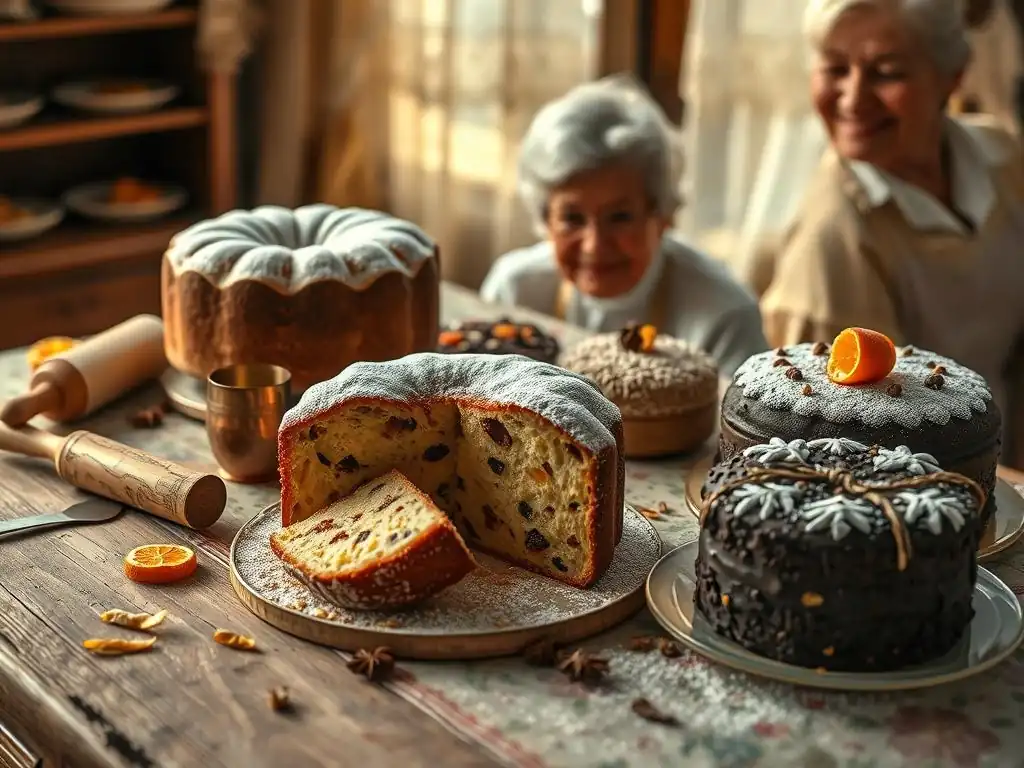
Welcome to BakeWithEase, where we believe everyone can unlock the joy of baking! Ever wondered about the sweet traditions that grace Italian tables during the holidays? Delve into the fascinating Italian holiday cake history and discover the stories baked into each delicious bite. Prepare to be transported to sun-drenched kitchens and learn the secrets behind these beloved regional treats. What makes a Panettone truly Italian? Let's uncover the history and heart together...
- Introduction: A Sweet Journey Through Italian Holiday Cake History
- Panettone: The King of Italian Christmas Cakes
- Pandoro: Verona's Golden Star of Christmas
- Other Festive Italian Cakes for Special Occasions
- The Cultural Significance of Italian Holiday Cakes
- Tips for Baking Authentic Italian Holiday Cakes
- Preserving and Enjoying Your Homemade Italian Holiday Cakes
- Conclusion: Embrace the Italian Holiday Cake Tradition
-
Frequently Asked Questions
- What makes Italian holiday cakes distinct from other types of cakes?
- Can you provide a brief overview of Panettone's history as a popular Italian holiday cake?
- What are some common ingredients found in Italian holiday cakes?
- How have Italian holiday cake recipes evolved over time?
- Where can I find reliable recipes for baking Italian holiday cakes at home?
- Final Reflection: A Slice of History, A Taste of Tradition
- Unleash Your Inner Pastry Chef: Bake an Italian Holiday Tradition!
Introduction: A Sweet Journey Through Italian Holiday Cake History
Welcoming You to Italian Baking Traditions
Welcome to the delightful world of Italian baking, where every recipe tells a story and every cake is a celebration. Italy boasts a rich tapestry of culinary traditions, deeply woven into the fabric of family life and festive occasions. From the rustic charm of regional loaves to the intricate beauty of celebratory pastries, Italian baking offers a journey through history, culture, and flavour.
Understanding these traditions isn't just about learning recipes; it's about connecting with generations of bakers who poured their heart and soul into creating edible masterpieces. This journey into the history of Italian holiday cakes promises not only delicious discoveries but also a deeper appreciation for the customs that make Italian celebrations so special.
Our exploration will uncover the origins and evolution of iconic Italian holiday cakes, revealing how simple ingredients are transformed into symbols of joy, hope, and togetherness. We'll trace the lineage of these festive treats, discovering the regional nuances and historical events that shaped their character. Whether you're a seasoned baker or just starting out, delving into the Italian holiday cake history provides invaluable context and inspiration. It highlights the enduring appeal of time-honored techniques and the importance of quality ingredients, principles that are fundamental to successful Italian baking and central to the BakeWithEase philosophy.
Unveiling the Rich Heritage of Italian Holiday Desserts
Italian holiday desserts are far more than just sweet treats; they are edible heirlooms, passed down through families and steeped in centuries of tradition. The heritage of Italian holiday cakes is a testament to the country's regional diversity and its profound connection between food and festivity. Each region, sometimes even each town, boasts its own unique specialties, born from local ingredients, historical events, and cultural practices. These cakes often carry symbolic meanings, tied to religious holidays, seasonal cycles, or significant life events.
Exploring this heritage reveals a fascinating blend of simple, peasant origins and elaborate, aristocratic refinements. Many classic Italian holiday cakes began as humble preparations, made with ingredients readily available to ordinary families, yet over time, they evolved, incorporating richer elements and more complex techniques, often under the patronage of noble families or monasteries. This evolution is a key part of the Italian holiday cake history, showing how these desserts adapted while retaining their core identity. Understanding this rich background enriches the baking experience, allowing us to appreciate the depth and significance behind every slice.
Panettone: The King of Italian Christmas Cakes
The Origins of Panettone: A Milanese Legend
Panettone, the tall, domed fruitcake, is arguably the most recognized Italian holiday cake worldwide, reigning supreme during the Christmas season. Its origins are steeped in legend, primarily linked to Milan in the late 15th century. One popular tale recounts a young nobleman, Ughetto degli Atellani, who fell in love with the daughter of a poor baker named Toni.
To win her father's approval and help the struggling bakery, Ughetto invented a rich, sweet bread using the finest ingredients available at the time: flour, eggs, butter, sugar, and candied fruit. This bread, initially called "Pan de Toni" (Toni's bread), quickly became famous throughout Milan, eventually evolving into "Panettone." While charming, historical evidence suggests its roots are more likely linked to a simple, leavened Christmas bread traditionally made in Milanese homes, which grew richer over centuries.
Historically, Panettone was a luxury item due to its expensive ingredients like sugar and candied fruit, which were not widely accessible. During the Duchy of Milan, it was customary for families, even the poorest, to consume a large loaf of wheat bread on Christmas Day, a privilege often reserved for the wealthy throughout the year. This special bread evolved, becoming sweeter and enriched with butter and eggs.
By the 18th century, cookbooks featured recipes for a sweetened, leavened bread with fruit, solidifying its status as a Christmas staple. The industrialization of Panettone production in the early 20th century, notably by companies like Motta and Alemagna, made it widely available across Italy and eventually, the globe, cementing its place in Italian holiday cake history.
Panettone Variations: From Classic to Contemporary Flavors
While the classic Panettone with candied orange peel and raisins remains the beloved standard, the world of Panettone has exploded with variations, catering to diverse palates. The traditional version is characterized by its soft, airy texture achieved through a long fermentation process, typically involving a natural sourdough starter (lievito madre). This process can take several days, contributing to the cake's unique texture, aroma, and keeping qualities. The incorporation of candied orange, lemon, and citron peel, along with raisins, provides bursts of sweetness and citrusy notes that are central to the classic flavour profile.
Contemporary variations push the boundaries while respecting the fundamental structure of the cake. You can now find Panettone infused with chocolate chips (often called Panettone al Cioccolato), filled with creams like limoncello, pistachio, or gianduja, or studded with different types of dried or candied fruits like figs, apricots, or berries. Some modern bakers experiment with savory versions, though these are less common as holiday treats. The growing appreciation for artisanal Panettone has also led to a focus on single-origin ingredients and unique flavour combinations, showing how this ancient Italian holiday cake history continues to evolve in the modern era.
Baking Panettone: Tips and Techniques
Baking an authentic Panettone at home is considered a significant challenge, even for experienced bakers, primarily due to its demanding leavening process and high fat content. The key lies in managing the lievito madre, a natural sourdough starter that requires daily feeding and careful maintenance to be strong enough to lift the heavy dough. The dough itself is exceptionally rich, often containing a high percentage of butter and egg yolks relative to flour, which makes it very soft and sticky, requiring specific kneading techniques and careful handling.
Successful Panettone baking relies on precise temperature control during fermentation and proofing, as the dough must rise significantly in specific stages. Using high-quality ingredients, especially strong flour suitable for rich doughs and excellent butter, is paramount. The iconic tall shape is achieved by baking the dough in special paper molds, which support the structure as it rises in the oven.
After baking, traditional Panettone is often immediately hung upside down while still hot. This prevents the rich, tender crumb from collapsing under its own weight as it cools, preserving its airy texture and signature dome shape, a technique essential to mastering this cornerstone of Italian holiday cake history.
Pandoro: Verona's Golden Star of Christmas
The History of Pandoro: From "Pan de Oro" to Holiday Staple
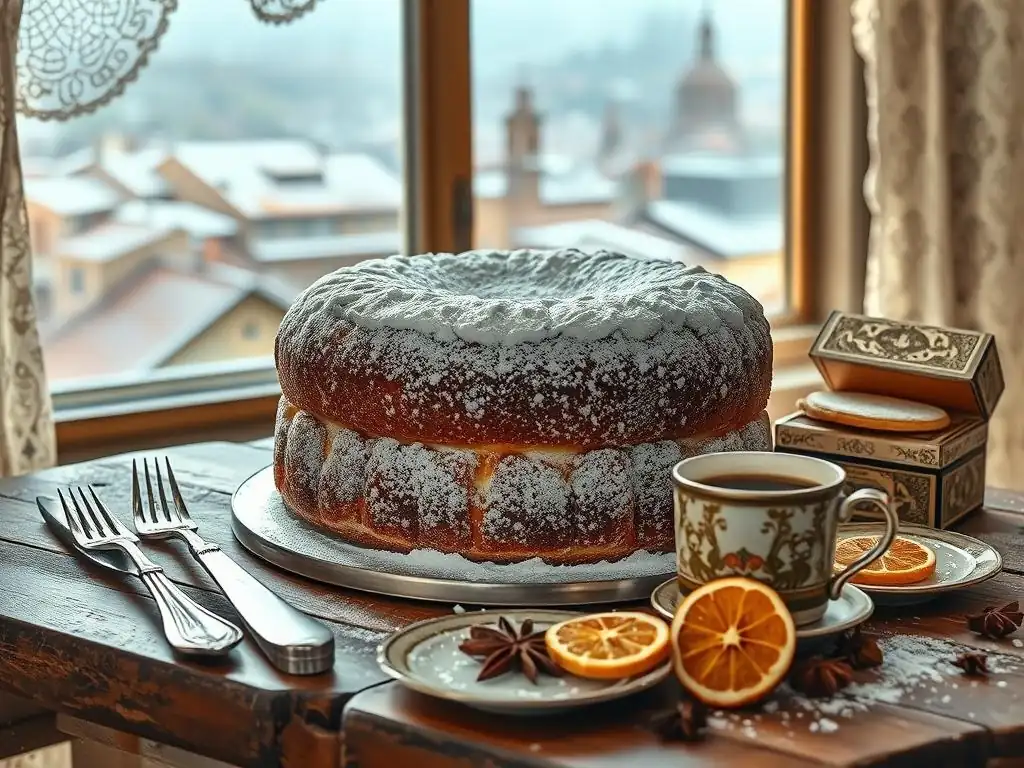
Pandoro, meaning "golden bread," is the other great rival to Panettone for the title of Italy's favourite Christmas cake, originating from Verona. Its name is believed to derive from the pan de oro, a rich, conical-shaped bread sprinkled with gold leaf that was served to the wealthy Venetian aristocracy during the Renaissance.
While this historical connection is debated, the modern Pandoro's lineage is more directly traced to Verona's Nadalin, a star-shaped Christmas cake that existed centuries earlier. The Pandoro as we know it today was patented in 1884 by Domenico Melegatti, a Veronese confectioner, who refined the recipe and gave it its distinctive eight-pointed star shape, inspired by the Christmas star.
Melegatti's innovation was to create a cake that was rich, soft, and golden yellow from a high proportion of egg yolks and butter, without the candied fruit and raisins found in Panettone. This lack of fruit made it instantly popular with those who preferred a simpler flavour or disliked candied peel. The production process, like Panettone, involves a long leavening period, often using a sourdough starter, contributing to its incredibly soft and fluffy texture. Its widespread popularity, initially regional, grew throughout Italy in the 20th century, securing its place alongside Panettone in the narrative of Italian holiday cake history.
Pandoro vs. Panettone: A Comparison of Italian Christmas Cakes
The debate between Pandoro and Panettone is a friendly but fervent one across Italy each Christmas season. The most obvious difference lies in their ingredients and shape. Panettone is tall, domed, and contains candied fruit and raisins, while Pandoro is star-shaped and plain, without fruit. This fundamental difference in composition leads to distinct textures and flavours. Panettone typically has a slightly drier, more structured crumb due to the fruit, with complex aromas from the candied peel and long fermentation.
Pandoro, on the other hand, is known for its incredibly soft, moist, and airy crumb, often described as melt-in-your-mouth. Its flavour is simpler, primarily highlighting the richness of butter and eggs, often enhanced by vanilla and sometimes a hint of lemon zest.
The preparation methods share similarities, both relying on intensive kneading and long, controlled fermentation periods using a sourdough starter to develop flavour and texture. Ultimately, the choice between Pandoro and Panettone often comes down to personal preference – whether one prefers the fruity complexity of Panettone or the buttery simplicity of Pandoro, both stand as pillars of Italian holiday cake history.
Serving and Enjoying Pandoro: Tips and Ideas
Pandoro is traditionally served dusted generously with powdered sugar, which is often provided in a separate packet with the cake. The star shape, when sliced horizontally, creates layers of "stars," making for a visually appealing presentation. A popular way to serve it is to slice it into varying thickness layers, then offset them when stacking to create a festive "Christmas tree" shape, which is then dusted with powdered sugar to resemble snow.
Beyond the simple dusting, Pandoro's rich, buttery flavour makes it incredibly versatile for serving. It is delicious on its own, perhaps with a cup of coffee or a glass of sweet wine like Moscato d'Asti. For a more decadent treat, slices can be served warm with accompaniments such as whipped cream, mascarpone cream, chocolate sauce, or fruit compotes. Leftover Pandoro doesn't go to waste; its soft texture is perfect for making French toast, bread pudding, or trifle, offering delightful ways to extend the enjoyment of this golden star of Italian holiday cake history.
Other Festive Italian Cakes for Special Occasions
Colomba Pasquale: The Dove-Shaped Easter Cake
While Panettone and Pandoro dominate Christmas, Colomba Pasquale is the undisputed queen of Italian Easter celebrations. Shaped like a dove, the Italian word for which is colomba, this cake symbolizes peace and renewal, fitting themes for the Easter holiday. Like its Christmas cousins, Colomba is a leavened cake, made with flour, eggs, butter, sugar, and candied orange peel. However, it typically does not contain raisins. Its distinctive feature, besides the shape, is a sweet, crunchy topping made from almond paste and pearl sugar, often studded with whole almonds before baking.
The recipe and tradition of baking Colomba Pasquale are relatively more recent than Panettone's, gaining widespread popularity in the 20th century, again largely due to the efforts of industrial bakers like Motta and Vergani. It provided a distinct, seasonal counterpart to the Christmas cakes, allowing Italian families to enjoy a similar type of rich, leavened bread during the spring festivities.
The process involves a long fermentation, similar to Panettone, resulting in a soft, airy crumb. This beautiful, symbolic cake is a cherished part of Italian Easter tradition, adding a sweet chapter to the broader narrative of Italian holiday cake history.
The Symbolism of Colomba: Peace and Renewal
The dove shape of the Colomba Pasquale is deeply symbolic, representing peace, resurrection, and the Holy Spirit, all central themes of the Easter holiday. The dove is a universally recognized symbol of peace, recalling the story of Noah's Ark where a dove returned with an olive branch, signaling the end of the flood and the renewal of life. For Christians, the dove also represents the Holy Spirit.
Serving a cake shaped like a dove on Easter Sunday reinforces these powerful messages of hope, new beginnings, and reconciliation. The act of sharing the Colomba with family and friends becomes a gesture of wishing peace and blessings upon them. This strong symbolism is perhaps the most defining characteristic of the Colomba, making it more than just a dessert but a meaningful element of the Easter celebration, intrinsically linked to the spiritual side of Italian holiday cake history.
Colomba Flavor Variations
While the classic Colomba with candied orange peel and almond topping is traditional, variations exist, much like with Panettone. The standard recipe includes candied orange peel folded into the dough, giving it a bright, citrusy flavour. The topping typically consists of a rich almond glaze, pearl sugar, and whole almonds, which bake into a crunchy, sweet crust.
Modern variations might include chocolate chips instead of candied fruit, or fillings such as lemon cream, pistachio cream, or gianduja. Some versions might use different nuts in the topping or incorporate other flavours like berries. However, the dove shape and the underlying structure of a rich, leavened dough remain consistent, ensuring that even with variations, the cake retains its identity as the Easter Colomba, a delightful evolution within the Italian holiday cake history.
Panforte: A Tuscan Treasure for the Holidays
Originating from Siena in Tuscany, Panforte is a dense, chewy confection rather than a cake in the typical sense, but it is a beloved and historic Italian holiday dessert, particularly associated with Christmas. Its name translates to "strong bread" or "sour bread," possibly referring to its spicy kick or its early, less sweet form which might have fermented slightly.
Panforte has a history stretching back over 1000 years; records from 1205 mention it being paid as tribute to a monastery. It was initially a simple mixture of flour, honey, and fruit, but over time, Crusaders and spice traders brought exotic ingredients like cinnamon, cloves, and nutmeg to Italy, which were incorporated into the recipe, transforming it into the aromatic treat we know today.
Panforte gained prominence in the Middle Ages and Renaissance, becoming a luxurious item due to the cost of the spices and candied fruits. It was often made in convents and pharmacies, highlighting its perceived medicinal or strengthening properties.
The two most famous varieties are Panforte Margherita (named after Queen Margherita of Savoy, who visited Siena in 1879, and is lighter in colour and flavour with more candied melon) and Panforte Nero (darker, with cocoa and more intense spices). This ancient Tuscan specialty holds a unique place in Italian holiday cake history, representing a link to medieval culinary practices and the spice trade.
Panforte's Unique Ingredients and Flavors
Panforte is characterized by its concentrated blend of nuts, dried and candied fruits, honey, sugar, and a heady mix of spices, all bound together with a small amount of flour. Typical ingredients include almonds, hazelnuts, walnuts, candied orange peel, citron, and melon. The binding agent is a cooked syrup made from honey and sugar.
The flavour profile is intensely aromatic and complex, dominated by the warm, pungent notes of spices like cinnamon, cloves, nutmeg, and sometimes black pepper. Cocoa is often added, particularly in Panforte Nero, contributing a deep, slightly bitter undertone that balances the sweetness of the fruit and honey. The texture is dense and chewy, almost like a very rich fruit and nut bar.
It's typically served in thin wedges, often dusted with powdered sugar, and enjoyed after a meal with coffee, vin santo, or other dessert wines. This unique combination of ingredients and texture sets Panforte apart in the landscape of Italian holiday cake history.
Making Panforte: A Traditional Recipe Overview
Making Panforte involves a relatively straightforward process compared to the leavened cakes, but requires precision in measuring and cooking. The dry ingredients – chopped nuts, candied fruits, spices, and a small amount of flour – are mixed together. Separately, honey and sugar are heated to a specific temperature to create a thick syrup.
The hot syrup is then poured into the dry ingredients and mixed quickly to combine everything evenly. The mixture is very stiff and sticky. It is then pressed firmly into a round pan, often lined with wafer paper (ostia) on the bottom.
The panforte is baked at a relatively low temperature for a short time until it is set but still slightly soft in the center. Once cooled, it is traditionally dusted generously with powdered sugar. The simplicity of the process belies the complexity of the flavour, a testament to the power of high-quality ingredients in this ancient part of Italian holiday cake history.
Torta della Nonna: A Creamy Italian Tart for Celebrations
Torta della Nonna, meaning "Grandmother's Cake," is a beloved classic Italian dessert, a creamy tart that evokes feelings of comfort and home. While not strictly tied to a single major holiday like Christmas or Easter, it is a popular choice for family gatherings, Sunday lunches, and other celebrations throughout the year, making it a versatile player in Italian holiday cake history. Its simple, comforting nature and the name itself suggest a recipe passed down through generations, embodying the warmth and love of a nonna (grandmother) in the kitchen.
The core components of Torta della Nonna are a shortcrust pastry shell (pasta frolla) filled with a rich, smooth lemon-infused pastry cream (crema pasticcera), topped with pine nuts and often dusted with powdered sugar. The contrast between the tender, buttery pastry and the silky, aromatic cream is what makes this tart so appealing. While its exact historical origins are somewhat debated, it is widely considered a Tuscan specialty, particularly associated with Florence, although variations exist throughout Italy. Its enduring popularity lies in its delicious simplicity and nostalgic appeal.
The "Grandmother's Cake": A Comforting Classic
Torta della Nonna earns its name by embodying the qualities associated with traditional grandmotherly baking: comforting, delicious, and made with simple, wholesome ingredients. It's the kind of cake that feels familiar and provides a sense of warmth and security. The recipe is relatively straightforward, relying on fundamental baking techniques like making pasta frolla and crema pasticcera.
The key to a great Torta della Nonna lies in the quality of the ingredients – fresh eggs, good butter, and fragrant lemons for the cream. The pastry should be tender and flaky, while the cream should be smooth, thick, and not overly sweet, with a pronounced but not overwhelming lemon flavour. The pine nuts on top provide a lovely nutty crunch that contrasts with the soft cream. This cake is a perfect example of how simple, well-executed recipes can become enduring classics, cherished in the fabric of Italian holiday cake history and everyday life.
Regional Variations of Torta della Nonna
While the classic version with pastry cream and pine nuts is the most recognized, regional variations of Torta della Nonna exist across Italy. Some versions might incorporate different nuts, such as almonds, or omit the nuts entirely. In certain regions, the pastry cream might be flavoured differently, perhaps with vanilla bean instead of lemon zest, or even include ricotta cheese for a creamier texture.
Another common variation involves placing a layer of jam (often apricot or cherry) at the bottom of the tart shell before adding the pastry cream. Some recipes might use a different type of pastry, like a richer pasta frolla or even a puff pastry base in some adaptations. These regional interpretations highlight the diversity of Italian baking traditions while staying true to the spirit of a comforting, home-style tart, adding layers to the story of Italian holiday cake history.
The Cultural Significance of Italian Holiday Cakes
Family Traditions and Italian Holiday Baking
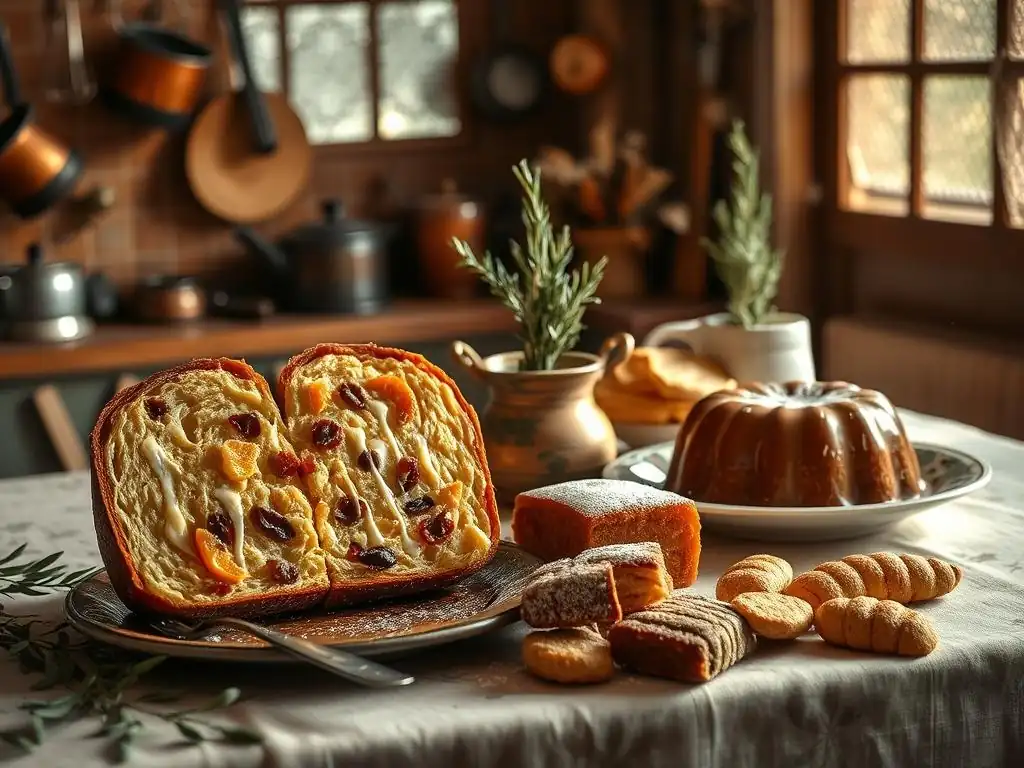
At the heart of Italian holiday cake history lies the profound connection to family traditions. Baking these special cakes is often a multi-generational activity, with recipes and techniques passed down from nonna to mother to daughter (and sometimes son!). The process of preparing these elaborate cakes – from feeding the sourdough starter for Panettone to candying fruit or making the perfect pastry cream for Torta della Nonna – can take days and often involves the collective effort of the family.
The kitchen becomes the center of activity, filled with the aromas of spices, citrus, and yeast, creating indelible memories. Children learn by watching and participating, helping with simple tasks like sifting flour or dusting with powdered sugar. These shared baking experiences are not just about making a cake; they are about preserving cultural heritage, strengthening family bonds, and creating a sense of continuity across generations. The anticipation of the finished cake, and the joy of sharing it, is an integral part of the holiday celebration itself.
Italian Holiday Cakes as Symbols of Celebration
Italian holiday cakes are potent symbols of celebration, marking significant moments in the year and in life. Their presence on the table signifies that a special occasion is at hand. Panettone and Pandoro are synonymous with Christmas, their appearance signaling the start of the festive season. Colomba Pasquale heralds Easter, bringing with it messages of peace and new life. Other cakes, like Panforte or Torta della Nonna, might appear at various celebrations, from weddings and baptisms to birthdays and family reunions.
The richness of the ingredients – butter, eggs, sugar, dried fruits, spices – reflects the celebratory nature of these cakes, often contrasting with the simpler fare of everyday life. In earlier times, these ingredients were expensive luxuries, making the cakes true treats reserved for special occasions. Even today, while more accessible, the act of making or buying these specific cakes maintains their status as markers of festivity. They are not just desserts; they are edible icons of joy, abundance, and coming together, central to the narrative of Italian holiday cake history.
Sharing food is a fundamental aspect of Italian culture, and this is especially true during the holidays. Baking Italian holiday cakes is often done with the intention of sharing them with family, friends, and neighbours. It is common practice to exchange cakes as gifts, a gesture of goodwill and affection. A homemade Panettone or Colomba is a highly prized gift, representing time, effort, and love.
This tradition of sharing extends beyond gifting. The cakes are central to holiday meals and gatherings, sliced and offered to everyone who visits. The act of sitting down together to enjoy a slice of Pandoro or Panforte fosters connection and community. It is through this shared experience of baking and eating that the joy of the holidays is amplified and the traditions of Italian holiday cake history are kept alive, passed down not just through recipes but through shared moments around the table.
Tips for Baking Authentic Italian Holiday Cakes
Sourcing High-Quality Ingredients for Italian Baking
Achieving authentic flavour and texture in Italian holiday cakes begins with sourcing high-quality ingredients. Unlike some baking where ingredient variations are forgiving, traditional Italian recipes often rely on the inherent quality of each component to shine through. For rich, leavened cakes like Panettone and Pandoro, using a high-protein flour with good gluten structure is crucial to support the long fermentation and high fat content. Many Italian bakers prefer specific types of "00" flour designed for rich doughs.
Butter is another key ingredient; a high-fat, good-quality unsalted butter will provide superior flavour and texture. Fresh, free-range eggs contribute richness and colour. For cakes with fruit, like Panettone and Colomba, using high-quality candied fruit and raisins is essential. Poor-quality candied fruit can be hard or artificial-tasting, while good fruit is plump, moist, and flavourful. Similarly, for Panforte, using fresh, good-quality nuts and spices makes a significant difference in the final aroma and taste. Investing in the best ingredients you can find is perhaps the most important tip for successful Italian holiday cake history recreation in your own kitchen.
Mastering Traditional Italian Baking Techniques
Baking traditional Italian holiday cakes often requires mastering specific techniques that differ from standard cake baking. For leavened cakes like Panettone, Pandoro, and Colomba, the most challenging aspect is managing the lievito madre, a natural sourdough starter. Understanding how to feed it, assess its strength, and incorporate it into the dough requires practice and patience. The kneading process for these rich doughs is also intensive, often requiring a stand mixer with a dough hook for extended periods to develop sufficient gluten structure to support the heavy load of butter and eggs.
Fermentation is another critical technique. These cakes undergo multiple long fermentation periods, sometimes lasting over 24-48 hours in total, often at controlled temperatures. This slow process develops complex flavours and the characteristic airy texture. Techniques like "folding" the dough during fermentation help build strength.
For tarts like Torta della Nonna, mastering pasta frolla involves techniques to keep the pastry tender and not tough, such as minimal handling and chilling. For Panforte, the technique involves cooking the honey and sugar syrup to the correct temperature to achieve the desired chewy consistency. Embracing these traditional methods, even if challenging, is key to unlocking the secrets of Italian holiday cake history baking.
Adapting Italian Holiday Cake Recipes for Home Bakers
While traditional recipes can be demanding, many have been adapted to be more accessible for home bakers. For cakes requiring lievito madre, some adapted recipes use a combination of active dry yeast or instant yeast with a shorter fermentation period, or guide bakers on creating a simpler "biga" or "poolish" pre-ferment that is easier to manage than a long-term sourdough starter. While these adaptations may slightly alter the flavour or texture compared to the truly artisanal versions, they make the process much more achievable for those without extensive sourdough experience.
Scaling down recipes for home ovens and standard equipment is also a common adaptation. Many traditional recipes were developed for larger batches or professional equipment. Home bakers can adjust quantities and baking times. Additionally, while specific Italian flours are ideal, many recipes provide guidance on using readily available strong bread flour. The goal of adaptation is to capture the essence of the traditional cake and its place in Italian holiday cake history while making the baking process manageable and enjoyable in a home kitchen, allowing more people to experience the joy of baking these festive treats.
Preserving and Enjoying Your Homemade Italian Holiday Cakes
Proper Storage Techniques for Italian Cakes
Storing homemade Italian holiday cakes correctly is essential to maintain their freshness, texture, and flavour, especially considering the effort that goes into them. For leavened cakes like Panettone, Pandoro, and Colomba, their high fat content and long fermentation contribute to a naturally good shelf life compared to many other cakes. Once baked and cooled, they should be stored at room temperature in an airtight container or tightly wrapped in plastic wrap and then foil. This prevents them from drying out.
Avoid refrigerating these cakes, as the cold can dry out the crumb and diminish the flavour. Properly stored at room temperature, a homemade Panettone or Pandoro can remain fresh for 7-10 days, sometimes even longer. Panforte, being a dense confection with high sugar content, has an even longer shelf life; stored in an airtight container at room temperature, it can last for several weeks, even months. Torta della Nonna, with its creamy filling, is best stored in the refrigerator and consumed within 3-4 days. Always ensure cakes are completely cool before storing to prevent condensation.
Serving Suggestions and Pairing Ideas
Serving Italian holiday cakes is part of the ritual of enjoying them. Panettone and Pandoro are traditionally served in slices, often dusted with powdered sugar. They pair wonderfully with hot beverages like coffee, cappuccino, or hot chocolate. For an adult treat, they are excellent with sweet wines such as Moscato d'Asti, Passito, or Vin Santo. A slice can also be enjoyed with a dollop of whipped cream, mascarpone cream, or a fruit sauce.
Colomba Pasquale is also typically served sliced, often with coffee or sweet wine. Its almond topping provides a lovely texture contrast. Panforte is best served in thin wedges due to its richness and density. It is a classic pairing with Vin Santo, a sweet Tuscan dessert wine, often served alongside biscotti for dipping. Torta della Nonna is served chilled or at room temperature, perfect with coffee or as a dessert after a meal. These thoughtful pairings enhance the flavours and complete the experience of enjoying these staples of Italian holiday cake history.
Extending the Freshness of Your Baked Goods
If you find yourself with more homemade Italian holiday cake than you can consume within its optimal freshness window, freezing is an excellent option to extend its life. Panettone, Pandoro, and Colomba freeze remarkably well due to their rich, buttery crumb. To freeze, ensure the cake is completely cooled. Wrap the entire cake or individual slices tightly in plastic wrap, pressing out as much air as possible, then wrap again in aluminum foil or place in a freezer-safe bag or container.
Properly wrapped, these cakes can be frozen for up to 3-4 months. To thaw, simply unwrap the cake (to prevent condensation from making it soggy) and let it sit at room temperature for several hours (a whole cake might take 8-12 hours). Slices will thaw much faster.
Panforte can also be frozen, wrapped tightly, for several months. Torta della Nonna is generally not recommended for freezing due to the custard filling, which can change texture upon thawing. By using these freezing techniques, you can enjoy the fruits of your labour and the taste of Italian holiday cake history long after the festive season has ended.
Conclusion: Embrace the Italian Holiday Cake Tradition
The Enduring Appeal of Italian Holiday Baking
The enduring appeal of Italian holiday baking lies in its ability to connect us to history, culture, and loved ones through the simple act of sharing food. These cakes, from the majestic Panettone to the comforting Torta della Nonna, are more than just recipes; they are expressions of identity, celebrations of seasonality, and symbols of togetherness. The rituals surrounding their creation and consumption have been preserved for generations, offering a tangible link to the past and a sense of continuity in a rapidly changing world.
Whether made from scratch using time-honoured techniques or enjoyed from a local pasticceria, these cakes evoke a sense of warmth, generosity, and festive spirit. They remind us of the importance of slowing down, gathering with family, and savouring the simple pleasures of life. The history of Italian holiday cakes is a testament to the power of food to nourish not only the body but also the soul, weaving a rich tapestry of flavour, tradition, and memory.
Encouragement to Explore Italian Flavors
We hope this journey through the Italian holiday cake history has inspired you to explore these wonderful flavours in your own kitchen. While some of these cakes present a baking challenge, the reward of biting into a slice of homemade Panettone, Pandoro, or Colomba, or sharing a slice of Torta della Nonna, is immense. Even starting with a simpler Panforte or an adapted recipe is a step into a rich and rewarding culinary tradition.
Embrace the process, source the best ingredients you can, and most importantly, share your creations with those you love. Baking Italian holiday cakes is a joyful experience that connects you to centuries of history and countless families who have celebrated with these very same treats. So, tie on your apron, preheat your oven, and get ready to add your own chapter to the delicious story of Italian holiday cake history.
Frequently Asked Questions
What makes Italian holiday cakes distinct from other types of cakes?
Italian holiday cakes often feature unique flavor profiles using ingredients like citrus, almonds, and candied fruits. They also have deep cultural significance tied to specific holidays and regions.
Can you provide a brief overview of Panettone's history as a popular Italian holiday cake?
Panettone originated in Milan and its history involves legends of a scullery boy and a noble's love. It’s characterized by its tall, dome shape and candied citrus and raisin fillings.
What are some common ingredients found in Italian holiday cakes?
Common ingredients include eggs, butter, sugar, flour, and then regional variations like almonds, citrus zest, Marsala wine, or candied fruits to give them their signature flavors.
How have Italian holiday cake recipes evolved over time?
While some recipes remain traditional, bakers have adapted them to include modern ingredients and techniques, such as using different types of flour or incorporating new flavor combinations. This allows for both authenticity and innovation.
Where can I find reliable recipes for baking Italian holiday cakes at home?
Websites like BakeWithEase.com offer step-by-step guides and easy-to-find ingredients. You can also find recipes in Italian cookbooks and online baking forums specializing in Italian cuisine.
Final Reflection: A Slice of History, A Taste of Tradition
The enduring appeal of Italian holiday cakes transcends mere culinary delight; they are living testaments to generations of family, tradition, and cultural resilience. These intricate creations, laden with symbolism and rich in history, continue to bind communities and families together, offering a tangible link to the past in a rapidly changing world. Their continued popularity speaks volumes about the power of food to preserve and transmit cultural heritage.
The influence of these cakes extends far beyond the kitchen table; they represent a vital thread in the tapestry of Italian-American culture, and indeed, Italian culture globally. These sweet treats are more than just desserts; they are vessels of memory, carrying with them the whispers of ancestors and the warmth of shared celebrations. As the renowned Italian food writer, Marcella Hazan, once wrote: Food is symbolic of love when words are inadequate.
This sentiment perfectly encapsulates the profound emotional connection many feel to these traditional cakes, passed down through generations, each bite a taste of history and familial love.
Consider the stories woven into the very ingredients of these cakes – the careful selection of almonds, the precise measurement of spices, the patient layering of delicate pastries. These are not merely recipes; they are rituals, passed down through families, each baker adding their own personal touch, their own unique story to the evolving narrative. You, too, can become a part of this rich tradition.
Take the time to bake one of these cakes, to share it with loved ones, and to savor not only its deliciousness but also the history and heart it embodies. Let the sweet aroma and the shared experience become a new chapter in your own family's story.
Unleash Your Inner Pastry Chef: Bake an Italian Holiday Tradition!
We hope you enjoyed exploring the rich history and heartwarming traditions behind Italian holiday cakes! You’ve gained a delicious understanding of their cultural significance and the artistry behind their creation. Now it's time to put your newfound knowledge to use.
- Bake your own panettone or pandoro! This is the heart of the matter – let's get baking! Find a recipe that excites you and give it a try. Even a small success will bring a sense of accomplishment.
- Share your baking journey! Post a picture of your creation on social media using #BakeWithEaseItalianHoliday. Let's inspire each other!
- Explore regional variations. Research other regional Italian holiday cakes – there's a whole world of deliciousness out there waiting to be discovered!
What unique ingredient or technique will you incorporate into your next Italian holiday baking adventure?