
Understanding Fermentation Temperature for Baguettes

Welcome to BakeWithEase, your trusted guide to delicious homemade baking! Are you ready to unlock the secrets to perfectly risen, crusty baguettes? This week, we're diving deep into the crucial role of baguette fermentation temperature control. Discover how subtle temperature adjustments can dramatically impact your bread's flavor and texture. Curious to learn how to achieve that ideal airy crumb and golden-brown crust? Let's get baking!
- Understanding Fermentation Temperature for Baguettes: Achieving Optimal Flavor and Texture
- Introduction: The Crucial Role of Temperature in Baguette Fermentation
- What is Baguette Fermentation and Why is Temperature Critical?
- Ideal Baguette Fermentation Temperature Ranges: A Detailed Breakdown
- Mastering Baguette Fermentation Temperature Control Techniques
- Troubleshooting Common Baguette Fermentation Temperature Problems
- Step-by-Step Guide: Controlling Baguette Fermentation Temperature for Optimal Results
- Baguette Fermentation Temperature: Advanced Techniques and Tips
- Baguette Recipe Examples with Specific Fermentation Temperature Instructions
- Conclusion: Achieving Baguette Perfection Through Temperature Management
-
Frequently Asked Questions
- What is the ideal fermentation temperature for baguettes?
- Why is temperature control important during baguette fermentation?
- How does temperature affect the flavor of a baguette?
- What happens if the baguette dough ferments at too high a temperature?
- Can I use a refrigerator to control the fermentation temperature of my baguette dough?
- Final Reflection: Mastering the Art of Baguette Fermentation
- Unlock Your Baguette Baking Potential!
Understanding Fermentation Temperature for Baguettes: Achieving Optimal Flavor and Texture
Introduction: The Crucial Role of Temperature in Baguette Fermentation
Mastering the art of baking baguettes is a rewarding journey, and one of the most critical factors influencing the outcome is fermentation temperature. It's more than just letting dough rise; it's a controlled process where yeast transforms sugars into gases and organic acids, directly impacting the texture, flavor, and aroma of your final baguette. Understanding and controlling this temperature is fundamental to achieving that signature open crumb and crisp crust.
This article delves deep into the science and practice of baguette fermentation temperature control, offering practical tips and detailed explanations. Whether you're a beginner baker or looking to refine your skills, learning to manage temperature will elevate your baguette game significantly, moving you closer to baking truly exceptional loaves.
Why Precise Temperature Control Matters for Baguette Fermentation
Precise temperature control is paramount because it directly dictates the speed and nature of yeast activity and enzymatic reactions within the dough. Too high a temperature can cause the yeast to work too quickly, leading to rapid gas production but insufficient time for complex flavors to develop. This often results in a bland loaf with a poor structure. Conversely, too low a temperature drastically slows down fermentation, potentially leading to dense loaves if not managed correctly, though cold fermentation offers its own distinct advantages.
Beyond yeast activity, temperature influences enzyme action, which breaks down starches into simpler sugars that yeast can consume and also affects gluten development. Maintaining the correct baguette fermentation temperature ensures a balanced process, allowing for adequate gas production for a light crumb while simultaneously developing strength in the gluten network to support that structure. It's a delicate balance that directly impacts the final volume, crumb structure, crust development, and the depth of flavor in your baguette.
Your Guide to Baking Exceptional Baguettes
This guide aims to equip you with the knowledge and techniques necessary for effective baguette fermentation temperature control. We will explore the science behind fermentation, detail ideal temperature ranges for different stages, and provide practical methods for monitoring and adjusting temperatures in your home kitchen. By understanding how temperature affects every aspect of the dough, you'll gain the confidence to troubleshoot common issues and consistently produce baguettes with superior flavor, texture, and appearance.
We will cover everything from initial bulk fermentation temperatures to the benefits of cold retardation, and even touch upon how to adapt techniques based on your specific environment. Whether you're aiming for a classic Parisian-style baguette or experimenting with different fermentation strategies, mastering temperature is the key ingredient to success. Let's unlock the secrets to perfect baguette fermentation temperature control together.
What is Baguette Fermentation and Why is Temperature Critical?
Fermentation is the magical transformation that turns simple flour and water into flavorful, leavened dough. In the context of baguettes, it's a controlled biological process driven primarily by yeast (either commercial or wild yeast in a sourdough starter). This process involves the yeast consuming sugars in the dough and producing carbon dioxide gas, which creates the air pockets that give bread its structure, and alcohol and organic acids, which contribute significantly to flavor and aroma.
This crucial stage develops the gluten network, making the dough elastic and strong enough to hold the gas produced. It's during fermentation that the characteristic open crumb and chewy texture of a great baguette are born. Without proper fermentation, you simply cannot achieve the desired qualities of this iconic bread.
Defining Baguette Fermentation: A Baker's Essential Process
Baguette fermentation typically occurs in two main phases: bulk fermentation (or first rise) and proofing (or second rise, often after shaping). Bulk fermentation happens after the dough is mixed and kneaded, where the entire mass of dough is allowed to rise. This phase is critical for developing flavor and initial gas production. Proofing occurs after the dough has been shaped into its final form, allowing the baguettes to lighten and expand before baking.
During both phases, maintaining the correct baguette fermentation temperature is non-negotiable for predictable and desirable results. The yeast's activity is highly sensitive to temperature; it thrives within certain ranges and becomes dormant or dies outside of them. Effective baguette fermentation temperature control ensures the yeast works at the desired pace, allowing for optimal gas production alongside the development of complex flavors and a strong gluten structure.
The Impact of Temperature on Yeast Activity and Gluten Development
Yeast activity is directly proportional to temperature within its viable range (typically 1°C to 60°C or 34°F to 140°F). Optimal activity for commercial yeast is often cited around 25-27°C (77-80°F). Warmer temperatures accelerate yeast metabolism, leading to faster gas production and quicker rising. For instance, dough might double in size in just 1-2 hours at 27°C. However, temperatures above 30°C (86°F) can stress yeast, producing off-flavors, and very high temperatures kill it.
Conversely, cooler temperatures, such as those found in a refrigerator (around 4°C or 40°F), significantly slow down yeast activity. At these temperatures, fermentation can take 12-48 hours or even longer. While gas production is slow, the extended time allows enzymes like proteases to break down proteins, enhancing gluten extensibility, and lipases to break down fats, contributing to flavor. This slower process also gives more time for organic acids to form, resulting in a tangier flavor profile often sought after in artisan baguettes. Proper baguette fermentation temperature control is key to leveraging these different effects.
How Temperature Affects Baguette Flavor, Crust, and Crumb
Temperature is a primary determinant of the final characteristics of a baguette. A rapid fermentation at higher temperatures often results in a loaf with less complex flavor because there isn.t enough time for the beneficial enzymatic reactions and acid production that contribute depth and nuance. The crumb structure might be less open, and the crust potentially less crisp due to rapid rising and less time for surface drying during proofing.
Slow fermentation at cooler temperatures, particularly cold retardation, allows for extensive development of organic acids (like lactic and acetic acid) and other flavor compounds. This leads to the characteristic tangy flavor and complex aroma found in many artisan baguettes. The slower rise also allows for better gluten development, resulting in a more open, irregular crumb structure. Furthermore, cold dough is easier to handle and score, contributing to a better crust formation during baking. Effective baguette fermentation temperature control is therefore essential for achieving the desired balance of flavor, crumb, and crust.
Ideal Baguette Fermentation Temperature Ranges: A Detailed Breakdown
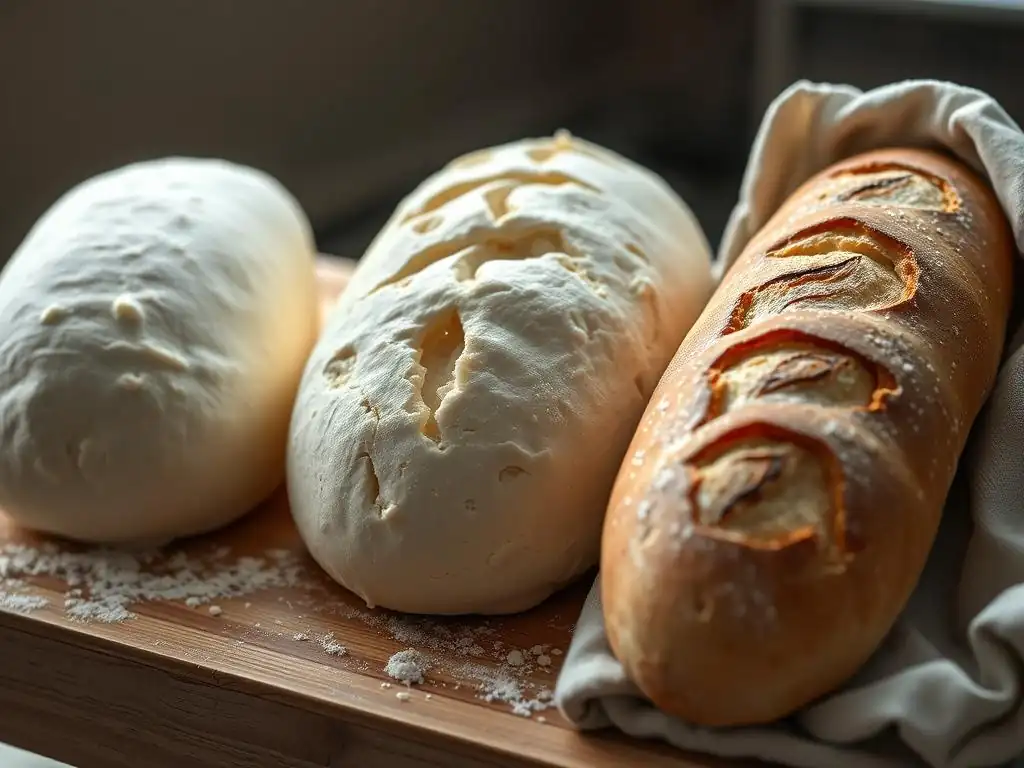
Identifying the "ideal" baguette fermentation temperature isn't a single number, but rather a range that depends on the desired outcome, method, and timeframe. Bakers manipulate temperature to control the rate of fermentation and the type of flavor development. Understanding these ranges is crucial for predictable results when practicing baguette fermentation temperature control.
Generally, warmer temperatures (24-27°C or 75-80°F) are used for faster bulk fermentation, often taking 2-4 hours. Cooler room temperatures (20-22°C or 68-72°F) slow things down slightly, extending bulk fermentation to 3-5 hours and allowing for a bit more flavor development. Refrigerated temperatures (4-7°C or 40-45°F) drastically slow fermentation, used for retardation which can last from 12 to 72 hours, maximizing flavor complexity.
Optimal Dough Temperature for Initial Fermentation (Bulk Fermentation)
For many baguette recipes aiming for a balance of speed and flavor development, an optimal dough temperature for initial bulk fermentation falls within the range of 24°C to 27°C (75°F to 80°F). Achieving this internal dough temperature is key, rather than just the ambient room temperature. Dough generates some heat during mixing and fermentation, but external temperature plays a significant role.
At 25°C (77°F), a typical baguette dough (around 65-75% hydration) might take approximately 3 hours to double in size during bulk fermentation, with 2-3 folds performed within the first 1.5 hours. If the dough temperature is closer to 22°C (72°F), the same process might take 4-5 hours. Maintaining this target dough temperature allows for vigorous yeast activity while still providing enough time for some enzymatic breakdown of starches and initial flavor compound formation before shaping. This focus on internal dough temperature is a critical aspect of precise baguette fermentation temperature control.
Room Temperature vs. Refrigerated Fermentation (Retardation): Weighing the Pros and Cons
Choosing between room temperature and refrigerated fermentation (retardation) depends on your schedule and desired flavor profile. Room temperature fermentation is faster and more convenient for same-day baking. Pros include quicker results (baguettes ready in 4-6 hours total), simpler process, and good oven spring due to active yeast. Cons are less complex flavor development compared to cold fermentation and potentially tighter crumb if rushed. A typical room temp proof might be 60-90 minutes at 24°C (75°F) after shaping.
Refrigerated fermentation, or cold retardation, involves placing the dough in the refrigerator (4-7°C or 40-45°F) for an extended period after bulk fermentation or shaping. Pros include significantly enhanced flavor complexity and aroma due to slower yeast activity and increased enzyme action, improved dough handling characteristics (cold dough is less sticky and easier to shape/score), and flexibility in baking schedule.
Cons are the much longer fermentation time (12-72 hours is common) and potentially slightly less oven spring if the dough isn't warmed slightly before baking. Many bakers combine methods, doing a short bulk at room temp followed by a long cold proof as part of their baguette fermentation temperature control strategy.
Understanding the Inverse Relationship Between Time and Temperature
There is a fundamental inverse relationship between fermentation temperature and time: higher temperatures mean faster fermentation and shorter times, while lower temperatures mean slower fermentation and longer times. For example, a dough that doubles in size in 2 hours at 27°C (80°F) might take 4 hours at 22°C (72°F) and 24 hours or more at 4°C (40°F).
This relationship is the core principle used in baguette fermentation temperature control. Bakers manipulate temperature to fit their schedule and flavor goals. Need baguettes tonight? Use a warmer room temperature. Want deep, complex flavors and flexibility? Use a long cold fermentation. Successful baking requires understanding this trade-off and adjusting fermentation time based on the temperature you are using, observing the dough's development rather than strictly adhering to times listed in a recipe without considering temperature.
Mastering Baguette Fermentation Temperature Control Techniques
Effective baguette fermentation temperature control goes beyond knowing the ideal ranges; it involves practical techniques to achieve and maintain those temperatures. Home kitchens can have fluctuating temperatures, making consistent results challenging without some deliberate effort. Fortunately, several methods can help you manage dough temperature effectively.
These techniques range from simple measurements to creating controlled environments. By incorporating these practices, you can minimize variability and ensure your dough ferments exactly as intended, leading to more consistent and higher-quality baguettes.
Using a Digital Thermometer for Accurate Dough Temperature Monitoring
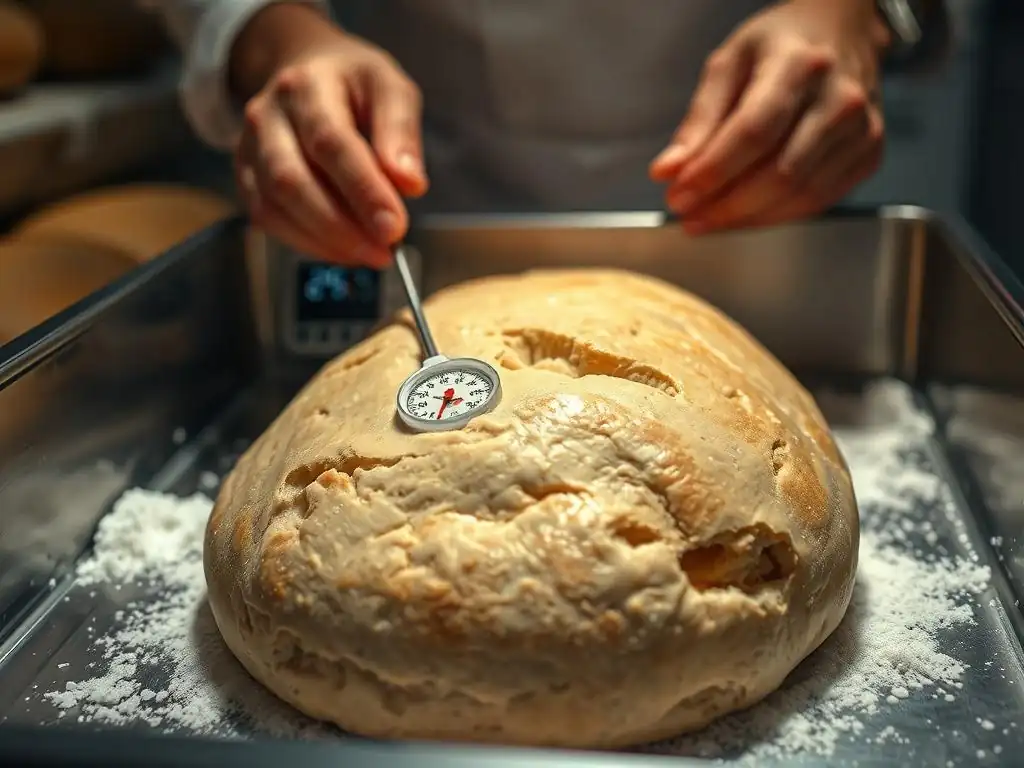
The most essential tool for precise baguette fermentation temperature control is a digital thermometer. While ambient room temperature is important, the internal temperature of the dough is what truly matters for yeast activity. After mixing, quickly insert the probe into the center of the dough mass to get a reading. This allows you to verify if you've hit your target dough temperature (often calculated using the desired dough temperature formula if using specific water temperatures).
Throughout bulk fermentation, periodically check the dough temperature, especially if you are trying to maintain a specific range. This helps you understand how quickly the dough is warming or cooling and whether your fermentation environment is effective. For example, if your target is 25°C (77°F) and your dough is only at 22°C (72°F), you know you need to find a warmer spot or use a warming technique. Accurate temperature readings are the foundation of good baguette fermentation temperature control.
Creating a Stable Fermentation Environment: Tips and Tricks
Creating a stable environment is key to consistent baguette fermentation temperature control. Avoid placing dough near drafty windows, direct sunlight, or hot ovens unless you are intentionally using them for warmth. An insulated cooler or an oven with the light on are popular methods. An oven with just the light on typically reaches a temperature of around 24-27°C (75-80°F), which is often ideal for bulk fermentation.
Another simple technique is the "warm water bath." Place the dough container inside a larger container filled with warm water (ensure the water level is below the rim of the dough container). This provides gentle, consistent heat. For cold fermentation, ensure your refrigerator is set to the correct temperature range (4-7°C or 40-45°F) and that the dough is placed in a spot with minimal temperature fluctuation. These simple tricks help maintain the desired baguette fermentation temperature.
Adjusting Fermentation Times Based on Observed Dough Behavior
Even with careful temperature control, fermentation isn't a purely time-driven process; it's driven by the dough's development. Temperature influences the rate of development, but factors like flour type, hydration, and yeast health also play a role. Therefore, it's crucial to observe the dough itself to determine when fermentation is complete, rather than relying solely on a timer.
Look for signs like a significant increase in volume (often 50-100% increase for bulk fermentation, depending on the recipe and desired outcome), a dome shape with rounded edges, and the appearance of gas bubbles on the surface or sides of the container. The "poke test" is also useful: gently poke the dough; if the indentation slowly springs back partway, it's likely ready. If it springs back immediately, it needs more time.
If it stays completely indented, it might be over-proofed. Learning to read your dough is the final, crucial step in mastering baguette fermentation temperature control and achieving perfect results.
Troubleshooting Common Baguette Fermentation Temperature Problems
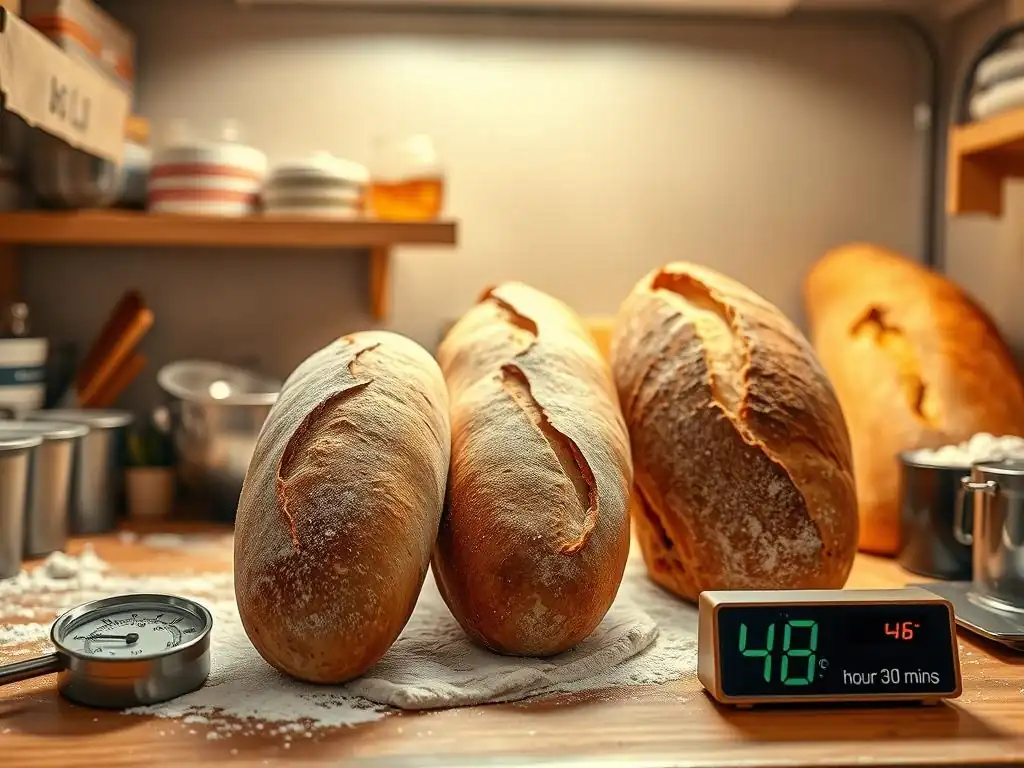
Even with the best intentions for baguette fermentation temperature control, things can go wrong. Temperatures can fluctuate unexpectedly, leading to dough that ferments too quickly or too slowly. Recognizing the signs of common temperature-related issues like over-proofing and under-proofing, and knowing how to react, is vital for successful baguette baking.
Understanding the causes of these problems allows you to prevent them in the future and, in some cases, salvage a batch of dough that isn't behaving as expected.
Over-Proofing: Causes, Prevention, and Solutions
Over-proofing occurs when dough ferments for too long or at too high a temperature, exhausting the yeast and causing the gluten structure to break down. Signs include a dough that has risen significantly but then starts to collapse, smells strongly alcoholic or overly acidic, and feels very fragile and gassy. When poked, the indentation remains completely. A primary cause is excessively high baguette fermentation temperature combined with too long a fermentation time.
To prevent over-proofing, pay close attention to both time and temperature, and most importantly, observe the dough's development. Use a thermometer to ensure your fermentation environment isn't too warm. If you notice the dough is rising much faster than expected, check its temperature and consider moving it to a cooler spot. If dough is already over-proofed, you can sometimes salvage it by gently degassing it, reshaping, and giving it a very short, careful second proof, though the final loaf may have less volume and a less desirable crumb structure.
Under-proofing happens when dough hasn't fermented long enough or has fermented at too low a temperature, meaning the yeast hasn't produced sufficient gas or flavor compounds, and the gluten structure hasn't fully relaxed. Signs include dough that hasn't increased much in volume, feels dense and tight, and tears easily when handled. The final baked baguette will be dense, have poor volume, and a tight, irregular crumb with large, isolated holes rather than an open, even structure. A common cause is insufficient baguette fermentation temperature or simply not allowing enough time, especially in cooler conditions.
To prevent under-proofing, ensure your dough is fermenting within the appropriate temperature range for your recipe and method. Use a thermometer to verify the temperature. If your kitchen is cool, use techniques to create a warmer environment. Always observe the dough's development – if it hasn't shown sufficient signs of fermentation (volume increase, texture change), give it more time, perhaps in a slightly warmer spot. There's no real "fix" for an under-proofed loaf once baked, but catching it before baking means simply extending the fermentation time until the dough shows readiness.
Dealing with Ambient Temperature Fluctuations
Ambient temperature fluctuations are a common challenge in home baking and can significantly impact baguette fermentation temperature control. Kitchen temperatures can vary throughout the day and across seasons. A recipe that works perfectly in a warm summer kitchen might fail in a cold winter one if you don't adjust.
The best way to deal with fluctuations is to be aware of them and actively manage your dough's temperature. Use a thermometer to know the actual dough temperature. If your kitchen is cold, find or create a warmer spot (like an oven with the light on, a proofing box, or an insulated cooler).
If it's too warm, find a cooler spot (like a basement or a cooler corner of the kitchen) or consider using less initial warm water when mixing to start with a lower dough temperature. Learning to adapt your approach based on the environmental temperature is key to consistent baguette fermentation temperature control.
Step-by-Step Guide: Controlling Baguette Fermentation Temperature for Optimal Results
Achieving consistent results with baguettes requires a systematic approach to baguette fermentation temperature control. This step-by-step guide outlines the process, from initial mixing to assessing dough readiness, focusing on how temperature management fits into each stage.
By following these steps and paying close attention to temperature and dough behavior, you'll be well on your way to baking beautiful, flavorful baguettes consistently.
Step 1: Measuring Ingredients and Determining Desired Dough Temperature
Start by accurately measuring all ingredients. Water temperature is a primary factor in determining your initial dough temperature.
If you have a target final dough temperature (DDT) in mind (e.g., 25°C or 77°F), you can calculate the required water temperature using a formula like the "Desired Dough Temperature (DDT) Formula": DDT = (Ambient Temperature + Flour Temperature + Friction Factor) / Number of Factors. For a simple calculation, many bakers aim for their water temperature plus room temperature to equal roughly double their desired dough temperature (e.g., if room is 22°C and target is 25°C, aim for water around 28°C).
Mix your dough. Immediately after mixing and a brief rest or initial fold, use a digital thermometer to measure the internal dough temperature. Compare this to your target. This initial reading is crucial for setting the stage for effective baguette fermentation temperature control.
Step 2: Selecting Your Fermentation Method (Room Temp or Refrigeration)
Based on your desired timeline and flavor profile, decide whether you will primarily use room temperature fermentation or incorporate cold retardation.
- Room Temperature: Fastest method. Bulk fermentation (~2-4 hours at 24-27°C / 75-80°F) followed by a relatively short proof after shaping (~60-90 minutes at 24°C / 75°F).
- Refrigerated (Cold Retardation): Slower method for enhanced flavor. Can be used for bulk fermentation (e.g., 12-24 hours at 4-7°C / 40-45°F) or more commonly, after a shorter room temperature bulk fermentation and shaping (e.g., 12-48 hours at 4-7°C / 40-45°F).
Your choice dictates the required baguette fermentation temperature range and the duration of the subsequent steps.
Step 3: Monitoring and Adjusting Temperature and Humidity During Fermentation
Place your dough in your chosen fermentation environment. Use a thermometer to monitor the ambient temperature of this environment and, periodically, the internal dough temperature.
- Too Cold? Move the dough to a warmer spot (oven with light on, proofing box), use a warm water bath technique, or cover it with an insulated blanket.
- Too Warm? Move the dough to a cooler spot, use a slightly cooler water bath, or place it in a cooler section of the kitchen.
- Humidity: While temperature is primary, maintaining adequate humidity prevents the dough surface from drying out and forming a skin, which can restrict expansion. Cover the dough container with plastic wrap or a damp towel, or use a lidded container.
Consistent monitoring and adjustment are fundamental to precise baguette fermentation temperature control throughout the process.
Step 4: Assessing Dough Readiness and Proceeding to Shaping
Monitor the dough's volume increase and texture changes. For bulk fermentation, look for signs like a significant increase in size (often nearing double), a slightly domed surface, and gas bubbles. Use the poke test.
- Room Temp: Bulk fermentation might take 2-5 hours depending on temperature. Proofing after shaping might take 60-90 minutes.
- Cold Retardation: Bulk fermentation might be shorter (e.g., 1-2 hours) before refrigeration, or the dough goes straight into cold after minimal bulk. Cold proofing takes 12-72 hours. Dough retrieved from the fridge needs time to warm up slightly before baking (30-60 mins at room temp usually suffices).
Once the dough shows the appropriate signs of readiness for its current stage (bulk or proofing), proceed to the next step: shaping (after bulk) or scoring and baking (after proofing). Relying on visual cues and feel, informed by your understanding of baguette fermentation temperature control, is key.
Baguette Fermentation Temperature: Advanced Techniques and Tips
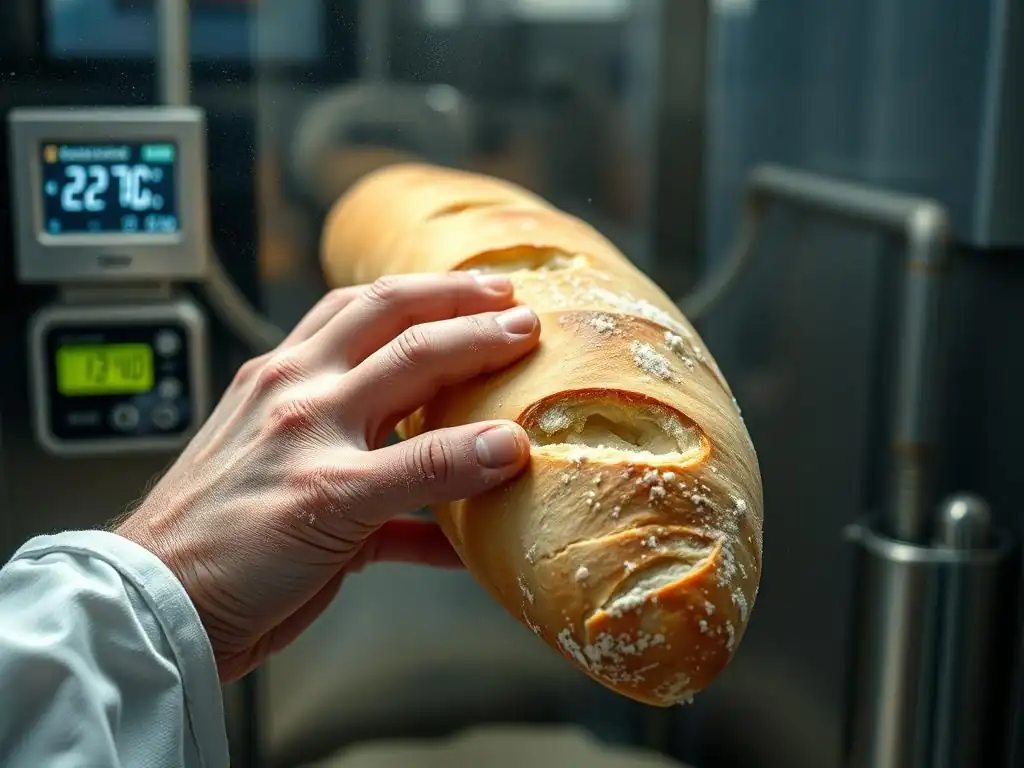
For bakers looking to push their baguette skills further, several advanced techniques focus on manipulating baguette fermentation temperature to achieve specific outcomes, particularly regarding flavor complexity and texture. These methods require a deeper understanding of how temperature impacts yeast and enzyme activity over extended periods.
Exploring these advanced techniques allows for greater control and the ability to fine-tune your baguette characteristics, moving beyond standard recipes to truly artisan results.
Using a Temperature-Controlled Proofer for Consistent Results
A temperature-controlled proofer, ranging from dedicated kitchen appliances to DIY solutions, offers the ultimate in consistent baguette fermentation temperature control. These devices allow you to set a precise temperature and often humidity level, eliminating the variability caused by ambient kitchen conditions.
Using a proofer ensures that bulk fermentation and proofing happen at the exact temperature specified, leading to predictable fermentation rates and dough development. This is invaluable for recipe development, ensuring repeatability, and troubleshooting, as it removes temperature as a variable. While not essential for good baguettes, a proofer significantly simplifies maintaining optimal baguette fermentation temperature.
Cold Retarding Baguette Dough for Enhanced Flavor Complexity
Cold retardation is perhaps the most widely used advanced technique for artisan baguettes. By fermenting the dough at refrigerator temperatures (4-7°C or 40-45°F) for 12 to 72 hours, bakers dramatically slow down yeast activity while allowing enzymes (proteases and amylases) more time to work.
This extended, slow process breaks down starches into sugars, providing more food for the yeast later and contributing to better crust browning. More importantly, it allows for the significant production of organic acids, especially lactic and acetic acid, which provide the characteristic tangy flavor and aroma associated with high-quality artisan bread. Cold retardation also improves dough handling. Implementing cold retardation is a prime example of leveraging baguette fermentation temperature control for superior flavor.
Adapting Fermentation Strategies for Different Flour Hydration Levels
The hydration level of your dough (the ratio of water to flour) also interacts with baguette fermentation temperature. Higher hydration doughs (e.g., 75%+) tend to ferment slightly faster than lower hydration doughs (e.g., 65%) at the same temperature, due to increased enzyme activity and a more open structure. They also feel looser and less structured, making temperature management slightly trickier in terms of handling.
When working with high hydration doughs, you might need to slightly reduce the fermentation temperature or shorten the fermentation time compared to a lower hydration dough to prevent over-fermenting. Conversely, lower hydration doughs might benefit from slightly warmer temperatures or longer times to achieve adequate rise and extensibility. Understanding how hydration affects fermentation rate allows you to make informed adjustments to your baguette fermentation temperature control strategy.
Baguette Recipe Examples with Specific Fermentation Temperature Instructions
To illustrate the practical application of baguette fermentation temperature control, let's look at how different fermentation strategies are incorporated into specific recipe examples. These examples highlight how temperature is managed to achieve distinct results in terms of flavor, texture, and timeline.
These are simplified examples focusing on the temperature aspects of fermentation.
Classic French Baguette with Room Temperature Bulk Fermentation and Short Retardation
This approach prioritizes a relatively quick process while still gaining some flavor benefits from a short cold period.
- Mixing: Aim for a dough temperature around 25°C (77°F).
- Bulk Fermentation: 2.5 - 3 hours at 24-25°C (75-77°F), with 2-3 folds in the first 1.5 hours. Dough should increase by about 75%.
- Dividing & Preshape: Rest dough for 20 minutes.
- Shape: Form into baguettes.
- Proofing (Short Retardation): Place shaped baguettes on a couche or parchment and refrigerate at 4-5°C (40-41°F) for 2-4 hours.
- Baking: Score cold baguettes and bake immediately.
This method uses precise baguette fermentation temperature control to balance speed with a touch of cold-developed flavor.
Cold-Fermented Baguette with Extended Retardation for Tangy Flavor
This method maximizes flavor development through a long, cold fermentation.
- Mixing: Aim for a dough temperature around 22-23°C (72-73°F).
- Bulk Fermentation: 1 hour at 22-23°C (72-73°F), with 1-2 folds. Dough will only increase slightly.
- Refrigerated Bulk/Proof: Transfer dough to a lightly oiled container, cover, and refrigerate at 4-5°C (40-41°F) for 18-24 hours. Dough will slowly double or more.
- Dividing & Preshape: Remove dough from fridge, divide, preshape, and rest for 30 minutes at room temperature.
- Shape: Form into baguettes.
- Proofing (Optional Room Temp): Proof shaped baguettes at 24°C (75°F) for 30-60 minutes, or bake directly from the fridge after a short bench rest.
This strategy relies heavily on extended low baguette fermentation temperature control for significant flavor depth.
Poolish Baguette with Detailed Fermentation Guidelines and Temperature Targets
Using a pre-ferment like a poolish adds flavor and complexity. The poolish itself requires specific temperature management.
- Poolish Build: Mix equal parts flour and water with a tiny amount of yeast (e.g., 0.1-0.3% of flour weight). Ferment at 21-22°C (70-72°F) for 12-16 hours, or until bubbly and slightly collapsed. The temperature here is crucial for developing the poolish's flavor contribution.
- Final Dough Mixing: Combine poolish with remaining ingredients. Aim for a final dough temperature around 24°C (75°F).
- Bulk Fermentation: 1.5 - 2 hours at 24°C (75°F), with 2 folds. Dough should increase by about 50-75%.
- Dividing & Preshape: Rest for 20 minutes.
- Shape: Form baguettes.
- Proofing: Proof shaped baguettes at 24°C (75°F) for 60-90 minutes, or refrigerate at 4-5°C (40-41°F) for 8-12 hours for added flavor and easier handling.
This example shows how baguette fermentation temperature control extends to managing the pre-ferment as well as the final dough.
Conclusion: Achieving Baguette Perfection Through Temperature Management
Mastering baguette fermentation temperature control is not just another step in a recipe; it's the heart of crafting truly exceptional baguettes. Temperature dictates the pace of fermentation, the development of flavor, the strength of the gluten structure, and ultimately, the texture and appearance of your final loaf. By understanding the science behind how temperature affects yeast and enzymes, and by employing practical monitoring and adjustment techniques, you gain immense control over your baking process.
Whether you opt for a rapid room temperature rise or a slow, flavor-enhancing cold fermentation, conscious baguette fermentation temperature control will elevate your results. It allows you to troubleshoot issues like over- or under-proofing and adapt recipes to your specific kitchen environment and schedule.
Key Takeaways for Baguette Fermentation Success
- Temperature is paramount: It's the single most influential factor in controlling fermentation speed and flavor development.
- Monitor internal dough temperature: Use a digital thermometer; ambient temperature is a guide, but internal dough temperature is key.
- Understand the Time/Temperature relationship: Cooler means slower and more flavor; warmer means faster but potentially less complex flavor.
- Observe the dough: Don't just rely on timers; learn to read the signs of proper fermentation (volume, texture, poke test).
- Control your environment: Create stable temperature zones in your kitchen using simple techniques or dedicated proofing tools.
- Cold fermentation enhances flavor: Refrigeration significantly improves complexity but requires much more time.
- Troubleshoot proactively: Recognize signs of over/under-proofing and adjust temperature or time accordingly.
Further Resources and Recipes for Perfect Baguettes
To continue your journey in mastering baguette fermentation temperature control, explore different baguette recipes that specify various fermentation methods and temperature targets. Practice calculating desired dough temperature and experiment with cold retardation if you haven't already.
Look for resources that provide detailed timelines based on specific temperatures. As you gain experience, you'll develop an intuitive sense for how temperature affects your dough, allowing you to adapt any recipe and consistently produce delicious, perfectly textured baguettes right from your own oven. Happy baking!
Frequently Asked Questions
What is the ideal fermentation temperature for baguettes?
The ideal fermentation temperature for baguettes is typically between 70-75°F (21-24°C). This range allows for optimal yeast activity and development of flavor.
Why is temperature control important during baguette fermentation?
Temperature control is crucial because it directly impacts yeast activity and gluten development. Inconsistent temperatures can lead to under- or over-proofed dough, affecting the final texture and taste.
How does temperature affect the flavor of a baguette?
Lower fermentation temperatures generally result in a more complex and tangy flavor. Higher temperatures lead to faster fermentation and a milder taste.
What happens if the baguette dough ferments at too high a temperature?
Fermenting at too high a temperature can cause over-proofing, resulting in a weak gluten structure. This can lead to a flat, dense baguette with a sour, unpleasant flavor.
Can I use a refrigerator to control the fermentation temperature of my baguette dough?
Yes, retarding baguette dough in the refrigerator (cold fermentation) slows down yeast activity. This extended fermentation period develops complex flavors and can improve the baguette's crust.
Final Reflection: Mastering the Art of Baguette Fermentation
Precise temperature control during fermentation is not merely a technical detail in baguette baking; it's the cornerstone of achieving that signature airy crumb and crisp crust. Ignoring this crucial element can lead to disappointing results, from dense loaves to uneven rising, ultimately impacting the overall quality and enjoyment of your final product. The subtle nuances of temperature's influence on yeast activity, gluten development, and flavor profile are far-reaching.
The journey of understanding fermentation temperature has been a fascinating one, revealing the delicate balance between science and artistry in baking. It's a process that demands patience, observation, and a willingness to adapt to the ever-changing conditions of your environment. The baker who understands fermentation understands the soul of bread.
– (This needs a source, perhaps a famous baker or baking book). This quote, while hypothetical, captures the essence of the profound impact temperature control has on the final product, transforming a simple process into a deeply rewarding experience.
Now, it's your turn. Don't just passively read about temperature control; actively experiment with it. Keep a detailed log of your baking sessions, noting the temperature, humidity, and the resulting crumb structure and flavor. Each loaf you bake is a lesson learned, a step closer to mastering the art of baguette fermentation. Embrace the challenges, celebrate the successes, and most importantly, enjoy the journey of creating truly exceptional bread.
Unlock Your Baguette Baking Potential!
Thanks for taking the time to delve into the fascinating world of fermentation temperatures and their impact on baguette baking! You've gained valuable insights that will undoubtedly elevate your baking game. Now it's time to put your new knowledge into practice.
- Bake a test baguette today! Experiment with different fermentation temperatures and meticulously track the results. This is the best way to solidify your understanding and discover your perfect process.
- Share your baking journey! Post a picture of your baguette on social media using #BakeWithEaseFermentation. We'd love to see your results and hear about your experiences.
- Consider exploring other advanced baking techniques. Browse our website for more detailed guides and recipes!
Ready to take your baguette baking to the next level? What temperature are you most excited to experiment with first?