
Mastering the French Meringue Technique (Easy Version)

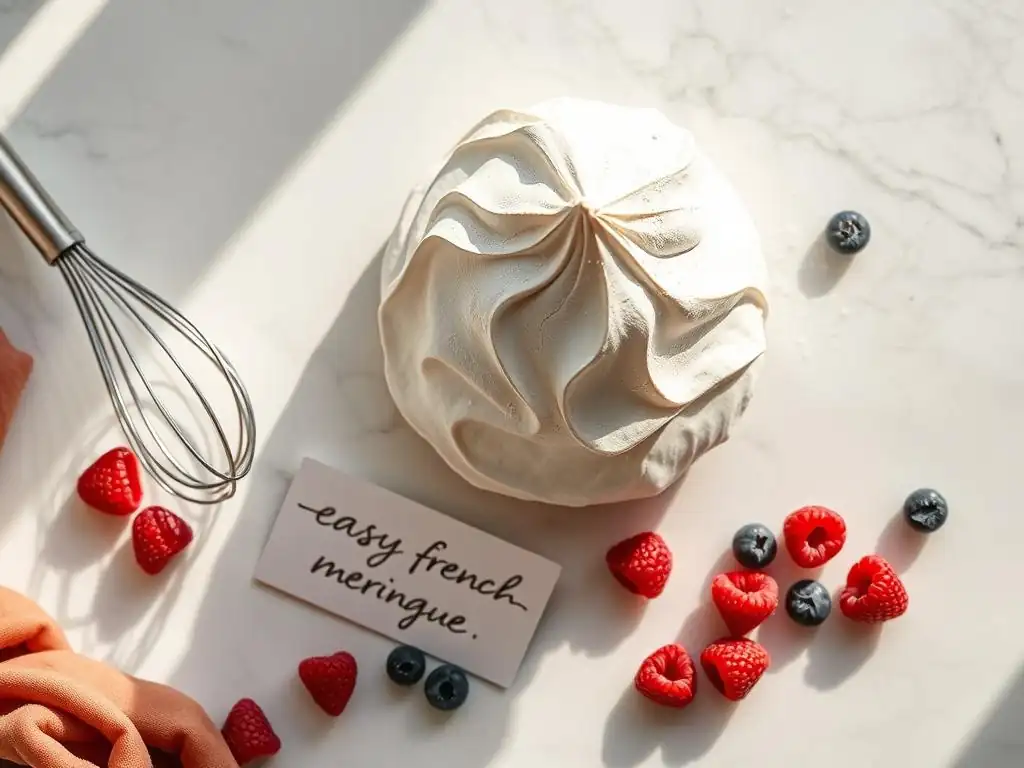
Welcome to BakeWithEase, your trusted guide in the delightful world of baking! Ever wondered if you could effortlessly whip up a light and airy French meringue? Discover the secrets behind our easy French meringue recipe, a cornerstone of classic French pastries, and unlock a world of delectable desserts. This is more than just a recipe; it's a gateway to mastering a foundational baking skill. Intrigued? Let's dive in and explore the art of creating perfect meringues with ease!
- Introduction to the Easy French Meringue Recipe for Home Bakers
- What is French Meringue and Why Bake it?
- BakeWithEase's Simplified French Meringue: Ingredients and Equipment
- Step-by-Step Guide: How to Make Easy French Meringue
- Baking Your Easy French Meringue: Temperature and Time
- Troubleshooting Common French Meringue Problems
- Tips and Tricks for the Best Easy French Meringue
- Serving and Storing Your French Meringue Creations
- French Meringue Recipe Variations and Ideas
- Conclusion: Enjoying Your Homemade Easy French Meringue
- Frequently Asked Questions
- Final Reflection: The Sweetness of Mastery, the Simplicity of Success
- Unleash Your Inner Pâtissier: Perfect French Meringues Await!
Introduction to the Easy French Meringue Recipe for Home Bakers
Welcome to BakeWithEase, where we demystify classic baking techniques to make them accessible for everyone! Today, we're diving into the wonderful world of French meringue, a light, airy confection that's surprisingly simple to master, even for beginners. Forget complex steps; this easy French meringue recipe focuses on the fundamentals, guiding you through creating perfect peaks and a delightful, crisp texture. Whether you dream of topping a lemon pie or crafting delicate meringue cookies, this guide is your starting point.
Embarking on your meringue journey with an easy French meringue recipe is a fantastic way to build confidence in the kitchen. Unlike some other meringue types, French meringue requires just a few basic ingredients and relies primarily on technique – specifically, the careful whipping of egg whites and gradual addition of sugar. We'll break down each step, sharing tips and tricks to ensure your success. Get ready to whip up something truly special!
What is French Meringue and Why Bake it?
Understanding the Basics of French Meringue
French meringue is the simplest and most fundamental type of meringue. It's made by whipping raw egg whites until they are frothy, then gradually adding granulated or superfine sugar while continuing to whip until stiff, glossy peaks form. This technique relies purely on the physical incorporation of air into the egg whites and the sugar's ability to stabilize the resulting foam. Unlike Italian or Swiss meringues, French meringue doesn't involve heating the sugar or egg whites beforehand, making it the quickest to prepare but also the least stable when raw.
The beauty of French meringue lies in its delicate structure and versatility. When baked at a low temperature for an extended period, it dries out, becoming incredibly light and crisp, practically melting in your mouth. This makes it ideal for simple meringue cookies, a base for desserts like pavlova, or as a topping that is then browned quickly (like on a lemon meringue pie). Mastering this basic technique opens the door to numerous sweet creations.
The Appeal of a Simple Meringue Recipe
Opting for a simple meringue recipe, like the easy French meringue technique, is incredibly appealing for home bakers of all levels. It requires minimal ingredients, most of which are staples in any kitchen – eggs and sugar. The process, while requiring attention to detail, is straightforward: whip egg whites, add sugar, whip more. There's no need for candy thermometers or double boilers, which are often necessary for other meringue types. This ease of preparation makes it a perfect spontaneous baking project.
Furthermore, an easy French meringue recipe is a fantastic way to utilize leftover egg whites from recipes that only call for yolks, such as custards or pastries. Instead of discarding them, you can transform them into a delightful dessert or component. The simple process, combined with the elegant result, makes it a rewarding technique to learn and perfect. It's a classic for a reason – it works, and it's delicious!
BakeWithEase's Simplified French Meringue: Ingredients and Equipment
Essential Ingredients for Your Easy Meringue
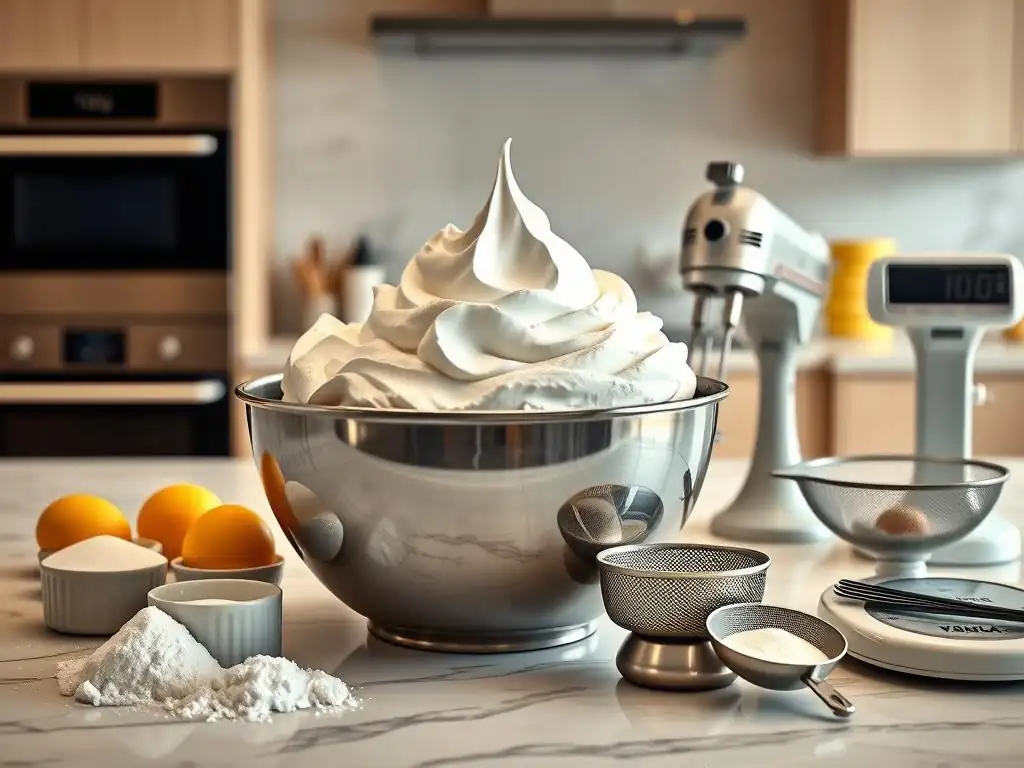
To make a perfect, easy French meringue, you'll need just two primary ingredients: egg whites and sugar. For standard French meringue, granulated sugar is commonly used. However, superfine (caster) sugar dissolves more readily into the egg whites, leading to a smoother, more stable meringue, which is particularly helpful in an easy version. A good starting ratio is typically about 1/4 cup (around 50 grams) of sugar per large egg white. Using egg whites that are at room temperature will help them whip up to a greater volume compared to cold ones, contributing to a lighter meringue.
While not strictly essential for the basic structure, a pinch of salt can be added to the egg whites at the start to help denature the proteins and aid in whipping. Additionally, a tiny amount of an acidic agent like cream of tartar (about 1/8 teaspoon per two large egg whites) or a few drops of lemon juice or white vinegar can help stabilize the egg foam, making it less likely to collapse. For flavor, vanilla extract is a classic choice, added towards the end of the whipping process.
Must-Have Equipment for Perfect French Meringue Every Time
Having the right equipment makes the easy French meringue recipe even easier. The most critical piece of equipment is a clean mixing bowl, preferably made of glass, ceramic, or metal. Plastic bowls can sometimes retain grease residues, which prevent egg whites from whipping properly. Equally important are clean whisks. A stand mixer fitted with a whisk attachment is ideal for effortless whipping and achieving the stiff peaks necessary for a stable meringue. Handheld electric mixers also work well but require a bit more effort and time.
You will also need measuring cups and spoons to accurately measure your ingredients. For baking the meringue, a baking sheet lined with parchment paper is essential to prevent sticking and allow for easy removal of the delicate baked meringues. If you plan to pipe shapes, piping bags and tips will be useful, although you can simply drop dollops of meringue onto the baking sheet for a rustic look. Ensure all your equipment, especially the bowl and whisk, are completely free of any grease or egg yolk, as even a tiny amount can hinder the whipping process.
Step-by-Step Guide: How to Make Easy French Meringue
Step 1: Preparing Your Ingredients and Equipment
Before you begin whipping, ensure your egg whites are separated cleanly from the yolks. Any trace of yolk can prevent the whites from whipping properly. It's best if the egg whites are at room temperature, as they will whip up to a larger volume and more quickly than cold eggs.
If your eggs are cold, you can place them in a bowl of warm water for about 10-15 minutes to bring them up to temperature. Measure out your sugar according to the number of egg whites you are using – remember, roughly 50 grams (about 1/4 cup) of sugar per large egg white is a good guideline.
Crucially, make sure your mixing bowl and whisk attachment are spotlessly clean and completely dry. Even a tiny film of grease or moisture can ruin your meringue. You can wipe down your bowl and whisk with a little lemon juice or vinegar on a paper towel and then dry them thoroughly as an extra precaution. Preheat your oven to a low temperature, typically between 90°C and 120°C (195°F and 250°F), depending on how quickly you want to dry out the meringues and your oven's calibration. Line your baking sheet(s) with parchment paper.
Step 2: Whipping the Egg Whites to Perfection
Begin by placing the room temperature egg whites in your clean mixing bowl. If using, add a pinch of salt and/or cream of tartar now. Start whipping the egg whites on a medium speed. They will initially become foamy and bubbly, resembling soap suds. Continue whipping, and the bubbles will become smaller and the mixture will start to look opaque and white. This stage is often referred to as soft peaks, where the peaks curl over when the whisk is lifted.
Gradually increase the speed of your mixer to medium-high or high. Keep whipping until the egg whites reach stiff peaks. This is the critical point for a stable French meringue.
Achieving Stiff Peaks: The Key to a Stable Meringue
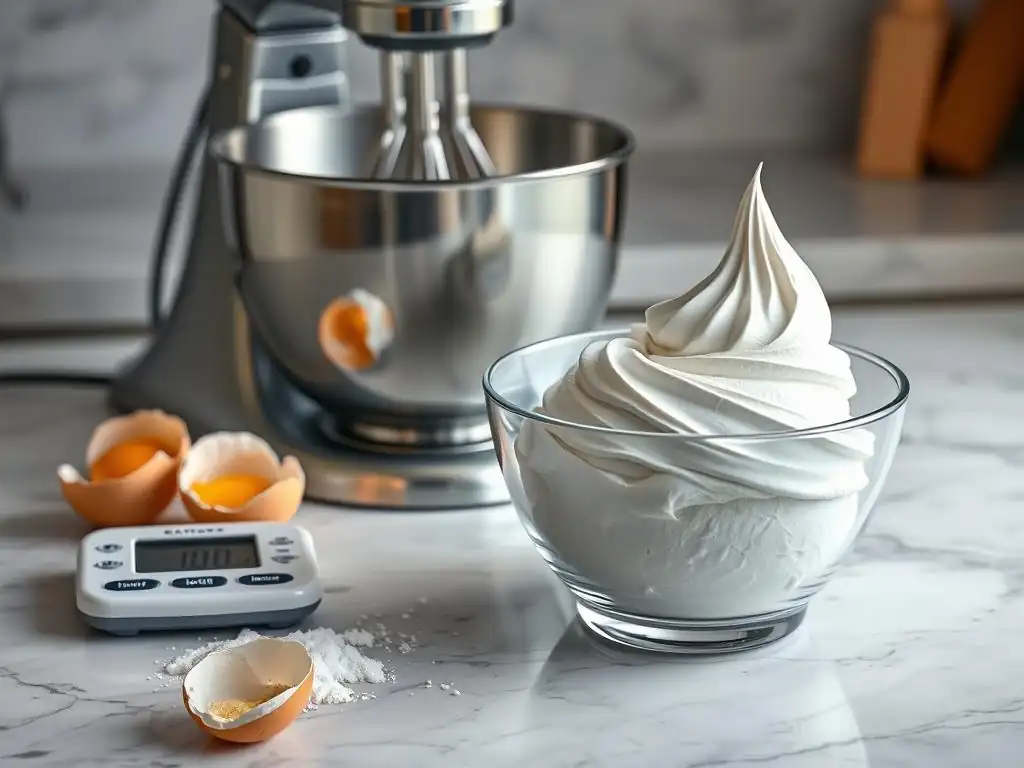
Stiff peaks are achieved when you lift the whisk from the bowl, and the peaks of meringue stand straight up without drooping at all. The mixture should be thick, glossy, and smooth, not grainy. If you tilt the bowl, the meringue should stay put and not slide. Over-whipping can cause the meringue to become dry and granular, so stop whipping as soon as stiff peaks are reached. This stage usually takes several minutes, perhaps 5-10 minutes depending on your mixer and the number of egg whites.
The transition from soft to stiff peaks happens relatively quickly, so keep a close eye on the meringue as you whip. The sugar is added after soft peaks are formed, which is the next crucial step in stabilizing the foam and creating that characteristic glossy finish. Achieving stiff peaks ensures your easy French meringue holds its shape when piped or spooned and doesn't collapse during baking.
Step 3: Gradually Adding Sugar for a Smooth Texture
Once your egg whites have reached soft peaks, begin adding the sugar very slowly, a tablespoon or two at a time, while the mixer is still running on medium-high speed. Adding the sugar gradually allows it to dissolve properly into the egg whites as they are being whipped. This dissolution is essential for creating a smooth, glossy, and stable meringue. If you add the sugar all at once, it can weigh down the egg whites and prevent them from reaching full volume, or result in a grainy texture because the sugar doesn't have time to dissolve.
Continue adding the sugar slowly until it is all incorporated. After all the sugar has been added, continue whipping the meringue on high speed for another 2-3 minutes. The meringue should become very thick, smooth, and incredibly glossy. When you rub a small amount between your fingers, it should feel smooth, not gritty, indicating that the sugar has dissolved. This final whipping ensures maximum volume and stability for your easy French meringue.
Step 4: Flavoring Your French Meringue (Optional)
While the classic easy French meringue recipe relies solely on the sweetness of sugar and the texture of the meringue itself, adding flavor extracts can enhance its appeal. The most common flavoring is vanilla extract.
Vanilla Extract and Other Flavor Enhancements
If you choose to add flavor, mix in about 1/2 teaspoon of vanilla extract per two large egg whites during the last 30-60 seconds of whipping, after all the sugar has been incorporated and the meringue is glossy. Don't add extracts too early, especially those containing alcohol, as they can sometimes interfere with the whipping process or cause the meringue to deflate slightly. Other flavorings like almond extract, peppermint extract, or even a touch of lemon zest (being careful not to add any juice) can be incorporated similarly to add a different dimension to your easy meringue creations.
Consider the end use of your easy French meringue when choosing flavors. Vanilla is versatile for meringue cookies or pavlova. Peppermint might be lovely for holiday treats. Ensure the extract is pure and of good quality for the best flavor. Remember, a little goes a long way, especially with potent extracts.
Baking Your Easy French Meringue: Temperature and Time
Finding the Optimal Oven Temperature for Baking Meringues
Baking French meringue isn't about cooking it in the traditional sense; it's about drying it out slowly at a low temperature. This process removes moisture from the delicate foam structure, resulting in a crisp, melt-in-your-mouth texture. The optimal oven temperature for baking an easy French meringue recipe is typically very low, usually between 90°C and 120°C (195°F and 250°F). Lower temperatures result in whiter meringues but take longer to dry, while slightly higher temperatures can speed up the process but risk browning the meringue.
Using an oven thermometer is highly recommended, as oven thermostats can be inaccurate, sometimes by as much as 20-30 degrees. A consistent low temperature is key. Some bakers even prefer to turn off the oven after the initial baking time and leave the meringues inside as the oven cools down completely, which helps ensure they are thoroughly dried and prevents cracking caused by sudden temperature changes.
Determining the Correct Baking Time for Crispy Meringues
The baking time for your easy French meringue will vary significantly depending on the size and thickness of your meringue shapes, as well as the exact oven temperature used. For smaller meringue kisses or cookies (about 1-2 inches in diameter), the drying time can range from 1 to 1.5 hours at a temperature of 100°C (210°F). Larger shapes or a pavlova base will require considerably longer, potentially 2 to 3 hours or even more.
You can tell if your meringues are done when they are firm to the touch, easily lift off the parchment paper, and sound hollow when tapped on the bottom. They should be dry all the way through. Breaking one open (perhaps a test piece) is the best way to check the interior. If it's still soft or chewy inside, they need more drying time. It's better to over-dry meringues slightly than under-dry them, as under-dried meringues will become sticky and lose their crispness quickly.
Troubleshooting Common French Meringue Problems
Why is My Meringue Flat?
A flat French meringue is usually a result of issues during the whipping phase. The most common culprit is the presence of grease or egg yolk in the mixing bowl or on the whisk. Even a tiny amount can prevent the egg whites from whipping up properly and holding air. Ensure all your equipment is meticulously clean and dry before starting. Another reason could be under-whipping; the egg whites might not have reached true stiff peaks, meaning the structure wasn't strong enough to support itself.
Adding sugar too early or too quickly can also lead to a flat or deflated meringue by weighing down the developing foam before it's strong enough. Ensure you wait until soft peaks are formed before gradually incorporating the sugar. Using cold egg whites instead of room temperature ones can also result in less volume, contributing to a flatter outcome. Always aim for room temperature eggs for the best results with your easy French meringue recipe.
Preventing Weeping Meringue
Weeping, where liquid beads or pools on the surface of the meringue, typically happens after the meringue has been baked or is exposed to high humidity. It's often caused by sugar that hasn't fully dissolved into the egg whites. When the meringue sits, the undissolved sugar draws moisture out, creating syrup droplets on the surface. Using superfine (caster) sugar helps prevent this, as it dissolves more easily than granulated sugar.
Ensuring you whip the meringue long enough after adding the sugar (until it's smooth and non-gritty) is crucial for dissolving the sugar. Baking the meringue thoroughly at a low temperature to dry it out completely also helps minimize weeping. Storing baked meringues in an airtight container in a cool, dry place immediately after they've cooled is key to protecting them from humidity, which can also cause weeping.
Addressing Sticky Meringue Issues
Sticky meringues, even after baking, are a sign that they haven't been dried out completely in the oven. This often happens if the baking temperature was too high (causing the outside to set before the inside dries) or if the baking time was too short. Humidity can also turn a perfectly crisp meringue sticky very quickly.
To address sticky meringues, try returning them to a very low oven (around 90°C / 195°F) for an additional period to continue the drying process. Ensure they are baked until they lift easily from the parchment paper and are dry throughout. Once baked and cooled, immediate storage in an airtight container is essential to protect them from moisture in the air, which is the primary cause of stickiness in otherwise properly baked meringues.
Tips and Tricks for the Best Easy French Meringue
Using Fresh Egg Whites for Optimal Volume
The freshness of your egg whites significantly impacts their ability to whip and hold volume, which is paramount for a successful easy French meringue recipe. While older egg whites tend to spread more easily, fresh egg whites contain thicker albumen (the white part) that creates a more stable foam when whipped. This leads to a higher volume and a stronger structure in your meringue.
Aim to use eggs that are relatively fresh, ideally within a week or two of purchase. Separate the egg whites carefully, ensuring no yolk contamination. Allowing them to come to room temperature (about 30 minutes out of the fridge) before whipping will also dramatically improve their volume potential, making the process of achieving stiff peaks easier and faster.
The Importance of a Clean Bowl and Whisk
We've mentioned it before, but it bears repeating: a scrupulously clean bowl and whisk are non-negotiable for a successful easy French meringue. Any trace of fat, whether from egg yolk, grease from previous baking, or even hand lotion, will coat the egg white proteins and prevent them from forming the stable network needed to trap air. This results in flat, liquidy meringue that simply won't whip.
Wash your bowl and whisk thoroughly with hot, soapy water, rinse well, and dry completely with a clean towel. For extra security, some bakers wipe down their equipment with a bit of vinegar or lemon juice on a paper towel before drying. This acidic wipe helps to cut through any residual grease film, ensuring the egg whites have the clean environment they need to whip up into beautiful, voluminous peaks for your easy meringue.
Stabilizing Meringue with Cream of Tartar
Adding a small amount of acid, such as cream of tartar, lemon juice, or white vinegar, is a classic baker's trick to help stabilize egg white foam. For an easy French meringue recipe, incorporating about 1/8 teaspoon of cream of tartar per two large egg whites at the beginning of the whipping process (when the egg whites are still liquid or just starting to foam) can make a noticeable difference.
The acid helps by denaturing the proteins in the egg whites, making them more flexible and less likely to collapse. This results in a stronger, more stable foam that is less prone to weeping and shrinkage, especially when the meringue needs to hold its shape for piping or baking. While not strictly necessary for a basic easy meringue, it provides an extra layer of insurance for a successful outcome.
Serving and Storing Your French Meringue Creations
Creative Ways to Serve French Meringue
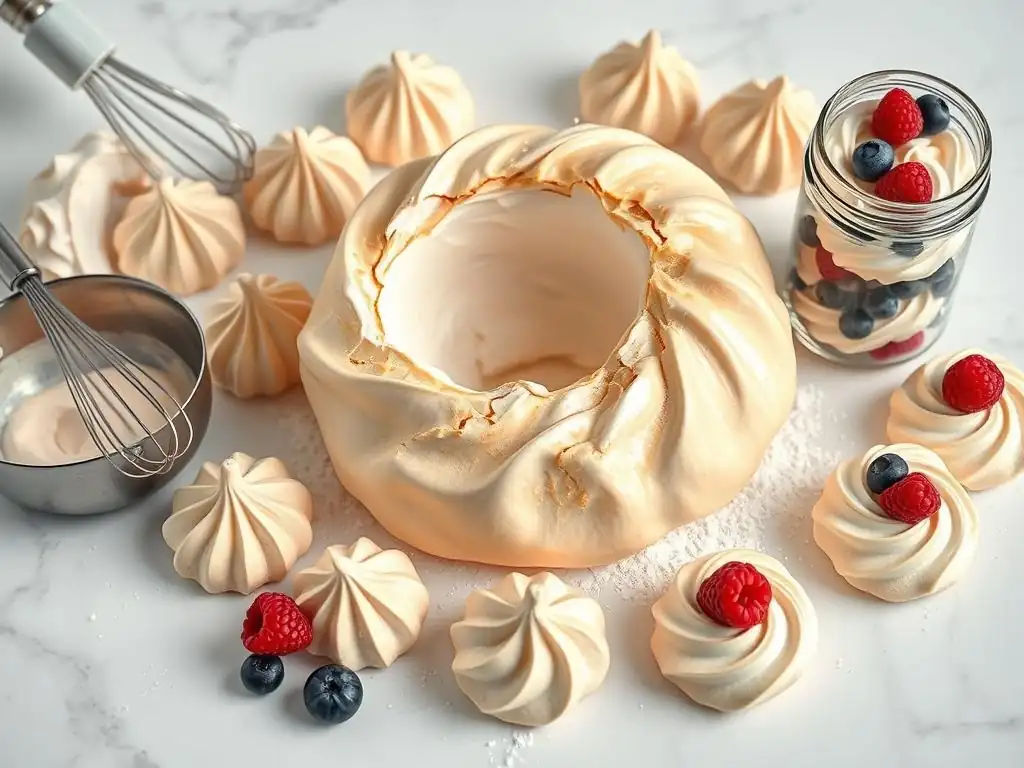
Baked easy French meringue can be enjoyed in countless ways. The simplest is as delicate, crisp meringue cookies, perhaps flavored with vanilla or a touch of cocoa powder. These are perfect on their own or served alongside coffee or tea. Meringue shards can be broken up and used as a delightful textural component in desserts like Eton Mess (mixed with whipped cream and berries) or sprinkled over ice cream, puddings, or fruit salads.
French meringue is also the traditional topping for pies like classic lemon meringue pie; in this case, it's usually browned quickly under a broiler or with a kitchen torch just before serving. A large baked meringue disk can serve as the base for a pavlova, topped with whipped cream and fresh fruit. The light, airy texture provides a wonderful contrast to creamy fillings and juicy fruit.
Properly Storing Meringues to Maintain Crispness
The key to keeping your baked easy French meringue crisp is protecting it from moisture. Once baked and completely cooled, meringues are highly susceptible to absorbing humidity from the air, which will make them soft and sticky.
Store baked meringues in an airtight container immediately after they have cooled down fully. Use a container with a tight-fitting lid. Avoid refrigerating meringues, as the humid environment of a refrigerator will quickly ruin their texture. Keep the airtight container in a cool, dry place at room temperature. Properly stored, baked meringue cookies can remain crisp for several days, though they are often best enjoyed within a day or two of baking.
French Meringue Recipe Variations and Ideas
Transforming your basic easy French meringue into delightful cookies is simple. Once you've whipped your glossy meringue to stiff peaks, you can either spoon dollops onto your parchment-lined baking sheet or, for a more decorative touch, pipe shapes using a piping bag fitted with a star or round tip. Popular shapes include classic 'kisses' or small rounds. Keep the cookies relatively small (1-2 inches) for quicker, more even drying.
Bake these meringue cookies at a low temperature (around 100°C / 210°F) for 1 to 1.5 hours, or until they lift easily from the parchment and are dry throughout. Turn off the oven and leave them inside to cool completely for maximum crispness. This easy meringue cookies recipe is perfect for holiday baking, tea parties, or simply as a light sweet treat.
Using French Meringue for Pavlova Base
While traditional pavlova often uses a slightly different meringue method (sometimes including cornstarch for a marshmallowy interior), a large, carefully baked easy French meringue disk can certainly serve as a beautiful and delicious base. Prepare a large circle (about 8-10 inches) of meringue on your parchment-lined baking sheet, perhaps shaping it with a slight dip in the center to hold toppings.
Bake the pavlova base at a very low temperature (perhaps 90°C / 195°F) for a longer time, potentially 2.5 to 3.5 hours, until the outside is firm and dry. Turn off the oven and let it cool inside completely. The result will be a crisp shell with a potentially slightly chewy (but still firm) interior, ready to be topped generously with whipped cream and fresh fruit just before serving.
Creating Meringue Kisses: A Simple Dessert
Meringue kisses are perhaps the most iconic use of an easy French meringue recipe. These small, delicate drops are incredibly simple to make and bake. After preparing your meringue mixture, spoon it into a piping bag fitted with a plain round or small star tip. Pipe small, uniform 'kisses' onto your prepared baking sheet, leaving a little space between them.
Bake the meringue kisses at a low temperature (around 100°C / 210°F) for about 1 to 1.5 hours, or until they are completely dry and lift off the paper easily. Let them cool inside the turned-off oven or on a wire rack. Their small size ensures they dry out quickly and evenly, resulting in perfectly crisp, sweet little treats that are delightful on their own or used to garnish other desserts.
Conclusion: Enjoying Your Homemade Easy French Meringue
Congratulations! You've now mastered the easy French meringue technique. From just a couple of humble ingredients and a bit of careful whipping and drying, you can create these wonderfully light and crisp confections. This easy French meringue recipe is a fundamental skill that opens up a world of dessert possibilities, whether you use it for simple cookies, elegant pie toppings, or a stunning pavlova base.
Don't be discouraged if your first batch isn't absolutely perfect; like any baking skill, practice makes perfect. Pay attention to the details: clean equipment, room temperature eggs, gradual sugar addition, and low, slow drying. With this easy meringue guide from BakeWithEase, you're well on your way to whipping up beautiful, delicious meringues that will impress your friends and family. Enjoy the process and the delightful results!
Frequently Asked Questions
What makes this French meringue recipe "easy"?
This recipe focuses on a simplified technique, using common kitchen equipment and providing clear, step-by-step instructions to minimize errors, even for beginners.
What are the key ingredients needed for an easy French meringue?
The core ingredients are egg whites, granulated sugar, and a pinch of cream of tartar. The quality of the egg whites is crucial for achieving a stable meringue.
What's the best way to prevent a French meringue from collapsing?
Ensuring absolutely no yolk contaminates the egg whites, using a clean and grease-free bowl, and baking at a low temperature are key to preventing collapse.
Can I flavor my easy French meringue?
Yes, you can add flavor extracts like vanilla or almond after the meringue is stiff. Be sure to add flavors gradually to avoid deflating the mixture.
How can I store leftover French meringue?
Properly baked and cooled meringues should be stored in an airtight container at room temperature to prevent them from becoming sticky. Avoid refrigerating as moisture will ruin their texture.
Final Reflection: The Sweetness of Mastery, the Simplicity of Success
Mastering the French meringue isn't just about achieving perfectly glossy peaks; it's about unlocking a world of culinary creativity. This seemingly simple technique, often shrouded in mystery, opens doors to a vast array of delectable desserts, from delicate macarons to towering pavlovas. The ease with which you can now achieve this, using the simplified method outlined in this article, makes the previously intimidating process accessible to everyone.
The impact of mastering even a single baking technique like this is surprisingly profound. It fosters a sense of accomplishment, a confidence in the kitchen that extends far beyond the meringue itself. It's about embracing the process, understanding the science behind the fluffiness, and finding joy in the transformation of simple ingredients into something truly special. The best things in life are simple,
a sentiment perfectly encapsulated by the elegant simplicity and rewarding results of a well-made French meringue.
Now, it's your turn. Don't let the fear of failure hold you back. Experiment with different flavorings, explore variations on the classic recipe, and most importantly, enjoy the journey. The next time you're craving a light and airy treat, remember the ease and satisfaction of mastering this technique. Embrace the challenge, and let the sweetness of success inspire you to create your own culinary masterpieces.
Unleash Your Inner Pâtissier: Perfect French Meringues Await!
Thanks for joining us on this meringue-making adventure! We hope you've gained the confidence to tackle this classic technique. Now it's time to put your newfound skills to the test.
- Whip up your dream meringue: Use the tips and tricks from this article to create a batch of flawless French meringues. Experiment with different flavors and colors!
- Share your meringue masterpieces: Tag us on social media (@BakeWithEase) – we’d love to see your creations!
- Explore more easy baking recipes: Head over to our recipe section for more delightful baking adventures.
Ready to create the lightest, fluffiest meringues you've ever tasted? What unique flavor combination will you try first?