
Mastering Italian Meringue for Effortless Desserts

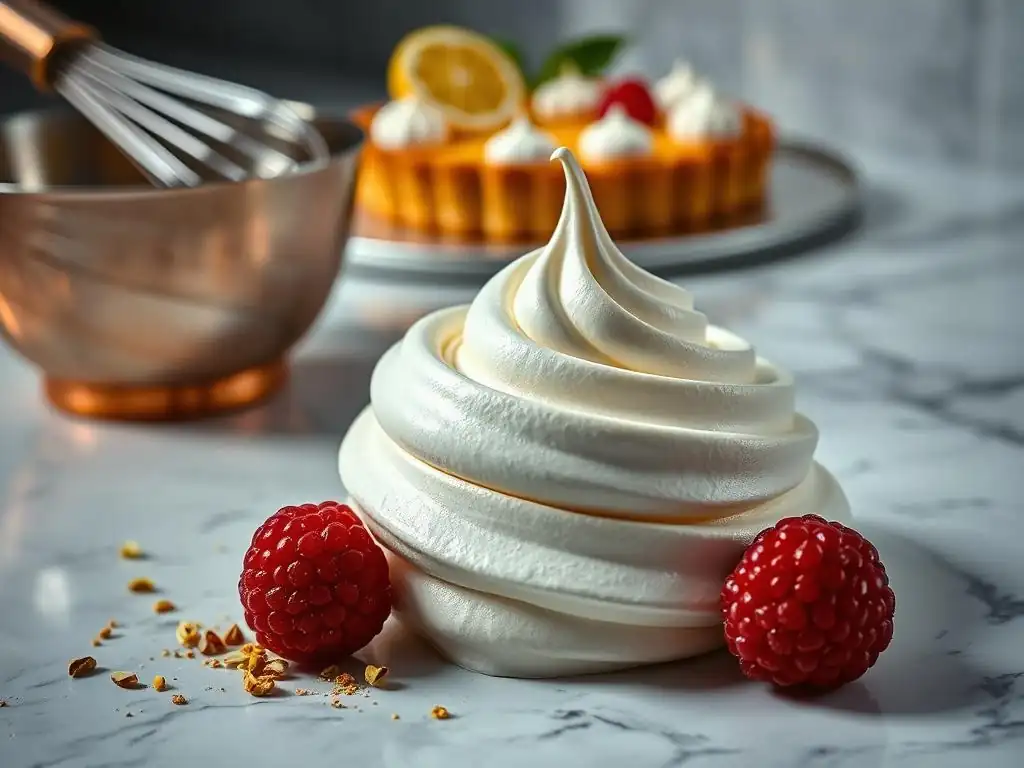
Welcome to BakeWithEase, your passport to the delightful world of baking! Ever dreamt of achieving that perfect, glossy finish on your desserts? Dive into our collection of Easy Italian Meringue Recipes and unlock the secrets to creating stunning treats. From delicate pastries to show-stopping cakes, this technique opens a world of possibilities... Curious to know how to achieve meringue perfection at home? Let's get baking!
- Mastering Italian Meringue: A Guide to Stable and Versatile Meringue
- Introduction to Italian Meringue: A Baker's Foundation
- Italian Meringue Recipe: A Step-by-Step Guide
- The Italian Meringue Method: A Detailed Guide
- Troubleshooting Italian Meringue Issues
- Flavoring Italian Meringue: Creative Options
- Applications of Italian Meringue in Baking
- Italian Meringue vs. Swiss Meringue: Key Differences
- Tips for Baking with Italian Meringue
- Italian Meringue Dessert Ideas
- Conclusion: Unlock Baking Potential with Italian Meringue
-
Frequently Asked Questions
- What exactly is Italian meringue and how does it differ from other meringues?
- Why is Italian meringue considered "easy" even though it involves hot sugar syrup?
- What are the key ingredients needed for an Easy Italian Meringue recipe from BakeWithEase?
- What desserts are best suited for using Italian meringue?
- What common mistakes should I avoid when making Italian meringue according to BakeWithEase?
- Final Reflection: The Sweet Science of Effortless Elegance
- Unlock Your Inner Pâtissier: Master the Art of Italian Meringue!
Mastering Italian Meringue: A Guide to Stable and Versatile Meringue
Introduction to Italian Meringue: A Baker's Foundation
Stability and Versatility: Advantages of Italian Meringue
Italian meringue stands out in the world of baking due to its exceptional stability and remarkable versatility. Unlike French meringue, which is simply whipped egg whites and sugar, Italian meringue is made by slowly pouring hot sugar syrup into whipping egg whites. This process essentially cooks the egg whites, resulting in a meringue that is far more stable, less prone to weeping (releasing liquid), and holds its shape beautifully, even at room temperature for extended periods. This makes it an ideal choice for toppings that won't be baked, like those on tarts or as a base for buttercreams.
The inherent stability of Italian meringue opens up a wide array of possibilities for bakers. Its ability to maintain a light, airy texture makes it perfect for applications where structure is key, such as piping intricate designs on cakes or creating delicate meringue shells. Furthermore, its cooked nature means it is safe to consume without further baking, making it a fantastic, easy meringue topping for pies, tarts, or mousses. Mastering this technique allows you to elevate many desserts with a professional touch, expanding your repertoire of easy Italian meringue recipes.
The Science of Italian Meringue: Heat, Sugar, and Egg Whites
The magic of Italian meringue lies in the controlled interaction between heat, sugar, and egg whites. Egg whites are primarily protein and water. When whipped, the proteins denature and create a foam structure, trapping air bubbles. However, this foam is fragile. Adding sugar helps stabilize this foam, but it's the hot sugar syrup in Italian meringue that makes the crucial difference.
The sugar syrup is typically heated to the "firm ball" stage, which is approximately 118°C to 121°C (244°F to 250°F). When this hot syrup is slowly drizzled into the whipping egg whites, the heat partially cooks the proteins, strengthening the foam structure significantly. The sugar molecules also bind with the water in the egg whites, reducing weeping and adding gloss and stability.
The rapid whipping cools the mixture down while incorporating the hot syrup, ensuring the egg whites don't scramble but instead transform into a smooth, glossy, and incredibly stable meringue. Understanding this science is key to consistently achieving perfect results with easy Italian meringue recipes.
Italian Meringue Recipe: A Step-by-Step Guide
Ingredients: Quality and Ratios
Success with easy Italian meringue recipes starts with understanding your ingredients. Fresh, room-temperature egg whites are preferred as they whip up to a greater volume than cold ones. Ensure there is absolutely no trace of yolk or grease in your mixing bowl, as this will prevent the egg whites from whipping properly.
A common ratio for a stable Italian meringue is roughly two parts sugar to one part egg white by weight. For example, you might use 200 grams of sugar for 100 grams of egg whites (which is typically the weight of about 3-4 large egg whites). A small amount of cream of tartar or a pinch of salt can also be added to the egg whites to help stabilize the foam during whipping.
The sugar quantity is crucial as it forms the hot syrup. Using granulated sugar is standard. The quality of ingredients doesn't need to be gourmet, but freshness of eggs and accurate measurement of sugar and egg whites by weight are critical for achieving the correct consistency and stability in your Italian meringue. Some easy Italian meringue recipes might adjust the sugar ratio slightly depending on the intended application, but the 2:1 sugar-to-egg white ratio by weight is a reliable starting point for a robust meringue.
Equipment: Ensuring Success
Having the right tools is essential for making Italian meringue successfully. A stand mixer is highly recommended because you need to whip the egg whites continuously while carefully pouring in the hot sugar syrup. A hand mixer can be used, but it makes the process significantly more challenging and potentially dangerous due to handling the hot syrup. The mixer bowl and whisk attachment must be impeccably clean and grease-free.
You will also need a heavy-bottomed saucepan to make the sugar syrup. The heavy base helps distribute heat evenly and prevents the sugar from burning. Crucially, a reliable candy thermometer is non-negotiable. You must accurately measure the temperature of the sugar syrup to ensure it reaches the firm ball stage (118°C-121°C / 244°F-250°F). Without a thermometer, you are guessing, which dramatically increases the chances of failure. A heatproof spatula is also useful for scraping down the sides of the sugar pot before boiling.
The Italian Meringue Method: A Detailed Guide
Preparing the Sugar Syrup: Temperature Control
Preparing the sugar syrup is the first critical step in making Italian meringue. Combine your measured sugar with just enough water to moisten it – usually covering the sugar by about 1-2 cm is sufficient. Place the saucepan over medium-high heat. As the sugar dissolves and the mixture heats up, you may see sugar crystals forming on the sides of the pan. It's vital to wash these down with a wet pastry brush or by swirling the pan gently; leftover crystals can cause the entire syrup to crystallize later.
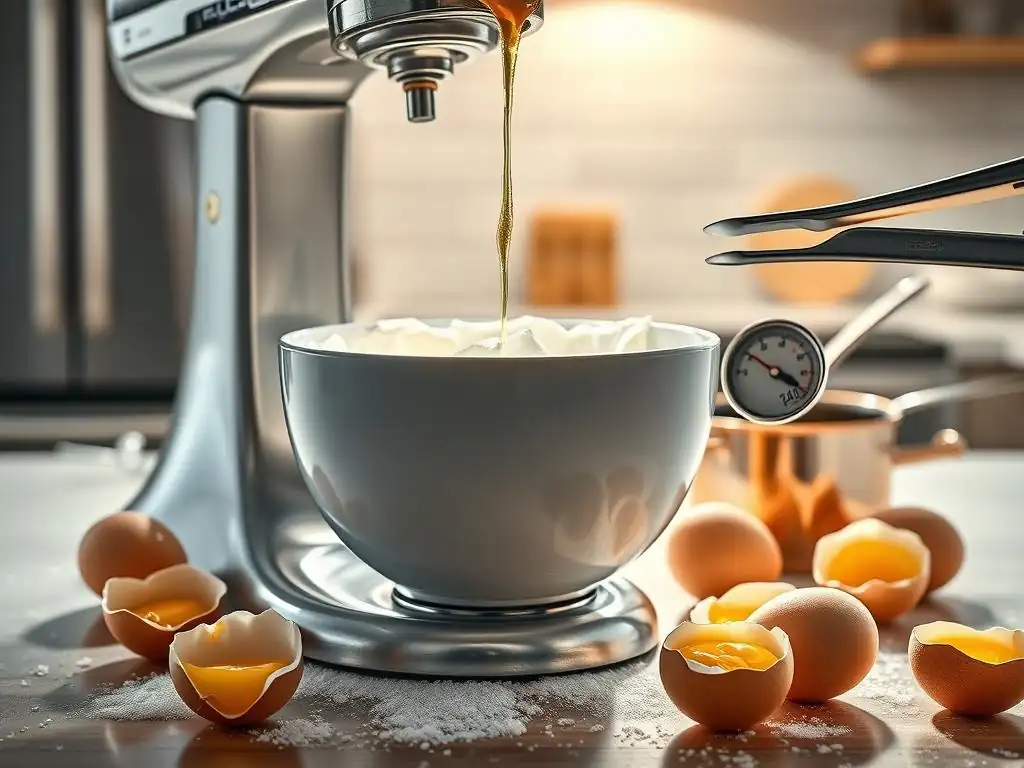
Insert your candy thermometer and bring the syrup to a boil. Do not stir the syrup once it boils, as this can also cause crystallization. Simply let it bubble and heat until it reaches the target temperature range of 118°C to 121°C (244°F to 250°F). This is the firm ball stage, where a small amount of syrup dropped into cold water forms a firm, but still pliable, ball. Reaching this specific temperature range is paramount for cooking the egg whites sufficiently and achieving a stable, glossy meringue suitable for many easy Italian meringue recipes.
Whipping Egg Whites: Achieving Stiff Peaks
While the sugar syrup is nearing its target temperature, begin whipping your egg whites. Place the clean, yolk-free egg whites in the bowl of your stand mixer. Start whipping on medium speed. As the egg whites become foamy and opaque, you can gradually increase the speed to medium-high or high. If you are using cream of tartar or salt, add it once the egg whites are foamy.
Continue whipping until the egg whites form stiff peaks. Stiff peaks hold their shape firmly when the whisk is lifted, pointing straight up without drooping. Be careful not to over-whip them to the point of becoming dry or curdled. This stage should be reached just as your sugar syrup hits the 118°C-121°C (244°F-250°F) mark, allowing you to immediately proceed to the next step. Timing is key here for successful easy Italian meringue recipes.
Combining Syrup and Egg Whites: The Critical Step
This is the most delicate part of the process. Once the sugar syrup has reached 118°C to 121°C (244°F to 250°F) and your egg whites are at stiff peaks, turn your mixer speed down to medium-low. With the mixer running, carefully and slowly drizzle the hot sugar syrup down the side of the mixing bowl in a thin, steady stream. Avoid pouring the syrup directly onto the whisk, as it will splatter and cool too quickly, or onto the egg whites directly before they are incorporated, as this can cook them unevenly.
Pouring the syrup slowly allows the hot liquid to distribute evenly throughout the whipping egg whites, cooking them gently and uniformly while the whisk incorporates the mixture. This process should take at least 2-3 minutes for a typical batch. Once all the syrup has been added, increase the mixer speed back to high and continue whipping. This high-speed whipping serves two purposes: it develops the final meringue structure and cools the mixture down.
Achieving Glossy, Stable Meringue: Techniques and Indicators
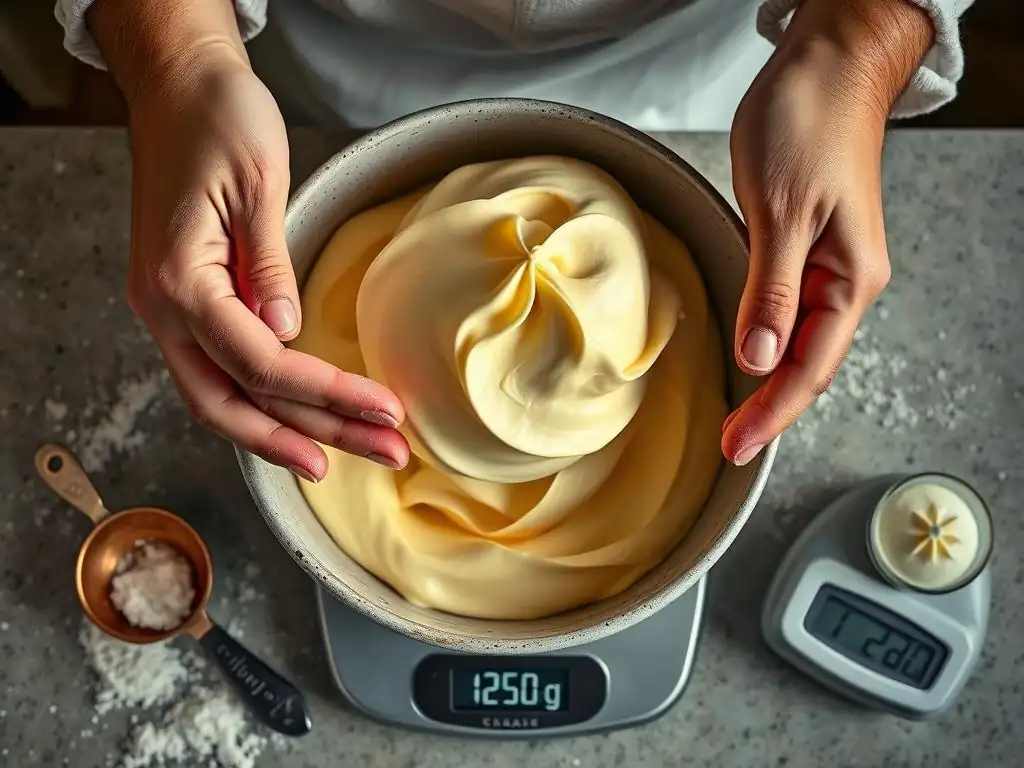
After all the hot syrup has been incorporated, continue whipping the meringue on high speed. You will notice a significant transformation. The meringue will become incredibly thick, smooth, and brilliantly glossy. As you whip, the heat from the syrup dissipates, and the meringue will cool down. Continue whipping until the mixing bowl feels cool to the touch from the outside – this typically takes anywhere from 5 to 10 minutes, depending on the amount of meringue and the ambient temperature.
When the meringue is ready, it will be incredibly stable and hold stiff, sharp peaks. If you lift the whisk, the meringue should stand straight up without wilting. It should also look shiny and smooth, without a grainy texture. This perfectly whipped, stable Italian meringue is now ready to be used immediately for piping, folding into other mixtures, or spreading onto desserts. Its stability is what makes it a go-to for many easy Italian meringue recipes where structure and appearance are important.
Troubleshooting Italian Meringue Issues
Grainy Meringue: Causes and Solutions
A grainy texture in Italian meringue is usually caused by undissolved sugar crystals. This can happen if the sugar wasn't fully dissolved in the water before the syrup boiled, if sugar crystals splashed onto the sides of the pan and weren't washed down, or if the syrup wasn't cooked to a high enough temperature to ensure all sugar was incorporated into the solution. Another cause can be pouring the hot syrup too quickly into the egg whites, causing the sugar to seize before it can fully dissolve into the meringue matrix.
To prevent grainy meringue, ensure the sugar is completely dissolved before the syrup boils. Use a wet pastry brush to wipe down the sides of the saucepan. Always use a reliable thermometer to reach the correct 118°C-121°C (244°F-250°F) temperature. When adding the syrup to the egg whites, pour it slowly and steadily down the side of the bowl while the mixer is running. Unfortunately, fixing a grainy meringue is difficult; prevention is the best approach for easy Italian meringue recipes.
Soft Meringue: Addressing Insufficient Stiffness
If your Italian meringue is soft, runny, or doesn't hold its shape, the most common culprit is insufficient whipping or the sugar syrup not reaching the correct temperature. If the syrup is too cool (below 118°C/244°F), it won't cook the egg whites enough to provide the necessary stability. Similarly, if you don't whip the meringue long enough after adding the syrup, it won't cool down properly and the structure won't fully develop.
Ensure your sugar syrup hits the 118°C-121°C (244°F-250°F) range precisely using a thermometer. After pouring in the syrup, whip the meringue on high speed until the bowl is completely cool to the touch and the meringue forms very stiff, sharp peaks. This lengthy whipping process (often 5-10 minutes) is crucial for developing the strong protein structure that gives Italian meringue its signature stability. Don't stop whipping until you achieve those stiff, glossy peaks.
Crystallized Syrup: Prevention and Solutions
Sugar syrup crystallization, where the liquid syrup suddenly turns into a solid, grainy mass, is a frustrating issue. It's usually triggered by sugar crystals that weren't fully dissolved or were introduced into the syrup after it started boiling. Any tiny crystal can act as a seed, causing the entire batch to crystallize rapidly. Stirring the syrup once it's boiling can also introduce air bubbles that encourage crystallization.
Prevention is key: ensure all sugar is dissolved before boiling, wash down the sides of the pan with a wet brush, and avoid stirring once the syrup is boiling. If your syrup does crystallize before you add it to the egg whites, you unfortunately cannot use it for Italian meringue. You'll need to start over with fresh ingredients. Trying to salvage it by reheating rarely works for meringue purposes. This is another reason why careful preparation is vital for successful, easy Italian meringue recipes.
Flavoring Italian Meringue: Creative Options
Extracts, Zests, and Spices: Subtle Flavor Enhancements
Once your Italian meringue is perfectly whipped and cooled, you can gently fold in flavorings to enhance its taste. Extracts like vanilla, almond, or lemon are popular choices. Add them sparingly, usually just a teaspoon or two per large batch, as extracts can be potent. For a brighter note, finely grated citrus zest (lemon, lime, orange) can be folded in. Ensure the zest is free of any white pith, which can be bitter.
Ground spices such as cinnamon, nutmeg, or ginger can also add warmth and complexity. Start with a small pinch and taste, adding more as needed. These subtle flavorings work beautifully in easy Italian meringue recipes used as toppings or fillings, adding an extra layer of taste without overpowering the delicate meringue texture. Always fold flavorings in gently after the meringue is fully whipped and cooled to avoid deflating it.
Chocolate and Nut Pastes: Rich Flavor Infusions
For richer, more decadent flavors, you can incorporate ingredients like melted chocolate or smooth nut pastes (like pistachio or hazelnut paste). Melted chocolate should be cooled slightly before being gently folded into the whipped meringue to avoid melting the meringue structure. Use good quality chocolate for the best flavor.
Nut pastes add a wonderful depth and aroma. Ensure the paste is smooth and free of large chunks. Gently fold it in until just combined. These additions transform the Italian meringue into a flavorful component that can stand on its own or be used in more elaborate desserts. Imagine an Italian meringue buttercream flavored with hazelnut paste – a truly luxurious treat! These additions allow for creative variations on easy Italian meringue recipes.
Fruit Purees and Concentrates: Adding Fruity Notes
Adding fruit flavors to Italian meringue can be a bit tricky due to the water content in fruit, but it's possible with careful preparation. Using highly concentrated fruit purees or reductions works best. For example, a reduced raspberry or passion fruit puree, thickened slightly, can be gently folded into the cooled meringue. Avoid adding pure liquid, as this will destabilize the meringue.
Alternatively, freeze-dried fruit powders offer intense flavor without adding moisture. These can be whisked into the egg whites before whipping, or gently folded into the finished meringue. These methods allow you to infuse your Italian meringue with vibrant fruit flavors, perfect for pairing with fruit tarts or creating brightly flavored meringue kisses. Experimenting with fruit purees and concentrates adds exciting dimensions to easy Italian meringue recipes.
Applications of Italian Meringue in Baking
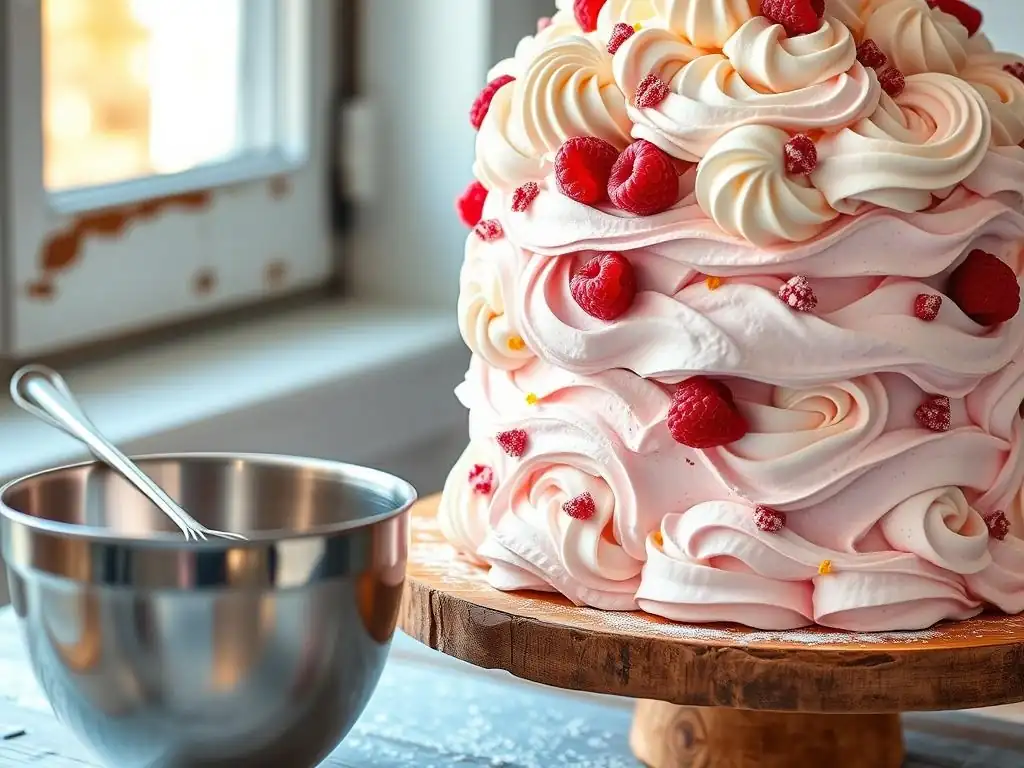
While French meringue is often used for baked meringue cookies, Italian meringue can also be baked to create crisp, delicate treats. The advantage of using Italian meringue is its stability, which helps the cookies hold their piped shape beautifully during baking. After whipping the meringue, you can pipe shapes onto a baking sheet lined with parchment paper.
Bake the cookies at a very low temperature, typically around 90°C to 110°C (200°F to 230°F), for an extended period, often 1.5 to 3 hours, depending on their size. This low and slow baking process dries out the meringue rather than cooks it further, resulting in a crisp, melt-in-your-mouth texture. Once baked and cooled, these meringue cookies are delightful on their own or can be used as components in other desserts. They are a lovely outcome for easy Italian meringue recipes.
Italian Meringue Buttercream: A Silky Smooth Frosting
Perhaps one of the most popular uses for Italian meringue is as the base for Italian meringue buttercream. This frosting is renowned for its incredibly silky texture, stability, and less intensely sweet flavor compared to American buttercream. To make it, softened butter is gradually whipped into the cooled Italian meringue.
The result is a light, airy, and incredibly smooth frosting that pipes beautifully and holds up well at room temperature. It takes on flavors exceptionally well and is perfect for frosting cakes, cupcakes, or filling macarons. Mastering Italian meringue provides the foundation for this luxurious buttercream, opening up a world of decorating possibilities and enhancing countless easy Italian meringue recipes.
Stabilizing Mousse: Light and Airy Texture
Italian meringue is an excellent component for stabilizing light and airy desserts like mousses. Its stable foam structure helps to lighten and set mixtures without relying solely on gelatin or whipped cream, although it's often used in conjunction with them. When folded into a fruit puree, chocolate base, or custard, the meringue traps air, creating a light and ethereal texture.
For example, a classic chocolate mousse might involve folding Italian meringue into a melted chocolate base and perhaps some whipped cream. The meringue provides structure and lift, resulting in a mousse that is both rich and incredibly light. This application highlights the meringue's versatility, allowing you to create sophisticated desserts with relative ease once you've mastered the basic Italian meringue technique.
Italian Meringue vs. Swiss Meringue: Key Differences
Method and Texture: Comparing Meringue Types
While both Italian and Swiss meringues are "cooked" meringues, the method and resulting texture differ. Italian meringue involves pouring hot sugar syrup (118-121°C / 244-250°F) into whipping egg whites. This yields the most stable and glossiest meringue. It is typically very smooth and holds very stiff peaks.
Swiss meringue, on the other hand, is made by whisking egg whites and sugar together over a double boiler until the mixture reaches about 60°C-65°C (140°F-150°F) and the sugar is dissolved. The mixture is then removed from the heat and whipped until cool and stiff peaks form. Swiss meringue is also stable and smooth but often slightly less glossy and can sometimes have a slightly softer peak compared to a perfectly made Italian meringue. The Italian method yields a meringue that is immediately ready for use without further heating of the bowl, unlike the Swiss method.
Recipe Selection: Choosing the Right Meringue
Choosing between Italian and Swiss meringue depends on the specific application and desired outcome. For toppings that require maximum stability and a very smooth, glossy finish that won't be baked or only lightly torched, Italian meringue is often the preferred choice (e.g., Lemon Meringue Pie topping). Its structure is robust, making it ideal for piping complex designs.
Swiss meringue is excellent for buttercreams (Swiss meringue buttercream is also very popular) and can be slightly easier for some home bakers as it doesn't involve handling extremely hot sugar syrup. It's also suitable for baked meringue cookies. If a recipe specifically calls for the structural integrity and high gloss of Italian meringue, or if you are making a dessert that requires raw but stable meringue (like a mousse component), then mastering the Italian method is essential. Many easy Italian meringue recipes rely on this inherent stability.
Tips for Baking with Italian Meringue
Piping Techniques: Achieving Decorative Designs
The stability of Italian meringue makes it perfect for piping decorative elements. Once your meringue is whipped, glossy, and cool, transfer it to a piping bag fitted with your desired nozzle. You can create simple dollops, elegant swirls, rosettes, or even intricate borders. The meringue will hold its shape beautifully.
For best results, work relatively quickly as the meringue is most pliable when freshly made. Practice your technique on a piece of parchment paper before piping onto your final dessert. Keep consistent pressure on the piping bag for uniform shapes. If you are topping a tart or pie, ensure the base is completely cool before piping to prevent the meringue from sliding. This technique allows you to add a professional flourish to easy Italian meringue recipes.
Storing Meringue: Maintaining Freshness and Texture
Freshly made Italian meringue is best used immediately. However, if you need to store it briefly, transfer it to an airtight container and press plastic wrap directly onto the surface of the meringue before sealing the container. This helps prevent a skin from forming and protects it from moisture in the air, which can cause weeping.
Stored in the refrigerator, Italian meringue can hold its quality for a day or two, though it is prone to absorbing odors. For longer storage, especially if planning to bake it into cookies, you can freeze piped meringue shapes on a tray until solid, then transfer them to an airtight container or bag. Baked meringue cookies must be stored in an airtight container at room temperature to maintain crispness, as moisture is their enemy. Proper storage ensures your easy Italian meringue recipes remain delicious.
High Altitude Adjustments: Adapting Recipes for Altitude
Baking at high altitude (generally considered above 3,000 feet or about 900 meters) can present unique challenges, particularly with sugar work and meringues. At higher altitudes, water boils at a lower temperature. This means that when you cook your sugar syrup to 118°C-121°C (244°F-250°F), the temperature difference between the boiling point of water and the target syrup temperature is smaller. This can affect the concentration of sugar and the structure of the meringue.
While specific adjustments vary depending on exact altitude and recipe, a common approach might involve increasing the sugar syrup temperature slightly (perhaps by 1-2°C) to compensate for the lower boiling point, or slightly reducing the amount of liquid used in the syrup. Some high-altitude bakers also find adding a tiny bit more cream of tartar helps stabilize the egg whites. Experimentation is often needed to find the perfect balance for easy Italian meringue recipes at different elevations. Always consult specific high-altitude baking resources if you live in a high-altitude area.
Italian Meringue Dessert Ideas
Lemon Meringue Tart: Classic and Refreshing
One of the most iconic uses for Italian meringue is as the glorious, often torched topping for a Lemon Meringue Tart or Pie. The stable structure of Italian meringue is perfect for creating those dramatic swirls and peaks that hold their shape beautifully above the tangy lemon filling. Since the meringue is cooked during its preparation, it only needs a quick torching with a kitchen torch to achieve those enticing brown tips.
The contrast between the bright, zesty lemon curd and the sweet, light, and airy meringue is simply divine. The stability of the Italian meringue ensures the topping won't weep into the filling, keeping your tart looking and tasting its best. This classic application is a perfect showcase for mastering easy Italian meringue recipes.
Baked Alaska: An Impressive Dessert
Baked Alaska is a stunning dessert that relies on Italian meringue for its dramatic presentation and insulation properties. It typically consists of cake and ice cream covered entirely in a thick layer of Italian meringue, which is then briefly baked at a high temperature or torched. The meringue acts as an insulator, protecting the ice cream from melting while the exterior of the meringue browns beautifully.
The robustness of Italian meringue is essential here; it needs to be thick enough to fully encase the ice cream and stable enough to withstand the heat without collapsing. Achieving those perfect, browned peaks is a rewarding moment. While it looks complex, the meringue component itself can be quite manageable once you understand the technique, making this impressive dessert achievable with easy Italian meringue recipes.
Meringue Kisses: Simple and Elegant
Italian meringue can be baked into delicate, crisp meringue kisses or small drops. While French meringue is more traditional for this, Italian meringue yields a very stable, smooth cookie that holds intricate piped shapes wonderfully. As mentioned earlier, they are baked at a very low temperature for a long time to dry out.
These little treats are simple, elegant, and can be flavored in numerous ways (vanilla, almond, citrus zest, or even cocoa). They are perfect for snacking, decorating cakes, or serving with coffee or tea. Their crisp texture provides a delightful contrast in multi-component desserts. Creating these simple cookies is a lovely way to practice your piping skills and enjoy the fruits of mastering easy Italian meringue recipes.
Conclusion: Unlock Baking Potential with Italian Meringue
Mastering Italian meringue might seem intimidating at first glance due to the hot sugar syrup, but with careful attention to temperature and technique, it's a highly rewarding skill to acquire. Its unmatched stability and smooth, glossy texture make it a versatile tool in any baker's arsenal. From creating luscious buttercreams to topping vibrant fruit tarts and crafting delicate cookies, the applications are vast and delicious.
By understanding the science behind the process and practicing the steps – from boiling the syrup to the perfect temperature to whipping the egg whites to stiff peaks and combining them correctly – you unlock the potential to create a wide range of professional-quality desserts. So, grab your thermometer and mixer, and get ready to elevate your baking with easy Italian meringue recipes!
Frequently Asked Questions
What exactly is Italian meringue and how does it differ from other meringues?
Italian meringue is made by whipping hot sugar syrup into egg whites, resulting in a stable and glossy meringue. Unlike French or Swiss meringue, it's cooked during the process, making it safer to consume and more resistant to weeping.
Why is Italian meringue considered "easy" even though it involves hot sugar syrup?
"Easy" in this context refers to the clear instructions and simplified recipe steps provided by BakeWithEase. The process is manageable even for beginners when carefully followed, despite the hot sugar syrup.
What are the key ingredients needed for an Easy Italian Meringue recipe from BakeWithEase?
You'll need egg whites, granulated sugar, water, and a pinch of salt. Many recipes also suggest a cream of tartar or lemon juice for added stability.
What desserts are best suited for using Italian meringue?
Italian meringue is incredibly versatile and works well for frosting cakes and cupcakes, making meringue cookies, topping pies like lemon meringue, and even stabilizing mousses and creams.
What common mistakes should I avoid when making Italian meringue according to BakeWithEase?
Avoid getting any yolk in the egg whites, ensure your equipment is clean and grease-free, and carefully monitor the sugar syrup temperature. Over or undercooking the syrup can significantly affect the meringue's texture.
Final Reflection: The Sweet Science of Effortless Elegance
Mastering Italian meringue isn't just about achieving glossy peaks; it's about unlocking a world of effortless elegance in your desserts. The seemingly complex process, demystified throughout this article, opens doors to a range of exquisite treats, from classic macarons to vibrant pavlovas, all achievable with a little patience and precision. This isn't just a recipe; it's a gateway to culinary confidence.
The journey of learning to make Italian meringue has been a personal one, filled with both triumphs and the occasional sticky mishap. It's a testament to the rewarding nature of culinary exploration, proving that even seemingly daunting techniques can be mastered with the right guidance. The only way to do great work is to love what you do.
- Steve Jobs. This quote resonates deeply, as the joy of creating beautiful, delicious desserts using this technique far outweighs any initial challenges. The impact of mastering this skill extends beyond the individual, enriching gatherings and celebrations with homemade delights.
Now, it's your turn. Don't be intimidated by the seemingly complex process. Take the leap, gather your ingredients, and embark on your own Italian meringue adventure. Embrace the learning curve, celebrate the successes, and remember that even the smallest imperfections add to the unique charm of your creations. The journey of mastering this technique is as rewarding as the delicious results, and the confidence you gain will empower you to tackle even more ambitious culinary endeavors. So, go forth and create something truly magnificent!
Unlock Your Inner Pâtissier: Master the Art of Italian Meringue!
Thanks for joining us on this delicious journey into the world of Italian meringue! We hope you’ve gained the confidence to create light-as-air desserts that will impress even the most discerning palates. Ready to put your new skills to the test?
- Whizz up your first batch of perfect Italian meringue: Grab those ingredients and try the recipe again – this time, you’ll feel like a pro! Remember, practice makes perfect.
- Share your meringue masterpieces: Tag us on social media with your creations – we love seeing your baking adventures! Let’s inspire each other!
- Explore more advanced meringue techniques: Dive into our other articles to unlock the secrets of Swiss meringue, French meringue, and beyond!
What incredible dessert are you going to create with your newfound meringue mastery? Let us know in the comments!