
Legal Structure Options for Your Home Bakery (Sole Prop, LLC, etc.)


Welcome to BakeWithEase, where your baking dreams take flight! Ever wondered if your passion for perfecting pastries could blossom into a thriving home bakery? The aroma of freshly baked goods filling your kitchen is just the beginning. But before you start taking orders, you need to understand the crucial first step: choosing the right legal structure. Dive into our guide to explore the options, from sole proprietorships to LLCs, and discover which best suits your ambitions and protects your future as a baker. Ready to turn your hobby into a legitimate, successful business?
- Choosing the Right Home Bakery Legal Structure
- Why Your Home Bakery Needs a Legal Structure
- Home Bakery Legal Structure Options
- Key Factors to Consider When Choosing a Legal Structure
- Steps to Establish Your Chosen Legal Structure
- Seeking Professional Legal and Financial Advice
- Maintaining Compliance and Protecting Your Home Bakery
- Conclusion: Selecting the Best Legal Structure
-
Frequently Asked Questions
- What are the most common legal structures for a home bakery?
- What is a sole proprietorship and is it suitable for a home bakery?
- What are the benefits of forming an LLC for my home bakery?
- How does forming an LLC affect my taxes compared to a sole proprietorship?
- What factors should I consider when choosing a legal structure for my home bakery?
- Final Reflection: Baking Your Business Dream: Choosing the Right Legal Structure
- Launch Your Baking Empire: Next Steps to Success
Choosing the Right Home Bakery Legal Structure
Starting a home bakery is an exciting venture, blending your passion for baking with the dream of building a business. As you move from baking for friends and family to selling to customers, one of the most crucial decisions you'll face is determining the appropriate legal structure for your home bakery. This choice impacts everything from how you pay taxes to your personal liability in case of business debts or lawsuits. Selecting the right legal structure is a foundational step that provides clarity and protection for your growing baking enterprise.
Understanding the various legal structures available – such as sole proprietorships, LLCs, partnerships, and corporations – is essential for making an informed decision. Each option comes with its own set of advantages, disadvantages, and compliance requirements. Taking the time to research and choose the best structure upfront can save you significant headaches and potential financial risks down the road, ensuring your home bakery operates smoothly and legally.
Why Your Home Bakery Needs a Legal Structure
Establishing a formal legal structure for your home bakery is not just a bureaucratic step; it's a fundamental part of building a legitimate and sustainable business. Even if you're starting small, operating within a defined legal framework provides credibility, simplifies financial management, and sets the stage for future growth. It signals to customers, suppliers, and potential partners that you are serious about your baking business.
Furthermore, a legal structure helps define the relationship between you and your business, particularly concerning finances and legal responsibilities. It makes it easier to open business bank accounts, obtain necessary licenses and permits, and manage business income and expenses separately from personal finances. This separation is vital for accurate accounting, tax preparation, and understanding the true financial health of your home bakery.
Understanding the Importance of Legal Structure
The primary importance of a legal structure lies in establishing your business as a distinct entity, separate from your personal affairs, or clearly defining the relationship if it's not separate. This separation is crucial for financial transparency and legal clarity. For instance, having a dedicated legal structure makes it significantly easier to track business income and expenses, which is essential for filing taxes accurately and understanding profitability. Without a formal structure, personal and business finances can easily become intertwined, leading to confusion and potential issues with tax authorities.
Beyond finance, the legal structure dictates the level of personal liability you face. In some structures, like a sole proprietorship, there's no legal distinction between you and your business, meaning your personal assets could be at risk to satisfy business debts or legal claims. Other structures, like an LLC, offer a degree of separation designed to protect your personal assets. Choosing the right structure is therefore a critical decision for safeguarding your personal financial well-being while building your home bakery business.
Potential Risks of Operating Without a Formal Legal Structure
Operating your home bakery without establishing a formal legal structure, often defaulting to an informal sole proprietorship (which happens automatically if you don't register otherwise), exposes you to significant risks. The most prominent risk is unlimited personal liability. If your business incurs debt, faces a lawsuit (perhaps due to a food allergy issue or a slip-and-fall at a pickup location), or fails to pay taxes, your personal assets – like your home, savings, and other possessions – could be seized to cover these obligations. This lack of separation offers no protection for your personal wealth.
Another risk is the difficulty in separating business and personal finances, which can lead to accounting nightmares and potential tax complications. Without a clear legal structure and separate business accounts, it's hard to accurately track income and expenses, claim legitimate business deductions, or demonstrate the financial health of your business if you seek funding or loans.
Furthermore, operating without a formal structure might make it harder to obtain necessary business licenses or permits, which are often required by local or state regulations for selling food, even from home. For example, many states require specific cottage food operation permits, and having a recognized business structure can simplify this process.
Home Bakery Legal Structure Options
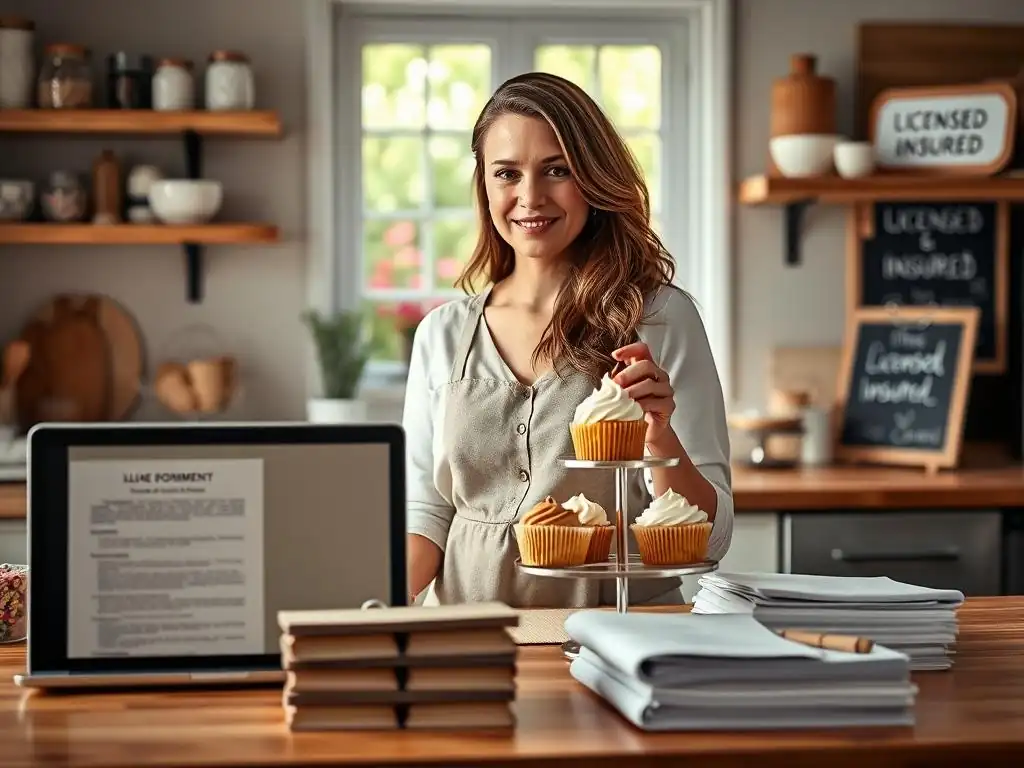
When considering the legal structure for your home bakery, several common options are available, each with distinct characteristics. The most frequent choices for small businesses, including home-based ones, are Sole Proprietorships and Limited Liability Companies (LLCs). Partnerships become relevant if you're starting the business with one or more people. Corporations, while less common for small home bakeries initially, are also a possibility, especially for those planning significant scaling or seeking external investment.
Understanding the nuances of each of these home bakery legal structure options is key to making the choice that best suits your current situation and future aspirations. Factors like the ease of setup, ongoing administrative requirements, tax implications, and the level of personal liability protection offered vary significantly between these structures. Let's explore each option in more detail to help you identify which might be the best fit for your home baking venture.
Sole Proprietorship for Home Bakeries
A sole proprietorship is the simplest and most common legal structure for small businesses, including many home bakeries just starting out. It's owned and run by one individual, and there is no legal distinction between the owner and the business. In fact, if you begin selling your baked goods without registering as any other type of entity, you are automatically operating as a sole proprietorship by default in most jurisdictions.
This structure is often chosen for its ease of setup and minimal administrative burden. You typically don't need to file any specific paperwork with the state to form a sole proprietorship, although you will likely need to register your business name (if it's different from your legal name) and obtain necessary local and state business licenses and permits, such as a cottage food operation permit, which vary significantly by location. For example, in California, cottage food operations must register with the county health department and potentially obtain a permit, regardless of their legal structure.
Advantages of a Sole Proprietorship
The primary advantage of a sole proprietorship for a home bakery is its simplicity and low startup cost. There are generally no state filing fees to establish the structure itself, unlike forming an LLC or corporation which can cost anywhere from $50 to over $500 depending on the state. The administrative requirements are also minimal; you don't have to hold board meetings, file annual reports (related to the structure itself), or maintain complex internal records like corporate minutes.
Taxation is another benefit often cited for sole proprietorships. The business itself is not taxed separately. Instead, the profits and losses of the business are reported on the owner's personal income tax return using Schedule C (Form 1040), Profit or Loss From Business. This is known as "pass-through" taxation. The business income is taxed at the individual's personal income tax rate, and the owner also pays self-employment taxes (for Social Security and Medicare) on their net earnings. This can be simpler than corporate tax structures for many small home bakeries.
Disadvantages and Liabilities of Sole Proprietorships
The most significant disadvantage of a sole proprietorship is the lack of legal separation between the business and the owner, resulting in unlimited personal liability. This means that if your home bakery incurs debts, faces lawsuits (e.g., a customer claims illness from your product), or owes taxes, your personal assets – including your home, car, personal bank accounts, and investments – are at risk and can be used to satisfy these business obligations. There is no legal shield protecting your personal wealth.
Another drawback is that raising capital can be challenging for a sole proprietorship. Since the business is tied directly to the individual, it can be harder to attract investors who prefer the structure and liability protection offered by LLCs or corporations. Business loans may also be harder to secure compared to more formal entities, as lenders may view them as riskier. While simple to start, the unlimited liability aspect is a major factor for many home bakery owners to consider as their business grows.
Limited Liability Company (LLC) for Home Bakeries
A Limited Liability Company (LLC) is a popular legal structure for small businesses, including many home bakeries, because it combines aspects of both corporations and sole proprietorships/partnerships. It provides owners with limited liability protection while allowing for pass-through taxation. This structure is often seen as a good balance between simplicity and protection.
Forming an LLC involves filing specific documents, typically called Articles of Organization or a Certificate of Formation, with the state where you are doing business. There are associated filing fees, which vary widely by state (e.g., around $100 in Georgia, but over $500 in Massachusetts). While more complex to set up than a sole proprietorship, the process is generally straightforward and can often be completed online through the state's Secretary of State website.
Benefits of Forming an LLC
The primary benefit of an LLC for a home bakery is the limited liability protection it offers. An LLC is treated as a separate legal entity from its owners (called members). This means that in most cases, the personal assets of the owner(s) are protected from business debts and lawsuits. If the business faces financial difficulties or legal claims, creditors or litigants can typically only pursue the assets of the LLC itself, not the members' personal property. This protection is invaluable, especially in a food business where liability risks, however small, do exist.
LLCs also offer flexibility in taxation. By default, a single-member LLC is taxed like a sole proprietorship (pass-through taxation). An LLC with multiple members is taxed like a partnership by default. However, an LLC can elect to be taxed as an S-corporation or a C-corporation, which might offer tax advantages in certain situations, particularly as income grows. This flexibility allows the home bakery owner to choose the tax treatment that is most beneficial as their business evolves.
LLC Formation Requirements and Ongoing Compliance
Forming an LLC requires filing formation documents with the state and paying the required fee. While the exact process varies, it usually involves choosing a unique business name, appointing a registered agent (a person or service designated to receive legal documents on behalf of the LLC), and submitting the Articles of Organization. Many states also require LLCs to have an Operating Agreement, which is an internal document outlining ownership, management, and operating procedures. While not always legally mandated, an Operating Agreement is highly recommended, especially for multi-member LLCs, to avoid future disputes.
Ongoing compliance for an LLC typically involves filing annual reports or statements with the state and paying periodic fees (e.g., California has an annual minimum tax of $800 for LLCs, regardless of income, while states like Texas have franchise taxes based on revenue). Maintaining the limited liability protection also requires treating the LLC as a separate entity – keeping business and personal finances separate, using the LLC name on contracts and official documents, and ensuring proper capitalization.
Failing to follow these formalities can lead to "piercing the corporate veil," where a court disregards the LLC's separate status and holds the owner personally liable.
Partnership Structures for Home Bakeries
If you plan to start your home bakery with one or more individuals, a partnership structure becomes relevant. In a partnership, two or more people agree to share in the profits or losses of a business. Like a sole proprietorship, a general partnership is relatively easy to form and can even be created implicitly through the actions of the partners, though a formal agreement is highly recommended.
Partnerships share some characteristics with sole proprietorships, particularly in terms of liability and taxation, depending on the specific type of partnership chosen. They are generally simpler to manage than corporations but introduce the complexities of multiple owners sharing decision-making, profits, and responsibilities. This home bakery legal structure is suitable when collaboration is a core part of the business model.
Types of Partnerships
There are several types of partnership structures. The most basic is a General Partnership (GP), where all partners share in the business's operations, management, and liability. In a GP, each partner is personally liable for the debts and obligations of the business, including those incurred by other partners. This means one partner's mistake or debt could expose all partners to unlimited personal liability.
Other partnership structures offer some level of limited liability. A Limited Partnership (LP) includes both general partners (who manage the business and have unlimited liability) and limited partners (who contribute capital but do not manage the business and have liability limited to their investment). A Limited Liability Partnership (LLP) is similar to a GP but provides some protection from the liabilities arising from the negligence or misconduct of other partners. LLPs are commonly used by professionals like accountants or lawyers but may be an option depending on state regulations and the nature of the home bakery business.
Partnership Agreements and Legal Considerations
While a general partnership can be formed without a written agreement, it is highly advisable for partners to create a comprehensive Partnership Agreement. This legal document outlines the terms of the partnership, including each partner's contributions (money, assets, labor), how profits and losses will be shared, the responsibilities and authority of each partner, how decisions will be made, procedures for admitting new partners, and how the partnership will be dissolved or how a partner can exit. A clear agreement helps prevent disputes and provides a roadmap for managing the business.
Legally, like sole proprietorships, general partnerships are not separate taxable entities. The partnership files an informational return (Form 1065) reporting its income and expenses, and each partner receives a K-1 form showing their share of the profits or losses.
Each partner then reports their share on their personal tax return and pays self-employment taxes. Legal considerations also include understanding joint and several liability in a GP, where any partner can be held responsible for the entire debt or obligation of the partnership, regardless of their percentage of ownership, making a robust partnership agreement and potentially a different structure like an LLC crucial for multi-owner home bakeries.
Corporation Structure for Home Bakeries
A corporation is the most complex legal structure and is typically less common for small, newly established home bakeries due to the higher costs, stricter regulations, and extensive administrative requirements. A corporation is a distinct legal entity, separate from its owners (shareholders). It can own assets, incur debts, sue, and be sued independently.
Forming a corporation involves filing Articles of Incorporation with the state, appointing a board of directors, issuing stock, and adhering to numerous corporate formalities like holding regular board and shareholder meetings and keeping detailed minutes. While offering the strongest liability protection, the complexity and cost often make it overkill for a home-based baking business unless significant outside investment is sought or massive scaling is planned.
S-Corporations and C-Corporations
When forming a corporation, you can choose to structure it as a C-corporation or an S-corporation for tax purposes. A C-corporation is the default corporate structure and is taxed separately from its owners. The corporation pays corporate income tax on its profits, and then shareholders pay personal income tax on any dividends they receive. This is known as "double taxation." C-corporations are often used by large companies seeking to raise significant capital through selling stock.
An S-corporation is a tax election available to eligible small businesses, including LLCs or corporations. It allows profits and losses to be passed through directly to the owners' personal income without being subject to corporate tax rates, similar to partnerships and sole proprietorships.
However, unlike a standard LLC or partnership, S-corporation owners who work for the business must pay themselves a "reasonable salary" subject to payroll taxes (Social Security and Medicare), while any remaining profits can be taken as distributions, which are not subject to self-employment tax. This can offer tax savings for profitable businesses, but the administrative complexity is higher than a standard LLC.
Advantages and Disadvantages of Incorporating
The main advantage of incorporating, particularly as a C-corporation, is the robust limited liability protection it offers to shareholders. Personal assets are generally shielded from business debts and lawsuits. Corporations also have the easiest time raising capital by selling stock and can offer attractive employee benefits. For an S-corporation election within an LLC or corporation, a potential advantage is the ability to save on self-employment taxes if the business is profitable enough to pay a reasonable salary and distributions.
However, the disadvantages for a small home bakery are significant. Corporations are the most expensive and complex structure to form and maintain. Startup costs include state filing fees (often higher than LLC fees), and ongoing costs include annual report fees, potential registered agent fees, and the cost of professional help for complex tax filings and legal compliance.
The administrative burden is high due to required meetings, minutes, and stricter record-keeping. C-corporations face double taxation, and while S-corporations offer pass-through taxation, they add payroll complexity. For most home bakeries, the benefits of incorporating rarely outweigh the costs and complexity unless there are specific reasons like seeking venture capital.
Key Factors to Consider When Choosing a Legal Structure
Deciding on the best legal structure for your home bakery involves weighing several critical factors. There isn't a one-size-fits-all answer; the ideal structure depends on your specific circumstances, goals, and tolerance for risk. Carefully evaluating these factors will help you select the home bakery legal structure that provides the right balance of protection, flexibility, and simplicity for your business.
Consider your current situation, including whether you have partners, your initial startup budget, and your understanding of legal and tax compliance. Think also about your future plans – do you intend to keep the business small and home-based indefinitely, or do you envision significant growth, hiring employees, opening a retail location, or seeking outside investment? Your answers to these questions will heavily influence which structure is most appropriate for your home bakery.
Liability Protection
Liability protection is often the most compelling reason for home bakery owners to choose a legal structure other than a sole proprietorship. As a food business, even operating from home under cottage food laws, there is always a risk of potential liability. This could stem from a customer having an allergic reaction to an ingredient, a product causing illness (even if perceived, leading to a claim), or an accident occurring if customers pick up orders at your home.
A sole proprietorship offers no personal liability protection, meaning your personal assets are exposed. An LLC, conversely, is designed to protect your personal assets from business debts and lawsuits, limiting your financial risk to the assets of the business itself. Partnerships offer varying levels of liability protection depending on the type (GP offers none, LP and LLP offer some limited protection).
Corporations provide the strongest protection, but at a much higher cost and complexity. For many home bakeries concerned about protecting their personal savings and home, an LLC is a common choice for its balance of protection and relative simplicity compared to corporations.
Tax Implications
The tax implications of each legal structure are a major consideration for any home bakery owner. Different structures are taxed differently, impacting your overall tax burden and how you file. Sole proprietorships and partnerships benefit from pass-through taxation, where business income is reported directly on the owner's personal tax return (Schedule C for sole props, K-1 for partners) and is subject to individual income tax rates and self-employment tax.
LLCs, by default, also enjoy pass-through taxation, taxed as a sole proprietorship (single-member) or partnership (multi-member). This simplicity is often preferred by small businesses. However, LLCs and corporations can elect to be taxed as an S-corporation, which can potentially reduce self-employment tax on profits beyond a reasonable salary. C-corporations face corporate income tax and potential double taxation on dividends. Understanding how each structure affects your tax liability and filing requirements is crucial, and often necessitates consulting with a tax professional familiar with small business and home bakery operations.
Startup Costs and Ongoing Administrative Burden
The cost and complexity of setting up and maintaining a legal structure vary significantly. A sole proprietorship is the cheapest and easiest to start, often requiring only business licenses and permits, not a separate state filing fee for the structure itself. The ongoing administrative tasks are minimal, mainly focused on managing business finances for tax purposes.
Forming an LLC involves state filing fees (ranging widely, from $50 to $500+ depending on the state) and potentially the cost of drafting an Operating Agreement. Ongoing costs can include annual report fees (e.g., $25 in some states, $800 in California), and maintaining compliance requires keeping business finances separate and adhering to basic formalities. Partnerships also range in complexity depending on the type, but a formal Partnership Agreement is a key startup cost (or wise investment).
Corporations have the highest startup fees, require drafting bylaws, appointing directors, and face significant ongoing costs including annual fees, registered agent fees, and the highest administrative burden with required meetings, minutes, and complex tax filings. Evaluate your budget and willingness to handle administrative tasks when choosing your home bakery legal structure.
Future Growth and Expansion Plans
Your vision for the future of your home bakery should significantly influence your choice of legal structure. If you intend to keep the business small, operating primarily as a side hustle or a single-person endeavor with limited revenue, a sole proprietorship or a simple single-member LLC might suffice due to their ease of use and lower cost.
However, if you plan for significant growth – perhaps hiring employees, opening a storefront, seeking outside investment, or taking on partners – a more formal structure like an LLC or even potentially a corporation might be more appropriate or necessary down the line. LLCs offer flexibility to add members or elect S-corp status as you grow. Corporations are best suited for businesses planning to raise capital through stock sales or aiming for a public offering. Choosing a structure that can accommodate your anticipated growth trajectory can save you the hassle and expense of changing your legal structure later.
Steps to Establish Your Chosen Legal Structure

Once you've decided on the best home bakery legal structure for your business, the next step is to formally establish it. This process involves several key actions, regardless of the structure you choose, though the specific steps vary. Taking these steps correctly ensures your business is legally recognized and compliant with state and local regulations.
Establishing your legal structure goes hand-in-hand with other foundational business tasks. It provides the framework within which you can then obtain necessary licenses, permits, open business bank accounts, and begin operating legitimately. Let's look at the typical steps involved in making your chosen legal structure official for your home bakery.
Registering Your Home Bakery
The process of registering your home bakery depends heavily on the chosen legal structure and your location.
- Sole Proprietorship: You generally don't register the structure itself with the state. However, if you plan to operate under a business name different from your legal name (e.g., "Sweet Delights Bakery" instead of "Jane Doe"), you will likely need to register a "Doing Business As" (DBA) or "Fictitious Business Name" with your county or state. For example, registering a DBA in Texas typically costs around $15-25 at the county level.
- LLC: You must file Articles of Organization (or similar document) with the Secretary of State in the state where you are forming the LLC. This involves choosing a unique name that meets state requirements and appointing a registered agent. Filing fees range from $50 to over $500 depending on the state.
- Partnership: For a General Partnership, formal registration isn't always required at the state level, but registering a DBA is necessary if using a business name. For LPs or LLPs, state registration is mandatory, similar to an LLC, with associated fees.
- Corporation: You must file Articles of Incorporation with the state, a more complex document than LLC articles, involving specifying stock structure and appointing initial directors. This also requires higher filing fees than LLCs in many states.
Obtaining Necessary Licenses and Permits
Regardless of your chosen home bakery legal structure, you will need to obtain various licenses and permits to operate legally. This is a critical step, especially for food businesses.
- Federal: You'll need an Employer Identification Number (EIN) from the IRS if you plan to hire employees, operate as a corporation or partnership, or elect S-corp status for an LLC. It's also useful for opening a business bank account, even as a sole proprietor. Applying for an EIN is free on the IRS website.
- State: You'll likely need a state business license or registration. If your state has cottage food laws, you'll need to comply with those regulations, which often involve registering with the state's Department of Health or Agriculture and obtaining a specific cottage food operation permit. Requirements vary wildly; some states require annual registration ($50-200), while others have no specific cottage food law but require a full commercial kitchen license, which is often impractical for home bakers.
- Local: Your city or county may require local business licenses, zoning permits (to operate a business from your home), and potentially health department permits depending on local interpretations of cottage food laws or if you plan to sell in certain venues like farmers markets. For example, a local business license in a small town might cost $25-$100 annually.
- [x] Choose legal structure (Sole Prop, LLC, etc.)
- [ ] Select a business name
- [ ] Check business name availability
- [ ] Register DBA (if applicable)
- [ ] File formation documents with the state (LLC, Partnership, Corp)
- [ ] Obtain EIN from IRS (if needed)
- [ ] Research state cottage food laws and requirements
- [ ] Apply for state business license/registration
- [ ] Apply for state cottage food permit (if applicable)
- [ ] Research local business license and zoning requirements
- [ ] Apply for local licenses/permits (if applicable)
- [ ] Open a business bank account
Creating a Business Plan
While not a legal requirement for establishing the structure itself, creating a business plan is a fundamental step for any new home bakery. A business plan serves as a roadmap, outlining your business goals, strategies, target market, financial projections, and operational details. It helps clarify your vision and provides a framework for decision-making.
Developing a solid business plan forces you to think through critical aspects of your home bakery, such as your menu, pricing strategy, marketing approach, production process, and sales channels (e.g., online orders, farmers markets, local shops). It also includes a financial section detailing startup costs (including legal formation fees and permit costs), projected revenue, expenses, and profitability. While you don't need a formal plan to file LLC papers, having one provides clarity and can be essential if you ever seek funding or want to present your business idea to others.
Seeking Professional Legal and Financial Advice
Navigating the complexities of legal structures, taxes, and compliance can be challenging, especially for a new business owner. While this article provides general information, every home bakery's situation is unique, and laws vary significantly by location. Seeking professional advice from qualified experts is a wise investment that can help you make the best decisions and avoid costly mistakes.
Attorneys and accountants specialize in these areas and can provide tailored guidance based on your specific business plans, location, and financial situation. Their expertise can be invaluable in ensuring you choose the most advantageous legal structure for your home bakery and comply with all relevant regulations from the start.
When to Consult with an Attorney or Accountant
It is highly recommended to consult with a small business attorney or an accountant (CPA or Enrolled Agent) when you are deciding on your home bakery legal structure. An attorney can explain the liability implications of each structure in your specific state, help you draft or review formation documents (like LLC Articles of Organization or a Partnership Agreement), and advise on compliance requirements. For example, they can clarify how your state's cottage food laws interact with different business structures.
An accountant is crucial for understanding the tax implications of each structure and helping you choose the most tax-efficient option based on your projected income. They can explain how pass-through taxation works, the implications of self-employment tax, potential benefits of an S-corp election (if applicable), and help you set up proper accounting systems. Consulting these professionals early can prevent legal and financial headaches down the road. A typical initial consultation fee might range from $100-$300, a small price for potentially avoiding significant future problems.
Resources for Small Business Owners
Beyond professional consultations, numerous resources are available to help home bakery owners understand legal structures and business fundamentals.
- Small Business Administration (SBA): The SBA offers extensive online resources, guides, and local assistance through its district offices. They provide information on planning, launching, managing, and growing a business, including details on legal structures and financing.
- SCORE: SCORE is a non-profit organization that provides free business mentoring and workshops from experienced professionals. They have mentors who can offer guidance on choosing a legal structure and developing a business plan.
- State and Local Business Development Agencies: Many states and cities have agencies dedicated to supporting small businesses. These offices can provide localized information on registration requirements, licenses, permits, and compliance specific to operating a home-based business or cottage food operation in your area. For instance, your state's Department of Agriculture website likely has detailed information on cottage food laws.
- Online Legal Services: Platforms like LegalZoom or Rocket Lawyer offer services to help file business formation documents (LLC, Corporation) and create legal agreements, though they are not a substitute for personalized legal advice.
Maintaining Compliance and Protecting Your Home Bakery

Choosing and establishing the right home bakery legal structure is just the beginning. To ensure your business remains in good standing and that you continue to benefit from the protections offered by your chosen structure (like limited liability), ongoing compliance is essential. This involves adhering to legal and regulatory requirements and periodically reviewing your business setup.
Maintaining compliance protects you from potential fines, penalties, and legal challenges. It also reinforces the legitimacy of your home bakery as a professional operation. Staying organized and informed about your obligations is key to the long-term success and security of your baking business.
Ongoing Legal and Regulatory Requirements
The specific ongoing requirements for your home bakery will depend on its legal structure and location.
- All Structures: You must comply with all relevant food safety regulations, including any specific to cottage food operations in your state (e.g., labeling requirements, sales limits, approved venues). You'll need to file federal and state income taxes annually. If you have employees, you'll have payroll tax obligations.
- Sole Proprietorship: Ongoing requirements are minimal regarding the structure itself, primarily focused on tax filing (Schedule C and self-employment tax). You must maintain necessary business licenses and permits.
- LLC: Most states require annual reports or statements to be filed with the Secretary of State, often accompanied by a fee (e.g., California's $800 annual tax, though many states have much lower fees, like $50-$100). You must also maintain separate business finances and adhere to the formalities outlined in your Operating Agreement to preserve limited liability.
- Partnership: General Partnerships have minimal structural filing requirements but must file an informational tax return (Form 1065). LPs and LLPs have annual state filing requirements similar to LLCs. Partners must adhere to the terms of their Partnership Agreement.
- Corporation: Corporations have the most stringent ongoing compliance, including holding regular board and shareholder meetings, keeping minutes, filing annual reports, and complex tax filings (Form 1120 for C-corps, Form 1120-S for S-corps).
Regularly Reviewing Your Legal Structure
Your home bakery legal structure is not necessarily set in stone forever. As your business grows and evolves, the structure that was right for you initially might become less advantageous. It's a good practice to periodically review your legal structure, perhaps every few years or when significant changes occur in your business (e.g., substantial increase in revenue, taking on partners, planning to hire employees, expanding beyond cottage food limits).
Consider whether your current structure still provides the best balance of liability protection, tax efficiency, and administrative ease for your current situation. For example, a successful sole proprietor might consider converting to an LLC for liability protection as revenue and potential risks increase. An LLC owner with significant profits might explore electing S-corp status to potentially reduce self-employment taxes, after consulting with an accountant. Reviewing your home bakery legal structure ensures it continues to support your business goals effectively.
Conclusion: Selecting the Best Legal Structure
Choosing the right home bakery legal structure is a foundational decision that impacts your business's liability, taxation, and administrative requirements. While a sole proprietorship offers simplicity and ease of startup, it exposes your personal assets to business risks. An LLC provides a valuable layer of personal liability protection with relatively manageable administrative and tax complexity, making it a popular choice for many growing home bakeries.
Partnerships are suitable for multi-owner businesses, with different types offering varying levels of liability. Corporations provide the strongest liability protection but come with significant costs and administrative burdens, typically making them less suitable for small home-based operations unless major expansion or external investment is planned.
Ultimately, the best home bakery legal structure aligns with your current business size, risk tolerance, financial situation, and future aspirations. Take the time to understand the implications of each option, consider the factors of liability, tax, cost, and growth, and don't hesitate to seek professional guidance from an attorney or accountant. Making an informed decision now will provide a solid legal foundation for your home bakery, allowing you to focus on what you love most – baking delicious treats for your customers.
Frequently Asked Questions
What are the most common legal structures for a home bakery?
The most common structures are sole proprietorship, Limited Liability Company (LLC), and, less frequently, a partnership. Each has different implications for liability and taxation.
What is a sole proprietorship and is it suitable for a home bakery?
A sole proprietorship is the simplest structure where the business is owned and run by one person. While easy to set up, it offers no legal separation between you and your business, meaning you're personally liable for debts.
What are the benefits of forming an LLC for my home bakery?
An LLC provides limited liability protection, separating your personal assets from business debts. This means your personal assets are generally protected if the business incurs debt or faces lawsuits.
How does forming an LLC affect my taxes compared to a sole proprietorship?
An LLC offers flexibility in taxation. You can choose to be taxed as a sole proprietorship, partnership, or corporation, potentially offering tax advantages depending on your specific circumstances. Consult a tax professional.
What factors should I consider when choosing a legal structure for my home bakery?
Consider your risk tolerance, personal liability concerns, tax implications, and future growth plans. Seeking legal and financial advice is crucial for making an informed decision.
Final Reflection: Baking Your Business Dream: Choosing the Right Legal Structure
The choice of legal structure for your home bakery isn't just a formality; it's the foundation upon which your entire business will be built. Getting this right from the start can mean the difference between thriving success and overwhelming legal headaches down the line. Understanding the nuances of sole proprietorships, LLCs, and other options is crucial for protecting your assets, managing liability, and setting your business up for long-term growth.
The impact of choosing the correct legal structure reverberates throughout a home bakery's lifespan, influencing everything from taxes and insurance to potential investors and expansion opportunities. It's a decision that demands careful consideration, and one that I personally wrestled with before launching my own small-scale baking venture. The best business structure is the one that best fits your specific needs and goals,
a mentor once advised me, and this rings truer than ever when navigating the complexities of food-based businesses. This article aims to provide the clarity needed to make an informed decision, empowering aspiring bakers to confidently choose the path that best suits their dreams.
Now, it's your turn. Consider the unique aspects of your home bakery – your scale of operation, your long-term aspirations, and your risk tolerance. Don't let the legal jargon intimidate you; use this article as a springboard to further research and consultation with legal professionals. Take the time to choose wisely, and you'll be baking a foundation for a successful and sustainable business for years to come. Your passion deserves the right legal protection; let's get baking!
Launch Your Baking Empire: Next Steps to Success
Thanks for taking the time to explore the exciting world of legal structures for your home bakery! You've now armed yourself with the knowledge to make informed decisions about your business's future. Ready to take the next delicious step?
- Choose your legal structure TODAY: This is the most crucial first step. Download our free checklist (available on BakeWithEase.com) to compare your options and make the best choice for your unique baking business.
- Share your baking journey: Tell us – which legal structure resonates most with your vision? Share your thoughts in the comments below! Let's connect and inspire each other.
- Explore resources for bakers: Did you know we offer free resources specifically designed to help home bakers like you thrive? Check out our website, bakewithease.com, for more helpful articles and guides.
What exciting flavor will you bake next – and what legal structure will help you bake it to perfection?