
The Ultimate List of Essential Baking Tools for Beginners

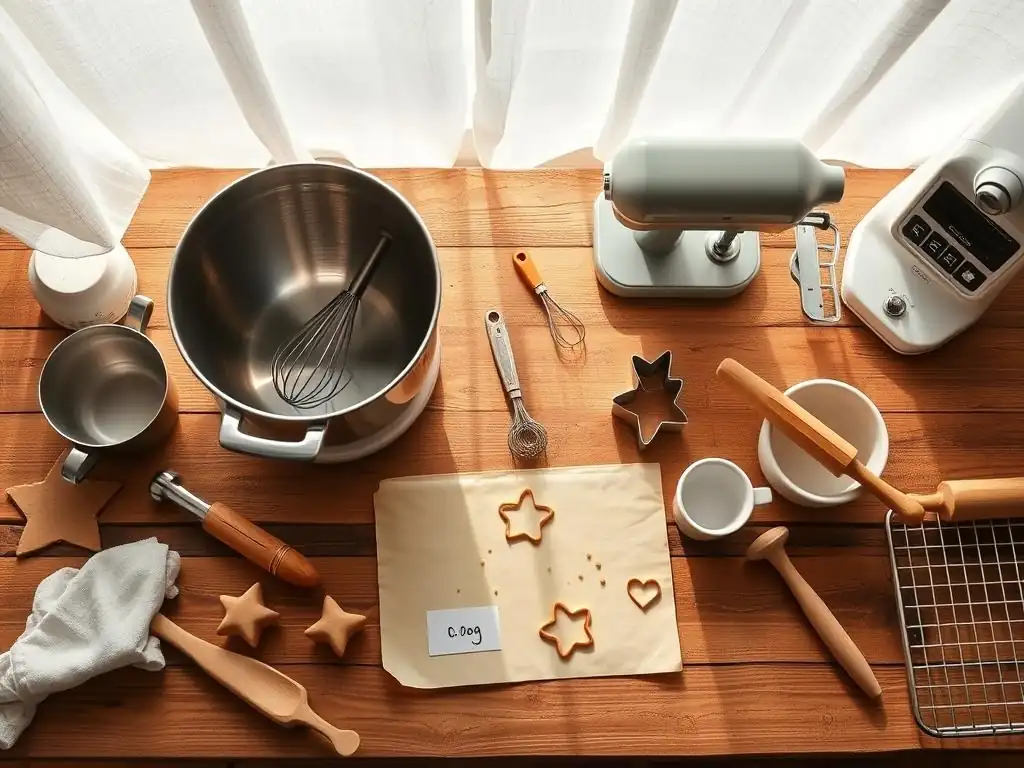
Welcome to BakeWithEase, your ultimate guide to unlocking the joys of baking! Are you ready to transform your kitchen into a haven of delicious aromas and perfect pastries? Wondering where to start on your baking journey? Discover the secrets to success with our guide to the Essential Baking Tools Beginners Need, and find out which must-have items will set you up for success. Embark on this delicious adventure with us and let's bake with ease!
- BakeWithEase: Your Guide to Essential Baking Tools for Beginners
- Must-Have Baking Tools for New Bakers: Start Baking with Confidence
- The Core Four: Indispensable Baking Tools Every Beginner Needs
- Beyond the Basics: Essential Baking Tools to Expand Your Skills
- Other Helpful Baking Tools for Beginners
- Investing in Quality: Choosing Durable and Long-Lasting Baking Tools
- Tips for Maintaining Your Essential Baking Tools
- BakeWithEase: Get Started with Your Essential Baking Tools Today!
-
Frequently Asked Questions
- What are the absolute most essential baking tools a beginner should invest in first?
- Why is it important to invest in quality measuring tools when starting out with baking?
- Besides baking sheets, what other oven-safe equipment is recommended for beginners?
- How important is a stand mixer for a beginner baker, compared to other tools?
- Where can beginners find affordable and reliable baking tools without breaking the bank?
- Final Reflection: The Sweetness of Beginnings and the Joy of Baking
- Ready to Bake Your Dream Treats?
BakeWithEase: Your Guide to Essential Baking Tools for Beginners
Welcome to the wonderful world of baking! Embarking on this journey can feel a little daunting, especially when you look at complex recipes or fancy equipment. But don't worry, you don't need a professional kitchen to start creating delicious treats. At BakeWithEase, we believe that having the right, basic essential baking tools beginners need is the key to building confidence and enjoying the process from the very first batch of cookies.
This guide will walk you through the absolute must-haves – the workhorse tools that will form the foundation of your baking adventures. We'll focus on practical, reliable items that will help you achieve consistent results without overwhelming you. Think of this as your friendly introduction to the toolkit that will empower you to bake everything from simple muffins to impressive cakes.
Must-Have Baking Tools for New Bakers: Start Baking with Confidence
Getting started in baking is exciting, and having the right gear makes all the difference. You don't need every gadget on the market, but a core set of essential baking tools beginners need will dramatically improve your experience and the outcome of your baked goods. These foundational items are versatile, relatively inexpensive, and crucial for executing most basic recipes correctly.
Think of these tools as your kitchen allies. They ensure accuracy, efficiency, and make cleanup easier. Without them, even simple tasks like measuring flour or mixing batter can become frustrating. Investing in these fundamental items is the best way to set yourself up for success and truly enjoy learning the art of baking from scratch.
Why You Need the Right Baking Tools as a Beginner
Baking is often described as a science, requiring precision more than cooking. Small variations in ingredient amounts or baking times can drastically alter the final product – a cookie might spread too much, a cake might be dense, or bread might not rise. This is where having the right essential baking tools beginners need becomes critical. Tools like accurate measuring cups and spoons ensure you're using the exact quantities specified in a recipe, which is fundamental for consistent results.
Furthermore, the right tools make the process physically easier and more enjoyable. Trying to mix a stiff dough in a bowl that's too small, or attempting to evenly frost a cake without an offset spatula, can be frustrating. Having the appropriate equipment minimizes these hurdles, allowing you to focus on learning techniques and understanding the baking process. It's about setting yourself up for success and reducing the chances of early setbacks that might discourage a new baker.
Building Your Baking Toolkit: A Beginner's Checklist
Starting your baking journey requires a foundational set of equipment. Don't feel pressured to buy everything at once; build your collection piece by piece as you try new recipes. Here is a checklist of the most essential baking tools beginners need to get started:
- [ ] Dry Measuring Cups (set of 4-5: 1/4 cup, 1/3 cup, 1/2 cup, 1 cup)
- [ ] Liquid Measuring Cups (at least one, 2-cup size is versatile)
- [ ] Measuring Spoons (set of 4-6: 1/4 tsp, 1/2 tsp, 1 tsp, 1 tbsp, etc.)
- [ ] Mixing Bowls (set of 3: small, medium, large)
- [ ] Rubber or Silicone Spatula (at least one)
- [ ] Offset Spatula (small or medium)
- [ ] Baking Sheets (at least two standard half-sheet pans, approx. 13x18 inches)
- [ ] Whisk (balloon whisk is common)
- [ ] Cooling Rack (at least one)
This list covers the absolute basics for most cookie, brownie, and simple cake recipes. As you become more comfortable and explore different types of baking, you can add items like cake pans, muffin tins, or a rolling pin.
The Core Four: Indispensable Baking Tools Every Beginner Needs
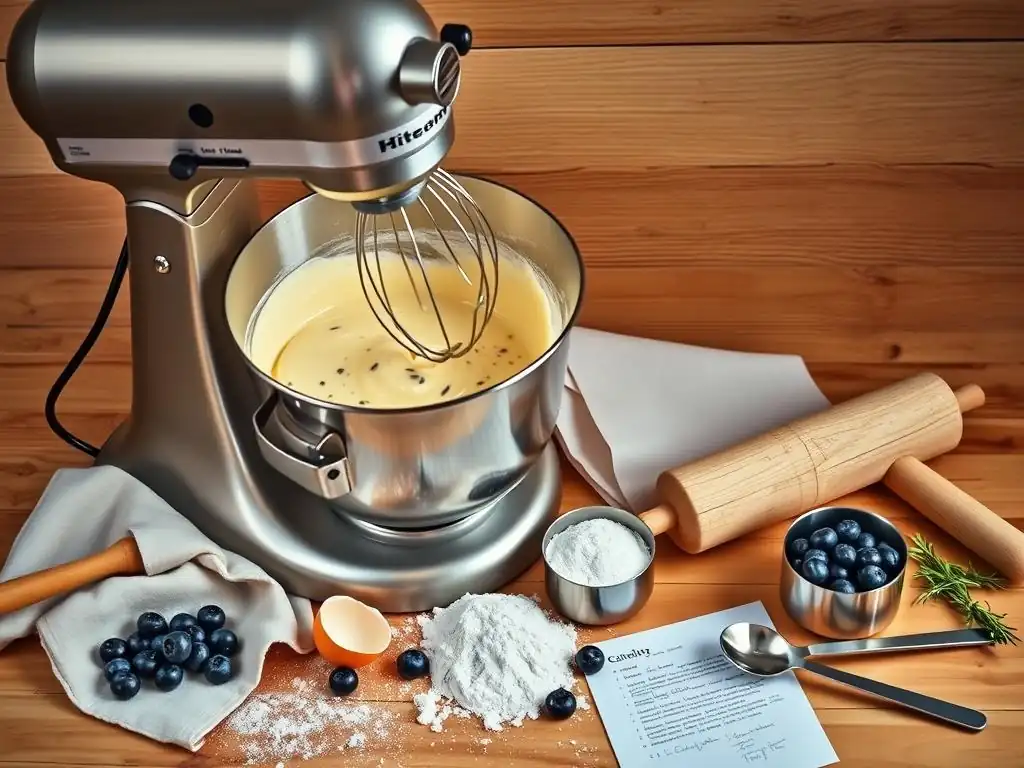
While the checklist above covers several items, there are four categories of tools that are arguably the most fundamental. These are the items you will reach for in almost every single baking project. Mastering the use of these core essential baking tools beginners need is crucial for success.
These four types of tools address the most basic requirements of baking: accurate measurement, proper mixing, effective handling, and reliable baking surfaces. Getting comfortable with these items will lay a solid foundation for tackling more complex recipes down the road. They are the true workhorses of any beginner's baking toolkit.
1. Measuring Cups and Spoons: Accurate Baking Starts Here
Precision is paramount in baking, and accurate measurement is the first step. Unlike cooking, where you can often adjust ingredients by taste, baking relies on specific ratios to create chemical reactions that result in the desired texture and rise. Having reliable measuring cups and spoons is non-negotiable for any beginner baker. Using the wrong measurements is one of the most common reasons baked goods don't turn out as expected.
A standard set of dry measuring cups and measuring spoons, along with a liquid measuring cup, will be your constant companions. It's important to understand how to use each correctly – dry ingredients should often be leveled off, while liquids should be measured at eye level. This attention to detail, enabled by proper measuring tools, is a key habit for any aspiring baker to develop. These are truly essential baking tools beginners need.
Dry Measuring Cups: Ensuring Precise Ratios
Dry measuring cups are designed to measure ingredients like flour, sugar, oats, and cocoa powder. A typical set includes sizes such as 1/4 cup, 1/3 cup, 1/2 cup, and 1 cup. For ingredients like flour, it's often recommended to spoon the flour into the cup and then level it off with a straight edge (like the back of a knife) rather than scooping directly from the bag, which can compact the flour and result in too much being used.
Materials vary, but stainless steel or sturdy plastic are common. Stainless steel is durable and doesn't retain odors, while plastic can be lightweight and often comes in fun colors. The key is to have a set with clearly marked measurements that are easy to read. These are fundamental essential baking tools beginners need for getting ingredient quantities right.
Liquid Measuring Cups: Mastering Volume Measurements
Liquid measuring cups are typically made of glass or clear plastic and have a spout for easy pouring. They also have measurement lines marked on the side, often in ounces, cups, and milliliters. The key difference from dry measuring cups is that you should place the cup on a flat surface and bend down to eye level to read the measurement line. This ensures accuracy by accounting for the meniscus (the curve of the liquid surface).
A 2-cup (or 16-ounce) liquid measuring cup is a versatile size for a beginner, suitable for measuring milk, water, oil, or melted butter for most recipes. Some recipes might call for larger volumes, but this size covers the majority of basic baking needs. Having a clear, easy-to-read liquid measuring cup is an indispensable part of the essential baking tools beginners need.
Measuring Spoons: Perfecting Small Ingredient Amounts
Measuring spoons are used for smaller quantities of ingredients, typically spices, extracts, leavening agents (like baking powder and baking soda), and salt. A standard set usually includes 1/4 teaspoon, 1/2 teaspoon, 1 teaspoon, and 1 tablespoon. Some sets also include 1/8 teaspoon or larger tablespoon sizes.
Accuracy with measuring spoons is just as important as with cups, especially for powerful ingredients like baking soda. Spoons should be filled and leveled off for dry ingredients. For liquids like extracts, fill the spoon carefully to the rim. Having a complete set of measuring spoons is vital among the essential baking tools beginners need to ensure the correct flavor and texture profiles in your baked goods.
2. Mixing Bowls: The Foundation of Every Recipe
Every baking recipe starts with mixing ingredients, making a good set of mixing bowls absolutely central to your toolkit. You'll need bowls for whisking eggs, combining dry ingredients, creaming butter and sugar, and finally, mixing the batter or dough. Having bowls of different sizes allows you to work efficiently and prevents spills, especially when using a hand mixer.
A set of three bowls – small (around 1.5-2 quarts), medium (around 3-4 quarts), and large (around 5-6 quarts) – is ideal for most beginner baking tasks. The small bowl is great for whisking a few eggs or melting butter, the medium for combining dry ingredients or small batches of batter, and the large one for mixing larger volumes of dough or batter. These are foundational essential baking tools beginners need.
Stainless Steel Mixing Bowls: Durable and Versatile
Stainless steel mixing bowls are a popular choice for their durability, lightweight nature, and non-reactive surface. They don't absorb odors or stains and are easy to clean. They can also be used over a pot of simmering water for double boiler methods (like melting chocolate) and can be chilled quickly in the freezer if needed for recipes requiring cold ingredients (like whipped cream).
A set of nesting stainless steel bowls is particularly space-efficient, fitting neatly inside each other for storage. They are generally very robust and can withstand years of use, making them a smart investment among your essential baking tools beginners need. Look for sets with non-slip bottoms for added stability while mixing.
Glass Mixing Bowls: See-Through Convenience
Glass mixing bowls are heavier than stainless steel but offer the advantage of being able to see the mixing process from all angles. This can be helpful for beginners to ensure ingredients are fully incorporated. They are also non-reactive and can be used in the microwave, which is convenient for melting butter or chocolate quickly.
However, glass bowls can break if dropped and should not be subjected to extreme temperature changes (like going directly from a hot oven to a cold counter). Despite being heavier, their stability on the counter can be a plus when mixing vigorously. They offer a different set of benefits and can be a valuable addition to your essential baking tools beginners need.
Different Sizes: Choosing the Right Bowl for the Job
Having a variety of sizes is key. A small bowl (like a 1.5-quart) is perfect for whisking a couple of eggs, blooming yeast, or melting butter. A medium bowl (3-4 quarts) is suitable for combining dry ingredients, mixing smaller batches of cookie dough (enough for maybe 1-2 dozen cookies), or making frosting.
The large bowl (5-6 quarts) is essential for mixing cake batters, kneading smaller bread doughs, or combining ingredients for large batches of muffins or cupcakes (enough for 2-3 dozen). Using a bowl that's too small makes mixing difficult and messy, while one too large can make it hard to incorporate ingredients properly. Choose a set that nests to save precious kitchen space – a practical tip for any beginner setting up their kitchen with essential baking tools beginners need.
3. Spatulas: Your Best Friend in the Kitchen
Spatulas are incredibly versatile tools that you'll use constantly in baking. They are essential for scraping down the sides of bowls, folding ingredients gently, spreading batters, and even frosting cakes. You'll likely need a couple of different types to cover all your bases.
Having at least one heat-resistant silicone spatula and one offset spatula will significantly improve your baking workflow. These tools help ensure you don't waste any precious batter or dough stuck to the bowl and allow for smoother finishes on your baked goods. They are undoubtedly essential baking tools beginners need.
Rubber Spatulas: Scraping Every Last Bit
Rubber or silicone spatulas (often called scraper spatulas) have flexible heads attached to a handle. They are designed to efficiently scrape ingredients from the sides of mixing bowls, ensuring you get every bit of batter or dough. This is crucial for maximizing your yield and ensuring proper ingredient distribution.
Silicone spatulas are generally preferred over traditional rubber as they are heat-resistant (often up to 500°F or 260°C), non-staining, and more durable. They come in various sizes; a medium-sized one is a good starting point. This type of spatula is one of the most used items among the essential baking tools beginners need.
Offset Spatulas: Leveling and Frosting Made Easy
An offset spatula has a thin, flexible blade that is angled away from the handle. This design keeps your knuckles away from the surface of the cake or batter, making it ideal for spreading batters evenly into pans, leveling off ingredients in measuring cups (though a straight edge is often better for dry), and, most importantly, frosting cakes and cupcakes smoothly.
Offset spatulas come in various sizes, from small (around 4-6 inch blade) perfect for cupcakes or spreading fillings, to large (around 8-10 inch blade) for frosting larger cakes. A medium-sized offset spatula (6-8 inch blade) is a versatile choice for beginners. It's a tool that significantly elevates the look of your finished baked goods and is a key item in the essential baking tools beginners need list.
Silicone Spatulas: Heat-Resistant and Flexible
Building on the rubber spatula, silicone spatulas offer superior heat resistance, making them safe to use with hot ingredients or even for stirring things on the stovetop briefly. Their flexibility allows them to conform to the curves of a bowl, ensuring thorough scraping.
They are also non-reactive, meaning they won't impart any flavor to your food or react with acidic ingredients. Many modern spatulas have a single-piece design or non-porous handles, making them more hygienic and easier to clean than older models where the head could detach. Investing in a good quality silicone spatula is a wise choice among the essential baking tools beginners need.
4. Baking Sheets: The Workhorse of Baking
Baking sheets, also known as cookie sheets or sheet pans, are flat metal pans used for baking cookies, scones, biscuits, pastries, and even sheet cakes. They are the primary surface upon which many of your baked goods will cook. Having good quality baking sheets is essential for even baking and proper browning.
You'll typically need at least two baking sheets so you can bake multiple batches without waiting for one pan to cool and be cleaned. Standard "half-sheet" size pans (approximately 13x18 inches) are the most common and fit in most home ovens. They are a fundamental part of the essential baking tools beginners need.
Aluminum Baking Sheets: Even Heat Distribution
Aluminum is the most common material for baking sheets because it heats quickly and evenly, promoting consistent baking and browning. Look for heavy-gauge aluminum pans, as they are less likely to warp at high temperatures compared to thinner pans. Warping can cause cookies to slide and bake unevenly.
While aluminum is excellent for heat distribution, it's often paired with parchment paper or silicone baking mats to prevent sticking and make cleanup easier. These pans are durable and reliable, making them a staple among the essential baking tools beginners need.
Non-Stick Baking Sheets: Easy Release and Cleanup
Non-stick baking sheets have a coating that helps baked goods release easily and simplifies cleanup. This can be particularly helpful for sticky items or for beginners who are still getting the hang of preventing sticking. However, non-stick coatings can degrade over time, especially if used with metal utensils or washed in a dishwasher frequently.
Even with a non-stick coating, many bakers still use parchment paper or a silicone mat for extra insurance and even easier cleanup, which also helps extend the life of the non-stick surface. While convenient, consider the long-term durability compared to plain aluminum when choosing your essential baking tools beginners need.
Baking Sheet Sizes: Choosing the Right Size for Your Oven
Baking sheets come in several standard sizes. The "half-sheet" (approximately 13x18 inches) is the most popular for home ovens as it fits comfortably on oven racks, allowing for good air circulation around the pan. This is the size recommended for most cookie and sheet cake recipes.
"Quarter-sheet" pans (approximately 9x13 inches) are useful for smaller batches or for toasting nuts and spices. "Full-sheet" pans are much larger and generally only fit in commercial ovens. For beginners, starting with two half-sheet pans is the most practical approach to covering the requirements of common recipes and is key among the essential baking tools beginners need.
Beyond the Basics: Essential Baking Tools to Expand Your Skills
Once you've mastered the core four tools and feel comfortable with basic recipes, you might want to venture into specific types of baking like cakes, muffins, or breads. This is when you start adding more specialized essential baking tools beginners need to their collection to tackle new challenges and expand their repertoire.
These tools aren't strictly necessary for every baking project, but they become essential when you decide to make a specific type of baked good. Investing in these items opens up a whole new world of recipes and techniques, allowing you to bake more complex and varied treats with confidence.
Cake Pans: Creating Delicious Layer Cakes
If layer cakes are on your baking horizon, you'll definitely need cake pans. They come in various shapes and sizes, each designed for specific types of cakes. Having a set of round cake pans is the most common requirement for tiered or layer cakes.
Properly preparing a cake pan (greasing and flouring or lining with parchment) is crucial for ensuring your cake releases cleanly. The material and color of the pan can also affect baking time and crust development. Adding a couple of reliable cake pans is a great step in building out your set of essential baking tools beginners need for specific projects.
Round Cake Pans: Classic Cake Shapes
Round cake pans are the standard for most celebratory layer cakes. The most common sizes are 8-inch and 9-inch diameter, typically 1.5 to 2 inches deep. Having two of the same size allows you to bake multiple layers efficiently. Material can be aluminum or non-stick.
Aluminum pans are favored by many experienced bakers for their even heating, resulting in cakes with consistent texture and color. Non-stick pans offer easier release, which can be a plus for beginners. Consider starting with two 8-inch or 9-inch round pans as they are called for in a vast number of recipes, making them key essential baking tools beginners need for cake projects.
Square Cake Pans: Versatile and Easy to Cut
Square cake pans are useful for making sheet cakes, bar cookies, brownies, and cornbread. Common sizes include 8x8 inches and 9x13 inches. The 9x13 inch pan is particularly versatile, often used for larger single-layer cakes, casseroles, and traybakes.
Like round pans, square pans come in various materials. A sturdy 9x13 inch metal pan (aluminum or non-stick) is an incredibly useful addition to your kitchen, covering a wide range of recipes beyond just cakes. It's a practical item to consider when thinking about expanding your essential baking tools beginners need.
Loaf Pans: Baking Breads and Quick Breads
Loaf pans are rectangular pans with deep sides, specifically designed for baking loaves of bread, quick breads (like banana bread or zucchini bread), and meatloaf. The standard size is typically 9x5 inches.
Material options include metal, glass, and ceramic. Metal pans generally provide the best crust development for yeast breads due to better heat conduction. Glass and ceramic are good for quick breads but may require a slightly lower oven temperature or longer baking time. If you plan on baking homemade bread or muffins, a good loaf pan is an essential baking tool beginners need.
Muffin Tins: Perfecting Muffins and Cupcakes
If muffins and cupcakes are on your baking list, a muffin tin (or cupcake pan) is a must-have. These pans have multiple individual cups designed to hold batter and create perfectly portioned treats.
Standard muffin tins typically have 12 cups, each holding about 1/3 to 1/2 cup of batter. They are essential for achieving the classic muffin or cupcake shape and ensuring even baking for each individual item. A reliable muffin tin is a key item among the essential baking tools beginners need who love these portable baked goods.
Standard Muffin Tins: A Baking Staple
A standard 12-cup muffin tin is the most common type and will be suitable for the vast majority of muffin and cupcake recipes. They are usually made of metal, often with a non-stick coating to facilitate easy release, although many bakers still prefer using paper liners for convenience and presentation.
Even if using liners, a good quality, sturdy metal pan ensures even heat distribution around each cup, leading to consistently baked muffins or cupcakes. This pan is a staple for anyone looking to bake these popular treats and is definitely one of the essential baking tools beginners need once they move beyond cookies and cakes.
Mini Muffin Tins: Bite-Sized Treats
Mini muffin tins have smaller cups and are used to make bite-sized muffins or mini cupcakes. A standard mini muffin tin usually has 24 cups. These are great for parties, snacking, or when you want a smaller portion.
While not as immediately essential as a standard muffin tin, a mini muffin tin is a fun addition if you frequently bake for gatherings or enjoy smaller treats. It's a tool that expands the possibilities once you have the core essential baking tools beginners need.
Silicone Muffin Tins: Easy Release and Cleanup
Silicone muffin tins offer excellent non-stick properties, making release incredibly easy, often without the need for liners (though liners still help with cleanup). They are also flexible, which can sometimes make them a little wobbly when full, so placing them on a baking sheet for support is recommended.
Silicone pans are durable and easy to clean, often dishwasher safe. They are a good alternative to metal pans, especially if easy release is a top priority. Consider a silicone tin as part of your essential baking tools beginners need if ease of use and cleaning are important factors for you.
Hand Mixer or Stand Mixer: Taking Your Baking to the Next Level
While you can certainly start baking with just a whisk and a sturdy arm, a mixer significantly speeds up and improves tasks like creaming butter and sugar, whipping egg whites, or mixing batters. For beginners, the choice is usually between a hand mixer and a stand mixer.
A mixer isn't strictly necessary for all beginner recipes, but it quickly becomes an essential baking tool beginners need if they plan to bake regularly or tackle recipes requiring significant mixing, like fluffy cakes or meringues.
Hand Mixers: Affordable and Compact
Hand mixers are more affordable and take up less storage space than stand mixers. They consist of a motorized unit with beaters that you hold and move around the bowl. They are perfectly capable of handling most cake batters, cookie doughs, and whipping tasks for a home baker.
Look for a hand mixer with multiple speeds and at least two different attachments (standard beaters and maybe whisk attachments). While they require you to hold and guide them, they are a great entry point into using mechanical mixers and a practical addition to the essential baking tools beginners need list for those ready to upgrade from hand mixing.
Stand Mixers: Powerful and Versatile
Stand mixers are more powerful, more expensive, and take up more counter space than hand mixers. However, they are incredibly versatile as they hold the bowl and do the mixing work for you, freeing up your hands. This is particularly helpful for tasks that require longer mixing times, like kneading bread dough or whipping large quantities of egg whites.
Standard stand mixers come with a large bowl (often 4.5-6 quarts) and multiple attachments like a paddle attachment (for batters and doughs), a whisk attachment (for whipping), and a dough hook (for kneading bread). If you plan on baking frequently, especially bread or larger batches, a stand mixer is a significant but worthwhile investment among your essential baking tools beginners need.
Mixer Attachments: Expanding Your Mixing Capabilities
Both hand and stand mixers often come with different attachments, each designed for specific tasks. Standard beaters are for general mixing and creaming. Whisk attachments are for incorporating air, like whipping cream or egg whites. Dough hooks are specifically for kneading yeast doughs.
Understanding which attachment to use for which task is part of learning to bake. Stand mixers, in particular, have a wide range of optional attachments available for purchase, like pasta makers or ice cream makers, further expanding their utility beyond just baking. These attachments are key to maximizing the potential of these essential baking tools beginners need for more advanced tasks.
Rolling Pin: Essential for Doughs and Pastries
If your baking interests include making pie crusts, cookies that need rolling and cutting, or pastries, a rolling pin is an essential tool. It's used to flatten dough evenly to a desired thickness.
While you might be able to improvise with a bottle in a pinch, a proper rolling pin provides better control and more even results. It's a tool that becomes necessary once you start working with rollable doughs and is a key addition to the essential baking tools beginners need for pastry work.
Wooden Rolling Pins: Classic and Durable
Wooden rolling pins are a classic choice. They come in various styles, including the traditional American style with handles and a central barrel, and the French style which is a tapered cylinder without handles. Many bakers prefer the feel and control of a wooden pin.
Wooden pins need to be seasoned occasionally and should not be soaked in water, as this can cause them to crack or warp. A good quality hardwood rolling pin can last for many years, making it a durable option among the essential baking tools beginners need for rolling dough.
Non-Stick Rolling Pins: Preventing Dough from Sticking
Non-stick rolling pins are often made of silicone or have a non-stick coating over a metal or plastic core. Their primary advantage is that dough is less likely to stick to them, which can reduce the need for excessive flouring of your work surface and the pin itself.
This can be particularly helpful for beginners working with sticky doughs. They are typically easy to clean. Consider a non-stick option if you find dough sticking to be a frequent issue – it's a practical choice among the essential baking tools beginners need for dough handling.
Adjustable Rolling Pins: Achieving Consistent Thickness
Adjustable rolling pins have removable rings on the ends that allow you to roll dough to a precise, uniform thickness (e.g., 1/8 inch, 1/4 inch). This is incredibly helpful for recipes where consistent thickness is crucial, like sugar cookies or pie crusts, ensuring even baking.
While not strictly necessary for all beginners, an adjustable rolling pin takes the guesswork out of rolling dough evenly, leading to more professional-looking and consistently baked results. It's a helpful gadget to consider adding to your set of essential baking tools beginners need if precision is a priority.
Other Helpful Baking Tools for Beginners
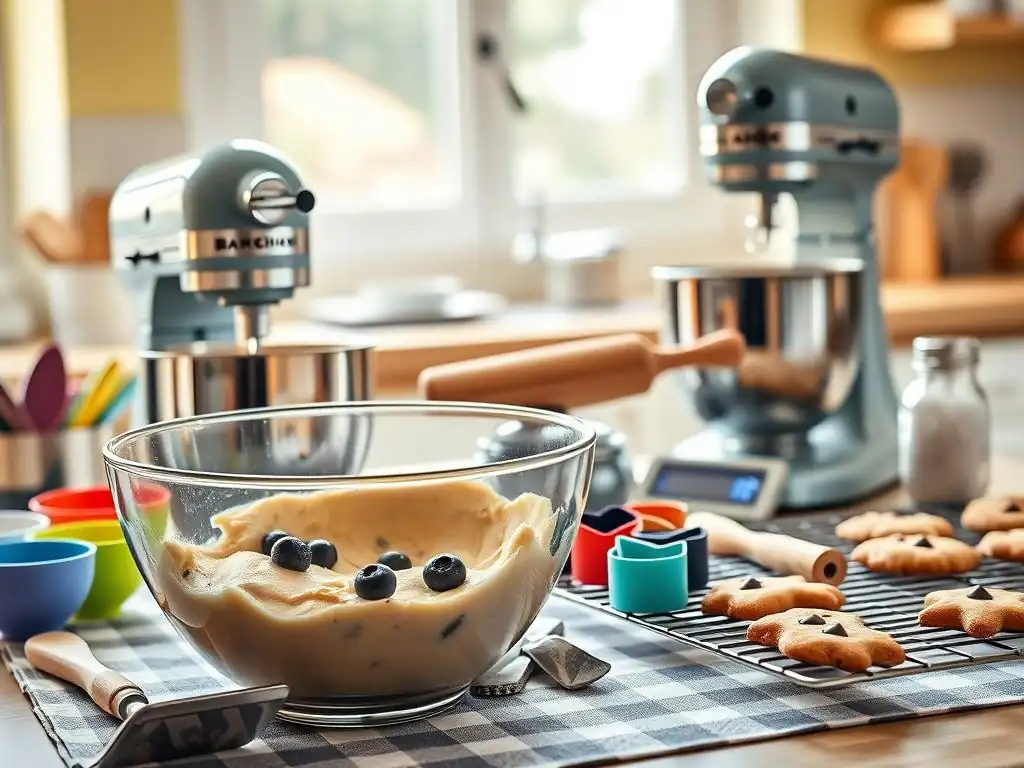
Beyond the core four and the next-level items, there are a few other simple, relatively inexpensive tools that can make your baking life much easier and improve results. These are not always mandatory but are highly recommended for their utility and convenience.
Adding these items gradually as you bake more will round out your toolkit and make various tasks simpler and more efficient. They address specific needs in the baking process that can make a noticeable difference in the final product. They are excellent additions to the essential baking tools beginners need list.
Whisk: Incorporating Air and Blending Ingredients
A whisk is essential for incorporating air into ingredients (like whipping egg whites or cream), emulsifying mixtures (like vinaigrettes for savory baking), and blending dry ingredients or thin batters smoothly, breaking up lumps.
A balloon whisk, with its many wires, is the most common type for baking. The size matters; a medium-sized whisk is versatile for most tasks. Even if you have a mixer, a hand whisk is useful for smaller jobs or when you don't want to get the mixer dirty. It's a fundamental item among the essential baking tools beginners need.
Sifter: For Light and Airy Baked Goods
A sifter (or fine-mesh sieve) is used to aerate dry ingredients like flour and cocoa powder, remove any lumps, and combine ingredients like flour, baking powder, and salt evenly. Sifting makes ingredients lighter and helps them incorporate more easily into wet mixtures, leading to lighter, fluffier baked goods.
While you can sometimes whisk dry ingredients together as an alternative, sifting is particularly beneficial for delicate cakes or pastries. A simple fine-mesh sieve can double as a sifter and a strainer. It's a helpful tool to consider adding to your essential baking tools beginners need for certain recipes.
Parchment Paper: Preventing Sticking and Easy Cleanup
Parchment paper is a disposable paper treated with silicone that creates a non-stick surface. Lining baking sheets and cake pans with parchment paper prevents sticking entirely, ensures easy release of baked goods, and makes cleanup incredibly simple – often, the pan requires little more than a quick wipe down.
It also helps prevent the bottoms of cookies and other baked goods from browning too quickly. Parchment paper is available in rolls or pre-cut sheets. It's a game-changer for preventing baking frustrations and is highly recommended among the essential baking tools beginners need.
Cooling Rack: Preventing Soggy Bottoms
A cooling rack is a wire rack that allows air to circulate around your baked goods as they cool. Placing cakes, cookies, muffins, and breads on a cooling rack immediately after taking them out of the oven prevents condensation from forming on the bottom, which can make them soggy.
Cooling is a crucial step in the baking process, allowing the internal structure to set properly. A simple wire rack is inexpensive and essential for achieving the right texture in your finished products. It's a simple yet vital piece of equipment among the essential baking tools beginners need.
Investing in Quality: Choosing Durable and Long-Lasting Baking Tools
When building your collection of essential baking tools beginners need, it's worth considering quality. While you don't need to buy the most expensive items, choosing tools made from durable materials will ensure they last longer, perform better, and save you money in the long run compared to constantly replacing flimsy items.
Good quality tools often feel sturdier, have better finishes, and are designed for more reliable performance. This doesn't mean you have to break the bank, but a little research into materials and construction can help you make smart choices that will support your baking journey for years to come.
Material Matters: Understanding the Pros and Cons of Different Materials
Different materials offer different benefits for baking tools. Stainless steel is durable, non-reactive, and easy to clean, making it excellent for mixing bowls and measuring tools. Aluminum heats evenly and quickly, ideal for baking sheets and cake pans, though it can react with acidic ingredients.
Glass is non-reactive and allows you to see your food, suitable for measuring cups and some baking dishes, but it can break. Silicone is flexible, heat-resistant, and non-stick, great for spatulas, mats, and certain pans. Understanding these properties helps you select the right tool for the job and make informed decisions when choosing your essential baking tools beginners need.
Budget-Friendly Options: Essential Baking Tools without Breaking the Bank
Getting started with baking doesn't require a massive upfront investment. Many excellent essential baking tools beginners need are available at very reasonable prices. Look for sturdy, functional items from reputable kitchenware brands, even their entry-level lines.
Sets of measuring cups and spoons can be found for under $20. A set of mixing bowls might cost around $30-50. Basic baking sheets and cake pans are often available for $15-25 each. Start with the absolute basics, and add more specialized tools as your skills and interest grow. You can build a solid toolkit gradually without spending a fortune.
Tips for Maintaining Your Essential Baking Tools
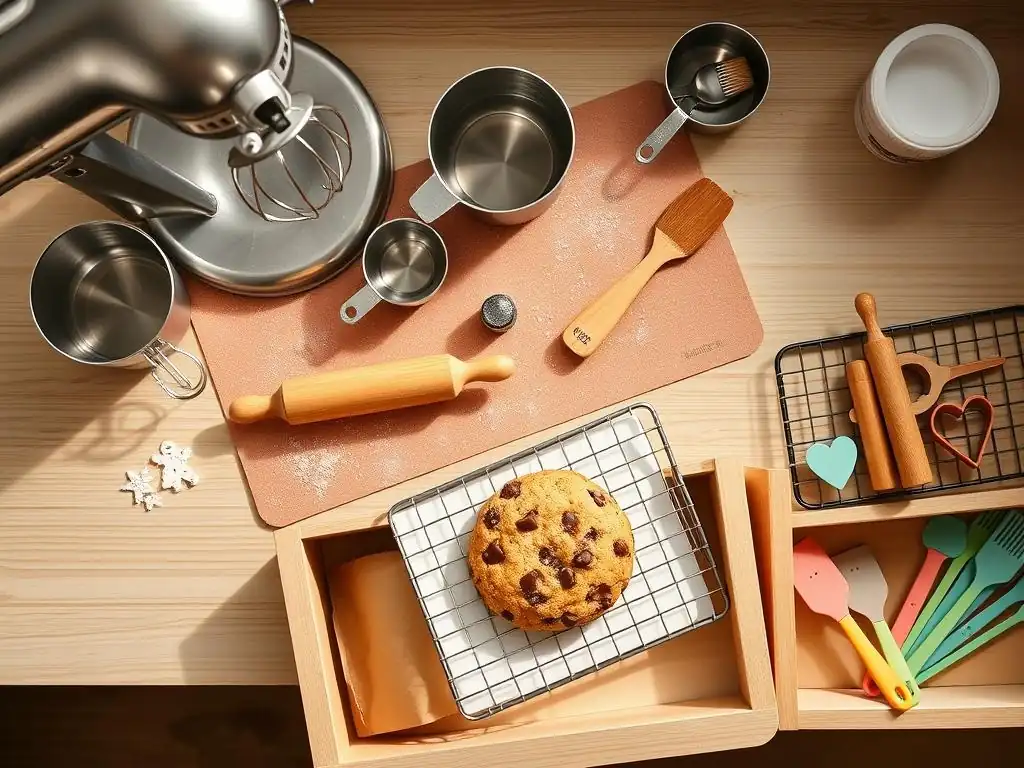
Proper care and maintenance will extend the life of your essential baking tools beginners need and keep them performing at their best. Simple habits like washing tools promptly after use and storing them correctly can make a significant difference in their longevity and hygiene.
Neglecting your tools can lead to rust, warped pans, damaged non-stick coatings, and bacterial growth. Taking a few moments to clean and store your equipment properly after each baking session is a small effort that pays off big time in preserving your investment and ensuring your tools are always ready for your next baking adventure.
Cleaning and Storage: Keeping Your Tools in Top Condition
Most baking tools should be washed with warm, soapy water. Avoid abrasive scrubbers on non-stick surfaces or finishes. Wooden tools should not be soaked and should be dried thoroughly. Metal pans should also be dried completely to prevent rust, especially around edges or seams.
Store tools in a dry place. Nesting items like mixing bowls and measuring cups saves space. Hang spatulas and whisks if possible. Store baking sheets vertically in a rack or carefully stacked to prevent scratching. Proper cleaning and storage are key to maintaining your essential baking tools beginners need.
Replacing Worn-Out Tools: Knowing When to Upgrade
Even with the best care, tools eventually wear out. Non-stick coatings can scratch and peel, affecting performance and potentially safety. Warped baking sheets lead to uneven baking. Cracked wooden handles can harbor bacteria.
Inspect your essential baking tools beginners need periodically. If a non-stick pan is significantly scratched, a baking sheet is severely warped, or a wooden spoon is cracked, it's time to replace it. Using damaged tools can negatively impact your baking results and even pose health risks. Don't be afraid to upgrade when necessary.
BakeWithEase: Get Started with Your Essential Baking Tools Today!
Frequently Asked Questions
What are the absolute most essential baking tools a beginner should invest in first?
A beginner should prioritize a good mixing bowl, a set of measuring cups and spoons, and a reliable baking sheet to start. These items cover the basics of most recipes.
Why is it important to invest in quality measuring tools when starting out with baking?
Accuracy is crucial in baking. Precise measurements ensure recipes turn out correctly, preventing common failures due to imbalances in ingredients.
Besides baking sheets, what other oven-safe equipment is recommended for beginners?
A basic cake pan and a muffin tin are good additions. These allow for a wider range of recipes beyond just cookies and sheet cakes.
How important is a stand mixer for a beginner baker, compared to other tools?
While helpful, a stand mixer isn't essential initially. A good hand mixer or even manual whisking can suffice for many beginner recipes.
Where can beginners find affordable and reliable baking tools without breaking the bank?
Look for sales at department stores, online retailers, or restaurant supply stores. Don't be afraid to start with basic models and upgrade later.
Final Reflection: The Sweetness of Beginnings and the Joy of Baking
Mastering the art of baking isn't about owning every gadget imaginable; it's about understanding the fundamental tools that unlock a world of delicious possibilities. This list, compiled to help aspiring bakers navigate the initial stages of their journey, highlights the essential equipment that truly makes a difference, separating the necessary from the nice-to-haves. It's a reminder that even with limited resources, the magic of baking is within reach.
The impact of baking extends far beyond the simple act of creating delicious treats. It's a process that fosters creativity, patience, and a deep connection to the ingredients and the resulting product. It's a tradition passed down through generations, a source of comfort and celebration, and a powerful tool for self-expression. Baking is at once child's play and adult joy. And love, of course.
– This sentiment perfectly encapsulates the enduring appeal of baking, its ability to bring joy to both the baker and those who share in the delicious results.
Now, it's your turn. Don't be intimidated by the seemingly endless array of baking tools available. Start with the essentials outlined in this article, embrace the learning process, and allow yourself to be surprised by the joy and satisfaction that comes from creating something delicious with your own hands. The journey of a thousand cakes begins with a single, well-chosen whisk – so grab yours and get baking!
Ready to Bake Your Dream Treats?
Thanks for joining us on this baking adventure! We hope you now feel confident and equipped to tackle any recipe. Ready to transform your kitchen into a sweet haven?
- Start baking! Choose your favorite recipe from the list and get those hands floury. This is where the real magic happens!
- Share your creations: Show us your baking masterpieces on social media using #BakeWithEase – we’d love to see them!
- Explore our advanced baking techniques: Dive deeper into the world of baking with our free resources – and discover your next favorite recipe.
What delicious treat will you bake first? Let us know in the comments below!