
The Tangy Truth: Developing Flavor in Sourdough Baguettes

Welcome to BakeWithEase, your ultimate guide to the joys of baking! Ever wonder how to unlock the complex and satisfying flavors hidden within a simple sourdough baguette? Our latest article, "The Tangy Truth: Developing Flavor in Sourdough Baguettes," dives deep into the science and art of sourdough baguette flavor development. Discover the secrets to achieving that perfect tangy bite and crusty exterior. Intrigued? Keep reading to embark on a flavorful journey and elevate your bread baking skills!
- Achieving Flavorful Sourdough Baguettes: A Comprehensive Guide
- Understanding Sourdough Baguette Flavor Development
- The Science Behind Sourdough Baguette Flavor
- Factors Influencing Sourdough Baguette Flavor
- Techniques for Enhancing Sourdough Baguette Flavor
- Scoring and Baking for Optimal Flavor
- Troubleshooting Sourdough Baguette Flavor Issues
- Sourdough Baguette Flavor Development Checklist
- Advanced Techniques for Sourdough Baguette Bakers
- Conclusion: Mastering Sourdough Baguette Flavor at Home
-
Frequently Asked Questions
- What is the key to achieving a tangy flavor in sourdough baguettes?
- How does the sourdough starter impact the flavor of my baguette?
- What role does the flour play in sourdough baguette flavor development?
- Can I control the flavor development of my sourdough baguette through proofing?
- What are some tips for enhancing the flavor of my sourdough baguette?
- Final Reflection: The Enduring Allure of Sourdough Baguette Flavor
- Unleash Your Inner Boulanger: Bake a Better Baguette!
Achieving Flavorful Sourdough Baguettes: A Comprehensive Guide
Understanding Sourdough Baguette Flavor Development
Sourdough baguettes are renowned for their complex, tangy flavor profile, a characteristic that sets them apart from conventional yeasted breads. Achieving this depth of flavor is not merely a matter of following a recipe; it's a delicate dance between time, temperature, ingredients, and microbial activity. The unique taste comes from the fermentation process, driven by a symbiotic culture of wild yeasts and lactic acid bacteria (LAB) residing in the sourdough starter. This microbial community transforms simple flour and water into a complex array of organic acids, alcohols, and volatile compounds that define the distinctive sourdough baguette flavor development.
The nuances of sourdough baguette flavor development can range from subtly sweet and nutty to intensely tangy and acetic. This spectrum is influenced by numerous factors, including the health and maturity of your starter, the type of flour used, the hydration level of the dough, and critically, the temperature and duration of both bulk fermentation and proofing. Mastering these variables allows bakers to steer the flavor profile towards their desired outcome, whether that's a mild tang or a more pronounced sourness. Understanding the underlying science is the first step in consistently producing baguettes with exceptional flavor.
The Science Behind Sourdough Baguette Flavor
The Role of Fermentation in Flavor Creation
Fermentation is the heart of sourdough baguette flavor development. During this process, the wild yeasts consume sugars in the flour, producing carbon dioxide (which leavens the dough) and alcohol. Simultaneously, the lactic acid bacteria metabolize sugars into organic acids, primarily lactic and acetic acid, along with other aromatic compounds. This metabolic activity breaks down complex carbohydrates and proteins into simpler molecules, unlocking flavors inherent in the flour and creating new ones.
The specific conditions of fermentation—temperature, time, and hydration—dictate which metabolic pathways are favored by the microbes, thereby influencing the final flavor. For instance, warmer temperatures tend to favor lactic acid production, resulting in a milder, yogurt-like tang, while cooler temperatures encourage acetic acid production, leading to a sharper, vinegar-like sourness. Managing these conditions is key to controlling the outcome of your sourdough baguette flavor development.
Wild Yeast and Lactic Acid Bacteria: Key Flavor Contributors
The sourdough starter, or levain, is a thriving ecosystem of wild yeasts and lactic acid bacteria. While the yeasts (such as Saccharomyces cerevisiae) are responsible for gas production and leavening, the LAB are the primary drivers of the characteristic sourdough flavor. Common LAB found in sourdough include Lactobacillus sanfranciscensis, Lactobacillus plantarum, and Lactobacillus brevis.
These bacteria produce a variety of organic acids, esters, and volatile compounds that contribute to the aroma and taste. The balance between yeast and LAB activity, as well as the specific species present, significantly impacts the final flavor profile. A healthy, active starter with a robust population of both yeasts and diverse LAB strains is fundamental for successful sourdough baguette flavor development.
Acetic Acid vs. Lactic Acid: Impact on Sourdough Tang
The perceived tang or sourness in sourdough comes mainly from the ratio of lactic acid to acetic acid produced by the LAB. Lactic acid is a milder acid, contributing a creamy, yogurt-like tang. Acetic acid is a stronger acid, providing a sharper, vinegar-like sourness.
The production of these acids is heavily influenced by temperature. Lactic acid bacteria tend to produce more lactic acid at warmer temperatures (around 80-85°F or 27-29°C), while acetic acid production is favored at cooler temperatures (around 65-70°F or 18-21°C). Controlling fermentation temperature is a powerful tool for bakers looking to fine-tune the balance of sourness during sourdough baguette flavor development. For example, a long, cool bulk fermentation (e.g., 12-18 hours at 68°F/20°C) will typically yield a tangier baguette with more acetic acid than a shorter, warmer fermentation (e.g., 4-6 hours at 78°F/26°C).
Factors Influencing Sourdough Baguette Flavor
Flour Selection: Choosing the Right Flour for Flavor
The type of flour used is a cornerstone of sourdough baguette flavor development. Different flours contain varying amounts of proteins, starches, and minerals, all of which affect the microbial fermentation process and the resulting flavor compounds. High-quality bread flour, typically with a protein content between 11-13%, provides the necessary structure for the baguette's characteristic open crumb and chewy texture, while also offering sufficient starch for the microbes to feed on.
Using a blend of flours can add complexity. For example, incorporating a small percentage of whole wheat or rye flour (perhaps 5-15% of the total flour weight) introduces more minerals and complex sugars, which can lead to a more robust and nuanced sourdough baguette flavor development. These whole grain flours contain more bran and germ, rich in nutrients that benefit the LAB and yeast.
Protein Content and its Effect on Sourdough Flavor
While protein content is primarily associated with gluten development and dough structure, it also indirectly influences flavor. Higher protein flours (like strong bread flour) provide more complex starches and some amino acids that can be broken down during fermentation, potentially contributing to a richer flavor profile. For example, a bread flour with 12.5% protein will offer a different substrate for fermentation compared to an all-purpose flour with 10.5% protein.
The breakdown of proteins by enzymes (protease activity) during fermentation can also affect the dough's handling and, subtly, the flavor. A balanced protein content is crucial for both structure and providing the necessary foundation for microbial activity essential for optimal sourdough baguette flavor development.
Ash Content and its Contribution to Taste
Ash content refers to the mineral content of the flour, which is left behind after burning a sample. It's often used as an indicator of how much of the outer layers of the grain (bran and germ) are included in the flour. White flour has a low ash content (typically 0.4-0.6%), while whole wheat flour has a high ash content (around 1.5-1.8%).
Flours with higher ash content contain more minerals and natural enzymes, which can significantly enhance sourdough baguette flavor development. These minerals serve as nutrients for the microbes, promoting their activity. The presence of bran and germ also introduces different flavor compounds. Using a high-extraction flour (Type 80 or Type 110 in French classification, roughly equivalent to leaving some of the bran/germ in) can impart a deeper, more rustic flavor compared to using only highly refined white flour (Type 55 or Type 65).
Hydration Levels and Flavor Intensity
Hydration, the ratio of water to flour in the dough, plays a significant role in sourdough baguette flavor development. Higher hydration doughs (e.g., 75-80% or more) are typically stickier and harder to handle but offer several advantages for flavor. More water allows for greater microbial activity as it facilitates the movement of nutrients and waste products within the dough.
High hydration also leads to a more open crumb structure, which influences the texture and how the flavor is perceived. Additionally, the extended fermentation often required for high-hydration doughs provides more time for complex flavor compounds to develop. Conversely, lower hydration doughs (e.g., 65-70%) ferment more slowly and may result in a milder flavor profile, though they are easier for beginners to handle.
Temperature Control During Fermentation
Temperature is one of the most critical variables in controlling sourdough baguette flavor development. It directly impacts the activity of both yeast and LAB, and crucially, the balance between lactic and acetic acid production. Maintaining consistent temperatures throughout the fermentation process is key to predictable results.
Understanding how temperature affects both bulk fermentation and proofing allows bakers to intentionally steer the flavor profile. Small changes in a few degrees can dramatically alter the final taste and tanginess of the baguette.
Bulk Fermentation Temperature and its Effects
Bulk fermentation (the first rise of the dough before shaping) is where the majority of sourdough baguette flavor development occurs. Warmer temperatures (e.g., 75-80°F / 24-27°C) accelerate fermentation and tend to favor lactic acid production, resulting in a milder tang. This might be suitable for bakers seeking a less assertive sourness.
Cooler temperatures (e.g., 65-70°F / 18-21°C) slow down fermentation significantly but promote acetic acid production, leading to a more pronounced, vinegary tang. A common technique for maximizing complex sourdough baguette flavor development is to use a long, cool bulk fermentation (often overnight) after an initial period at room temperature. For example, a dough might ferment for 2 hours at 75°F, followed by 12-18 hours at 68°F.
Proofing Temperature and its Effects
Proofing (the final rise after shaping) also contributes to flavor, though typically less intensely than bulk fermentation. Warmer proofing (e.g., 75-80°F / 24-27°C) is faster but can sometimes lead to a slightly flatter loaf if over-proofed, and continues to favor lactic acid production.
Cold proofing (retarding the dough in the refrigerator at 38-40°F / 3-4°C for 8-16 hours or longer) is a powerful technique for enhancing sourdough baguette flavor development. The cold temperature dramatically slows yeast activity but allows LAB to continue producing organic acids, particularly acetic acid. This extended, cold period allows for the development of more complex flavors and a deeper tang, while also making the dough easier to handle and score.
The Importance of Time: Bulk Fermentation and Proofing Duration
Time is inextricably linked with temperature in sourdough baguette flavor development. Longer fermentation times, whether at room temperature or in the cold, allow more time for the microbes to produce flavor compounds and for enzymes to break down the flour.
An under-fermented dough will lack depth of flavor and may have a dense crumb. An over-fermented dough can become excessively sour, lose structural integrity, and potentially collapse. Finding the sweet spot requires observation, considering the dough's volume increase, texture, and aroma. A typical bulk fermentation might last 4-12 hours depending on temperature and starter strength, while proofing can range from 1-4 hours at room temperature or 8-24 hours in the refrigerator.
Techniques for Enhancing Sourdough Baguette Flavor
Autolyse: Improving Dough Hydration and Flavor
Autolyse is a simple technique where flour and water are mixed together and allowed to rest for 20 minutes to several hours before adding the starter and salt. This resting period allows the flour to fully hydrate and activates enzymes (proteases and amylases) that begin to break down proteins and starches.
This enzymatic activity not only improves dough extensibility and makes mixing easier but also starts the process of breaking down complex starches into simpler sugars, which are more readily available for the microbes during fermentation. This pre-digestion contributes to better sourdough baguette flavor development by providing easily accessible food for the yeast and bacteria, leading to a more active and complete fermentation. An autolyse of 30-60 minutes is common for baguette dough.
Levain Management: Creating a Flavorful Starter
The health and activity of your sourdough starter (levain) are foundational to sourdough baguette flavor development. A strong, vibrant starter ensures vigorous fermentation and a balanced microbial population. Factors like feeding ratio (flour:water:starter), feeding schedule, and temperature all impact the starter's character.
Feeding your starter with a higher ratio of fresh flour and water (e.g., 1:5:5 or 1:10:10 starter:flour:water) can promote yeast activity and a milder flavor. Feeding with a lower ratio (e.g., 1:1:1) or allowing the starter to ripen for longer can increase acidity. Using a blend of flours (like some whole wheat or rye) in your starter feed can also introduce more complex flavors and boost microbial activity.
Building a Strong and Active Levain
To build a strong levain for your baguettes, consistency is key. Feed your starter regularly (daily if kept at room temperature, or refresh it 1-2 times before using if stored in the fridge). Use a feeding ratio that allows it to become active and bubbly within a predictable timeframe for your environment, typically 4-8 hours at room temperature (70-75°F / 21-24°C) for a 1:1:1 ratio.
A strong levain should double or triple in volume, be full of bubbles, and smell pleasantly tangy, not overpoweringly acetic or like acetone. Using the levain at its peak activity ensures that fermentation starts quickly and proceeds reliably, setting the stage for excellent sourdough baguette flavor development.
Levain Refreshment Schedules for Optimal Flavor
The refreshment schedule of your levain directly impacts its acidity and microbial balance, influencing the sourdough baguette flavor development. For a milder tang, use a recently fed levain that is just past its peak, where lactic acid production is dominant. Feeding a starter several hours before using it (e.g., using it 4-6 hours after a 1:1:1 feed at 75°F) typically achieves this.
For a tangier result, you might use a slightly older levain or a levain built with a higher proportion of starter, which will have a higher concentration of acids. Some bakers refresh their starter multiple times over 24 hours before building the final levain for a bake to ensure maximum vitality and a specific flavor profile. Experimentation with your starter and environment is necessary to find what works best for your desired sourdough baguette flavor development.
Cold Fermentation: Developing Complex Flavors
Cold fermentation, also known as cold proofing or retarding, involves placing the dough in a refrigerator (typically 38-40°F / 3-4°C) for an extended period, often 8 to 24 hours or even longer. This technique is a cornerstone for achieving deep, complex sourdough baguette flavor development.
At cold temperatures, yeast activity slows dramatically, but lactic acid bacteria remain relatively active, particularly those that produce acetic acid. This slow, cool fermentation allows acids and other flavor compounds to accumulate over time, resulting in a more nuanced tang and aroma. Cold fermentation also strengthens the dough's gluten structure and makes it easier to handle and score, contributing to better oven spring and crust development, which in turn impacts flavor perception.
Pre-Ferments: Poolish and Biga for Enhanced Taste
While sourdough starter is itself a type of pre-ferment, incorporating other pre-ferments like a poolish or biga alongside your sourdough can add additional layers to sourdough baguette flavor development. A poolish is a wet pre-ferment (100% hydration, equal parts flour and water) typically fermented for 8-16 hours. A biga is a stiff pre-ferment (lower hydration, typically 50-60% water) fermented for 12-24 hours.
These pre-ferments, often made with a tiny amount of commercial yeast (though they can also be sourdough-based), contribute different enzymatic activity and microbial metabolites than the main sourdough fermentation. A poolish tends to add a mild sweetness and nutty notes, while a biga can contribute a deeper, more complex aroma. While traditional sourdough baguettes rely solely on the levain, incorporating a small percentage of poolish or biga can be an advanced technique to experiment with for unique sourdough baguette flavor development.
Scoring and Baking for Optimal Flavor
Scoring Techniques to Influence Crust Development and Flavor
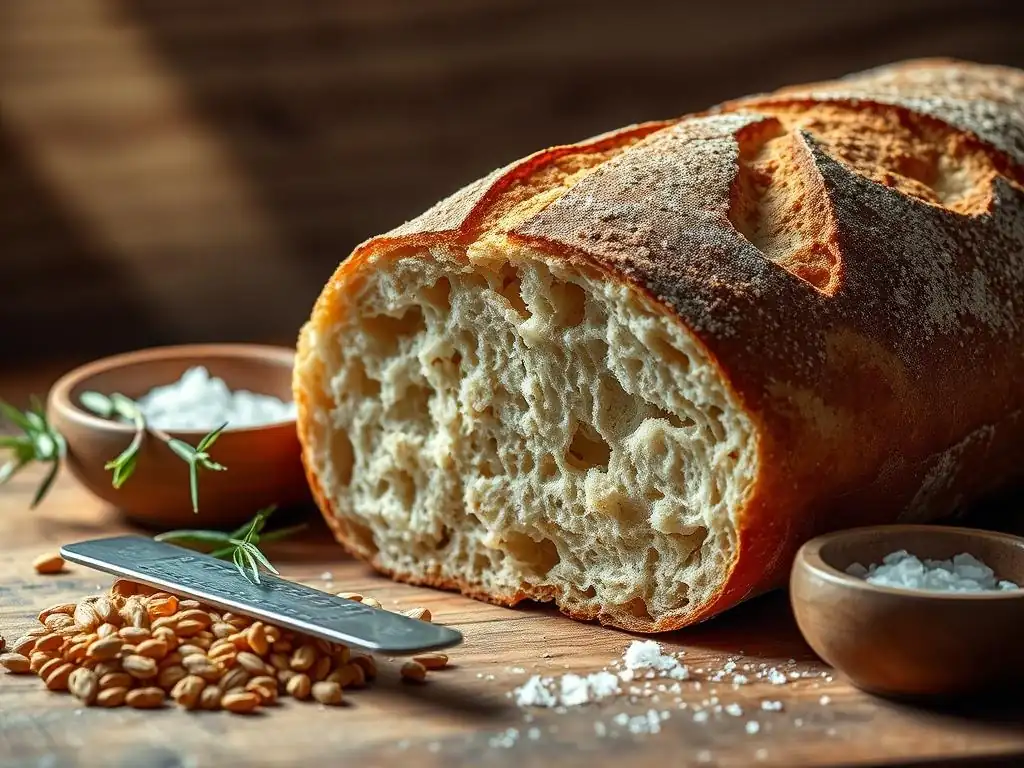
Scoring, or slashing the dough's surface before baking, is essential for controlling oven spring and achieving a beautiful crust. The cuts allow the dough to expand in a controlled manner in the hot oven. The way the dough expands affects the surface area exposed to the heat, which in turn influences crust development and flavor.
Deep, well-placed scores lead to significant oven spring and separation of the crust flaps, maximizing the development of a thin, crispy crust. This crispy, caramelized crust is a major contributor to the overall sourdough baguette flavor development, offering bitter and sweet notes that complement the tangy interior. Insufficient or poorly placed scores can lead to blowouts or a less developed crust.
Baking Temperature and Steam Injection: Impact on Flavor
High baking temperatures and the presence of steam are crucial for achieving the signature crust and crumb of a baguette, both of which impact flavor. Baguettes are typically baked at high temperatures, often between 450°F and 500°F (230-260°C). This intense heat promotes rapid oven spring and the Maillard reaction and caramelization on the crust.
Steam injected into the oven or created by placing water/ice in a hot tray prevents the crust from setting too quickly, allowing the dough to expand fully. Once the crust sets (typically after 10-15 minutes with steam), the dry heat promotes browning and crisping. This dual-stage baking process—steam followed by dry heat—is fundamental for developing the flavorful, golden-brown crust characteristic of great sourdough baguette flavor development.
Achieving a Dark and Caramelized Crust
A well-baked sourdough baguette should have a crust that is deep golden to reddish-brown, not pale yellow. This dark color is a result of the Maillard reaction (reaction between amino acids and reducing sugars) and caramelization (browning of sugars), both of which occur at high temperatures on the dough's surface. These reactions create hundreds of new flavor compounds, contributing nutty, sweet, and slightly bitter notes that are essential to the overall sourdough baguette flavor development.
Baking until the crust is sufficiently dark is key. While it might seem counterintuitive, a darker crust often means more flavor. A crust that is too pale indicates under-baking and will lack the depth and complexity that these browning reactions provide. Aim for an internal temperature of around 205-210°F (96-99°C) and a rich, deep color on the exterior.
Troubleshooting Sourdough Baguette Flavor Issues
Baguette is Too Sour: Balancing Acidity
If your sourdough baguettes are consistently too sour, it's usually a sign that acetic acid production is dominating. This can be caused by several factors related to sourdough baguette flavor development:
- Cooler fermentation temperatures: As discussed, cold temperatures favor acetic acid.
- Using an over-ripe or hungry starter: A starter that hasn't been fed recently will have a higher acid concentration.
- Very long fermentation times: Especially if the starter isn't very active.
- Using a stiff starter: Stiffer starters can sometimes produce more acetic acid.
To reduce excessive sourness, try:
- Using a warmer bulk fermentation temperature (75-80°F / 24-27°C).
- Using your levain closer to its peak activity, shortly after feeding (e.g., 4-6 hours after a 1:1:1 feed).
- Reducing the total fermentation time slightly.
- Experimenting with a slightly higher hydration starter.
Baguette Lacks Flavor: Increasing Complexity
A baguette that tastes bland or lacks the characteristic sourdough tang indicates insufficient sourdough baguette flavor development. Common reasons include:
- Under-fermentation: Not enough time for microbes to produce flavor compounds.
- Weak or inactive starter: If your starter isn't vigorous, fermentation will be sluggish.
- Too short of a cold fermentation: Cold proofing is key for developing complex flavors.
- Using only low-ash white flour: Lacks minerals and complex sugars.
- Baking at too low a temperature or not long enough: Prevents proper crust development.
To increase flavor complexity:
- Ensure your starter is active and bubbly.
- Increase bulk fermentation time or use a longer cold fermentation period (12-24 hours).
- Try incorporating a small percentage (5-15%) of whole wheat or rye flour.
- Ensure adequate steam and high temperature during baking for a well-developed crust.
- Consider using an autolyse step.
Dealing with Inconsistent Flavor: Maintaining Consistency
Inconsistent sourdough baguette flavor development from bake to bake is frustrating but common. It often stems from variations in:
- Starter strength and activity: Ensure your starter is fed consistently and used at the same point in its cycle.
- Ambient temperature: Even small fluctuations in room temperature can significantly alter fermentation speed and acid balance. Use a proofing box, oven with light on, or a cooler with a warm water bottle to maintain a consistent temperature.
- Flour consistency: Different bags or brands of flour can vary.
- Fermentation time: Stick to a schedule or use visual/tactile cues (like volume increase) consistently.
Keeping a detailed baking log can help identify variables. Note starter feeding times and ratios, dough temperatures throughout bulk and proofing, and timing. This data is invaluable for troubleshooting and achieving consistent sourdough baguette flavor development.
Sourdough Baguette Flavor Development Checklist
Achieving amazing sourdough baguette flavor development consistently requires attention to detail throughout the process. Use this checklist to ensure you are hitting all the key points:
Checklist for Optimal Flavor Development
- [ ] Healthy, Active Levain: Is your starter doubling/tripling predictably after feeding? Does it smell pleasant and tangy?
- [ ] Appropriate Flour: Are you using high-quality bread flour? Have you considered adding a small percentage of whole grain for complexity?
- [ ] Hydration Level: Is your hydration suitable for your flour and desired texture/flavor? (Often 70-80% for baguettes)
- [ ] Autolyse Step: Did you mix flour and water and let it rest before adding the levain and salt? (20-60 mins recommended)
- [ ] Targeted Bulk Fermentation Temperature: Are you controlling the temperature to favor lactic (warmer) or acetic (cooler) acid? (e.g., 75-80°F for milder, 65-70°F for tangier)
- [ ] Sufficient Bulk Fermentation Time: Has the dough increased in volume and developed strength? (e.g., 4-12 hours depending on temperature/starter)
- [ ] Cold Fermentation (Recommended): Are you using a long cold proof (8-24+ hours) for complex flavor development?
- [ ] Proper Shaping: Is the dough shaped correctly to build tension?
- [ ] Adequate Proofing: Has the dough proofed sufficiently but not over-proofed? (Observe volume and poke test)
- [ ] Effective Scoring: Are your scores clean and deep enough to allow controlled expansion?
- [ ] High Baking Temperature: Is your oven preheated to 450-500°F (230-260°C)?
- [ ] Steam Injection: Are you creating sufficient steam during the initial baking phase?
- [ ] Baking Duration: Is the baguette baked until the crust is deep golden/brown and the internal temperature is 205-210°F (96-99°C)?
Advanced Techniques for Sourdough Baguette Bakers
Once you've mastered the fundamentals of sourdough baguette flavor development, you can explore advanced techniques to further refine your loaves. These methods often involve experimentation with ingredients and processes to create truly unique flavor profiles.
Experimenting with Different Flours and Grains
Beyond standard bread flour and a touch of whole wheat, a world of flavor awaits in other grains. Incorporating small percentages of rye flour (5-10%) can add earthy, pungent notes and a distinct tang. Spelt flour (10-20%) can impart a slightly nutty and sweeter flavor. Ancient grains like Einkorn or Emmer can offer unique complexities.
- Example: Try replacing 10% of your bread flour with dark rye flour in your next batch. Note the difference in aroma, color, and the intensity of the tang. The higher mineral content of rye significantly impacts the sourdough baguette flavor development.
Consider using high-extraction flours or even milling your own grains for maximum flavor impact. The freshness and mineral content of freshly milled flour can dramatically enhance the depth of taste.
Adding Seeds and Herbs for Unique Flavor Profiles
Infusing your sourdough baguettes with seeds or herbs is a straightforward way to add distinct flavor dimensions. Seeds like sesame, poppy, sunflower, or pumpkin seeds can be incorporated into the dough or sprinkled on the exterior before baking. They add texture and a nutty, toasted flavor, especially when the crust caramelizes.
Herbs like rosemary, thyme, or chives can be finely chopped and mixed into the dough during the initial stages. They infuse the bread with aromatic qualities that complement the sourdough tang.
- Example: A baguette dough with 5% added toasted sesame seeds mixed in, plus more sprinkled on the exterior, offers a delightful nutty counterpoint to the sourness. Or, try adding 1-2 tablespoons of fresh, chopped rosemary to a standard recipe for an aromatic twist on sourdough baguette flavor development.
Remember that additions can affect dough hydration, so slight adjustments might be needed.
Exploring Flavor Combinations
Think beyond single additions and explore combinations. Seeds can be mixed (e.g., a "seeded" blend). Herbs can be paired. You can also combine additions with different flours.
- Example: A baguette made with a blend of bread flour and 15% spelt, incorporating toasted sunflower seeds, offers a complex profile combining nutty, slightly sweet notes from the spelt and seeds with the characteristic sourdough tang. Another idea is a rye sourdough baguette with caraway seeds, a classic combination that enhances the earthy, pungent notes derived from careful sourdough baguette flavor development.
The possibilities are vast, allowing you to customize your baguettes to your personal taste preferences.
Conclusion: Mastering Sourdough Baguette Flavor at Home
Developing exceptional sourdough baguette flavor development is a journey that involves understanding the science, controlling key variables like temperature and time, and employing specific techniques. From nurturing a strong levain and selecting the right flour to mastering fermentation temperatures and achieving a perfectly caramelized crust, each step contributes significantly to the final taste.
While troubleshooting is a part of the process, armed with knowledge about how fermentation works and the factors influencing flavor, you can diagnose issues and make adjustments. Don't be afraid to experiment with advanced techniques like different flours, seeds, or herbs to create your signature baguette. With practice, patience, and attention to detail, you can consistently bake sourdough baguettes at home that boast a deep, complex flavor and a perfect balance of tanginess. Enjoy the process and the delicious results!
Frequently Asked Questions
What is the key to achieving a tangy flavor in sourdough baguettes?
The tanginess primarily comes from the fermentation process driven by the wild yeasts and bacteria in your sourdough starter. Longer fermentation times at cooler temperatures generally enhance this effect.
How does the sourdough starter impact the flavor of my baguette?
A healthy and active sourdough starter is crucial. The balance of acids and alcohols produced by the starter's microbes directly influences the baguette's flavor profile.
What role does the flour play in sourdough baguette flavor development?
Different flours contribute distinct flavors. Using a mix of bread flour and whole wheat flour can add complexity and depth to the baguette's flavor.
Can I control the flavor development of my sourdough baguette through proofing?
Yes, controlling the proofing time and temperature is vital. Over-proofing can lead to a sour, acidic flavor, while under-proofing might result in a bland taste.
What are some tips for enhancing the flavor of my sourdough baguette?
Experiment with autolyse techniques (pre-soaking the flour with water) and bulk fermentation times. Also, consider adding a small amount of rye flour for a more pronounced flavor.
Final Reflection: The Enduring Allure of Sourdough Baguette Flavor
The pursuit of exceptional sourdough baguette flavor is not merely a culinary quest; it's a journey of understanding fermentation, patience, and the profound connection between ingredients and artistry. The techniques explored in this article—from meticulous starter management to precise hydration levels and baking strategies—remain critically important in achieving that complex, nuanced taste profile that defines a truly great sourdough baguette. The demand for authentic, high-quality bread continues to grow, making mastery of these techniques more relevant than ever.
The impact of sourdough, and specifically the quest for perfect baguette flavor, extends far beyond the kitchen. It represents a growing interest in artisanal food production, a desire to connect with the process of food creation, and a rejection of mass-produced, homogenized tastes. This resonates deeply with me, as I've witnessed firsthand the transformative power of baking, not just in the creation of delicious bread, but in the fostering of community and appreciation for traditional skills. Bread is the staff of life,
they say, and I believe that the quality of that staff, its flavor, its texture, speaks volumes about our relationship with food and with each other.
Consider the journey you've undertaken with this article. You've learned about the science behind flavor development, the importance of patience in fermentation, and the subtle nuances that elevate a good baguette to a truly exceptional one. Now, I invite you to experiment, to embrace the challenge, and to embark on your own journey of sourdough baguette mastery. Don't be afraid to fail; each loaf, each experiment, brings you closer to understanding the tangy truth—the profound satisfaction of creating something delicious and deeply rewarding with your own two hands.
Unleash Your Inner Boulanger: Bake a Better Baguette!
Thanks for diving deep into the world of sourdough baguettes with us! We hope you've gained valuable insights into crafting that perfect tangy flavor. Now it's time to put your new knowledge to the test.
- Bake your own masterpiece! Try the recipe variations mentioned in the article, focusing on the one that excites you most. Remember, practice makes perfect!
- Share your sourdough journey! Post a picture of your creation on social media and tag us – we’d love to see your results!
- Explore our sourdough starter guide: If you’re still refining your starter, head over to our dedicated guide for troubleshooting tips and advanced techniques.
Ready to transform your baking game and craft baguettes bursting with flavor? What unique ingredient will you experiment with next?