
Getting a Perfect "Ear" on Your Baguettes: Scoring Angles

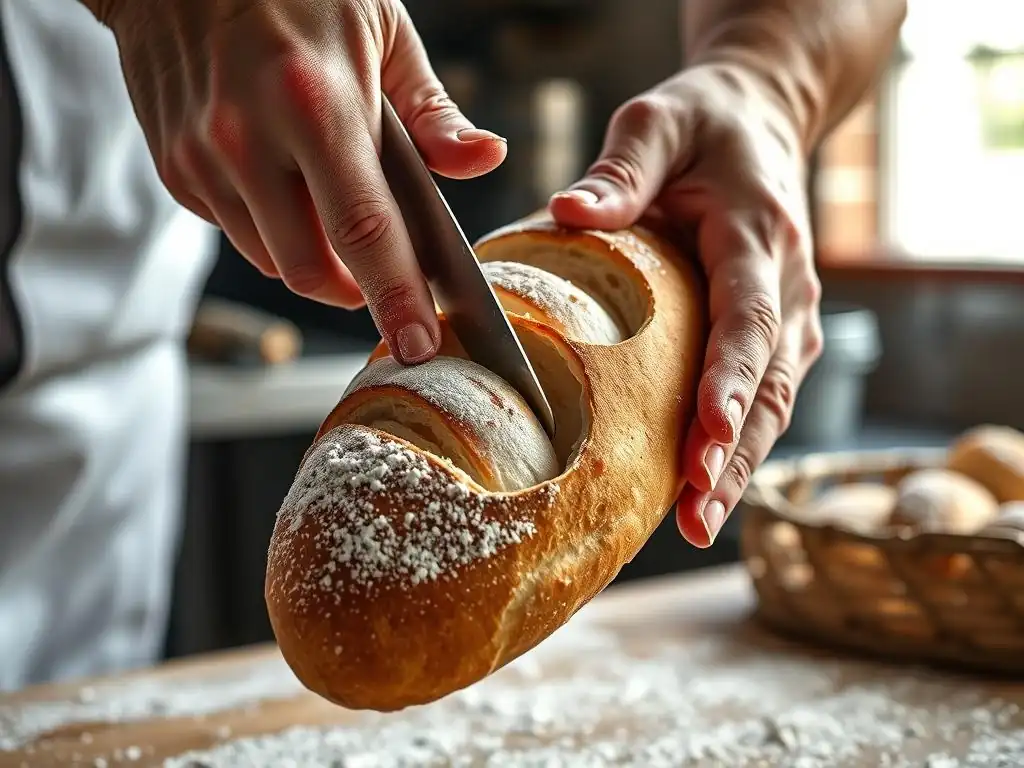
Welcome to BakeWithEase, your trusted guide to the delicious world of baking! Ever wondered how to achieve that coveted "ear" on your baguette? Unlocking the secret lies in the angle. Dive into our Baguette Scoring Angle Tutorial and discover the surprisingly simple technique that will transform your homemade loaves. Prepare to elevate your bread baking game – the perfect crust awaits!
- Getting a Perfect "Ear" on Your Baguettes: Scoring Angles - BakeWithEase.com
- Mastering the Baguette Ear: An In-Depth Scoring Angle Tutorial
- Understanding the Importance of Scoring Angle for Baguette Perfection
- Essential Tools for Baguette Scoring: A Baker's Guide
- The Optimal Baguette Scoring Angle: A Step-by-Step Guide
- Baguette Scoring Techniques: Beyond the Angle
- Troubleshooting Baguette Scoring Problems: Common Issues and Solutions
- Advanced Baguette Scoring: Experimenting and Refining Your Technique
- Baguette Scoring Angle Tutorial: Practice Makes Perfect
- Conclusion: Elevate Your Baguette Baking with Precise Scoring Angles
-
Frequently Asked Questions
- What is the ideal angle for scoring a baguette to achieve a good "ear"?
- Why is the scoring angle so important for a baguette's appearance?
- What happens if I score my baguette at too steep of an angle?
- Can I use any blade to score my baguette, or is there a specific type recommended?
- Besides the scoring angle, what other factors contribute to a successful baguette "ear"?
- Final Reflection: The Art and Science of the Perfect Baguette Score
- Unlock Your Baguette Baking Potential!
Getting a Perfect "Ear" on Your Baguettes: Scoring Angles - BakeWithEase.com
Mastering the Baguette Ear: An In-Depth Scoring Angle Tutorial
Achieving that signature "ear" on your baguette is a hallmark of artisan bread baking. It's not just for show; it's a visual cue that indicates successful fermentation, shaping, and, crucially, scoring. This article delves into the art and science behind the baguette scoring angle tutorial, guiding you through the techniques to elevate your bread from good to spectacular. Understanding and mastering the correct angle for scoring is paramount to directing the dough's expansion in the oven, ensuring a beautiful, crispy crust and a well-risen loaf.
Baking a perfect baguette involves several steps, from mixing the dough to achieving the ideal bake. While many factors contribute to the final result, the moment you score your loaf is one of the most critical. The way you slice the surface, particularly the angle and depth of the cut, dictates how the dough will expand under the intense heat of the oven. A proper baguette scoring angle tutorial emphasizes that this seemingly small detail has a massive impact on the volume, shape, and crust development of your finished bread.
Understanding the Importance of Scoring Angle for Baguette Perfection
Scoring, or making incisions on the surface of bread dough just before baking, serves a vital purpose. As the dough hits the hot oven, it experiences a rapid expansion known as "oven spring." Without scoring, the crust would set quickly, and the expanding gases inside would burst through the weakest point, often resulting in an uncontrolled, unsightly tear. Scoring provides controlled release points for this expansion, allowing the baker to influence the final shape and appearance of the loaf.
Beyond simply preventing uncontrolled tearing, scoring is an artistic expression and a functional technique. The angle at which you score directly influences the formation of the "ear"—a thin, crispy flap of crust that lifts away from the main body of the loaf. This ear is highly desired in artisan baguettes. A well-executed baguette scoring angle tutorial will always highlight how the angle helps direct the steam and gases upward and outward, creating that characteristic lift and contributing to an open crumb structure inside.
Why Baguette Scoring Angle Matters: Achieving Optimal Oven Spring
The angle of your lame (scoring blade) relative to the dough surface is perhaps the most critical factor in coaxing a beautiful ear out of your baguette. When dough is placed in a hot oven, typically around 450-500°F (230-260°C), the water inside turns to steam, causing the dough to rapidly expand. This is the "oven spring." The scores you make act as hinges, allowing the dough to open up in a predictable manner.
A shallow angle, generally between 30 and 45 degrees relative to the dough's surface, encourages the dough to open and lift along one side of the cut. The dough on the lower side of the cut expands and pushes upwards, creating the ear. If the angle is too steep (closer to 90 degrees), the cut will open symmetrically, like a gaping mouth, rather than lifting on one side. This results in less distinct ears or none at all. Mastering the baguette scoring angle tutorial means understanding this interplay between angle, steam, and dough expansion.
The Role of Scoring in Baguette Shape and Crust Formation
Scoring is fundamental to achieving the iconic elongated shape of a baguette. The cuts you make not only facilitate oven spring but also guide the overall expansion of the loaf. The placement and pattern of scores influence how the dough spreads widthwise versus lengthwise. Traditional baguette scoring involves several overlapping diagonal slashes along the top of the loaf.
These diagonal cuts, made at the correct baguette scoring angle tutorial recommended angle, promote upward and outward expansion, helping the loaf maintain its slender form while achieving good volume. The way the scores open also directly impacts the texture and appearance of the crust. A well-scored loaf develops a crispier crust along the edges of the cuts and the ear, providing a delightful contrast to the softer crust on the rest of the loaf. The controlled tearing along the score lines contributes to the rustic, artisanal look that is so prized in baguettes.
Essential Tools for Baguette Scoring: A Baker's Guide
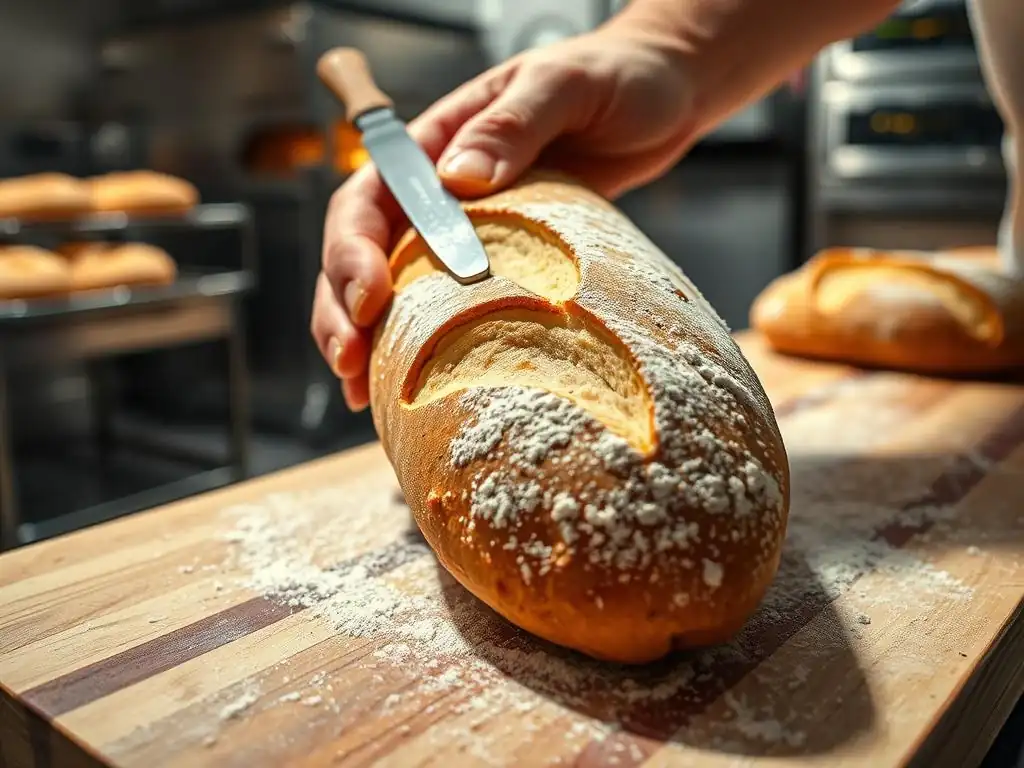
Having the right tools makes the scoring process significantly easier and more effective. While you might be tempted to use a sharp kitchen knife, specialized tools designed for scoring bread dough offer superior control and precision, which are essential for executing the techniques described in this baguette scoring angle tutorial.
The primary tool for scoring bread is called a lame (pronounced "lahm"). A lame is essentially a handle designed to hold a razor blade. The sharpness of the blade is paramount; a dull blade will drag and tear the dough surface, leading to an uneven score and hindering proper oven spring and ear development. Using a proper lame ensures clean, decisive cuts that allow the dough to open beautifully.
Recommended Lames for Clean and Precise Baguette Scores
There are two main types of lames commonly used by bakers: the straight lame and the curved lame.
- Straight Lame: This type holds the razor blade flat. It's excellent for making deep, straight cuts, often used for scoring boules (round loaves) with patterns like a cross or a square. While it can be used for baguettes, achieving the shallow angle required for an ear can be slightly trickier for beginners compared to a curved lame.
- Curved Lame: This lame holds the razor blade in a curved shape. This design naturally facilitates making the shallow, sweeping cuts needed for baguette scoring. The curve of the blade helps achieve that crucial baguette scoring angle tutorial recommended angle of 30-45 degrees more intuitively. For most aspiring baguette bakers, a curved lame is the recommended tool for practicing and mastering the ear.
Regardless of the type, ensure the blade is fresh and sharp. Razor blades for lames are inexpensive and should be replaced frequently, perhaps every few baking sessions, especially when working with stickier, higher-hydration doughs.
Preparing Your Baguette Dough for Scoring: Surface Tension and Proofing
Before you even think about scoring, the condition of your dough is critical. The dough needs to have sufficient surface tension to hold its shape and receive a clean cut. This tension is developed during the shaping process. After the final shaping, the dough should be proofed until it is airy but still has enough structure to bounce back slightly when gently poked.
Over-proofed dough will be too soft and may collapse or deflate when you try to score it. The cuts will be messy and won't open cleanly in the oven. Under-proofed dough, on the other hand, will have too much tension and may resist the blade, resulting in shallow, uneven scores and potentially uncontrolled bursting elsewhere on the loaf during oven spring. A properly proofed baguette, ready for your baguette scoring angle tutorial techniques, should feel light and airy, with a smooth, taut surface from effective shaping.
The Optimal Baguette Scoring Angle: A Step-by-Step Guide
Now for the core of the baguette scoring angle tutorial: finding and consistently applying the correct angle. While there's no single angle that works for every dough and oven, the 45-degree angle is widely considered the standard starting point for achieving a good ear.
The technique involves holding the lame at an angle relative to the surface of the dough and making swift, confident cuts. Hesitation can cause the blade to drag. The depth of the score is also important, typically around 1/4 to 1/2 inch (about 0.5 to 1 cm) deep. The goal is to cut through the skin of the dough and slightly into the crumb below, but not so deep that the loaf loses its structure.
Finding the Sweet Spot: Understanding the 45-Degree Angle
Imagine the surface of your baguette is flat. A 90-degree angle would be cutting straight down. A 0-degree angle would be dragging the blade parallel to the surface (which isn't a cut). The sweet spot for the baguette scoring angle tutorial lies roughly in the middle of 0 and 90 degrees, specifically around 45 degrees.
To visualize this, hold your lame as if you were about to score. Angle the blade so that it's leaning away from you (or towards you, consistently) at about a 45-degree angle to the dough's surface. As you slice, the blade should be almost parallel to the length of the baguette, making a diagonal cut across the loaf's top. This angle allows the upper flap of dough to lift and crisp up into the ear as the loaf expands.
Variations in Scoring Angle: Tailoring to Your Dough
While 45 degrees is a great starting point for any baguette scoring angle tutorial, you can experiment with slight variations based on your specific dough and desired outcome.
- Shallower Angle (e.g., 30 degrees): A slightly shallower angle can sometimes produce a more dramatic, larger ear, especially with high-hydration doughs that have a lot of oven spring potential. This angle requires a very sharp blade and careful control to avoid dragging.
- Steeper Angle (e.g., 60 degrees): A steeper angle will result in the cut opening more symmetrically, often leading to less of a pronounced ear or none at all. This can be useful for decorative cuts where you don't necessarily want a large ear, but for the classic baguette ear, it's generally too steep.
Practicing with your specific recipe and oven will help you determine the optimal angle for your baguette scoring angle tutorial mastery. Pay attention to how your dough behaves and adjust the angle in subsequent bakes.
Visual Guide: Examples of Different Scoring Angles and Their Effects
(Note: As per instructions, no images can be included. The following describes the expected outcomes visually.)
Imagine three baguettes baked side-by-side, identical in every way except their scoring angle:
- Scored at ~30 degrees: This baguette likely has a very prominent, thin, and crispy ear running along the length of the score. The opening is asymmetrical, with one side lifting significantly higher than the other.
- Scored at ~45 degrees: This loaf shows a classic, well-defined ear. The opening is still asymmetrical, but perhaps slightly less dramatic than the 30-degree loaf. This is the ideal outcome for many bakers following a standard baguette scoring angle tutorial.
- Scored at ~60 degrees: This baguette's score has opened more like a wide mouth. There is little to no distinct ear, and the crust along the cut edges might be thicker or more rounded rather than a thin flap.
Observing the results of different angles on your own loaves is the best way to refine your technique.
Baguette Scoring Techniques: Beyond the Angle
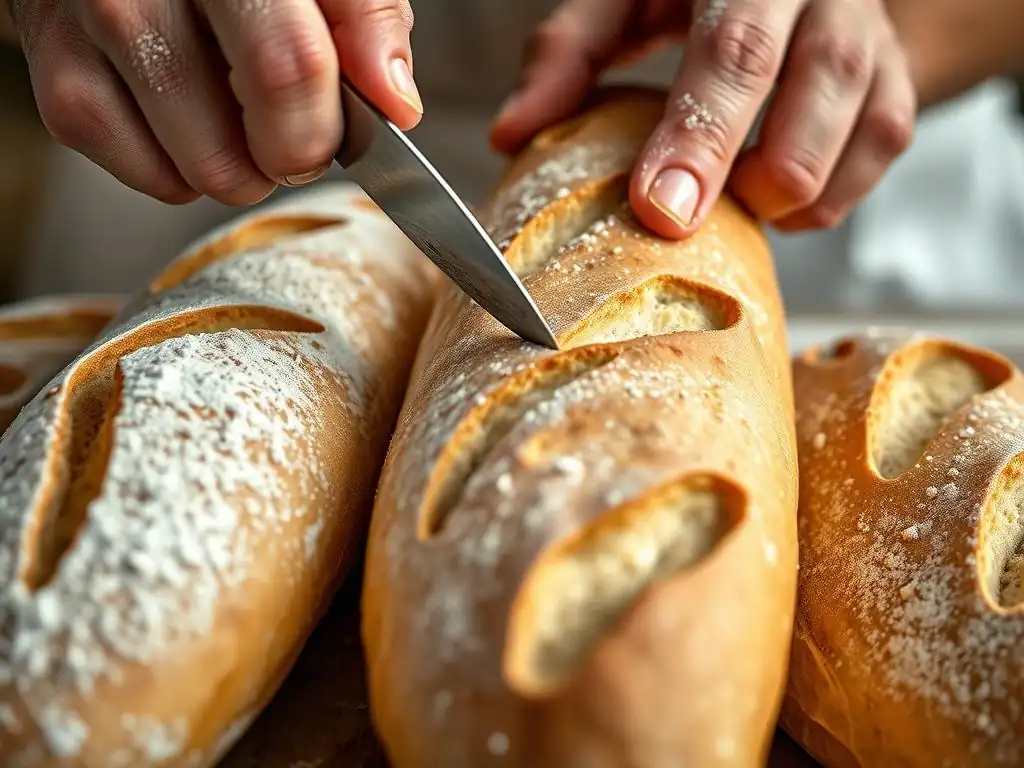
While the angle is crucial, the technique of making the scores is equally important for successful baguette baking. The speed, depth, and overlap of your cuts all play a role in the final appearance of the loaf.
Traditional baguette scoring involves a series of overlapping diagonal slashes along the top surface. These slashes should be made relatively quickly and confidently to avoid snagging the dough. The goal is to create smooth, clean cuts that will open predictably in the oven.
The Single Slash: Classic Baguette Scoring Technique
The most common method detailed in any baguette scoring angle tutorial is the series of single, overlapping diagonal slashes.
Here’s a breakdown:
- Hold the baguette in front of you, or score it directly on your baking surface (like a peel or parchment paper).
- Hold the lame at the desired angle (e.g., 45 degrees) relative to the dough surface.
- Starting about an inch or two from one end, make a swift, smooth diagonal cut about 1/4 to 1/2 inch deep. The cut should run roughly parallel to the length of the baguette.
- Move down the loaf about 1-2 inches, and make the next diagonal cut, overlapping the previous cut by about an inch.
- Repeat this process until you reach the other end of the baguette.
- Ensure all cuts are made at approximately the same angle and depth for consistent results.
Typically, a standard-sized baguette will have 3 to 5 overlapping scores.
Overlapping Scores: Creating a Dramatic "Ear"
The overlap in the scores is key to creating a continuous, dramatic ear along the length of the baguette. When the dough expands, the overlapping edges lift together, forming one long, beautiful ear rather than several small, disconnected ones.
Think of the cuts like shingles on a roof. Each new cut slightly overlaps the previous one. This creates a structure where the dough can expand and lift consistently along the entire series of scores. A well-executed series of overlapping scores at the correct baguette scoring angle tutorial recommended angle will result in a stunning, continuous ear from one end of the loaf to the other.
Decorative Scoring Patterns: Adding Artistic Flair to Your Baguettes
While the overlapping diagonal slashes are classic, you can also use scoring to add decorative flair to your baguettes. These patterns might not always produce a prominent ear, depending on the angles used, but they can make your loaves visually unique.
Examples include:
- Straight cuts: A series of straight cuts perpendicular to the length of the baguette. These will open symmetrically and won't produce an ear.
- Leaf pattern: A central score with smaller, angled cuts branching out like veins on a leaf.
- Geometric patterns: Using combinations of straight and curved cuts to create abstract designs.
For decorative scoring, you might use a steeper angle or a straight lame for different effects. However, for mastering the traditional ear, focus on the overlapping diagonal cuts at the shallow angle discussed in this baguette scoring angle tutorial.
Troubleshooting Baguette Scoring Problems: Common Issues and Solutions
Even with the right tools and understanding the baguette scoring angle tutorial, you might encounter issues. Don't get discouraged! Troubleshooting is part of the baking process.
Here are some common problems and how to address them:
- No ear developing despite scoring.
- Dough sticking to the lame.
- Scores opening unevenly.
- Loaf collapsing when scored.
Let's look at solutions for each.
Baguette Ear Not Developing? Adjusting Your Scoring Angle
If your baguettes aren't developing a nice ear, the most likely culprit is the scoring angle.
- Problem: Scores opening wide and symmetrically ("gaping mouth") instead of lifting.
- Solution: Your angle is likely too steep (closer to 90 degrees). Try holding the lame at a shallower angle, aiming for 30-45 degrees relative to the dough's surface. Ensure the blade is almost parallel to the length of the loaf as you slice.
- Problem: Very little opening or lift along the score.
- Solution: The score might be too shallow, or the angle might still be too steep. Ensure you are cutting about 1/4 to 1/2 inch deep and maintaining that shallow 30-45 degree angle. Also, check your dough's proofing; under-proofed dough can resist opening.
Refining your baguette scoring angle tutorial application often involves small adjustments based on your results.
Dough Sticking to the Lame? Tips for Smooth Scoring
Sticky dough can make scoring frustrating and lead to uneven cuts.
Here are some tips:
- Use a fresh, sharp blade: This is the most important factor. A dull blade will drag.
- Dust the blade: Dip the edge of your lame in a little flour (rice flour works particularly well as it doesn't absorb moisture) just before scoring each loaf or even between scores on the same loaf if the dough is very sticky.
- Score chilled dough: If your recipe allows for a cold proof in the refrigerator, scoring the dough while it's cold can make the surface firmer and easier to cut cleanly. Many artisan bakers prefer scoring cold dough for this reason.
- Be swift and confident: Hesitation allows the dough to stick to the blade. A quick, decisive stroke is best.
[ ] Ensure lame blade is sharp.
[ ] Try dusting the blade with flour.
[ ] Consider cold proofing dough before scoring.
[ ] Practice swift, confident cuts.
Uneven Oven Spring? Scoring Depth and Consistency
If your loaf expands unevenly, with some scores opening well and others not, it often points to inconsistencies in your scoring depth or angle.
- Inconsistent Depth: If some cuts are deeper than others, the deeper cuts will open more, leading to an uneven loaf. Try to maintain a consistent depth of 1/4 to 1/2 inch across all your scores.
- Inconsistent Angle: Varying the angle from one score to the next will lead to different types of opening. Some might try to form an ear (shallow angle), while others open symmetrically (steeper angle). Focus on maintaining the same 30-45 degree angle for all cuts intended to produce an ear, as emphasized in this baguette scoring angle tutorial.
- Dough Issues: Uneven proofing or inconsistent surface tension from shaping can also contribute to uneven oven spring. Ensure your baguettes are evenly proofed and well-shaped before scoring.
Consistency in applying the baguette scoring angle tutorial techniques is key to achieving uniform, beautiful loaves.
Advanced Baguette Scoring: Experimenting and Refining Your Technique
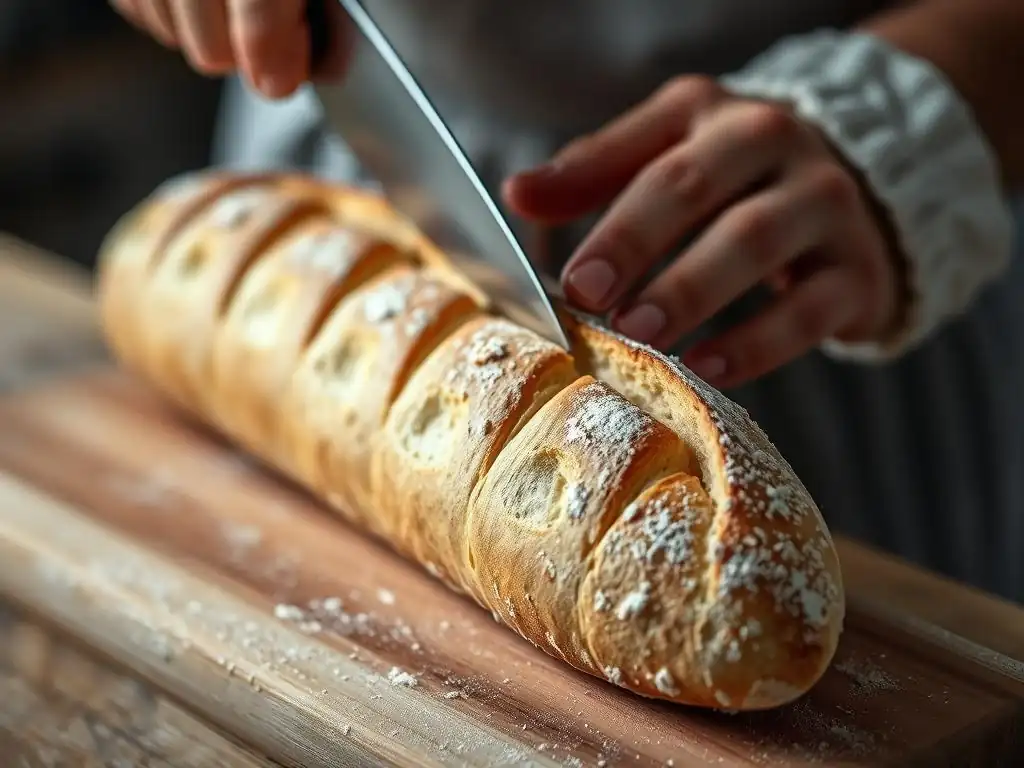
Once you've mastered the basics of the baguette scoring angle tutorial and can consistently produce a nice ear, you might want to experiment further. Advanced techniques involve exploring different tools and adjusting your approach based on the specific characteristics of your dough.
Experienced bakers often develop an intuitive feel for how their dough will behave based on its hydration level, gluten development, and proofing stage. This allows them to make subtle adjustments to their scoring angle and depth to optimize the outcome.
Exploring Different Lame Designs and Their Impact on Scoring
While the straight and curved lames are standard, variations exist. Some bakers craft their own scoring tools, or use different types of blades.
- Different Blade Curvatures: Some curved lames offer different degrees of curvature. Experimenting with a slightly more or less curved blade might feel more comfortable or yield slightly different ear shapes depending on your preferred angle and cutting motion.
- Handle Ergonomics: The feel of the lame's handle can impact your control. Finding a lame that feels comfortable and balanced in your hand can improve your precision when applying the baguette scoring angle tutorial.
Ultimately, the best lame is the one you are most comfortable using to achieve clean, angled cuts.
Adjusting Scoring Based on Dough Hydration and Gluten Development
The hydration level of your dough significantly impacts its behavior during scoring and baking.
- High-Hydration Dough (e.g., 75% hydration or more): These doughs are wetter and can be stickier, requiring a very sharp blade and potentially more flour dusting on the lame. They often have tremendous oven spring, and a slightly shallower angle (closer to 30 degrees) can produce a very dramatic ear. Scoring needs to be done with confidence before the dough relaxes too much.
- Lower-Hydration Dough (e.g., 65-70% hydration): These doughs are easier to handle and score. A 45-degree angle is often perfect. They may have slightly less vigorous oven spring than high-hydration doughs, so ensuring adequate depth is important.
Understanding your dough's characteristics allows you to fine-tune the techniques learned in this baguette scoring angle tutorial.
Case Study: Comparing 30°, 45°, and 60° Scoring Angles
(Note: This section describes expected results as a comparative example, not a report of a specific study.)
Let's consider a hypothetical comparison using a standard baguette dough recipe with about 72% hydration, proofed consistently. Three loaves are scored just before baking:
- Loaf A (30° Angle): Scored with a very shallow, sweeping angle. Expectation: The dough opens dramatically, forming a thin, prominent ear that stands up high. The crust along the ear is exceptionally crisp.
- Loaf B (45° Angle): Scored at the standard angle. Expectation: A classic, beautiful ear develops, well-defined and crispy. The loaf has good volume and shape, representing the ideal outcome for many bakers.
- Loaf C (60° Angle): Scored at a steeper angle. Expectation: The cut opens widely and symmetrically, with little to no distinct ear. The loaf expands more evenly, potentially resulting in a flatter profile and a less visually dynamic crust along the score lines.
This comparison highlights why the 30-45 degree range is emphasized in any good baguette scoring angle tutorial when aiming for a prominent ear.
Baguette Scoring Angle Tutorial: Practice Makes Perfect
Like any skill in baking, mastering the baguette scoring angle tutorial requires practice. Your first attempts might not yield perfect results, and that's okay! Each bake is an opportunity to learn and improve.
Don't be afraid to experiment with angle, depth, and technique on different loaves from the same batch of dough. Pay close attention to how the dough feels and how your scores open in the oven. Taking notes can be helpful to track what works and what doesn't.
Tips for Improving Your Baguette Scoring Skills
- Start with a reliable recipe: Ensure your dough is well-developed and properly proofed before you even pick up the lame. A good dough is easier to score.
- Use a very sharp blade: Replace your lame blade frequently. It makes a world of difference.
- Practice on scrap dough: If you have leftover dough trimmings, practice your scoring technique on them before tackling your perfectly shaped baguettes.
- Score confidently and quickly: Hesitation is the enemy of a clean score.
- Maintain consistency: Try to replicate the same angle and depth for each score on a single loaf and across multiple loaves.
- Observe your results: After baking, examine how your scores opened. Did you get an ear? Was the opening symmetrical? Was it even? Use this feedback to adjust your technique next time.
Demonstration Video: Baguette Scoring Angle in Action
(Note: As per instructions, no videos can be included. This section serves as a placeholder/description of what a video would show.)
Imagine watching a skilled baker demonstrate the baguette scoring angle tutorial step-by-step. The video would show:
- The baker holding a curved lame.
- Positioning the lame at approximately a 45-degree angle to the dough surface.
- Making a swift, smooth diagonal cut, showcasing the correct depth.
- Repeating the overlapping cuts along the baguette.
- A close-up view of the scored loaf just before it goes into the oven.
- Footage of the loaf in the oven during oven spring, highlighting how the score opens and the ear develops.
- A final shot of the baked baguette with a perfect ear.
Visual demonstrations are incredibly helpful for understanding angles and motion. While we can't provide one here, try searching for reputable baking channels online that offer a baguette scoring angle tutorial video.
Conclusion: Elevate Your Baguette Baking with Precise Scoring Angles
Mastering the baguette scoring angle tutorial is a significant step in elevating your artisan bread baking. Understanding how the angle of your score directs oven spring and influences the formation of the coveted "ear" allows you to take more control over the final outcome of your baguettes.
By using a sharp lame, preparing your dough properly, and practicing the techniques discussed—particularly aiming for that sweet spot between 30 and 45 degrees—you'll be well on your way to baking beautiful loaves with that perfect, crispy ear. Don't be discouraged by initial results; consistent practice and careful observation are key to achieving baguette perfection. Happy baking!
Frequently Asked Questions
What is the ideal angle for scoring a baguette to achieve a good "ear"?
The ideal angle is typically around 30-45 degrees relative to the surface of the dough. This angle allows the dough to expand properly during baking, creating a beautiful "ear" effect.
Why is the scoring angle so important for a baguette's appearance?
The scoring angle determines how the dough will tear and expand in the oven. A proper angle creates a controlled break, forming the characteristic "ear" and allowing for optimal oven spring.
What happens if I score my baguette at too steep of an angle?
If the angle is too steep, the cut will be too deep, and the baguette will likely explode in an uncontrolled manner rather than form a defined "ear".
Can I use any blade to score my baguette, or is there a specific type recommended?
While any sharp blade can be used, a lame (a special scoring tool with a razor blade) is highly recommended. It allows for clean, precise cuts that are essential for achieving a good "ear".
Besides the scoring angle, what other factors contribute to a successful baguette "ear"?
Other crucial factors include the dough's hydration level, proper fermentation, and the oven's temperature and steam. A balanced approach is key to a perfect baguette.
Final Reflection: The Art and Science of the Perfect Baguette Score
The seemingly simple act of scoring a baguette is, in reality, a crucial determinant of its final texture, appearance, and overall success. A perfectly executed score isn't just about aesthetics; it's the key to unlocking the baguette's full potential, ensuring a beautiful oven spring and a crisp, airy crumb. This understanding, once mastered, elevates the humble baguette from a simple loaf to a testament to baking artistry.
The pursuit of the perfect score transcends mere technique; it's a journey into the heart of bread making itself. It's about understanding the interplay of gluten development, steam, and heat, and how each tiny cut influences the final product. Bread making is a science, but it's also an art. The baker must understand both to create something truly exceptional.
This quote perfectly encapsulates the essence of what we've explored in this tutorial – the delicate balance between precision and intuition required to achieve that perfect ear.
Now, it's your turn. Don't be afraid to experiment with different angles, depths, and scoring tools. Each baguette you bake is an opportunity to refine your technique, to learn from your successes and failures, and to ultimately discover your own unique style. Embrace the challenge, trust your instincts, and watch as your baguettes transform from good to truly magnificent. The journey to mastering the perfect score is a rewarding one, filled with the delicious aroma of freshly baked bread and the satisfaction of creating something beautiful with your own hands.
Unlock Your Baguette Baking Potential!
Thanks for diving into the world of perfect baguette scoring! We hope you now feel confident in tackling those crucial angles. Ready to put your new skills to the test?
- Bake your masterpiece: Try scoring your next baguette with the techniques we’ve outlined—and be amazed by the results! Remember, practice makes perfect!
- Share your success: Show off your beautifully scored loaves on social media using #BakeWithEaseBaguettes – we'd love to see them!
- Explore advanced scoring techniques: Dive deeper into the world of scoring and discover even more ways to elevate your baking game.
What unique scoring design will you try on your next baguette? Let us know in the comments!