
Scoring Rye Bread: Make Your Loaf Look Beautiful

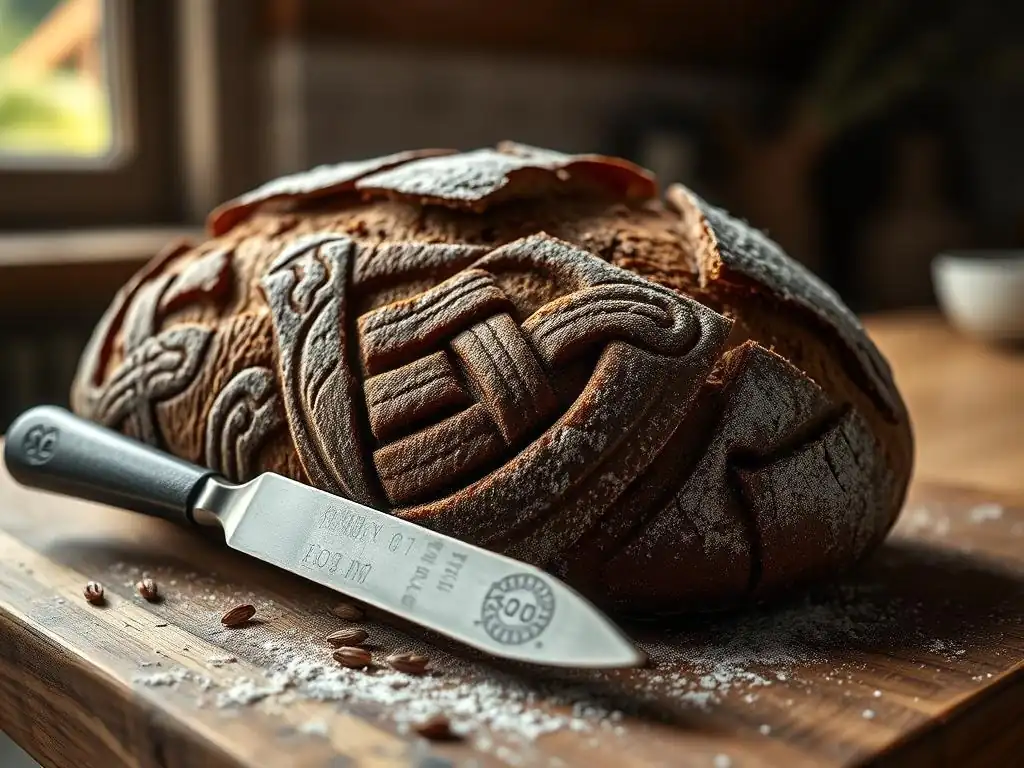
Welcome to BakeWithEase, your haven for all things baking! Ever wondered how to transform a simple loaf into a work of art? This week, we're diving deep into the fascinating world of rye bread scoring patterns. But what makes a perfect score? Prepare to unlock the secrets to achieving stunning designs and optimal oven spring, transforming your rye bread from rustic to remarkable. Read on to discover how!
- Introduction to Rye Bread Scoring: Enhancing Flavor and Appearance
- Essential Tools for Rye Bread Scoring
- Rye Bread Scoring Patterns: Beginner-Friendly Designs
- Intermediate Rye Bread Scoring Techniques
- Advanced Rye Bread Scoring: Mastering Intricate Designs
- Troubleshooting Common Rye Bread Scoring Issues
- Tips and Tricks for Perfect Rye Bread Scoring
- Rye Bread Scoring Inspiration: Examples and Ideas
- Conclusion: Elevate Your Rye Bread with Beautiful Scoring
- Frequently Asked Questions
- Final Reflection: The Art and Science of Rye Bread Scoring
- Unleash Your Inner Baker: Score Stunning Rye Bread!
Introduction to Rye Bread Scoring: Enhancing Flavor and Appearance
Why Score Rye Bread? Beyond Aesthetics: Controlled Expansion
Scoring your rye bread dough before baking is far more than just making pretty patterns. While beautiful rye bread scoring patterns certainly add visual appeal, the primary purpose is functional: controlling the expansion of the loaf as it bakes. Rye dough, especially those with a high percentage of rye flour, behaves differently than wheat dough.
It often has less gluten development, making it denser and sometimes stickier. Without intentional cuts, the rapidly expanding gases produced by yeast or sourdough starter during oven spring will seek the path of least resistance, potentially causing the loaf to burst unpredictably at its weakest point.
By creating specific cuts, you direct this expansion, allowing the loaf to rise predictably and evenly. Think of it as creating hinges in the dough. These hinges open up in a controlled manner, preventing random cracks and ensuring a consistent shape. This controlled expansion also helps distribute heat more effectively throughout the loaf, contributing to a better crust and crumb structure. For example, a simple straight score down the middle of a batard-shaped rye loaf ensures it expands along that line, resulting in a symmetrical rise.
The Importance of Scoring for Proper Baking: Preventing Cracks
Proper scoring is crucial for achieving optimal oven spring and preventing unsightly, uncontrolled cracks. When an unscored or improperly scored loaf enters a hot oven, the sudden heat causes the gases within the dough to expand rapidly. If there are no designated weak points (the scores), the crust quickly sets, and the internal pressure builds until the crust ruptures somewhere, often along the sides or bottom. This can lead to a lopsided loaf with a tough, thick crust in the burst area.
Effective scoring provides these necessary release points. As the loaf heats up, the cuts you made open, allowing the dough to expand outward and upward through these channels. This not only results in a more visually appealing loaf but also contributes to a lighter, more open crumb structure within the rye bread. For instance, a deep single score on a boule encourages a dramatic opening, often resulting in a desirable "ear" along the cut line.
Essential Tools for Rye Bread Scoring
Scoring Lame: The Baker's Precision Tool
A scoring lame (pronounced "lahm") is arguably the most essential tool for achieving clean, precise cuts on your rye bread dough. A lame is typically a handle holding a razor blade, designed specifically for scoring bread. The extreme sharpness of the razor blade allows you to make quick, clean cuts without dragging or tearing the delicate surface of the dough, which is particularly important for the often stickier texture of rye dough.
Using a lame provides superior control over the depth and angle of your scores. This precision is key to executing specific rye bread scoring patterns effectively. Lames come in different styles, some with straight handles for straight cuts and others with curved handles that allow for curved cuts and creating the coveted "ear" on loaves. A sharp blade is paramount; a dull blade will catch and pull the dough, ruining your pattern and potentially collapsing the loaf.
Alternative Scoring Tools: Sharp Knives for Deep Cuts
While a lame is ideal, you can still achieve good results using alternative sharp tools. A very sharp paring knife, utility knife, or even a fresh single-edged razor blade held carefully between your fingers can work. The key is that the blade must be exceptionally sharp to slice through the dough cleanly without dragging.
When using a knife, ensure it has a thin, sharp blade. Thicker blades can sometimes push the dough rather than slicing it cleanly. For deeper cuts often needed in dense rye loaves or for simple patterns like a crosshatch, a sharp knife can be quite effective. However, achieving the precise, shallow, angled cuts required for intricate rye bread scoring patterns like leaves or ears can be more challenging with a standard knife compared to a dedicated lame.
Preparing Your Rye Bread Dough for Scoring: Cold Dough is Key
Scoring is significantly easier and yields cleaner results when your rye bread dough is properly prepared, and a key step is ensuring it is sufficiently cold. After the final proofing stage (or a portion of it), placing the dough in the refrigerator for 30 to 60 minutes helps firm up the surface. This firmer surface resists the blade just enough to allow for clean cuts without the dough sticking or collapsing under the pressure of the blade.
Cold dough also maintains its shape better while you are scoring, allowing you more time and precision to execute your desired rye bread scoring patterns. Trying to score warm, slack dough, especially high-hydration rye dough, is often a frustrating experience as the blade tends to drag and the cuts can close up quickly. A chilling period makes the dough more cooperative, leading to sharper lines and better definition after baking.
Rye Bread Scoring Patterns: Beginner-Friendly Designs
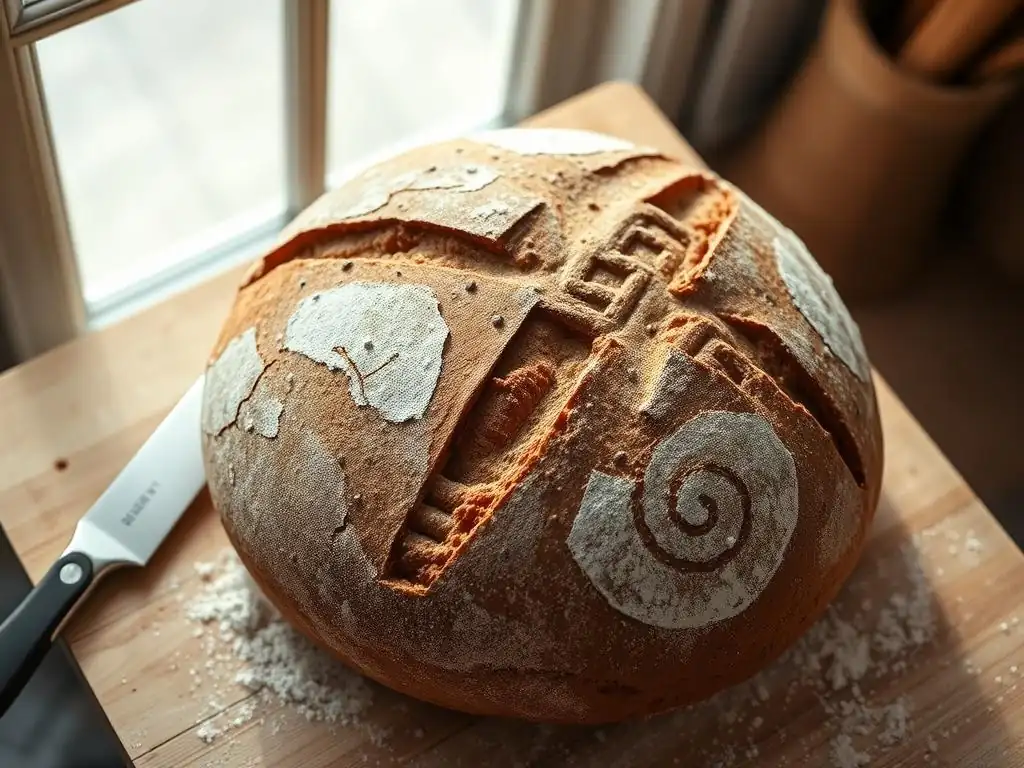
Simple Straight Line Score: Allowing for Even Expansion
One of the most straightforward and effective rye bread scoring patterns is a single straight line cut down the center of a loaf, typically a batard (oval) shape. This simple score serves as the primary expansion point for the dough during baking. It is easy to execute and highly reliable for ensuring a good, even rise.
To make a simple straight line score, hold your lame or sharp blade at a slight angle (around 30-45 degrees) to the surface of the dough and make one confident cut along the length of the loaf. The depth of the cut should be about 1/2 to 3/4 of an inch, depending on the loaf size and hydration. This allows the crust to open cleanly along the score, preventing blowouts elsewhere and resulting in a symmetrical, well-risen loaf.
The Single Slash: A Quick and Effective Release
For round loaves (boules) or smaller rye rolls, a single slash is a quick and effective scoring technique. This can be a straight line across the top, a curved slash, or even a simple "X". The purpose is the same as the straight line score on a batard – to provide a single primary point for the dough to expand through.
A single slash is particularly useful for high-percentage rye loaves that may not hold more intricate patterns well. A deep, clean single cut ensures controlled expansion and often creates a beautiful natural opening as the loaf bakes. Aim for a cut about 1/2 inch deep, made with a confident, swift motion to avoid tearing the dough.
Crosshatch Pattern: Creating Rustic Appeal
The crosshatch pattern is another beginner-friendly option that provides multiple points of expansion and results in a lovely rustic look. This pattern involves making a series of parallel cuts in one direction across the top of the loaf, and then another series of parallel cuts perpendicular to the first set, creating a grid or diamond pattern.
To create a crosshatch, make several straight cuts about 1/4 to 1/2 inch deep, spaced about 1 inch apart, across the entire surface of the loaf. Then, repeat the process, making cuts in the opposite direction. This pattern works well on both round and oval loaves. While relatively simple, ensuring even spacing and consistent depth across all cuts is key to achieving a uniform look after baking. This is one of the classic rye bread scoring patterns.
Intermediate Rye Bread Scoring Techniques
The Leaf Pattern: Inspired by Nature
The leaf pattern is a beautiful intermediate scoring technique that adds an artistic touch to your rye bread. It's often executed on oval loaves. The basic design involves a central score running most of the length of the loaf, with smaller, angled cuts branching off from the sides of the central score, resembling the veins of a leaf.
To score a leaf pattern, first make a single, relatively deep cut (around 1/2 inch) down the center of the loaf. Then, using your lame or sharp blade held at a low angle, make a series of shallow, overlapping cuts branching out from the central score on both sides. These side cuts should only be about 1/4 inch deep and angled towards the center score. The shallow angle encourages the edges of these cuts to lift and crisp up, enhancing the leaf-like appearance.
The Wheat Stalk: Honoring Grain's Heritage
The wheat stalk is another popular scoring pattern that pays homage to the grain used to make the bread. This pattern typically involves a central score with a series of angled cuts along both sides that overlap the central cut, mimicking the look of a wheat stalk. It's often applied to oval loaves.
Start by making a central score, similar to the leaf pattern, but slightly shallower. Then, using a very sharp blade, make a series of short, angled cuts that start near the central score and fan outwards slightly. These cuts should overlap the central score slightly. Repeat on the other side, mirroring the cuts. The key is making clean, quick cuts with a sharp blade to get the distinct segments of the "stalk."
Spiral Scoring: Encouraging Round Loaf Formation
Spiral scoring is a technique often used on round loaves to encourage even expansion and create a visually dynamic pattern. It involves making a continuous cut that spirals inward from the edge of the loaf towards the center. This pattern works particularly well with moderately hydrated rye doughs.
To create a spiral, start your cut near the edge of the loaf and make a continuous, circular cut, gradually spiraling inward towards the middle. The depth should be consistent, around 1/2 inch, throughout the spiral. This pattern directs the oven spring in a circular motion, resulting in a beautifully opened spiral on the baked loaf. Practicing the continuous motion with a steady hand is key to achieving a clean spiral.
Advanced Rye Bread Scoring: Mastering Intricate Designs
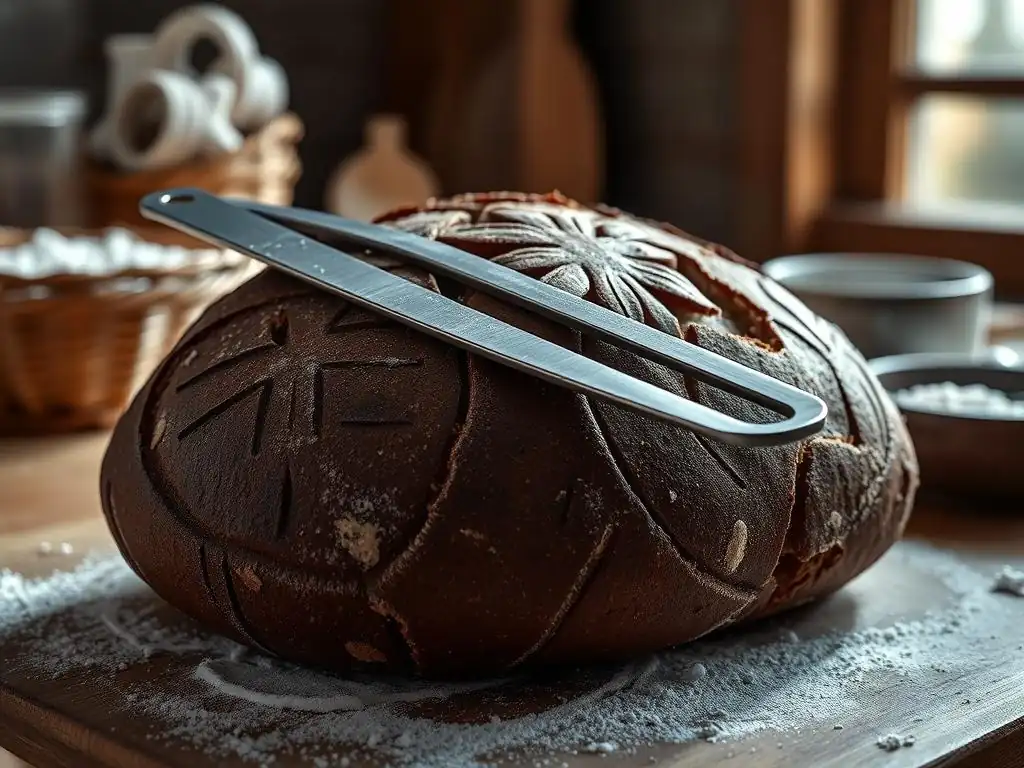
Complex Geometric Patterns: Showcasing Skill and Precision
Moving into advanced rye bread scoring patterns involves creating more intricate geometric designs like diamonds, intricate grids, or overlapping shapes. These patterns require a steady hand, precise control over the lame or blade, and careful planning. They are often seen on loaves with slightly lower rye percentages or those specifically formulated to hold complex scores.
Executing complex geometric patterns involves making multiple intersecting cuts with consistent depth and spacing. For example, a diamond pattern might involve a series of parallel diagonal cuts in one direction, followed by another series of parallel diagonal cuts in the opposite direction, carefully spaced to create diamond shapes. These patterns often require scoring the dough when it is quite cold and firm to maintain the integrity of the design before baking.
Freehand Scoring: Expressing Artistic Flair
Freehand scoring allows bakers to express their creativity directly onto the dough surface. Instead of following a specific pattern, the baker draws or carves designs using a sharp blade. This can range from simple abstract lines and curves to more detailed illustrations or even words.
Freehand scoring requires confidence and a good understanding of how the dough will expand. While the artistic design is the focus, the cuts still serve the functional purpose of controlled expansion. Bakers might combine deeper structural cuts with shallower decorative cuts to manage oven spring while creating their unique rye bread scoring patterns. This technique allows for truly personalized loaves.
The Ear of Wheat: A Detailed Visual Guide
Creating a prominent "ear" is a highly sought-after result in bread scoring, and while often associated with wheat loaves, it can be achieved on some rye loaves, particularly those with a significant portion of wheat flour. The "ear" is a flap of crust that stands up along the edge of a score line, often created by making a single, deep, angled cut.
To create an ear of wheat (the scoring design, not the physical ear), you combine a central score with angled cuts mimicking wheat kernels. Make a single deep score down the center. Then, using a curved lame or holding your straight lame at a very low angle (almost parallel to the dough surface), make overlapping curved cuts along both sides of the central score.
These shallow, curved cuts should just break the surface and overlap the central score slightly, creating the segmented look of a wheat head. The central score allows for primary expansion, while the shallow cuts define the segments.
Troubleshooting Common Rye Bread Scoring Issues
Dough Sticking to the Lame: Keep it Clean and Oiled
One of the most frustrating issues when scoring rye bread is the dough sticking to your lame or blade. Rye dough, especially high-hydration varieties, can be quite sticky due to the properties of rye flour. When the blade drags, it tears the dough instead of slicing cleanly, ruining your intended rye bread scoring patterns.
To combat sticking, ensure your blade is incredibly sharp. You can also lightly oil the blade with a neutral oil before each cut. Alternatively, dipping the blade in water or dusting it lightly with flour between scores can help. Keeping the dough well-chilled is also critical, as colder dough is less sticky. If using a lame, ensure the blade is securely held and doesn't flex.
Scores Not Opening Properly: Ensure Adequate Depth and Angle
If your scores aren't opening up nicely during baking, there are a few likely culprits. The most common reasons are insufficient depth or an incorrect angle of the cut. If the scores are too shallow, the crust sets before the dough can push through the cuts, leading to blowouts elsewhere or minimal opening.
For most structural scores intended to control expansion (like the central score or crosshatch), aim for a depth of at least 1/2 inch. For decorative scores (like those in a leaf or wheat pattern), shallower cuts (1/4 inch or less) are fine, but the deeper structural cuts are essential for directing the oven spring. The angle of the cut also matters; holding the blade at an angle (around 30-45 degrees) often helps the cut open wider and can help create an "ear" compared to a straight 90-degree cut.
Achieving Consistent Scoring Depth: Practice and Sharp Blades
Achieving consistent scoring depth across your loaf is crucial for symmetrical expansion and uniform rye bread scoring patterns. Inconsistent depth can lead to uneven rising, with parts of the loaf expanding more than others. This requires practice and the right tools.
Using a sharp blade is the most important factor. A sharp blade glides through the dough with minimal resistance, allowing you to control the depth more easily. Practice on scrap dough or even just on paper to get a feel for the angle and pressure needed. Pay attention to how the blade feels as it passes through the dough; you should feel it slice cleanly rather than pushing or dragging. With practice, you'll develop the muscle memory needed for consistent cuts.
Tips and Tricks for Perfect Rye Bread Scoring
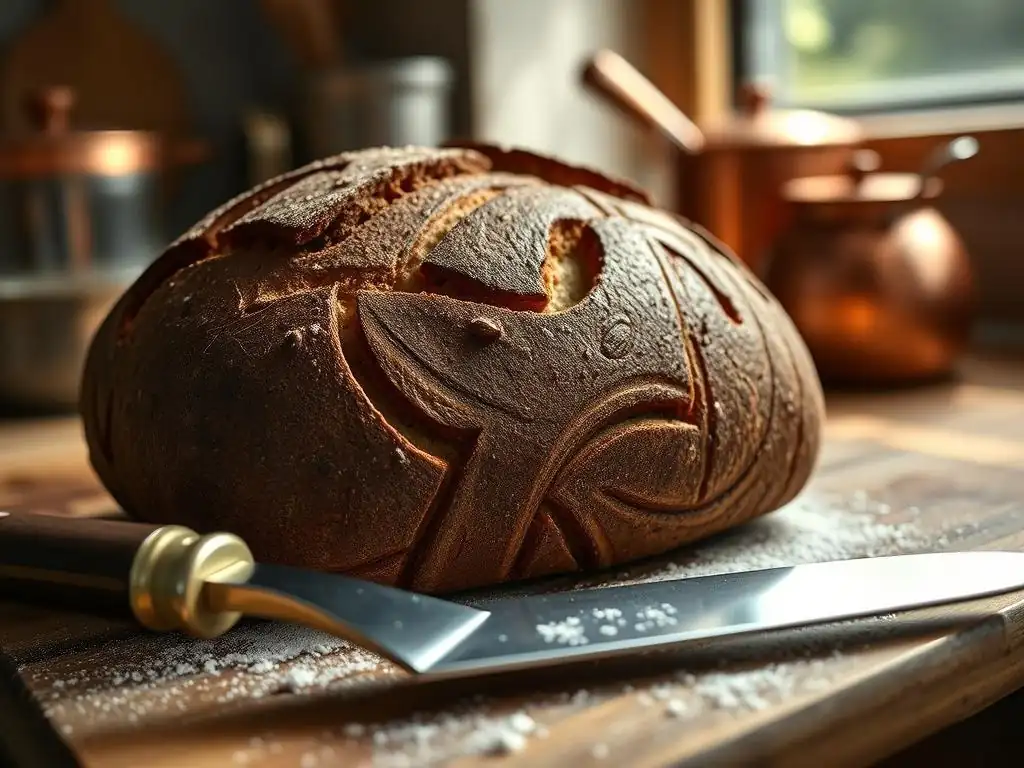
Dough Hydration and its Impact on Scoring: Higher Hydration Needs Deeper Cuts
The hydration level of your rye bread dough significantly impacts how it behaves during scoring and baking. Higher hydration dough (e.g., 75% hydration or more) is often stickier and more delicate, requiring a very sharp blade and a swift hand. Scores on high-hydration dough tend to open more dramatically, so deeper cuts are often needed to guide this expansion effectively.
Lower hydration rye doughs (e.g., below 65%) are typically firmer and easier to score, holding intricate patterns better. However, they may require slightly deeper cuts to ensure sufficient expansion compared to very slack doughs. Understanding your dough's hydration helps you anticipate its behavior and adjust your scoring technique accordingly.
Proofing Time and its Effect on Score Expansion: Over-Proofing Can Lead to Collapse
The timing of your scoring relative to the final proof is critical. Ideally, you score the dough when it is perfectly proofed – not under-proofed (too tight) and not over-proofed (too slack). Scoring slightly under-proofed dough can be difficult as it resists the blade, but the scores will open vigorously in the oven.
Scoring over-proofed dough is challenging because the structure is weak, and the cuts can collapse or fail to open properly. The dough may deflate slightly when touched, making clean cuts nearly impossible. Aim to score just before the dough reaches its peak proof, when it is still slightly firm and holds its shape well. This allows the scores to open beautifully during oven spring.
Using Steam to Enhance Score Definition: Creates a Crisp Crust
Baking your rye bread in a steamy environment is one of the best ways to enhance the definition of your rye bread scoring patterns and achieve a beautiful, crisp crust. Steam keeps the surface of the dough moist and pliable during the initial phase of baking, preventing the crust from setting too quickly.
This allows the cuts to open fully and dramatically as the loaf expands. Without adequate steam, the crust can harden prematurely, restricting the oven spring and resulting in less pronounced score opening. Baking in a Dutch oven with the lid on for the first 20-30 minutes is a popular method for trapping steam. Alternatively, you can use a baking stone with a steam tray filled with hot water placed on a rack below.
Rye Bread Scoring Inspiration: Examples and Ideas
Image Gallery of Different Rye Bread Scoring Patterns
While we can't show images here, imagine a gallery showcasing the incredible variety of rye bread scoring patterns possible. You might see simple yet elegant single slashes on rustic boules, dramatic straight cuts with large ears on elongated loaves, or intricate crosshatch patterns covering the entire surface.
Picture loaves adorned with artistic leaf or wheat stalk designs, demonstrating intermediate skill. Then visualize advanced creations: complex geometric grids that look almost carved, or freehand swirls and abstract lines unique to each baker. These examples serve as wonderful inspiration for what you can achieve with practice and creativity in your own kitchen.
Exploring Variations in Scoring Depth and Angle
Even with the same basic pattern, varying the depth and angle of your cuts can dramatically change the final appearance of your rye bread. A shallow, angled cut is key to creating a thin, crispy "ear" along the edge, whereas a deep, straight cut will result in a wider, more rounded opening.
Experimenting with these variables allows you to fine-tune your rye bread scoring techniques. Try making one loaf with consistently deep cuts and another with varying depths within the same pattern. Observe how different angles affect the lift and opening of the crust. This exploration is part of the fun and learning process in mastering the art of scoring.
Conclusion: Elevate Your Rye Bread with Beautiful Scoring
The Art of Rye Bread Scoring: A Rewarding Baking Skill
Scoring rye bread is truly an art form, combining technical precision with creative expression. It's a skill that, once developed, can transform a simple loaf into a stunning centerpiece. Beyond the visual appeal, mastering rye bread scoring patterns ensures your loaves bake properly, achieving optimal rise and a desirable crust and crumb structure.
The process of scoring itself can be quite meditative and rewarding. Taking the time to carefully prepare your dough and execute your chosen design adds a personal touch to every loaf. It's a visible sign of care and craftsmanship that elevates your home baking to a new level.
Continuing Your Scoring Journey: Experimentation and Practice
Like any skill, mastering rye bread scoring requires practice and experimentation. Don't be discouraged if your first few attempts aren't perfect. Each loaf you score is an opportunity to learn how different doughs behave and how your tools perform. Try different rye bread scoring patterns, vary your depth and angle, and observe the results after baking.
Keep your blades sharp, your dough chilled, and your spirit willing to try new things. The more you practice, the more confident you will become, and the more beautiful and functional your rye bread scoring will be. Happy scoring!
Frequently Asked Questions
How does scoring rye bread affect its baking?
Scoring allows the rye bread to expand evenly during baking, preventing it from cracking uncontrollably. It also controls the direction of the oven spring, leading to a more visually appealing loaf.
What are some easy rye bread scoring patterns for beginners?
Simple patterns include a single slash down the center or a cross. You can also try parallel lines or a simple wheat stalk design, which are visually effective but easy to execute.
What tools are best for scoring rye bread?
A lame (a razor blade attached to a handle) is the ideal tool for scoring. However, a very sharp knife can also work, especially if dipped in water between scores.
Why is scoring rye bread important for its texture?
Proper scoring helps release steam, which contributes to a lighter and airier crumb in the rye bread. It also prevents a dense, gummy texture that can result from uneven expansion.
What happens if I don't score my rye bread before baking?
Without scoring, the bread will likely crack in an unpredictable manner, leading to an unattractive loaf. The internal structure might also be compromised, resulting in a less desirable texture.
Final Reflection: The Art and Science of Rye Bread Scoring
The seemingly simple act of scoring a loaf of rye bread is, in reality, a crucial step that dramatically impacts both its aesthetic appeal and its internal structure. A well-executed score isn't just about pretty patterns; it's about controlling the rise, preventing cracking, and ultimately, enhancing the overall baking experience. This careful attention to detail elevates the humble loaf from a mere sustenance to a work of art.
The exploration of rye bread scoring patterns reveals a fascinating intersection of artistry and scientific precision. It's a testament to the enduring power of tradition, where centuries-old techniques are refined and adapted to modern baking practices. The beauty lies not only in the final product but in the process itself – the anticipation, the careful planning, and the satisfaction of seeing your carefully considered score unfold as the bread bakes. Bread baking is a journey, not a destination,
a wise baker once said, and this sentiment rings particularly true when considering the meticulous craft of scoring.
Consider the impact of your next loaf. Will you approach it with a pre-conceived pattern, or will you experiment, allowing your creativity to guide your knife? I encourage you to embrace the possibilities, to try new scores, and to discover the unique character each pattern imparts to your rye bread. The journey of mastering rye bread scoring is a continuous one, filled with learning, experimentation, and the undeniable satisfaction of creating something beautiful and delicious. Let your next loaf be a testament to your dedication and skill.
Unleash Your Inner Baker: Score Stunning Rye Bread!
Thanks for joining us on this rye bread journey! We hope you've gained valuable insights into achieving that perfect loaf. Now it's time to put your new knowledge into action.
- Master the Art of Scoring: Practice your scoring techniques on a few test loaves. Experiment with different patterns and depths to find your signature style! This is the key to unlocking a beautifully risen, perfectly textured rye.
- Share Your Success: Post a picture of your stunning rye loaf on social media and tag us! We’d love to see your baking masterpieces. Use #BakeWithEaseRye.
- Explore Other Rye Recipes: Dive into our recipe archive for more variations on rye bread, from classic sourdough to unique flavored loaves.
Ready to transform your baking game and create the most stunning rye bread you've ever seen? What unique scoring pattern will you try next?