
Your Next Baking Challenge: Master Choux Pastry with Ease

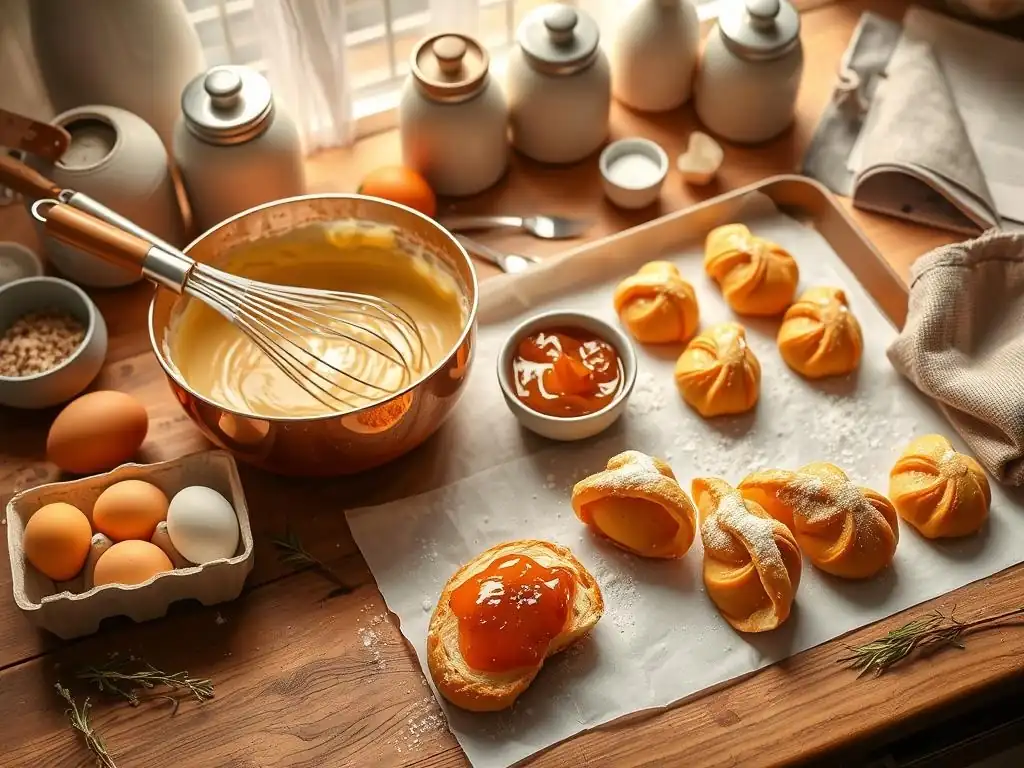
Welcome to BakeWithEase, your kitchen companion for conquering the delicious world of baking! Ready to elevate your skills? Dive into our easy choux pastry recipe and discover the secrets to creating light, airy puffs that will impress everyone. Think delicate éclairs, profiteroles bursting with cream, and savory gougères ready for any occasion. Curious how simple it can be? Let's get baking!
- Mastering Choux Pastry: A Comprehensive Guide
- The Art of Pâte à Choux: From Basics to Beyond
- Understanding Choux Pastry
- Choux Pastry Recipe: A Detailed Guide
- Troubleshooting Choux Pastry Issues
- Choux Pastry Variations
- Essential Tips for Successful Choux Pastry
- Advanced Choux Pastry Techniques
- Enjoying Your Homemade Choux Pastry
-
Frequently Asked Questions
- What exactly is choux pastry, and why is it considered a baking challenge?
- What makes the BakeWithEase "Easy Choux Pastry Recipe" different from other recipes?
- What are some common mistakes people make when making choux pastry, and how can I avoid them?
- Can I make choux pastry ahead of time, and if so, how should I store it?
- Besides eclairs and profiteroles, what else can I make with choux pastry?
- Final Reflection: The Sweet Triumph of Mastering Choux
- Unleash Your Inner Pâtissier: Master the Art of Choux!
Mastering Choux Pastry: A Comprehensive Guide
The Art of Pâte à Choux: From Basics to Beyond
Welcome to the delightful world of choux pastry! Often perceived as tricky, pâte à choux (pronounced "pat-a-shoo") is actually quite approachable once you understand its simple science. This versatile dough is the foundation for many beloved pastries, from light-as-air cream puffs to elegant éclairs and savory gougères. Mastering this dough opens up a world of delicious possibilities in your kitchen. Think of it as your next exciting baking challenge, one that is surprisingly easy to conquer with the right guidance.
Pâte à choux is unique because it relies on steam to create its signature hollow interior. Unlike other doughs that use leavening agents like yeast or baking powder, choux pastry is made by first cooking a mixture of water (or milk), butter, flour, and salt on the stovetop, then beating in eggs. This cooking process gelatinizes the starch in the flour, allowing it to absorb a significant amount of liquid and fat. When baked at a high temperature, this moisture turns into steam, puffing up the dough and creating that wonderful cavity perfect for filling.
Understanding Choux Pastry
Fundamentals of Pâte à Choux: Ingredients and Science
The magic of pâte à choux lies in its four core ingredients: water (or milk), butter, flour, and eggs. A pinch of salt is often added for flavor balance, and sometimes a touch of sugar if making sweet applications. The ratio of these ingredients is crucial for achieving the correct consistency and structure.
A typical ratio might involve roughly equal parts liquid and butter, slightly less flour by weight, and eggs added one by one until the dough reaches the desired, glossy, pipeable texture. For example, a common starting point is 1 cup water, 1/2 cup butter, 1 cup flour, and 4 large eggs. However, the exact number of eggs can vary depending on their size and how much moisture the flour absorbs.
The science behind the puff is fascinating. When the initial mixture of liquid, butter, salt, and flour is cooked, it forms a thick paste that pulls away from the sides of the pan. This step, often called drying out the dough, is essential as it allows the flour to fully hydrate and develop gluten, which provides structure. Adding the eggs incorporates both moisture and fat, enriching the dough and making it pliable. The high heat of the oven causes the water in the dough to flash into steam. Trapped within the elastic gluten structure, this steam expands rapidly, inflating the pastry shell. As the shell puffs, it sets due to the heat, creating a stable, hollow form. Baking at two different temperatures – an initial high temperature to create steam and puff, followed by a lower temperature to dry out and crisp the shell – is key to preventing collapse.
Choux Pastry Applications: Sweet and Savory Creations
The versatility of choux pastry is one of its most appealing aspects. On the sweet side, it is the base for classic French pastries like éclairs, long finger-shaped pastries typically filled with pastry cream and topped with chocolate glaze. Profiteroles (or cream puffs) are small, round choux balls often filled with whipped cream or ice cream and drizzled with chocolate sauce.
The Paris-Brest, a large ring of choux pastry filled with praline cream, was created to commemorate the Paris-Brest-Paris bicycle race in 1891, its ring shape mimicking a bicycle wheel. These examples showcase how a simple easy choux pastry recipe can be transformed into iconic desserts.
Beyond the sweet realm, pâte à choux shines in savory applications. Gougères, perhaps the most famous savory variation, are choux puffs mixed with grated cheese (often Gruyère or Comté) before baking. These are delightful served warm as an appetizer or alongside soup.
The same basic dough can also be used to create choux craquelin, where a thin disc of sweet, crumbly dough (the craquelin) is placed on top of the choux before baking, resulting in an extra crisp and attractive shell. This adaptability makes mastering an easy choux pastry recipe a valuable skill for any baker looking to expand their repertoire.
Benefits of Mastering Choux Pastry
Mastering choux pastry offers several significant benefits to the home baker. Firstly, it unlocks the ability to create a wide array of impressive desserts and appetizers with a single basic dough. Instead of needing multiple complex recipes, an easy choux pastry recipe provides the foundation for cream puffs, éclairs, gougères, and more. This efficiency saves time and effort while expanding your baking possibilities. For instance, once you have a reliable choux recipe down, whipping up a batch of profiteroles for an impromptu gathering or elegant éclairs for a special occasion becomes surprisingly manageable.
Secondly, understanding choux pastry deepens your overall baking knowledge. The principles of steam leavening, gluten development, and the importance of cooking a dough on the stovetop before baking are unique to choux and provide valuable insights into how different ingredients interact under heat. This knowledge can inform your approach to other baking projects.
Furthermore, the process of making choux, while requiring attention to detail, is relatively quick compared to yeasted doughs or laminated pastries. You can have a batch of choux dough ready for baking in under 30 minutes, making it a rewarding process that yields delicious results relatively quickly.
Choux Pastry Recipe: A Detailed Guide
Ingredients for Perfect Pâte à Choux
To make a standard batch of pâte à choux, you'll need:
- 1 cup (240ml) Water or Milk (Milk yields a richer, softer pastry)
- 1/2 cup (115g) Unsalted Butter, cut into pieces
- 1/2 teaspoon Salt (omit or reduce slightly for sweet applications if desired)
- 1 teaspoon Sugar (optional, for sweet pastries)
- 1 cup (125g) All-Purpose Flour, sifted
- 4-5 large Eggs, at room temperature
Using room temperature eggs is important because they emulsify better into the warm dough, resulting in a smoother consistency. Sifting the flour helps prevent lumps and ensures it incorporates evenly into the cooked mixture. While water is traditional and results in a crispier shell, using milk adds richness and contributes to a slightly softer interior. Experimenting with liquids is a great way to find your preferred texture from an easy choux pastry recipe.
The quantity of eggs needed can vary. Factors like the moisture content of your flour, the humidity of your kitchen, and how thoroughly you dried out the dough on the stove all play a role. It's crucial to add the eggs one at a time, mixing thoroughly after each addition, and stopping when the dough reaches the correct consistency – it should be smooth, glossy, and fall from a spoon in a thick "V" shape. Adding too many eggs will make the dough too loose and prevent it from holding its shape and puffing properly.
Essential Equipment for Choux Pastry Baking
Having the right tools can make the process of creating an easy choux pastry recipe much smoother. A heavy-bottomed saucepan is essential for cooking the initial dough mixture evenly and preventing scorching. Wooden spoons are traditionally used for mixing the dough on the stovetop, as they are sturdy and won't scratch your pan, though a heatproof spatula also works well.
An electric mixer, either a stand mixer with a paddle attachment or a hand mixer, is highly recommended for incorporating the eggs into the warm dough. While it can be done by hand, a mixer ensures thorough mixing and helps cool the dough slightly before adding the eggs, preventing them from scrambling.
For shaping the choux pastry, piping bags fitted with various tips are incredibly useful. A large round tip (like an Ateco 805 or 806) is perfect for classic cream puffs, while a large star tip (like an Ateco 826 or 827) can add a decorative flourish. For éclairs, a large round or open star tip is typically used.
If you don't have piping bags, you can use two spoons to dollop the dough onto the baking sheet, though the shapes will be less uniform. Baking sheets lined with parchment paper or silicone baking mats are also crucial; they prevent the choux from sticking and promote even browning.
Step 1: Preparing the Pâte à Choux Dough
Begin by combining the water (or milk), butter, salt, and sugar (if using) in your heavy-bottomed saucepan. Place the pan over medium heat and stir occasionally until the butter is completely melted and the mixture comes to a rolling boil. Once boiling, remove the pan from the heat and immediately add the sifted flour all at once. Stir vigorously with a wooden spoon or heatproof spatula until the mixture comes together to form a cohesive ball of dough.
Return the pan to medium-low heat and continue to cook the dough, stirring constantly, for 1-2 minutes. This step, known as "drying out" the dough, is critical. You'll notice a thin film forming on the bottom of the pan, and the dough will become less sticky.
This process gelatinizes the starch in the flour and evaporates excess moisture, ensuring the pastry puffs properly. After drying, transfer the dough to the bowl of your electric mixer (or a separate bowl if using a hand mixer). Let it cool for a few minutes, stirring occasionally, until it is warm but not hot to the touch (around 140°F or 60°C) – this prevents the eggs from cooking.
Step 2: Shaping the Choux Pastry
Once the dough has cooled slightly, begin adding the eggs one at a time. With the mixer running on low speed (using the paddle attachment), add the first egg and mix until it is completely incorporated and the dough looks smooth again before adding the next. The dough may look curdled or separated after the first egg, but keep mixing; it will come back together.
Continue adding eggs one by one until the dough is smooth, glossy, and has the correct consistency. To test, lift the paddle attachment; the dough should hang from it in a "V" shape and eventually break off cleanly. You might not need all the eggs; stop adding when the desired consistency is reached.
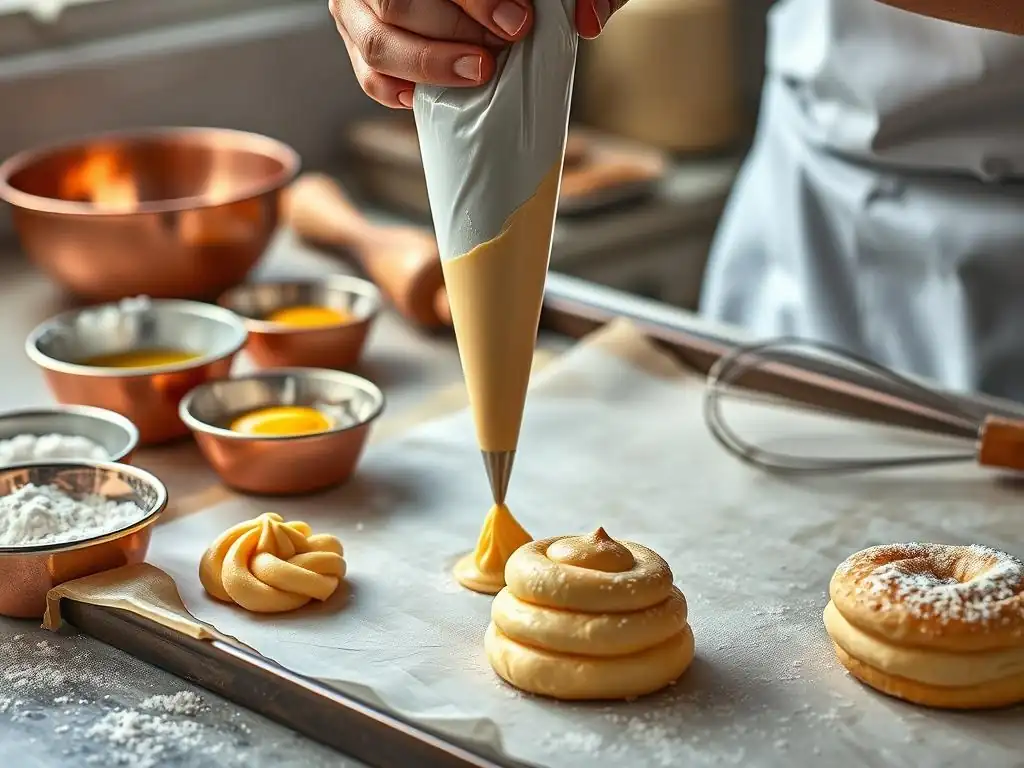
Transfer the dough to a piping bag fitted with your chosen tip. For cream puffs, pipe mounds of dough about 1.5-2 inches in diameter onto the prepared baking sheets, spacing them about 2 inches apart as they will expand significantly. For éclairs, pipe logs about 4-5 inches long.
You can smooth out any peaks or uneven edges by gently dabbing them with a wet fingertip or the back of a spoon. For a classic look and a slightly crispier top, some bakers lightly brush the tops of the shaped choux with an egg wash (one egg beaten with a tablespoon of water or milk).
Step 3: Baking Choux Pastry to Perfection
Baking is perhaps the most critical step in achieving perfectly puffed and crisp choux pastry. Preheat your oven to a high temperature, typically around 425°F (220°C). Place the baking sheet with the shaped choux pastry in the preheated oven. The initial high heat creates the burst of steam needed for the dough to puff rapidly. Bake at this temperature for about 10-15 minutes, or until the pastries have significantly puffed up and are starting to turn a light golden brown. Do not open the oven door during this initial high-heat phase, as this can cause the pastries to collapse.
After the initial puffing period, reduce the oven temperature to a lower setting, usually around 375°F (190°C), and continue baking for another 15-25 minutes, or until the pastries are deeply golden brown, firm to the touch, and feel light when lifted. This lower temperature allows the interiors to cook through and the shells to dry out and crisp up without burning the exterior. Again, avoid opening the oven door unnecessarily.
To ensure the pastries are fully dried out, you can prick the bottom of each pastry with a small knife or skewer during the last few minutes of baking to allow steam to escape. This step helps prevent them from becoming soggy after cooling.
Step 4: Cooling and Filling Choux Pastry
Once baked to a deep golden brown, remove the choux pastry from the oven. If you pricked the bottoms, place them back on the baking sheet or a wire rack, hole side down, for a few minutes to allow any remaining steam to escape. Transfer the pastries to a wire rack to cool completely. It is essential that the choux cool thoroughly before filling; filling warm pastries will result in a soggy mess as the steam from the filling will condense inside the shell.
To fill the cooled choux pastries, you have a few options. For cream puffs, you can slice them horizontally and spoon or pipe in your desired filling. For éclairs or if you prefer a cleaner look, you can make a small hole in the bottom or side of each pastry using a knife or the tip of a piping bag, then pipe the filling inside until the pastry feels heavy.
Popular fillings include classic vanilla pastry cream, whipped cream, chocolate mousse, or even savory fillings like cheese or chicken salad. An easy choux pastry recipe is truly just the beginning – the filling possibilities are endless!
Troubleshooting Choux Pastry Issues
Addressing Flat Choux Pastry
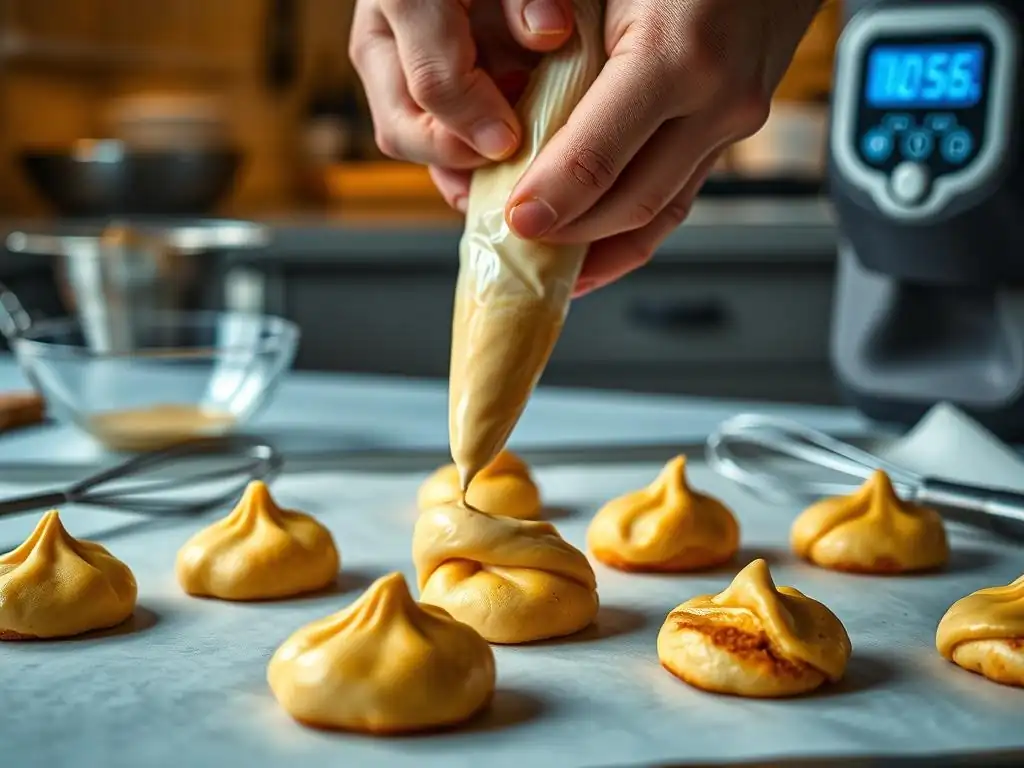
Experiencing flat choux pastry is one of the most common frustrations for bakers learning an easy choux pastry recipe. Several factors can contribute to this disheartening result. One primary cause is insufficient drying out of the dough on the stovetop. If the dough retains too much moisture before the eggs are added, it won't have the necessary structure to hold the steam during baking, leading to little or no puff. Ensure you cook the dough for the full 1-2 minutes after adding the flour, stirring constantly until a film forms on the pan.
Another frequent culprit is adding too many eggs, resulting in a dough that is too wet and slack. A dough that's too loose won't hold its shape or puff properly. Always add eggs one at a time and stop when the dough reaches the correct consistency (the "V" shape test). Opening the oven door too early during the initial high-heat baking phase is also detrimental. The sudden drop in temperature can cause the delicate, expanding structure to collapse before it has set. Resist the urge to peek until the pastries are significantly puffed and starting to brown.
Correcting Dry Choux Pastry
Dry, tough choux pastry is another issue that can arise. This often happens when the dough is overcooked on the stovetop, or if too much flour is used relative to the liquid and fat. Overcooking the dough during the initial "drying out" phase can make it too stiff and less able to expand properly when baked. While drying is important, cooking it for too long removes too much moisture, resulting in a dense, dry pastry.
Insufficient egg incorporation can also lead to dry choux. The eggs provide necessary moisture and richness, contributing to a tender interior. Ensure that each egg is fully mixed into the dough before adding the next, resulting in a smooth and glossy consistency. Finally, overbaking at the lower temperature setting can also dry out the pastries excessively. While you want the shells to be crisp, baking for too long or at too high a temperature during the second phase can lead to a hard, dry result. Monitor the color and firmness carefully.
Preventing Soggy Choux Pastry
Soggy choux pastry, either right out of the oven or after filling, is disappointing. One cause can be not baking the pastries long enough or at a sufficiently high temperature in the second phase. The lower temperature is crucial for drying out the interior and crisping the shell. If they aren't baked until deeply golden and light, they will retain too much moisture inside and become soft and deflated upon cooling. Pricking the bottoms during the last few minutes of baking helps steam escape, further preventing sogginess.
Filling the pastries before they are completely cool is another common mistake leading to sogginess. The steam from a warm filling, or residual heat from the pastry itself, will condense inside the shell, making it soft and unappealing. Always allow choux pastries to cool fully on a wire rack. For fillings like whipped cream or ice cream, it's best to fill the pastries just before serving to maintain the crisp texture of the shell. Proper storage is also key; store unfilled choux in an airtight container at room temperature.
Choux Pastry Variations
Classic Cream Puffs with Vanilla Pastry Cream
One of the most beloved applications of an easy choux pastry recipe is the classic cream puff. These delightful, round pastries are simple yet elegant. Once you have your basic choux dough prepared and piped into golf-ball-sized mounds, bake them until deeply golden and hollow. The classic filling is a rich, smooth vanilla pastry cream (crème pâtissière). This involves heating milk, sugar, and vanilla, then whisking in a mixture of egg yolks, sugar, and cornstarch or flour, and cooking until thickened.
To assemble, slice the cooled cream puffs horizontally and spoon or pipe the cooled pastry cream into the bottom half. Place the top half back on, often dusted with powdered sugar. A batch made with 1 cup of flour typically yields 12-15 medium-sized cream puffs, requiring about 2-3 cups of pastry cream for filling. The contrast between the crisp, airy shell and the smooth, sweet cream is what makes this a timeless favorite.
Chocolate Éclairs with Ganache Glaze
Éclairs are the elongated cousins of cream puffs, offering a more sophisticated presentation. Using the same easy choux pastry recipe, the dough is piped into finger shapes, typically 4-5 inches long. After baking and cooling, éclairs are most famously filled with chocolate pastry cream or a plain pastry cream and topped with a glossy chocolate ganache glaze. Ganache is a simple mixture of melted chocolate and hot heavy cream, stirred until smooth.
A standard batch of choux dough might yield 10-12 éclairs, requiring approximately 2-2.5 cups of filling and about 4-6 ounces of chocolate for the ganache. The key to a beautiful éclair is a smooth, even glaze on top. This is achieved by dipping the top of the filled éclair into slightly warm ganache. Éclairs are a wonderful example of how mastering an easy choux pastry recipe can lead to creating impressive, bakery-quality desserts at home.
Gruyère Gougères: Savory Cheese Puffs
Shifting to the savory side, gougères are a fantastic way to use your easy choux pastry recipe. The basic choux dough is prepared as usual, but before adding the eggs, grated cheese, most commonly Gruyère or Comté, is stirred into the warm dough. About 1/2 to 1 cup of finely grated cheese per standard batch of dough works well, depending on how intensely cheesy you want them. A pinch of black pepper or a dash of cayenne can also be added for extra flavor.
The cheese melts slightly in the warm dough, distributing flavor throughout. The dough is then piped or spooned into small mounds, similar to cream puffs, and baked until puffed and golden brown. Gougères are best served warm, straight from the oven, when the cheese is still soft and fragrant. A batch can yield 15-20 small gougères, perfect as an appetizer or accompaniment to wine or soup. They demonstrate the savory potential hidden within a simple easy choux pastry recipe.
Paris-Brest: Hazelnut Cream-Filled Choux Ring
The Paris-Brest is a visually stunning and utterly delicious pastry. It's a large ring of choux pastry, often topped with sliced almonds, that is baked and then sliced horizontally and filled generously with a praline-flavored cream, typically a mousseline (pastry cream enriched with butter) or a diplomat cream (pastry cream lightened with whipped cream) mixed with praline paste. The ring shape is created by piping the choux dough in a circle.
Creating a Paris-Brest requires a slightly larger quantity of choux dough than individual puffs. A ring with a diameter of 8-10 inches might use about 1.5-2 times a standard choux recipe batch. The filling is substantial, often requiring 3-4 cups of praline cream. This pastry is a true showstopper and a testament to the versatility and elegance that can be achieved starting with an easy choux pastry recipe and building upon it with delicious fillings and shapes.
Essential Tips for Successful Choux Pastry
The Role of Ingredient Temperature
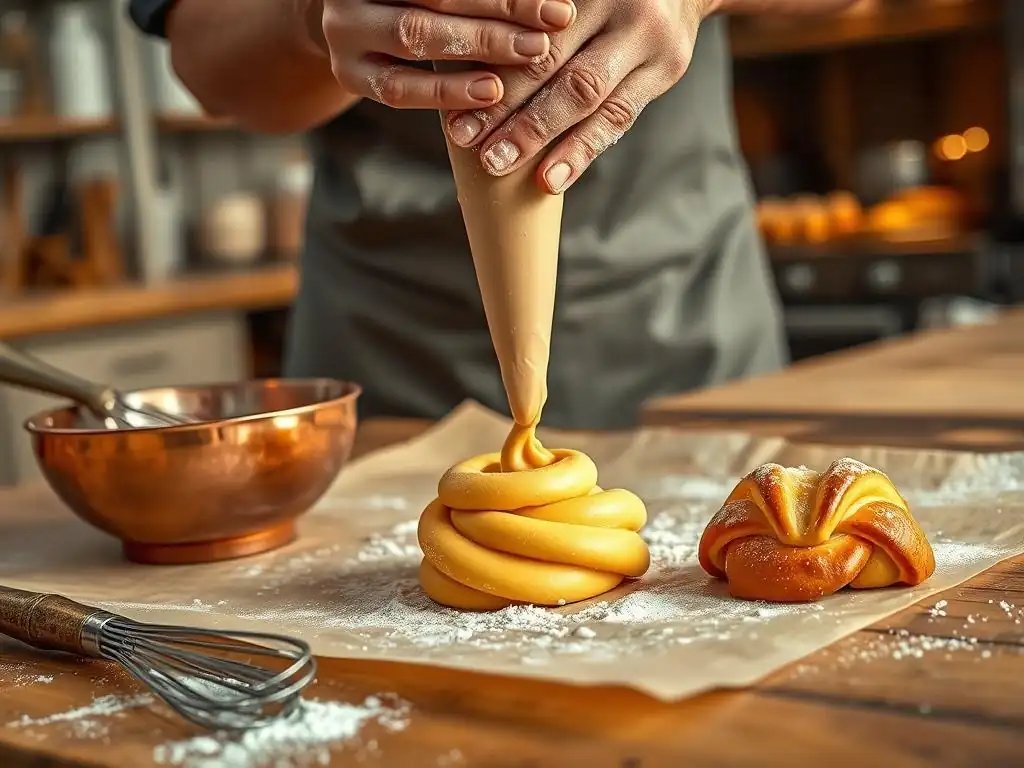
Ingredient temperature plays a significant role in the success of an easy choux pastry recipe. While the initial liquid and butter mixture is brought to a boil, the eggs added later must be at room temperature. Cold eggs are more difficult to incorporate smoothly into the warm dough and can cause the fat in the dough to seize up, resulting in a lumpy texture that won't puff evenly. Allowing eggs to sit at room temperature for 30-60 minutes before use is sufficient.
Furthermore, it's crucial to let the cooked dough cool slightly before adding the eggs. If the dough is too hot (above 140°F or 60°C), the eggs will scramble upon contact, ruining the texture and leavening potential. Stirring the dough in the mixer bowl for a few minutes helps release some heat before the eggs go in. Conversely, if the dough is too cool, the eggs won't emulsify properly. Achieving that warm-but-not-hot temperature is key for creating a smooth, glossy dough that's ready to puff beautifully.
Optimizing the Baking Process
Optimizing the baking process is paramount for achieving light, airy choux pastry with a crisp shell. The two-temperature baking method is highly recommended. Starting at a high temperature (around 425°F/220°C) for the first 10-15 minutes provides the necessary heat surge to create maximum steam and initial puff. This rapid expansion is crucial for forming the hollow interior.
After the initial puff, reducing the temperature to a lower setting (around 375°F/190°C) allows the pastries to continue baking and dry out thoroughly without burning. This second phase, lasting 15-25 minutes or more depending on size, sets the structure and crisps the shell. Baking until the pastries are a deep golden brown ensures they are fully cooked and won't collapse or become soggy upon cooling. Avoid opening the oven door during the initial high-heat phase and minimize opening during the second phase to maintain a consistent temperature environment.
Proper Storage for Choux Pastry
Proper storage is essential to maintain the quality of your choux pastry, especially its crispness. Unfilled choux shells are best stored at room temperature in an airtight container. This helps prevent them from becoming stale or absorbing moisture from the air. When stored this way, they can remain relatively crisp for 1-2 days. For longer storage, unfilled choux shells freeze exceptionally well. Once completely cooled, place them in a single layer on a baking sheet and freeze until solid, then transfer to a freezer-safe bag or container for up to 1-2 months.
To revive frozen choux shells or re-crisp day-old ones, place them on a baking sheet and bake in a preheated oven at 350°F (175°C) for 5-10 minutes until crisp again. Filled choux pastries, especially those with dairy-based fillings like pastry cream or whipped cream, must be stored in the refrigerator. However, refrigeration can soften the choux shell. For optimal texture, it's always best to fill choux pastries as close to serving time as possible.
Advanced Choux Pastry Techniques
Incorporating Flavor Extracts into Choux Pastry
While the base choux dough has a neutral flavor, you can easily infuse it with various extracts to complement your fillings. Flavor extracts like vanilla, almond, or even a citrus zest can be added to the dough along with the eggs. A teaspoon of vanilla extract per standard batch of dough is a common addition for sweet applications. For savory choux like gougères, consider adding a pinch of nutmeg or a dash of hot sauce.
Another way to incorporate flavor is by substituting some of the liquid with other ingredients. For instance, using milk instead of water adds richness. You could also experiment with adding a small amount of cocoa powder (adjusting the flour slightly) for chocolate choux, or a purée (like pumpkin or spinach) for colored and flavored savory puffs. When adding extracts or other wet flavorings, be mindful that they add moisture, which might slightly affect the consistency, potentially requiring a tiny adjustment in the amount of egg needed.
Creating Decorative Choux Pastry Shapes
Beyond simple rounds and logs, an easy choux pastry recipe can be transformed into various decorative shapes using different piping tips and techniques. Star tips create ridged surfaces that crisp up beautifully and hold glazes well. You can pipe swans (an 'S' shape for the neck and a round body), rings (like the Paris-Brest), or even numbers and letters for special occasions. Using multiple piping tips allows for creativity in presentation.
Another decorative technique is applying a craquelin topping. Craquelin is a simple mixture of butter, sugar, and flour rolled thin and cut into discs. These discs are placed on top of the shaped choux dough before baking. As the choux puffs, the craquelin cracks attractively and provides a delightful, crisp, sweet contrast to the airy choux shell. This technique adds both visual appeal and textural complexity to pastries like cream puffs or éclairs.
Enjoying Your Homemade Choux Pastry
You've done it! You've mastered the art of making choux pastry. Whether you've created classic cream puffs, elegant éclairs, or savory gougères, take a moment to appreciate your accomplishment. Making choux from scratch, starting with an easy choux pastry recipe, is a rewarding experience that yields impressive results. The light, airy shells are a testament to your baking skill and understanding of a little kitchen science.
Now comes the best part: enjoying the fruits of your labor! Gather friends and family, or simply savor them yourself. The versatility of choux means there's a perfect pairing for any occasion, from a delicate dessert after dinner to a delightful appetizer at a party.
Sharing your homemade choux pastry is a wonderful way to spread joy. Pack a box of freshly filled cream puffs for a neighbor, bring a tray of gougères to a potluck, or surprise colleagues with homemade éclairs. People are often impressed by homemade choux, as it's perceived as being difficult, making your successful execution even more special.
When sharing, consider how the filling will hold up during transport. Pastries filled with stable creams like pastry cream travel better than those filled with delicate whipped cream, which are best filled just before serving. Include a note about the filling and any allergens. Taking the time to bake and share something as delightful as choux pastry, starting from an easy choux pastry recipe, is a truly sweet gesture that will surely be appreciated.
Frequently Asked Questions
What exactly is choux pastry, and why is it considered a baking challenge?
Choux pastry, or pâte à choux, is a light, airy pastry dough used to make profiteroles, eclairs, and more. It's a challenge because it requires precise measurements and technique for the dough to rise properly and achieve the desired hollow interior.
What makes the BakeWithEase "Easy Choux Pastry Recipe" different from other recipes?
Our recipe focuses on simplified steps and clear instructions, making it accessible even for beginner bakers. We emphasize using readily available ingredients and provide tips to avoid common pitfalls, leading to consistent results.
What are some common mistakes people make when making choux pastry, and how can I avoid them?
Common mistakes include incorrect ingredient ratios, insufficient cooking time, and opening the oven too early. BakeWithEase advises precise measuring, proper oven temperature, and waiting until the pastry is golden brown before opening the door.
Can I make choux pastry ahead of time, and if so, how should I store it?
Yes, you can prepare the choux pastry dough ahead of time! Store the uncooked dough in a piping bag in the refrigerator for up to 24 hours. Be sure to let it come to room temperature slightly before piping and baking.
Besides eclairs and profiteroles, what else can I make with choux pastry?
Choux pastry is incredibly versatile! You can use it to make cream puffs, gougères (savory cheese puffs), and even Paris-Brest, a wheel-shaped pastry filled with praline cream. The possibilities are almost endless!
Final Reflection: The Sweet Triumph of Mastering Choux
The seemingly daunting world of choux pastry is, in reality, surprisingly accessible. With a little patience and the right techniques, anyone can achieve perfectly puffed cream puffs, delicate éclairs, or even whimsical profiteroles. This isn't just about baking; it's about unlocking a creative outlet and experiencing the immense satisfaction of transforming simple ingredients into something truly delightful.
The journey of mastering choux pastry is a microcosm of life itself – requiring precision, yet rewarding persistence. It's a testament to the power of following instructions carefully, understanding the "why" behind each step, and embracing the occasional imperfection. The subtle nuances of temperature and timing, the delicate balance of wet and dry ingredients – these are lessons that extend far beyond the kitchen. The best things in life are worth the wait,
and this couldn't be truer for the golden-brown, airy perfection of a well-executed choux pastry.
Now, I invite you to take the leap. Don't be intimidated by the reputation of choux pastry; embrace the challenge. Try your hand at the recipe, experiment with fillings and toppings, and share your creations with loved ones. The joy of baking, and the sweet taste of success, awaits you. Let your next baking adventure be the beginning of a delicious journey.
Unleash Your Inner Pâtissier: Master the Art of Choux!
Thanks for taking the time to explore the delightful world of choux pastry! We hope you've gained the confidence to tackle this seemingly tricky technique. Now, it's time to put your newfound knowledge into practice.
- Bake your masterpiece! Try out one of the recipes discussed in the article – or even better, experiment with your own choux creation!
- Share your success (or even your failures!): Post a picture of your choux creations on social media using #BakeWithEaseChoux and inspire others.
- Join our baking community: Head over to our forum to connect with other passionate bakers and ask any questions you may have. We love to see your progress!
Ready to transform your kitchen into a choux pastry paradise? What's your first choux creation going to be?