
Invest Wisely: Comparing the Cost and Value of a Baking Stone and Dutch Oven.

Welcome to BakeWithEase, your trusted guide to the sweet and savory world of baking! Ever wondered if a baking stone or a Dutch oven is the secret to that perfect crust and airy crumb? Unravel the mystery as we delve into the ultimate showdown: Baking Stone vs Dutch Oven. Discover which tool truly reigns supreme in your kitchen and which aligns best with your baking aspirations. Let's bake smarter, not harder!
- Optimal Baking: Comparing Baking Stones and Dutch Ovens
- Baking Tool Selection: Stone vs. Dutch Oven
- Baking Stone: Benefits and Costs for Bread and Pizza
- Dutch Oven: Versatility and Investment Value for Bread and Stews
- Baking Stone vs. Dutch Oven: Cost-Value Analysis
- Choosing the Right Tool: Budget and Baking Needs
- Alternative Baking Tools: Pizza Steels and Baking Sheets
- Conclusion: Baking Stone or Dutch Oven?
-
Frequently Asked Questions
- What are the primary differences between using a baking stone and a Dutch oven for baking?
- Which is more versatile: a baking stone or a Dutch oven?
- How does the cost of a baking stone compare to that of a Dutch oven?
- What are the maintenance requirements for a baking stone versus a Dutch oven?
- For a beginner baker, which would be a better investment: a baking stone or a Dutch oven?
- Final Reflection: The Hearth's Heart: Choosing Your Baking Companion
- Unleash Your Baking Potential Today!
Optimal Baking: Comparing Baking Stones and Dutch Ovens
Baking Tool Selection: Stone vs. Dutch Oven
Navigating the world of baking equipment can feel a bit overwhelming, especially when you're trying to achieve bakery-quality results at home. Two popular tools often discussed for achieving fantastic crusts and even baking are the baking stone and the Dutch oven. While both serve to improve heat management in your oven, they do so in distinct ways and offer different benefits depending on what you're baking. Understanding their core functions is the first step in deciding which tool, or perhaps both, is right for your kitchen.
When considering a baking stone vs dutch oven, it's helpful to think about your primary baking goals. Are you aiming for perfectly crispy pizza crusts and rustic loaves with a crackling exterior? Or are you more interested in moist, tender bread with a soft crumb, alongside other versatile cooking applications like stews and roasts? Each tool excels in different areas, and their suitability often comes down to the specific recipes you plan to tackle most frequently. This comparison will help clarify the strengths and weaknesses of each, guiding your decision towards the optimal baking setup for your needs.
Defining Baking Needs: Stone vs. Dutch Oven
Understanding your typical baking projects is crucial when deciding between a baking stone and a Dutch oven. If your passion lies in crafting artisan pizzas with a beautifully charred bottom and a crisp, chewy crust, a baking stone is often the preferred tool. Its ability to rapidly transfer intense heat directly to the base of the dough mimics the floor of a professional pizza oven, achieving that sought-after texture quickly. Similarly, for certain types of freeform loaves where a super-crisp bottom crust is desired without containing the steam, a stone can be very effective.
Conversely, if your focus is on baking rustic, high-hydration loaves like sourdough, where steam is paramount for achieving maximum oven spring and a tender crumb, a Dutch oven typically shines. The lidded pot traps the steam released by the dough during the initial phase of baking, preventing the crust from setting too early and allowing the loaf to expand fully. Beyond bread, a Dutch oven's enclosed environment and ability to distribute heat evenly make it ideal for braising meats, simmering stews, and cooking casseroles, offering significantly more versatility than a baking stone in terms of cooking methods beyond baking.
Baking Stone: Benefits and Costs for Bread and Pizza
A baking stone is a simple yet effective tool that has been a staple in kitchens for centuries, in various forms. Its primary function is to act as a thermal mass, absorbing and radiating heat consistently. This stable heat environment is particularly beneficial for baked goods that require high temperatures and direct contact with a hot surface, such as pizza and certain types of bread. They come in various materials, each with slightly different properties regarding heat retention and durability, but the core principle remains the same: provide a searingly hot surface for rapid crust development.
Beyond just pizza and bread, baking stones can also improve the outcome of other baked goods like cookies, pastries, and even roasted vegetables by providing a more even and stable temperature within the oven. They help mitigate temperature fluctuations that can occur when the oven door is opened or when the heating elements cycle on and off. While they require preheating, often for 30 minutes to an hour at high temperatures (like 450-500°F or 230-260°C), this investment in time pays off with superior crust development and overall baking performance.
How Baking Stones Work: Heat Retention and Transfer
Baking stones function by absorbing a significant amount of thermal energy from the oven and then transferring it efficiently and directly to the bottom of the food placed upon them. This process is often described as providing a "thermal shock" to the dough. When a room-temperature pizza or loaf of bread is placed on a preheated stone, the intense heat transfer causes the water in the dough's bottom layer to instantly turn into steam, leading to rapid lift and a very crisp crust. This is similar to how a professional pizza oven's floor operates.
The effectiveness of a baking stone comes down to its material's heat retention and conductivity properties. Materials like cordierite or ceramic can hold heat very well and release it steadily. The stone helps maintain a consistent temperature around the baked good, even as moisture evaporates from the dough, which can cool the air immediately surrounding it. This stable, high-heat environment is key to achieving a beautiful rise and even browning, especially for items baked directly on the stone without a pan.
Baking Stone Benefits: Crispy Crusts, Even Baking, and Moisture Reduction
One of the most celebrated benefits of using a baking stone is its ability to create exceptionally crispy crusts, particularly on pizzas and rustic loaves. The direct, intense heat transfer from the stone causes the bottom of the dough to cook rapidly, preventing sogginess and promoting a desirable crispness. This rapid cooking of the base is hard to achieve on a standard metal baking sheet, which doesn't retain or transfer heat as effectively.
Furthermore, baking stones contribute to more even baking overall. By acting as a large thermal mass, they help to stabilize the oven temperature, reducing hot spots and cold spots that can lead to uneven browning. The stone absorbs heat and radiates it upwards, helping to cook the top and bottom of your baked goods more uniformly. Additionally, for items like bread baked directly on the stone, the porous nature of some stones can help draw out excess moisture from the bottom crust, further enhancing crispness.
Baking Stone Materials: Cordierite, Ceramic, Soapstone
Baking stones are crafted from several different materials, with cordierite, ceramic, and soapstone being among the most common. Cordierite is a ceramic material known for its exceptional thermal shock resistance, meaning it's less likely to crack when exposed to rapid temperature changes, such as placing a cool pizza onto a hot stone. This durability makes cordierite stones a popular choice and generally reliable for high-temperature baking.
Ceramic stones, often made from materials similar to kiln shelves, are also effective at heat retention and transfer. However, traditional ceramics can be more susceptible to thermal shock compared to cordierite, requiring more careful handling and slower preheating. Soapstone is another option, prized for its ability to retain heat for very long periods and its non-porous surface, which can make cleaning easier. Each material offers slightly different performance characteristics, though all aim to provide a stable, hot surface for baking.
Baking Stone Cost: Price Range and Influencing Factors
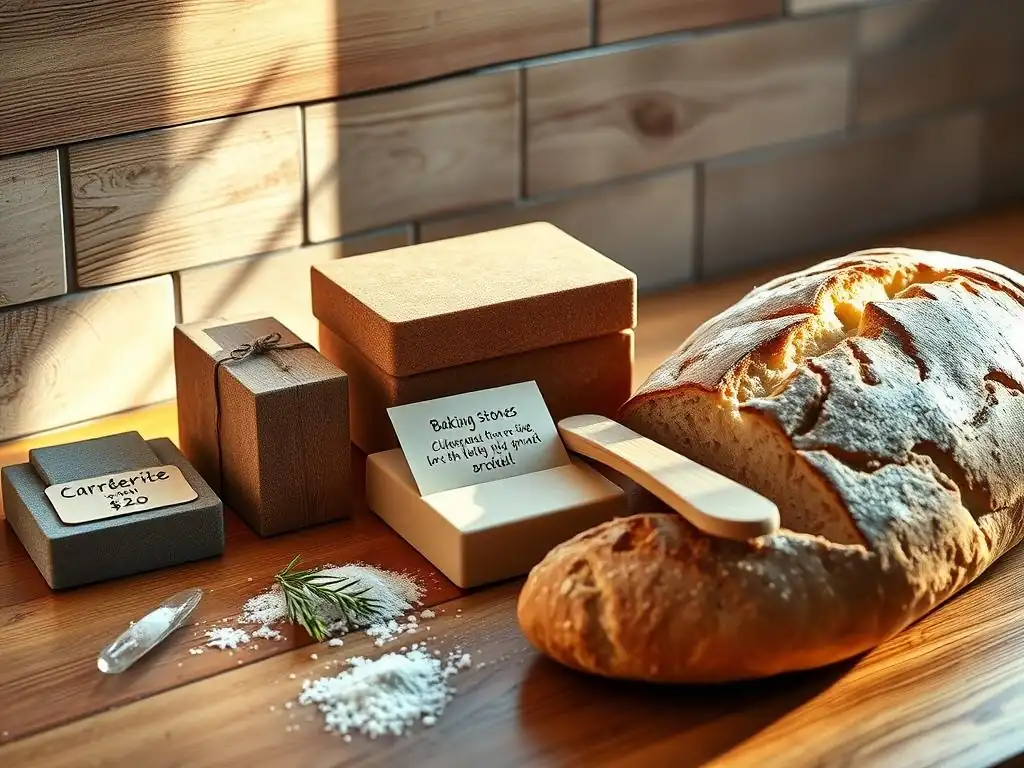
The cost of a baking stone can vary significantly based on material, size, thickness, and brand. Basic ceramic stones might start in the \$20-\$40 range. More durable cordierite stones, often recommended for their resistance to cracking, typically fall within the \$40-\$80 range. Premium or specialty stones made from materials like soapstone, or those with unique shapes or features, can cost \$80 or more, sometimes exceeding \$100.
Factors influencing the price include the stone's thickness (thicker stones retain more heat), its size (larger stones accommodate bigger pizzas or loaves), and the manufacturing process. While you can find very inexpensive stones, investing a bit more often gets you a more durable product less prone to breaking from thermal shock or accidental drops. Considering the baking stone vs dutch oven cost, the stone is generally the less expensive initial investment.
Baking Stone Maintenance: Cleaning and Prevention
Maintaining a baking stone is relatively simple, though it requires avoiding soap, which can be absorbed by the porous surface and impart unwanted flavors. After the stone has completely cooled (never try to clean a hot stone! ), use a stiff brush or scraper to remove any stuck-on food particles. For stubborn spots, you can use a metal spatula or bench scraper to gently scrape them away.
Because stones are porous, they will naturally develop stains over time, often from grease or spilled toppings. These stains are usually harmless and part of the stone's character; they don't typically affect performance. Avoid soaking the stone in water. If absolutely necessary for major spills, you can rinse it quickly and then allow it to air dry completely for at least 24-48 hours before using it again. Proper preheating also helps to burn off residual food particles, acting as a self-cleaning mechanism.
Dutch Oven: Versatility and Investment Value for Bread and Stews
A Dutch oven is a heavy cooking pot with a tight-fitting lid, typically made from cast iron, either bare or enameled. While renowned for its ability to make hearty stews, braises, and soups on the stovetop or in the oven, it has also become an indispensable tool for many home bread bakers, particularly for high-hydration doughs like sourdough. Its ability to create a self-contained steaming environment is key to achieving excellent oven spring and a beautiful crust on bread.
The heavy construction of a Dutch oven, especially cast iron, means it heats up evenly and retains heat exceptionally well. This stable temperature throughout the pot ensures that food cooks uniformly, whether it's a slow-cooked stew or a loaf of bread. The tight-fitting lid traps moisture, making it ideal for cooking methods that require a moist environment, which is precisely why it works so well for baking bread by simulating the conditions of a steam-injected professional oven.
Dutch Oven Mechanics: Moisture Retention and Uniform Heat
The magic of a Dutch oven for bread baking lies primarily in its ability to trap steam. When bread dough is placed inside a preheated Dutch oven and the lid is sealed, the moisture evaporating from the dough is contained within the pot. This humid environment keeps the surface of the dough supple during the crucial initial phase of baking, allowing the loaf to expand significantly before the crust sets. This phenomenon, known as oven spring, is vital for achieving a good crumb structure and volume in many bread recipes.
Beyond steam, the heavy material of a Dutch oven ensures incredibly uniform heat distribution. Cast iron, in particular, is excellent at absorbing and radiating heat evenly from all sides – the bottom, sides, and even the lid. This consistent heat ensures that the bread bakes uniformly, developing an even crust without scorching or undercooking spots. The combination of trapped steam and stable, even heat makes the Dutch oven a powerhouse for achieving excellent results with rustic bread.
Dutch Oven Advantages: Braising, Stewing, and Bread Baking
The primary advantage of a Dutch oven, especially when comparing a baking stone vs dutch oven, is its sheer versatility. While a baking stone is largely dedicated to tasks requiring a hot, flat surface (pizza, freeform bread), a Dutch oven can handle a vast array of cooking methods. It's perfect for stovetop simmering, slow-cooking stews and chili, braising meats until they are fall-apart tender, frying chicken, and, of course, baking bread with an incredible crust and crumb.
For bread bakers, the Dutch oven provides an easy way to introduce steam into a standard home oven, which typically lacks steam injection capabilities. This controlled steam environment is critical for achieving the desired rise and crust development in artisan loaves. Its ability to go from stovetop to oven also allows for searing meats before slow cooking or starting bread baking with the lid on and finishing with the lid off for browning, adding another layer of functionality.
Dutch Oven Materials: Cast Iron vs. Enameled Cast Iron
Dutch ovens are most commonly made from either bare cast iron or enameled cast iron, each with its own characteristics. Bare cast iron is the traditional choice, known for its incredible durability, heat retention, and ability to develop a natural non-stick surface through seasoning. It's often more affordable than enameled versions but requires regular seasoning to prevent rust and maintain its non-stick properties. It's also reactive with acidic foods unless well-seasoned.
Enameled cast iron features a protective glass coating over the cast iron core. This enamel finish prevents rust, eliminates the need for seasoning, and makes the pot non-reactive, meaning you can cook acidic foods like tomato sauces without concern. Enameled Dutch ovens come in a wide range of colors and finishes, are easier to clean, but are typically more expensive and can be susceptible to chipping if dropped or hit hard. Both types offer excellent heat performance for baking and cooking.
Dutch Oven Cost: Initial Investment and Longevity
The initial cost of a Dutch oven can be a significant investment compared to a baking stone. Basic bare cast iron Dutch ovens might start around \$40-\$60 for smaller sizes (e.g., 5-6 quart), while larger or premium bare cast iron can go up to \$100+. Enameled cast iron Dutch ovens, especially from renowned brands, are considerably more expensive, often starting in the \$100-\$200 range for standard sizes and easily exceeding \$300 or even \$400+ for larger pots or high-end brands.
Despite the higher initial cost, a quality Dutch oven is an investment designed to last for decades, if not generations, particularly bare cast iron which can be restored if damaged. Enameled versions are also very durable with proper care. Their longevity and versatility across various cooking methods contribute significantly to their overall value, amortizing the initial expense over many years of use for a wide range of dishes, not just bread.
Dutch Oven Maintenance: Seasoning and Cleaning
Maintaining a bare cast iron Dutch oven involves regular seasoning. Seasoning is the process of baking thin layers of oil onto the cast iron surface, which creates a natural, non-stick coating and protects against rust. After each use, clean the pot with hot water and a stiff brush (avoiding soap, especially initially, as it can strip the seasoning), dry it thoroughly on the stove or in a warm oven, and apply a thin layer of cooking oil.
Enameled cast iron Dutch ovens are much easier to clean. They can be washed with soap and water like regular cookware. For stubborn food residue, you can soak the pot or gently scrub with a nylon brush or non-scratch pad. Avoid using abrasive cleaners or steel wool, which can damage the enamel surface. While enameled pots don't require seasoning, avoiding extreme temperature changes (thermal shock) and harsh cleaning methods will help preserve the enamel coating and ensure the pot's longevity.
Baking Stone vs. Dutch Oven: Cost-Value Analysis
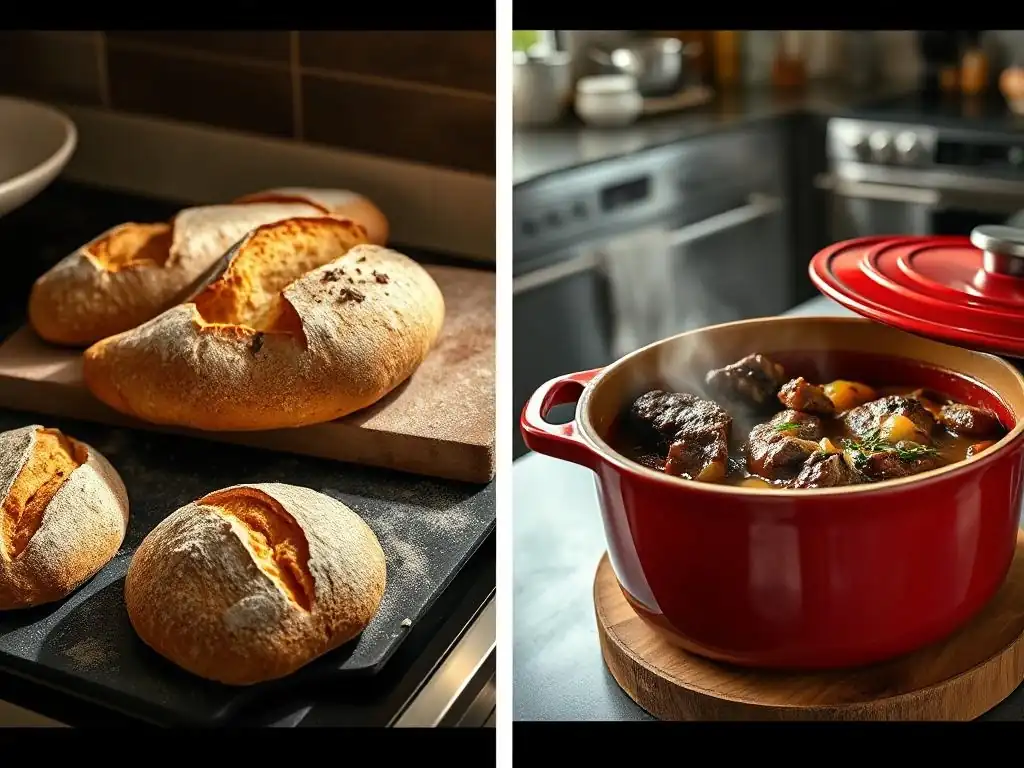
When comparing a baking stone vs dutch oven from a cost-value perspective, it's essential to look beyond just the initial purchase price. While a baking stone is almost always cheaper upfront, the Dutch oven offers a broader range of applications that can justify its higher cost for many home cooks and bakers. The "value" isn't just about performance in one specific task but also includes durability, versatility, and how well the tool meets a user's overall cooking and baking needs.
Consider how frequently you'll use each tool and for what purposes. If you only bake pizza occasionally and aren't interested in artisan bread or stews, a baking stone offers excellent value for its specific use case. However, if you bake bread weekly and also enjoy cooking soups, stews, or braises, a Dutch oven provides value across multiple cooking domains, potentially replacing the need for other pots while excelling at bread baking. Analyzing your habits helps determine which tool provides the best return on investment for you.
Initial Cost: Baking Stone vs. Dutch Oven
As established, the initial cost difference between a baking stone and a Dutch oven is substantial. A reliable baking stone can typically be purchased for \$40-\$80, making it a relatively low barrier to entry for improving pizza and bread crusts. This price point makes it accessible for bakers who primarily focus on flatbreads or freeform loaves where a hot surface is key.
In contrast, even a budget-friendly bare cast iron Dutch oven will likely cost \$50-\$100, and a good quality enameled version often starts at \$100 and can easily exceed \$200 or \$300. This higher upfront cost means that choosing a Dutch oven requires a more significant initial investment. However, this cost must be weighed against the tool's versatility and potential lifespan when conducting a full baking stone vs dutch oven cost-value comparison.
Lifespan and Durability: Longevity Comparison
In terms of lifespan, both baking stones and Dutch ovens can be very durable, but they have different vulnerabilities. A good quality baking stone made from cordierite is resistant to thermal shock and can last for many years with proper care. However, stones are susceptible to breaking if dropped or mishandled. A significant impact can crack or shatter a baking stone, potentially rendering it unusable.
Dutch ovens, especially cast iron ones, are known for their incredible longevity. Bare cast iron is virtually indestructible under normal kitchen use and can often be restored even if it rusts or gets damaged. Enameled cast iron is also very durable, although the enamel coating can chip or crack if dropped or subjected to extreme thermal shock (like plunging a hot pot into cold water). Generally speaking, a well-maintained Dutch oven is likely to outlast a baking stone, adding to its long-term value in a baking stone vs dutch oven assessment.
Baking Applications: Bread, Pizza, and More
The suitability of a baking stone vs dutch oven heavily depends on the specific baking applications you prioritize. A baking stone is a specialist tool, excelling primarily at providing a hot surface for direct contact baking. This makes it superb for pizza, flatbreads, and certain types of rustic bread baked freeform. It's less useful for items that benefit from being contained or require a moist environment throughout the bake.
A Dutch oven, while excellent for bread (especially high-hydration loaves), is also a general-purpose cooking vessel. It can handle everything from searing and frying on the stovetop to slow-cooking, braising, and roasting in the oven. This broad utility means a Dutch oven might be a better investment if you're looking for a single tool that can improve your bread baking and serve many other purposes in the kitchen.
Bread Baking: Baking Stone vs. Dutch Oven
For bread baking, the baking stone vs dutch oven choice often comes down to the type of bread and desired crust. For high-hydration, rustic loaves like sourdough or no-knead bread, a Dutch oven is frequently preferred. It traps steam, which is crucial for maximizing oven spring and achieving a thin, crispy crust with a tender crumb. Recipes specifically designed for a Dutch oven often yield results comparable to professional bakery bread.
A baking stone can also be used for bread, particularly loaves baked freeform or in a cloche placed on the stone. It provides excellent heat transfer for the bottom crust, making it very crispy. However, achieving sufficient steam for optimal oven spring in a regular oven using just a stone can be challenging, often requiring external steam methods (like water pans) which are less effective than the contained environment of a Dutch oven. For many home bakers tackling artisan loaves, the Dutch oven offers a simpler and more reliable path to great results.
Pizza Baking: Baking Stone vs. Dutch Oven
When it comes to pizza, the baking stone is generally the champion. Its flat, hot surface allows you to slide a shaped pizza directly onto it, providing intense, direct heat to the base. This rapid heat transfer is essential for creating a crispy bottom crust and achieving that desirable lift and char around the edges in just a few minutes, much like a traditional pizza oven.
While you can bake certain types of pizza in a Dutch oven (like deep-dish or pan pizzas), it's not the ideal tool for a classic Neapolitan or New York-style pizza that requires direct contact with a searing hot surface. The enclosed space of the Dutch oven isn't designed for the rapid, open-air cooking that yields the best results for thin-crust pizzas. Thus, for serious home pizza making, a baking stone, or even a pizza steel, is usually the superior choice in the baking stone vs dutch oven debate for this specific application.
Dessert Baking: Baking Stone vs. Dutch Oven
Both a baking stone and a Dutch oven can indirectly benefit dessert baking, though neither is typically the primary tool. A baking stone can help stabilize oven temperature, leading to more even baking for items placed on it, such as cookie sheets or pie plates. This can result in more consistent browning and texture across a batch of cookies or a pie crust.
A Dutch oven can be used for baking certain desserts, like cobblers, crumbles, or even cakes, especially recipes designed for camping or slow cooking. However, its heavy nature and enclosed environment are not necessary for most standard dessert recipes baked in conventional pans. While they can be used, they don't offer the same dramatic improvement for typical dessert baking as they do for bread or pizza, making their utility in this area less of a factor in the baking stone vs dutch oven comparison.
Performance: Crust, Texture, and Evenness
Performance-wise, the baking stone vs dutch oven comparison highlights their different strengths. A baking stone excels at creating a very crispy bottom crust due to direct, intense heat transfer. This is its superpower for pizza and freeform bread bottoms. It also helps with overall evenness by stabilizing oven temperature.
A Dutch oven's performance shines in creating a consistent, crispy crust all around the loaf, coupled with an excellent crumb texture achieved through steam. The trapped steam ensures a moist interior and allows the loaf to expand fully before the crust hardens. The even heat distribution from the cast iron ensures the top and sides brown nicely once the lid is removed. For rustic bread, many bakers find the Dutch oven provides a more reliable path to bakery-quality results, affecting both crust and internal texture significantly.
Maintenance Costs: Long-Term Expenses
When considering the long-term expenses beyond the initial purchase in a baking stone vs dutch oven comparison, both tools are relatively low maintenance. A baking stone has virtually no ongoing costs unless it breaks and needs replacing. Cleaning involves simple scraping and brushing; no special cleaners or materials are required.
A bare cast iron Dutch oven requires oil for seasoning, which is a negligible cost over its lifetime. Enameled cast iron requires no seasoning but benefits from using non-abrasive cleaning tools, which are standard kitchen items. The main potential long-term 'cost' for either tool is replacement if they are severely damaged (cracked stone, chipped enamel that affects performance). Given the durability of both, especially cast iron, these are typically one-time purchases that last for many years without significant ongoing costs.
Choosing the Right Tool: Budget and Baking Needs
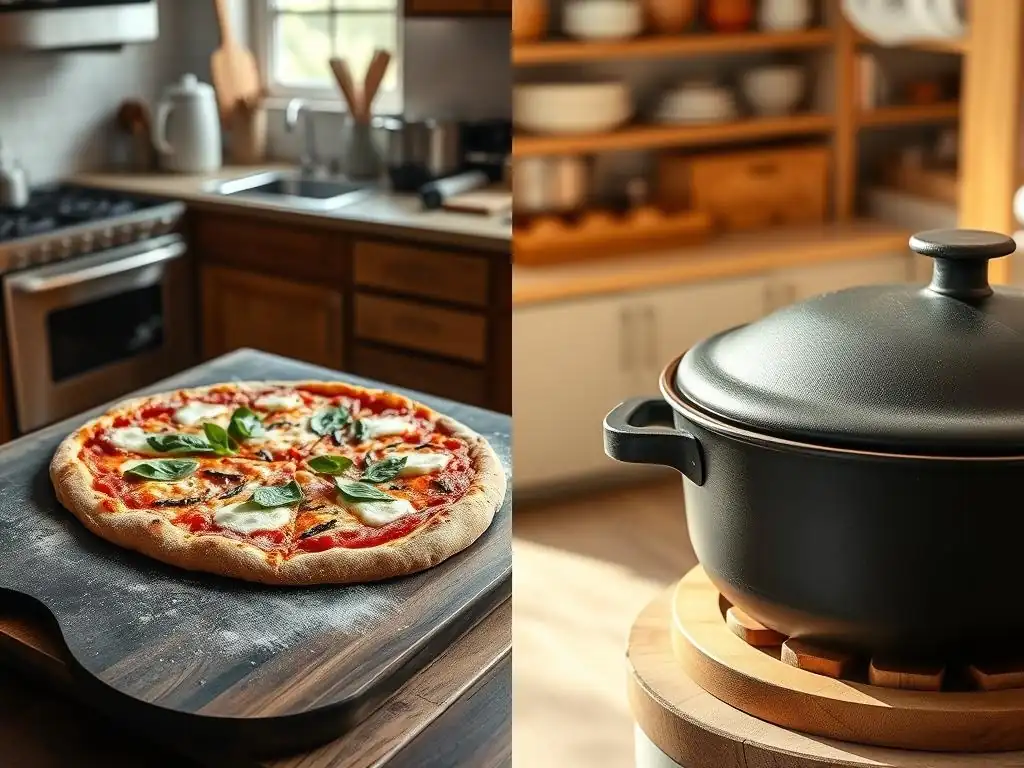
Deciding between a baking stone and a Dutch oven ultimately comes down to aligning your budget with your specific baking needs and priorities. Neither tool is definitively "better" than the other; they are optimized for different tasks and deliver different results. Reflecting on what you bake most often, what results you are trying to achieve, and how much you are willing to invest will guide your decision.
If your primary goal is to make restaurant-quality pizza at home and occasionally bake freeform loaves where a super-crispy bottom is key, a baking stone is likely the more cost-effective and suitable choice. If you are passionate about baking artisan bread, particularly high-hydration loaves like sourdough, and also want a versatile pot for stews, braises, and more, a Dutch oven offers broader functionality that may justify its higher price tag. Many avid bakers eventually acquire both tools to cover a wider range of baking and cooking applications.
Baking Style and Frequency: Impact on Tool Selection
Your baking style and how frequently you bake should significantly influence your choice between a baking stone vs dutch oven. If you're an occasional baker who mostly makes simple recipes or uses commercial yeast bread recipes that don't heavily rely on steam for oven spring, a baking stone might suffice, especially if pizza is also on your menu. Its quicker preheat time compared to a Dutch oven (though both benefit from long preheats) might also appeal to less frequent bakers.
For dedicated artisan bread bakers, especially those working with sourdough or high-hydration doughs multiple times a week, a Dutch oven often proves invaluable. The consistent, repeatable results it provides for achieving excellent oven spring and crust are hard to match with other home methods. Its robust construction also holds up well to frequent high-temperature use. Consider which tool aligns best with the types of recipes you are most excited to master and how often you'll be using it.
Kitchen Space: Storage Considerations
While perhaps less critical than cost or performance, kitchen space is a practical factor in the baking stone vs dutch oven decision. Both tools are heavy and require dedicated storage. Baking stones are typically flat and can be stored in the oven when not in use (after cooling!) or tucked away in a cabinet, though larger stones can be cumbersome.
Dutch ovens, being pots, take up more vertical space in a cabinet or on a shelf. Their weight also means they need sturdy storage. If kitchen space is extremely limited, the flatter profile of a baking stone might be slightly easier to store. However, considering the versatility of a Dutch oven, it might replace other pots, potentially freeing up space elsewhere. Measure your available storage and consider the dimensions of the tools before purchasing, especially for larger sizes.
Budget: Balancing Cost and Value
Balancing your budget with the perceived value of a baking stone vs dutch oven is the final step in the decision-making process. If your budget is tight and you primarily want to improve pizza or get a crisp bottom on freeform bread, a baking stone offers excellent value for its specific function at a lower price point. You can find effective stones for under \$50.
If you have a larger budget and are looking for a workhorse tool that excels at artisan bread and a wide variety of other cooking tasks, the higher investment in a quality Dutch oven might offer better overall value over time due to its versatility and durability. Remember that a well-cared-for Dutch oven can last a lifetime, spreading its cost across many years of use. Evaluate your financial comfort level against the range of benefits each tool provides to make the best choice for your kitchen.
Alternative Baking Tools: Pizza Steels and Baking Sheets
While baking stones and Dutch ovens are popular, it's worth noting other tools exist that can impact baking results. Pizza steels, made from steel or iron, function similarly to baking stones but are even more conductive, transferring heat to the pizza base faster and hotter. This can result in an even crispier crust and quicker bake times, though they tend to be heavier and often more expensive than baking stones. Steels are also less prone to breaking than stones.
Standard metal baking sheets are the most common alternative, widely available and inexpensive. While they don't retain or transfer heat as effectively as stones or steels, placing them in the oven during preheating can provide a hotter surface than just putting them into a cold oven. However, they don't offer the thermal mass or steam-trapping capabilities that make stones and Dutch ovens so effective for specific tasks like achieving rapid crust development or maximizing oven spring.
Conclusion: Baking Stone or Dutch Oven?
Ultimately, the choice between a baking stone or Dutch oven, or perhaps acquiring both, depends entirely on your individual baking habits, priorities, and budget. If crafting perfect, crispy-bottomed pizzas and flatbreads is your main goal, a baking stone is likely the most direct and cost-effective route to achieving those results. It provides the intense, direct heat transfer needed for rapid crust development.
However, if you are passionate about baking high-hydration artisan bread, such as sourdough or no-knead loaves, and also desire a versatile pot for a wide range of cooking tasks, a Dutch oven is often the superior investment. Its ability to trap steam creates the ideal environment for achieving maximum oven spring and a fantastic overall crust on bread, while its general utility extends far beyond baking.
Many serious home bakers find value in owning both tools, allowing them to tackle any baking challenge with the optimal equipment. Consider your most frequent kitchen endeavors and choose the tool that best aligns with your culinary aspirations.
Frequently Asked Questions
What are the primary differences between using a baking stone and a Dutch oven for baking?
A baking stone is primarily used to achieve a crispy crust in baked goods like pizza and bread, while a Dutch oven excels at creating a moist interior and a rustic crust due to its enclosed cooking environment.
Which is more versatile: a baking stone or a Dutch oven?
A Dutch oven is generally considered more versatile. It can be used for baking, braising, roasting, and even deep-frying, whereas a baking stone is mainly limited to baking at high temperatures.
How does the cost of a baking stone compare to that of a Dutch oven?
Generally, baking stones are significantly less expensive than high-quality Dutch ovens. However, the price range for both can vary depending on the material and brand.
What are the maintenance requirements for a baking stone versus a Dutch oven?
Baking stones require careful handling to avoid cracking and are often more difficult to clean. Dutch ovens, especially enameled ones, are generally easier to clean and more durable.
For a beginner baker, which would be a better investment: a baking stone or a Dutch oven?
A Dutch oven is often the better starting point for a beginner baker. Its versatility allows for a broader range of recipes and it's more forgiving, leading to more consistent results when learning.
Final Reflection: The Hearth's Heart: Choosing Your Baking Companion
The quest for the perfect bake often hinges on the tools we choose, and the seemingly simple decision between a baking stone and a Dutch oven reveals a deeper truth about investing in quality and understanding your culinary needs. The differences in heat retention, evenness of baking, and versatility highlight the importance of careful consideration before purchasing either. This isn't just about choosing a baking vessel; it's about choosing a partner in your culinary journey.
The impact of these seemingly simple kitchen tools extends beyond the immediate act of baking. They represent a commitment to craftsmanship, a dedication to the process, and a desire for excellence in the final product. The satisfying crust of a perfectly baked loaf, the golden-brown sheen of a rustic tart – these are testaments to the care taken in selecting and using the right equipment. The best things in life are homemade,
a sentiment that resonates deeply when considering the joy and satisfaction derived from using quality tools to create something beautiful and delicious.
Consider your own baking style, your priorities, and the types of recipes you most enjoy. Do you crave the crisp, crackly crust of a pizza baked directly on a hot stone? Or do you prefer the even, moist results of a Dutch oven's enclosed environment? This article is not just a comparison; it's an invitation to reflect on your own culinary aspirations and to choose the tool that best reflects your passion and commitment to the art of baking. Invest wisely, not just in a baking stone or Dutch oven, but in the journey of culinary exploration that awaits.
Unleash Your Baking Potential Today!
Thank you for taking the time to delve into the fascinating world of baking with us! By exploring the cost and value of baking stones and Dutch ovens, you’ve equipped yourself with valuable insights that can elevate your baking game. Now, it’s time to put that knowledge into action!
Here are a few steps you can take right now:
- Choose your baking tool: Decide whether a baking stone or Dutch oven aligns best with your baking goals and invest wisely in one that excites you the most.
- Experiment with recipes: Try out a new bread or pastry recipe this week using your chosen tool to see firsthand the difference it can make.
- Share your experience: Join our BakeWithEase community on social media and share your baking creations and tips with fellow enthusiasts.
What unique recipe are you excited to bake with your new tool that you've been dreaming about?