
Why Your Bread Needs High Heat: Stone vs. Dutch Oven for Optimum Results.

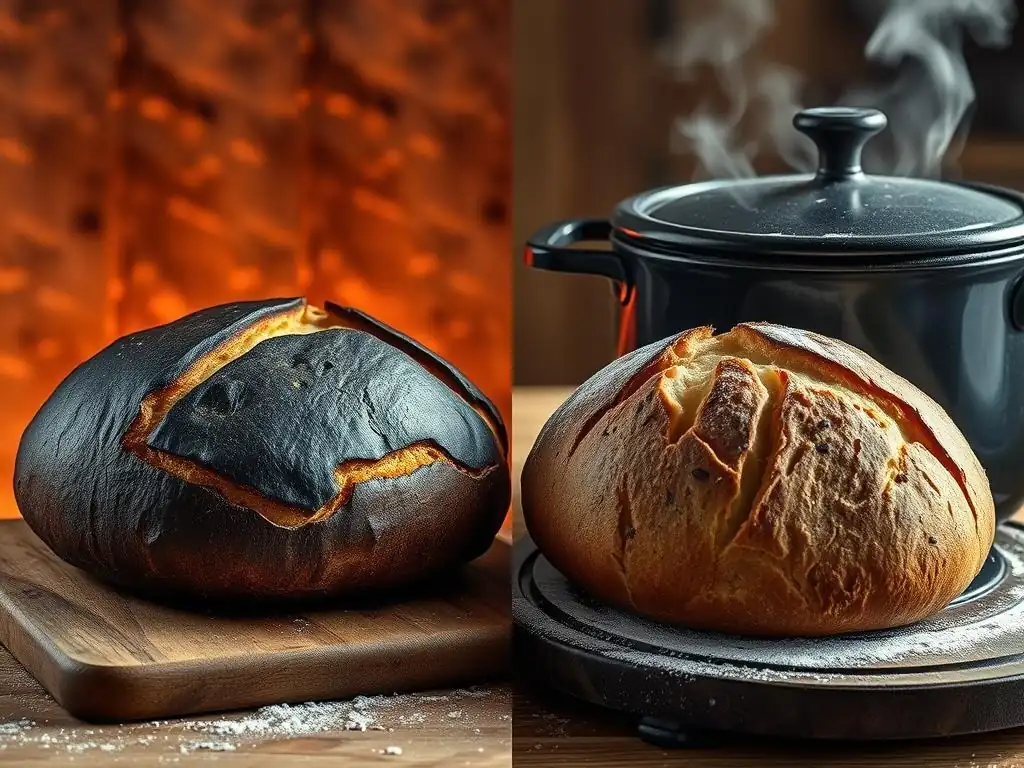
Welcome to BakeWithEase, your trusted guide to baking brilliance! Are you ready to unlock the secrets to that perfect crust and airy crumb? This week, we're diving deep into the science of high heat bread baking. Discover whether a baking stone or a Dutch oven reigns supreme and learn how to achieve professional-quality results in your own kitchen. Intrigued? Let's get baking!
- Understanding the Importance of High Heat in Bread Baking
- Baking Stone vs. Dutch Oven: A Head-to-Head Comparison for High Heat Bread
- Factors to Consider When Choosing: Stone or Dutch Oven
- Achieving Optimum Results: Tips for High Heat Bread Baking with Stone or Dutch Oven
- Troubleshooting Common Issues with High Heat Bread Baking
- Conclusion: Mastering High Heat Bread Baking for Superior Results
-
Frequently Asked Questions
- What is the main advantage of using high heat when baking bread, according to BakeWithEase?
- How do baking stones and Dutch ovens differ in their approach to providing high heat for bread baking?
- Which method, using a baking stone or a Dutch oven, is better for achieving a specific type of crust?
- Can I use a baking stone and a Dutch oven interchangeably for all bread recipes?
- What type of bread is particularly well-suited for high heat baking, as discussed on BakeWithEase?
- Final Reflection: The Transformative Power of High Heat Baking
- Unleash the Crust: Bake Bread Like a Pro!
Understanding the Importance of High Heat in Bread Baking
Baking bread isn't just about mixing ingredients and putting them in the oven; the temperature at which you bake plays a critical role in the final outcome. When we talk about achieving truly professional-quality bread at home, especially with rustic loaves like sourdough or lean baguettes, high heat is often the secret ingredient.
Temperatures typically ranging from 450°F to 500°F (about 230°C to 260°C) are considered high heat for bread baking, far exceeding the temperatures used for cakes or cookies. This intense thermal energy is crucial for triggering several key processes that transform dough into a beautiful, flavorful loaf with an incredible crust and airy interior.
Applying high heat from the moment your dough enters the oven initiates rapid changes. The sudden burst of heat causes the water in the dough to quickly turn into steam, expanding the air pockets created during fermentation. This rapid expansion, combined with the setting structure of the dough, is what gives the bread its initial dramatic rise, known as oven spring.
Without sufficient heat, this crucial initial lift would be minimal, resulting in a flatter, denser loaf. Furthermore, high temperatures are essential for developing the bread's crust, driving complex chemical reactions like the Maillard reaction and caramelization, which contribute significantly to both color and flavor.
Achieving Oven Spring: The Role of Intense Heat
Oven spring is arguably the most exciting moment in the bread baking process – that sudden, almost magical expansion of the loaf in the first 10-15 minutes of baking. This phenomenon is directly proportional to the intensity of the heat applied. When cold or room-temperature dough hits a very hot environment, the yeast has one last burst of activity, and more significantly, the water within the dough rapidly vaporizes into steam. This steam is trapped within the dough's gluten structure and forces it to expand outwards and upwards.
Consider a loaf baked at 350°F (175°C) versus one baked at 475°F (245°C). The lower temperature allows the dough to heat up slowly, resulting in a less dramatic and less efficient conversion of water to steam, leading to less expansion. The high heat, however, provides an immediate shock that maximizes this steam production and expansion before the outer crust sets too firmly.
It's like inflating a balloon rapidly before the rubber becomes too rigid; the faster you inflate, the larger it can get. Achieving excellent oven spring with high heat bread baking contributes to a lighter crumb structure and a more aesthetically pleasing loaf shape.
High Heat and Crust Development: A Baker's Secret
Beyond oven spring, high heat is indispensable for developing that desirable, crackly, deeply colored crust characteristic of artisanal bread. The intense heat drives two primary chemical reactions on the surface of the dough: the Maillard reaction and caramelization. The Maillard reaction occurs between amino acids and reducing sugars at high temperatures, creating hundreds of complex flavor compounds and contributing to the rich brown color. This is the same reaction responsible for the delicious browning of seared meat or roasted vegetables.
Simultaneously, the sugars present in the dough caramelize on the surface due to the high heat. Caramelization adds further depth of flavor with nutty, slightly bitter notes and contributes to the crust's golden-to-dark brown hues.
Baking at lower temperatures simply won't achieve the necessary surface temperature to trigger these reactions effectively, resulting in a pale, often softer crust that lacks the depth of flavor and satisfying texture of high heat bread baking. The rapid drying and setting of the crust under high heat also help to lock in moisture inside the loaf, creating a beautiful contrast between the crisp exterior and the soft, airy interior.
Baking Stone vs. Dutch Oven: A Head-to-Head Comparison for High Heat Bread
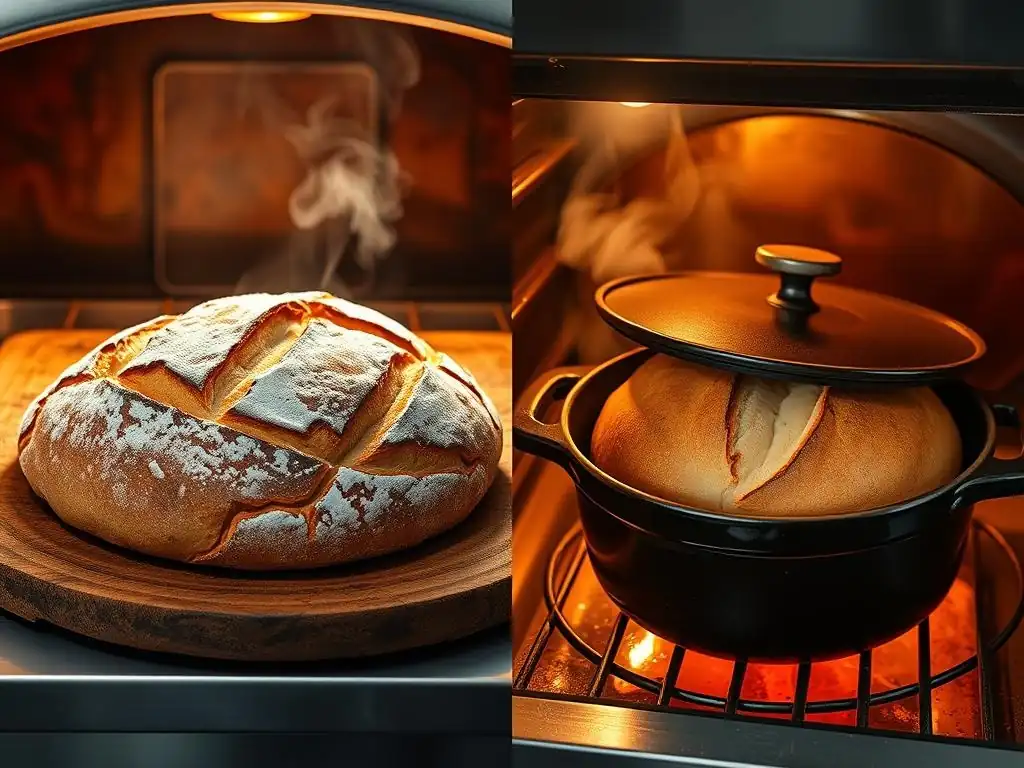
When it comes to achieving the necessary high temperatures and controlled environment for artisanal high heat bread baking at home, two pieces of equipment stand out: the baking stone (or steel) and the Dutch oven. Both methods aim to provide intense heat and manage steam, but they do so in fundamentally different ways, leading to varying results and suitability depending on the type of bread and your specific goals. Understanding their strengths and weaknesses is key to choosing the right tool for your high heat bread baking journey.
A baking stone, typically made of ceramic, cordierite, or pizza stone material, and its more efficient cousin, the baking steel, are designed to be preheated in the oven and provide a scorching hot surface for the bread to bake on. A Dutch oven, usually made of cast iron (enameled or bare), is a heavy pot with a tight-fitting lid that is also preheated.
The dough is placed inside the hot pot, the lid is secured, and it's baked this way for the initial phase. Both methods leverage thermal mass to store and transfer heat effectively, but the enclosed nature of the Dutch oven introduces a crucial element: steam control.
Baking Stone Advantages for High Heat Bread Baking
Baking stones and steels have been mainstays in home bread baking for decades, prized for their ability to mimic the floor of a professional deck oven. Their primary advantage lies in providing intense, direct heat to the bottom of the loaf, which is crucial for developing a strong base crust and contributing to oven spring from below. A well-preheated stone or steel, often heated for an hour or more at 475°F (245°C) or higher, holds a significant amount of thermal energy, ensuring that the moment the dough is placed on it, baking begins rapidly.
Another significant benefit of using a baking stone for high heat bread baking is its versatility in handling different shapes and sizes of loaves. Unlike a Dutch oven, which typically accommodates one round or oval loaf at a time, a large baking stone can often bake multiple smaller loaves, such as baguettes or rolls, simultaneously. This makes it ideal for bakers who want to produce a variety of shapes or bake larger quantities in a single batch.
Superior Crust Crispness with a Baking Stone
One of the defining characteristics of bread baked directly on a preheated baking stone, especially when combined with added steam in the oven, is the incredibly crisp bottom crust it produces. The intense, direct heat from the stone causes the moisture in the bottom of the dough to flash into steam and escape rapidly, resulting in a drier, more brittle crust layer right from the start. This is particularly desirable for breads where a very firm, crackly base is part of the experience, like certain types of ciabatta or rustic freeform loaves.
While the top crust's crispness relies more on the oven environment and steam management (which can be tricky to replicate perfectly in a standard home oven when using a stone), the bottom crust consistently benefits from the direct contact with the scorching hot surface. A baking steel, with its higher thermal conductivity compared to stone, can provide an even more intense heat transfer, leading to an even crispier bottom crust in high heat bread baking scenarios.
Baking Stone Versatility: Different Bread Shapes and Sizes
A key advantage of using a baking stone or steel for high heat bread baking is the freedom it offers in terms of loaf shape and size. While a Dutch oven is limited by its internal dimensions, a stone allows you to bake freeform loaves of various shapes – rounds (boules), ovals (bâtards), long loaves (baguettes), or even multiple small rolls or knots. This flexibility is a major draw for bakers who enjoy experimenting with different bread forms beyond the standard Dutch oven shape.
Furthermore, depending on the size of your oven and the stone, you can often bake more than one loaf at a time, increasing your baking efficiency. Baking baguettes, for instance, is typically done on a stone or steel, often with the help of a couche (linen cloth) for proofing and transferring, as they wouldn't fit or develop the correct shape in a standard Dutch oven. This adaptability makes the baking stone a versatile tool for a wide range of high heat bread baking projects.
Achieving Even Heat Distribution on a Baking Stone
A quality baking stone or steel, once properly preheated, provides remarkably even heat distribution across its surface. This ensures that the bottom of the loaf bakes uniformly, without hot spots that could lead to uneven browning or burning. The thermal mass acts as a buffer, absorbing and radiating heat steadily, preventing the temperature fluctuations that can occur with just a standard oven rack.
While the stone provides excellent heat from below, achieving truly even baking around the loaf when using a stone requires managing the oven's ambient heat and often introducing steam. However, the heat transfer from the stone itself is consistent, ensuring that the foundation of your high heat bread baking is solid and evenly cooked from the bottom up. This reliable bottom heat contributes significantly to a predictable bake and helps achieve a consistent crumb structure throughout the loaf.
Dutch Oven Advantages for High Heat Bread Baking
The Dutch oven has become incredibly popular for home high heat bread baking, particularly for rustic sourdough and lean doughs, largely due to its ability to create an ideal baking environment within a standard home oven. Its primary strength lies in its enclosed nature, which effectively traps the moisture released by the dough as it bakes. This trapped steam is a game-changer for crust development and oven spring in high heat bread baking.
Using a preheated Dutch oven for high heat bread baking provides a consistent, intense heat source surrounding the dough. The heavy cast iron (or other material) absorbs and retains heat exceptionally well, radiating it from all sides – bottom, top, and sides. This creates a remarkably stable high-temperature environment that is less susceptible to the minor temperature fluctuations often found in home ovens, leading to more predictable and consistent results every time you bake.
Dutch Oven's Steam Trap: Creating a Moist Interior
The most significant advantage of baking bread in a Dutch oven is its built-in steam trap. As the dough heats up rapidly in the enclosed, high-temperature environment, the water within the dough quickly turns to steam. With the lid on, this steam is trapped inside the pot, creating a super-heated, humid micro-climate around the loaf. This high-steam environment keeps the surface of the dough moist and pliable during the crucial initial phase of high heat bread baking.
Why is a moist surface important? It prevents the crust from forming too quickly. If the crust sets too early, it restricts the dough's ability to expand during oven spring.
By keeping the surface soft and extensible, the trapped steam allows the loaf to achieve maximum volume before the lid is removed (typically halfway through the bake). Once the lid is removed, the dry, high heat of the oven hits the now-expanded loaf, rapidly drying and browning the surface to form that desirable crispy crust. This controlled steam environment is difficult to replicate reliably in a standard home oven using just a baking stone and separate steam methods.
Dutch Oven's Enclosed Environment: Maximizing Oven Spring
The combination of intense radiant heat from the preheated pot and the trapped steam within the Dutch oven creates the perfect conditions for maximizing oven spring during high heat bread baking. The dough is subjected to high temperatures from all sides simultaneously, initiating rapid steam production internally. Because the crust is kept soft by the trapped steam, the expanding dough faces minimal resistance.
This allows the loaf to reach its full potential volume before the crust hardens. Think of it as giving the dough a sauna treatment at the beginning of the bake – it relaxes and expands freely in the humid heat.
Once the lid is removed, the sudden exposure to dry high heat causes the now-expanded surface to quickly dry and set, locking in the shape achieved during the spring. This method is particularly effective for high-hydration doughs, which tend to spread more easily and benefit immensely from the structure and steam provided by the Dutch oven's enclosed, high heat environment.
Dutch Oven's Temperature Stability: Consistent High Heat
Dutch ovens, especially those made of cast iron, possess excellent thermal mass. This means they absorb and retain heat very effectively. When preheated in a hot oven, the Dutch oven itself becomes a stable source of high heat, radiating it evenly around the dough. This creates a more consistent baking temperature right around the loaf compared to relying solely on the ambient air temperature of a home oven, which can fluctuate.
This temperature stability is particularly beneficial for high heat bread baking, where maintaining a consistent, intense heat is key for predictable results. The heavy pot minimizes temperature drops when the oven door is briefly opened to load the dough and provides a steady, high-temperature environment for the initial phase of baking. This consistent high heat ensures the dough bakes efficiently and evenly from all sides, contributing to a uniform crumb structure and reliable crust development once the lid is removed.
Factors to Consider When Choosing: Stone or Dutch Oven
Deciding whether to use a baking stone or a Dutch oven for your high heat bread baking depends on several factors. There's no single "better" option; the ideal choice is the one that best suits the specific type of bread you're making, the capabilities of your oven, and your personal baking style and preferences. Both methods can produce excellent results when used correctly, but they excel with different doughs and in different situations.
Consider the characteristics of the dough you're working with, the type and size of your oven, and what you hope to achieve in terms of crust and crumb. Are you aiming for a super crispy bottom crust on a freeform loaf, or prioritizing maximum oven spring and an all-around even crust on a round boule? Thinking through these points will help guide you towards the most effective tool for your high heat bread baking endeavors.
Bread Type: Which Method Suits Your Recipe?
The composition and hydration level of your dough are significant factors in choosing between a baking stone and a Dutch oven for high heat bread baking. Different dough types behave differently under heat and steam, and one method might provide a more favorable environment for a particular recipe. Understanding these interactions is key to selecting the right equipment for optimal results.
For example, very wet or high-hydration doughs (those with a high percentage of water relative to flour, often 75% hydration or more) can be challenging to bake on a stone without proper support and significant added steam. Their tendency to spread requires structure, which the walls of a Dutch oven naturally provide. Conversely, leaner doughs shaped into specific forms like baguettes are much better suited to baking on a stone or steel.
High Hydration Doughs: Dutch Oven is Your Friend
High hydration doughs, common in many artisanal and sourdough recipes, are notoriously slack and can spread out significantly when placed on a flat surface like a baking stone. The enclosed environment of a Dutch oven provides crucial structural support, helping these wet doughs hold their shape and rise upwards rather than outwards during the initial high heat phase.
Furthermore, these wet doughs release a substantial amount of steam as they bake. The Dutch oven effectively traps this abundant steam right around the loaf, which is precisely what high hydration doughs need to develop a thin, extensible crust that allows for maximum oven spring.
Trying to achieve the same level of steam in a standard home oven with just a stone can be difficult and inconsistent, often requiring complex methods like placing trays of hot water or lava rocks in the oven, which may not be as effective as the self-contained environment of the Dutch oven for this type of high heat bread baking.
Lean Doughs: Baking Stone Might Be Better
Lean doughs, typically made with just flour, water, salt, and yeast (like many classic French breads), often have lower hydration levels than sourdoughs and are frequently shaped into forms like baguettes or bâtards. These shapes are not well-suited for baking inside a round or oval Dutch oven. This is where the baking stone or steel shines for high heat bread baking.
Baking these freeform loaves directly on a preheated stone allows them to develop their characteristic shape and structure. While steam is still important for lean doughs to achieve a crisp crust and good oven spring, it needs to be introduced into the oven cavity, not just around the loaf. This can be done by pouring water into a hot tray on the bottom rack or using a steam generator.
The stone provides the necessary intense bottom heat to set the base quickly, while the ambient oven steam helps the top crust remain pliable initially. For specific shapes like baguettes, baking on a stone is the standard method for achieving their signature structure and crust.
Oven Type and Size: Matching Equipment to Your Setup
The specifics of your home oven can also influence the best choice between a baking stone and a Dutch oven for high heat bread baking. Oven size, how well it retains heat, and its ability to handle steam all play a role. A small oven might struggle to accommodate a large Dutch oven or a stone with multiple loaves, while an oven with inconsistent temperatures might benefit more from the stable environment a Dutch oven provides.
Consider the internal dimensions of your oven. A standard 5-quart or 6-quart Dutch oven is quite bulky and takes up significant space. If you have a compact oven, measure carefully to ensure it fits comfortably, leaving room for air circulation. Similarly, if you plan to bake multiple loaves on a stone, ensure your oven rack and the stone itself are large enough. Ovens that leak a lot of heat or struggle to maintain high temperatures might find the Dutch oven's insulating properties beneficial for consistent high heat bread baking.
Personal Preference and Baking Style: What Works Best for You?
Ultimately, the choice between a baking stone and a Dutch oven for high heat bread baking often comes down to personal preference and your individual baking style. Some bakers prefer the hands-on approach of loading dough onto a hot stone and managing oven steam separately, finding it offers more control over the final crust. Others appreciate the simplicity and reliability of the Dutch oven method, especially for high hydration doughs, viewing it as a more foolproof way to achieve excellent oven spring and crust development.
Do you enjoy shaping freeform loaves like baguettes or ciabatta? A stone is likely your preferred tool. Are you primarily baking round sourdough boules and want consistent, maximum oven spring with minimal fuss? The Dutch oven is probably a better fit. Experimenting with both methods, if possible, is the best way to discover which one aligns best with your goals for high heat bread baking and which process you find most enjoyable and successful in your own kitchen.
Achieving Optimum Results: Tips for High Heat Bread Baking with Stone or Dutch Oven
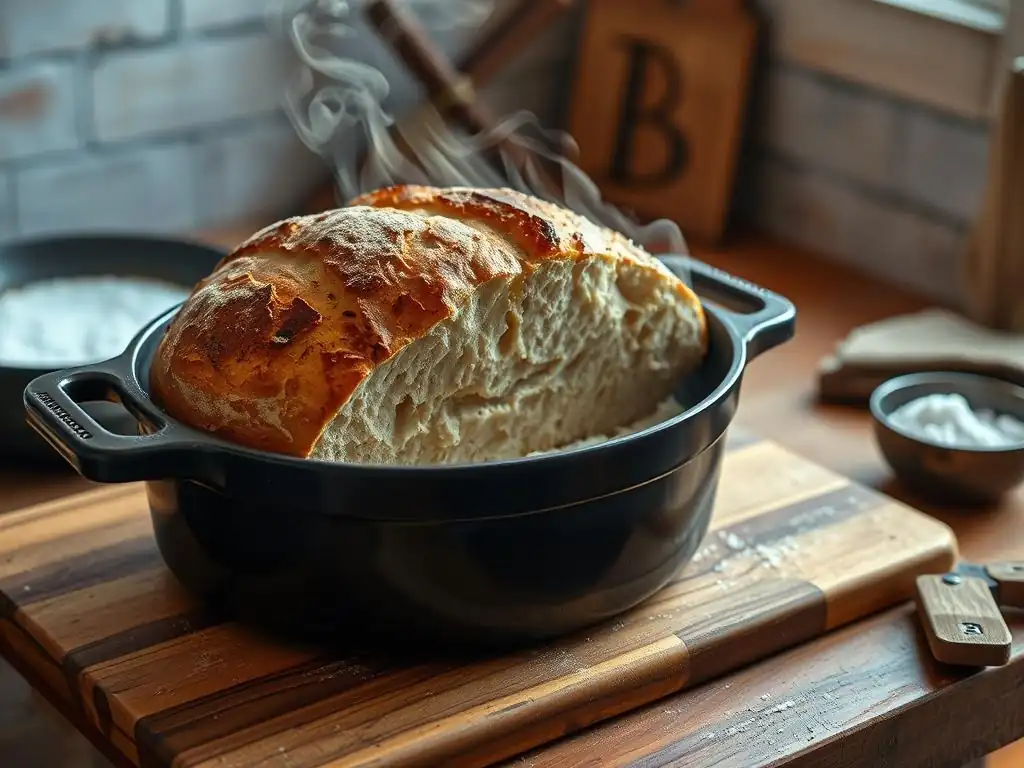
Regardless of whether you choose a baking stone or a Dutch oven, mastering high heat bread baking requires attention to detail throughout the process. Proper preheating, careful dough handling, and monitoring the bake are crucial steps that can significantly impact the final quality of your loaf. Baking at temperatures upwards of 450°F (230°C) demands precision and respect for the intense heat involved.
From ensuring your equipment is screaming hot before the dough goes in to knowing when your loaf is perfectly baked, these techniques are universal principles for successful high heat bread baking. They help maximize oven spring, develop a beautiful crust, and ensure a fully cooked interior, transforming your home-baked bread from good to truly exceptional.
Preheating Techniques for Baking Stones and Dutch Ovens
Proper preheating is perhaps the single most critical step for successful high heat bread baking, whether using a stone or a Dutch oven. These tools rely on thermal mass – their ability to store and radiate heat – to provide the necessary intense temperature shock to the dough. Simply waiting for your oven's indicator light to say it's reached temperature is often insufficient; the stone or pot itself needs time to fully absorb and equalize at the target temperature.
For both baking stones and Dutch ovens, preheating for at least 45 minutes to an hour at your target baking temperature (often 450-500°F / 230-260°C) is recommended. Place the stone on a rack in the middle or lower-middle of the oven, or place the empty Dutch oven with its lid on inside the oven before turning it on. This long preheat ensures the equipment is uniformly hot, providing the necessary intense heat transfer to the dough from the moment it enters the oven, which is vital for achieving excellent oven spring and crust development in high heat bread baking.
Dough Handling: Preventing Sticking and Deflating
Handling dough when transferring it to a scorching hot baking stone or Dutch oven requires care to prevent sticking and avoid deflating the proofed loaf. For a baking stone, using parchment paper is a popular and effective method. Proof the dough on parchment paper, score it, and then use the edges of the paper to gently slide it onto the hot stone. This minimizes handling and prevents the dough from sticking.
When using a Dutch oven, you can also use parchment paper to lower the dough into the hot pot. Alternatively, some bakers flour the bottom of the proofed dough and the inside of the hot Dutch oven (carefully!) before inverting the dough into it. Speed and gentleness are key. Any rough handling can cause the dough to lose the precious air bubbles developed during fermentation and proofing, resulting in a denser crumb and reduced oven spring during high heat bread baking.
Monitoring Internal Temperature: Ensuring a Perfectly Baked Loaf
While visual cues like crust color are important, the most reliable way to ensure your high heat bread is perfectly baked through is by checking its internal temperature. Using an instant-read thermometer, carefully insert it into the thickest part of the loaf, avoiding any large air pockets. For most lean bread doughs baked at high heat, a fully baked loaf should register an internal temperature between 200°F and 210°F (about 93°C to 99°C).
Checking the internal temperature prevents the common issue of having a beautiful, well-colored crust but an underbaked, gummy interior. It's especially important when adjusting baking times based on crust color, as high heat can brown the crust quickly before the inside is fully cooked. Always confirm the internal temperature before removing the loaf from the oven to guarantee a successful result from your high heat bread baking efforts.
Troubleshooting Common Issues with High Heat Bread Baking
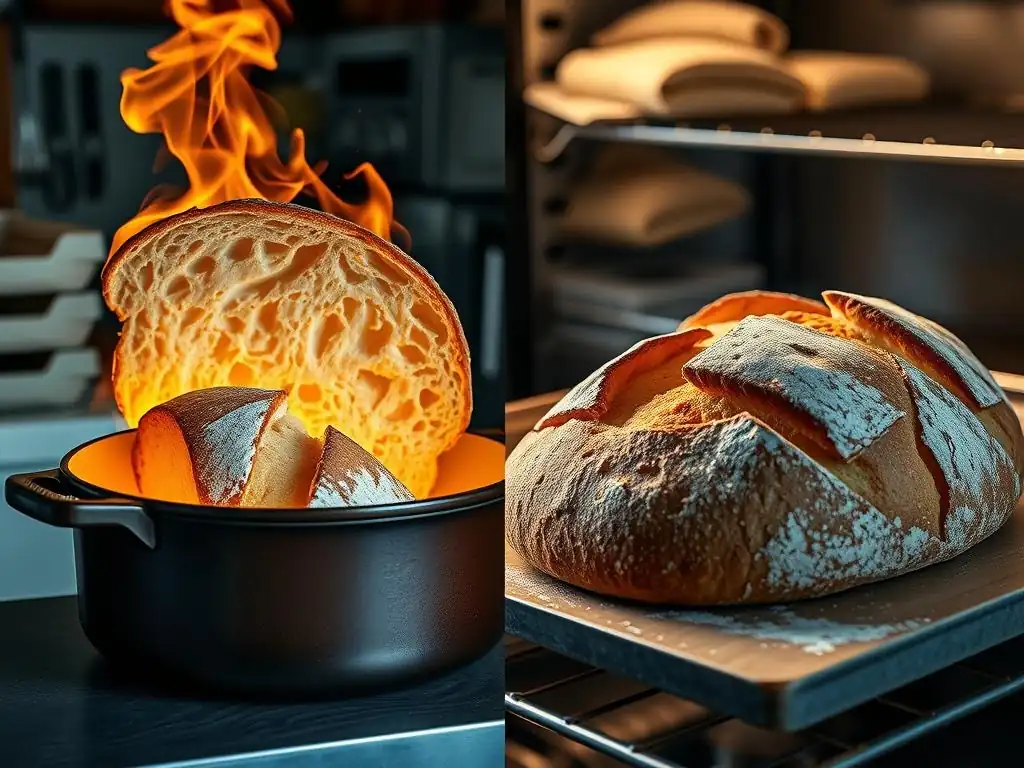
Even with the right equipment and techniques, high heat bread baking can sometimes present challenges. Issues like a burnt crust, a dense crumb, or uneven baking can be frustrating, but they are often solvable by understanding the causes and making simple adjustments. Troubleshooting is a natural part of the baking process, and learning to identify and correct these problems will improve your results over time.
Common culprits often involve oven temperature accuracy, steam levels, baking time, and dough handling. By systematically addressing these factors, you can refine your high heat bread baking process and consistently achieve the beautiful, delicious loaves you're aiming for. Don't be discouraged by setbacks; each less-than-perfect loaf is a learning opportunity!
Burnt Crust: Adjusting Temperature and Baking Time
A common issue in high heat bread baking is the crust browning too quickly, sometimes even burning, before the interior is fully baked. This can happen if the oven temperature is too high, the baking time (especially uncovered) is too long, or if the loaf is placed too close to a direct heating element.
- Reduce Oven Temperature: Try lowering your oven temperature slightly, perhaps by 10-25°F (5-15°C), especially if your oven runs hot.
- Shorten Baking Time: If using a Dutch oven, ensure you remove the lid at the appropriate time (usually when the loaf is pale but fully expanded) and monitor the uncovered baking closely. If using a stone, consider covering the loaf loosely with foil for the last portion of the bake if the top is browning too fast.
- Adjust Rack Position: Move the baking stone or Dutch oven to a lower rack position if the top element is causing excessive browning.
- Check Internal Temperature: Always use a thermometer to ensure the inside is cooked, even if the outside looks done. You might need to bake longer at a slightly lower temperature.
Dense Crumb: Improving Oven Spring
A dense crumb, where the interior of the bread is heavy and lacks open air pockets, can be disappointing after high heat bread baking. This issue is often related to insufficient oven spring. Causes can include underdeveloped gluten, inadequate proofing, or a crust that set too early, restricting expansion.
- Ensure Proper Dough Development: Make sure your dough passes the windowpane test before the first rise, indicating sufficient gluten development to trap gases.
- Optimize Proofing: Don't underproof or overproof the dough. An underproofed loaf won't have built up enough gas for good spring, while an overproofed loaf may collapse.
- Maximize Oven Spring Environment:
- Dutch Oven: Ensure the Dutch oven is sufficiently preheated and the lid stays on for the recommended time (e.g., 20-30 minutes) to trap steam and keep the crust pliable.
- Baking Stone: Ensure adequate steam is introduced into the oven at the beginning of the bake to keep the crust soft during the initial expansion phase.
- Handle Dough Gently: Avoid degassing the dough when shaping and transferring it to the oven.
Uneven Baking: Ensuring Consistent Heat Distribution
Sometimes, a loaf baked at high heat might be darker on one side than the other, or the top might be done while the bottom is pale. This indicates uneven heat distribution in the oven. Home ovens often have hot spots, and understanding where they are can help you compensate.
- Rotate the Loaf/Pot: If you notice uneven browning, carefully rotate the baking stone or Dutch oven halfway through the uncovered baking time (for Dutch oven) or the total baking time (for stone) to expose all sides to the same heat levels.
- Longer Preheat: Ensure your oven and equipment (stone or Dutch oven) are fully preheated for at least 45-60 minutes. This helps equalize the temperature throughout the oven cavity and the baking surface/pot.
- Avoid Opening the Oven Door: Resist the urge to frequently check on the bread, as opening the door causes significant temperature drops and can disrupt even baking.
- Calibrate Oven: If you suspect your oven temperature is inaccurate or fluctuates wildly, consider using an oven thermometer to check its true temperature and potentially get it calibrated.
Conclusion: Mastering High Heat Bread Baking for Superior Results
High heat bread baking, typically performed at temperatures between 450°F and 500°F (230-260°C), is fundamental to achieving the artisanal qualities found in many popular loaves – a beautiful, crackly crust and a light, airy interior. This intense heat is crucial for maximizing oven spring through rapid steam production and for developing complex flavors and colors via the Maillard reaction and caramelization on the crust. Without sufficient high heat, bread can turn out pale, dense, and lacking in depth.
Both baking stones/steels and Dutch ovens are excellent tools for achieving the necessary high heat environment in a home oven, each with distinct advantages. The baking stone excels at providing intense bottom heat and versatility for various shapes like baguettes, often requiring external steam. The Dutch oven, with its enclosed structure, acts as a self-contained steam trap, making it particularly effective for high hydration doughs and ensuring consistent oven spring and an even crust development around a round loaf.
Choosing between a stone and a Dutch oven depends on the specific type of bread you want to bake, your oven's characteristics, and your personal preference. However, the principles for successful high heat bread baking remain consistent: ensure your equipment is thoroughly preheated, handle your dough gently, and monitor the bake, checking the internal temperature for doneness. By understanding the science behind high heat bread baking and practicing these techniques, you can consistently produce loaves with exceptional crust, crumb, and flavor, elevating your home baking to a new level.
Frequently Asked Questions
What is the main advantage of using high heat when baking bread, according to BakeWithEase?
High heat promotes rapid expansion of the dough, creating a crisper crust and a lighter, airier crumb. This is crucial for achieving optimal texture and rise in many bread types.
How do baking stones and Dutch ovens differ in their approach to providing high heat for bread baking?
Baking stones provide direct heat to the bottom of the loaf, while Dutch ovens trap steam and heat, creating a humid environment similar to a professional oven. Both methods aim to maximize heat transfer.
Which method, using a baking stone or a Dutch oven, is better for achieving a specific type of crust?
Dutch ovens generally produce a thicker, chewier crust due to the trapped steam, whereas baking stones tend to create a crisper, thinner crust, especially for loaves baked directly on the stone.
Can I use a baking stone and a Dutch oven interchangeably for all bread recipes?
Not necessarily. Some recipes are specifically designed for the high-steam environment of a Dutch oven. Using a stone instead might require adjustments to baking time and temperature.
What type of bread is particularly well-suited for high heat baking, as discussed on BakeWithEase?
Artisan breads like sourdough and crusty loaves benefit significantly from the high heat environment, as it promotes optimal oven spring and crust development.
Final Reflection: The Transformative Power of High Heat Baking
The quest for the perfect crust, that satisfying crackle, and a light, airy crumb isn't just about technique; it's about understanding the fundamental role of high heat in bread baking. This pursuit, once relegated to the realm of professional bakers, is now accessible to home cooks, thanks to readily available tools like pizza stones and Dutch ovens. The difference in results is truly transformative, elevating a simple loaf into a culinary masterpiece.
The impact of high heat on bread baking extends beyond mere texture and appearance. It's a journey of discovery, a testament to the power of controlled heat to unlock the full potential of flour, water, and yeast. The intense heat creates a rapid rise, resulting in that signature airy crumb structure we all crave. As I experimented with both pizza stones and Dutch ovens, I was constantly reminded of the words of Jim Lahey, the creator of the no-knead bread method: Bread baking is a journey of discovery, not a destination.
This journey, fueled by the pursuit of high heat, has deepened my appreciation for the artistry and science behind this ancient craft.
Now, it's your turn. Consider the tools you have in your kitchen, and the possibilities they unlock. Will you embrace the intense heat of a pizza stone, or the even distribution of a Dutch oven? Perhaps you'll even experiment with both! Don't be afraid to explore the transformative power of high heat in your own baking adventures. The perfect crust, the perfect crumb – they await your discovery.
Unleash the Crust: Bake Bread Like a Pro!
Thanks for taking the time to explore the world of high-heat baking! You've now learned the secrets to achieving that perfect crust, whether with a stone or Dutch oven. Ready to take your baking to the next level?
- Bake your dream loaf: Choose your preferred method (stone or Dutch oven) and try the recipe you just learned about today. Note your results and see which technique helps you achieve your ideal crust.
- Share your masterpiece: Snap a picture of your beautifully browned loaf and share it on social media using #BakeWithEaseHighHeat – let's see those crusts!
- Experiment with different flours and grains: Challenge yourself to experiment and try a new type of flour or even experiment with sourdough for enhanced results.
What unique crusty creation will you bake next?