
Simple Tools Every New Cake Decorator Needs

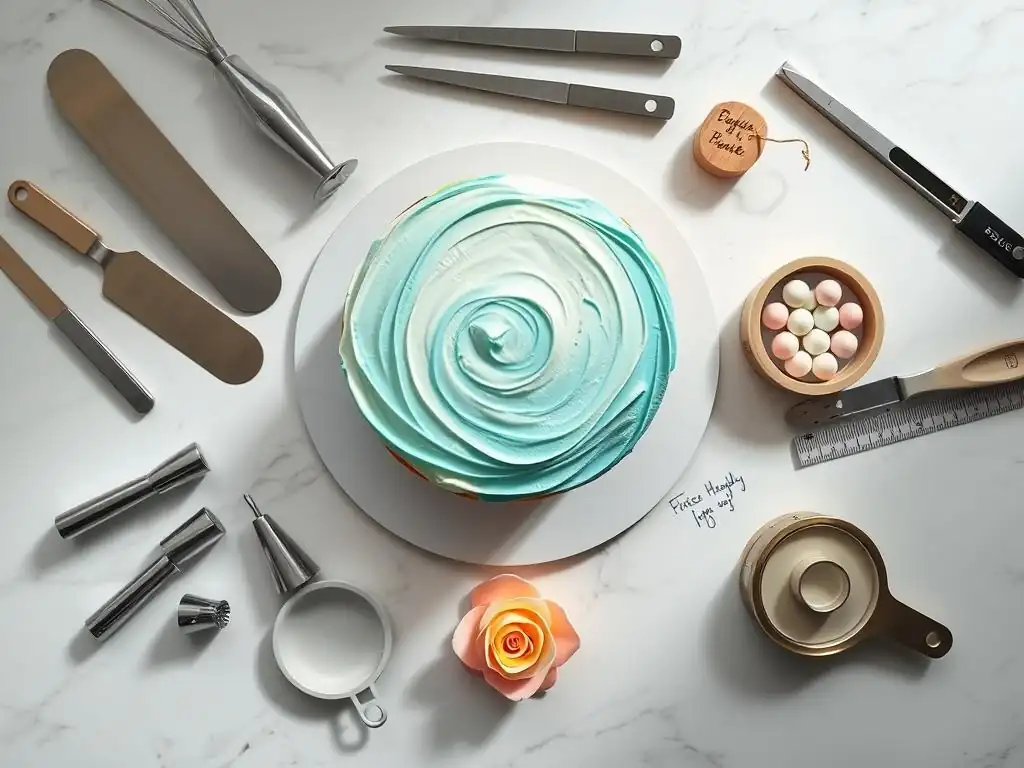
Welcome to BakeWithEase, where the joy of baking meets effortless execution! Are you ready to transform ordinary cakes into stunning masterpieces? This guide focuses on the essential cake decorating tools beginners need to get started, demystifying the process and paving the way for your creative journey. But which tools really make a difference, and how do you use them? Let's dive in and unlock the secrets to creating cakes that look as incredible as they taste!
- Essential Tools for Budding Home Bakers: A Sweet Success Guide
- Introduction to Essential Baking Tools for Beginners
- Must-Have Baking Tools: The Starter Kit
- Budget-Friendly Baking Tools: Options for Beginners
- Tips for Using Your New Baking Tools
- Beyond the Basics: Expanding Your Baking Toolkit
- Where to Buy Baking Tools for Beginners
- Conclusion: Embarking on Your Baking Journey
-
Frequently Asked Questions
- What are the absolute essential cake decorating tools a beginner should purchase first?
- Are expensive cake decorating tools necessary for beginners to create beautiful cakes?
- What is the best type of frosting to use when first learning cake decorating techniques?
- Where can a beginner find reliable tutorials for using cake decorating tools?
- How important is it to have a crumb coat when cake decorating?
- Final Reflection: The Sweet Success of Simple Beginnings
- Unleash Your Inner Cake Artist!
Essential Tools for Budding Home Bakers: A Sweet Success Guide
Introduction to Essential Baking Tools for Beginners
Welcome to Home Baking: A Beginner's Overview
Stepping into the world of home baking is an exciting adventure! It’s a creative outlet that allows you to transform simple ingredients like flour, sugar, and eggs into delicious treats. Whether you dream of baking fluffy cakes, chewy cookies, or crusty bread, starting with the basics is key. Think of baking as a science combined with art – precision is important, but there's also plenty of room for creativity as you gain confidence. This guide will walk you through the foundational equipment you'll need to get started on your sweet (or savory!) journey.
Having the right equipment from the start can make a significant difference in your baking experience. While you don't need a professional kitchen setup, a few essential tools will streamline your process and help you achieve better results. These fundamental items are crucial for preparing any baked good, including the perfect cake base that you might eventually want to enhance with specific cake decorating tools beginners often start with. Mastering the use of these basic tools is the first step towards creating beautiful and tasty baked goods.
Why Invest in Quality Baking Tools?
Investing in a few quality baking tools might seem like an added expense upfront, but it pays dividends in the long run. Good tools are designed for durability, efficiency, and ease of use. A sturdy whisk will incorporate air more effectively, a reliable measuring cup set will ensure accuracy, and a well-made baking pan will distribute heat evenly, leading to consistently better results. Using inadequate or makeshift tools can lead to frustration, inconsistent outcomes, and may even make baking feel more challenging than it is.
Quality tools not only perform better but also last longer, saving you money over time compared to frequently replacing cheaper items. They make tasks like mixing batter, measuring ingredients, or transferring dough much smoother and more enjoyable. While these aren't the specialized items like piping bags or spatulas specifically designed as cake decorating tools beginners use for frosting, they are the fundamental building blocks that allow you to successfully bake the cake itself, which is the canvas for any decoration. A solid foundation in basic baking tools is essential for any home baker.
Must-Have Baking Tools: The Starter Kit
Stand Mixer: The Heart of the Bakery
A stand mixer is often considered a significant investment, but for serious home bakers, it's a game-changer. With various attachments, it can cream butter and sugar until light and fluffy, knead bread dough effortlessly, whip egg whites into stiff peaks, and mix batters smoothly. Its power and stability mean you can step away while it works, freeing you up for other tasks like preparing your pans or measuring upcoming ingredients. For instance, creaming butter and sugar for just 5-7 minutes in a stand mixer can incorporate significantly more air than hand mixing, leading to a lighter cake texture.
For beginners who plan to bake frequently, especially cakes, a stand mixer provides consistent results that are hard to achieve manually. The consistent speed and thorough mixing action ensure ingredients are perfectly combined every time. While not one of the specific cake decorating tools beginners use on the finished product, a stand mixer is invaluable for creating the ideal cake batter or meringue, providing a reliable base before any thought turns to frosting techniques or other cake decorating tools beginners might explore. Look for a mixer with a motor powerful enough for the types of baking you anticipate doing.
Essential Measuring Cups and Spoons: Accuracy is Key
Baking is often described as a science because precise measurements are critical for successful outcomes. Unlike cooking, where you can often adjust ingredients to taste, baking relies on chemical reactions that require specific ratios. Using inaccurate measuring tools can lead to dense cakes, cookies that spread too much or too little, or bread that doesn't rise properly. Having both dry and liquid measuring cups, along with a set of measuring spoons, is non-negotiable for any beginner baker aiming for consistent results.
The difference between dry and liquid measuring tools is important. Dry measuring cups are designed to be filled to the brim and leveled off, ensuring you get the exact volume of ingredients like flour, sugar, or cocoa powder.
Liquid measuring cups, typically clear with a spout, are designed to be read at eye level on a flat surface to account for the meniscus (the curve of the liquid). Using the wrong type can result in significant measurement errors; for example, scooping flour directly with a liquid cup can pack it down, adding up to 25% more flour than intended, which would drastically affect a cake's texture before you even think about using any cake decorating tools beginners might have.
Dry Measuring Cups: Ensuring Proper Ratios
Dry measuring cups come in standard sizes like 1 cup, 1/2 cup, 1/3 cup, and 1/4 cup. They are used for ingredients that can be leveled off, such as flour, granulated sugar, powdered sugar, brown sugar (packed), cocoa powder, and solid fats like shortening. To measure correctly, gently spoon the ingredient into the cup until it overflows slightly, then use a straight edge (like the back of a knife or a bench scraper) to level it off without packing it down (unless the recipe specifies packed brown sugar).
Accurate dry measurement is vital for the structure and texture of your baked goods. Too much flour can make a cake dry and dense, while too little sugar can affect not only sweetness but also moisture and tenderness. Getting these ratios right is foundational for a good bake. While these aren't cake decorating tools beginners use for piping or smoothing frosting, they are the tools that ensure you bake a level, properly textured cake that serves as a stable and appealing base for any future decoration efforts.
Liquid Measuring Cups: Measuring Liquids with Precision
Liquid measuring cups are typically made of glass or clear plastic and feature a spout for easy pouring and measurement markings along the side. Common sizes include 1 cup, 2 cup, and 4 cup. To measure liquids like water, milk, oil, or extracts accurately, place the cup on a flat surface and pour the liquid until it reaches the desired mark. Then, bend down so your eye is level with the marking to ensure you are reading the measurement correctly at the bottom of the meniscus.
Precise liquid measurements impact the consistency and moisture of your batter or dough. Too much liquid can make a cake soggy or prevent cookies from holding their shape, while too little can result in a dry, crumbly texture. Getting the right hydration is essential for the success of recipes. These measuring tools are fundamental for preparing the cake itself, long before any specific cake decorating tools beginners might acquire come into play. They ensure the cake is baked correctly and is ready to be decorated.
Mixing Bowls: Versatile and Essential
You'll need a variety of mixing bowls in different sizes for combining ingredients, whipping cream or egg whites, and resting dough. Having at least three bowls – a small one (around 1.5-2 quarts), a medium one (around 3-4 quarts), and a large one (around 5-6 quarts) – will allow you to handle different tasks simultaneously, like separating dry and wet ingredients or preparing different components of a recipe. Bowls should be stable and have enough capacity to prevent spills when mixing.
Mixing bowls come in various materials, each with its advantages. Stainless steel is lightweight, durable, non-reactive, and easy to clean. Glass is heavier and can be used in the microwave for melting butter or chocolate, and its transparency lets you see how well ingredients are combined. Ceramic bowls are also an option, often chosen for their aesthetics and weight, which provides stability. The right bowl makes the mixing process much smoother, whether you're preparing a simple muffin batter or a complex cake mix that will later be adorned using cake decorating tools beginners find useful.
Stainless Steel Mixing Bowls: Durable and Easy to Clean
Stainless steel mixing bowls are a staple in many kitchens due to their practicality. They are lightweight, making them easy to handle, and non-reactive, meaning they won't interact with acidic ingredients like lemon juice or vinegar, which can sometimes happen with certain metals. They are also remarkably durable, resistant to dents and scratches, and very easy to clean, often being dishwasher safe.
These bowls are perfect for a wide range of tasks, from whisking vinaigrettes to mixing large batches of cookie dough or cake batter. Their smooth surface ensures that ingredients don't stick excessively, making scraping down the sides with a spatula efficient. While not directly cake decorating tools beginners use for frosting, these bowls are where the cake batter comes together, making them foundational for any cake baking project.
Glass Mixing Bowls: Heat Resistant and Elegant
Glass mixing bowls offer a different set of advantages. Their weight provides excellent stability on the counter while you're mixing, reducing the chance of spills. Many glass bowls are also microwave-safe and oven-safe (check the manufacturer's specifications), making them ideal for melting butter or chocolate, or even using as a double boiler over a pot of simmering water. Their transparency allows you to easily see the consistency of your mixture, which is helpful for tasks like whipping egg whites or emulsifying dressings.
Glass bowls are also non-reactive and don't retain odors or stains. They can be particularly useful when you need to melt chocolate for a ganache or temper it for decorations – tasks that might precede using specific cake decorating tools beginners might employ. While heavier than stainless steel, their versatility and stability make them a valuable addition to a beginner's baking kit.
Whisks: Incorporating Air and Emulsifying
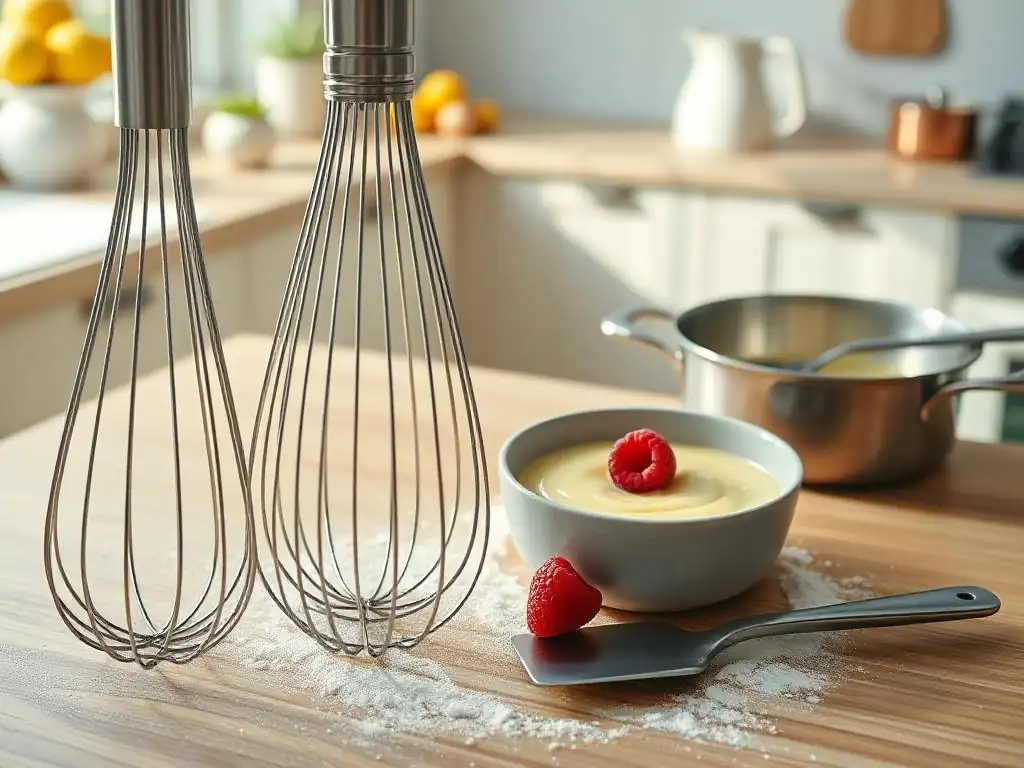
Whisks are essential for incorporating air into ingredients, smoothing out lumps, and emulsifying liquids (like oil and vinegar). Whether you're whipping cream for topping, beating egg whites for a meringue, or combining dry and wet ingredients for a light batter, a good whisk is indispensable. Having at least one or two whisks of different sizes or styles will cover most basic baking needs.
The design of a whisk impacts its function. A balloon whisk, with its many wires forming a wide, rounded shape, is excellent for incorporating maximum air into mixtures. A French whisk, with fewer, straighter wires, is better for stirring sauces or mixing heavier batters where less aeration is desired. Understanding which whisk to use for different tasks can significantly improve the texture of your baked goods.
Balloon Whisk: Light and Airy Mixtures
The balloon whisk is characterized by its many thin wires arranged in a wide, round shape, resembling a balloon. This design maximizes the contact points with the mixture, making it highly effective at incorporating air. It's the go-to tool for whipping egg whites into meringue, whipping heavy cream into stiff peaks, or making light and airy batters for items like soufflés or sponge cakes.
Achieving adequate aeration is crucial for the rise and texture of many baked goods, particularly delicate cakes. A well-whipped batter or meringue provides structure and lightness. While not a tool for the final decorative touches, the volume and texture created by a balloon whisk are fundamental to baking a successful cake that is then ready for any cake decorating tools beginners might use.
French Whisk: Heavier Batters and Sauces
The French whisk has a more elongated, narrow shape with fewer, straighter wires compared to a balloon whisk. This design makes it more rigid and effective for stirring thicker mixtures, breaking up lumps in gravies or sauces, or mixing heavier batters where you don't want to incorporate too much air, such as for brownies or certain types of bread dough.
While less effective for whipping air than a balloon whisk, the French whisk's sturdiness makes it useful for combining ingredients thoroughly in denser mixtures. It ensures even distribution of ingredients without over-aerating the batter. Both types of whisks serve distinct purposes in baking, contributing to the overall success of your recipe before you move on to using any specific cake decorating tools beginners might add to their collection.
Spatulas and Scrapers: Mixing and Cleaning
Spatulas and scrapers are the unsung heroes of the baking kitchen. They are incredibly versatile tools used for everything from gently folding ingredients together to scraping every last bit of batter from a bowl, spreading frosting, or cleaning up your workspace. Having a few different sizes and types will prove invaluable.
A good set should include a flexible spatula for scraping and folding and potentially a bench scraper for dough and cleanup. These tools allow you to work efficiently and minimize waste by ensuring you use all your prepared ingredients. They are essential for the entire baking process, from mixing the batter to transferring baked goods, and are even among the most basic cake decorating tools beginners use for applying and smoothing frosting.
Silicone Spatula: Heat Resistant and Flexible
Silicone spatulas are a must-have due to their flexibility, heat resistance, and non-scratch properties. They come in various sizes and shapes, with heads ranging from small and pointed for getting into tight corners to large and broad for scooping and folding. Their flexibility allows them to conform to the curves of a mixing bowl, effectively scraping down the sides and bottom to ensure all ingredients are incorporated.
Silicone spatulas can withstand high temperatures, making them suitable for stirring hot sauces or working with melted sugar. They are perfect for gently folding delicate ingredients like whipped egg whites or chocolate chips into batter without deflating the mixture. These are also among the most fundamental cake decorating tools beginners use for tasks like spreading and smoothing buttercream frosting onto a cake.
Bench Scraper: Dough Handling and Cleaning
A bench scraper, also known as a dough scraper, is a flat, rectangular blade with a handle. It's primarily used for dividing and portioning dough (like bread or pastry), lifting sticky dough from a work surface, and transferring chopped ingredients. Its straight edge is also excellent for scraping flour and dough residue from your countertop after baking, making cleanup much easier.
While perhaps less obvious for cake baking specifically compared to other items on this list, a bench scraper is incredibly useful if you expand into bread, pastries, or even making pie crusts from scratch. Its ability to cleanly scrape surfaces is also helpful for general kitchen cleanup. It's a simple, inexpensive tool that complements your other general baking equipment before you might invest in specialized cake decorating tools beginners might use.
Baking Pans: The Foundation of Every Baked Good
The right baking pan is crucial for the shape, size, and even baking of your creation. Pans are made from various materials, including aluminum, steel, glass, and silicone, each affecting heat distribution differently. Investing in a few standard, good-quality pans will serve you well for a wide variety of recipes.
Having the correct pan size specified in a recipe is important because it affects how the batter fills the pan and how heat penetrates it. Using a pan that's too large or too small can lead to over or under-baked results. Pans are the essential vessels that give your baked goods their form, making them ready for the next steps, whether that's cooling, slicing, or applying frosting using specific cake decorating tools beginners might use.
Cake Pans: Round, Square, and Bundt
For cake baking, having a few standard cake pans is essential. Common sizes include 8-inch or 9-inch round pans (ideal for layer cakes), 9x13 inch rectangular pans (great for sheet cakes, brownies, or bar cookies), and a Bundt pan (for decorative ring-shaped cakes). Pans made of aluminum are often preferred for cakes because they conduct heat evenly, promoting a consistent rise and preventing burnt edges.
Using the correct size and type of cake pan is foundational for baking a successful cake. A properly baked cake is level, has a good crumb structure, and is sturdy enough to handle. This provides the perfect canvas for any subsequent decorating you might do. While the pan itself isn't one of the cake decorating tools beginners use for frosting or piping, it's the tool that creates the very base you will decorate.
Cookie Sheets: Even Baking for Cookies and More
Cookie sheets, also known as baking sheets, are flat or have a slight lip on one or more sides. They are essential for baking cookies, scones, biscuits, sheet pan cakes, roasting vegetables, and more. Heavy-gauge aluminum cookie sheets are recommended because they conduct heat evenly and are less likely to warp at high temperatures compared to thinner sheets.
Using parchment paper or silicone baking mats on your cookie sheet prevents sticking and promotes even browning. While not a cake decorating tool, a good cookie sheet is fundamental for many other baking projects and can even be used to bake thin layers of cake (like for a jelly roll) or bake components for decorations (like meringue cookies), complementing your set of general baking tools.
Budget-Friendly Baking Tools: Options for Beginners
Baking doesn't have to break the bank, especially when you're just starting out. There are many ways to acquire essential tools without spending a fortune. Prioritizing quality for the most frequently used items and finding smart ways to save on others can help you build your collection gradually.
Starting with a few multipurpose tools and expanding as your skills and interests grow is a practical approach. You can find affordable options, look for sales, or even get creative with items you already own. This allows you to get baking and make delicious cakes and cookies before investing in more specialized items like specific cake decorating tools beginners might purchase later.
Finding Affordable Baking Kits
Many kitchenware retailers and online stores offer beginner baking kits or sets that bundle several essential tools together at a lower price than buying each item individually. These kits often include items like measuring cups and spoons, mixing bowls, spatulas, whisks, and sometimes even a basic baking pan or cookie sheet.
Look for kits from reputable brands that offer decent quality, even if they aren't top-of-the-line professional grade. Reading reviews from other beginners can help you gauge the value and durability of the tools included in a set. Starting with a kit provides a solid foundation of general baking tools, allowing you to practice making cakes and other items before you decide if you want to invest in specific cake decorating tools beginners use for piping or smoothing.
You might already own items in your kitchen that can serve as baking tools. For instance, the rim of a sturdy drinking glass can be used as a simple cookie cutter for making round shapes. Similarly, an empty wine bottle can function as a makeshift rolling pin if you don't have a dedicated one.
Other examples include using forks to mash soft ingredients like bananas or to crimp the edges of a pie crust, or using an ice cream scoop for portioning cookie dough or muffin batter evenly. Getting creative with items you already possess saves money on basic tools and lets you start baking right away. This frees up your budget if you decide later to purchase dedicated cake decorating tools beginners might use for more intricate designs.
Tips for Using Your New Baking Tools
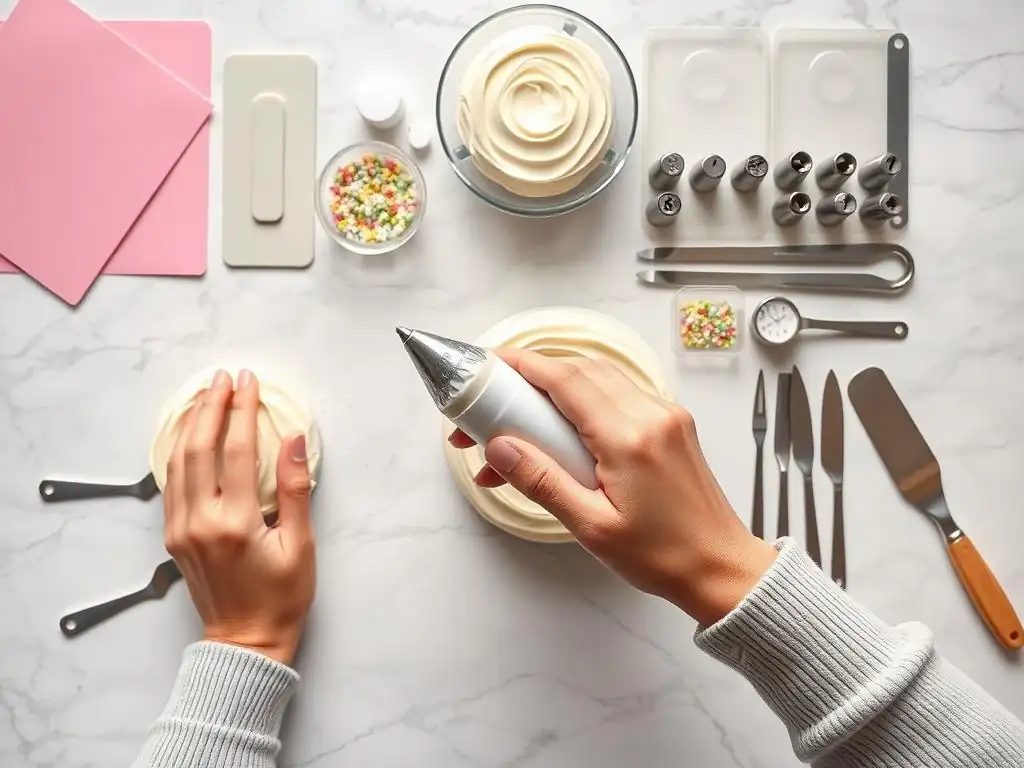
Once you've gathered your essential baking tools, the next step is to put them to good use! Learning how to properly use and care for your tools will enhance your baking success and extend the lifespan of your equipment. Don't be intimidated; every experienced baker started somewhere.
Baking is a skill that improves with practice. Be patient with yourself, learn from any mistakes, and enjoy the process of creating something from scratch. Understanding your tools and how they function is key to mastering basic techniques and building confidence in the kitchen, which is vital before you start exploring more advanced techniques or specific cake decorating tools beginners might use.
Practice Makes Perfect: Mastering Basic Techniques
The best way to get comfortable with your new baking tools is to use them frequently. Start with simple, beginner-friendly recipes that allow you to practice fundamental techniques like accurate measuring, creaming butter and sugar, folding ingredients, and whisking egg whites. Recipes for simple cookies, muffins, quick breads, or basic sheet cakes are excellent starting points.
Focus on understanding why each step in a recipe is important and how your tools help you execute it correctly. For example, practice leveling dry ingredients consistently or reading liquid measurements at eye level. Building proficiency with these basic general baking tools and techniques lays a solid foundation for tackling more complex recipes or even moving on to using specific cake decorating tools beginners might consider later for adding flair to their creations.
Cleaning and Maintaining Your Baking Tools
Proper cleaning and maintenance are crucial for keeping your baking tools in good condition and ensuring hygiene. Wash measuring cups and spoons thoroughly after each use to prevent residue buildup. Stainless steel and glass bowls are often dishwasher safe, but check manufacturer instructions. Wooden handles on whisks or spatulas should typically be washed by hand and dried immediately to prevent cracking or warping.
Baking pans often require specific care; aluminum pans, for instance, are best washed by hand with warm, soapy water and a non-abrasive sponge to preserve their finish and non-stick properties (if applicable). Avoid harsh chemicals or steel wool. Keeping your tools clean and well-maintained ensures they perform optimally every time you bake, from mixing the initial batter to preparing items that might be decorated later using cake decorating tools beginners have.
Storing Your Baking Tools Properly
Organizing and storing your baking tools correctly protects them from damage and makes them easily accessible for your next baking session. Measuring cups and spoons can be kept together on a ring or nested in a drawer. Stacking mixing bowls by size saves space in cabinets. Hang whisks and spatulas on hooks or store them upright in a utensil crocker.
Baking pans can be stored vertically using dividers or stacked carefully with protectors (like paper towels or soft cloths) in between to prevent scratches. Proper storage not only keeps your kitchen tidy but also extends the life of your tools, ensuring they are ready whenever inspiration strikes to bake a cake, cookies, or anything else you might want to make, perhaps even using specific cake decorating tools beginners might add to their collection over time.
Beyond the Basics: Expanding Your Baking Toolkit
Once you're comfortable with the essential starter tools, you might find yourself wanting to explore more advanced techniques or tackle different types of baked goods. This is a great time to consider adding a few more specialized tools to your collection that can further enhance your baking capabilities and precision.
These tools aren't strictly necessary when you're just starting out, but they can make certain tasks easier or allow you to achieve more professional results. Think of them as the next step in building your baking arsenal, complementing your basic set before you delve into very specific items like cake decorating tools beginners might use for intricate details.
Food Processor: For Precise Chopping and Mixing
A food processor can be a valuable addition for certain baking tasks. It excels at quickly cutting cold butter into flour for flaky pie crusts or biscuits, chopping nuts evenly, making breadcrumbs, or even processing ingredients for certain no-bake crusts. Its speed and power reduce manual effort and ensure consistent results for these specific steps.
While you can certainly make pie crust by hand using a pastry blender or even your fingers, a food processor makes the process much faster and often results in a more tender crust by keeping the butter very cold. It's a versatile appliance that extends beyond baking, making it a worthwhile consideration once you're baking regularly.
Kitchen Scale: For Accurate Measurements
For the highest level of accuracy in baking, a digital kitchen scale is indispensable. Many professional bakers and serious hobbyists measure ingredients by weight (grams or ounces) rather than volume (cups). Weight measurements are much more consistent than volume measurements, which can vary depending on how ingredients are scooped or packed. For example, a cup of flour can weigh anywhere from 120g to 140g depending on how it's measured, while 120g of flour is always 120g.
Using a kitchen scale leads to more reliable and repeatable baking results, especially for recipes that are sensitive to precise ratios, like macarons or delicate cakes. It eliminates the variability associated with measuring cups and spoons. Achieving this level of accuracy is crucial if you aim for consistently perfect cakes that are the ideal foundation for any detailed work with cake decorating tools beginners might use.
Pastry Blender: For Cutting Butter into Flour
A pastry blender is a simple tool designed specifically for cutting cold, solid fat (like butter or shortening) into flour when making pastry dough, biscuits, or streusel toppings. It typically consists of several curved metal wires or blades attached to a handle. The goal is to break the fat into small pieces and coat them with flour, creating layers that result in a flaky texture when baked.
Using a pastry blender keeps the butter cold and prevents it from melting from the heat of your hands, which is key to creating flaky layers. While you can use forks or your fingertips, a pastry blender is more efficient for this specific task. It's a specialized tool that enhances your ability to make certain types of baked goods that might accompany or complement a cake.
Where to Buy Baking Tools for Beginners
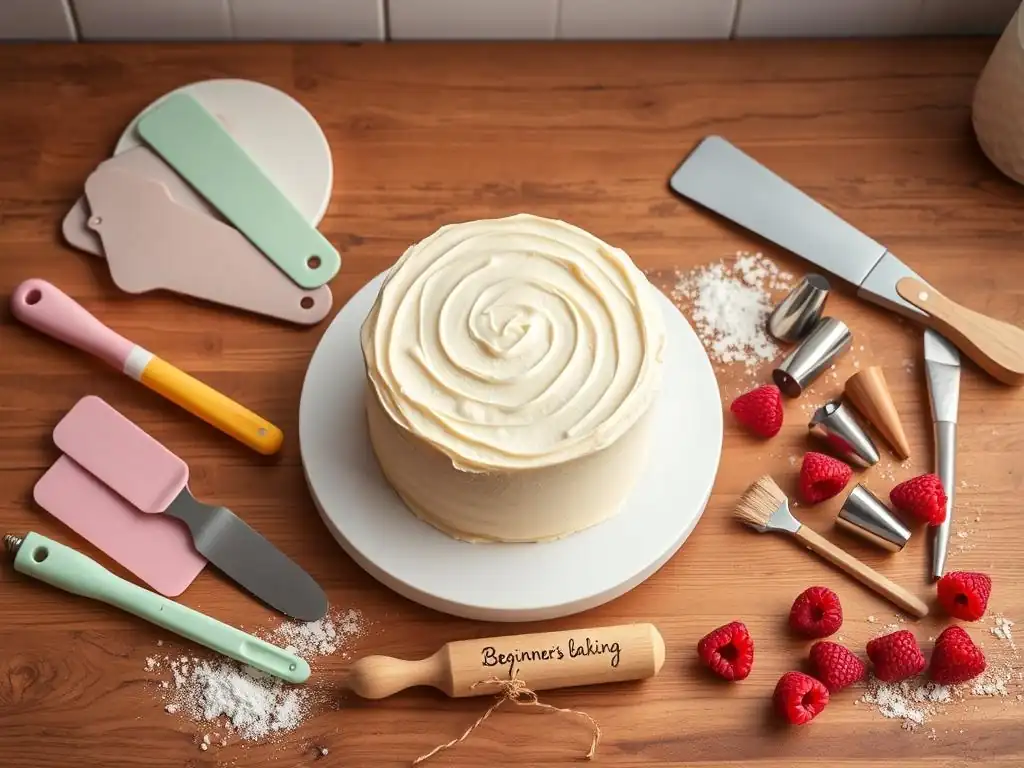
Finding the right place to purchase your baking tools depends on your preferences for convenience, selection, and cost. Both online retailers and local stores offer a variety of options for beginners looking to equip their kitchen.
Consider comparing prices and reading reviews regardless of where you shop to ensure you're getting good value for your money. Building your collection of general baking tools is an ongoing process, and knowing where to find reliable supplies is helpful. Many of these sources also stock basic cake decorating tools beginners might look for once they are comfortable baking the cake itself.
Online Retailers for Baking Supplies
Online retailers offer unparalleled convenience and a vast selection of baking tools from numerous brands. Websites like Amazon, King Arthur Baking, Sur La Table, or specialized baking supply stores provide everything from basic measuring cups to specific cake pans and advanced equipment. You can easily compare prices, read customer reviews, and have items delivered directly to your door.
Shopping online is great for finding specific items or comparing features across different brands. Many online stores also have sections dedicated to baking essentials or beginner kits, making it easy to find what you need. You'll also find a wide range of cake decorating tools beginners can easily browse and purchase online when they are ready to start frosting and decorating their baked cakes.
Local Kitchenware Stores
Visiting local kitchenware stores allows you to see and feel the tools before you buy them. You can assess the quality, weight, and ergonomics of items like spatulas or whisks firsthand. Knowledgeable staff can often provide recommendations and answer questions, offering a personalized shopping experience.
Supporting local businesses is another benefit. You might find unique items or brands not widely available online. Some local stores also offer baking classes or demonstrations, further enhancing your baking journey. Many kitchenware stores have basic sections for baking supplies and may carry a selection of simple cake decorating tools beginners can purchase alongside their foundational equipment.
Conclusion: Embarking on Your Baking Journey
Building Your Baking Skills Over Time
Starting your home baking journey with the right essential tools sets you up for success. As you practice and become more comfortable with these fundamental items – your measuring cups, bowls, whisks, and pans – you'll naturally build confidence and skill. Don't be afraid to try new recipes and techniques as you go. Every bake is a learning opportunity, whether it's a perfectly risen cake or a batch of slightly-too-flat cookies.
Remember that baking is a skill developed over time. Be patient, persistent, and celebrate your successes, no matter how small. Mastering the use of these core general baking tools is the perfect preparation for exploring more specific areas of baking, such as using dedicated cake decorating tools beginners might acquire to transform a simple cake into a showstopper.
Enjoy the Process of Baking!
Beyond the delicious results, the process of baking itself can be incredibly rewarding. The sensory experience of mixing ingredients, the warmth emanating from the oven, and the anticipation as your creation bakes are all part of the joy. Don't get too caught up in perfection; embrace the learning curve and have fun experimenting.
These basic tools are your companions on this creative journey. They make the process smoother and help you achieve reliable results, allowing you to focus on the pleasure of creating. Whether you're baking for yourself, friends, or family, enjoy the satisfaction of making something wonderful from scratch. These essential tools are the foundation for countless delicious possibilities, including preparing the perfect base ready for any cake decorating tools beginners might be eager to try out.
Frequently Asked Questions
What are the absolute essential cake decorating tools a beginner should purchase first?
The most essential tools are a rotating cake stand, a set of offset spatulas (different sizes), and a good quality piping bag with a few basic tips. These will allow you to frost and add simple decorations.
Are expensive cake decorating tools necessary for beginners to create beautiful cakes?
No, expensive tools are not necessary. Starting with basic, affordable tools is best. Focus on learning techniques before investing in high-end equipment.
What is the best type of frosting to use when first learning cake decorating techniques?
A simple buttercream frosting is ideal for beginners. It's easy to make, versatile, and holds its shape well for practicing piping and spreading techniques.
Where can a beginner find reliable tutorials for using cake decorating tools?
BakeWithEase.com offers step-by-step guides and video tutorials specifically designed for beginners learning to use essential cake decorating tools and techniques.
How important is it to have a crumb coat when cake decorating?
A crumb coat is extremely important for a smooth final frosting layer. It seals in the crumbs and provides a clean surface for the final layer of frosting.
Final Reflection: The Sweet Success of Simple Beginnings
Mastering the art of cake decorating doesn't require a mountain of expensive equipment; it begins with a few essential tools and a passion for creation. The journey from novice baker to confident cake artist is surprisingly accessible, as this article has hopefully demonstrated. The right tools, used skillfully, can unlock a world of creative possibilities, transforming ordinary cakes into edible masterpieces.
The impact of accessible cake decorating extends far beyond the individual. It fosters creativity, encourages self-expression, and builds confidence. It connects us to a rich history of culinary artistry, passed down through generations. The simple act of decorating a cake can become a powerful form of self-care, a way to connect with loved ones, or even a springboard to a fulfilling career. The best things in life are homemade,
and this sentiment rings especially true when it comes to the joy of creating beautiful and delicious cakes.
Now, it's your turn. Don't be intimidated by the seemingly endless array of cake decorating tools available. Start small, focus on mastering the fundamentals with the essentials outlined in this article, and let your creativity flourish. Embrace the process, experiment with different techniques, and most importantly, have fun! The sweetest creations often come from the simplest beginnings, and your unique cake decorating journey is just waiting to begin.
Unleash Your Inner Cake Artist!
Thanks for taking the time to explore the essential tools for cake decorating! We hope you're feeling inspired and ready to create your own delicious masterpieces. Now, let's turn that inspiration into action:
- Master a new piping technique: Choose one of the techniques mentioned in the article and practice it this week. Even 15 minutes of practice can make a huge difference!
- Share your baking journey: Post a picture of your next cake creation on social media and tag #BakeWithEase – we'd love to see your progress!
- Explore our other articles: Discover more cake decorating tips and tricks on BakeWithEase.com to further elevate your skills.
What exciting cake design will you tackle first?