
Understanding W/O and O/W Emulsions: A Baker's Guide

Welcome to BakeWithEase, your trusted guide to the wonderful world of baking! Ever wondered about the secret ingredient that separates a perfectly moist cake from a dry, crumbly one? Dive into our Baking Science Deep Dive and unlock the power of emulsions. This week, we're demystifying the science behind W/O emulsions, revealing how understanding water-in-oil baking techniques can revolutionize your recipes. Curious to learn more and banish baking mishaps forever? Let's get started!
- Introduction to Emulsions in Baking
- What is an Emulsion and Why Does it Matter?
- W/O Emulsions: Water-in-Oil Emulsions Explained
- O/W Emulsions: Oil-in-Water Emulsions Explained
- Key Differences Between W/O and O/W Emulsions
- Emulsifiers in Baking: Stabilizing Creations
- Mastering Emulsion Stability: Tips and Techniques
- Recipes Utilizing W/O and O/W Emulsions
- Conclusion: Harnessing Emulsions for Baking Excellence
-
Frequently Asked Questions
- What exactly is a W/O emulsion in baking, and why is it important?
- How does a W/O emulsion differ from an O/W emulsion, and which is more common in baking?
- What are some examples of baked goods that rely on W/O emulsions, and what benefits do they offer?
- What are some common problems that can occur when working with W/O emulsions, and how can I prevent them?
- Where can I find more detailed recipes and tutorials on using W/O emulsions in baking on BakeWithEase.com?
- Final Reflection: The Delicious Science of Emulsions in Baking
- Unlock Your Baking Potential: Mastering Emulsions!
Introduction to Emulsions in Baking
Baking is a fascinating blend of art and science, where ingredients interact in complex ways to create delicious textures and flavors. At the heart of many beloved baked goods lies a fundamental concept from chemistry: the emulsion. Understanding how emulsions work, specifically the difference between water-in-oil (W/O) and oil-in-water (O/W) types, is key to mastering everything from flaky pastries to moist cakes. This guide will walk you through the essentials, providing a practical W/O emulsion baking guide alongside insights into its O/W counterpart.
What is an Emulsion and Why Does it Matter?
Defining Emulsions: A Baker's Perspective
At its simplest, an emulsion is a stable mixture of two liquids that normally wouldn't mix, like oil and water. Imagine trying to stir oil into a glass of water; they quickly separate. In baking, these immiscible liquids are brought together and held in a dispersed state, where tiny droplets of one liquid are suspended throughout the other. This stability is achieved through mechanical energy (like whisking) and often with the help of emulsifiers, which act as bridges between the oil and water molecules. For a baker, creating and maintaining these stable mixtures is crucial for desired results.
When you make a vinaigrette, you're creating a temporary emulsion that separates over time unless shaken. In baking, however, we often need emulsions that are much more stable to survive mixing, heating, and cooling processes. The ratio of oil to water and the presence of emulsifying agents dictate the type and stability of the emulsion formed. For example, a high proportion of fat combined with mechanical mixing can lead to a W/O structure, while a higher proportion of water often results in an O/W structure, especially with the right emulsifiers present.
The Importance of Emulsions for Texture and Stability
Emulsions are indispensable in baking because they directly influence the texture, structure, and shelf life of baked goods. A well-formed emulsion prevents ingredients from separating, leading to a homogenous batter or dough. Consider a cake batter: it's a complex mix of fats, liquids (water, milk, eggs), sugar, and flour. If the fat and liquid phases separate, the cake will likely be dense, greasy, and unevenly baked.
Conversely, a stable emulsion ensures that fat is evenly distributed, contributing to tenderness, moisture, and a fine crumb structure. In pastries, the fat phase within a W/O emulsion is critical for creating flakiness. The continuous fat layer separates gluten strands during baking as water turns to steam. Emulsions also impact how products brown and their overall mouthfeel, contributing richness and smoothness. Mastering the principles behind the W/O emulsion baking guide is foundational for achieving consistent, high-quality results.
W/O Emulsions: Water-in-Oil Emulsions Explained
Defining Water-in-Oil (W/O) Emulsions
A water-in-oil (W/O) emulsion is characterized by tiny droplets of water dispersed throughout a continuous phase of oil or fat. Think of butter: it's approximately 80-82% fat, about 16-18% water, and a small percentage of milk solids. The water exists as microscopic droplets surrounded by the milk fat. Margarine is another common example, typically containing around 80% vegetable oil or fat and 20% water. In these emulsions, the fat forms the external, continuous phase.
The stability of a W/O emulsion relies on emulsifiers that prefer to reside in the oil phase but can also interact with water droplets, preventing them from coalescing. Lecithin, often found naturally in fats like butter or added to margarine, is a common emulsifier for W/O systems. Creating a stable W/O emulsion often involves incorporating a small amount of water into a larger volume of fat while applying mechanical force like churning.
Characteristics of W/O Emulsions in Baking
W/O emulsions are typically semi-solid or solid at room temperature, especially if the continuous fat phase has a relatively high melting point. This consistency is a defining characteristic and plays a crucial role in how they behave in baking. Because the fat is the continuous phase, W/O emulsions tend to feel richer and fattier on the tongue compared to O/W emulsions. They also interact differently with other ingredients; for instance, they don't readily dissolve water-soluble ingredients.
When heated, the fat phase in a W/O emulsion melts first, which is essential for processes like creating flaky layers in pastry. The dispersed water droplets then turn to steam, helping to lift and separate the layers of dough. This phased melting and steaming action is a direct result of the W/O structure. Understanding these characteristics is vital when following a W/O emulsion baking guide for recipes like puff pastry or shortbread.
Examples of W/O Emulsions: Butter-Based Pastries
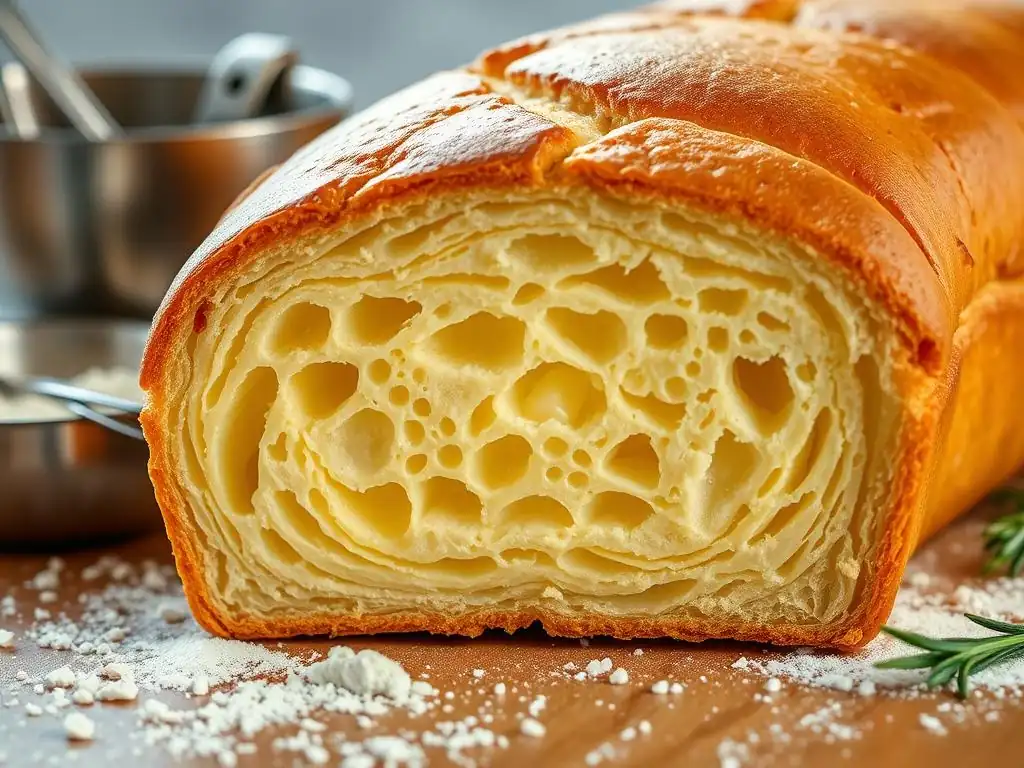
Butter is the quintessential W/O emulsion used in baking. Its unique structure is fundamental to the creation of flaky pastries like croissants, puff pastry, and even tender shortcrust pastry. In puff pastry, cold butter is folded into dough layers. As the pastry bakes, the fat melts, and the water droplets within the butter turn into steam, forcing the layers apart and creating hundreds of thin, crisp flakes.
Shortbread cookies, which have a high ratio of butter to flour, also rely on butter's W/O structure. The fat coats the flour particles, inhibiting gluten development and resulting in a tender, crumbly texture. The water content in the butter contributes steam during baking, which can create small air pockets, further enhancing the crumb structure. The specific properties of butter as a W/O emulsion are indispensable for achieving the classic texture of these baked goods.
Advantages of Using W/O Emulsions
One primary advantage of W/O emulsions, particularly in the form of butter or margarine, is their ability to create flakiness and tenderness in baked goods. The continuous fat phase effectively shortens gluten strands by coating them, leading to a less tough product. In layered pastries, the dispersed water provides the leavening steam necessary for separation.
W/O emulsions also contribute significantly to flavor and richness. Since fat carries many flavor compounds, a continuous fat phase can enhance the overall taste experience. Their solid or semi-solid state at room temperature makes them easy to handle and incorporate into doughs and batters, providing structure before baking begins. This makes them foundational components in many classic baking techniques.
Challenges of Working with W/O Emulsions: Stability
Despite their utility, W/O emulsions can be prone to instability if not handled correctly. The most common challenge is emulsion breakdown, often caused by temperature fluctuations or excessive mechanical stress. For instance, if butter is melted and then rapidly cooled without re-emulsifying, the fat and water phases can separate.
Adding too much water to a W/O emulsion can also cause it to invert, forming an O/W emulsion, or to break entirely. Think of clarifying butter: you intentionally separate the fat from the water and milk solids by melting it gently. In baking, unintended separation can lead to greasy textures or a loss of desired structure, such as butter leaking out of puff pastry dough during proofing or baking if the emulsion breaks due to warmth. Maintaining the integrity of the W/O structure requires careful temperature control and handling.
O/W Emulsions: Oil-in-Water Emulsions Explained
Defining Oil-in-Water (O/W) Emulsions
An oil-in-water (O/W) emulsion is the opposite of a W/O emulsion: tiny droplets of oil or fat are dispersed throughout a continuous phase of water or a water-based liquid. Examples are abundant in both cooking and baking, including milk (fat dispersed in water), cream, mayonnaise (oil dispersed in vinegar/lemon juice), and many cake batters. In this structure, the water or aqueous solution forms the external, continuous phase.
O/W emulsions typically require emulsifiers that prefer to reside in the water phase but can also interact with oil droplets. Proteins (like those in milk and eggs) and certain polysaccharides (like starches or gums) are effective O/W emulsifiers. Creating a stable O/W emulsion often involves gradually adding the oil phase to the water phase while whisking vigorously, allowing the emulsifier to coat the oil droplets as they are formed.
Characteristics of O/W Emulsions in Baking
O/W emulsions are generally more fluid and pourable than W/O emulsions, reflecting their continuous water phase. They tend to feel lighter on the palate and are often used in recipes where a creamy or smooth texture is desired, rather than flakiness. Because the continuous phase is water-based, they can more easily interact with and dissolve water-soluble ingredients like sugar and salt.
In baking, O/W emulsions like milk, buttermilk, or liquids from eggs are crucial for hydration and contributing to the overall structure of batters and doughs. The fat dispersed within the water phase still contributes to tenderness and moisture, but it does so by coating flour particles differently than a continuous fat phase would. This structure is fundamental to the soft, moist crumb characteristic of many cakes and muffins.
Examples of O/W Emulsions: Cakes and Sauces
Many liquid ingredients commonly used in baking are O/W emulsions or contribute to forming them within a batter. Milk and cream are natural O/W emulsions. Egg yolks, while complex, contain lecithin which can help stabilize O/W emulsions in batters. Mayonnaise, a stable O/W emulsion of oil in vinegar/lemon juice stabilized by egg yolk lecithin, is sometimes used in recipes like "Mayonnaise Cake" to provide moisture and richness through its emulsified fat.
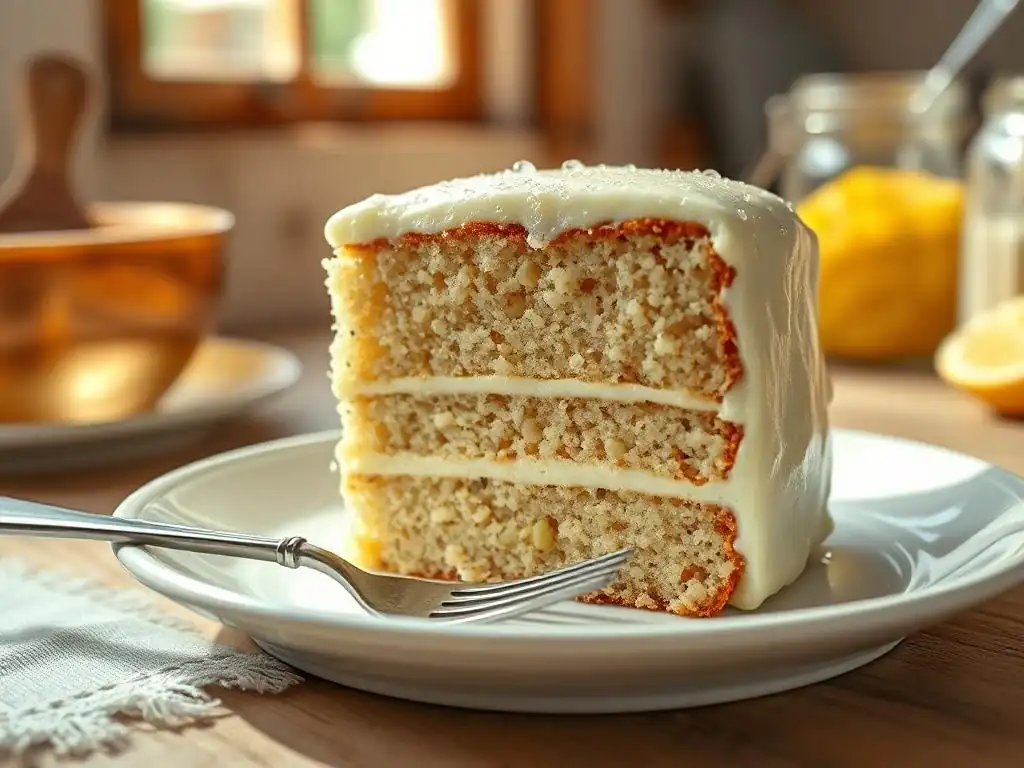
Cake batters themselves are often O/W emulsions. The liquid ingredients (milk, eggs, water) form the continuous phase, while fat (from butter, oil, or egg yolks) is dispersed throughout. The emulsifiers present in eggs and sometimes added to commercial ingredients help keep the fat droplets suspended, ensuring a smooth, homogenous batter that bakes up evenly with a tender crumb. Custards and some sauces, like crème anglaise, are also O/W emulsions.
Advantages of Using O/W Emulsions
A significant advantage of O/W emulsions is their ability to provide moisture and contribute to a tender, soft crumb in baked goods. The dispersed fat droplets interfere with gluten development, similar to W/O emulsions, but result in a different texture – more crumbly or tender than flaky. Their fluid nature makes them easy to mix into batters and doughs.
O/W emulsions also facilitate the even distribution of fat throughout the mixture, preventing greasy pockets and promoting uniform baking. Ingredients like milk and eggs in O/W form contribute proteins and other components that aid in structure formation and browning reactions (like the Maillard reaction), enhancing both the texture and flavor of the final product.
Challenges of Working with O/W Emulsions: Coalescence
The primary challenge with O/W emulsions is the risk of coalescence, where the dispersed oil droplets merge together, leading to separation of the oil phase from the water phase. This can happen if the emulsion is subjected to freezing and thawing (ice crystals disrupt the structure), excessive heat, or the addition of too much oil too quickly without sufficient emulsifier or mixing.
A common example in baking is a cake batter "breaking" or curdling. This often occurs when eggs or other liquids are added too quickly to a creamed butter and sugar mixture (which starts as a W/O or complex emulsion). The water from the added liquid overwhelms the emulsifying capacity, causing the fat to separate. While often fixable by adding a small amount of dry ingredient like flour, it highlights the delicate balance required to maintain a stable O/W emulsion during batter formation.
Key Differences Between W/O and O/W Emulsions
Comparing Stability: W/O vs O/W
The stability characteristics of W/O and O/W emulsions differ based on their continuous phase. W/O emulsions, with a continuous fat phase, are generally more stable when diluted with oil or fat. They can tolerate a relatively high proportion of the dispersed water phase before breaking or inverting. However, adding too much water can easily destabilize them. Butter, a W/O emulsion, remains stable as long as it's kept cool, but adding water to melted butter can cause separation.
O/W emulsions, having a continuous water phase, are more stable when diluted with water or water-based liquids. They can incorporate a significant amount of the dispersed oil phase if emulsifiers are present and added gradually. However, adding too much oil or exposing them to conditions that affect the water phase (like freezing) can lead to breakdown through coalescence. A well-made mayonnaise (O/W) can accept a large volume of oil, but freezing it will typically cause it to separate.
Comparing Texture: W/O vs O/W in Finished Products
The type of emulsion significantly impacts the final texture of baked goods. W/O emulsions, like butter, contribute to structures that are often flaky, tender, or crumbly, depending on how they are incorporated. The solid or semi-solid nature of the fat at room temperature and its melting properties during baking are key. Puff pastry's distinct layers are a direct result of the W/O structure of the butter.
O/W emulsions, found in batters and liquids like milk, tend to create textures that are moist, soft, and have a fine crumb. The fat is more evenly distributed as tiny droplets within the structure formed by the continuous water phase and proteins. This leads to a smooth mouthfeel and prevents dryness. Think of the difference between a flaky croissant (W/O focus) and a tender, moist sponge cake (O/W focus in the batter).
Comparing Taste and Mouthfeel
The continuous phase of an emulsion largely determines its initial interaction with your palate. W/O emulsions, with their continuous fat phase, tend to coat the tongue more readily, providing a rich, often lingering mouthfeel. Fat-soluble flavor compounds are also more easily perceived. This contributes to the perceived richness and indulgence of butter-heavy baked goods.
O/W emulsions, having a continuous water phase, feel lighter in the mouth. Water-soluble flavor compounds are more prominent initially. While they still contribute richness through the dispersed fat, it's a different sensation – often described as creamy or smooth rather than overtly fatty. The difference in how flavors are delivered and the physical sensation on the tongue are key distinctions.
Emulsifiers in Baking: Stabilizing Creations
Understanding the Role of Emulsifiers
Emulsifiers are essential ingredients that make stable emulsions possible. They are molecules with a unique structure: one part (hydrophilic) is attracted to water, and the other part (lipophilic or hydrophobic) is attracted to oil or fat. When added to a mixture of oil and water, emulsifiers position themselves at the interface between the two liquids, with their hydrophilic end in the water phase and their lipophilic end in the oil phase.
This positioning lowers the interfacial tension between the oil and water, making it easier to break one phase into tiny droplets within the other. More importantly, the emulsifier molecules form a protective barrier around these dispersed droplets, preventing them from merging back together (coalescing in O/W or separating in W/O). Without emulsifiers, most oil-and-water mixtures would quickly separate back into distinct layers. They are the unsung heroes in achieving stable batters and doughs, crucial for any W/O emulsion baking guide.
Common Emulsifiers: Soy Lecithin and Mono- and Diglycerides
Several emulsifiers are widely used in commercial and home baking. Soy lecithin, often derived from soybeans, is a powerful natural emulsifier commonly found in ingredients like chocolate, margarine, and packaged baked goods. It contains phospholipids that are excellent at stabilizing both W/O and O/W emulsions, though it's particularly effective in O/W systems.
Mono- and diglycerides are synthetic emulsifiers produced from fats. They are extremely common in commercial bread, cakes, and icings. They are particularly effective at improving the texture and shelf life of baked goods by interacting with starch (preventing staling) and stabilizing fat dispersions, leading to finer crumb structure, increased volume, and improved softness. They are versatile and work well in various fat-water systems.
Natural Emulsifiers: Egg Yolks and Honey
Nature provides several effective emulsifiers that bakers have used for centuries. Egg yolks are perhaps the most well-known, containing a significant amount of lecithin along with proteins that also have emulsifying properties. Egg yolks are excellent stabilizers for O/W emulsions, as seen in mayonnaise and many cake batters, helping to incorporate fats smoothly into the liquid phase.
Honey, while primarily sugar and water, contains small amounts of proteins and other compounds that act as mild emulsifiers. This is why honey can help stabilize salad dressings or contribute to the moist, even texture of baked goods where it's used as a liquid sweetener. Mustard also contains mucilage that acts as an emulsifier, often used in vinaigrettes. These natural options allow bakers to create stable emulsions without relying on synthetic additives.
Mastering Emulsion Stability: Tips and Techniques
Achieving stable emulsions is a cornerstone of successful baking. Whether you're working with a W/O system like butter in pastry or an O/W system in a cake batter, employing the right techniques makes all the difference.
Temperature Control
Temperature is critical for emulsion stability. For W/O emulsions like butter in puff pastry, keeping the butter and dough cold is essential. This maintains the solid fat structure, preventing the water from separating prematurely. Butter melts around 90-95°F (32-35°C), and exceeding this temperature during handling can break the emulsion.
For O/W emulsions in batters, using ingredients at room temperature is often recommended. Cold eggs or milk added to creamed butter and sugar can shock the emulsion, causing the fat to seize and separate (curdle). Allowing ingredients to come to room temperature, typically around 68-70°F (20-21°C), helps them combine more smoothly and form a stable O/W system.
Mixing Techniques
The method and speed of mixing greatly influence emulsion formation and stability. For O/W emulsions, like incorporating oil into a liquid base (e.g., making mayonnaise or adding oil to a batter), it's crucial to add the oil very slowly in a thin stream while whisking or mixing continuously and vigorously. This breaks the oil into tiny droplets and allows the emulsifier time to coat them before they can coalesce.
For W/O emulsions formed during mixing, like creaming butter and sugar, moderate speed is usually sufficient to disperse air and sugar crystals within the fat matrix. Over-mixing can sometimes lead to instability, particularly if the temperature rises. Gentle folding is often preferred after an emulsion is formed to avoid breaking the structure.
Ingredient Order
The order in which ingredients are combined plays a vital role, especially in O/W batter emulsions. In many cake recipes, creaming butter and sugar first incorporates air and forms a type of emulsion. Eggs are then added gradually, with their emulsifiers (lecithin) helping to integrate them into the fatty mixture and begin forming an O/W system as the water phase is introduced.
Adding dry ingredients (flour, baking powder, etc.) usually comes after the liquid and fat phases are emulsified. The flour absorbs some liquid and contributes starch and protein, further stabilizing the system. Adding liquids and fats in the correct sequence, often alternating wet and dry additions after the initial creaming stage, helps maintain a smooth, stable batter emulsion.
Troubleshooting: Separation and Curdling
Even experienced bakers encounter emulsion issues. If a cake batter curdles (fat separates from liquid), it's often due to adding cold ingredients or adding liquids too quickly.
- Fixing Curdled Batter: Try gently warming the batter slightly over a double boiler while whisking, or beat in a tablespoon or two of the dry ingredients (flour) to help re-emulsify the mixture.
- Broken Mayonnaise: If your O/W mayonnaise emulsion breaks (oil separates), start with a fresh egg yolk in a clean bowl and slowly whisk the broken mixture into it drop by drop, just as you would add oil initially.
Understanding why the emulsion broke (temperature, speed, ingredient ratio) is key to preventing it next time and essential knowledge for any comprehensive W/O emulsion baking guide.
Recipes Utilizing W/O and O/W Emulsions
To illustrate these concepts, let's look at recipes where the emulsion type is fundamental to the outcome.
W/O Emulsion Recipe: Puff Pastry
Puff pastry is a prime example of leveraging a W/O emulsion (butter) for structure. The basic process involves:
- Making a lean dough (flour, water, salt, sometimes a little fat).
- Encasing a block of cold butter (the W/O emulsion) within the dough.
- Repeatedly rolling and folding the dough (turns or folds), creating hundreds of alternating layers of dough and butter.
- Chilling between folds to keep the butter cold and solid.
During baking, the continuous fat phase of the butter melts, and the dispersed water turns to steam, physically separating the dough layers. The result is a light, airy pastry with distinct flakes. The success hinges entirely on maintaining the integrity of the cold butter's W/O structure throughout the laminating process. This technique is a core element of any W/O emulsion baking guide focused on pastry.
O/W Emulsion Recipe: Mayonnaise Cake
Mayonnaise cake might sound unusual, but it's a classic example of using a pre-formed O/W emulsion (mayonnaise) to create a moist, tender cake. Mayonnaise typically contains about 70-80% oil dispersed in a water-based liquid (vinegar or lemon juice), stabilized by egg yolk lecithin.
In a mayonnaise cake recipe, the mayonnaise is often combined with sugar, eggs, and vanilla, forming a smooth, creamy mixture. Dry ingredients are then added, often alternating with additional liquid like water or milk. The O/W emulsion of the mayonnaise disperses fat very finely throughout the batter, contributing significant moisture and tenderness without the need to cream butter separately. The resulting cake is known for its exceptionally soft and even crumb structure.
Conclusion: Harnessing Emulsions for Baking Excellence
Understanding W/O and O/W emulsions demystifies many baking processes. Recognizing whether you are working with fat dispersed in water (O/W) or water dispersed in fat (W/O) allows you to anticipate how ingredients will behave, choose the right techniques, and troubleshoot problems effectively. From the flaky layers of puff pastry relying on butter's W/O structure to the tender crumb of a cake where an O/W batter emulsion is key, emulsions are fundamental to achieving desired textures and stability.
By paying attention to temperature, mixing methods, ingredient order, and utilizing the power of emulsifiers, both natural and added, you can master these essential concepts. This knowledge empowers you to not only follow recipes successfully but also to adapt them and develop your own baking creations with confidence. Embracing the science of emulsions elevates your baking from following instructions to truly understanding the craft.
The Future of Emulsification in Baking
Research into emulsifiers and emulsion technology continues to evolve, offering exciting possibilities for bakers. New plant-based emulsifiers are being developed to cater to dietary needs. Techniques for creating more stable or specifically structured emulsions are constantly explored, potentially leading to novel textures, reduced fat products that still deliver on mouthfeel, and improved shelf life for baked goods. As this field advances, bakers will have even more tools to innovate and delight with delicious, perfectly textured creations. Continuing to explore resources like this W/O emulsion baking guide will keep you at the forefront of baking science.
Frequently Asked Questions
What exactly is a W/O emulsion in baking, and why is it important?
A W/O emulsion, or water-in-oil emulsion, is a mixture where water droplets are dispersed in a continuous oil phase. Understanding this is important because it affects the texture and stability of many baked goods.
How does a W/O emulsion differ from an O/W emulsion, and which is more common in baking?
An O/W emulsion, or oil-in-water emulsion, is the opposite – oil droplets dispersed in a continuous water phase. O/W emulsions are more common in baking, found in things like cake batter and vinaigrettes.
What are some examples of baked goods that rely on W/O emulsions, and what benefits do they offer?
Pastry doughs like pie crusts and some shortbreads rely on W/O emulsions. The fat coats the flour particles, creating a flaky and tender result, and inhibiting gluten development.
What are some common problems that can occur when working with W/O emulsions, and how can I prevent them?
Common problems include emulsion breakdown (separation) and a greasy texture. Prevent this by keeping ingredients cold and avoiding overmixing the dough.
Where can I find more detailed recipes and tutorials on using W/O emulsions in baking on BakeWithEase.com?
BakeWithEase.com offers a variety of recipes and guides that demonstrate the use of W/O emulsions. Look for recipes featuring pie crusts, shortbreads, and other pastries for practical examples.
Final Reflection: The Delicious Science of Emulsions in Baking
Understanding the intricacies of W/O and O/W emulsions is not merely a technical exercise; it's the key to unlocking a world of superior baking textures and flavors. Mastering this fundamental aspect of culinary science allows bakers of all levels to elevate their creations, moving beyond simple recipes to truly understand the "why" behind the "how." This knowledge empowers you to troubleshoot problems and confidently experiment with new ingredients and techniques.
The impact of understanding emulsion types extends far beyond the immediate outcome of a single bake. It fosters a deeper appreciation for the delicate balance of ingredients and their interactions. It's about understanding the science behind the art, allowing for more informed decision-making and creative exploration. As Harold McGee eloquently states in On Food and Cooking: Cooking is a science, but it is also an art, and the best cooks are those who understand both.
This principle holds true for baking, especially when considering the crucial role of emulsions.
Now, consider your own baking journey. What new possibilities does this newfound knowledge unlock for you? Will you experiment with different emulsifiers? Will you attempt a recipe you previously avoided due to its complexity? I encourage you to embrace this understanding and apply it to your next baking project. Don't just follow recipes; understand them. The rewards – in terms of both taste and satisfaction – will be immeasurable. Happy baking!
Unlock Your Baking Potential: Mastering Emulsions!
Thanks for taking the time to learn about the magic of W/O and O/W emulsions! We hope you now feel more confident tackling even the most complex baking recipes. Ready to put your new knowledge into practice?
- Experiment with a new recipe: Try making a richer buttercream frosting (W/O) or a lighter, airier mousse (O/W) using your newfound understanding. This is the best way to solidify your skills!
- Share your baking triumph: Post a picture of your creation on social media and tag us @BakeWithEase – we'd love to see what you bake!
- Explore our other baking guides: Delve deeper into the world of baking techniques and ingredients on our website, BakeWithEase.com. We've got tons more tutorials to help you become a true baking master.
What delicious emulsion-based creation will you tackle first?