
Fat, Sugar, and Salt: Their Surprising Impact on Gluten Development

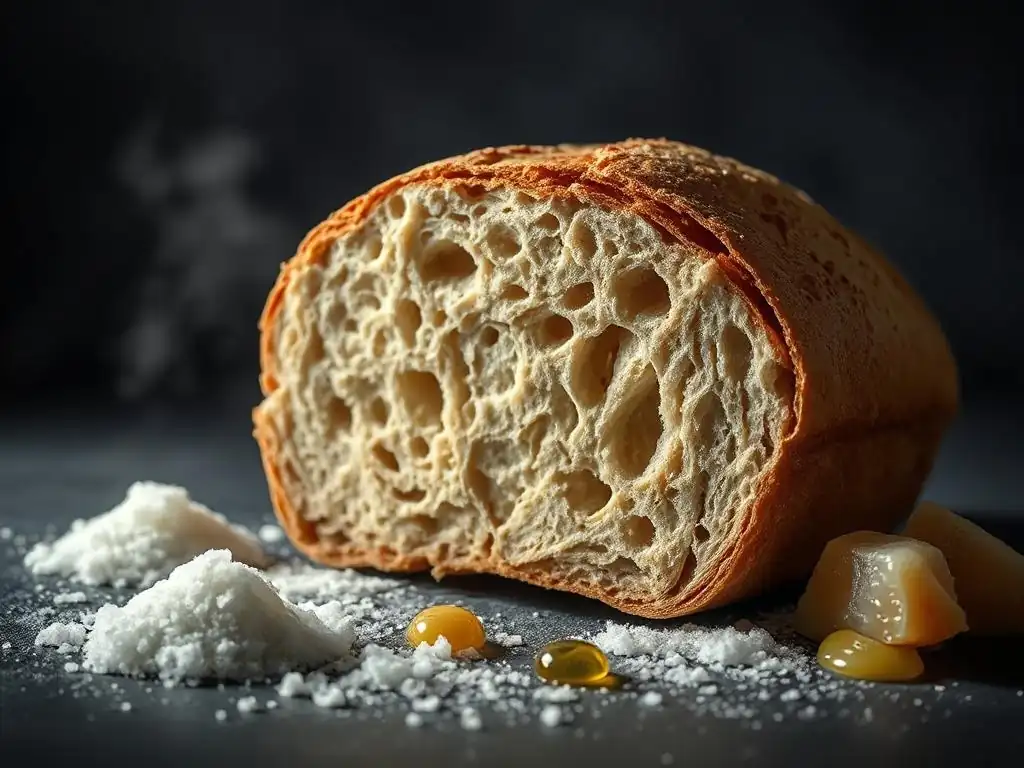
Welcome to BakeWithEase, your partner in baking bliss! Ever wondered how the seemingly simple ingredients of fat, sugar, and salt can dramatically influence the very structure of your baked goods? Prepare to unravel the mysteries behind gluten development and discover how mastering these elements will elevate your baking from good to extraordinary. Let's dive in and unlock the secrets to perfect textures and flavors!
- The Impact of Fats, Sugars, and Salts on Gluten Development in Bread Baking
- Understanding Gluten Development
- Fats and Gluten Development
- Sugars and Gluten Development
- Interactions Between Fats, Sugars, and Salts
- Optimizing Gluten Development
- Advanced Techniques
-
Frequently Asked Questions
- How does fat affect gluten development in baked goods?
- What role does sugar play in gluten development?
- How does salt influence gluten development?
- Can the balance of fat, sugar, and salt impact the overall texture of a baked good?
- Are there specific examples of baked goods where the impact of fat, sugar, and salt on gluten is particularly noticeable?
- Final Reflection: The Unexpected Alchemy of Gluten
- Unlock the Secrets of Gluten: Bake Better Today!
The Impact of Fats, Sugars, and Salts on Gluten Development in Bread Baking
Baking is a fascinating blend of art and science. While many focus on the creative side of shaping dough or decorating cakes, understanding the fundamental science behind ingredients is key to achieving perfect results. One of the most crucial elements in many baked goods, especially bread, is gluten. How well gluten develops dictates the texture, rise, and structure of your final product. Interestingly, common ingredients like fats, sugars, and salts, often seen just as flavor enhancers, play a surprising and significant role in gluten development.
Understanding Gluten Development
Before diving into how other ingredients influence it, let's clarify what gluten is and what factors encourage its formation in your dough. Mastering this foundational knowledge is the first step towards controlling your bake.
What is Gluten?
Gluten is a complex network formed when two proteins found in wheat flour, glutenin and gliadin, come into contact with water and are agitated through mixing or kneading. Glutenin provides elasticity, allowing the dough to stretch without breaking, while gliadin contributes extensibility, enabling the dough to expand. As these proteins hydrate and bond, they create a web-like structure that traps gases produced during fermentation, causing the dough to rise.
This protein network is fundamental to the structure of bread and many other baked goods. The process of mixing flour and water initiates the gluten development process, and subsequent handling like kneading or stretching helps align and strengthen this network. Without sufficient gluten development, a loaf of bread would be dense and flat, lacking the airy crumb and chewy texture we often desire. The quality and quantity of gluten formed directly impact the final texture and volume.
Factors Affecting Gluten Development
Several factors influence how effectively gluten forms and strengthens in dough. Hydration level is paramount; sufficient water is needed for the glutenin and gliadin proteins to hydrate and bond. Typically, higher hydration levels allow for easier gluten development and more extensible dough, though they can be stickier to handle.
Mixing and kneading are also critical mechanical factors. The physical action helps the hydrated proteins link together and align into a strong, elastic network. Over-mixing, however, can break down the gluten structure, leading to a weak dough. Other influential factors include the type of flour used (bread flour with higher protein content develops more gluten than cake flour), temperature (warmer dough often develops gluten faster), and the presence of other ingredients, specifically fats, sugars, and salts, which significantly impact the gluten development process.
Fats and Gluten Development
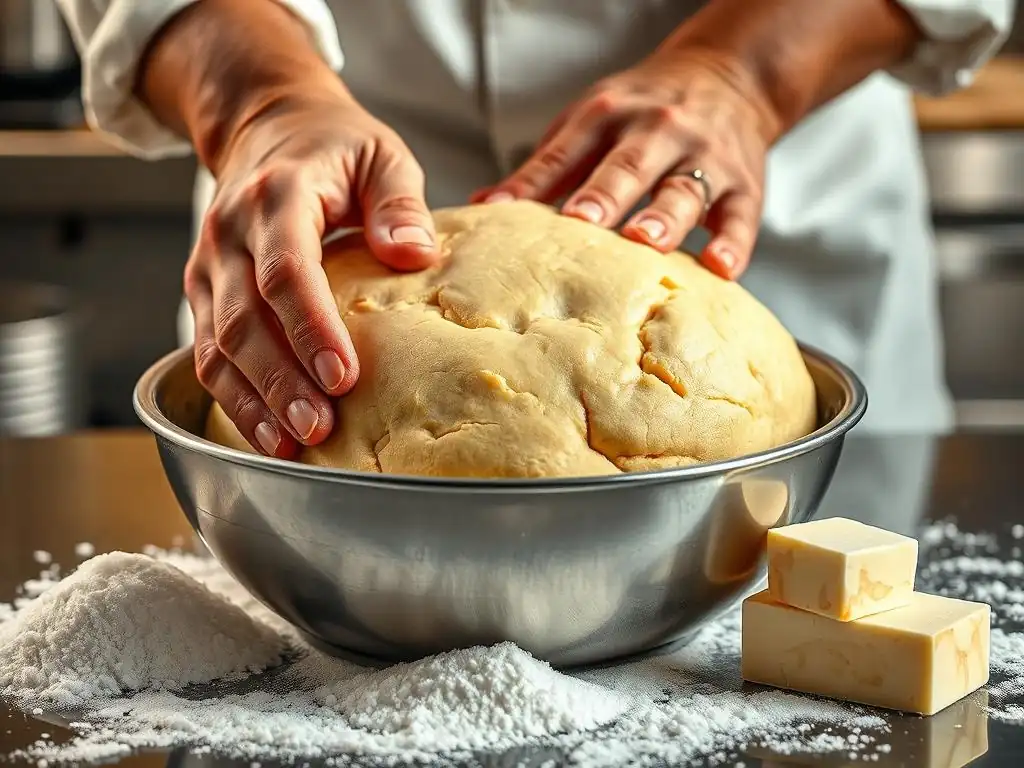
Fats are often added to dough for richness and tenderness. However, their role extends beyond flavor and mouthfeel; they have a direct impact on how the gluten network forms and behaves.
How Fats Affect Gluten Formation
Fats interfere with gluten development by coating the individual flour particles and the nascent gluten strands. This coating action creates a barrier between the glutenin and gliadin proteins and the water needed for hydration, inhibiting the initial bonding. As mixing continues, the fat molecules also lubricate the developing gluten network, reducing friction and making the dough softer and less elastic.
The degree to which fat inhibits gluten development depends on the amount of fat used and how it is incorporated. In lean doughs like baguettes, fat is minimal, allowing for maximum gluten strength and an open crumb. In rich doughs like brioche, high fat levels deliberately limit gluten development, resulting in a tender, cake-like crumb rather than a chewy one. This interference is key to achieving specific textures in different baked goods.
Types of Fats and Their Effects
Different types of fats have slightly varied effects on gluten development due to their composition and melting points. Solid fats, like butter or shortening, tend to be more effective at coating flour particles initially, potentially inhibiting gluten development more aggressively when cold. Liquid fats, like oils, disperse more easily throughout the dough.
The saturation level of the fat also plays a role. Saturated fats (like butter or lard) are solid at room temperature and contribute significantly to flakiness in pastries by creating distinct layers that separate during baking. Unsaturated fats (like olive oil) are liquid and tend to integrate more fully into the dough, contributing tenderness but less flakiness. Understanding these differences helps bakers choose the right fat for the desired texture and gluten development.
Butter
Butter is a popular fat in baking, valued for its flavor and ability to create tender and rich textures. It is an emulsion of fat, water, and milk solids. When cold, butter is solid and can be cut into flour, as in pastry making, where it helps create layers and inhibits gluten development, leading to flakiness.
When melted or softened and creamed into dough, butter coats the flour particles and developing gluten strands. This lubrication reduces the dough's elasticity and chewiness, resulting in a softer, more tender crumb. High-fat doughs like brioche (which can contain 50% or more butter relative to flour weight) demonstrate this effect profoundly, yielding a very soft, cakey interior due to the inhibited gluten development.
Olive Oil
Olive oil is a liquid fat often used in Mediterranean breads like focaccia or ciabatta. Because it is liquid at room temperature, it disperses easily throughout the dough during mixing. Unlike solid fats cut into flour, olive oil tends to integrate more fully, lubricating the gluten network from the start.
While olive oil still inhibits gluten development compared to a fat-free dough, it often results in a slightly different texture than solid fats. Doughs made with olive oil can still develop a reasonably strong gluten network, contributing to an open, airy crumb, as seen in many artisan loaves. The amount of olive oil typically used (often 5-15% of flour weight) allows for sufficient gluten development for structure while adding tenderness and flavor.
Balancing Fats for Optimal Texture
Achieving the desired texture in your baked goods often requires careful balancing of the fat content. Too little fat in a rich dough will result in excessive gluten development, leading to a tough product. Too much fat in a lean dough will prevent sufficient gluten development, resulting in a dense, flat bake.
The method of incorporating fat also matters. Creaming softened butter with sugar introduces air and coats ingredients, affecting gluten differently than cutting cold butter into flour. For optimal gluten development in many bread recipes, fat is added after the initial mixing of flour and water, allowing some gluten structure to begin forming before the fat inhibits further development. This technique balances tenderness and structure.
Sugars and Gluten Development
Sugar is not just for sweetness; it plays multiple roles in baking, including influencing hydration, fermentation, and crucially, gluten development.
Sugar's Role in Hydration and Gluten
Sugar is hygroscopic, meaning it attracts and holds onto water. In dough, sugar competes with the glutenin and gliadin proteins for the available water. By binding water, sugar reduces the amount available for protein hydration, which is essential for gluten development.
High concentrations of sugar significantly inhibit gluten formation, leading to a more tender and less elastic dough. This is why high-sugar baked goods like cakes and cookies tend to be soft and crumbly rather than chewy. In bread dough, moderate amounts of sugar (typically 2-5% of flour weight) have a less pronounced inhibitory effect and can even aid development by slowing down fermentation, allowing more time for gluten to relax and become extensible.
Types of Sugars and Gluten Formation
Different types of sugars behave similarly in terms of their hygroscopic nature and impact on gluten development, but their solubility and presence of other compounds can cause subtle differences. Granulated sugar, being highly refined, primarily acts by competing for water.
Liquid sugars like honey and molasses contain water themselves and often minerals or enzymes that can slightly alter their interaction with the dough structure and fermentation process. However, their primary effect on gluten development remains their ability to bind water, reducing its availability for protein hydration. The higher the concentration of any sugar, the more pronounced this water-binding effect and the greater the inhibition of gluten formation.
Honey
Honey is a liquid sweetener composed mainly of fructose and glucose. Like other sugars, it is highly hygroscopic and effectively competes for water in dough. Using honey instead of granulated sugar in a bread recipe will lead to a dough that feels stickier initially due to honey's liquid nature but will still experience inhibited gluten development proportional to the amount of sugar present.
Beyond its impact on gluten through water binding, honey also contains enzymes (like amylase) that can break down starch into simpler sugars, providing more food for yeast and potentially affecting the dough's handling properties over long fermentation. However, its primary influence on gluten structure stems from its sugar content and water-attracting properties.
Molasses
Molasses is a byproduct of sugar refining and contains a higher percentage of water and minerals than granulated sugar or honey. Its dark color and distinct flavor are due to these compounds. Like other sugars, molasses inhibits gluten development by binding water.
The minerals in molasses, particularly calcium and magnesium, can sometimes have a slight strengthening effect on the gluten network, counteracting the inhibitory effect of the sugar to some degree. However, the high sugar concentration in molasses means its primary impact is still one of tenderness and reduced elasticity compared to a dough without sugar. The amount used will dictate the extent of this effect on gluten development.
Sugar Levels and Gluten Performance
The level of sugar in a dough is a critical factor determining the extent of gluten development and the final texture. Lean bread doughs have minimal or no added sugar, allowing for maximum gluten strength and a chewy texture. As sugar levels increase (e.g., in enriched doughs for rolls or challah), gluten development is moderately inhibited, resulting in a softer crumb.
In very high-sugar doughs (like sweet rolls or coffee cakes, where sugar can be 15-25% or more of flour weight), the significant competition for water severely limits gluten development. This results in a very tender, almost cake-like structure that relies less on gluten for support and more on other ingredients like eggs and fats. Understanding this relationship is vital for controlling the outcome of your baked goods.
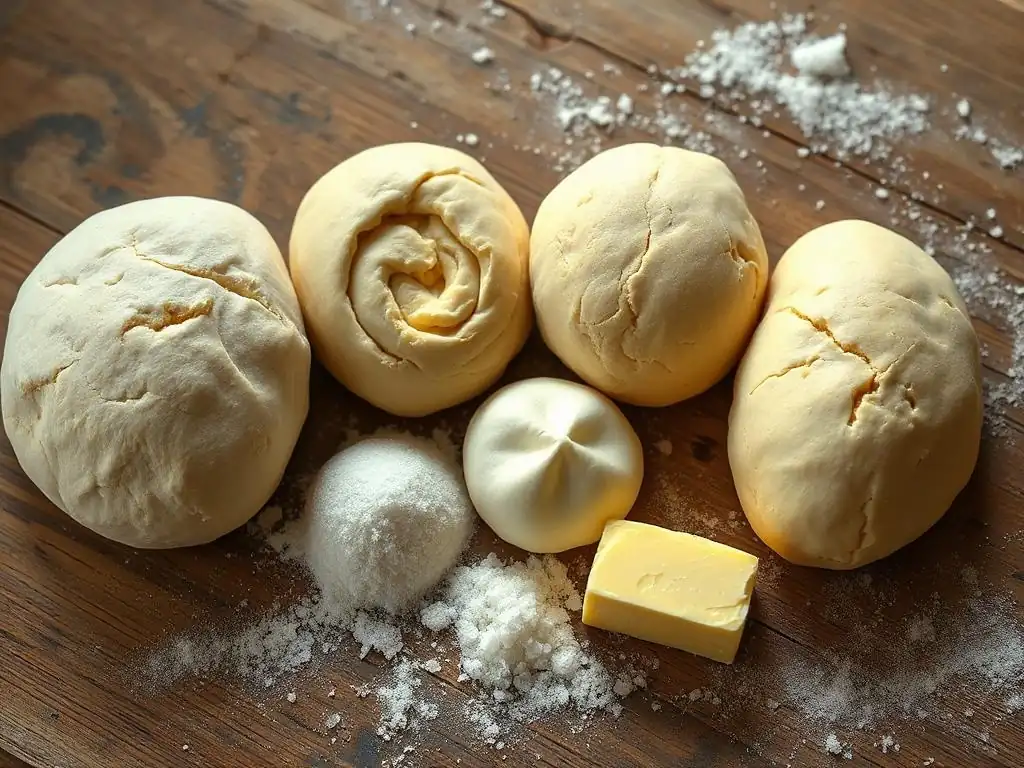
Salt, or sodium chloride, is a seemingly simple ingredient, but its impact on dough goes far beyond just flavor. It plays a vital role in controlling yeast activity and significantly affects gluten development.
How Salt Strengthens Gluten
Salt has a remarkable effect on the gluten network: it strengthens it. Salt helps tighten the protein strands (glutenin and gliadin), making the gluten network more organized, elastic, and easier to handle. This strengthening effect is due to the interaction of salt's ions (sodium and chloride) with the charged parts of the gluten proteins.
By tightening the network, salt helps the dough hold its shape and trap gas more effectively, leading to better oven spring and a finer, more even crumb structure. Dough mixed without salt often feels slack, sticky, and difficult to work with, demonstrating the significant positive impact salt has on gluten development and dough handling properties.
Salt's Importance in Fermentation
In addition to strengthening gluten, salt also plays a crucial role in regulating yeast activity. Salt draws water out of yeast cells via osmosis, slowing down their fermentation rate. While this might sound negative, it's actually beneficial in bread making.
A slower, more controlled fermentation allows the yeast to produce gas at a steadier pace, giving the gluten network time to develop and strengthen gradually. This leads to a more stable dough that can hold more gas, resulting in better volume and structure. Without salt, fermentation can be too rapid, potentially overproofing the dough before the gluten development is sufficient to support the structure.
Balancing Salt for Strength and Flavor
The typical range for salt in bread dough is about 1.8% to 2.2% of the flour weight. This range provides sufficient gluten development strengthening and fermentation control while also contributing essential flavor. Using too little salt results in a weak, slack dough and bland flavor.
Using too much salt, however, can excessively inhibit yeast activity and make the gluten network too tight, leading to a dense loaf. Extremely high salt concentrations can even hinder gluten hydration by competing too aggressively for water, similar to sugar. Finding the right balance is key to achieving optimal dough structure, proper fermentation, and delicious results. Consider traditional pretzels, which use a very high amount of coarse salt on the exterior, but the dough itself still needs sufficient internal salt (though often slightly less than standard bread dough) for proper gluten development and texture before baking.
Interactions Between Fats, Sugars, and Salts
While we've looked at fats, sugars, and salts individually, their combined presence in dough creates complex interactions that further influence gluten development and the final baked good.
The Interplay of Ingredients
In many enriched doughs, fats, sugars, and salts are all present, each vying for water and affecting protein interactions. Sugar competes for water, inhibiting initial hydration. Fat coats particles and lubricates strands, reducing elasticity. Salt strengthens the network. These competing forces must be carefully balanced.
For instance, in a sweet, buttery brioche, the high sugar and fat levels significantly inhibit gluten development, resulting in a tender crumb. The salt is still necessary, however, to provide some structure and control the yeast, preventing the dough from collapsing entirely. The final texture is a result of this delicate interplay, where the inhibitory effects of fat and sugar are moderated by the strengthening effect of salt and the overall hydration and mixing method.
Balancing Ingredients for Baking Results
Successful baking with enriched doughs relies on understanding how to balance these ingredients to achieve the desired level of gluten development. Higher hydration levels might be used to compensate for water bound by sugar. Extended mixing times might be employed to help the gluten network form despite the presence of fat.
Consider a standard white bread versus a challah. White bread is lean, with minimal fat and sugar, allowing strong gluten development for a chewy texture and open crumb. Challah includes eggs (fat), sugar, and oil, which inhibit gluten, resulting in a softer, richer loaf. The salt level is adjusted to balance the effects of the other ingredients and control the yeast, ensuring a good rise despite the reduced gluten development.
Troubleshooting Gluten Issues
Understanding the impact of fats, sugars, and salts is crucial for troubleshooting common baking problems related to gluten development.
- If your dough is too tough and elastic: You might have insufficient fat or sugar, or too much salt, allowing excessive gluten development.
- If your dough is too slack and doesn't hold its shape: You might have too much fat or sugar, or insufficient salt, inhibiting gluten development.
- If your bread is dense and lacks rise: This could be due to insufficient gluten development (too much fat/sugar, not enough salt/mixing) or issues with yeast activity (potentially too much salt or sugar).
By adjusting the ratios of fat, sugar, and salt, along with mixing technique and hydration, bakers can significantly influence the gluten structure and correct these issues.
Optimizing Gluten Development
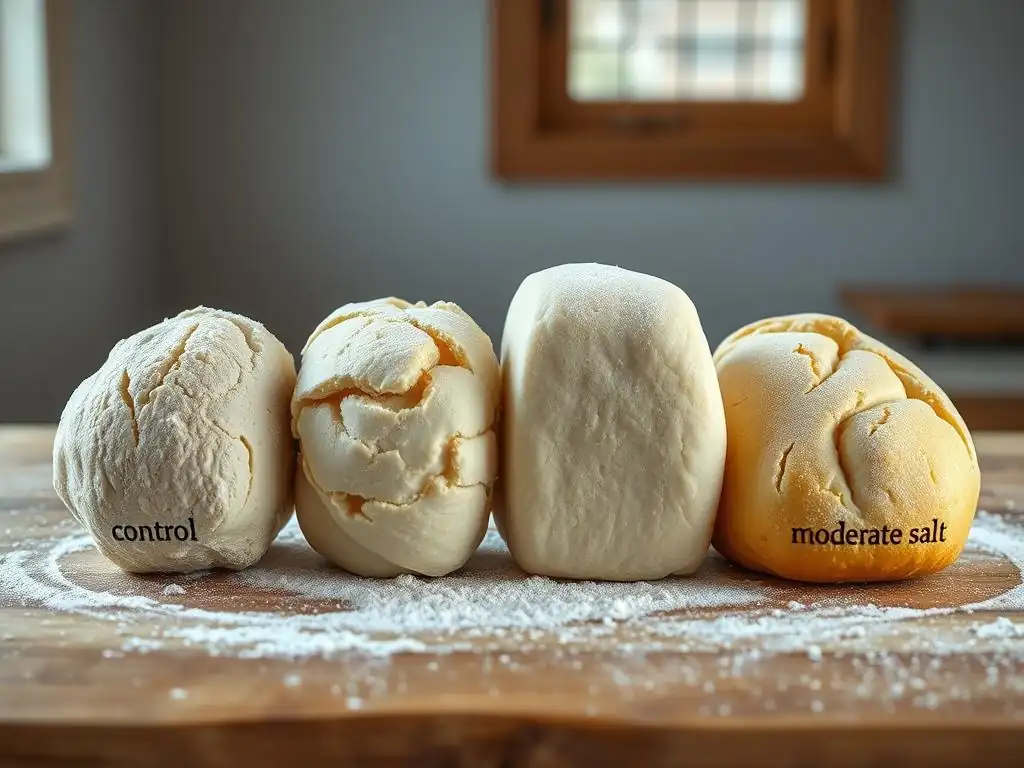
Armed with the knowledge of how fats, sugars, and salts influence the gluten network, you can intentionally manipulate these ingredients to achieve specific textures in your baked goods.
Practical Tips for Ingredient Adjustment
Here are some practical tips for using fats, sugars, and salts to optimize gluten development:
- For a chewier texture: Use less fat and sugar (or none), ensure adequate hydration, and use salt within the typical range (1.8-2.2%).
- For a tender crumb: Increase fat and/or sugar levels. Consider adding fat after initial mixing to allow some gluten formation.
- For better dough handling: Ensure sufficient salt is used (within the typical range) to strengthen the gluten network.
- When using high sugar: Be prepared for a stickier dough and longer mixing times to encourage gluten development despite the water competition.
- When using high fat: Expect reduced elasticity and focus on achieving enough structure for the dough to hold its shape.
Recipes Demonstrating Ingredient Impact
The principles of gluten development influenced by fat, sugar, and salt are best understood through practice. Here are some examples of recipes where these effects are clearly visible:
[Recipe: Sourdough Bread with Olive Oil]
This recipe typically uses moderate olive oil (fat) which adds tenderness while still allowing significant gluten development for an open, airy crumb, characteristic of artisan sourdough. The salt level balances gluten strength and fermentation.
[Recipe: Sweet Brioche Bread]
A classic example of a high-fat, high-sugar dough. The large quantities of butter and sugar significantly inhibit gluten development, resulting in a rich, soft, and tender loaf with a tight crumb, far less chewy than standard bread. Salt is present but primarily for flavor and yeast control.
[Recipe: Salted Pretzels]
While known for their salty exterior, pretzel dough requires robust gluten development to achieve its characteristic chewy texture. It's typically a low-fat, low-sugar dough where salt plays a key role in strengthening the gluten structure, allowing the dough to be shaped into thin strands that hold up during boiling and baking.
Advanced Techniques
Beyond simply adjusting ingredient quantities, bakers can employ advanced techniques that leverage the science of gluten development and the properties of fats, sugars, and salts to achieve more complex textures and structures.
Techniques for Enhancing or Inhibiting Gluten
Techniques like autolyse (mixing flour and water and letting it rest before adding other ingredients) enhance gluten development by allowing proteins to hydrate fully without the interference of salt or fat. Conversely, techniques like adding fat or sugar later in the mixing process can inhibit further development after an initial structure has formed.
Using preferments (like poolish or biga) or sourdough starters introduces acids that slightly modify protein structure, often leading to more extensible dough. The duration and temperature of fermentation also impact how the gluten network matures and relaxes, influencing the final texture. Understanding these techniques, alongside the impact of fats, sugars, and salts, allows for precise control over the final crumb and crust.
Using Ingredients to Achieve Textures
The strategic use of fats, sugars, and salts is fundamental to achieving the vast range of textures in baked goods. From the crisp, airy structure of a baguette (low fat/sugar, specific salt level for strength) to the soft, crumbly texture of a shortbread cookie (very high fat/sugar, minimal gluten development) or the dense chewiness of a bagel (low fat/sugar, high gluten development), these ingredients are key texture modifiers.
Consider pastries like croissants or puff pastry, where layers of fat (butter) are laminated into dough. The fat layers prevent gluten from forming between them, creating distinct separations that puff up during baking, resulting in flakiness. This is a prime example of using fat to prevent gluten development in specific areas to achieve a desired texture.
The Science of Gluten Manipulation
Ultimately, mastering baking science involves understanding how to manipulate the gluten network using ingredients and techniques. The interaction between water, protein, and the presence of fats, sugars, and salts creates a complex system. By controlling hydration, mixing time, fermentation, and the precise balance of these key ingredients, bakers can steer gluten development towards producing anything from a light, airy loaf to a dense, chewy bagel or a tender, crumbly cake. It's a continuous learning process that turns simple ingredients into delicious and texturally diverse creations.
Frequently Asked Questions
How does fat affect gluten development in baked goods?
Fat interferes with gluten formation by coating the flour particles and preventing them from fully hydrating. This results in a more tender and less chewy texture in the final product.
What role does sugar play in gluten development?
Sugar can inhibit gluten development by competing with gluten proteins for water. Higher sugar levels lead to a softer crumb and reduced elasticity.
How does salt influence gluten development?
Salt strengthens gluten by tightening the gluten strands. This results in improved elasticity and structure, particularly in breads.
Can the balance of fat, sugar, and salt impact the overall texture of a baked good?
Yes, the ratio of these ingredients significantly affects the final texture. A higher fat content promotes tenderness, while salt enhances structure. Careful balancing is key to optimal results.
Are there specific examples of baked goods where the impact of fat, sugar, and salt on gluten is particularly noticeable?
Yes, examples include cookies (fat creates a crumbly texture), bread (salt strengthens the gluten network), and cakes (sugar contributes to a soft crumb). Each ingredient plays a crucial and distinct role.
Final Reflection: The Unexpected Alchemy of Gluten
The interplay of fat, sugar, and salt in gluten development isn't just a baker's secret; it's a fundamental principle impacting food texture, quality, and ultimately, our experience of food itself. Understanding this intricate relationship is crucial not only for professional bakers but also for anyone interested in the science behind the food we consume. The implications extend far beyond the kitchen, influencing food production on an industrial scale and shaping our culinary landscape.
The more I researched the impact of these seemingly simple ingredients, the more I realized how profoundly they shape our daily lives. Their influence extends beyond the immediate sensory experience of a perfectly chewy loaf of bread or a flaky pastry; it touches upon issues of food accessibility, health, and even cultural identity. Food is symbolic of love when words are inadequate.
- Alan D. Wolfelt. This quote highlights the emotional connection we have with food, a connection deeply intertwined with the very structure and texture of the food itself, a structure heavily influenced by fat, sugar, and salt's role in gluten development.
Consider the implications of this knowledge. You now hold the key to understanding why certain recipes work, and perhaps more importantly, why others fail. Take this knowledge and experiment!
Don't be afraid to tweak recipes, to understand the subtle shifts in texture that occur with even minor adjustments to the ratios of fat, sugar, and salt. By actively engaging with this knowledge, you'll not only improve your baking skills but also deepen your appreciation for the complex science behind the simple act of making bread, or any gluten-containing food. The journey of understanding gluten development is a journey of discovery, and it's a journey I invite you to embark on.
Unlock the Secrets of Gluten: Bake Better Today!
Thanks for diving deep into the fascinating world of gluten with us! You now have a powerful understanding of how fat, sugar, and salt subtly influence its development. Ready to put this knowledge into practice?
- Master your next loaf: Experiment with adjusting the fat, sugar, and salt levels in your favorite bread recipe based on what you've learned. Notice the difference in texture and rise!
- Share your baking triumphs (and challenges!): Let's connect! Tell us about your baking adventures in the comments below – we'd love to hear how you're putting this knowledge to use.
- Explore advanced gluten techniques: Consider researching other factors that impact gluten development, like hydration and kneading techniques, to further refine your baking skills.
What unexpected changes will you make to your baking routine after learning these surprising insights?