
Whole Wheat vs. White Flour: Different Paths to Gluten Development

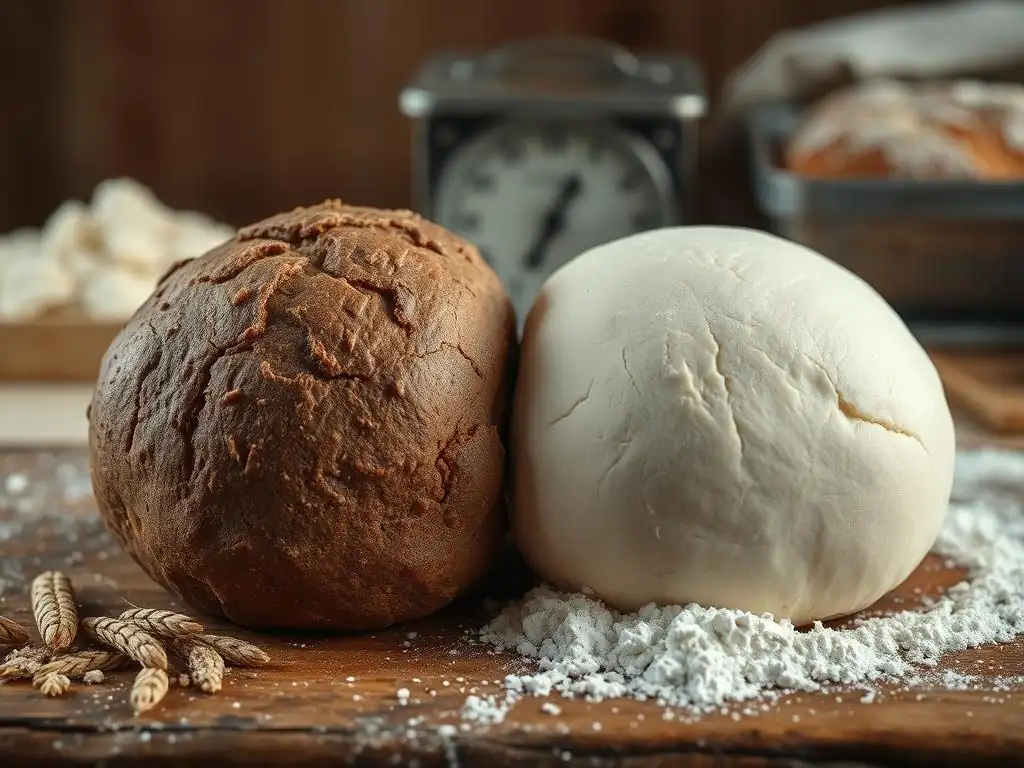
Welcome to BakeWithEase, your trusted companion on your baking journey! Ever wondered why your whole wheat bread doesn't rise quite the same as its white flour counterpart? Dive into our Baking Science Deep Dive as we unravel the secrets behind whole wheat flour gluten development. Prepare to unlock the keys to baking success as we explore the nuances that separate these two baking staples, and discover how to achieve perfect results every time. Intrigued? Let's get baking!
- Introduction: Gluten Development in Baking with Different Flours
- Understanding Gluten Formation: A Baker's Essential Knowledge
- Bread Flour and Gluten Development: A Strong Foundation
- Cake Flour and Gluten Development: A Tender Crumb
- Key Differences: Bread Flour vs. Cake Flour Gluten Development
- Strategies for Controlling Gluten Development in Cake Flour Dough
- The Impact of Additives on Gluten Development in Bread Flour and Cake Flour
- Troubleshooting Common Gluten Development Issues
- Recipes and Techniques: Putting Gluten Knowledge into Practice
- Conclusion: Mastering Gluten Development with Bread Flour and Cake Flour
-
Frequently Asked Questions
- What is gluten development, and why is it important in baking?
- How does whole wheat flour affect gluten development compared to white flour?
- What challenges might I face when baking with whole wheat flour?
- What are some techniques to improve gluten development when using whole wheat flour?
- Can I achieve the same level of gluten development with whole wheat flour as with white flour?
- Final Reflection: The Flour Power Within: Understanding Gluten Development
- Unlock Your Baking Potential: Master Gluten's Secrets!
Introduction: Gluten Development in Baking with Different Flours
Welcome to BakeWithEase, where we explore the fascinating science behind delicious baked goods! Today, we're diving deep into one of the most critical concepts in baking: gluten development. This process is fundamental to the structure and texture of everything from crusty loaves of bread to light, airy cakes. However, the way gluten is developed, and the extent of that development, varies dramatically depending on the type of flour you use and the result you want to achieve.
Understanding how different flours behave is key to mastering your baking. Bread flour and cake flour, at opposite ends of the protein spectrum, require completely different approaches to gluten. One thrives on vigorous mixing to build a strong network, while the other demands gentle handling to keep gluten formation minimal. Let's explore the science behind these differences and learn how to control gluten development for perfect results every time.
Understanding Gluten Formation: A Baker's Essential Knowledge
What is Gluten and Why is it Important in Baking?
Gluten is not an ingredient added to flour; it's a complex protein structure that forms when two specific proteins, glutenin and gliadin, found naturally in wheat flour, are hydrated with water and then manipulated (like kneading or mixing). Think of glutenin as providing strength and elasticity, while gliadin contributes extensibility and flow. As these proteins absorb water, they begin to bond and link together.
The mechanical action of kneading or mixing causes these links to align and strengthen, forming a complex, three-dimensional network. This network is crucial because it provides the framework that holds dough or batter together. Without this structure, baked goods would be dense, flat, and crumbly. The extent of gluten development directly impacts the final texture of your baked item.
The Role of Gluten in Bread Structure and Texture
In bread baking, developing a strong, elastic gluten network is paramount. When yeast produces carbon dioxide gas during fermentation, this gas gets trapped within the stretchy gluten matrix. This is what causes bread dough to rise. During baking, the heat sets this expanded structure, creating the characteristic open, airy crumb and chewy texture we associate with good bread.
A well-developed gluten network allows the dough to stretch and expand without tearing, accommodating the gas production and oven spring. This elasticity is also what makes shaping bread dough possible. The strength of the gluten provides the backbone for the loaf, allowing it to hold its shape during proofing and baking. Conversely, insufficient gluten development in bread leads to a dense loaf with a tight crumb.
Bread Flour and Gluten Development: A Strong Foundation
Characteristics of Bread Flour: High Protein Content and Milling
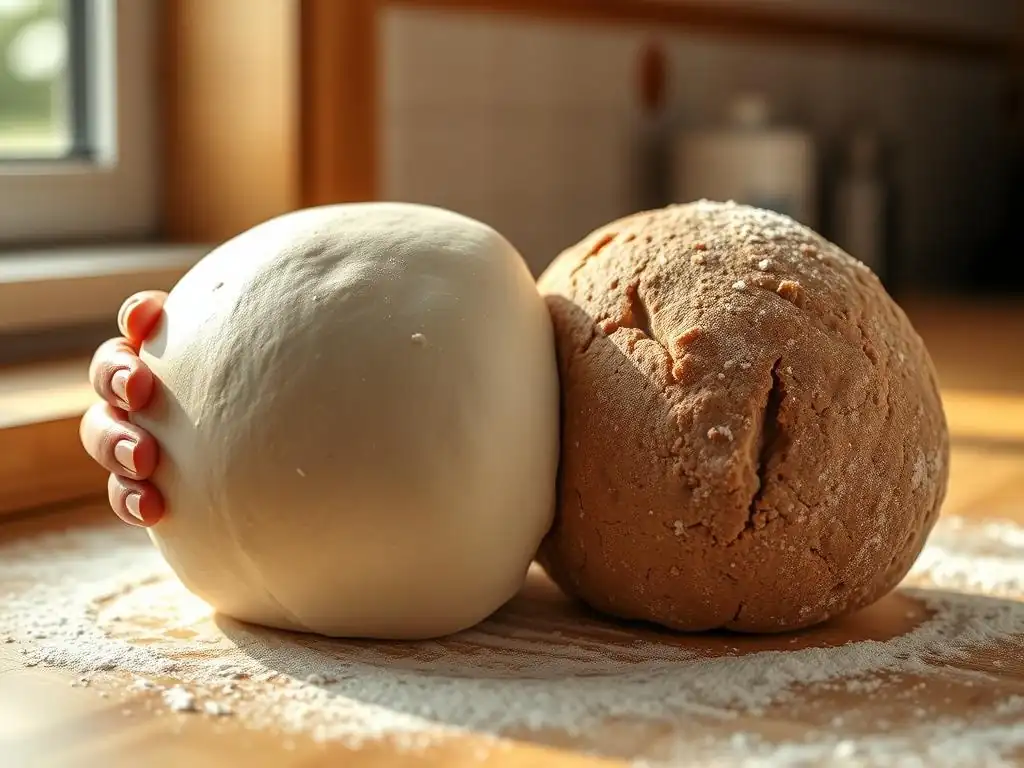
Bread flour is specifically milled from hard wheat varieties, which are naturally higher in protein compared to soft wheat. Typically, bread flour contains between 12% and 14% protein. This high protein content means there's a greater abundance of glutenin and gliadin available to form a robust gluten network when hydrated and worked.
The milling process for bread flour is also designed to produce a coarser grain compared to cake flour. This granulation affects how water is absorbed and how the gluten proteins interact. The higher protein and specific milling make bread flour the ideal choice for recipes where significant gluten development is desired, providing the strength needed for structure and chew.
How Bread Flour Contributes to Strong Gluten Networks
The high percentage of protein in bread flour provides the raw material for extensive gluten development. When water is added and the dough is kneaded, the glutenin and gliadin proteins link together efficiently and effectively. This forms a highly organized, strong, and elastic network capable of trapping large amounts of gas.
Consider a typical bread dough hydrated at around 60-70%. The ample protein in bread flour readily absorbs this water. As you knead, either by hand or with a mixer, you are physically aligning these proteins, strengthening the bonds between them. This results in a dough that feels smooth, elastic, and resilient – the hallmarks of a well-developed gluten structure ready to support significant rising.
Techniques for Optimizing Gluten Development with Bread Flour
Achieving optimal gluten development with bread flour involves several techniques:
- Kneading: The most direct method. Mechanical action stretches and aligns the protein chains. Kneading for 8-10 minutes by hand or 5-8 minutes in a stand mixer on medium speed is often sufficient for good development.
- Hydration Level: Sufficient water is necessary for gluten proteins to hydrate. Doughs with higher hydration often develop gluten more easily with less kneading, or through folding techniques.
- Autolyse: A resting period (typically 20-30 minutes) after initially mixing just flour and water. This allows the flour to fully hydrate and gluten development to begin spontaneously, reducing required kneading time.
- Stretch and Folds: A gentle technique used during bulk fermentation, especially in no-knead or high-hydration doughs. Folding the dough over itself strengthens the gluten network without aggressive kneading.
- Windowpane Test: A visual test to check gluten development. Gently pull a small piece of dough. If you can stretch it thin enough to see light through the center without it tearing, the gluten is well-developed.
**Typical Dough Handling Steps for Bread Flour:**

*   Combine flour and water (optional autolyse)
*   Add yeast, salt, and other ingredients
*   Knead until dough is smooth and elastic (passes windowpane test)
*   Bulk fermentation (allow dough to rise), often with stretch and folds
*   Shape the dough
*   Proofing (final rise)
*   Baking
Cake Flour and Gluten Development: A Tender Crumb
Understanding Cake Flour: Low Protein Content and Chlorination
In stark contrast to bread flour, cake flour is milled from soft wheat and has a significantly lower protein content, typically ranging from 5% to 8%. This means there are fewer glutenin and gliadin proteins available to form a network.
Furthermore, cake flour is often treated with chlorine. This chlorination process weakens the proteins, further limiting their ability to form strong gluten bonds. It also slightly alters the starch, allowing it to absorb more liquid and sugar, which contributes to a moister cake and helps prevent tunneling. This combination of low protein and chemical treatment makes cake flour ideal for creating baked goods with a delicate, tender, and fine crumb structure.
The Impact of Low Protein on Gluten Formation in Cake Flour Dough
With substantially less protein (potentially half or less than bread flour), cake flour simply doesn't have the potential to form a strong, elastic gluten network, even with vigorous mixing. The fewer protein chains present result in weaker links and a less interconnected structure.
When cake flour is mixed with liquid, some gluten development still occurs, but it's minimal. This limited network provides just enough structure to hold the batter together and support the leavening gases produced by baking powder or soda, but it doesn't create chewiness or significant elasticity. The focus is on tenderness, not strength.
Why Cake Flour Requires Minimal Gluten Development
The goal when using cake flour is to achieve a soft, tender, and often crumbly texture, characteristic of many cakes, pastries, and biscuits. Developing a strong gluten network would work directly against this goal, resulting in a tough, rubbery texture.
Therefore, recipes calling for cake flour emphasize gentle mixing techniques and often include ingredients and methods that actively inhibit gluten formation. The minimal gluten that does form provides just enough structure to prevent the cake from collapsing, while the low protein content ensures the desired delicate crumb. Overmixing cake batter is one of the most common mistakes leading to a tough cake.
Key Differences: Bread Flour vs. Cake Flour Gluten Development
Protein Content Comparison: Affecting Gluten Strength
The most fundamental difference lies in protein content. Bread flour, with its 12-14% protein, is designed for maximum gluten development, yielding strength and elasticity. Cake flour, with its 5-8% protein, is designed for minimal gluten development, resulting in tenderness.
This difference dictates the types of baked goods each flour is suited for. Bread flour is essential for loaves, pizza crusts, and bagels where chewiness is desired. Cake flour is perfect for delicate cakes, muffins, scones, and biscuits where a soft, tender crumb is paramount. Using the wrong flour will drastically alter the final texture, often negatively impacting the result.
Water Absorption Rates: How They Differ Between Flour Types
Due to its higher protein content, bread flour generally absorbs more water than cake flour. Protein molecules are more hydrophilic (water-attracting) than starch. A typical bread dough might use 60-70% hydration (water weight relative to flour weight), while a cake batter might have a much higher ratio of liquid to flour, but the flour itself absorbs less water per gram compared to bread flour.
This difference in absorption impacts recipe formulation and dough/batter consistency. Bread dough feels firm and elastic, while cake batter is typically quite fluid or soft. Understanding these absorption differences is crucial when substituting flours or adjusting recipes.
Dough Handling Characteristics: Bread vs. Cake Flour
The difference in gluten development capacity leads to vastly different handling characteristics.
- Bread Flour Dough: Elastic, stretches significantly, resists tearing when properly developed, feels smooth and alive. It can be kneaded, shaped, and manipulated extensively.
- Cake Flour Batter: Soft, loose, minimal elasticity, tears easily if manipulated too much. It is typically mixed until just combined and handled gently to preserve tenderness.
Handling bread dough involves active kneading and stretching, whereas handling cake batter involves careful folding and minimal mixing to avoid activating the limited gluten potential.
Strategies for Controlling Gluten Development in Cake Flour Dough
Using Fat to Inhibit Gluten Formation
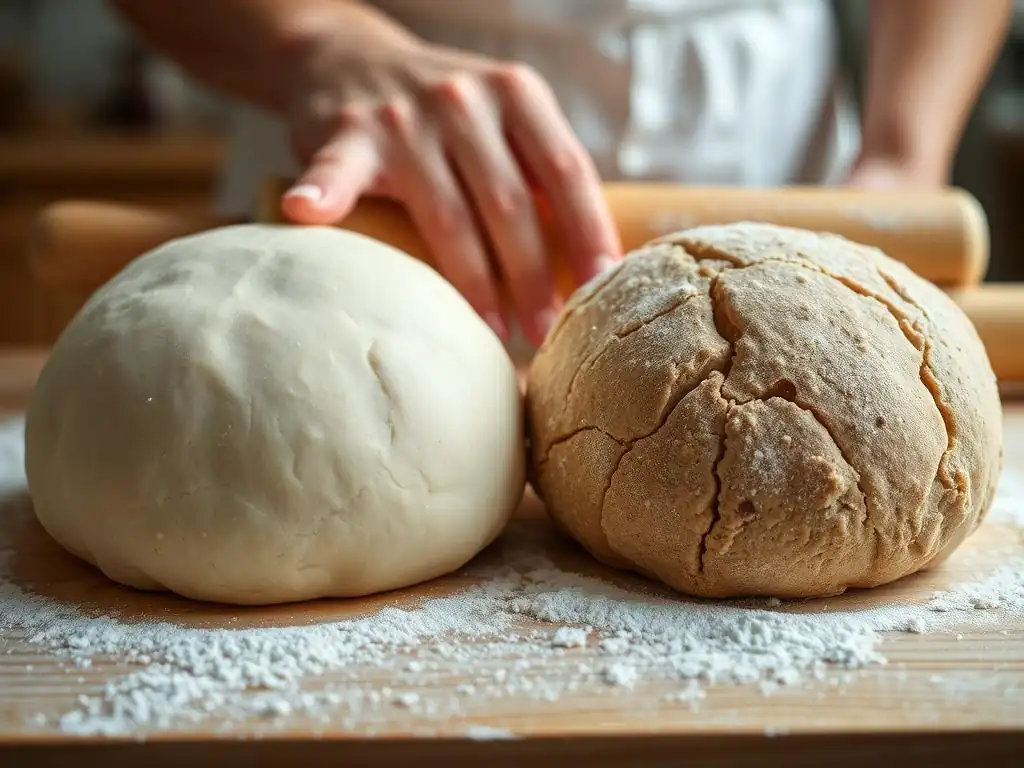
Fat is a powerful inhibitor of gluten development. When fat (like butter or oil) is present in a cake batter, it coats the flour particles. This coating prevents water from fully reaching the glutenin and gliadin proteins, thus hindering their ability to link and form a network.
In methods like the creaming method, creaming butter and sugar together before adding flour allows the fat to coat the flour thoroughly as it's mixed in. This 'shortens' the gluten strands, contributing to a tender crumb. The higher the fat content in a cake recipe, generally the more tender the result will be due to this gluten-inhibiting effect.
Gentle Mixing Techniques for Cake Flour
To minimize gluten development when using cake flour, gentle mixing is key. Avoid vigorous or prolonged mixing. Techniques like the creaming method (mixing dry and wet ingredients alternately into creamed butter/sugar) or the reverse creaming method (mixing fat into the dry ingredients first) are designed to coat the flour particles with fat and liquid gradually, preventing excessive gluten formation.
Mixing should stop as soon as the ingredients are just combined and no streaks of dry flour remain. Overmixing develops the limited gluten, leading to a tough texture. A few seconds too long can make a noticeable difference in a delicate cake.
The Importance of Sugar in Cake Flour Recipes
Sugar plays a significant role in tenderizing cakes made with cake flour. Like fat, sugar is hygroscopic, meaning it attracts and holds onto water. In a cake batter, sugar competes with the flour proteins for available liquid. By absorbing water, sugar reduces the amount of water available to hydrate the glutenin and gliadin, thus limiting gluten development.
Furthermore, sugar crystals physically interfere with the formation of gluten bonds during mixing. Sugar also raises the coagulation temperature of egg proteins and the gelatinization temperature of starch, allowing the cake to rise higher and create a finer crumb before the structure sets.
The Impact of Additives on Gluten Development in Bread Flour and Cake Flour
Ascorbic Acid (Vitamin C): A Gluten Enhancer for Bread Flour
Ascorbic acid, commonly known as Vitamin C, is often used as a dough conditioner in commercial bread baking and sometimes in home recipes. While it doesn't directly form gluten, it acts as an oxidizing agent. It helps strengthen the disulfide bonds within the gluten protein network.
This strengthening effect improves the dough's elasticity and stability, allowing it to hold its shape better, rise higher, and result in a loaf with increased volume and a finer, more even crumb structure. A very small amount, often just a pinch or added via specific flour blends, can have a noticeable positive impact on gluten development in bread dough.
Baking Powder and Baking Soda: Their Role in Cake Flour Structure
Baking powder and baking soda are chemical leavening agents. They produce carbon dioxide gas through chemical reactions (acid + base). While they don't directly influence gluten development, the gas they produce is what causes cake batter to rise.
In a cake made with cake flour, the minimal gluten network is just strong enough to trap these gas bubbles and support the structure as it sets during baking. The leavening gases expand in the heat of the oven, causing the cake to rise. Without these leavening agents, even with minimal gluten, the cake would be dense and heavy. They work with the tender structure provided by the cake flour and fat to create a light result.
Fats and Oils: Their Role in Gluten Development and Dough Softness
As mentioned earlier, fats and oils inhibit gluten development by coating flour particles and preventing full hydration. This is particularly important in cake flour recipes for tenderness.
However, fats also play a role in bread doughs, especially enriched doughs like brioche or challah. While bread flour is used to build a strong gluten network, the addition of butter, oil, or eggs (which contain fat) helps to tenderize the crumb by slightly interfering with gluten formation. This results in a softer, less chewy bread than one made leanly with just flour, water, yeast, and salt. Fat contributes to moisture, richness, and a softer texture in both bread and cakes by modulating gluten structure.
Troubleshooting Common Gluten Development Issues
Overdeveloped Gluten in Bread Dough: Causes and Solutions
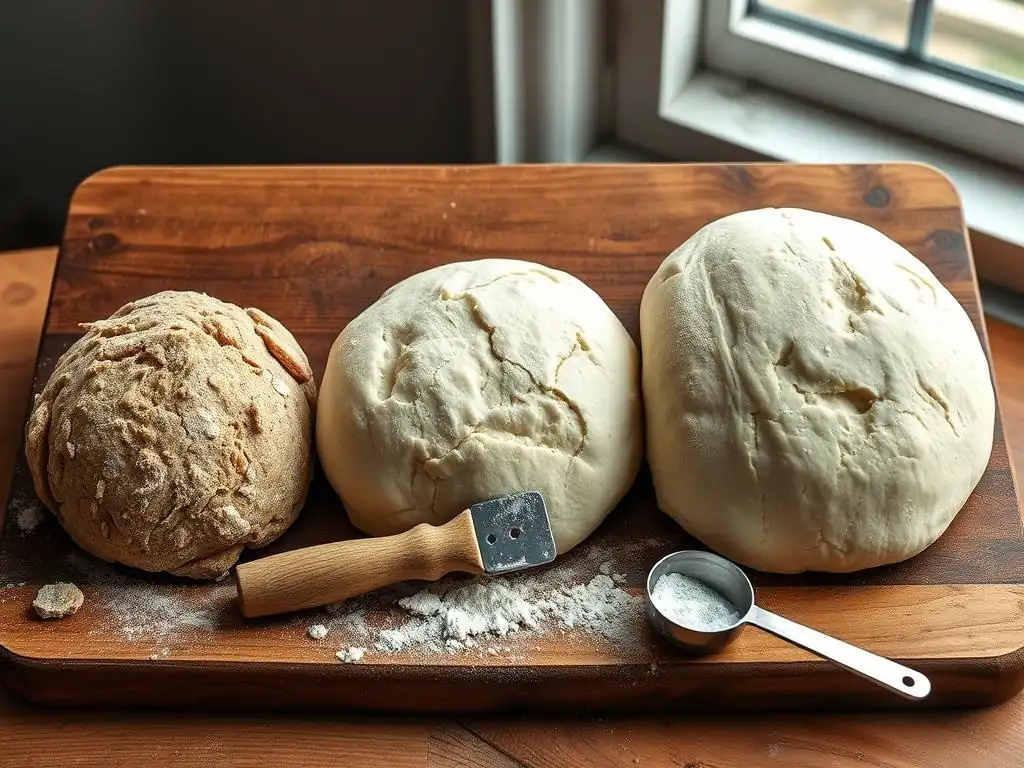
Overdeveloped gluten in bread dough occurs when the dough has been kneaded for too long or too vigorously, especially in a stand mixer. The gluten network becomes too tight and resistant, leading to a dough that is very stiff, difficult to shape, and snaps back excessively when stretched.
The resulting baked bread is often dense, tough, and lacks volume. If you realize your dough is overmixed during kneading, the best solution is often to let it rest. A 20-30 minute rest allows the gluten network to relax slightly. In the future, pay close attention to kneading times and visual/feel cues like the windowpane test. Ensure proper hydration, as dry dough can also develop gluten too quickly and become tough.
Insufficient Gluten Development in Cake Flour: Identifying the Problems
While overdevelopment is the enemy with cake flour, insufficient mixing can also cause issues, though less common. Undermixing cake batter might result in a cake with a coarse crumb, uneven texture, or tunnels. This isn't typically due to insufficient gluten, but rather insufficient mixing to properly distribute ingredients like leavening agents, sugar, and fat, and to create a stable emulsion.
The problem is usually not lack of gluten development, but improper handling of the ingredients that rely on the minimal gluten structure and leavening to set correctly. Using bread flour instead of cake flour in a cake recipe is a more common cause of a tough cake, as it introduces too much protein potential.
Tough Cake: Adjusting Mixing Times and Flour Type
A tough, rubbery cake is almost always a result of overdeveloping gluten. This happens when cake batter is mixed too long or too vigorously, especially after the flour has been added. The proteins, even though fewer, still link up to form a network that is too strong for the desired tender texture.
To avoid a tough cake:
- Ensure you are using low-protein cake flour if the recipe specifies it.
- Use gentle mixing techniques.
- Mix only until the ingredients are just combined – stop as soon as you no longer see dry flour streaks.
- Follow the recipe's mixing instructions carefully.
- If a recipe uses all-purpose flour for a cake and you find it tough, consider substituting a portion (e.g., 2-4 tablespoons per cup) with cornstarch to approximate cake flour's lower protein content.
Recipes and Techniques: Putting Gluten Knowledge into Practice
Bread Recipe: Sourdough Bread with Strong Gluten Development
Let's consider a classic sourdough bread. This process heavily relies on developing a strong gluten network using bread flour.
**Sourdough Bread - Gluten Development Focus:**

1.  **Mixing (Autolyse):** Combine bread flour (e.g., 500g, 12-14% protein) and water (e.g., 350g, 70% hydration). Mix just until no dry flour remains. Rest for 30-60 minutes. This allows initial hydration and gluten formation.
2.  **Adding Starter & Salt:** Incorporate the active sourdough starter and salt. Mix thoroughly.
3.  **Kneading/Mixing:** Knead by hand (10-15 min) or mixer (5-8 min) until the dough is smooth, elastic, and passes the windowpane test. This builds the primary gluten structure.
4.  **Bulk Fermentation with Stretch & Folds:** Allow the dough to rise (ferment) for several hours. Perform 3-4 sets of stretch and folds during the first 2-3 hours. This strengthens the gluten network further, redistributes yeast, and equalizes dough temperature.
5.  **Shaping:** Gently shape the dough, creating tension on the surface. The strong gluten helps the dough hold its shape.
6.  **Proofing:** Final rise. The robust gluten network traps the CO2 produced by the starter.
7.  **Baking:** High heat causes significant oven spring as the trapped gases expand and the gluten structure sets, resulting in an open crumb and chewy crust.
This process, from hydration through stretch and folds, is designed to maximize the gluten potential of the bread flour, leading to a loaf with excellent structure and texture.
Cake Recipe: Angel Food Cake with Minimal Gluten Formation
Now, let's look at Angel Food Cake, which uses cake flour and aims for minimal gluten development.
**Angel Food Cake - Minimal Gluten Development Focus:**

1.  **Ingredients:** Uses cake flour (e.g., 1 cup, 5-8% protein), sugar, egg whites (no fat!), cream of tartar (acid to stabilize egg whites), vanilla, salt.
2.  **Mixing Dry:** Sift cake flour and a portion of the sugar together multiple times. Sifting aerates the flour and helps distribute ingredients evenly *without* mixing wetly.
3.  **Whipping Egg Whites:** Whip egg whites with cream of tartar until soft peaks form, then gradually add the remaining sugar, whipping to stiff, glossy peaks. This creates the primary structure and leavening (air bubbles).
4.  **Folding:** Gently *fold* the sifted flour/sugar mixture into the whipped egg whites in several additions. This is the crucial step to minimize gluten development. Use a large whisk or spatula and a light hand, cutting through the mixture and folding it over. Stop as soon as no dry streaks are visible.
5.  **Baking:** Baked in an ungreased tube pan. The delicate structure relies on the egg white foam and the minimal gluten from the cake flour to hold its shape as it rises and sets.
In this recipe, the low-protein cake flour, absence of fat, and gentle folding technique ensure that very little gluten develops, resulting in the cake's characteristic light, airy, and incredibly tender crumb.
Conclusion: Mastering Gluten Development with Bread Flour and Cake Flour
Achieving Optimal Results: A Summary of Key Considerations
Mastering baking often comes down to understanding and controlling gluten development. For bread made with bread flour, the goal is typically to encourage a strong, elastic gluten network through techniques like kneading, autolyse, and stretch and folds. This provides the structure needed for a good rise and a chewy texture.
For cakes made with cake flour, the objective is the opposite: to minimize gluten development. This is achieved by using low-protein flour, incorporating fats and sugars that inhibit gluten, and employing gentle mixing techniques. This results in a tender, fine-crumbed cake. Choosing the right flour for the job is the first critical step, followed by applying the appropriate mixing and handling methods.
Further Exploration: Resources for Advanced Baking Techniques
Understanding gluten is just one piece of the vast and rewarding world of baking science. To deepen your knowledge and refine your skills, continue exploring topics such as the role of leavening agents (yeast, baking powder, baking soda), the impact of sugar and fats on texture, and the science of different mixing methods.
Many excellent books and online resources delve further into these scientific principles. Experimenting with different flours and techniques in your own kitchen is the best way to truly grasp these concepts and elevate your baking from following instructions to understanding the 'why' behind them. Happy baking!
Frequently Asked Questions
What is gluten development, and why is it important in baking?
Gluten development is the process where glutenin and gliadin proteins in flour combine to form elastic gluten strands. This is crucial for structure, texture, and rise in baked goods, contributing to a desirable crumb.
How does whole wheat flour affect gluten development compared to white flour?
Whole wheat flour contains bran and germ, which interfere with gluten development. White flour, being refined, allows for stronger gluten networks to form more easily.
What challenges might I face when baking with whole wheat flour?
Baking with whole wheat flour can result in a denser, less elastic dough. The bran cuts gluten strands, hindering optimal development and leading to a heavier final product.
What are some techniques to improve gluten development when using whole wheat flour?
Techniques include autolysing (allowing the flour to hydrate before kneading), using vital wheat gluten, and adding a small amount of white flour to strengthen the dough.
Can I achieve the same level of gluten development with whole wheat flour as with white flour?
While it's challenging to achieve identical results, you can improve gluten development in whole wheat flour dough. Employing specific techniques can help create a more elastic and structured bake, though some difference in texture is likely.
Final Reflection: The Flour Power Within: Understanding Gluten Development
The quest for the perfect loaf, a seemingly simple pursuit, reveals a complex world of gluten development, a journey significantly impacted by the type of flour we choose. Understanding the nuances between whole wheat and white flour's gluten formation is not just a baker's curiosity; it's a crucial step towards crafting consistent, high-quality baked goods, impacting both taste and texture.
The ongoing debate surrounding whole wheat versus white flour extends far beyond the kitchen; it reflects a broader conversation about nutrition, sustainability, and our relationship with food. The inherent differences in gluten development between these flours highlight the importance of understanding ingredient properties. The quality of the flour is the foundation of good bread.
This simple statement underscores the profound impact of flour choice on the final product, and indeed, on our overall culinary experience. The journey to mastering gluten development, regardless of the flour type, is a testament to the power of understanding the fundamental building blocks of our food.
Now, consider your own baking journey. What have you learned about the intricacies of gluten development? Will you experiment with different flour types, embracing the unique challenges and rewards each presents? Embrace the challenge of understanding the "flour power" within, and discover the potential for creating truly exceptional baked goods. The path to perfect bread, or any gluten-based creation, is a journey of continuous learning and experimentation – a journey we encourage you to embark on.
Unlock Your Baking Potential: Master Gluten's Secrets!
Thanks for exploring the fascinating world of gluten development with us! You now have a deeper understanding of the differences between whole wheat and white flour and how they impact your baking. Ready to put this knowledge into practice?
- Bake a test loaf: Try substituting whole wheat flour in your favorite white bread recipe, adjusting liquid as needed. This hands-on experience will solidify your understanding.
- Share your baking journey: Let us know your results and any adjustments you made on our BakeWithEase community forum!
- Dive deeper: Explore our recipe section for more gluten-focused bread recipes to challenge your skills.
So, what unique bread creation will you unleash with your newfound knowledge of gluten?