
Why Gluten is the Backbone of Beautiful Bread

Welcome to BakeWithEase, where we demystify the science and joy of baking! Ever wondered why gluten is so crucial to that perfect loaf? This week, we're diving deep into the Baking Science Deep Dive category to explore the pivotal role of gluten in breadmaking, especially in the context of gluten-free bread recipes easy to follow. Prepare to unlock the secrets behind achieving that coveted rise and texture – even without gluten! Intrigued? Let's get baking!
- Understanding Gluten and Gluten-Free Bread Baking
- Impact of Gluten on Bread Quality
-
Frequently Asked Questions
- What makes gluten so important for bread baking, according to BakeWithEase?
- If gluten is so important, how can I bake gluten-free bread that's also good, based on BakeWithEase's approach?
- What are some common challenges in baking gluten-free bread, and how does BakeWithEase address them?
- Does BakeWithEase offer "Glutenfree bread recipes easy" specifically for beginners?
- Where can I find the "Glutenfree bread recipes easy" that BakeWithEase recommends?
- Final Reflection: The Unexpected Power of Gluten
- Unleash Your Inner Baker: Craft the Perfect Loaf!
Understanding Gluten and Gluten-Free Bread Baking
Gluten is a complex protein structure that forms when two proteins, glutenin and gliadin, found primarily in wheat, rye, and barley, come into contact with water. As these proteins hydrate and are worked through mixing or kneading, they link together to form an elastic network. This network is fundamental to the structure of traditional bread, allowing it to rise and hold its shape during baking. Understanding this network is key, whether you're aiming for a crusty sourdough or exploring simple gluten-free bread recipes easy to make at home.
The absence of this protein network presents the core challenge in developing glutenfree bread recipes easy for home bakers. Without gluten, alternative ingredients and techniques are needed to replicate the texture and structure that gluten provides. This requires a different approach to ingredient selection and method compared to traditional wheat-based baking, highlighting why gluten plays such a pivotal role in conventional bread making.
Gluten: Structure and Elasticity
Gluten's unique properties stem from its two main protein components: glutenin and gliadin. Glutenin provides strength and elasticity, allowing the dough to stretch without breaking, while gliadin contributes extensibility and flow. When water is added to flour, these proteins begin to interact. As mechanical energy is applied through mixing or kneading, disulfide bonds form between the glutenin molecules, creating a strong, interconnected network. This network is what gives dough its characteristic chewiness and ability to resist collapse.
Consider the difference between mixing a simple batter for pancakes versus developing dough for a crusty baguette. Pancake batter uses minimal mixing, resulting in little gluten development and a tender, soft texture. Baguette dough, however, is kneaded extensively, sometimes for 10-15 minutes, to build a robust gluten network capable of trapping the gases needed for a light, airy crumb and substantial rise. This contrast clearly demonstrates how the manipulation of gluten formation directly impacts the final product's structure.
Gluten Development: Mixing and Kneading
The process of developing gluten is primarily driven by hydration and mechanical action. Initially, when water is added to flour, the glutenin and gliadin proteins start to absorb the liquid and swell. As the dough is mixed or kneaded, these hydrated proteins are brought together and aligned, allowing the disulfide bonds to form and strengthen the protein network. The more the dough is worked, up to a certain point, the more developed and strong the gluten structure becomes.
Think of it like building a microscopic web. The proteins are the threads, and kneading is the process of weaving them together.
For instance, a dough kneaded by hand for 10 minutes or mixed in a stand mixer for 6-8 minutes typically develops a smooth, elastic texture that can be stretched into a thin membrane without tearing – the "windowpane test." This level of development is crucial for traditional yeast-leavened breads, enabling them to capture the carbon dioxide gas produced during fermentation, leading to significant volume and a desirable open crumb structure, something often sought after when adapting simple gluten-free bread recipes.
Impact of Gluten on Bread Quality
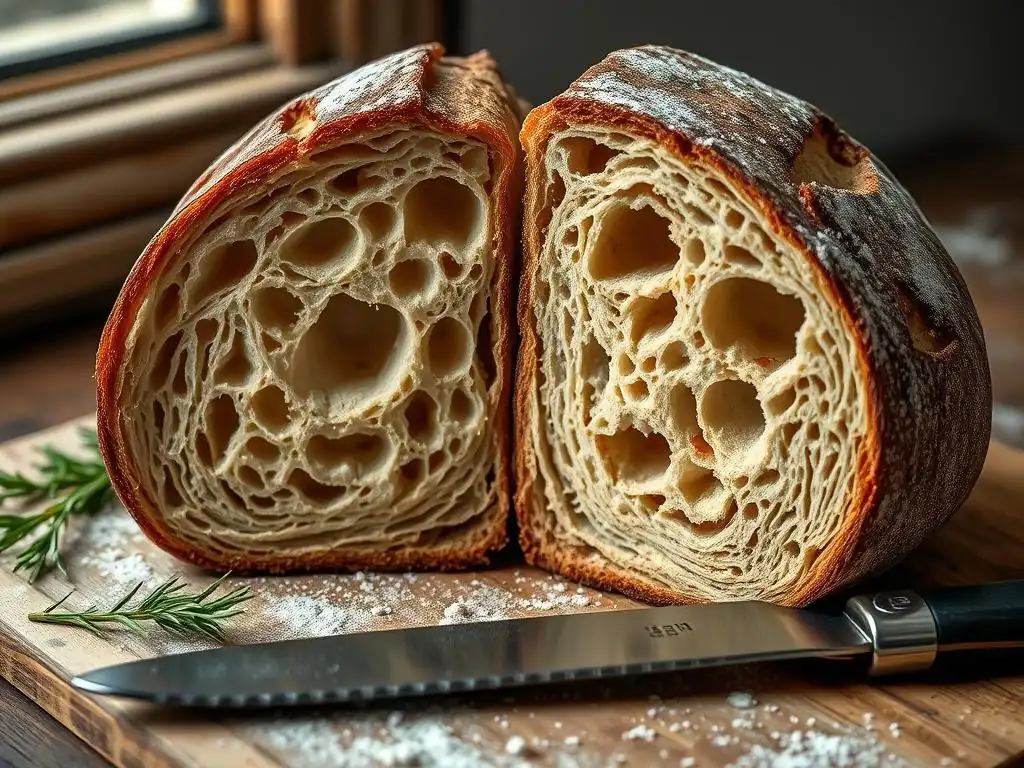
The presence and development of gluten profoundly influence the final characteristics of bread, affecting everything from the internal texture (crumb) to the external appearance (crust). Its ability to form an elastic, extensible network is the primary reason why traditional bread achieves its characteristic rise, structure, and chewiness. Understanding this impact helps appreciate the challenges involved in creating successful glutenfree bread recipes easy to bake at home.
Without gluten, achieving a similar light, airy texture and sturdy structure requires alternative binders and careful techniques. The properties that gluten imparts – the ability to stretch and hold gas – are what bakers strive to emulate when working with gluten-free flours, using ingredients like xanthan gum, psyllium husk, or alternative starches to provide some semblance of structure and cohesion.
Crumb Structure and Gluten
The internal structure of bread, known as the crumb, is directly dependent on the gluten network's ability to trap gases produced by yeast or other leavening agents. As the dough ferments and rises, the gluten network stretches like a balloon, holding the carbon dioxide bubbles. During baking, this network sets, creating the characteristic porous structure with its network of air pockets. A well-developed gluten structure leads to an open, airy crumb with irregular holes, often seen in artisan loaves.
Conversely, insufficient gluten development results in a dense, heavy crumb because the network wasn't strong enough to hold the gas. Think about the difference between a light, chewy ciabatta with large, open holes and a dense, cake-like quick bread.
The ciabatta relies heavily on a strong, well-hydrated gluten network to create those large voids, while the quick bread typically uses chemical leaveners and minimal mixing, resulting in a tighter, more uniform crumb. This highlights the structural role gluten plays in creating the desired texture in many classic bread styles, posing a key challenge addressed in developing simple gluten-free bread recipes.
Crust Formation and Browning
While gluten's primary role is internal structure, it also indirectly contributes to the bread's crust formation and browning. During baking, the heat causes the gluten network to set, providing the structural integrity needed for the loaf to hold its shape as the starches gelatinize and the crust begins to form. The proteins in gluten, along with sugars and starches, participate in the Maillard reaction and caramelization on the surface, contributing to the rich brown color, aroma, and crisp texture of the crust.
For example, a lean dough made primarily of flour, water, yeast, and salt (high gluten potential) baked at high temperatures will develop a thick, crackly crust due to the strong internal structure supporting the rapid expansion and surface drying. In contrast, a dough with lower protein flour or less developed gluten might result in a thinner, less robust crust.
While other components like sugars and fats also influence crust characteristics, the underlying strength provided by the gluten network is essential for achieving the desired crust structure and contributing to the complex flavors developed during baking, a factor often considered when optimizing glutenfree bread recipes easy to achieve a satisfying crust.
Frequently Asked Questions
What makes gluten so important for bread baking, according to BakeWithEase?
Gluten is the protein that gives bread its structure and elasticity. It allows the dough to trap gas, creating a light and airy texture.
If gluten is so important, how can I bake gluten-free bread that's also good, based on BakeWithEase's approach?
BakeWithEase focuses on using alternative flours and binders that mimic gluten's properties. This includes using ingredients like xanthan gum or psyllium husk.
What are some common challenges in baking gluten-free bread, and how does BakeWithEase address them?
Challenges include crumbly texture and lack of rise. BakeWithEase provides specific techniques and recipes to overcome these issues, focusing on hydration and proper mixing.
Does BakeWithEase offer "Glutenfree bread recipes easy" specifically for beginners?
Yes, BakeWithEase provides step-by-step guides and easy-to-find ingredients in their gluten-free bread recipes, making them accessible even for beginner bakers. They focus on simplified methods.
Where can I find the "Glutenfree bread recipes easy" that BakeWithEase recommends?
You can find them directly on the BakeWithEase.com website. Look for the gluten-free bread section which offers a variety of recipes and helpful tips.
Final Reflection: The Unexpected Power of Gluten
The seemingly simple molecule of gluten holds the key to unlocking the truly beautiful, and surprisingly easy, world of bread baking. While the gluten-free movement has exploded in popularity, understanding the role of gluten in traditional bread making reveals a depth of flavor and texture often missed in alternatives. This isn't about dismissing gluten-free options, but rather appreciating the fundamental role gluten plays in creating the bread we know and love.
The enduring appeal of a perfectly risen loaf, its crust crackling with warmth, its crumb soft and yielding, speaks to a primal connection with food and craft. This connection, often overlooked in our fast-paced world, is deeply intertwined with the very structure of the bread itself, a structure built upon the protein network of gluten. Bread is the staff of life,
a simple phrase, yet it encapsulates the profound cultural and historical significance of this staple food, a significance inextricably linked to the properties of gluten. The quest for easy gluten-free recipes highlights this connection, as bakers strive to replicate the magic of gluten in alternative ways.
Consider the journey you've taken through this article. You've learned about the science behind gluten's role in bread making, and perhaps even discovered a newfound appreciation for the seemingly simple act of baking. Now, I invite you to experiment. Try your hand at a classic bread recipe, focusing on the interplay of ingredients and the development of gluten. Embrace the process, savor the results, and rediscover the joy of creating something beautiful and delicious from humble beginnings. The journey to mastering bread baking, even with gluten, can be surprisingly easy and incredibly rewarding.
Unleash Your Inner Baker: Craft the Perfect Loaf!
Thanks for joining us on this journey into the wonderful world of gluten and bread making! We hope you now have a deeper appreciation for the role gluten plays in creating that perfect, chewy texture. Ready to put your newfound knowledge to the test?
- Bake a masterpiece: Try out one of our favorite gluten-rich bread recipes (find them on our website!). Experiment with different flours and techniques to see how it impacts your bread.
- Share your success (or even your struggles!): Post a picture of your creation on social media and tag us – we'd love to see your baking journey!
- Learn a new bread-making technique: Explore our extensive library of articles on kneading, proofing, and shaping to truly master the craft.
So, what delicious bread will you create next?