
Why Your Mayonnaise Making Skills Apply Directly to Cake Batter

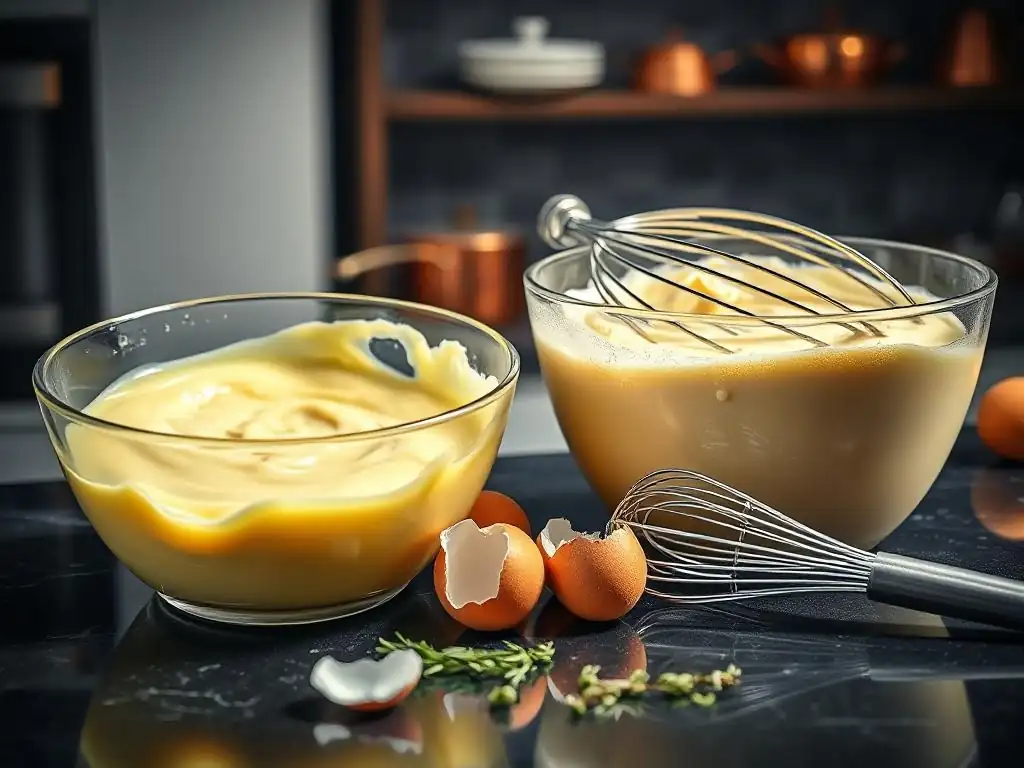
Welcome to BakeWithEase, your companion on a delightful baking journey!
Ever wondered if that jar of mayonnaise hiding in your fridge holds the secret to an incredibly moist and decadent cake? Prepare to be amazed! This week, we're diving deep into the science behind mayonnaise cake batter techniques, exploring how this seemingly unconventional ingredient can revolutionize your baking. Unlock the secrets to a richer, more tender crumb and discover why your mayonnaise-making skills translate perfectly to creating baking masterpieces. Intrigued? Let's explore!
- The Science of Emulsification: From Mayonnaise to Perfect Cake Batter
- Understanding Emulsification in Baking
- Mayonnaise: An Emulsification Masterclass
- Applying Mayonnaise Principles to Cake Batter
- Advanced Cake Batter Techniques
- Troubleshooting Cake Batter Problems
- Recipe Adaptations: Applying Emulsification Techniques
- Other Emulsification Techniques in Baking
- Conclusion: Mastering Emulsification for Baking Excellence
-
Frequently Asked Questions
- What is the main connection between making mayonnaise and cake batter, according to BakeWithEase?
- How does understanding mayonnaise help with cake baking, as suggested by BakeWithEase?
- Why is a stable emulsion important in both mayonnaise and cake batter, according to BakeWithEase?
- Does BakeWithEase recommend using mayonnaise in cake batter?
- What kind of baker does BakeWithEase target with this "Mayonnaise Cake Batter Techniques" analogy?
- Final Reflection: The Unexpected Alchemy of Mayonnaise and Cake
- Elevate Your Baking Game Today!
The Science of Emulsification: From Mayonnaise to Perfect Cake Batter
Understanding Emulsification in Baking
What is Emulsification?
Emulsification is the process of mixing two liquids that normally don't combine, like oil and water. Think about salad dressing: if you let it sit, the oil and vinegar separate into distinct layers. When you shake it vigorously, they mix temporarily, but they will separate again over time.
A stable emulsion, however, creates a smooth, uniform mixture where tiny droplets of one liquid are dispersed throughout the other, and they stay that way. This stability is achieved with the help of an emulsifier, a substance that has a molecular structure allowing it to connect with both the oil and water molecules, holding them together.
In the world of baking, emulsification is a fundamental scientific principle that underpins the texture, structure, and stability of countless recipes. From batters and doughs to sauces and frostings, understanding how to properly emulsify ingredients is key to achieving professional results. Ingredients like egg yolks, butter, and even certain flours contain natural emulsifiers that help bridge the gap between fatty and watery components, creating smooth, homogenous mixtures that bake up beautifully. Mastering these principles, much like perfecting Mayonnaise cake batter techniques, can elevate your baking significantly.
Why Emulsification Matters
Proper emulsification is critical for successful baking because it ensures that fat is evenly distributed throughout the batter or dough. Without emulsification, fat would clump together or separate, leading to undesirable textures like greasiness, toughness, or a coarse, uneven crumb. A stable emulsion allows air bubbles, introduced through leavening agents or mechanical mixing, to be trapped more effectively within the batter structure. This trapping of air is essential for achieving a light, airy texture and good volume in baked goods.
Moreover, emulsification contributes to the overall stability of a mixture before baking. A well-emulsified batter is less likely to separate or curdle, even if it sits for a short period. This stability is particularly important in recipes that rely on precise ratios and delicate textures. By ensuring fat and liquid are smoothly combined, emulsification helps create a foundation that supports the structure as it bakes, resulting in a consistent and tender final product. Techniques borrowed from making stable emulsions like mayonnaise are directly applicable to improving your cake batter results.
Mayonnaise: An Emulsification Masterclass
Mayonnaise Ingredients: Oil, Egg Yolks, and Acid
Mayonnaise is a classic example of a stable emulsion, and its simple ingredient list provides a perfect model for understanding the process. The primary components are oil (typically a neutral-flavored vegetable oil like canola or sunflower), which forms the dispersed phase; an acidic liquid like vinegar or lemon juice, which forms the continuous phase; and egg yolks, which contain the crucial emulsifier, lecithin. A standard mayonnaise recipe might call for as much as ¾ to 1 cup of oil for just one egg yolk and a tablespoon or two of acid.
The egg yolk plays the hero role here. While it contributes some richness and flavor, its main job is providing lecithin. Lecithin is a phospholipid, meaning it has a "head" that is attracted to water (hydrophilic) and a "tail" that is attracted to fat (lipophilic or hydrophobic). This dual nature allows lecithin molecules to surround the tiny oil droplets within the vinegar/lemon juice, preventing them from clumping back together and separating. The acid adds tang and also helps to stabilize the emulsion by affecting the protein structure in the egg yolk.
The Emulsification Process in Mayonnaise
Creating mayonnaise involves adding the oil to the acid and egg yolk mixture very slowly while whisking vigorously. Initially, you might start with just a few drops of oil, whisking until it's fully incorporated and the mixture starts to thicken slightly. As the emulsion begins to form, you can gradually increase the rate at which you add the oil, perhaps to a thin, steady stream, but constant, rapid whisking is essential throughout the process. The mechanical action of the whisk breaks the oil into incredibly small droplets, often less than a micron in diameter.
These tiny oil droplets are then immediately coated by the lecithin molecules from the egg yolk. The hydrophilic heads of the lecithin face outwards into the watery acidic phase, while the lipophilic tails bury themselves in the oil droplet. This creates a stable barrier around each oil droplet, preventing them from merging with other droplets. The sheer volume of these dispersed oil droplets is what gives mayonnaise its characteristic thick, creamy texture. Understanding this process is fundamental to applying Mayonnaise cake batter techniques effectively in your baking.
Stabilizing the Mayonnaise Emulsion
Several factors influence the stability of a mayonnaise emulsion. The ratio of oil to the water phase (acid and egg yolk) is critical; adding too much oil relative to the amount of emulsifier and liquid can overwhelm the system and cause the emulsion to break. Temperature also plays a role; ingredients at room temperature emulsify more easily than cold ones. Too much heat or freezing can also destabilize the emulsion.
Beyond the initial formation, physical disturbance can impact stability. While whisking creates the emulsion, excessive or rough handling after it's formed can sometimes cause it to break. However, a properly made mayonnaise, with a high ratio of oil (often 70-80% oil by volume) and sufficient emulsifier, is remarkably stable under normal conditions, capable of lasting weeks in the refrigerator. This robustness is a testament to the power of effective emulsification, a lesson directly relevant to achieving stable Mayonnaise cake batter techniques.
Applying Mayonnaise Principles to Cake Batter
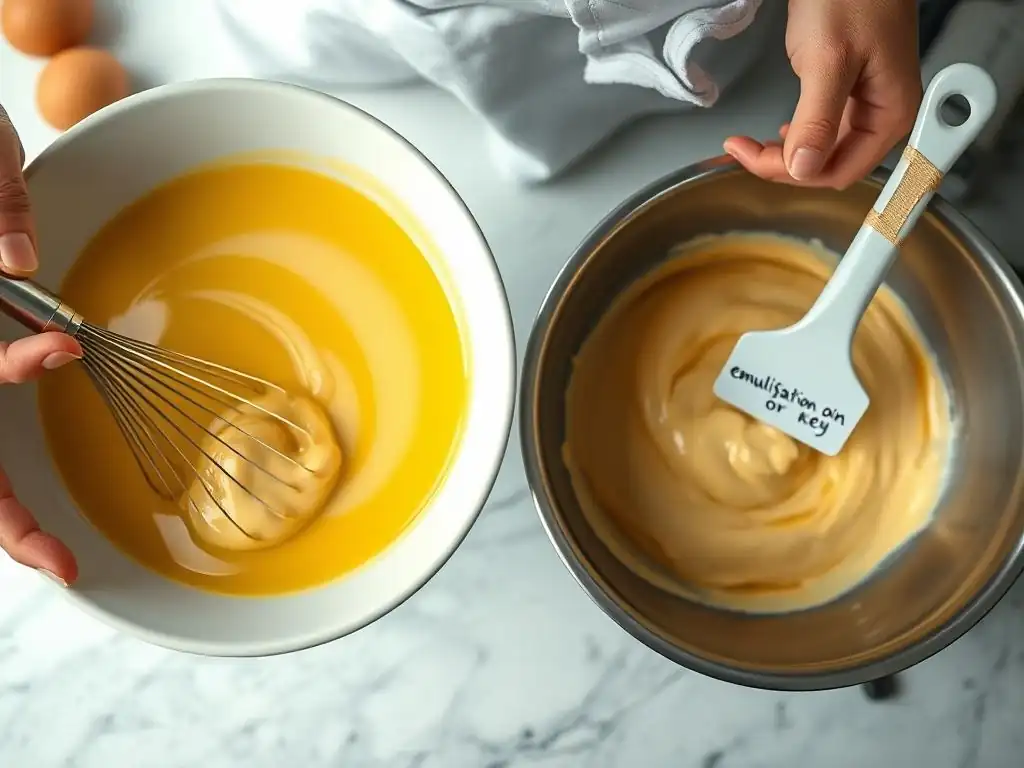
Emulsifiers in Cake Batter: Achieving Stability
Just like mayonnaise relies on egg yolks (lecithin) to bind oil and water, cake batters utilize emulsifiers to create a smooth, stable mixture of fats (butter or oil) and liquids (milk, eggs, water). Egg yolks are a primary emulsifier in many cake recipes, providing lecithin that helps distribute fat evenly. Some recipes, particularly those using liquid oil, rely heavily on the emulsifying power of the eggs. The proteins in egg whites and flour also play a minor role in stabilizing the overall structure.
Commercial baking ingredients sometimes include added emulsifiers like monoglycerides and diglycerides to further enhance batter stability, volume, and shelf life. These work similarly to lecithin, bridging the gap between fat and water. Understanding the role of these emulsifiers helps you appreciate why techniques like ensuring eggs are fully incorporated before adding dry ingredients are so important – you're building a stable foundation for your batter's emulsion, much like starting with a strong base for mayonnaise before adding the oil. These principles are key to successful Mayonnaise cake batter techniques.
Oil Incorporation: Preventing Greasy Batter
One of the most common issues in baking is a greasy or separated batter, often resulting from improper fat incorporation. When using liquid oil in a cake batter, the process mirrors adding oil to mayonnaise: the oil needs to be dispersed into the watery components (eggs, milk, sugar syrup) with the help of emulsifiers. Simply dumping a large amount of oil into the wet ingredients without sufficient mixing or emulsifying power can lead to pools of unincorporated fat.
Many recipes instruct you to whisk or beat eggs and sugar together first, sometimes with milk or other liquids. This creates a foundational emulsion. Then, the oil is often added gradually while mixing, allowing the emulsifiers from the eggs and other ingredients to surround the incoming oil droplets and disperse them evenly. This slow addition and continuous mixing prevent the oil from coalescing and separating, ensuring a smooth, homogenous batter that won't bake up greasy. Applying diligent Mayonnaise cake batter techniques, such as gradual fat addition, is crucial here.
Folding Techniques: Maintaining Volume
While folding isn't creating an emulsion, it's a vital technique used after emulsification steps (like creaming butter and sugar or mixing wet ingredients) to gently incorporate aerating components, such as whipped egg whites or meringue, without deflating the batter. A well-emulsified base batter provides a stable matrix that can hold these delicate air pockets. If the batter is separated or poorly emulsified, the added air is more likely to escape, resulting in a dense cake.
The goal of folding is to combine ingredients with minimal loss of air. This is achieved by using a spatula to gently scoop under the heavier batter, bring it up over the lighter mixture, and then folding it in by cutting through the center. This process is repeated carefully until just combined. While not directly related to the chemical process of emulsification, the stability achieved through emulsification before folding is what allows this technique to successfully maintain the volume essential for a light cake texture.
Advanced Cake Batter Techniques
Adjusting Liquid Ratios for Optimal Consistency
The ratio of liquid to fat and dry ingredients in a cake batter significantly impacts its consistency and the ease of achieving a stable emulsion. A batter that is too stiff (too little liquid) can make it difficult to disperse fat evenly, potentially leading to tunneling or a dry texture. Conversely, a batter that is too thin (too much liquid) might weaken the emulsion, making it prone to separation.
Typical butter-based cakes might have a fat (butter) to flour ratio around 1:1 by weight, with total liquid (milk, eggs, etc.) roughly equaling the weight of the flour. Oil-based cakes often use a higher ratio of liquid oil to flour, sometimes closer to 0.8:1 or 0.9:1 by weight of oil to flour, compensated by sufficient emulsifiers like eggs. Understanding these ratios and how they affect viscosity helps predict how well your ingredients will emulsify and how the batter will behave during mixing and baking, refining your Mayonnaise cake batter techniques.
Flavorings and Extracts: Enhancing Your Cake
Adding flavorings and extracts seems simple, but their composition can interact with the batter's emulsion. Many extracts, like vanilla extract, are alcohol-based. Since alcohol is miscible with water, these integrate easily into the water phase of the batter. However, flavorings that are oil-based, such as citrus oils or some artificial flavorings, need the batter's emulsion to distribute properly.
If your batter isn't well-emulsified, adding an oil-based flavoring might cause localized greasiness or separation. This is another instance where a stable fat-in-liquid emulsion is beneficial. Ensuring that the base batter is smooth and homogenous before adding these final flavor components helps guarantee they are evenly dispersed throughout the cake, contributing flavor without compromising texture. This highlights how robust Mayonnaise cake batter techniques benefit the final product.
Preventing Curdling: Ensuring a Smooth Batter
Curdling in cake batter, which appears as a lumpy, separated mixture where the fat seems to have broken away from the liquid, is essentially a broken emulsion. This often happens when ingredients are at significantly different temperatures, particularly when cold eggs are added to creamed butter and sugar. The cold eggs chill the fat, causing it to firm up and separate from the water in the eggs and other liquids.
To prevent curdling, ensure all refrigerated ingredients, especially eggs and dairy, are at room temperature before you begin mixing. This allows the fat and liquid components to combine smoothly and maintain a stable emulsion. If your batter does curdle slightly, sometimes adding a tablespoon or two of the dry ingredient mix (flour) while mixing gently can help re-bind the mixture and restore a smoother consistency by providing more surface area and structure for the fat and liquid to adhere to.
Troubleshooting Cake Batter Problems
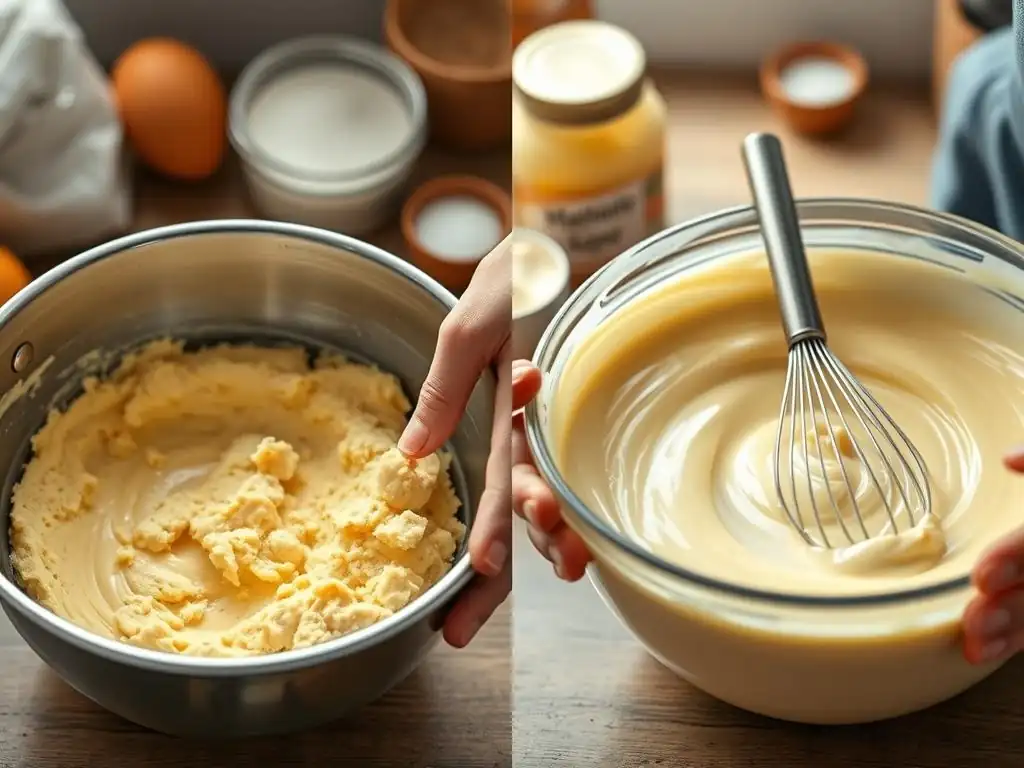
Addressing Separation Issues
Separation, or curdling, is a clear sign that your batter's emulsion has failed. This can occur for several reasons, most commonly temperature differences between ingredients, adding liquids too quickly, or simply overmixing a delicate batter. A separated batter will likely bake into a cake with a poor texture, potentially dense, greasy, or uneven.
To address a separated batter, first ensure all ingredients are at room temperature if they weren't already. Sometimes, gently warming the mixture slightly over a warm water bath (just enough to take the chill off) while whisking can help coax the fat back into emulsion. Another technique is to add a small amount of the pre-sifted dry ingredients (perhaps 1/4 cup for a standard cake recipe) to the separated wet mixture and beat it in.
The flour can help absorb some liquid and provide structure for the fat to re-emulsify into. This is akin to fixing a broken mayonnaise by whisking it into a new egg yolk base – you're providing the necessary components and agitation to rebuild the emulsion. These Mayonnaise cake batter techniques for recovery can save your bake.
Achieving a Light and Airy Texture
A light and airy cake texture is a hallmark of good baking, and it relies heavily on the ability of the batter to hold onto air bubbles. Air is incorporated during creaming (butter and sugar), whisking eggs, and through the action of leavening agents (baking powder, baking soda). A stable, well-emulsified batter provides the structural integrity needed to trap these air bubbles and prevent them from collapsing during mixing, transferring, and the initial stages of baking.
If your cakes are consistently dense, review your emulsification steps. Are your ingredients at room temperature? Are you incorporating fats and liquids gradually and mixing sufficiently to create a smooth batter before adding dry ingredients? The quality of your initial emulsion dictates how well the batter can support the airy structure developed by leavening. Think of how stable mayonnaise holds its shape – a stable batter emulsion similarly holds its structure and trapped air.
Ensuring a Smooth Crumb
The crumb is the internal structure of the cake – how it looks when sliced. A smooth, even crumb with small, uniform holes is desirable. A coarse crumb, large tunnels, or dense spots can indicate problems with gluten development or, crucially, poor fat distribution due to inadequate emulsification.
When fat is properly emulsified and distributed throughout the batter, it coats the flour particles. This coating inhibits excessive gluten development, which can lead to toughness and tunneling. The even distribution also ensures that the leavening gases expand uniformly, creating an even network of air pockets. A separated batter, where fat is not evenly dispersed, can lead to areas of high fat concentration (greasiness) and areas with little fat (more gluten development, potentially toughness or uneven holes). Mastering Mayonnaise cake batter techniques ensures fat is where it needs to be for a perfect crumb.
Recipe Adaptations: Applying Emulsification Techniques
Chocolate Cake with Improved Emulsification
Chocolate cake recipes can be tricky because cocoa powder absorbs liquid, and melted chocolate adds both fat and solids, potentially disrupting the balance of the batter. To improve emulsification in chocolate cake:
- Ensure eggs and butter are at room temperature.
- If using melted chocolate, cool it slightly so it doesn't scramble the eggs or melt the butter.
- Consider using a method where wet ingredients (including melted chocolate, if used) are thoroughly mixed and emulsified before dry ingredients are added. This creates a stable liquid base.
- If the batter seems prone to separation (common with high amounts of cocoa), ensure adequate mixing time during liquid incorporation to build a strong emulsion.
By focusing on creating a stable blend of fats and liquids early in the process, you prevent the cocoa and chocolate solids from interfering with the emulsion later, leading to a smoother batter and a moister, more even-crumbed cake. This is a practical application of Mayonnaise cake batter techniques.
Citrus Cake with Enhanced Texture
Citrus cakes often incorporate acidic liquids like lemon or orange juice, and sometimes oil-rich zests. The acidity can sometimes impact batter stability, and the oils in zest need careful dispersion. To enhance the texture through better emulsification:
- Ensure eggs are fully incorporated into the fat/sugar mixture or wet ingredients to provide ample emulsifiers before adding citrus juice.
- Consider adding citrus juice gradually along with other liquids, allowing the emulsifiers time to incorporate it smoothly.
- For recipes using zest, ensure it's added when there's sufficient fat and emulsifier to help distribute the oil from the zest evenly throughout the batter.
Some bakers use the "reverse creaming" method for cakes with high liquid or sugar content. In this method, dry ingredients (flour, sugar, leavening) are mixed with softened butter first, coating the flour particles with fat. Liquids (including citrus juice and eggs, often whisked together) are then added gradually. This method can create a very stable matrix that handles additional liquids and flavorings well, resulting in a fine, even crumb.
Spice Cake with Stable Cream Cheese Frosting
While the focus is cake batter, the principles of emulsification extend to frostings. Cream cheese frosting is an emulsion of fats (butter, cream cheese) and sugar, often with a small amount of liquid (vanilla, milk). A common problem is a greasy or separated frosting. To achieve a stable cream cheese frosting:
- Ensure both butter and cream cheese are properly softened to room temperature. Cold cream cheese or butter will not emulsify well with the sugar.
- Beat the softened butter and cream cheese together thoroughly first, creating a smooth, homogenous base (emulsifying the fats).
- Gradually add the powdered sugar, mixing until just combined. Overmixing after sugar is added can sometimes break the emulsion.
- Add liquids like vanilla extract or milk slowly while mixing, allowing them to be incorporated into the fat/sugar matrix.
A stable cream cheese frosting is smooth, creamy, and holds its shape, much like a stable mayonnaise. The principles of bringing ingredients to the right temperature and incorporating fats and liquids gradually are direct parallels to achieving successful Mayonnaise cake batter techniques and emulsions in other culinary applications.
Other Emulsification Techniques in Baking
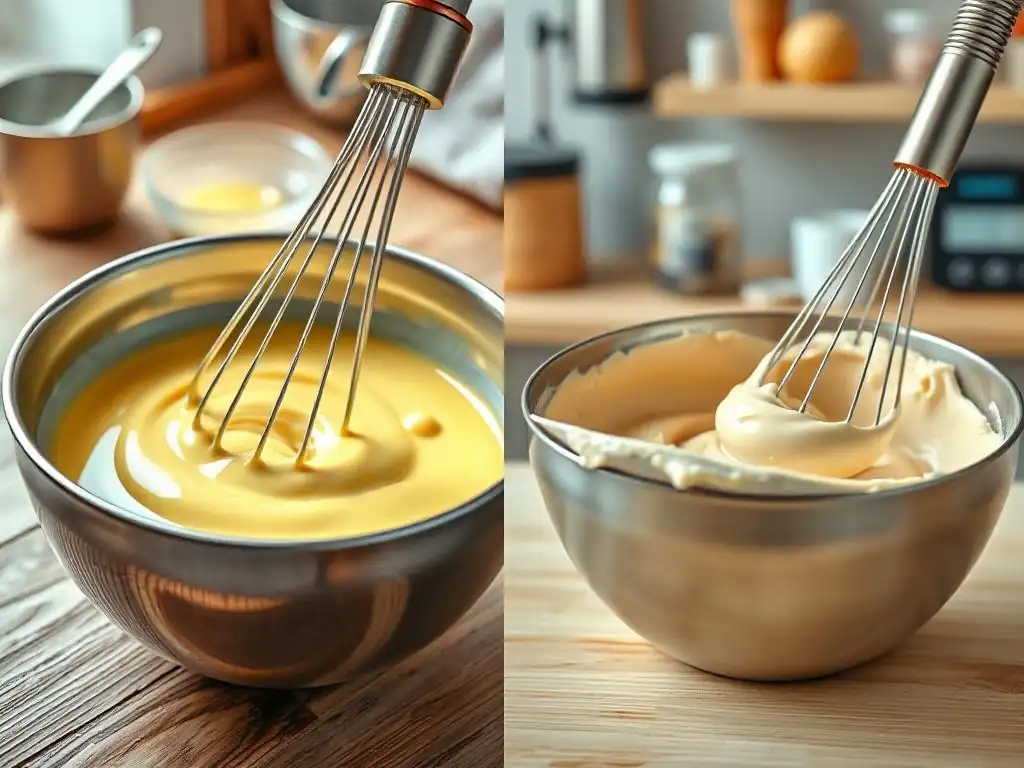
Lecithin as an Emulsifier
As highlighted in the mayonnaise section, lecithin is a powerful natural emulsifier found abundantly in egg yolks. A typical large egg yolk contains roughly 1.5 to 2 grams of lecithin, making eggs one of the most common and effective emulsifiers in home baking. Lecithin's molecular structure, with both water-attracting and fat-attracting parts, allows it to bridge the gap between fatty and watery ingredients, creating stable emulsions in batters, sauces, and more.
Lecithin is also available commercially, often derived from soy or sunflower. It's sometimes added to packaged cake mixes, bread doughs, and other baked goods to improve texture, volume, and freshness by enhancing the emulsification and stabilization of fats within the dough or batter structure. While home bakers primarily rely on the lecithin in eggs and the emulsifying properties of butter and flour, understanding the role of lecithin underscores the fundamental science behind successful emulsification in baking and parallels its crucial role in Mayonnaise cake batter techniques.
The Creaming Method Explained
The creaming method is a fundamental technique in baking that involves beating softened butter and sugar together until light and fluffy. While often discussed in terms of aeration (sugar crystals cutting into butter to create air pockets), it also involves a degree of emulsification. As the butter and sugar are beaten, the sugar crystals help break down the fat, and the mechanical action helps the fat and sugar integrate into a uniform mixture.
This process creates a partial emulsion where tiny sugar particles are dispersed within the fat, and some water from the butter is also incorporated. This creamy mixture forms a stable base that can then better handle the addition of eggs (adding more emulsifiers and liquid) and subsequently the dry and liquid ingredients. The initial creaming step is crucial for both trapping air and setting up the batter for successful emulsification of the remaining ingredients, contributing significantly to the final cake's texture and structure.
The Importance of Temperature in Emulsification
Temperature is a silent but significant factor in emulsification across all culinary applications, including baking and mayonnaise making. Fats change consistency with temperature – butter is hard when cold, soft at room temperature, and liquid when warm. Watery ingredients are less affected by temperature changes within the typical baking range, but their interaction with fats changes dramatically based on the fat's state.
For effective emulsification, ingredients are ideally at room temperature (around 68-72°F or 20-22°C). At this temperature, fats like butter are soft and pliable, making it easier for them to be dispersed into tiny droplets and surrounded by emulsifiers. Cold fats resist dispersion, leading to separation. Similarly, adding cold liquids or eggs to a warm mixture can cause the fat to seize and break the emulsion. Maintaining consistent, appropriate temperatures ensures that the emulsifiers can perform their job efficiently, leading to smooth, stable batters and successful bakes.
Conclusion: Mastering Emulsification for Baking Excellence
Mastering emulsification is a game-changer for bakers of all levels. By understanding the simple yet powerful science behind how oil and water are coaxed into harmonious union, you gain control over the texture, stability, and overall success of your baked goods. The techniques used to create something as basic as mayonnaise – careful ingredient selection, gradual incorporation of fat, and sufficient mechanical action – provide a direct blueprint for achieving perfectly smooth, stable cake batters.
From preventing greasy textures and ensuring a light crumb to troubleshooting common problems like separation, applying Mayonnaise cake batter techniques grounded in emulsification principles unlocks consistent, high-quality results. Whether you're creaming butter and sugar, whisking eggs into oil, or incorporating delicate flavorings, recognizing the emulsification process at play empowers you to adjust your methods for optimal outcomes. Embrace the science, practice these techniques, and watch your cakes transform from good to truly excellent.
Frequently Asked Questions
What is the main connection between making mayonnaise and cake batter, according to BakeWithEase?
The connection lies in the emulsification process. Both require a careful blending of oil and liquid, which is crucial for a smooth and stable texture.
How does understanding mayonnaise help with cake baking, as suggested by BakeWithEase?
Mayonnaise-making teaches you the importance of gradually incorporating oil to prevent separation. This skill translates directly to creating a stable and moist cake batter.
Why is a stable emulsion important in both mayonnaise and cake batter, according to BakeWithEase?
A stable emulsion ensures a uniform texture. In cake batter, it prevents the oil from separating during baking, leading to a better crumb structure.
Does BakeWithEase recommend using mayonnaise in cake batter?
This article focuses on techniques, not specific recipes. It emphasizes that the understanding of emulsification gained from making mayonnaise is the key takeaway, applicable to various cake recipes.
What kind of baker does BakeWithEase target with this "Mayonnaise Cake Batter Techniques" analogy?
BakeWithEase targets bakers of all levels. The analogy aims to simplify the emulsification process, making it accessible even to beginner bakers.
Final Reflection: The Unexpected Alchemy of Mayonnaise and Cake
The seemingly disparate worlds of mayonnaise and cake batter are, in fact, surprisingly intertwined. Mastering the art of emulsifying oil and water in mayonnaise directly translates to achieving a tender, moist, and flavorful cake. This isn't just a culinary quirk; it's a fundamental principle of baking that deserves wider recognition.
The subtle science of emulsion, so crucial in mayonnaise, profoundly impacts the texture and richness of cakes. Understanding this connection allows bakers to move beyond simple recipes and truly craft their creations. The best things in life are the simplest,
a common baking adage, often overlooks the complex interplay of ingredients and techniques that elevate a simple cake to something extraordinary. This article highlights that complexity, revealing the hidden depths within seemingly basic recipes.
Now, consider your own baking journey. Have you ever struggled with a dry, crumbly cake? Perhaps the answer lies not in adding more flour, but in understanding the emulsion – the delicate balance of fats and liquids – that forms the very foundation of your batter. I encourage you to experiment, to explore the possibilities of incorporating mayonnaise-like techniques into your cake recipes. Embrace the unexpected alchemy, and discover the delicious rewards that await.
Elevate Your Baking Game Today!
Thank you for diving into the delightful world of baking with us! You've unlocked some exciting parallels between mayonnaise making and cake batter that can transform your culinary creations. Now, let's turn that knowledge into mouthwatering results!
Here are a few actionable steps to elevate your baking:
- Get Experimental! Try making a cake using whipped mayonnaise as an ingredient and discover the unique texture it brings.
- Share the Joy! Show off your creations on social media and inspire others to get baking by using the hashtag #BakeWithEase.
- Join the Conversation! Connect with fellow baking enthusiasts in our community forum to share tips and tricks.
What creative twists will you add to your next baking project?