
The Perfect Sugar Syrup: Avoiding the Solidification Problem

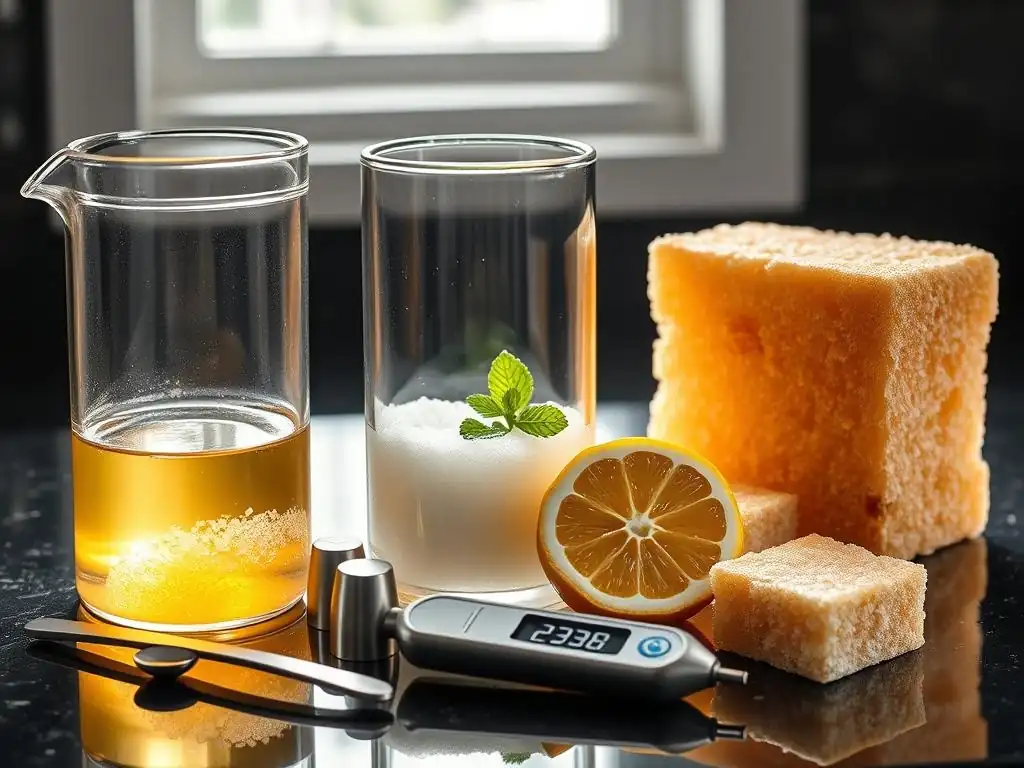
Welcome to BakeWithEase, your kitchen companion for all things baking! Ever wondered why your perfectly crafted sugar syrup sometimes crystallizes, turning your delicious glaze into a grainy disappointment? You're not alone! Dive into this Baking Science Deep Dive where we unravel the secrets of how to prevent sugar syrup from solidifying, guaranteeing smooth, luscious results every time. Discover the science behind the sweetness and unlock the key to flawless baking creations. Ready to banish crystallization forever? Let's get started!
- Mastering Sugar Syrup: Preventing Crystallization for Baking Success
- Introduction: Achieving Baking Excellence with Sugar Syrup
- Understanding Sugar Syrup: The Foundation for Baking
- The Science of Sugar Syrup Crystallization
-
Preventing Sugar Syrup Crystallization: A Practical Guide
- Selecting the Right Sugar: Impact on Syrup Stability
- Water Quality: The Influence of Impurities on Crystallization
- Optimal Sugar to Water Ratios: Achieving Desired Syrup Consistency
- Controlled Heating: Maintaining Syrup Stability During Boiling
- Acid Addition: Utilizing Lemon Juice, Vinegar, or Citric Acid for Crystallization Inhibition
- Invert Sugar: Leveraging Its Anti-Crystallization Properties
- Troubleshooting Sugar Syrup Issues
- Recipes and Applications: Utilizing Perfectly Prepared Sugar Syrup
- Inverted Sugar Syrup: Advanced Techniques and Applications
- Conclusion: Elevating Baking with Consistent Sugar Syrup
-
Frequently Asked Questions
- How do I prevent sugar syrup from crystallizing after it cools?
- What are the best types of sugar to use when making sugar syrup?
- How long should I boil sugar syrup for different uses?
- What role does stirring play in preventing sugar syrup from solidifying?
- Can I store sugar syrup, and if so, how long will it last?
- Final Reflection: The Enduring Sweetness of Perfect Syrup
- Unlock the Secrets to Perfectly Smooth Syrup!
Mastering Sugar Syrup: Preventing Crystallization for Baking Success
Introduction: Achieving Baking Excellence with Sugar Syrup
Sugar syrup is a fundamental building block in the world of baking, providing sweetness, moisture, and structure to countless creations. From delicate glazes and moist cake layers to shiny meringues and chewy caramels, its versatility is unmatched. However, working with sugar syrup often presents a common challenge: crystallization. This unwelcome phenomenon occurs when dissolved sugar reverts to its solid state, turning a smooth, clear syrup into a grainy or solid mass, ruining the texture and appearance of your baked goods. Understanding how to prevent sugar syrup crystallization is a crucial skill for any baker aiming for consistent, professional results.
Successfully mastering sugar syrup means knowing the science behind its behavior and implementing techniques to keep it stable. Preventing sugar syrup from crystallizing ensures your glazes remain smooth, your candies set correctly, and your cakes stay moist. This guide delves into the factors that cause crystallization and provides practical, actionable steps on how to prevent sugar syrup from solidifying, ensuring your baking projects turn out perfectly every time.
Understanding Sugar Syrup Crystallization and Its Prevention in Baking
Sugar syrup crystallization is the process where dissolved sugar molecules begin to clump together and form crystals. This typically happens when the solution becomes supersaturated and the sugar molecules find a nucleation point – even a tiny speck of dust or an undissolved sugar grain can trigger the process. Once started, crystallization can spread rapidly throughout the syrup, leading to a grainy texture or complete solidification, which is undesirable for most baking applications like glazes, fondants, or simple syrups used for moistening cakes.
Learning how to prevent sugar syrup from crystallizing involves controlling key variables like temperature, purity, and the presence of inhibiting substances. Techniques such as adding acid (like lemon juice or cream of tartar) or using inverted sugar break down the sucrose molecules into glucose and fructose, which are less likely to crystallize. Maintaining a clean workspace and avoiding stirring at certain stages are also vital steps. By understanding these principles, bakers can confidently prepare stable sugar syrups, ensuring smooth textures and preventing the frustrating issue of premature solidification.
Understanding Sugar Syrup: The Foundation for Baking
What is Sugar Syrup and Its Role in Baking Applications?
Sugar syrup is essentially a solution of sugar dissolved in water, heated to varying temperatures depending on the desired consistency and application. Its role in baking is incredibly diverse. A simple 1:1 or 2:1 sugar-to-water syrup, often called simple syrup, is widely used to moisten cake layers, adding both sweetness and preventing dryness. This technique is particularly popular for sponge cakes or layered cakes where a moist crumb is desired. Beyond moisture, sugar syrup acts as a base for glazes, providing a smooth, shiny finish to pastries and doughnuts.
Furthermore, sugar syrup is the foundation for a vast array of sugar-based confections and components used in baking. Heating sugar syrup to higher temperatures allows it to transition through stages like thread, soft ball, firm ball, hard ball, soft crack, and hard crack, corresponding to increasing sugar concentration and firmness upon cooling. These stages are critical for making everything from fudges and caramels (soft ball) to brittle and toffee (hard crack). Without a properly prepared, non-crystallized sugar syrup, achieving the correct texture and stability in these applications would be impossible.
Types of Sugar Syrups: Simple, Inverted, and Flavored
The most basic type is simple syrup, typically made by dissolving granulated sugar in water. The ratio of sugar to water determines its richness; a 1:1 ratio by weight or volume is common for general use, while a 2:1 ratio yields a richer, thicker syrup often preferred for cocktails or more intense sweetening. Simple syrup is quick to make and versatile for moistening cakes or sweetening beverages.
Inverted sugar syrup, often simply called invert sugar, is a more complex type where sucrose (table sugar) is broken down into its constituent monosaccharides, glucose and fructose. This is achieved by heating sucrose solution with an acid (like citric acid or cream of tartar) or using the enzyme invertase. Invert sugar is prized in baking because glucose and fructose are far less prone to crystallization than sucrose, making it ideal for applications like fondant, caramels, and some candies where smoothness and stability are paramount.
Flavored syrups are created by infusing simple syrup with ingredients like fruit zest, spices (cinnamon sticks, star anise), herbs (mint, rosemary), or extracts (vanilla bean). These add an extra dimension of flavor and can be used to complement specific cake or pastry profiles.
The Science of Sugar Syrup Crystallization
Factors Influencing Sugar Syrup Crystallization: Temperature, Purity, and Sugar Concentration
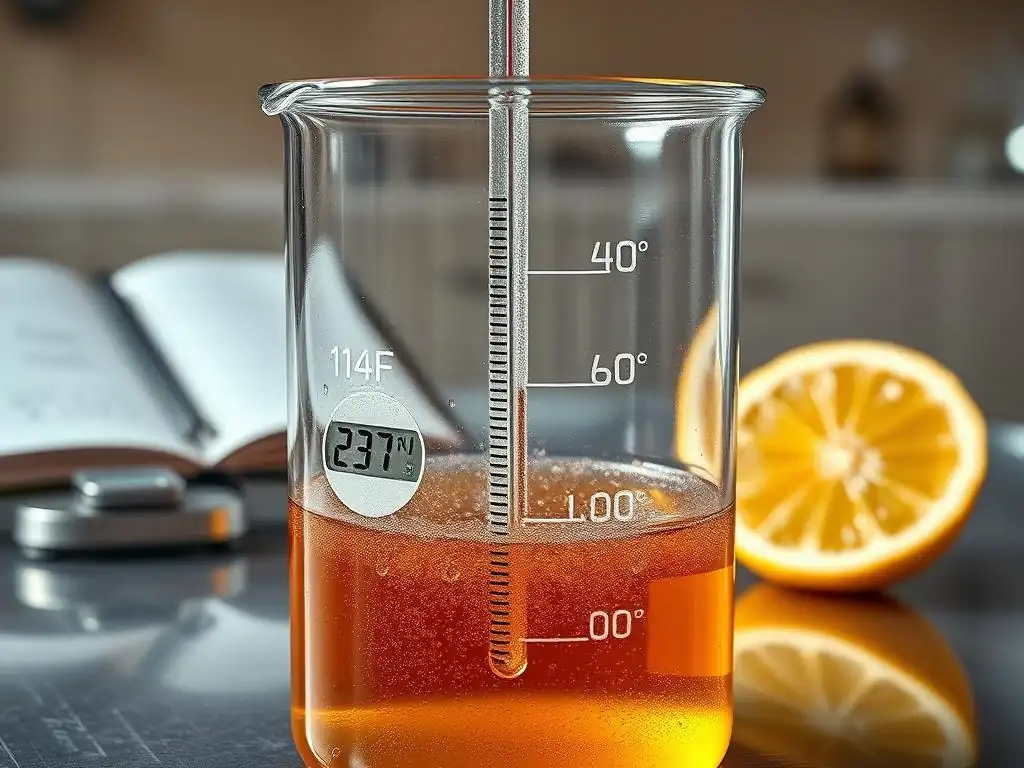
Several factors critically influence whether a sugar syrup will crystallize. Temperature plays a dual role: dissolving sugar requires heat, as solubility increases with temperature. However, as the syrup cools, it becomes supersaturated, making it highly susceptible to crystallization. Maintaining control over the cooling process and avoiding sudden temperature drops is important. Purity is another major factor; even a tiny speck of undissolved sugar, a dust particle, or an impurity from unwashed equipment can act as a nucleation site, triggering crystallization.
Sugar concentration is perhaps the most significant factor. As water evaporates during boiling, the sugar concentration increases. Syrups heated to higher temperatures (and thus higher concentrations) are more prone to crystallization because there is less water to keep the sugar molecules separated. For example, a syrup heated to the hard crack stage (around 300-310°F or 149-154°C), containing over 90% sugar, is inherently less stable than a simple syrup (around 50% sugar). Understanding these interconnected factors is key to learning how to prevent sugar syrup from solidifying during preparation and storage.
The Mechanism of Sugar Crystal Formation
The formation of sugar crystals in syrup is a process driven by the tendency of dissolved sugar molecules (sucrose) to return to their ordered crystalline state when the solution becomes supersaturated. When you heat sugar and water, the sugar dissolves, and the solution becomes clear. As water evaporates during boiling, the ratio of sugar to water increases, leading to a supersaturated state where more sugar is dissolved than would normally be possible at room temperature.
In this unstable supersaturated state, the dissolved sugar molecules are constantly moving. If they encounter a disturbance or a nucleation site – which could be a stray sugar crystal, a dust particle, or even a scratch on the pan – they start to align themselves in a regular, repeating pattern, forming a crystal lattice. Once a few molecules align, they attract more dissolved sugar molecules, causing the crystal to grow.
This process can propagate rapidly throughout the syrup, leading to the entire batch turning grainy or solid. Preventing this mechanism requires careful control of the heating process, ingredients, and handling.
Preventing Sugar Syrup Crystallization: A Practical Guide
Selecting the Right Sugar: Impact on Syrup Stability
The type of sugar you use can subtly impact the stability of your syrup, although granulated white sugar is the most common choice and works well if handled correctly. Using very fine or superfine sugar can sometimes help slightly because it dissolves more readily, reducing the chance of undissolved granules acting as nucleation sites. However, the primary concern isn't the type of sugar (sucrose) but its purity and how completely it's dissolved. Ensure you use clean, dry sugar from a fresh bag.
Avoid using brown sugars or unrefined sugars for applications where crystal-clear, stable syrup is essential, as these contain molasses and other impurities that can sometimes encourage crystallization. While perfectly fine for many recipes, for sensitive applications like clear glazes or delicate candies where you want to know how to prevent sugar syrup from crystallizing effectively, stick to standard granulated or superfine white sugar. Always measure accurately to ensure the correct sugar-to-water ratio, as this is fundamental to achieving the desired consistency and stability.
Water Quality: The Influence of Impurities on Crystallization
Even the water you use can play a role in sugar syrup crystallization. Tap water often contains dissolved minerals and other impurities. While usually harmless, these can sometimes act as nucleation sites, providing a surface for sugar crystals to start forming. Using distilled or filtered water can minimize this risk, especially when making sensitive syrups like those for candy making or clear glazes where clarity and smoothness are paramount.
For basic simple syrups used for moistening cakes or sweetening drinks, tap water is often perfectly acceptable and the risk is minimal. However, if you consistently struggle with your sugar syrups crystallizing, particularly when working with high sugar concentrations or trying to achieve a very smooth texture, experimenting with filtered or distilled water is a worthwhile step in learning how to prevent sugar syrup solidification. The fewer foreign particles in your solution, the lower the chance of initiating unwanted crystal growth.
Optimal Sugar to Water Ratios: Achieving Desired Syrup Consistency
The ratio of sugar to water directly determines the final concentration and consistency of the syrup, which in turn affects its tendency to crystallize. A lower sugar-to-water ratio (e.g., 1:1) results in a less concentrated syrup that is less prone to crystallization than a higher ratio (e.g., 2:1 or higher). For a basic simple syrup, a 1:1 ratio by volume (e.g., 1 cup sugar to 1 cup water) is very stable and commonly used. A 2:1 ratio (e.g., 2 cups sugar to 1 cup water) is thicker and sweeter but still generally stable if handled correctly.
When making syrups for candy or other high-temperature applications, the ratio effectively increases as water evaporates. Starting with a specific ratio and boiling to a target temperature (which corresponds to a specific sugar concentration) is crucial. For instance, reaching the soft ball stage requires boiling until the syrup is approximately 85% sugar, while hard crack stage is over 90% sugar.
Using slightly more water than strictly necessary at the start can give you more buffer time during boiling to reach the target temperature without excessive risk of premature crystallization, assuming you boil off the excess water. Always follow recipe specifications for ratios carefully to ensure the correct final consistency and minimize crystallization risk.
Controlled Heating: Maintaining Syrup Stability During Boiling
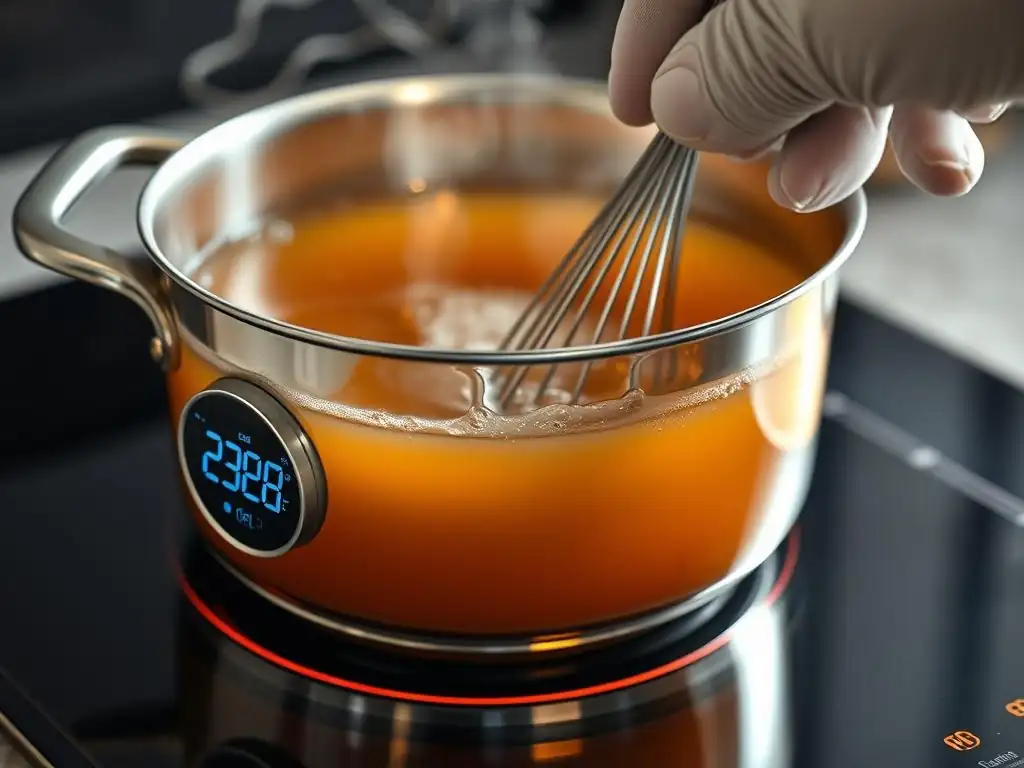
Proper heating technique is paramount in preventing sugar syrup crystallization. When you first combine sugar and water, heat the mixture gently over low to medium heat, stirring constantly only until all the sugar is completely dissolved. It is critical that no undissolved sugar granules remain clinging to the sides or bottom of the pan.
Once the sugar is fully dissolved and the syrup is clear, stop stirring. Stirring a supersaturated solution during boiling can introduce air bubbles or cause sloshing that splashes syrup onto the cooler sides of the pan, where it can crystallize and seed the rest of the batch.
Bring the syrup to a boil and maintain a steady, controlled boil without stirring. Use a clean pastry brush dipped in water to wash down any sugar crystals that form on the sides of the pan above the waterline; this prevents them from falling back into the syrup and causing crystallization. Boiling too rapidly can also cause scorching or uneven heating. Using a heavy-bottomed pan helps distribute heat evenly. Monitoring the temperature with a candy thermometer is essential for accuracy, especially for candy making, as reaching the precise stage is key to both texture and stability.
Acid Addition: Utilizing Lemon Juice, Vinegar, or Citric Acid for Crystallization Inhibition
Adding a small amount of acid is one of the most effective ways how to prevent sugar syrup from crystallizing. Acids like lemon juice, vinegar, or cream of tartar (an acidic salt, potassium bitartrate) catalyze the hydrolysis of sucrose. Hydrolysis breaks down the disaccharide sucrose molecule into its component monosaccharides: glucose and fructose. This mixture of glucose and fructose is known as invert sugar.
Glucose and fructose molecules are shaped differently than sucrose molecules and interfere with sucrose's ability to align and form crystals. This makes the syrup much more stable and less likely to crystallize, even at high concentrations. A common guideline is to add about 1/4 teaspoon of cream of tartar or 1 teaspoon of lemon juice for every 2 cups of sugar.
The acid should be added early in the heating process, ideally after the sugar has dissolved but before boiling vigorously, allowing it time to work its magic. This technique is particularly useful when making candies, fudges, or glazes that require a smooth texture.
Invert Sugar: Leveraging Its Anti-Crystallization Properties
As discussed, invert sugar is a powerful tool for preventing crystallization because it is a mixture of glucose and fructose, the result of hydrolyzing sucrose. These smaller, differently shaped molecules disrupt the ordered structure that sucrose molecules try to form when crystallizing. Commercially produced invert sugar syrup is available and is frequently used in professional baking and confectionery for its ability to maintain smoothness and prevent graininess in items like fondants, chewy candies, and ice creams.
For home bakers, you can create invert sugar syrup by adding an acid during the sugar syrup making process, as described above. Alternatively, you can make a batch of pure invert sugar syrup by boiling a concentrated sugar solution with an acid for a specific time or using invertase enzyme.
Incorporating a portion of invert sugar (either homemade or store-bought) into your recipes can significantly improve the texture and shelf life of items prone to crystallization, ensuring a smoother, more stable product. This is a key technique for anyone serious about mastering how to prevent sugar syrup issues in their baking.
Troubleshooting Sugar Syrup Issues
Recognizing Signs of Sugar Syrup Crystallization
Recognizing the early signs of crystallization can sometimes allow you to salvage a batch of sugar syrup. The most obvious sign is the appearance of cloudiness in a syrup that should be clear, indicating that tiny crystals are starting to form. You might also notice a grainy texture if you dip a spoon into the syrup, rather than it being perfectly smooth. Sometimes, crystals will form on the sides of the pan above the liquid line.
In more advanced stages, the syrup will become noticeably grainy throughout, losing its smooth flow. If left unchecked or allowed to cool, it can solidify completely into a solid mass of sugar crystals. Catching the problem when the syrup is just starting to become cloudy or slightly grainy gives you the best chance to reverse the crystallization process before it's too late.
Salvaging Crystallized Sugar Syrup
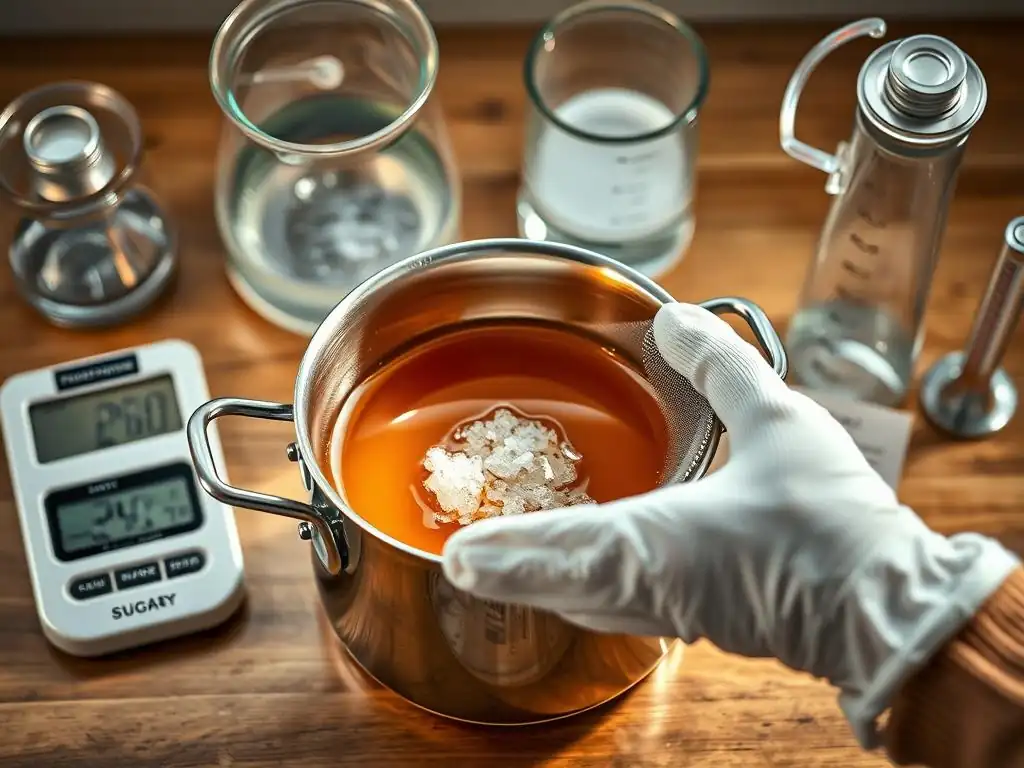
If your sugar syrup starts to crystallize, don't despair immediately – it might be salvageable, depending on the extent of the crystallization. The most common method to try and salvage a crystallized syrup is to add a small amount of water and reheat it gently. Add about 1-2 tablespoons of hot water per cup of syrup, place the pan over low heat, and stir very gently until all the crystals have completely dissolved. Avoid vigorous stirring once dissolved.
Once the syrup is clear and smooth again, you can carefully bring it back up to the desired temperature. It's highly recommended to add a small amount of acid (like lemon juice or cream of tartar) at this stage if you didn't originally, as this will help prevent the crystallization from happening again. Wash down the sides of the pan with a wet pastry brush to remove any clinging crystals. While salvaging is possible, it's often easier and results in a better final product if you focus on preventing sugar syrup crystallization from the start.
Long-Term Storage: Maintaining Syrup Clarity and Preventing Recrystallization
Proper storage is essential for maintaining the clarity and preventing recrystallization of sugar syrups intended for long-term use, such as simple syrups for drinks or cake moistening. Once made, allow the syrup to cool completely before transferring it to a clean, airtight container. Ensure the container is scrupulously clean, as any residue can act as a nucleation site.
Store the cooled syrup in the refrigerator. Cold temperatures help maintain the supersaturated state more effectively than room temperature, reducing the likelihood of spontaneous crystallization. While simple syrups (like 1:1 or 2:1) are quite stable, richer syrups or those made without an acid addition might be more prone to crystallizing over time. If a stored syrup does show signs of crystallization, you can often gently reheat it with a splash of water to redissolve the crystals, as long as it hasn't spoiled. However, preventing sugar syrup solidification through careful preparation is the best approach for reliable long-term storage.
Recipes and Applications: Utilizing Perfectly Prepared Sugar Syrup
Basic Sugar Syrup Recipe for Cakes and Pastries
Here is a simple recipe for a versatile sugar syrup, perfect for moistening cakes.
- Yield: Approximately 1.5 cups
- Prep time: 2 minutes
- Cook time: 5-7 minutes
Ingredients:
- 1 cup granulated sugar
- 1 cup water
- Optional: 1 teaspoon lemon juice or 1/4 teaspoon cream of tartar (for added stability)
Instructions:
- Combine the sugar and water in a medium, heavy-bottomed saucepan.
- Place over medium-low heat and stir constantly until all the sugar is completely dissolved. Ensure no sugar granules remain on the sides of the pan.
- If using, add the lemon juice or cream of tartar now.
- Increase the heat to medium-high and bring the mixture to a gentle boil without stirring.
- Boil for 1-2 minutes. Use a wet pastry brush to wash down any sugar crystals from the sides of the pan.
- Remove from heat and let cool completely before using or storing.
This basic syrup is stable and easy to make, providing a reliable base for many baking needs while minimizing the risk of crystallization if the steps on how to prevent sugar syrup issues are followed.
Flavored Sugar Syrup Variations: Citrus, Spice, and Herb Infusions
Adding flavorings transforms basic sugar syrup into a powerful tool for enhancing baked goods. The key is to infuse the flavors into the syrup while maintaining its clarity and stability. Citrus syrups are popular; simply add strips of citrus zest (orange, lemon, lime) to the sugar and water mixture before heating. As the syrup heats and boils, the oils from the zest infuse into the liquid. Strain the syrup after cooling to remove the zest. A common ratio is the zest of one large lemon or orange per cup of sugar and water.
For spice infusions, add whole spices like cinnamon sticks, star anise, cardamom pods, or cloves to the syrup mixture during the heating phase. Simmering the syrup for a few minutes with the spices allows the flavors to meld. Again, strain before using.
Herb infusions work similarly; fresh herbs like mint, rosemary, or lavender can be added during the boil and then removed after cooling. For example, a syrup made with 1 cup sugar, 1 cup water, and a few sprigs of fresh mint, boiled for 5 minutes, creates a refreshing syrup perfect for drizzling over fruit tarts or moistening chocolate cakes. Always ensure the flavorings are clean and free of debris to avoid introducing nucleation sites, reinforcing the principles of how to prevent sugar syrup crystallization.
Baking Applications of Sugar Syrup: Cake Moistening, Glazes, and Candied Ingredients
Perfectly prepared sugar syrup has numerous applications in baking, each benefiting from its smooth, stable nature. Cake moistening is perhaps the most common use; brushing or drizzling cooled simple syrup onto cake layers adds moisture, improves texture, and enhances shelf life. This is especially effective for cakes that might otherwise dry out, like sponge cakes or genoise. For instance, a lemon simple syrup can dramatically improve a basic vanilla cake.
Sugar syrup is also the base for many glazes and icings. A hot, thick syrup can be poured over cakes or pastries to create a shiny, hard coating. When making traditional fondant icing (not rolled fondant), hot sugar syrup is beaten until it becomes a smooth, opaque paste.
Candied ingredients, like citrus peel or ginger, are made by simmering the ingredient in progressively stronger sugar syrups, gradually replacing the water within the ingredient with sugar. This process requires syrups that remain stable and don't crystallize prematurely, highlighting the importance of knowing how to prevent sugar syrup solidification throughout the multi-stage process.
Inverted Sugar Syrup: Advanced Techniques and Applications
Homemade Inverted Sugar Syrup: A Comprehensive Guide
Making invert sugar syrup at home is a valuable skill for bakers seeking superior texture and stability in certain applications. The process involves heating a strong sugar solution with an acid.
- Yield: Approximately 1.5 cups
- Prep time: 2 minutes
- Cook time: 20-30 minutes
Ingredients:
- 2 cups granulated sugar
- 1 cup water
- 1/4 teaspoon cream of tartar OR 1 tablespoon lemon juice
Instructions:
- Combine sugar and water in a clean, heavy-bottomed saucepan. Stir over medium-low heat until all sugar is completely dissolved. Wash down sides with a wet brush.
- Add the cream of tartar or lemon juice.
- Bring the mixture to a gentle boil without stirring. Maintain a steady, low boil.
- Insert a candy thermometer and continue to boil until the temperature reaches 236-240°F (113-116°C) (soft ball stage). This process takes about 20-30 minutes. The acid and heat will hydrolyze the sucrose during this time.
- Remove from heat and let cool completely. The syrup will thicken as it cools.
- Store in a clean, airtight container at room temperature.
This homemade version is less prone to crystallization than simple syrup and is excellent for specific uses where preventing sugar syrup solidification is critical.
Advantages of Inverted Sugar Syrup in Baking
The primary advantage of using invert sugar syrup in baking is its potent anti-crystallization property. Because it contains glucose and fructose, which are less likely to form crystals than sucrose, it helps keep baked goods and confections smooth and non-grainy. This is particularly beneficial in recipes with high sugar concentrations, such as fudges, caramels, and certain types of frosting or filling.
Beyond preventing crystallization, invert sugar also contributes to moisture retention. Glucose and fructose are more hygroscopic (attract and hold moisture) than sucrose. Adding invert sugar can therefore help keep cakes, cookies, and other baked goods softer and fresher for longer. It also contributes to browning in crusts due to the presence of reducing sugars (glucose and fructose), enhancing both color and flavor. For bakers aiming for professional-quality texture and extended shelf life, understanding and utilizing invert sugar is key.
Applications of Inverted Sugar Syrup: Caramel, Soft Candies, and Frozen Desserts
Invert sugar syrup is invaluable in applications where a smooth, non-grainy texture is essential. It is frequently used in commercial candy making, particularly for chewy candies like caramels, fudges, and nougats, ensuring they remain soft and pliable rather than becoming hard and grainy. A small amount of invert sugar can dramatically improve the texture of homemade caramel sauce, keeping it smooth and preventing the sugar from seizing up.
In frozen desserts like ice cream and sorbet, invert sugar helps prevent the formation of large ice crystals, resulting in a smoother, creamier texture. It also lowers the freezing point slightly, which can improve scoopability. Many commercial ice cream recipes include corn syrup or glucose syrup (types of invert or partial invert sugars) for this reason. Using homemade invert sugar syrup in your frozen dessert bases can achieve similar results. Its unique properties make it a secret weapon for mastering challenging sugar-based creations and successfully preventing sugar syrup issues in complex recipes.
Conclusion: Elevating Baking with Consistent Sugar Syrup
Key Principles: Preventing Crystallization for Superior Baking Results
Mastering sugar syrup is a fundamental skill that significantly impacts the quality of your baked goods. The key to consistently achieving smooth, clear, and stable syrups lies in understanding and diligently applying the principles of how to prevent sugar syrup crystallization. This involves starting with clean ingredients and equipment, ensuring all sugar is fully dissolved before boiling, avoiding stirring during the boiling process, and meticulously washing down any stray crystals from the sides of the pan.
Furthermore, incorporating an anti-crystallization agent like acid (lemon juice, cream of tartar) or using invert sugar syrup is a powerful technique, especially for high-concentration applications. Controlled heating and accurate temperature monitoring are also critical. By paying attention to these details – purity, concentration, temperature control, and the use of inhibitors – you can confidently prepare sugar syrups that perform perfectly in all your baking endeavors, elevating your results from good to truly exceptional and consistently preventing sugar syrup from solidifying.
Frequently Asked Questions
How do I prevent sugar syrup from crystallizing after it cools?
Crystallization is often caused by sugar molecules re-forming bonds. To prevent this, add an acid like lemon juice or cream of tartar. These ingredients interfere with crystallization.
What are the best types of sugar to use when making sugar syrup?
Granulated sugar is generally the best choice for basic sugar syrup. Avoid using powdered sugar as it contains cornstarch which can affect the final texture. Consistency is key.
How long should I boil sugar syrup for different uses?
Boiling time affects the syrup's concentration. For a simple syrup, a short boil is sufficient. For thicker syrups, like those used in candy making, longer boiling times are required.
What role does stirring play in preventing sugar syrup from solidifying?
Stirring is important initially to dissolve the sugar. Once dissolved, avoid stirring vigorously, as this can introduce air bubbles that can promote crystallization. Gentle simmering is best.
Can I store sugar syrup, and if so, how long will it last?
Yes, sugar syrup can be stored in an airtight container in the refrigerator. It can last for several weeks, or even months, depending on the sugar concentration and storage conditions.
Final Reflection: The Enduring Sweetness of Perfect Syrup
The quest for the perfect sugar syrup isn't just about avoiding a sticky mess; it's about mastering a fundamental culinary technique with far-reaching implications. From preserving fruits to crafting exquisite cocktails and decadent desserts, the ability to create a stable, non-crystallizing syrup underpins countless recipes and culinary traditions. This knowledge empowers us to elevate our creations and avoid the frustration of ruined preserves or disappointing drinks.
The subtle art of syrup-making, with its precise ratios and careful attention to detail, reflects a larger cultural appreciation for precision and craftsmanship. It's a reminder that even the simplest ingredients, when handled with care and understanding, can yield extraordinary results. The difference between ordinary and extraordinary is that little extra.
This quote, though not directly about syrup, perfectly captures the essence of this pursuit: the dedication to mastering a seemingly simple process to achieve something truly special. The impact extends beyond the kitchen; it speaks to a broader human desire for perfection and the satisfaction derived from achieving it.
Now, consider your own culinary endeavors. What seemingly small details have you overlooked that might be impacting the outcome of your recipes? I invite you to experiment with different sugar types, water ratios, and cooking methods, to discover the perfect balance for your own needs. Embrace the process of learning and refining your technique, for the journey towards the perfect sugar syrup is as rewarding as the delicious results themselves. Don't be afraid to experiment, to fail, and to learn from each attempt. The sweetness of success will be all the more satisfying.
Unlock the Secrets to Perfectly Smooth Syrup!
Thanks for taking the time to learn about creating the perfect sugar syrup! We hope you now feel confident avoiding that frustrating solidification problem. Ready to put your new knowledge into practice?
- Try our foolproof recipe variations: Experiment with different fruits and flavors to create your own signature syrups. (Primary Action)
- Share your syrup creations on social media using #BakeWithEaseSyrup – let's see those delicious results!
- Leave a comment below and tell us about your favorite syrup application – we’d love to hear your tips!
Ready to transform your baking with flawlessly smooth syrups?