
Your Guide to French Pastry Terminology: Decoded

Welcome to BakeWithEase!
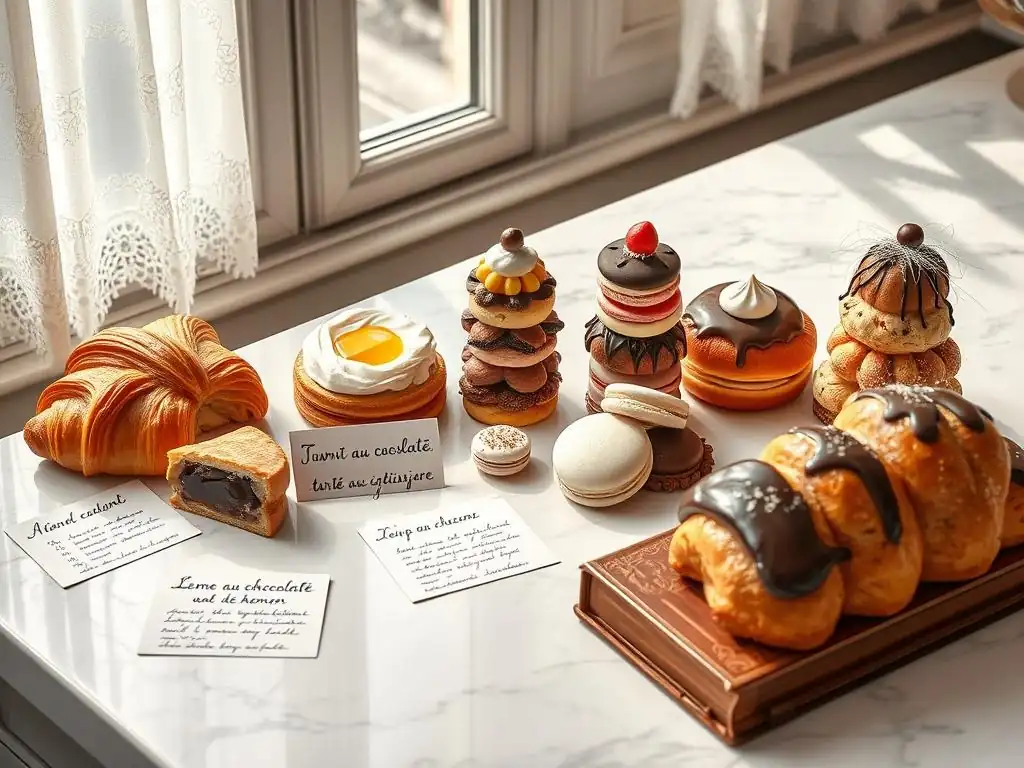
Ever felt lost in translation when reading a French pastry recipe? Unravel the secrets behind pâte à choux and crème brûlée with our guide to French pastry vocabulary explained. From basic terms to advanced techniques, we'll demystify the language of French baking, empowering you to create exquisite desserts with confidence. Ready to decode the deliciousness? Let's get baking!
- Mastering French Pastry Terminology
- Essential Vocabulary for Baking Success
- Core Techniques and Their Names
- Key Ingredients and Their French Names
- Advanced Terminology for Elevated Baking
- Decoding Pastry Descriptions
- Tools and Equipment Terminology
- Pronunciation Guide
- French Pastry Vocabulary Cheat Sheet
- Conclusion: Baking with Confidence
-
Frequently Asked Questions
- What is the difference between pâte sucrée and pâte brisée?
- What does choux pastry refer to, and what is it used for?
- What is crème pâtissière, and how is it different from crème anglaise?
- What is ganache, and what are its common uses in pastry making?
- What does flambé mean in the context of French pastry, and how is it typically done?
- Final Reflection: Unlocking the Sweet Language of French Pastry
- Unlock the Secrets of French Pastry!
Mastering French Pastry Terminology
Essential Vocabulary for Baking Success
Decoding Common French Baking Terms
Stepping into the world of French pastry can feel like entering a foreign land, especially when faced with unfamiliar terms like pâte feuilletée, crème anglaise, or choux. These words aren't just fancy names; they represent fundamental techniques, ingredients, or finished products that are the backbone of classic French baking. Understanding this specific French pastry vocabulary explained clearly is the first step toward successfully recreating those delicate croissants or intricate tarts you admire. It removes the guesswork and allows you to follow recipes with precision, ensuring consistent and delicious results every time.
Beyond simply identifying ingredients or steps, decoding these terms helps you grasp the why behind certain processes. For instance, knowing that blanchir in a baking context often means whisking egg yolks and sugar until pale and thick tells you about a crucial emulsification and stabilization step, not just a literal translation of "to whiten." This deeper understanding, provided by a good French pastry vocabulary explained guide, empowers you to troubleshoot when things go wrong and even adapt recipes as you gain confidence. It transforms baking from simply following instructions to truly understanding the craft.
Benefits of Learning French Pastry Vocabulary
Learning the specific French pastry vocabulary explained in guides like this offers significant advantages for any aspiring or experienced baker. Primarily, it unlocks a vast library of authentic French recipes that might otherwise be inaccessible or intimidating. Many traditional French cookbooks and online resources use these terms extensively, assuming a certain level of familiarity. By mastering this language, you gain direct access to time-tested methods and classic formulations used by professional pâtissiers.
Furthermore, understanding French pastry vocabulary explained well enhances your ability to learn from diverse sources, including international baking videos and masterclasses. When a chef mentions folding pâte à choux or tempering chocolat de couverture, you'll immediately grasp the technique or ingredient being discussed. This shared language facilitates clearer communication and a deeper appreciation for the nuances of French baking, improving your skills and expanding your repertoire beyond basic recipes.
Core Techniques and Their Names
Pâte Brisée: Understanding Shortcrust Pastry
Pâte brisée, often translated as 'broken dough', is a classic French shortcrust pastry known for its tender, crumbly texture. It's typically made with flour, cold butter, a pinch of salt, and just enough cold water to bring it together. The key to its texture lies in incorporating the cold butter into the flour until it resembles coarse crumbs before adding the liquid.
This process, often called 'cutting in the butter', ensures that the fat remains in small pieces, which melt during baking, creating steam pockets that result in flakiness and tenderness. A standard ratio might involve using about half the amount of butter to flour by weight, for example, 250g flour to 125g cold butter.
This versatile dough is the foundation for many sweet and savory tarts, quiches, and pies. Unlike pâte sablée, which is richer and more cookie-like due to the inclusion of sugar and often egg yolks, pâte brisée is less sweet and holds its shape well during baking. It requires careful handling; overworking the dough develops gluten, leading to a tough crust. After mixing, it's crucial to chill pâte brisée for at least 30 minutes to allow the gluten to relax and the fat to firm up, making it easier to roll and ensuring the desired tender texture after baking.
Crème Pâtissière: The Baker's Custard
Crème pâtissière, or pastry cream, is a fundamental component in countless French desserts, from éclairs and mille-feuilles to fruit tarts and religieuses. It's a rich, thick custard made primarily from milk, egg yolks, sugar, and a thickening agent, most commonly cornstarch or flour. The mixture is cooked gently over medium heat, stirring constantly, until it reaches a boil and thickens significantly. This cooking process is crucial not only for thickening but also for cooking out the starch and ensuring the egg yolks are fully cooked, typically reaching a temperature around 82-85°C (180-185°F).
A typical recipe might use 6-8 egg yolks and 50-70g of sugar per 500ml of milk, with 30-40g of cornstarch. The high proportion of egg yolks contributes to its rich flavor and smooth texture, while the starch provides stability, preventing it from curdling when heated or stirred. Once cooked, it must be cooled rapidly, often by spreading it onto a shallow tray and covering the surface directly with plastic wrap to prevent a skin from forming. Proper crème pâtissière is smooth, glossy, and holds its shape, making it ideal for filling delicate pastries.
Meringue: Achieving Perfect Peaks
Meringue is a delicate confection made by whipping egg whites with sugar until stiff peaks form. The type of sugar used and the method of incorporation determine the three main types: French, Swiss, and Italian. French meringue, the simplest, involves gradually adding granulated or superfine sugar to raw egg whites as they are whipped.
Swiss meringue is made by whisking egg whites and sugar together over a bain-marie until warm (around 60°C or 140°F) before whipping. Italian meringue is the most stable, created by pouring a hot sugar syrup (cooked to the soft-ball stage, around 115-121°C or 240-250°F) into whipping egg whites.
The stability and final texture of the meringue depend heavily on the sugar-to-egg white ratio and the whipping technique. Sugar stabilizes the whipped egg whites, preventing them from collapsing, and inhibits syneresis (weeping). For a stable French meringue suitable for piping cookies, a ratio of 2 parts sugar to 1 part egg white by weight is common.
Italian meringue, often used for mousses or frosting cakes, is the most stable due to the cooked sugar syrup denaturing the egg white proteins more effectively. Understanding these nuances is key to using the specific French pastry vocabulary explained for meringue types correctly.
Ganache: Mastering Chocolate and Cream Emulsion
Ganache is a smooth, rich emulsion of chocolate and hot cream, a cornerstone ingredient in countless French pastries. It's incredibly versatile, used as a glaze, filling, frosting, or the base for truffles. The ratio of chocolate to cream dictates its consistency and use. A 1:1 ratio of chocolate to cream (by weight) typically results in a pourable ganache perfect for glazes or sauces when warm, or a soft filling when cooled. Increasing the chocolate proportion, say to a 2:1 ratio (chocolate to cream), yields a firmer ganache suitable for piping or making truffles once set.
Creating a perfect ganache involves pouring hot, not boiling, cream over finely chopped chocolate (or pistoles) and letting it sit for a few minutes to allow the chocolate to melt before gently whisking or stirring until smooth and glossy. Overheating the cream or stirring too vigorously can break the emulsion. The quality of the chocolate significantly impacts the final result; using high-quality couverture chocolate with sufficient cocoa butter content is recommended for the best texture and flavor. Mastering this essential French pastry vocabulary explained here is crucial for working with this foundational element.
Key Ingredients and Their French Names
Beurre: The Importance of Butter
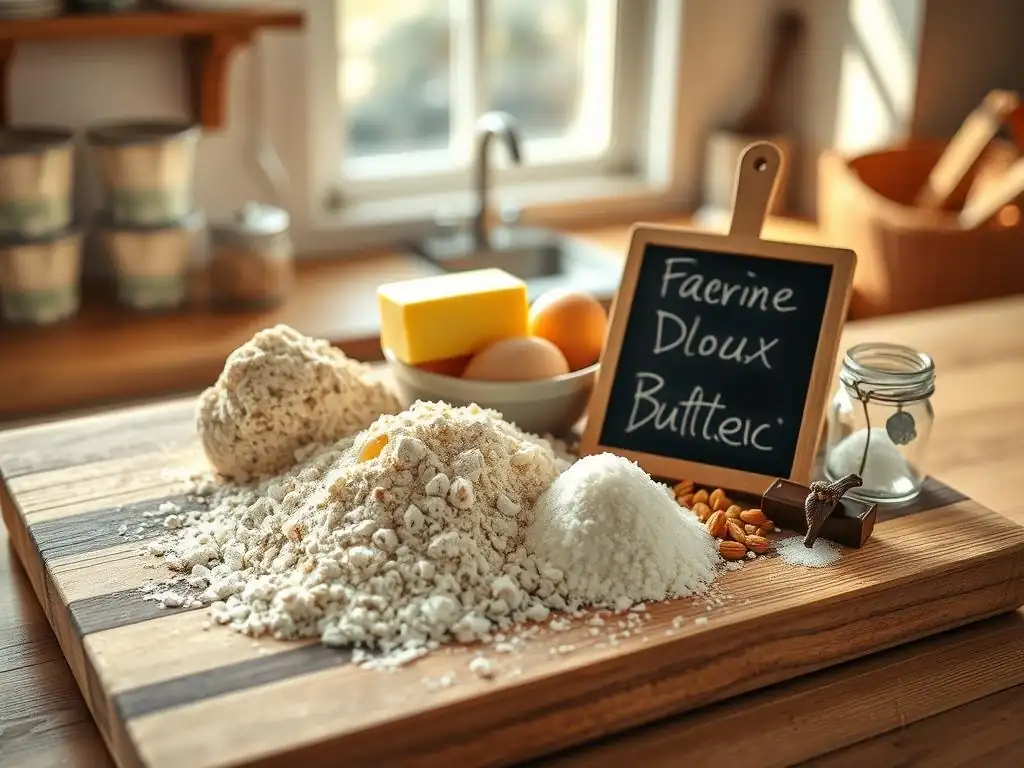
Beurre, or butter, is arguably the most crucial ingredient in French pastry, lending richness, flavor, and flakiness to everything from croissants to madeleines. French butter is particularly prized for its high fat content, typically around 82-84%, compared to around 80% in many other countries. This higher fat percentage means less water, resulting in a richer taste and superior performance in pastries, especially laminated doughs like pâte feuilletée or pâte levée feuilletée (croissant dough), where the fat layers create steam and separation during baking.
Using cold, high-quality beurre is essential for techniques like 'cutting in' for pâte brisée or creating distinct layers in puff pastry. The temperature of the butter affects how it incorporates into the dough and melts during baking. For maximum flakiness, butter should be kept cold and handled minimally. The unique flavor profile of cultured French butter, often slightly tangy due to fermentation, also contributes significantly to the characteristic taste of traditional French baked goods.
Sucre Glace: Understanding Icing Sugar
Sucre glace, also known as confectioners' sugar or powdered sugar, is finely ground granulated sugar mixed with a small amount of anti-caking agent, usually cornstarch (typically around 3-5%). This extremely fine texture allows it to dissolve easily, making it ideal for frostings, glazes, dusting pastries, and incorporating into delicate doughs like pâte sablée or batters where a smooth finish is desired. Its ability to absorb moisture makes it perfect for dusting pastries like madeleines or financiers right out of the oven.
While standard granulated sugar (sucre en poudre) is used for structure and sweetness in batters and doughs, sucre glace serves different purposes. In buttercreams ( crème au beurre), its fine particles create a smooth, non-gritty texture. For dusting, the added cornstarch prevents clumping and helps it adhere to the pastry surface. Understanding the specific uses of sucre glace versus other sugars is part of mastering the French pastry vocabulary explained for ingredients.
Amande: Using Almonds in Pastry
Amande, or almonds, are a staple ingredient in French pastry, appearing in various forms and applications. Almond flour ( poudre d'amande) is a key component in macarons, financiers, and frangipane, a classic filling made from crème pâtissière and almond cream ( crème d'amande). The high fat content of almonds contributes moisture and a tender crumb to baked goods, while their distinct flavor pairs beautifully with fruits and chocolate. Approximately 50% of an almond's weight is fat, which impacts dough structure and texture.
Beyond almond flour, whole or slivered almonds are used for decoration or added texture, such as on croissants aux amandes or financiers. Almond extract ( extrait d'amande) is used to boost the almond flavor. The careful selection and preparation of almonds, whether blanching and grinding them finely for macarons or toasting them for garnish, are essential steps in many French recipes. Understanding the role of amande in its various forms is vital French pastry vocabulary explained for ingredient usage.
Advanced Terminology for Elevated Baking
Entremet: Defining Complex Desserts
An entremet is a sophisticated, multi-layered dessert, typically a cake or mousse-based creation, often served chilled or frozen. These elaborate pastries showcase a range of techniques and textures, combining elements like sponges ( génoise or dacquoise), mousses, crémeux, fruit inserts, and glazes ( miroir). The construction is precise, requiring careful planning and execution of each component before assembly. An entremet might feature four or more distinct layers, each contributing a specific flavor, texture, or temperature contrast.
Historically, an entremet was a dish served between courses in a lavish meal, sometimes savory but evolving into impressive sweet spectacles. Modern entremets are miniature architectural edible art pieces, often presented with a smooth, reflective glaze and intricate decorations. Mastering the creation of entremets requires proficiency in many fundamental French pastry techniques and a deep understanding of how different textures and flavors interact, embodying a high level of French pastry vocabulary explained through complex assembly.
Macaronage: The Key to Perfect Macarons
Macaronage is a critical technique specific to making French macarons. It refers to the process of folding the dry ingredients (almond flour and sucre glace, often called the tant pour tant) into the whipped egg white and sugar mixture ( meringue) until the batter reaches the correct, ribbon-like consistency. This isn't just simple mixing; it's a careful folding motion, often using a spatula, that simultaneously deflates the meringue slightly while thoroughly incorporating the dry ingredients.
The goal of macaronage is to achieve a batter that flows slowly and smoothly from the spatula in a continuous ribbon, settling back into the mass within about 10-15 seconds. This consistency, often described as looking like lava, is crucial for the macarons to develop the characteristic "feet" when baked and to have a smooth, uncracked shell. Undermixing results in peaked tops and no feet, while overmixing leads to a thin batter that spreads too much and bakes into flat, footless discs. Perfecting this specific French pastry vocabulary explained technique is essential for macaron success.
A tuile is a thin, delicate, and often curved cookie or wafer, named after the curved roof tiles ( tuiles) of France. They are typically made from a simple batter containing butter, sugar, egg whites, and flour, sometimes flavored with vanilla or citrus zest.
The batter is spread thinly onto a baking sheet, often using a stencil to create uniform shapes, and baked until golden brown and crisp. While still hot and pliable from the oven, they are immediately draped over a curved object, like a rolling pin or bottle, to achieve their signature shape as they cool and harden.
Tuiles are primarily used as elegant garnishes for plated desserts, mousses, ice creams, or pastries. Their crisp texture provides a delightful contrast to softer elements. Variations include adding nuts, seeds, or cocoa powder to the batter. Because they are so thin, they bake very quickly, often in just a few minutes at around 170-180°C (340-350°F). Handling them requires speed and care as they become brittle once cooled.
Decoding Pastry Descriptions
Understanding Moelleux and Fondant
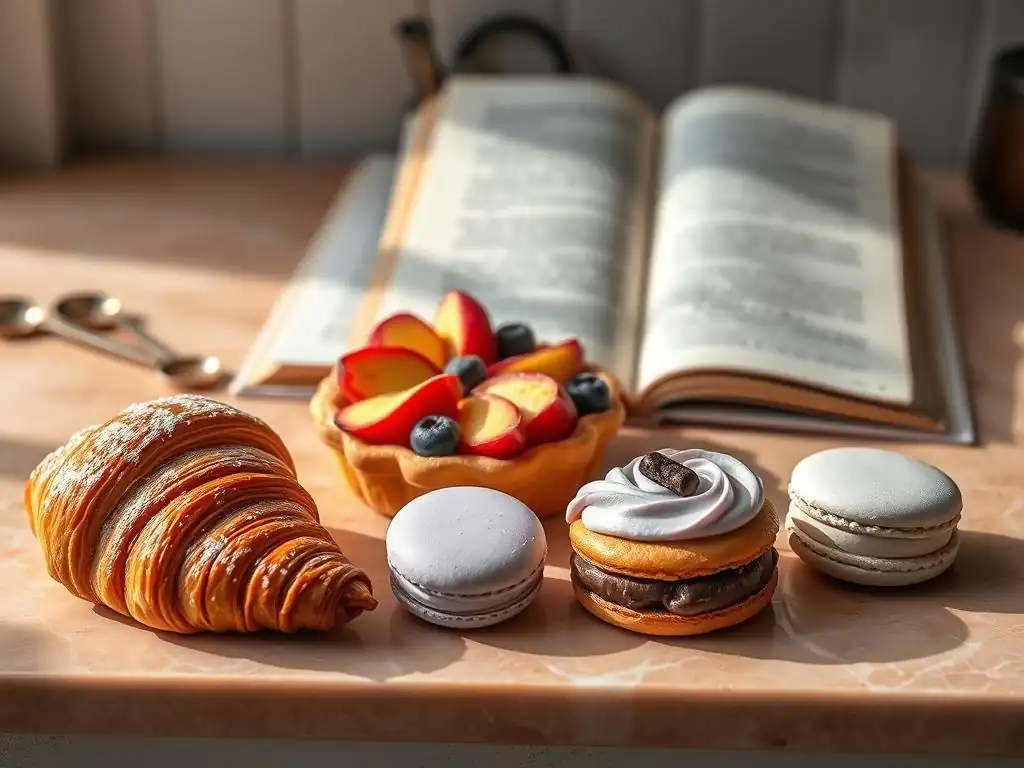
When reading French pastry descriptions, you'll often encounter terms that describe texture. Moelleux translates loosely to "soft" or "moist" and describes a cake or pastry with a tender, slightly dense, and very moist crumb. Think of a classic French chocolate cake that isn't light and airy but rich and substantial, retaining moisture. It suggests a pleasant chewiness and a structure that isn't overly crumbly. For example, a gâteau moelleux au chocolat is a moist chocolate cake.
Fondant, meaning "melting," describes a texture that is incredibly soft, smooth, and melts in your mouth. It suggests a richer, often denser consistency than moelleux, with a quality that dissolves quickly on the palate. A fondant au chocolat is typically a very rich, almost fudge-like chocolate cake, often intentionally slightly underbaked in the center to achieve that characteristic melting texture. While both terms indicate moistness, fondant emphasizes the melting sensation, often associated with higher fat content or less structure. Understanding this specific French pastry vocabulary explained difference helps you anticipate the dessert's texture.
Deciphering Sablé and Croustillant
Two more common textural descriptors in French pastry are sablé and croustillant. Sablé translates to "sandy" and refers to a texture that is very crumbly and tender, like fine sand. This texture is typically achieved in shortbreads and tarts ( pâte sablée) that have a high ratio of butter and sugar and are mixed using a creaming method (butter and sugar beaten together first) or by rubbing in the butter until the mixture resembles sand. The absence of much liquid or egg white contributes to this dry, crumbly quality.
Croustillant, meaning "crispy" or "crunchy," describes a texture that provides a distinct bite or snap. This can come from various elements within a pastry, such as a layer of caramelized nuts, a thin biscuit base, a streusel topping ( crumble), or even the caramelized layers of puff pastry in a mille-feuille. It signifies a pleasant contrast to softer textures like mousses or creams. A dessert described as having a croustillant element promises an enjoyable textural experience alongside its flavors. Deciphering this French pastry vocabulary explained texture helps predict the eating experience.
Tools and Equipment Terminology
Poche à Douille: The French Piping Bag
The poche à douille is the French term for a piping bag, an indispensable tool in any baker's arsenal. This cone-shaped bag, traditionally made from cloth but now commonly silicone or disposable plastic, is used in conjunction with various piping tips ( douilles) to pipe batters, creams, meringues, and doughs. It allows for precise application, whether filling éclairs with crème pâtissière, decorating cakes with buttercream ( crème au beurre), or piping consistent macaron shells ( macaronage).
The douilles come in numerous shapes and sizes – round tips for filling or smooth lines, star tips for decorative borders or rosettes, and specialty tips for leaves or petals. Using a poche à douille correctly involves filling it properly (not too full, avoiding air bubbles) and applying steady pressure to create uniform shapes. Mastering this basic piece of French pastry vocabulary explained here is key to many decorative and structural techniques.
Rouleau à Pâtisserie: The French Rolling Pin
The rouleau à pâtisserie is simply the French term for a rolling pin, but its design and use are fundamental to classic French dough work. Traditional French rolling pins are often simple, tapered cylinders of wood, without handles or bearings. This design allows the baker to use the palms of their hands to guide and control the pin, applying pressure more evenly and feeling the dough directly. This direct contact is crucial for achieving evenly rolled doughs for tarts, biscuits, or laminated pastries.
Whether rolling out pâte brisée for a quiche or painstakingly creating layers for pâte feuilletée, a good rouleau à pâtisserie is essential for achieving the correct thickness and shape without overworking the dough. Maintaining a consistent thickness is vital for even baking and the desired final texture. While modern rolling pins with handles are also used, the traditional tapered design remains popular among many professionals for its control and feel.
Pronunciation Guide
Tips for Correct Pronunciation
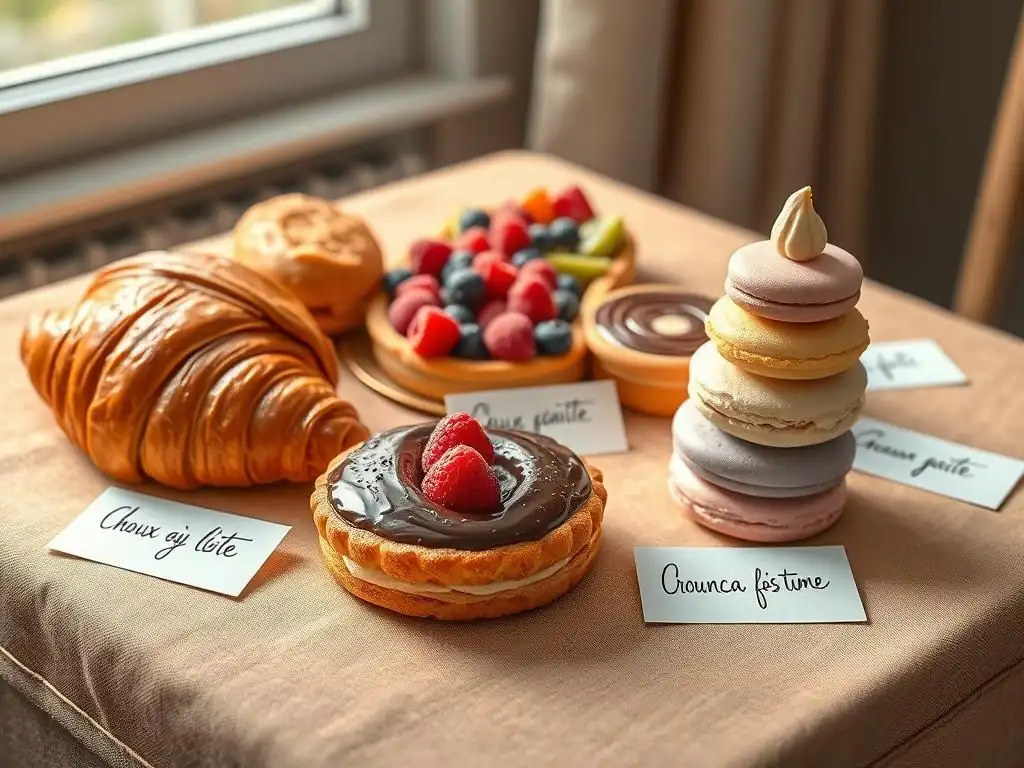
Approaching French pastry vocabulary explained with confidence includes learning how to pronounce the terms correctly. French pronunciation can be tricky due to silent letters, nasal sounds, and unique vowel combinations. A good starting point is to remember that final consonants are often silent (e.g., the 't' in croissant or the 's' in paris-brest), unless followed by a vowel sound in the next word (liaison). The 'e' at the end of many words is often silent or very softly pronounced.
Focus on vowel sounds; French has more distinct vowel sounds than English. Listen to native speakers or use online resources that provide audio pronunciation for common terms. Pay attention to accents ( aigu, grave, circonflexe, tréma, cédille), as they can change the sound of a vowel or indicate a historical spelling. For example, crème has a grave accent, affecting the 'e' sound. Don't be afraid to practice saying the words aloud!
Avoiding Common Pronunciation Mistakes
One common mistake when tackling French pastry vocabulary explained is trying to pronounce every letter as you would in English. Remember the silent final consonants! Another is mispronouncing vowel combinations; 'ou' sounds like the 'oo' in 'food', 'eu' is a sound not directly in English (like saying 'uh' with rounded lips), and 'ai' sounds like the 'ay' in 'say'. Nasal sounds, like in croissant or ganache, can also be challenging; the vowel sound is pronounced through the nose, and the following 'n' or 'm' is often not fully sounded.
Avoid anglicizing the stress of words. In French, stress is typically placed on the last syllable of a word or phrase, not the first as is common in English. For instance, it's croiss-ANT, not CROISS-ant. While perfect pronunciation takes practice, making an effort shows respect for the culinary tradition and helps you communicate more effectively with other bakers or when ordering in a pâtisserie.
French Pastry Vocabulary Cheat Sheet
Here's a quick reference for some key French pastry vocabulary explained:
Pâte Brisée: Tender shortcrust pastry.Crème Pâtissière: Thick pastry cream/custard.Meringue: Whipped egg whites and sugar.Ganache: Chocolate and cream emulsion.Beurre: Butter (especially high-fat French butter).Sucre Glace: Icing/powdered sugar.Amande: Almond(s).Entremet: Multi-layered complex dessert.Macaronage: Folding technique for macaron batter.Tuile: Thin, crisp cookie.Moelleux: Moist, tender cake/pastry.Fondant: Melting, very soft texture.Sablé: Sandy, crumbly texture.Croustillant: Crispy, crunchy texture.Poche à Douille: Piping bag.Rouleau à Pâtisserie: Rolling pin.Pâte Feuilletée: Puff pastry.Pâte à Choux: Dough for éclairs, cream puffs.Crème Anglaise: Pouring custard sauce.Frangipane: Almond cream filling.
Let's put some of these into practice:
- [ ] Prepare the
pâte briséefor the tart shell. - [ ] Make the
crème pâtissièrefilling. - [ ] Whip the
meringuefor the topping. - [ ] Prepare the
ganacheglaze. - [ ] Ensure the
beurreis cold for the dough. - [ ] Dust the finished pastry with
sucre glace. - [ ] Make the
frangipaneusingpoudre d'amande. - [ ] Execute
macaronagecarefully for macaron shells.
Conclusion: Baking with Confidence
Navigating the world of French pastry becomes infinitely more rewarding once you've mastered the essential French pastry vocabulary explained in guides like this. Each term is a key unlocking a specific technique, ingredient, or dessert type, bringing clarity and precision to your baking. From understanding the subtle differences between pâte brisée and pâte sablée to confidently executing macaronage, this knowledge empowers you to tackle more complex recipes and achieve truly authentic results.
Embracing this specialized French pastry vocabulary explained here is not just about sounding knowledgeable; it's about gaining a deeper understanding of the craft. It connects you to centuries of baking tradition and opens up new avenues for creativity and learning. So, keep this guide handy, practice your pronunciation, and bake with the confidence that comes from speaking the language of French pastry!
Frequently Asked Questions
What is the difference between pâte sucrée and pâte brisée?
Pâte sucrée is a sweet shortcrust pastry, typically used for tarts, and contains more sugar than pâte brisée. Pâte brisée is a more savory shortcrust commonly used for quiches and savory tarts, and it has a higher butter content.
What does choux pastry refer to, and what is it used for?
Choux pastry, also known as pâte à choux, is a light, hollow pastry made with eggs, butter, flour, and water. It is used to make éclairs, cream puffs, and profiteroles, among other pastries.
What is crème pâtissière, and how is it different from crème anglaise?
Crème pâtissière is a thickened custard cream used as a filling for many French pastries. Crème anglaise is a thin, pourable custard sauce, typically served alongside desserts.
What is ganache, and what are its common uses in pastry making?
Ganache is a rich cream made from chocolate and cream. It's used for glazing cakes, filling pastries, and creating chocolate truffles. The ratio of chocolate to cream determines its consistency.
What does flambé mean in the context of French pastry, and how is it typically done?
Flambé refers to a technique where alcohol is added to a dish and then ignited, burning off the alcohol and leaving behind its flavor. In pastry, it adds a dramatic presentation and a unique flavor, often using brandy or rum.
Final Reflection: Unlocking the Sweet Language of French Pastry
Mastering the vocabulary of French pastry isn't just about memorizing words; it's about unlocking a world of culinary artistry and appreciation. The intricate details, the subtle nuances of flavor hinted at in a name like Religieuse or Saint-Honoré, are lost without understanding the language. This knowledge elevates the simple act of enjoying a pastry into a richer, more meaningful experience.
Learning these terms has been a journey of discovery for me, revealing the deep history and cultural significance woven into each delicate creation. The precision of the French language perfectly mirrors the precision required in the craft itself. The art of pastry is a science, and a science requires precision.
– This unspoken truth underscores the importance of understanding the vocabulary, allowing us to truly appreciate the skill and dedication behind each pastry.
Now, it's your turn. Take this newfound knowledge and explore the world of French pastries with a fresh perspective. Don't just eat them; understand them. Seek out new pastries, challenge yourself to pronounce the names, and delve deeper into the stories behind these delicious works of art. The journey of culinary discovery is ongoing, and the language is your key to unlocking its sweetest secrets.
Unlock the Secrets of French Pastry!
Thanks for taking the time to explore the wonderful world of French pastry terminology! We hope this guide has empowered you to confidently navigate those delicious-sounding (but sometimes confusing!) names. Now it's time to put your newfound knowledge to the test!
- Master a New French Pastry: Choose one recipe you’ve always wanted to try and give it a go! This is your chance to impress yourself (and maybe others! ).
- Share Your Baking Journey: Snap a photo of your creation and share it on social media using #BakeWithEaseFrenchPastry – let’s inspire each other!
- Dive Deeper into French Baking: Explore other articles on our site to uncover more delightful techniques and recipes. You might be surprised what you discover!
Ready to create something truly magnifique? What’s the first French pastry you’re going to tackle?