
The Science of Stretch: Why Gluten Makes Dough Elastic

Welcome to BakeWithEase, where we unlock the secrets to truly exceptional baking! Ever wondered what gives your bread that perfect, chewy texture? Prepare to delve into the fascinating world of gluten development bread dough. Uncover the science behind its elasticity and learn how to achieve bakery-worthy results in your own kitchen. This "Baking Science Deep Dive" is just the beginning – get ready to bake with confidence!
- Baking Science Deep Dive: Understanding Gluten Development in Bread Dough
- What is Gluten and Why Is It Important for Baking?
- The Science Behind Gluten Development in Bread Dough
- The Elasticity of Dough: A Deep Dive into Gluten's Properties
- Factors Affecting Gluten Development in Bread Dough
- Troubleshooting Gluten Development Problems in Bread Dough
- Enhancing Gluten Development for Better Bread
- Mastering Gluten Development: Tips and Tricks for BakeWithEase Bakers
-
Frequently Asked Questions
- What is gluten and why is it important for bread dough?
- How does kneading affect gluten development in bread dough?
- What happens if I over-knead my bread dough?
- Can gluten development be achieved without traditional kneading?
- What types of flour are best for optimal gluten development in bread baking?
- Final Reflection: The Ever-Expanding World of Gluten Development
- Unleash Your Inner Baker: Master the Gluten Stretch!
Baking Science Deep Dive: Understanding Gluten Development in Bread Dough
Welcome to BakeWithEase, where we demystify the magic behind your favorite baked goods! Today, we're diving deep into the science of stretch – specifically, the fascinating process of gluten development bread dough. Understanding how gluten works is fundamental to achieving light, airy bread with that perfect chew. It's not just about mixing ingredients; it's about coaxing proteins to form a resilient network that gives dough its structure and elasticity.
This deep dive into baking science will explore what gluten is, how it forms, and why its development is crucial for successful bread baking. Whether you're a beginner struggling with flat loaves or an experienced baker aiming for that ideal crumb structure, mastering the science of gluten development will elevate your baking game. We'll uncover the secrets behind why some doughs are sticky and difficult to handle while others are smooth and pliable, ready to rise beautifully.
What is Gluten and Why Is It Important for Baking?
Gluten is a complex protein structure that forms when water is added to wheat flour. It's not present as pre-formed strands in dry flour but rather develops from two primary proteins: glutenin and gliadin. Think of it as a natural binder that holds dough together, providing the framework necessary for bread to rise without collapsing. Without sufficient gluten development, yeast-produced gases would simply escape, resulting in a dense, heavy product.
The importance of gluten in baking extends beyond just structure. It's responsible for the dough's ability to stretch and hold its shape (elasticity and extensibility), trap gases produced by yeast (gas retention), and ultimately contribute to the texture and volume of the finished bread. The degree of gluten development directly impacts the final crumb structure – from the tight, even crumb of a sandwich loaf to the open, irregular holes characteristic of ciabatta or sourdough.
The Role of Gluten Proteins, Glutenin and Gliadin, in Bread Dough
Wheat flour primarily contains two groups of storage proteins: prolamins and glutelins. In wheat, these are specifically called gliadin and glutenin. When flour is hydrated, these proteins absorb water and begin to interact. Gliadin proteins are smaller, single-chain molecules that contribute extensibility – the ability of dough to stretch without breaking. They are sticky and viscous, allowing the dough to be pulled and shaped.
Glutenin proteins, on the other hand, are much larger molecules composed of multiple protein chains linked together. These provide the elasticity and strength to the dough, allowing it to spring back after being stretched. Glutenin forms long, complex networks that give the dough its structural integrity. The balance and interaction between the pliable gliadin and the strong, elastic glutenin are essential for creating a functional gluten network bread dough capable of trapping gas and holding its shape during fermentation and baking.
Gluten's Impact on Dough Elasticity, Structure, and Gas Retention
The development of the gluten network is directly responsible for the dough's unique viscoelastic properties. Elasticity allows the dough to spring back when stretched, much like a rubber band. This is primarily due to the glutenin proteins forming interconnected chains. Extensibility allows the dough to be stretched and elongated without tearing, largely influenced by the gliadin proteins. A well-developed gluten network exhibits a balance of both, making the dough pliable and easy to work with.
This resilient protein network acts like tiny balloons within the dough, trapping the carbon dioxide gas produced by yeast during fermentation. As the yeast feeds on sugars and releases gas, the elastic gluten network stretches to accommodate the increasing volume. This gas retention is critical for the dough to rise. During baking, the heat sets this expanded structure, resulting in the characteristic open or closed crumb structure of the finished bread. Insufficient gluten development bread dough leads to poor gas retention, resulting in a dense loaf with a tight crumb.
The Science Behind Gluten Development in Bread Dough
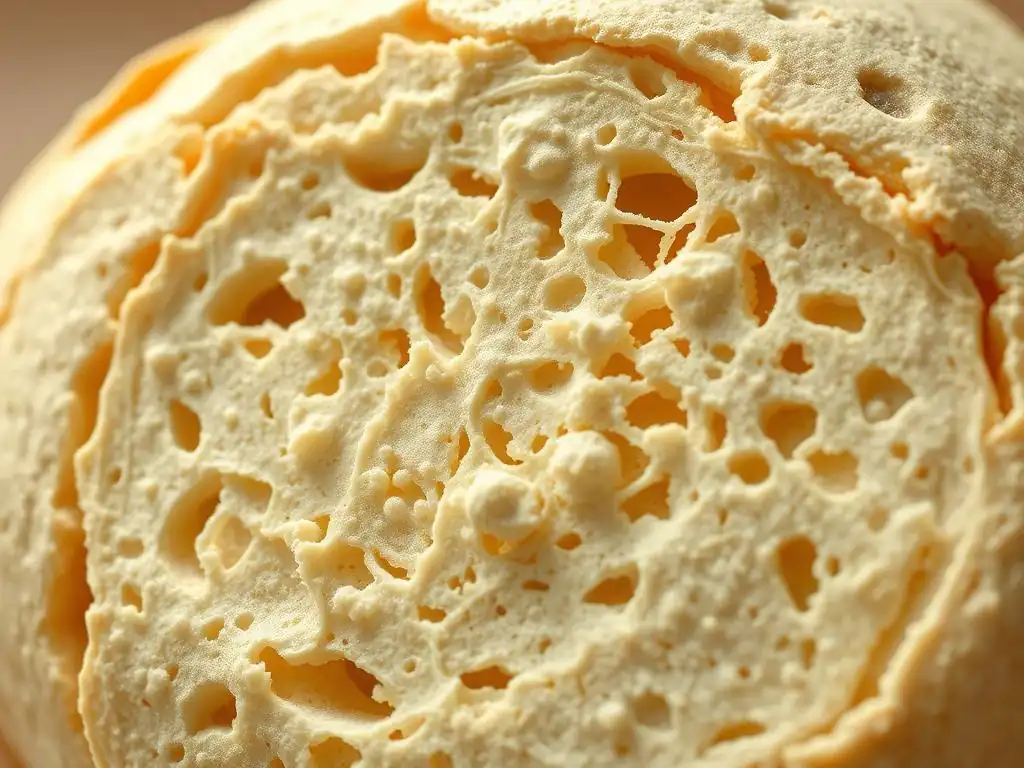
The transformation from dry flour and water to a cohesive, elastic dough is a marvel of food science. It begins the moment liquid is introduced to the flour, initiating the hydration of the gluten-forming proteins. However, simply mixing isn't enough to build a strong, resilient network. The process requires mechanical energy, typically through kneading, to encourage the proteins to align and bond effectively.
Understanding this process helps bakers manipulate dough to achieve desired outcomes. For instance, dough for a crusty baguette requires significant gluten development to support large air pockets, while a tender cake relies on minimal gluten formation to maintain a delicate crumb. The science of gluten development bread dough is about controlling these protein interactions.
The Interaction of Glutenin and Gliadin: Forming a Protein Network
When water is added to wheat flour, the gliadin and glutenin proteins begin to absorb the liquid and swell. The mechanical action of mixing or kneading then facilitates the interaction and bonding between these hydrated proteins. Gliadin molecules slide past each other, contributing to the dough's flow and extensibility. Glutenin molecules, with their complex structure, link together through various types of bonds, forming the elastic scaffolding.
The most significant bonds contributing to the strength and elasticity of the gluten network are disulfide bonds. These are strong covalent bonds that form between sulfur atoms on cysteine amino acid residues found within and between the glutenin proteins. As the dough is kneaded, these proteins unfold and align, allowing more disulfide bonds to form, reinforcing the network. Hydrogen bonds and hydrophobic interactions also play roles in stabilizing the structure, but disulfide bonds are key to the network's strength and ability to snap back.
Hydration and Kneading: Key Factors in Gluten Formation
Hydration is the essential first step in gluten development bread dough. Dry flour proteins are dormant; water activates them and allows them to move and interact. The amount of water significantly impacts the dough's consistency and the ease of gluten development. A higher hydration dough (e.g., 70-80% water relative to flour weight) often develops gluten more easily with less mechanical effort than a lower hydration dough (e.g., 50-60%), as the proteins are more mobile in a wetter environment.
Kneading provides the mechanical energy required to align the hydrated gliadin and glutenin proteins and encourage the formation of the gluten network. As the dough is stretched, folded, and compressed, the protein molecules are physically manipulated, bringing them into contact and promoting the formation of disulfide bonds. This process transforms a shaggy, sticky mass into a smooth, elastic dough. The duration and intensity of kneading directly influence the extent of gluten development.
How Kneading Develops Gluten Strength and Alignment
Kneading, whether by hand or machine, is essentially a process of stretching and folding the dough repeatedly. This action physically aligns the hydrated glutenin and gliadin proteins into sheet-like structures. Imagine pulling taffy – the stretching and folding action helps align the components. As these proteins align, new disulfide bonds can form between the protein chains, strengthening the overall network.
The more a dough is kneaded (up to a point), the stronger and more organized the gluten network becomes. This increased strength is what gives the dough its elasticity and ability to resist tearing. A well-kneaded dough will feel smooth, supple, and elastic, readily stretching without breaking. This development is critical for trapping the gases produced during fermentation, leading to a well-risen, airy loaf.
The Elasticity of Dough: A Deep Dive into Gluten's Properties
The unique elasticity and extensibility of dough are what make it so versatile for baking. This property, known as viscoelasticity, allows dough to be stretched, shaped, and inflated by gases while still holding together. It's a balance between the viscous flow of the gliadin and the elastic recoil of the glutenin network. Understanding this balance is key to manipulating dough effectively.
Consider the difference between pizza dough and cookie dough. Pizza dough requires high elasticity and extensibility to be stretched thin without tearing – a hallmark of strong gluten development bread dough. Cookie dough, conversely, is often mixed minimally to limit gluten development, resulting in a tender, crumbly texture.
Gluten's Unique Ability to Stretch and Retain Shape: Viscoelasticity
Viscoelasticity is a property of materials that exhibit both viscous (flow like a liquid) and elastic (deformable but return to original shape like a solid) characteristics. Dough is a prime example. The gliadin proteins contribute to the viscous flow, allowing the dough to be shaped and stretched. The glutenin network provides the elasticity, causing the dough to resist deformation and slowly spring back.
This dual nature is what allows dough to expand with the pressure of fermenting gases and then retain that expanded shape during baking. A dough with poor viscoelasticity might stretch initially but then tear, or it might stretch but lack the elastic recoil needed to hold its structure against gravity and gas pressure. Achieving the right balance through controlled gluten development bread dough is vital for loaf volume and crumb structure.
Understanding the Molecular Structure of Gluten and its Elasticity: Disulfide Bonds
At a molecular level, the elasticity of the gluten network is largely attributed to the extensive disulfide bonding between glutenin protein chains. These bonds act like flexible hinges or cross-links within the network. When the dough is stretched, these bonds allow the protein chains to unfold and slide past each other (extensibility). When the stretching force is released, the bonds help the chains recoil and return towards their original configuration (elasticity).
Think of the gluten network as a complex 3D mesh. The stronger and more numerous the disulfide bonds, the more robust and elastic the mesh becomes. Environmental factors like pH and the presence of oxidizing or reducing agents can affect the formation and breaking of these disulfide bonds, influencing the overall strength of the gluten network and thus the gluten development bread dough.
How Different Flours Affect Gluten Development and Dough Elasticity: Protein Content
Not all flours are created equal when it comes to gluten development. The primary factor is the protein content and the ratio of glutenin to gliadin. Bread flour, for instance, typically contains 12-14% protein, with a good balance of glutenin and gliadin optimized for strong gluten formation. This makes it ideal for yeast-leavened breads that require significant rise and structure.
In contrast, cake flour has a lower protein content, often 8-10%, and a different protein composition that favors a more tender crumb. All-purpose flour falls in between, typically 10-12% protein, making it versatile but potentially requiring longer kneading or different techniques to achieve robust gluten development. Whole wheat flour, while high in protein, contains bran and germ particles that can physically cut the developing gluten strands, sometimes requiring longer hydration or specific kneading methods.
Factors Affecting Gluten Development in Bread Dough
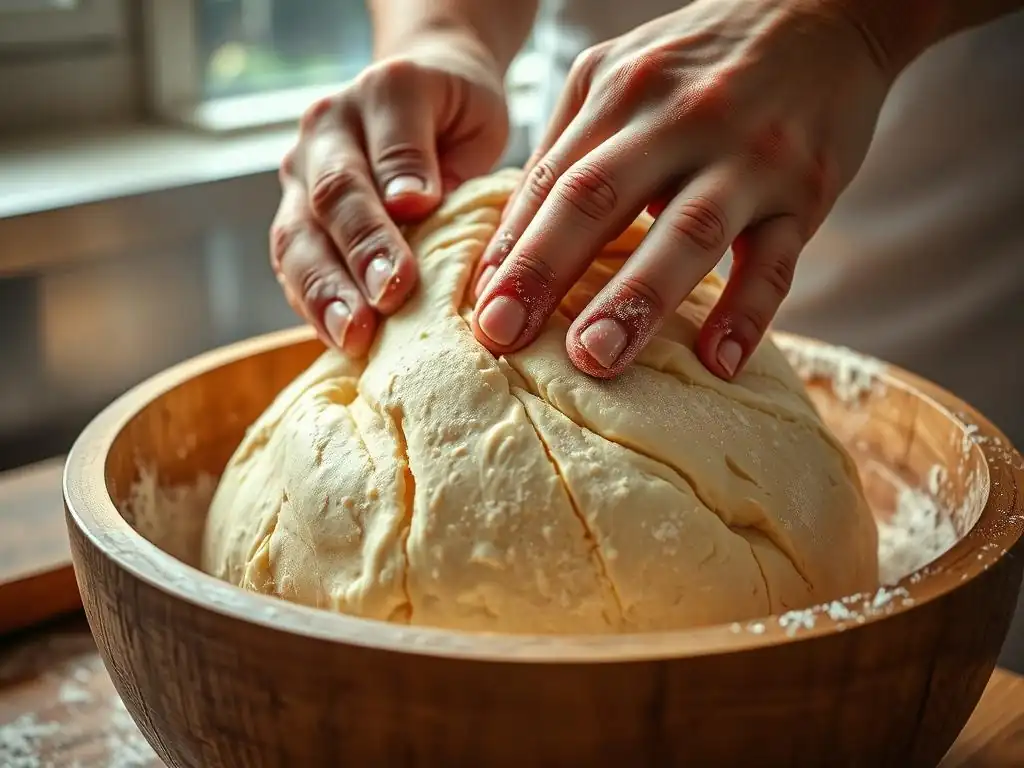
Beyond the type of flour and the act of kneading, several other factors play significant roles in how well gluten develops. Understanding these influences allows bakers to better control the process and troubleshoot issues. From the properties of your water to the temperature of your kitchen, each element interacts to impact the final dough structure and the quality of the baked bread.
These factors highlight the nuanced nature of baking and why small adjustments can sometimes lead to dramatically different results. Optimizing these conditions contributes significantly to successful gluten development bread dough.
Water Quality and its Influence on Gluten Formation: Mineral Content and pH
The water used for baking isn't just a hydration agent; its composition can affect gluten development. Hard water, which contains higher levels of dissolved minerals like calcium and magnesium, can actually strengthen the gluten network. These minerals can interact with the gluten proteins, promoting the formation of a tighter structure. While moderately hard water can be beneficial for developing strong gluten development bread dough, excessively hard water might lead to dough that is too stiff and lacks extensibility.
Soft water, with low mineral content, might result in a weaker or stickier dough that requires more careful handling or slightly longer kneading. The pH of the water also matters; slightly acidic conditions (lower pH) can help strengthen gluten, while alkaline conditions (higher pH) can weaken it. Most tap water falls within a suitable range, but understanding its properties can help diagnose dough issues.
The Importance of Rest Periods (Autolyse) for Gluten Development: Enzyme Activity
Rest periods, such as the autolyse method (mixing flour and water and letting it rest before adding yeast and salt), are incredibly beneficial for gluten development bread dough. During this rest, typically 20-60 minutes, the water fully hydrates the flour particles. Crucially, naturally occurring enzymes in the flour, primarily proteases, begin to act.
Protease enzymes break down some of the protein bonds, making the gluten network more extensible and easier to develop during subsequent kneading. This enzymatic action, combined with passive hydration, allows significant gluten development to occur with less mechanical work, often resulting in a more relaxed, less sticky dough that is easier to handle and requires less kneading time, thus reducing the risk of oxidation and potential over-kneading.
Temperature's Role in Gluten Development and Dough Elasticity: Enzyme Activity and Fermentation
Temperature affects gluten development in several ways. Warmer temperatures (e.g., 75-80°F or 24-27°C) generally speed up the hydration process and enzyme activity (including proteases), which can contribute to faster initial gluten development bread dough. However, excessively high temperatures can also accelerate fermentation rapidly, potentially outpacing the rate of gluten formation and leading to structural issues.
Temperature also impacts the viscosity of the dough. Warmer dough tends to be more extensible (stretchier) and less elastic, while colder dough is stiffer and more elastic. Controlling dough temperature throughout the process – during mixing, bulk fermentation, and proofing – is vital for managing the rate of both fermentation and gluten development, ensuring the dough rises correctly and holds its shape.
Troubleshooting Gluten Development Problems in Bread Dough
Even experienced bakers occasionally encounter issues with gluten development. Dough that tears easily, won't hold its shape, or results in a dense, heavy loaf can often be traced back to problems with the gluten network. Recognizing the signs of under- or over-developed gluten is a key skill for any baker aiming for consistent results.
Fortunately, many common issues with gluten development bread dough can be identified and corrected, either during the process or in subsequent batches.
Over-kneading: When Gluten Becomes Too Strong: Gluten Breakdown
Yes, it is possible to knead dough too much! While kneading builds the gluten network, excessive mechanical action can actually start to break it down. This is particularly true in high-speed mixers or with certain types of flour. Over-kneaded dough will initially feel very tight and resistant, then may become slack, sticky, and lose its ability to hold tension. It might even appear wet or greasy.
This phenomenon, sometimes called gluten breakdown or dough degradation, occurs when the mechanical stress becomes too great, rupturing the protein bonds faster than they can reform. Over-kneaded dough loses its elasticity and extensibility, often failing to rise properly and resulting in a dense, tight crumb structure, the opposite of desired gluten development bread dough.
Under-kneading: When Gluten Remains Weak: Insufficient Network Formation
The most common issue for beginner bakers is under-kneading. If the dough hasn't been kneaded enough, the gliadin and glutenin proteins haven't had sufficient time and mechanical encouragement to hydrate fully and form a strong, interconnected network. Under-kneaded dough will feel shaggy, sticky, and may tear easily when stretched. It lacks the smooth, elastic quality of well-developed dough.
Insufficient network formation means the dough cannot effectively trap the gases produced by fermentation. The result is often a loaf that spreads out rather than rising upwards, with a dense, uneven crumb structure. Recognizing these signs early allows you to continue kneading until proper gluten development bread dough is achieved.
Identifying and Correcting Gluten Development Issues: Dough Feel and Appearance
The best way to assess gluten development bread dough is by its feel and appearance.
- Under-developed: Shaggy, sticky, tears easily when stretched, lacks elasticity.
- Well-developed: Smooth, supple, elastic, stretches thinly without tearing (passes the windowpane test), holds its shape.
- Over-developed: Initially very tight, then potentially slack, sticky, loses structure, might appear wet or greasy, tears easily after initial resistance.
To correct under-kneading, simply continue kneading! You'll feel the dough change as the gluten develops. If dough is slightly over-kneaded, sometimes a rest period (30-60 minutes) can help the gluten relax slightly, but severely over-kneaded dough is difficult to salvage for light, airy bread. It might be better used for flatbreads or other less structure-dependent items.
#### Troubleshooting Checklist for Gluten Development

*   [ ] Is the flour type appropriate for the recipe?
*   [ ] Was enough water added for proper hydration?
*   [ ] Was the dough kneaded for the recommended time or until it felt right?
*   [ ] Is the dough temperature within the optimal range?
*   [ ] Was a rest period (like autolyse) used?
Enhancing Gluten Development for Better Bread
Once you understand the basics of gluten development bread dough, you can employ specific techniques and even ingredients to optimize the process for superior results. These methods are particularly useful when working with challenging flours or aiming for specific bread characteristics, such as a very open crumb or exceptional volume.
Think of these as advanced tools in your baker's toolbox, allowing you to fine-tune the gluten network to achieve your desired bread quality.
Techniques for Strengthening Gluten in Bread Dough: Folding and Laminating
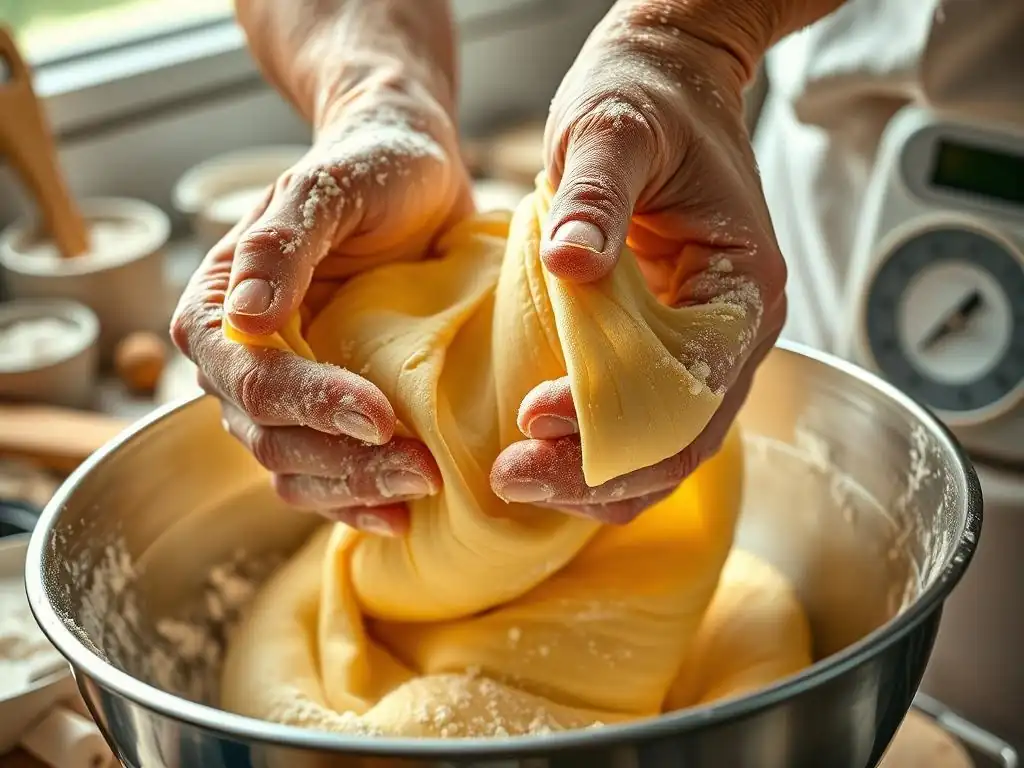
Beyond initial kneading, techniques like stretch and folds and lamination during bulk fermentation are excellent ways to continue strengthening the gluten network without aggressive mechanical work. Stretch and folds involve gently stretching and folding the dough onto itself every 30-60 minutes during the first part of fermentation. This action realigns the gluten strands, builds tension, and encourages further bonding.
Lamination, often used in enriched doughs or for breads like ciabatta, involves stretching the dough into a thin rectangle and folding it multiple times (like a business letter). This creates layers and significantly strengthens the gluten network by aligning the proteins into sheets. Both methods contribute to robust gluten development bread dough and are less likely to lead to over-kneading issues compared to prolonged mechanical mixing.
Using Additives to Improve Gluten Structure and Elasticity: Vital Wheat Gluten and Ascorbic Acid
Bakers sometimes use additives to enhance gluten development, particularly when working with low-protein flours or recipes that are difficult to manage. Vital wheat gluten is a concentrated form of gluten protein extracted from wheat flour. Adding a tablespoon or two per cup of flour can significantly boost the protein content and improve gluten development, resulting in a stronger dough and greater loaf volume, especially useful in recipes with lots of additions like nuts or fruit.
Ascorbic acid (Vitamin C) acts as an oxidizing agent in dough. It helps promote the formation of disulfide bonds within the gluten network, leading to a stronger, more elastic dough that handles better and rises higher. A tiny amount (often just a fraction of a gram per kilogram of flour) can have a noticeable effect on gluten development bread dough.
Achieving Optimal Gluten Development for Different Types of Bread: High-Hydration vs. Stiff Doughs
The "optimal" level of gluten development bread dough varies depending on the type of bread you are making. For high-hydration doughs (like ciabatta or many sourdoughs, often 75-85% hydration), the high water content makes the proteins very mobile. Gluten development might rely more on rest periods (autolyse) and gentle stretch and folds than intense kneading. The goal is often a very extensible network to support large, irregular holes.
For stiffer doughs (like bagels or some sandwich loaves, often 50-60% hydration), more vigorous and prolonged kneading is typically required to fully hydrate the flour and build a strong, elastic network capable of holding shape and producing a finer, more even crumb. Understanding these differences allows you to tailor your approach to developing gluten for the specific bread you're baking.
Mastering Gluten Development: Tips and Tricks for BakeWithEase Bakers
Developing gluten effectively is a skill that improves with practice. Paying attention to the feel of the dough is perhaps the most valuable lesson. As you gain experience, you'll learn to recognize the subtle changes in texture and elasticity that indicate proper gluten development bread dough.
Here are some practical tips and visual cues to help you master this crucial aspect of bread baking and achieve consistently excellent results.
Practical Tips for Developing Strong Gluten in Bread Dough: Windowpane Test
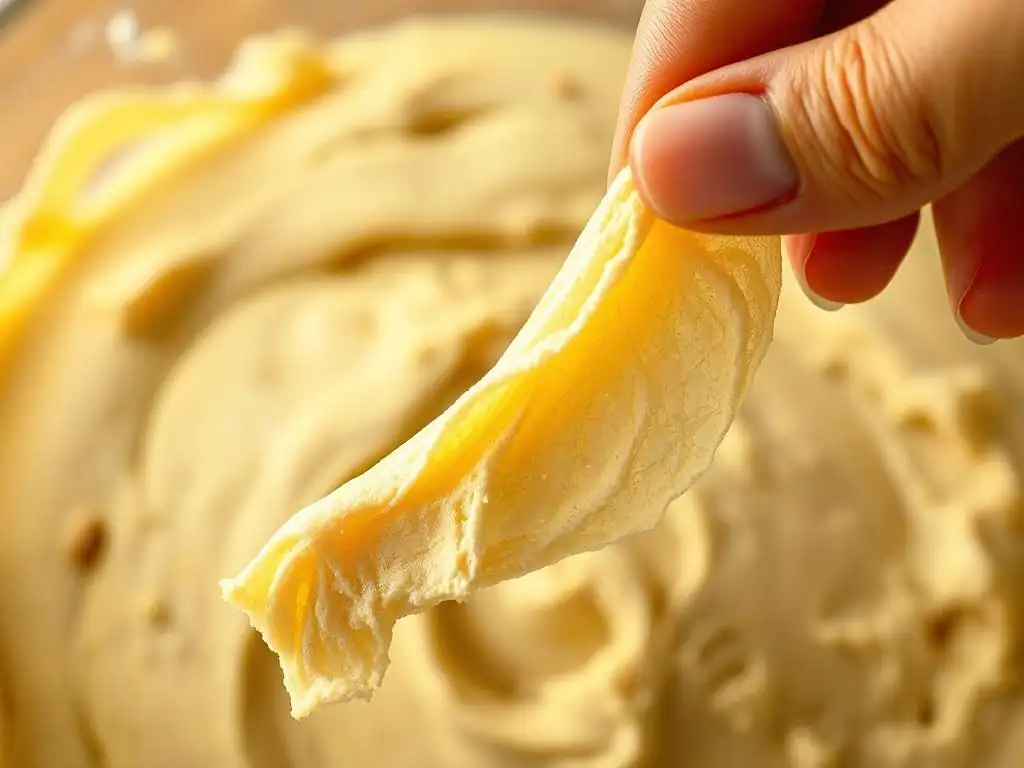
One of the most reliable ways to check for sufficient gluten development bread dough is the windowpane test. After kneading, take a small piece of dough (about the size of a golf ball). Gently stretch and pull it outwards using your fingers. If the dough can be stretched into a thin, translucent membrane without tearing, allowing light to pass through (like a windowpane), the gluten network is well-developed. If it tears easily before becoming thin, it needs more kneading.
- Start with quality wheat flour appropriate for your recipe.
- Ensure proper hydration – measure water accurately.
- Knead sufficiently, using the windowpane test as a guide.
- Incorporate rest periods (autolyse) where beneficial.
- Use stretch and folds during bulk fermentation for added strength.
Visual Cues for Recognizing Proper Gluten Development: Smoothness and Elasticity
Beyond the windowpane test, several visual and tactile cues indicate successful gluten development bread dough:
- Smoothness: Under-kneaded dough is often shaggy and rough. Well-developed dough becomes smooth and satiny on the surface.
- Elasticity: When you press your finger into well-developed dough, the indentation should slowly spring back. Under-developed dough will retain the indentation.
- Cohesion: The dough should pull away cleanly from the sides of the mixing bowl or your hands when adequately kneaded.
- Strength: When you pick up a portion of the dough, it should hold its shape and feel strong, not like a loose, floppy mass.
Recipes that Showcase Optimal Gluten Development: Sourdough Bread, Ciabatta, and Pizza Dough
Certain bread types are excellent examples of recipes where mastering gluten development bread dough is paramount.
- Sourdough Bread: The long fermentation times and often high hydration require a robust gluten network to support the characteristic open crumb and significant rise. Techniques like autolyse and multiple stretch and folds are common.
- Ciabatta: Known for its large, irregular holes, ciabatta dough is typically very wet (high hydration) and relies heavily on gentle handling, long fermentation, and stretch and folds to develop the necessary extensible gluten structure without traditional kneading.
- Pizza Dough: A good pizza crust needs elasticity to be stretched thin without tearing and strength to hold toppings and develop a crispy edge. This requires thorough gluten development, often achieved through moderate kneading and a period of rest.
By practicing these techniques with recipes designed to highlight gluten's properties, you'll gain a deeper understanding and intuitive feel for gluten development bread dough, leading to consistently better baking results. Happy baking!
Frequently Asked Questions
What is gluten and why is it important for bread dough?
Gluten is a protein complex formed when glutenin and gliadin proteins in flour are hydrated. It's crucial because it provides structure and elasticity to bread dough, allowing it to trap gas and rise.
How does kneading affect gluten development in bread dough?
Kneading aligns and strengthens the gluten strands, creating a stronger and more elastic dough. The process also helps to distribute moisture evenly, further contributing to gluten development.
What happens if I over-knead my bread dough?
Over-kneading can lead to a tough and dense bread. The gluten strands become too tight and lose their ability to stretch properly, resulting in a less desirable texture.
Can gluten development be achieved without traditional kneading?
Yes, techniques like the no-knead method rely on long fermentation times to allow gluten to develop slowly. This allows for natural hydration and alignment of gluten proteins, although the gluten structure may be different.
What types of flour are best for optimal gluten development in bread baking?
Flour with a high protein content, such as bread flour or high-gluten flour, is ideal for strong gluten development. These flours contain more gluten-forming proteins, leading to a better rise and chewier texture.
Final Reflection: The Ever-Expanding World of Gluten Development
Understanding gluten development is not just about baking a perfect loaf; it's about unlocking the fundamental science behind texture and structure in countless foods. The intricate interplay of glutenin and gliadin proteins, their interaction with water, and the impact of kneading—these are principles with far-reaching consequences beyond the kitchen. Mastering these processes allows for a deeper appreciation of food science and its impact on our daily lives.
The journey into the science of gluten development has been a fascinating exploration of the unseen forces shaping our culinary experiences. It's a reminder that even the simplest actions, like kneading dough, involve complex chemical and physical processes. The seemingly mundane act of bread making becomes a testament to the power of scientific understanding. The more you know, the more you realize you don't know,
a sentiment that perfectly encapsulates the ongoing quest to fully understand the complexities of gluten.
Now, consider your own baking endeavors. What adjustments can you make to your technique based on your newfound knowledge of gluten development? Experiment with different hydration levels, kneading times, and flour types. Embrace the scientific method in your kitchen, observing, analyzing, and refining your process. The perfect loaf awaits, not just as a culinary achievement, but as a testament to your understanding of the science behind it. Let the journey of gluten development inspire you to explore the science in all aspects of your life.
Unleash Your Inner Baker: Master the Gluten Stretch!
Thanks for diving into the fascinating world of gluten and its role in creating perfectly elastic dough! You now understand the science behind that satisfying stretch – a key to baking success. Ready to put your newfound knowledge into practice?
- Try a gluten-building technique: Experiment with different kneading methods to feel the difference a strong gluten network makes in your dough's texture. Try a "stretch and fold" for a truly hands-on experience.
- Share your baking triumphs (and challenges!): Post a picture of your latest bread creation on social media and tag us – we’d love to see your results!
- Explore different flour types: Notice how different flours affect the gluten development and the final product. Which flour will you explore next?
What unique baking experiment will you undertake to further explore the magic of gluten?