
Measuring Gluten Potential: Protein Content Explained

Welcome to BakeWithEase, where we unravel the mysteries of baking! Ever wondered how much gluten potential lies within your flour? This week, we're diving deep into the science behind it all, with " Measuring Gluten Potential: Protein Content Explained." Discover how understanding protein content can transform your baking and unlock the secrets to perfect textures. Curious to learn more? Let's get started!
- Understanding Gluten Protein Content in Baking
- What is Gluten Protein? A Baker's Introduction
- How to Measure Gluten Potential: Protein Content Analysis
- Protein Content in Different Types of Flour
- The Impact of Protein Content on Dough Characteristics
- Optimizing Gluten Development Based on Protein Content
- Beyond Protein Content: Other Factors Influencing Gluten
- Case Studies: Gluten Protein in Action
- Troubleshooting Gluten-Related Baking Issues
- Mastering Gluten Protein: Tips for Bakers
-
Frequently Asked Questions
- What is gluten and why is understanding its potential important in baking?
- How does the protein content of flour relate to gluten development?
- How can I measure the protein content of my flour at home?
- What happens if I use flour with too much or too little protein for a specific recipe?
- Where can I find resources from BakeWithEase.com that help me understand gluten and protein content better?
- Final Reflection: Unlocking the Gluten Puzzle: A Deeper Understanding of Protein Content
- Unlock Your Baking Potential Today!
Understanding Gluten Protein Content in Baking
Why Protein Matters for Baking
Protein content in flour is a fundamental factor that dictates its baking performance, particularly concerning gluten development. Gluten, the stretchy network formed when certain proteins in flour are hydrated and mixed, is crucial for providing structure, elasticity, and extensibility to doughs and batters. A higher protein content generally means a greater potential for gluten formation, leading to stronger doughs capable of trapping gases produced by leavening agents like yeast or baking powder. This ability to hold gas is what allows bread to rise and cakes to achieve their desired texture.
Understanding the protein level in your flour helps you anticipate how the dough or batter will behave during mixing, proofing, and baking. For instance, a flour with 13% protein content will develop a much more robust gluten network than one with 7% protein. This difference directly impacts everything from how much water the flour absorbs to the final texture of your baked good. Knowing the protein content is essentially knowing the flour's potential to build structure, which is key to choosing the right flour for the right job and achieving consistent, successful baking results.
Gluten Development and Baking Success
The process of gluten development is central to many baking techniques, and its degree is heavily influenced by the flour's protein content. When flour is mixed with water, the proteins gliadin and glutenin hydrate and, through mechanical action (kneading or mixing), link together to form the elastic gluten network. This network provides the framework that supports the dough or batter. In yeast breads, a strong gluten network is essential to trap the carbon dioxide produced by the yeast, allowing the bread to rise and develop an open, airy crumb.
Conversely, for delicate baked goods like cakes or pastries, excessive gluten development can lead to toughness. Therefore, bakers often choose flours with lower protein content or employ techniques that minimize gluten formation, such as using gentle mixing methods or adding tenderizers like fats and sugars. The interplay between flour protein content, hydration, mixing, and other ingredients determines the extent of gluten development, directly impacting the volume, texture, and overall success of the final product. Mastering this balance is a hallmark of skilled baking.
What is Gluten Protein? A Baker's Introduction
The Two Key Proteins: Gliadin and Glutenin
Gluten isn't a single substance but rather a complex mixture of proteins found primarily in wheat, barley, and rye. In wheat flour, the two main protein families responsible for forming the gluten network are gliadins and glutenins. Gliadins are smaller, single-chain proteins that contribute viscosity and extensibility (the ability to stretch) to the dough. Think of them as providing the flow and stretchiness.
Glutenins, on the other hand, are larger, multi-chain proteins linked by disulfide bonds. These proteins contribute elasticity and strength (the ability to spring back) to the dough. They form a complex, polymeric network that provides the structural backbone. It's the combination and interaction of these two protein types that create the unique viscoelastic properties of wheat dough, allowing it to be kneaded, shaped, and baked into everything from chewy bread to tender pastries.
How Gliadin and Glutenin Interact to Form Gluten
The magic happens when gliadin and glutenin proteins meet water and are subjected to mechanical energy, typically through mixing or kneading. Water allows the proteins to hydrate and become mobile. As the dough is worked, the gliadin and glutenin molecules are brought into close proximity and begin to link together through various types of chemical bonds, most notably disulfide bonds between glutenin chains and hydrogen bonds and hydrophobic interactions involving both protein types.
This linking process forms a continuous, three-dimensional network – the gluten network. The gliadins slide past each other, allowing the dough to stretch, while the glutenins provide the structure and elasticity, enabling the dough to resist deformation and spring back. The extent and strength of this network depend heavily on the initial amount of gliadin and glutenin present (i.e., the total protein content), the amount of water available for hydration, and the energy applied during mixing. Proper development of this network is crucial for achieving the desired texture in many baked goods.
How to Measure Gluten Potential: Protein Content Analysis

Deciphering Flour Labels: Protein Percentage and its Meaning
For the home baker, the most accessible way to understand a flour's gluten potential is by looking at the protein content listed on the packaging. Flour labels in many countries will specify the protein percentage by weight, often found in the nutritional information panel. This percentage represents the total amount of protein in the flour, including the gluten-forming proteins (gliadin and glutenin) as well as other non-gluten proteins. While it's a total protein number, for wheat flour, it serves as a reliable indicator of the potential for gluten development.
A higher percentage indicates a flour with a greater capacity to form a strong gluten network. For example, a bread flour might list 12-14% protein, signaling its suitability for high-volume loaves with a chewy texture. An all-purpose flour typically falls in the 10-12% range, offering versatility for a variety of uses. Cake flour, on the lower end at 6-8%, is designed for tender baked goods where minimal gluten is desired. Paying attention to this number helps bakers select the appropriate flour for their recipe and anticipate how much gluten development to expect.
Factors Affecting Flour Protein Content: Wheat Variety & Milling Process
The protein content of flour is primarily determined by two factors: the type of wheat used and, to a lesser extent, the milling process. Different varieties of wheat naturally contain varying levels of protein. Hard wheat varieties, such as hard red winter or hard red spring wheat, are higher in protein (typically 11-14% or more) and are used to produce flours like bread flour. Soft wheat varieties, like soft red winter or soft white wheat, have lower protein levels (usually 8-10%) and are used for flours like cake and pastry flour.
The milling process can also influence the effective protein content of the final flour product, although it doesn't change the protein level of the wheat kernel itself. Different parts of the wheat kernel (endosperm, bran, germ) have different protein concentrations. Standard white flours are milled primarily from the endosperm.
Whole wheat flour, which includes the bran and germ, often has a higher total protein percentage listed on the label because bran contains protein. However, the bran and germ can interfere with gluten development, meaning a whole wheat flour with 13% protein might not develop as strong a gluten network as a white bread flour with 13% protein. The specific milling process and the parts of the grain included therefore play a role in the baking characteristics linked to protein.
Protein Content in Different Types of Flour
High-Protein Flour: Bread Flour & its Uses
High-protein flours, most notably bread flour, are specifically milled from hard wheat varieties and typically contain between 12% and 14% protein. This elevated protein level provides the maximum potential for developing a strong, elastic gluten network. This strength is crucial for yeast-leavened breads, which require a robust structure to capture the carbon dioxide gas produced during fermentation. A strong gluten network allows the dough to rise significantly, resulting in a loaf with good volume and an open, chewy crumb texture.
Beyond standard loaves, bread flour is also ideal for other baked goods that benefit from significant structure and chewiness. This includes items like bagels, pizza crusts, and some types of pasta. The high protein content contributes to the characteristic chewiness of these products. While you could use lower-protein flours for these items, you wouldn't achieve the same structure or texture. For example, using all-purpose flour for bagels would likely result in a less chewy texture and potentially a flatter shape.
Medium-Protein Flour: All-Purpose Flour & Versatility
All-purpose flour is the workhorse of the home kitchen, aptly named for its versatility. It's typically a blend of hard and soft wheats, resulting in a moderate protein content, usually ranging from 10% to 12%. This mid-range protein level allows it to perform reasonably well in a wide variety of baking applications, striking a balance between structure and tenderness. It can develop enough gluten for some bread applications (though not as robustly as bread flour) and is tender enough for many cakes, cookies, muffins, and pastries.
While not specialized for any single task, all-purpose flour is a reliable choice for recipes that don't specify a particular flour type. Its moderate protein means it can develop enough gluten to give structure to muffins and quick breads, but isn't so high as to make cookies tough, provided it's not overmixed.
Understanding its protein content helps bakers predict its performance: it will yield a bread that is less chewy than one made with bread flour, and a cake that is sturdier than one made with cake flour. This makes it a good starting point for many recipes, though specialized flours often yield superior results for specific baked goods.
Low-Protein Flour: Cake Flour & Tender Baking
Low-protein flours, such as cake flour and pastry flour, are milled from soft wheat varieties and have the lowest protein content, typically ranging from 6% to 8%. This minimal protein level is specifically designed to limit gluten development. The goal with these flours is to produce exceptionally tender, delicate baked goods with a fine crumb structure. High gluten would create toughness, which is undesirable in items like angel food cake, sponge cakes, and delicate pastries.
Cake flour is often chlorinated, a process that further weakens the protein and alters the starch, allowing it to absorb more liquid and sugar than unchlorinated flour. This contributes to a moister cake with a finer, softer crumb. Pastry flour is similar but usually unchlorinated, falling between cake flour and all-purpose flour in protein content (around 8-9%) and is ideal for flaky pie crusts and biscuits. Using a low-protein flour is essential for achieving the signature melt-in-your-mouth texture of these specific baked goods; substituting with higher-protein flour would significantly change the outcome, likely resulting in a tougher product.
The Impact of Protein Content on Dough Characteristics
Protein and Dough Strength: Elasticity and Extensibility
The protein content of flour directly dictates the strength of the dough, which is a function of its elasticity and extensibility. Elasticity is the dough's ability to spring back to its original shape after being stretched, primarily contributed by the glutenin proteins. Extensibility is the dough's ability to stretch or be elongated without tearing, primarily contributed by the gliadin proteins. A higher protein content leads to a greater quantity of both these proteins, resulting in a stronger dough that is both more elastic and more extensible, up to a point.
Dough made with high-protein flour, like bread flour (13% protein), will feel noticeably firmer and more resistant to stretching compared to dough made with all-purpose flour (11% protein). This strength is vital for supporting the structure of rising bread. Low-protein flour doughs, like those made with cake flour (7% protein), will feel softer, weaker, and less resistant to stretching. They are also less elastic and more prone to tearing if overworked, which is why gentle handling is recommended for cake batters to minimize the limited gluten development potential.
Protein Content and Water Absorption in Dough
Another significant impact of protein content is on the flour's water absorption capacity. Proteins, particularly gluten-forming proteins, are hydrophilic, meaning they attract and absorb water. Therefore, flours with a higher protein content generally absorb more water than flours with lower protein levels.
This is a crucial consideration when developing recipes or adapting existing ones. For example, a recipe calling for 1000g of bread flour (13% protein) might require 700-750g of water (70-75% hydration) to achieve a supple dough consistency, while the same weight of cake flour (7% protein) might only absorb 500-550g of water (50-55% hydration) before becoming too wet and sticky.
Knowing this helps bakers adjust hydration levels appropriately. Using too little water with high-protein flour will result in a stiff, difficult-to-work dough and limited gluten development. Using too much water with low-protein flour will create a soupy batter that lacks structure. While starch also absorbs water, the protein content is the primary driver of the significant differences in hydration requirements between different flour types used for similar purposes (like bread vs. cake). Properly hydrating the protein is essential for efficient gluten development.
Protein and Dough Handling Properties
The protein content, and thus the potential for gluten development, significantly affects how dough feels and behaves during mixing, kneading, shaping, and proofing. Doughs made with high-protein flour will become increasingly elastic and smooth as they are kneaded, developing a strong "windowpane" effect (where a small piece of dough can be stretched thin enough to see through without tearing). They are resilient and hold their shape well during proofing and baking.
Medium-protein flours yield doughs that are easier to handle than high-protein ones, less resistant to stretching, and develop a moderate windowpane. They offer a good balance for general use. Low-protein flours, on the other hand, produce batters or very soft doughs that are often mixed gently and briefly.
They lack the strength and elasticity of higher-protein doughs and cannot be kneaded in the same way. Attempting to knead a low-protein dough like a high-protein one would likely result in a sticky, weak mass. Understanding these handling differences based on protein content allows bakers to use appropriate techniques and manage expectations for their dough.
Optimizing Gluten Development Based on Protein Content
Adjusting Hydration Levels Based on Flour Protein
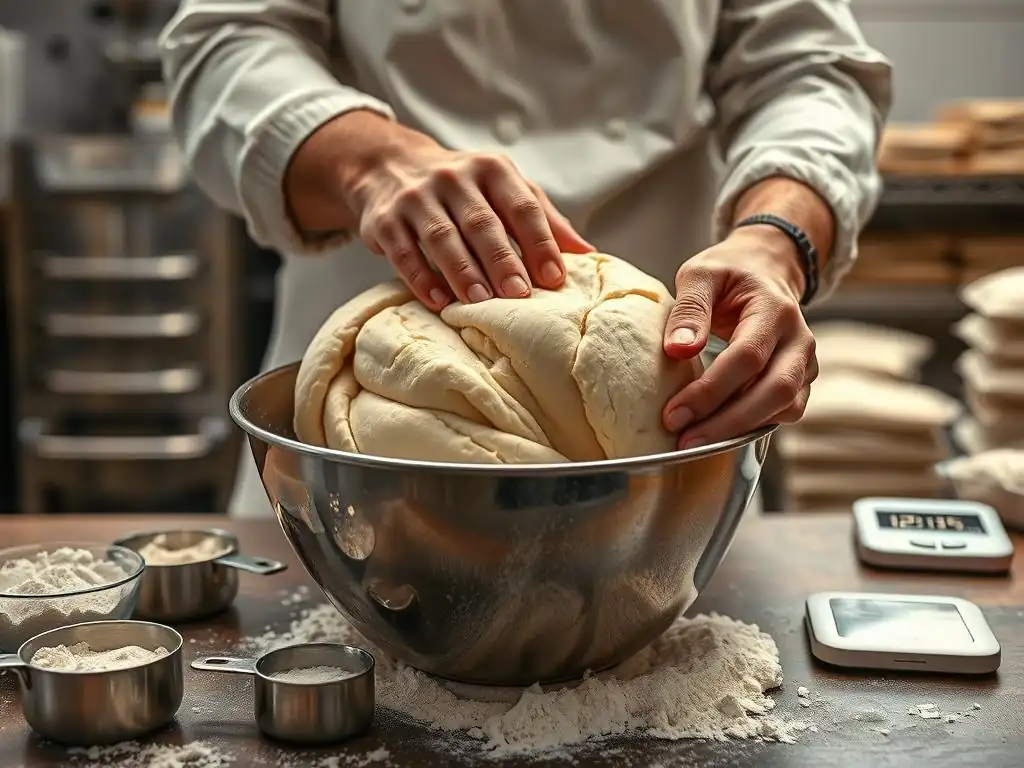
Optimizing gluten development starts with providing adequate water, and the amount needed is directly tied to the flour's protein content. As previously mentioned, higher protein flours require more water for the proteins to fully hydrate and form the gluten network. A common starting point for hydration with all-purpose flour (around 11% protein) in bread recipes might be 60-65% hydration (600-650g water per 1000g flour). However, if switching to a bread flour (13% protein), you would likely need to increase hydration to 70-75% or even higher to achieve a similar dough consistency and allow for optimal gluten formation.
Conversely, when using a lower protein flour for something like brioche or challah (which often use flours slightly higher than AP but lower than typical bread flour, perhaps 11-12%), the hydration might be closer to 55-60% because the protein can't absorb as much water, and you often have enriching ingredients like eggs and butter adding moisture. Adjusting hydration is a critical skill; too little water limits protein hydration and gluten formation, resulting in a dense product, while too much water can make the dough difficult to handle and can dilute the gluten structure.
Always consider the flour's protein percentage when determining the appropriate hydration level for your recipe.
Mixing Techniques to Enhance or Limit Gluten Development
The amount of mechanical work applied to dough or batter is another key factor in controlling gluten development, and the impact varies depending on the flour's protein content. With high-protein flours used for bread, vigorous kneading or mixing is essential to align the hydrated protein molecules and build a strong gluten network. Techniques like stand mixer kneading for 8-12 minutes or manual kneading for 10-15 minutes are common to achieve optimal development for a chewy crumb and good rise.
For low-protein flours used in cakes or muffins, minimal mixing is required and desired. Overmixing cake batter made with cake flour (7% protein) can still develop the limited gluten present, resulting in a tougher cake. Recipes often instruct to mix only until just combined, sometimes using methods like the reverse creaming method (mixing fats into flour before liquids) to coat the protein particles and further inhibit gluten formation.
For medium-protein all-purpose flour, the mixing time will fall somewhere in between, depending on the desired outcome – longer mixing for a sturdier muffin, shorter for a tender scone. Tailoring your mixing technique to the flour's protein content and the desired texture is vital for success.
The Role of Resting (Autolyse) in Gluten Formation
Resting periods, particularly the autolyse technique, can significantly influence gluten development, especially with higher protein flours. Autolyse involves mixing just the flour and water (sometimes a small amount of starter) and letting the mixture rest for 20 minutes to several hours before adding salt and other ingredients and beginning the main kneading. During this rest, the flour particles fully hydrate, and enzymatic activity (protease enzymes naturally present in flour) begins to break down some protein bonds while others start to align.
This initial hydration and enzymatic action allow the gluten network to begin forming spontaneously without mechanical effort. When kneading begins after an autolyse, the dough is often more extensible, less sticky, and the gluten develops more quickly and efficiently. This technique is particularly beneficial for high-hydration doughs made with high-protein bread flour, as it makes the subsequent kneading much easier and can lead to a more open crumb structure. While useful, the effect is less pronounced with lower-protein flours or in batters where minimal gluten development is the goal.
Beyond Protein Content: Other Factors Influencing Gluten
The Importance of Water Quality and Temperature
While protein content is primary, the water used in dough also plays a significant role in gluten development. The minerals present in water, particularly calcium and magnesium (found in "hard" water), can strengthen the gluten network by forming additional cross-links between protein molecules. This is why some traditional bread bakers prefer hard water; it can lead to a stronger, more elastic dough. Conversely, very soft water or distilled water lacks these minerals and may result in a weaker, stickier dough that requires more mixing or a slight adjustment in formula.
Water temperature is equally important, especially in yeast baking. Warmer water (typically 95-115°F or 35-46°C for activating active dry yeast) helps hydrate the flour and initiates fermentation. However, the temperature of the dough itself influences the rate of gluten development and fermentation. Warmer dough develops gluten more quickly during mixing. Controlling the final dough temperature after mixing is a key technique for bakers to manage fermentation speed and gluten maturity. Using very cold water can slow down initial hydration and gluten development, while very hot water can damage proteins and yeast.
The Role of Salt in Gluten Development
Salt is a fundamental ingredient in most doughs, and besides adding flavor, it plays a crucial role in controlling gluten development. Salt strengthens the gluten network by tightening its structure and making the dough more elastic and less extensible. It does this by attracting water away from the protein molecules, effectively competing for hydration, and by influencing the electrical charges on the protein chains, promoting more ordered interactions.
Dough mixed without salt will often feel sticky, slack, and difficult to handle. Once salt is added, the dough becomes noticeably firmer, smoother, and easier to work with. Salt also helps regulate fermentation by slowing down yeast activity, which indirectly allows for more controlled gluten development over a longer period. While essential for structure and handling, adding too much salt can make the dough excessively tight and restrict rise. A typical salt percentage in bread dough is around 1.8-2% of the flour weight.
The Influence of Fats and Sugars on Gluten Structure
Fats and sugars are often referred to as "tenderizers" in baking because they inhibit gluten development. They work by interfering with the ability of gliadin and glutenin proteins to link together. Fats, such as butter, oil, or shortening, coat the flour particles, preventing water from fully hydrating the proteins and physically blocking the protein chains from forming connections. This is why recipes for tender cakes or pastries often have a high fat content and involve methods like creaming butter and sugar with flour first.
Sugars compete with protein for water, reducing the amount available for hydration and thus slowing gluten development. High sugar concentrations also make the dough or batter more viscous, which can hinder the movement and linking of protein molecules. Recipes for sweet, enriched doughs like brioche or cinnamon rolls often have a higher percentage of sugar and fat, resulting in a softer, less chewy crumb compared to lean bread doughs. Understanding how these ingredients interact with protein helps bakers control the final texture of their baked goods.
Case Studies: Gluten Protein in Action

Sourdough Bread: Achieving Open Crumb with High-Protein Flour
Sourdough bread is a prime example of how high-protein flour and controlled gluten development techniques create a desired outcome. Traditional sourdough recipes often call for bread flour (12-14% protein) or even a blend including some whole wheat flour (which, despite bran interference, contributes significant protein). The high protein content provides the potential for a strong gluten network capable of trapping the gases produced by the wild yeast and bacteria in the sourdough starter over a long fermentation period (often 8-24 hours or more).
Bakers utilize techniques like autolyse, gentle folding (rather than aggressive kneading), and multiple long rests (bulk fermentation and proofing) to slowly and effectively develop this high-protein flour's gluten. This slow development, combined with relatively high hydration (often 70-85% or even higher), allows the gluten network to become both strong and extensible.
The strength supports the structure during the long rise and in the oven, while the extensibility allows the dough to expand significantly, resulting in the characteristic open, airy crumb structure highly prized in artisanal sourdough loaves. Without high protein flour, achieving such an open crumb would be extremely difficult, if not impossible.
Angel Food Cake: Creating a Delicate Structure with Low-Protein Flour
Angel food cake stands in stark contrast to sourdough, showcasing the importance of limiting gluten development using low-protein flour. This cake relies entirely on whipped egg whites for its leavening and delicate structure, not gluten. Recipes specifically call for cake flour (6-8% protein), which has the lowest potential for gluten formation among common wheat flours. The flour is often gently folded into the stiffly whipped egg whites, with minimal mixing, to avoid developing the small amount of gluten present.
The low protein content ensures that the minimal mixing does not create a tough, chewy cake. Instead, the small amount of very weak gluten that forms is just enough to provide a tiny bit of structure to support the delicate foam of egg whites and sugar, resulting in an exceptionally light, airy, and tender cake with a fine, soft crumb that melts in your mouth.
Using all-purpose flour or, worse, bread flour, in an angel food cake recipe would introduce too much protein; even with gentle folding, enough gluten would develop to make the cake tough and rubbery, ruining its signature texture.
Dense Breads: Diagnosing High Protein Issues
A common issue with yeast breads is a dense, heavy texture instead of a light, airy crumb. While many factors can contribute (inactive yeast, under-proofing), issues related to the flour's protein content and gluten development are frequent culprits. If you're using a high-protein bread flour but getting dense results, it might indicate that the gluten network hasn't been adequately developed. This can happen due to insufficient kneading, too little water (preventing full protein hydration), or adding ingredients like fats or salt too early before initial gluten begins to form.
Alternatively, over-developing the gluten in some contexts can also lead to a dense crumb, especially if the dough becomes excessively tight and elastic without sufficient extensibility. This might occur with very long, aggressive machine kneading of certain flours. The overly tight network resists expansion during proofing and oven spring. Diagnosing the issue involves considering the flour's protein level, the hydration used, and the mixing time and technique. For high-protein flours, the solution is often ensuring proper hydration and sufficient, but not excessive, kneading time to achieve a strong and extensible network.
Flat Cakes: Identifying Low Protein Problems
Flat cakes, especially those relying on chemical leavening like baking powder or soda, can sometimes be linked to issues with the flour's protein content and insufficient structure. While factors like expired leavening, incorrect ingredient ratios, or oven temperature are common causes, using a flour with too low protein for the recipe type can also play a role. If a recipe designed for all-purpose flour (10-12% protein) is made with cake flour (6-8% protein) without adjustment, the resulting batter may lack the minimal structural support needed to hold the gas produced by the leavening agents.
The weak protein network in low-protein flour might not be strong enough to set before the gas bubbles collapse, leading to a cake that rises initially but then falls or spreads too much, resulting in a flat, crumbly texture. This is particularly true for cakes with moderate fat and sugar where some minimal gluten structure is still beneficial. Ensuring you use the flour type specified in the recipe, which is chosen based on its protein content and the desired structure, is crucial for preventing this. If substituting, understanding the protein difference helps anticipate the need for recipe adjustments.
Mastering Gluten Protein: Tips for Bakers
Choosing the Right Flour for Your Baking Project
Choosing the right flour is perhaps the most critical step in managing gluten protein content for baking success. Always check the recipe's recommendation and, if possible, the protein percentage on the flour label.
- For crusty breads, pizza dough, and bagels: Opt for high-protein bread flour (12-14%+).
- For versatile use in cookies, muffins, quick breads, and some cakes and pastries: All-purpose flour (10-12%) is a reliable choice.
- For tender cakes, delicate muffins, and flaky pastries: Choose low-protein cake flour (6-8%) or pastry flour (8-9%).
- For whole wheat goods: Understand that whole wheat flour (often 13%+ total protein) behaves differently than white flour due to the bran interfering with gluten development.
Selecting the flour that aligns with the desired outcome—chewy vs. tender, structured vs. delicate—based on its protein potential is the foundation of controlling gluten development.
Experimenting with Different Protein Levels for Unique Results
Don't be afraid to experiment once you understand the basics of gluten protein content explained. Trying a recipe with a slightly different flour protein level can lead to interesting and delicious variations.
**Experiment Ideas:**

*   Try making your favorite cookie recipe with both all-purpose flour and pastry flour to see the difference in spread and tenderness.
*   Attempt a standard loaf of bread using all-purpose flour instead of bread flour (you might need less water and expect a slightly less voluminous, less chewy loaf).
*   Blend flours! Combine bread flour and all-purpose flour for a loaf with moderate chew, or mix cake flour with all-purpose for a slightly sturdier but still tender cake.
Remember to adjust hydration and mixing time as needed when changing flour types. These experiments are a great way to deepen your understanding of how gluten protein content impacts your baking.
Resources for Further Learning About Gluten Science
The science of gluten is complex and fascinating. If you're eager to learn more beyond this overview of gluten protein content explained, many excellent resources are available.
- Consider books on baking science by authors like Harold McGee or Shirley Corriher.
- Look for detailed articles and tutorials on reputable baking websites and blogs that delve into the chemistry of dough.
- Online courses on baking techniques often cover the science behind ingredients in depth.
- University extension offices or culinary schools may offer workshops or information on grain science.
Diving deeper into the specifics of protein structure, enzymatic activity, and how different ingredients interact at a molecular level can truly elevate your baking skills and help you troubleshoot issues with greater confidence.
Frequently Asked Questions
What is gluten and why is understanding its potential important in baking?
Gluten is a protein found in wheat, rye, and barley that gives dough its elasticity and strength. Understanding its potential is crucial for achieving the desired texture in baked goods.
How does the protein content of flour relate to gluten development?
Higher protein content generally indicates a greater potential for gluten development. More protein means more gluten-forming proteins, which impact the final product's structure.
How can I measure the protein content of my flour at home?
While lab testing is most accurate, you can often find the protein content listed on the flour packaging's nutritional information. This provides a good estimate for baking purposes.
What happens if I use flour with too much or too little protein for a specific recipe?
Using flour with too much protein can result in tough or chewy baked goods, while too little protein can lead to weak structure and flat results. Choosing the right flour is essential.
Where can I find resources from BakeWithEase.com that help me understand gluten and protein content better?
BakeWithEase.com offers simple recipes and techniques specifically designed for bakers of all levels, with step-by-step guides and easy-to-find ingredients that help you master gluten potential in various baked goods.
Final Reflection: Unlocking the Gluten Puzzle: A Deeper Understanding of Protein Content
Understanding gluten's protein composition is not merely a scientific pursuit; it's crucial for navigating dietary choices and fostering a healthier relationship with food. The implications of accurately measuring and comprehending gluten protein content extend far beyond the laboratory, impacting millions with celiac disease, non-celiac gluten sensitivity, and wheat allergies.
The journey of understanding gluten's complex protein structure has been a fascinating one, revealing the intricate interplay between gliadin and glutenin and their impact on texture, elasticity, and ultimately, our health. The more we learn about gluten, the more we realize how much we still don't know.
This quote, while seemingly simple, underscores the ongoing importance of research and the need for continued exploration in this field. The impact of this knowledge ripples through food science, agriculture, and public health, shaping the development of new gluten-free products and informing dietary guidelines.
Now, it's your turn. Consider the information presented in this article. How can you use this newfound understanding of gluten protein content to make informed decisions about your diet and the food you consume? Perhaps you'll explore gluten-free alternatives with a more critical eye, or advocate for clearer labeling on food products. The power to make healthier choices rests in your hands, empowered by knowledge. Let's continue the conversation and work together to unravel the mysteries of gluten, one protein at a time.
Unlock Your Baking Potential Today!
Thank you for diving into the world of gluten potential and protein content with us at BakeWithEase! We hope you found valuable insights that will elevate your baking skills and help you craft the perfect bread and pastries. Now, let's put that knowledge into action!
- Experiment with your favorite recipes! Substitute flours based on their protein content and notice how it affects your bake—share your findings with friends and fellow bakers!
- Join a baking community! Engage with like-minded enthusiasts online or locally to exchange tips and techniques that enhance your understanding of gluten.
- Consider hosting a baking challenge—invite friends to create recipes using different flours to discover together how protein variation can transform your treats!
What insights from this article will you apply in your next baking adventure? Share your thoughts and let’s inspire each other!