
Mastering Sugar Syrups: How to Prevent Crystallization


Welcome to BakeWithEase, where we unlock the secrets to baking brilliance! Ever wondered how to achieve perfect sugar syrup, time after time, without those frustrating crystals? Dive into our latest Baking Science Deep Dive and discover the surprisingly simple techniques for creating easy sugar syrup no crystals – a foundational skill that will elevate everything from your cocktails to your cakes. Ready to banish crystallization forever? Let's get baking!
- Mastering Sugar Syrups: How to Prevent Crystallization for Smooth Baking
- Introduction to Sugar Syrups and Crystallization in Baking
- The Science Behind Sugar Syrup Crystallization
- Proven Techniques to Prevent Sugar Syrup Crystallization
- Troubleshooting Crystallized Sugar Syrups
- Advanced Sugar Syrup Techniques for Baking
- Storing Sugar Syrups Properly
- Conclusion: Achieve Crystal-Free Sugar Syrups Every Time
- Frequently Asked Questions
- Final Reflection: The Sweet Science of Crystal-Free Syrups
- Sweeten Your Skills: Take Charge of Your Sugar Syrup!
Mastering Sugar Syrups: How to Prevent Crystallization for Smooth Baking
Introduction to Sugar Syrups and Crystallization in Baking
Why Sugar Syrups are Essential in Baking
Sugar syrups are fundamental building blocks in countless baking applications, serving roles far beyond simple sweetness. They provide moisture and tenderness to cakes, act as a base for glossy glazes and smooth frostings like Italian meringue buttercream, and are crucial for crafting candies, fudges, and caramels. A well-made sugar syrup, specifically an easy sugar syrup no crystals, ensures a smooth texture and professional finish in your baked goods and confections.
Beyond texture and sweetness, sugar syrups can also influence the structure and shelf life of baked items. For instance, brushed onto cake layers, syrup keeps them moist for longer. In candy making, controlling the syrup's concentration dictates the final texture, from chewy caramels to brittle hard candies. Achieving an easy sugar syrup no crystals is the first step towards success in these delicate processes.
Understanding Crystallization: The Enemy of Smooth Syrups
Crystallization is the process where dissolved sugar molecules reform into solid crystals. In sugar syrups, this manifests as a grainy, cloudy, or gritty texture, ruining the desired smoothness. Imagine making a perfectly smooth caramel sauce or a delicate Italian meringue – if your sugar syrup crystallizes, the result will be disappointing and often unusable for its intended purpose.
Preventing this frustrating phenomenon is key to achieving consistent results in sugar work. Unlike simple dissolved sugar water, a stable sugar syrup, an easy sugar syrup no crystals, remains clear and fluid, allowing for precise temperature control and predictable outcomes in everything from glazes to elaborate sugar decorations. Understanding why crystals form is the first step to preventing them effectively.
The Science Behind Sugar Syrup Crystallization
What Causes Sugar Crystals to Form?
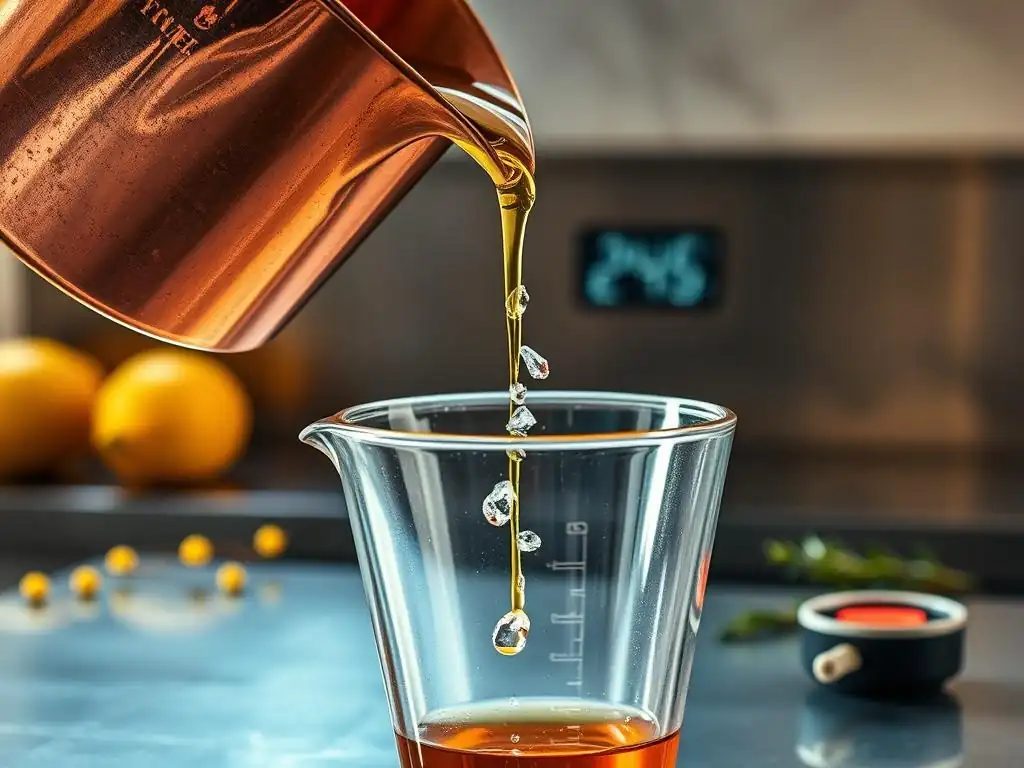
Crystallization occurs when sugar molecules in a supersaturated solution (more sugar dissolved than the liquid can normally hold) find a nucleation point to start forming a solid structure. Think of it like building with Lego bricks: the sugar molecules are the bricks, and they need a starting point to stack neatly into crystals. These starting points can be stray sugar grains that didn't dissolve, impurities in the mixture, or even rough spots on the side of the pan.
Once a few crystals form, they act as magnets for other dissolved sugar molecules, rapidly growing and spreading throughout the syrup. This chain reaction can turn a clear, smooth liquid into a grainy mess surprisingly quickly. The goal for an easy sugar syrup no crystals is to avoid providing these initial nucleation points and maintain a stable, non-crystalline state.
Factors Influencing Crystallization: Temperature, Impurities, and Agitation
Several factors contribute to whether sugar syrup will crystallize. Temperature plays a critical role: as the syrup cools, the sugar becomes less soluble, increasing the tendency to crystallize. Heating the syrup helps dissolve more sugar, but simply heating isn't enough to prevent crystallization during cooling or use.
Impurities are major culprits. Even a single undissolved sugar grain or a speck of dust can trigger crystallization. This is why cleanliness is paramount in sugar work. Lastly, agitation, especially while the syrup is hot and cooling, can encourage crystal formation. Stirring or bumping the pan can cause dissolved sugar molecules to collide and link up, providing those dreaded nucleation points. Managing these factors is crucial for an easy sugar syrup no crystals.
Proven Techniques to Prevent Sugar Syrup Crystallization
Technique 1: Using Acid to Invert Sugars
Adding an acidic ingredient is one of the most reliable methods to prevent sugar crystallization. Acids, such as lemon juice, cream of tartar, or vinegar, work by breaking down sucrose (table sugar) into its simpler components: glucose and fructose. This process is called inversion, and the resulting mixture of glucose and fructose is less likely to crystallize than sucrose alone.
The effect of acid inversion creates a syrup that remains smoother and more stable. For example, adding just 1/4 teaspoon of cream of tartar or 1 teaspoon of lemon juice per cup of sugar in your recipe can make a significant difference in preventing graininess. This technique is essential when making things like fondant, some types of fudge, or syrups that need to remain liquid for a long time, ensuring an easy sugar syrup no crystals.
How Acid Inversion Works: Lemon Juice, Cream of Tartar, or Vinegar
When acid is heated with a sucrose solution, it catalyzes the hydrolysis reaction, splitting each sucrose molecule (a disaccharide) into one molecule of glucose and one molecule of fructose (both monosaccharides). This mixture of glucose and fructose is known as invert sugar. Invert sugar has a different molecular structure and behavior compared to sucrose, making it far less prone to forming the ordered crystalline lattice structure that causes graininess.
Different acids provide varying levels of inversion. Cream of tartar (potassium bitartrate) is a common choice in baking as it's a strong acid when heated. Lemon juice and vinegar (acetic acid) are also effective, though you might need slightly more depending on their concentration. The key is that the presence of these simpler sugars disrupts the ability of sucrose molecules to find each other and lock into crystals, helping you achieve an easy sugar syrup no crystals.
Precise Measurements for Acid Addition
While the exact amount of acid can vary slightly depending on the specific acid used and the total volume of sugar syrup, a general guideline is to add a small, but effective, amount. For every cup (approximately 200g) of granulated sugar used in your syrup, aim for about 1/4 teaspoon of cream of tartar, or roughly 1 teaspoon of fresh lemon juice or white vinegar.
Using too much acid can sometimes affect the flavor of the final product, especially in delicate applications. Start with these recommended ratios and adjust slightly in future batches if needed. The goal is enough acid to initiate inversion without imparting a noticeable sour taste, ensuring your easy sugar syrup no crystals maintains its intended flavor profile.
Technique 2: Controlling Sugar Concentration
The ratio of sugar to water is critical in preventing crystallization. A syrup that is too concentrated too quickly is more likely to crystallize as it cools, because there's simply less water available to keep the sugar molecules dissolved. Understanding the desired final consistency for your application helps determine the correct starting ratio.
For a basic simple syrup used for moistening cakes or sweetening drinks, a 1:1 ratio of sugar to water by weight or volume is common. This creates a less concentrated syrup, making it inherently more stable and less prone to crystallization than, say, a syrup heated to the hard-ball stage for candy making, which has a much higher sugar concentration. Achieving an easy sugar syrup no crystals starts with the right proportions.
The Ideal Sugar-to-Water Ratio for Different Applications
The optimal sugar-to-water ratio depends entirely on what you plan to use the syrup for. A thin syrup (like 1 part sugar to 2 parts water) is very stable but not very sweet or viscous. A standard simple syrup (1:1 sugar to water) is versatile for many uses and relatively stable. A rich syrup (2 parts sugar to 1 part water) is sweeter and thicker but requires more care to prevent crystallization.
For candy making, the syrup is heated to much higher temperatures, evaporating significant amounts of water and dramatically increasing the sugar concentration. For example, a syrup heated to 240°F (soft ball stage) has a much higher sugar concentration than one heated only to dissolve the sugar. Knowing the target temperature and corresponding concentration is key to managing crystallization risk at different stages of sugar work.
Avoiding Oversaturation
Oversaturation occurs when the liquid holds more dissolved sugar than it normally would at a given temperature. While heating allows for higher saturation, rapid cooling or the introduction of a seed crystal can cause the excess sugar to crash out of solution and crystallize. To avoid this, ensure all sugar is completely dissolved before the syrup comes to a rolling boil.
Once boiling, avoid adding more sugar. Maintain the heat steadily to reach the desired temperature without scorching. Allowing the syrup to cool gradually without disturbance can also help maintain the supersaturated state longer without triggering crystallization, contributing to an easy sugar syrup no crystals.
Technique 3: Maintaining Cleanliness
Impurities are perhaps the most common culprits behind unwanted sugar crystallization. Any speck of dust, a tiny undissolved sugar grain clinging to the side of the pan, or even residue from a previous cooking task can act as a nucleus for crystals to start forming. Think of these impurities as tiny "seeds" from which the crystal structure can grow rapidly throughout the syrup.
Ensuring your workspace, equipment, and ingredients are scrupulously clean before you begin sugar work significantly reduces the risk of introducing these crystallization triggers. This step is often overlooked but is absolutely fundamental for achieving a smooth, easy sugar syrup no crystals consistently.
The Impact of Impurities on Sugar Syrup Crystallization
Even microscopic particles can be enough to start the crystallization process. Undissolved sugar crystals are particularly problematic because they are the very substance you're trying to keep dissolved. If sugar grains splash up onto the side of the pan and dry, they can fall back into the syrup later and cause it to seize up with crystals.
Other impurities like grease, lint, or even mineral deposits from hard water can also provide nucleation sites. This is why using clean, filtered water is sometimes recommended, especially in areas with high mineral content. A clean environment sets the stage for success in making an easy sugar syrup no crystals.
Tips for Clean Equipment and Ingredients
Start with impeccably clean pots, spoons, and any other tools that will come into contact with the syrup. Wash them thoroughly and dry them completely. Using a heavy-bottomed, non-reactive saucepan is also beneficial as it heats more evenly and is less likely to have hot spots where sugar can burn and create impurities.
After dissolving the sugar and bringing the syrup to a boil, a common technique is to brush down the sides of the pan with a clean pastry brush dipped in clean water. This washes any stray sugar crystals or impurities back into the bulk of the syrup where they can hopefully redissolve or be less likely to cause problems. This simple step can be a game-changer for preventing crystallization and ensuring an easy sugar syrup no crystals.
Technique 4: Proper Heating and Cooling Techniques
How you heat and cool your sugar syrup significantly impacts its tendency to crystallize. Rapid heating or cooling, as well as stirring at the wrong time, can all encourage crystal formation. Patience and controlled temperature changes are key to maintaining a smooth, liquid state.
Understanding the stages of heating and cooling allows you to minimize disturbance when the syrup is most vulnerable to crystallization. This deliberate approach helps maintain the delicate balance of the supersaturated solution, paving the way for an easy sugar syrup no crystals.
Gradual Heating
When initially dissolving the sugar in water, stir gently over low heat until all the sugar granules are completely dissolved. You should not feel any grit when rubbing a drop of the mixture between your fingers (once it's cool enough to touch safely!). Only increase the heat to bring the syrup to a boil after all sugar is dissolved.
Once the syrup is boiling, stop stirring. Stirring a boiling sugar syrup introduces air bubbles and can cause sugar to splash onto the sides of the pan where it can crystallize. Allow the syrup to boil undisturbed until it reaches the desired temperature for your recipe. This hands-off approach during the boil is crucial for an easy sugar syrup no crystals.
Controlled Cooling
How the syrup cools is just as important as how it's heated. Avoid moving or stirring the syrup while it is cooling, especially as it reaches temperatures below 200°F (around 93°C). Disturbing the syrup during this phase can easily trigger crystallization.
If a recipe requires the syrup to cool to a specific temperature before use (like for Italian meringue or fudge), let it sit undisturbed in the pan. Some candy makers even suggest placing the bottom of the pan in a sink of cool (not ice) water briefly to stop the cooking process, but the syrup itself should not be stirred or agitated until it has cooled significantly or reached the temperature specified by the recipe. This careful handling ensures an easy sugar syrup no crystals.
Troubleshooting Crystallized Sugar Syrups
Identifying Signs of Crystallization
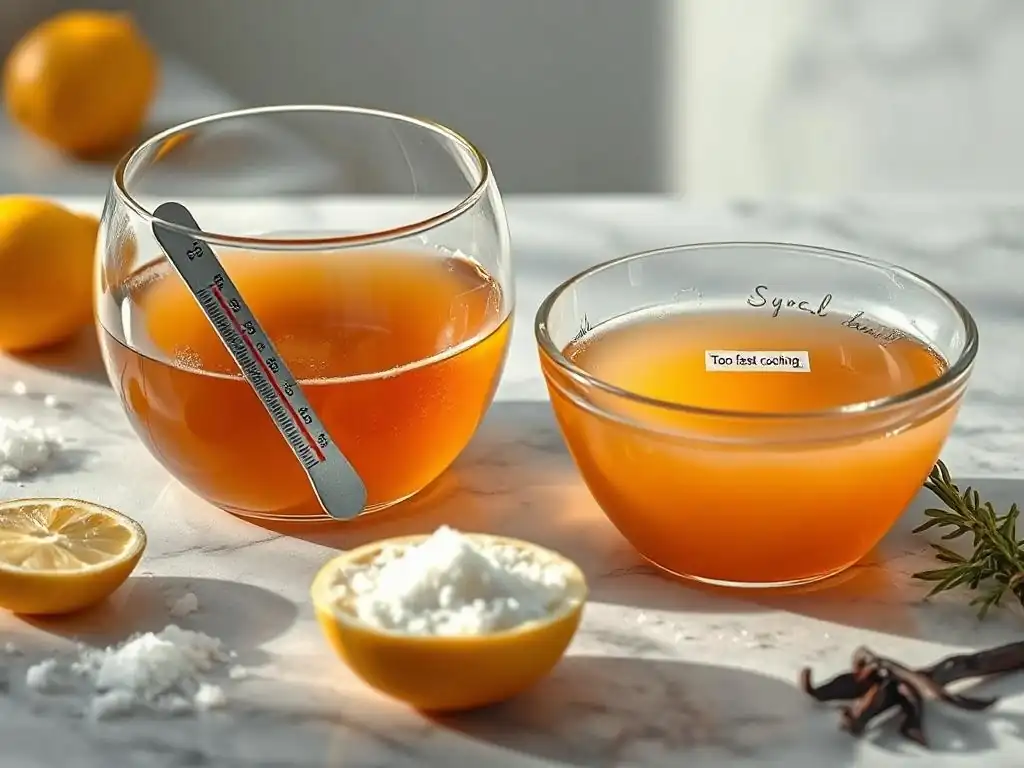
Recognizing when your sugar syrup has started to crystallize is important so you can attempt to fix it before it's too late. The most obvious sign is the syrup turning cloudy or opaque instead of remaining clear. You might also notice a grainy or gritty texture developing.
In more advanced stages, the syrup can become thick and sludgy, or even solidify completely into a solid mass of sugar crystals. Catching it early when you first see a cloudy patch or feel a slight graininess gives you the best chance of salvaging your batch and still achieving an easy sugar syrup no crystals outcome.
How to Fix Crystallized Sugar Syrup
If your sugar syrup starts to crystallize, don't despair immediately! There are a couple of techniques you can try to reverse the process, especially if the crystallization is only just beginning. The goal is essentially to redissolve the sugar crystals back into the solution.
These methods involve carefully adding more liquid and reheating the syrup to break down the crystal structure. While not always successful for severely crystallized syrup, they are worth attempting before discarding the batch.
Reheating Techniques
One common method to fix a slightly crystallized syrup is to gently reheat it. Add a small amount of hot water (start with a tablespoon or two per cup of syrup) to the pan. Place the pan back over low heat and stir very gently until the added water is incorporated and the crystals appear to dissolve back into the liquid.
Be cautious not to stir vigorously, as this can sometimes worsen the problem. The added water helps to reduce the concentration of the syrup, making it easier for the sugar crystals to redissolve. Once clear, you can carefully bring it back up to the required temperature if necessary, taking care to prevent renewed crystallization.
Adding More Water or Acid
In addition to plain water, adding a small amount of acid along with the water can further help dissolve the crystals and prevent them from reforming. As discussed earlier, acid helps invert the sugar, making it more stable. Add a teaspoon of lemon juice or a pinch of cream of tartar along with the hot water when reheating.
Stir gently over low heat until the syrup is clear and smooth again. Once resolved, proceed with your recipe, but be extra vigilant about preventing future crystallization by following the techniques outlined earlier. While fixing is possible, preventing crystallization in the first place is the easiest path to an easy sugar syrup no crystals.
Preventing Future Crystallization: Best Practices
To consistently achieve an easy sugar syrup no crystals, make these steps part of your routine:
- Always start with clean equipment.
- Ensure all sugar is dissolved before boiling.
- Brush down the sides of the pan with water during boiling.
- Add a small amount of acid (like cream of tartar or lemon juice) to the syrup.
- Avoid stirring or agitating the syrup while it is boiling or cooling.
- Use a heavy-bottomed pan for even heating.
- Be mindful of your sugar-to-water ratio for the intended application.
By implementing these best practices, you dramatically reduce the chances of frustrating crystallization and improve the quality of your baked goods and confections.
Advanced Sugar Syrup Techniques for Baking
Infusing Flavors into Your Sugar Syrups
Once you've mastered the art of creating an easy sugar syrup no crystals, you can elevate it by adding flavor infusions. This simple technique allows you to create custom syrups that add depth and complexity to your baking. Common infusions include vanilla beans, citrus zest, star anise, cinnamon sticks, fresh herbs like mint or rosemary, or even coffee beans.
To infuse, simply add the flavoring ingredient to the water before adding the sugar. Simmer the water with the flavoring for about 5-10 minutes to extract the essence, then strain out the solids. Proceed with dissolving the sugar in this flavored liquid and heat as usual. Alternatively, add the flavoring agent (like a vanilla bean or citrus peel) after the sugar is dissolved and boil the syrup, then let it steep as it cools before straining.
Using Different Types of Sugar
While granulated white sugar (sucrose) is the most common base for simple syrups, you can experiment with other types of sugar to achieve different flavors and textures. Brown sugar, for example, contains molasses, which adds a warm, caramel-like flavor and can slightly inhibit crystallization due to the presence of invert sugar naturally present in molasses.
Other sweeteners like corn syrup or glucose syrup are often added to sugar syrups specifically to prevent crystallization. These are already invert sugars or contain high amounts of glucose, directly interfering with sucrose's ability to form crystals. Adding a tablespoon or two of light corn syrup per cup of sugar in your recipe is a highly effective way to guarantee an easy sugar syrup no crystals, particularly for candies.
Sugar Syrups for Specific Baking Applications
The type and concentration of sugar syrup needed varies greatly depending on the baking application. For instance:
- Moistening Cakes: A thin 1:1 or 1:2 sugar-to-water syrup, often flavored, is ideal. It needs to be smooth and liquid to soak into the cake evenly.
- Italian Meringue or French Buttercream: Requires a hot syrup heated to the soft-ball stage (around 240°F or 115°C). The syrup must be perfectly clear and crystal-free when poured into the whipping egg whites.
- Fondant or Glazes: Can use syrups heated to different temperatures, often incorporating glucose or corn syrup for pliability and shine, ensuring an easy sugar syrup no crystals that stays smooth.
Understanding the specific requirements for each application helps you choose the correct ratio, temperature, and anti-crystallization techniques for the best results.
Storing Sugar Syrups Properly
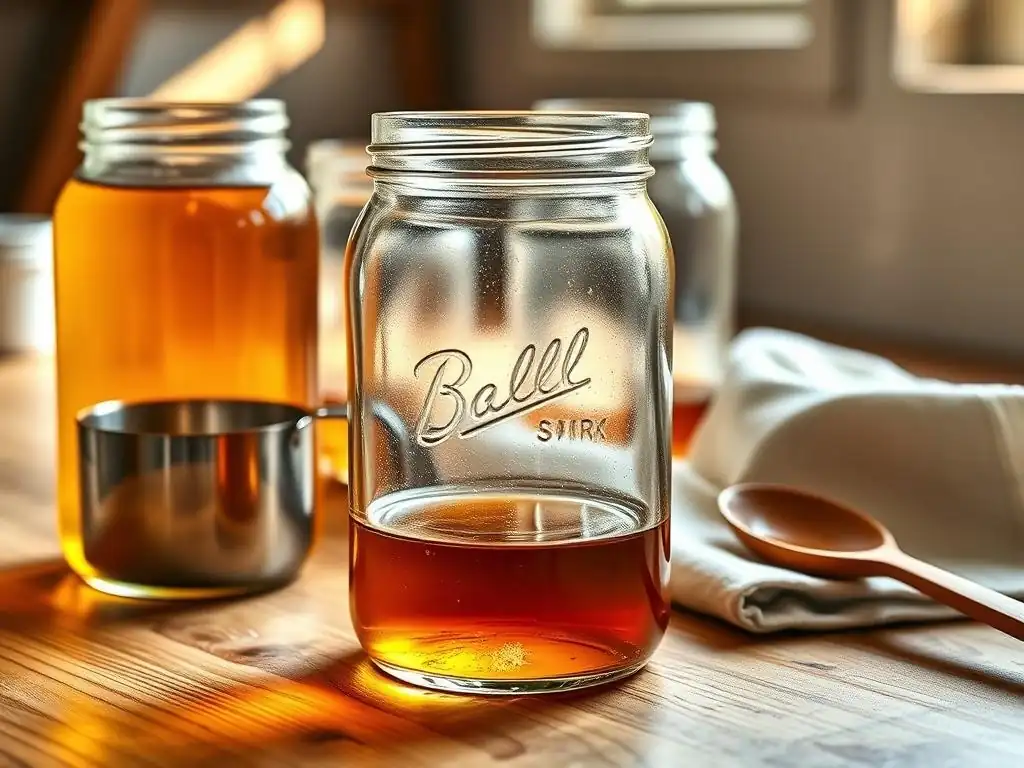
Once you've successfully made an easy sugar syrup no crystals, proper storage is key to maintaining its quality and preventing future crystallization or spoilage. Sugar syrups, especially less concentrated ones, can potentially grow mold or yeast if not stored correctly.
Taking a few simple steps ensures your homemade syrup stays smooth, clear, and ready to use whenever you need it for your baking adventures.
Best Storage Containers and Conditions
The best containers for storing sugar syrup are clean, airtight glass bottles or jars. Glass is non-reactive and easy to sterilize, which helps prevent contamination. Ensure the container is completely dry before filling it with syrup.
Store the syrup in a cool, dark place. The refrigerator is ideal, especially for less concentrated syrups (like 1:1 simple syrup) which are more susceptible to microbial growth than highly concentrated syrups. Keeping the temperature low inhibits both crystallization and spoilage.
Extending Shelf Life
The shelf life of sugar syrup depends on its concentration. A highly concentrated syrup (like 2:1 rich syrup or candy syrup) can last for several months at room temperature because the high sugar content acts as a preservative. A standard 1:1 simple syrup, however, is less stable and should be refrigerated and typically used within 3-4 weeks.
Adding a small amount of alcohol (like a splash of vodka or rum, if compatible with your intended use) can also help extend the shelf life of refrigerated simple syrups by inhibiting microbial growth. Always check the syrup for any cloudiness, off smells, or signs of mold before use – if in doubt, it's best to discard it and make a fresh batch for guaranteed quality in your baking.
Conclusion: Achieve Crystal-Free Sugar Syrups Every Time
Mastering the art of making an easy sugar syrup no crystals is a valuable skill in baking. By understanding the science behind crystallization and implementing proven techniques – using acid, controlling concentration, prioritizing cleanliness, and employing proper heating and cooling methods – you can consistently produce smooth, clear syrups.
Don't be discouraged if you encounter crystallization initially. With practice and attention to detail, you'll be able to identify potential issues and prevent them before they occur. Armed with these techniques, you are well on your way to achieving perfect, crystal-free sugar syrups for all your baking and confectionery needs, ensuring delicious and beautiful results every time.
Frequently Asked Questions
What is sugar syrup and why is it used in baking?
Sugar syrup is a simple mixture of sugar and water, heated until the sugar dissolves. It's used in baking to add moisture, sweetness, and shine to cakes, pastries, and other desserts.
Why does sugar syrup sometimes crystallize?
Crystallization occurs when sugar molecules in the syrup reform into solid crystals. This can be caused by impurities, over-saturation, or agitation during cooling.
How can I prevent sugar syrup from crystallizing?
Prevent crystallization by using filtered water, adding a small amount of acid like lemon juice or corn syrup, and avoiding stirring the mixture while it's cooling.
What's the best ratio of sugar to water for making sugar syrup?
A common ratio is 1:1 (equal parts sugar and water) for a basic syrup, but you can adjust the ratio based on your desired thickness and sweetness. Some recipes might call for a 2:1 ratio for a thicker syrup.
Can I store sugar syrup, and if so, how?
Yes, you can store sugar syrup in an airtight container in the refrigerator for several weeks. Ensure it's cooled completely before storing to prevent condensation and spoilage.
Final Reflection: The Sweet Science of Crystal-Free Syrups
Mastering the art of sugar syrup creation isn't just about achieving a perfectly clear, luscious liquid; it's about understanding the delicate balance of science and skill that prevents those frustrating sugar crystals from forming. This knowledge, once considered a niche skill for professional bakers and mixologists, is now readily accessible, empowering home cooks and beverage enthusiasts to create consistently delicious syrups with ease. The ability to make a perfect sugar syrup opens up a world of culinary possibilities, from crafting exquisite cocktails to elevating simple desserts.
The journey of understanding sugar syrup crystallization has been a fascinating one, revealing the intricate relationship between temperature, sugar concentration, and the presence of impurities. It's a testament to the power of simple chemistry to transform everyday ingredients into something truly special. The process itself, while precise, is ultimately rewarding, offering a sense of accomplishment that extends beyond the delicious result. The best things in life are simple, but not always easy.
This perfectly captures the essence of mastering sugar syrup – the simplicity of the ingredients belies the skill required for perfect execution.
Now, it's your turn. Take what you've learned here – the importance of precise measurements, the careful control of heat, and the understanding of the underlying scientific principles – and experiment! Don't be afraid to try different flavors, explore variations in sugar types, and most importantly, enjoy the process of creating your own crystal-clear, perfectly delicious sugar syrups. The sweet rewards await.
Sweeten Your Skills: Take Charge of Your Sugar Syrup!
Thank you for diving into our guide on mastering sugar syrups and preventing crystallization! We hope you’ve uncovered valuable insights that will elevate your baking game. Now it’s time to put your newfound knowledge into action.
Here are some practical steps you can take right now:
- Experiment with a Syrup Recipe: Pick a favorite recipe and make your own sugar syrup, applying the techniques you've just learned.
- Share Your Experience: Tell friends or fellow bakers about your success and tips. You can inspire them to try preventing crystallization too!
- Join a Baking Community: Engage with other baking enthusiasts online to exchange syrup-making techniques and challenges.
Which method do you think will help you perfect your sugar syrup? Share your thoughts and let’s get the discussion started!