
Extend Shelf Life: How Emulsification Keeps Your Bakes Fresh Longer

Welcome to BakeWithEase, your trusted companion on your baking journey! Ever wondered exactly how to keep that perfectly baked cake from drying out too quickly? This week, we're diving deep into the science behind baking, focusing specifically on how to extend cake shelf life using the magic of emulsification. Prepare to unlock the secrets to longer-lasting freshness and discover why this simple technique is a game-changer for every baker. Intrigued? Let's get started!
- Introduction: Baking Science and Freshness Preservation
- The Science Behind Emulsification in Baking
- Emulsification and Cake Shelf Life: The Direct Connection
- Practical Techniques for Improved Emulsification in Baking
- Recipes and Examples: Emulsification in Action
- Beyond Emulsification: Other Factors Affecting Cake Shelf Life
- Troubleshooting Emulsification Problems in Baking
- Conclusion: Emulsification – Your Key to Longer Lasting, Delicious Bakes
-
Frequently Asked Questions
- How does emulsification help extend the shelf life of cakes?
- What are some common emulsifiers used in baking?
- Can I use any type of fat in my cake recipe and expect emulsification to work?
- What happens if a cake batter is not properly emulsified?
- Besides emulsification, what other factors influence a cake's shelf life?
- Final Reflection: The Sweet Science of Longer-Lasting Cakes
- Unlock Your Baking's Full Potential!
Introduction: Baking Science and Freshness Preservation
Understanding the Importance of Emulsification for Baked Goods
Emulsification is a fundamental concept in baking science, playing a crucial role in creating stable, well-structured, and ultimately, longer-lasting baked goods. At its heart, it's about bringing together ingredients that typically don't mix, like oil and water, to form a smooth, homogeneous mixture. Think about making a perfect cake batter; it's a complex blend of fats, liquids, sugars, and flour. Without proper emulsification, these components would separate, leading to a poor texture and a product that quickly loses its appeal. Understanding this process is vital for any baker looking to improve the quality and freshness of their creations.
The stability achieved through emulsification directly impacts the initial quality of your bake – how moist, tender, and uniform it is right out of the oven. But its benefits extend far beyond that initial moment. By creating a more stable internal structure and better managing moisture distribution, proper emulsification is a key technique for knowing how to extend cake shelf life, ensuring your delicious treats remain enjoyable for days rather than hours. It helps prevent common issues like dryness and crumbliness, which are hallmarks of staling.
The Challenge of Staling: Why Baked Goods Lose Freshness
Staling is the primary reason baked goods lose their appeal over time. It's often mistakenly thought of simply as drying out, but it's a more complex process primarily driven by the retrogradation of starch. As a cake or bread cools after baking, the starch molecules within the flour begin to recrystallize. This process forces water out of the starch structure and into other parts of the crumb, or even out of the product entirely, leading to a firm, dry, and crumbly texture. This change in texture is the most noticeable sign of staling.
While moisture loss does contribute, the internal molecular changes in starch are the main culprits behind staling. For instance, a cake stored in a humid environment might still feel soft initially but will undergo starch retrogradation internally, leading to a tougher crumb over time. Understanding this scientific process is crucial for developing strategies, including effective emulsification, that actively combat staling and help you learn how to extend cake shelf life beyond the typical day or two.
The Science Behind Emulsification in Baking
What is Emulsification? A Baker's Definition
From a baker's perspective, emulsification is the process of dispersing tiny droplets of one liquid throughout another liquid in which it normally wouldn't mix. A classic example outside of baking is salad dressing, where oil and vinegar are shaken together to temporarily combine. In baking, the "liquids" are often fats (like butter or oil) and water-based ingredients (like milk, eggs, or water itself). Emulsification allows these opposing forces to coexist peacefully within the batter or dough, creating a stable mixture.
Think of a smooth mayonnaise – it's a stable emulsion of oil dispersed in egg yolk (which contains natural emulsifiers). In baking, we aim for a similar stability in batters and doughs. This stability prevents separation during mixing, resting, and baking, leading to a more uniform crumb structure and better overall quality. Mastering this concept is a fundamental step in understanding the science behind how to extend cake shelf life and improve texture.
How Emulsifiers Work to Stabilize Baking Mixtures
Emulsifiers are the heroes of this process – they are molecules with a unique structure, possessing both a hydrophilic (water-attracting) head and a lipophilic (fat-attracting) tail. This dual nature allows them to act as a bridge between the fat and water phases in a mixture. The lipophilic tail anchors itself in the fat droplet, while the hydrophilic head faces outwards towards the water phase. This creates a stable interface around the fat droplets, preventing them from coalescing and separating.
By coating the dispersed phase (often fat droplets in a water-based batter), emulsifiers reduce the surface tension between the two liquids and keep the droplets suspended evenly. This leads to a finer, more stable dispersion. In cake batters, for example, emulsifiers help distribute fat very finely throughout the mixture. This fine dispersion of fat contributes to a tender crumb and inhibits the formation of a strong gluten network, resulting in a softer texture. This mechanism is directly linked to how to extend cake shelf life by maintaining that desirable soft texture and preventing rapid staling.
Common Emulsifiers Used in Baking: A Comprehensive Overview
Several emulsifiers are commonly used in baking, each contributing unique properties. One of the most natural and widely used is lecithin, found abundantly in egg yolks and soybeans. Lecithin is often incorporated into dough conditioners and cake mixes. A typical usage level for lecithin might be around 0.5% to 1.0% based on the flour weight in a recipe, helping improve dough handling and crumb softness.
Another crucial class of emulsifiers includes monoglycerides and diglycerides, often derived from fats. These are particularly effective at complexing with starch, interfering with the retrogradation process that causes staling. For example, adding monoglycerides at a level of just 0.2% to 0.5% of the flour weight in a cake or bread recipe can significantly delay staling, helping extend cake shelf life by keeping the crumb softer for several extra days. Polysorbates (like Polysorbate 60) are also used, especially in commercial baking, to improve aeration and batter stability, contributing to a finer crumb structure and improved moisture retention.
Emulsification and Cake Shelf Life: The Direct Connection
How Emulsification Prevents Staling in Cakes
Emulsification directly combats staling by influencing both the fat distribution and the starch retrogradation process within the cake crumb. By helping fat disperse more evenly and finely throughout the batter, emulsifiers ensure that tiny fat droplets are interspersed within the starch-protein matrix of the baked cake. These fat droplets act as barriers, physically separating the starch molecules and making it more difficult for them to realign and crystallize (retrograde) as the cake cools and ages.
Furthermore, certain emulsifiers, notably monoglycerides, can form complexes with the amylose fraction of starch. Amylose is a key component responsible for the firming that occurs during staling. By binding to amylose, these emulsifiers essentially 'block' the starch molecules from interacting with each other and retrograding as effectively. This molecular intervention significantly slows down the staling process, making a cake made with effective emulsification stay softer and fresher for potentially 2-4 days longer than one without, a clear demonstration of how to extend cake shelf life through formulation.
The Role of Emulsifiers in Maintaining Cake Moisture
While staling isn't just drying, maintaining moisture is still a critical factor in perceived freshness. Emulsifiers contribute to moisture retention in several ways. Firstly, by creating a finer, more stable batter, they lead to a more uniform crumb structure in the baked cake. This even structure helps distribute moisture more evenly throughout the cake, preventing dry spots and ensuring consistent texture.
Secondly, by complexing with starch and interfering with retrogradation, emulsifiers reduce the amount of "free" water that is expelled from the starch network during aging. This water remains within the crumb, contributing to a moister feel and inhibiting the perception of dryness. Think of a standard sponge cake versus a high-ratio cake made with emulsified shortening; the high-ratio cake, designed with emulsifiers in mind, typically has a much moister, tender crumb that stays fresh for a longer period, showcasing how to extend cake shelf life through ingredient choice and formulation.
Emulsification and Cake Structure: Impact on Texture and Freshness
The impact of emulsification on cake structure is profound, and this structural improvement is intrinsically linked to freshness. Proper emulsification leads to a more stable batter capable of holding more liquid and sugar relative to flour – this is the basis of "high-ratio" cakes, which are known for their moist and tender crumb. Emulsifiers help stabilize the air bubbles incorporated during mixing, leading to a finer, more uniform cell structure in the baked cake. A fine, even crumb feels softer and more pleasant in the mouth.
This improved structure also plays a role in staling prevention. A cake with a strong, yet tender, structure supported by well-dispersed fat and stabilized starch is less prone to collapsing or becoming crumbly as it ages. The uniform distribution of ingredients facilitated by emulsification ensures that moisture and fat are present throughout the crumb, delaying the onset of dryness and hardness. This structural integrity is a key part of how to extend cake shelf life, maintaining that desirable soft texture long after baking.
Practical Techniques for Improved Emulsification in Baking
Choosing the Right Emulsifiers for Different Baked Goods
Selecting the appropriate emulsifier depends heavily on the type of baked good you are making and the desired outcome. For cakes aiming for maximum moisture and tenderness, emulsified shortenings or added monoglycerides are excellent choices. High-ratio shortenings, specifically engineered for cakes, contain higher levels of emulsifiers (often monoglycerides and diglycerides) than standard shortenings, allowing them to bind more water and sugar. Using these can drastically improve batter stability and extend cake shelf life.
For yeasted breads, lecithin and DATEM (Diacetyl Tartaric Acid Esters of Monoglycerides) are frequently used. Lecithin improves dough handling and volume, while DATEM is particularly effective at strengthening the gluten network and improving loaf volume and crumb structure, indirectly contributing to perceived freshness.
In cookies or pastries where flakiness is key, the role of emulsification might be less about incorporating liquids and more about managing the fat distribution to create distinct layers or tender crumbs. Understanding the specific function of each emulsifier allows bakers to make informed choices to achieve their desired results and enhance the longevity of their products.
Mastering Emulsification Techniques for Longer Lasting Freshness
Achieving optimal emulsification isn't just about adding emulsifiers; it's also about mastering the techniques used to combine ingredients. The order and method of mixing play a crucial role. In the creaming method for cakes, beating butter and sugar together incorporates air, and then adding eggs one at a time helps emulsify the fat and liquid phases. It's essential to mix until the mixture looks smooth and homogeneous, without any signs of separation, before adding dry ingredients.
-
Proper Mixing Methods for Optimal Emulsification
The "reverse creaming" method, where dry ingredients (including sugar) are mixed with fat before liquids are added, is particularly effective for creating a fine, tender crumb and excellent emulsification. The fat coats the flour particles, inhibiting gluten development and facilitating a very fine dispersion of fat and liquid when they are eventually added.
For recipes using liquid fats like oil, simply whisking ingredients together vigorously can create a temporary emulsion, but incorporating an emulsifier is key to stabilizing it. Techniques that promote fine dispersion, like sifting dry ingredients and gradually adding liquids, contribute to a better overall emulsion and are crucial for knowing how to extend cake shelf life.
// Example mixing guideline
1. Cream butter/shortening with emulsifiers (if added separately).
2. Gradually add sugar, creaming until light and fluffy.
3. Add eggs one at a time, mixing well after each addition until fully emulsified (no separation).
4. Alternate adding dry and wet ingredients, mixing until just combined to maintain emulsion.
-
Controlling Temperature for Emulsification Success
Temperature plays a significant role in emulsification, especially when working with solid fats like butter or shortening. Ingredients should generally be at room temperature (around 68-72°F or 20-22°C). Butter that is too cold won't cream properly, making it difficult to incorporate air and emulsify with other ingredients. If butter is too warm or melted, the emulsion can break easily, leading to a greasy texture and poor structure. Maintaining the correct temperature helps the fat integrate smoothly with the liquid components, forming a stable emulsion that supports a fine crumb and contributes to how to extend cake shelf life.
Task List:
[x] Ensure all refrigerated ingredients (butter, eggs, milk) are at room temperature.
[ ] Check recipe specifies required temperature for fats.
[x] Avoid overheating batter during mixing (friction can warm it).
[ ] If mixture separates, gently warm a small portion and re-incorporate slowly while mixing.
Using Emulsifiers to Extend Bread Shelf Life
While this article focuses on cakes, it's worth noting that emulsifiers are also vital for extending the shelf life of bread. Staling in bread is also primarily due to starch retrogradation. Emulsifiers like monoglycerides, diglycerides, and DATEM are commonly used in bread making to combat this. Monoglycerides and diglycerides complex with starch, keeping the crumb softer for longer. DATEM strengthens the gluten network, allowing for better oven spring and a finer, more even crumb structure, which also contributes to delayed staling.
Adding emulsifiers to bread dough can result in loaves that remain soft and palatable for several days longer than traditional recipes. For instance, a standard white loaf might start feeling stale after 24 hours, whereas a loaf containing monoglycerides could retain a pleasant texture for 3-4 days. This application in bread further highlights the powerful role of emulsifiers in preserving freshness across different types of baked goods, reinforcing the principles of how to extend cake shelf life by understanding their mechanism.
Recipes and Examples: Emulsification in Action
Recipe 1: High-Ratio Cake - Demonstrating Emulsification for Extended Freshness
High-ratio cakes are a prime example of how emulsification is leveraged to achieve superior texture and shelf life. The term "high-ratio" refers to a formula where the weight of sugar is equal to or greater than the weight of flour, and the weight of liquids (eggs + milk/liquid) is equal to or greater than the weight of sugar. This composition would typically lead to a weak, wet batter, but the use of emulsified shortening makes it possible by stabilizing the large amount of liquid and sugar within the fat matrix.
-
Ingredients and Emulsification Considerations
A typical high-ratio yellow cake might use emulsified shortening, cake flour, sugar, whole eggs, milk, baking powder, salt, and vanilla. The emulsified shortening is key; it contains monoglycerides and diglycerides that allow it to hold significantly more liquid and sugar than standard butter or shortening. Eggs also contribute lecithin, adding to the emulsification power. The high proportion of sugar also helps retain moisture, but it's the stable emulsion that allows the structure to support this high moisture level without collapsing.
- Emulsified Shortening: Provides primary emulsification.
- Eggs: Contribute lecithin, add moisture and structure.
- Milk: Provides liquid phase.
- Sugar: Retains moisture, but requires emulsification for stability.
-
Step-by-Step Emulsification Process
The mixing method for high-ratio cakes often involves blending the emulsified shortening with all the dry ingredients (including sugar) first. This coats the flour particles with fat and emulsifiers before the liquids are added.
- Combine emulsified shortening, cake flour, sugar, baking powder, and salt in a mixer bowl.
- Mix on low speed until ingredients are just combined and resemble coarse sand or fine meal. The emulsifiers in the shortening begin coating the dry particles.
- In a separate bowl, whisk together eggs, milk, and vanilla.
- With the mixer on low speed, gradually add about two-thirds of the liquid mixture to the dry ingredients over 2-3 minutes. Scrape down the bowl.
- Increase speed to medium and beat for 2-3 minutes. This step is crucial for developing the emulsion, incorporating air, and creating a smooth batter. The batter should look light and fluffy.
- Gradually add the remaining liquid mixture in a slow, steady stream, mixing until just combined. Do not overmix.
This specific mixing method, combined with emulsified shortening, creates a very stable, finely dispersed batter that bakes into a cake with an incredibly tender, moist crumb that remains fresh for many days, illustrating how to extend cake shelf life through formulation and technique.
Recipe 2: Japanese Milk Bread - Another Example of Emulsification for Moist Cakes
Japanese Milk Bread, while technically a bread, serves as an excellent example of how techniques that promote emulsification contribute to an exceptionally soft texture and extended shelf life, qualities highly desirable in cakes too. This bread's signature softness comes from the tangzhong method, a cooked paste of flour and liquid (usually milk or water).
-
Ingredients and Emulsification Considerations
Japanese Milk Bread uses standard bread ingredients: flour, yeast, sugar, salt, milk, butter, and often eggs. The key element is the tangzhong paste, made by cooking a small portion of the flour with milk or water until it forms a thick, pudding-like consistency. This process pre-gelatinizes the starch.
- Tangzhong (cooked flour/milk paste): Pre-gelatinizes starch, binding liquid.
- Milk/Liquid: Hydrates flour, part of the liquid phase.
- Butter: Provides fat phase.
- Eggs: Contribute lecithin, add richness and aid emulsification.
-
Step-by-Step Emulsification Process
The tangzhong method essentially incorporates a pre-hydrated starch paste into the dough. This paste traps liquid, preventing it from being available to form gluten during initial mixing and making it less available for starch retrogradation later. While not a traditional fat-in-water emulsion, the tangzhong method creates a very stable, hydrated matrix within the dough. When butter and eggs are added, the intense mixing required for bread dough helps to emulsify the fat and lecithin from the eggs into this hydrated starch network.
- Prepare the tangzhong: Whisk a small amount of flour with milk/water in a saucepan. Cook over medium heat, stirring constantly, until it thickens into a paste (like pudding), reaching about 149°F (65°C). Cool completely.
- Combine cooled tangzhong with remaining bread dough ingredients (flour, sugar, yeast, salt, milk, eggs) in a mixer.
- Mix on low speed until a rough dough forms.
- Increase speed and knead until the dough is smooth and elastic. This vigorous kneading helps distribute the pre-hydrated starch and begins to emulsify the fat (butter) and egg lecithin into the dough structure.
- Add softened butter gradually and continue kneading until the dough is very smooth, elastic, and passes the windowpane test. The butter is fully emulsified into the dough during this final kneading stage.
The resulting dough is very soft and extensible. The baked bread has an incredibly soft, fine crumb that stays moist and fresh for significantly longer than bread made without the tangzhong method, often remaining soft for 4-5 days. This illustrates how stabilizing the water within the starch structure, aided by emulsification during kneading, is a powerful technique for extending cake shelf life principles to other bakes.
Beyond Emulsification: Other Factors Affecting Cake Shelf Life
Proper Storage Techniques to Maximize Freshness
While emulsification is a powerful tool for extending the intrinsic shelf life of a cake, how you store it after baking is equally critical for maximizing its freshness. Air is the enemy of freshness, promoting both moisture loss and oxidation. Once a cake has cooled completely, it should be stored properly.
- An unfrosted cake can be wrapped tightly in plastic wrap, ensuring no surface is exposed to air.
- A frosted cake is trickier; consider using a cake dome or a large airtight container. If using a container, place a piece of parchment paper directly on any exposed cake surfaces (like cut sides) before closing the lid.
- Cakes with perishable fillings or frostings (like cream cheese frosting or fresh fruit) must be refrigerated. However, refrigeration can accelerate starch retrogradation, making the cake crumb firm. To mitigate this, bring refrigerated cake portions to room temperature before serving for the best texture.
Storing cakes properly, even those formulated with emulsifiers, can add days to their perceived freshness and is a vital part of how to extend cake shelf life in practice.
Ingredient Quality and its Impact on Shelf Life
The quality of the ingredients used in your baking has a direct impact on the final product's freshness and how long it lasts. Using fresh flour, high-quality fats, and fresh eggs contributes to a better initial structure and flavor, which in turn helps the bake maintain its quality for a longer period. Stale flour, for example, can lead to off-flavors and a weaker structure.
Fats that are nearing rancidity can quickly impart unpleasant flavors to the baked good, making it unappetizing long before staling fully sets in. Similarly, using fresh eggs ensures the lecithin is active and contributes effectively to emulsification. While emulsifiers can help compensate for some ingredient shortcomings, starting with high-quality components provides the best foundation for a delicious cake with an inherently longer potential shelf life. This foundation is essential when considering how to extend cake shelf life holistically.
Packaging Considerations for Preserving Baked Goods
Effective packaging is the final barrier against the environmental factors that cause staling and spoilage. Packaging prevents moisture loss, protects against absorbing off-odors, and shields the product from oxygen which can cause fats to oxidize. For cakes, this means using materials that provide a good barrier.
Cling film (plastic wrap) is effective for wrapping individual cake layers or unfrosted cakes. For whole cakes, especially frosted ones, sturdy cake boxes or airtight plastic containers are ideal. Vacuum sealing is an option for very long-term storage (like freezing), as it completely removes air. The right packaging, combined with the internal improvements from emulsification, creates a powerful defense against staling and is a practical step in how to extend cake shelf life significantly.
Troubleshooting Emulsification Problems in Baking
Identifying Signs of Poor Emulsification
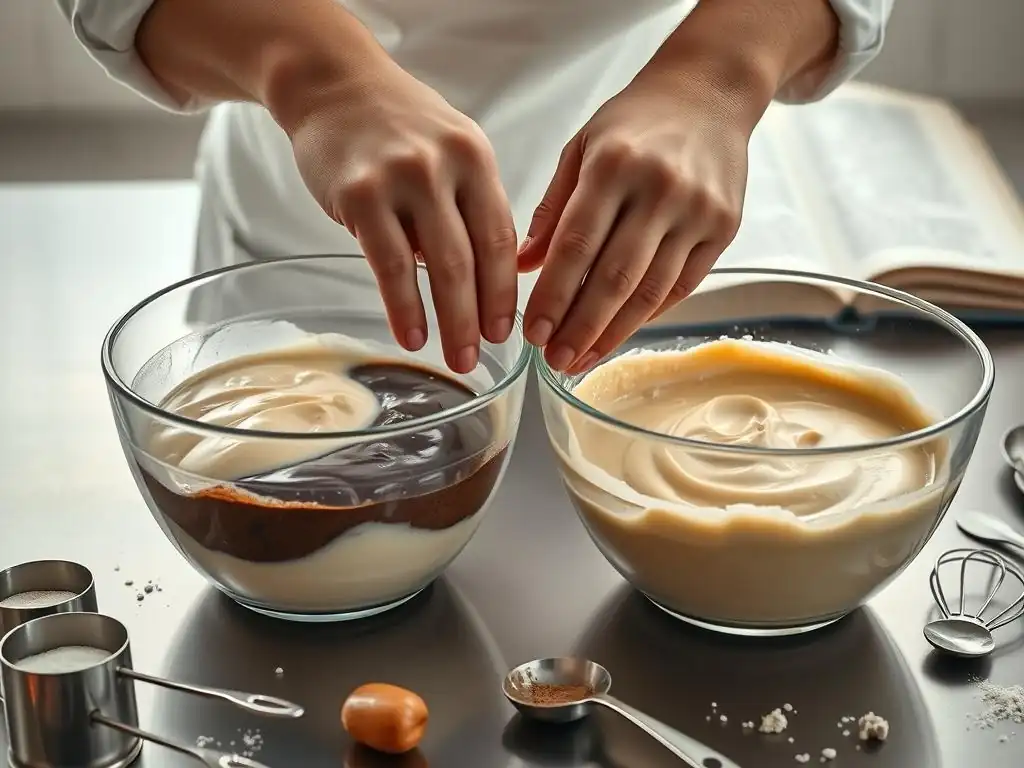
Recognizing poor emulsification is the first step to fixing it. In cake batters, the most common sign is separation or curdling. Instead of a smooth, homogeneous mixture, you'll see distinct layers or small clumps of fat floating in a watery liquid. This often happens when adding eggs or liquids too quickly to a creamed butter/sugar mixture, or if ingredients are at the wrong temperature.
In baked goods, poor emulsification can manifest as:
- A greasy or oily texture.
- A coarse, uneven crumb structure with large, irregular holes.
- A cake that collapses or sinks in the center.
- Rapid staling, resulting in a dry, crumbly texture shortly after baking.
These issues indicate that the fat and water phases did not integrate properly, leading to a weak structure that cannot hold moisture effectively or resist the forces of staling. Addressing these signs is key to understanding how to extend cake shelf life through improved technique.
Common Mistakes to Avoid When Emulsifying
Several common errors can lead to poor emulsification in baking:
- Incorrect Ingredient Temperatures: Using cold butter or eggs is a major culprit. Butter won't cream properly, and cold eggs shock the emulsion, causing it to break.
- Adding Liquids Too Quickly: Dumping all the liquid ingredients into the fat/sugar mixture at once overwhelms the emulsifying capacity, leading to separation.
- Over-Mixing or Under-Mixing: While over-mixing can sometimes break an emulsion or develop too much gluten (leading to toughness), under-mixing is more common when dealing with emulsification issues – the ingredients haven't had enough time or mechanical energy to properly combine into a stable state.
- Using the Wrong Type of Fat: Standard butter or shortening has limited emulsifying power compared to high-ratio shortenings designed for cakes.
- Insufficient Emulsifier (if adding separately): Not adding enough of a supplemental emulsifier means there aren't enough molecules to stabilize the mixture.
Avoiding these pitfalls is crucial for achieving a stable batter and a successful bake that stays fresh longer, directly impacting how to extend cake shelf life.
Solutions for Achieving Perfect Emulsification Every Time
Achieving perfect emulsification consistently requires attention to detail and practice.
- Ensure Ingredients are at Room Temperature: This is arguably the most important step. Allow butter and eggs to sit out for 1-2 hours before baking.
- Add Liquids Gradually: Incorporate eggs or liquid mixtures one at a time or in a slow, steady stream, especially when adding to a creamed fat mixture. Mix thoroughly after each addition until fully incorporated before adding more.
- Mix Adequately: Beat the mixture until it is smooth, light, and fluffy, with no visible signs of separation. This might take 3-5 minutes on medium speed for the creaming stage with butter and sugar.
- Scrape Down the Bowl: Periodically stop the mixer and scrape down the sides and bottom of the bowl with a spatula to ensure all ingredients are evenly incorporated.
- Consider Emulsified Shortening or Added Emulsifiers: For recipes where maximum tenderness and shelf life are desired, using a high-ratio emulsified shortening or adding a small amount of a specific emulsifier (like a powdered monoglyceride blend) can significantly improve results and is a direct method for how to extend cake shelf life.
- Fixing a Broken Emulsion: If your batter curdles, gently warm a small portion of the separated liquid mixture (e.g., a few tablespoons) over a double boiler or in the microwave until slightly warm (not hot). Slowly drizzle this warmed portion back into the main batter while mixing on low speed. This can sometimes help the fat and liquid re-emulsify.
Mastering these techniques will lead to more stable batters, better cake structure, and significantly improved freshness, helping you confidently extend cake shelf life.
Conclusion: Emulsification – Your Key to Longer Lasting, Delicious Bakes
Recap of the Benefits of Emulsification for Cake Freshness
Emulsification is far more than just a mixing step; it's a powerful scientific principle that unlocks the potential for creating baked goods with superior texture and significantly extended shelf life. By enabling the stable dispersion of fat and water, emulsification directly combats the primary causes of staling: starch retrogradation and moisture loss. It allows for higher ratios of sugar and liquid in recipes, resulting in inherently moister cakes.
The stable structure created by effective emulsification leads to a finer, more tender crumb that resists drying out and crumbling. Emulsifiers, particularly monoglycerides, actively interfere with the starch molecules responsible for firming, keeping your cakes softer for days longer. Understanding and utilizing emulsification techniques is fundamental to knowing how to extend cake shelf life and ensuring your baking efforts result in products that maintain their delightful quality well after they've cooled.
Mastering Emulsification: A Baker's Path to Consistent Quality
For any baker aspiring to consistent quality and bakes that impress not just on day one but also on day three or four, mastering emulsification is essential. It involves understanding the science, choosing the right ingredients (like emulsified shortenings or supplemental emulsifiers), and executing precise mixing techniques at the correct temperatures.
By paying attention to the signs of good and poor emulsification and practicing the techniques discussed, you can dramatically improve the texture and longevity of your cakes and other baked goods. Embracing the science of emulsification is a rewarding step in your baking journey, empowering you to create consistently moist, tender, and delicious treats that stay fresh longer. It is truly a key skill in how to extend cake shelf life and elevate your baking to the next level.
Frequently Asked Questions
How does emulsification help extend the shelf life of cakes?
Emulsification, the process of combining fats and liquids in a stable mixture, helps to retain moisture within the cake. This prevents the cake from drying out quickly, thus extending its shelf life.
What are some common emulsifiers used in baking?
Common emulsifiers include egg yolks, lecithin (often found in soy), and commercial emulsified shortenings. These ingredients help to bind the fats and liquids in your cake batter.
Can I use any type of fat in my cake recipe and expect emulsification to work?
No, the type of fat matters. Fats that are solid at room temperature, like shortening or butter, generally contribute more to emulsification than liquid oils. The key is to cream the butter and sugar properly to introduce air.
What happens if a cake batter is not properly emulsified?
If a cake batter is not properly emulsified, the fat and liquid may separate, resulting in a dense, unevenly textured cake that stales more quickly.
Besides emulsification, what other factors influence a cake's shelf life?
Other factors include proper storage in an airtight container, the ingredients used (e.g., using honey can help retain moisture), and even the baking time and temperature.
Final Reflection: The Sweet Science of Longer-Lasting Cakes
The science of emulsification isn't just about creating smooth, creamy textures; it's the key to unlocking significantly longer shelf life in your baked goods. Understanding how emulsifiers work allows us to move beyond simply accepting that cakes go stale, and instead, empowers us to actively control their freshness. This knowledge is more relevant than ever in a world increasingly focused on reducing food waste.
The impact of emulsification extends far beyond the individual baker; it's a fundamental principle shaping the entire food industry. Its influence on texture and preservation is profound, affecting everything from the cakes we bake at home to the mass-produced goods on supermarket shelves. The art of baking is a science, and understanding that science allows us to create not only delicious treats, but also treats that last longer, reducing waste and maximizing enjoyment.
This quote encapsulates the core message of this article: that a deeper understanding of food science can lead to more sustainable and satisfying culinary experiences.
Now, consider your own baking practices. Think about the cakes you've made, the ones that quickly dried out, and those that surprisingly remained moist and delicious for days. What ingredients did you use?
Could a better understanding of emulsification have made a difference? I encourage you to experiment, to explore the world of emulsifiers, and to discover the joy of extending the shelf life of your creations. The reward is not only less waste, but also the satisfaction of savoring your perfectly baked cakes for longer, sharing them with loved ones, and experiencing the full potential of your culinary skills.
Unlock Your Baking's Full Potential!
Thanks for diving into the world of longer-lasting baked goods! You've now learned the secrets to extending their shelf life through emulsification. Ready to put this knowledge into practice?
- Master the Art of Emulsification: Try our recommended emulsifier in your next batch of cookies or cake—you'll be amazed at the difference! Experiment with different ratios to discover your perfect blend.
- Share your baking triumphs (and challenges!): Join our BakeWithEase community forum and let us know how your emulsification experiment went. We’d love to see your results!
- Explore Emulsion Magic Further: Delve into our comprehensive guide on ingredient substitutions – learn how emulsification can be applied to various baking techniques!
What incredible baking creations will you create now that you've unlocked the power of emulsification?