
Enriched Doughs: Navigating Yeast Fermentation with Fats and Sugars

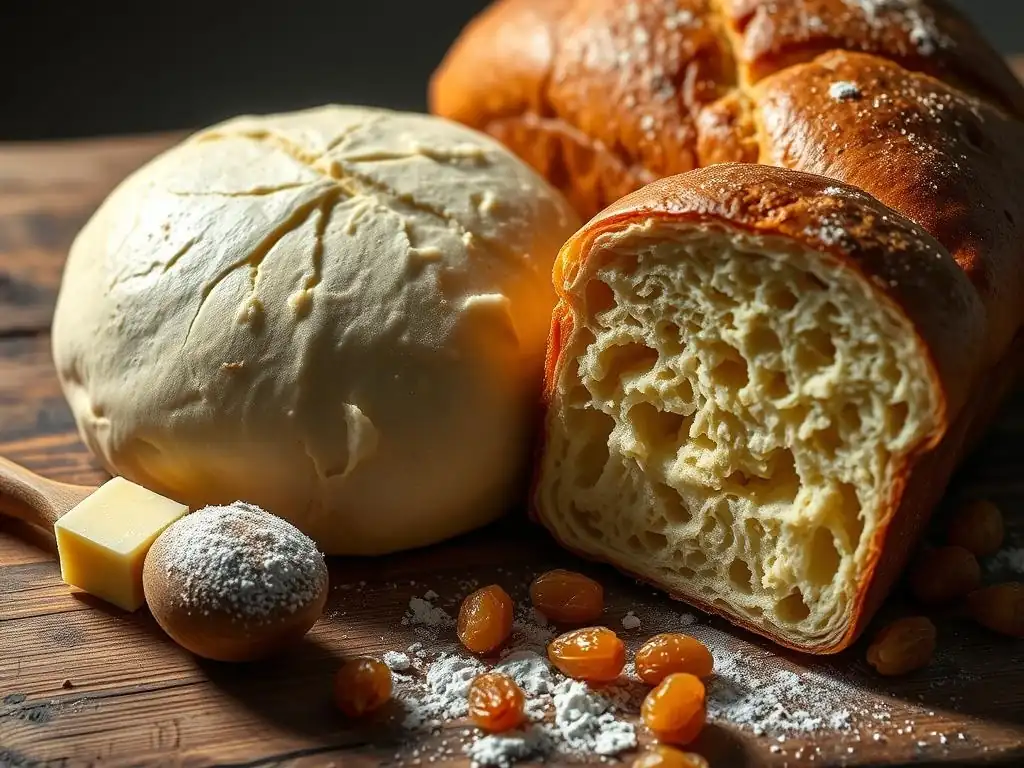
Welcome to BakeWithEase, where the journey to baking mastery begins!
Ever wondered how to coax the perfect rise from doughs packed with fats and sugars? This Baking Science Deep Dive unravels the secrets of yeast fermentation enriched doughs. Prepare to demystify the science, unlock incredible flavor, and elevate your baking creations. Are you ready to understand the delicate dance between yeast, sugar, and fat? Let's get baking!
- Baking with Enriched Doughs: Mastering Flavor and Texture
- Understanding Enriched Doughs
- The Science of Fermentation in Enriched Doughs
- Troubleshooting Common Dough Problems
- Techniques for Perfect Enriched Dough
- Enriched Dough Recipes
- Advanced Techniques for Flavor and Texture
-
Frequently Asked Questions
- What is an enriched dough and how does it differ from a regular dough?
- How do fats and sugars affect yeast fermentation in enriched doughs?
- What are some examples of enriched dough recipes?
- What are the common challenges when working with enriched doughs?
- What tips can help ensure successful yeast fermentation in enriched doughs?
- Final Reflection: The Sweet Science of Enriched Doughs
- Unleash Your Inner Baker: Master the Art of Enriched Doughs!
Baking with Enriched Doughs: Mastering Flavor and Texture
Understanding Enriched Doughs
What are Enriched Doughs and Their Characteristics?
Enriched doughs stand apart from lean doughs, like those used for simple baguettes or pizzas, due to the addition of ingredients such as fats, sugars, milk, and eggs. These enrichments significantly alter the dough's structure, texture, and flavor profile. Unlike lean doughs which rely primarily on flour, water, salt, and yeast, enriched doughs gain richness, tenderness, and a softer crumb from these extra components. Think of a classic challah, a fluffy brioche, or sweet cinnamon rolls – these are prime examples, characterized by their often golden color (from eggs and butter), tender bite, and slightly sweet or rich taste.
The presence of fats and sugars in enriched doughs presents unique challenges and opportunities for the baker. Fats, like butter or oil, interfere with gluten development, leading to a more tender structure, but also requiring careful handling during kneading. Sugars provide food for the yeast, speeding up initial fermentation, but in higher quantities, they can actually slow yeast activity due to osmotic pressure. Eggs add richness, color, and help create a finer, cake-like crumb. Understanding how these ingredients interact is key to successful yeast fermentation in enriched doughs and achieving that desired soft, flavorful result.
The Role of Yeast in Enriched Dough Fermentation
Yeast is the living engine driving the rise and flavor development in enriched doughs, just as it is in lean doughs. Through the process of fermentation, yeast consumes sugars (both naturally present in flour and added) and produces carbon dioxide gas, which causes the dough to rise, and various alcohols and organic acids, which contribute to the characteristic flavor. In enriched doughs, however, the environment for the yeast is richer and more complex. The presence of readily available sugars provides a quick energy source for the yeast, often leading to a vigorous initial rise.
Successfully managing yeast fermentation in enriched doughs requires paying close attention to the balance of ingredients and environmental factors. Too much sugar can stress the yeast, while insufficient sugar might lead to a slow rise. Fats can insulate the dough, potentially affecting its temperature and thus the rate of fermentation. Eggs add protein and fat, which can impact gluten structure and yeast activity. Mastering yeast fermentation enriched doughs involves creating optimal conditions – appropriate temperature, hydration, and ingredient ratios – to allow the yeast to work effectively despite the presence of these enriching ingredients.
Key Ingredients: Flour, Yeast, Sugar, Fat, and Eggs
Flour provides the structure for enriched doughs, containing the proteins (glutenin and gliadin) that form the gluten network when hydrated and kneaded. While all-purpose flour can be used, bread flour, with its higher protein content (typically 12-14%), is often preferred as it can build a stronger gluten structure necessary to support the weight of the added fats and sugars. The quality and protein content of the flour significantly impact the dough's ability to rise and hold its shape during yeast fermentation.
Beyond flour, the defining ingredients are yeast, sugar, fat, and eggs. Yeast, whether active dry, instant, or fresh, is responsible for leavening. Sugar (sucrose, honey, etc.) feeds the yeast and contributes sweetness and browning during baking.
Fats (butter, oil, shortening) tenderize the crumb by coating gluten strands, inhibiting their development, and also add richness and moisture. Eggs add protein, fat, and lecithin, contributing to structure, richness, color, and emulsification, which helps distribute fat evenly. The precise ratio of these ingredients varies greatly depending on the desired final product, from a moderately enriched challah to a very rich brioche, profoundly impacting the process of yeast fermentation enriched doughs.
The Science of Fermentation in Enriched Doughs
Sugar's Influence on Yeast Activity and Dough Sweetness
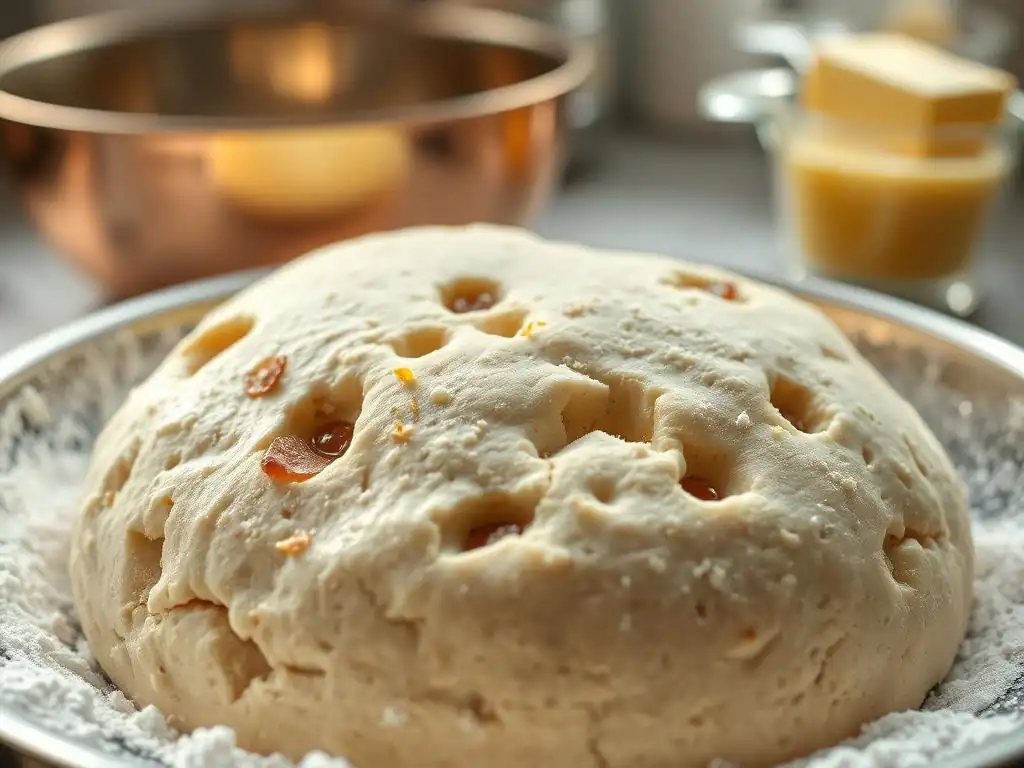
Sugar plays a dual role in the yeast fermentation of enriched doughs: it's both a food source for the yeast and a flavor component for the baker. Initially, yeast readily consumes simple sugars present in the flour or added to the dough, producing carbon dioxide and alcohol. This provides a quick start to the rise. Doughs with moderate sugar levels (say, up to 5-10% of flour weight) will ferment actively, resulting in a good rise and contributing to a soft crumb and desirable crust browning (via Maillard reactions during baking).
However, when sugar levels are high (e.g., 15% or more relative to flour weight, common in very sweet doughs), sugar can exert osmotic pressure. This means the high concentration of sugar outside the yeast cells draws water out of them, effectively dehydrating the yeast and slowing down the fermentation process. Bakers working with high-sugar enriched doughs often need to use a higher percentage of yeast, a more osmotolerant yeast strain (specifically designed for high-sugar environments), or allow for longer fermentation times to achieve the desired rise. Managing sugar's impact is critical for effective yeast fermentation enriched doughs.
Fat's Impact on Gluten Development, Tenderness, and Flavor
Fat is a primary contributor to the characteristic tenderness and richness of enriched doughs, but it also presents challenges for gluten development and yeast fermentation. Fats physically interfere with the formation of the gluten network by coating the flour particles and gluten strands. This inhibition of gluten development is precisely what leads to a softer, more tender crumb compared to lean bread. However, it also means that enriched doughs can be weaker and require more careful handling during kneading and shaping.
Beyond tenderness, fat adds significant flavor and moisture. Butter, for example, contributes a distinct rich flavor and melts during baking, creating flaky layers in some applications or a moist, tender crumb in others. While fat doesn't directly participate in yeast fermentation, its presence can affect the dough's temperature stability and viscosity, indirectly influencing yeast activity. A cold, high-fat dough will ferment more slowly than a warmer, less-fatty dough. Successfully incorporating fat while still allowing for adequate gluten development and efficient yeast fermentation enriched doughs is a key skill.
Controlling Fermentation: Time, Temperature, and Hydration
Controlling the rate and extent of yeast fermentation is paramount for achieving the desired volume, texture, and flavor in enriched doughs. The primary levers for control are time and temperature. Yeast activity increases with temperature; fermentation is typically optimal between 75-80°F (24-27°C). Warmer temperatures speed up fermentation, while cooler temperatures slow it down. This allows bakers to manipulate the fermentation time – a short, warm proof for a quick rise, or a long, cold fermentation (retardation) in the refrigerator to develop more complex flavors.
Hydration levels also influence fermentation. While enriched doughs often have lower water hydration relative to flour compared to lean doughs, the presence of eggs and milk adds liquid and other components. Higher hydration generally leads to faster fermentation and a more open crumb structure, while lower hydration results in a denser crumb and slower fermentation. Understanding how the rich ingredients interact with water and affect yeast activity is crucial for managing the complex process of yeast fermentation enriched doughs effectively.
Troubleshooting Common Dough Problems
Addressing Slow Fermentation, Over-Proofing, and Dense Texture
Baking with enriched doughs can sometimes present challenges, with slow fermentation, over-proofing, and a resulting dense texture being common issues. Slow fermentation means the dough isn't rising adequately or within the expected timeframe. This can lead to a heavy, underdeveloped final product. Over-proofing, on the other hand, occurs when the dough ferments for too long or at too high a temperature, causing the gluten structure to collapse, resulting in a dough that might rise initially but then deflate, often leading to a dense or flat baked good.
A dense texture in the final baked product can be a symptom of either slow fermentation or over-proofing, or sometimes inadequate kneading or incorrect ingredient ratios. If the dough didn't rise enough (slow fermentation), it won't have the internal structure to be light and airy.
If it over-proofed, the fragile gas bubbles collapse, leaving a dense mass. Understanding the signs – a dough that doesn't double in size, a dough that looks puffy but then shrinks when touched, or a dough that feels heavy and slack – is the first step in diagnosing and fixing issues with yeast fermentation enriched doughs.
Solutions for Slow Fermentation: Yeast Activation and Temperature Adjustment
If your enriched dough is fermenting too slowly, several factors could be at play. First, check the yeast itself. Was it fresh? Was active dry yeast properly bloomed in warm liquid (around 105-115°F or 40-46°C) before being added? Using old or inactive yeast is a primary cause of slow fermentation. Ensure your liquid isn't too hot, which can kill the yeast, or too cold, which can inhibit it.
Temperature is another critical factor. Enriched doughs ferment best in a warm environment, ideally between 75-80°F (24-27°C). If your kitchen is cool, find a warmer spot – near a sunny window, on top of a warm appliance, or in a proofing box or oven with just the light on. You can also warm your ingredients slightly (milk or eggs should be at room temperature or slightly warmer). Adding a small amount more warm liquid can also sometimes help kickstart sluggish yeast fermentation enriched doughs.
Preventing Over-Proofing: Dough Monitoring and Retardation
Preventing over-proofing relies heavily on monitoring the dough's progress rather than strictly adhering to time cues, as fermentation rates vary. Learn to recognize the signs of a properly proofed dough: it should be significantly increased in volume (often doubled or more, depending on the recipe), look visibly puffy, and when gently poked with a finger, the indentation should spring back slowly, but not completely. If the indentation springs back immediately, it needs more time; if it stays indented and the dough looks wrinkly or starts to deflate, it's likely over-proofed.
Using cooler temperatures is an excellent strategy to prevent over-proofing, especially with enriched doughs that often have a long fermentation time. Refrigerating the dough (retardation) slows down yeast activity dramatically, allowing flavors to develop over many hours without the risk of the dough over-rising and collapsing. This technique is particularly useful for enriched doughs like brioche or challah that benefit from extended fermentation. Proper management of yeast fermentation enriched doughs means finding the sweet spot before the dough peaks and begins to degrade.
Techniques for Perfect Enriched Dough
Selecting the Right Yeast: Instant, Active Dry, or Fresh
Choosing the correct type of yeast is important for managing the yeast fermentation process in enriched doughs. Active dry yeast is common and requires activation (blooming) in warm liquid before use. This ensures the yeast is alive and gives it a head start. Instant yeast, on the other hand, can be mixed directly into the dry ingredients, saving a step, and is generally more vigorous and reliable. It also tends to be more stable in storage than active dry.
Fresh yeast (also called cake yeast) is less common in home baking but preferred by some professionals for its consistent results and mild flavor. It is highly perishable and must be refrigerated and used quickly. For enriched doughs, especially those with higher sugar content, some bakers prefer instant yeast due to its reliability. Regardless of type, ensure your yeast is fresh and stored correctly to guarantee effective yeast fermentation enriched doughs.
Kneading Techniques: Achieving Strength and Elasticity
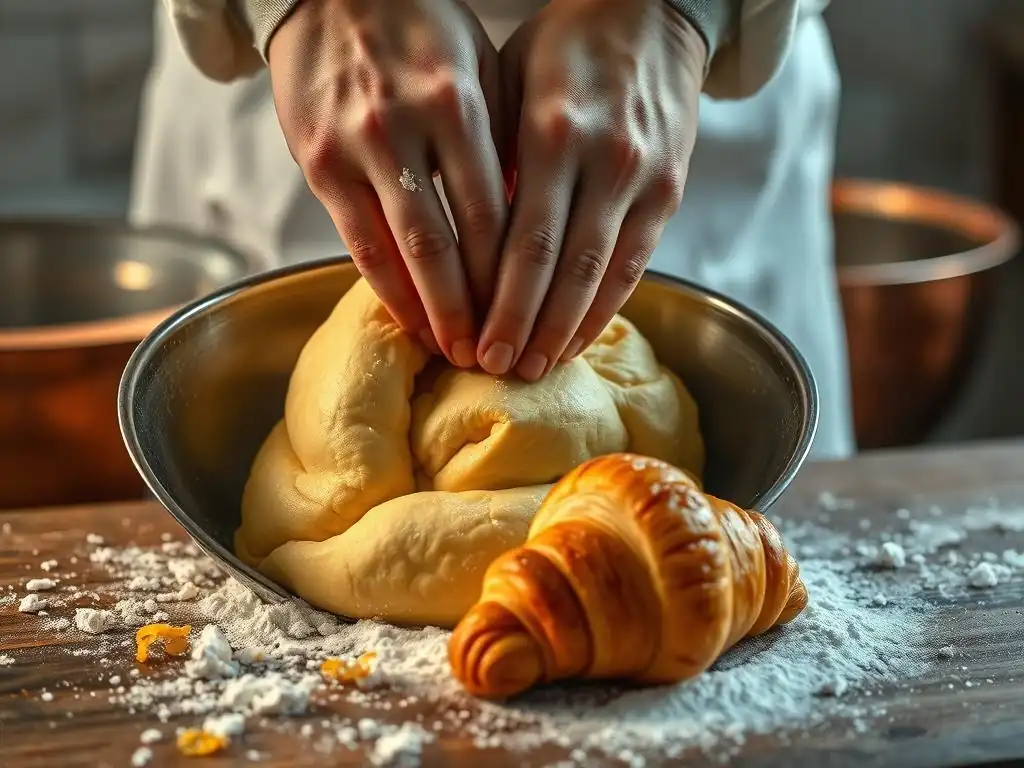
Kneading is crucial for developing the gluten network in enriched doughs, providing the structure needed to support the rise from yeast fermentation and the weight of added fats and sugars. Enriched doughs often require more kneading than lean doughs because the fats interfere with gluten formation. The goal is to develop enough strength so the dough can hold the gas produced by the yeast. This can be achieved through manual kneading or using a stand mixer.
With a stand mixer, kneading typically takes 8-15 minutes on medium speed, depending on the dough's richness. The dough should pull away from the sides of the bowl and become smooth, elastic, and pass the windowpane test (a small piece can be stretched thinly without tearing). Manual kneading takes longer, perhaps 15-25 minutes. Proper kneading ensures the dough has the necessary structure for successful yeast fermentation enriched doughs and results in a well-risen, tender final product.
Shaping and Baking: Achieving a Golden Crust and Even Baking
Once the enriched dough has completed its bulk fermentation and shaping is the next critical step. Shaping creates tension on the dough's surface, helping it hold its shape and providing structure for the final rise (proofing). Techniques vary from simple rounds and loaves to intricate braids for challah or rolls for brioche. Gentle handling is essential during shaping to avoid deflating the gas bubbles created during yeast fermentation.
Baking transforms the proofed dough into a finished product. Enriched doughs, with their sugar and fat content, brown more readily than lean doughs. Baking temperatures for enriched doughs often range from 325°F to 375°F (160°C to 190°C), slightly lower than for lean bread, to prevent the crust from burning before the interior is cooked through. Baking time depends on the size and shape of the loaf or rolls. The goal is a beautiful golden-brown crust, a tender, fully cooked interior, and the delightful aroma that signifies successful yeast fermentation enriched doughs.
Enriched Dough Recipes
Brioche: A Classic French Bread
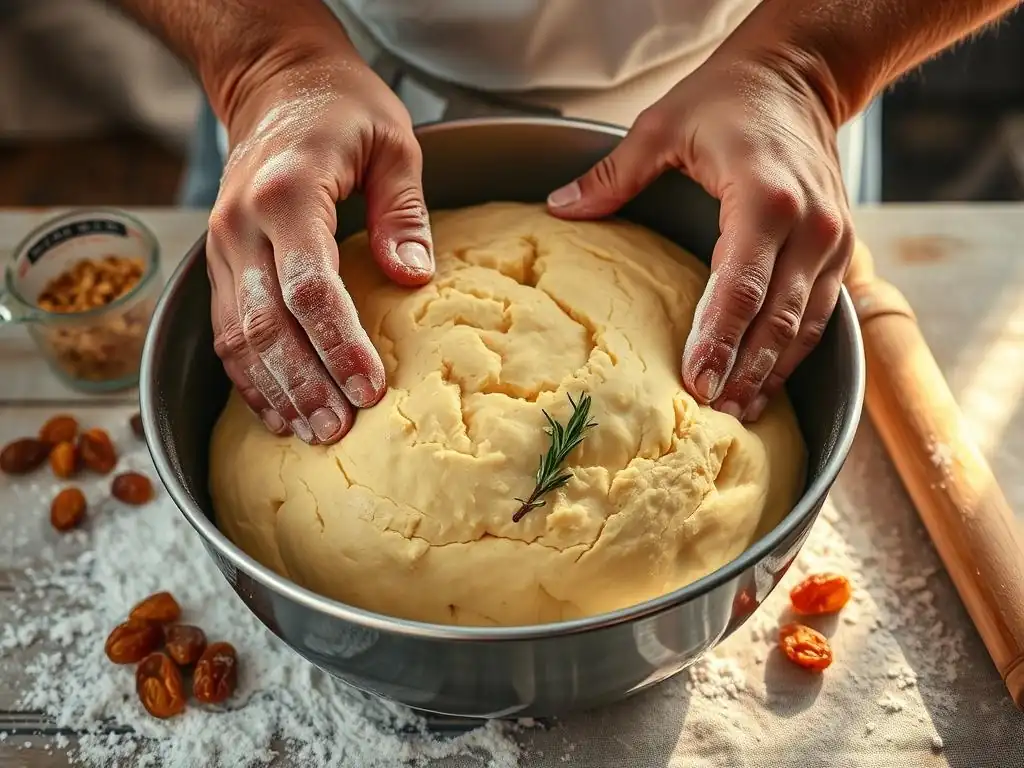
Brioche is perhaps the quintessential enriched dough, known for its exceptionally rich, tender crumb and golden color, primarily due to a high proportion of butter and eggs. A standard brioche might contain as much as 50-75% butter relative to the flour weight, plus a significant number of eggs. This high fat and protein content makes the dough very soft and challenging to knead and handle, often requiring chilling steps to firm up the butter.
The yeast fermentation in brioche dough is slow and often requires extended periods, sometimes including overnight refrigeration (retardation), to allow the flavors to develop fully and the yeast to work through the rich environment. The slow fermentation also contributes to the fine, delicate crumb structure. Baking brioche typically results in a deeply golden crust and a moist, luxurious interior, perfect for sweet or savory applications. Mastering yeast fermentation enriched doughs is particularly evident in achieving the perfect brioche.
Challah: A Traditional Jewish Sabbath Bread
Challah is another beloved enriched dough, traditionally braided and often slightly sweet. While typically less rich than brioche, it contains eggs, oil or butter, and sugar, giving it a softer texture and richer flavor than lean bread. The amount of enrichment can vary, but challah consistently features a beautiful golden-yellow crumb from the eggs and a slightly sweet taste from the sugar.
Yeast fermentation in challah dough is usually straightforward, benefiting from the sugar as a readily available food source. The dough is typically kneaded until smooth and elastic, then allowed to bulk ferment until doubled. The signature braiding requires a well-developed gluten structure that is still pliable. Baking results in a loaf with a shiny, often egg-washed crust and a soft, pull-apart interior, showcasing effective yeast fermentation enriched doughs.
Cinnamon Rolls: A Sweet and Spicy Treat
Cinnamon rolls utilize a sweet enriched dough as their base, often containing butter, milk, sugar, and sometimes eggs. This dough provides a soft, tender vehicle for the buttery, cinnamon-sugar filling and the sweet glaze or frosting. The dough is kneaded until smooth, allowed to rise, then rolled out, filled, shaped into spirals, and proofed again before baking.
The high sugar content in cinnamon roll dough, especially combined with the sugar in the filling, means the yeast fermentation needs careful monitoring. Using instant yeast or allowing sufficient time for proofing is crucial to ensure the dough rises adequately despite the sugary environment. The fat in the dough keeps it tender, while the sugar contributes to the soft crumb and helps the rolls brown nicely in the oven. Perfecting yeast fermentation enriched doughs is key to achieving those light, fluffy cinnamon rolls.
Advanced Techniques for Flavor and Texture
Using a Poolish or Biga: Enhancing Flavor and Complexity
Incorporating a pre-ferment, such as a poolish or biga, is an advanced technique that can significantly enhance the flavor and texture of enriched doughs. A poolish is a wet, liquidy starter made with equal parts flour and water plus a small amount of yeast, fermented for several hours or overnight. A biga is a stiffer, drier starter, typically with 50-60% hydration. Both are mixed into the final dough.
These pre-ferments allow for a longer, slower fermentation period for a portion of the flour, encouraging the development of complex flavors (organic acids, alcohols) that are not present in doughs fermented quickly. They also contribute to a more open crumb structure. Using a poolish or biga in enriched doughs adds an extra layer of depth to the flavor profile, complementing the richness from fats and sugars, and can also aid in managing the overall yeast fermentation enriched doughs by providing a vigorous starter culture.
Autolyse: Improving Hydration and Gluten Development
Autolyse is a simple yet effective technique where flour and water (and sometimes liquid from milk or eggs, but not yeast, salt, or fat initially) are mixed together and allowed to rest for 20-60 minutes before the remaining ingredients are added and kneading begins. This resting period allows the flour to fully hydrate and enzymes naturally present in the flour to start developing the gluten network without the mechanical effort of kneading.
For enriched doughs, autolyse can be particularly beneficial. It helps the flour absorb the liquid components from milk and eggs more effectively and gives the gluten a head start on development before the fat is added, which would otherwise hinder gluten formation. This can reduce the overall kneading time required and potentially lead to a more extensible dough that is easier to handle. While autolyse doesn't directly impact yeast fermentation enriched doughs, it sets the stage for a stronger gluten structure capable of supporting the gas produced during fermentation.
Retardation (Cold Fermentation): Developing Complex Flavors
Retardation, or cold fermentation, involves placing the enriched dough in the refrigerator (typically 38-45°F or 3-7°C) for an extended period, often 12 to 48 hours. The cold temperature dramatically slows down yeast activity, reducing the rate of carbon dioxide production. However, yeast and enzyme activity doesn't stop entirely; instead, it shifts, promoting the development of more complex organic acids and other flavor compounds.
This slow, cold fermentation is particularly valuable for rich doughs like brioche or challah, allowing their flavors to deepen and become more nuanced. It also strengthens the gluten structure over time without intensive kneading, making the dough easier to handle and shape after chilling. Retardation is a powerful tool for controlling yeast fermentation enriched doughs, offering flexibility in scheduling and significantly improving the final flavor and texture of the baked goods.
Frequently Asked Questions
What is an enriched dough and how does it differ from a regular dough?
An enriched dough contains added fats and sugars, unlike lean doughs. This addition impacts the yeast fermentation process and the final texture of the baked good.
How do fats and sugars affect yeast fermentation in enriched doughs?
Fats can slow down yeast activity by coating the gluten strands, while sugars provide readily available food for the yeast. Finding the correct balance is crucial for proper dough rise and development.
What are some examples of enriched dough recipes?
Examples include brioche, challah, and cinnamon rolls. These recipes rely on the fermentation process of the enriched dough to achieve their characteristic soft and rich texture.
What are the common challenges when working with enriched doughs?
Overproofing or underproofing can be a problem due to the increased fermentation time. Also, the high fat content can make the dough difficult to handle.
What tips can help ensure successful yeast fermentation in enriched doughs?
Using high-quality yeast, maintaining the correct dough temperature, and carefully monitoring the rise are essential. It's also important to avoid overmixing to prevent tough dough.
Final Reflection: The Sweet Science of Enriched Doughs
The careful balance of fats and sugars in yeast fermentation isn't just a baker's secret; it's a fundamental principle impacting texture, flavor, and the very essence of bread-making itself. Understanding this delicate interplay unlocks a world of possibilities, from the airy lightness of brioche to the rich depth of challah. This knowledge, once the domain of experienced bakers, is now readily accessible, empowering a new generation to craft truly exceptional breads.
The exploration of enriched doughs reveals a fascinating interplay between science and art. The subtle shifts in texture, the nuanced development of flavor – these are not merely technical details, but expressions of creativity. As we delve deeper into the process, we discover a profound connection to culinary history and tradition. Bread is the staff of life,
a simple phrase, yet it encapsulates the profound impact of this fundamental food on cultures worldwide. The mastery of enriched doughs allows us to connect with this legacy, to refine and reinterpret age-old techniques, and to contribute our own unique flourishes to the ongoing story of bread.
Consider the possibilities now open to you. Experiment with different fats, explore the nuances of various sugars, and observe the transformative power of fermentation. Don't be afraid to deviate from recipes, to make mistakes, and to learn from your experiences. Each loaf you bake, each experiment you undertake, is a step towards a deeper understanding of this fascinating process. Embrace the journey, and the rewards – both in taste and in the satisfaction of creating something truly delicious – will be immeasurable.
Unleash Your Inner Baker: Master the Art of Enriched Doughs!
Thanks for exploring the fascinating world of enriched doughs with us! You've now got the knowledge to create incredibly flavorful and textured breads. Ready to put your new skills to the test?
- Bake your own enriched masterpiece! Try the recipe you liked best from the article – the results will be amazing. Remember to carefully monitor the fermentation process.
- Share your baking journey! Post a picture of your creation on social media and tag #BakeWithEaseEnrichedDoughs – let's inspire each other!
- Experiment with different fats and sugars: Explore how variations in ingredients impact the final product. What unique flavor profiles can you create?
What unexpected flavor combination will you try in your next enriched dough adventure?