
Comparing French Baguette vs. Italian Ciabatta: Which to Bake?

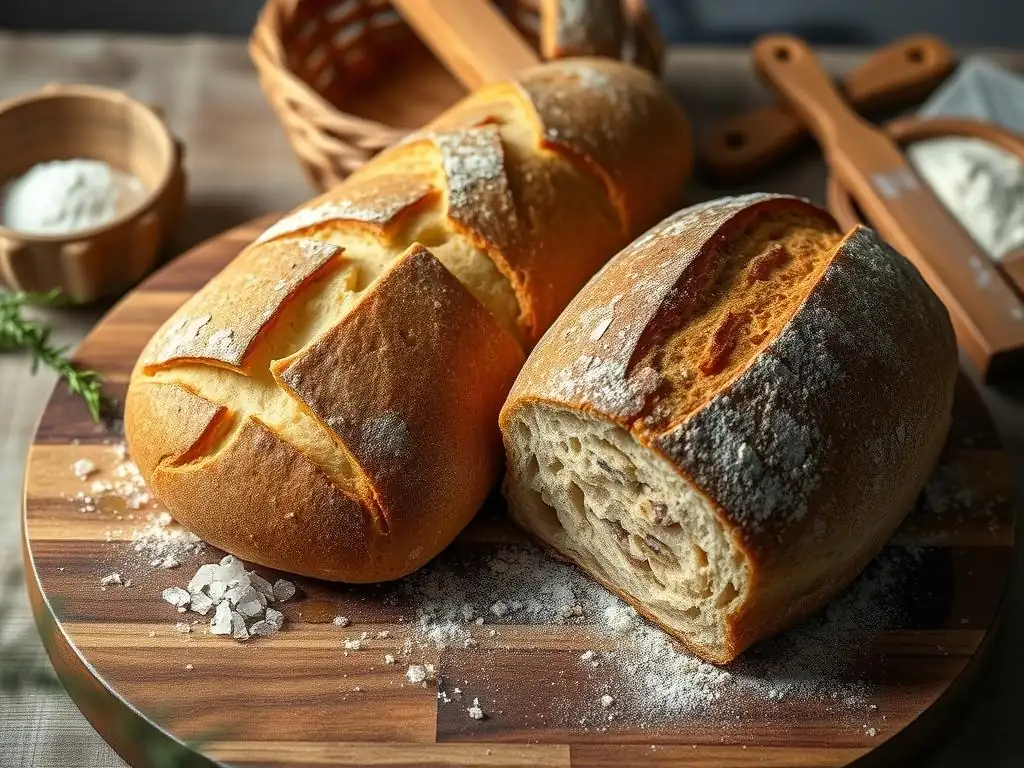
Welcome to BakeWithEase, where the joy of baking is made accessible to everyone! Ever wondered about the subtle, yet significant, differences between a crisp French baguette and an airy Italian ciabatta? This week, we dive deep into a French baguette ciabatta baking comparison, uncovering the secrets behind each loaf's unique texture and flavor. Discover which one best suits your baking style and culinary needs, and unlock the path to baking perfection. Intrigued? Let's get started!
- French Baguette vs. Italian Ciabatta: A Baking Comparison for Home Bakers
- French Baguette Baking: Characteristics and Techniques
- Italian Ciabatta Baking: Characteristics and Techniques
- French Baguette vs. Italian Ciabatta: A Detailed Baking Comparison
- Which Bread to Bake? Considerations and Recommendations
- Advanced Baking Tips for Baguettes and Ciabatta
- Conclusion: Elevating Your Baking Skills with Baguettes and Ciabatta
-
Frequently Asked Questions
- What are the key differences between a French baguette and an Italian ciabatta in terms of baking and final product?
- Which bread, baguette or ciabatta, is generally considered easier for beginner bakers to attempt at home?
- How does the flour type impact the final result when baking a baguette versus a ciabatta?
- What are the recommended ways to serve and enjoy a freshly baked baguette and ciabatta?
- What are some common mistakes to avoid when baking a French baguette or a ciabatta at home?
- Final Reflection: The Flour Power of Choice
- Unleash Your Inner Baker: Which Bread Will You Craft?
French Baguette vs. Italian Ciabatta: A Baking Comparison for Home Bakers
Choosing Between a Baguette and Ciabatta for Your Next Baking Project
Deciding which European classic to bake at home can be a delightful challenge. Both the French baguette and the Italian ciabatta offer unique textures and flavors, representing distinct traditions in bread making. For home bakers, understanding the nuances of each bread is crucial for success. A detailed French baguette ciabatta baking comparison reveals different approaches to ingredients, dough handling, and baking techniques that lead to vastly different results, yet both are incredibly rewarding to master.
Your choice might depend on your baking goals, the time you have available, or even what you plan to serve the bread with. Are you aiming for a long, crusty loaf perfect for slicing and filling, or a rustic, airy bread ideal for dipping in olive oil? This French baguette ciabatta baking comparison will guide you through the characteristics and processes of each, helping you determine which aligns best with your current skills and desires in the kitchen.
Understanding the Appeal of French Baguettes and Italian Ciabatta
The appeal of the French baguette lies in its elegant simplicity and satisfying crunch. Its long, slender shape, incredibly crispy crust, and relatively tight, yet airy, crumb make it a staple for sandwiches like jambon-beurre or simply enjoyed with cheese and wine. It embodies a certain precision in baking, requiring careful shaping and high heat to achieve its signature qualities.
Italian ciabatta, meaning "slipper," is loved for its dramatically open, irregular crumb and chewy texture. Its rustic, flattened shape and often floury exterior give it a distinct look. Ciabatta's high hydration dough makes it a bit more challenging to handle than a typical loaf, but the resulting airy pockets are perfect for soaking up sauces or holding fillings. Its appeal is in its robust texture and versatility, making it excellent for paninis or as a table bread. This French baguette ciabatta baking comparison truly highlights how different paths can lead to equally beloved bread types.
French Baguette Baking: Characteristics and Techniques
Defining the Classic French Baguette: Crust, Crumb, and Flavor Profile
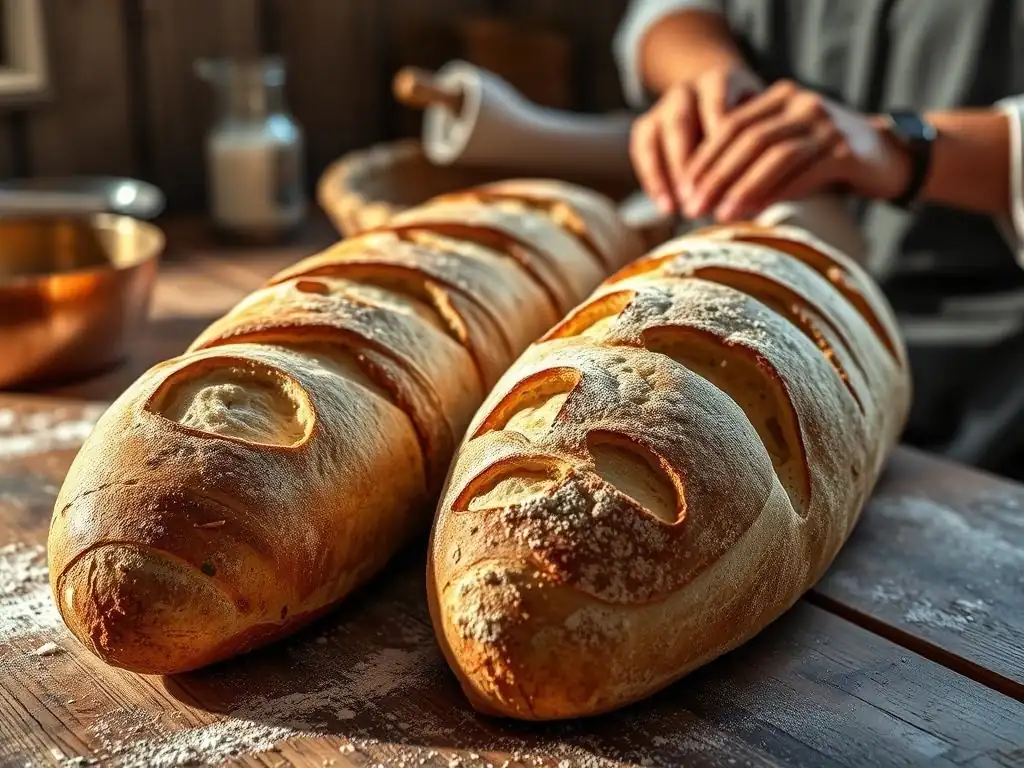
A true French baguette is characterized by several key features that set it apart. Foremost is its crust: thin, exceptionally crisp, and golden brown, often crackling audibly when fresh. The interior, or crumb, should be relatively consistent with small to medium-sized irregular holes, providing an airy yet structured texture. It should not be dense or overly uniform.
The flavor profile of a classic baguette is subtle, primarily showcasing the pure taste of fermented wheat. It has a clean finish with slight nutty or sweet undertones depending on the flour and fermentation time. A successful baguette achieves a balance between its delicate flavor and its signature texture, a combination that makes it a timeless favorite. This requires precise control over fermentation and baking temperature.
Essential Ingredients for Baking Authentic French Baguettes
Baking an authentic French baguette requires just a few basic ingredients, but their quality and ratios are paramount. The foundation is typically high-quality bread flour, often with a protein content around 11-12%. This provides the necessary gluten structure. Water is added, usually at a hydration level of about 70-75% relative to the flour weight, contributing to the airy crumb.
Yeast, either active dry or instant, is used to leaven the dough. A small amount is often preferred for a longer, slower fermentation, which develops more complex flavors. Finally, fine sea salt is essential for flavor and controlling yeast activity. Some traditional recipes might include a tiny pinch of diastatic malt powder to aid crust browning and enzymatic activity, but it's not strictly necessary for a home bake.
Mastering the Baguette Baking Process: A Step-by-Step Guide
Mastering the baguette process involves several stages, each critical for the final outcome. It begins with mixing the dough, often including an autolyse period (mixing flour and water only) to help gluten development. Kneading follows, either by hand or mixer, until a smooth, elastic dough is achieved. The first fermentation (bulk rise) can take 1.5 to 3 hours at room temperature, or much longer if cold fermenting in the refrigerator (e.g., 12-24 hours), which enhances flavor.
After the bulk rise, the dough is divided into portions, typically around 250-350 grams each for standard baguettes. These portions are then pre-shaped into rough logs and allowed to rest briefly (15-20 minutes) before the final shaping. Proper final shaping is key to achieving the iconic baguette form and even baking.
Shaping Techniques for the Perfect Baguette Form
Shaping a baguette involves degassing the dough gently, folding it onto itself, and elongating it into a cylinder. A common technique involves flattening the dough slightly, folding the top edge down to the center and pressing, then folding the dough in half lengthwise and sealing the seam firmly with the heel of your hand. The dough is then rolled back and forth to create surface tension and achieve the desired length, typically 15-20 inches for home ovens.
Achieving a tight surface tension during shaping is vital. This helps the baguette hold its shape during proofing and baking and contributes to the crispy crust. The shaped baguettes are then placed on a floured couche (linen cloth) or parchment paper, separated by folds, for the final proofing.
Baking Baguettes: Achieving a Crispy Crust and Airy Crumb
Baking baguettes requires high heat and steam to produce the characteristic crispy crust and allow for maximum oven spring. Preheat your oven, ideally with a baking stone or steel, to a high temperature, typically 450-480°F (230-250°C). Steam is introduced immediately when the loaves go into the oven. This keeps the crust soft initially, allowing the loaf to expand fully before the crust sets.
Steam can be generated by placing a tray of hot water in the bottom of the oven just before loading the bread, or by using lava rocks/chains in a preheated tray and pouring water over them. The baguettes are typically baked for 20-30 minutes, depending on size and oven, often reducing the temperature slightly and venting the steam halfway through to finish browning and crisping the crust. An internal temperature of around 200-210°F (93-99°C) indicates the bread is fully baked.
Troubleshooting Common Baguette Baking Problems
One common issue when baking baguettes is a lack of oven spring, resulting in flat loaves. This can often be traced back to under-proofing, insufficient steam in the oven, or weak gluten development due to under-kneading or using flour with too low protein. Ensuring your starter/yeast is active, developing the dough properly, and providing ample steam are key remedies.
Another frequent problem is a pale or soft crust instead of the desired crisp, golden one. This is usually caused by insufficient baking time, too low oven temperature, or not allowing the crust to dry out and brown after the initial steaming period. Ensure your oven is accurately preheated, bake until the crust is a deep golden color, and consider baking for the last 5-10 minutes without steam.
Italian Ciabatta Baking: Characteristics and Techniques
Unveiling the Secrets of Italian Ciabatta: Open Crumb and Rustic Appearance
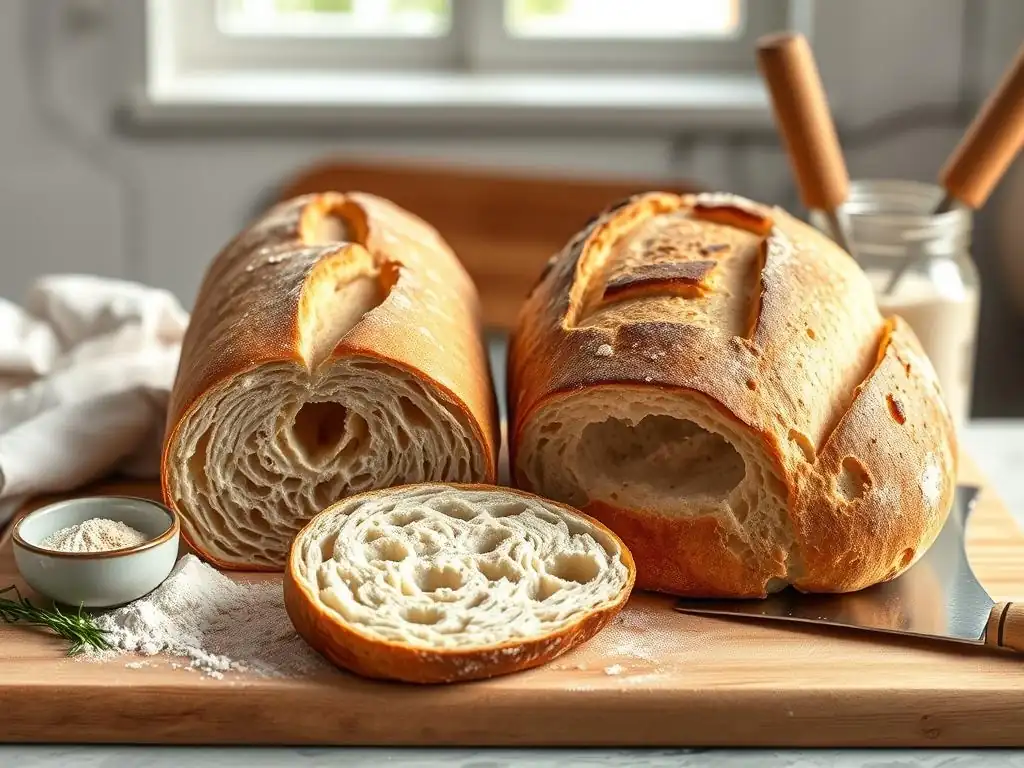
Italian ciabatta is celebrated for its incredibly open, airy crumb structure, often described as having large, irregular holes. This porous interior is a direct result of its very high hydration dough and gentle handling. Unlike the structured baguette, ciabatta embraces a more rustic, flattened shape, typically wider and shorter than a baguette, resembling a slipper.
The crust of ciabatta is usually less intensely crisp than a baguette's, often slightly chewy and floury, especially if the dough was heavily floured before baking. Its flavor is often tangy and complex, particularly if made with a preferment like a poolish or biga, which adds depth through longer fermentation. The unique combination of open crumb, chewy texture, and rustic appearance defines this Italian favorite.
Key Ingredients for Baking Authentic Italian Ciabatta
The ingredients for ciabatta are similar to baguettes but with crucial differences in proportion and sometimes type. High-protein bread flour (12-14%) is often preferred to handle the high hydration, which typically ranges from 75% up to 90% or even higher relative to the flour weight. This significant amount of water is key to the open crumb.
Yeast is used, often in conjunction with a preferment ( poolish or biga), which is a portion of the flour, water, and yeast mixed hours or even a day in advance. Using a preferment adds flavor and strength to the high-hydration dough. Salt is also essential for flavor. Olive oil is sometimes included in ciabatta dough, adding richness and contributing to a slightly softer crumb and crust compared to a lean baguette dough.
Ciabatta Baking Process: A Detailed Guide
The ciabatta baking process is characterized by minimal kneading and gentle handling due to the wet, sticky dough. Mixing is often done in a stand mixer or by hand using the "stretch and fold" method. After mixing, the dough undergoes a long bulk fermentation, often 2-4 hours at room temperature, with several sets of stretch and folds performed every 30-45 minutes during the first part of this rise. This builds gluten structure without aggressive kneading.
Following the bulk fermentation, the dough is typically poured or gently scraped onto a heavily floured surface. It is not punched down. The dough is then divided into desired sizes (often 300-500 grams), taking care not to deflate the airy structure. Unlike baguettes, ciabatta is not shaped tightly; instead, it's gently handled to maintain its gas bubbles.
Achieving the Signature Ciabatta Shape: Stretching and Folding
Achieving the ciabatta shape involves gentle stretching and folding rather than tight shaping. Once the dough is on the floured surface, it's typically handled very minimally. You might gently stretch the dough into a rough rectangle using your hands. Then, it's often cut into smaller rectangles or squares.
These pieces are then gently transferred to a baking surface (like parchment paper on a peel) or left on the floured surface for a short final proof (30-60 minutes). The key is to handle the dough as little as possible after the bulk fermentation to preserve the large gas pockets that create the signature open crumb. The shape is naturally rustic and elongated, like a slipper.
Baking Ciabatta: Creating a Chewy Interior and Crusty Exterior
Ciabatta is also baked at high temperatures, typically 450-475°F (230-245°C), often on a baking stone or steel. Steam is beneficial, similar to baguettes, to allow for initial expansion and crust development, though some bakers achieve good results without significant steam due to the dough's high hydration. Bake time is usually 20-35 minutes, depending on size, until the crust is golden brown and the internal temperature reaches 200-210°F (93-99°C).
The crust will be less uniformly crisp than a baguette's but should have a pleasant chewiness. The interior should be light and airy with large, irregular holes. Baking on a preheated surface helps create a good bottom crust and contributes to oven spring.
Overcoming Challenges in Ciabatta Baking
The primary challenge in ciabatta baking is managing the high-hydration, sticky dough. It can be difficult to handle without it sticking everywhere. Using ample flour on your work surface and hands, or working with wet hands, can help. Also, performing sufficient stretch and folds during the bulk fermentation is crucial for developing enough gluten structure to support the wet dough.
Another common issue is a dense crumb instead of the desired open structure. This is often caused by over-handling or degassing the dough too much after the bulk fermentation, or insufficient fermentation time. Ensure you are gentle when dividing and shaping, and allow adequate time for the dough to develop gas pockets during the bulk rise.
French Baguette vs. Italian Ciabatta: A Detailed Baking Comparison
Ingredient Differences: Flour, Hydration, and Yeast
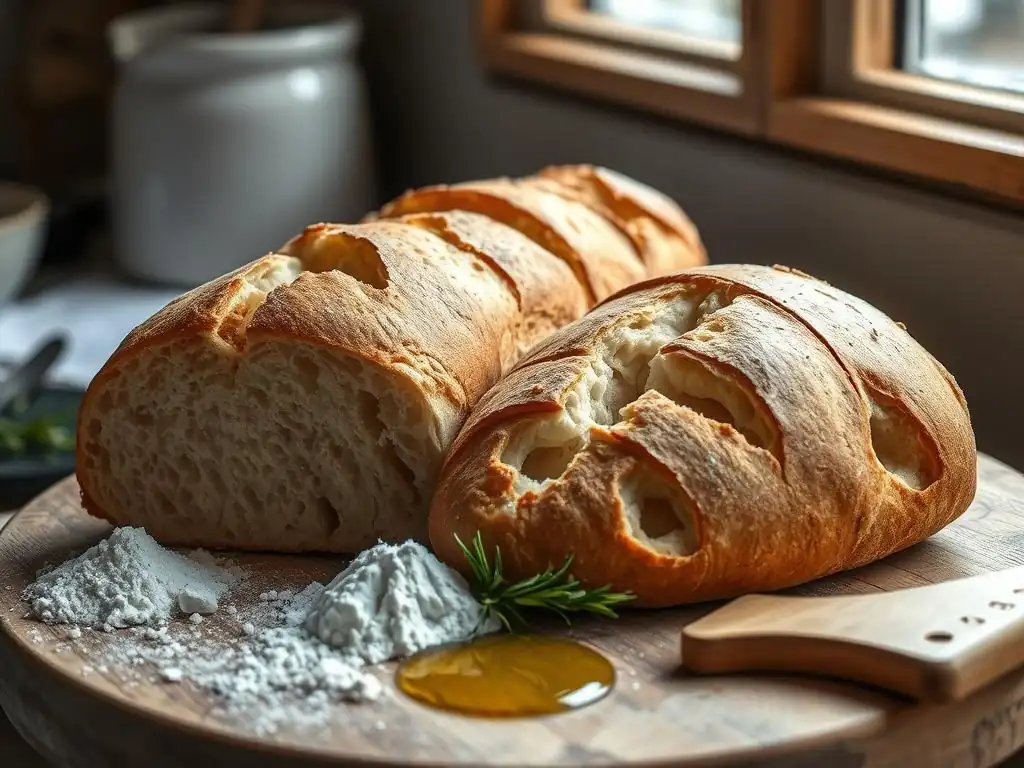
A key distinction in this French baguette ciabatta baking comparison lies in the ingredients and their ratios. Both use flour, water, yeast, and salt, but the type of flour and the amount of water differ significantly. Baguettes typically use bread flour at around 70-75% hydration. Ciabatta often uses a stronger bread flour and has a much higher hydration, commonly 75-90% or even more.
Ciabatta recipes frequently incorporate a preferment ( poolish or biga) for flavor and structure, and sometimes include olive oil, which is absent in lean baguette dough. While both use yeast, the fermentation strategies (direct dough for baguette vs. preferment often for ciabatta) contribute to different flavor profiles and handling properties.
Dough Handling and Fermentation: Comparing Techniques
The handling of the dough is where the French baguette ciabatta baking comparison becomes starkly different. Baguette dough, though hydrated, is manageable and is kneaded until smooth and elastic. It requires careful shaping to create surface tension. Fermentation can be direct or involve a cold retard for flavor.
Ciabatta dough, conversely, is very wet and sticky, making traditional kneading difficult. It relies on gentle stretch and folds over a longer period to build gluten. It is handled minimally and gently after the bulk rise to preserve air bubbles. Fermentation is often lengthy, frequently involving a preferment and sometimes an overnight cold fermentation, contributing to its complex flavor and open crumb.
Shaping and Baking: Contrasting Approaches to Achieve Unique Textures
Shaping techniques are fundamentally different in this French baguette ciabatta baking comparison. Baguettes are meticulously shaped into long, taut cylinders to promote even expansion and a uniform profile. They are scored deeply before baking to control oven spring and enhance crust development.
Ciabatta is handled much more loosely. The dough is typically portioned and gently stretched or folded, then transferred carefully to avoid deflation. It is usually not scored. Baking temperatures are high for both, but the goal differs slightly: baguettes aim for a consistently crisp, thin crust and relatively even crumb, while ciabatta seeks a chewier crust and a dramatically open, irregular crumb. Steam is crucial for baguette crust development; for ciabatta, high hydration often assists, though steam is still beneficial.
Flavor Profiles: A Side-by-Side Taste Test
Comparing the flavor profiles in a French baguette ciabatta baking comparison reveals distinct characteristics. A well-made baguette has a clean, pure wheat flavor with subtle notes from fermentation, often described as slightly sweet or nutty, and its appeal is intrinsically linked to its crisp texture.
Ciabatta, especially when made with a preferment and longer fermentation, tends to have a more pronounced, sometimes tangy, flavor. The higher hydration and potential addition of olive oil also influence its taste and texture, making it richer and chewier. While both are delicious, the baguette offers elegant simplicity, while ciabatta provides a more robust and complex sensory experience.
Which Bread to Bake? Considerations and Recommendations
Skill Level: Baguette vs. Ciabatta for Beginner Bakers
For beginners embarking on a French baguette ciabatta baking comparison journey, the choice depends on what challenges you want to tackle. Baguettes require careful shaping and scoring, which can be tricky initially. The dough consistency is more familiar to traditional bread recipes, making mixing and kneading perhaps easier.
Ciabatta's high hydration dough can be intimidatingly sticky for newcomers. However, the shaping is less precise, and the focus is more on gentle handling and fermentation. If you're comfortable with wet doughs and enjoy the challenge of working with sticky textures, ciabatta might be a fun starting point. If you prefer a more structured dough and want to practice shaping techniques, baguettes could be a good choice.
Time Commitment: Which Bread Fits Your Baking Schedule?
Considering the time commitment is important in any French baguette ciabatta baking comparison for home kitchens. Both breads benefit greatly from long, slow fermentation, often including an overnight cold proof in the refrigerator (12-24 hours or more). This significantly improves flavor and texture but requires planning.
If you're looking for a quicker bake, a same-day baguette recipe might take around 4-6 hours from mixing to baking, including bulk rise and proofing. Ciabatta, due to its high hydration and common use of preferments, often requires a longer overall process, potentially 18-24 hours or more if including a preferment build and overnight cold fermentation. However, active hands-on time might be minimal after the initial mixing and stretch/folds.
Intended Use: Choosing the Right Bread for Sandwiches, Soups, and More
The intended use is a major factor in deciding which bread to bake in a French baguette ciabatta baking comparison. The long, slender shape and crispy crust of a baguette make it ideal for classic sandwiches, like sub-style fillings, or sliced thin for crostini. Its relatively uniform crumb holds toppings well.
Ciabatta's open crumb and chewy texture make it perfect for soaking up liquids, making it excellent with soups, stews, or simply dipped in olive oil and balsamic vinegar. Its robust structure holds up well to grilling for paninis or serving as a hearty table bread. For open-faced sandwiches or bruschetta, the large holes of ciabatta provide a fantastic texture.
Recommendation: Choosing Based on Desired Crumb Structure
Ultimately, the choice in this French baguette ciabatta baking comparison often comes down to the desired crumb structure. If you seek a bread with a consistently crisp crust and a relatively airy, structured interior suitable for slicing and filling, the French baguette is likely your preference.
If you are drawn to a rustic bread with a dramatically open, irregular, and chewy interior – perfect for soaking up flavors or creating hearty sandwiches – then the Italian ciabatta is the bread for you. Both offer unique rewards in the baking process and delicious results, promising to elevate your home baking skills.
Advanced Baking Tips for Baguettes and Ciabatta
Experimenting with Different Flour Types: Enhancing Flavor and Texture
Once you've mastered the basics in your French baguette ciabatta baking comparison journey, experimenting with different flour types can unlock new dimensions of flavor and texture. For baguettes, trying a blend of bread flour with a small percentage of whole wheat or rye flour (e.g., 5-10%) can add nutty notes and complexity without drastically changing the structure.
For ciabatta, using a flour with a slightly higher protein content might help manage the high hydration better. Exploring specialty flours like Italian "Tipo 00" (though often lower protein, it's finely milled and traditional) or even adding a portion of durum wheat flour can influence the chewiness and flavor, giving your ciabatta a unique character.
Incorporating Add-ins: Adding Unique Twists to Classic Recipes
Adding ingredients can transform both baguettes and ciabatta. For baguettes, simple additions like fresh herbs (rosemary, thyme) or roasted garlic can infuse subtle flavor into the lean dough. Olives or cheese can also be incorporated, though they will slightly alter the classic structure.
Ciabatta's open crumb is particularly welcoming to add-ins. Olives, sun-dried tomatoes, roasted red peppers, herbs, or cheese can be folded gently into the dough during the stretch and folds. The high hydration helps distribute them relatively evenly without tearing the delicate structure. These additions turn a classic ciabatta into a flavorful focal point.
Mastering Sourdough Versions of Baguettes and Ciabatta
For experienced bakers, creating sourdough versions of baguettes and ciabatta is the ultimate challenge and reward in a French baguette ciabatta baking comparison. Using a mature sourdough starter instead of commercial yeast imparts a deeper, more complex tangy flavor and can improve the bread's keeping quality.
Sourdough baguettes require careful management of starter activity and proofing times to achieve the classic shape and crumb with a sourdough tang. Sourdough ciabatta leverages the starter's strength to handle the high hydration, resulting in an incredibly open, flavorful crumb. Both require understanding sourdough fermentation dynamics, including timing the bulk rise and final proof based on starter activity and ambient temperature.
Conclusion: Elevating Your Baking Skills with Baguettes and Ciabatta
Encouraging Exploration and Experimentation in Bread Baking
Embarking on a French baguette ciabatta baking comparison is more than just choosing a recipe; it's an invitation to explore the fascinating world of regional European breads. Each loaf you bake, whether a crisp baguette or a chewy ciabatta, offers lessons in dough handling, fermentation, and the magic of heat and steam. Don't be discouraged by initial imperfections; every bake is a step towards mastery.
We encourage you to experiment. Try varying fermentation times, adjusting hydration slightly, or incorporating different flours or add-ins. Baking is a journey of continuous learning and discovery. The skills gained from tackling a French baguette ciabatta baking comparison are transferable to countless other bread projects, expanding your repertoire and confidence in the kitchen.
Final Thoughts: Enjoying the Art of Baking French Baguettes and Italian Ciabatta
Whether you ultimately prefer the elegant structure of a French baguette or the rustic charm of an Italian ciabatta, the process of baking these iconic breads is deeply satisfying. From the simple act of mixing flour and water to the triumphant moment of pulling a golden, fragrant loaf from the oven, there is immense joy in creating something delicious from scratch.
Share your creations, enjoy them fresh, and savor the unique textures and flavors that make baguettes and ciabatta so beloved worldwide. This French baguette ciabatta baking comparison hopefully provides the insight you need to confidently choose your next baking adventure and enjoy the art of baking French baguettes and Italian ciabatta in your own home.
Frequently Asked Questions
What are the key differences between a French baguette and an Italian ciabatta in terms of baking and final product?
The main differences lie in the dough hydration level and baking process. Baguettes typically have a simpler dough, while ciabatta requires a higher hydration, resulting in a more open crumb.
Which bread, baguette or ciabatta, is generally considered easier for beginner bakers to attempt at home?
While both require practice, the French baguette is often seen as slightly easier. The lower hydration dough is more manageable, and the shaping is simpler compared to ciabatta's wet dough.
How does the flour type impact the final result when baking a baguette versus a ciabatta?
Baguettes traditionally use bread flour for a chewy texture. Ciabatta benefits from a flour with good gluten development, often a combination of bread flour and sometimes a small amount of semolina flour for added structure.
What are the recommended ways to serve and enjoy a freshly baked baguette and ciabatta?
Baguettes are excellent with cheeses, charcuterie, and soups. Ciabatta is ideal for sandwiches, paninis, and dipping in olive oil.
What are some common mistakes to avoid when baking a French baguette or a ciabatta at home?
Common mistakes include over-mixing the dough, under-proofing, and insufficient oven temperature. Proper technique and patience are crucial for achieving the desired texture and crust.
Final Reflection: The Flour Power of Choice
The seemingly simple choice between a French baguette and an Italian ciabatta reveals a world of culinary artistry and personal preference. This comparison, exploring everything from dough hydration to oven spring, highlights the profound impact seemingly small differences in technique can have on the final product. The journey from flour to finished loaf is a testament to the power of precision and passion in baking.
This exploration of two iconic bread types has underscored for me the rich cultural heritage embedded in even the most basic of foods. The distinct textures, flavors, and histories of the baguette and ciabatta speak volumes about the traditions and techniques passed down through generations. Bread is the staff of life,
they say, and this rings truer than ever when considering the dedication and skill involved in crafting these masterpieces. The subtle nuances between them are a testament to the artistry of baking, a craft that continues to evolve and inspire.
So, which bread will you bake? This article isn't about declaring a definitive "winner," but rather about empowering you to explore the fascinating world of bread making. Consider the subtle differences, the unique textures, and the rich histories. Embrace the challenge, experiment with techniques, and discover the joy of creating something delicious and deeply satisfying with your own two hands. The journey, like the perfect loaf, is worth savoring.
Unleash Your Inner Baker: Which Bread Will You Craft?
Thanks for joining us on this delicious journey into the world of bread! We hope you've gained a newfound appreciation for the artistry and subtle differences between baguettes and ciabattas. Now it's time to put your knowledge to the test.
- Embrace the challenge and bake your first loaf! Choose your weapon – baguette or ciabatta – and follow our step-by-step recipes (available on the BakeWithEase website). Document your baking journey!
- Share your creation: Post a picture of your finished masterpiece on social media and tag us @BakeWithEase – let's celebrate your baking success together!
- Explore our other bread recipes: Dive deeper into the wonderful world of baking and discover new flavors and techniques – you might just find your new favorite bread!
Which bread will you conquer first, and what unique twist will you add to your baking adventure?