
Solve Common Baking Problems: How Emulsification Prevents Separation and Curdling

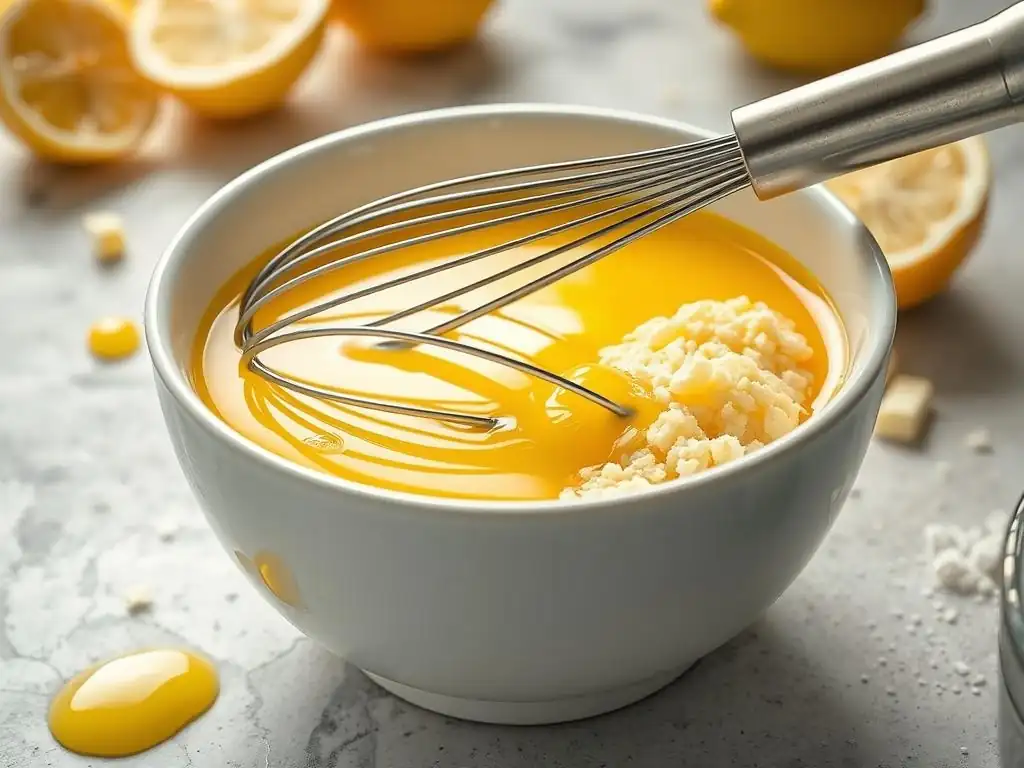
Welcome to BakeWithEase, your trusted guide to baking brilliance! Ever wondered why your batter sometimes separates, ruining your carefully crafted creations? This article delves into the fascinating science behind emulsification and unveils practical techniques to prevent that dreaded baking emulsion separation. Discover the secrets to a smooth, stable batter and unlock the potential for perfectly textured baked goods. Curious to learn more? Let's dive in!
- Introduction to Baking Emulsions and Their Importance
- Understanding Baking Emulsion Separation: Causes and Consequences
- The Science of Emulsification: How it Works in Baking
- Techniques for Preventing Baking Emulsion Separation
- Troubleshooting Baking Emulsion Problems: Solutions and Remedies
- Advanced Emulsification Techniques for Baking Perfection
- Conclusion: Mastering Baking Emulsions for Consistent Results
-
Frequently Asked Questions
- What is emulsification in baking, and why is it so important?
- How does emulsification specifically prevent separation in cake batter?
- What are some common signs that my baking emulsion has broken or is about to break?
- What ingredients are most prone to causing emulsion problems in baking?
- What are some practical tips to ensure successful emulsification and prevent separation during baking?
- Final Reflection: The Art and Science of a Perfect Bake
- Unlock Baking Bliss: Master the Art of Emulsification!
Introduction to Baking Emulsions and Their Importance
Why Emulsions Matter in Baking: Preventing Separation and Curdling
Emulsions are fundamental to achieving the smooth, consistent textures that define successful baked goods. At its core, an emulsion is a stable mixture of two or more liquids that would normally separate, like oil and water. In baking, ingredients such as fats (butter, oil) and liquids (milk, water, eggs) need to coexist harmoniously within a batter or dough. Without proper emulsification, these ingredients would separate during mixing or baking, leading to disastrous results like greasy layers, dense textures, or a curdled appearance. Understanding how to create and maintain stable emulsions is key to baking emulsion separation prevention.
Achieving a stable emulsion ensures that fat droplets are evenly dispersed throughout the liquid phase, and vice versa. This uniform distribution is critical for consistent results. For instance, in a cake batter, a well-emulsified mixture incorporates air more effectively during creaming and mixing, which contributes to leavening and a tender crumb. Conversely, a broken emulsion means ingredients aren't integrated, hindering proper structure formation and leading to issues like tunneling or sinking. Mastering emulsification techniques is a vital step for any baker aiming for predictable and high-quality outcomes, directly addressing the challenge of baking emulsion separation prevention.
The Role of Emulsification in Achieving Perfect Baked Goods
Emulsification significantly impacts the overall quality and appeal of baked goods, extending beyond just preventing separation. A stable emulsion contributes to a finer crumb structure in cakes and muffins, preventing toughness by ensuring fats are uniformly distributed to shorten gluten strands. It also plays a crucial role in the smooth, luxurious texture of frostings, sauces, and custards, preventing them from becoming greasy or watery.
Consider a classic butter cookie recipe. Properly creaming butter and sugar, then gradually incorporating eggs, relies heavily on creating an emulsion. This process incorporates air and evenly distributes the fat, which is essential for the cookie's tender, crumbly texture and even spread during baking. A poorly emulsified dough might result in cookies that are tough, greasy, or spread unevenly. Thus, understanding and applying emulsification principles is indispensable for achieving the desired texture, appearance, and flavor in a wide range of baked treats.
Understanding Baking Emulsion Separation: Causes and Consequences
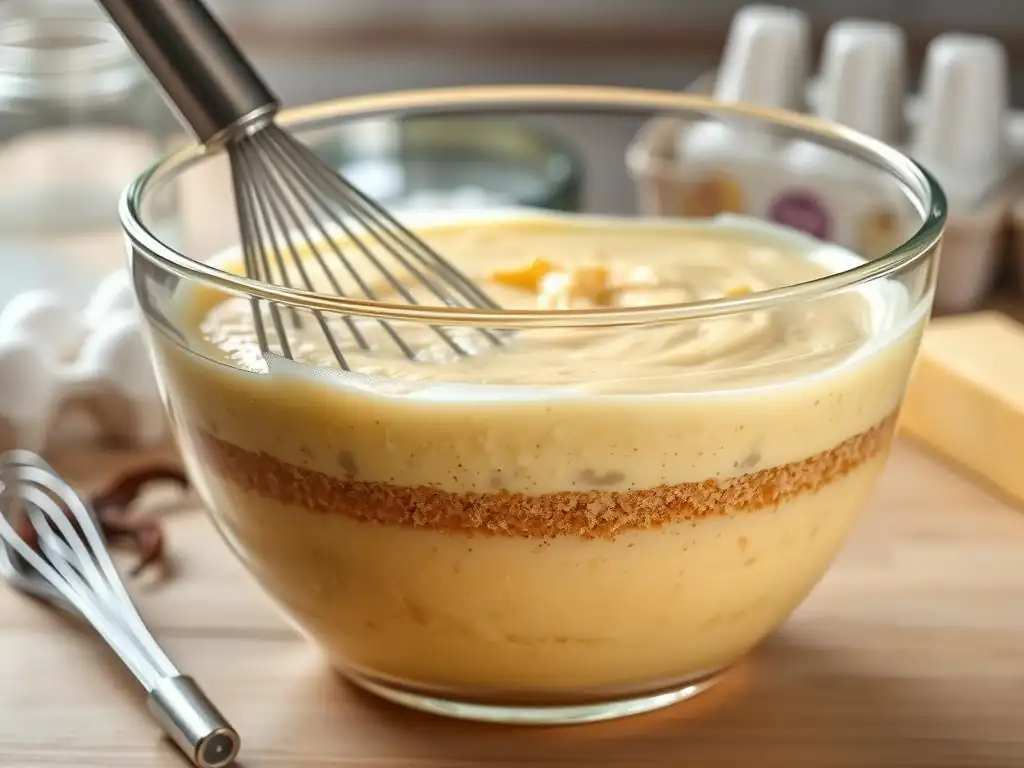
What is Baking Emulsion Separation? Identifying the Problem
Baking emulsion separation occurs when the stable mixture of fat and liquid breaks down, causing these components to revert to their natural state of being separate. Visually, this often appears as a curdled or broken texture – you might see pools of liquid separating from the fat, or the mixture might look lumpy and grainy rather than smooth and homogeneous. A common example outside of baking is mayonnaise splitting into oil and watery liquid; in baking, you might see this effect in cake batters that look curdled, or in buttercreams that appear greasy and broken.
Recognizing the early signs of separation is crucial for potential rescue. For instance, when creaming butter and sugar and adding eggs, the mixture should remain smooth and creamy. If, after adding an egg, the mixture suddenly looks lumpy and watery, you are witnessing the beginnings of an emulsion breakdown. In custard sauces, overheating can cause the egg proteins (which help emulsify) to curdle, leading to a grainy, separated texture. Identifying this problem quickly allows you to potentially correct it before it ruins the final baked good.
Common Causes of Emulsion Breakdown in Baking Recipes
Several factors can disrupt the delicate balance required for a stable emulsion in baking. These typically relate to temperature, ingredient ratios, and mixing techniques. Understanding these common culprits is the first step in effective baking emulsion separation prevention.
Temperature Issues Leading to Emulsion Separation
Temperature plays a significant role in emulsion stability. Adding cold ingredients, such as milk or eggs straight from the refrigerator, to a warmer mixture like creamed butter and sugar can cause the fat to seize or the mixture to curdle. The sudden temperature shock prevents the ingredients from integrating smoothly. For example, if butter is properly softened and creamed, but very cold eggs are added too quickly, the fat in the butter can firm up and separate from the liquid in the eggs, leading to a curdled batter. Maintaining consistent, appropriate temperatures for ingredients is vital for successful emulsification.
Conversely, overheating an emulsion can also cause it to break. Custards, for instance, rely on egg yolks to emulsify the milk or cream. If heated too rapidly or to too high a temperature, the egg proteins can denature and coagulate, losing their ability to hold the fat and liquid together. This results in the familiar curdled custard texture, where watery liquid separates from lumpy solids. Ensuring gentle, controlled heating is just as important as using ingredients at the correct temperature when working with heat-sensitive emulsions.
Ingredient Imbalances and Their Impact on Emulsions
The ratio of fat, liquid, and emulsifying agents is critical for creating and maintaining a stable emulsion. If there is too much of one component relative to the others, the emulsifier may not be able to effectively keep everything bound together. A classic example is adding too much liquid too quickly to a mixture that is primarily fat-based, like a buttercream. The emulsifiers present (often from butter or egg yolks) can only incorporate a certain amount of liquid before the system becomes unstable and separates.
Similarly, an insufficient amount of emulsifier for the volume of fat and liquid can lead to instability. Recipes are often carefully balanced to account for the emulsifying power of ingredients like egg yolks or lecithin. Deviating too much from these ratios, for example, by significantly reducing the number of eggs in a cake batter while keeping the fat and liquid the same, can weaken the emulsion and increase the likelihood of separation during mixing or baking. Accurate measurement and understanding ingredient interactions are key to preventing these imbalances.
Improper Mixing Techniques and Emulsion Stability
How ingredients are combined is just as important as what ingredients are used and their temperature. Adding liquids or fats too quickly to a mixture, especially without continuous mixing, is a prime cause of separation. When making a vinaigrette (a simple emulsion), drizzling the oil in slowly while whisking vigorously allows the emulsifier (like mustard or lecithin) to coat the oil droplets as they are introduced, preventing them from clumping together. Adding all the oil at once overwhelms the emulsifier, leading to separation.
In baking, adding eggs one at a time to creamed butter and sugar, and mixing thoroughly after each addition, is a standard technique designed to allow the egg's emulsifiers to properly integrate with the fat and sugar before more liquid is added. Undermixing might not provide enough shear force or time for the emulsion to form correctly. While less common as a primary cause of separation compared to temperature or ratios, overmixing certain mixtures can sometimes disrupt a fragile emulsion, particularly if it incorporates too much air unevenly.
The Negative Effects of Separated Emulsions on Baked Goods
When an emulsion separates during the preparation or baking process, the impact on the final product is almost always detrimental, affecting texture, flavor, and appearance. This highlights why baking emulsion separation prevention is so important for quality control.
Texture Problems: Density, Gumminess, and Dryness
A separated emulsion prevents ingredients from distributing evenly, leading to significant texture flaws. In cakes or muffins, fat that isn't properly emulsified might pool in certain areas, resulting in dense, greasy spots, while other areas lack sufficient fat, leading to a dry or tough texture. The lack of uniform fat distribution also hinders proper air incorporation and gluten shortening, often resulting in a heavy, gummy crumb rather than a light, tender one.
Consider a pound cake batter that has separated. The fat and liquid components aren't integrated, meaning air pockets created during creaming collapse, and the gluten develops unevenly. This leads to a cake that is heavy, potentially with tunnels or a rubbery texture, instead of the fine, close-grained crumb characteristic of a well-made pound cake. The impact on texture is one of the most immediate and noticeable consequences of emulsion breakdown.
Flavor Alterations Due to Uneven Ingredient Distribution
Separated emulsions lead to uneven distribution of flavor compounds, which are often carried in either the fat or liquid phase. This can result in a baked good that tastes inconsistent, with pockets of overly rich or greasy flavor where fat has pooled, and bland or dry spots elsewhere. Ingredients like vanilla extract, which is often alcohol-based (part of the liquid phase), or fat-soluble flavorings are not uniformly distributed throughout the batter or dough.
For example, in a cookie dough where the fat has separated, you might bite into a section that tastes overwhelmingly greasy, followed by a section that tastes primarily of flour and sugar. This lack of flavor harmony detracts significantly from the eating experience. Ensuring a stable emulsion guarantees that every bite delivers the intended balance of flavors, as all ingredients are evenly dispersed throughout the matrix.
Visual Appeal Issues: Uneven Baking and Unpleasant Appearance
The visual appearance of a baked good is often the first impression, and a separated emulsion can severely compromise it. Uneven distribution of fat and liquid leads to uneven heat distribution during baking. Areas with more fat might brown faster or spread more, while drier areas might remain pale or bake unevenly. This results in a finished product with inconsistent color, shape, and rise.
Furthermore, a batter that looks curdled or separated before baking will often retain some of that unevenness in the final product. Cakes might have a visibly coarse or lumpy crumb structure. Cookies might spread irregularly or have greasy rings around them. Frostings can look grainy or greasy instead of smooth and glossy. These visual flaws make the baked item less appealing and are clear indicators that baking emulsion separation prevention techniques were not effectively applied.
The Science of Emulsification: How it Works in Baking
What is an Emulsifier? Stabilizing Mixtures in Baking
An emulsifier is a substance that helps to stabilize an emulsion – a mixture of two immiscible liquids, like oil and water. Think of it as a molecular mediator. Emulsifiers have a unique structure: one part of the molecule is attracted to water (hydrophilic), and the other part is attracted to fat or oil (hydrophobic or lipophilic). When an emulsifier is added to a mixture of oil and water, the hydrophilic ends orient themselves towards the water molecules, while the hydrophobic ends orient themselves towards the oil molecules.
This dual nature allows the emulsifier molecules to surround tiny droplets of one liquid (the dispersed phase) and suspend them evenly throughout the other liquid (the continuous phase). For example, in a classic oil-in-water emulsion like milk, tiny droplets of fat are dispersed throughout the watery phase, stabilized by natural emulsifiers like proteins. In baking, emulsifiers are crucial for creating smooth batters, stable fillings, and preventing the separation we've discussed, directly contributing to baking emulsion separation prevention.
Hydrophilic and Hydrophobic Interactions: The Key to Emulsion Stability
The ability of emulsifiers to bridge the gap between water and fat is rooted in the principles of hydrophilic ("water-loving") and hydrophobic ("water-fearing" or "fat-loving") interactions. Water molecules are polar, meaning they have slightly positive and negative ends, which attract other polar molecules. Fat and oil molecules, however, are non-polar and prefer to interact with other non-polar substances. This difference in polarity is why oil and water don't mix naturally.
Emulsifier molecules, often called surfactants (surface-active agents), have a head that is polar and attracted to water, and a tail that is non-polar and attracted to fat. When added to an oil-and-water mixture, the emulsifier molecules position themselves at the interface between the oil droplets and the water. The hydrophilic heads face the water, and the hydrophobic tails bury themselves in the oil droplets. This creates a stable barrier around each droplet, preventing the oil droplets from coalescing (joining together) and separating from the water phase, thereby maintaining the emulsion's stability.
Common Baking Emulsifiers: Eggs, Lecithin, and More
Nature provides several excellent emulsifiers commonly used in baking. Understanding their properties helps bakers leverage them effectively to prevent separation.
Using Eggs as Natural Emulsifiers in Baking
Eggs, particularly egg yolks, are one of the most powerful and widely used natural emulsifiers in baking. Egg yolks contain a significant amount of lecithin, a phospholipid that is a highly effective emulsifier. When eggs are incorporated into a batter or mixture, the lecithin molecules work to bind the fat and liquid components together, creating a smooth, homogeneous consistency.
Recipes that rely heavily on emulsions, like cake batters made using the creaming method, custards, or hollandaise sauce (though less common in sweet baking), heavily utilize the emulsifying power of egg yolks. Adding eggs gradually to creamed butter and sugar allows the lecithin to properly integrate the fat and liquid phases, ensuring the emulsion is stable before other ingredients are added. A standard large egg yolk contains roughly 5-8 grams of fat, a significant portion of which is phospholipid lecithin, making it a potent tool for baking emulsion separation prevention.
The Role of Lecithin in Baking Emulsions
Lecithin is a key component in many natural emulsifiers, including egg yolks and soybeans (from which commercial lecithin is often derived). It is a type of phospholipid, a molecule with a phosphate group head (hydrophilic) and two fatty acid tails (hydrophobic). This structure makes it highly effective at stabilizing both oil-in-water and water-in-oil emulsions.
In baking, lecithin helps to improve the texture and shelf life of products. It aids in the even distribution of fat throughout doughs and batters, which can lead to a finer crumb and prevent staling by controlling moisture migration. Commercial bakers often add lecithin (like soy lecithin) to bread doughs to improve volume and texture or to cookie doughs to improve spread and tenderness. Understanding lecithin's function highlights its importance in achieving stable emulsions and preventing issues like baking emulsion separation.
Other Emulsifying Agents in Baking: Mustard, Honey and Vegetable Oils
While less potent or used differently than eggs or commercial lecithin in typical sweet baking, other ingredients can contribute to emulsion stability or are part of the emulsified system. Mustard, though primarily known as an emulsifier in savory applications like vinaigrettes due to compounds in its seed, is not a common emulsifier in sweet baking, but illustrates the principle of natural ingredients aiding emulsification.
Honey, a complex mixture primarily of sugars and water, contains trace amounts of proteins and colloids that can provide some minor emulsifying or stabilizing properties, helping to keep mixtures like dressings or marinades together, and contributing to the texture in baked goods. Vegetable oils, while being the phase that needs to be emulsified in many instances (like in oil-based cakes), can contain minor components like monoglycerides or diglycerides depending on processing, which have slight emulsifying properties.
However, their primary role is typically the fat phase, and they rely on other ingredients (like eggs or commercial emulsifiers) for stable integration with water.
Techniques for Preventing Baking Emulsion Separation
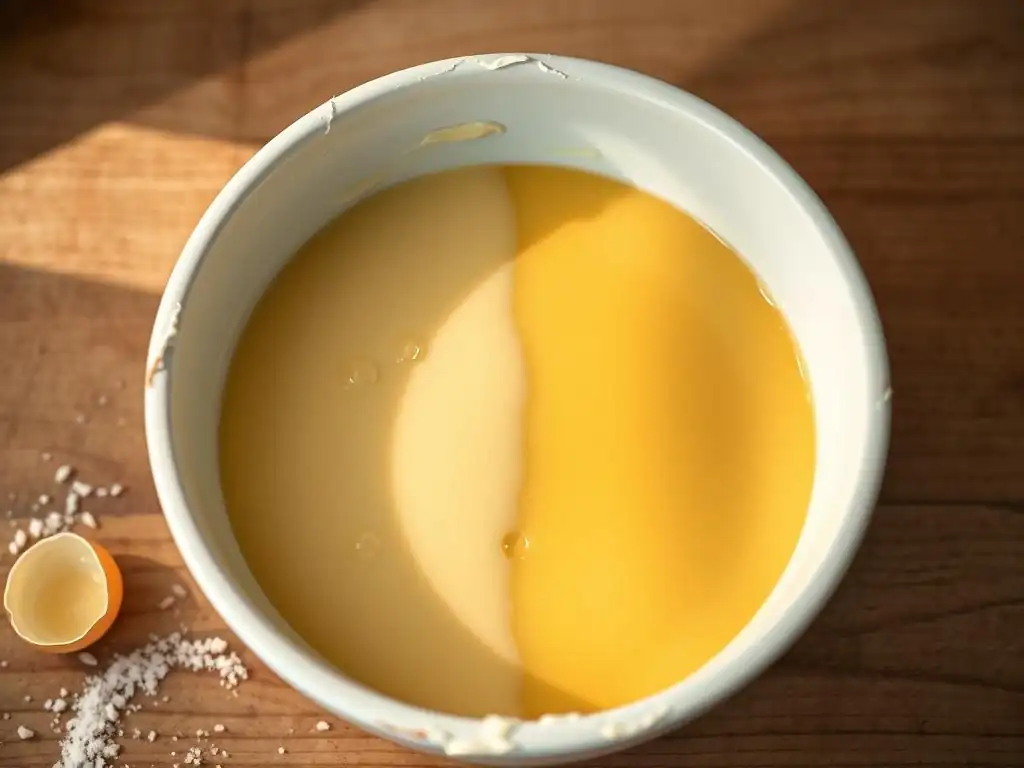
Preventing emulsion separation is often easier than fixing it. By employing proper techniques during ingredient preparation and mixing, bakers can significantly increase the stability of their batters and doughs.
Mastering Mixing Techniques for Stable Emulsions
The way you combine ingredients is paramount to forming a stable emulsion. Rushing the process or using incorrect methods can quickly lead to a broken mixture.
Proper Ingredient Order and Incorporation Methods
Following the recipe's specified order of adding ingredients is crucial because it's often designed to facilitate proper emulsification. For instance, in the creaming method for cakes, butter and sugar are creamed first to incorporate air and dissolve sugar crystals. Then, eggs are added one at a time.
This order allows the fat (butter) and sugar to form a base, and the egg's emulsifiers (lecithin) to gradually bridge the gap between the fat and the incoming liquid from the egg white and yolk, creating a stable emulsion before the bulk of the liquid ingredients (like milk) and dry ingredients (flour) are added. Deviating from this order, such as adding all the liquid at once, can overwhelm the emulsifying capacity of the mixture.
Similarly, when making ganache, pouring warm cream over chocolate and letting it sit briefly before whisking allows the chocolate to melt and the fat and liquid phases to begin integrating. Starting the whisking gently in the center and gradually expanding outwards helps to bring the mixture together smoothly into a stable emulsion. These specific methods are designed to encourage the fat and liquid to combine gradually and uniformly, preventing baking emulsion separation.
The Importance of Gradual Addition and Even Distribution
Adding liquids or fats slowly and gradually while mixing is one of the most critical techniques for preventing emulsion breakdown. This allows the emulsifiers present in the mixture to effectively surround and disperse the newly added droplets of fat or liquid as they are introduced. Think of adding oil to a vinaigrette in a thin stream while whisking continuously. Each tiny droplet of oil is immediately coated by the emulsifier and incorporated into the water phase.
In baking, this applies to adding eggs to creamed butter and sugar, adding milk or buttermilk to a cake batter, or incorporating melted chocolate into a mixture. Adding these liquids gradually, often specified as "in a slow stream" or "one at a time," gives the emulsifiers time to work and prevents the mixture from becoming overwhelmed, which would lead to separation. Ensuring even distribution through continuous, appropriate mixing speed during these additions is equally important for baking emulsion separation prevention.
Avoiding Overmixing and Undermixing in Baking
Both undermixing and overmixing can negatively impact emulsion stability, although undermixing is a more common culprit for initial separation. Undermixing simply doesn't provide enough energy or time for the fat and liquid phases to be properly broken down into tiny droplets and coated by the emulsifier. For example, if you don't mix enough after adding eggs to creamed butter, the mixture might still appear slightly curdled or greasy because the emulsion hasn't fully formed.
Overmixing, while less likely to cause a classic separation in many standard batters once an emulsion is formed, can sometimes disrupt the structure, particularly in delicate mixtures or those where gluten development is a concern. For instance, overmixing a cake batter after flour is added can develop gluten, leading to a tougher texture, and in some cases, the excessive shearing action might eventually cause a fragile emulsion to break, though temperature and ratio issues are far more frequent causes of separation. Finding the right balance of mixing is key.
Controlling Temperature for Optimal Emulsion Stability
Temperature is a silent saboteur of emulsions. Ensuring ingredients are at the correct temperature and avoiding sudden temperature shifts are vital steps in baking emulsion separation prevention.
Room Temperature Ingredients: Why They Matter
Using ingredients at room temperature is perhaps the most frequently cited tip for preventing emulsion separation in baking, and for good reason. Fats like butter are semi-solid at room temperature, making them pliable and able to incorporate air and emulsify more readily than cold, hard butter. Eggs at room temperature disperse more easily and their emulsifiers (lecithin) are more effective. Liquids like milk or buttermilk also integrate smoothly at room temperature.
When cold ingredients are added to a mixture, especially one containing softened fat, they can cause the fat to firm up rapidly. This prevents the fat from dispersing evenly and causes it to separate from the liquid. Imagine adding cold milk to a warm chocolate mixture; the fat in the chocolate can seize and create a lumpy, separated mess. Bringing ingredients like butter, eggs, and milk to room temperature (typically around 68-72°F or 20-22°C) before combining them ensures they integrate smoothly and form a stable emulsion, significantly reducing the risk of separation.
Preventing Shock: Gradual Temperature Changes
Sudden temperature changes, often referred to as "temperature shock," can destabilize an emulsion. This is distinct from simply using cold ingredients; it's about the rapid shift in temperature within the mixture itself. For example, adding a very hot liquid to a cold, fat-based mixture or vice versa can cause the emulsion to break.
In making a pastry cream or custard, tempering the egg yolks by gradually whisking a small amount of hot milk into them before adding the warmed yolks back to the main pot of milk is a classic technique to prevent curdling (a form of emulsion breakdown). This slowly raises the temperature of the yolks, preventing the sudden heat shock that would cause the proteins to coagulate and the emulsion to separate. Similarly, when incorporating melted chocolate (which is warm) into a cooler mixture like buttercream, doing so gradually and mixing continuously helps prevent the fat from seizing and separating.
Balancing Ingredients for Stronger Emulsions
The relative amounts of fat, liquid, and emulsifier in a recipe directly impact the stability of the resulting emulsion. A well-balanced recipe is inherently less prone to separation.
Fat-to-Liquid Ratios: Achieving the Right Balance
Every emulsion has a limit to how much of the dispersed phase (often fat in baking) can be incorporated into the continuous phase (often liquid) and remain stable. If the ratio of fat to liquid is pushed too high, there may not be enough emulsifier or continuous phase to adequately surround and suspend all the fat droplets. This can lead to the emulsion becoming unstable and separating.
Recipes are typically developed with specific ratios in mind to ensure stability. For example, a standard vinaigrette is often around a 3:1 ratio of oil to vinegar. While baking recipes are more complex mixtures, the underlying principle applies. A cake recipe with an excessively high fat content relative to the liquid might be more challenging to emulsify and more prone to separation if mixing techniques or temperatures aren't perfect. Understanding that ingredient ratios matter is a key aspect of baking emulsion separation prevention.
The Role of Sugar and Acid in Emulsion Stability
Sugar and acid are not primary emulsifiers, but they can influence emulsion stability in baking. Sugar is hydrophilic, meaning it attracts and holds onto water. In batters, sugar dissolves in the liquid phase and can help to distribute fat more evenly by interfering with the fat particles' tendency to clump together. It also contributes to the viscosity of the liquid phase, which can slow down the movement of dispersed fat droplets and help prevent them from coalescing and separating. For instance, properly dissolving sugar when creaming butter helps create a stable matrix for later ingredients.
Acids, like lemon juice, vinegar, or buttermilk, can affect the charge and interaction of molecules within an emulsion. In some cases, particularly in savory applications like mayonnaise, acid is crucial for stability. In baking, acids can influence the proteins present (like in buttermilk or eggs), potentially affecting their emulsifying capabilities. However, excessive acid can sometimes cause proteins to denature, leading to separation in delicate mixtures like custards. The interaction is complex and depends on the specific ingredients and concentrations.
Troubleshooting Baking Emulsion Problems: Solutions and Remedies
Even with the best preventative measures, sometimes an emulsion starts to separate. Knowing how to identify the issue early and attempt a rescue can save your bake.
Identifying Early Signs of Emulsion Separation
Catching separation early is key to potential recovery. Before a mixture completely breaks down into distinct layers of fat and liquid, there are often subtle warning signs. Look for a slightly grainy or curdled appearance where the mixture should be smooth. In a cake batter, this might look like tiny lumps of fat suspended in a watery liquid, rather than a homogeneous, creamy batter.
Another sign is a loss of sheen or smoothness. A well-emulsified mixture, like a buttercream or ganache, typically looks glossy and uniform. If it starts to look dull, greasy, or slightly broken around the edges of the bowl, separation may be beginning. Pay attention to the texture as you mix; if it suddenly feels less viscous or seems to be fighting against combining, investigate closer for visual signs of breakdown. Early detection significantly increases the chances of a successful rescue attempt.
Rescue Techniques: Re-emulsifying Separated Mixtures
If you catch separation early or the breakdown isn't too severe, you can often attempt to re-emulsify the mixture. These techniques aim to bring the fat and liquid phases back together with enough force and potentially the help of additional emulsifier.
Using a Whisk or Mixer to Recombine Ingredients
Often, a slightly separated mixture just needs a little extra encouragement to come back together. Increasing the speed of your whisk or mixer can sometimes provide enough shear force to break down the separated fat or liquid pockets and allow the emulsifiers to re-engage. For a slightly curdled cake batter, mixing vigorously for another 30-60 seconds can sometimes bring it back to a smooth consistency.
For more stubborn separation, particularly in mixtures like buttercream or ganache, gently warming the mixture slightly can help soften the fat and make it more receptive to re-emulsification. Then, applying high-speed mixing with a whisk attachment can often bring it back together. However, be cautious not to overheat, as this can worsen the problem. The key is often vigorous, sustained mixing to force the components to reintegrate.
Adding a Small Amount of Emulsifier to Stabilize
If mixing alone doesn't work, adding a small amount of an ingredient known for its emulsifying properties can sometimes help rescue a separated mixture. For a curdled cake batter, whisking in a tablespoon or two of the dry ingredients (flour) or a small amount of warm milk can sometimes help stabilize it. The flour provides structure and can absorb some liquid, while warm milk can help soften fat and provides liquid for the emulsifier to work with.
For a broken buttercream, adding a tablespoon of warm milk, cream, or even just warm water while mixing vigorously can sometimes help the mixture come back together. In some cases, adding another egg yolk (carefully tempered and mixed in) can provide the extra lecithin needed to re-emulsify a stubborn mixture. The goal is to provide a medium or additional emulsifier to help bridge the gap between the separated fat and liquid phases, aiding in baking emulsion separation prevention mid-process.
Adjusting Recipes to Prevent Future Emulsion Breakdowns
Learning from separation incidents and making informed adjustments to recipes can prevent future problems and improve consistency.
Modifying Fat Content for Better Emulsion Stability
If a particular recipe consistently results in separation, the ratio of fat to liquid might be challenging for the emulsifiers present. Consider slightly reducing the amount of fat or increasing the amount of liquid in the recipe. For example, if a cookie recipe yields greasy, separated dough, reducing the butter by 10-15 grams might provide a more stable balance without significantly altering the outcome.
Alternatively, if increasing liquid isn't feasible, ensure you are using ingredients with strong natural emulsifying properties, like whole eggs instead of just egg whites, or using full-fat dairy if appropriate. Experimenting with small adjustments (e.g., reducing fat by 5-10%) and noting the results can help you find a more stable version of the recipe, effectively enhancing baking emulsion separation prevention for that specific bake.
Incorporating Stronger Emulsifying Agents
For recipes that are inherently difficult to emulsify or where maximum stability is required, incorporating a stronger emulsifying agent can be beneficial. This might involve ensuring the recipe uses whole eggs where their emulsifying power is needed or, in professional settings or for advanced home bakers, adding a small amount of a commercial emulsifier like soy lecithin or a blend of monoglycerides and diglycerides (often found in commercial cake mixes or shortenings).
Adding lecithin, for instance, can significantly improve the stability of batters and doughs, leading to a finer crumb and better texture. A small amount, perhaps 0.5% to 2% of the flour weight, can have a noticeable effect. While not always necessary for standard home baking, understanding the option to boost emulsification can be helpful for challenging recipes or when striving for professional-level consistency and baking emulsion separation prevention.
Advanced Emulsification Techniques for Baking Perfection
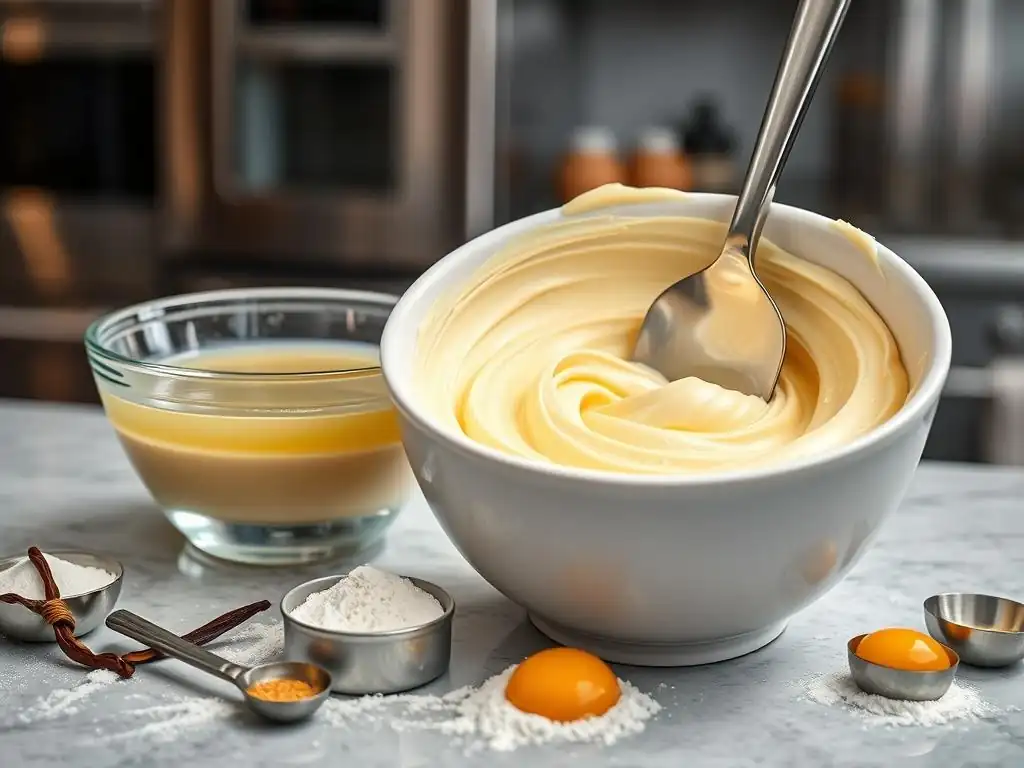
Pushing the boundaries of baking often involves mastering complex emulsions. Techniques for challenging recipes and utilizing specific equipment can elevate your results.
Creating Stable Emulsions in Challenging Recipes: Swiss Meringue Buttercream
Swiss Meringue Buttercream (SMBC) is a prime example of a challenging emulsion that requires precise technique. It's a stable emulsion of butter into a base of whipped egg whites and sugar (meringue). The process involves heating egg whites and sugar over a water bath to a specific temperature (typically 140-160°F or 60-70°C) to dissolve the sugar and pasteurize the eggs, then whipping this mixture into a stiff, glossy meringue. Softened butter is then added gradually, piece by piece, while mixing.
The challenge lies in slowly incorporating a large amount of fat (butter) into a protein-sugar base (meringue). The proteins in the egg whites provide some stability, but the gradual addition of butter, allowing each piece to be incorporated before adding the next, is crucial. Temperature is also key; if the meringue is too warm, it will melt the butter and cause a soupy, separated mess. If the butter is too cold, it won't emulsify smoothly. Mastering the temperature and addition rate is essential for creating this luxurious, stable buttercream and demonstrating advanced baking emulsion separation prevention.
Using High-Speed Blenders and Food Processors for Emulsification
While stand mixers are common in baking, high-speed blenders and food processors can be powerful tools for creating very stable emulsions due to the high shear force they generate. The rapid movement of the blades breaks down fat droplets into extremely small sizes, making them easier for emulsifiers to surround and suspend.
This is less common for standard cake batters but is highly effective for mixtures like ganaches, smooth sauces, or even some types of oil-based batters where a very fine emulsion is desired. For example, making a smooth, stable chocolate ganache can be expedited and stabilized by briefly processing it in a blender after the initial mixing. The high speed helps integrate any separated fat and creates a silky texture. Understanding when and how to use these tools can add another level to your baking emulsion separation prevention arsenal.
Emulsification and Gluten Development: A Delicate Balance
In many baked goods, particularly cakes and pastries, the goal is to minimize gluten development to achieve a tender crumb. Fats, often incorporated through emulsions, play a crucial role here. Fat coats flour particles, preventing water from reaching the gluten-forming proteins (gliadin and glutenin). This "shortening" effect is why fats are called shortening and why a rich, well-emulsified cake is tender.
However, there's a delicate balance. While sufficient fat helps prevent toughness, a poorly emulsified mixture can lead to uneven fat distribution. Areas lacking fat will develop more gluten, leading to tough spots, while areas with excess fat will be greasy. Furthermore, overmixing after flour is added can develop gluten despite the presence of fat. Achieving the desired tender texture relies not just on the amount of fat, but on its uniform distribution via a stable emulsion, managed alongside careful mixing to control gluten development.
Conclusion: Mastering Baking Emulsions for Consistent Results
Key Takeaways: Preventing Separation and Curdling in Baking
Mastering emulsification is a cornerstone of successful baking, directly impacting the texture, flavor, and appearance of your creations. The primary goal is baking emulsion separation prevention, ensuring that fats and liquids remain harmoniously blended throughout the process. Key takeaways include understanding that emulsions are stable mixtures of normally immiscible liquids, stabilized by emulsifiers like those found naturally in egg yolks and lecithin.
Preventing separation hinges on several factors: using ingredients at the correct temperature (especially room temperature for fats and liquids), adding ingredients gradually and in the correct order while mixing, avoiding drastic temperature changes during cooking or mixing, and ensuring the recipe has a balanced ratio of fat, liquid, and emulsifier. Recognizing the early signs of separation allows for potential rescue attempts through vigorous mixing or adding a small amount of additional emulsifier. By focusing on these principles, bakers can significantly improve the consistency and quality of their results.
The Importance of Experimentation and Practice for Emulsification Mastery
While understanding the science of hydrophilic and hydrophobic interactions and the role of emulsifiers provides a strong foundation, true mastery of emulsification in baking comes with practice and experimentation. Every recipe is slightly different, and factors like the specific type of flour used, the fat content of dairy, or even ambient kitchen temperature can subtly influence emulsion stability.
Don't be discouraged if a mixture occasionally separates. Analyze what might have gone wrong – were the eggs cold? Was the butter too soft? Was the liquid added too quickly? Each instance of separation is a learning opportunity. By consistently applying the techniques discussed, paying attention to ingredient temperatures and mixing methods, and perhaps tweaking recipes based on your observations, you will build intuition and skill. This hands-on approach, combined with theoretical knowledge, is the path to confidently creating stable emulsions and consistently delicious baked goods, truly mastering baking emulsion separation prevention.
Frequently Asked Questions
What is emulsification in baking, and why is it so important?
Emulsification is the process of mixing two liquids that don't naturally combine, like oil and water. It's crucial because it creates a stable mixture, preventing separation and ensuring a consistent texture in your baked goods.
How does emulsification specifically prevent separation in cake batter?
By properly emulsifying ingredients, you ensure the fat molecules are dispersed evenly throughout the water-based ingredients. This prevents the fat from pooling together and causing the batter to separate during baking, resulting in a greasy or uneven cake.
What are some common signs that my baking emulsion has broken or is about to break?
Signs include a curdled or separated appearance in your batter, the presence of oily layers, or a grainy texture. These indicate the fat and water phases have not properly combined.
What ingredients are most prone to causing emulsion problems in baking?
Ingredients high in fat, such as butter, oil, and chocolate, and those high in water, like milk, eggs, and fruit purees, are most likely to cause issues if not properly emulsified. Ensuring all ingredients are at the same temperature also helps.
What are some practical tips to ensure successful emulsification and prevent separation during baking?
Use room temperature ingredients, add fats gradually, and ensure thorough mixing. Consider using a baking emulsion designed to improve ingredient compatibility and prevent separation, especially in complex recipes.
Final Reflection: The Art and Science of a Perfect Bake
Understanding emulsion is not just about avoiding a lumpy custard; it's about unlocking the potential for consistently delicious baked goods. Mastering this fundamental principle transforms baking from a frustrating guessing game into a precise and rewarding craft. The ability to prevent separation and curdling directly impacts the texture, flavor, and overall success of countless recipes.
The impact of proper emulsification extends far beyond the individual baker. It's a cornerstone of culinary artistry, influencing everything from the airy lightness of a soufflé to the creamy richness of a ganache. The subtle science behind it connects us to generations of bakers who have perfected these techniques. Baking is a science, but it's also an art. It's about understanding the ingredients and how they interact, but it's also about creativity and passion.
– Unknown. This quote perfectly encapsulates the journey of mastering emulsification – a blend of scientific understanding and artistic application.
Now, consider your own baking experiences. Have you ever been frustrated by a curdled sauce or a separated batter? Take what you've learned here and apply it to your next baking project. Experiment with different techniques, observe the results, and don't be afraid to adjust your approach. The journey to mastering emulsification is a rewarding one, filled with delicious discoveries and the satisfaction of creating perfectly textured, flawlessly delicious baked goods. Embrace the science, unleash your creativity, and enjoy the sweet rewards of your efforts!
Unlock Baking Bliss: Master the Art of Emulsification!
Thanks for taking the time to explore the world of emulsification and its magic in baking! You've now learned how to prevent those frustrating curdles and separations, unlocking smoother, richer results. Ready to put your newfound knowledge into practice?
- Experiment with different emulsifiers: Try adding a touch more egg yolk or even a small amount of oil to your next recipe to see the difference! This is your chance to truly master the art of perfect emulsification.
- Share your baking triumphs (and challenges!): Let’s build a community of bakers! Share your experiences with emulsification in the comments below – what worked, what didn't, and what delicious creations you made.
- Challenge a baking myth: Is there a common baking problem you believe emulsification could solve? Share it with us and let's explore it together!
What delicious recipe will you tackle first to perfect your emulsification skills?