
Unraveling the Mystery: How Gluten Gives Rise

Welcome to BakeWithEase!
Ever wondered what really makes your bread rise or your pastries achieve that perfect chew? Unraveling the Mystery: How Gluten Gives Rise in our Baking Science Deep Dive series, we're going beyond the basics to explore the fascinating world of gluten development baking techniques. Prepare to unlock the secrets behind professional-quality bakes, understanding the science that transforms simple ingredients into culinary masterpieces. Intrigued? Dive in and discover the key to baking success!
- Mastering Gluten Development in Baking
- Introduction to Gluten's Role in Baking
- The Science of Gluten Formation
- Practical Techniques for Optimal Gluten Development
- Factors Influencing Gluten Development
- Troubleshooting Common Gluten Development Problems
- Advanced Techniques for Experienced Bakers
- Gluten-Free Baking Considerations
- Conclusion: Achieving Baking Success Through Gluten Mastery
-
Frequently Asked Questions
- What exactly is gluten development in baking?
- Why is gluten development so important for certain baked goods?
- What are some common gluten development baking techniques mentioned on BakeWithEase.com?
- Can you over-develop gluten? What happens if I do?
- Are there baking techniques on BakeWithEase.com for avoiding gluten development?
- Final Reflection: The Ever-Evolving Dance of Gluten in Baking
- Unlock Your Gluten-Free Baking Potential!
Mastering Gluten Development in Baking
Introduction to Gluten's Role in Baking
What is Gluten and Why is it Crucial for Bread Structure?
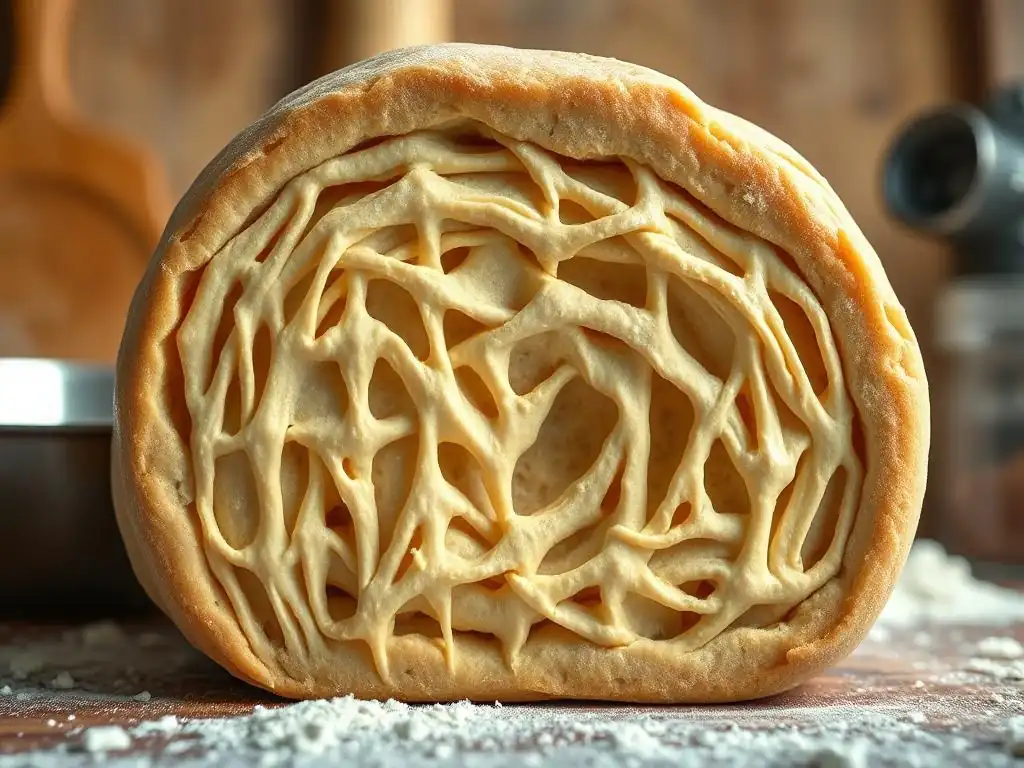
Gluten is a complex protein structure that forms when two proteins, glutenin and gliadin, found in wheat and some other grains, combine with water and are manipulated, typically through mixing or kneading. Think of it as the invisible scaffolding within your dough. Glutenin provides elasticity, allowing the dough to stretch without breaking, while gliadin contributes extensibility, enabling the dough to expand.
Together, they create a viscoelastic network that traps gases produced by leavening agents like yeast or baking powder. This trapped gas is what causes bread to rise, giving it volume and an open, airy crumb structure. Without sufficient gluten development, baked goods made with wheat flour would be dense and flat.
The strength and elasticity of the gluten network are fundamental to the success of many baked goods, particularly yeast-leavened breads. As yeast ferments, it produces carbon dioxide gas. The gluten network acts like a balloon, capturing this gas and expanding.
During baking, this network sets, solidifying the structure of the bread and preventing it from collapsing as the gas expands further in the heat. Mastering gluten development baking techniques is therefore not just about achieving rise; it's about building the internal architecture that defines the texture, volume, and even the chewiness of your final product. Different types of baked goods require varying degrees of gluten development, from the strong network needed for a crusty baguette to the minimal development desired for a tender cake.
A Baker's Guide to Understanding Gluten's Functionality
For bakers, understanding gluten's functionality is key to controlling the outcome of recipes. It's not just about mixing ingredients; it's about actively managing how the gluten network forms and behaves. Gluten's ability to stretch allows dough to expand during proofing and oven spring, while its elasticity helps the dough hold its shape.
The balance between these two properties determines the dough's handling characteristics – whether it's easy to shape or tends to spring back excessively. Furthermore, the extent of gluten development directly impacts the texture, from the chewy crust and open crumb of artisan bread to the soft, tender crumb of a brioche.
Different gluten development baking techniques are employed depending on the desired result. For example, vigorously kneading bread dough encourages strong gluten formation, resulting in a chewy texture. Conversely, gently mixing muffin batter minimizes gluten development, ensuring a tender, cake-like crumb. Factors like hydration level, mixing time, and the presence of ingredients like fat or sugar all influence how gluten develops. By learning to manipulate these variables, bakers gain precise control over the texture and structure of their baked goods, transforming simple flour and water into a wide array of delicious creations.
The Science of Gluten Formation
Glutenin and Gliadin: The Foundation of Gluten Networks
The story of gluten begins with two primary protein types found in wheat endosperm: glutenin and gliadin. Glutenin molecules are large and irregular, with a strong propensity to link together, primarily through disulfide bonds. These bonds are crucial for forming long, elastic chains, giving the gluten network its strength and elasticity. Think of glutenin as the structural framework, providing the backbone for the network. Different wheat varieties have varying compositions of glutenin subunits, which can influence the overall strength of the resulting gluten.
Gliadin molecules, on the other hand, are smaller and more spherical. They interact with each other and the glutenin network through weaker hydrophobic and hydrogen bonds. Gliadin contributes significantly to the extensibility or stretchiness of the dough, allowing it to expand without tearing.
While glutenin provides the resistance and snap, gliadin provides the flow and give. The ratio and specific types of glutenin and gliadin present in a particular flour, largely determined by the wheat variety, dictate its potential for gluten development and suitability for different baking applications. For instance, hard wheat flours used for bread have higher levels of both, especially specific types of glutenin that form stronger networks.
Water's Vital Role in Activating Gluten Proteins
Water is the indispensable catalyst for gluten formation. Glutenin and gliadin proteins exist in a relatively dormant state within dry flour. It is only when water is added that these proteins can hydrate and become mobile.
Water acts as a solvent, allowing the proteins to uncoil and facilitating their interaction. The hydration process is crucial; sufficient water is needed for the proteins to fully absorb moisture and begin forming the complex network. A typical bread dough might have a hydration level between 60% and 70% (water weight relative to flour weight), though some doughs like ciabatta can exceed 80% hydration, leading to a very open crumb structure due to extensive gluten development facilitated by ample water.
Beyond simply allowing the proteins to interact, water influences the rate and extent of gluten development. Warmer water tends to hydrate flour more quickly than cold water, potentially speeding up the initial stages of gluten formation, though excessively hot water can damage the proteins. The amount of water also impacts the dough's consistency and the ease of kneading.
A drier dough (lower hydration) requires more effort to develop gluten, while a wetter dough (higher hydration) develops gluten more easily with less mechanical work, often through techniques like stretch and folds rather than intensive kneading. Proper hydration is a critical step in many gluten development baking techniques.
Mixing and Kneading: Building Strength and Elasticity
Once flour and water are combined, the process of mixing and kneading begins the physical work of developing gluten. Initially, the hydrated glutenin and gliadin proteins are just starting to interact. Mechanical action, whether by hand kneading or using a stand mixer, provides the energy needed to align these proteins and encourage the formation of more disulfide bonds between glutenin molecules and other interactions.
This process stretches, folds, and works the dough, bringing the protein chains into closer contact and facilitating the cross-linking that builds the strong, elastic network. The longer and more vigorously the dough is mixed (up to a point), the more developed the gluten becomes.
Effective kneading transforms a shaggy, sticky mass into a smooth, elastic dough that can be stretched thin without tearing. This transformation is the direct result of the gluten development occurring within. For example, kneading bread dough for 10-15 minutes by hand, or 5-8 minutes in a stand mixer on medium speed, typically develops enough gluten for a standard loaf.
The goal is to achieve a network strong enough to support the dough's rise and structure. Different gluten development techniques, like the gentle folding used in no-knead breads, rely on time and hydration rather than aggressive mechanical action to achieve sufficient development.
Practical Techniques for Optimal Gluten Development
Selecting the Right Flour: Protein Content and Gluten Potential
Choosing the correct flour is perhaps the most fundamental step in managing gluten development. Different types of flour are milled from different varieties of wheat (hard vs. soft) and include varying parts of the wheat kernel (endosperm, germ, bran). This results in significant differences in protein content, and consequently, gluten-forming potential.
Hard wheat flours, like bread flour, are higher in protein (typically 12-14%) and thus have a greater capacity to form a strong gluten network, ideal for chewy breads. Soft wheat flours, such as cake or pastry flour, have lower protein content (around 8-10%) and are preferred for tender baked goods where minimal gluten is desired.
Understanding the protein percentage listed on flour packaging is a key part of effective gluten development baking techniques. A higher protein percentage generally indicates a higher potential for gluten formation. Using a high-protein bread flour for a rustic loaf will yield a chewier texture and better structure than using an all-purpose flour (typically 10-12% protein). Conversely, using a low-protein cake flour for pastries ensures a tender, delicate crumb because less gluten can develop. Selecting the flour that aligns with the desired texture is the first step in controlling gluten.
High-Protein Bread Flour vs. Lower-Protein Pastry Flour
The contrast between high-protein bread flour and lower-protein pastry flour highlights the impact of protein content on gluten development. Bread flour, with its 12-14% protein, contains higher levels of both glutenin and gliadin, particularly the types that form strong, elastic bonds. When hydrated and kneaded, this flour readily develops a robust gluten network capable of trapping significant amounts of gas, leading to high-volume loaves with a satisfying chew. This strong network is essential for breads that undergo long fermentation periods or require significant shaping.
Pastry flour, conversely, contains about 8-10% protein and is milled from soft wheat. Its lower protein content means it forms a weaker, more tender gluten network. This is desirable for baked goods like biscuits, scones, pies, and cakes, where a light, crumbly, or tender texture is preferred over chewiness. Minimizing gluten development is key in these recipes, and starting with a low-protein flour makes this much easier. Trying to make a tender cake with bread flour, even with minimal mixing, is significantly more challenging than using a flour specifically designed for tenderness.
Hydration: Achieving the Ideal Dough Consistency
Hydration, the ratio of water to flour by weight, is a critical factor influencing gluten development. Sufficient water is necessary to hydrate the proteins and allow them to interact. Doughs with higher hydration levels (e.g., 75% or more) generally develop gluten more easily and require less mechanical effort compared to drier doughs (e.g., 55-60%). The increased water allows the protein molecules greater mobility, facilitating network formation even with gentle handling like stretch and folds. High-hydration doughs often result in a more open crumb structure.
However, managing high-hydration doughs requires understanding how water affects the dough's handling. While water aids gluten development, too much can make the dough excessively sticky and difficult to work with until sufficient gluten strength is built. The ideal hydration level depends on the flour's absorption capacity (which varies) and the desired outcome. A dough for sandwich bread might be around 65% hydration for ease of handling and slicing, while a rustic country loaf could be 75% or higher for a more open, irregular crumb. Adjusting hydration is a fundamental gluten development baking technique.
The Impact of Water Temperature on Gluten Development
While the amount of water is paramount, the temperature of the water also plays a role in gluten development, particularly in the initial stages. Warmer water (lukewarm, around 90-105°F or 32-40°C) helps hydrate the flour more quickly and can slightly accelerate enzyme activity within the dough, including proteases that can affect gluten. This can lead to faster initial gluten formation and potentially reduce mixing time slightly. Many bread recipes recommend using warm water to also help activate yeast more quickly.
Conversely, using colder water (from the tap or even refrigerated) slows down hydration and enzyme activity. This slower rate can be beneficial for longer fermentation periods, as it gives the dough more time to develop flavor before the gluten structure is fully formed and potentially degrades slightly over extended periods. Cold water also results in a less sticky dough initially, which can be easier to handle. While not as impactful as hydration level or mixing, water temperature is a variable bakers can adjust as part of their gluten development baking techniques to influence dough handling and fermentation speed.
Mastering Kneading: Developing Strong and Elastic Dough
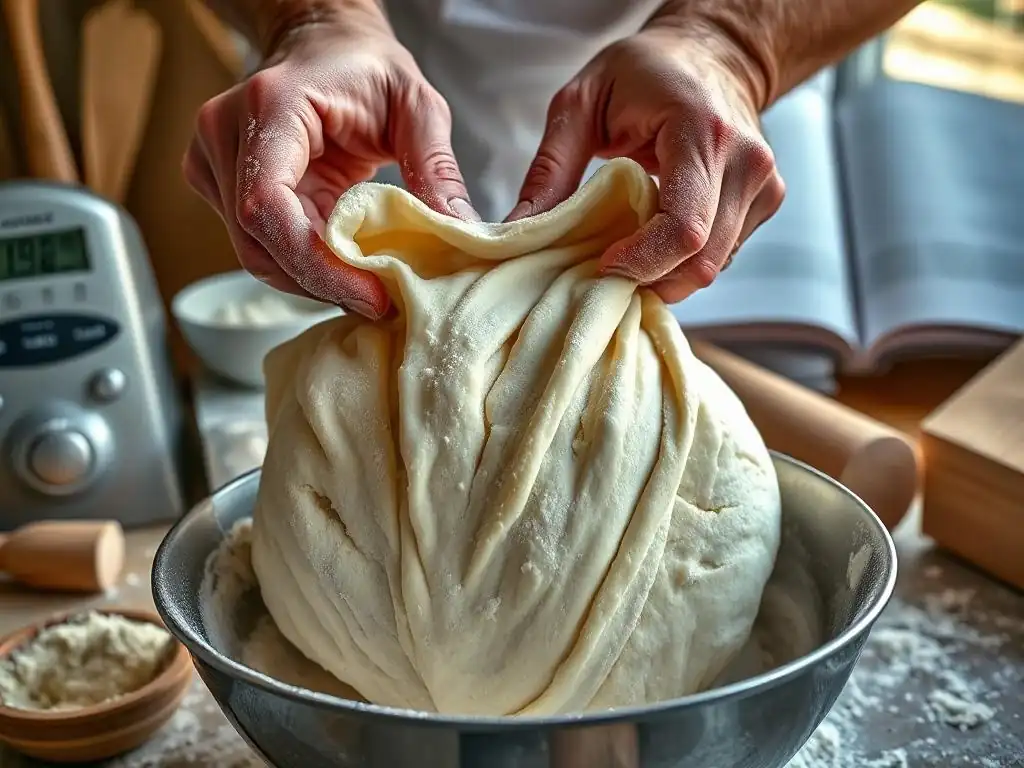
Kneading is the most direct method for developing the gluten network after hydration. It involves physically working the dough – stretching, folding, and pressing it – to align the hydrated glutenin and gliadin proteins and build cross-links. This mechanical action is essential for transforming a shaggy, weak dough into a smooth, elastic structure that can trap gas and hold its shape. The duration and intensity of kneading directly correlate with the degree of gluten development. Insufficient kneading results in a weak, sticky dough that won't rise well, while excessive kneading can lead to a tough, dense product.
Mastering kneading is a core gluten development baking technique. For many traditional breads, kneading is continued until the dough passes the "windowpane test," indicating sufficient gluten development. This typically takes 10-15 minutes by hand for a medium-hydration dough, or 5-8 minutes in a stand mixer. During kneading, you can feel the dough change from sticky and resistant to smooth, pliable, and elastic. The surface becomes taut and less prone to tearing.
Hand Kneading vs. Stand Mixer: Efficiency and Control
Hand kneading and using a stand mixer are two primary methods for developing gluten, each with its own advantages. Hand kneading offers a tactile connection to the dough, allowing the baker to feel the gluten developing and adjust technique based on the dough's consistency. It's a rewarding, albeit more physically demanding, process that typically takes longer than machine mixing. A good hand kneader can achieve excellent gluten development, but it requires practice to maintain consistent technique and duration.
Stand mixers equipped with a dough hook provide a more efficient and less labor-intensive way to develop gluten, especially for larger batches or stiffer doughs. The mechanical action is consistent, and timing can be precise. However, it's easier to over-mix dough in a stand mixer, potentially leading to gluten breakdown if not monitored closely.
For many bakers, a stand mixer is a valuable tool for achieving reliable gluten development, but understanding the signs of correctly developed dough (like the windowpane test) is crucial regardless of the method used. Both methods are valid gluten development baking techniques, and the choice often comes down to batch size, time, and personal preference.
The Windowpane Test: Assessing Dough Development
The windowpane test is a classic method used by bakers to assess whether dough has been sufficiently kneaded and gluten development is adequate for bread baking. It involves gently taking a small piece of dough, about the size of a golf ball, and slowly stretching it between your fingers. If the dough is well-developed, you should be able to stretch it into a thin membrane that is almost transparent – like a windowpane – without tearing. You should be able to see light pass through it.
If the dough tears easily before forming a thin membrane, it indicates that the gluten network is not yet strong enough and requires more kneading. Conversely, if the dough feels very tight and resists stretching, it might be slightly overdeveloped, though this is less common with moderate kneading. Passing the windowpane test is a strong indicator that the dough's gluten structure is ready to support the gases produced during fermentation and baking, leading to a good rise and crumb structure. It's a practical application of understanding gluten development and a key skill for bread bakers.
Factors Influencing Gluten Development
Salt's Influence on Gluten Strength and Dough Texture
Salt is a seemingly simple ingredient, yet it has a significant impact on gluten development and dough characteristics. Chemically, salt (sodium chloride) strengthens the gluten network. It tightens the gluten structure, making the dough less sticky and easier to handle. Salt also helps improve the elasticity and extensibility of the dough, contributing to better volume and a finer crumb structure in the finished bread. Doughs made without salt are often slack, sticky, and challenging to shape, resulting in a flatter loaf with a coarse crumb.
Typically, salt is added at a concentration of 1.8% to 2.2% of the flour weight in bread recipes. Adding salt too early in the mixing process, especially directly onto the yeast, can inhibit yeast activity. However, adding it with the flour and water, but ensuring it's distributed, allows it to interact positively with the gluten proteins as they hydrate and are worked. Salt's ability to tighten the gluten network is a crucial aspect of many gluten development baking techniques, contributing not only to structure but also enhancing flavor by slowing fermentation slightly, allowing more complex flavors to develop.
Fats and Oils: Inhibiting Gluten Formation for Tenderness
Fats and oils, such as butter, oil, or shortening, act as tenderizers in baked goods by interfering with gluten development. Fat molecules coat the flour particles, preventing water from fully hydrating the gluten-forming proteins (glutenin and gliadin). They also lubricate the protein strands, making it harder for them to link together and form a strong network during mixing and kneading. This inhibitory effect is why fats are used extensively in recipes for cakes, pastries, cookies, and other items where a tender, crumbly, or soft texture is desired rather than chewiness.
The amount and type of fat influence the degree of gluten inhibition. Solid fats like butter or shortening tend to be more effective at coating flour particles than liquid oils. Incorporating fat early in the mixing process, often by "cutting" it into the flour (as in pie crusts or biscuits), maximizes its ability to interfere with hydration and minimize gluten development.
In enriched breads like brioche or challah, where butter and eggs (containing fat) are added after initial gluten development, the fat still contributes to tenderness but allows for enough structure for the bread to rise. Understanding this inhibitory effect is vital when selecting gluten development baking techniques for different products.
Acidity's Role in Gluten Development and Flavor
Acidity levels in dough can influence gluten development and dough handling. Generally, a slightly acidic environment (lower pH) can help strengthen the gluten network, making it more extensible and less prone to tearing. This is one reason sourdough starters, which are acidic due to lactic and acetic acid production, can contribute to a strong dough structure and good oven spring. The acids help modify the protein structure, allowing for better gluten alignment and cross-linking.
Conversely, a dough that is too alkaline (higher pH) can result in a weaker, stickier gluten network. While significant pH changes aren't common in standard yeast baking, ingredients like buttermilk or yogurt can introduce acidity beneficial for gluten structure. Some commercial bread improvers contain ascorbic acid (Vitamin C) because it acts as an oxidizing agent, helping to form more disulfide bonds between glutenin molecules, thereby strengthening the gluten network. Utilizing acidic ingredients or additives is one of the less direct gluten development baking techniques that bakers can employ to improve dough handling and structure.
Using Ascorbic Acid or Lemon Juice to Strengthen Gluten
Ascorbic acid, commonly known as Vitamin C, is a well-known dough improver used to strengthen the gluten network. It works as an oxidizing agent, promoting the formation of disulfide bonds between glutenin molecules. These additional bonds make the gluten network tighter, more elastic, and better able to hold gas, leading to increased loaf volume and improved crumb structure. A tiny amount, as little as 20-100 parts per million (ppm) relative to flour weight, can have a noticeable effect, particularly in flours with weaker gluten. It's often found in commercial bread flours or sold as a separate additive.
While not as potent or predictable as pure ascorbic acid, acidic ingredients like lemon juice can have a similar, albeit milder, effect on gluten development due to their acidity. Adding a small amount of lemon juice (perhaps a teaspoon per loaf) can slightly lower the dough's pH and potentially contribute to a stronger gluten network, aiding in dough handling and oven spring. This is a traditional tip sometimes used by home bakers looking to boost their bread's structure, leveraging acidity as one of the accessible gluten development baking techniques.
Avoiding Over-Mixing and Under-Mixing: Achieving Balance
Achieving the correct level of gluten development requires finding a balance – avoiding both under-mixing and over-mixing. Under-mixing leaves the gluten network weak and underdeveloped. The dough will be shaggy, sticky, and lack elasticity. It won't be able to effectively trap the gases produced by leavening, resulting in a dense loaf with poor volume and a tight crumb. The dough will likely fail the windowpane test, tearing easily.
Over-mixing, while less common with hand kneading, can occur in a stand mixer. Initially, mixing builds gluten strength. However, if mixing continues past the point of optimal development, the mechanical stress can start to break the protein bonds, weakening the network. Over-mixed dough becomes slack, loses its elasticity, and may even appear wet or soupy.
It might stretch very far but tears easily, or simply becomes lifeless. While it's difficult to truly "kill" gluten through over-mixing, it can significantly degrade the dough's structure, making it challenging to achieve a good rise and resulting in a dense, sometimes gummy texture. Recognizing the signs of correctly developed dough is crucial in all gluten development baking techniques.
Troubleshooting Common Gluten Development Problems
Sticky Dough: Causes and Corrective Measures
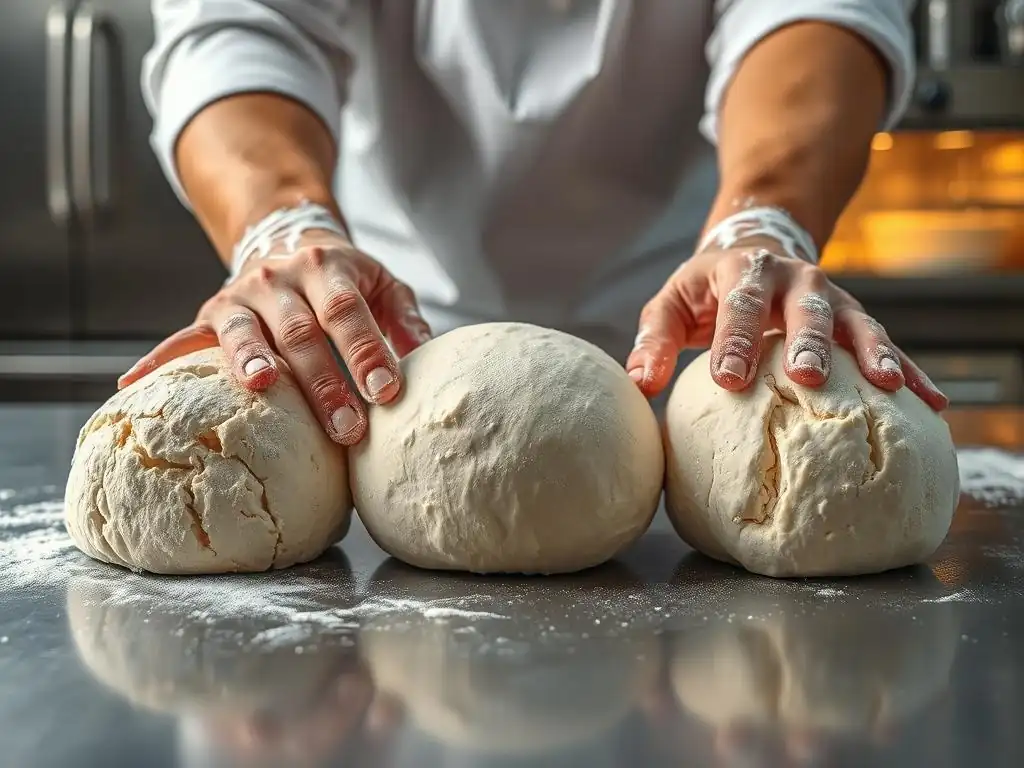
Sticky dough is a common issue that can arise from several factors related to gluten development. One primary cause is insufficient hydration absorption or mixing. If the flour hasn't fully absorbed the water or the gluten network hasn't developed enough to bind the moisture, the dough will feel excessively sticky and difficult to handle. Using a flour with lower protein or absorption capacity than expected can also contribute. Another cause can be adding too much liquid relative to the flour.
To correct sticky dough, assuming the hydration isn't excessively high for the recipe type, the most common measure is simply more mixing or kneading. As gluten development progresses, the dough will become less sticky and more manageable. You can also add small amounts of flour (a tablespoon at a time) while kneading until the desired consistency is reached, though be cautious not to add too much and make the dough stiff. For very wet doughs, techniques like stretch and folds performed over time can help build strength and reduce stickiness without aggressive kneading.
Tough Dough: Causes and Solutions for Overdeveloped Gluten
Tough dough, characterized by excessive resistance to stretching and sometimes resulting in a dense, rubbery baked product, is often a sign of overdeveloped gluten or insufficient relaxation. While true over-mixing to the point of gluten breakdown is possible, more commonly, dough feels tough because the gluten network is very tight and hasn't had sufficient time to relax after intense kneading. This tightness makes it difficult to shape and can lead to a dense crumb structure as the dough resists expansion during proofing and baking.
If dough feels tough and springs back excessively when stretched, the primary solution is to allow it to rest. A rest period of 20-30 minutes covered at room temperature allows the gluten network to relax, making the dough more extensible and easier to handle. This is why many recipes include a bench rest step after initial kneading or before shaping.
If the dough is truly over-mixed to the point of breakdown, it's harder to salvage the structure, though incorporating it into a different dough or using it for a flatbread might be options. Prevention through careful timing when using mechanical gluten development techniques is key.
Tailoring Gluten Development to Different Baked Goods
The level of gluten development required varies significantly depending on the type of baked good you are making. For crusty artisan breads, bagels, or pizza dough, a strong, elastic gluten network is essential to trap gases for a good rise and provide that characteristic chewy texture. This typically involves using high-protein flour, adequate hydration, and significant kneading or folding. The goal is maximum development.
In contrast, for tender cakes, muffins, scones, or biscuits, minimal gluten development is desired. Overworking the batter or dough will activate too much gluten, resulting in a tough product. These recipes typically use lower-protein flours, minimal liquid, and mixing techniques that just barely combine the ingredients. Fats and sugars are often present to further inhibit gluten formation. Understanding these varying requirements is a core principle of applying gluten development baking techniques effectively across the spectrum of baked goods.
Gluten Development for Sourdough vs. Cakes
Comparing gluten development for sourdough bread and cakes provides a clear illustration of tailoring techniques. Sourdough relies on a strong gluten network to capture the carbon dioxide produced by wild yeast and bacteria during a long fermentation. Bakers typically use high-protein bread flour and employ extensive kneading, stretching, and folding over several hours to build a robust, extensible gluten structure capable of significant oven spring and resulting in an open, airy crumb. The acidity of the sourdough culture also contributes positively to gluten strength.
Cakes, however, require a tender, crumbly structure, not chewiness. Gluten development is actively minimized. Cake recipes use low-protein flours (like cake or pastry flour), often incorporate fats and sugars which inhibit gluten, and mixing is limited to just combining the wet and dry ingredients. Over-mixing cake batter activates gluten, resulting in a tough or tunnels-filled cake. The leavening is typically chemical (baking powder/soda), which doesn't rely on a strong network to hold gas as yeast does. These examples highlight the deliberate control over gluten based on the desired final texture.
Advanced Techniques for Experienced Bakers
Autolyse: Enhancing Dough Hydration and Gluten Development
Autolyse is a technique where flour and water are mixed together and allowed to rest for a period (from 20 minutes to several hours) before adding other ingredients like salt and yeast, and before significant kneading begins. During this rest period, the flour fully hydrates, and enzymatic activity (specifically protease activity) begins to break down some protein bonds while other gluten bonds start to form passively. This initial hydration and relaxation make the dough more extensible and easier to knead later.
The primary benefits of autolyse include more complete hydration of the flour, which can lead to a more manageable dough, and a head start on gluten development without mechanical work. This can reduce the overall kneading time required to achieve optimal gluten strength and can result in a more extensible dough that's easier to shape and expands better during baking, potentially leading to improved volume and crumb structure. It's a valuable gluten development baking technique for bakers looking to refine their process, particularly with higher hydration doughs or challenging flours.
Tangzhong (Water Roux): Creating Exceptionally Soft Bread
Tangzhong, also known as a water roux, is a technique originating in Asia that involves cooking a small portion of the flour and liquid (usually milk or water) into a thick paste before adding it to the main dough ingredients. Heating the flour and liquid gelatinizes the starches. These gelatinized starches can hold significantly more water than unheated flour. When the tangzhong is added to the dough, this extra trapped moisture is incorporated, resulting in a dough with much higher hydration potential without being overly sticky.
The tangzhong method leads to exceptionally soft, moist bread with a longer shelf life. While it doesn't directly develop gluten, it allows for a higher hydration level in the dough, which can indirectly support better gluten development and extensibility. The extra moisture also keeps the starches softer after baking, contributing to the bread's renowned tenderness and moist crumb. Using tangzhong is an advanced gluten development baking technique focused on moisture retention and softness, often used in milk breads and other enriched soft loaves.
Vital Wheat Gluten: Supplementing Weak Flours
Vital wheat gluten is a concentrated protein supplement derived from wheat, containing about 75-80% protein. It is essentially purified gluten. Bakers use vital wheat gluten to boost the protein content of flours that are too low in gluten for specific applications, such as using all-purpose flour for hearty bread or adding structure to whole wheat or rye flours, which contain components that can interfere with gluten development despite having decent protein levels.
Adding a small amount of vital wheat gluten (typically 1-2 tablespoons per cup of flour) increases the overall protein percentage of the flour mixture, significantly enhancing its potential for gluten development. This results in a stronger, more elastic dough that can support a better rise and structure, particularly beneficial for high-ratio breads or when working with flours inherently lower in gluten potential. It's a direct way to manipulate the gluten-forming capacity of your flour as part of targeted gluten development baking techniques.
Gluten-Free Baking Considerations
Understanding the Absence of Gluten in Gluten-Free Flours
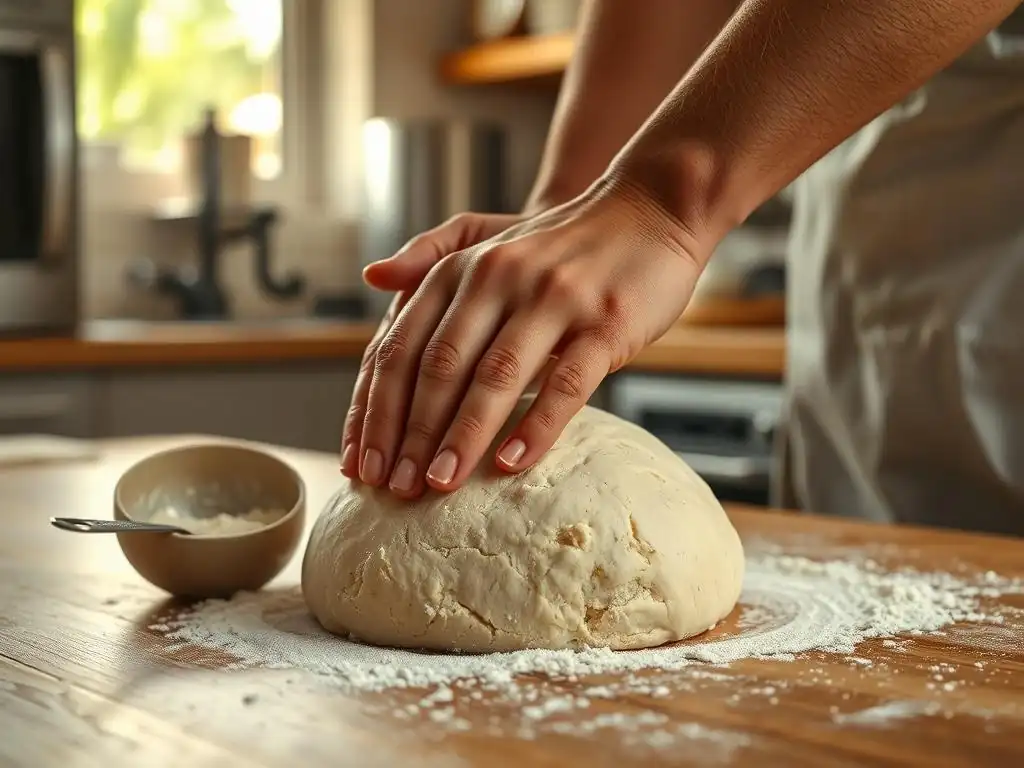
Gluten-free flours are derived from grains or starches that do not contain gluten-forming proteins, such as rice flour, almond flour, tapioca starch, potato starch, and cornmeal. While some of these flours contain protein, they lack the specific glutenin and gliadin proteins necessary to form the viscoelastic network characteristic of wheat gluten. Consequently, doughs made solely from gluten-free flours do not develop structure, elasticity, or the ability to trap gases in the same way as wheat doughs. This absence of natural gluten development is the primary challenge in gluten-free baking.
Without the inherent structure provided by gluten, gluten-free baked goods can often be dense, crumbly, or lack the characteristic chewiness and rise of their wheat counterparts. Simply substituting gluten-free flour cup-for-cup in a traditional recipe designed for gluten development will typically result in failure. Gluten-free baking requires entirely different approaches to create structure and texture, relying on alternative binders and techniques to mimic gluten's function.
Techniques for Mimicking Gluten's Structure in Gluten-Free Baking
Since natural gluten development isn't possible in gluten-free baking, bakers employ various techniques and ingredients to replicate gluten's structural role. Common binders include xanthan gum or guar gum, which, when hydrated, form a gel-like substance that provides some elasticity and helps hold the dough together. Psyllium husk is another popular binder that absorbs large amounts of water and creates a cohesive, somewhat elastic structure.
Other techniques involve blending different gluten-free flours and starches to achieve a balance of protein, starch, and fiber that approximates the texture of wheat flour. Using ingredients like eggs, yogurt, or mashed vegetables (like potato or pumpkin) can also contribute to moisture, binding, and structure. Gluten-free bread recipes often rely heavily on these binders and precise hydration levels to achieve any semblance of the crumb structure and rise seen in wheat bread, adapting gluten development baking techniques to a fundamentally different ingredient base.
Conclusion: Achieving Baking Success Through Gluten Mastery
Key Principles for Consistent Gluten Development
Mastering gluten development is a cornerstone of successful baking, particularly for breads and other yeast-leavened goods. Consistent results stem from understanding and controlling several key principles: start with the right flour based on protein content and desired texture; ensure adequate hydration to activate the proteins; apply sufficient mechanical energy through mixing or kneading to build the network, but avoid overworking; manage salt, fats, and acidity as they significantly influence gluten behavior; and use visual or tactile tests like the windowpane test to assess development.
Achieving optimal gluten development is about finding the sweet spot for your specific recipe and desired outcome. It's a balance between strength and extensibility, allowing the dough to rise beautifully while maintaining its shape. By paying attention to these factors and practicing different gluten development baking techniques, bakers can reliably produce baked goods with the perfect texture, volume, and crumb structure, unlocking a world of baking possibilities.
Resources for Further Exploration of Baking Science
Delving deeper into the science behind gluten development and other baking processes can significantly enhance your skills and understanding. Numerous resources are available for bakers eager to learn more. Look for books specifically on the science of baking or bread making, which often provide detailed explanations of protein interactions, fermentation chemistry, and the impact of ingredients and techniques.
Online resources, including reputable baking websites (like BakeWithEase.com!) and educational platforms, offer articles, videos, and courses dedicated to baking science. Exploring academic papers or food science journals can provide even more in-depth technical information. Engaging with the baking community through forums or social media can also offer practical insights and shared experiences related to mastering gluten development baking techniques and other complex aspects of the craft. The journey of understanding gluten is a continuous path towards baking mastery.
Frequently Asked Questions
What exactly is gluten development in baking?
Gluten development is the process where glutenin and gliadin proteins, naturally present in flour, combine with water and are manipulated through kneading to form an elastic network that gives baked goods their structure.
Why is gluten development so important for certain baked goods?
Proper gluten development is crucial for creating desirable textures in many baked goods. It provides the strength and elasticity needed for bread to rise, and the chewiness in pasta and pizza dough.
What are some common gluten development baking techniques mentioned on BakeWithEase.com?
BakeWithEase.com emphasizes techniques like kneading, resting the dough (autolyse), and using the correct amount of hydration to achieve optimal gluten development. We provide step-by-step guides for each method.
Can you over-develop gluten? What happens if I do?
Yes, you can over-develop gluten. Over-kneading can result in a tough and dense baked good. Look for the dough to be smooth and elastic, but not stringy.
Are there baking techniques on BakeWithEase.com for avoiding gluten development?
Yes! For tender baked goods like cakes and pastries, BakeWithEase.com offers techniques like using cake flour (lower in protein), gentle mixing, and incorporating fat early to inhibit gluten formation.
Final Reflection: The Ever-Evolving Dance of Gluten in Baking
Understanding gluten development is not merely a technical skill; it's the key to unlocking the full potential of flour and creating truly exceptional baked goods. The techniques explored in this article – from choosing the right flour to mastering kneading and fermentation – are not just historical practices, but vital tools for bakers today, impacting texture, flavor, and the overall eating experience. The quest for the perfect loaf, the ideal croissant, or the fluffiest cake continues to drive innovation in this field.
The journey of understanding gluten's role in baking is a fascinating one, mirroring the evolution of culinary arts itself. It's a testament to human ingenuity and our persistent desire to refine and perfect our craft. The subtle nuances of gluten development, the interplay of hydration and protein, are a constant source of learning and discovery. As the great Julia Child once said, Find something you're passionate about and keep tremendously interested in it.
This passion for baking, fueled by a deeper understanding of gluten, is what elevates it from a simple task to a truly rewarding art.
Now, it's your turn. Consider the techniques discussed – the impact of hydration, the importance of kneading, the magic of fermentation. Experiment! Don't be afraid to adjust recipes, to try new flours, to push the boundaries of your baking skills. Each loaf, each pastry, is an opportunity to deepen your understanding of this remarkable protein and to create something truly delicious. Embrace the challenge, and the rewards will be immeasurable.
Unlock Your Gluten-Free Baking Potential!
Thanks for exploring the fascinating world of gluten with us! We hope you now have a deeper understanding of how this protein impacts your baking. Ready to put your newfound knowledge to work?
- Bake your first gluten-free masterpiece! Try one of our many delicious recipes designed specifically for gluten-free baking – find them on our website!
- Share your gluten-free baking journey with our community on social media! Use #BakeWithEaseGlutenFree and show us your creations.
- Challenge yourself to experiment with different gluten-free flours and discover your new favorite blend!
What exciting gluten-free treat will you create next?