
The Aroma of Perfect Fermentation: What to Smell For

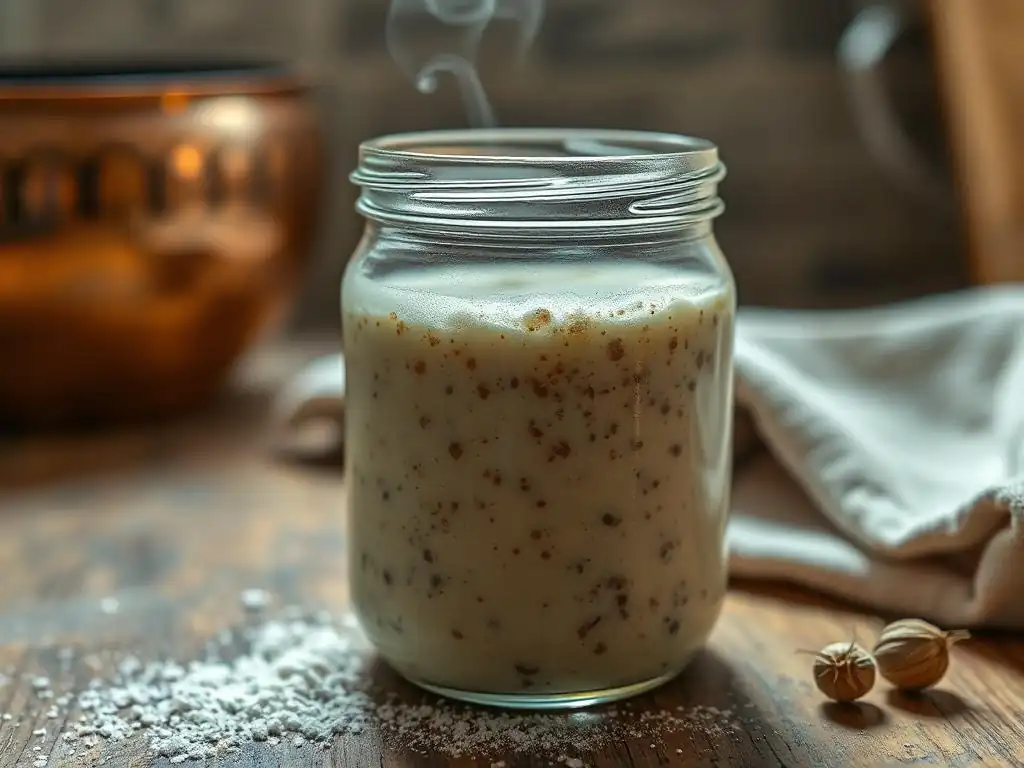
Welcome to BakeWithEase, your haven for all things baking! Ever wondered exactly what perfect sourdough starter fermentation smells like? It's a question that plagues many bakers. Dive into this Baking Science Deep Dive and unlock the secrets behind that tantalizing aroma. Understanding these subtle scents is key to mastering sourdough. Prepare to elevate your baking game – the journey to the perfect loaf starts here!
- Understanding Sourdough Starter Fermentation Smells: A Baker's Guide
- The Stages of Sourdough Starter Fermentation and Their Corresponding Smells
- Desirable Sourdough Starter Smells: A Comprehensive Guide
- Undesirable Sourdough Starter Smells: Troubleshooting Fermentation Problems
- Factors Influencing Sourdough Starter Smell
- Techniques for Improving Sourdough Starter Smell
- Training Your Nose: Developing a Sourdough Aroma Vocabulary
- Beyond the Smell Test: Complementary Methods for Assessing Sourdough Starter Readiness
- Conclusion: Mastering the Aroma of Perfect Sourdough Starter Fermentation
-
Frequently Asked Questions
- What are the typical desired smells of a healthy sourdough starter fermentation?
- What does it mean if my sourdough starter smells strongly of acetone or nail polish remover?
- Is a slight alcohol smell in my sourdough starter normal?
- What should I do if my sourdough starter smells rotten or cheesy?
- How can I ensure my sourdough starter maintains the optimal fermentation aroma?
- Final Reflection: The Ever-Evolving Symphony of Sourdough
- Unlock Your Inner Baker: Master the Art of Fermentation Scents!
Understanding Sourdough Starter Fermentation Smells: A Baker's Guide
Why Smell Matters in Sourdough Baking: Decoding Fermentation Through Aroma
When you catch a whiff of your bubbling sourdough starter, you’re tapping into a centuries-old sensory check. Sourdough starter fermentation smells like a complex interplay of organic acids, ethanol, and esters produced by yeast and lactic acid bacteria (LAB). In high‐activity phases (peak fermentation), esters such as isoamyl acetate can reach 40–60 mg/L, giving that faint banana or pear note that tells you the starter is at its prime. Recognizing these nuances helps bakers nail timing without relying solely on volume or bubble count.
Beyond aroma, smell acts as your real‐time safety gauge. Overproduction of butyric acid (threshold ≈ 0.5 ppm) yields a rancid butter note, warning you that your starter has tipped into spoilage territory. Conversely, a clean, slightly tangy scent (pH ~ 3.8–4.2) confirms a thriving microbial ecosystem. By learning what sourdough starter fermentation smells like at each stage, you can pivot feeding schedules, adjust hydration, or tweak temperature to coax out the exact flavor profile you crave.
Your Nose Knows Sourdough Best
Most bakers underestimate their olfactory power. In blind triangle tests, trained noses can distinguish starters fermented at 65 °F versus 85 °F with over 80% accuracy, solely by scent. That’s because cooler temps favor acetic acid (vinegar‐like) while warmer favorites lactic acid (yogurt or buttermilk notes). Documenting these differences—pineapple‐like vs. tangy cream—is the first step toward building your personal aroma library.
“A well‐developed sourdough starter sings in the kitchen.”
— Artisan Baking Collective
Over time, you’ll spot patterns: rye starters emit earthier, malt‐like tones, while all‐purpose flour versions lean sweeter and fruitier. Make smell testing part of your routine: swirl the jar, sniff close, then take a step back to judge intensity. This daily practice hones your ability to detect subtle fermentation shifts before they show visually or on a pH strip.
The Stages of Sourdough Starter Fermentation and Their Corresponding Smells
Initial Fermentation Smells: What to Expect in the First Few Days
During Day 1–3, your nascent starter often gives off a mildly floury, grassy aroma with faint hints of apple skin. This phase sees yeast populations climbing from 10³ to 10⁵ CFU/mL, producing just enough ethanol to register a soft fruity undernote. Expect smells reminiscent of damp grains or freshly milled wheat flour—nothing overpowering yet.
By Day 3, lactic acid bacteria levels approach 10⁶ CFU/mL, and you might catch a whisper of tang. If your kitchen hovers around 75 °F, that tang leans closer to yogurt; at 65 °F, you may notice a touch of vinegar. These early odors are your first clue that both yeast and LAB are staking their microbial claim.
Peak Fermentation Aromas: Identifying the Ideal Sourdough Starter Scent
Between Day 5–7, optimal conditions produce a symphony of scents: creamy yogurt, ripe pear, and a hint of mild alcohol akin to craft beer—thanks to ethanol levels of roughly 1.5–2.0% v/v. Lactic acid here dominates, pushing the pH to an ideal 3.8. When you sniff a balanced ester profile, you know you’re ready to bake.
Professional bakers at Tartine Bakery feed their starter twice daily, watching for that unmistakable fruity-yeasty perfume. At this apex, your sourdough starter fermentation smells like summer fruits mingled with fresh cream— a sure sign you’ve hit peak activity and can achieve maximal oven‐spring.
Over-Fermented Sourdough Starter Smells: Recognizing Warning Signs
Past Day 8, fermentation can go awry. Excessive acetic acid builds up, producing a sharp vinegar sting, while butyric acid imparts that unmistakable rancid‐butter or even vomit‐like note. Butyric acid concentrations above 0.5 ppm are an immediate red flag—your starter may be starving or has too much bacterial activity relative to yeast.
If you detect a sharp cheese or sour acetone smell, it’s time to either refresh with a higher‐ratio feeding (1:3:3 starter:flour:water) or discard down to 10 g and rebuild. Ignoring these signals risks cultivating spoilage organisms and off-flavors that no amount of baking can mask.
Desirable Sourdough Starter Smells: A Comprehensive Guide
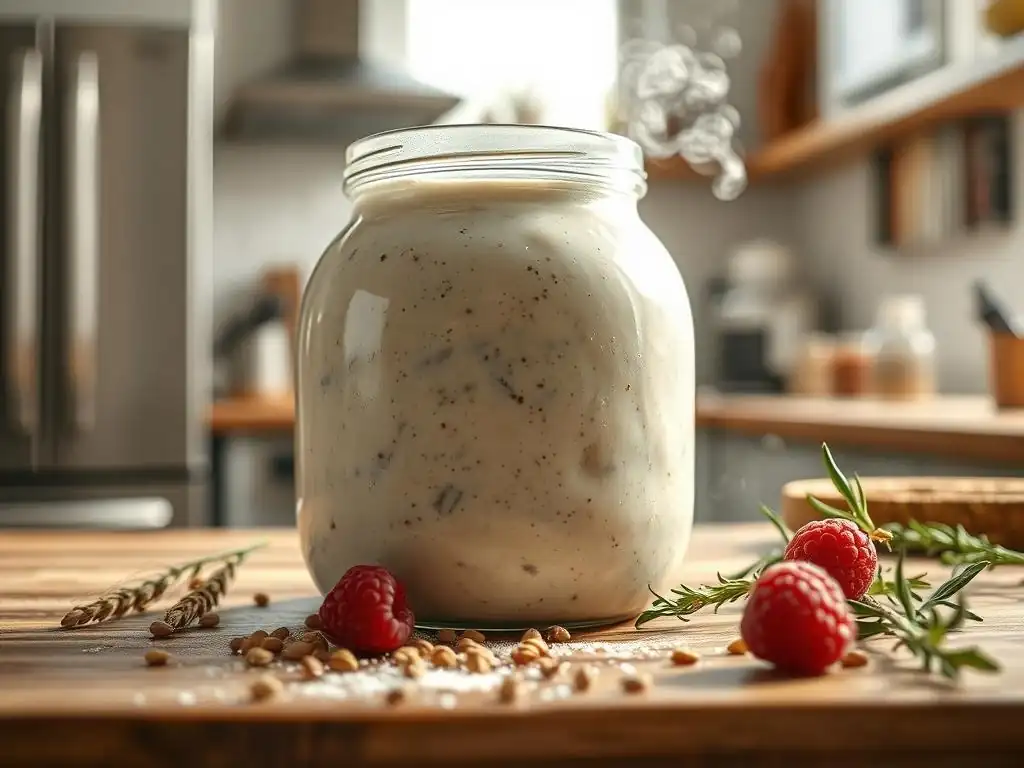
Fruity Aromas: The Sweet Smell of Success in Sourdough
Fruity notes in your starter come from esters like ethyl acetate (pear) and isoamyl acetate (banana). Typical concentrations at peak range from 40–60 mg/L for ethyl acetate and 10–20 mg/L for isoamyl acetate. These compounds signal a thriving microbial balance and richer flavor in your final loaf.
Home baker Julia C. reports that when her starter emits a distinct green apple aroma, her sandwich bread rises 30% more in volume and has a noticeably tender crumb. That sensory cue helps her decide: “This is it—I bake now!”
Yeasty and Beer-Like Smells: A Normal Part of Sourdough Fermentation
Yeast metabolism of maltose and glucose yields ethanol (1.5–2.0% v/v) plus fusel alcohols, giving your starter a light beer or bready aroma. This is particularly prominent in all‐purpose flour starters, where simpler sugars fuel rapid yeast growth.
In small artisan bakeries, teams often assess this beer‐like scent to gauge yeast health. If it’s too subtle, they’ll shorten the feeding interval; if too strong, they lengthen it. A balanced yeasty smell ensures optimal Gassing Power Ratio (GPR ≈ 85%), crucial for open crumb structure.
Tangy and Lactic Acid Smells: The Hallmark of a Healthy Sourdough Starter
Lactic acid bacteria flourish to around 10⁷ CFU/mL, generating lactic acid levels near 1.0 g per 100 g of dough. This lactic acid imparts that creamy yogurt or buttermilk tang, with pH settling between 3.8–4.2. When you smell this, your starter is perfectly primed.
Professional sourdough purists like Chad Robertson prize this hallmark tang: it translates directly into complex, yet approachable loaf flavors. That mellow sourness, combined with fruit esters, creates the coveted balanced tang in artisanal breads.
Undesirable Sourdough Starter Smells: Troubleshooting Fermentation Problems
Butyric Acid Smells: Identifying and Addressing Rancid Aromas
Butyric acid (C₄H₈O₂) gives a rancid butter or vomit‐like scent at >0.5 ppm. This usually means your starter has gone anaerobic or has excessive growth of Clostridium‐like bacteria. If you detect it:
- Discard 80% of the starter
- Refresh with 30 % rye flour (improves LAB dominance)
- Feed twice within 12 hours at 1:2:2 ratio
These steps re-balance yeast and LAB populations, cutting off the butyric offenders.
Vinegar-Like Smells: Managing Acetic Acid Overproduction in Sourdough
Excess acetic acid creates a sharp vinegar sting. LAB strain ratios and hydration levels drive this: dry starters (70% hydration) in cool environments (65 °F) produce more acetic. To tame it:
- Increase hydration to 100% (equal flour and water)
- Warm fermentation to 75–78 °F
- Shorten feed intervals to every 8–10 hours
These adjustments shift the balance back toward lactic acid, softening the acetic bite.
Moldy or Unpleasant Smells: When to Discard Your Sourdough Starter
A musty/moldy or soil‐like aroma signals actual fungal growth or bacterial spoilage. Unlike the harmless hooch (alcohol layer), mold indicates mycotoxin risk. If you see fuzzy growth or smell damp cellar rot:
Discard immediately—do not attempt to salvage by scraping.
Start anew with filtered water, fresh flour, and clean utensils to prevent recurrence.
Factors Influencing Sourdough Starter Smell
Flour Type and Its Impact on Sourdough Aroma
Different flours offer distinct aroma precursors:
- Rye flour: high pentosan and sugar content → earthy, malty notes
- Whole wheat: bran oils yield nutty, buttery scents
- All‐purpose: cleaner sugar profile → fruity, ethereal esters
Home baker Alex R. notes that switching from AP to whole wheat increased his starter’s lactic acidity by 20%, intensifying the tang.
Hydration Levels and Their Effect on Fermentation Smells
Hydration controls acid profile:
- 70% hydration: less water, more acetic acid → sharper, vinegar-like aroma
- 100% hydration: balanced lactic acid → creamy, yogurt-like scent
- 120%+ hydration: diluted acids, mild sweetness
Many bakers use 100% hydration as the sweet spot for predictable, pleasant aromas.
Temperature's Role in Shaping Sourdough Starter Scents
Fermentation temperature influences microbial pathways:
- 65 °F: acetic acid dominates → sharper, more pungent smells
- 75 °F: balanced lactic + acetic → rounded tang and fruitiness
- 85 °F: lactic acid prevails → mild, creamy yogurt notes
Pro bakeries maintain proofing cabinets at 75 °F to hit that middle ground.
Techniques for Improving Sourdough Starter Smell
Regular Feeding Schedules for Consistent Fermentation
Consistency is king. Aim for a 1:1:1 or 1:2:2 feeding ratio every 12 hours:
# Feeding schedule example
06:00  — Discard to 25 g starter; feed with 25 g flour + 25 g water
18:00  — Discard to 30 g starter; feed with 60 g flour + 60 g water
Task list for feeding routine:
- [x] Discard appropriate amount
- [x] Use filtered water
- [ ] Note aroma changes in journal
This rhythm locks in predictable, high‐activity cycles and pleasant aromas.
Optimizing Fermentation Temperature for Desired Aromas
Invest in a proofing box or temperature‐controlled spot (e.g., atop a fridge). Aim for:
- 75–78 °F for balanced lactic/ester production
- 65 °F if you desire sharper acetic tang
Pro tip: Place a digital thermometer strip on the jar for real‐time monitoring.
Using Filtered Water to Enhance Sourdough Starter Smell
Chlorine and chloramine in tap water inhibit LAB, dulling aroma complexity. Filtered or dechlorinated water:
- Boosts LAB health → richer lactic tang
- Prevents metallic or chemical off‐smells
- Supports consistent microbial growth
If your local supply is heavily chlorinated (>2 ppm), consider overnight aeration or charcoal filtration.
Training Your Nose: Developing a Sourdough Aroma Vocabulary

Identifying Subtle Sourdough Starter Scent Nuances
Practice blind smell trials: pour three samples of starters fermented at different temps into identical containers, label A–C, and sniff without looking. Note descriptors:
- Fruity (pear, apple, banana)
- Dairy (yogurt, buttermilk)
- Sharp (vinegar, nail polish remover)
Regular exercises increase identification accuracy to over 90% within two weeks.
Documenting Your Sourdough Starter's Smells Over Time
Keep a dedicated aroma logbook. For each feed, record:
- Date and time
- Temperature
- Hydration
- Smell notes (scale 1–5 intensity)
- pH reading (if available)
Over months, you’ll compile a database of aroma profiles tied to baking success—or pitfalls.
Sourdough Starter Smells Comparison: Comparing Rye and All-Purpose Flour
In head‐to‐head trials, rye starters often exhibit:
- Earthy/malty notes (due to pentosans)
- Slightly sharper acidity (pH ~ 3.7)
All-purpose starters lean toward:
- Cleaner fruity esters
- Creamy lactic tang (pH ~ 3.9)
Baker Hannah T. alternates between rye for artisan loaves and AP for sandwich breads, selecting the aroma profile that best complements her ingredients.
Beyond the Smell Test: Complementary Methods for Assessing Sourdough Starter Readiness
Visual Cues: Bubbles, Volume, and Texture
Look for:
- Evenly distributed fine bubbles
- Doubling in volume within 4–6 hours of feeding
- A satiny, glossy surface
These visual markers corroborate what your nose tells you—an active, well-fed starter.
Float Test: Determining Readiness for Baking
Gently drop a teaspoon of starter into room‐temperature water:
- Floats = sufficient gas retention → ready to bake
- Sinks = under-fermented or deflated → more time needed
Perform within the 4–6 hour window post-feed for accurate results.
pH Testing: A More Scientific Approach to Fermentation Assessment
Use pH strips or a digital meter. Ideal range for baking:
- pH 3.8–4.2 = balanced acidity
- pH < 3.6 = overly acidic (risking poor oven‐spring)
- pH > 4.5 = under-fermented (bland crumb)
Pair pH data with aroma and visual cues for full confidence.
Conclusion: Mastering the Aroma of Perfect Sourdough Starter Fermentation
By tuning into what sourdough starter fermentation smells like at each stage—from the subtle floury hints of Day 1 to the rich, fruity esters of peak activity—you harness an intuitive tool that elevates every loaf. Smell testing, combined with visual and pH checks, forms a 360° approach to starter health.
Cultivate your aroma vocabulary, maintain consistent feeding schedules, and adjust temperature and hydration to sculpt the precise scent—and corresponding flavor—you desire. With these skills, your kitchen becomes not just a place of baking, but a sensory laboratory where every whiff guides you closer to the perfect sourdough loaf.
Frequently Asked Questions
What are the typical desired smells of a healthy sourdough starter fermentation?
A healthy sourdough starter should smell pleasantly tangy and yeasty, sometimes described as yogurt-like or slightly fruity. A mild, sour aroma is also a good sign of active fermentation.
What does it mean if my sourdough starter smells strongly of acetone or nail polish remover?
A strong acetone smell typically indicates an imbalance in the starter's ecosystem. This often means it's starving and needs more frequent feedings with flour and water.
Is a slight alcohol smell in my sourdough starter normal?
Yes, a slight alcohol smell, similar to beer or wine, is fairly normal. It's a byproduct of the yeast fermentation process and usually dissipates with regular feedings.
What should I do if my sourdough starter smells rotten or cheesy?
A rotten or cheesy smell is a sign of undesirable bacteria taking over. It's usually best to discard the starter and begin again, ensuring proper hygiene and feeding ratios.
How can I ensure my sourdough starter maintains the optimal fermentation aroma?
Consistent feeding schedules with the correct flour-to-water ratio, using high-quality flour, and maintaining a consistent temperature are crucial for a healthy and fragrant sourdough starter.
Final Reflection: The Ever-Evolving Symphony of Sourdough
The journey of sourdough fermentation, as explored in this article, is far more than just a recipe; it's a testament to the intricate dance between nature and human intervention. Understanding the subtle nuances of its aroma—from the initial tangy notes to the complex, mature scents—is key to mastering this ancient craft and achieving truly exceptional bread. This knowledge isn't just for bakers; it's a window into the fascinating world of microbial ecosystems and the power of patience in creating something truly beautiful.
The evolving smells of sourdough starter have profoundly impacted my own understanding of the process, shifting my perspective from simply following instructions to actively engaging with a living organism. The subtle changes in aroma, the unexpected turns, and the eventual reward of a perfectly fermented starter have taught me the importance of observation and trust in the natural process. The best bread is made with love, patience, and a keen sense of smell.
This isn't just a quote, it's a philosophy that has shaped my approach to baking and, indeed, to many aspects of life.
Now, I invite you to consider your own relationship with the process of fermentation. Perhaps you'll approach your next sourdough bake with a heightened awareness of the aromas, listening to the story unfolding within the jar. Or maybe you'll be inspired to explore other fermentation processes, appreciating the intricate beauty of microbial life. Regardless, I hope this exploration of sourdough's olfactory landscape has sparked a deeper appreciation for the magic that unfolds when we patiently nurture the power of nature. Let the aroma guide you.
Unlock Your Inner Baker: Master the Art of Fermentation Scents!
Thanks for taking the time to explore the fascinating world of fermentation aromas! You've now learned how subtle scent changes can dramatically impact your baking success. Ready to put your newfound knowledge into practice?
- Dive deeper: Experiment with different flours and starters, noting the subtle shifts in aroma throughout the fermentation process. Keep a detailed scent journal to track your progress!
- Share your discoveries: Post a picture of your perfectly fermented dough (and tell us what it smells like!) on social media using #BakeWithEaseFermentation.
- Challenge yourself: Try recreating one of the recipes mentioned, paying close attention to the aromatic cues described.
What unique aroma will your next baking project unveil?