
Vanilla Cake Secrets Revealed: From Batter to Bake

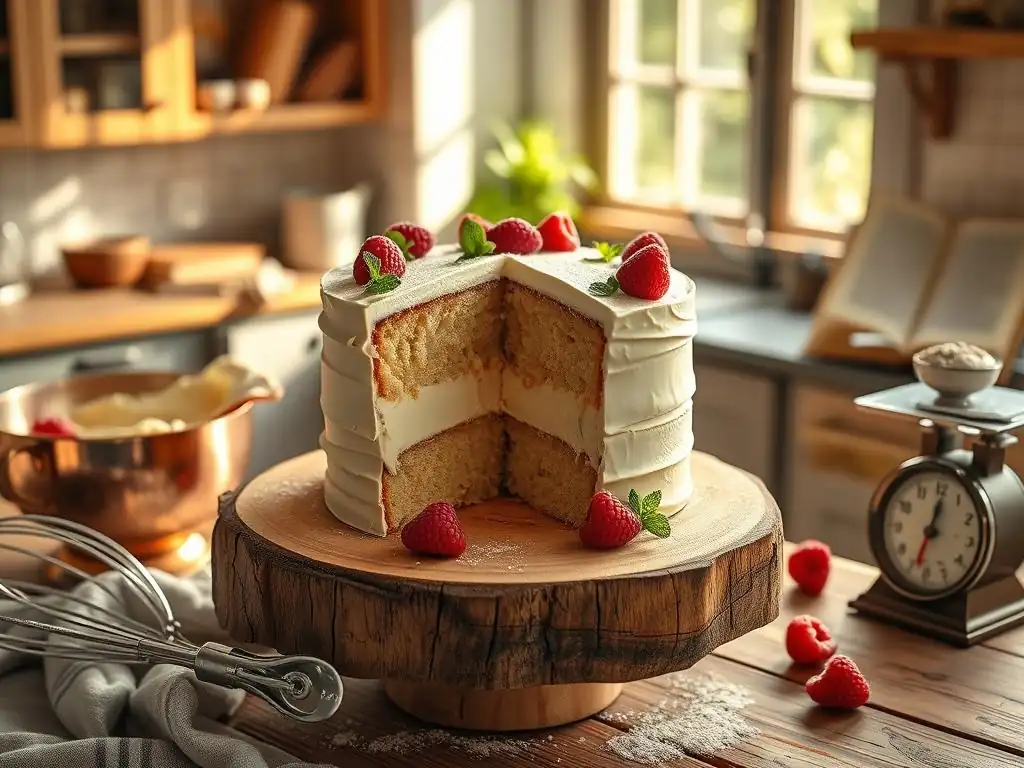
Welcome to BakeWithEase, your trusted companion in the delightful world of baking! Are you ready to unlock the easy vanilla cake recipe secrets that will transform your baking from good to unforgettable? We're diving deep into the techniques and tips that will guarantee a moist, flavorful, and perfectly textured cake, every single time. Curious to know the surprising ingredient that elevates this classic dessert? Let's get baking!
- BakeWithEase Presents: Mastering the Easy Vanilla Cake Recipe
- The Key Ingredients for an Easy Vanilla Cake Recipe
- Step-by-Step Guide to Baking the Perfect Vanilla Cake
- Troubleshooting Common Vanilla Cake Issues
- Flavor Variations: Elevating Your Easy Vanilla Cake Recipe
- Frosting and Decoration Ideas for Your Vanilla Cake
- Storing Your Vanilla Cake for Maximum Freshness
- The Ultimate Easy Vanilla Cake Recipe: A Recap
- Enjoy Your Homemade Vanilla Cake!
-
Frequently Asked Questions
- What makes a vanilla cake recipe truly "easy"?
- What are the biggest secrets to achieving a moist vanilla cake?
- How can I elevate the flavor of my vanilla cake beyond basic vanilla extract?
- What are some common mistakes to avoid when baking a vanilla cake?
- How can I ensure my vanilla cake has a light and airy texture?
- Final Reflection: The Enduring Allure of the Perfect Vanilla Cake
- Unlock Your Inner Baker: Master the Art of Vanilla Cake!
BakeWithEase Presents: Mastering the Easy Vanilla Cake Recipe
Why This Vanilla Cake Recipe is Different
Many vanilla cake recipes promise simplicity, but often leave bakers feeling frustrated with dry results or complicated steps. Our easy vanilla cake recipe secrets lie in demystifying the process and focusing on techniques that guarantee a moist, tender crumb every single time. We cut through the confusion, offering clear instructions designed specifically for home bakers, whether you're just starting out or looking to perfect your go-to vanilla cake. This approach prioritizes understanding why certain steps are important, rather than just blindly following instructions.
This particular recipe focuses on achieving a balanced flavor profile where the true essence of vanilla shines through, complemented by a rich, buttery texture. We'll reveal the subtle nuances in ingredient selection and mixing methods that elevate a simple vanilla cake from good to absolutely unforgettable. By understanding these core principles, you'll gain the confidence to bake a consistently delicious vanilla cake, making it a staple in your baking repertoire. Forget overly complex methods; our goal is to make baking a perfect vanilla cake accessible and enjoyable.
What You'll Learn in This Vanilla Cake Guide
In this comprehensive guide to baking an easy vanilla cake, you will uncover the critical roles that common ingredients play and how their quality directly impacts the final outcome. We’ll delve into the science behind successful cake baking, explaining concepts like creaming butter and sugar, and the importance of not overmixing. Expect to learn the best practices for preparing your pan, achieving the ideal baking temperature, and knowing exactly when your vanilla cake is perfectly done.
Beyond the basic technique, this guide also explores how to troubleshoot common baking mishaps, such as a sunken cake or a dry texture. You'll discover simple fixes and preventative measures that will save you time and ingredients. Furthermore, we'll share exciting ideas for flavoring variations and decorating your vanilla cake, transforming it into a show-stopping dessert. By the end, you'll possess the knowledge and confidence to bake a flawless vanilla cake, ready to impress friends and family.
The Key Ingredients for an Easy Vanilla Cake Recipe
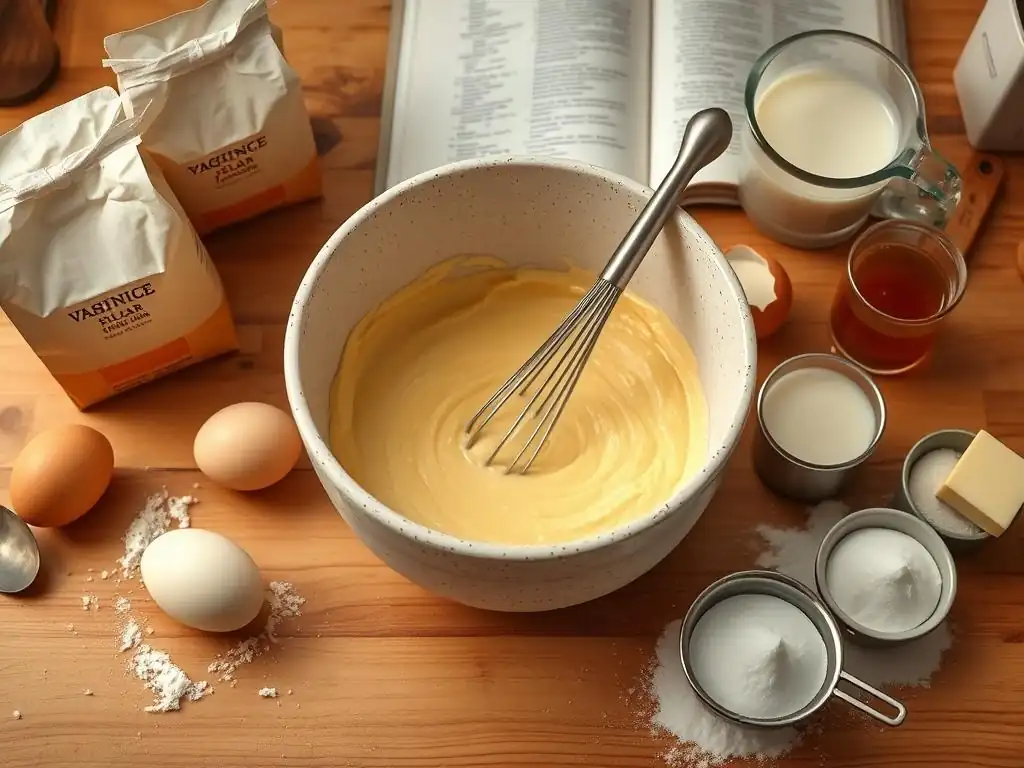
Choosing the Right Flour for Your Vanilla Cake
The type of flour you choose significantly impacts the texture of your vanilla cake. For a tender crumb, cake flour is often recommended due to its lower protein content, typically around 6-8%. This results in less gluten development compared to all-purpose flour, which usually has a protein content of 10-12%. While cake flour yields a very fine texture, many successful easy vanilla cake recipe secrets utilize all-purpose flour effectively by employing specific mixing techniques to control gluten development.
If using all-purpose flour, sifting it is a crucial step to aerate the flour and remove any lumps, contributing to a lighter texture. Some recipes might even call for replacing a small portion of the all-purpose flour with cornstarch (e.g., replacing 2 tablespoons of flour per cup with cornstarch) to mimic the lower protein content of cake flour. This simple trick can help achieve a more delicate crumb without requiring a separate type of flour, making your vanilla cake baking process even easier.
The Importance of Quality Vanilla Extract
Vanilla extract is the star ingredient in a vanilla cake, so its quality is paramount. Pure vanilla extract, made from vanilla beans soaked in alcohol, offers a complex flavor profile with hundreds of aromatic compounds. Imitation vanilla extract, while more affordable, is typically made from vanillin derived from sources like wood pulp or coal tar, and lacks the depth and complexity of pure vanilla. While imitation vanilla provides a basic vanilla flavor, using pure extract is one of the simplest easy vanilla cake recipe secrets to elevate your cake's taste.
Different types of pure vanilla extract exist, sourced from various regions like Madagascar, Mexico, Tahiti, and Uganda. Madagascar vanilla is often the most common, known for its sweet, creamy flavor. Mexican vanilla tends to be spicier, while Tahitian vanilla is floral and fruity. Experimenting with different pure extracts can add unique dimensions to your vanilla cake. Generally, a standard recipe might call for 1 to 2 teaspoons of extract, but don't be afraid to use a high-quality extract generously – it's the heart of the cake's flavor.
Sugar Selection: Granulated vs. Caster Sugar in Vanilla Cakes
Most easy vanilla cake recipes call for granulated sugar, the common white crystalline sugar. Granulated sugar plays several crucial roles: it provides sweetness, contributes to the cake's structure by interacting with proteins, aids in browning during baking (Maillard reaction and caramelization), and helps tenderize the crumb by interfering with gluten development. When creamed with butter, the sharp edges of granulated sugar crystals also help to create air pockets, contributing to the cake's leavening.
Caster sugar, also known as superfine sugar, has smaller crystals than granulated sugar. This allows it to dissolve more quickly and evenly into the batter, potentially leading to a slightly finer, more uniform crumb. While granulated sugar works perfectly well for an easy vanilla cake, using caster sugar can be one of those subtle easy vanilla cake recipe secrets that adds a touch of refinement to the texture. If a recipe calls for granulated sugar, you can typically substitute it with caster sugar cup-for-cup, though you might notice a slight difference in texture.
The Role of Butter and Eggs in Vanilla Cake Texture
Butter is essential for richness, flavor, and tenderness in a vanilla cake. Using unsalted butter allows you to control the salt content in your recipe. The state of the butter is also critical; most recipes call for softened butter, which should be pliable but not melted. Creaming softened butter with sugar is a vital step that incorporates air into the batter, acting as a leavening agent. This process creates tiny air pockets that expand in the oven, contributing to the cake's light structure.
Eggs bind the ingredients together, add moisture, contribute to structure through their protein content, and provide richness. They also aid in leavening when air is incorporated during mixing. Using room temperature eggs is one of the key easy vanilla cake recipe secrets for a smooth, emulsified batter. Cold eggs can cause the butter to seize up, resulting in a lumpy batter and a less tender cake. Allowing eggs to sit at room temperature for about 30 minutes before baking makes a noticeable difference in the final texture.
Step-by-Step Guide to Baking the Perfect Vanilla Cake
Preparing Your Baking Pan for Vanilla Cake Success
Proper pan preparation is fundamental to ensuring your vanilla cake doesn't stick and comes out cleanly. The most common method involves greasing and flouring the pan. Start by coating the inside of the pan generously with softened butter or a non-stick baking spray, making sure to get into all the corners and up the sides. Then, add a few tablespoons of flour to the pan and tilt and tap it to distribute the flour evenly, coating the greased surfaces. Discard any excess flour.
Alternatively, you can line the bottom of the pan with parchment paper after greasing. Simply trace the bottom of your pan onto parchment paper, cut it out, and press it into the greased bottom. Then, grease and flour the sides of the pan as usual.
This method is particularly effective for preventing the bottom of the cake from sticking. For an easy vanilla cake recipe secrets approach, using baking spray with flour already incorporated can be a quick and effective shortcut. Ensure your pan size matches the recipe requirements (e.g., an 8-inch or 9-inch round pan) for proper baking time and rise.
Mixing the Vanilla Cake Batter: Avoiding Common Mistakes
Mixing the batter correctly is crucial for a tender vanilla cake. The standard method for many easy vanilla cake recipes is the creaming method. First, cream the softened butter and sugar together until light and fluffy, about 3-5 minutes on medium speed with an electric mixer. This step incorporates air. Next, add the eggs one at a time, mixing well after each addition, followed by the vanilla extract. In a separate bowl, whisk together your dry ingredients (flour, baking powder, salt).
The key mistake to avoid is overmixing once the dry ingredients are added. Gluten develops when flour is mixed with liquid, and excessive mixing toughens the cake. Alternate adding the dry ingredients and the liquid ingredients (like milk or buttermilk) to the butter mixture, starting and ending with the dry. Mix just until the dry ingredients are incorporated – a few streaks of flour are okay. Overmixing is one of the primary reasons for a tough or dense vanilla cake texture.
Baking Temperature and Time: Achieving a Golden Brown Vanilla Cake
Baking at the correct temperature is vital for an evenly cooked vanilla cake. Most easy vanilla cake recipes recommend a temperature between 325°F (160°C) and 350°F (175°C). A slightly lower temperature, like 325°F, often results in a flatter top and a more even bake, especially for larger or thicker cakes. 350°F is standard for many recipes and works well for thinner cakes or cupcakes, promoting a good rise and browning. It's a good idea to use an oven thermometer to verify your oven's actual temperature, as they can often be inaccurate by 25°F or more.
Baking time varies depending on the recipe, pan size, and your oven, but a typical vanilla cake might take anywhere from 30 to 40 minutes for an 8 or 9-inch round cake. Always check the recipe's suggested time, but be prepared to adjust. The cake is ready when the edges pull slightly away from the sides of the pan and the top is golden brown. The internal temperature of a fully baked cake should register around 205-210°F (96-99°C) when measured with an instant-read thermometer.
Checking for Doneness: Is Your Vanilla Cake Ready?
Knowing exactly when your vanilla cake is done is one of the most important easy vanilla cake recipe secrets. Baking it too long leads to a dry cake, while underbaking results in a gummy or sunken center. The visual cues mentioned before – golden brown top and edges pulling away – are good indicators, but the most reliable method is the toothpick test.
Insert a wooden skewer or toothpick into the center of the cake. If it comes out clean with no wet batter attached, the cake is ready. If it comes out with moist crumbs attached, that's usually okay, as it indicates a tender, moist cake.
However, if there is wet batter, the cake needs more time. Check the cake a few minutes before the recipe's minimum suggested baking time and then every 2-3 minutes until the toothpick test is successful. Avoid opening the oven door too frequently during the first 20-25 minutes of baking, as this can cause the cake to sink.
Troubleshooting Common Vanilla Cake Issues
Why is My Vanilla Cake Dry?
A dry vanilla cake is a common disappointment, often resulting from one or a combination of factors. Overbaking is a primary culprit; leaving the cake in the oven for too long evaporates essential moisture. Using too much flour or not accurately measuring ingredients (especially flour, which should be spooned into the measuring cup and leveled, not scooped) can also lead to a dry texture as excess flour absorbs moisture.
Insufficient fat (butter or oil) or liquid (milk, buttermilk, eggs) in the recipe can also contribute to dryness. Ensure your ingredients are fresh and measured precisely. Baking at too high a temperature can also cause the cake to bake too quickly on the outside before the inside is done, leading to a dry exterior by the time the center finishes baking. Following the suggested baking temperature and checking for doneness accurately are key easy vanilla cake recipe secrets to preventing dryness.
My Vanilla Cake Sank in the Middle!
A sunken vanilla cake middle can be disheartening, but it's usually due to one of a few common reasons. Opening the oven door too early in the baking process, especially before the cake's structure has set (typically the first two-thirds of the baking time), can cause a sudden drop in temperature and make the cake collapse. Ensure your oven is preheated properly and avoid peeking too soon.
Other causes include underbaking (the center hasn't cooked enough to support its weight), using too much leavening agent (baking powder or baking soda), or mixing the batter incorrectly (overmixing can weaken the structure, or undermixing can lead to uneven leavening). Using ingredients that are too cold, particularly eggs and butter, can also affect the batter's structure and lead to sinking. Ensuring ingredients are at room temperature is one of the simplest easy vanilla cake recipe secrets to avoid this issue.
Uneven Baking: Tips for a Perfectly Level Vanilla Cake
Uneven baking, where one side of the cake is higher or darker than the other, is often related to your oven. Hot spots are common in many ovens, meaning certain areas are hotter than others. To mitigate this, rotate your cake pan halfway through the baking time. For example, if the cake is baking for 30 minutes, rotate it 180 degrees after 15 minutes.
Another factor can be placing the cake pan too close to a heating element or against the oven wall. Ensure the pan is centered on the oven rack and there's adequate space around it for air circulation. Using a baking strip soaked in water and wrapped around the outside of the pan can also help the cake bake more evenly by insulating the edges and preventing them from setting too quickly. These strips are a useful tool among easy vanilla cake recipe secrets for achieving a level cake top without needing to trim.
Avoiding a Gummy Vanilla Cake Texture
A gummy or dense texture in a vanilla cake is often the result of overmixing the batter, particularly after the flour has been added. Overmixing develops gluten excessively, leading to a tough, chewy, and sometimes gummy texture. Remember to mix just until the dry ingredients are incorporated. Another potential cause is using too much liquid in the batter or not having the correct ratio of wet to dry ingredients.
Underbaking can also result in a gummy layer, especially in the center. Ensure your cake passes the toothpick test and reaches the correct internal temperature. Measuring ingredients accurately, especially flour and liquids, is paramount. Using a scale for flour is the most accurate method, ensuring you don't accidentally add too much. These precise measuring techniques are crucial easy vanilla cake recipe secrets for a tender crumb.
Flavor Variations: Elevating Your Easy Vanilla Cake Recipe
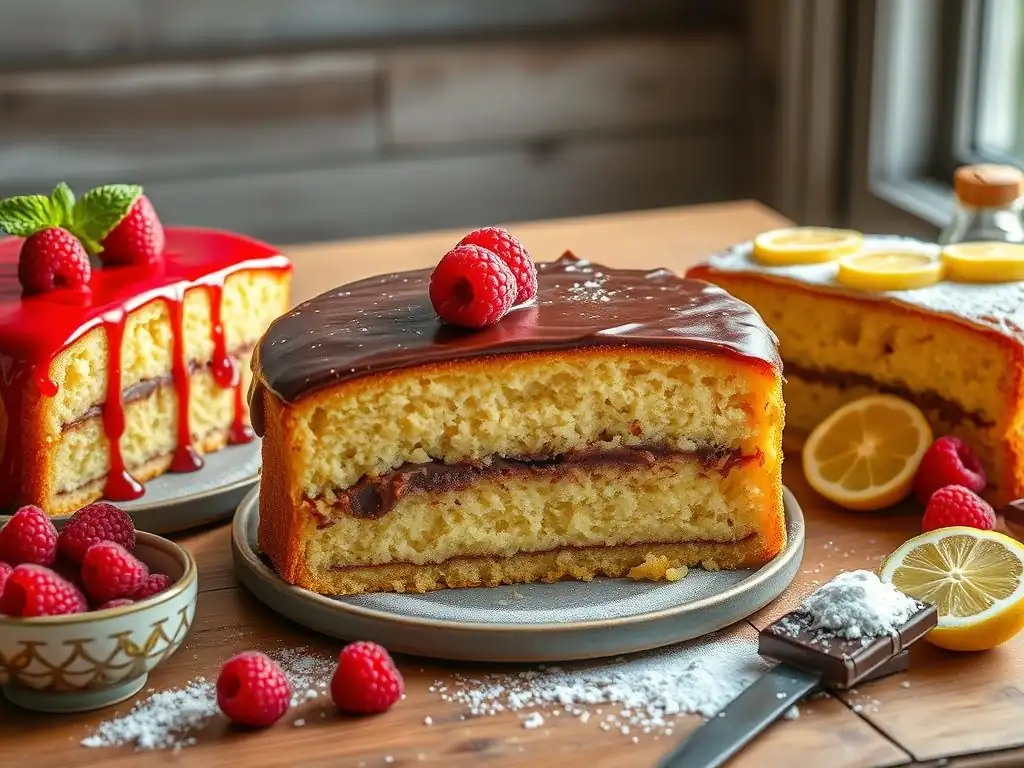
Adding Citrus Zest for a Zesty Vanilla Cake
Adding citrus zest is a fantastic way to add a bright, fragrant note that complements the sweetness of a vanilla cake. The oils in the zest contain intense flavor. For an 8 or 9-inch cake, the zest of one medium lemon, orange, or lime is usually sufficient. Use a microplane or fine grater to remove only the colored part of the peel, avoiding the bitter white pith underneath.
Incorporate the zest during the creaming stage with the butter and sugar, or whisk it into the wet ingredients (like milk or eggs) before adding them to the batter. The oils will infuse into the batter as it mixes and bakes, adding a subtle yet noticeable citrusy lift to your easy vanilla cake recipe secrets. Lemon and vanilla are a classic pairing, but orange or lime can offer a delightful twist.
Incorporating Spices: Cinnamon, Nutmeg, and More
Spices can add warmth and complexity to a simple vanilla cake, making it perfect for various occasions, especially during cooler months. Common additions include ground cinnamon, nutmeg, cardamom, or even a pinch of cloves. Start with a small amount, perhaps 1/4 to 1/2 teaspoon of a single spice or a blend, for an 8 or 9-inch cake.
Add the spices to the dry ingredients (flour, baking powder, salt) and whisk them together before adding to the wet ingredients. This ensures even distribution throughout the batter. A combination of cinnamon and nutmeg is lovely, while cardamom adds an exotic, fragrant touch. Experimenting with different spices is a fun way to personalize your easy vanilla cake recipe secrets.
Using Different Extracts: Almond, Lemon, and Others
While vanilla is the star, other extracts can be used alongside or even in place of some of the vanilla to create new flavor profiles. Almond extract, used sparingly (it's potent! ), adds a lovely nutty undertone that pairs beautifully with vanilla. Try using 1/4 teaspoon of almond extract along with your usual vanilla.
Lemon extract can intensify the citrus flavor if you've added zest, or provide a clean, bright flavor on its own. Coffee extract or a small amount of instant espresso powder dissolved in the liquid can add depth and a subtle mocha note. Peppermint extract is great for a festive twist. These alternative extracts are simple easy vanilla cake recipe secrets for changing up your cake's character.
Frosting and Decoration Ideas for Your Vanilla Cake
Classic Vanilla Buttercream Frosting Recipe
A classic vanilla buttercream is a perfect pairing for a vanilla cake. It's typically made by creaming softened butter with powdered sugar (also known as confectioners' sugar or icing sugar), a splash of milk or cream, and vanilla extract. The ratio is often around 1 part butter to 2-4 parts powdered sugar by weight, depending on desired consistency.
For a standard batch to frost an 8 or 9-inch layer cake, you might use 1 cup (2 sticks) of unsalted butter, 3-4 cups of powdered sugar, 2-3 tablespoons of milk, and 1-2 teaspoons of pure vanilla extract. Beat the softened butter until creamy, then gradually add the powdered sugar, alternating with small amounts of liquid, until smooth and spreadable. This frosting is easy to make and complements the easy vanilla cake recipe secrets beautifully.
Cream Cheese Frosting: A Tangy Complement
Cream cheese frosting offers a delightful tanginess that cuts through the sweetness of the vanilla cake. It's made with softened cream cheese, softened butter, powdered sugar, and vanilla extract. A common ratio is equal parts cream cheese and butter by weight, then adding powdered sugar to achieve desired consistency.
For a batch suitable for an 8 or 9-inch cake, you might use 8 ounces of cream cheese, 1/2 cup (1 stick) of unsalted butter, 3-4 cups of powdered sugar, and 1 teaspoon of vanilla extract. Ensure both the cream cheese and butter are truly softened for a smooth result. Cream the cream cheese and butter together, then gradually beat in the powdered sugar until smooth. This frosting provides a lovely contrast to the sweet, tender vanilla cake.
Simple Glaze for an Elegant Finish
If you prefer a lighter topping than frosting, a simple glaze is an elegant choice for your vanilla cake. A basic glaze is made by whisking powdered sugar with a small amount of liquid until it reaches a pourable consistency. The liquid can be milk, cream, lemon juice, or even just water, depending on the desired flavor profile.
For a standard glaze, start with about 1 cup of powdered sugar and add 1-2 tablespoons of milk or water, whisking until smooth. Add more liquid a teaspoon at a time until the desired consistency is reached – thick enough to coat but thin enough to drip slightly. You can add a splash of vanilla extract or other flavorings here too. Pour or drizzle the glaze over the cooled vanilla cake. This simple finish highlights the easy vanilla cake recipe secrets within.
Decorating Techniques for a Show-Stopping Vanilla Cake
Decorating your vanilla cake doesn't have to be complicated. For a simple yet elegant look, spread your chosen frosting evenly over the top and sides using an offset spatula. You can create swirls or peaks with the spatula for texture. Crushed nuts, sprinkles, or chocolate shavings can be pressed into the sides or sprinkled on top.
For a slightly more decorative touch, you can use a piping bag fitted with a large star or round tip to pipe simple borders, rosettes, or dots on the cake. Fresh berries or edible flowers arranged on top can also make your vanilla cake look stunning with minimal effort. Remember, the goal is to complement the delicious easy vanilla cake recipe secrets, not hide them.
Storing Your Vanilla Cake for Maximum Freshness
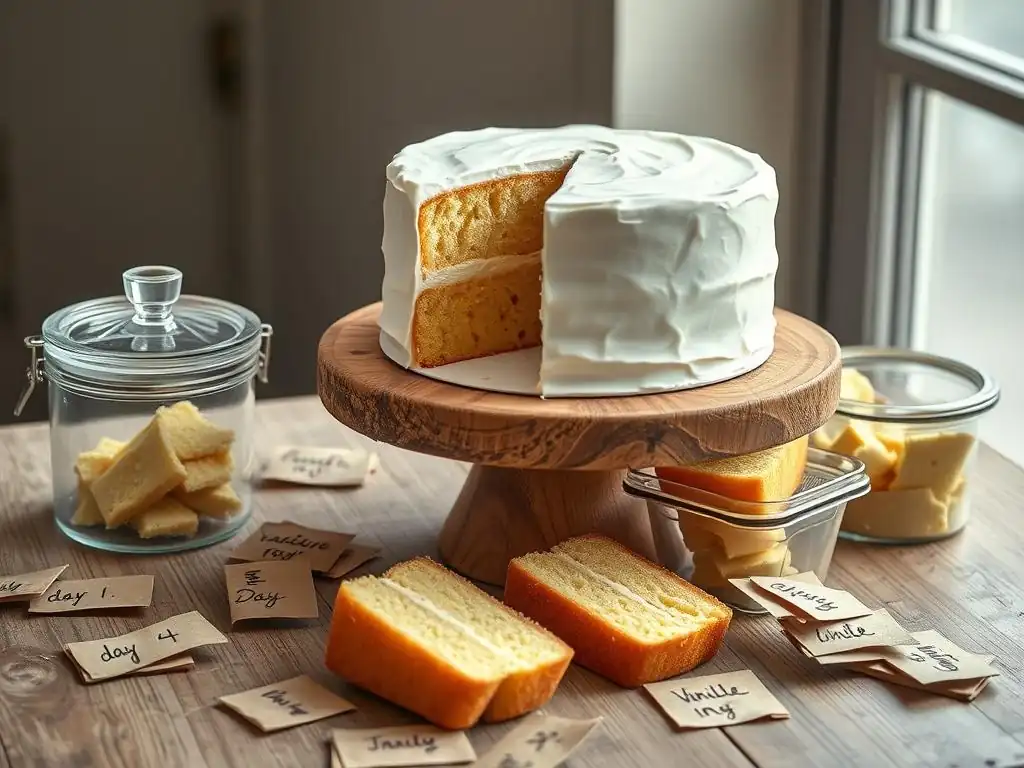
How to Store Unfrosted Vanilla Cake
If you bake your vanilla cake ahead of time and plan to frost it later, proper storage is key to maintaining its moisture and freshness. Once the cake has cooled completely on a wire rack (this prevents condensation), wrap it tightly in plastic wrap. Ensure there are no gaps or exposed areas where air can dry out the cake.
Wrapped unfrosted vanilla cake can be stored at room temperature for 1-2 days. For longer storage, it's best to refrigerate or freeze it. If refrigerating, the tightly wrapped cake will stay fresh for up to 5 days. Always let a refrigerated cake come back to room temperature before frosting for the best texture.
Storing Frosted Vanilla Cake: Tips and Tricks
Storing a frosted vanilla cake depends on the type of frosting used. Cakes frosted with buttercream made primarily from butter and powdered sugar can typically be stored at room temperature for 2-3 days, provided the environment is not excessively warm or humid. Cover the cake loosely with plastic wrap or store it in a cake carrier to protect it.
Cakes frosted with cream cheese frosting or frostings containing fresh fruit or dairy (like whipped cream) should be stored in the refrigerator due to the perishable ingredients. Refrigerate these cakes in a covered container or cake carrier. They will keep well for 3-5 days. Allow refrigerated frosted cakes to sit at room temperature for about 15-30 minutes before serving for optimal flavor and texture. These storage easy vanilla cake recipe secrets help extend the enjoyment.
Freezing Vanilla Cake for Later Enjoyment
Freezing is an excellent way to preserve your vanilla cake for longer periods. Allow the cake layers or the entire unfrosted cake to cool completely. For unfrosted layers, wrap each layer tightly in plastic wrap, then in a layer of aluminum foil or place in a freezer-safe bag. This double layer of protection prevents freezer burn.
Frosted cakes can also be frozen, though it's best to freeze the cake uncovered first until the frosting is firm (about 1-2 hours), then wrap it tightly in plastic wrap and foil. Frozen vanilla cake can be stored for up to 2-3 months. To thaw, transfer the cake (still wrapped) to the refrigerator overnight, then unwrap and let it come to room temperature before serving. This preserves the results of your easy vanilla cake recipe secrets.
The Ultimate Easy Vanilla Cake Recipe: A Recap
Key Takeaways for Baking a Delicious Vanilla Cake
Baking a delicious vanilla cake is achievable for anyone by focusing on a few key principles. First, ensure your ingredients are at room temperature, especially butter and eggs, for proper emulsification and texture. Second, measure your ingredients accurately, particularly flour, to avoid a dry or dense cake. Using the creaming method correctly to incorporate air is vital for a light crumb.
Third, be mindful of mixing – stop just when the dry ingredients are incorporated to prevent gluten overdevelopment and a tough texture. Fourth, bake at the correct temperature and check for doneness using the toothpick test to avoid over or underbaking. Finally, allow the cake to cool properly before handling or frosting. Mastering these easy vanilla cake recipe secrets will consistently yield a wonderful vanilla cake.
Your Vanilla Cake Baking Checklist
Here is a simple checklist to help you through the process of baking your easy vanilla cake:
- [ ] Read the entire recipe before starting.
- [ ] Preheat the oven to the correct temperature (verify with an oven thermometer if possible).
- [ ] Prepare the baking pan(s) properly (grease and flour or line with parchment).
- [ ] Measure all ingredients accurately.
- [ ] Ensure butter and eggs are at room temperature.
- [ ] Cream butter and sugar until light and fluffy.
- [ ] Add eggs one at a time, mixing well after each.
- [ ] Add vanilla extract.
- [ ] Whisk together dry ingredients.
- [ ] Alternate adding dry and wet ingredients to the batter, mixing just until combined.
- [ ] Pour batter into the prepared pan(s).
- [ ] Bake for the recommended time, rotating the pan halfway through if needed.
- [ ] Check for doneness using the toothpick test.
- [ ] Cool cake in the pan for the specified time before transferring to a wire rack.
- [ ] Cool cake completely on a wire rack before frosting or storing.
Enjoy Your Homemade Vanilla Cake!
Frequently Asked Questions
What makes a vanilla cake recipe truly "easy"?
An easy vanilla cake recipe focuses on simplified steps, readily available ingredients, and minimizes the need for specialized equipment, making it accessible to beginner bakers.
What are the biggest secrets to achieving a moist vanilla cake?
The secrets to a moist vanilla cake include using quality ingredients like buttermilk or sour cream, avoiding over-baking, and using the correct ratio of wet to dry ingredients.
How can I elevate the flavor of my vanilla cake beyond basic vanilla extract?
You can enhance the vanilla flavor by using vanilla bean paste, adding a pinch of salt to bring out the sweetness, or infusing the cake with other complimentary flavors like citrus zest or almond extract.
What are some common mistakes to avoid when baking a vanilla cake?
Common mistakes include over-mixing the batter, which can lead to a tough cake, using expired ingredients, and not properly greasing and flouring the cake pan, which can cause the cake to stick.
How can I ensure my vanilla cake has a light and airy texture?
To achieve a light and airy texture, it's crucial to properly cream the butter and sugar, incorporate air into the batter, and avoid over-mixing after adding the flour.
Final Reflection: The Enduring Allure of the Perfect Vanilla Cake
The seemingly simple vanilla cake holds a power far beyond its delicate crumb; it's a testament to the enduring magic of baking, a comforting classic in a world of ever-changing trends. This article explored the often-overlooked secrets to achieving that perfect, moist, and flavorful vanilla cake – from the quality of ingredients to the subtle nuances of technique. We've uncovered the hidden depths within a recipe seemingly known by all, proving that even the most familiar can hold surprising delights.
The vanilla cake's enduring appeal lies not just in its taste, but in its ability to evoke memories and connect us to cherished traditions. It's a canvas for personal expression, adaptable to countless variations and celebrations. A cake is a celebration; it's a symbol of joy and togetherness.
This simple truth resonates deeply, highlighting the power of a seemingly humble baked good to bring people together and create lasting memories. The journey from batter to bake is more than just a recipe; it's a process of creation, a testament to the human desire to nurture and share.
Now, consider your own relationship with vanilla cake. What memories does it evoke? What unique twist would you add to make it your own? Don't be afraid to experiment, to explore the subtle variations in technique and ingredient, to unlock the secrets that transform a simple recipe into a masterpiece. The perfect vanilla cake awaits your personal touch – go forth and bake!
Unlock Your Inner Baker: Master the Art of Vanilla Cake!
Thanks for joining us on this delicious journey into the world of vanilla cake! We hope you've gained valuable insights and newfound confidence in your baking skills. Now it's time to put your knowledge into action.
- Bake the perfect vanilla cake: Use the tips and tricks you've learned today to create your own masterpiece. Don't be afraid to experiment with different flavor combinations!
- Share your creation: Post a picture of your vanilla cake on social media and tag us! We'd love to see your baking success.
- Explore other BakeWithEase recipes: Dive deeper into our collection of easy-to-follow recipes and unlock even more baking potential.
What unexpected flavor will you add to your next vanilla cake creation? Let's hear your ideas in the comments below!